Category: Features

  • Rocky Linux Emerges as a CentOS Replacement

    Rocky Linux Emerges as a CentOS Replacement

    Rocky Linux was created to offer the community an alternative following Red Hat’s recent decision to shift its focus away from CentOS—the open source version of Red Hat Enterprise Linux (RHEL). However, the Linux distro’s popularly can also be attributed to how its creator sought to offer a superior alternative based on lessons learned during CentOS’ development—and less as a perceived backlash to Red Hat’s controversial move, said Gregory Kurtzer, Rocky Linux’s creator, who is also founder and CEO of Ctrl IQ.

    “As one can probably imagine, there were a lot of lessons learned from the founding of CentOS—we did a lot of things correctly, but we made some mistakes, as well, that set into motion some of the difficulties the project went through,” said Kurtzer. “I was not—nor am I now—upset at Red Hat or anyone else. It’s important to understand that companies have a legal responsibility to do what they need to do. But I will say, this is why open source communities should not be controlled by a single company, especially if that company has a competing product to the open source project.”

    In addition to applying experience gained from the CentOS project to help “recreate the initial goals of CentOS in a new project,” Kurtzer said he was prompted to create Rocky Linux following Red Hat’s decision to end-of-life (EOL) CentOS. The move “affected my company, our customers, as well as the entire industry,” said Kurtzer.

    “To be blunt, my knowledge—in terms of doing it myself is severely dated. Luckily, after I made the announcement that I was considering recreating CentOS, thousands of people reached out to me wanting to be part of the project and contribute,” said Kurtzer. “From that, our development team and open source community was born.”

    Additionally, CentOS Stream offers value to the community by allowing “us and others” to take part in developing the upstream Enterprise Linux standard, said Kurtzer, who added that his team will continue to debug Rocky Linux so that solutions are properly integrated into the Enterprise Linux Standard.

    “The necessity was absolutely clear, so I founded Rocky Linux and the Rocky Enterprise Software Foundation (RESF),” Kurtzer explained. “Together with our contributors, sponsors and partners, we all have united for a common goal: to create an open source community that will provide us all with an enterprise operating system to stand the test of time, attrition and commercial agendas.”

    Interest in the development of a CentOS alternative was strong when Kurtzer first floated the idea of the project to the community. Since its release in June, the total number of ISO downloads is 56,000, according to Rocky Linux Tier0 mirror data.

    “We have zero visibility as to any other ISO downloads from any of our other mirrors, but if I were to guess, I’d say it would be about two to three times more, in total,” said Kurtzer. “When we all get a moment to breathe, it will be fun to see how many people are using Rocky Linux, and take in all the feedback the community has provided,” he said.

    With this team of developers,  Kurtzer said it took about seven months to build the general availability  (GA) release. “We didn’t just jump right into building the operating system because the goal was to create an infrastructure where many contributors and developers can take part without putting the security of the product at risk. Building that infrastructure took about four months,” Kurtzer said. “Once the infrastructure was completed, we spent about two months building the first-release beta candidate and then spent the following month ensuring that we did everything correctly.”

     

  • Engineering Applications for DevOps (Part 3)

    Engineering Applications for DevOps (Part 3)

    This blog series explains how to engineer applications for DevOps.

    Topics covered in this blog series:

    • Factors used to decide whether an application is a good candidate for DevOps.
    • Practices to engineer designs for DevOps.
    • DevOps applied to enterprise apps and software services.
    • DevOps applied to COTS systems.
    • DevOps applied to manufactured (embedded) systems software.
    • DevOps applied to software services.
    • Five levels of application maturity.

    This blog covers the topic of DevOps applied to enterprise apps and software services; part three in the series. You can read part one here and part two here.

    DevOps Applied to Enterprise Apps

    An enterprise application assists an organization in solving business problems. Enterprise applications are typically designed to interface or integrate with other enterprise applications used within the organization and to be deployed across a variety of networks (internet, intranet and corporate networks) while meeting strict requirements for security and administration management.

    Proprietary enterprise applications are usually designed and deployed in-house by specialized IT development teams within the organization. However, an enterprise may outsource some or all the development of the application and bring it back in-house for deployment.

    The size and complexity of large enterprise applications, especially older monolithic-architected applications that are not designed in modules, are a challenge when it comes to implementing DevOps. Given the large scale and distributed nature of the people, process and technology components of enterprise applications, it is recommended that enterprises engage very experienced DevOps consultants to determine strategic requirements, roadmaps and plans for DevOps that fully consider all three dimensions (people, processes and technologies) and nine pillars of DevOps before embarking on a major DevOps transformation journey.

    Despite the complexity, with the right strategy and plan, DevOps can deliver enormous ROI for enterprise applications. Amazon and Adobe are just two of many examples of large corporations that have benefited enormously from applying DevOps across the enterprise.

    DevOps Applied to Software Services

    I often hear people ask, “Does DevOps apply to software services as well as it does products?” These are usually people who have only worked in product-oriented organizations, such as companies that manufacture things that have embedded software.

    Ironically, I often hear people ask the opposite question, “Does DevOps apply to products with embedded software as well as it does to services?” These are usually people who have only worked organizations in which software is consumed as a service over an intranet or internet for a price or for free. Examples of these organizations are IT departments (even the IT departments of manufacturers!), government agencies and enterprises such as banks, insurance companies, hospitals and financial trading companies.

    You already know the answer to these two questions if you read the earlier parts of this blog series. The answer to both is clearly ‘Yes!’ Cloud services are doubly interesting to DevOps because not only are cloud services used by DevOps as a preferred infrastructure, as described in the next chapter, but cloud services also use DevOps in the process of creating and deploying software for the implementation of cloud components.

    While we are on the topic of DevOps and services, I want to help clarify some confusion regarding whether “newer” DevOps renders “older” IT service management (ITSM) obsolete or less important. This confusion exists because ITSM has often been regarded as a gatekeeper run by Ops to prevent Dev from getting out of control. While some organizations may have, in fact, implemented ITSM that way, this is not the purpose of ITSM.

    “DevOps tends to focus on the software delivery life cycle and on building and delivering software,” said Jayne Groll, president of the ITSM Academy. For its part, ITSM tends to have a broader focus; it is really looking at all aspects of customer engagement, from fulfilling standard services to ongoing support and operations activities. So, ITSM is “almost like the left and right ends of DevOps.”

    Using ITSM With DevOps

    Here are some recommended engineering practices for using ITSM with DevOps:

    • Training to help DevOps professionals gain an understanding of ITSM, and vice versa, will help both teams find points of integration—not just in technology, but in process, as well.
    • Find ways to automate service change approvals implementation of known, good changes to allow for agility, iteration and innovation. At the same time, hold back high-risk, high-impact changes that might need more than just an individual contributor to sign off on before they make it in front of a customer.
    • Self-service requests, automation flows and IT orchestration are now the front door to IT service management actions. These can and should be happening in the background, automagically created, maintained and measured by our DevOps tools.
    • Embrace Agile service management to take Agile values and apply Scrum-like development practices to process design and improvement. Aim to make more frequent incremental changes rather than design and implement a total end-to-end process in the traditional way.

    What This Means

    This blog is part three of a series to explain how to engineer applications to be most suitable for DevOps. This blog series explains how to engineer applications for DevOps including:

    • Factors to decide whether an application is a good candidate for DevOps.
    • Practices to engineer designs for DevOps.
    • DevOps applied to enterprise apps and software services.
    • DevOps applied to COTS systems.
    • DevOps applied to manufactured (embedded) systems software.
    • Five levels of application maturity.

    This blog covered how DevOps can be applied to enterprise apps and software services. You can read part one here and part two here.

    For more information regarding how to engineer applications for DevOps refer to my book Engineering DevOps.

  • Aqua Security Acquires tfsec to Advance DevSecOps

    Aqua Security Acquires tfsec to Advance DevSecOps

    Aqua Security today announced it has acquired tfsec, an open source project that provides a static analysis scanner for infrastructure-as-code (IaC) that is designed to be integrated within a DevOps workflow.

    Amer Jerbi, Aqua Security CTO, said tfsec extends the security platform the company already provides in a way that advances adoption of DevSecOps best practices. In addition, to prevent developers from misconfiguring cloud infrastructure using tools such as Terraform, the scanner surfaces examples of code that provide developers with insights into how to properly configure infrastructure.

    Jerbi noted that tfsec is already integrated with Aqua Trivy, an open source tool that scans container images for vulnerabilities. Integrations with the rest of the Aqua Security portfolio will follow, added Jerbi.

    Tfsec co-founders Liam Galvin and Owen Rumney will join Aqua Security as cloud engineers. The challenge Aqua Security is trying to address is the need to enable organizations to proactively prevent cybersecurity issues from arising in production environments rather than only identifying vulnerabilities that need to be fixed, said Jerbi.

    Aqua Security tfsec

    The decision to acquire tfsec comes in the wake of a series of high-profile breaches when many organizations are scrambling to make sure software supply chains are secure. Cloud platforms are rife with misconfigurations mainly because developers often lack the expertise needed to ensure infrastructure is secure after they have provisioned it. Organizations are embracing DevSecOps best practices in the hopes of educating developers to assume more responsibility for application security. However, developers are not going to acquire that expertise overnight. The tfsec scanner provides a way to enforce security policies today while at the same time affording the time to teach developers how to avoid misconfigurations.

    It’s unclear how many cybersecurity events arise because of cloud misconfiguration issues. The cloud service providers have adopted a shared responsibility model that makes the organization employing the cloud responsible for both the applications deployed on those clouds and for how that infrastructure is provisioned. Many developers that provision cloud infrastructure themselves within the context of a DevOps workflow often assume the cloud service provider is doing more than it is to prevent misconfigurations. Cybercriminals, meanwhile, have become very adept at scanning for those misconfigurations.

    There are, of course, a lot of layers and nuances when it comes to DevSecOps. Arguably, Jerbi said, the most critical thing for most organizations is to simply get started. Tools that can be quickly and easily integrated within an existing DevOps workflow with minimal disruption are critical, Jerbi added.

    In the meantime, DevOps teams should expect cybersecurity teams to become more involved in their workflows, especially as government mandates aimed at securing software supply chains become stricter. Eventually, as organizations gain confidence in the ability of their DevOps teams to secure their application environments, those cybersecurity teams will refocus their efforts on hunting for threats. In the meantime, DevOps teams would be well-advised to make those cybersecurity professionals feel as welcome as possible, given the application security mandate most of them have been given.

  • Engineering Applications for DevOps (Part 1)

    Engineering Applications for DevOps (Part 1)

    This blog series explains how to engineer applications for DevOps.

    Topics covered in this blog series:
    • Factors to consider when deciding whether an application is a good candidate for DevOps.
    • Best practices for engineering designs for DevOps
    • DevOps applied to enterprise apps and software services
    • DevOps applied to COTS systems.
    • DevOps applied to manufactured (embedded) systems software.
    • Five levels of application maturity

    This blog covers factors to consider when deciding whether an application is a good candidate for DevOps.

    Factors to Consider for Engineering Applications

    The extreme worldwide hype around DevOps products and services seems to suggest that DevOps is good for everybody and applies equally well to every software-based product or service in every organization. Here is my experience with that assumption: It is not true!

    On the other hand, I have heard people say that DevOps does not apply to applications for which it absolutely does! Before you go a step further in your DevOps journey—or decide that your application does not qualify for DevOps—you should consider carefully how well your application is engineered to become a model for DevOps implementations.

    Best Practices for DevOps Determination

    The following are important factors you can use to decide whether an application is a good candidate for DevOps:
    • The application will benefit from faster lead times.
    • Leaders with responsibility for this application are open to collaboration and will be sponsors of change.
    • Team players that are associated with the application team (product owners, Dev, QA, Ops, infrastructure, security, PM) are open to collaboration and change.
    • The application is currently using or planning to use service-oriented, modular architectures or microservices.
    • There are at least ten people associated with the application including product owners, Dev, QA, Ops, infrastructure, security, PM. Smaller projects with smaller teams may not show sufficient impact or justify substantive DevOps investment.
    • The application is expected to undergo changes for more than a year. Less time would not likely yield return on the investment required for DevOps.
    • The application represents a good level of business impact and visibility but does not involve an extreme amount of risk for the business.
    • The application experiences frequent demands for changes from the business.
    • Not all tools used with the application need to be replaced to implement a DevOps toolchain. The costs of changing out all tools can negatively affect the ROI and business case for DevOps transformations.
    • Efforts to build, test or deploy releases of the application are substantial and could be reduced significantly by automation.

    It is not necessary for an application to perfectly fit all the factors, but the more closely it fits the more likely your application will benefit from using DevOps and will, therefore, be worth the cost to implement a well-engineered DevOps practice.

    DevOps can be used with all types of software applications and services. However, not all applications and services should be engineered to use DevOps. The factors that determine whether to engineer DevOps for an application have more to do with business factors than technology differences between different types of applications. Applications must be engineered in specific ways for DevOps to operate effectively.

    What This Means

    This blog is part one of a series explaining how to engineer applications to be most suitable for DevOps. This blog series explains how to engineer applications for DevOps including:

    • Factors to consider when deciding whether an application is a good candidate for DevOps.
    • Best practices to engineer designs for DevOps.
    • DevOps applied to enterprise apps and software services
    • DevOps applied to COTS systems.
    • DevOps applied to manufactured (embedded) systems software.
    • Five levels of application maturity

    This blog covers the first two topics: factors to decide whether an application is a good candidate for DevOps and best practices to use when engineering designs for DevOps.

    For more information on engineering applications for DevOps, refer to my book Engineering DevOps.

  • Shhhh! It’s a Secret

    Shhhh! It’s a Secret

    In one of our regular back-and-forth breaks, Lori and I were talking shop a week or two ago, and she shared an excellent report by GitGuardian with me. Frankly, none of the information in the report was a huge surprise for me–Git is filled with information that companies probably don’t want out there, but that is nearly impossible to track proactively. That’s what GitGuardian tries to do for you, but honestly, I’ve not yet dug into them, so caveat emptor. Or, read someone else’s opinion to help you decide if they’re a good idea – I’m just going to talk about the report.

    The key takeaway is that you are asking your DevOps teams to move faster and faster. Putting a section of code they are working on into a public repository is an easy way to “take work home” or share it, especially during lockdowns. It is also a good way to hand over critical information to anyone searching for it—about your infrastructure, or even critical bits of data like SSL keys or credentials. And with the current level of cyberattacks against nearly every industry, I’d say there are people looking for that information, no matter what industry you are in.

    This is not really a DevOps-specific issue–credentials and such in code has been a problem for IT for as long as I’ve been working in the field. At some point, any automated system needs to perform AAA, and that means the data required is stored somewhere. A multitude of approaches have been attempted to resolve the problem technologically, but none have been a silver bullet. Yet. Eventually, someone will figure out a way to make it work; then a whole new attack vector will arrive, probably aimed at the tool that is settled on to protect this very data.

    This is a personnel/policy issue that is exacerbated by the speed of Agile and DevOps. Your best solution, at this time, is to write a clear policy that contains consequences for putting secret data into a public repository. We’re short on “consequences” right now, preferring to say, “Right, let’s make sure that can’t happen again,” but in the case of putting secrets out in public, it is a different level of ‘bad’ than a coding error getting checked in. Those secrets can actively be used against the organization, and if the not-to-be-shared data is clearly delineated, any violation can be viewed as intentional, be it because of convenience or malfeasance.

    According to the report, there are millions of bits of privileged information out there. Not all of them are from enterprise IT shops—but some are. And some might be from your organization. Set expectations, get feedback. Make it clear you do not want to stop progress on delivery of systems, but you also don’t want to implement a system with a built-in back door for attackers to use. It is easy enough to use alternative delivery methods for those few bits of data, and put the bulk of the source out where it is needed.

    And keep rocking it. Toward Data Science says there are 128 million public repositories out there (Q1, 2021). Think how many lines of code are in those repositories, and how many secrets potentially are, too. Just make certain yours are not included in the list. No sense keeping your next great solution from running because your critical data leaked.

  • 7 (More) Security Considerations for CI/CD

    7 (More) Security Considerations for CI/CD

    CI/CD orchestration has become increasingly popular in DevOps practices. It facilitates faster deployment of software and product delivery. Through the use of automation when building, testing and deploying applications, CI/CD bridges the gap between development, operation activities and teams. 

    However, there are many security considerations to keep in mind with frequent deployment. From quality automation to code history analysis, security must be baked into your CI/CD pipeline to ensure your product and processes remain safe from hackers.

    To gain insights on the top security considerations for CI/CD, I asked the speakers and sponsors for the upcoming SKILup Day as well as several DevOps Institute Ambassadors for their thoughts. In this two-part series, I will be sharing their insights. Did you miss part one? You can read it here. Here’s what they had to say in part two of this series:

    Speaker, Ravi Lachhman, Evangelist, Harness

    “CI/CD platforms are core to an organization’s engineering efficiency and typically have elevated privileges to sensitive environments such as production. Since CI/CD platforms typically will be deploying, this makes sense. Delving into the SolarWinds hack with binary artifact signing, etc., can separate security concerns into two parts. One concern would be the security around the actual CI/CD platform and one around the DevSecOps goals inside a CI/CD pipeline. With so many items shifting left, having proper role-based access control (RBAC) is crucial. With the separation of duties for regulated environments and the need for engineers to be efficient, controls that ensure only certain entities can deploy and certain entities can view pipelines is important. Around the DevSecOps movement, container/OSS scanning is still top of mind for many firms.”

    Sponsor, Basis Technologies, Eran Kriegshauser, Basis Technologies’ SAP DevOps Architect

    “The question you should be asking is ‘How do I maintain quality with the frequent deployment tempo demanded by business today?’ We need automation of quality and guaranteed rigor. For example, take promoting security configuration changes in systems, applications and products (SAP). Today, this is done by SAP transports where the change is created in an SAP development system, then imported into QA and, ultimately, into production. How do you ensure that a developer can’t give themselves extra security access through a role modification? Automated analysis and approval workflows must support segregation of duties requirements. Users can’t approve changes they create–the appropriate CI/CD process will not allow it.

    Another area is automatic peer review notification on changes to sensitive enterprise resource planning (ERP) objects. Once identified, the promotion of those object changes are halted until approved by a team lead or change and release manager.”

    Savinder Puri, DevOps Evangelist, Zensar Technologies

    “Infuse as many aspects of security as possible into your CI pipeline. CD is already too late for security—you’ve already deployed the application into an environment.

    Start from the basic static code analysis, security scanners, etc., and then keep maturing. Whatever tools you integrate into CI Server, ensure the corresponding integrated development environment (IDE) plugins are made available to developers. That way, devs can do the first-level validation within their IDE itself, and do it as they code, even before compiling. That’s the practical implementation of the often overused term ‘shift left.’”

    Vishnu Vasudevan, Head of Product Engineering and Development, Opsera

    “Now with cloud migration, emerging technologies and open source technology, companies will have to make sure they have the right tooling to measure and take action based on the security challenges born out of different development activities. 

    The focus will need to be on managing the risk that is tied to the business criticality. Each industry, domain, technology, etc., all have their own independent security goals, and you cannot have one security goal across the enterprise for different technologies and different domains. It is important to evaluate the technology being used and weigh the security requirements accordingly.”

    Stephen Walters, Sales Engineer, Everbridge

    “Inclusion! This is why the term DevSecOps came to be—because, erroneously, security was not included as part of a DevOps transformation, and the same is true for transformation of an SDLC to incorporate security.

    Security has still been treated as a non-functional requirement; an afterthought. If there is one thing we should learn, there is no such thing as a non-functional requirement. Security needs must be considered on an equal footing with all other requirements and built into the design, test, deployment and delivery of any feature.”

    Mark Peters, Technical Lead, Novetta

    “CI/CD pipelines should implement security at every step.  Tests can be automated in tooling to conduct tests of various functions at multiple levels for code accuracy, unit tests through fuzzing and integration or vulnerability testing. Most vulnerability testing in a pipeline is actually patch management, ensuring all commercial and proprietary holes are filled for release software. The first step should be using coding checks to make sure there are not any common problems with the code. While this may seem easy, if you are not managing that basic step, you cannot move ahead to the more complicated areas.”

    Pawel Piwosz, Lead Systems Engineer, EPAM Systems

    “At a high level, I would say that security is still outside the main scope of CI/CD. We should consider a few areas and different angles, here. Security should be not only implemented by CI/CD; CI/CD should be implemented in a secure way. Everything-as-code is a solution here: policy-as-code, security-as-code, drift-as-code, and if we talk about infrastructure, remediation-as-code.”

    If you’d like to learn more about the latest in CI/CD and similar topics, check out the upcoming SKILup Day schedule. Or, learn more about the benefits of becoming a DevOps Institute Member. 

  • A New DevOps Database Platform is Needed

    A New DevOps Database Platform is Needed

    The diverse number of database platforms, deployment environments and data variants needed to support the plethora of applications and services required for rapid DevOps continuous delivery lead times, coupled with the challenges of integrating database changes for application pipelines, is a growing challenge for many organizations as they strive to accelerate their DevOps transformations.

    When you stand back and look at the bigger picture, an enterprise with many databases and various data requirements for DevOps continuous delivery presents a problem. At best, it makes things chaotic; at worst, it is a gross impediment to overall organization agility—which undermines the very purpose that DevOps is meant to serve.

    In my book, Engineering DevOps, I explained that databases offer several challenges for CI/CD pipelines.

    In the simplest case, when a database is used solely by one application or microservice, the database pipeline can be integrated with the application pipeline to ensure its changes use the same version management system and change controls to ensure the database changes are kept in sync with the application. However, many database platforms are not as responsive to changes as the applications themselves and become a bottleneck for the pipeline.

    If a database is used by several applications, each with its own DevOps pipeline, then changes to the database must be coordinated with all applications that depend on it. Maintaining a separate database pipeline linked to the application pipelines through CI/CD toolchains, as a strategy, is overly complicated and can often introduce additional bottlenecks and synchronization issues.

    Another challenge with database pipelines is the management of data in the database during the CI and CD stages. Data in production needs to be persistent and is ever-changing, even while the underlying database code is changing. During the CI process, sample data from production needs to be used to ensure testing is realistic, and new test data must be introduced to verify new database capabilities are working.

    During the CD stages, rollbacks to prior versions of database code must avoid rolling back to versions that are no longer compatible with production data. This is a key reason why database changes must follow a disciplined approach that fully tests database changes with applications prior to full deployment. Rolling deployments, in which applications and database changes are deployed gradually in separate clusters, can minimize the blast radius in case of problems. The required coordination of separate systems adds complexity and bottlenecks.

    So, why not simply integrate database changes as artifacts within the same DevOps pipeline as the application?

    Gilad David Maayan’s September 2020 article DevOps Database Strategies and Challenges: Automation, Scalability, and More explained some of the specific challenges that arise with integration of traditional databases with DevOps.

    Database tools were not designed for integration with DevOps tools. These tools tend to be database- and environment-specific, which can make it difficult to incorporate into pipelines designed for flexibility.

    Database performance and ease of management often do not perform well in DevOps environments where multiple applications need to use the database in a short time, such as in the accelerated lead times for DevOps continuous delivery. This is especially true with larger-scale databases. If an application change must sync with a database schema, changing the pipeline can become complicated especially if there is a need to sync across multiple application pipelines to meet continuous delivery goals.

    While DevOps processes are proven for continuous delivery of applications, incorporating database changes into the DevOps pipeline is hindered by large data sets, limited database automation and security concerns. As a result, database development and testing continue to rely on outdated processes, with fixed and often shared instances refreshed from backups. A new DevOps Database platform is needed to provide highly dynamic and efficient cloud-native database solutions for modern enterprise digital transformations, and that platform must include DataOps use cases for DevOps, DevSecOps, continuous testing and governance. This new kind of data repository must be designed to integrate seamlessly with DevOps CI/CD pipelines through flexible APIs and cloud-native architectures.

    Given the points above, traditional database solutions and parallel data pipeline strategies are not sufficient to meet the challenges of enterprise DevOps transformations. What is needed is a new kind of DevOps database platform that allows the database, and database changes, to be as agile as any other artifact in the DevOps pipeline.

    Paul Stanton, VP of product management at Windocks, in his June 2021 YouTube video Windock DevOps Data Repo, said, “Imagine terabyte class database environments managed as DevOps artifacts with entire versioned databases available in seconds.” That’s what we need.

    The following are examples of the capabilities required for such a new DevOps database platform.

    • Automated database provisioning
    • Distributed repositories support
    • Simple declarative builds
    • Dynamically scalable
    • Virtual hard drive images for a wide variety of DBs – Linux, SQL, Oracle and others
    • Distributed versioned database environments working on standard file systems and storage systems delivery writeable data at the speed of DevOps – in other words, in seconds.
    • Deploys equally to all operating systems and cloud environments, Docker containers and Kubernetes.
    • Many clones per virtual machine (VM)
    • Security features including access management, data masking and encryption
    • Compatible with and easily integrates with CI/CD platforms
    • Compatible with multi-cloud (AWS, Azure, GCS)
    • Built-in data security and governance into DevOps data.

    I will explain these more completely in a subsequent article.

    What This Means

    Digital transformations are imperative for modern enterprises and organizations if they are to remain competitive. However, the transformations of many enterprises and organizations are being seriously impeded by having too many database platforms and tools that do not integrate well and that bottleneck continuous delivery goals. A new kind of DevOps database platform, in which the database is treated as any other artifact, is needed to resolve technical problems with database integration to DevOps application pipelines. A new DevOps database platform solution is needed to accelerate time-to-value and realize efficient, safe operation for digitally transforming enterprises and organizations.

  • Copado Acquires Qentinel to Gain AI Testing Tools

    Copado Acquires Qentinel to Gain AI Testing Tools

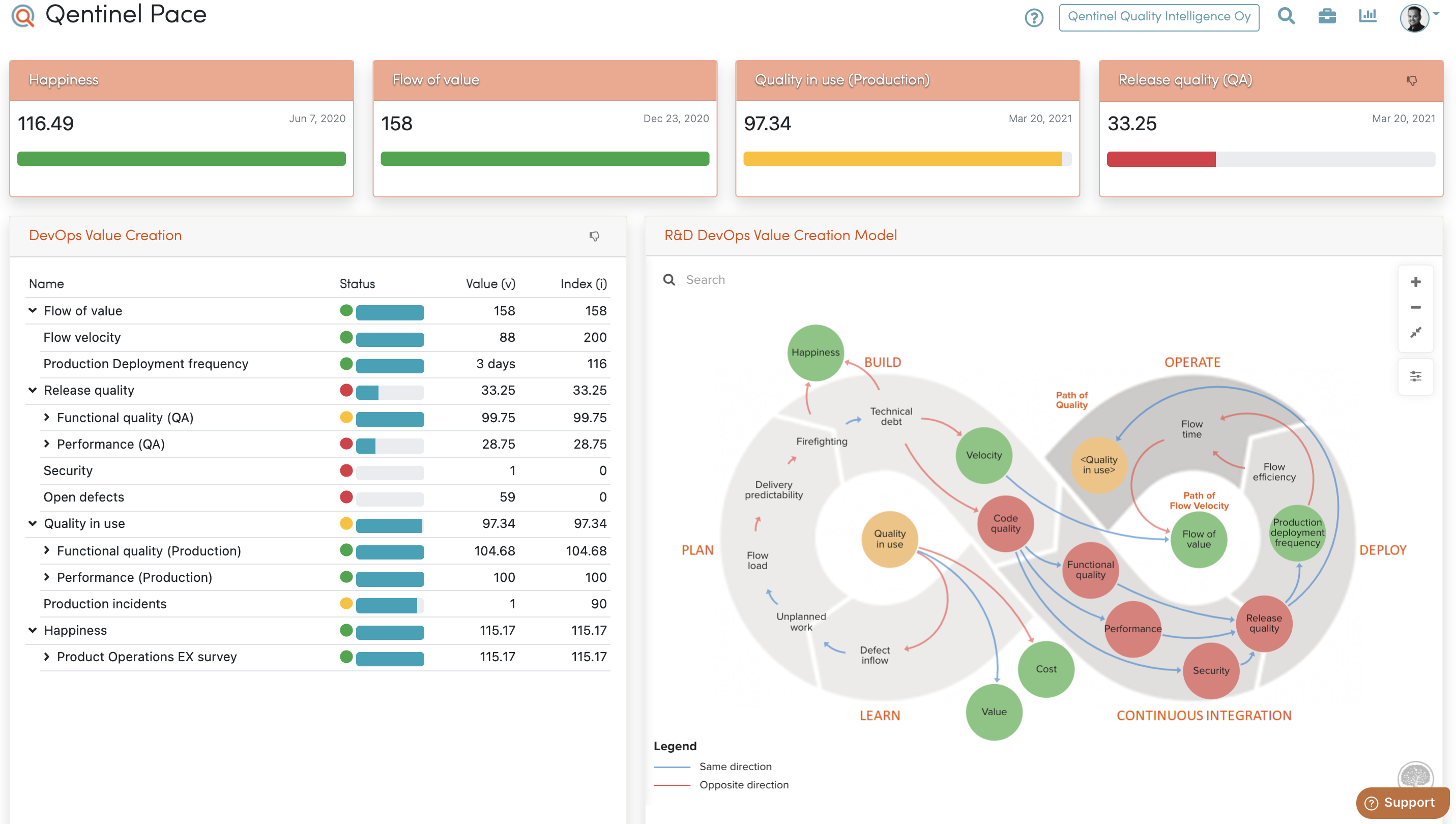
    Copado has acquired Qentinel as part of an effort to incorporate AI-infused application testing within a DevOps platform and build applications using low-code tools across multiple software-as-a-service (SaaS) platforms.

    The Copado continuous integration/continuous delivery (CI/CD) platform was originally created to accelerate the development of low-code applications on top of the Salesforce platform. Now, however, Copado is expanding the scope of its DevOps reach to include other SaaS platforms.

    Andrew Leigh, chief marketing officer for Copado, said as organizations increase the number of SaaS platforms they employ in the wake of the COVID-19 pandemic, it quickly became apparent there would soon be a need to build applications that enable organizations to unify business processes spanning multiple SaaS applications.

    As part of that effort, Copado’s acquisition of Qentinel aims to advance that goal by making it simpler for both developers and end users to participate in the application testing process, Leigh said.

    Qentinel is accessed mainly via the cloud to automate the creation of application tests. Rechristened Copado Robotic Testing, the core of the Qentinel platform is based on the open source Robot Framework that understands scripts, executes them and generates logs and reports. A set of built-in libraries comes packaged with Robot Framework and addresses a wide range of testing scenarios. Qentinel customers include Brunswick, Elisa and Konecranes.

    Copado AI testing

    Gartner is forecasting that, by 2024, 75% of large enterprises will be using AI-enabled test automation tools to advance continuous testing across different stages of the DevOps life cycle. Much of the interest in AI-infused application testing tools is being driven by necessity as the pace of low-code application development exceeds the pace at which manual testing processes can work. As application testing becomes a bottleneck, organizations will naturally look toward automation platforms that employ machine learning algorithms capable of testing applications at scale.

    It’s not clear to what degree those platforms might eliminate the need for humans to test applications. The expectation is humans will be able to test application functionality at a deeper level versus, for example, merely checking to see if compliance mandates have been met. Many smaller organizations building low-code applications don’t have any meaningful application testing capabilities at all. Testing platforms infused with AI will prove to be especially crucial for citizen developers that require guidance to build a secure application that can actually scale, noted Leigh. The more SaaS application environments those applications span, the more critical testing becomes, added Leigh.

    One way or another AI is coming to application testing. After all, machine learning algorithms don’t ever need to take a day off or suddenly leave to take a better offer elsewhere. In fact, soon, most organizations soon won’t even consider a test automation platform that doesn’t have AI capabilities as they attempt to reduce the level of manual, monotonous and repetitive testing tasks. It may take a while for everyone to gain confidence in the algorithms, but it’s now more a question of the degree to which AI will be employed rather than if.

  • BMC Extends DevOps Reach from the Mainframe

    BMC Extends DevOps Reach from the Mainframe

    BMC today announced it has extended its DevOps platform for mainframe environments to provide integrations with GitHub Actions, a framework for managing workflows, and HCL Launch, a continuous delivery platform from HCL Software. BMC gained the DevOps platform with the acquisition of Compuware in June 2020.

    John McKenny, senior vice president and general manager for intelligent Z optimization and transformation at BMC, said those integrations—along with existing support for DevOps platforms such as Jenkins, GitLab and VS Code—make it possible to accelerate the development of applications that include mainframes as part of a larger distributed computing environment. DevOps teams, for example, can now employ an HCL Launch plug-in for the BMC AMI DevOps for Db2 tool to automatically capture and propagate database changes across IBM Db2 databases.

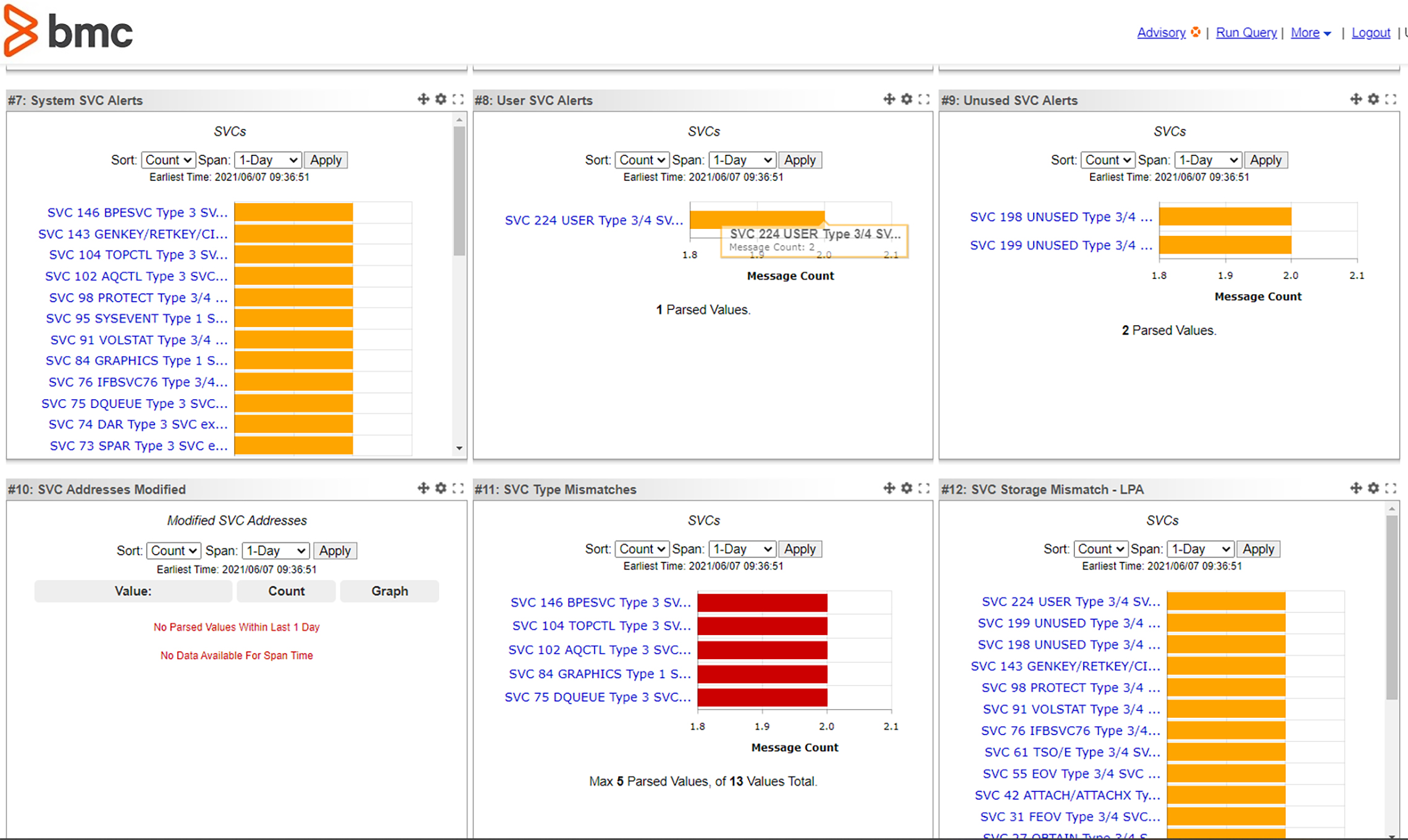
    At the same time, BMC also enhanced a BMC AMI Ops Monitor for Java Environments that automatically discovers all Java virtual machines (JVMs) running on z/OS environments on a mainframe. The BMC AMI Ops Monitor for Java Environments now includes the ability to discover the application programming interfaces (APIs) and services invoked by those JVMs.

    BMC also revealed today that its Workflow WiZard tool has been accepted as part of the open source Zowe initiative launched by the Open Mainframe Project. The Workflow WiZard makes it easier to install, configure and maintain software installed on mainframes running z/OS.

    Finally, BMC revealed it has extended its privileged access management (PAM) tools by enhancing the supervisor call screener and Unix System Service (USS) data enrichment capabilities of BMC AMI Security software. Based on technology BMC gained with the acquisition of RSM Partners, this enhancement increases the level of protection BMC AMI Security software provides to thwart attacks by surfacing suspicious activity, such as from malicious insiders that may have compromised administrator credentials, said McKenny.

    BMC mainframe

    These days, McKenny noted, everything is under attack because the minute cybercriminals discover a way to compromise one platform, they almost immediately try to apply that same technique against other platforms. Mainframe environments, which tend to process an organization’s most valuable data, naturally are a high-value target, added McKenny.

    In general, McKenny said IT organizations that rely on mainframes continue to make steady progress toward embracing DevOps best practices. A recent survey conducted by Forrester on behalf of BMC found 80% of respondents said their mainframe development tools needed significant improvement to provide more value.

    The need to accelerate digital transformation initiatives, which typically require access to data that resides on mainframes, are, in many cases, forcing the DevOps issue within many organizations. Software development teams that build mainframe applications are almost always required to create APIs that make it easier for other applications to consume that data.

    Not every organization, of course, has a mainframe. However, as digital business transformation continues to evolve, the number of applications that need to consume mainframe data will steadily increase. The challenge facing mainframe application management teams is finding a way to provide that access without using traditional waterfall processes to build the required APIs.

  • 8 Security Considerations for CI/CD

    8 Security Considerations for CI/CD

    In the software development enterprise, CI/CD refers to the combined practices of continuous integration and either continuous delivery or continuous deployment. CI/CD enables organizations to bridge the gap between development, operation activities and teams by the use of automation when building, testing and deploying applications. 

    How do you maintain quality and security with frequent deployments? While CI/CD can improve the efficiency of an organization, there are many security considerations to take into account.

    To gain insights on the top security considerations for CI/CD, I asked the speakers and sponsors for the upcoming SKILup Day as well as several DevOps Institute Ambassadors for their thoughts. Here’s what they had to say in part one of this two-part series:

    Speaker, Grant Fritchey, Product Advocate, Redgate Software

    “There are a lot of security considerations when it comes to CI/CD. As a person focused on data and data management, I’m going to say that the top security consideration is ensuring that you have compliant data for your non-production environments. Just the sheer number of people who will have access to the information means that you have a huge number of possible vectors for a breach if you’re exposing protected information.”

    Speaker, Anders Wallgren, VP of Technology Strategy, CloudBees

    “Secure your software delivery pipelines themselves, not just the software that you deliver with those pipelines. Everyone should have only the level of access they require in order to perform their role.

    Maintain a Software Bill of Materials (SBOM) so you know what you have in production. When a new vulnerability is disclosed, you will have a much easier time deciding whether and how to mitigate it if you don’t have to chase down what you have in production. Your orchestration software should do the lion’s share of the work here.”

    Tracy Ragan, CEO and co-founder, DeployHub

    “CI/CD tools are driven mainly by one-off scripts. There is absolutely nothing secure about one-off scripts. From build through deploy, we need to start thinking of implementing automation and policy-driven tools and dump the one-off scripts.”

    Tiffany Jachja, Technical Evangelist, Harness

    “Supply chain management is a major security consideration for CI/CD. If an entity gains access to a CI/CD resource or component that they shouldn’t, this can lead to vulnerabilities, downtime or even malicious code. For example, in the SolarWinds hack of 2020, attackers legitimized their software malware by injecting it into the SolarWinds build process. This build pipeline produced trusted software artifacts and obtained digital certifications before being released to over 18,000 customers worldwide. After the hack, SolarWinds took action, further restricting access to its build environment and reviewing its build process, but not before it was too late. It’s not only about automating developer and operations workflows but also how we treat and handle CI/CD pipelines.”

    Jamal Walsh, Technical Product Owner, The Very Group

    “You must make sure you implement security tooling within your pipeline; it’s not enough to just use CI/CD to build and deploy applications. Steps in your pipeline should include security testing tools like SAST, DAST, dependency checks, etc.”

    Martin Chan, System Analyst, Global Executive Consultants Ltd. 

    “The most important thing is to define the access control list and rules to control the access in the CI/CD pipeline so that the audit log can easily trace issues. Also, the system should require authentication and define password policies for all users.”

    Bryan Finster, Software Engineer, DoD Platform One

    “Security must be automated as part of the pipeline. Just like any other quality gate, the pipeline must be the single source of truth for security. Any manual process after code is committed increases the effort to deliver. Increased effort increases the size of each change. Larger changes are harder to check for quality and fail more spectacularly. Manual security is just security theater and is easily bypassed or forgotten. That effort is better spent improving the ability of the pipeline to use security as-a-service.”

    Dheeraj Nayal, Global Community Ambassador, DevOps Institute

    “Follow the three security best practices for CI/CD. We usually divide security practices into three parts that you can address with different kinds of solutions. These are:

    1. Secure pipeline configuration
    2. Code and Git history analysis
    3. Security policy enforcement

    All three aspects are equally important.”

    If you’d like to learn more about the latest in CI/CD and similar topics, check out the upcoming SKILup Day schedule. Or, learn more about the benefits of becoming a DevOps Institute Member.