Category: Features

  • DevOps Chats: XebiaLabs/CollabNet Version One Merger Executive Discussion

    DevOps Chats: XebiaLabs/CollabNet Version One Merger Executive Discussion

    In this special DevOps Chats Video Edition we dive into the XebiaLabs/CollabNet Version One Merger. Joining us for this video discussion is the CEO of the new company, Ashok Reddy and President and former XebiaLabs CEO, Derek Langone.

    Ashok, Derek and DevOps.com editor-in-chief, take a deep dive into the reasons for this merger and what it means in the end-to-end DevOps market.

    Have a listen for some great background on this merger and what we can expect to see in the market soon. Below is the transcript of the conversation if you would like to read along.

    Transcript

    Alan Shimel: Hey, everyone, this is Alan Shimel for DevOps.com, and you’re listening to another one of our—actually, our video DevOps Chat edition. Thanks for joining us.

    We have a great DevOps Chat video lined up for today. As many in our audience know and in the DevOps community, last week was a pretty exciting week with continued consolidation in the DevOps space. The big story was a merger, acquisition, private equity—I’ll let them define it, but the joining of XebiaLabs with the CollabNet VersionOne team, financed by a private equity company. And then kinda the surprise cherry on the cake was the addition of a CEO, a pretty well-known name to us in the DevOps community for both his days at IBM, CA/Broadcom, Ashok Reddy, as CEO. And we’re lucky enough to have Ashok Reddy, CEO of the new company. I’m gonna let Ashok handle the name.

    And joining Ashok is a friend of ours who needs no introduction in the DevOps space, our friend Derek Langone. Derek is the CEO of XebiaLabs, you know, one of the main companies in this merger, and Derek will be the president of the new entity going forward.

    So, Ashok, Derek—welcome to DevOps Chat. Thanks for joining us.

    Ashok Reddy: Thank you, Alan. Great to be here. Thanks for inviting us.

    Derek Langone: Hi, Alan.

    Shimel: Yeah—no, it’s great. Okay. So, guys, let’s jump into this. Ashok, as I said, you need no introduction in the DevOps space. You’ve accomplished, between mainframe and DevOps and IBM and CA, you’re an accomplished executive in this space. What motivated you to come on board here as the CEO of this new entity, and also would you mind—I don’t even know, I’m not sure what to call the new entity. Should I call it Xebia, CollabNet, some Newco? I’m not sure. So, go ahead.

    Reddy: Yeah, so start with that. I think we are working on, obviously, we’re doing a branding initiative. We’ll be coming up with a new name shortly.

    But as well, Alan, I think in terms of, you know, why did I join this is, it’s really, in the past, if you look at what I personally have done is focused more on transforming existing businesses, very large businesses, whether it’s in the Mainframe or in the large existing portfolios, and I think that was very good in terms of what I did there.

    But what I found here with TPG, as a private equity firm, which is very well known for transforming, the investments they make are really transforming industries. As examples, TPG was an investor in Spotify or Uber, an early investor in Airbnb and some other companies like Chobani and others where, they’ve kind of transformed the industry. So, when they had this thesis around DevOps is one of the most important transformational things going on in the industry, and there’s really, it’s not just a consolidation, but really, coming up with a true platform all the way from end to end, from how do you define value to how do you measure value and how do you plan and track and deploy and secure?

    To me, it was more of a sort of just transforming existing things to build out a new platform with, starting with some of the best of breed companies, right, technologies. So, to me, that was really what the attractive part is. Plus, you know, we can define—there’s no boundaries in terms of which industries and customers we want to, but really, truly focus outside in from the market perspective, and every company is becoming digital, everybody talks about that, but I don’t think we have a platform which really provides that.

    So, I think that’s really why I changed. And also, you know, in terms of the naming, as I said, we are still working on something which is, represents the broader platform we are building and not just the things, what we have today.

    Shimel: Fair enough. Derek, I’m gonna ask you a slight—I’m gonna ask you the same kind of subject, but slightly different. Hey, man, you’re CEO, you know, you’re the boss, and now you’re president of the new company which obviously still covers a lot of territory, a lot of responsibility. But, you know, as an organization, why did you feel it was best for Xebia to do this, and then you personally, right? Is this—where do you see, you know, what gets you excited about your role in this new adventure?

    Langone: Yeah, so, I’ll try to answer that a couple ways, Alan. First, from a business perspective, why this made sense—I mean, as you followed our progression at XebiaLabs over the years, you know, we’ve established ourselves as a premier vendor to large enterprises and helping them, you know, sort of realize real release orchestration and deployment automation and now reporting on important aspects of the software life cycle.

    And we’ve been able to gather meaningful clients, you know, the largest banks, insurance companies, airlines, health insurers use our platform because it’s so scalable and so robust. However, the feedback we got from customers quite often was,  “Hey, you know, you really only own a small slice of my life cycle, and what is sort of adjacent to you is a tapestry of individual tools that we’ve woven together, and it would be great if you had a wider footprint.”

    So, the opportunity with TPG, looking at the market, and the opportunity at the very, very top of the market in the Global 5000 to create an enterprise scale platform gave us the chance to consolidate with CollabNet VersionOne to put two best of breed technologies together to have much more of a horizontal influence on the software life cycle and the power of those two pieces together really does give you that formula of one plus one equals three or greater. So, that was what was exciting from a business perspective.

    For me personally, it’s terrific to be able to have Ashok as a leader in our organization and someone that I can learn from. And you’re absolutely right, I’ve been the CEO, so I’ve sort of been the boss. However, I’ll tell you, it’s an easy transition, for two reasons. Number one, Ashok’s a great leader with an incredible track record and a skill set that I would like to learn from. And then, number two, I haven’t been the boss at home for many years, so it was sort of an easy transition to not being the boss at work.

    Shimel: [Laughter] Amen to that, brother. I’m with ya. We won’t tell anyone—no one’s listening, though, don’t worry.

    So, we’ve got this new entity now, which represents the assets of CollabNet VersionOne, XebiaLabs kind of put together. Ashok, you mentioned sort of best of breed technologies within their places.

    Let’s lay it out for our audience, right? Where are the strengths of this new entity? Where is the best of breed functionality? You know, when we look, I call it the end to end DevOps kinda market, right, the players who are trying to do end to end DevOps. No one has the whole enchilada yet.

    But as you sit here today, gentleman, where do you see the strengths? Where are the real assets of this new entity today?

    Reddy: Yeah, no, I think it’s—so, let me start with, you know, when you start with the overall, it’s really, the focus is value stream management, for example. Companies who look at how do I measure value; how do I look at agile? From an agile planning perspective, I think there is, VersionOne is best of breed in the sense it was built ground up to be almost like a reference architecture for the same framework. If somebody is adopting the new, say, 5.0, for example, updated where it’s got value streams and how do I drive value streams—it’s actually built for it. All the way from how do I blueprint things to how do I create epics and stories to be able to plan and do the resource planning?

     So, that’s one aspect of it, but then the second part is, even with CollabNet, you know, people kind of forget CollabNet started many of this open source movement around Subversion and it’s, 35% of the market today still uses Subversion.

    But the Git part, which is where I find not many people know that, but you have Git which is secure Git. Because many times, there is many vectors, the three security vectors in enterprises—if you used distributed Git, you don’t get. And something like CollabNet actually has implemented really strong security protocols and a centralized way of managing, so you can actually manage Git in a centralized way with secure. And the people like Intel, you know, tens of thousands of people use it.

    So, you have a system of record in agile planning and resources to the source control and version management in CollabNet and in the TeamForge SCM, which is a part of GitAgile. Then, of course XebiaLabs. I mean, I think, you know, we competed with XebiaLabs in the past, but it’s really in terms of how XebiaLabs was, you know, both from a release automation to release orchestration, because it can do it without actually having scripts and people—scripts break in a transformation. Things change. The technology is platform agnostic. It can run on any cloud, supports on any cloud. And just being end to end, and now they have complete visibility with AI and machine learning.

    So, I think those are the three elements which I feel like are the best of breed. And then there are some things which we, you know, obviously, we’ll organically develop and then we’ll acquire other best of breed technologies. But I would say those are the strengths is connecting all the way—it’s not just orchestrating releases, you can now orchestrate business outcomes in a very agile fashion.

    Derek, did you want to add anything else?

    Langone: Yeah, I think, Ashok, you covered most of it, and you also said something important, which is our goal, to be that software life cycle system of record.

    But really, Alan, if you look at these two pieces together, what VersionOne has done for the engineering side of software life cycle, giving you that velocity and that sort of iterative agile approach. We’re trying to apply to the entire software life cycle. So, take those principles and apply them to release orchestration, deployment automation, and collect data along the way to be used for value stream, for compliance reporting, security reporting—things like that.

    So, essentially, create this platform that does a couple of things—gives you the ability to increase your velocity, scalability and so forth in your software factory, but the important element to understand about our approach is, even though we’re building an end to end solution, it’s going to be reliant on its integrations with all the best of breed tools that have already been invested in by these big organizations, right? So, I won’t name tools, but they’re very common CI tools, planning tools, provisioning tools, ITSM tools. We have all those integrations built out of the box. So, we leverage all of those investments as part of the process, so we’re not displacing any technology. Quite the contrary—those technologies come along with our process, and it allows them to be a part of the solution of that system of record validation for software life cycle.

    Shimel: You know, and I think it’s worth mentioning—many of those tools, Derek, are actually open source projects as well, right? Because open source plays such a big part in this.

    You brought up, what both you and Ashok said here brings up kinda two thoughts in my mind. Number one is, no one just wants a collection of disparate tools. We all want things that work together, right? And Xebia actually—truth be told, I’m much more familiar with XebiaLabs than I am with the CollabNet VersionOne suite. Xebia did a great job of integrating with open source tools, right, as well as third party tools.

    I wasn’t aware of a XebiaLabs CollabNet VersionOne integration, though. Are there any? What are the plans for them? Let’s hit that first and we’ll go from there. I don’t know if that’s an Ashok or a Derek thing, or maybe it’s too far in the weeds.

    Reddy: Yeah, we’ll—I think I’ll just say that, you know, as far as from a VersionOne and CollabNet perspective, I think there has been, I think, as you said, XebiaLabs has done a fantastic job with this periodic table type of things, tools in the DevOps tool chain. So, as part of that, the whole integration on SCM, the Git with CollabNet’s support for the GitAgile, there is already integration.

    There are some things in terms of more of API level integrations between VersionOne and a couple of the other things at XebiaLabs, but we are now strengthening that. But Derek, you may have, you know, some things based on what we have done in the past with Xebia and the CollabNet VersionOne that you may want to add other things.

    Langone: Yeah. So, Alan, to your question about the integration that exists today between CollabNet VersionOne and XebiaLabs—that’s been a long standing integration. We have several customers in common that have benefited from those technologies together, and frankly, that was one of the validation points when we decided to become part of this merger, that we had already seen customers benefit from these two technologies together and felt like if we did that in a more purposeful way, we could built out a higher degree of value for these customers and benefit ourselves by expanding our functionality on sort of both sides of the balance sheet.

    So, I think you’ll see much deeper integration and a lot of our opportunity to build out that value stream thesis by building these bridges to other products, including, you know, these two companies’ products, collecting that data, and then providing that data for these purposeful value stream management reports.

    You know, I look at it from a couple of perspectives. The data that we are collecting from all the tools in the process is used to give high degree performance measurement metrics, KPIs, things like that. Some of the unanswered questions that CIOs have been struggling with for years are, “Hey, I’m spending $500 million a year on Devs,” and now, for the first time, they will have that. And then, for really practical reasons, a lot of these customers that we have—big banks, insurance companies, airlines are heavily regulated, so we’re able to give them chain of custody reporting, compliance reporting, security reporting, testing coverage. Things like that, that have largely been unanswered questions for years.

    So, I think the power of these two technologies together and that deeper integration will only serve to provide more and more value from the information we collect.

    Shimel: Excellent. So, guys, excellent answers from both of you, and I understand what you’re saying. I think one of the—it’s sort of a, you know, this balancing act that we’re seeing, maybe it’s because it’s early in the game for the end to end DevOps provider. Because on one hand, you have to be open—you know, you have to be able to integrate with this whole multitude of tools that have grown up, some open source, some not, within that DevOps end to end software development and delivery life cycle, right?

    You know, so that’s out there, and if my hands go off the screen, I apologize. But at the same time, part of the allure, part of the benefit that we would get with an end to end DevOps solution is that, maybe I could use less. I don’t have to have all of these different tools that I have—I have one suite, one platform, right, that gives me a lot of it, right?

    And I understand, Derek, you framed it well, and Ashok, I know you’re familiar with it is, there’s this balancing act of, you gotta play nice with everyone. Because all of these companies are using all of these different tools, but at the same time, you know that your end game has to be, “I’m gonna try to give you as much as you can from one provider.” Is that—you know, and it’s a tough balancing act, frankly.

    Reddy: Yeah. No, I think, to me, if you look at the DevOps landscape—yes, there are, some of the vendors would say they have built out a single application or whatever. But the reality of it is that, you know, we can actually do the same thing with the type of capabilities from planning to tracking to SCM and, you know, some of the release, and as we buy other companies. We build it out, it’s completely integrated, and we make that work, right?

    But the only thing is, it’s, in enterprise Global 5000, many people already are using different things, and it’s, what’s an application in an enterprise? It’s typically a multi-tiered application. Some of it will be, you know, maybe an Android aspects, there will be a mobile app in iOS. So, you have to use Xcode, you have to use Git for something, you have to use Jenkins and you may have to use now, in a multi-cloud, Spinnaker.

    So, I don’t think there will be a choice to just use something from one vendor on everything. But even if it did that, we are saying that we can still provide that entire end to end from one vendor, or you actually have an option to replace parts of it because you’re already using something, and things get updated, even open source. You said open source is everywhere, and it’s going to continue to change because of innovation. So, accommodating that, and then, is it compliant, is it secure? That’s a big aspect of it.

    And one other thing which I think is important, Alan, is it’s not—you know, from a DevOps and agile perspective, it’s not just about the tooling and the end to end. It’s really about the transformation and the cultural parts of it and coming in with more of agile cultures and others, which is what we do a lot, and customers start with that. You know, people can use all sorts of tools, they deploy a thousand times a day, but that doesn’t get them the business outcomes and how do I transform them to work? To me, that’s another aspect of it which we are to consider. Even if you have one tool, how do you change the culture, how do you get people to change in a constantly changing world?

    Shimel: Absolutely. Guys, I’d like to move in a different area, if it’s okay. We’ve spoken about sort of what the market looks like and what the strengths are. You know, we wouldn’t be fair and balanced if we didn’t talk about maybe what the weaknesses are or where. And I don’t mean weaknesses, but where—where do you see places where this new entity can improve from the current lineup? Whether it be building organically or buying, right? You know, it was—at the announcement of the merger, it was made pretty clear that this isn’t gonna be the last acquisition or merger, that there were funds set aside for more acquisition activity. I assume you’ll also be building holistic additions to the platform in the suite.

    In what areas can we expect to see additional functionality added here?

    Reddy: Yeah, I think it’s a great point. I mean, we—I mean, you start with the life cycle. I mean, obviously, in the front end, you know, we have the whole notion of planning and then how do you actually track things and how do you deploy. But then, you know, the quality is a big aspect of it, right? The whole continuous quality, the continuous testing is something we obviously can integrate today with many of those things, other products and open source technologies. But if you think about from a platform perspective, I do expect, you know, some sort of continuous testing and quality as a key aspect.

    The other one is, you know, security. Because I think, especially with applications and the more and more data driven applications, security is a key aspect. And some form of more feedback—we have some feedback loops built into every aspect of our platform, but I do say from a customer experience monitoring perspective, being able to bring in some of the feedback loops is important.

    So, Derek, do you have any other thoughts in terms of the various areas we could improve based on some of the customer interactions you’ve been having?

    Langone: Yeah, Ashok, I think you hit on the fundamental part to DevOps transformation. So, I think that, you know, we’ve got an eye towards that functionality, and whether we have, you know, sort of an inorganic, acquisitive approach to that or primarily a partnering approach. I think we’ll continue to kinda round out that functionality.

    And again, it has to dovetail back with our thesis. We are building a platform for the enterprise that has all of the elements required of enterprises, right? These businesses are heavily regulated, so security is front of mind, quality of what they release out to their customers and consume internally is top of mind, right?

    So, again, when we look at how we build out this platform, there’s gonna be a few elements to it, but it will all be towards the approach of giving best of breed functionality and then always staying open, because we are gonna have to work around investments that have been made in the enterprise.

    So, we recognize that this is not the end of the story and we’re moving aggressively to round out the story from a product and messaging standpoint, and that’ll be an endeavor that happens in earnest throughout the rest of this calendar year.

    Shimel: Fantastic. I’ll just add one thing to that—Ashok, I long for the day that when you say, quality, we mean security. Right? Security has to become synonymous with quality, and then, hopefully, we’ll really start achieving what we need to achieve in security—not just in DevOps, but in IT in general, and in business in general.

    Guys, I wanna thank you. We’ve only got a few more minutes, here. I wanted to just kinda bring us towards our end goal line with this thought and get both of your opinions on it. You know, you’re talking to the DevOps.com community. It’s probably the largest singular focused community on DevOps in the world today, worldwide, right? It’s a worldwide community. I want you to look in the camera and talk to the audience. As DevOps practitioners, why should they care? Why is this new entity important to them? Why do they need to take a good look at this?

    Reddy: Yeah. I mean, I think, you know, part of the—I mean, I’ve worked with the DevOps community for many years now. And I think, you know, I find they’re really the, what I call, the digital athletes of the digital transformation, right? Because I think, when you look at the DevOps engineers and the community, they are the ones who are helping change the companies they work for. I mean, everybody is trying to become a digital business. They are the heroes—I mean, I use the Nike analogy of just get it done, just get IT done. And who does that? It’s the DevOps community.

    And so, what happens is, it’s the ops, to me, is the constraints enterprises have, which is, I want to go fast, everybody talks about going fast and speed, but you need a direction. But you have the constraints of, you need to still be reliable. SRE is a big aspect. So, I want to shift left. So, you want to be compliant, you want to have quality. So, you can’t just go fast.

    So, the challenges with what DevOps engineers are trying to do is, how do I go fast, but still have the reliability, the quality, the security, and still transform the companies they’re trying to do and remove the constraints for the business to go faster in an ever changing world? To me, that’s what we provide with this platform is really to help them make much more productive and make sure that we remove the constraints. They can—even if they are working for a large enterprise, they can still have the benefits of being a born in the cloud company and not have the constraints.

    That, to me, is one of the fundamental things. And they are the digital athletes of the world. And so, to me, that’s really what we are here for, to support the chief digital officers to everybody who is transforming, but the DevOps engineers of the community is who are making this happen.

    Shimel: Fair.

    Langone: That’s a great point, Ashok. And I think, Alan, to just add a little emphasis—you know, what we’re trying to build is a platform that provides functionality that’s complementary to the activity that’s already going on today, right? So, you had mentioned it earlier that, you know, as you’re making these changes inside an organization, a lot of it is sort of people changing their day to day routines, right? So, you know, being more agile, following new processes and things like that.

    What our goal is, is to provide functionality that a lot of the change has abstracted from the user, right? So, in other words, DevOps engineers continue to use the same tools that they were using months ago and weeks ago in the same way, but they plug into a process that’s largely abstracted from them, but gets all the benefits that—delivers all the benefits that an enterprise needs, right? So, to try to make the change and the transition that’s required to really embrace DevOps as, you know, as lightweight and as little impact on people’s days as possible.

    So, that’s really the goal, is to provide functionality that has not existed before, and do it in a way that doesn’t have to require changes of behavior.

    Shimel: Fair enough. Ashok Reddy, CEO of CollabNet VersionOne Xebia, until we find a different name; Derek Langone, president of the entity as well—thank you for joining us, both, today on DevOps Chat.

    We’re gonna—you know what, we’re gonna be watching. This is a great story, it’ll be interesting to see how it progresses, right, both in terms of mergers and acquisitions activity as well as in terms of just—hey, man, this end to end, as I wrote about last week, this end to end DevOps market is open for the taking. There is no one, I think, who really has that whole story yet. It’s a developing thing, and it’ll be interesting to see, you know, how the market in our community helps pick the winners here as well as what you guys do with it, right? It’s yours for the taking.

    Best of luck to both of you and to the combined company.

    Reddy: Thank you, Alan.

    Langone: Thank you. Good to talk to you.

    Shimel: Great talking to both of you. This is Alan Shimel for DevOps.com. Thanks for joining us on this DevOps Special Edition Video Chat. Stay tuned, and we’ll see you soon.

    — Alan Shimel

  • IBM Doubles Down on Cloud, But Is Krishna an Interim CEO?

    IBM Doubles Down on Cloud, But Is Krishna an Interim CEO?

    Big news from Big Blue yesterday: IBM CEO Ginni Rometty is stepping down after eight years at the helm. In her stead, IBM is doubling down on the cloud by appointing Arvind Krishna as CEO and member of the board. The real move to watch, though, is the appointment of Jim Whitehurst, Red Hat CEO, as president of IBM and a board member. It’s the first time that someone has held the title of president singularly, and it may portend where the real power will be at Big Blue (and Red).

    Krishna was previously head of the cloud and cognitive software division at IBM. He is an IBM veteran, having been with the company since 1990. His appointment sends a strong signal about how important the cloud is to IBM’s future. In some ways, it is similar to Satya Nadella’s appointment at Microsoft. But perhaps it’s not as strong a signal about the importance of the cloud than the $33 billion IBM spent acquiring Red Hat.

    It is that $33 billion investment and the importance of Red Hat to the new IBM that leads me to believe Krishna may, in fact, be a transitional CEO. The eventual appointment of Whitehurst as CEO and the rise of Red Hat leadership within IBM may in some ways be a reverse-merger type of thing, with Red Hat eventually running the show.

    IBM is a huge beast. A company of Red Hat’s size will find it difficult to change the culture and overcome the inertia at IBM. But frankly, IBM has been transitioning for almost all of Ginni’s time there. While the Enterprise Systems group (Z systems mainframe) is still the cash cow, bringing in a large percentage of revenue, IBM has increasingly tried to be a major cloud player.

    The SoftLayer acquisition didn’t quite give the company what it needed, as it was not a public cloud play. It left IBM unable to compete with Google, Microsoft Azure and AWS in true cloud services. After a few fits and starts, IBM decided that Red Hat, with its open source pedigree and cloud strength in both public and private cloud settings, could be the engine that could as it pertains to cloud.

    The street has not been kind to IBM over the last few years as a result of the botched cloud play, either. At a time when its tech competitors and the market in general have soared, IBM has actually fallen, as has its revenue.

    Mitchell Ashley, founder and managing analyst at Accelerated Strategies Group, agrees with this assessment. “We are seeing a sea change in big tech CEO strategy. Like Microsoft’s elevation of cloud exec Satya Nadella to CEO, IBM is rebuilding its executive ranks from the open source cloud software world with the appointment of Red Hat’s Jim Whitehurst as president and board member,” he said. “How soon the Krishna regime including old-line IBM executives gives way to Whitehurst and other Red Hat executives remains to be seen.”

    IBM CEO Change Elevates Open Source from Digital Anarchist on Vimeo.

    Ashley was not the only analyst to weigh in.

    “IBM bet the farm on cloud with the $34 billion Red Hat acquisition,” said Steve Duplessie, founder and senior analyst at Enterprise Strategy Group (ESG). “It was only a matter of time for the succession. Now the two top dogs running IBM are cloud purists. The old IBM died a while ago and they had to change—I like the move! Their stock lost 26% while the S&P rose over 150%. This lets them remake themselves before it’s too late.”

    Changes at the top don’t always portend success. There is a lot of hard work ahead at IBM as the company continues this journey. Competing with AWS, Google, Microsoft and other players in the cloud space is going to be challenging, given the head starts these players have already. But you really can’t count out IBM, ever.

    One other thing I wanted to mention: With IBM’s appointment of Krishna at IBM, there now are CEOs of Indian descent at Alphabet (Google), Microsoft and IBM. This is very positive for all persons of not only Indian heritage but for all people of color and nationalities. Kudos to these companies and these men for their success. Now, how about some women of color in these roles?

    — Alan Shimel

  • The Battle for End-to-End DevOps Champion Is On

    The Battle for End-to-End DevOps Champion Is On

    This past week’s CollabNet/Xebia Labs merger brings another challenger to the “end-to-end” DevOps market. There is a huge prize waiting for the winner. But which of the challengers has the right stuff to win this battle? Will any of the current pack even be around at the end of the day? Who will be the winners and losers? What will it take to win?

    The eventual dominant player in the end-t0-end DevOps provider market will be rewarded with what should be a great pot of gold. It is this promise of hegemony over DevOps and the rewards it commands that have so many chasing the prize.  CloudBees, JFrog and GitLab are some of the DevOps darlings in this market. Chef has a similar game plan, and now the new entity stemming from the CollabNet/Xebia Labs deal will also be a player. I believe GitHub/Microsoft will make a play in this market, too.

    At this point in time, who knows which company will be triumphant and which will be regulated to the trash heap of also-rans? One thing I learned from my friend Brad Feld is that if you are not in the top three in your category, get out. In the end-to-end DevOps or complete DevOps market, there will be some winners and there will be some losers.

    Sanjeev Sharma, principal analyst for ASG, had this to say about the market:
    As engineers strive to streamline their application delivery pipelines to be able to achieve true continuous delivery, a massive stumbling block becomes an end-to-end delivery pipeline with tools that are seamlessly integrated. At one end of this spectrum we have organizations that acquire best-of-breed tools and glue them together themselves, owning the resulting plumbing. At the other end there are organizations that want tools from a single vendor that ‘just work,’ integrated out of the box. The pendulum today has swung toward the single vendor, integrated out-of-the-box side. The growth of platform vendors like GitLab and the consolidation of CI/CD tool vendors with larger ones is the result of this swing.

    Right now, while several contenders have a great vision, none of them really have a bonafide end-to-end platform or suite with functionality all the way across. There are also other contenders that I have not mentioned, but here is my take on what is out there that I see:

                1. GitLab – The company recently won our DevOps Dozen DevOps solution provider of the year and it was well-deserved. Sid Sijbrandij and team have done a great job laying out a bold, ambitious vision of GitLab’s eventual full functionality. On top of this, they add almost 200 new features a month, every month. The company is growing by leaps and bounds, with almost 1,200 employees, and has raised hundreds of millions of dollars with a valuation of $2.75 billion. GitLab has the resources to go deep in this market and has built some tremendous momentum. On the other hand, the fact is today GitLab customers primarily use the Git repo functionality and the CI module. The other modules are still being built out to be market-competitive, including some good work in security. I suspect it may take a few acquisitions to give the company market-competitive solutions in some of the other areas it is building out. At the end of the day, you have to make GitLab a clear favorite to be one of the survivors/winners, especially with such a high valuation.
                2. CloudBees – The Jenkins train has pulled CloudBees to the top of the mountain, but to succeed in this race, the company is going to need more than that to stay there. Jenkins is a bit long in the tooth and Kubernetes has been a game-changer. Jenkins itself has been turned over to the Continuous Delivery Foundation (Linux Foundation) as has JenkinsX, which works very well in K8s environments. But CloudBees has shown it is more than Jenkins and made some key acquisitions including Electric Cloud, which have given the company great enterprise customers and added to its talent pool. Other, smaller acquisitions have given CloudBees some fresh new functionality such as feature flags, for instance, which are upgrading and refreshing the mix. At the end of the day, though, CloudBees’ potential in this market is based on its ability to execute on its vision of a dual-product lineup that features both software delivery management (SDM), which they have already announced, and upgrading their existing software, which helps people with their CI/CD pipelines. Having both working together could give CloudBees an unbeatable place in the market. This vision may not be as ambitious or broad as GitLab’s but could be more attainable, more quickly.
                3. JFrog – Shlomi Ben Haim and his “Frogs” have built a DevOps powerhouse by understanding developers’ needs and wants and using open source as a market-penetration weapon as well as or better than anyone else. The company’s community/customers are fanatical in their support and the “change the world with liquid software” culture it has built is contagious.
                  When you consider JFrog started with a repository for artifacts and what it built on top of it is pretty amazing. The company continues to add new repositories for many of the popular languages in use as well. The downside for JFrog is that it just added its JFrog pipelines via acquisition and is still working to make it a best-in-class solution. XRay is JFrog’s security product for testing artifacts and code prior to deployment, and I think it will probably make another acquisition to bolster its security chops. The Frogs have the energy and will to win this thing, but they have a lot of work ahead of them to compete with an end-to-end or complete DevOps vision. Rumor is a new version of the platform is on the way; we will have to see what this brings. The company may wind up being bought for billions by a larger player (GCP, Microsoft), which could make JFrog a winner in any event.
                4. GitHub – GitHub is just a repository, you say? Nonsense. Make no mistake about it, GitHub is going to be a player in this race. With the deep pockets and ambition to continue being a developer powerhouse at Microsoft, the company is determined to make sure GitHub is a complete DevOps solution. GitHub is adding functionality every day and has an amazing array of tools that plug into and extend GitHub. As the de facto standard—with something like 30 million developer accounts already and Microsoft’s Azure and war chest—don’t bet against GitHub being the last man or company standing here.
                5. CollabNet VersionOne/Xebia Labs entity. So, this is the new kid on the block—so new that we don’t even know its name yet. This merger was orchestrated by the private equity group TPG, which bought CollabNet last year and pledged $500 million to use to acquire and grow the CollabNet business into a complete DevOps platform. That $500 million probably represented a lot more than the firm paid for CollabNet, which was a 15 years-or-so-old company that had some good tools in the agile market. Since its merger with VersionOne, it has released a value stream management solution (it may not have been called that, but that’s what it is) and tried to market the whole thing as a suite. Obviously there was not a smooth path between the companies and some parts were missing; the street had the TPG transaction at less than $100 million. Some of its holes are getting filled with the Xebia Labs merger/acquisition. Rumor on the street was that TPG paid something like $226 million for Xebia—not a petty amount, but remember, Xebia raised about $100 million a while back. Again, the rumor is that a good chunk of that money was used to “buy” Xebia out of its ownership by the Dutch Xebia group. After paying that off, the current Xebia ownership used the remaining funds to try and keep Xebia competitive. You can do the math from there. In recent times we haven’t heard a lot from Xebia. It was assumed the company would either raise more money or look for a merger to gain enough girth to compete in this newly energized complete DevOps market. This deal seems to fit the bill.A real plus for this new entity is the addition of Ashok Reddy as CEO. Reddy is a seasoned player with large public company executive experience in the DevOps space, as well as GM of enterprise divisions. However, it is going to take more money and more functionality to create a market competitive entity in this space. There has to be a security module, for instance. The issue is with the inflated prices that companies in this space are garnering—what can be bought with the dollars left or what can be built holistically? Will TPG perhaps put more money on the table?  It’s too early to count this new player out, but as the new kid on the block, it has to play catchup against some of the other players.

    These are just five of the players. As I mentioned, Chef, one of the original DevOps darlings, also wants to play in the complete DevOps space. There are others lined up behind Chef, but we have to end this article somewhere. It is going to be an interesting few months as we see the winners in this space emerge.

    In the meantime, if you like this kind of analysis—no-holds-barred, tell it like it is, open and free—check out Accelerated Strategies Group at https://accelst.com. ASG is the new analyst firm MediaOps is working with, and it is doing to analysis what open source is doing to software. Knowledge wants to be free.

    — Alan Shimel

  • DevOps Deeper Dive: DevOps Consolidation This Way Comes

    DevOps Deeper Dive: DevOps Consolidation This Way Comes

    The merger of XebiaLabs and CollabNet VersionOne announced this week will accelerate the ongoing consolidation of providers of DevOps platforms that has been slowly gaining momentum for the better part of two years.

    Under the terms of the agreement, the unnamed combined company will be led by Ashok Reddy, formerly with Broadcom, CA Technologies and IBM. Current XebiaLabs CEO Derek Langone will become president of the combined company. Current CollabNet VersionOne CEO Flint Brenton is stepping down from the combined company.

    CollabNet has been trying to make a case for employing value stream management tools to better align application development projects with business objectives ever since it merged with VersionOne, a provider of an application lifecycle management (ALM) platform anchored around version control software, in 2017. Late last year, CollabNet VersionOne was acquired by TPG Capital, which pledged to make $500 million in funding available to drive organic and inorganic growth. The decision to appoint Reddy as CEO of the combined company was made by TPG.

    XebiaLabs, meanwhile, raised $100 million capital in early 2018 to drive investments in building a continuous delivery platform. The goal now is to more tightly integrate the respective platforms of the two companies to advance value stream management with Global 5,000 class organizations, says Langone.

    “There is no enterprise-class player in this space,” said Langone.

    Rival offerings either don’t scale to meet the needs of larger enterprises or they are simply too shallow to meet business requirements, he noted.

    Of course, value stream management is where most of the rivals of the combined entity are also focused. CloudBees, for example, has already rolled out value stream management modules as an extension of its continuous integration/continuous delivery (CI/CD) platform. CloudBees CEO Sacha Labourey said the company is now taking that concept to the next level by building a software delivery management (SDM) platform that normalizes data from multiple data sources. The open source Jenkins CI/CD platform, along with the Electric Cloud application release platform CloudBees gained via acquisition last year, would be one of many data sources for that platform, he said, while value stream management would be one of several applications available to different classes of users within that SDM platform.

    While mergers and acquisitions among DevOps vendors have been occurring slowly, Labourey said he expects the pace of such deals to increase in the months ahead as organizations embrace more complex modern application architectures based on microservices.

    “The destination is now clear,” he said.

    GitLab, meanwhile, has already signaled in 2020 that it will be adding value stream management capabilities to its namesake platform. Rather than trying to merge disparate code bases acquired by acquisitions, GitLab is building an end-to-end platform on a common code base, says Jackie Meshell, a senior product manager for GitLab.

    “We’re seeing the market follow that fast,” Meshell said.

    There are, of course, other approaches to value stream management applications that span multiple application development platforms, including offerings from Plutora, Tasktop and Panaya.

    Value stream management has become an industry buzzword of late as more organizations appreciate the degree to which their businesses now revolve around the rate at which software gets built and delivered. Value stream management applications are roughly the equivalent of business intelligence software for business managers, who pull metrics and data from application development platforms to determine whether projects are falling behind and what impact those delays might have on the business.

    Most business leaders are going to lean toward value stream management applications that can be applied across multiple application development platforms, said Bob Davis, chief marketing officer for Plutora. Few organizations are standardized on a single application development platform, he noted.

    While it’s still early days in terms of adopting value stream management applications, Davis said it’s already apparent that in the age of digital business transformation the category is red hot.

    “Value stream management these days is everywhere,” he said.

    It remains to be seen whether a strategy that focuses mainly on slower-moving enterprise IT organizations will succeed at a time when more agile startups continue to gain share at the expense of larger incumbents in almost every industry. Many of those enterprise IT organizations may get exposed to value stream management by acquiring a rival that has already adopted an application. Of course, it’s also just as likely that by the time many of those enterprise organizations reach the point where they need value stream management applications, it may be past the point where they remain relevant.

    Regardless of how they get there, however, wider adoption of value stream management as an extension of SDM is coming. The only unknown now is how and when.

    — Mike Vizard

  • 5th Annual DevOps Dozen Awards: And the Winner Is …

    5th Annual DevOps Dozen Awards: And the Winner Is …

    We are pleased to announce the 2019 DevOps Dozen honorees. I would say DevOps Dozen winners, but truth be told every single one of the finalists in this year’s DevOps Dozen was a winner.

    When I launched the DevOps Dozen in 2015, I hoped they would grow to reflect and recognize the best of the best in the maturing DevOps space. This year, there is no doubt in my mind that the winners are unsurpassed in the DevOps community. In fact, the whole process of nominations was open, from the public making the selections of finalists to the criteria the judges used, with the results showing they really do represent the best in the community.

    Congratulations to the honorees in the 12 categories—it is quite an accomplishment to be selected. Congratulations also to all of the finalists, who should be proud to be part of such an impressive list.

    Since the nomination process began, our team has gone through thousands of votes to pick out the finalists in each category. It was not an easy task, as we couldn’t automate (DevOps) it; we had to do it by hand. Also, many thanks to the judges—Jayne Groll of the DevOps Institute, Mitchell Ashley of Accelerated Strategies (more on that soon) and Charlene O’Hanlon, managing editor of MediaOps—for making the hard calls. Thanks also to everyone here at DevOps.com for helping out. Technically, I was a judge this year as well but only voted in the case of a tie. With three other judges, I was spared from having to pick any of the winners this year.

    So, without further ado, here are the 2019 DevOps Dozen winners:

    Best DevOps Solution Provider

    The DevOps Dozen award for the Best DevOps Solution Provider for 2019 goes to GitLab. This year was a particularly hard year to pick a winner. There are so many truly great DevOps solution providers. But GitLab has really separated itself from the pack, from the breadth of its vision for an end-to-end solution to the many different ways that GitLab operates as a company. The venture community has certainly been impressed, investing more than $300 million in the company. The company is literally an open book, from its totally remote workforce and more.  But it is not just that GitLab is different; GitLab has captured a broad swath of the market who feel bought into the company.
    GitLab has fundamentally changed the way development, security and ops teams collaborate and build software—helping customers on their DevOps journey in ways no other company can—by providing a single application for the entire DevOps life cycle. The GitLab solution is the result of the collaboration between thousands of community contributors and feedback from the more than 100,000 organizations that have adopted GitLab to power their DevOps transformations. The GitLab community contributes code, documentation, translation, design and product ideas based on their real-world challenges, making GitLab more useful and valuable. Because of the community behind GitLab, in many cases, we see rapid adoption through better developer experience and collaboration.

    Best DevOps Practitioner of the Year

    Jasmine James is our winner for the DevOps Practitioner of the Year. Jasmine is the IT manager and head of Delta’s DevOps Center of Excellence at Delta Airlines, where she administers, documents and supports the development tools to enable the faster delivery of quality software.

    I met Jasmine at one of the many DevOps conferences I attended and had a chance to interview her. I remember telling some of our people how impressed I was with this young woman’s poise, intelligence, ability to communicate and enthusiasm. She embodies the term “star power.” I’ve seen Jasmine at several other events and she continues to impress. I am not surprised by her award for this category.

    Jasmine has been in IT for approximately eight years, a journey that has included numerous different roles ranging from Q.E. automation and engineering at a large telecom company to her current role as a DevOps leader at Delta Airlines. In 2019, Jasmine had the opportunity to share Delta’s DevOps and Cloud adoption journey on stage at several different events including DevOps Enterprise Summit Las Vegas, GitLab Commit London and the keynote at GitLab Commit Brooklyn. Jasmine’s work at Delta was also covered in quite a few articles that were recently published, including “Mayfield CIO Insights: The Journey to Cloud Native – 3 Key Concepts,” “Nexus Innovator: Jasmine James of Delta,” and “GitLab Commit Brooklyn: DevOps as a Single Application.” Also, check out her recent podcast at Software Engineering Daily as well as recent interviews with Digital Anarchist at GitLab Commit Brooklyn and DevOps Enterprise Summit Las Vegas, where she discusses the process of changing the developer culture within Delta, as well as what it is like to build software for an airline. Jasmine recently added an MBA to her professional portfolio from LSU Shreveport, and has been on the mission to empower developers and enable them to develop secure software: “I consider myself to be, like, an advocate for developers and just making sure that they’re enabled to deliver awesome stuff.”

    Best DevOps Solution Provider Executive

    Shlomi Ben Haim, co-founder and CEO of JFrog, is the winner of the Best DevOps Solution Executive of the Year.

    I consider Shlomi a close friend of mine and couldn’t be happier to see him win this award again. But my feelings for him and our friendship aren’t why Shlomi repeats as DevOps solution provider executive of the year. JFrog is a dynamic industry leader that continues to expand its offering in the DevOps space, but ask anyone what its real strength is and they will tell you it is the amazing culture of the “Frogs.” It is not just the employees themselves; the magic and enthusiasm for JFrog and Liquid Software are felt throughout its vast community.

    This best in the industry culture is directly attributable to Shlomi Ben Haim. The company and its culture are a direct reflection of his own outlook and what he brings to our community every day of the year. He is truly deserving of this honor.

    Shlomi brings more than 20 years of experience in building profitable, high-growth information technology companies. He is a recognized visionary in the DevOps space, having guided JFrog from its inception with just three co-founders (along with Yoav Landman and Fred Simon) to a privately held, global DevOps company with a valuation of more than $1 billion. With the releases of the JFrog Platform, JFrog Pipelines, JFrog Xray and the JFrog Container Registry in the last two years, Shlomi continues to foresee market dynamics and push JFrog forward to deliver next-generation solutions. His next maneuver is into the emerging concept of continuous updates and “leaping” into the DevOps for IoT space. Under his leadership, JFrog has grown revenue 500% in the past three years and the solution has expanded its reach to more than 6,000 customers, including more than 70% of the Fortune 500 as well as rapidly growing JFrog’s DevOps tooling usage to millions of developers worldwide. Shlomi’s efforts have guided JFrog and the DevOps tooling market into mainstream industry recognition, with 2019 awards from the Forbes Cloud 100, Deloitte 500, 451 Research, IDC, Bank of America and more.

    Best DevOps.com Podcast of the Year

    DevOps Chat: CI/CD Scalability Lessons with CircleCI featuring Rob Zuber, CTO of CircleCI was the Best DevOps.com Podcast of the Year.

    While I would have liked to see my podcast with Rob win this award, the podcast he and Mitchell Ashley did was truly worthy.

    Additionally, Rob and the entire CircleCI team are well-deserving of recognition. 2019 has been a watershed year for the team there. They have truly broken into the top tier of providers in the CI/CD space based on just about every criteria you could use. Rob’s leadership is a driving force behind that success.

    Rob Zuber is a 20-year veteran of software startups—a four-time founder and three-time CTO. CircleCI is now the largest build platform in the world, used by more than 600,000 developers and 30,000 companies worldwide. Rob leads a team of 100+ engineers distributed around the globe across 20 countries. Similar to what you heard in his podcast episode, Rob’s ethos of transparency pulls through in all his work. He regularly contributes to various industry sites with practical feedback for his peers and recently pioneered a video series called “Drawn Out Conversations,” in which he interviews other leaders who share their candid approaches to software development and teams.

    Best DevOps Book/eBook

    The winner for the Best DevOps Book/eBook for the year is “The Unicorn Project – A Novel about Developers, Digital Disruption, and Thriving in the Age of Data,” by Gene Kim.

    Some may not be surprised that DevOps legend Gene Kim’s follow-up to “The Phoenix Project” won this award. But make no mistake, there were a lot of great books on DevOps published in 2019, including several from Gene’s IT Revolution.

    At the end of the day, though, “The Unicorn Project” is a category-defining novel that takes a look at the world of the Phoenix Project from another angle, with a more developer-focused lens.

    I know firsthand how much effort Gene put into this book, including gathering feedback from so many leaders in the DevOps space to make sure the message, the methodologies and outcomes described were on target. In every sense, “The Unicorn Project” is a worthy follow-on to “The Phoenix Project.” It has sold roughly 50,000 copies worldwide and is rated 4.5 stars on Amazon with 74 customer reviews and 4.5 stars on GoodReads with 101 reviews. It is a Wall Street Journal Bestseller and is ranked #98 in USA Today‘s list of Best Selling Books.

    Top DevOps Evangelist

    Rosalind Radcliffe is our winner for the Top DevOps Evangelist for 2019. Rosalind is an IBM Distinguished Engineer, Chief Architect for CLM and DevOps and a member of the IBM Academy of Technology and the Academy Leadership team.

    Rosalind is perhaps best-known as the IBM Enterprise Systems Z DevOps expert. Some still don’t recognize what has been done to make today’s modern mainframes work so well in a DevOps environment, but that’s in spite of Rosalind’s tireless efforts: She has traveled the world evangelizing that there is very little you can’t do with an IBM Z system from a modern DevOps perspective.

    I have interviewed Rosalind many times over the past six years. I am always impressed first of all with her intelligence, but also with her enthusiasm and exuberance in bringing the DevOps-for-mainframes story to market. She is truly a bright light in the DevOps universe and so very deserving of this recognition.

    Rosalind is seen as the mainframe DevOps go-to person and as such her conference videos are used by clients as part of their internal DevOps events. Her focus is on much more than just the mainframe, but also bringing DevOps to large enterprises. She is a requested speaker for DevOps at IBM’s Executive Leadership training events to help senior leadership understand how to transform in support of DevOps. Rosalind works tirelessly with customers, analysts, colleagues and vendors to help them understand that DevOps on the mainframe is no different than DevOps in the cloud or on any other distributed platform. She has written several “DevOps for Dummies” books and works with the local chapter of Women in Technology to encourage women to be leaders in this competitive field.

    Best DevOps Transformation

    HSBC was the judges’ choice for Best DevOps Transformation for 2019. HSBC has done amazing new and innovative work to implement DevOps with Google Anthos. The company is also a very active partner in transforming DevOps not only in its own company but within the DevOps industry.

    HSBC has taken a lot of risks and moved boldly forward with its own DevOps digital transformation. The company has a number of new development projects underway to build new and improved applications for its customers, and has evolved from being a financial services organization to also being a leading IT organization. Much is said about the nimble startups that call themselves fintech companies, but HSBC is a nimble giant that deserves inclusion in that category also. Check out this interview with Darryl West, Group CIO, about how HSBC started its journey by simplifying its IT architecture, introducing DevOps and Agile ways of working and using the newest technologies to improve how the company interacts with its customers.

    HSBC was also recognized by CloudBees for the success of its DevOps transformation and use of the CloudBees products. The company truly represents a bright spot in a growing galaxy of successful DevOps transformations in the financial industry.

    Best DevOps Transformation Leader

    Courtney Kissler, vice president, Global Technology at Nike, is our winner for the Best DevOps Transformation Leader of the year.

    I have known Courtney for five-plus years as a result of her presenting at Gene Kim’s DevOps Enterprise Summit. During this time I have seen her lead groups bringing remarkable DevOps transformations at Nordstrom, Starbucks and Nike. In my humble opinion, she is one of the most accomplished and effective leaders of DevOps transformation in the world today.

    At Nike, Courtney is focusing on transforming the organization in alignment with a consumer-direct strategy, with some amazing results. She sponsored and hosted the first-ever Internal DevOps Day at Nike, and based on the feedback and success of the first event, she recently hosted a second event that included industry speakers and hosted workshops. She authored and published a Coursera course on DevOps practices, especially the mindset shift, highlighting her personal journey and experience. The course is currently rated at 4.8/5 stars and has received quite a bit of feedback, which has helped broaden her network and reach into the community. She also wrote a foreword for the Shingo Award-winning book “Accelerate.”

    She is also a member of the DevOps Enterprise Summit planning committee, where she focuses on senior leadership and demonstrating the partnership between technology and business, connecting key leaders to the community. She also contributes to the DOES conference through panels, facilitating lean coffee breaks and a new part of the program called “DevOps Confessions.” Courtney also contributes to the community through the DevOps Enterprise Forum papers, where she shares her expertise to give back to the community.

    Best New DevOps Solution Company

    The Best New DevOps Solution Company for 2019 is Armory. Armory seeks to become the enterprise Spinnaker company.

    I became aware of Armory at an Insight Ignite conference in early 2019. I met the CEO DROdio and instantly saw the “We want to change the world” attitude that I have seen in successful entrepreneurs for more 20 years.

    Since then, Armory has continued to evangelize bringing Spinnaker, which was developed by Netflix and Google, to market, helping large enterprises accelerate their CI/CD transformation and go-to-market.

    2019 was a big year for Armory as the company announced significant funding and customer wins and really established its presence in the market. This company is one that bears watching in the months and years to come—Armory has the ability to change the game.

    Best DevOps Conference of the Year

    DevOps World | Jenkins World was selected as the Best DevOps Conference of the year.

    This is quite an accomplishment, considering the quality and popularity of several of the other DevOps conferences including DevOps Enterprise Summit and KubeCon/CloudNativeCon, among others.

    The two DevOps World |Jenkins World events (one in San Francisco, one in Lisbon) won our judges’ votes, though. The DevOps World events represent a great balance of training/learning, great session material and a broad focus on all levels of the DevOps value stream. Whether you are a seasoned DevOps executive or a newbie DevOps engineer, there is something for nearly everyone at DevOps World/Jenkins World.

    Best DevOps Presentation of the Year

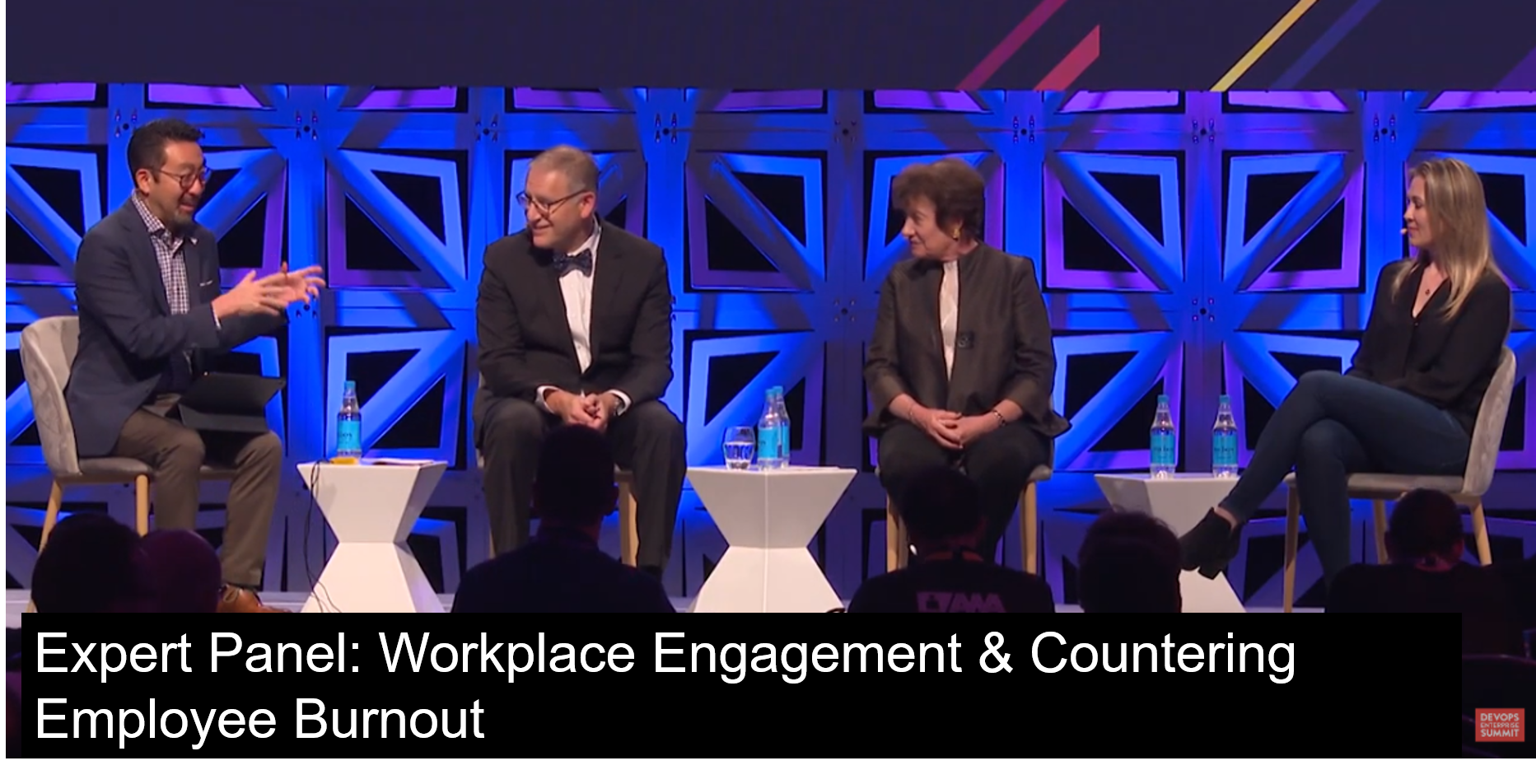
    “Workplace engagement and countering employee burnout,” a presentation at DevOps Enterprise Summit London 2019, is the winner of the Best DevOps Presentation for 2019.

    While there were many great presentations on various aspects of DevOps that were worthy of winning this award in 2019, this presentation and panel transcended DevOps and really touched on an important subject across all walks of life and careers.

    Employee burnout is recognized by the World Health Organization as a valid condition. At the very end of the spectrum, the results can be truly life-threatening. More often, this condition can sabotage the success of your team and organization.

    What made this presentation so powerful was the panel presenting it. Featuring three PhDs, including Dr. Nicole Forsgren, CEO and chief scientist, DevOps Research and Assessment LLC; Dr. Christina Maslach, professor of psychology, emerita, University of California, Berkeley, and a recognized leader in this space; Dr. Steve Spear, principal, HVE LLC; and Gene Kim, it as a great dive into the subject and one that I urge you to watch on the IT Revolution YouTube channel.

    Following this session, I had the honor of interviewing the panel members (minus Gene Kim) and it was also a fantastic dive into the subject. You can view that on Digital Anarchist.

    Best DevOps.com Article of the Year

    DevOps.com article “Mainframes: The Cloud Before the Cloud,” authored by Bob Reselman, is the winner for the Best DevOps.com Article of the Year.

    In his article, Bob shares his insights on why the mainframe was the cloud before the cloud and why the mainframe is a perfect resource for today’s and tomorrow’s cloud computing infrastructure.

    You may know Bob also as the creative genius behind DevOps.com’s RoelBob cartoons, but he is far from just a cartoonist. He has almost 40 years of experience in the tech space. He teaches at several universities and schools and is a sought-after speaker at conferences. He writes and speaks with the voice of experience and expertise.

    Bob is a nationally known software developer, system architect and technical writer/journalist. He has written four books on computer programming and dozens of articles about topics related to software development technologies and techniques, as well as the culture of software development.

    There you have them, the 12 winners of this year’s DevOps Dozen. Thanks to everyone who voted and nominated candidates. Stay tuned for 2020 DevOps Dozen and, as always, thanks for supporting DevOps.com and the rest of the MediaOps family of communities. If you have questions, please write us DD@devops.com.

    — Alan Shimel

  • It’s Almost Here: Predict 2020 Virtual Summit

    It’s Almost Here: Predict 2020 Virtual Summit

    We’re a little less than two weeks away from Predict 2020 Virtual Summit, our annual online event during which we ponder the future of DevOps, serverless, cybersecurity, digital transformation and IT. This year’s event will be held Jan. 23, featuring an impressive lineup of industry luminaries offering up their visions for 2020 and beyond.

    Among the keynote speakers for this daylong event are analysts, practitioners, venture capitalists and thought leaders, each with their perspective on the trends, tools and technologies most likely to impact the IT space. Those scheduled to speak include:

    We also have a full slate of panel discussions featuring industry speakers on topics ranging from IoT security and continuous delivery in a Kubernetes world to the state of analytics and scaling enterprise DevOps. Each panel is sure to be chock-full of lively discussion and insight from those in the know.

    Similar to last year’s event, Predict 2020 also will feature a virtual environment with a conference lobby, presentation theater, expo hall and more. There will also be an exhibit hall where you can interact with other attendees and sponsors, watch videos and download more information. It is truly a conference experience from the comfort of your desk.

    Registration and Sponsor Info

    You can register now at https://predict2020.io. Attendance is free. Download the Program Guide here: https://bit.ly/predict2020ProgramGuide

    If you are curious about what the experts, pundits and luminaries think will be the big trends and stories of the coming year, mark your calendar and attend Predict 2020.

    Save Your Virtual Spot

    — Alan Shimel

  • The 2020 Digital Leader Priorities

    The 2020 Digital Leader Priorities

    When it comes to digital transformation, 2020 promises to be full steam ahead as many of the trends are already well underway. However, it’ll be those businesses that can execute at the quickening rate of technological change that will set the leaders and laggards apart for the years ahead.

    A survey conducted earlier last year by market research firm Vanson Bourne found that 50% of technology leaders have a challenging time managing their digital operations, and nearly 50% of respondents also said it’s their customers that identify problems before their technology and quality control teams do.

    Which brings us to our priority: Digital laggards need to step it up.

    Digital Transformation: Laggards Versus Leaders Packs Separate

    When enterprises shifted from their focus on e-commerce to a broader focus on their digital transformation efforts a few years ago, those who have been successful with their transformations are starting to reap results.

    Still, while the vast majority of enterprises do have digital transformation strategies that they are implementing, a Tech Pro Research report found 70% of respondent companies either had a digital transformation strategy in place or were developing such a strategy. While a separate study, the Kony Digital Experience Index Survey found a strong indication that those efforts aren’t paying off as well as many businesses may like—at least when it comes to their customers.

    According to Kony’s survey, customers are more satisfied when their digital experiences are effortless, and 63% said they would spend more money when their digital experiences are, in fact, effortless. That study concluded that businesses are not listening to the needs of their customers because only 28% of enterprise digital transformation initiatives are explicitly started with customer needs as the priority.

    The 2020 Priority: CIOs and chief digital officers are going to have to ensure that their organizations can execute against their digital transformation strategies. Those that create superior digital experiences are going to start to set themselves further apart from their laggard rivals dramatically. Those CIOs and CDOs at laggard companies are going to have to focus on turning themselves around as quickly as they can.

    The Continued Rise of Robotic Process Automation

    To advance their digital transformation efforts, most enterprises are increasingly turning to robotic process automation (RPA) and software bots to automate any cumbersome and costly manual processes they have in place. While the benefits of RPA and software bots are high, they don’t come without potential danger. These bots, if not managed properly, can open enterprises to increased security and regulatory compliance risks.

    The 2020 Priority: Effectively govern the security of their software bots so the associated risks are mitigated, and they can reap the most significant benefits from RPA.

    Low-Code Development Continues to Help Clear App Backlogs

    The demand for software is relentless, while the availability of professional developers isn’t limitless. And most enterprises have a backlog of application requests they can’t clear. According to a report from OutSystems, currently, 41% of enterprises use low code platforms, with an additional 10% about to start. That was up from 34% in the prior year report.

    Low code development platforms are popular because they help to make software development more accessible to non-developers by creating development more graphical. The low code development platform market is expected to grow to $27.2 billion by 2022.

    The 2020 Priority: focus on low code platforms for business users where it makes sense for them to be able to create their applications and capabilities. Not as a way to displace the development team, but to augment until those applications that warrant development and require professional developers can be built.

    AIOps Starts to Meet Its Promise

    As enterprises increasingly run their business-technology systems on a mix of clouds (both public and private) as well as on-premises systems, managing this infrastructure has grown more complex. The embracing of microservices, continuous delivery and DevOps has enabled organizations to deliver application enhancements more rapidly, automate testing and deliver their software with increased agility. However, interdependencies and the complexity of systems have also increased. This increased complexity shortened the amount of allowable time necessary to resolve system issues.

    When it comes to effective operations management, operations teams need to become as effective as possible since a breakdown anywhere in the environment can initiate thousands, and alerts can create multiple application and service disruptions.

    The 2020 Priority: This increased complexity will prove a catalyst for more enterprises to turn to AIOps. By using data gathered from operations management tasks with machine learning, organizations can become more effective at managing performance and availability and service management. AIOps has remained a buzzword for several years now, with very few actual deployments. That’s set to change.

    Optimizing Microservices Architectures

    Enterprises face a seemingly limitless demand for applications–customer-facing apps, back-office applications, APIs and digital services–and this demand has been a significant catalyst behind the popularity of microservices architectures.

    Microservices also help to ease budget constraints. Almost every survey shows microservices architectures are now in use by the majority of organizations, with benefits being cited, such as improved employee efficiency and customer experience, as well as infrastructure management. Microservices architectures also help enterprises to improve application scalability and bring new digital products and services to market more quickly.

    The 2020 Priority: Identify where microservices architectures can have the most significant impact on revenue-generating processes and prioritize the deployment of microservices to these areas first. It’s these areas where workflow improvement and application agility can have the greatest business impact.

    Looking out at a new year and imagining the possibilities is always exciting, but with the accelerated change in enterprise technologies and the level of digital transformation underway, this year is setting itself up to be more interesting than most.

    — George V. Hulme

  • Cloudera Calls for MLOps Standards Initiative

    Cloudera Calls for MLOps Standards Initiative

    Cloudera put out a call this week for the IT industry to define a set of open standards for machine learning operations (MLOps) and machine learning model governance that could be universally applied.

    Santiago Giraldo, senior product marketing manager for data engineering for Cloudera, said the idea is to create the equivalent of a set of best DevOps practices to create the equivalent of a set of best DevOps practices for employing machine learning models employed by artificial intelligence (AI) applications that will serve to foster portability, interoperability and explainability.

    In the absence of such standards, most AI models are essentially black boxes optimized for specific platforms that many organizations are reluctant to adopt because no one is quite sure how they operate. Furthermore, it’s not all that feasible right now to integrate multiple AI models built using different classes of tools.

    At the same time, Giraldo said the further down the AI path organizations go, the more they realize the AI models they are building need to be either updated frequently or outright replaced as new data sources become available. Most AI models are trained to respond to specific events based on access to a finite set of data. As new data sources are introduced, organizations are discovering the accuracy of recommendations being made by an AI model start to degrade. In fact, only a limited number of AI models are making it into production environments today largely because they didn’t scale as expected.

    Cloudera is already moving down the MLOps path with Apache Atlas, an open source framework designed to integrate data management across explainable, interoperable and reproducible MLOps workflows. Now Cloudera is inviting the industry, including competitors, to collaborate on a broader set of metadata specifications that Anduago said is more a call to action than a specific proposal.

    It’s unclear precisely how such an initiative might be managed. There is no widely recognized consortium initiative focused specifically on MLOps. Thus far, the closest thing might be The Deep Learning Foundation, an arm of The Linux Foundation that connects organizations working on innovative technical projects focused on AI and machine learning.

    Despite all the hype, it’s apparent that AI is still in its infancy in terms of practical use cases. Most organizations can’t afford to hire the data scientists required to build AI models, let alone find them. Even when they do, the competition for AI talent is so fierce that organizations are also finding it difficult to retain that talent. Giraldo said the goal should be to make it easier not only to build AI models but also slipstream them into both new and existing applications.

    Obviously, many of the best DevOps practices that have already been defined can be applied to AI models. The next big challenge might very well be educating data scientists on how to work more closely with developers to build, test and deploy AI models with applications at scale. In the meantime, the existing DevOps community might want to do as much as possible to help prevent a nascent MLOps community from reinventing some wheels that might already exist.

    — Mike Vizard

  • Predict 2020: What Will the New Year Bring?

    Predict 2020: What Will the New Year Bring?

    With the holiday season upon us, our thoughts naturally turn to the next year and what it has in store for us. Will we come into more money? Will we find true happiness? Will there be better integration between DevOps and security? Will there be more Kubernetes instances? The first two may be a little hazy, but it’s a good bet the second two will be discussed during Predict 2020 Virtual Summit, Jan. 23, 2020, where an all-star lineup of industry luminaries will offer up their visions for the future.

    Crystal ball? Check. Swami hat? Check. Insight relevant to the industry? Check. Very smart people who know what they’re talking about? Double check.

    Similar to last year’s event, Predict 2020 will feature a virtual environment with a conference lobby, presentation theater, expo hall and more. More than a series of YouTube live presentations, it is truly a conference experience from the comfort of your desk.

    Speakers

    Our keynote speakers for this daylong event include analysts, practitioners, venture capitalists and thought leaders from the realms of DevOps, cloud native, cybersecurity, digital transformation and IT. Each will share their best predictions for the year 2020 and beyond.

    Among those slated to speak are:

    There will also be an exhibit hall where you can interact with other attendees and sponsors, watch videos and download more information.

    It should be a great day of learning and networking right from the comfort of your own chair.

    Registration and Sponsor Info

    You can register now at https://predict2020.io. Attendance is free.

    If you are curious about what the experts, pundits and luminaries think will be the big trends and stories of the coming year, mark your calendar and attend Predict 2020.

    Save Your Virtual Spot

    — Alan Shimel