Category: Features

  • How To Keep Engineers Happy and Reduce Burnout

    How To Keep Engineers Happy and Reduce Burnout

    Software development can be a mentally taxing profession. It requires intense mental focus, often under heavy workloads, with unclear job expectations and a lack of control. And with recent labor shortages due to layoffs and resignations, teams may also be understaffed, making matters more complicated. These issues can compound and lead to prolonged excessive stress—that’s when burnout hits.

    In fact, one report found that 82% of developers surveyed indicated that they had experienced burnout in the last six to eight months. Some top causes of burnout include increased workload, a poor work culture and personal reasons. But whatever the cause, for 73% of these developers, burnout is negatively impacting their productivity or personal life. So, what can leaders do about it?

    I recently talked with Randall Degges, head of developer relations at developer security company Snyk, to learn how to address ever-present burnout issues in software development teams at scale. Snyk, which provides popular automated vulnerability detection tools, recently closed a staggering $196.5 million series G funding at a $7.4 billion valuation. With that kind of momentum, they must be doing something right. According to Degges, there are a handful of tactics to consider to prevent burnout, like ensuring developers are heard, not assigning tasks without context and making improvements to the DevOps workflow.

    Understanding Burnout

    Burnout is an ever-present issue, explained Degges. It’s common within any high-stress job where you’re on the hook for constantly delivering new features to support the business. Specifically, in software development, burnout can quickly arise when developers don’t feel they have a voice. Or worse, when they’re tirelessly producing software they know won’t ever see the light of day.

    A paper entitled Burnout in software engineering: A systematic mapping study took an interesting systematic approach and analyzed decades of research into burnout in software engineering. It found the following qualitative work-related factors to be most correlated with burnout. (Interestingly, the paper suggested machine learning might soon help produce more quantitative indicators of burnout.)

    causes of burnout diagram
    Causal-relationship of burnout, taken from ‘Burnout in software engineering: A systematic mapping study.’ (Deciphering this diagram gives me burnout!)

    7 Ways to Fight Burnout

    Since we know burnout is a pervasive problem, how can engineering leaders minimize the issue? Below, we’ll outline some specific strategies to consider and how they might help.

    1. Give Developers a Voice

    First, Degges encouraged leaders to ensure developers have a say in what they’re building. He recalled working within a large enterprise, sitting in a cubicle and having absolutely no say in the features his team was working on. This often included code they all knew would never make it into production.

    Slaving away on irrelevant work is never motivating. Instead, a good internal culture provides a comfortable atmosphere where developers can raise issues early on, said Degges, hopefully before leadership puts targets destined to fail on the roadmap.

    2. Provide More Context

    On that note, when decisions are made, don’t throw orders over the wall in a vacuum. Instead, Degges recommended providing more context into what you’re all creating. Giving visibility into the reason behind decisions will align everyone on project roadmaps and create a shared purpose. This helps foster a culture of empathy and listening to others, said Degges. (David Shackelford affectionally calls this attitude HugOps.)

    3. Optimize Communication Patterns

    Optimizing communication patterns for your working environment is also vital to encourage a healthy culture, said Degges. For example, this could equate to optimizing for the physical reality of distributed teams—no one should have to clock into daily standup at 4:00 a.m. If you are working under timezone constraints, Degges recommended adopting more asynchronous communication.

    For instance, his team relies heavily on Slack and provides dedicated channels for sharing ideas. They’ve also incorporated automation to summarize verbose Slack communications with a recap of conversations. In general, removing unnecessary meetings and optimizing communication patterns could greatly reduce the baggage an engineer might carry in their day-to-day work.

    4. Practice Internal Developer Relations

    As they say, practice what you preach. Many tech-driven companies have adopted a developer relations (DevRel) division to build a community with external developer consumers. But are you practicing DevRel internally? According to Degges, DevRel teams should act as a bridge between external and internal teams.

    “Our goal is to not only to think and empathize with customers but also to encourage internal people to be authentic community members themselves,” said Degges. This can equate to empowering internal employees with resources like mentoring, blog writing or speaking opportunities, he said.

    Additionally, other groups are emerging to help increase internal developer satisfaction. For example, platform engineering and developer productivity engineering (DPE) are being applied by many organizations to improve developer experience around internal tools and processes. Naturally, this will require working closely with internal developers to source feedback and make quality improvements.

    Another method to upkeep engineering morale is through automating away toil. And security vulnerability discovery is one area full of painstaking manual tasks. Half of applications have high-risk vulnerabilities, and new exploits in open source libraries are being discovered almost daily.

    As more software supply chain risks emerge, it’s challenging to keep up with the pace of vulnerability discovery and necessary software patching. Therefore, implementing real-time automated vulnerability detection, said Degges, can help remove many manual processes and free up energy to devote to other areas.

    6. Hire Based on the Work, Not the Interview

    Before developers even get the job, they can be put through high-stress on-the-spot tests during the interview process. Experiences here can set the tone for the entire engagement with the company. But activities like white-boarding algorithms are pretty disconnected from day-to-day work, said Degges. In his opinion, engineers should instead be hired based on the quality of their past performances and the work they’ve produced. This could be artifacts like their personal blog or contributions to open source projects.

    7. Apply Artificial Intelligence (AI)

    Lastly, what’s a tech blog post in 2023 without a mention of AI? Generative AI like ChatGPT has rocked the programming world and is being integrated into more development environments and engineering workflows. The future of AI looks very bright and is poised to help developers produce more with less time and resources.

    Of course, automated code generation will require sanity checks, but these tools can certainly help many ancillary functions. For example, Degges’ team is using ChatGPT to spin up content outlines and automate keyword research, helping support their educational content production.

    Soothing the Burnout

    Even with new tools emerging and a newfound emphasis on developer experience, burnout is still prevalent. A full 58% of developers and security professionals said they are currently experiencing burnout, according to a 2022 Cobalt study. This is, perhaps, due to the rapid release cadences of today’s software delivery.

    “In the past, it took months or years for new software updates to roll out. Now, developers only have a matter of weeks,” wrote Bill Mann, CEO of Styra, on Forbes. “Suffice it to say the stakes are high for today’s software teams.”

    Burnout is psychologically taxing and can negatively affect employee happiness and retention. Therefore, it’s an excellent idea for engineering leaders to take it seriously and consider what positive cultural changes they can make.

  • CodeSee Extends Reach of Code Visualization Platform

    CodeSee Extends Reach of Code Visualization Platform

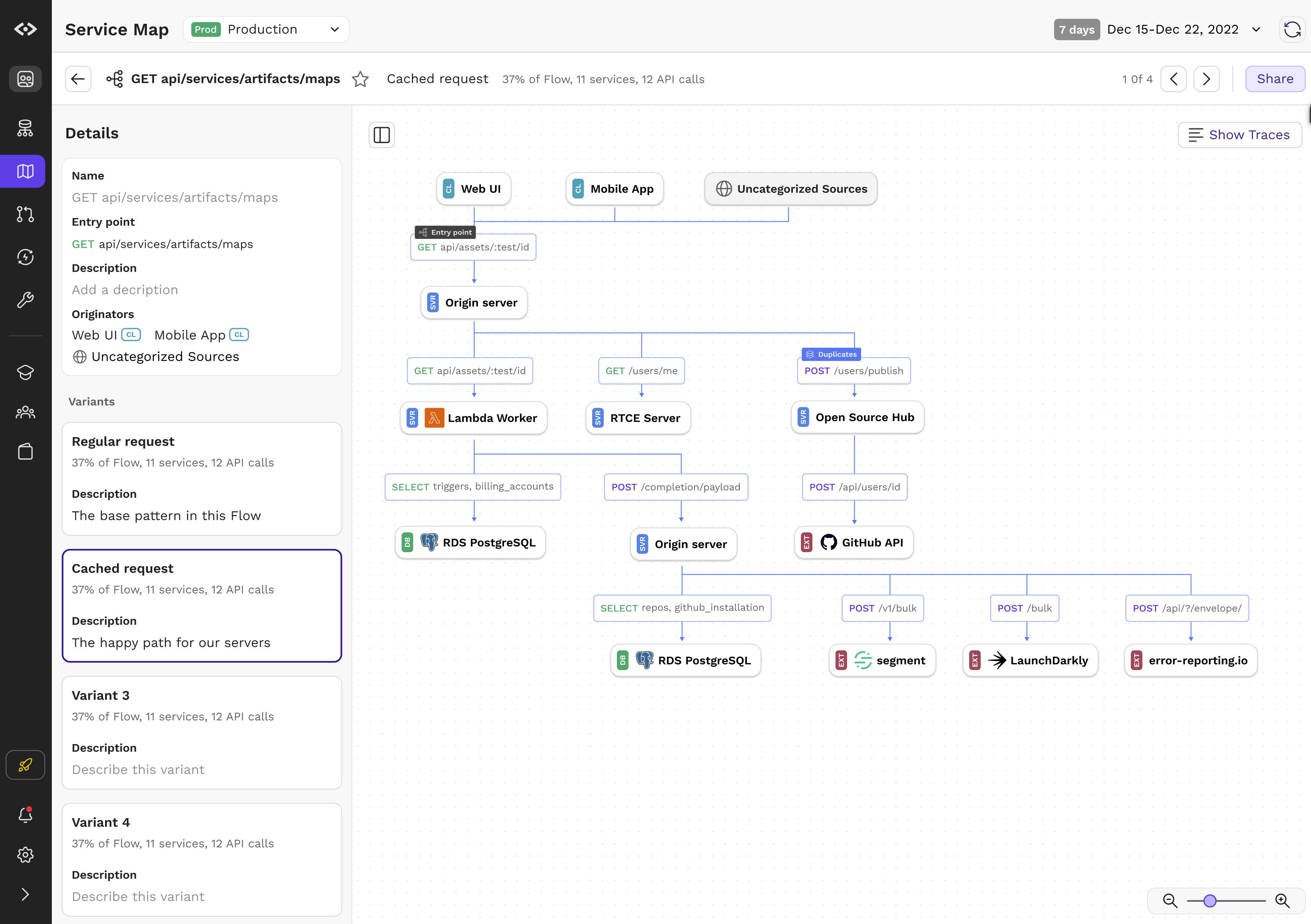
    CodeSee updated its code visibility platform to enable instant mapping of application services, directories, file dependencies and code changes.

    CodeSee CEO Shanea Leven said CodeSee Enterprise 2.0 should extend the appeal of the platform beyond developers to include software engineers managing DevOps workflows.

    CodeSee Enterprise 2.0 provides real-time visibility across multiple repositories regardless of whether the application is a monolith or based on a microservices architecture, she noted.

    In addition, a Code Automations module enables developers to set granular conditions and actions down to the function level, requiring checklists to be complete before allowing developers to move on.

    CodeSee Maps now includes the ability to click to view code directly, while a streamlined Review Maps module has decreased code review time by 30%. Developers can easily share maps to discuss proposed changes or keep necessary code changes as automatic permanent artifacts.

    Additional languages including C#, VB.NET, ASP.NET, Blazor, Java, JavaScript, Go, Python and TypeScript are now supported.

    Finally, CodeSee is making available a dedicated solutions engineering team that provides guidance to connect an organization’s Datadog or OpenTelemetry trace data to CodeSee in less than an hour without storing code or having to first dive deep into traces, noted Leven.

    The core open source CodeSee tool was created because it takes too long today for most developers to pore over a codebase to understand where they might contribute. The larger a codebase becomes, the longer it takes for a developer or software engineer to be onboarded to a new project.

    The overall goal is to improve developer productivity, noted Leven. That’s become a critical issue because many organizations are hesitant to hire additional developers during uncertain economic times; they first want to ensure they maximize the utilization of the teams they already have.

    Application development, of course, is now a team sport. The days when a lone developer cared for an entire application are long over. The issue is finding a way for teams of developers to collaborate more easily in an era where many of them may never have met in person.

    In the longer term, Leven said she also expects that generative artificial intelligence (AI) platforms such as ChatGPT will supplement code visualization tools. Many developers are already starting to use these tools to help generate code faster. That code should, in theory, have fewer errors because it has essentially been copied from other previously validated sources. CodeSee provides a means to visualize that code before deploying it to ensure it will function as promised in increasingly complex application environments.

    One way or another, the tools being provided to developers to boost productivity are advancing. It’s not clear what metrics should be employed to track developer productivity, but the amount of code simultaneously moving through DevOps workflows is going to increase. The challenge DevOps teams face now is keeping track of all the dependencies that exist in that code as application environments are continuously updated.

  • Managing Engineering Teams During Economic Downturns

    Managing Engineering Teams During Economic Downturns

    The tech industry has faced strong economic headwinds over the past year or so. We’ve seen thousands of layoffs at public tech companies, along with weak stock performances and a decline in venture capital funding. Although some analysts see light at the end of the tunnel, the current slump doesn’t seem like it’s quite over yet. As such, some IT leaders are learning to cope with a slashed budget and a leaner engineering team.

    Simultaneously, engineers commonly desire more flexibility from their employers, both in terms of remote working opportunities and flexible hours. In fact, only 15% of developers are working 100% on-site, according to The State of Tech Hiring 2023 survey, which surveyed 14,000 professionals. In addition to being open to flexible working conditions, some organizations are examining how their internal tools could be improved to increase developer experience and productivity. Amid a downturn, leaders might need to consider these new strategies and many others to maintain steady progress.

    I recently met with Amanda Richardson, CEO of CoderPad, to discuss tips to lead your engineering team during this downturn. According to Richardson, finding the right blend of contractors, remote work opportunities, and helpful tooling is necessary amid the current climate. Leaders can also adopt many creative methods to encourage productivity and motivate developers. Below, we’ll overview four ways technical leaders can build and sustain their teams.

    1. Consider Hiring Contractors Vs. Full-Time Developers

    Recruiters often struggle to fill highly technical positions like full-stack developers, backend developers or DevOps professionals. If a company can’t fill full-time roles, contractors are another valid option. According to Richardson, contractors provide companies with more flexibility because they are easier to hire and cut. These mercenaries could swoop in to pick up the slack by solving common tedious problems, like Salesforce integrations or less-sexy administrative work, she said.

    Of course, contractors don’t solve every need, and they’re not bought into the company’s vision. That being said, more and more companies are leaning toward contractors to help fill technical gaps. In fact, 63% of recruiters now say their company hires contingent workers for tech needs, up from 42% last year, the report found.

    2. Target Remote Work

    Work-life balance has become a top requirement among today’s engineering workforce. For example, remote working options rank as the third-highest priority when looking for work, right behind salary and flexible working hours. Many engineers work better without the interruptions and noise of a traditional office space, explained Richardson.

    Yet, the desire to work remotely is at odds with the policies of some large tech companies, who are attempting to push developers back into the office. Interestingly, this may present an opportunity for small-to-medium enterprises to embrace flexibility and get a leg up on the competition. “Give the people what they want,” said Richardson. “If you want to retain talent, remote work is what you must do.”

    3. Use Tools to Fill in the Gaps

    Another method for filling technical gaps amid a downturn is improving efficiency with new tools. For example, platform engineering is a strategy that aims to develop reusable, self-service platforms to manage internal infrastructure. Centralizing common automation and builds could bring more consistency to deployments and reduce grunt work, freeing up engineers and making them more productive.

    Of course, we’ve also seen a lot of interest in new generative AI technologies, as well as development automation using low-code/no-code platforms. According to Richardson, leveraging AI and new automations presents a newfound opportunity to empower the workforce. For example, ChatGPT can solve interesting challenges in the prototyping phase, like generating a mock database or co-authoring support materials. Technical experimentation is a critical aspect of any team, and new AI capabilities could help bolster and support the operational sides.

    4. Retain a Strong Culture

    Lastly, maintaining a vibrant culture is another strategy to help retain talent. Richardson suggested internal hackathons and coding challenges to bring teammates together in an organic way. An internal hackathon could also be organized to rethink internal processes, providing an outlet for engineers to suggest innovative solutions. There’s also the basic stuff, like daily standups or brown bag lunches, that can create a space to share ideas. “It takes a good leader to figure out what’s going to engage their team,” said Richardson. (One business owner I interviewed actually condoned cooperative gaming during work hours to build community and has seen moderate success with this approach).

    Final Thoughts

    Of course, the above suggestions are easier said than done, and it will take a leader with a keen understanding of their unique engineering team’s attitudes and requirements to find their own version of success. On that note, talent comes in many shapes and sizes and traditional education isn’t everything when assembling a development team. In fact, a full 59% of developers do not have a university degree in computer science, the CoderPad report found, indicating that leaders may have to be more flexible when it comes to recruiting.

    In general, following the above tips could be helpful when managing technical talent. Enabling the company to hire contractors and remote workers increases your potential talent pool, and investing in new tools and company culture could help retain workers. Considering half of today’s developers are considering a job change in the next year, leaders should act now to avoid high turnover before it negatively impacts their team’s output and morale.

  • Five Great DevOps Job Opportunities

    Five Great DevOps Job Opportunities

    DevOps.com is now providing a weekly DevOps jobs report through which opportunities for DevOps professionals will be highlighted to better serve our audience.

    Our goal in these challenging economic times is to make it easier for DevOps professionals to advance their careers.

    Of course, the pool of available DevOps talent is still relatively constrained, so when one DevOps professional takes on a new role it tends to create an opportunity for others.

    The five job postings shared this week are selected based on the company looking to hire, the vertical industry segment and, naturally, the pay scale being offered.

    We’re also committed to providing additional insights into the state of the DevOps job market. In the meantime, for your consideration:

    Dice.com

    NerdRabbit
    New York, New York
    DevOps jobs
    $120,000 to $150,000

    LinkedIn

    Tata Consulting Services
    Sunnyvale, California
    AWS DevOps Engineer
    $105,000 to $130,000

    Monster.com

    VANET, Inc.
    Irvine, California
    Software Engineer
    $100,000 to $300,000

    SimplyHired

    Renaissance
    Remote
    DevOps Engineer 2
    $100,000 to $125,000

    Indeed.com

    GEICO
    Remote
    Senior DevOps Engineer
    $82,000 to $185,000

  • npm is Scam-Spam Cesspool ¦ Google in Microsoft Antitrust Thrust

    npm is Scam-Spam Cesspool ¦ Google in Microsoft Antitrust Thrust

    Welcome to The Long View—where we peruse the news of the week and strip it to the essentials. Let’s work out what really matters.

    This week: The npm registry suffers spam infestation, and Microsoft makes Google sad. (more…)

  • New Relic Bets on AI to Advance Observability

    New Relic Bets on AI to Advance Observability

    New Relic is preparing to extend the capabilities of its observability platform by making use of both additional machine learning algorithms and the ChatGPT generative artificial intelligence (AI) platform.

    Peter Pezaris, senior vice president for strategy and experience at New Relic, said during an interview on an episode of TechStrong TV that a prototype of an AI model created using machine learning algorithms will automatically notify developers when code in a production environment is not performing well—right within their integrated development environment (IDE). The notification will then take developers to the precise line of code identified as the root cause of the issue, he said.

    DevOps teams will need to add two lines of code to applications running in production environments to take advantage of this capability. New Relic also plans to use a similar approach to integrate with generative AI platforms such as ChatGPT to create suggestions for fixing code, he added. ChatGPT now makes it possible to create entire programs in ways that output HTML and JavaScript code, so DevOps teams should expect to be able to use the platform to create natural language queries that invoke the proprietary query language New Relic makes available for its observability platform, he noted. Conversely, ChatGPT will make it possible to explain how a piece of code functions in plain language, Pezaris added.

    Previously, New Relic employed a similar approach to integrate its observability platform with machine learning operations (MLOps) platforms used to build and deploy AI models. This was part of a larger effort to integrate MLOps and DevOps workflows, added Pezaris.

    These AI extensions to the New Relic platform are part of a larger effort to extend the reach of the New Relic One observability platform further left toward developers. Most recently, New Relic added a free CodeStream module to its observability platform to give developers access to metrics and telemetry data that will enable them to write higher-quality code faster.

    That approach eliminates the need to wait for IT operations teams to surface issues that usually don’t manifest until long after the code in question was originally developed. The overall goal is to provide development teams with frictionless access to observability data at every stage of the software development life cycle to reduce mean-time-to-detection (MTTD) and mean-time-to-resolution (MTTR) of issues.

    Organizations should also be able to reduce technical debt faster by making it easier to identify issues that, for example, adversely impact application performance.

    In general, most organizations are still in the early stages of achieving full-stack observability. A recent New Relic survey found only 27% of respondents have achieved full-stack observability, and only 5% claimed they have a mature observability practice in place. A third (33%) of respondents also said they still primarily detect outages manually or based on complaints, the survey found.

    On the plus side, the survey also found nearly three-quarters of respondents said C-suite executives in their organization are advocates of observability, and more than three-quarters of respondents (78%) saw observability as a key enabler for achieving core business goals. However, more than half (52%) of respondents said they experienced high-business-impact outages once per week or more and 29% said they take more than an hour to resolve those outages.

    The hope is, of course, that by augmenting DevOps teams with AI capabilities, the number of those outages will be dramatically reduced in the months and years ahead.

  • Vega Cloud Commits to Reducing Cloud Costs

    Vega Cloud Commits to Reducing Cloud Costs

    Vega Cloud today made a commitment to save customers at least 10% on their cloud infrastructure spending or it won’t charge for its software. Vega Cloud’s software automates cloud infrastructure management.

    The Vega Cloud platform enables IT teams to connect, automate, manage and optimize new and existing networks, applications and other multi-cloud IT environments from a single console. As part of those capabilities, the company includes cost allocation and cost identification tools using a curated set of data to surface daily recommendations for cost improvements.

    Vega Cloud CEO Kris Bliesner said the goal is to provide a financial operations (FinOps) capability within the context of a platform capable of acting on those recommendations that, on average, reduces cloud costs by 15% to 25%.

    During uncertain economic times, IT leaders are under more pressure than ever to reduce costs. FinOps has emerged as a discipline for applying a set of best practices for specifically reducing cloud costs. In addition to reducing cloud costs, Vega Cloud is also making a case for reducing the total cost of IT by relying on a single automation framework to manage multiple clouds.

    In the cloud era, many organizations have found themselves employing multiple clouds, each of which requires a separate set of tools to manage. IT teams then need to hire additional staff to manage each of those tools. As a result, the total cost of IT increases with each additional platform added to the overall IT estate.

    Many organizations, of course, have allowed the number of platforms they manage to proliferate. This is because many application deployment decisions were driven by developers who can easily provision cloud infrastructure on their own. However, as concerns over the cost of cloud computing continue to rise, many organizations are revisiting how cloud infrastructure resources are used. Many of those reviews are being driven by finance teams that want cloud costs to become more predictable as cloud computing continues to account for a much larger percentage of the IT budget, noted Bliesner.

    In fact, one of the challenges IT leaders have is finding a way to make sure developers and DevOps teams are more motivated to reduce costs rather than focusing entirely on how fast they can build and deploy applications, he added.

    The reality is the average developer doesn’t need application build infrastructure running 24/7, so application development and testing is a great place to focus on cutting cloud costs initially, noted Bliesner. There’s also plenty of opportunity to better schedule workloads to reduce costs by relying more on lower-cost instances of cloud infrastructure, he said.

    DevOps engineers, by nature, don’t want to be inefficient, so the issue comes down to providing them with the tools needed to identify resources that are being wasted, added Bliesner.

    Most cloud service providers, of course, provide tools that enable IT teams to optimize spending, but Bliesner said those tools don’t go deep enough in terms of exposing issues. As a provider of an independent management framework, Vega Cloud is more committed to providing cost optimization capabilities that can be applied to multiple clouds, he added.

    In general, interest in controlling cloud costs has risen sharply. Vega Cloud has been engaged with more customers researching this issue in the last four weeks than in the last three years, said Bliesner. The challenge—and the opportunity—is to not just cut cloud costs but also identify patterns that make it easier to predict them, noted Bliesner.

    At this juncture, cloud costs are coming down. The only issue left to be determined is whether that goal will be accomplished with precision versus a fiat that adversely impacts an organization’s ability to continue to build and deploy software.

  • How Developer Productivity Engineering (DPE) Enhances Software Delivery

    How Developer Productivity Engineering (DPE) Enhances Software Delivery

    Developer experience (DX) is in the zeitgeist, and for a good reason. Digital demands are increasing, yet the market faces cautious IT budgeting, workplace burnout, and high resignations. The idea is that quality developer experience can help keep the remaining talent happy and increase productivity. And organizations are considering many strategies for increasing DX, such as creating more usable interface interfaces, maintaining intuitive documentation and abstracting complexity with more automation and low-code.

    Another way to increase productivity is by slimming down the time it takes to test and deliver software. There are many potential hurdles in the way of deploying new code, and a cumbersome pipeline can easily take a programmer out of the flow. The practice of streamlining this toolchain is known by some as Developer Productivity Engineering (DPE). DPE focuses on improving developer productivity through accelerating DevOps processes, like CI/CD pipelines.

    I recently met with Hans Dockter, founder and CEO of Gradle, to understand the core tenants behind DPE. According to Dockter, the dialogue with the toolchain is a developer’s bread and butter, and optimizing this exchange is vital for quickly validating new ideas. Below, we’ll seek to understand what DPE is and how it might increase the pace of software delivery. We’ll also consider some methods for implementing DPE in practice.

    Roadblocks in the Development Toolchain

    Engineers are always experimenting with new feature development. “A developer needs to have a dialogue with their toolchain to see if their hypothesis makes sense,” explained Dockter. Yet, there are many potential barriers to instant feedback. For example, a toolchain may be comprised of code compilation, static code analysis, unit testing, performance testing, security testing and other checks. Running new changes through a CI/CD pipeline can take anywhere from a few seconds to minutes or hours. In his work, Dockter has even encountered teams that deal with a 24-hour feedback cycle time.

    Long wait times can be taxing as they demand users to switch contexts. Neuroscientists say that multitasking depletes glucose in the brain and leads to exhaustion. Similarly, Dockter argued that long waiting periods with the toolchain can take developers out of the flow and slow down the pace of software delivery. “You cannot have a good developer experience without good productivity.”

    Furthermore, he added that engineers often encounter untrustworthy signals from their toolchains. If testing suites produce too many false positives, for example, you can lose faith in the tooling altogether. This equates to a bad experience and may result in developers overlooking important signals that do matter.

    Understanding Developer Productivity Engineering (DPE)

    DPE is all about improving developer efficiency. And quickening the feedback cycle is one method to enhance developer productivity. According to Dockter, DPE applies a few strategies to streamline this feedback loop and shorten the timeframe:

    • Optimizing which tests are run: First, Dockter recommended only running tests relevant to the change at hand. Optimizing test selection can reduce bulky builds and significantly reduce the time it takes.
    • Caching: Caching is integral to any web application, so why not apply similar heuristics for the development pipeline? This could involve caching code that is not changed. “Changes are often incremental from one feedback cycle to the next. A lot of output is produced that can be reused,” said Dockter.
    • Predictive test selection: To automate test optimizations, Dockter recommended predictive test selection to understand which tests are sensitive to which areas of code. This would utilize an AI trained on release mechanics to help pinpoint what components the changes modify and, thus, what tests to run.
    • Test distribution: Another way to accelerate the pipeline is by distributing testing processing. Using multiple machines to test different areas simultaneously could greatly speed up the routine. Test distribution “is a modern approach to test parallelism that accelerates test execution by taking existing test suites and distributing them across remote agents to execute them faster,” wrote Marc Philipp and Hans Dockter in The Developer Productivity Engineering Handbook.
    • Monitor the toolchain: Lastly, it’s good to continuously monitor failure analytics to discover where the toolchain itself is causing trouble, said Dockter. On the side, CI/CD pipelines are not immune to security vulnerabilities and should be treated with the same security standards as other infrastructure.

    DPE principles have already been applied at DoorDash, LinkedIn, Netflix and other organizations.

    Benefits of Developer Productivity Engineering

    In the last few years, DX has moved from niche to mainstream, said Dockter. In fact, DX has even entered the C-suite, as certain companies have embraced the role of chief developer experience officer CDX). And with the emerging discipline of platform engineering, we’re seeing an even greater focus on streamlining internal DevOps workflows.

    And although platform roles may have been viewed as second-class engineers in the past, said Dockter, they are held in high esteem nowadays. “It’s as important as the other engineering work we’re doing,” he said. Developer productivity engineering seems to align with these principles, helping organizations manage the effects of an exponentially expanding code base. In the end, an investment in DPE, like platform engineering, could bring more satisfactory working conditions and accelerate the pace of software development.

    “DX is a transformative opportunity, but most companies invest incrementally. The economic benefits are transformative for companies developing infrastructure to get more output from their developers.”

  • env0 Extends Workflow Platform for Provisioning Infrastructure

    env0 Extends Workflow Platform for Provisioning Infrastructure

    env0 today announced it has added support for additional infrastructure-as-code (IaC) tools and the Microsoft Azure DevOps platform to its workflow automation and management platform.

    Fresh from raising an additional $35 million in funding, env0 CEO Ohad Maislish said while Terraform remains the most widely used IaC tool, there are now more organizations using alternatives such as CloudFormation from Amazon Web Services (AWS) along with Pulumi and Terragrunt.

    Other capabilities added to the env0 platform include automated drift detection, multi-tier workflows, auditing, external logging platform integration, support for plug-ins and expanded role-based access controls and OpenID Connect (OIDC) authentication.

    Finally, env0 is extending its existing Terraform support to include support for remote backend, module registry, remote plan, and the ability to plan and apply pull requests. The capabilities are especially critical for organizations that are now building microservices-based applications that require more sophisticated workflows to provision infrastructure resources, noted Maislish.

    Most IaC tools are designed to enable developers to address technical implementation and provisioning issues without regard for user experience, security and governance, or business goals. The env0 platform makes it possible to create infrastructure environments with guardrails in place that enable DevOps teams to centrally address governance issues, noted Maislish.

    In general, there’s now a lot more focus on continuous delivery (CD) as organizations look to continuously update applications, said Maislish. That requires a more structured approach to provisioning infrastructure across teams of developers that is managed by a platform engineering team, he added. The challenge is that CD is dangerous—in the sense that mistakes can easily be made, noted Maislish.

    It’s not clear whether organizations are embracing platform engineering to centralize the management of DevOps workflows, but the number of organizations that have mastered CD best practices remains low. Most organizations are adept at continuous integration (CI), but given the number of unique platforms on which applications are deployed, CD has proven more challenging to adopt. In theory, a platform engineering team should make it easier for DevOps teams to define a consistent approach to CD that could be adopted across an organization.

    Regardless of the DevOps approach, the overall goal is to improve developer productivity. The problem is that in the absence of any guardrails, developers have been provisioning cloud infrastructure as best they can. Not surprisingly, cloud computing environments are rife with misconfigurations that create vulnerabilities that cybercriminals have become more adept at exploiting. The fundamental issue is not such much the cloud infrastructure that is available as much as it is the processes employed to provision the resources. In their rush to build and deploy applications, developers will sometimes ignore best practices unless guardrails force the issue.

    One way or another, IT organizations are exercising more control over cloud computing environments as the security of software supply chains becomes a bigger issue. The only thing that remains to be resolved now is how to put much-needed guardrails in place in a way that adds the least amount of friction possible.

  • Cloud Management Issues Are Coming to a Head

    Cloud Management Issues Are Coming to a Head

    A survey of 1,300 technology and data executives found that more than a decade after the initial rise of cloud computing, organizations are still struggling to manage these environments.

    Conducted by Wakefield Research on behalf of NetApp, the survey found 98% of respondents reported their business has been impacted by everything from the increasing complexity of data and heightened cybersecurity risk to lack of visibility into business operations and staff burnout.

    Top challenges include cybersecurity risk (45%), staff not taking full advantage of business applications (44%), increased skepticism about the cloud from leadership (44%), lack of visibility into business operations (42%), going over budget (37%) and burning out staff (31%).

    A full 88% continue to encounter technical challenges, including data mobility between clouds (33%), security risks (33%) and interoperability between cloud services (30%).

    The top drivers of cloud investments are scaling artificial intelligence (AI) and automation (39%), followed by driving business innovation (35%) and creating digital experiences (34%).

    Organizational challenges encountered include having a clear vision for cloud strategy (32%), establishing the right level of governance (31%) and managing costs (30%). A full 84% are under pressure to show short-term return on investments (ROI) in cloud computing platforms, with 76% noting CFOs and other business leaders are skeptical of savings. Nearly half of the tech executive respondents (49%) reported that when cloud strategy discussions occur, cost concerns come up often or all the time. As a result, nearly three-fourths of executives (74%) said tiered workloads are either very or extremely important, the survey found.

    Other factors impacting multi-cloud strategy include environmental, social and governance (ESG) concerns (79%) and data sovereignty (74%), the survey found.

    Ronen Schwartz, senior vice president and general manager for cloud volumes at NetApp, said as more organizations employ multiple clouds, total costs tend to rise. Each cloud platform requires mastering another control plane, which means someone in the IT organization must have the right skills to manage, he noted. IT leaders are attempting to exercise more control over cloud deployments, but developers, for a variety of reasons, have already deployed workloads across multiple cloud computing environments, added Schwartz. One approach to achieving that goal is to make sure data is stored on the least expensive tiered service possible for any given specific use case, he noted.

    Less clear is whether an uncertain economy might push organizations to consolidate workloads on fewer cloud computing platforms. Even then, the cost of moving a workload is not trivial given the proprietary application programming interfaces (APIs) that many developers have likely invoked as DevOps built and deployed cloud applications.

    Of course, there is no going back; the issue now becomes how to define a set of best practices for managing cloud computing environments in a way that minimizes costs. It turns out that cloud computing can be more costly than an on-premises IT environment simply because the infrastructure resources made available to developers are almost infinite. In the final analysis, however, that can turn out to be too much of a good thing—especially if organizations wind up spending more on IT to support these environments. Many of those environments are not rigorously managed because, for example, developers may not be inclined to spin down a development environment on a Friday because it takes too long to spin it back up the following Monday.

    One way or another, however, a level of long overdue scrutiny of cloud computing costs may be on the horizon.