Category: DevSecOps

  • ShiftLeft Brings Security Workflows to DevOps Processes

    ShiftLeft Brings Security Workflows to DevOps Processes

    ShiftLeft has updated its NextGen Static Analysis (NG SAST) tool to include workflows that are purpose-built for developers.

    Company CEO Manish Gupta said the security workflows are designed to make it easier for DevOps teams to incorporate them within their application development and deployment processes. In fact, a survey of more than 165 developers, application security and DevOps professionals conducted by ShiftLeft finds 89% of respondents said the current disconnect between developers and cybersecurity teams is the biggest inhibitor of productivity.

    The issue with rival static analysis tools is they were not designed from the ground up to incorporated into a DevOps process, said Gupta. As a result, he noted, security workflows are managed around application development processes rather than being incorporated within them.

    The survey finds that most IT teams are performing security scans too late in the software development life cycle (90%) and when they do discover an issue they often lack any remediation guidance (88%).

    Most existing cybersecurity processes can’t keep pace with the rate at which applications are being deployed. The survey finds nearly 70% of software development organizations are releasing multiple times per month or more, with 18% releasing at least daily.

    Gupta said NG SAST overcomes that issue by automating code analysis during every pull/merge request. That approach enables developers to address security issues much the same way they do any other bug. Rather than having to wait on a report from an application security team, developers can remediate a security issue from within their development environment log before it ever shows up in a report, he said.

    Productivity and application quality improves because vulnerabilities get fixed faster while the code at issues is still uppermost in the mind of the developer, Gupta said.

    DevOps teams can also create build rules that accept or deny merges based on how many security vulnerabilities there are, he added. That capability prevents security flaws from become too deeply embedded within the build process before they can be more easily remediated.

    Gupta said security scans are also run locally where applications are deployed, which means source code never has to leave the organization. That approach also eliminates the need for network and firewall architecture updates to access an external scanning service. It also reduces bottlenecks inside organizations that might need to do as many as 20 scans per hour, he noted.

    Overall, Gupta said it’s not uncommon to see developer productivity increase by a factor of 40 because ShiftLeft NG SAST enables scans to be run instantly. The days when developers took a coffee break while waiting for a security scan to run are now over, he said.

    Of course, the level of productivity gain for development teams that might be gained by embedding static analysis within the application development process will vary widely. However, given the fact that developers outnumber cybersecurity professionals by several orders of magnitude, it’s also readily apparent dedicated application security teams can’t keep up. Unless organizations give developers the security tools they need, any ambitions an organization may have about implementing best DevSecOps processes will remain largely a pipe dream.

  • Snyk Report Finds Decline in Open Source Vulnerabilities

    Snyk Report Finds Decline in Open Source Vulnerabilities

    Snyk, a provider of tools for discovering and remediating vulnerabilities in open source code, today published a report that finds the number of new vulnerabilities discovered in open source software packages has declined 20% on a year-over-year basis. However, the bulk of the vulnerabilities being discovered are considered to be high severity, the report finds.

    Alyssa Miller, application security advocate for Snyk, said the decline represents a significant improvement as developers become more conscious of cybersecurity issues. As long as humans write code there will always be security issues; however, Miller said the latest report suggests improvements in open source security are likely to continue as more developers embed vulnerability scanning tools within their application development tools.

    Those tools enable developers to discover vulnerabilities in their code long before they ever find their way into a production environment, she noted.

    The Snyk report is based on a survey of 500 developers, security practitioners and IT operations staff and scans run by Snyk on open source software packages. It finds the top vulnerability currently impacting scanned projects is prototype pollution, which results in objects in JavaScript applications being modified, was found in nearly 27% of all the projects Snyk surveyed.

    Better-known vulnerabilities, such as cross-site scripting attacks, are still being reported in high numbers, but Snyk reported the number of projects actually being impacted by this class of vulnerabilities is fairly low. These threats appear to be getting caught and remediated much earlier than many lesser-known vulnerabilities, said Miller.


    Want to learn more? Tune in Tuesday, June 30, at 11 a.m. Eastern for The State of Open Source Security in DevSecOps Pipelines: A Panel Discussion, a devopsy.kinsta.cloud webinar hosted by Snyk


    The report notes the bulk of the vulnerabilities discovered continue to involve indirect dependencies (70%) within packages built using tools such as Node Package Manager (86%), Ruby (81%) and Java (74%). The survey also finds 60% of organizations do not fully inventory the dependency trees in their software.

    Despite the progress being made, Miller said it’s clear much work needs to be done. For example, the survey finds more than 30% do not review Kubernetes manifests for insecure configurations. Requirements for security-related resource controls in Kubernetes are also not widely implemented, according to the survey. Many container images labeled as final contain large numbers of known vulnerabilities—the 14.3 Node image had 642 known vulnerabilities, for example.

    In addition, 44% of the participants indicated that they are currently using Kubernetes to orchestrate their containers. Many respondents who said they use Kubernetes also employ Helm to package applications (40%). According to the report, 68% of stable Helm Charts contain an image with a high severity vulnerability.

    Ironically, Miller noted many of the same vulnerability issues that have derailed many “golden image” initiatives in the past decade appear to be manifesting themselves again in the age of containers.

    Finally, the survey finds 57% of respondents have implemented static code analysis tools (SAST), followed by employing security test cases during quality assurance (28%); dynamic application security testing (DAST) (20%); software composition analysis (19%); and threat modeling (19%).

    Despite that relatively low reliance on security tools in the development process, it’s clear progress is being made as DevOps teams and cybersecurity teams collaborate more closely. As more security tools are incorporated into the DevOps pipeline, application security should begin to improve at even faster rates.

  • SaltStack Looks to Automate DevSecOps Processes

    SaltStack Looks to Automate DevSecOps Processes

    SaltStack announced today it has integrated its automation framework with a variety of third-party security platforms to further the adoption of best DevSecOps processes.

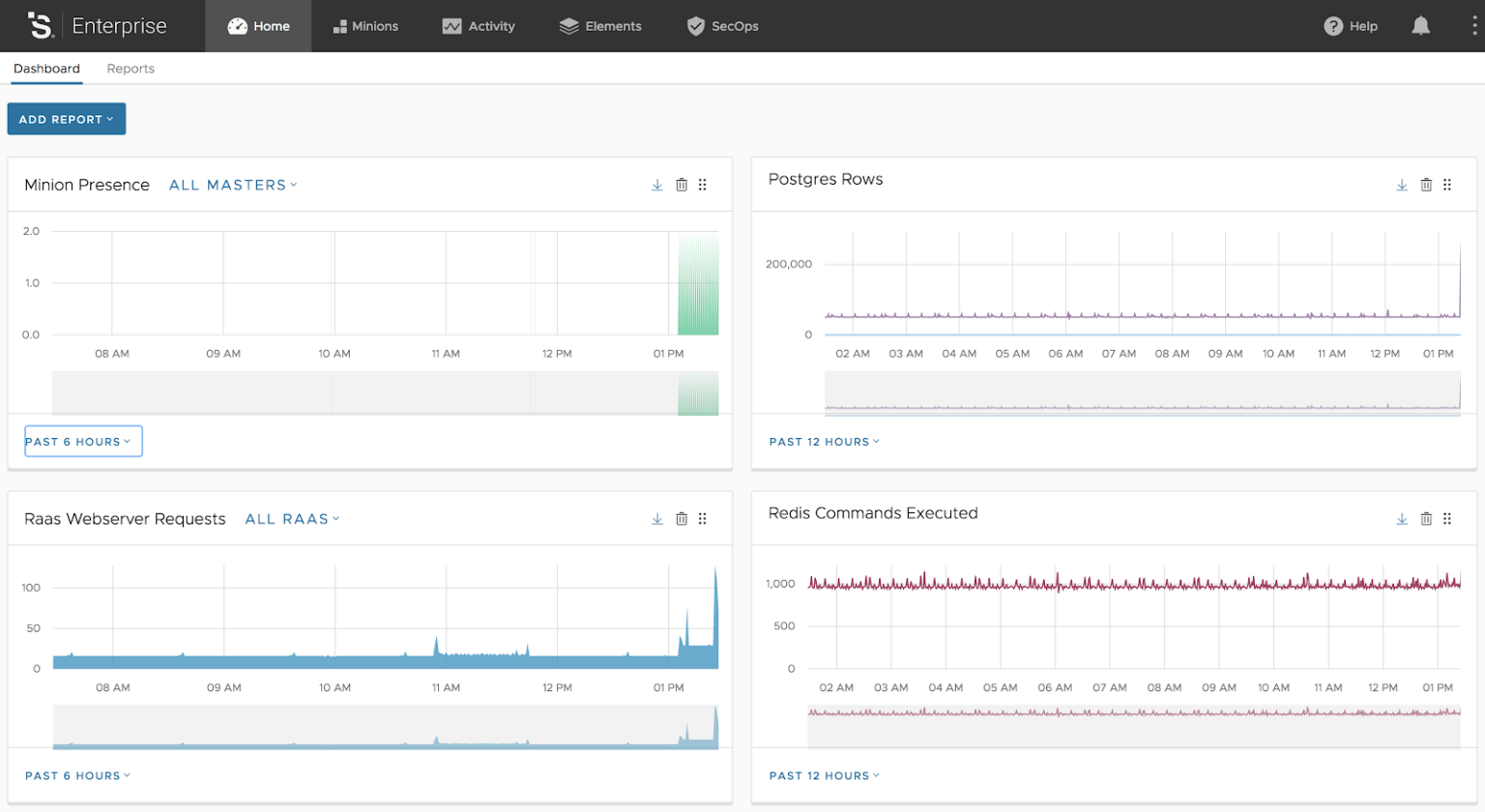
    Mehul Revankar, director of product management for SaltStack, said version 6.3 of SaltStack Enterprise provides integration with offerings from Splunk, Tenable, Qualys, Rapid7 and Kenna Security. Data generated from vulnerability scans conducted using tools from Tenable, Qualys and Rapid7 can be directly imported into SaltStack Enterprise to inform automated DevSecOps processes, while integration with Kenna Security makes it easier to automate and prioritize vulnerability remediation based on the level of risk.

    Revankar said that latter capability is crucial because remediation efforts should not be prioritized based on the severity of a vulnerability alone. For example, a vulnerability may be discovered in an application that sits behind a firewall, but if that application doesn’t provide access to the web an organization may decide to not patch that vulnerability immediately regardless of its severity because the risk of a breach is still relatively low, he said.

    These capabilities will enable SaltStack Enterprise to serve as a foundation for providing security orchestration, automation and response (SOAR) capabilities within the context of a DevSecOps process by making it easier to incorporate cybersecurity within the context of a larger playbook for automating the management of IT, he added.

    Most of those playbooks will be developed by DevOps teams in collaboration with cybersecurity professionals, noted Revankar.

    In addition to improving DevSecOps processes, SaltStack hopes to make it easier for external applications such as Splunk and Datadog to consume data generated by its framework by providing compatibility with Prometheus, an open source IT monitoring tool developed under the auspices of the Cloud Native Computing Foundation (CNCF). A SaltStack Enterprise Splunk add-on tool has been added to the Splunkbase repository.

    SaltStack is also making available a performance and health dashboard to enable DevOps teams to track 25 SaltStack Enterprise metrics that are surfaced using the Prometheus data format.

    The open source Salt framework on which SaltStack Enterprise is based has emerged as a popular option for automating IT processes. Because it is based on Python, the barrier to adoption for Salt in terms of programming expertise is comparatively low to other programming languages. As such, more IT operations teams have been inclined to learn Python to leverage Salt to automate processes.

    Like most vendors that have adopted open source business model, SaltStack extends the capabilities of Salt via an enterprise edition that it both extends and provides commercial support.

    Interest in IT automation is on the rise as organizations of all sizes look to maximize what limited cybersecurity resources they have and cut costs. IT automation in the form of SOAR presents an opportunity to consistently apply cybersecurity policies more broadly without having to increase the size of the IT organization.

    The challenge, of course, is having the expertise required to build a playbook. In the case of open source frameworks, many of those playbooks are shared among the members of a community such as Salt. Regardless of how those playbooks are acquired, it’s clear that as IT becomes increasingly more complex most IT organizations are not going to be to do without them.

  • The Secret to Winning at DevOps: Are You Up for the Challenge?

    The Secret to Winning at DevOps: Are You Up for the Challenge?

    The main idea behind DevOps is to enable companies to keep up with the increased software velocity and advancements in agile culture for a smoother end-to-end software delivery cycle.

    The main goal of DevOps is to accomplish integration and automation, which is why implementing this philosophy can be challenging. Not only do you need to replace older methods and practices, but you’ll also have to change the mindset of the developers and the operations team to ensure they work in sync.

    Several IT operations teams and software teams have adopted DevOps practices into their work culture for faster evolvement and improved innovations. The pipeline comprises continuous integration, testing, deployment, as well as monitoring application and system performance.

    Introducing new DevOps tools and changing the mindset to prepare teams for the fast-paced world remains crucial for a successful implementation.

    Despite the revolution that this philosophy brings to software development, several enterprises find themselves taking DevOps to an unproductive extreme. To remain productive, one of the aspects that teams need to work on is reducing rework, and the best way to ensure this is automation.

    Understand How DevOps Works

    Under a DevOps model, the development and operations teams are integrated into one to prevent them from getting siloed. This also improves collaboration and productivity.

    You see, it brings alive the possibility of both the teams thinking more alike, working together and sharing responsibilities. This is done by automating code testing and workflows, automating infrastructure and continuously measuring application performance.

    In some models, even the QA and security teams merge with the dev and ops. In cases where security becomes the primary focus, the name gets modified to DevSecOps.

    In essence, the focus of DevOps is on automating processes that were otherwise manual and slow. Teams use a technology stack and tooling that can operate and evolve applications more reliably and swiftly. As engineers will be able to accomplish tasks such as deploying code and provisioning infrastructure faster with reduced issues, teams can reach testing and maintenance stages quicker.

    Balance Between Standardization and Adaptability

    Software products are mostly developed from the customers’ perspective, and if not, from end-user experience. Often, developers work backward to identify customer needs and wants for ascertaining successful innovation.

    One of the biggest challenges when developing a software development life cycle (SDLC) strategy for organizations is to consider dynamic customer needs, strict compliance policies, unpredictable market trends and company goals. To ensure a consistent workflow, DevOps teams need to adopt standardization. In fact, workflows, technologies, processes, protocols and metrics need to be standardized before they can be automated.

    This is also the main reason why organizations adopting DevOps need to strike a balance between standardization and adaptability. One industry that has excelled at this has been the financial industry, which has been leading the charge when it comes to adopting the latest software delivery practices and technologies, including DevOps. Financial executives view DevOps as being a way to improve security and risk and governance strategies. 

    The result is that cloud-based financial services are now automating virtually all of their processes through their software delivering pipelines, which makes tasks such as scanning receipts, sending invoices, tracking expenses or making payments seamless as they sync to your account. This simpler process is beneficial for boosting developer productivity and resource utilization, and for enabling enterprise scale management. If anything automating processes is becoming necessary for achieving higher product quality, compliance and scalability. 

    As mentioned above, new DevOps tools need to be introduced to team members to keep up with the constantly evolving strategies and implementation. But to prevent the creation of silos between teams, mechanisms need to be developed to make the adoption of new technologies easier. 

    Achieving the delicate balance between standardization and automation will help eliminate communication gaps, performance bottlenecks and silos between the different teams.

    Benefits of Automation in the DevOps Landscape

    The following are the advantages of adopting a DevOps philosophy:

    • Code Development. Source control will keep everyone in the loop by managing, tracking and documenting any changes in code. This can be time-saving, and reduce the complexity of software projects.
    • Smoother Testing. Testing is a continuous process in DevOps frameworks that includes system communication, several test integrations, predicting and tracking issues, and integrating approved automated builds. In the absence of automation, executing and managing continuous testing could be a rather tedious job that might cause problems between developers and the operations team.
    • Better Visibility. The main job of the ops teams is to be aware of the code changes, ongoing problems and the impact of a specific code on the end goals. Plus, when they operate in a DevOps environment, they need to keep the developers in the loop as well.
      For example, if a system administrator from the ops team identifies code issues weeks after submission, it puts more pressure on developers. Now, the developers have two jobs: solve the problem in the previous code, and simultaneously work on making progress with the new code. This is what gets time-consuming, which can harm the company’s market standing. To remain ahead in the competition, innovation needs to be frequent and accurate.
      When there is a constant feedback loop between the dev, ops and QA, bottlenecks, and silos are eliminated, productivity is improved and customers are happier due to quicker innovation.
    • Continuous Integration and Delivery. Automation can help deliver appropriate software built, data, code changes and tests to target environments. An example is how web hosts for e-commerce businesses need to be updated frequently for robust deployments. Automated testing will help ensure that code is delivered properly and doesn’t introduce new bugs, thus creating a platform with a superior user experience.
      This, in turn, helps DevOps teams to introduce frequent software changes by deploying error-free codes and continuous testing.
    • Data Processing and Monitoring. The teams also need to measure and monitor the performance of their environment, which can be done by reading and analyzing system logs. But the existence of hundreds or thousands of servers in the environment can make it complicated.
      Automation will allow the teams to make sense of all the data and let them know how an application is performing and whether there are any bottlenecks.

    Getting the Balance Right

    Organizations need to realize that automation involves placing technologies around once-manual processes. The catch here is as the processes will become inherently repeatable, they need to be correct. Otherwise, organizations will only have flawed processes running faster, which will ultimately defeat the purpose of adopting DevOps in the first place.

    Companies need to understand adaptability as well. This can be done by mixing both the old as well as new systems. For this purpose, an inventory of all applications, data stores and development processes for promoting meta development processes that include design, development, testing, deployment, configuration management and so on can be made.

    In the end, the secret to winning DevOps is aligning DevOps tools with your organization’s goals – not following the footsteps of other organizations.

  • CNCF Elevates SPIFFE Spec to Secure App Services

    CNCF Elevates SPIFFE Spec to Secure App Services

    The Technical Oversight Committee (TOC) of the Cloud Native Computing Foundation (CNCF) announced that the open source Secure Production Identity Framework For Everyone (SPIFFE) specification and the SPIFFE Runtime Environment (SPIRE) have become incubation-level hosted projects.

    Andrew Harding, SPIRE maintainer and a principal software engineer at Hewlett Packard Enterprise (HPE), said the elevation of a potential standard to authenticate software services using cryptographic identities that are platform-agnostic could go a long way toward advancing the adoption of best DevSecOps practices.

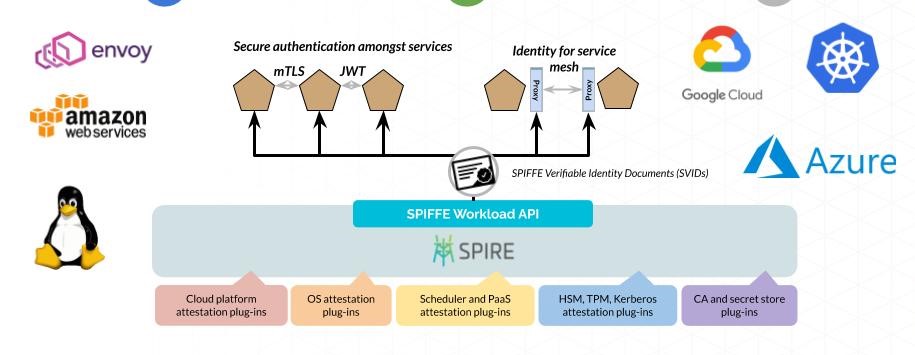
    At the core of SPIFFE specification are short-lived cryptographic identity documents known as SVIDs that are invoked via an application programming interface (API). Workloads employ an SVID when authenticating to other workloads by establishing a TLS connection or by signing and verifying a JSON web token (JWT).

    Previously a sandbox level project, the SPIFFE specification is designed to reduce reliance on hard-coded secrets to authenticate application services, Harding said. Instead, developers will be able to more easily invoke multi-factor authentication to issue and verify identities for any type of application service. Each service is given its own identity, he noted.

    Amazon, Bloomberg, Google, HPE, Pinterest, Square, TransferWise and Uber are all contributors to SPIFFE. Since joining the CNCF last year contributors to SPIRE have added support for Amazon Web Services (AWS), Google Cloud Platform (GCP), Microsoft Azure, Kubernetes and bare-metal servers.

    SPIFFE and SPIRE are designed to work across both monolithic and microservices-based applications. The latter are not likely to completely replace the former anytime soon, so IT organizations need a consistent approach to authentication regardless of how an application is built, noted Harding. SPIFFE and SPIRE together enable an IT organization to implement a zero-trust architecture spanning multiple applications, he said.

    Ultimately, Harding said the goal is to enable better application security without compromising flexibility. As an added benefit, SPIFFE and SPIRE don’t require developers to share application secrets to enable interoperability between services running on different platforms. That’s because SPIRE doesn’t generate SPIFFE identities that can be used to authenticate to other systems nor does it store existing keys such as a database password on behalf of a workload. Each SVID generated is unique to the service use case.

    As the number of services and platforms being employed continues to increase, it’s not practical to continue to rely on approaches to authentication that rely on hard coding. The level of dependency that exists between services requires a more frictionless approach to authentication.

    It may be a very long time before reliance on tokens such as passwords disappear. However, it’s clear specifications such as SPIFFE, in the long run, will transform application security. The challenge now is not only getting developers to appreciate a new approach but also convincing skeptical cybersecurity teams that long have relied on some form of hard or soft token to secure applications. Given the number of times those tokens are misplaced or lost, there are more than a few IT help desk professionals wishing tokens would become obsolete sooner than later.

  • Why DevOps and Federal Agencies Need Each Other

    Why DevOps and Federal Agencies Need Each Other

    In times of crisis, the U.S. government needs to bring in tech tools fast to help solve the problem.

    First, now is a vulnerable time and weaknesses are exposed in telework infrastructure as the government rapidly shifted to remote work. Cyberattacks are up as adversaries try to exploit the weaknesses. Second, federal agencies are also overloaded with traffic, to the point that their technology is reaching a breaking point.

    DevOps and DevSecOps may be the key to solving these issues for government agencies. Both, DevOps and DevSecOps, ensure delivery of a product is fast, secure and constantly evolving, which is vital to helping the U.S. government maintain continuity during the ongoing pandemic and set up future stability.

    The Air Force experienced these benefits firsthand when its internal DevOps team pushed out at least 10 updates a day, sometimes up to 30, and sustained that agile standard for some time. This agility, security and speed allows the Air Force to focus on the end-users and mission owners.

    If the government doesn’t have DevOps, it will lack the foundation needed to build a strong tech stack and work with other emerging tech solutions.

    DevOps Use Cases in Government

    With the government workforce spread out geographically, government networks are experiencing an increase in users plugging into virtual environments. Continuous patches and updates keep government systems and networks secure, functional and able to handle the load that comes with a surge of users. DevOps ensures the government has the tools and processes in place to support growth and prevent network failure under the additional stress of onboarding thousands of users each day.

    The government also needs tools that can help the distributed workforce maintain continuity, especially when it comes to security, operations and maintenance. Employees need correct access to do their jobs, but agencies must maintain control over what data is shared and how to confirm users are who they claim to be. Access management is vital in remote environments to ensure tighter control over who has privileged access.

    A modernized approach to privileged access tools means developers can hit targets of continuous delivery to improve systems and security. Otherwise, exploitable vulnerabilities are exposed to bad actors. Solutions for secure privileged access, especially across a distributed workforce, are key to scaling tech across government.

    With a hasty shift to remote work also comes change management, which is already difficult, not to mention the additional strain of a pandemic. In a crisis, federal agencies can’t wait for in-house solutions that take a long time to develop. The government needs commercial tech that can help build remote infrastructure.

    Federal Market Opportunities

    As the government responds to COVID-19, federal agencies are in search of technologies and tools that can support their missions. Many agencies are feeling immediate strain on their IT systems as part of the shift to telework, and have received reallocated and additional budget — with broad latitude on how they spend — and procurement flexibility to modernize their systems. This opens up opportunities for tech companies, like those in the DevOps and DevSecOps space.

    Tech companies that already work in the federal market know that while the government procurement process can be lengthy and complex, it can be well worth the effort for stable revenue. In times of economic uncertainty, working with the federal market can help companies build recession resilience.

    Another part of the opportunity now is that the government needs flexible and scalable technologies that can help them respond to the COVID-19 crisis, but first, they need DevOps tools for a strong foundation and infrastructure.

    The government needs DevOps and DevSecOps now more than ever, and there are commercially successful tech companies that can help with exactly that today. In return, the government can provide a sustainable source of revenue for emerging DevOps companies. Working together can be a win-win for these tech companies and federal agencies, and can help move us toward a more innovative, safer and healthier future.

  • COVID-19, the New Normal and the Indisputable Importance of Mobile App Security

    COVID-19, the New Normal and the Indisputable Importance of Mobile App Security

    As the United States emerges from COVID-19 lockdown, it’s not back to business as usual. COVID-19 remains a very serious risk, and until a vaccine or treatment arrives, we will all need to remain vigilant. Further, it’s also certain that the new normal post-COVID-19 world represents a fundamental transformation in how businesses operate, with mobile business models taking center stage.

    For most businesses, their storefront was their most important asset for awareness and revenue generation prior to the pandemic. Having a good physical location was critical to bringing in foot traffic and allowing customers to easily discover them. In the new normal, however, digital location has become far more important as consumers are increasingly turning to their mobile devices. So, it’s critical for businesses to make apps that are easy to find and use in order to continue generating revenue going forward.

    The combination of the pandemic and growing mobile usage has made developing and updating apps not just a nice-to-have marketing tool, but a necessary task for business survival. An enormous number of previously casual mobile users are now depending on mobile apps for their banking, shopping and other day-to-day transactions. As such, businesses need to redesign their apps to ensure they’re easy and intuitive to use so they don’t lose those potential customers. This requires developers to iterate even faster to deliver an engaging, glitch-free experience.

    Unfortunately, in the mad rush to ship apps as fast as possible, security often gets short shrift in favor of features and functionality. According to the Verizon Mobile Security Index 2020, even before the pandemic hit, 43% of app developers said they knew they were cutting corners on security to “get the job done.” 

    Features Trump Security … Until They Don’t

    Now with business models hinging on mobile, developers can no longer rest on “features first, security later” mentalities. The struggle here is that implementing mobile app security is hard to do. It takes time, often extending the development cycle, and it’s expensive. Even if development teams are committed to implementing security, they may lack the skills to do so — good iOS and Android security engineers are scarce and in high demand.

    Eventually, however, poor security will bring consequences. Cybercriminals operate much like nimble startups, searching for opportunities, creating minimal viable malware and then continually improving it to become more effective. Case in point: the EventBot malware for Android that was discovered in April. It masquerades as a legitimate app, such as a banking app or other popular consumer that, once installed, harvest unprotected data from other apps on a device. EventBot also can intercept text messages (SMS) sent to the device, which enables it to capture the identity verification codes used by multi-factor authentication solutions. With access to these codes and the unprotected user credentials found in the app, hackers can easily launch account takeover attacks on tens of thousands of unsuspecting mobile app users.

    What’s more, the new normal post-COVID-19 world is causing a huge increase in app usage, cybercriminals and hackers believe that the time is ripe to start exploiting known mobile app security flaws. For example, it’s not a secret that most mobile apps lack basic encryption. Similarly, most apps can be tampered with, repackaged and distributed on non-official app stores. With malware like EventBot that can be embedded in popular apps that users already trust, the game for mobile app exploits has been upped dramatically.

    EventBot is just one example of why it’s critical for app developers to encrypt all app data (including the strings, resources and in-app preferences that are stored on the device), obfuscate code and shield apps from tampering and reverse engineering efforts. Doing so will stop EventBot and other potential attacks, and prevent cybercriminals from using apps as Trojans for additional attacks.

    Solutions to the Security Development Challenge 

    If a development team decides the best route is to implement security themselves, they should first make sure they have the appropriate skills in house. If so, a good start is to address each of the OWASP Mobile Top Ten vulnerabilities. 

    Other development teams turn to security software development kits (SDKs), which they will integrate into their apps to provide security. This reduces the scope of the coding but still requires developers to have extensive security experience, and it’s critical to vet SDKs before integrating them, because rogue and vulnerable SDKs are a serious problem in the mobile app industry.

    A final option is security automation through artificial intelligence. It’s fast, taking just minutes to completely secure an app without any coding, and compared to manual coding, it’s inexpensive. But, as you should do anytime you’re outsourcing security, do your due diligence to make sure the platform truly secures the app without introducing additional vulnerabilities.

    The new normal has elevated the importance of mobile apps as the primary way customers interact with businesses, and cybercriminals are taking note. So, in the race to provide an engaging, intuitive experience for customers, don’t neglect their safety. Focusing on features and functionality at the expense of security might pay off in the short-term, but the long-term consequences could be grave. Identify the security development model that will work best for your team, but make sure you implement security quickly. Cybercriminals will not wait for you to prepare before launching new, even more devastating attacks.

  • GitLab Adds Fuzz Testing to DevSecOps Toolbox

    GitLab Adds Fuzz Testing to DevSecOps Toolbox

    GitLab today announced it has acquired Peach Tech, a provider of protocol fuzz testing and dynamic application security testing (DAST) API testing tools, and Fuzzit, a continuous fuzz testing tool, as part of its efforts to advance the adoption of best DevSecOps practices.

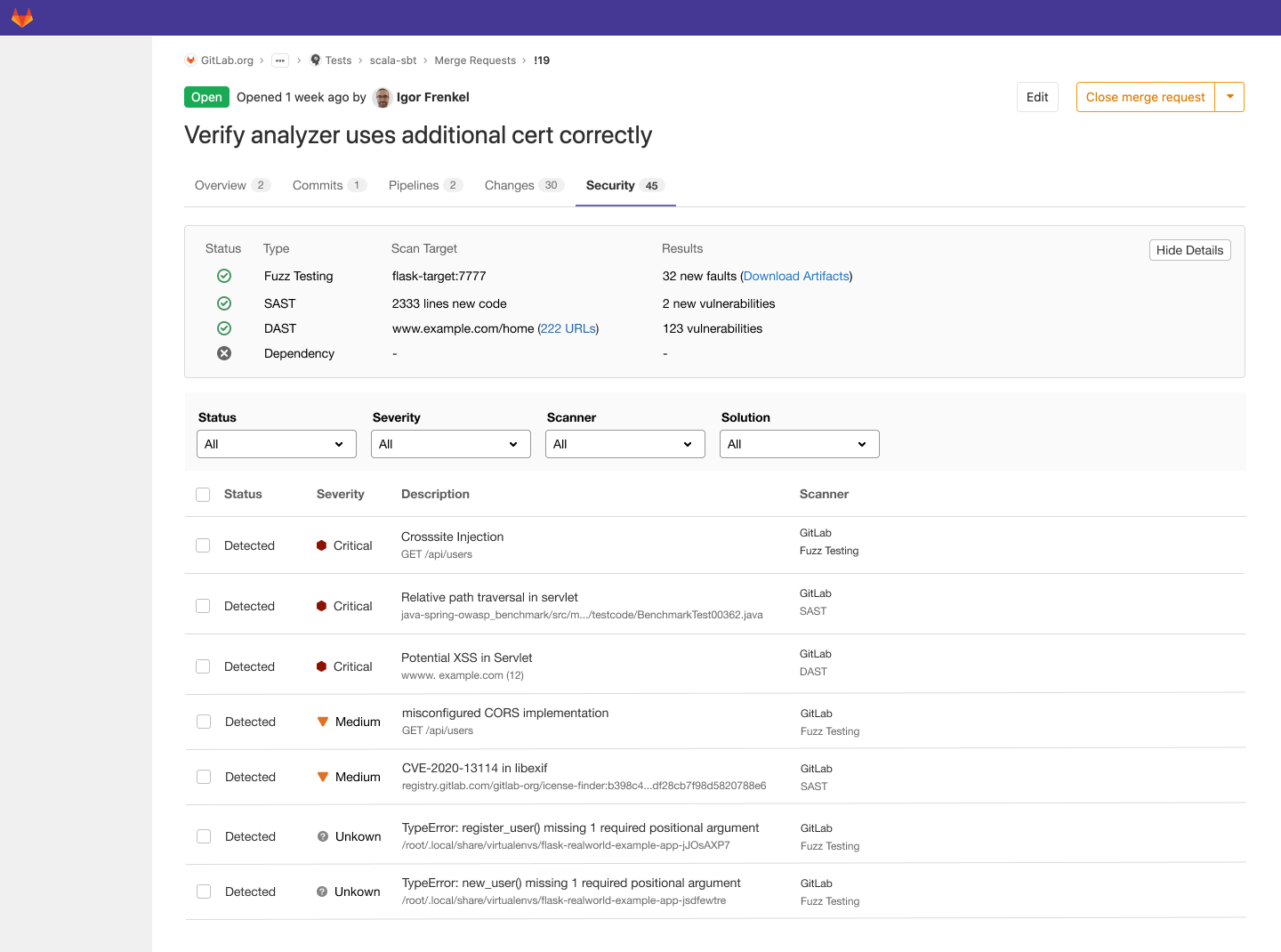
    David DeSanto, director of product for GitLab Secure & Defend, said the two acquisitions should make it easier for DevOps teams to incorporate both whitebox and blackbox fuzz testing techniques for security testing much earlier in the application development and deployment process.

    Fuzz testing is an automated technique that involves providing invalid, unexpected or random data as inputs to software, which is then monitored to see what happens—if it, for example, crashes or a memory leak is created.

    Peach Tech adds Peach Fuzzer, an automated security testing platform that employs definition files known as Peach Pits to generate the fuzzed data consumed by the test target along with a framework for automating the web application programming interface (API) security testing process.

    Fuzzit provides a service that enables DevOps teams to continuously generate fuzz tests and correlate crashes in a way that can be integrated within a continuous integration/continuous delivery (CI/CD) workflow.

    Once Peach Tech and Fuzzit technologies are fully integrated with each other and the GitLab platform, DeSanto said GitLab Secure customers will be able to automate myriad tasks, from security testing to vulnerability management and remediation.

    GitLab will also employ technologies from both companies to further its ambitions to drive the adoption of interactive application security testing (IAST). The goal is to not only make it easier for developers to employ DevSecOps tools but also understand what issues are being created as applications are developed, said DeSanto. That approach should reduce the number of instances where development teams are continuously making the same mistakes across multiple application development projects, he noted.

    The further left cybersecurity testing is shifted the less stress there will be on chronically short-staffed cybersecurity teams. The challenge is that while most organizations recognize the potential benefits of DevSecOps there hasn’t been much progress in educating developers on what issues to look for and providing them the tools needed to discover and remediate vulnerabilities.

    There is, of course, no silver bullet when it comes to cybersecurity. As long as humans write code there always will be potential issues. However, many more routine cybersecurity issues should be addressed long before an application is deployed within a production environment. To achieve that goal organizations are providing developers with tools that identify cybersecurity issues as they write code in addition to incorporating more security testing into their CI/CD workflows.

    Of course, GitLab is not the only provider of a CI/CD platform focusing on how to foster the adoption of best DevSecOps practices. There’s clearly a race to embed security testing tools within CI/CD platforms that should advance adoption for DevSecOps, if for no other reason than they are becoming easier for developers to discover and employ.

  • 3 DevOps Security Best Practices Your Organization Can’t Afford To Ignore

    3 DevOps Security Best Practices Your Organization Can’t Afford To Ignore

    CI/CD pipelines are at the core of daily operations for many businesses today. These processes, when set up correctly, help to keep the delivery process consistent by automating many manual tasks and providing visibility into how the software is being worked on.

    DevOps is also the place in your technology stack where your infrastructure has access to many different resources, from development and production environment to analytics keys and code signing credentials. The more resources your pipelines have access to (secure secrets, proprietary code, databases, etc.), the more important it is to keep your CI/CD system secure.

    In this article, we talk about the different parts of DevOps security for CI/CD pipelines and highlight a number of ways to improve on these aspects. We usually divide security practices into three parts that you can address with different kinds of solutions:

    1. Secure pipeline configuration
    2. Code and Git history analysis
    3. Security policy enforcement

    All three aspects are equally important. Let’s take a deeper look at these categories and ways to address them.

    Secure Pipeline Configuration

    It is possible to use your CI/CD pipeline configuration to make security issues less likely to happen.

    First, safely store secrets that you use in your pipelines for connecting to databases and third-party services. Depending on the CI platform you use, you may have the option to use encrypted-at-rest environment variables, or to use the contexts feature. Contexts are used to provide access to environment variables across projects. Their use can also be restricted to specific security group members as defined by the organization’s administrator.

    Another option is to use a third-party solution to dynamically fetch secrets from their secure storage for your jobs. To ensure that none of your credentials become exposed to those who shouldn’t see them, you should never check these into your repository in plain text, even if the repository is private.

    Second, for sensitive files like code signing keys, I recommend adding an additional layer of isolation between your encrypted files and your repository for added security. Keep them encrypted in your repository and store the decryption key in the environment variables or contexts, only decrypting them inside your CI/CD jobs when they are needed. This makes it even more difficult to expose or leak these highly sensitive files.

    Third, you never want to leave your CI/CD environment running without monitoring it. Therefore, make sure that the containers and VMs used for your pipelines are destroyed after jobs that require sensitive information finish running. 

    Fourth, pay extra attention to how your CI/CD system handles builds for pull requests that come from forks of your repository. If your build stages require secrets to work, forked pull requests might gain access to them through your pipelines. 

    By addressing these four aspects you can significantly reduce the risk of security incidents due to your CI/CD pipeline configuration. Next up, code and Git history analysis.

    Code and Git History Analysis

    We all love Git for its comprehensive history of changes, being able to look through the history of the project with a simple CLI command and see who has most recently changed a line of code, among other benefits. This also means that any sensitive information that makes it into the Git history can be accessible to attackers if a Git repository is exposed, even if the most recent state of the repository doesn’t contain the secrets anymore.

    Trufflehog and GitLeaks are two tools that can help you identify secrets that have been committed to the codebase so that you can deactivate and replace them. These two tools will also scan your Git history for traces of secrets that your team might have added to the repository in the past.

    Once your Git history is clear of secrets, you can proceed to the next level: making sure that your current revision doesn’t contain any vulnerable dependencies.

    Static Application Security Testing (SAST) techniques can look through the application in your commit and analyze its dependencies. If any dependencies contain any issues or known security vulnerabilities, your commit will be marked as insecure and won’t be allowed to proceed to deployment.

    Dynamic Application Security Testing (DAST) techniques go one step further and spin up a copy of your production environment inside your CI job in order to scan the resulting containers and executables. The dynamic aspect helps the system catch dependencies that are being loaded at launch time, for example, as those won’t be caught by SAST.

    Security Policy Enforcement

    Some security aspects can’t be statically checked based on known vulnerabilities, but rather are specific to your particular company, and therefore need to be codified as policies. These can take the form of automated or manual compliance checks.

    Certain tasks such as reviewing the list of all accounts that have access to your repositories, or making sure your onboarding and offboarding processes are in sync, will be manual. We recommend that you set reminders to perform these regularly.

    Some tasks actually can be automated quite easily. For example, third-party services can provide a convenient way to codify a set of rules that will be matched against in your CI pipeline, e.g., proving compliance with the regulations that govern your data. If there is a mismatch, the build will fail.

    Some of the Important Parts Can’t Be Automated

    Keeping your CI/CD pipelines secure is more important today than ever before as automating your CI/CD practices requires more access to development and production environments, analytics keys and code signing credentials than in the past. The hard thing about security is that if you only get one of the three categories right, you won’t be 33% secure. You will be 0% secure until you get all the bases covered.

    With the approaches outlined above, you’ll be in a much more secure position than you would be without them. However, some of the aspects that matter the most for CI/CD security can’t be automated or detected with an automated policy. These aspects are shaped by the behavior and culture within your team.

    A DevSecOps Mindset

    Your team is your most valuable set of security researchers because they know your applications best and constantly work on them. Have you implemented a clear process for your teammates to report security issues if they find any, and do you dedicate time to fix the security flaws they find? Do you celebrate those who report issues openly? In many companies, the answer isn’t an immediate “yes” to these, and it should be.

    How long does it take for someone on your team to report suspicious activity? Do they need to post in multiple Slack channels to get attention, or is there a streamlined process to get an issue like this looked into? How do you treat those who report false positives — do you blame them for wasting the team’s time, or do you hold a blameless post-mortem so that everyone on your team learns from the mistakes? All these questions can make or break your security-minded development culture.

  • DevSecOps vs. Agile Development: Putting Security at the Heart of Program Development

    DevSecOps vs. Agile Development: Putting Security at the Heart of Program Development

    Despite most developers and managers being well aware of the concept of DevSecOps, it is still often confused with a number of related processes and concepts. This is particularly true for the Department of Defense (DoD) contractors because they have long been encouraged to use a related process known as agile development. 

    Since agile development has been around for more than a decade, there is a tendency for organizations to regard DevSecOps as an extension, or even a synonym, for it. In reality, though, the two approaches are distinct. The objectives of both approaches are similar: balancing speed and agility, detecting risk early and both focus on cloud-native security and performance. 

    However, while DevSecOps does build on some agile development principles, such as the continuous integration and delivery of software systems in cycles, its key emphasis from the beginning of the process is to integrate security features, while Agile only focuses on delivering software.

    In this article, we’ll look at the key differences between agile development and genuine DevSecOps processes, and how each complements the other.


    DevSecOps vs. Agile Development


    The difference between DevSecOps and agile development methodologies can be understood in reference to one aspect of software development: security. When, where and who implements security in software development varies between the two approaches.

    Agile development methodologies focus on iterative development cycles, in which feedback is continuously reintegrated into ongoing software development. However, even in mature agile development processes, security is still often added to software as an afterthought. This should not be read as blaming software developers for often underestimating the potential harm from malware or overlooking the importance of cybersecurity. 

    Rather, in many firms, it is simply not the responsibility of developers to think about the security implications of their code, because software will be passed to the security team before release.

    DevSecOps takes security and puts it on the same level as continuous integration and delivery. DevSecOps methodologies emphasize security at the very earliest stages of development and make security an important part of overall software quality.

    In essence, these approaches shift the program manager’s perspective away from making sure that software is in compliance or meets a specification or audit, to ensuring that the code is written correctly and securely and that it’s deployed in a repeatable manner.


    The Changing Culture of the DoD


    The adoption of DevSecOps methodologies is critical for DoD contractors because these methodologies reflect DoD’s own modernization strategy. Following high-profile vulnerabilities being discovered in all types of systems, DoD seems to have released that cybersecurity weaknesses are not just a potential threat to critical defense data, but also impose a significant operational bottleneck on the continuous delivery of functionality.

    At the moment, even those firms who possess a mature agile development framework can find that the multiple security checks and compliance processes that must be performed on software, prior to shipping, can detrimentally impact on their ability to deliver iterative software improvements. This is the issue that the transition to DevSecOps seeks to overcome, by attempting to shift organizations’ approach to cybersecurity away from compliance, and toward genuine security consciousness.

    At the same time, analysts are aware that shifting responsibility for cybersecurity onto developers will be uncomfortable, and potentially dangerous, for many DoD contractors. Developers working on the base code for military software do not have – and are not expected to have – an exhaustive appreciation of all of the contexts in which this will be deployed, and exactly which systems their software will be required to interface with.


    Automation and New Models


    In response to these concerns, DoD contractors are reappraising the DevSecOps model and thinking seriously about how it can be deployed in contexts where continuous service delivery is key. There are three key ways in which this is happening.

    The first is the rise of automation. The types of large-scale, multicloud infrastructures that most contemporary DoD projects rely on can often necessitate repetitive, ongoing maintenance and security assessment across both development and security teams. DevSecOps replaces these human checks with automated systems: Instead of requiring a person to go through checklists of hundreds of controls, this is done automatically as part of the software development and supply process pipeline. 

    The second key element in the transition to DevSecOps is endpoint security. The types of monolithic development processes that DoD contractors traditionally worked with are not suited to the contemporary deployment environment of many DoD projects. In these traditional methods, systems were built as discrete holes, with no expectation that data would be exposed as it moved between components. 

    This is now an obsolete approach: In DevSecOps processes, virtual private networks are used to provide security and encrypt data as it moves within a network, and the principle of least privilege reduces staff access to small portions of It environments. 

    Thirdly, a new generation of younger military and civilian personnel in the DoD, many of them trained in the commercial sector rather than entering the military directly from college, are bringing corporate approaches to the development of military software. This is seen in the exponential increase in the utilization of cloud services in DoD applications, and more dynamic and distributed managerial frameworks that distribute security responsibility across entire organizations, rather than having this as the sole remit of a dedicated security team.


    Get Support


    Moving to a truly DevSecOps methodology is likely to be a challenge for many contractors. However, just as in the last decade many firms have had to redesign their development lifecycles in order to be agile, now they will need to achieve secure development lifecycles in order to stay competitive.

    If you are looking to make this shift, you should also recognize that you are not alone. DoD is working actively with its partners in order to facilitate the roll-out of DevSecOps processes and to make commercial tools and techniques available and useful for military contractors because the department recognizes the value of this methodology for the software they commission. 

    This is seen most clearly in the recent updates to Microsoft Azure Government, though you should also be aware that many of the resources recently released by the Defense Logistics Agency are also focused on the transition to DevSecOps.

    In short, whilst the transition to DevSecOps may be challenging, it will be no more so than the earlier shift to agile development. To make this shift, however, firms should draw on the resources available to them, recognize the value of integrating security into their development workflows and build on existing agile frameworks.