Category: DevSecOps

  • Automation: The Human-Free Zone Approach to Software

    Automation: The Human-Free Zone Approach to Software

    Humans hate repetitive manual tasks. We suck at them—we make mistakes, lose concentration, get bored. Throughout history, humans have instinctually developed automation to keep us away from the hazard-prone, tedious work of these tasks.

    In software, we use configuration management, deployment tools and lean/agile processes born out of factories and the automation principles established there to automate the software factory. Utilizing automation reduces software errors and increases reliability and productivity by allowing the work performed to scale to hundreds and even thousands of systems.

    As we’ve written scripts and functions to help ourselves, we’ve had to implement access control, least privilege, two-person rule and other security principles to secure against the human threat and to prevent catastrophic loss through either a malicious actor, leaked credentials or other type of compromise. And this problem gets more complex and difficult the more automation is involved. However, what if we harness the power of automation to solve our security risks—to remove the human threat mostly or entirely from production by enforcing a single path to production via CI/CD pipelines, building and deploying signed artifacts and system hardening including explicit removal of human/remote access?

    With this, we can validate the chain of custody on all changes to the system while also proving that outside actors cannot make unauthorized changes. This is what we’re looking for when we talk about DevSecOps.

    Automation to the Rescue

    Here are the processes humans should be fully or at least partially removed from to optimize software effectiveness, security and efficiency:

    • Code and pipeline.
    • Artifact deployment.
    • Automated access.

    Code and Pipeline (partial human interaction)

    Let’s start on the left, with our code and pipeline. The rules here are simple and familiar. We start with source code management and the two-person rule. No one individual can write and commit code without approval from someone else. Implementing the two-person rule as well as securing production access ensures that access control happens solely within the pipeline and we have full enforcement of the two-person rule. We can have a full team review along with static code analysis, but the core rule is that no one person has the power to write and commit code, ensuring that a single human cannot be responsible for making a change.

    The code repository is watched by our pipeline with the task of testing, building and verifying a versioned artifact. This artifact is everything in our code at a moment in time. When we think about rollback scenarios, we’re thinking about deploying the previous artifact. This artifact is checksummed so we can attest to its integrity at any point, and we can validate the checksum by pulling the code and building it ourselves.

    Artifact Deployment

    And we need an artifact for not just our application code from development, but also based on what the infrastructure looks like from Operations. This is part of the promise of DevSecOps: Ops writes code that gets checked into repositories just like Development. This allows us to pair our application artifact with our operations artifact. These artifacts together are what we deploy—the system at a moment in time and the application at a moment in time. So, at this point, we’ve established that two humans (at least) have looked at the source code and, once committed, that our pipeline has picked up those changes, performed static code analysis on it and created signed artifacts, ready to be deployed to a test environment. Now that we have our artifacts, we need to deploy them.

    Again, the goal is to not use humans, so after our artifacts are built we must test deployment. The way we ensure security is having the pipeline push the artifacts to a secured artifact store and our systems pull from there as we approve environments to receive the update. This accomplishes two important things: First, by having a push from our pipeline, we again maintain that chain of custody tracing back to source control. Second, we limit which environments are updated by having those systems subscribe to the appropriate artifact stores. The only work humans do here is performing testing and deciding when to promote. The automation actually takes care of the actual promotion work. Now finally, we have the ability to run our artifacts in production.

    Automated Access

    The idea of a continuous delivery pipeline isn’t new and is practiced by many teams today. What we’re going to add to this is a production system that does not have inbound access.

    Because in this design systems pull from the artifact store, the only rule needed is outbound from production to the artifact store. This means you can disable remote management entirely, trusting fully in the chain of custody established in the pipeline. This trust, along with ensuring remote management is disabled, establishes the human-free pipeline. We have shifted user access focus into source code repositories and into the management of the CI/CD pipeline. We have visibility into every stage of the process and eliminated the need for users to have login credentials to production systems. The credential management is also a function of pipeline management, drastically reducing its complexity.

    This is what it means to practice DevSecOps—understanding how automation actually enables the security team to reduce the complexity of our security model and gets security out of the role of blocker and into enabling the business.

  • MuseDev Offers DevOps-Optimized Security Code Analyzer

    MuseDev Offers DevOps-Optimized Security Code Analyzer

    MuseDev today announced it has made available on GitHub under an early access program a code analysis tool dubbed Muse that is designed to surface cybersecurity issues as pull requests are made from the repository.

    Company CEO Stephen Magill said rather than waiting to discover cybersecurity issues after an application is deployed, Muse makes it easier for IT teams to consistently employ best DevSecOps practices.

    There’s general agreement DevOps teams should assume more responsibility for application security as part of any quality assurance process. However, DevOps teams have lacked access to tools that would make it easier to incorporate security analytics within the context of existing application development and deployment workflows, said Magill.

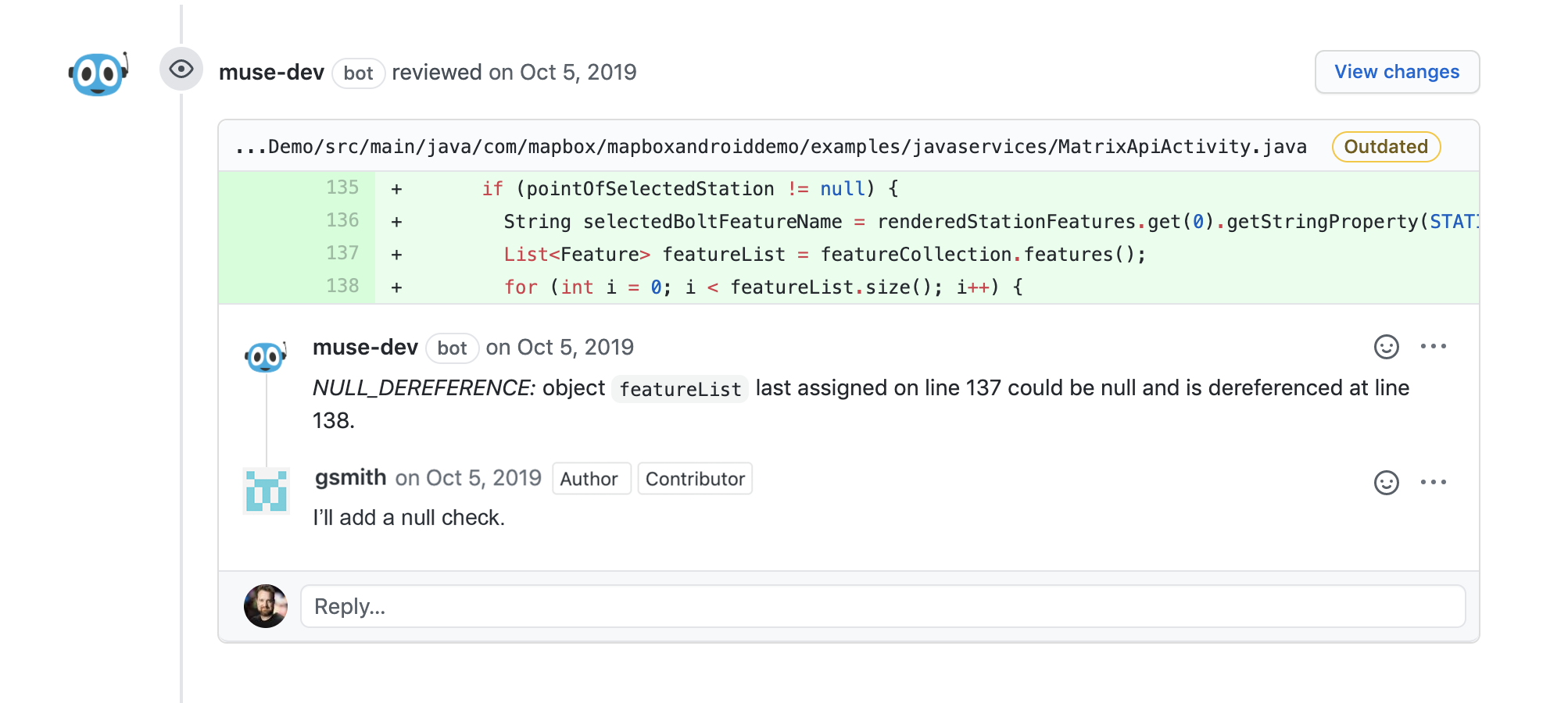
    Muse is also designed to surface cybersecurity issues in a way that makes it easier for developers to comprehend, said Magill. MuseBot automatically analyzes each pull request and delivers bug reports in GitHub as code review comments. In contrast, he noted, code analysis tools employed by cybersecurity teams tend to surface lists of vulnerabilities without providing developers with enough context to remediate or even prioritize.

    Muse is also designed to provide a faster alternative that generates results in about 20 minutes, which means DevOps teams can address issues within a workflow versus waiting for a report from a cybersecurity team, noted Magill.

    Too often code analysis tools will also generate too many false positives, he said. Muse includes a broad set of tools such as ErrorProne, Infer and Pyre for various cloud platforms that are customized and configured to reduce alert noise. Muse also provides access to an open application programming interface (API) that makes the platform fully customizable, Magill added.

    Muse is available as a GitHub app that the company is promising will be free always for open source projects and other public GitHub repositories. Analysis of private repositories is also available at no cost. A self-hosted Enterprise version available for GitHub, Bitbucket and GitLab, scheduled to be generally available by the end of the year, is also available as a private beta. MuseDev is also making available a professional services team to help organizations implement the platform.

    The company itself was spun out of Galois, a research and development firm that specializes in cybersecurity.

    In general, it can cost organizations as much as 10 times more after an application is deployed in a production environment to address cybersecurity issues. Despite widespread awareness of that issue, adoption of best DevSecOps practices within many organizations remains relatively nascent. There’s a lot of interest in DevSecOps as a goal, but few organizations have been able to put the tools that are needed to construct security workflows into the hands of DevOps teams.

    However, as more DevSecOps tools become available, chances are a lot of progress soon will be driven from the bottom up in most organizations rather than from the top down.

  • Okta Offers PASETO as Alternative to JSON Tokens

    Okta Offers PASETO as Alternative to JSON Tokens

    Okta today launched an open source library for using Platform-Agnostic Security Tokens (PASETO) as an alternative to JSON Web Tokens (JWT) to authenticate end users.

    Randall Degges, head of evangelism for Okta, said PASETO is quickly emerging as an easier, more secure implementation of the JWT specification. PASETO is a draft specification created by Scott Arciszewski that reduces the scope of the Javascript Object Signing and Encryption (JOSE) family of specifications in a way that makes it easier for developers to embrace tokens to secure application access.

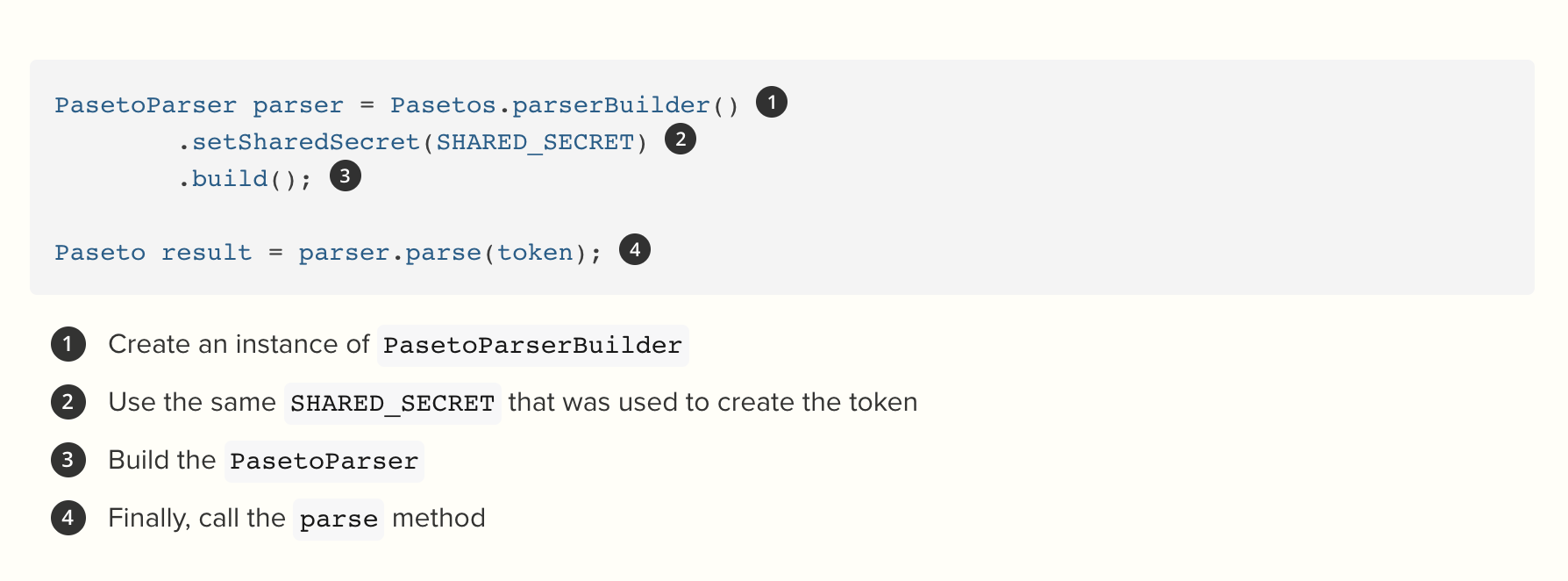
    Okta is trying to make it easy for developers to employ PASETO using a library written in Java, dubbed JPASETO, that has half the lines of code JWT token written in Java and is supported by a vendor, he said.

    While JWT tokens have been widely adopted, they are easy to misconfigure, which Degges noted has resulted in the recent discovery of many JWT vulnerabilities. Part of the fault for those vulnerabilities lies with the JWT specification itself, he added; JWTs support a wide range of cryptographic algorithms, including an option that employs no cryptography at all.

    In contrast, Degges said PASETOs are more cryptographically resilient and far easier to employ. The PASETO specification defines two types of tokens: local and public. Local tokens are always symmetrically encrypted with a shared secret key, which means no one can view the contents of a local PASETO unless they have the correct secret key. Public tokens are readable by anyone and are validated with a public key. There is no “none” option; there can’t be a security token that is not encrypted, he said.

    All PASETO formats are designed to be tamper-proof. The entire message is authenticated, so validation will fail if anything in the token changes, added Degges.

    That approach ensures higher levels of application security while at the same time aiding in the adoption of best DevSecOps practices using Okta’s JPASETO library, which can be incorporated easily into the application development process, he noted.

    In recent years software tokens such as JWT have gained traction as a way to implement two-factor authentication in place of creating a session in the server and returning a cookie. When a user successfully logs in using their credentials, a JSON Web Token is returned and must be saved locally.

    Software tokens, however, can still be vulnerable to attacks that either duplicate the underlying cryptographic software or phishing attacks that trick end users into giving up a password. There is no such thing as perfect security; however, software tokens provide a critical layer of security that should be employed much more widely.

    It’s not clear to what degree PASETO will further that goal. Many organizations may even mandate the use of either JWT or PASETO as part of their overall approach to DevSecOps. Regardless of approach, it’s clear that continuing to rely on sessions and cookies to authenticate end users is an antiquated approach to authentication that is not only more difficult to implement and manage but also ultimately less secure.

  • Snyk Tool Prioritizes Open Source Vulnerabilities

    Snyk Tool Prioritizes Open Source Vulnerabilities

    Snyk today announced it has enhanced the ability of its namesake vulnerability scanning tool by adding the ability to identify which open source vulnerabilities should be fixed first using a scoring tool that leverages data science and machine learning algorithms to analyze code.

    In addition, DevOps teams can now take advantage of automated pull requests to fix those vulnerabilities.

    Finally, DevOps teams also can define policies that require certain classes of vulnerabilities to be fixed whenever they are identified.

    Aner Mazur, chief product officer for Snyk, said given the number of open source modules employed and the dependencies that exist between them, staying current on patches and updates has become a major challenge. The only way to achieve that goal is to rely more on tools that help automate that process, he said.

    These days it’s easy for development teams to feel overwhelmed by patch requests to fix open source security vulnerabilities. The trouble is, not all those requests are of equal weight. Snyk provides tools that enable developers to understand which vulnerabilities are of the highest severity and how they might impact their code.

    Armed with that insight, Mazur said, it then becomes possible to prioritize remediation tasks within the context of a DevSecOps process. Otherwise, developers will simply fix vulnerabilities regardless of relevance as time allows. Developers may remediate dozens of bugs only to discover that a critical flaw that had been left unaddressed led to a major compromise.

    It’s also not uncommon for DevOps teams to fail to appreciate dependencies between open source code modules. When patches to code are applied in the wrong order, an application can break, resulting in DevOps teams having to start the whole process over. The prioritization tools provided by Snyk prevent that from occurring, Mazur said.

    In the absence of any ability to prioritize vulnerabilities, developers eventually become inured to patch requests because they don’t know whether their patching efforts are making any real difference, he added.

    Worse yet, all the time spent on patching low-level vulnerabilities reduces the amount of time developers have available to write new application code. In fact, one of the paradoxes of DevOps is as the number of applications deployed increases so too does the amount of time spent debugging them. Before too long, a DevOps team can find itself spending more time fixing existing code than developing new applications.

    As DevOps teams become more dependent on open source code, they benefit from the collective security efforts of all the contributors to that project. The result is more secure code, as patches to remediate specific issues are made available. The challenge now is finding a way to automatically apply those updates in a way that doesn’t conspire to slow down the overall application development process. Achieving that goal requires visibility into what is now a multitude of open source projects that no DevOps team is ever going to be able to consistently achieve on its own.

  • Balancing UX and Privacy With IoT

    Balancing UX and Privacy With IoT

    As more IoT devices track data to improve customer UX, privacy concerns are becoming more prevalent. How can developers strike a balance?

    The internet of things, or IoT, is a system that has changed the way we perceive technology. While it has made the usage of technology easier than ever, it does come with its own set of problems. Being such an interconnected network, IoT’s main threat is its ability to pose myriad security and privacy problems.

    In this article, we seek to discuss how and why privacy is becoming a rising challenge in the world of IoT. By understanding how our privacy and security will be affected, we can take the right measures to reduce our vulnerability to these threats and secure our lives.

    How Interconnected Are Devices?

    IoT devices come with several technical capabilities, most of which have been researched and optimized only to the extent of their functionality. Today, IoT connectivity is available in a growing number of devices and equipment. Smartphones can connect to the internet and several household appliances, which also allows people to control these items remotely. Transportation departments have begun to hash out more advanced vehicle-to-vehicle communication, focusing on improving driver and passenger safety on the road. SmartGrid interconnected technologies allow electricity providers, managers and users to monitor and control electricity use in homes, offices and places of business. Today, several people are also making rampant use of SmartHome technologies to control appliances and home security systems and use fitness trackers to control their movement as monitor their eating and sleeping habits. These trackers are connected to their smartphones for better data aggregation.

    All of these connected devices pose a question: With so much data collection and data tracking being carried out by these devices, aren’t we compromising on our privacy and security?

    How IoT Affects Privacy

    When we consider the compromised privacy of individuals, we are talking about each individual’s loss of control over personal information. When people invest in these interconnected devices, they are not entirely aware of how much of their personal information is tracked and saved by the manufacturer in a bid to improve user experience.

    An individual can lose control if someone hacks into their smartphone or computer and remotely operates other devices. There’s no doubt that our smartphones carry a majority of our information. They are linked to our bank accounts, email accounts and even systems that need authorization. In fact, experts predict that there would be about 31 billion connected IoT devices by the year 2021. Usually, hackers employ methods that are undetected, so more connections would mean an increase in hacking activities as well.

    The data collected from an individual’s smartphone or laptop can give hackers a detailed look into their activities, including internet searches and purchasing power. The information is typically used to work on user experience, but also can be used to target particular products to the individual. Sometimes, this data is even sold to other organizations that are looking for a target audience to sell their products.

    Rising Challenge of Protecting Data

    Data is constantly being stored, transmitted and processed by different companies with the help of IoT devices. With more entry points to access data in the form of smart TVs, speakers, lighting systems, printers and more, your data is more vulnerable than ever.

    IoT vendors, therefore, should have dedicated compliance and privacy rules that alter and anonymize personal data before it is stored. The aim is to prevent the data from being able to identify an individual. Cached data and data that is no longer needed should be disposed of in a secure and organized manner.

    Stored data also must meet compliance with legal and regulatory mandates. This must extend to mobile devices, web presence, cloud applications and any other means by which the data from IoT devices are accessed and managed.

    Affordability of Protecting Data

    Yet another concern among IoT developers is the ability to provide enough security for their services. Limited budgets and manpower constraints can prove difficult for establishments to heed to privacy and security concerns. The reason so many loopholes exist is due to the fact that so many manufacturers focus solely on getting the app out into the market to attract funding without considering the damage that could follow.

    With more and more people concerned with their data privacy, organizations must implement more security checks to avoid ruining their brand authority and trustworthiness due to a data breach.

    Conclusion

    Users today are more connected than ever, which means privacy and security concerns must be top of mind for developers. Manufacturers may argue that data collection is essential to the development of their products and the IoT market in the long run, but there must be more focus on the security of the data and personal privacy concerns. Data collection should be done in a monitored manner, with compliance to regulations from the onset. A recent survey noted that 92% of global consumers want more control over how their information is collected. The same number of people also want to enforce punishments for corporates that violate their privacy. IoT developers, therefore, must strive to find a happy medium that balances security and privacy with user experience.

  • How to Make DevSecOps a Reality

    How to Make DevSecOps a Reality

    DevSecOps is an increasingly popular term; however, security vulnerabilities in software continue to proliferate. 2019 saw a surge in web application breaches shining a spotlight on the fact that DevSecOps remains elusive. The latest data from the Verizon Data Breach Investigations Report (DBIR) identified that web application vulnerabilities had doubled in the last year alone.

    With the rapid pivot to all things digital in 2020, the pressure on software and applications continues to intensify. Security needs to be a fundamental part of software development in our digitally dependent world. This requires organizations to focus on more than the speed of delivery and turn their attention to the quality of software as they try to accelerate the pace of digital transformation.

    Achieving DevSecOps

    Organizations striving to achieve DevSecOps need to adopt the following steps to embed security throughout the entire software development life cycle (SDLC).

    Make Security a Priority From Day One

    Security can’t be a bolt-on at the end of the SDLC if your goal is to make DevSecOps a reality. The recent Zoom failures put security flaws in the spotlight and showcased the risks resulting from delivering innovative services without factoring in security. Every member of the team spanning product developers to technical architects to scrum specialists must consider security for it to be an intrinsic part of each stage of development.

    Achieving this transformation to DevSecOps means rethinking how to determine success. Many organizations measure it solely in terms of velocity of time to market without evaluating software quality. Developers remain reticent to incorporate security and turn attention to the quality of code. As a result, software is released more rapidly but with scant regard for the quality, resulting in many applications not being ready for mass adoption.

    One Size Doesn’t Fit All With Security

    Don’t make the mistake of approaching security as a monolith. Instead, accept that it’s wide-ranging, incorporating multiple different areas spanning authentication to access control to confidentiality to integrity to non-repudiation, to name a few. Based on this broad scope, a single approach can’t hope to address all the different facets of security.

    Teams need to rethink security and look at what it means to them and what is essential to their users. This could be keeping customers’ personal identifying information confidential and establishing the types of attacks that are most likely to occur. For example, if your product is inside a corporate file, then compromised credentials and password attacks are a significant risk while denial-of-service attacks are unlikely.

    Every member of the team needs to understand security threats and techniques, so they have enough knowledge to deal with recurring issues. Threat models can include an employee unwittingly doing something wrong to trying to protect data from government-sponsored cybercrime professionals. Focusing your training on these areas will help address the vast majority of problems and ensure applications are secure. It’s vital to view security as a science rather that than an art.

    Don’t Overcomplicate Security

    Security is viewed by many as a problem that can only be solved by highly skilled and paid consultants who specialize solely in security. While there is an absolute need for these skills when reviewing architectures and carrying out audits, there is no requirement for this level of expertise when it comes to basic security checks, such as ensuring that the latest release hasn’t changed the authentication mechanism.

    The vast majority of threat models are solved using standard static and dynamic analysis tools. Once this is accepted, you can resolve 90% of security issues through a combination of tools testers and developers. This enables security to infuse every part of the development life cycle and puts an end to the practice of being an afterthought.

    Conclusion

    Once organizations incorporate these three steps in implementing DevSecOps, they can ensure that achieving security becomes a core component of software delivery. Failure to do so will see that it remains an afterthought and security vulnerabilities will continue to grow.

  • RunSafe Allies With JFrog to Secure Applications

    RunSafe Allies With JFrog to Secure Applications

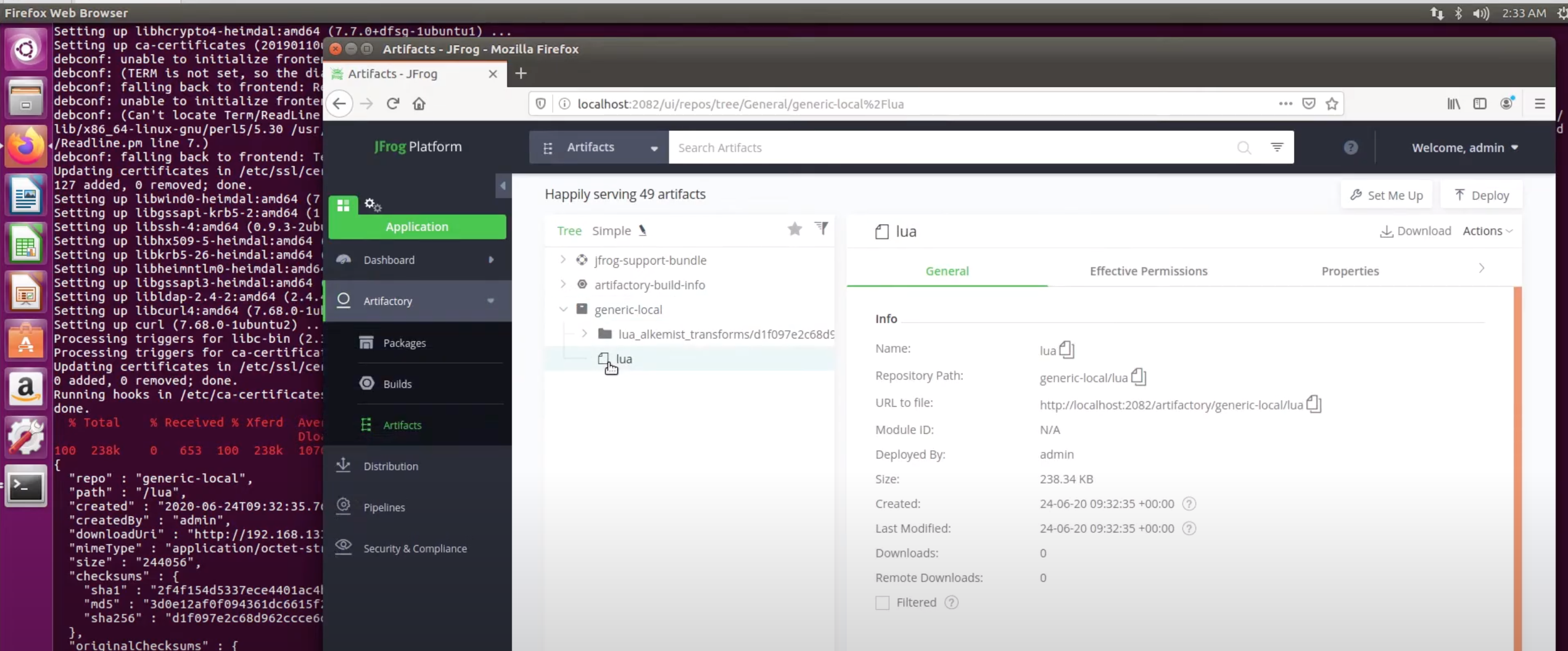
    RunSafe Security, a provider of Alkemist tools that prevent memory exploits, has partnered with JFrog to create a plug-in for the Artifactory repository manager platform.

    Alkemist employs a combination of runtime application self-protection (RASP) and moving target defense (MTD) methods to neutralize memory corruption exploits such involving, for example, a memory overflow.

    Based on a research project for the Advanced Research Projects Agency of the Department of Defense (DARPA), the integration with Artifactory will make it easier to harden binaries and containers against memory corruption attacks before applications are deployed in a production environment, said RunSafe CEO Joe Saunders.

    RASP describes a class of application security tools that detect attacks in real-time as an application is running. MTD refers to a strategy that relies on changing the attack surface regularly for applications to make it more difficult for cybercriminals to target them.

    Cyberattacks that employ memory exploits attempt to either replace executables with malicious code or overwrite data in a way that changes application behavior. When aimed at operating systems, these attacks commandeer entire systems. They have also been used to launch self-replicating Worm attacks that both cripple systems and insert malware to steal data, corrupting files or installing a back door that enables remote access.

    Saunders said the Alkemist plugin will enable developers to defend applications from these types of attacks without slowing down the pace of application development. Friction is removed from the DevOps process because as code moves through the DevOps workflow, Alkemist automatically hardens it to prevent memory exploits, he said.

    With the growing popularity of containers, Saunders noted that as cybercriminals begin to target them the need to protect containerized applications from memory exploits using best DevSecOps processes will become even more pronounced than it is today.

    While there is clearly a lot of interest in DevSecOps, most developers still don’t have access to the tools needed to better secure applications. As more cybersecurity plug-ins become available for repositories such as Artifactory, the easier it will become to embrace best DevSecOps practices.

    JFrog, for its part, has been making a case for focusing DevOps teams on managing binaries rather than source code. The alliance with RunSafe extends that strategy into the realm of application security.

    It may be a while before DevSecOps practices are widely employed. However, increasingly the issue is becoming less about the tools that might be available. Rather, the cultural challenges associated with implementing cybersecurity gates within a DevOps pipeline is now the major challenge. DevOps teams will need to reconstruct existing DevOps workflows to incorporate cybersecurity gates before an application is deployed. Once that’s accomplished, monitoring applications for anomalies will then need to be incorporated into observability platforms.

    It’s not clear what role cybersecurity professionals will play in this new world of DevSecOps. The one thing that everyone can agree on, however, is the less involved cybersecurity professionals are in the application development and deployment process, the easier it should become to deploy applications that are truly secure.

  • Traceable Secures Apps Using Distributed Tracing

    Traceable Secures Apps Using Distributed Tracing

    Traceable this week announced it is making available under an early access program a namesake platform that combines distributed tracing and machine learning algorithms to better secure applications.

    Fresh of raising $20 million in funding, Traceable CEO Jyoti Bansal said the goal is to leverage distributed traces generated via open source Hypertrace agent software to capture streaming data to which machine learning algorithms can be applied to better secure microservices.

    Bansal, who is also the founder and former CEO of AppDynamics, said this approach leverages software engineering techniques and principles to address application security issues both before and after an application is deployed.

    As part of this effort, Traceable has developed TraceAI, a machine learning engine that has been trained to identify application security issues.

    Once those issues are discovered, developers will be able to apply policies to remediate vulnerabilities using Hypertrace agent software, he said.

    In effect, Traceable is applying many of the principles of application performance management (APM) platforms to securing applications. However, rather than simply aggregating and analyzing data, Traceable has added a streaming engine to collect massive amounts of cybersecurity data in real-time that is analyzed by machine learning algorithms to determine, for example, when and how data might be exfiltrated via an application programming interface (API).

    As the number of microservices that are deployed in enterprise IT environments increases, the number of API endpoints that can be compromised does as well. By adding open source Hypertrace agent software to microservices, Bansal said it becomes possible to leverage distributed tracing to better understand the context in which how business logic embedded within a microservice is being compromised. That context also serves to enable development teams to remediate that issue by either updating or replacing a microservice.

    While the rise of best DevSecOps practices has increased collaboration among developers and cybersecurity teams, Bansal said application security remains largely a software engineering challenge. Application development teams need to find a way to instrument agents to address application security issues within their code instead of relying on overlays deployed by network engineers, he said.

    Most cybersecurity professionals would nod their heads in agreement with that principle. However, it may take cybersecurity teams some time to get used to the idea that they might not need to be as involved with application security as they are today. In fact, the amount of time spent looking for the root cause of any vulnerability is likely to be substantially reduced.

    In the meantime, it’s apparent a primordial soup of agent software, distributed traces, machine learning algorithms and streaming data engines is coming together in a way that will transform application security. It may be a little while longer before the catalyst that converts all those elements into a widely employed platform arrives. However, it appears it’s now more a question of when rather than if there will be a major advance in application security that could take DevSecOps processes to a much higher level.

  • How to Source Vulnerability Data for True DevSecOps

    How to Source Vulnerability Data for True DevSecOps

    Open source comes with code vulnerabilities that must be considered in the DevOps process

    The war between open source and “only proprietary code” is long over. Open source won the day by convincing the opposition of the benefits of joining the open source community. “Vulnerabilities in the Core,” a report published by the Linux Foundation and the Laboratory for Innovation Science at Harvard in early 2020, explained: “Open source has now become an integral component of the modern economy and is a fundamental building block of everyday technologies like smart phones, cars, the Internet of Things, and numerous pieces of critical infrastructure.”

    Development teams have embraced open source for its inherent strengths: efficiency, speed, quality and innovation. As one Gartner report puts it, “In most modern DevOps development projects, the majority of code used in an application is made up of open source.”

    But open source comes with code management responsibilities that DevOps teams need to consider. Open source has the same security risks that plague all software—bugs or other defects that could be exploited by hackers. While larger open source projects have communities that generally issue patches for vulnerabilities much more quickly than commercial vendors, thanks to thousands of “eyes” on the code, keeping open source software secure is not as simple as enabling auto-updates, as is done for much commercial software.

    Unlike commercial vendors that automatically “push” patches out to users, open source operates on a “pull” model. As patches are made available, consumers of the open source component first need to be aware that the patch is out there and then “pull” it from a repository to accomplish the needed update.

    The NVD and Its Timeliness Problem

    Public sources such as the National Vulnerability Database (NVD) are a good first step for information on publicly disclosed vulnerabilities in open source software. However, you need to keep in mind that there can be significant lags in data reporting, scoring and actionability of the data in an NVD common vulnerabilities and exposures (CVE) entry, with some research reporting an average 27 days between the initial announcement and NVD publication. The format of NVD records also makes it difficult to determine which versions of any given open source component are affected by a vulnerability.

    For example, the Linux vulnerability CVE-2016-5195, popularly known as Dirty Cow, was announced Oct. 19, 2016. Proof-of-concept code exploiting the vulnerability was available a full two weeks before the Nov. 10 listing for the CVE in the National Vulnerability Database. That’s two weeks in which anyone relying on the NVD would have been left in the cold.

    The problem is more recently reflected in the findings of the 2020 Open Source Security and Risk Analysis (OSSRA) report, produced by the Synopsys Cybersecurity Research Center (CyRC). Four of the top 10 vulnerabilities found in the audited codebases did not have CVEs associated with them at the time of the report’s publication. The vulnerabilities without CVEs included high-severity flaws in jQuery and FileAPI. Those security issues can be fixed with updates of the respective open source components, as can the majority of vulnerabilities listed in the CyRC OSSRA report. But, to patch any of those CVE-less vulnerabilities, you first need to be aware of them.

    The issues impacting the NVD’s ability to publicize security vulnerabilities make it unwise to rely solely on that organization for vulnerability information. While I’m not recommending abandoning the NVD, DevOps teams should look to a secondary source of information that will provide better notification of vulnerabilities affecting your codebase and, ideally, supplement notifications with technical details and upgrade and patch guidance.

    Augmenting NVD Vulnerability Information

    Many commercial software composition analysis (SCA) solutions can provide you with more timely, richer vulnerability data than the NVD alone, proactively finding issues and helping you fix them quickly when warranted. If you’re considering an SCA solution, you should ask your vendor what they offer in the form of security advisories and alerts.

    For example, consider the Common Vulnerability Scoring System (CVSS), an industry standard for assessing the severity of a vulnerability. The CVSS score (v2 and v3) provides an overall base score that takes both exploitability and impact into account.

    A robust SCA solution will provide a temporal score in addition to the CVSS base, exploitability and impact scores. Temporal scores take into account metrics that change over time owing to events that are external to the vulnerability. Remediation levels (“Is there an official fix available?”) and report confidence (“Is the report confirmed?”) can help temper the overall CVSS score to an appropriate level of risk.

    Similarly, an SCA solution should offer key Common Weakness Enumeration (CWE) classifications—a list of software or hardware weaknesses that have security ramifications—for all vulnerabilities, providing insight into the type of weakness being exposed. A CWE classification tells developers which type of weakness leads to the vulnerability in question.

    Information such as this can help you understand what you’re dealing with and aids in assessing the severity of the vulnerability for mitigation purposes. For example, a development team may prioritize a SQL injection differently than a buffer overflow or denial of service.

  • How IaC Bridges the Divide Between DevOps, Security

    How IaC Bridges the Divide Between DevOps, Security

    IaC provides a connection between security and DevOps teams in a subtle, non-intrusive manner

    Companies often choose DevOps as means to provide value and responsiveness through rapid, high-quality service delivery. Instead of traditional siloed development and operations teams, DevOps embraces multidisciplinary teams that share efficient practices and tools. Essential DevOps practices include agile planning, continuous integration, continuous delivery and application monitoring. But how does security fit within this framework?

    Traditional models of product development have explicitly defined processes and people dedicated to security assessments, analysis, testing and maintenance. While this doesn’t offer the efficiency and agility of DevOps, many organizations find comfort in having a set place and time for security.

    In DevOps, with the absence of strictly defined and linear processes, there is perhaps a less explicit definition of where and how security fits in. But sometimes there is power in the less obvious aspects of life. In fact, just because there aren’t dedicated, standalone security processes as there are in traditional product/project management models doesn’t mean that security isn’t there.

    Some could argue that the less apparent security is, the higher its efficacy. This is particularly true in the DevOps world, where security teams are sometimes perceived as impeding the speed and agility of DevOps teams. This perception is unjust because, quite often, it is not the security team that is necessarily impeding the progress of the DevOps team. The root of the problem is a fundamental disconnect between the security and DevOps teams.

    So, how can teams overcome this divide? By evolving their DevOps team into a DevSecOps team. Every company’s goal should be to make security part of the development workflow. Again, DevSecOps is the natural evolution of DevOps. The process can either take the benefits that DevOps gives to the development and operations branches of your IT department and extend them to the security team, or it can integrate the security processes into the DevOps team. With the latter approach, the bridge is then built by shifting cloud security left using infrastructure as code (IaC) plans and templates. Security teams can build these plans and templates for developers as a way of guiding them toward security and compliance and preventing policy violations and cloud misconfigurations from the very beginning. Shifting much of the security team’s work earlier in the development life cycle, long before runtime, is a smart and efficient approach.

    Through the use of IaC templates and plans, DevSecOps teams are engaged in security from the very start. And, for the most part, the layer of security in the form of an IaC template or plan is silent. It is a noninvasive way for security to participate in DevOps, without the friction that sometimes arises in the midst of chaotic runtime security fixes. Though its presence may be subtle, the benefits of hard-coding cloud security through IaC are pronounced.

    Most conspicuously, it prevents the need for security to intervene in recurring problems. The same security issues, policy violations and misconfigurations that took time and resources to resolve can be addressed at a global level through IaC plans and templates. Secondly, the efficiency of the security team grows exponentially. Time previously spent tracking down the right developers to fix ephemeral security issues and misconfigurations is redirected and refocused. Security teams are able to spend their time more wisely, creating thoughtful, holistic approaches delivered through IaC plans and templates. Another benefit of creating DevSecOps teams and using IaC is that it can empower individual teams to use the tools of their choice.

    While some companies mandate the use of specific cloud service providers or third-party tools, others do not. When used correctly, security achieved through the use of IaC templates provide the flexibility of incorporating variables from any cloud environment. DevSecOps teams that have the opportunity to use the cloud service providers and tools of their choice will work more efficiently and effectively. The final and most significant benefit is the connection that IaC provides between security and DevOps teams. Not only does it broaden participation in security, it does so in a gentle, non-invasive manner.