Category: DevOps Toolbox

  • LaunchNotes Adds Communications Tool for App Release

    LaunchNotes Adds Communications Tool for App Release

    LaunchNotes today launched a namesake software-as-a-service (SaaS) platform for managing the communications surrounding the release of an application.

    Company co-founder Jake Brereton said LaunchNotes streamlines internal and external communications for DevOps teams, eliminating the need to employ a collaboration tool such as Slack or a project management application.

    Each message can be designated as either a private communication for the internal DevOps team or shared publicly with business shareholders. Instead of having to subscribe to yet another Slack channel, business stakeholders now have a dedicated and easier means to track the progress of application releases, said Brereton.

    Communications surrounding application releases have always been problematic. Most applications are developed using multiple platforms, so standardizing the communications tools provided by those platforms isn’t usually practical. LaunchNotes is designed to provide an easy way to manage communications regardless of the platform employed to build and deploy an application, Brereton said.

    DevOps teams can also post things such as articles that might, for example, explain the history of any given application development project, he added.

    Interest in application release timetables has never been higher. In the age of digital business, more organizations than ever have come to equate with revenue the rate at which applications are deployed and updated. However, it’s not always been easy for business leaders to decipher the release notes that DevOps team members routinely share with one another. LaunchNotes is meant to provide a means for DevOps teams to communicate privately with one another while creating a separate channel within the same platform to share frequent updates in plain language in real-time with other members of the organization.

    The issue with Slack and other communications platforms is they have become too noisy, noted Brereton. In the stream of updates being provided about things going on inside the organization and beyond, it can be easy to miss a critical update about an application release.

    LaunchNotes has been available through a private beta involving 60 organizations. The company views its platform as a complement to project management applications rather than a replacement. The sole focus is on streamlining DevOps communications, said Brereton.

    To one degree or another most DevOps teams suffer from a failure to communicate. Most of the time that failure is not because a message wasn’t shared; rather, the medium employed to deliver that message made it easy to miss or be misconstrued. If the medium is the proverbial message, then DevOps teams might be better off employing a medium designed specifically for optimizing application release cycles.

    Of course, many organizations will continue to employ the communications tools that are most readily available. However, those general-purpose communications platforms also make it easy for users to be distracted by everything from messages from human resources about the latest form to be filled out to who won the football pool this week.

  • GitHub Extends Scope and Reach of Repository

    GitHub Extends Scope and Reach of Repository

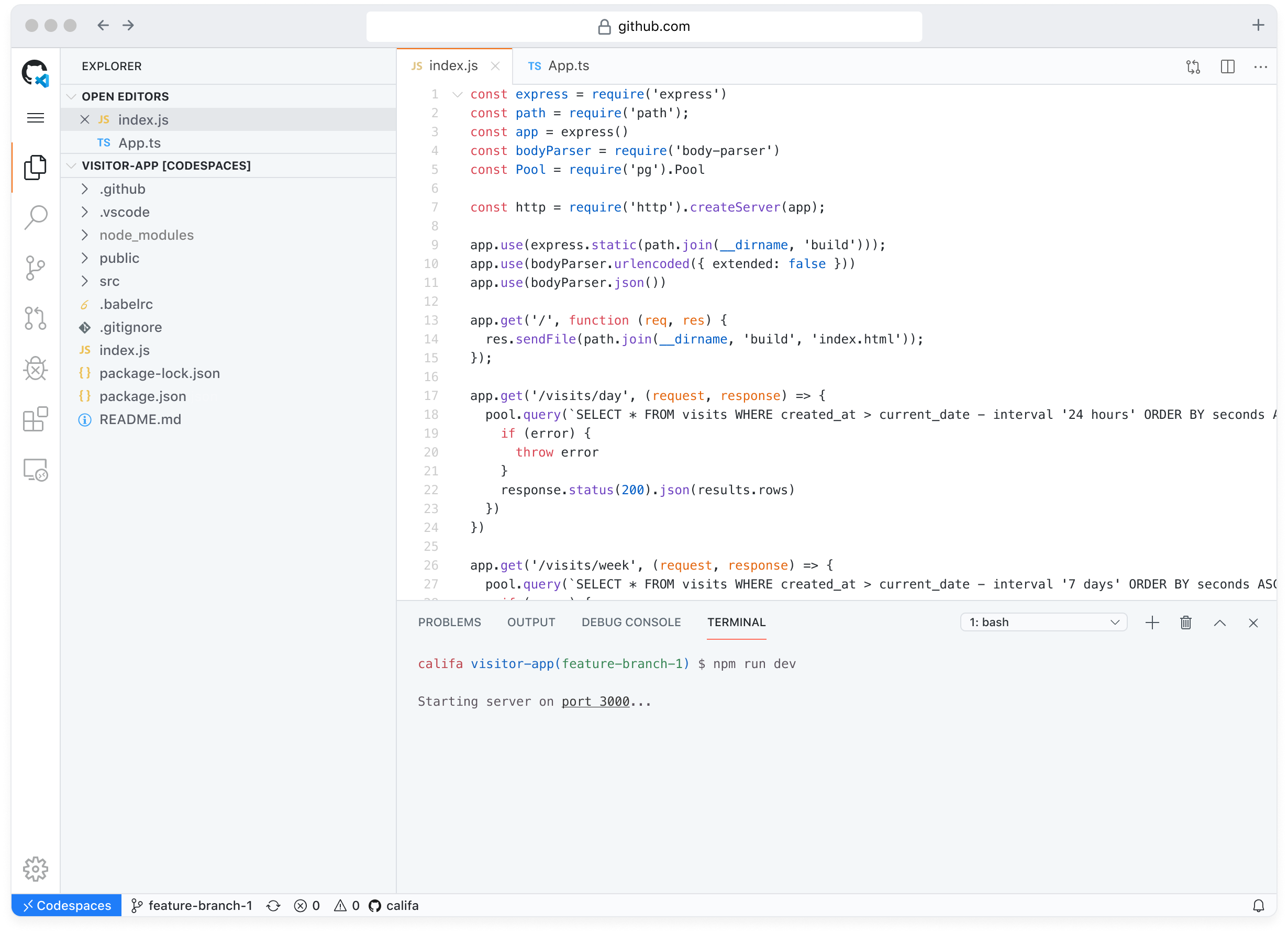
    GitHub today at its GitHub Satellite virtual conference announced it has made it easier for developers to either launch a project or join an existing project on its repository and has added collaboration tools directly within the platform.

    GitHub is also moving to advance DevSecOps by adding code scanning tools and making secret scanning tools available for private repositories, in addition to making available GitHub Private Instances to provide organizations in highly regulated industries access to a more secure managed implementation of the GitHub repository.

    Max Schoening, VP of Product Design, said GitHub Codespaces removes a lot of friction associated with starting or joining a project by enabling developers to spin up a project in seconds. In many cases, he said, developers never launch a project simply because the effort required was too great relative to the value of the effort.

    Available in limited public beta, GitHub Codespaces should not only improve developer productivity but also significantly increase the number of projects being hosted on GitHub, said Schoening.

    GitHub Discussions, meanwhile, will provide a threaded format to organize unstructured conversations without having to leave the GitHub repository. Scheduled to be available in beta shortly, GitHub Discussions should increase developer productivity in addition to providing a place for developers to maintain a frequently asked questions document. Over time, Schoening said GitHub expects millions of communities to be formed around GitHub Discussions.

    GitHub is also moving to make DevSecOps a natural extension of any application development project. GitHub Advanced Security Cloud provides access to native code scanning and secret scanning tools that can be embedded within the developer workflow. Currently in beta, GitHub Advanced Security Cloud is based on security tools it gained via its acquisition of Semmle last year. Every Git push can now be scanned using a CodeQL semantic analysis engine to discover vulnerabilities. GitHub Advanced Security Cloud is designed to be an extension of an existing GitHub Advanced Security service.

    Finally, GitHub Private Instances will provide a fully managed alternative that, among other things, allows for bring-your-own-key encryption, backup, archiving and compliance with various regional data sovereignty requirements. GitHub did not reveal, however, when GitHub Private Instances will be available.

    As GitHub continues to evolve as an arm of Microsoft, there is no doubt more IT teams will be embracing DevOps. The biggest challenge is often making it easy to get started. In fact, many developers may find themselves unconsciously embracing best DevOps and DevSecOps processes as they, for example, employ scanning tools baked into the GitHub repository.

    Of course, no one knows for sure whether organizations will continue the pace of application development projects in the wake of the economic downturn brought on by the COVID-19 pandemic. However, Schoening noted the amount of time between pull requests has declined on the GitHub repository, which he suggests is an indication of increased activity and productivity now that more developers are working away from the office.

  • Enterprise Kanban Implementation: Where to Start and How to Scale Across an Organization

    Enterprise Kanban Implementation: Where to Start and How to Scale Across an Organization

    The Evolution of Kanban 

    At its core, Kanban is a management method designed to improve customer satisfaction by creating fast and reliable workflows capable of delivering products and services of superior quality.

    Kanban originated in the automotive industry of Japan and was originally developed as a method for improving manufacturing efficiency at Toyota. However, at the beginning of the 21st Century, key players within the software industry realized that Kanban could be used to positively change the ways in which products and services were delivered.

    The result is astonishing. In less than a decade, Kanban has become the most popular tool for software development and IT teams, surpassing the Scrum framework, which has been the de-facto standard until recently. According to the State of Scrum survey, 60% of Scrum teams utilize the Kanban method, which is a testament to the benefit it brings.

    Kanban left the realm of the automotive industry and conquered the IT world, but now, with an increased focus on flow and by harnessing advances in computing technology, it is about to expand its reach to the entire business. Leaders all over the world have realized that Kanban has the most flexible architecture that allows it to scale across the enterprise in a natural and human-centric way. More and more companies are embracing the Kanban “start with what you do now” principle and are on their way to true business agility. But, how do you go about that exactly?

    A Bit of Expectations Management

    Managing an enterprise Kanban implementation starts with expectation management. Senior leaders that sign off on multi-million dollar budgets for agile transformations should be informed that business agility is a strategic choice and not a one-off project. No company in the world has ever managed to become agile overnight. There’s no shortcut to that, nor is there a recipe to follow.

    Even if your company is doing well, unless you push hard to improve, sooner or later your competitors will catch up. So, in terms of expectations, people should know that there is no “we’re done” state. The constant, never-ending process called continuous improvement is what makes you resilient in the long run.

    If there’s one area where Kanban really shines, it is continuous process improvement, which will almost always lead to qualitative and quantitative overall improvements. Applying Kanban to a process will typically drive up to 2000% improvement—and that’s not a typo. Scale that on a company level and let the numbers speak for themselves.

    Start with What You Do Now

    Once an organization has made the decision to implement Kanban, it can be tempting to jump quickly into building the system itself without conducting a thorough analysis of enterprise operations and processes. As a first step, it is vital that organizations assess their current situation to understand where concrete improvements can and need to be made. This includes aspects such as:

    • Processes: Is production stable and predictable? Answering no to this question doesn’t mean you can’t properly create and scale Kanban in your organization, but it does mean that you need to put some extra buffer and flexibility into your planning. 
    • Involvement and Investment: This is where the notion of scale is important. A company-wide Kanban would be immensely more effective than local implementations, but it will require involvement from senior leadership and a significant budget. It is often a good idea to start small, learn fast and then go full speed.

    Kanban’s flexibility allows it to be overlaid onto existing workflows, systems and processes without disrupting what is already successfully being done. It will, naturally, highlight issues that need to be addressed and help to assess and plan changes so their implementation is as non-disruptive as possible.

    Kanban’s versatility allows it to be introduced incrementally, and sympathetically, to all types of organizations without fear of over-commitment or culture shock. This makes Kanban easy to implement in any type of organization as there is no need to make sweeping changes right from the start.

    If you are starting on a smaller scale with a goal of growth, once the Kanban mentality is put in practice and successfully functioning, it is important to set goals for future scale—six months, one year and three years down the road. If you conduct a pilot where Kanban is embraced and productive, don’t lose time and momentum waiting to deploy it across the rest of your business or enterprise. 

    Training

    Training is an aspect of Kanban implementation that is often overlooked. It is important for the team designing and implementing the system to consider every level of user across the organization. What seems logical, obvious and understandable in the context of a planning meeting may not prove to be so on the shop floor.

    While a well-designed Kanban system may appear visual and obvious, end users who don’t understand the theory behind it, will not always trust it. This is especially true for mature employees who are accustomed to doing things a certain way based on learned habits. When introducing Kanban, put yourself in the shoes of someone who does not know anything about it and may not initially embrace the idea of change. As straightforward as Kanban should be, if the end-user is not on board, it won’t work.

    Training resources such as Kanban University offer certified Kanban courses and a global network of resources for organizations to help onboard employees and users at every level, build awareness and assure quality in Kanban implementations. Upfront and ongoing investment in such training teaches organizations how to fully maximize the value of Kanban, and train them to understand and visualize systems of work to continually improve and deliver effective results. 

    Past the Team Kanban Phase

    If you do Kanban right, many tough questions will have to be answered, including, “How do you connect the high-level strategy with the goals on a team level?” and “How do you bridge the gap between planning and execution?” The good news is that Kanban has an answer for these questions, too.

    Kanban integrates naturally with strategy deployment frameworks such as Hoshin Kanri or OKR. All you have to do is use Kanban across every level of the organization. Practice shows that companies would typically use three flight levels. The lowest level is the team level, where work gets done. The second is the coordination level, and the third is the strategic level. All levels are connected to one-another, so that strategic initiatives (level 3) are broken down into projects (level 2), which are then broken into work items for the teams to work on (level 1).

    When you “Kanbanize” all three levels and connect them into a single whole, then you get an extremely powerful management tool with the following benefits:

    • All work is visible, starting from the very top to the very bottom.
    • Impediments across all levels are explicit.
    • There is bidirectional feedback loop between all flight levels.
    • The senior leaders can quickly change the course of the whole company.
    • Much more accurate and reliable status reports that are based on real data.
    • Through the usage of proper Kanban tools, the data gathered on the team level can be used for forecasting on the project level. This helps leaders take informed decisions.

    Driving Enterprise Agility with Kanban

    The demands of businesses, customers and markets will always change. And in response, businesses must be able to quickly pivot and adapt to meet shifts in expectations and requirements. Successfully implementing Kanban across an enterprise requires a deep understanding of the theory that stands behind it and upfront investment to determine the best approach to make it work within the context of unique organizational challenges and objectives. When implemented and designed appropriately–with buy in and support at every level–Kanban enables enterprises to be agile amidst change, continually improve vital processes and the ability to scale to meet the demands that tomorrow can bring at a moment’s notice.

  • Pulumi Tightens DevOps Platform Integration

    Pulumi Tightens DevOps Platform Integration

    Pulumi today released the 2.0 release of its open source platform for automating the provisioning of IT infrastructure in the cloud, providing tighter integration with a dozen different continuous integration/continuous delivery (CI/CD) platforms and source code management (SCM) systems. Via the latest update Pulumi also now includes CI/CD Apps, through which pull requests will trigger Pulumi previews and updates.

    In addition, Pulumi has added tools to preview changes, while making it easier to share architectural patterns, libraries and best practices.

    Finally, Pulumi 2.0 adds additional tools to enforce policies, simplify testing and manage secrets.

    Pulumi is designed to enable developers to provision cloud infrastructure using familiar programming tools such as Python, JavaScript, TypeScript, Go and .NET/C#. That approach eliminates the need to master YAML files or other proprietary languages and templates.

    Pulumi CEO Joe Duffy said the goal is to accelerate the rate at which management of IT is shifting left toward developers by providing them with the “superpowers” need to manage cloud infrastructure. Thus far, Pulumi claims to have more than 10,000 users of its tools.

    In the wake of the economic downturn brought on by the COVID-19 pandemic, it is expected the rate at which control over IT has been shifting left will accelerate. As part of an effort to either contain or eliminate headcount, many organizations will reduce their reliance on IT operations staff by giving developers more direct control over IT infrastructure.

    At the same time, however, Duffy noted that many IT operations personnel are finding it relatively simple to master Python, which they can then use to leverage Pulumi to automate the provisioning of large amounts of cloud infrastructure to become more efficient. Some organizations may prefer to retain IT operations staff that have learned how to program.

    It remains to be seen to what degree tighter integration with CI/CD platforms might encourage developers to take more control over IT infrastructure. Support for the CI/CD platforms supported by Pulumi—Jenkins, Spinnaker and GitHub—will make it easier for developers to achieve that goal. Less clear is the degree to which developers want to take control over infrastructure. Regardless, many of them may soon have little choice in the matter.

    Of course, Pulumi is not the only framework via which the provisioning of cloud infrastructure can be automated. It does, however, make it easier for developers to provision infrastructure without having to spend time learning the nuances of another set of programming tools. Even in organizations that do shrink the size of their IT staffs, there will still be pressure on developers to deliver more code faster. The amount of time developers may want to allocate to managing IT infrastructure is likely to be limited at best.

    Whatever the path forward, many organizations will soon discover they can’t afford to wait any longer for their internal IT cultures to embrace best automation and DevOps practices. Economic pressure to optimize constrained IT resources are likely to become intense. No one may know for certain how long the downturn may last, but it is already apparent many organizations will be trying to do a lot more with less in the days ahead.

  • GitHub Makes Private Repositories Free for Unlimited Users

    GitHub Makes Private Repositories Free for Unlimited Users

    GitHub this week announced is making available private repositories for an unlimited number of collaborators available to all GitHub accounts for free.

    Kelly Stirman, vice president of product strategy and marketing, said that subsidiary of Microsoft could make this move because it is now generating enough revenue from the enterprise edition of its platform to sustain its business model.

    Previously, organizations that wanted to use GitHub for private development needed to subscribe to a paid plan. DevOps teams that need access to advanced features such as code owners or secure access markup language (SAML) support will still need to upgrade to a paid plan. However, the cost of a paid Team plan has been reduced to $4 per user/month from $9 per user/month, effective immediately, as part of an effort to increase the use of paid plans around the globe. Existing customers of paid plans will also see their bill reduced, added Stirman. Alternatively, existing customers can downgrade their current plan to take advantage of a free service.

    The overall goal is to increase the number of projects being developed on GitHub, said Stirman. Many open source projects generally get started by small groups of developers that are not initially ready to share their code publicly. GitHub provides an affordable way to launch those projects among a core set of developers that may not have ever met one another.

    Stirman also noted private repositories on GitHub provide a much more cost-effective alternative to standing up a private repository in an on-premises IT environment that requires IT teams to provision and manage their own infrastructure.

    GitHub also tracks all the vulnerabilities that are discovered in open source projects hosted on the platform, which is information that is shared with every developer on the platform, added Stirman.

    Additionally, GitHub provides access to a content delivery network (CDN) to more easily share code across geographically distributed teams of developers, Stirman said.

    It’s hard to forecast how much pent-up demand there is for access to a free private repository for an unlimited number of collaborators. GitHub has previously made private repositories available for a limited number of collaborators. Nevertheless, Stirman said there was a massive spike of adoption on the first day the new plan was available.

    In addition, Stirman noted there has been a marked increase in the number of teams that are working on projects related to COVID-19 research.

    Of course, the more development teams that are exposed to repositories such as GitHub the more likely it becomes more of those teams will find themselves to varying degree embracing best DevOps practices. Invariably, those bet practices will then find their way into a larger number of enterprise IT projects. Undoubtedly, GitHub views making private repositories available for free as a method to create increased demand for the enterprise edition of its platform down the line. Of course, rival providers of continuous integration/continuous delivery (CI/CD) platforms will be seeking to convert as many of those projects into enterprise customers as well.

    — Mike Vizard

  • GitLab Responds To GitHub Making Teams Free – We All Win

    GitLab Responds To GitHub Making Teams Free – We All Win

    Microsoft’s GitHub recently announced that it was going to make a change to its product lineup by making the team version of GitHub free and lowering the price on a full-featured version. The move seemed aimed squarely at matching GitLab’s offering. Well, now GitLab has responded to GitHub.

    While both of these excellent offerings compete to bring the best product to market, the real winners here are all of us. True market dynamics are at play resulting in both GitLab and GitHub lowering prices and adding more features (and not just GitHub and GitLab but also their competitors, including Atlassian among others).

    I had a chance to sit down with Sid Sijbrandij to discuss GitHub’s move, what GitLab will do and what this means for the market. (BTW, I have to apologize to Sid—it seems I have been mispronouncing his name for years and he is too much of a gentleman to correct me. The proper pronunciation of his name is “See Brandy.”) The video of our conversation appears below, and a blog on the GitLab site explains it all.

    In our interview, Sid was very clear that GitLab owes a huge amount of gratitude to GitHub, as it was GitHub that spurred on the early development of GitLab. He truly respects what GitHub has done, as well as the great job Microsoft has done since acquiring GitHub.

    The GitLab blog post lays out very clearly what the GitHub offering is and how it compares to the GitLab offering. It’s no coincidence that the new GitHub paid teams offering is the same price as the GitLab bronze offering.

    Price aside, according to Sid, the real advantage of GitLab is that its vision of an end-to-end total DevOps solution and the features it adds to achieve this vision give GitLab customers more than they can get from GitHub. While I agree that is true today, I don’t think GitHub is going to be content with its current lineup for long. I think the Microsoft entity already envisions a total DevOps solution as being part of GitHub’s future.

    On top of that, I think GitHub and Microsoft are already thinking of how they can leverage Azure to give GitHub an advantage. To Microsoft’s credit, though, at least until now there has not been any special advantage of using GitHub with Azure. Azure remains an open platform that all vendors seem to get fair access to and support from.

    All of this aside though, we are all the real winners here. What a great time to be a developer/DevOps professional. While GitLab and GitHub compete with each other to bring more features to market for less money, as I mentioned other companies are competing to bring end-to-end DevOps solutions to market as well. We benefit from all of this competition by getting better tools and solutions at better prices. That’s true market dynamics at work.

    It should get only better in the months and years ahead as well. In spite of COVID19 and the rest, it is a great time to be alive.

    — Alan Shimel

  • Copado Launches DevOps COVID-19 Initiative

    Copado Launches DevOps COVID-19 Initiative

    Copado, a provider of a DevOps platform building and deploying applications on top of Salesforce software-as-a-service (SaaS) applications, will make its platform available for free to anyone working on applications to help combat the COVID-19 pandemic.

    In addition, Copado has launched a virtual DevOps training center and opened its DevOps community to anyone in the Salesforce ecosystem by making DevOps certifications available for free for 90 days to anyone who can pass an online examination. Previously, Copado charged $250 per certification.

    Andrew Leigh, senior vice president for marketing and alliances for Copado, said the goal of the Copado Cares program is to train more than 10,000 individuals how to implement best DevOps practices on Salesforce platforms this year.

    In terms of providing free access to its platform for building applications, Leigh said Copado is following the lead of Salesforce, which has launched its own Salesforce Cares initiative that provides free access to select cloud applications.

    Leigh said that Salesforce applications will prove more relevant in the weeks and months ahead as fledgling digital business initiatives that organizations have launched rapidly become the foundation on which business continuity plans are now based. With more individuals working from home, many businesses need to deploy additional digital marketing and customer support applications rapidly, he noted.

    The only way to achieve that goal is to embrace low-code development tools such as the ones provided by Salesforce, Leigh added. Those tools are already integrated with a suite of core applications, which Leigh said means IT organizations don’t need to write entire applications from the ground up. Instead, they can use low-code tools in combination with best DevOps practices to accelerate the development and deployment of applications.

    In the case of health care, Leigh added that a foundation of battle-tested software-as-a-service (SaaS) applications is crucial because new COVID-19 applications being rolled out need to work reliably the instant they are deployed. Beyond the reliability of the core platform, it’s more critical than ever to employ best DevOps processes to ensure those applications have been thoroughly tested, he said.

    Of course, network access to cloud applications can be uneven when everyone is working remotely, However, in time many organizations will increase the amount of bandwidth being made available to critical customers and end users alike. In fact, the economic uncertainty created by the COVID-19 pandemic is likely to accelerate the rate at which organizations have been embracing cloud applications that are consumed on a per-user basis.

    In the meantime, it remains to be seen how long the adverse economic impact of the COVID-19 pandemic might be or to what degree relief measures being put in place by countries around the world might mitigate it. Regardless, it’s apparent that organizations that rely on digital processes are more resilient. In some cases, such as the online delivery of entertainment and education services, there has been dramatic growth. The degree to which that growth can be sustained, of course, depends heavily on how much money consumers are willing to allocate to these services when millions of people are unemployed. Whatever the outcome, however, it’s going to be a brave new world of application software.

    — Mike Vizard

  • CircleCI Surfaces More DevOps Insights

    CircleCI Surfaces More DevOps Insights

    CircleCI today announced it is making it easier for DevOps teams to determine the amount of resources being consumed by its continuous integration/continuous delivery (CI/CD) platform to help make application development teams more efficient.

    Kunal Jain, senior product manager for CircleCI, said via the application programming interface (API) that CircleCI exposes DevOps teams can now determine, for example, which workflows are taking the longest to run or what tests might be creating bottlenecks into the CI/CD pipeline.

    Armed with that insight DevOps teams can also optimize how credits to employ the CircleCI platform are allocated across their DevOps teams, added Jain. That capability should make it easier for DevOps teams to predict how much they are spending per month to run their CI/CD platform, said Jain. Many more IT organizations may opt to access CI/CD platforms using a software-as-a-service (SaaS) approach that limits the need for them to invest in their own IT infrastructure or in some cases even manage the platform.

    DevOps teams have always been sensitive to efficiency but given the current economic climate, minimizing costs is becoming a higher priority for many organizations. As such, DevOps teams need more insights into, for example, how to best break up workflows to keep CI/CD platform costs to a minimum, said Jain. In fact, Jain says the total cost of operating a CI/CD platform is likely to now play a bigger role in selecting a platform as IT leaders demand more visibility into DevOps processes.

    Of course, some DevOps teams may find themselves competing for credits based on how efficient they are. Teams who are more efficient than others could also allow IT leaders to reallocate credits as they best see fit based on the progress being made. In a previous era where compute resources were largely considered to be a nominal cost, many DevOps teams may find access to IT infrastructure might no longer be taken for granted.

    CircleCI claims it runs more than 30 million independent jobs run every month. The company last year committed to exposing more API endpoints to help DevOps team better understand the languages, architectural patterns, code testing patterns, delivery success rates and team practices being employed. Like most providers of CI/CD platforms, CircleCI has made a commitment to making available a much broader range of actionable insights to DevOps teams via its API.

    At this point, it’s unclear what the impact the economic downturn brought on by the COVID-19 pandemic might have on DevOps adoption. Undoubtedly, many organizations will put a hold on some application development projects as they reassess their priorities. On the other hand, with more people working from home, digital business transformation initiatives that require new applications are likely to become a higher priority as organizations seek to reinvent how they engage their end customers. Those projects may even be accelerated as part of a larger business continuity strategy. Regardless of the number of application development projects being launched, the scrutiny of how IT resources are being allocated and consumed is about to increase substantially.

    — Mike Vizard

  • Compuware Shifts Mainframe App Testing Left

    Compuware Shifts Mainframe App Testing Left

    Compuware today announced it is making it easier to shift application performance testing further left on to the shoulders of developers by adding support for a REST application programming interface (API) to its application performance management (APM) platform for mainframe applications, along with a plug-in for Jenkins continuous integration/continuous delivery (CI/CD) environments.

    Sam Knutson, vice president of product management for Compuware, said during the current economic downturn brought on by the COVID-19 pandemic, organizations will find it is now more imperative to shift more responsibility for managing all aspects of application development toward developers. Many organizations simply won’t be able to afford to retain IT specialists such as application testers, said Knutson.

    Instead, most organizations soon will be looking to automate as many aspects of DevOps as they possibly can with an eye toward enabling developers to achieve goals with as little intervention as possible from IT operations teams, he noted.

    In addition, Knutson said the trend of convergence between mainframe and distributed computing teams within IT organizations is about to accelerate. In fact, there may soon be no such thing as “mainframe DevOps,” he noted; rather, the mainframe will be just another mainstream platform on which applications are deployed.

    The economic downturn may limit the number of new mainframes being deployed. However, given that the total cost of computing on the mainframe tends to be lower than distributed systems, the number of workloads running on existing mainframes could increase as organizations deploy more Linux-based applications on the venerable platform.

    The API Compuware is adding to its Strobe APM platform will help accelerate the development and deployment of those applications by making application testing a more integrated element of a DevOps workflow, said Knutson. Automated tests can be run within the code delivery pipeline using Compuware Topaz for Total Test, the Topaz Utilities plugin or Compuware Hiperstation. Development teams can be notified when performance tests are completed via communications tools such as Slack and Microsoft Teams.

    Knutson said Compuware decided to build a plug-in for Jenkins because it is the most widely deployed CI/CD platform in mainframe environments.

    Despite the pending merger with BMC Software, IT organizations can count on the fact that the Compuware portfolio of DevOps tools for mainframe environments will continue to be supported and updated, he said, pointing out that this latest announcement represents the 22nd consecutive quarterly update to the Compuware portfolio of DevOps tools for mainframes.

    It’s too early to say what precise impact the economic downturn may have on DevOps adoption in mainframe environments. However, it’s safe to say that doing more with less is going to be the order of the day for some time to come. As such, the rate at which IT organizations that rely on mainframes to run their mission-critical applications will be embracing best DevOps practices is likely to increase.

    In fact, rather than incurring the costs of replacing those mainframe applications the priority now is much more likely to be modernizing them as much and as soon as possible.

    — Mike Vizard

  • Akamai Extends Scope of DevOps Integrations

    Akamai Extends Scope of DevOps Integrations

    Akamai today extended its DevOps strategy to provide tighter integrations with continuous integration/continuous (CI/CD) platforms and IT automation tools such as Terraform from HashiCorp.

    In addition, Akamai is adding support for serverless computing functions to Akamai EdgeWorkers, a JavaScript-based framework through which application logic can be executed on the edge of the Akamai content delivery network (CDN) now as a microservice.

    Greg Griffiths, product marketing manager for DevOps solutions at Akamai, said the latest additions will make it easier for DevOps teams to view the Akamai CDN as a natural extension for deploying applications. Akamai launched its first DevOps initiative last year. The goal is to make possible for DevOps teams to spin up new properties and make configuration changes from within the context of their CI/CD workflows, he said.

    Terraform support, meanwhile, will make it possible for DevOps teams to programmatically provision and manage properties and DNS zones as code, added Griffiths.

    As part of that effort, the Akamai Pipeline can now synchronize with the Akamai Control Center to capture any manual configuration changes in a way that then allows them to be incorporated into a CI/CD workflow, he noted.

    Akamai has been making a case for deploying applications as close to the network edge as possible using its CDN to reduce network latency. As part of that effort, EdgeWorkers allows developers to spin up microservices as needed. Those microservices can now access data embedded in the function, including all the data from the HTTP request such as cookies, headers, URL and query parameters.

    DevOps teams can now also more easily conduct A/B testing and feature experiments using cached content in addition to delivering different application experiences by modifying the path to cached images and other content based on variables such as customer location or time of day.

    Other new capabilities being added by Akamai include the ability to modify both the path and query arguments for a request and determine to which origin any request should be routed.

    Griffiths said now that more organizations are leveraging the Akamai CDN as a vehicle for delivering applications at the network edge, the next big initiative will be to make it easier to leverage the company’s managed security services to embrace DevSecOps.

    It’s not clear to what degree DevOps teams have embraced CDNs as a vehicle delivering applications. Organizations have, however, been leveraging CDNs to deliver web applications for years now. By providing tighter integration with CI/CD platforms Akamai is essentially making the CDN just another target for deploying applications at the end of a DevOps workflow. That capability may prove critical as organizations move to deploy more application code on edge computing platforms involving use cases that require data to be processed and analyzed in near real-time.

    Of course, Akamai is not the only CDN providers with similar ambitions. It is, however, already the largest, so from a DevOps perspective most organizations will soon encounter an Akamai point of presence somewhere soon, if they have not already.

    — Mike Vizard