Category: DevOps and Open Technologies

Editorial Calendar for February 2016

  • CircleCI Extends Core CI/CD Platform

    CircleCI Extends Core CI/CD Platform

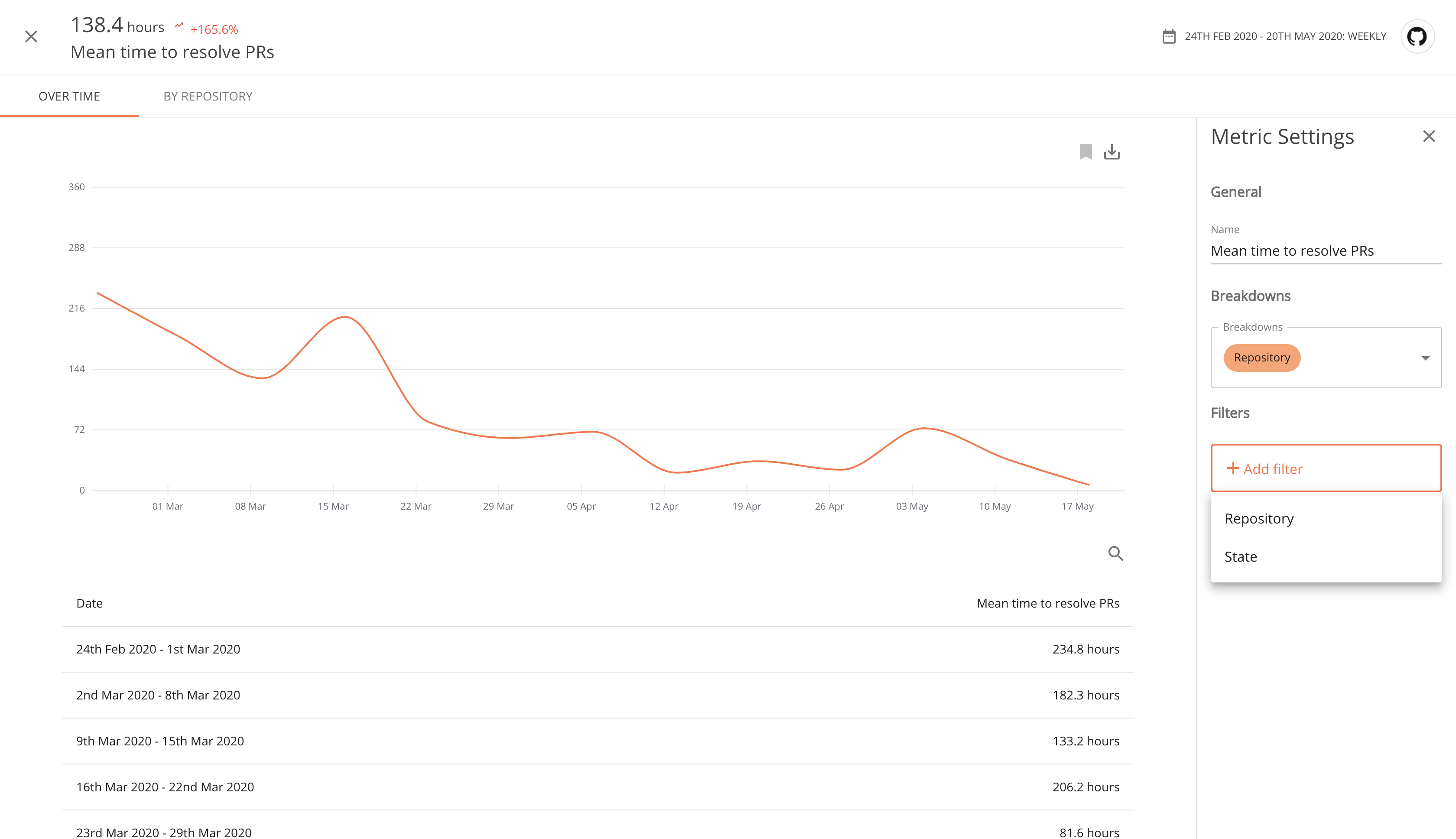
    CircleCI today in partnership with Plandek launched an analytics plugin dubbed Buildtrakr for its namesake continuous integration and continuous delivery (CI/CD) platform. Buildtrakr integrates with CircleCI and Git to synthesize commit and build performance data, with critical metrics being surfaced via a dashboard.

    In addition, CircleCI has revamped its user interface and reconfigured a new fleet of Docker images, also known as CircleCI convenience images, to optimize them for a continuous integration environment.

    CircleCI CEO Jim Rose said Docker images made available by CircleCI are faster, easier to download and provide a more efficient way to build custom images. CircleCI also released a new category of convenience images available for languages such as Python, Ruby, Rust, Go and several others, that come with improved documentation, more stability and more efficient infrastructure. Those convenience images are individual open source projects and can be used in IT environments other than the CI/CD platform from CircleCI.

    Finally, the company also announced that its insights endpoints now offer start and end date parameters for workflows and jobs. These parameters restrict the range of executions returned based on their start times in addition to providing a new filter to use for testing analysis.

    Rose said the new user interface is significant because it makes it possible to view the status of entire pipelines more easily while making it easier for more advanced DevOps teams to leverage workflows.

    The redesigned interface also adds a filterable view with nested workflow and job information, making it easier to scan the status of recent builds. Pages were also overhauled to deliver more digestible job details, full-screen step outputs for easier debugging and a cleaner configuration-as-code view. There’s also been a 65% reduction in page load times, noted Rose.

    In general, Rose said activity on the CircleCI platforms in cloud environments is on the rise in the wake of the COVID-19 pandemic. Organizations that are working remotely due to stay-at-home directives and can’t access a local data center have come to realize that having a build box located under someone’s desk is no longer a viable option.

    Of course, it remains to be seen how much of that initial burst of activity will result in new applications being deployed. However, with more organizations starting to build and deploy digital business applications to engage customers, it may be only a question of when IT operations teams will be able to catch up to a building backlog of applications. In fact, many of those applications are now likely to be deployed on the same cloud where they were constructed.

    Whatever the path forward, there most certainly will be a greater reliance on metrics. Naturally, the hope is that analytics will be used to coach DevOps teams to become more efficient versus simply riding roughshod over developers. After all, the goal isn’t to write more code faster but to deliver better code at the right time.

  • Divide Narrows Between Open Source Community, Standards Bodies

    Divide Narrows Between Open Source Community, Standards Bodies

    The path through which open source projects become industry standard is about to become a lot smoother. The Joint Development Foundation (JDF), an arm of The Linux Foundation, this week announced it has been approved to become an official submitter to the International Standards Organization (ISO) and the International Electrotechnical Commission (IEC).

    ISO and IEC previously came together to create a unified process for submitting proposals to establish technology standards. The JDF was created to provide a consistent corporate and legal framework for launching open source projects being advanced under the auspices of The Linux Foundation.

    Mike Dolan, vice president of strategic programs at the Linux Foundation, said now that the JDF has been recognized as an official submitter by ISO and IEC, it can represent open source projects that also want to establish a formal international standard. The first open source project to be submitted by the JDF is OpenChain, which provides a specification for achieving compliance using open source software within the context of a software supply chain.

    Historically, there’s been a significant amount of tension between open source projects and standards bodies. Standards have often been defined by vendors as part of an effort to promote the adoption of a technology by promising customers a level of interoperability to avoid vendor lock-in. However, many of those standards have been so loosely defined that it wasn’t really feasible for customers to switch vendors without incurring significant cost.

    The open source community has pursued a different approach to standards. Whichever project gains the most support from developers becomes a de facto standard. That approach has benefited organizations because adherence to a defined set of application programming interfaces (APIs) makes it comparatively simple to replace one distribution of a project such as Linux or Kubernetes with another. With endorsement by organizations such as ISO and IEC, many more of those de facto standards may become actual standards. That’s significant because there are still many organizations such as government agencies that are required to acquire technologies that comply with an official standard.

    To create an official international standard the JDF committed to a process for developing specifications that are neutral to all contributors. The specification must be developed with sufficient industry participation to ensure the resulting work is representative of industrywide consensus, and the specification must be formed in accordance with standard Publicly Available Specification (PAS) editing standards so that each specification is easily understood.

    It’s too early to say how this commitment on the part of the JDF will be received among the open source community. Many of them have long given up considering some standards bodies to be relevant. However, as the divide between the open source community and standards bodies continues to narrow, the impact an open source project might have on the state of IT could become a lot more profound.

  • Eclipse Foundation Moving to Brussels

    Eclipse Foundation Moving to Brussels

    The Eclipse Foundation announced today it will begin to transition its headquarters from Ottawa to Brussels as part of an effort to advance international expansion.

    Mike Milinkovich, executive director of the Eclipse Foundation, said with so many open source organizations based in North America, there is a clear need for an open source organization to have a larger presence in Europe. As nearly half of the strategic members that provide funding to the Eclipse Foundation are based in Europe, it made sense for the Eclipse Foundation to take on that role.

    The Eclipse Foundation is now home to 375 open source projects resulting in more than 240 million lines of code. Some of the most widely employed Eclipse Foundation projects include the Eclipse integrated development environment (IDE) and Jakarta, which is a follow-on to Java Enterprise Edition platform, previously owned by Oracle. In total, the Eclipse Foundation’s projects represent more than 13 billion Euros of investment.

    In general, Milinkovich said contributions to open source projects have accelerated in the wake of the COVID-19 pandemic. Developers who are staying home to help combat the epidemic apparently have more time to contribute to projects. The expectation is by moving to Brussels, more European developers will contribute to projects involving technologies such as internet of things (IoT) initiatives that address industrial use cases, he added.

    The Eclipse Foundation plans to establish a new legal entity sometime in July, with personnel relocating or added to a Brussels office over time depending on the nature of the Eclipse project being supported, Milinkovich said.

    It’s not clear to what impact being headquartered in Europe will have on open source projects, which are by their very nature global. However, Milinkovich noted most of the recent live events hosted by the Eclipse Foundation have been held in Europe. It may be a while before anyone is attending an IT conference in person, but Milinkovich noted European developers already play a major role in the Eclipse Foundation projects.

    Between the Eclipse Foundation, the Linux Foundation and the OpenStack Foundation, there is no shortage of opportunities for developers to contribute to open source projects. Many of those projects count on contributions from developers who work for IT vendors that have a vested interest in a specific project. In fact, many open source projects provide a way for IT vendors to defer the cost of creating a core piece of technology that doesn’t provide differentiated value. Rather than reinvent the wheel, it makes more economic sense to share open source code with potential rivals.

    Of course, it’s then up to each IT team to decide whether to employ that open source code themselves versus relying on an IT vendor to provide a curated instance of it under a support contract. Regardless, the total cost of IT would be prohibitively higher right now if it were not for the proliferation of open source software. It’s also worth noting many IT vendors that build platforms on top of open source software would be considerably less profitable.

  • Kong Brings Collaboration to Designing APIs

    Kong Brings Collaboration to Designing APIs

    Kong has launched an open source tool for designing application programming interfaces (APIs) designed to make it easier for teams of developers to collaboratively edit an API specification that can be stored in a Git repository.

    Based on the open source Insomnia API management platform the company gained last year by acquiring Floating Keyboard Software Inc., the Insomnia Designer tool for designing APIs integrates natively with the testing capabilities embedded in the Insomnia API management platform to make it easier to collaboratively design both REST and GraphQL services.

    As part of that effort, Kong is also releasing plugins that enable teams to automatically embed Kong Gateway policies directly into their API specification files within a Git repository.

    Greg Schier, technology tech lead for Insomnia at Kong, said the goal is to streamline the workflow for designing APIs by enabling teams to share updates to edits of API specifications using best GitOps processes.

    For example, DevOps teams can now search for API designs to discover details such as Git Status and Git Branch. They also can automatically generate configurations for both Kubernetes and Kong for Kubernetes within the individual API spec file. Developers can also select Kong plugins that provide capabilities such as authentication or rate-limiting to govern their API’s behavior.

    As organizations embrace microservices-based applications the need to be able to design, build, deploy and maintain APIs has become more critical. Each microservice within an application exposes its own APIs. Organizations that embrace microservices soon find they need to potentially build thousands of APIs. Rather than address each of those API as an isolated project, Kong is making the case for constructing a set of workflows that make it easier to design and construct APIs within the context of a larger DevOps process.

    The goal should be to eventually make the testing of APIs a natural extension of the unit testing process embedded within a continuous integration/continuous delivery (CI/CD) platform, said Schier.

    Within far too many organizations the designing and building of APIs is still an afterthought. There is naturally a lot of focus on building microservices, but once they are constructed not nearly as much attention is paid to the API. And yet, while microservices frequently are replaced, it is the API that remains constant. All the dependencies between the microservices that make up an application are only manageable because of the APIs employed to connect them all. Rather than constructing APIs after a microservice is built, Kong is making the case for consistently designing and building APIs in keeping with best DevOps practices.

    In the wake of the COVID-19 pandemic, it’s hard to say at what rate organizations will be building and deploying new applications. What is for certain is the bulk of new applications will be based on cloud-native microservices to make them more flexible and resilient. That way when the next major crisis erupts, organizations will be able to respond more adroitly to rapidly changing business conditions because the enterprise architecture now revolves around APIs.

  • Open Source Vulnerabilities Were Up 50% in 2019 — How Will It Impact Software Development in 2020?

    Open Source Vulnerabilities Were Up 50% in 2019 — How Will It Impact Software Development in 2020?

    Open source vulnerabilities have been on the rise in recent years, but 2019 was truly one for the record books with a spike of nearly 50% over the previous year.

    According to the recently released State of Open Source Security Vulnerabilities report by the WhiteSource research team, the number of vulnerabilities jumped from 4,100 in 2018 to 6,100 in 2019.

    Open Source Vulnerabilities
    Figure 1: Number of reported open source vulnerabilities per year.

    In hopes of better understanding what is behind this rise in the number of open source vulnerabilities, what it tells us about the state of open source usage in modern software development, and even where we are likely headed in the years ahead, let’s take a look at the report’s findings for insights on the current state of open source security.

    More Code, More Vulnerabilities

    According to the research report, the primary driver behind the rise in open source vulnerabilities is a function of the growth of open source. There are now more open source projects, code and members of the community than ever before.

    All of these good folks are working hard to not only write more code, often with the backing of large tech giants, but also to seek out vulnerabilities in the code that can put the users of their components at risk. The combination of more code being written and the number of eyeballs reviewing the code for those inevitable human mistakes, comes together to produce a larger number of vulnerabilities being reported.

    The increase in the number of vulnerabilities in open source components will have a considerable impact on software development. In recent years, we have seen open source components playing a bigger role in how developers build their applications. Most estimates believe that open source components comprise between 60-80% of the codebase in most modern applications. When a vulnerability is reported in a popular project such as Apache Struts or the Linux kernel, then huge swaths of developers can quickly find their software in need of patching.

    The Good, the Bad and the Bazaar

    WhiteSource’s research revealed the reassuring news that over 85% of reported open source security vulnerabilities have a fix available.

    One of the reasons for this improvement is the fact that more enterprises are dependent on open source components for their own software, so they are investing in making it more secure, via bug bounty programs, backing foundations that support open source security or backing the projects themselves.

    However, even as the situation in the field appears to be improving, there is still a way to go.

    The fact that many published open source vulnerabilities are not indexed in one central location adds complexity to this challenge for development teams attempting to stay on top of published open source security vulnerabilities. If proprietary software is still considered to be the classical Cathedral, well-organized information and support under one roof, then open source is very much the Bazaar.

    The WhiteSource report found that only 84% of known open source vulnerabilities appear in the National Vulnerability Database (NVD). This means that information about another 16% of the known vulnerabilities is out there, spread out among a wide range of resources. These might be security advisories, bug trackers and a laundry list of other locations. While 45% of reported open source vulnerabilities that were not initially published on the NVD eventually end up there, that could take months since their publication on other resources.

    The challenge for organizations is that they run the risk of using a vulnerable component unaware of the security updates, while hackers are scouring all resources, looking for vulnerabilities that could be their next meal ticket.

    Given the evolving security challenges facing organizations, what does the future hold for open source security in the year ahead?

    Our Predictions for 2020

    The easiest prediction that we can provide is that 2020 will have even more reported open source vulnerabilities than were published in 2019. The only question is: How big it will be? Chances are that the count will be more significant due to recent advances making it easier than ever to report and an open source vulnerability.

    This past year saw the launch of GitHub Security Lab which aims to help researchers, maintainers and users easily report an open source vulnerability and publish a verified fix in one centralized location. By simplifying the reporting and documentation process, GitHub has gone a long way in helping their users to protect their software with better quality reporting.

    Key Takeaways

    For many, the rise in the number of reported open source vulnerabilities might be concerning, making us confront the fact that we probably have plenty of them in our software right now. However, the situation is actually improving, and even heading in the right direction. When vulnerable open source components are reported, we get to track them and move quickly to remediate. Only once you know you have a problem can you begin to fix it.

    Hopefully, the increase in security awareness will keep pushing for a stronger, more organized and better supported open source community that will be resilient in the face of even more vulnerabilities that are likely to show up in next year’s research report.

  • Why DevOps are Keen on Open Source Logging

    Why DevOps are Keen on Open Source Logging

    With the advent of DevOps, we are now moving toward more collaborative workflow models, where the integration of development and operations teams make it easier to quickly move development projects into production, and with fewer roadblocks. However, within DevOps, many of our activities are not as clear-cut as they were in previous siloed methods. While previous methods made it easier to keep track of activities and processes, these systems were not particularly efficient.

    In the DevOps model, moving software from development to production is much faster. But, we need to be able to identify actions that occur in our increasingly complicated applications. We now have many chefs working at the same time, and visibility suffers.

    Logging helps us better understand applications throughout each stage in the process so that we can identify problems or larger issues that might arise already during the development process. This is particularly true within CI/CD environments where items are regularly pushed into production. We need methods for identifying not only if there are critical errors, but also the ability to attribute the errors to specific versions throughout the cycle.

    To deal with the increasing complexity and decreasing visibility, DevOps identifies complex issues using logs to keep track of services, APIs, containers, infrastructure issues, network activity and also security related logs.

    Log files provide a tremendous amount of useful information about what goes on beyond the CI/CD pipeline and also identify issues that directly impact customers. Good log analysis tools make it possible for DevOps teams to get much closer to the end user. And open source is the preferred starting point for many organizations.

    Why Open Source?

    Lack of Lock-in 

    Many DevOps teams make use of a wide-range of tools and find that they can work much better without vendor lock-in, which can be caused when using proprietary stacks exclusively. This makes it far easier to make any needed changes as the need arises, and not be reliant on individual vendors. This also helps avoid many risks, such as vendors disappearing, ending support, changing pricing models, etc.

    Widely Used

    Within CI/CD, there are many commonly used open source tools, which makes it easier for new members to be on-boarded. There is already a widely accepted suite of tools that almost all DevOps teams use. It’s hard to imagine working without Jenkins, Docker, Kubernetes, Git, etc.

    Regular Skill Development

    Open source work ensures that DevOps teams are actively learning and directly interacting with software and systems. It becomes a way of ensuring that skills and abilities of teams are continually staying updated. This can translate into better troubleshooting and problem solving skills. When working with closed systems, there’s considerably less opportunity for knowledge advancement, as closed systems tend to encourage rote work with existing software rather than skill development.

    Quality

    Fears about subpar open source software are largely unfounded, particularly if the projects are widely used and have a large community. There are far more developers working on a project in the open source community than in proprietary systems. Closed systems can lag behind, and there may actually be bad code but that is hidden due to its closed-source nature. The ability to make modifications to create functionality beyond that which already exists in closed source systems, makes open source extremely appealing for many DevOps personnel.

    Some Drawbacks

    It’s important to note there are a few drawbacks when attempting to work entirely within open source environments. Many resources used are not open by nature–for example leading clouds are decidedly not open source in nature. Individual users (outside these companies) have much less control over how they actually operate. However, if we look at the toolkits that we described above, we can think of open source tools as needed resources for working in and around these environments.

    Another drawback to consider is the actual costs of managing open source software versus a fully-managed service such as Coralogix, for example. Many times, teams will start with the self-managed approach and move to a managed service when faced with scaling and complexity issues as the organization grows. 

    Types of Features to Look for in Open Source Logging Models

    When setting up to work with open source logging tools, it’s important to understand there is a range of different types of models available, which can work better or worse depending upon needs and capacities.

    • OpenAPI: provides a useful interface into many different systems. It is language agnostic and can generate clear documentation of methods, parameters and models. In most cases it will work within RESTful interfaces, but will also work with other protocols such as SOAP.
    • Open Standards: Even if a tool is not open source, typically these should follow a set of standards to make sure that different pieces can talk to each other. OpenAPI is one example, but not the only one.
    • Federated Model: This is a broader type of open source model which is like many default open tools, but allows a much wider set of input and may allow individual users to provide input and maintain some control over local development areas. This means that aggregation, processing and control remain local. However there’s still a central organization which will be able to collect summarized or complete code. The advantage of a federated model is it increases flexibility for individual teams, while still contributing largely to the project as a whole. 

    Elasticsearch, Logstash, Kibana (ELK)

    One of the most popular open source logging stacks is known as ELK. It is particularly powerful and effective for the purposes of those wishing to create a clear aggregation and understanding of their log files, with the ability to find both problems and solutions quickly. 

    ELK is a combination of three tools.

    • Elasticsearch: a popular NoSQL Lucene search engine.
    • Logstash: a pipeline system which will take data from logs, ingest it and transform it into a data store (such as Elasticsearch), so that it can be searched and analyzed.
    • Kibana: a tool which makes it possible to create clear visualizations for Elasticsearch to appear in a human-readable format. 

    What ELK provides is a single place for all of your data, where it can be stored, searched and analyzed in a method. It is useful for DevOps teams wishing to make use of the vast amounts of data stored in log files. 

    Upfront expenses for open source tools like ELK are minimal; the software itself is free. However, this does come with a caveat. Professional management of ELK tools is required, otherwise costs can grow quickly out of control. 

    Generally, for low volumes of data, one can manage ELK for as little as a few hundred dollars a month on a platform such as AWS. However, without careful management, the cost can grow exponentially for large amounts of data.   

    Work required for ELK involves:

    • Setup, which may take some time but that’s typically not a problem for many ops teams—and is a project many will enjoy.
    • Maintenance of elastic search clusters can be quite a bit of work—several hours per week simply solving issues or resolving downtime. This can vary based on the size and growth of clusters. The more activity you have occurring, the more time you will need to spend maintaining your logs.

    FluentD

    FluentD is an open source alternative to Logstash which can collect, parse and transform data for further analysis. It has features which may be particularly helpful if you are running your logs in a Kubernetes environment.

    One of the drawbacks of Logstash is that it is written in JRuby, which means it requires a Java runtime for each implementation. If you are running many different microservices in Kubernetes, this can result in a large amount of your memory being taken up.

    Because FluentD is developed in CRuby, it doesn’t require as much memory to use with each new pod creation. This can help solve some memory allocation issues which could cause your logs to slow down your applications.

    FluentD also has a wide range of plugins, which can cover pretty much any use case that you come up with. Another advantage is that its tag-based routing makes it slightly easier for developers to work with than Logstash. 

    What to Log?

    With continuous integration, there are many things that merit monitoring. These can include everything from checking the frequency of merge conflicts in Git, or whether pulls are preceded by pushes prior to any other pulls.

    Are you receiving a high number of compiler warnings? You can identify code that has a strong likelihood of breaking builds, change your unit testing procedures and implement better automated checking in Jenkins.

    Much of this data is worth visualizing in Kibana for analysis. Deciding what specific activities to log can be a bit involved. Areas that are a good idea to log include:

    • Diagnostics: For example, understanding the causes of repeated errors.
    • Auditing: Track how well errors in code have been fixed, and whether they succeed or fail a second time.
    • Profiling: For example, get an idea of how long it takes for certain parts of code to execute, for the purpose of identifying whether this has any impact on customer experience, and identify areas for improvement.
    • Statistics: Code performance, such as execution time or memory consumption.

    Conclusion

    Gaining complete visibility or your infrastructure will go a long way to make sure that your operation runs smoothly and that your CI/CD pipelines function at optimum efficiency. Open source tools remain an attractive option for DevOps because of its advantages and knowing how to get around drawbacks.

    Finding the right tools is, of course, only the first step, but if you’ve picked good architectures and have implemented them properly, you are already moving in the right direction to a more streamlined operation.

  • Google Names CloudBees App Dev Partner of the Year

    Google Names CloudBees App Dev Partner of the Year

    Google this week named CloudBees its 2019 Cloud Technology Partner of the Year for Application Development at a time when the rate at which application workloads are heading into the cloud is expected to accelerate.

    Beyond the Jenkins continuous integration/continuous delivery (CI/CD) platform on the Google Cloud Platform (GCP), CloudBees also makes available a software-as-a-service (SaaS) edition of Jenkins X, a CI/CD platform optimized for Kubernetes, along with a CloudBees Software Delivery Management (SDM) service for managing DevOps processes.

    François Dechery, chief strategy officer for CloudBees, said CloudBees chose to partner with Google at that level versus other cloud service providers because Google made it clear it would partner at both the technology and business development level. In addition, given Google’s long history with Kubernetes, it also made sense to leverage existing Kubernetes expertise, he noted.

    In the wake of the COVID-19 pandemic, more application development work will be moving onto cloud platforms that can be remotely accessed more easily by development teams, he added.

    In some cases, organizations will opt to self-manage those platforms or rely on a traditional managed service provided by a third-party IT services firm. However, Dechery said there also has been a significant increase in the number of organizations willing to consume a DevOps platform such as Jenkins X as a SaaS application, as long as the IT environment is proven secure. SaaS platforms are now a mainstream element of any enterprise IT environment, said Dechery.

    Many of those decisions will be predicated on what degree of abstraction any organization is comfortable with as IT platforms become both more complicated and diverse, added Dechery, noting one thing that attracts organizations to Jenkins X is that it abstracts away the complexity associated with deploying Kubernetes. The Kubernetes deployment process is automated by Jenkins X, which essentially provides a level of abstraction on top of another abstraction.

    Dechery conceded there is some level of inherent competition with cloud service providers that provide their own DevOps tools. However, most of those DevOps platforms are not up to the task of building and deploying applications at scale, he said. In addition, platforms such as Jenkins and Jenkins X make it feasible to manage application development projects at scale without having to worry about becoming locked into a single cloud service provider, he added.

    Competition across the CI/CD platform space remains fierce. CloudBees has long benefited from a large open source Jenkins community that often leads to organizations implementing an enterprise edition of Jenkins supported by CloudBees. However, as organizations embrace microservices-based applications based on containers, many of them are revisiting their platform options. That doesn’t necessarily mean they will rip and replace existing investments in Jenkins platforms; however, given the rate and scale at which modern applications are being built and delivered today, many organizations may be moving toward more prescriptive approaches to bring some order to the chaos.

    — Mike Vizard

  • GitLab Shifts 18 Features Into Core Open Source Platform

    GitLab Shifts 18 Features Into Core Open Source Platform

    GitLab this week announced it has moved 18 features that previously organizations had to pay for into the core open source version of its namesake continuous integration/continuous delivery (CI/CD) platform.

    Scott Williamson, executive vice president of product management for GitLab, said as a general rule the company makes available DevOps tools for teams across the four tiers of services that organizations can employ. Features now being migrated to the Core offering include:

    Plan: Synchronize collaboration with “related issues,” “export issues,” “issues board focus mode” and “Service Desk”

    Create: Build better code and branch with the “web terminal for WebIDE,” “file syncing to web terminal” and “design management”

    Verify: Improve code quality with reports on merge requests

    Package: Build and share more efficiently with a set of package managers in one place

    Release: Continuous delivery simplified with “canary deployments,” “incremental rollout,” “feature flags” and “deploy boards”

    Configure: Support for multiple Kubernetes clusters to ease deployment of different environments

    Defend: Bolster application security with network policies for container network security

    As the global economy falters in the wake of the COVID-19 pandemic, it’s likely reliance on open source software will increase. Most organizations would rather throw IT labor at the ongoing management of an IT environment to manage open source software versus having to lay off IT employees that would be extremely difficult to find once the economy recovers. It remains to be seen to what degree that strategy will play out in DevOps environments, but Williamson said historically most of GitLab’s customers are organizations that first adopt the open source version of its platform.

    Less clear is the degree to which the downturn might also induce many of the organizations to employ a DevOps platform delivered as a set of software-as-a-service (SaaS) applications. GitLab has been for the past several years for an integrated approach to DevOps based on a single code base that is ultimately easier to deploy and manage. Many IT organizations may decide that rather than manage DevOps infrastructure, they now prefer to allocate what limited resources they have on hand to writing code.

    The number of application development projects being launched could also decline while others are suspended. At the same time, however, there are some vertical industry segments, such as digital entertainment and education services, that might see a spike in demand for additional services now that many people are staying home to help limit the scope of the COVID-19 pandemic.

    Of course, many DevOps teams are among the legions of workers that now need to remotely access platforms. Williamson said supporting remote DevOps teams has long been a strength of the GitLab platform. GitLab also makes available a playbook that provides DevOps teams with guidance on how best to work remotely.

    Clearly, it will be a few months before the full impact of the COVID-19 pandemic is fully appreciated. Regardless, many IT organizations are clearly preparing for the worst of times while continuing to hope for the best outcome possible.

    — Mike Vizard

  • Logz.io Launches COVID-19 Dashboard

    Logz.io Launches COVID-19 Dashboard

    Logz.io this week launched a Community COVID-19 Dashboard Project that seeks to provide software developers and data scientists a reliable source of data to assess the global impact of the pandemic.

    Dotan Horovits, product evangelist for Logz.io, said the goal is to help organizations make sense of often conflicting data by making it accessible using a publicly available dashboard based on open source Kibana software. The data itself is stored in an ElasticSearch repository, he said.

    Logz.io also plans to make the data accessible via a dashboard based on open source Grafana software to make it easier to navigate time-series data, he added.

    Horovits acknowledges that the data concerning the COVID-19 pandemic is fluid at best. However, over time it will become easier to identify suspect data by applying analytics. Much of the COVID-19 data being made available is well-formatted, he said; the challenge is simply finding a way to aggregate that data in a way that is accessible to a broad range of potential end users.

    In the short term, Loz.io envisions organizations such as first responders using the dashboard to help optimize the deployment of limited resources. Longer-term, that data can also be employed to assess the impact the pandemic has had on everything from the environment and the economy to the mental health of individuals living in different regions. At the very least, access could go a long way to reducing the amount of COVID-19 misinformation being spread, Horovits added.

    Logz.io started with the COVID-19 data available from Johns Hopkins University. On top of that core set, the company is moving to aggregate data made available from additional public sources including media, governments and the World Health Organization (WHO). The company is also inviting any organization that has aggregated COVID-19 data to contribute to the project.

    Many organizations will, of course, use the data provided by Logz.io and similar initiatives to build a wide range of analytics applications. For example, it may be possible to avert future pandemics by identifying areas where individuals are experiencing high fevers sooner. Given the importance of those applications, it’s probable most of them will need to be built using best DevOps practices to ensure timely delivery.

    It’s not clear how the pandemic may advance data science. Organizations have been leveraging big data analytics applications for years. However, the pandemic may lead to more ambitious efforts to aggregate and analyze medical data on a global basis. Arguably, it’s been the absence of reliable data that has enabled the virus to spread so widely. Otherwise, initiatives such as social distancing might have been enforced earlier and medical facilities would have been outfitted with more equipment.

    In the meantime, there may not be much most IT professionals can do to combat the current pandemic other than working from home much like everyone else. However, in terms of preventing the next one, the level of data science expertise being applied to virus research may soon become a matter of life and death for millions of people.

    — Mike Vizard

  • Eclipse Foundation Delivers on Theia Promise

    Eclipse Foundation Delivers on Theia Promise

    The Eclipse Foundation has made available Theia 1.0, an open source alternative to Microsoft’s Visual Studio (VS) Code tool for editing code.

    Mike Milinkovich, executive director of the Eclipse Foundation, said Theia will provide IT teams with a no-cost option to editing code that can be deployed on-premises or on the cloud alongside the Eclipse integrated development environment. In contrast, VS Code today only runs on a desktop, he said.

    Theia

    While many developers still prefer to write code on their desktops, Milinkovich noted that more code is now being written in collaboration with other developers in the cloud. The pace at which that transition has been occurring is only likely to accelerate with more developers working from home as part of the effort to mitigate the impact of the COVID-19 pandemic, he added.

    To provide access to a code editor in the cloud Theia runs in two separate frontend and backend processes that communicate via JSON-RPC messages over WebSockets or REST APIs over HTTP connections. Both processes expose a dependency injection (DI) container to which extensions can be made. Those extensions will also be available via the Eclipse Foundation marketplace, noted Milinkovich.

    In fact, he said, the Eclipse Foundation expects more developers will be exposed to Theia first via third-party application development platforms. Early adopters and contributors to the Theia project include ARM, Arduino, Ericsson, Gitpod, Google Cloud, IBM, Red Hat, SAP and TypeFox. Microsoft, however, has thus far not expressed any interest in participating in the Theia project. In many cases, those vendors will be making Theia an extension of the DevOps environments that these vendors already provide as a cloud service, noted Millinkovich.

    The future of writing code is clearly becoming more hybrid. Application developers will always want to be able to write code locally whenever inspiration strikes. What’s changing is the level of collaboration that is now possible thanks to the rise of the cloud. It’s become a lot easier for small teams of developers to edit code together, which in theory should lead to less debugging because better code is being created at the front end of the process. The degree to which that theory pans out naturally will vary based on the individual skills of any development team.

    In the meantime, Millinkovich said the Eclipse Foundation remains committed to expanding the range of open source tools that can now be accessed via the cloud, including  Che, an integrated development environment (IDE); CodeWind, a project that adds support for containers to IDEs based on Eclipse; Eclipse Dirigible, a cloud-based development platform developed by SAP; Eclipse Sprotty, a diagramming framework; and Eclipse Orion, a browser-based integration platform.

    It may take a while for all these projects to reach the level of maturity required to drive mainstream adoption. However, as work on these projects continues, the number of open source application development tools heading into the cloud is only going to accelerate in the months ahead.

    — Mike Vizard