Category: DevOps and Open Technologies

Editorial Calendar for February 2016

  • Global Next-Generation Software Engineering Conference

    Global Next-Generation Software Engineering Conference

    GNGSEC sounds the clarion call for software engineering change!

    The pandemic made 2020 the year where we see some of this decade’s most exciting digital technologies become commercially viable, and others finally go mainstream. Software is the core of digital transformation. In the digital era, the methods by which we produce software also need to be digitized. In the software engineering field, the adoption of AI, big data, cloud computing and cloud-native are accelerating the digitization for businesses.

    Global Next Generation Software Engineering Conference (GNSEC) focuses on a full range of software engineering technologies and is committed to defining the standard of the next generation of software engineering. The event will gather 1000+ Attendees and it will be live with virtual experience where senior software engineers, architects, and team leads connect, learn, and grow. Experts and developers from various backgrounds will be sharing their cutting-edge technical practical experience and cases.

    The majority of the attendees of this event will be from the Southeast Asia region (Singapore, Thailand, Indonesia, Philippines, Malaysia, Vietnam), India and China. Due to the current travel restriction, GNSEC 2021 will be virtually presented via Airmeet. It will offer attendees with virtual exhibitions, virtual conference, peer networking session, business matching session, virtual discussion group.

    Global Next Generation Software Engineering Conference (GNSEC) is co-presented by DAOPS Foundation and Escom Events. The event is part of digital innovation series events that features AI, DevOps, Cybersecurity and digital transformation. Previously the event was presented in Shanghai, Shenzhen, Beijing, California and Hong Kong.

    There will be more than 30 speakers from DBS Bank, ING, IBM, Daimler, Tencent, JD.COM, DevOps Institute, Gitlab, New Relic, SUSE and more to share ideas, experiences and case studies in software engineering.

    Register here to join​​ the event with us to rebuild software engineering.

  • ReleaseIQ Adds Orchestration Tool for Multiple Instances of Jenkins

    ReleaseIQ Adds Orchestration Tool for Multiple Instances of Jenkins

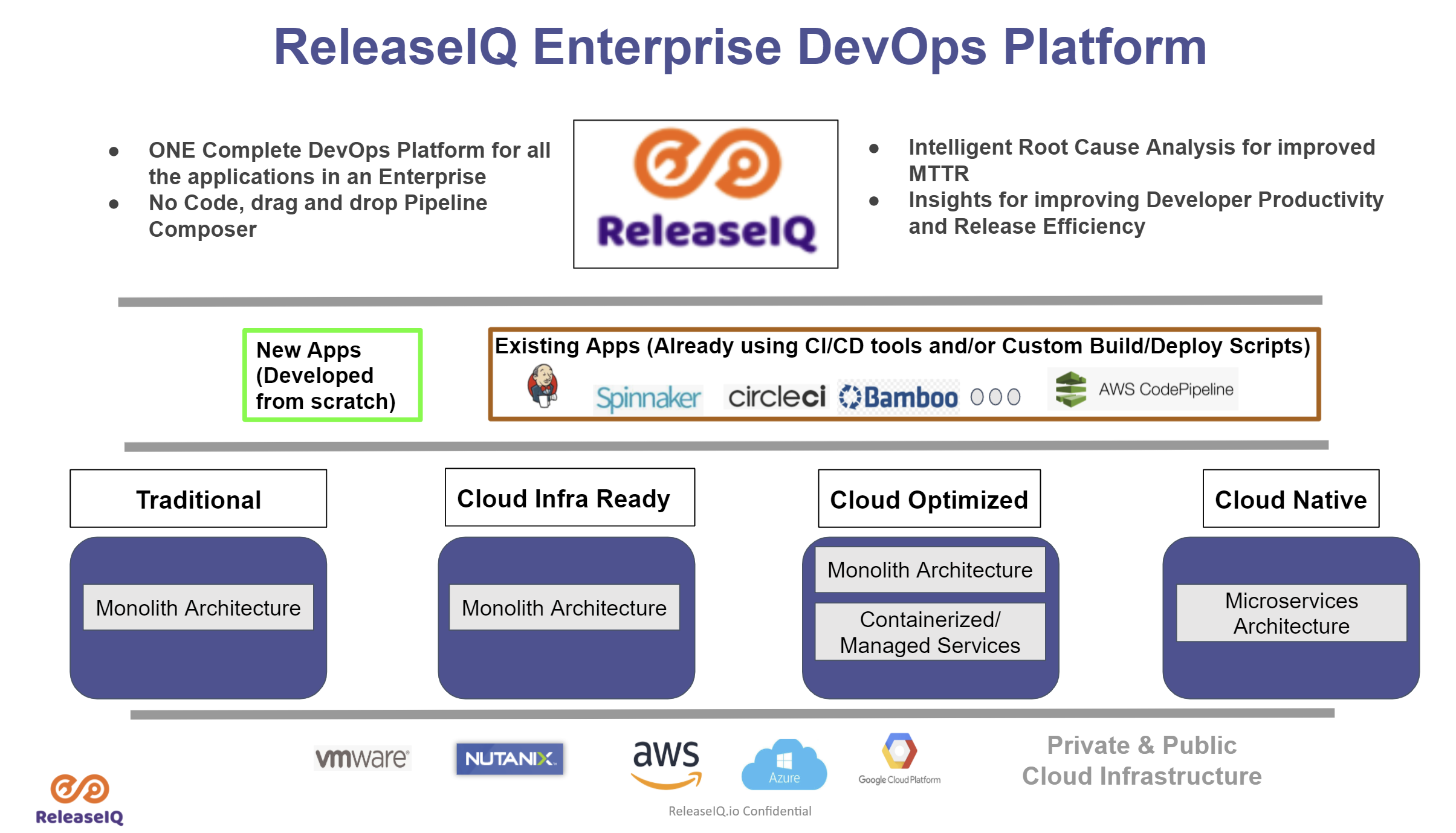
    ReleaseIQ has launched an orchestration framework for the open source continuous integration/continuous delivery (CI/CD) environment that makes it possible for DevOps teams to orchestrate pipelines across multiple instances of Jenkins.

    Seetharam Param, ReleaseIQ CEO, said ReleaseIQ Essentials for Jenkins is an implementation of an existing orchestration platform that enables DevOps teams to orchestrate pipelines across heterogeneous CI/CD platforms.

    The challenge is that organizations that have standardized on Jenkins typically have multiple instances being used by not only different IT operations teams but also owners of, for example, ancillary quality assurance processes. ReleaseIQ Essentials for Jenkins provides an alternative approach to the orchestration tools that CloudBees, the original developer for Jenkins, provides, said Param.

    Jenkins today is being advanced independently of CloudBees as an open source project managed by the Continuous Delivery (CD) Foundation, which is an arm of the Linux Foundation. Founding members of the CD Foundation include CloudBees along with Alauda, Alibaba, Anchore, Armory, Autodesk, Capital One, CircleCI, DeployHub, GitLab, Google, Huawei, JFrog, Netflix, Puppet, Red Hat, SAP and Snyk.

    ReleaseIQ Essentials for Jenkins optimizes execution of jobs and pipelines and also provides DevOps teams with a no-code graphical interface to build pipelines.

    DevOps teams can also import and execute Jenkins pipelines and jobs in addition to being able to pre-merge pipelines.
    Finally, DevOps teams are provided insights based on key metrics the platform automatically tracks on their behalf. Those metrics make it possible to quickly discover and fix pipeline issues across multiple Jenkins instances via console log aggregation, noted Param.

    It’s not clear to what degree DevOps teams that have standardized on Jenkins might swap out one orchestration tool for another. However, Param said more organizations are either wary of becoming locked into a specific CI/CD platform or now find themselves in a position where they need to continue employing multiple CI/CD platforms from different vendors. The ReleaseIQ platform provides a means for orchestrating pipelines regardless of how many different CI/CD platforms are employed, noted Param.

    It’s clear the need to embrace orchestration tools is becoming more pronounced. DevOps teams are spending too much time manually maintaining DevOps pipelines. The need for tools to automate the management of DevOps workflows is becoming critical as the number of application development projects that are simultaneously being launched continues to grow. Arguably one of the reasons that DevOps processes are not as widely embraced as they might be is the level of expertise required today to manage all the pipelines that make up a workflow.

    Of course, the level of DevOps maturity varies greatly by organization. It’s not uncommon for even different teams within the same organizations to have significantly different levels of proficiency. The challenge and the opportunity now is to provide those DevOps teams with tools that operate at a high enough level of abstraction to make DevOps accessible to every IT professional regardless of the level of programming expertise they may or may not have.

  • Sumo Logic Extends Observability Scope and Reach

    Sumo Logic Extends Observability Scope and Reach

    During the online Illuminate user conference, Sumo Logic revealed how it is integrating capabilities it gained with the June 2021 acquisition of Sensu, a provider of open source monitoring tools, with its continuous intelligence platform in addition to adding support for data collected via open source OpenTelemetry software.

    Sensu Go, a set of tools for implementing monitoring-as-code, is now a core part of the Continuous Intelligence Platform. The company is also now making available in beta Sumo Logic OpenTelemetry Distro and Ecosystem Support, a single agent through which all logs, metrics and traces can be collected from instrumented applications. Sumo Logic is also supports the AWS OpenTelemetry Distro, an offering from AWS that provides similar capabilities. Sumo Logic has also increased the capabilities of Sumo Logic Free to include monitoring-as-code tools created Sensu.

    Bruno Kurtic, vice president of product and strategy, said as responsibility for managing applications shifts left toward developers it’s critical to provide observability capabilities that can be programmatically infused into applications. As part of that effort, Sumo Logic is now also offering Sensu Plus, which provides access to an analytics engine for the data the platform collects.

    Sumo Logic is also adding machine learning algorithms to provide more context to the alerts the platform generated via an Alert Response feature that is part of the core platform.

    The company is also adding support for the operator software that Red Hat created to make it simple to deploy Sumo Logic Continuous Intelligence Platform alongside the Red Hat OpenShift platform for building and deploying applications on top of Kubernetes clusters. In addition, Sumo Logic is also providing integration with a total of 38 either new or updated observability applications that integrate with a wide range of third-party platforms.

    Finally, Sumo Logic is extending the security observability platform it provides based on its platform to add support for containers and serverless computing functions alongside virtual machines and integrations with third-party endpoint detection and response (EDR), network detection and response (NDR), threat intelligence and managed detection and response (MDR) platforms. The company has also added or updated 26 applications for specific third-party platforms.

    Kurtic said Sumo Logic makes it possible for developers and IT operations teams alike to observe an IT environment on an end-to-end basis via a single pane of glass. In some cases, the members of an IT operations team will require a user interface to manage that environment. Developers, meanwhile, might prefer an application programming interface (API) through which observability data is made accessible from within a continuous integration/continuous delivery (CI/CD) platform.

    Regardless of the type of user, however, IT teams should not have to hire their own data science team to analyze observability data. Instead, the observability platform should embed machine learning algorithms that surface all the benefits of data science without the need to hire additional headcount, he said.

    One way or another, DevOps teams will soon routinely benefit from the additional levels of context that observability platforms provide. The challenge will then be determining how best to fix a raft of issues that many DevOps teams today simply didn’t know existed.

  • CloudBees Acquires Neuralprints to Shift Compliance Left

    CloudBees Acquires Neuralprints to Shift Compliance Left

    At the online DevOps World 2021 conference today, CloudBees revealed it has acquired Neuralprints to provide the core technology for CloudBees Compliance, a real-time compliance and risk analysis platform that it will roll out in the first quarter of 2022.

    At the same time, CloudBees has enhanced the feature management capabilities of its namesake continuous integration/continuous delivery (CI/CD) platform to provide greater visibility into and control over feature flags that are now widely used to add new capabilities to applications.

    Prakash Sethuraman, chief information security officer (CISO) for CloudBees, said CloudBees Compliance will make it possible for DevOps teams to continuously enforce compliance policies as part of an effort to better secure their software supply chains. Those DevOps teams will be able to enforce compliance across code, binary artifacts, data, identity and infrastructure environments in a way that provides developers and IT operations teams with instant actionable feedback to enable issues to be addressed long before an application is deployed in a production environment.

    CloudBees Compliance is based on a mix of open source and proprietary technologies developed by Neuralprints and will be made available for on-premises IT environments as well as via a software-as-a-service (SaaS) application. The goal is to enable organizations to manage compliance as code as part of any effort to shift more responsibility for application security further left toward DevOps teams, said Sethuraman.

    CloudBees Compliance

    A survey of 500 C-level executives published today found nearly half (45%) admit that initiatives to secure their software supply chains are halfway or less-than-halfway complete. Nevertheless, 95% claimed their software supply chains are secure (95%), with more than half (55%) posting they are very secure.

    A full 93% said they are prepared to deal with an issue such as ransomware or a cyberattack on their supply chain. However, nearly two-thirds (64%) admitted they are not sure who they would turn to first if their supply chain was attacked; with 58% admitting that, if they experienced an attack, they have no idea what their company would do. An equal percentage (64%) said it would take more than four days to fix the problem if they did experience an issue.

    Almost all C-level executives (95%) said they think more about securing the supply chain now than they did just two years ago, and 92% said a security issue would impact their brand. A total of 83% said security issues cause their developers to drop everything to review code, with 82% noting that caused the organization to spend less time on innovation.

    On the plus side, 95% of executives said container images are checked for high or critical vulnerabilities, while an equal number said automation access keys are set to expire automatically. A total of 92% said their company only accepts commits signed with a developer GPG key, while 90% said dependencies to trusted registries are limited at their organization, while 89% said administrative access to CI/CD tools is restricted (89%).

    Of course, what C-level executives believe and what actually occurs inside an organization are not always one and the same. A series of high-profile software supply chain breaches resulted in a number of organizations reviewing their software supply chains. At the same time, the Biden administration has issued an executive order requiring all federal agencies to conduct similar reviews.

    One way or another, most organizations will soon find themselves embracing a wider range of DevSecOps best practices to ensure the integrity of software supply chains no matter how secure they may think their software development platforms are today.

  • Can Web 3.0 Solve the Linkrot Crisis?

    Can Web 3.0 Solve the Linkrot Crisis?

    Data on the web is more ephemeral than you realize. A recent examination of linkrot and content drift by Harvard Law School found that as time progresses, web-based content is becoming more and more lost. By analyzing half a million links within New York Times articles, 6% of deep links from 2018 were found to be inaccessible, and 72% of links from 1998 were completely dead.

    The rotting web could have severe consequences that affect society’s collective understanding. Consider links used to substantiate pivotal arguments in the course of law. Studies now show that 49% of hyperlinks in Supreme Court decisions no longer function. The linkrot situation undermines humanity’s shared intelligence, which the Internet once promised.

    So much of the content on the web is outdated, inaccurate or has changed its URL destination, a problem known as content drift. Therefore, band-aids like the Wayback Machine internet archive have risen as a steward of the historical web archives. However, some proponents in the industry argue we need a more modern, decentralized, immutable reference for this historical data. You may have guessed where this article is heading—blockchain.

    I recently met with Jonathan Victor, Protocol Labs, to see how Web 3.0 and blockchain might be used to solve the linkrot endemic. According to Victor, smart contracts that reference canonical URLs could help create a more resilient web. This would, in effect, require a peer-to-peer model with shared ownership and incentive models to sustain content longevity.

    The State of Linkrot

    The longer data sits, the higher the likelihood of losing track of it. Forgotten databases and rising data storage costs can easily lead to whole networks of websites and user data being accidentally (or intentionally) destroyed. Putting so much faith in private companies to preserve data indefinitely is not viable, explained Victor.

    Public data isn’t really as public as you think it is. And older, user-generated content is often the first domino to fall. For example, a massive amount of media on MySpace was deleted in a botched server migration in 2015. In 2021, Yahoo Answers similarly erased 16 years of user-generated content in its shutdown. Surprisingly, users have little ownership or control of their data on forums and social media. A ban on Twitter, for example, could result in inactive links within posts.

    When an article points to a website, this imbues an implicit dependency on an external organization to keep the domain live, said Victor. The second dependency is on the domain owner to keep content unchanged. “If we can talk about content and how to reference it in a different way, maybe we can create references that are much more resilient,” suggested Victor.

    How Web 3.0 Can Help

    One way to solve the linkrot issue is to create a ‘fingerprint’ for web resources. This could be a canonical reference to specific pieces of content. Organizations would store and retrieve content based on a hash of that contract itself, Victor explained. Such a system would likely require an incentive-based, non-exploitative, decentralized network where web users own their data and control who profits from it.

    Some have coined this concept Web 3.0. Victor describes Web 3.0 as a broad classification of distributed technologies and tools that enable a peer-to-peer internet underpinned by blockchain.

    For example, one open source project spearheading progress on this front is IPFS, the InterPlanetary File System. IPFS is a peer-to-peer hypermedia protocol that uses blockchain to store cryptographic hashes. The project is “designed to preserve and grow humanity’s knowledge by making the web upgradeable, resilient and more open.” With IPFS, a client requests content using the hash and retrieves content. IPFS is based on Filecoin, a permissionless storage network.

    Benefits

    A decentralized nature fits the original goal of the open web, allowing creators to own and share content horizontally. If you can decouple data storage and retrieval from a specific location, it gives you an impressive ability to rearchitect modern communication, said Victor. This could have a number of benefits:

    • Redundancy: First off, a major benefit is the redundancy of data. Distributed nodes assure data is globally available and temporally accessible. Resources are in multiple locations, ensuring better global availability and temporal persistence.
    • Incentives: An incentive-based decentralized network could use block rewards to subsidize costs, helping fund storage initiatives. Building on the blockchain can also ease payment acceptance aspects — great for donation-based data hosting groups.
    • Efficiency: By using smart contracts, you can programmatically handle storage requests. “Blockchain gives you higher-level primitives to run this stuff automatically,” said Victor. This helps tie on-chain activities to real-world storage, Victor added.
    • Low-cost: It can be cheaper to store content on distributed networks than a typical cloud provider. Impressively, Victor estimated it would cost 1/1000 of the cost of Amazon. A distributed environment could also bring speed gains; similar to torrenting, seeding from distributed sources increases speed in orders of magnitude, said Victor.
    • Communal ownership: Such a model could spur more communal ownership for some content. This could benefit public-good assets that don’t have a clear owner. According to Victor, this aspect especially benefits universities and open source data initiatives that rely on public support to function.

    A Compelling Problem

    Constructing a new peer-to-peer Internet obviously has significant barriers. Namely, a decentralized structure requires a large group effort, and this community action may be difficult to encourage, let alone coordinate. It will also require consolidation around open standards and protocols, as many different decentralized projects crowd the scene. Shifting pre-existing architectures to this new style could also introduce roadblocks.

    “A lot of content on the internet becomes a public good,” says Victor. Yet, perpetual access to this content is fickle, even for well-established online communities. Some research has found the average lifespan of a website to only be 100 days. Hosting fees or accidental failures are often root causes for the loss of data.

    The fragility of the web is an issue that will take not only innovative development effort, but a radically new mindset to tackle. “It’s a really compelling problem,” added Victor. Using blockchain-based smart contracts to store canonical references for content is one proposed solution. But Web 3.0 is in a primitive stage, and to progress, it will take significant community action.

    Doing so in a way that is sustainable will be the trick. Open standards and blockchain-based protocols could allow the technical means for such a network to flourish. And a cryptocurrency backing could help incentivize participation and provide a means of funding. This decentralized non-ephemeral storage could help enable perpetual storage for the web’s most precious resources.

  • MongoDB’s Atlas Turns Five

    MongoDB’s Atlas Turns Five

    In June 2021, Andrew Davidson, VP of cloud products at MongoDB, talked with Alan Shimel about MongoDB and the fifth anniversary of launching Atlas, the company’s database-as-a-service offering. The video is below, followed by a transcript of the conversation.

    Announcer: This is Digital Anarchist.

    Alan Shimel: Hi, everyone. Welcome to another segment here on TechStrong TV. Our guest for this segment is Andrew Davidson. Andrew, welcome to TechStrong TV.

    Andrew Davidson: Thanks, Alan. Good to be here.

    Shimel: It’s great to have you on. Andrew, I purposely didn’t say a lot about – I just said Andrew Davidson. I didn’t give your company, your title, or anything. I’m gonna let you do that, if you don’t mind.

    Davidson: Well, thank you very much. Yeah, so I’m Andrew Davidson. I’m VP of cloud products here at MongoDB. I’ve been here nearly nine years. I’m a Silicon Valley native originally, but I moved to New York City and found this amazing opportunity here. MongoDB, for those who don’t know, is actually headquartered in New York City. And it’s been an amazing journey since that time, just seeing this incredible explosive growth out there over this time.

    Shimel: Absolutely. Y’know, if you couldn’t tell from my funny French accent, I’m from New York originally. So I got into tech around 1995, 1996. And at the time, I think the mayor of New York was Mayor David Dinkins, and he had started a project that they were calling Silicon Alley. Right?

    Davidson: There you go.

    Shimel: It was downtown. And I actually had an office – first company I sold – on John Street, 55 John Street. But it was shortly after that – eh, shortly; it was probably seven or eight years after that at least, I bet, that Mongo started in that Silicon Alley, New York kind of cauldron of tech stuff.

    Davidson: That’s exactly right.

    Shimel: Yeah. Oh, I remember. I was in New York then. And it was a point of pride, actually, right? I mean, it wasn’t Oracle. We didn’t wanna be Oracle, right? It was the new guys, the new sequel guys, and they made a name for themselves and did well, right? And so I’m glad to hear you made that move from Silicon Valley –

    Davidson: Totally.

    Shimel: – to New York, and it’s a pretty cool thing. Of course that, as I said, was 15, 17 years ago, right? We’re here to celebrate a birthday/anniversary today, too, and that’s the – If I’m wrong, Andrew, correct me. It’s the fifth anniversary of Atlas from MongoDB, right?

    Davidson: That’s exactly right. We launched MongoDB Atlas, which is our global cloud database service, five years ago this month, and we’re just so excited. We’ve come so far. We’ve reached the psychological milestone this same month of 51 percent of our company revenue growing more than 70 percent year over year. We all know that this is the future of the platform. This is the foundation on which we can deliver really the world’s preeminent application data platform. And the value –

    Compared to where we were, y’know, when you mentioned when MongoDB was coming out of Silicon Alley so many years ago, it’s just a completely different universe today. At that time when MondoDB was first created, I think it was largely about timing. There was this combination of factors, giving developers this document model that was totally native for them, and also democratizing a distributed system right at the time in which cloud was democratizing commodity hardware.

    That combination led MongoDB to explode. But this idea of self-managing databases that we realized six, seven years ago, that was gonna go away. People are gonna move up a whole level of abstraction. It’s gonna be all declarative. An end-point in the cloud you can read and write from, and build wonderful applications – that’s what MongoDB Atlas was all about. And five years in, over 25,000 customers, over 100,000 developers signing up every month, it’s just unbelievable.

    Shimel: It really is. Y’know, I mean, look. Again, having been there, the original attraction with MongoDB was “no SQL,” right? It was a no sequel database. Everybody was using SQL scripts, and whether you were using MySQL or MS SQL, it was – And then the idea of no SQL was really huge. But why was it huge? I think you hit it, Andrew. Number one, it was easier for developers to do what they wanted to do, how they wanted to do it. Number two, it was just lighter and easier and more fungible, if you will, especially as we were moving to cloud in 2005 and 2006, right?

    Cloud burst on the scene. And it lent itself. It lent itself to multi-nodes and all of these things much better than relational SQL database.

    Davidson: Totally.

    Shimel: But of course Atlas comes in as a service.

    Davidson: Absolutely.

    Shimel: And I think that – it’s more than just a service. A database is a service, or data is a service. But fundamentally I think that is the next leap forward, right? We went from like 2001: An Odyssey, right? Someone _____ to throw a rock, and that was a big leap forward. But it was the next leap forward with fire, that defined it.

    Davidson: That’s right. The obelisk, I suppose you could say.

    Shimel: Right, the obelisk, no, totally.

    Davidson: ‘Cause I mean, like you were saying a second ago, why is it so important for developers to have a data model that’s so native for them? Well, it’s because every company today has that incredible sense of urgency that they must be come software companies. In every vertical, every part of the world, everyone’s either fighting to keep what they’ve got or being challenged by upstarts. And you can’t buy this off the shelf any longer.

    You have to bring that DNA in house and really reflect your company’s unique value propositions and users and internal logistics and all of the above for software, and data is the heart and soul of software. It’s always been the hardest part of, frankly, building software. We change how we build software. We layer in microservice as next-gen frameworks, et cetera. But if the data model hasn’t kept up, and if the data model continues to be this sort of tabular model that goes back to the ’70s, a time in which storage was the key bottleneck in computing because it was expensive to have storage then –

    We flash forward to today. The bottleneck is actually our technical people’s ability to understand and build that software. And so MongoDB flips this whole thing on its head and allows those people to be kind of these artisans of the business today, unlocking their ability to really make those businesses competitive. And that’s why I think the strategic value of this is rising. And then when you deliver it in a service, you get so far away from this kind of plumbing of dealing with infrastructure management, operating systems –

    Who wants to be talking about that stuff? It’s non-differentiating, right? You have to move to your custom software, and you have to be able to utilize the best-in-class capabilities. Best in class database as a service globally on the Big Three public cloud, like MongoDB Atlas. Use that with best-in-class other capabilities, and really weave together your unique business, your unique company. That’s what’s happening out there.

    Shimel: Agreed. You said something earlier, too, that wasn’t lost on me, and I wanna make sure it wasn’t lost on the audience. Here on the first anniversary of MongoDB Atlas, it now accounts for more than 50 percent of revenue for the company, which means it’s the dominant revenue-maker for the company. And how long are you working on the Atlas project now, Andrew?

    Davidson: Since the beginning. I mean, really five, six years on Atlas, but at MongoDB almost nine.

    Shimel: Yep. So I guess the question is, and be honest –

    Davidson: Yeah.

    Shimel: – don’t fudge it – did you imagine five years ago that this would be the dominant revenue source for Mongo? Or did you always think it was?

    Davidson: That’s a great question. I think part of me thought, “Y’know, it’s gonna be so hard to get to the point where you can be trusted to power the back end of these mission-critical applications all over the world. This is gonna be such a massive mountain to climb!” I think I had doubts at times, but on the flip side I knew: this is the future of databases. The only way we’re really gonna get to that next level, the only way we truly can disrupt this massive database market, is if we nail it with this service.

    So we knew, and I think we had pretty solid buy-in at every level of the company, that we had to make Atlas successful. In the early days, y’know, as is always difficult, we were kind of a start-up in the company, a whole new go-to-market model, largely self-service led, credit card customers coming in, long tail. We weren’t ready yet to go out to the enterprises on year one. And kind of earning that right, getting battle tested, getting all the security controls, the regulatory capabilities, the sort of the reference wins.

    Y’know, those early customers like 7-11, and Liberty Mutual, and NBCUniversal. Doing great big things on the platform, really showing that you could do it at scale, you could do it safely and securely. And just validating the value prop that we always knew was gonna be there – it just got easier and easier. The flywheel starts moving, and you started feeling like, “Y’know, we really have a shot, here.” And we started doing more and more deals – SMB, corporate, kind of mid-market segment.

    And then probably year three, we started really going big in the enterprise, and you just kinda knew, “It’s gonna happen. We’re gonna do this.” The growth rate was so high. And now, boom. Yeah, you get to that point. The 50 percent chasm is crossed, growing twice as fast as the traditional software, and it’s like, “What a feeling!” I talked to so many customers, even, who are transitioning from kind of being open-source software companies to SAS companies.

    It is a very hard DNA shift to go through. You go from really just writing software that other people run on their own, to being responsible for the business of your customer. And it’s a whole different trust dynamic that’s really important.

    Shimel: Absolutely. Look, congratulations to you and to the whole team with that. It’s an accomplishment, for sure, right? ‘Cause it’s easy to go from zero to one; it’s easy to go from one to two. Two to four is harder. Four to eight is harder. Eight to 16 is yet harder. When you’re talking about 50 percent of the revenue of a company like Mongo, it’s not a zero to one, right? Five years ago, Mongo was already – I guess it was public. Was it public five – ? I don’t know. How long – ?

    Davidson: I think we went public more – no, I think it was more like three and a half years ago, if I’m not mistaken.

    Shimel: It was still a sizeable amount of revenue, right? It wasn’t just _____, y’know –

    [Crosstalk]

    Davidson: Oh, yeah, absolutely. Yeah, yeah, totally. Yeah, yeah.

    Shimel: So that is a mountain to climb. All right. I’m gonna ask you – We’re running low on time. I got a few other things. I’m gonna ask you to put on your visionary goggles now.

    Davidson: Sure.

    Shimel: Here we are, Andrew, talking to Alan five years from now. I hope not. I hope I’m somewhere in Maui or something. But five years from now we’re talking, celebrating the tenth year of Atlas. It’s now 80 percent of Mongo’s revenue, unless something new came up to disrupt it – who knows?

    Davidson: Totally.

    Shimel: But what does Atlas look like five years from now?

    Davidson: Yeah, look. I mean, the whole philosophy of our platform in many ways is it’s fundamentally about user experience. It’s about making it possible for these application developers and operators and enterprises and start-ups, everyone in between – make it easier for them to build modern applications on a modern application data platform. And what we think makes us really unique is, it all starts with this document data model. The document data model is very much the superset data model.

    You can express key value inside a document. That’s just, y’know, a document with a single index. You can express relational inside a document; it’s essentially a flat document. Y’know, spatial, graph – it’s all expressible in this unified interface. So you can do all these data models and all these use cases, which makes it very widely applicable, very multimodal. But then the important step beyond that is to drive multiple workloads behind the scenes.

    The workloads are kind of how you store the data behind the scenes, the algorithms you use to analyze it. Our philosophy is, behind that same unified, elegant interface, you should be able to express all of the wide array of workloads that power modern applications – operational, transactional, the most mission-critical applications; search, which is about human-powered experiences; mobile experiences on iOS and Android devices, synchronizing data back up and down from the cloud to the mobile device –

    real-time analytics; data-like use cases, with object storage economics. All of that should be accessible at your fingertips through this superset data model. And when we think about kind of wrapping all of that up, continuing to deliver it at scale, secure, highly available, highly scalable, multi-cloud service on the Big Three public cloud, we’re just gonna keep taking this vision to the next level. Be laser focused on the user and on delivering what they need to build the next-generation applications of tomorrow.

    Shimel: I love it, man. Good stuff. Andrew, we’re about out of time. For people who wanna get more information on MongoDB Atlas, where do they go?

    Davidson: Well, you can absolutely go to mongodb.com, but you should also check out our upcoming developer conference, mongodb.live, on July 13. Look forward to seeing you there.

    Shimel: Is that virtual only?

    Davidson: Virtual. Absolutely. Virtual conference this year. Next year I’m hopeful, very hopeful, we’ll be back with the real deal, what we used to call MongoDB World, in New York City.

    Shimel: Absolutely. I’ve been there, been there more than a few times.

    Davidson: There you go.

    Shimel: I’m looking forward to it.

    Davidson: Absolutely.

    Shimel: Y’know, I’m gonna be in New York that week of July 13th. I wish you guys were doing it in person. But –

    Davidson: Well –

    Shimel: Next year. We’ll wait.

    Davidson: Yeah, yeah. Look forward to seeing you _____.

    [Crosstalk]

    Shimel: Andrew, congrat – Absolutely. Andrew, congratulations on your fifth anniversary with Atlas, and great work. It’s something to be proud of, man.

    Davidson: Thank you, Alan.

    Shimel: It’s good stuff. Big stuff.

    Davidson: My final comment is, this community’s growing like crazy. Like I said, 100,000 people sign up for Atlas every month. You should sign up today if you haven’t experienced a free forever sandbox cluster, build your Hello World application. We’ve got courses for you to learn from, documentation up the wazoo, because this is big tent community. Thank you, Alan.

    Shimel: Absolutely. Talk to you soon, Andrew. A pleasure. Andrew Davidson, MongoDB. Fifth year anniversary of Atlas – check it out. We’re gonna take a break here on TechStrong TV, and we’re gonna be right back with another guest.

    [End of Audio]

  • New Relic Survey Shows Greater Appreciation for Observability

    New Relic Survey Shows Greater Appreciation for Observability

    A global survey of 1,300 software engineers, developers, IT leaders and executives found half of respondents (50%) are in the process of implementing an observability platform. Another 23% of respondents said that they cannot gain end-to-end observability at all, while 26% said they believe they have mature observability practices in place. The survey, published today, was conducted by CITE Research on behalf of New Relic.

    The majority (94%) of IT professionals said observability is important for their job role, while nearly three-quarters (74%) said there is still room to grow their observability practice. In fact, 81% of the 450 C-suite executives that participated in the survey said they expect to increase observability budgets in the next year, with 20% expecting those budgets to increase significantly.

    Overall, the survey finds that lack of resources (38%), skills (29%), understanding of the benefits (27%) and strategy (26%) are top barriers to achieving observability.

    Observability, in one form or another, has always been a core tenet of DevOps best practices. Most DevOps teams have relied on monitoring tools to observe a specific process or function. The challenge is those monitoring tools track a pre-defined set of metrics such as resource utilization. Ideally, observability combines metrics, logs and traces—a specialized form of logging—to instrument applications in a way that makes it simpler to troubleshot issues without having to rely solely on a limited set of pre-defined metrics.

    Nearly three-quarters of respondents (72%) noted that IT teams today need to toggle between at least two different tools to manage IT, with 13% having to use more than ten different tools to monitor the health of their systems.

    In contrast, observability platforms make it possible to correlate events across both applications and infrastructure. This capability makes it easier for analytics tools to identify anomalous behavior indicative of the root cause of an IT issue. Armed with these insights, it becomes a lot simpler for IT teams to resolve issues faster.

    The New Relic survey notes that 60% of respondents still monitor telemetry data at the application level, which indicates that a massive amount of valuable telemetry data is largely going unused. A full 91% of IT professionals that responded to the survey noted that observability is critical at every stage of the software life cycle, especially when it comes to planning and IT operations.

    Top benefits cited include faster deployments (27%), more cost-effective use of IT resources (25%), better digital experiences (23%) and improved productivity (22%). The top use cases cited involved digital transformation initiatives (42%) followed by cloud optimization (37%), DevOps processes (36%) and bringing products to market faster (36%).

    Buddy Brewer, group vice president and general manager for New Relic, said observability will become a more pressing issue in IT environments, thanks to the rise of microservices-based applications running on Kubernetes. A full 88% of IT decision-makers New Relic surveyed said they are exploring Kubernetes and containers at some level right now, but only 10% said they have deployed them in a production environment. A total of 40% expect to be in production within three years.

    In general, it’s become critical for IT teams to be able to query data in real-time to resolve issues that are becoming more challenging to resolve at a time when organizations have never been more dependent on IT. Sampling data in the hopes of discovering issues is no longer sufficient, noted Brewer.

    The challenge, of course, is that most IT teams have been using legacy monitoring tools for so long that it’s still hard to imagine there might be a better approach. That doesn’t necessarily mean all those legacy tools will be immediately replaced, but it does mean many of them may simply fade away over time.

    One way or another, most IT teams will soon be able to observe IT environments more deeply. Developers increasingly are taking advantage of open source tools like OpenTelemetry to instrument applications in a way organizations can more easily afford, regardless of whether they fully appreciate the nuances of modern observability versus traditional monitoring.

  • Google Donates Sqlcommenter to OpenTelemetry Project

    Google Donates Sqlcommenter to OpenTelemetry Project

    Google announced today that Sqlcommenter, an open source project that provides access to an object-relational mapping (ORM) auto-instrumentation library, is being merged with OpenTelemetry, an open source project for building agent software to instrument applications.

    Nimesh Bhagat, a product manager for Google, said Sqlcommenter is designed to make it simpler to correlate application and database telemetry. OpenTelemetry provides a mechanism for collecting logs, metrics and traces that is being advanced under the auspices of the Cloud Native Computing Foundation (CNCF).

    The challenge organizations using OpenTelemetry to collect that data will face is the need for tools to query that data in whatever platform it ultimately resides, noted Bhagat. OpenTelemetry previously lacked a common standard by which application tags and traces can be sent to databases and correlated with an application stack. Google envisions that IT teams will either employ Sqlcommenter to explore data or access via platforms such as Cloud SQL Insights or a third-party application performance management (APM) platform.

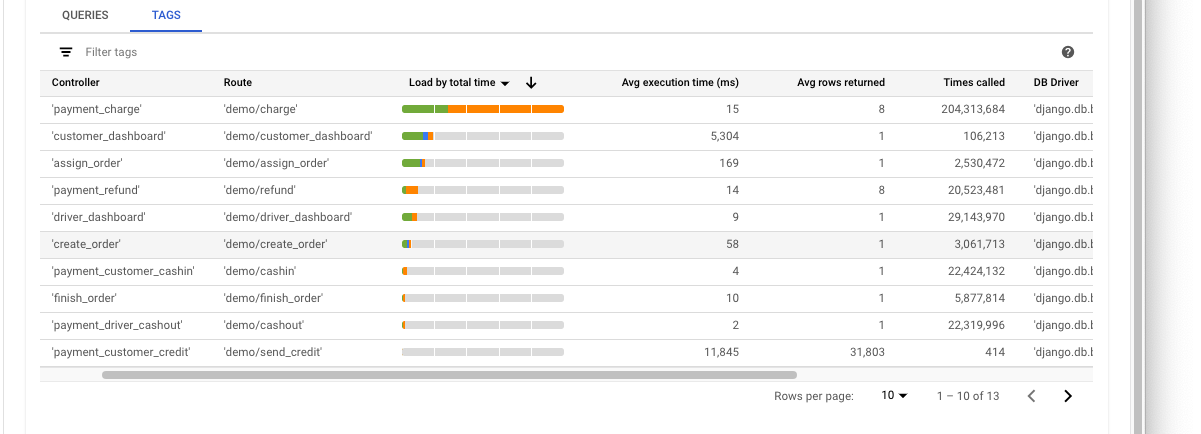
    Google made Sqlcommenter available as open source software earlier this year. It is designed to enable object–relational mappings (ORMs) to augment SQL statements before execution by, among other things, providing access to comments containing information about the application code that caused its execution.

    Sqlcommenter also allows OpenTelemetry trace context information to be propagated to the database, enabling correlation between application traces and database query plans that ultimately should make it easier to, for example, determine the root cause of a performance issue involving a microservices-based application making calls to a database. Sqlcommenter is primarily designed to be employed by full-stack developers that have some familiarity with how to use SQL to query data residing in an observability platform, noted Bhagat.

    Specifically, Sqlcommenter is designed to provide deeper insights into the performance of backend databases by simplifying the process of correlating slow queries with source code. It currently supports Python, Java, Node.js and Ruby languages along with ORMs such as Django, Sqlalchemy, Hibernate, Knex, Sequelize and Rails.

    As the number of applications that are instrumented using open source software continues to steadily increase, the amount of data that a DevOps team could potentially query also will steadily increase. Cloud storage platforms have made it easier to store that data at an affordable cost but the next challenge is clearly going to be finding a way to surface meaningful insights from all that data. Undoubtedly, achieving that goal will require everything from query tools to machine learning algorithms capable of identifying patterns at a level of scale that would not otherwise be possible.

    In the meantime, DevOps teams can look forward to being able to attain a level of observability that previously could only be achieved at a cost that tended to limit the number of applications organizations would instrument. At a time when the dependencies between applications increases with each passing day, that level of observability will soon prove indispensable.

  • Enterprise Blockchain Adoption Hinges on DevOps

    Enterprise Blockchain Adoption Hinges on DevOps

    There is a lot of excitement around blockchain right now, for a good reason. Production use cases continue to emerge across sectors such as manufacturing, energy, air travel, insurance and finance. Gartner predicts that by 2023, organizations using blockchain smart contracts will see a 50% increase in their data quality.

    Yet, Gartner also predicts that blockchain will reduce data availability by 30%. Before its use can reach ubiquity, blockchain-based application development has some hurdles to overcome. And if enterprises are to get on board, executives will need to see tangible proof of its value in the form of reduced expenses and increased profits directly correlated with blockchain adoption.

    “Enterprises aren’t going to change their business model to adopt a new technology,” said CasperLabs CEO Mrinal Manohar. Just as it’s difficult to dramatically alter the UX for established products, it’s similarly difficult to change the developer experience for established software production routines.

    I recently met with Manohar to discuss the limitations and the changes required to accelerate enterprise blockchain adoption. According to Manohar, much of it boils down to taking a DevOps approach—reducing energy use, enabling CI/CD, ensuring stable development environments and providing room for change and ongoing testing—will be critical to spur adoption. This could also mean abstracting complexity away from the developer and end users. However, once more production proofs are out there, the shift toward blockchain will be swift and it will be massive.

    What’s Hindering Enterprise Adoption?

    Enterprise adoption comes down to UI and UX, said Manohar. He predicts blockchain will follow a similar path as the internet. In its command-line days, the internet was only adopted by die-hard techies. But once visual-based actions were possible through the browser, consumer interest exploded.

    Similarly, blockchain might see more production use once the complexity is pushed to the background. “A technology is awesome when it’s 99% invisible,” said Manohar. However, at the moment, blockchain is 99% visible, he adds. For example, it isn’t easy to spin up a node and test a blockchain app. Lowering the requirements to 50% with more abstraction, simulation and integration with cloud providers could help tremendously.

    In general, Manohar believes that four key factors are hindering enterprise adoption:

    1. Enterprises need a lower energy footprint. Attaining high throughput on a public network without sacrificing decentralization and security is tricky. If blockchain drains operations when scaled, organizations may simply opt for a centralized data store. Therefore, enterprises will require a blockchain with minimal energy requirements.
    2. Large companies want developer environments that are similar to what’s already in place. In many ways, blockchain throws out the old playbook. But such a significant shift is a hard sell across multiple IT divisions. Large companies will require blockchain abilities that plug into the existing developer stack. Using a blockchain with familiar programming languages and plugins to popular IDEs like Visual Studio and IntelliJ will decrease onboarding effort.
    3. They need more control. Blockchains typically use immutable contracts. This is great for sustaining a shared distributed history, but Manohar believes that contracts need to be more malleable to enable continual upgrades. Furthermore, there is the issue of privacy when adopting blockchain. Some implementers don’t want all 100% of data to be on the public chain. Having the ability to maintain both private and public nodes for smart contracts could help enable more flexibility.
    4. Enterprises want ongoing support. Some companies will be autonomous using open source, but most enterprises will not adopt new or emerging technology without a support email attached to it, said Manohar. Thus, there may be a need for professional services and outsourced blockchain experts.

    Applying a DevOps Perspective

    Another big boon to accelerating blockchain adoption could be considering a DevOps perspective. To Manohar, introducing DevOps into blockchain requires more continuous updates, mitigations to avoid breaking change and simulations to enable better testing environments.

    An immutable blockchain infrastructure seems to be at odds with the DevOps creed of rapid deployment. Thus, Manohar said that choosing a blockchain that enables more mutability will help upgrade contracts and allow functionality to change over time. For core infrastructure changes that affect the entire public chain, the majority of validators must, of course, accept upgrades before they are distributed.

    Simple functionality, like a push notification, could ease this process to allow a quick Yes or No response from operators.

    Another potential concern is backward compatibility. What if the aggregate introduces significant breaking change? Manohar said that while this is technically possible, it’s improbable. “That would be a controversial upgrade,” he said, and validators have an incentive to keep a sturdy system intact. “They only do it if they think it’s better for the long-term health of the network.” But guardrails on this process will help avoid edge cases. Thankfully, if a change did disturb a minority of users, a blockchain can be forked. We’ve already seen this occur with Bitcoin Cash and Bitcoin, or Ethereum Classic and Ethereum, for example.

    Another shift that will help enterprises embrace DevOps in their use of blockchain will be better testing and deployment processes. It’s notoriously challenging to test blockchain applications while they are tapped into the broader network. Thus, engineers could benefit from a simulated runtime wholly divorced from the main network for testing purposes.

    The Future of Blockchain Development

    So, what does the future of blockchain enterprise adoption look like? Well, it appears we will continue to see new novel use cases emerge that use blockchain in innovative ways. For example, Manohar pointed to the use of blockchain to power an NFT digital twin, a patent marketplace, a tagging system for supply chains and the mortgage processes for a core banking system. Within these scenarios, he noted how blockchain is exorcising cost in many ways; smart contracts are being used to avoid legal fees, eliminate manual processing and improve fault attribution.

    Before blockchain can go mainstream, however, work must be done to bring other enterprises into the fold. Namely, it will necessitate more abstraction of the infrastructure layer. In this effort, low-code integration capabilities could help make API connections to ERP systems or cloud service providers more accessible.

    To inspire adoption, the economy must also change its perspective on what constitutes blockchain success. As of now, common KPIs are surface-level, like: How many wallets? What is the trading volume? Instead, Manohar believes we need to focus on proving actual cost savings from blockchain adoption. Once accountants are publicly reporting revenue gains, shareholders will demand that every company do this, he said.

    “Once that catalyst happens, adoption will happen very, very fast, and demand for blockchain in enterprises will be massive.” At that point, some years down the line, blockchain may truly power a new economy.

  • CNCF Advances OpenTelemetry Initiative

    CNCF Advances OpenTelemetry Initiative

    The Technical Oversight Committee (TOC) of the Cloud Native Computing Foundation (CNCF) has voted to accept OpenTelemetry as an incubating project as part of an ongoing effort to simplify instrumentation of software using open source agent software.

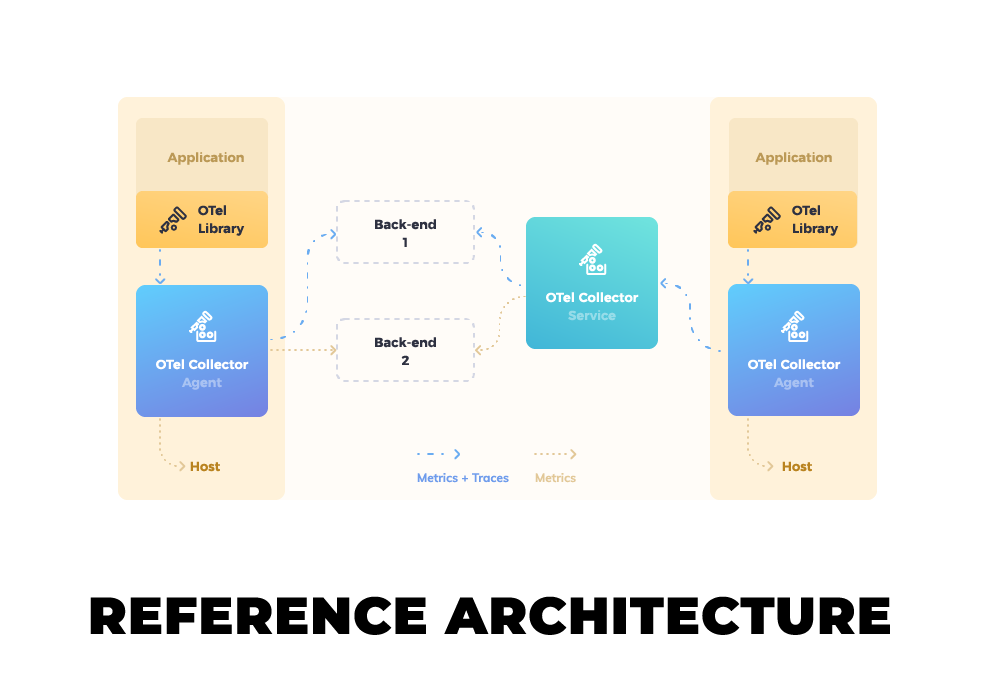
    OpenTelemetry is a collection of tools, application programming interfaces (APIs) and software development kits (SDKs) that can be employed to collect metrics, logs and traces that make it simpler to determine the root cause of an application issue.

    At its core, OpenTelemetry is based on an OpenTelemetry Protocol (OTLP) specification that describes the encoding, transport and delivery mechanism of telemetry data gathered from sources, intermediate nodes and backend platforms. An OpenTelemetry Collector provides a vendor-agnostic implementation for receiving, processing and exporting telemetry data. APIs and SDKs that make it possible to instrument applications are available for 11 different programming languages.

    Previously a sandbox-level project within the CNCF, the next step would be for OpenTelemetry to become a graduated level project alongside other open source offerings such as Kubernetes and Prometheus, a platform used to monitor IT environments.

    The OpenTelemetry project was created via the merger of the OpenCensus and OpenTracing projects in May 2019. Since then more than 500 developers from 220 companies, including Amazon, Dynatrace, Google, Honeycomb, Lightstep, Microsoft, Splunk and Uber have contributed to the project.

    Most providers of observability platforms have at least signaled their intent to support OpenTelemetry as an alternative to proprietary agent software they had previously created to collect metrics, logs and traces.

    Ben Sigelman, one of the co-creators of both OpenTracing and OpenTelemetry and CEO of Lightstep, said different elements of the OpenTelemetry project are at varying stages of maturity. As such, support for the elements of the project are being added to platforms depending on the degree to which a vendor has confidence in, for example, the ability of OpenTelemetry agent software to collect logs.

    Liz Fong-Jones, principal developer advocate for Honeycomb.io, a provider of an observability platform, said that, in time, most observability platforms will support all the elements of the OpenTelemetry initiative to reduce their own engineering and support costs. In time, those savings will be passed on to organizations that will be able to instrument applications more affordably, she noted.

    It may take a while longer for OpenTelemetry to be widely employed, but the faster organizations transition to microservices-based applications the more pressing the need for open source telemetry software becomes. The dependencies that exist between all the microservices that make up multiple applications will be unmanageable without some form of telemetry. The challenge organizations face is finding an affordable way to instrument all those microservices.

    Of course, organizations have been instrumenting applications for decades. However, the time, effort and cost associated with instrumentation have tended to limit its use to only an organization’s most mission-critical applications. The issue now is that not only do microservices-based applications require instrumentation to manage them but in the age of digital transformation the percentage of applications deemed mission-critical is also steadily rising.