Category: DevOps in the Cloud

  • Multi-Cloud Adoption to Better Enable the Developer Workforce

    Multi-Cloud Adoption to Better Enable the Developer Workforce

    Over the past decade, we started to see a broader shift toward the use of multiple cloud providers by the enterprise. The need to reduce risk, optimize cloud usage, manage costs and the push to open source and cloud vendor-agnostic technologies are providing more options for developers, which will likely lead to an even steeper increase in multi-cloud usage.

    In 2019, we saw the acquisition of Red Hat by IBM, the largest software company acquisition in IT history, to support both cloud and open source software. This acquisition, and others such as Salesforce/Tableau and Google/Looker, suggest that the trend will continue moving forward. In addition to support from mergers and acquisitions, multi-cloud within companies and use by developers will continue to rise.

    Multi-Cloud to Better Enable the Developer Workforce to Keep Up with Competition

    Multi-cloud architecture allows companies to distribute, move and optimize workloads across multiple cloud environments, decreasing the risks and costs associated with running workloads on only a single cloud environment and allowing one to select the best mix of capabilities for the desired use cases. These benefits make the single cloud option far less popular, and results in more interest in multi-cloud deployments.

    This choice is important–to keep up with the competition, digital businesses across the globe need to make better decisions and deliver faster, smarter actions. They must capture and integrate data in real time from wherever it is located, govern these data assets and augment the intelligence of their business through deep analytical insights. These actions must support both the technical and business levels of the enterprise, and developers must be armed with the right tools to enable these capabilities. A multi-cloud strategy ensures that this is possible, and offers the greatest degree of flexibility and choice when it comes to building solutions.

    To further support this shift, it is important to provide developers with the flexibility to choose best-of-breed solutions in order to streamline their processes. Limiting developers to one cloud vendor can restrict them from using the best tool for the job and result in suboptimal cloud deployments. But with a multi-cloud approach, developers can create their own individualized arsenal. Executives, who expect the best from their developers, have to pursue a multi-cloud strategy in order to get the most reliable and fastest results for their business. 

    Industry Insights for Mature DevOps Teams 

    Last year, IBM released research that showed that 85% of the companies surveyed were already multi-cloud adopters. Approximately 39% of those companies have implemented DevOps processes, and 41% have a multi-cloud management strategy. Clearly, multi-cloud is important to the strategy of an organization. 

    As pointed out, in order to be successful with a multi-cloud strategy, one of the key issues for developers to tackle is the creation of strong, automated DevOps processes. These processes must bring structure to a multi-cloud computing ecosystem. According to 2019 research from GitLab, overall DevOps adoption is on the rise, and teams that have successfully implemented a mature DevOps program are seeing major improvements in their workflow. In addition to speed, mature DevOps teams are almost 1.5 times more likely to feel innovative and are three times more likely to discover security vulnerabilities earlier in the pipeline.

    Future of Multi-Cloud Adoption and Impact

    Moving forward, we will see more companies adopt multi-cloud strategies and developers will be among the groups that are most impacted by this approach. For developers, multi-cloud adoption involves matching the business case for certain problem sets to the appropriate cloud providers so the expected ROI can be achieved with the right technology blend. 

    Developers need the right tools to develop, test, support, manage and monitor the deployed solutions consistently across cloud providers. Over time, it may also be necessary to move the solutions from one vendor to another as the requirements, business landscape and cost justifications change. Thus, developers must work within the organization to evaluate and choose the relevant features from each vendor, augment as necessary with external tools and regularly monitor industry trends and capabilities to transition if needed. This is the flexibility that a multi-cloud approach brings, but it must be balanced with the strategy, business and financial needs of the organization.

    The cloud will continue to be a strong technology focus area for enterprises and developers across the globe. Cloud adoption strategies will continue to broaden and shift toward multi-cloud as needed, allowing developers to streamline their processes, select the best tool for the job and create more value for their company as a whole.

    — Nelson Petracek

  • Ten Questions Data Professionals Should Be Asking When Moving to the Cloud

    Ten Questions Data Professionals Should Be Asking When Moving to the Cloud

    You have finally decided to move your data into the cloud. Whether it was the ability to leverage the power of cloud compute, the promise of cost-savings or the scalability and flexibility that a cloud data warehouse can bring, it’s important to have a strategy in place. In order to set yourself up for success, here is a list of questions that will help you organize your data and ensure your data migration efforts provide business value.

    What Is the Outcome I Need to Achieve?

    When you are creating a data migration strategy, you need to have an end goal in mind in order to make the best decisions on technology and approach. Simply getting your data into the cloud won’t be enough to take action on that data. 

    How Many Data Sources Do We Currently Have? 

    Once you have your outcome in mind, take a comprehensive inventory of all your data sources before you begin the migration process. It reduces your risk of discovering halfway through the process that you have no access to a data source–or that you forgot to include it in your migration plan. 

    Who Is the Administrator of Each Data Source? 

    It is likely that you may not have access to every single data source that you are looking to migrate. Make sure to find out who can provide you with access to that data, and fully understand your requests. This person will be able to explain the necessary requirements for that data source and will be your contact to help integrate that source into your migration efforts. 

    What Data Is Most Important to My Key Stakeholders, and What Do They Consider Important in Getting that Data? 

    This question might also be: What are the KPIs that drive the business from the data sources? You’ll need to have a good grasp on the metrics that are used for business-critical KPIs so that you have the right data in the cloud to ultimately be transformed for analysis. For example, a retailer might value click-through-rate on emails as a key indicator of attribution for sales data. In order for them to get that information, they would need to provide data from their email marketing system and their eCommerce platform. Keep stakeholders involved in the success and failure criteria of your project so they can help set you up for success. Identify the system of record for the metrics that each KPI is calculated from. Quite often, more than one system in your organization can have a representation for that key metric, but with different values. Align with the related stakeholders as to which is the system of record in those cases. 

    How Can I Show Business Impact Quickly?

    A proof of concept (PoC) in the cloud is always associated with the desire to show results quickly, as the speed and performance that the cloud brings means that you should be able to move faster, right? Asking yourself what you can do to help the business recognize the value of your project can help you assuage any productivity concerns. To create a quick PoC, start by first identifying a small number of typical use cases to test out. Picking a high-value KPI that is calculated from metrics from well known source systems could be a good candidate for that first iteration.

    What Are My Security Concerns?

    Considering that the cloud can house petabytes of data that enterprise companies collect every day, it is safe to assume that some of that information will be sensitive and confidential. Ask yourself if the data you migrate contains personally identifiable information (PII) and if that information is necessary for the project you are working on. In most cases, PII is not needed for analytics work and therefore, you wouldn’t need to migrate that. You might need to know the brand of a credit card to make a data-driven business decision but perhaps not the actual credit card numbers. 

    Who Has Access to My Data Now that It Is in the Cloud?

    If you are migrating sensitive data into the cloud, these are the security and compliance requirements that come into play. How much data security management you entrust to a cloud provider entirely depends on the needs and requirements of your business. There are several different security models, some of which give you more control, some that hand-off that control to cloud providers—it is important to choose the model that works best for your business. Ensure the vendors you use are SOC II compliant and have all the necessary certifications in place to keep your data safe. Work with your organization’s security group on this. They may have defined an overarching Enterprise Cloud Strategy which can help to provide guidance around the acceptable use of cloud resources for your analytics workloads.

    What Do I Do with My Data Once It’s in My Cloud Data Warehouse? 

    Once your data is in the cloud, what do you plan to do with it? Create a strategy to structure your data in the correct way for your business outcome. Different cloud-built technologies can help structure your data for analytics, prepare your data for machine learning or artificial intelligence projects, or perform data cleansing so you have the most accurate data available. It is important to remember that different cloud data warehouses, data integration tools and data visualization products need to complement one another. Make sure you build your stack for your project to ensure success. 

    How Do I Save Costs in the Cloud? 

    In addition to faster time to value, one of the main reasons companies migrate data to the cloud is to save costs. But, how can you ensure you are saving costs while migrating data? You can take advantage of free trials offered by many purpose-built cloud data tools that allow you to allocate, compute and storage as needed. The beauty of a cloud data warehouse is that you don’t need to provision for future workloads. As your needs grow, you can scale up easily and manage costs effectively. Try to avoid using multiple products that do similar things. This will reduce cost, increase adoption of the products and keep your architecture simple.

    Is My Team Equipped to Handle Cloud Migration?

    Cloud data migration is different than on-prem migration and in such, you and your team will be using technology that you haven’t used in the past. To set your team up for success, inquire about their comfortability using the tools you’ve selected and ensure they have the level of access needed to do their jobs efficiently. If there are gaps in knowledge, you can look to provide the training to help them get up to speed and make onboarding as painless as possible.

    If you answer these ten questions, you will be on the right track to begin your cloud data migration project. Keep your business goals in mind and start small—the flexibility of the cloud allows you to scale your project later if needed.

    — Arawan Gajajiva

  • Datadog Sees Spike in AWS Lambda Serverless Adoption

    Datadog Sees Spike in AWS Lambda Serverless Adoption

    Datadog published a report that shows nearly half of organizations using the company’s IT monitoring platform have embraced the AWS Lambda serverless computing framework.

    Stephen Pinkerton, a product manager for Datadog, said that number shows serverless computing frameworks are being employed by mainstream IT organizations far more widely than initially might be thought, given the relative age of serverless computing frameworks.

    The report finds the median Lambda function invoked by Datadog customers runs for about 800 milliseconds. Nearly one-fifth of functions execute within 100 milliseconds, while about one-third execute within 400 milliseconds. One-quarter of Lambda functions have an average execution time of more than three seconds, while 12% require 10 seconds or more. The duration of Lambda functions is notable because serverless latency impacts not just application performance but also costs. Lambda pricing is based on “GB-seconds” of compute time, which is the memory allocated to your function multiplied by the duration of its invocations.

    Not surprisingly, the report notes 47% of functions are configured to run with the minimum memory setting of 128MB. By contrast, only 14% of functions have a memory allocation greater than 512MB, even though AWS will allow up to 3,008MB per function.

    As part of an effort to further limit costs, most organizations are not employing a function to call another function and then waiting for a response, which would incur billable invocation time. Rather, serverless functions are making asynchronous calls via a message queue. Functions that are stateless most often read from or write to a separate persistent data store.

    Amazon DynamoDB, a document database based on a key-value store architecture, is the most widely used persistent form of storage accessed, followed by an instance of the SQL databases provided by AWS as a service, and then the Amazon S3 cloud storage service.

    The Amazon Simple Queue Service (SQS) is the top choice for a message queue for Lambda requests, followed by Amazon Kinesis and Amazon Simple Notification Service (SNS).

    The report also notes each Lambda function has a configurable timeout setting, ranging from 1 second to 15 minutes. Two-thirds of configured timeouts are 60 seconds or less. By default, Lambda customers are also limited to 1,000 concurrent executions of all functions in any given region. Only 4.2% of all functions have a configured concurrency limit. A total of 88.6% of companies running Lambda make use of concurrency limits for at least one function in their environment.

    In terms of programming languages employed, Python and JavaScript in the form of Node.js are the most widely used on Lambda, the report finds. Nearly half of Datadog customers running Lambda (47%) employ Python, while 39% run Node.js. Python 3 outweighs Python 2, which has reached end of life, by a factor of two to one.

    Finally, the report notes there is a high correlation between organizations that have adopted containers and those employing serverless computing frameworks. Nearly 80% of organizations in AWS that are running containers have adopted Lambda. However, Pinkerton says that correlation at this point has more to do with the willingness of organizations to employ leading-edge technologies than it does any effort to weave together containers and serverless computing frameworks.

    Pinkerton also surmises the primary reason organizations are employing Lambda is to accelerate application performance. However, it’s also worth noting serverless computing frameworks also tend to reduce to the size of an application by relying on external functions to run code that is not frequently invoked outside the core application.

    Datadog plans to evaluate usage of serverless computing frameworks on other cloud platforms once they achieve enough critical mass. In the meantime, it’s clear serverless computing frameworks are rapidly becoming an extension of any DevOps pipeline.

    — Mike Vizard

  • IBM Doubles Down on Cloud, But Is Krishna an Interim CEO?

    IBM Doubles Down on Cloud, But Is Krishna an Interim CEO?

    Big news from Big Blue yesterday: IBM CEO Ginni Rometty is stepping down after eight years at the helm. In her stead, IBM is doubling down on the cloud by appointing Arvind Krishna as CEO and member of the board. The real move to watch, though, is the appointment of Jim Whitehurst, Red Hat CEO, as president of IBM and a board member. It’s the first time that someone has held the title of president singularly, and it may portend where the real power will be at Big Blue (and Red).

    Krishna was previously head of the cloud and cognitive software division at IBM. He is an IBM veteran, having been with the company since 1990. His appointment sends a strong signal about how important the cloud is to IBM’s future. In some ways, it is similar to Satya Nadella’s appointment at Microsoft. But perhaps it’s not as strong a signal about the importance of the cloud than the $33 billion IBM spent acquiring Red Hat.

    It is that $33 billion investment and the importance of Red Hat to the new IBM that leads me to believe Krishna may, in fact, be a transitional CEO. The eventual appointment of Whitehurst as CEO and the rise of Red Hat leadership within IBM may in some ways be a reverse-merger type of thing, with Red Hat eventually running the show.

    IBM is a huge beast. A company of Red Hat’s size will find it difficult to change the culture and overcome the inertia at IBM. But frankly, IBM has been transitioning for almost all of Ginni’s time there. While the Enterprise Systems group (Z systems mainframe) is still the cash cow, bringing in a large percentage of revenue, IBM has increasingly tried to be a major cloud player.

    The SoftLayer acquisition didn’t quite give the company what it needed, as it was not a public cloud play. It left IBM unable to compete with Google, Microsoft Azure and AWS in true cloud services. After a few fits and starts, IBM decided that Red Hat, with its open source pedigree and cloud strength in both public and private cloud settings, could be the engine that could as it pertains to cloud.

    The street has not been kind to IBM over the last few years as a result of the botched cloud play, either. At a time when its tech competitors and the market in general have soared, IBM has actually fallen, as has its revenue.

    Mitchell Ashley, founder and managing analyst at Accelerated Strategies Group, agrees with this assessment. “We are seeing a sea change in big tech CEO strategy. Like Microsoft’s elevation of cloud exec Satya Nadella to CEO, IBM is rebuilding its executive ranks from the open source cloud software world with the appointment of Red Hat’s Jim Whitehurst as president and board member,” he said. “How soon the Krishna regime including old-line IBM executives gives way to Whitehurst and other Red Hat executives remains to be seen.”

    IBM CEO Change Elevates Open Source from Digital Anarchist on Vimeo.

    Ashley was not the only analyst to weigh in.

    “IBM bet the farm on cloud with the $34 billion Red Hat acquisition,” said Steve Duplessie, founder and senior analyst at Enterprise Strategy Group (ESG). “It was only a matter of time for the succession. Now the two top dogs running IBM are cloud purists. The old IBM died a while ago and they had to change—I like the move! Their stock lost 26% while the S&P rose over 150%. This lets them remake themselves before it’s too late.”

    Changes at the top don’t always portend success. There is a lot of hard work ahead at IBM as the company continues this journey. Competing with AWS, Google, Microsoft and other players in the cloud space is going to be challenging, given the head starts these players have already. But you really can’t count out IBM, ever.

    One other thing I wanted to mention: With IBM’s appointment of Krishna at IBM, there now are CEOs of Indian descent at Alphabet (Google), Microsoft and IBM. This is very positive for all persons of not only Indian heritage but for all people of color and nationalities. Kudos to these companies and these men for their success. Now, how about some women of color in these roles?

    — Alan Shimel

  • Cloud Center of Excellence: Pivot for Enterprise Digital Transformation

    Cloud Center of Excellence: Pivot for Enterprise Digital Transformation

    Across industry verticals, enterprise cloud adoption has increased significantly. Enterprises are leveraging cloud models to transform applications, infrastructure and operations. According to a survey by LogicMonitor, 83% of enterprise workloads will be in the cloud by 2020. This, however, is also giving rise to concerns across areas such as security, cost management, compliance, governance, lack of cloud expertise, vendor lock-in and partner management.

    To address these issues, an enterprise requires common functions under one umbrella that can define architecture standards, security guidelines and governance policies, thereby establishing an industrialized transformation approach for applications and IT infrastructure across various cloud models. This central team, which defines cloud strategy, execution and operational approach, is called Cloud Center of Excellence.

    The Cloud Center of Excellence plays the role of a centralized team and acts as the guiding and governing unit for planning, executing and operating an organization’s cloud transformation process. The Cloud Center of Excellence (CCoE) owns an enterprise’s most important cloud initiatives and works on multiple dimensions to make the client transformation journey successful.

    Advisory and Evaluation

    Enterprises running legacy applications on traditional infrastructure require a cultural shift to enable their digital transformation journey. The advisory and evaluation function of CCoE works toward evangelizing cloud across enterprises, creating cloud awareness and providing solutions advice. It also assists in identifying applications for cloud fitment by discovering application data and assessing applications besides evaluating features of cloud service providers to ensure alignment with application reference architectures.

    Design and Build

    Cloud is being adopted at a very fast pace across enterprises. This necessitates defining common design standards, configurations guidelines and automating application environment build and operational support processes. This will not only save costs but also shorten time to market and improve service levels. This function of the CCoE defines architecture, network, security and integration design guidelines besides creating application blueprint templates, configuration parameters and deployment process.

    Develop and Deploy

    The ever-changing customer expectations lead to frequent changes in business requirements. This requires fast-paced development, error-free functionalities and releases in a shorter time. This function of the CCoE defines and designs CI/CD processes, identifies and configures CI/ CD tools and implements agile development processes.

    Governance

    The CCoE needs to monitor enterprise cloud spend, ensure efficiency and establish governance policies as a part of its objectives. It also needs to define and implement a process for cloud financial management, define security compliance controls, communication processes and change management. Technical (business continuity, architectural and performance, etc.) and operation governance are some of the other focus areas of a CCoE.  

    Operation

    Operating in the cloud efficiently requires proper planning combined with an operational strategy and discipline. The CCoE defines future mode of operation for applications running on cloud. It ensures ITIL compliant processes are followed for managing cloud environment.  It enables automation of operational processes such as monitoring, backup, patch and self-healing apart from others, and defines SLAs based on business criticality for application availability and business continuity requirements. Additionally, it also defines change management and incident service requests processes.

    Partner/Product Connect

    There are multiple cloud service providers (CSPs), a plethora of tools and SaaS products that exist in the market. This CCoE function focuses on coordinating with product and tool vendors for implementation and service realization. It works with cloud service providers’ technical teams to evaluate new services besides assisting the enterprise applications team. The CCoE liaises between applications teams and CSPs/external product teams to resolve technical challenges.

    Innovation/Ideation and Knowledge Management

    CSPs continually evolve to keep pace with innovation. This function of the CCoE evaluates new services by developing proof of concepts and publishes guidelines and best practices based on PoC learnings. It also creates a knowledge base leveraging past learnings. 

    Conclusion

    CCoE plays a critical role in implementing the cloud strategy of an enterprise. It defines a framework for governance, designs guidelines and manages the cloud-specific knowledge base. It is, however, of paramount importance that it should start with a small and right kind of team. As cloud adoption increases in an enterprise, responsibilities and scope of the CCoE will expand accordingly. It is important for enterprises to empower the CCoE team allowing them to teach and uphold best practices.

    — Akhilesh Laddha

  • Edge Computing and ITOps: Opportunities and Challenges

    Edge Computing and ITOps: Opportunities and Challenges

    Edge computing is growing quickly, but IT operations need to evolve as well to effectively monitor and manage new devices, sensors, applications and data. Growing enterprise edge ecosystems should integrate and become part of centrally managed ITOM systems.

    Edge computing is hard to define and is running high on the hype scale. But, research and surveys continue to indicate that this trend of processing data where it’s collected for better latency, cost savings and real-time analysis is an innovation with legs.

    There will be 75 billion IoT devices by 2025, according to Statista. According to Spiceworks’ 2019 State of IT report, 32% of large enterprises with more than 5,000 employees are using edge computing, and an additional 33% plan to adopt it by 2020. Tied to the growth of edge computing is the advent of 5G wireless: 51 operators globally will start 5G services by 2020, according to Deloitte Global research from 2019.

    The major cloud companies are also investing in the edge. The AWS Local Zones service allows single-digit latency connecting to computing resources in a metro environment, while Microsoft offers the Azure Stack Edge appliance and Google Cloud IoT is a “complete set of tools to connect, process, store and analyze data both at the edge and in the cloud.”

    It’s safe to say that edge computing is becoming mainstream, and CIOs and their ITOps leaders should plan appropriately for it in 2020 and beyond.

    Benefits of the Edge for ITOps

    We’ve read plenty about the business benefits from edge computing: oil rig operators need to see critical sensor data immediately to prevent a disaster, marketers want to push instant coupons to shoppers while in the store, video security monitoring can catch a thief in the act and medical device alerts that ensure patient safety. Edge computing may save IT money on cloud and network bandwidth costs as data volumes keep exploding and the need to store every data point becomes harder to justify.

    There are also implications for IT management and operations. Local processing of high volume data could provide faster insights to manage local devices and maintain high-quality business services when seconds make a difference—such as in the event of a critical server performance issue threatening the e-commerce site.

    Today, ITOps teams are inundated with data from thousands of on-premise and cloud infrastructure components and an increasingly distributed device footprint. The truth is, only an estimated 1% of monitoring data is useful, meaning that it provides indications of behavior anomaly or predictions about forthcoming change events. With edge monitoring, we can potentially program edge-based systems to process and send only that small sliver of actionable data to the central IT operations management system (ITOM), rather than transmitting terabytes of irrelevant data daily to the cloud or an on-premise server where it consumes storage and compute power. 

    The job of filtering out the highly-contextual data on the edge, where business occurs, can support real-time decisions for successfully running ITOps at speed and scale—regardless of what combination of on-premise, public cloud or private cloud infrastructure is in place. At the same time, ITOps will need to be a leader when it comes to minimizing the risk of edge technology from a performance, security and privacy perspective. However, as detailed below, we are in the early stages of determining how to make this work in practice.

    ITOps Realities for Edge Computing 

    Edge-Specific Security Needs Are Still Unknown: Edge devices are often small and infrequently designed with security in mind. More than 70% of edge devices don’t mandate authentication for third-party APIs, and more than 60% don’t encrypt data natively. So the attack surface in IoT and edge environments is now larger, and less secure. This is particularly worrisome when considering edge devices that collect personally identifiable information such as email, phone numbers, health data or financial formation such as credit card data. ITOps will need to work closely with security and legal teams to map out the company-specific risk, governance and compliance requirements around managing edge data.

    Edge Monitoring Tools Are Immature: Companies need platforms that can instantly monitor and analyze edge-generated data. In the connectivity of tomorrow, billions of connected devices will be communicating machine-to-machine, and the addition or subtraction of connected devices will be possible at an unprecedented scale. In this environment, the ability to manage large volumes of connected devices and the information being exchanged between them will be critical. 5G acts as the unifying technology, bringing flow of information and the density of scale. We will see an influx of innovation in edge monitoring in the coming years.

    New Environments Call for New Rules: As organizations move more data and application assets to edge computing environments, IT will need to devise new policies and thresholds for central processing and alerting of all this data. Applying AI-based automation is essential here, as manual efforts will have zero chance of keeping up with the volume of data filtering, analysis and response. We are entering the age of nano satellites, vis-à-vis SpaceX and OneWeb. These edge devices will transform the future of agriculture, energy, mining, transportation and finance due to their capabilities for sending insightful data in real-time to customers, wherever they are at any moment. ITOps will have its work cut out to understand and properly manage this evolving edge infrastructure.

    DevOps Processes Will Become Even More Paramount: If you haven’t already realized that DevOps is taking over software development and IT management, just wait for when edge goes mainstream. There will be no other way to manage change and deployments of edge technology without the agile, continuous integration and continuous delivery methodology of DevOps. It will be imperative for ITOps to adopt DevOps practices and tools to manage, monitor and deploy edge resources.


    ITOps is at a crossroads, determining how much of the past is still relative and how much they will need to change to adapt to a distributed, hybrid cloud world that will soon include edge as a fundamental pillar of their digital strategy. Security, machine intelligence and DevOps will be crucial areas of expertise for ITOps teams looking to help drive better business value and customer experiences from the edge.

    — Bhanu Singh

  • Trends and Benefits of Serverless Computing

    Trends and Benefits of Serverless Computing

    Gartner estimated that by 2020, 20% of the world’s organizations will have gone serverless. Serverless computing initiates a mind shift in the way businesses are run and improves the accuracy and impact of technology services. Leading to higher functionality, reduced AWS bills, increased delivery speed and multi-cloud support, serverless computing paves the way into the future. 

    The scope of serverless is yet unexplored. With new and high-potential developments (such as FaaS and GitOps) still in their nascent stages, organizations can expect massive benefits leveraging the power of serverless computing going forward. 

    Servers have been a very important part of the computing architecture for decades. But, with the introduction of cloud, we’ve moved to predominantly web-based server infrastructure, and the migration to serverless architecture has begun.

    Serverless computing–abstract and virtual server support–has made the computing landscape more dynamic, robust, intuitive and powerful. But advancement in serverless technology is still in its nascent stage. The next few years are expected to bring in numerous developments and transformations.

    First, let’s take a look at some serverless trends you should keep an eye out for.

    Kubernetes Will Become the Go-to Serverless System

    Kubernetes has become synonymous with open-source containerization. But in the next few years, we will see Kubernetes become the base for serverless infrastructure. Features such as networking, service discovery, agile scaling and multi-cloud environment support make Kubernetes the perfect choice for serverless. 

    Additionally, with Knative already released, the process of standardization and interoperability of serverless platforms may soon become a reality. 

    Stateful Applications Will Also See the Usage of Serverless

    Restriction of serverless for stateless apps is a thing of the past. The next few years will see stateful apps benefiting from the immense power of serverless. Developers will be able to use database connections, BaaS and event payloads to run their applications.

    FaaS Industry Size Will Grow 

    The FaaS market is expected to grow to $7.72 billion by 2021. Large-scale adoption of serverless will be seen across the world, and there will be a 32.7% CGAR. 

    GitOps Will Be the Next Big Thing 

    The version-controlled system of DevOps, GitOps, will see more takers in the future, especially in FaaS. GitOps is expected to improve operational workflows, especially in fast-moving projects, and enable implementation of technologies such as Kubernetes and other cloud solutions. 

    Additionally, this will enable cloud vendors to provide greater ecosystem support and tooling capabilities to users.

    Containers Versus Serverless

    Containers by nature are segmented, isolated and contained spaces of application-specific servers. While they offer high degrees of specialized (and often customized) tools, resources and support, they suffer from numerous challenges:

    • They are very resource-inefficient compared to serverless. 
    • Their ecosystem is fractured as opposed to the wholesome environment offered by serverless. 
    • Data storage and retention are complicated, necessitating frequent data migration across containers. 
    • Graphics support is limited, resulting in poor-quality deployments. 

    The challenges that come with containers prompt organizations to choose serverless. Already, many companies have implemented serverless.

    Here is how the move to serverless will benefit you, too.

    Serverless Computing Eliminates the Need for the Set-Up of Complex Application Stacks

    Developing even the most basic server-bound application is a challenging task. It requires the set-up of high-powered and complex application stacks that can be both difficult to build and difficult to manage. By going serverless, organizations can eliminate all these heartaches. 

    Serverless stacks, such as Lambda and Azure, create a robust and intuitive environment for the development of agile applications, by providing organizations with a large set of capabilities and allowing them to run at scale, at the lowest costs.

    It Reduces the Organization’s Capital Expenditure

    Unfortunately, IT infrastructure is considered a capital expenditure by many organizations. So, building your own servers can lead to a high CapEx.

    Consider this. Physical servers are vulnerable to breakdown and depreciation, which add to CapEx. If you report this value as expenses in your income statement, it may ultimately negatively affect your P&L and your company valuation. Going serverless allows organizations to avoid such a challenge and maintain their profitability and high valuation.

    Plus, serverless infrastructure reduces the need for human resource deployment as focus on batch processing decreases. Additionally, serverless allows organizations to convert workflows into step functions, which reduces the number of EC2 and SWF issues. Together, these reduce company expenses tremendously. 

    It Shortens the Standard Release Cycle Significantly Due to Microservices and Nano-Services

    Serverless computing allows organizations to benefit from the magnificent power and scope of microservices. From making minute application-specific developments to isolating and rectifying issues, to managing and deploying individual applications, organizations can do a lot of things using serverless computing. 

    In fact, a survey shows that utilizing serverless microservices can bring down the standard release cycle from 65 days to a mere 16 days.

    It Allows Easy Completion of ELT Tasks and Cron-Type Jobs 

    Again, serverless computing microservices gives organizations the flexibility, technical support and clarity needed to process data. ELT tasks become more consistent and allow the creation of structured data warehouses.

    Similarly, since isolated components and applications can be created, deployed and fixed in serverless, it’s easier to implement cron-type jobs as well. 

    It Allows Organizations to Escape Traditional Workflows Through Event-Based Computing 

    Adoption of serverless computing allows organizations to shift from the restrictive, time-consuming and draining traditional workflows and engage in event-based computing. Now, coders can just write the algorithms and allow the serverless provider to take care of the data storage and computing needs. Not only will this reduce the time of transaction processing and the cost of DevOps, but it will also free up the time and space for coders to take on other business logic tasks. 

    It Enables Green Computing 

    With climate change becoming such an imminent threat to the world, it’s important for organizations to become mindful about the way they operate. One way to become sustainable is to go serverless.

    For one, serverless computing ensures organizations don’t over-utilize electricity. Additionally, with no physical servers and data centers that emit toxic radiation as they cool down, there will be lesser concerns about health and climate change. 

    Another aspect is scalability. Serverless is highly-scalable, meaning you don’t need to set-up more servers at your office. Given that 30% of the world’s servers are unused at any point in time and most servers only utilize 5%-15% of their total capacity, serverless may be the best way to go green.

    It Promotes Deployer Autonomy and Encourages the Adoption of New Mindsets

    Serverless computing gives organizations the freedom to focus on their core business offerings and deal with only low-level OS issues. This time, money and opportunity can be used by deployers, coders and top management to develop competitive offerings, which can help the organization overtake competitors. 

    With physical servers, it’s more likely than not for organizations to focus on technical server issues than the business process.

    Conclusion

    Serverless computing could be one of the most exciting developments of the 21st century. It is breaking down old barriers and allowing organizations to expand and explore new frontiers. Its high deliverability, coupled with the immense opportunities it promises, makes it a must-adopt in any organization.

    — Subramonian

  • Che: A Revolutionary IDE for the Mainframe

    Che: A Revolutionary IDE for the Mainframe

    Tools such as the green screens of ISPF and the Eclipse desktop IDE, enhanced with proprietary plug-ins, have served mainframe application developers well over the years and, for those comfortable with them, will continue to do so. However, changes in the broader world of development are creating the conditions for a revolution in mainframe tooling.

    First, mainframe developers are aging out of the workforce, leaving behind extensive code libraries and a workforce skills gap. Those likely to back-fill these roles know and love modern IDEs, especially Visual Studio Code, while the popularity of Eclipse is waning. For example, the annual Stack Overflow Developer Survey found that, over the past year, the popularity of Visual Studio Code grew from 35% to 51%, once again making it the most popular IDE, while Eclipse fell from 19% to 14%. According to Business Insider, 8.5 million developers worldwide use VS Code, creating a huge talent pool.

    Second, application development has made great strides in productivity since the current mainframe dev tools were created, especially in DevOps automation with enablers like task runners, scripting and testing frameworks. The Stack Overflow survey cites scripting language Python as the most sought-after skill among developers, by far.

    Finally, as the velocity of overall software delivery increases, mainframe is a critical component of digital transformation initiatives. According to 451 Research, 24% of companies are releasing application software daily or hourly while, similarly, DORA’s 2019 State of DevOps survey shows 20% of teams are deploying multiple times per day. Software delivery expectations have changed with continuous deployment becoming the new normal and, to remain a vital computing platform for the long term, mainframe app development needs to support this paradigm.

    An Open Source and Cloud Development Technology 

    Rather than an evolution of the existing Eclipse IDE, Eclipse Che is a radical departure. According to the Eclipse Foundation, “Che 7 is the world’s first Kubernetes-native IDE that’s built from the ground up for cloud native application development. It simplifies and accelerates cloud development by allowing developers who are not Kubernetes experts to immediately contribute to cloud native application development efforts. In turn, Che 7 relies upon Eclipse Theia, which provides a highly modular and extensible IDE platform built on modern web technologies that runs on both your desktop or in your browser.”

    For large enterprises, a good analogy for key value proposition of a hosted IDE is Git: usability and collaborative power have made Git the de facto standard for version control and Che’s workspace server offers comparable benefits.  

    Developers working on mainframe applications can use Che via the Che4z subproject. Che4z, whose primary goal is to bring a modern developer experience to mainframe software development, offers an extension pack providing access to the z/OS file system, remote debug and remote editing of COBOL programs with all the expected modern editor capabilities including syntax highlighting, code assist and real time syntax validation. After a beta period, Che4z is now GA.

    Beyond the foundational benefits mentioned above, Che is revolutionary for the mainframe for many reasons.

    Visual Studio Code and More

    Che was architected around a VS Code-like experience from the outset which, with the growth of VS Code, means Che extends its value.  Che is based on Eclipse Theia which provides an in-browser VS Code experience complete with the latest tooling protocols: language server, debug adapter and compatibility with VS Code extensions. 

    The Che4z sub-project, contributed by Broadcom, provides language support for both COBOL and High Level Assembler (HLASM).  The language server protocol (LSP) enables developers to use these languages with Che, VS Code and any other LSP clients (e.g., IntelliJ, VIM, Emacs).

    Bottom line: developers can use VS Code for mainframe development independent of Che adoption (the Code4z extension pack is available on the VS Code marketplace).

    Cross-Platform Applications

    For many Fortune 500 companies, the mainframe hosts critical system-of-record applications and data while the cloud and mobile applications have evolved from user-oriented systems-of-experience. With tech-first startups disrupting entire industries, large companies are deploying more cross-platform applications to maintain, if not win, market share by harnessing the best of both worlds. Cross-platform apps combine modern user experiences with the transactional power and data assets of mainframes.

    Because cloud and mobile developers need to integrate mainframe applications, allowing them to use the tools they know and love is critical. This includes the popular code editors and IDEs they love today as well as the new innovations, such as browser-based, container deployed tools that make them more productive.

    With its workspace server, Che also facilitates pair programming, which is a powerful approach when mainframe and distributed developers need to collaborate on cross-platform applications.

    Bottom line: Che makes the mainframe less of a silo and more like other platforms.

    Open Source-Enabled Vendor Independence

    While open source is not new to the mainframe–zLinux has been around for years–access to off-platform toolchains became possible with the introduction of the Zowe open source framework (described in more detail below). Unlike the incumbent Eclipse vendors, and consistent with the open source vision, the Che4z extensions are open sourced and free to use. There is now an alternative to the proprietary, vendor-controlled model: true open source tooling for mainframe developers.

    Furthermore, Eclipse locked mainframe developers into using a specific set of editors, runtimes and user interfaces for required capability and functionality–thus imposing a steep learning curve. Che, by comparison, offers flexibility via modular design, allowing individual developers to choose the components they need.

    Whether developing for mainframe or other platforms, the Che community welcomes contributions from those passionate about software development. Want to incorporate a lesser-used language? No need to plead with a vendor. Anyone can seek community support for an idea or simply do it themselves. The Che/Che4z communities will ensure the proper procedures are followed before any code is ever released.

    Bottom line: Che provides a more frictionless, fast-moving toolset allowing coding innovations to extend to the mainframe.

    Onboarding and Cost Reduction

    Consider the compatibility and maintenance headaches created by the heavyweight plugins required for Eclipse. For mainframe leaders, the need to reduce costs is an ongoing challenge as is the need to quickly onboard the next-generation of developers. As a container-based IDE with no client footprint, Che eliminates the need for local installation, maintenance and configuration. The potential of moving entire teams currently using Eclipse with customizations to Che provides an attractive opportunity to materially reduce operating costs while simultaneously improving developer productivity.

    Because Che workspaces are containerized, new team members can onboard instantly–open the container, begin work. This means developers, who are high cost resources, can more easily move across projects, teams, departments, etc.

    Bottom line: For mainframe leaders focused on staffing and costs, Che increases the talent pool while eliminating costs.

    Built on Zowe

    The extensions that open the mainframe to the Che IDE are powered by the Open Mainframe Project’s Zowe open source framework, which maintains mainframe-native security standards. Zowe, which was founded by Broadcom, IBM and Rocket Software and is the first open source project based on z/OS, enables developers to manage, control, script and develop on the mainframe just like cloud and other platforms. 

    Command line interfaces (CLIs), which come with platforms such as AWS and Azure, are popular with developers wanting the productivity lift of task runners, scripting and higher levels of automation (i.e., CLIs facilitate DevOps adoption). The Zowe CLI (the mainframe equivalent) magnifies the value of the Che4z stack as any set of commands that run through the CLI can be automated.

    Bottom line: Using Zowe as the foundation for the Che4z mainframe extensions ensures the modern experience extends far beyond the IDE.

    Path Forward

    For leaders wanting to empower developers integrating mainframe code and resources with the most popular and powerful app development tools, Che provides the best of both worlds–the immediacy of VS Code use with the path to full-on, in-the-cloud team collaboration.

    Expanded tool choice, greater alignment with off-platform peers and DevOps-fueled software delivery are all reasons why Che is not only the first Kubernetes-native IDE, but a real revolution for mainframe development.

    — Jean-Louis Vignaud

  • Perfect Sense Open Sources Gyro to Automate Cloud Provisioning

    Perfect Sense Open Sources Gyro to Automate Cloud Provisioning

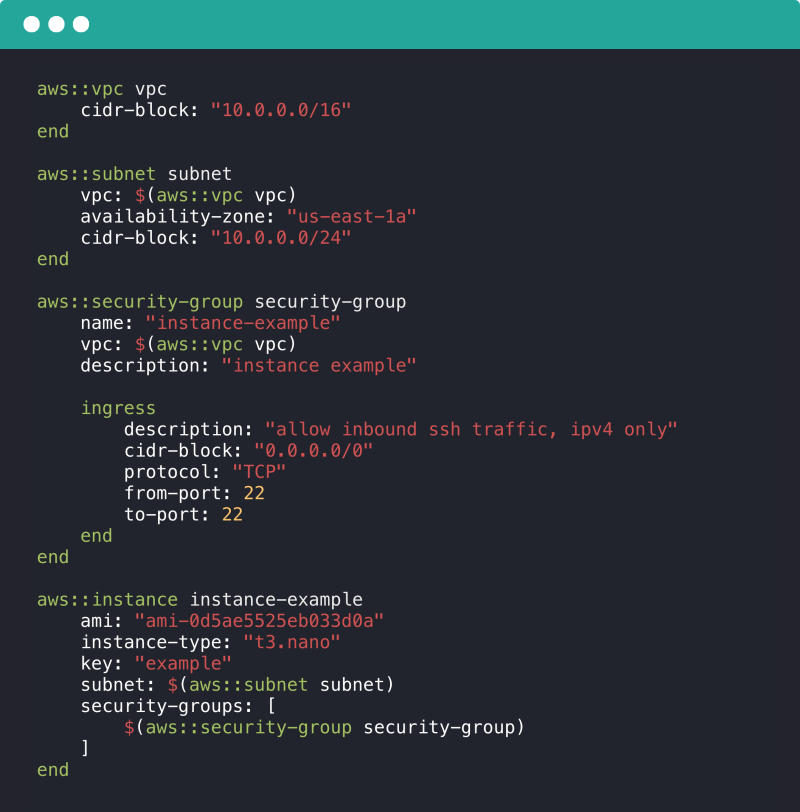
    Perfect Sense has launched an open source project dubbed Gyro that provides an alternative approach to automating cloud infrastructure provisioning and management.

    Gyro was developed as an alternative to other open source projects such as Terraform and Pulumi, said CTO Jeremy Collins. It is designed from the ground up around a programming language that allows DevOps teams to define infrastructure as code, and features logic built into configurations to make it easier to create more precise workflows, he said.

    Adding logic to create equivalent workflows in rival platforms is more complex, Collins noted, adding the ability to add logic makes it easier to not only provision cloud infrastructure but also to roll it back when necessary.

    Perfect Sense developed Gyro to make it easier to manage the infrastructure for its Brightspot content management system (CMS). As such, Gyro can support multiple cloud computing platforms.

    In addition to making it possible to add cloud platforms to an existing configuration, Collins said it can be used to create custom commands and define multiple extension points directly within the Gyro language.

    Perfect Sense Gyro

    Perfect Sense developed Gyro to automate the provisioning of virtual machines. Since then, the company has extended its capabilities to add support for emerging cloud-native platforms such as Kubernetes.

    Collins said Gyro provides a single extensible tool spanning a broad range of DevOps processes, from provisioning infrastructure to discovering what services already exist.

    Despite the popularity of rival tools such as Terraform, it’s still early days in the adoption of infrastructure as code. Most IT organizations are a long way from standardizing on any one platform for automating the provisioning of infrastructure. In fact, it may not be uncommon for different DevOps teams within the same organization to employ different platforms for provisioning infrastructure.

    Gyro’s ultimate success will depend much on Perfect Sense’s ability to foster an open source community. The Brightspot CMS is used by the Los Angeles Times, Walmart, Mattress Firm, Univision, Sotheby’s and US News and World Report, so Collins said there is a base of support for Gyro on which to build a community. Perfect Sense is looking to build a community that will continue to extend the reach and scope of the platform by adding additional plugins.

    Regardless of the approach taken, as the number and rate at which workloads are being deployed on cloud platforms increases, it becomes critical for IT organizations to find a way to automate processes. It’s not clear to what degree those workloads will be provisioned by developers themselves versus traditional IT operations teams that have learned how to program. However, one way or another the provisioning of cloud infrastructure is going to be automated.

    — Mike Vizard

  • Building a Real-Time App: 13 Open Source Projects You Should Be Tracking Right Now

    Building a Real-Time App: 13 Open Source Projects You Should Be Tracking Right Now

    Open source is the dominant model of software consumption in the modern era. Cutting-edge startups and entrenched incumbents alike find open source software development and community building a significant part of their overall business strategies.

    For many open source projects, independent steering committees ensure that projects remain stable and are not beholden to a single company or profit motive. Alternatively, for open core projects where a single company financially supports and contributes the vast majority of open source code, open sourcing makes a project publicly available and accessible for potential new users. Opening a project to public contribution widens the pool of potential users and contributors, therefore ensuring more rapid innovation than commercial software offerings.

    Choosing the Right Open Source Projects for Your Real-Time App

    There are seemingly limitless open source projects to evaluate. Further complicating matters, each project has its own domain competence and cultural nuances. Considering a single distributed application will have tens or (many) more open source dependencies, development teams must continuously test new open source offerings and hone new skills to use these solutions, while simultaneously architecting their applications.

    In order to help sort through the noise, I’ve looked at six categories of open source projects for this article: data storage, message systems, service meshes, REST frameworks and streaming frameworks. For each category, I’ll identify any dominant players as well as some other projects of note.

    Here are the top 13 open source projects by category.

    Data Storage: Cassandra, Hazelcast

    Apache Cassandra, originally developed at Facebook, is one of the most widely used open source projects for real-time applications. Functionally, it’s a distributed NoSQL database management system. But practically, it’s become the linchpin of most at-scale, real-time applications. This is because Cassandra was designed to handle large amounts of real-time data across many servers, and has robust clustering support.

    For applications that require extremely low latency or have exceptionally high data rates, Hazelcast may provide a useful alternative. Unlike Cassandra, Hazelcast is an in-memory data grid database, which enables development teams to benefit from the latency advantages of in-memory computing. 

    Message Systems: Kafka, Pulsar, NATS

    Apache Kafka is the dominant open source messaging system used by application development teams today. Originating at LinkedIn, Kafka has grown into the de facto standard for high performance open source messaging systems. For streaming use cases, Kafka users can also turn to Kafka Streams.

    Apache Pulsar, developed at Yahoo!, is another alternative messaging system which has been optimized for streaming data sources. Pulsar further differentiates itself with TTL message support and queuing via shared subscription.

    For applications where latency is a critical consideration, NATS.io (a CNCF project) is one of the fastest pub-sub messaging systems available.

    Service Meshes: Istio, Linkerd

    Trends such as microservices, serverless and hybrid cloud deployment have contributed to the increasing architectural complexity of distributed applications. With hundreds or thousands of distributed application services, service meshes provide a mechanism for pulling all the disparate services together into a manageable and cohesive whole.

    The most notable open source service mesh offering is Istio. One of the most popular open source service mesh projects, Istio is primarily used for applications built on top of Kubernetes. Another alternative is Linkerd, a flexible service mesh solution for Kubernetes or other frameworks.

    REST Frameworks: Node.js, Spring

    Node.js is a popular JavaScript framework for building scalable web applications. When comparing web development frameworks, Node.js typically ranks among the top three most (along with frontend frameworks React.js and Angular.JS). While Node.js can support large scale applications, it does not support real-time use cases well at scale.

    Spring is another application framework, optimized for distributed microservices-style architectures. Like Node.js, Spring “focuses on the ‘plumbing’ of applications so that teams can focus on application-level business logic, without unnecessary ties to specific deployment environments.”

    Streaming Frameworks: swimOS

    SwimOS is a software framework for distributed streaming applications. Unlike REST-based frameworks, swimOS utilizes a unique and lightweight Web Agent architecture, optimized for composing and transforming many data streams in real-time. Whereas DevOps oriented projects, such as Spinnaker, seek to provide an abstraction layer to converge distributed cloud services, swimOS provides an abstraction across distributed data streams, so teams can build applications by composing many distributed data streams in a single mesh environment.

    In order to ensure real-time consistency of distributed services, swimOS automatically ensures eventual consistency between all Web Agents. Complete with a UI toolkit and it’s own stateful messaging protocol called WARP, swimOS is the fastest way to build stateful streaming applications.

    DevOps: Kubernetes, Spinnaker, RancherOS

    Kubernetes is one of the most talked about open source projects in the world. Kubernetes describes itself as “an open-source system for automating deployment, scaling and management of containerized applications.”

    While it may simply be a platform for container orchestration, rightly or wrongly, Kubernetes has become a stand-in for DevOps on the whole. In spite of its dominance, there are alternatives to Kubernetes, for example there’s RancherOS to manage Docker containers.

    Furthermore, as application architectures continue to become more distributed and complex there is a need for platforms which can converge multiple distributed edge and cloud environments. Spinnaker provides an abstraction layer to connect the various environments and provides a simple mechanism for continuous integration/continuous delivery (CI/CD). 

    Final Thoughts

    Your own particular use case should determine the appropriate open source technologies for your team’s real-time application. Whether you’re building an ultra-high performance low latency application or simply trying to tame large volumes of real-time data, knowing your options and choosing the right framework or platform can save you significant time and effort.

    The open source software landscape is changing every day. If you have something to add about one of the technologies above or think I skipped over the next OSS breakthrough, I’d love to hear about it. Let me know your thoughts in the comments section below.

    — Chris Sachs