Category: DevOps in the Cloud

  • Rewind Acquires BackHub to Protect GitHub Repositories

    Rewind Acquires BackHub to Protect GitHub Repositories

    Rewind, a provider of a software-as-a-service (SaaS) platform for backing up cloud services, today announced it has acquired BackHub to gain control of a platform for backing up GitHub repositories.

    Based in Germany, BackHub adds a data protection platform to a Rewind portfolio that includes offerings for backing up everything from QuickBooks to Shopify. Fresh from raising an additional $15 million in funding, Rewind CEO Mike Potter said BackHub addresses a critical issue involving the protection of some of the most valuable intellectual property any organization has in a cloud service. GitHub, a subsidiary of Microsoft, is the largest host of source code in the world, with over 40 million users and 190 million repositories. BackHub claims it protects data in those repositories for more than 1,000 organizations.

    Rewind GitHub backup

    While GitHub itself is a reliable cloud service, the code residing in GitHub is subject to the same potential threats as it would be in any other cloud service. It’s not uncommon for a malicious actor to gain access to credentials that they exploit, for one reason or another, to delete or alter data – or, in the case of GitHub, code. BackHub makes it possible to back up code stored in GitHub to another cloud service where it can be easily recovered.

    Potter said the ultimate goal for Rewind is to make it possible to back up the entire cloud. Achieving that goal will require both additional acquisitions and internal product development, said Potter.

    In the meantime, the company is focused on providing data protection for specialized cloud services usually overlooked by other backup and recovery tool providers. For now, it leaves the backup and recovery of data stored on widely used cloud services, such as Microsoft 365, to other vendors. Rewind claims more than 80,000 organizations are using its platform to protect data, stored in a wide range of cloud services, that address a specific niche use case.

    Given the prominent role GitHub plays in software supply chains, it is not surprising that the code stored in Git repositories becomes a target for cybercriminals. Much of the intellectual property stored in those repositories is a high-value target for organizations looking to reduce the amount of time required to re-engineer a rival company’s functionality.

    Nation-states around the world have cyber-espionage programs aimed at gathering any type of digital asset that might benefit their military or economy. Naturally, copying code isn’t always enough when, in one fell swoop, add code that might derail that project long enough for them to catch up.

    Unfortunately, there have been some high-profile breaches involving software supply chains. The best way to determine if a project has been compromised is to compare code bases. Repositories, by definition, provide application development teams with version control capabilities. However, backing up a GitHub repository provides one extra layer of security that can make it easier to recover from a breach.

  • Dynatrace Extends Reach of Observability Platform

    Dynatrace Extends Reach of Observability Platform

    Dynatrace this week updated its observability and software intelligence platform as part of an effort to expand its reach across modern enterprise IT environments.

    Announced at the online Dynatrace Perform 2021 conference, the company’s namesake platform can now capture logs from Kubernetes and Red Hat OpenShift as well as Amazon Web Services, Google Cloud Platform and Microsoft Azure cloud platforms.

    In addition, Dynatrace is adding support for open source log data frameworks such as Fluentd and Logstash. Those logs can now be centrally viewed via a Dynatrace Log Viewer that enables IT teams to search, analyze and segment both real-time and historical log data.

    Dynatrace also added a Cloud Automation Module based on Keptn, an open source tool for automating configuration of observability tools, orchestrating code tests and quality checks. Keptn was created by Dynatrace and is being advanced under the auspices of the Cloud Native Computing Foundation (CNCF).

    The company also launched a Software Intelligence Hub to make it easier to access more than 500 pre-configured integrations, as well as access tools for creating integrations without having to write code.

    Dynatrace also announced it has extended a previously launched Application Security Module to now include support for Node.js applications. In addition, the module includes the ability to enforce security policies against applications instrumented with its agent software, and offers extended capabilities to enable the detection of Kubernetes cluster vulnerabilities, as well.

    Finally, Dynatrace has added a Session Replay capability to its Digital Experience Module to enable IT teams to capture a mobile application experience.

    Steve Tack, senior vice president of product management at Dynatrace, said the company is moving quickly to add support for platforms and technologies widely employed within cloud-native applications to provide IT teams with a single platform through which they can manage monolithic and microservices-based applications.

    With the rise of microservices, IT environments are becoming too complex to manage without some type of observability platform. Historically, cost concerns limited IT teams to employing application performance management (APM) platforms, such as Dynatrace, only for their most mission-critical, monolithic applications. It’s now become apparent that observability platforms capable of correlating log and telemetry data captured from applications and infrastructure are required to effectively manage a modern IT environment.

    As part of that effort, Dynatrace is now collecting data from additional sources alongside the agent software it provides. That data is then fed into an observability platform, that Dynatrace has augmented with a Davis AI engine, to identify anomalies and other potential issues by employing machine learning algorithms.

    It’s not clear to what degree IT teams completely trust the recommendations surfaced by any AI engine. However, as platforms such as Dynatrace collect more data from an IT environment, the more accurate AI models tend to become. In fact,  IT teams that don’t have access to AI capabilities might soon be at a distinct disadvantage, compared to other IT teams that do.

    In the meantime, the battle for observability supremacy continues to intensify, as incumbent providers of APM platforms such as Dynatrace look to forestall a host of startup rivals, all promising greater visibility into IT environments at a lower cost. The challenge now is determining what level of visibility is achieved, and at what total cost.

  • AIOps Builds Organizational Efficiency, Survey Finds

    AIOps Builds Organizational Efficiency, Survey Finds

    Enterprises entered 2020 with big plans. Post-pandemic, AIOps could help them achieve those goals, according to a new research survey from Digitate and CorporateLeader.

    Enterprises entered 2020 with the best-laid plans; many had efforts lined up to expand their use of cloud services and continue their steady efforts to digitally transform their businesses. Then the pandemic happened, and business and IT teams found themselves scattered and with a new playbook: make the organization as effective as it can be while working remotely.

    This sudden shift to remote work exacerbated existing challenges within organizations, from managing hybrid environments, personnel management challenges and teams finding themselves struggling to adjust. Meanwhile, enterprises still had to focus on staying ahead of their competitors technologically. All of these challenges meant there was no room for wasted or time-consuming efforts to manage the underlying business-technology systems.

    To help increase efficiencies, some contend that the answer is artificial intelligence for IT operations, or AIOps. Proponents of AIOps say that AI is needed to augment human decision-making today because of the complexity of modern enterprise environments. Today’s environments often find their operational data spread across on-premises and multiple cloud systems. The result is difficulty in managing infrastructure issues as they arise, and the considerable time it takes to identify and fix IT issues.

    According to a survey of leading European IT analysts and advisories, conducted in fall 2020 by operations automation software provider Digitate and executive network forum CorporateLeaders, the drudgery of managing routine tasks was the most commonly cited reason for turning to AIOps, which was followed by “no proactive capability of detection and correction of system issues” at 64% and “no flexibility to scale with business needs,” also cited by 64% of respondents.

    When respondents were asked to identify the key benefits of AIOps, they highlighted common strategic and operational issues that hinder performance. According to respondents, these include the removal of manual processes (91%), improvements in agility and reliability (82%) and reach predictability (73%). More swift problem resolution also was cited by 73% of respondents.

    In a case study shared within the CorporateLeaders report, Marion Fokkinga, technology advancement manager at Netherlands-based semiconductor maker NXP explained that NXP’s move to AIOps was driven by the company’s swift expansion. “Since 2015, we have been busy with multiple merger and acquisition projects,” Fokkinga explained. “As a result of this, there was less time for innovation and transformation in IT and in the business.”

    The company set out to automate routine operations tasks with AIOps so that their resources could be freed to focus on higher-value tasks. According to Fokkinga, AIOps enables tasks, such as report generation, that previously consumed half a workday to be completed in several minutes. Saving time is the most significant result, said Fokkinga. With AIOps, NXP reports a 97% improvement in incident response time and a 95% reduction of manual effort in some of its supply chain planning work.

    Of course, in the current treacherous business environment, there’s a lot more at stake than simply building enterprise operational efficiencies. Over time, it may come down to the very success of the organization. According to the survey, a full 82% of respondents said that AIOps is necessary to the future growth and transformation of their business. “Respondents who went on to give qualitative answers later in the survey explained that the complexity of hybrid and multi-cloud infrastructures, increasing transactional volumes and the criticality of online business systems make it impossible for traditional IT systems to manage every application and infrastructure without recourse to automation. It was highlighted that the overwhelming amount of data in today’s Operations are simply beyond human analysis capacity,” the report stated.

    One respondent said that, through AI, the performance of some tasks and decisions were improved, as routine tasks were eliminated. That has to be welcome news to enterprises struggling to remain competitive while simultaneously striving to remain productive and agile during a global pandemic.

  • Best Free Virtual DevOps Conferences to Attend in 2021

    Best Free Virtual DevOps Conferences to Attend in 2021

    New year, new beginnings and new conferences. It’s that time of the year again, to review and research upcoming events for 2021. Of course, given the ongoing COVID-19 pandemic, we’ll cover only virtual conferences. Here are the top five best DevOps virtual conferences you can attend for free. Just sign up, reserve your seat and attend, it’s as simple as that. 

    Why attend virtual conferences?

    Conferences provide wide visibility into market trends. As an individual, it’s impossible to know everything that is happening around the industry, especially the software industry. Conferences give us a chance to see things from different perspectives. Knowing how others are solving their engineering problems, what best practices they are using, how they deploy to production, etc., gives us the confidence to tackle our own problems. Demos, practical approaches and learning from top experts and speakers is yet another advantage for conference attendees. As the world has gone virtual, it has become easier to attend conferences via our laptops/desktops, right from the comfort of our home office. 

    So, let’s consider some of the industry’s best DevOps conferences this year.

    swampUP

    Date: May 25 – 27 (AMERICAS) | June 1-3 (EMEA)

    devops epicenter conference

    swampUP is one of the most recognized global DevOps conferences meant for DevOps practitioners around the globe. This conference puts you at the center of DevOps.

    It’s about all the stuff you ever wanted to know and understand from an engineering perspective. It empowers the attendees with actionable tips, patterns and use cases to drive DevOps initiatives with modern CI/CD, package management and security best practices. swampUP enables attendees to talk to the leading DevOps gurus live and benefit from their insight. 

    What is unique about this conference?

    The conference also includes three full days of hands-on DevOps training, keynotes, breakout sessions, real-world use cases with renowned speakers and brands and comprehensive, deep-dive tutorials. 

    DevSecOps Days

    Date: March 5, 2021

    devsecops days conference

    DevSecOps Days is a renowned conference that takes place in various cities and is organized around the latest security best practices in DevOps. Topics and talks center on adding security to DevOps. This conference aims to educate, share knowledge, evolve and explore DevOps and DevSecOps technologies and concepts, keeping security the focal point in software development. That’s what we call developing security as code. Volunteers from the local community organize the event. 

    What is unique about this conference?

    Attendees of DevSecOps Days will get a chance to talk to the industry’s leading security practitioners, and come away with insights about implementing security, automating security, overcoming challenges in DevSecOps and scaling security best practices. 

    DockerCon

    Date: May 27, 2021

    dockercon conference

    Docker is the tech that popularized container technology. If you are a DevOps enthusiast and want to know more about working with container tech, DockerCon is the conference for you. So much is happening around Docker these days, and it is worth your time to attend the event. DockerCon is an industry-recognized conference that offers:

    • Technical demos of container technology products and innovations from Docker and their partners. 
    • In-depth, real-world Docker use cases and examples of how others are using it to streamline software development. 
    • Technical sessions from Docker experts and captains and notable leaders from across the industry.
    • A chance for the community to come together and connect with collaborators around the world.

    What is unique about this conference?

    The conference is for everyone from beginners to experts. This is a great opportunity to hang out and chat with Docker experts and Docker captains. 

    DevOps World

    Date: September 22-24

    DevOps World 2021 conference

    DevOps World  is one of the premier DevOps events, bringing together DevOps thought leaders, software practitioners, developers, contributors and the entire DevOps ecosystem in one place. What else can attendees expect? 

    Aside from interacting with industry experts, it provides attendees the opportunity to learn, share, explore and help mold the future of software development and delivery best practices.

    What is unique about this conference?

    Attendees get hands-on experience with various new DevOps technologies and can make new connections in the industry.

    cdCon

    Date: June 23 – 24, 2021

    cdCon conference

    cdCon is a two-day virtual conference on delivering software with security and speed. It is a global conference featuring continuous delivery thought leaders, industry experts, practitioners, open source experts and developers delivering world-class talks. Attendees get to be part of the conversations driving the future of software delivery, enterprise leadership and open source technology.

    What is unique about this conference?

    cdCon is the best place for networking with industry thought leaders. Attendees will learn the latest trends in software delivery from experts. Meet and explore open-source technologies with other practitioners and enthusiasts. 

    DevOps India Summit

    Date: August 27-28, 2021

    DevOps India Summit conference

    One of the APAC region’s top conferences is DevOps India Summit.

    The conference theme this year is “Adapting to Industry 4.0 with DevSecOps, SRE, AI/ML/IoT and Data Science.” This conference focuses on broad topics related to SRE, data science and DevSecOps. It emphasizes Industry 4.0, which refers to the fourth industrial revolution focused on the rising trends in automation, IoT, big data, AI and cloud computing technologies.

    What is unique about this conference?

    The conference features industry leading speakers and panel discussions, and it enables attendees to interact with sponsors, attend yoga sessions, a party with a DJ, fireside chats and much more. 

    Let’s make 2021 an amazing year for DevOps by attending some great conferences, learning new technologies and adopting them into your organizations to solve engineering problems. Happy DevOpsing!

  • Atlassian’s Shift to the Cloud Gets Underway

    Atlassian’s Shift to the Cloud Gets Underway

    Atlassian today announced the general availability of Cloud Enterprise, a cloud-based service through which organizations can mix and match the company’s various offerings under a single subscription.

    The company has signaled its intention to shift toward cloud services for months; now, the initial Cloud Enterprise subscription will cover the company’s Jira Software, Confluence and Jira Service Management offerings.

    Bala Venkatrao, head of product for Enterprise Cloud at Atlassian, said the goal is to make it more cost efficient for organizations to consume the company’s software versus merely acquiring a license to deploy software in an on-premises IT environment.

    The company is also making controls available that enable governance of user and change management via a centralized admin hub. Administrators can assign users to instances, configure security policies and monitor usage trends through the hub. There are also built-in integrations with third-party identity-as-a-service providers, to enable administrators to automate provisioning and de-provisioning.

    Administrators can also set up and customize multiple application instances; they can keep data pinned to different regions to customize those instances with specific marketplace applications or configurations for compliance purposes.

    Finally, a marketplace will allow IT organizations to expand the number of applications they consume from Atlassian and its partners. A smart links and app switcher capability for Jira and Confluence Cloud enable easy collaboration across different instances of Atlassian applications.

    Atlassian currently has more than 194,000 customers, so it may take some time to transition the existing installed base to this model. In the meantime, Atlassian is pushing as many new customers as possible toward a cloud platform that makes it easier for Atlassian to keep customers current on the latest release of its software. Atlassian plans to support up to 20,000 users per application instance by later this year.

    Venkatrao said while the Atlassian portfolio is frequently consumed by individual end users, the Cloud Enterprise offering is designed to appeal to CIOs, and other senior level executives, that want to centralize billing for application services now accessed via the cloud. That approach will make it easier for large organizations to take advantage of discounts they may qualify for as overall usage increases, Venkatrao said.

    While Atlassian may be a little late to the software-as-a-service (SaaS) application game, Venkatrao noted that the Cloud Enterprise platform will make it simpler for Atlassian to apply AI to the metadata it will collect. Atlassian has already leveraged AI to improve document search within Confluence and Jira, in addition to employing predictive analytics to surface recommendations for including personnel on a project.

    It may be a slow transition to the cloud for Atlassian, but that transition is clearly underway.

  • OpenTelemetry Project Gains Log Agent Software from observIQ

    OpenTelemetry Project Gains Log Agent Software from observIQ

    Stanza, an open source log agent developed by observIQ, a provider of an observability platform, has become part of the OpenTelemetry Project for collecting telemetry data.

    Mike Kelly, CTO and co-founder, observIQ, said Stanza will make it possible to collect log data alongside other telemetry data using a common application programming interface (API) and software development kit (SDK).

    OpenTelemetry is currently a sandbox-level project being developed under the auspices of the Cloud Native Computing Foundation (CNCF); it provides a set of open source libraries, agents and other components for collecting the telemetry data consumed by observability and IT monitoring tools.

    Contributors to the OpenTelemetry Project include Amazon Web Services (AWS), Elastic, Google, Honeycomb, Lightstep, New Relic and Splunk. After Kubernetes, Kelly said the OpenTelemetry Project is now the most popular open source initiative being advanced by the CNCF.

    The OpenTelemetry Project is still a long way from delivering agent software that will be widely employed on an IT production environment. However, the potential implications of the project are already being widely noticed. Rather than having to deploy, manage and update agent software for individual IT management tools, it will soon be possible to deploy a single set of agent software to generate data that can be consumed by multiple platforms.

    That shift will enable providers of these platforms to focus more of their effort on enhancing their analytics capabilities rather than developing proprietary agent software that typically doesn’t provide much differentiated value, Kelly said.

    Stanza is part of an IT observability platform developed by observIQ when it was previously known as Blue Medora. After selling its platform for integrating monitoring tools to VMware, Blue Medora changed its name to observIQ. Now, it is making an effort to advance adoption of an observability platform that it makes available as a software-as-a-service (SaaS) application.

    Will DevOps teams roll out elements of OpenTelemetry themselves, or wait for the observability and monitoring tool and platform providers to support open source agents that would automatically be deployed? That remains to be seen. Regardless, the total cost of observability should decline, as open source agent software replaces the proprietary agent software strewn across enterprise IT environments today. The expectation for vendors is that more applications will be consuming analytics data surfaced by the observability and monitoring platforms they provide.

    Of course, it will be a while before that dream is fully realized. In the meantime, IT organizations will need to carefully evaluate the total cost of observability against the business value of the application deployed. Cost is one of the reasons application performance management (APM) tools are not widely employed today. Of course, as IT environments become more complex, thanks to the rise of microservices and serverless computing frameworks, it’s also become increasingly apparent that observability will soon be a capability IT teams can’t afford to do without.

  • The State of Digital Innovation, One Year Into the Pandemic

    The State of Digital Innovation, One Year Into the Pandemic

    It’s obvious COVID–19 accelerated digital reliance for many companies. And it’s no surprise that, according to a recent study, 89% of tech leaders believe digital experiences are critical to addressing new COVID–19 challenges. In this race toward 100% digital business, agile innovation is the new elixir of life — without it, a company may face an early retirement.

    Kong just released their 2021 Digital Innovation Benchmark, which summarizes the tech priorities of 400 IT leaders. The findings stress the importance of rapid digital innovation, open source, microservices architectures, and high quality practices for scaling today’s application ecosystems. Here are the key points technology leaders need to know to remain competitive.

    Innovate or Dissipate

    The urgency to innovate is increasing. According to the survey, 84% of respondents predict a business will go under within six years if they lag behind in digital innovation. Fifty one percent of tech leaders believe their business can only survive three years.

    If digital transformation happens too slowly, it can pose an existential threat. But there are many factors that can hinder faster digital innovation; the complexity of using multiple tech stacks, reliance on legacy IT and lack of automation. Not only are there internal woes, but external danger — 62% of respondents worry about failing to keep up with competitors who innovate faster.

    It seems the urgency has increased over the last year. In last year’s report, just 37% reported they’d be out of business in three years if they didn’t keep pace with digital innovation. That figure rose to a whopping 51% in 2021.

    COVID Amplifies Digital Drive

    Virtually no one is anticipating a decreased IT budget in light of COVID–19. On the contrary, long-term digital transformation efforts are well on target at the majority of institutions, and 75% expect to see an increase in IT/developer budgets over the next 12 months.

    Interestingly, when it comes to securing the digital-only economy, European tech may have a head start. Only 40% of European tech companies have increased their security focus, compared to 51% in the U.S. This could be due to previous investment in security and stricter regulation in European countries.

    In terms of cloud adoption, 40% of tech leaders feel COVID–19 has accelerated their move to the cloud. Nearly 40% say the pandemic has encouraged the use of microservices and cloud native architecture.

    Quality Outweighs Speed

    When gauging what matters most to tech leaders, “improving operational efficiency” is still a top priority. However, this year’s report saw a spike in respondents saying application performance and reliability, as well as application security, were moving up the priority list. Though 3 in 5 (62%) respondents said they are “extremely concerned” about competition from speedier rivals, application stability outweighs the collective drive to innovate.

    These trends are likely indicative of a notable rise in cybercrime. As I’ve covered previously, to respond to emerging threats, DevSecOps practices and new security tooling are shifting left within the development cycle, automating things like vulnerability detection. Simultaneously, roles to increase application integrity, like site reliability engineers, are in high demand.

    New Technologies and Open-Source Thrills

    As mentioned earlier, IT budgets are increasing across the board. When adopting new technologies, companies place the highest emphasis on the tech that increases efficiency. A surge in automation follows a low-code movement gaining steam. Companies consider the following key factors when introducing new tech: reducing deployment risk, increasing collaboration, and increasing development. Ninety five percent of US respondents also listed the “need to integrate with existing tools” as necessary — no surprise in today’s API-driven development landscape.

    Ninety one percent of organizations use open-source software in 2021 — this is up from 82.5% in 2020. Across the board, open-source is intrinsically embedded into most software projects. We see open-source especially used in open databases, infrastructure automation, API design and testing, CI/CD tools, Docker containers, Kubernetes and service mesh. Arguably, modern DevOps would not be possible without such open source initiatives.

    Bring it on, Microservices

    If you haven’t heard of microservices yet, we would be worried. An impressive 87% of survey participants believe that microservices-based applications are the future.

    While that sounds substantial, a path toward 100% distributed microservices architecture has not been mapped within most organizations. In 2021, only 33% of companies have transitioned entirely to a distributed architecture, whereas most (53.5%) adopt a hybrid mix of microservice and monolithic styles.

    “This is strong evidence that microservices have quickly become the de-facto approach for modern application architectures that enable digital innovation,” the report said. Though more development is required, a microservices-centric future seems obvious.

    Within organizations that have already adopted a microservices approach, the average number of microservices in production is 102. And those are primarily to increase security. Ironically, the report also found maintaining security to be the top challenge of deploying a microservices system. Other drivers for microservices adoption include integrating new tech, increasing development speed and boosting flexibility.

    Kubernetes Becomes Ubiquitous

    Kubernetes has clearly emerged as the industry standard orchestration platform. Eighty six percentof all respondents report they now use Kubernetes in production, or plan to within 12 months. This is a massive jump from VMWare’s 2020 report, which put Kubernetes use at 48%.

    However, there are challenges to implementing Kubernetes in practice. Companies cite security, complexity, performance and monitoring as top setbacks when introducing Kubernetes. To say Kubernetes has a steep learning curve may be an understatement, as abstraction layers are introduced to rectify a widening knowledge gap.

    Service Mesh Prickly for Early Installs

    Interestingly, API gateway adoption and container usage, according to the survey, are both 38%. Yet, service mesh adoption is only at 20%. This could underscore the fact that service mesh is still an emerging concept — service mesh experts say the tech isn’t ready for widespread adoption. Or, it could reflect that production use cases are rare (primarily for supporting vast microservices deployments).

    Early service mesh adopters see increased service connectivity and discovery as a top benefit of the technology. This seems logical, as service mesh aims to be a common networking framework. Other common benefits include cost reduction, meeting compliances, zero-trust security in networking and traffic observability.

    Naturally, service mesh isn’t without its thorns. Complexity in deployment and ensuring performance at scale top the list of challenges faced when deploying service mesh, slowing its adoption.

    Hybrid Multicloud

    The current status of multicloud deployment sees a mix of on-premises and multiple cloud providers, with 41% of organizations using multicloud deployment strategies. While cloud adoption rates are increasing, 31% of organizations are still running on-premises servers. The saturation of cloud tooling, and the market validity of Azure and Google Cloud Platform to take on AWS, have influenced a multicloud environment. Cloud expertise is now a hot commodity to navigate multicloud modalities — so much so that some companies have introduced a new role, The Other CFO, or Cloud Economist, to balance the cloud checkbook.

    Riding out the Virtual Wave

    The pandemic has accelerated the move toward digital experiences, and in turn, quickened the pace of enterprise technological evolution across the board. As COVID–19 effects continue, there’s no indication the virtual wave will recede anytime soon.

    To summarize the current state of digital innovation:

    • Rising digital tide: The pace to innovate is rising, and those left below the new-digital-normal water line will drown.
    • IT spend is up: Most companies have increased IT budgets moderately to support new digital norms.
    • Needs for adoption: Desires for automation, speed, security and integration rank high for adopting new tech.
    • Microservices on fire: The report describes “accelerated mainstreaming of microservices.” Microservices, and the tech that supports them, are clearly the future.
    • Kubernetes everywhere: As Kubernetes rises to ubiquity, last-mile efforts center on security and developer usability.
    • Bullish on service mesh: Service mesh sees early production uses, which will likely signal more growth in this area.

    There’s nothing unexpected in these findings; instead, they affirm what most of us already know — digital innovation is going full throttle. Check out the entire 2021 Digital Innovation Benchmark here.

  • TechStrong TV: How to Build and Refine Your DevOps Skills with OpsCompass

    TechStrong TV: How to Build and Refine Your DevOps Skills with OpsCompass

    The role of DevOps is constantly evolving as new technologies and trends keep emerging and reshaping the business. It is critical for DevOps engineers to continuously learn about the latest tools, best practices and technology, and be able to adapt to change.

    There are many ways for DevOps teams to refine their skills in order to become high performers. In this TechStrong TV interview, OpsCompass Co-Founder and CTO John Grange and Engineer Amy Wall join Mitch Ashley to discuss upskilling and how to build and maintain your software, development, cloud and technology skills in the fast-paced world of cloud. John provides a look into the future and where our skills need to move next, while Amy graciously shares her journey into software development and some valuable lessons learned along the way.

    OpsCompass is a leader in Cloud Security Posture Management (CSPM) offering an enterprise SaaS product that provides security and compliance management in cloud platforms.

    The video interview is immediately below, followed by the transcript of the conversation. Enjoy!

    Transcript

    Mitch Ashley: I have the pleasure of being joined by two really interesting folks. We’re gonna have a great conversation, I’m looking forward to this today—Amy Wall, who is an engineer with OpsCompass, and then John Grange, CTO with OpsCompass. Welcome to you both. Good to be chatting today.

    Amy Wall: Thanks. It’s great to be here.

    John Grange: Yeah, thanks for having us, Mitch.

    Ashley: Absolutely. You bet. Let’s do this—how about if we have you both introduce yourselves. Maybe, John, if you go first, introduce yourself—tell us a little bit about OpsCompass and what the company does, too, and then hand it over to Amy and you can tell a little bit of your background.

    Grange: Excellent. Again, I’m John Grange, I’m co-founder and CTO of OpsCompass. OpsCompass is a really powerful SaaS product that does security and compliance management in the cloud. And what that really means is, you know, we’re really helping DevOps teams, CloudOps teams get the visibility, have the intelligence and the control they need to run a successful cloud operation.

    You know, my background really plays a lot into what OpsCompass does and kind of the cloud security space. I’m a career entrepreneur. I’ve co-founded a number of companies, from top five global Microsoft ASP.NET hosting provider to a health and wellness SaaS product. So, I have a lot of experience, and our team has a lot of experience in kind of the infrastructure security compliance space. The cloud, obviously, was a big game changer, because a lot of the things that we used to deliver through a variety of different software products or hosted solutions inside data centers, we can now build software to easily do it in the cloud.

    Ashley: Mm-hmm.

    Grange: So, that’s kinda how I got into the business through kind of that hosting and infrastructure space, and now here we have OpsCompass, which is leading the charge with helping customers with their security posture, their compliance—all these different aspects of running or having a well-run cloud.

    Ashley: Sure is a fun and interesting space to be in and I think we’ll get into that, too. Amy, how about you? Just a little bit of introduction, and I think we’re gonna get into more of your story, too.

    Wall: Sure, yeah. I’m Amy Wall, I’m a DevOps engineer at OpsCompass. I have the pleasure of working with John Grange, working under John Grange, and kind of forming this exciting new product, OpsCompass. And so, I’m kind of—where I’m at in my career and on my cloud journey is really in a space where I’ve kind of come to it from a software engineering perspective. I’ve been a software engineer for years now, and you know, been going through the steps and kind of getting the skills under my tool belt, upskilling on the cloud path so that I can become a full DevOps engineer for OpsCompass. So, really been learning with OpsCompass and growing with OpsCompass as they sort of kind of figure out and carve out their space in the cloud infrastructure.

    Ashley: Mm-hmm. Isn’t that nice when you work with, you find a company that’s really compatible with what your goals are and what you wanna learn with where you are in your career? That’s awesome.

    Wall: Huge. Absolutely.

    Ashley: Well, that’s a little bit of what we’re gonna talk about, the upskilling is kind of a general, I guess, tag, label for it. We’re gonna explore a little bit, and you volunteered to share your story of how you got into software and how you’ve evolved into software in the cloud and DevOps, and then maybe take a look forward, you know? We’re here in December thinking about getting through the holidays and everything else going on and thinking about the new year. Maybe John can share with us some ideas on that, too, and we’ll explore some of those things about how do we prepare ourselves for the next things that are coming.

    So, let’s start with your story. I’ll let you tell it however you’d like, but you know, maybe how did you get into software?

    Wall: Sure, yeah. I always like to joke that if I told my 12-year-old or 14-year-old self that I was a software engineer or DevOps engineer, I would not believe it, at that age.

    Ashley: [Laughter] 

    Wall: But yeah, I really didn’t have a super traditional path. You know, I was a Humanities major in college. I left college and I became a content editor and then later a project manager in the marketing space. And I really enjoyed it, but kind of along the way, I got exposure to various technologies, I got a little exposure to programming, I got some exposure to IT, and over a few years, I realized that I just loved it, and that’s what I really wanted to do. And my favorite days at work were the days where I was able to kinda solve, you know, software problems or technology problems, whatever.

    So, I did, like, a total career 180 about five years ago and took a U-turn, learned how to code, and my first job after that was at OpsCompass or a subsidiary of OpsCompass that OpsCompass then later purchased. And so, I’ve been working in software ever since as a software engineer. And it wasn’t until OpsCompass a couple of years ago, I think two or three years ago, when I was able to join that amazing team of engineers where I started to really ramp up my cloud journey. You know, I had become pretty strong in the fundamentals of software engineering, and you know, I’d become really used to kind of the experience of learning on the job. You know, that’s kinda the nature of software engineering itself, and it’s the nature of DevOps, and it’s really the nature, I think, of cloud, because there’s new technologies coming out all the time and everybody’s kind of learning a way to navigate the space a little bit better all the time.

    And so, yeah, I just kind of figured out how to learn on the job and continued learning on the job, and now I’m surrounded by world class cloud engineers and John Grange, our CTO, who have excellent mastery in this space, and it’s been a blast to kind of learn together with them and figure out how this entire ecosystem works.

    Ashley: Wow, very complimentary of the company. Be careful, John, she may have an ask.

    Wall: [Laughter] 

    Grange: Yeah, I know. This is—this is great. No, but in all seriousness, you know, just from our perspective, even, having somebody who’s a rock star at this point, like Amy, it’s hard to find cloud expertise. And you have to be able to find people that are interested in growing, willing to grow, have that interest—like, it sparks that fire, so that then you can enable that and you can grow a lot of your own expertise, and it’s a really powerful thing, but I think it’s something that a lot of companies, particularly like us, have to do today to stay around.

    Ashley: Mm-hmm. You really do have to invest in people and give them the right, whatever ways that they learn, the right opportunities. You know, there’s also the person side of it, too. One of the best things I learned in college from a Computer Sci professor was, he said, “Everything you know now is gonna be obsolete in a year, so you need to keep learning. You have to have a thirst, just a hunt, a desire for learning just to keep—keep going.” 

    And it seems like that’s consistent with what your journey’s been, Amy. Maybe talk about what the evolution from some of the technologies you started developing software in to getting into cloud—what kind of things are you doing today?

    Wall: Sure, yeah. So, I started where I think a lot of new coders start is, I started on Ruby on Rails, and I used it for years, and I actually still use it a lot of the time. But yeah, I started there, and then I worked in the consulting space for a few years where I was able to kind of bring to life a lot of customers’ ideas, clients’ ideas, and I loved that, that was really exciting.

    And so, from there, I kind of have just begun dipping my toe a little bit in all the cloud has to offer. I still have a ton to learn. But our infrastructure has a number of different resources in various clouds. You know, I get to work with AWS, I get to work with Azure, I get to work with Google Cloud Platform. So, you know, any given day, I could be working on any one of those technologies. I could be spinning up Lambda, I could be debugging something in Typescript or JavaScript, whatever it is.

    But yeah, it was definitely a journey along the process, but we have a team, like I was kinda mentioning before, we have a team that we all, I think, feel that we’re in it together a little bit. And so, there’s a great energy where I think we kind of all learn together, even the master practitioners will continue to kind of get new certifications as they come out, will continue to offer advice, and will continue to learn.

    And so, I’ve never really felt like I was the baby in the room, so to speak, [Laughter] or that I was less skilled than anybody else, per se. I kinda just felt like—okay, we’re all making ourselves better, sharpening our skills, getting better all the time, so.

    Ashley: Especially, it can be an advantage in a technology area that’s relatively new, because everybody’s learning it, right? Nobody’s been doing it for 20 years or whatever makes you an expert.

    I’m curious, too, did you find mentoring, kind of learning from peers, things like that were helpful, since everybody’s learning at such an accelerated pace moving into the cloud, whether it’s on the UI side or on the software infrastructure side?

    Wall: Hugely, absolutely, yeah. Our lead architect, Nick Allmaker, is an excellent mentor for us. You know, his knowledge never ceases to amaze me, and he’s really, really helpful. He’ll always—he’s always willing to take some time out of his day to spend a couple extra minutes on a pull request or help you figure something out.

    But, you know, even earlier on in my software engineering education, I remember having a teacher who told me, “Always T.S., try it and see.” [Laughter] And I think I mentioned this in a blog recently, but that’s been hugely helpful to me as I’ve moved into this space, because you know, for me at least, in learning cloud and in understanding the ecosystem, tutorials online can really only take you so far. Sometimes, you just have to, you know, go in there and spin up a Lambda, you know, spin up an EC2, and figure out what’s going on, play with it, move it around a little bit.

    And so, I definitely—that’s a big insight that I’ve learned is that just get in there, try it. A lot of the clouds, I think all of them, in fact, have a free trial where they give you a little bit of free canister to play with at the beginning. I used that for all of them, absolutely, and you just, you know, spin up resources. 

    And I think in addition to that, having a third party like OpsCompass where you have kind of that visibility into every single resource that you have going on in every single cloud can be super helpful to someone. Obviously, helpful for experts and helpful for people who are in the cloud security posture management space, but also helpful for people like me who are learning and who don’t really understand or who are kind of putting the pieces together of what changes do what and what resources are like others, how similar is an Azure function to an AWS Lambda, and having that kind of visibility into all of your clouds and all of your resources can be hugely helpful.

    So, you know, I kind of had that advantage at OpsCompass where, you know, I’ve definitely had a leg up, for sure, in being able to kinda learn this stuff.

    Ashley: Mm-hmm. Opportunity is everything. Sometimes it’s self-created, and sometimes it’s the situational company, et cetera. I’m curious, John, what’s your perspective on, because you’ve, you know, you’re obviously probably in a little different place in your career, but as yourself and folks you’ve worked with, what are some of the mentoring and kinda helping others advance in their careers have you seen to be really successful—either for yourself or people you’ve worked with.

    Grange: Sure. Well, you know, there’s a couple things that come to mind, and one of them Amy just mentioned, being able to go and mess with something, being able to go out into the cloud and play with the resource and have kind of both the curiosity, the time, the capability to be able to go do that is a really powerful thing. And in the cloud, when all of these services are changing and being—you know, there’s a couple hundred different ones on AWS—there’s literally something new every day.

    Ashley: Mm-hmm.

    Grange: So, I think that that’s a big part of it. The other thing that I learned early on from mentors of mine that I also try and share with the team is that when there’s these big trends—you know, cloud is an example, but then also, you know, some of what you see with big data and AI, et cetera, there’s the sort of application top layer trend that’s all of the robust sort of user applications for those technologies. 

    But for those to actually come to fruition and for that trend to really be powerful, there’s gotta be all this plumbing underneath that isn’t as—it’s not as glamorous and not everybody thinks about it, but as those spaces burgeon, it’s not just the mobile app that’s using AI to really change kind of directions in navigation, it’s the whole industry of sort of the infrastructure beneath that needs to serve those sorts of trends and applications. And those end up being great places to go and learn about. And there’s tons and tons of opportunities, sort of, in the wake of those big trends and the leading kind of applications and companies.

    So, I always like to, even in our product, you see a little bit of that, but I even try and tell, you know, folks on our team that we need to be looking at things that way, as these trends are big. What kind of plumbing do the customers need? What are the dots that need to be connected? What’s the kinda unglamorous thing underneath that everybody’s gonna need that we can learn a lot about and solve the problems around?

    Ashley: I’m curious, Amy, have you seen that? Has that been consistent with your experience, too?

    Wall: Absolutely, yeah. I think—yeah, per what John was saying, I do really think that there is kind of an ecosystem to cloud and we’re trying to always stay on top of it, in front of it, you know, figure out what’s going on with it and view it from kind of like that 30,000 foot view, so we can really understand it as a whole picture.

    So, yeah, I think there’s a great knowledge share, for sure, and I think that’s hugely important to figure out where is this going, what is going to be happening in 5 years, in 10 years? Where do we need to start working now so that we’ll still be relevant, we’ll still be making sense at that time? And it’s not always easy to guess, but definitely, there’s a lot out there in the industry that you can kind of get a feel for that.

    Ashley: I think we’re in violent agreement. [Laughter] The best developers I’ve worked with really knew it from the operating system, the whole software stack, the network—you know, not an expert in every piece of it, but knew how it all fit together and how to make it all work and kinda hum and get to the performance that you need or make the right decisions on how you want to, the architecture you want to use and what parts you do and don’t want to use.

    You know, another thought—you may have mentioned this in your article, too, Amy, and I’ll put a link to the article in the description—open source is another fantastic resource. You talked about getting free time on cloud services and using sampling software—it’s a great place to watch how software’s built, in a little bit different way, in an open way, open community, but using that as well can be super fantastic. And by the way, everybody’s using open source in their products and their IT systems, their applications. And so, the more you know about it, the more you can leverage it, right?

    Wall: Absolutely, yeah. I love—I just, I love the idea of open source. You know, I think it’s—I love the ideology of it. I think it’s fantastic, and certainly, we do use it. And I think open source is the place where a lot of people kind of go to exchange ideas in the cloud space right now. You know, we have a lot of—Twitter, for example, Tech Cloud Twitter is always really exciting and people…yeah, I think people are making some really interesting things right now with open source, and it’s an exciting place to be.

    Ashley: So, let’s kinda turn the lens from, you were talking a little bit about your background, John sharing a little bit of his as well—turn the lens to kinda thinking forward, right? Things have changed. It’s a different world in the last nine months, for sure, and a lot of organizations have accelerated digital transformation projects. We’ve got data in my analyst firm to back this up very strongly. 

    The move to the cloud is accelerated, and you know, not stopping. It’s gonna continue to move even quicker. And I know you think about a lot where you’re going as a CTO with your company and your product and your technology, John. What thoughts do you have as you think over the next 6, 12, 24 months kinda into the where we’re going and how that might influence what people might learn or maybe how they learn?

    Grange: Mm-hmm. I actually—that’s a great question, and I’d actually go back to the comment I made before about some of the different trends. And, you know, just like we’ve had the DevOps trend over the last handful of years, there’s a whole number of kind of portmanteaus, right, the CloudOps and DataOps and AIOps.

    And I think that as some of these, you know, Fortune 1000, Fortune 2000s start to become more cloud mature, you’re gonna start to see more of the need for, okay, not just general DevOps where you really understand the cloud platform and orchestrating and automating workloads and things of that nature, but you understand the details of AIOps, for instance, which is a much different challenge, it has lots of other issues with data issues and labeling and things of that nature. Similar issues with sort of DataOps engineering—lots of new problems, really important business solutions to be built there for organizations that are already pivoting their organizations to prioritize these things, particularly after the pandemic. 

    DevOps is all about efficiency, and now what companies are saying is, “Hey, you know, coming out of the pandemic, we’re gonna prioritize our most innovative projects higher and we’ve got to push to be more efficient. We can’t have the cloud spending overages, we can’t have these big breaches that are costly reputationally and financially. We’ve gotta get more efficient.

    So, I think that those are the big things that, coming out of the pandemic, I’d be thinking about. If I were kind of a DevOps practitioner out in the field but also what I’m thinking about at OpsCompass is we’re, you know, looking out, we’re looking into how can we provide more value to our users for some of these really specific use cases that are driving very significant value for companies that are implementing them.

    Ashley: Mm-hmm. I’m curious, too, then, without getting into customer details, but as you’ve worked with your customers through the pandemic, through economic challenges, recovery, that kind of thing—what changes are you seeing in the market with the customers that you’re working with? Are they emphasizing different things, stepping back and taking new directions or trying to get better at just the core things? What’s happening?

    Grange: Yeah. You know what? It’s interesting. From my perspective, it’s very much almost no new phenomenon. It’s almost all just an acceleration of things that we were already seeing.

    Ashley: Mm-hmm.

    Grange: So, in other words, a lot of our kinda strategic plans that we thought were maybe a year out all of a sudden became, you know, “We need them, like, yesterday.” So, I think that a lot of those trends around remote work were already in place. I think a lot of—you know, many of the projects that we’re seeing companies, you know, prioritize, put a higher priority on, those projects already existed. Now, they’ve just become more important.

    Unfortunately, a lot of these IT teams and cloud teams shrunk during the pandemic. So, they now have the requirement that they’re more efficient and everything else, but they have, in many situations, fewer resources to work with.

    Ashley: Mm-hmm. Well, though that’s hard, it’s almost always that growth comes through investing again, so at some point, that starts to rebuild on that efficiency.

    Grange: It’s the story of IT, right? The story of IT—being understaffed and overly important.

    Ashley: Yeah, I don’t think I’ve met an IT team that said, “You know, we just have too many people. I’m not sure what we do with all these folks.” [Laughter] 

    Grange: Yeah.

    Ashley: You know, it’s interesting—I agree with you about, it’s very much accelerating. Another trend I would share—let me see if you concur with this—is, you know, you have the fortunate, if you wanna think of it that way, situation of being in a company where your software is your product, right? So, you can connect the dots between work that Amy’s doing or someone’s doing a test or someone’s doing customer service or architecture or what you’re doing in your role, John. You can connect that to the business and why you want to invest in AI and machine learning or whatever the next thing is.

    That can be really hard to do when you’re in a bank or an insurance company or something else where there’s a lot of distance between what I’m doing in my job—especially in a Fortune 1000 company or above. With that acceleration, though, and I think because of DevOps and AsteriskOps being adopted across different functions, a lot of that is about driving that connect the dots to why we’re going and where we’re going there, and how to accelerate, right? So, the efficiency can be for financial purposes, but recovery can also require agility, very fast response. You know, markets change, our supply chain is gone. We gotta rebuild that in a totally different way—so, guess what? Software is critical. It’s not just a back office thing. Thoughts?

    Grange: Hey, I think that’s exactly right. And, you know, using the financials as an example, you know, many of these financial companies were spending an extraordinary amount of money on reducing their risk, their technology risk, their physical security data centers, really expensive software to secure it all. And you’re exactly right, one of the accelerating trends is that efficiency. That’s not efficient at all. Capital One now has moved—they’ve shut down, now, all of their data centers around the world. They’re completely in the cloud.

    Ashley: Mm-hmm.

    Grange: That’s kind of an outlier example now, they’re like, the only one. But they’re all—I can tell you, just on experience with our own customer base, the mid-market is moving very quickly that way, too. Because they just realized that—hey, we don’t have to, we now don’t have to build data centers, we don’t have to have these huge capital budgets. We can be more efficient, we can be more operational. We can—to your point, the agility that’s required with how quickly this technology’s changing, you almost don’t have a hope unless you’re in the cloud. You know, you can stand up your own container stack in your data center and set up a rack and buy hardware and do all that, or you can go turn on, you know, Amazon’s Elastic Container Service and go with it. I mean, it’s just, it’s a whole different ballgame. And, yeah, I think that that’s a good example, Mitch.

    Ashley: Excellent. I’m curious, Amy, your perspective on it, too. Will you—in your role when, kinda, you think about your career and where you’re moving as well as the company, how is the current situation influencing how you’re thinking about what you do next, what you learn, and how you can maybe help others accelerate their learning?

    Wall: Hmm. Yeah, I agree with both of you, that I think the pandemic has had a real—there’s a renewed sense of urgency because of it. And so, I think a lot of us have had a moment to kind of take a step back and think a little bit from a broader perspective about what our company is, what our company is doing, what we are doing, where our careers are going—all those kinds of things. 

    And yeah, I think people are having an opportunity to figure out—like John was kind of saying, John mentioned the infrastructure for working remotely was largely in place before the pandemic, but that wasn’t always true, and that wasn’t true for every company. And so, I think there’s a lot of catching up that’s happening right now, and yeah, there’s definitely this added urgency behind all of it because of the state that the world is in right now.

    Ashley: Yeah, it’s interesting. I was running IT for a while at a prior job, and we were at this beginning of—stopped thinking about it as we were working remotely or working remote and think of it as work anywhere. 

    And it seems like that’s totally apropos now, that’s—you know, if you think about forward, it’s not like we’re all gonna show up back in the office after we vet the vaccine or whatever, even if things are in good shape, you know, public health wise, there’s a lot of things that, you know, we’ve been doing this for a year, two years or whatever the time’s gonna be. People are gonna build on it and leverage that, at least I think. I don’t know if you all agree, but I think this is the work anywhere that we’re in now.

    Grange: Well, CFOs got a little taste of really, really small travel and entertainment budgets, and I think that, as those start to come up, I don’t think that the tolerance levels will be quite where they were before the pandemic.

    Ashley: Yeah, we’ve proven, right, what we can do.

    Grange: Yeah.

    Ashley: Also interesting, you know, folks have talked about, we’ve made decisions a lot faster, too, in some cases. You know, we were debating—do we use Team or Slack or whatever, you know, for a year and suddenly in a week, two days, we decided it. Like, why can’t we do that all the time? Well, maybe not always you do that, but we’ve shown we can accelerate a lot of things.

    Grange: Well, I think that another thing that happened is, I think that American companies in particular, I can’t comment as much internationally, but American companies, I think, got very good in this, in the 21st Century at buying software—maybe even before that. 

    But I don’t think that companies are very good at actually adopting and using software, and I think one of the things that the pandemic did is, like, everybody bought teams and bought all this stuff from these, you know, the big tech companies, and nobody really fully adopted it, fully implemented it. It was always just kind of another thing on the shelf, and I think that that’s another thing that’s happening right now.

    Ashley: Mm-hmm. Getting greater adoption. 

    Grange: Lots of the collaboration technology, lots of the things that we all kinda use are now becoming highly mission critical business processes that we care about. So, we’re, like, fully adopting them.

    Ashley: Just the essential tools in the toolkit versus, “Yeah, I’ll use it if I have to talk to that team” or something, [Laughter] that group. As you’re thinking about the technology stack, Amy, you know, John was talking about adopting software. I remember a time in my career where folks felt like they had to write all of it, right? I mean, yeah, they used a database system, or—you like to build software, so build as much of it as you can.

    Today—yeah, you write software, but you want to, is there a better container management system than Kubernetes? Well, let me go check it out. You know, I don’t necessarily want to write my own. Maybe I do wanna do it as an open source, but you’re really a software integrator, software builder as part of the whole process, not just a software developer. Is that how you view things?

    Wall: Absolutely, yeah. Yeah, I’m a big proponent—totally, yeah. I always say, “If you can avoid it, don’t reinvent the wheel.” And everyone says that, but not everyone always takes that to heart.

    Ashley: Mm-hmm.

    Wall: And I think a lot of the times, especially when you’re in a software team, you’re in a development team and you’ve kind of got your head down and you’re really working hard on code, I think it’s really easy to kind of lose sight of the broader picture.

    And, you know, just last week for example, we had this problem we were trying to solve where some customers weren’t—you know, there was a miscommunication between our software and some customers. And, you know, I kind of just was able to take a step back and—

    Wall: – you know, customers weren’t, you know, there was miscommunication between our software and some customers, and you know, I kind of just was able to take a step back and say, “You know, if we just think about this and maybe document it, write about it, you know, find some documentation online, you know, find a good article, perhaps, that we could recommend, I think we could solve this problem without writing any code at all.” And we did. And I think those kinds of solutions are happening a lot, for sure.

    I mean, and you mentioned open source earlier as well, and I think that plays into it to a huge degree as well.

    Grange: That’s what I was about to say Amy, is that that goes right back to what you were saying, Mitch, with the open source. And I think that’s why open source sort of is kind of supreme right now. Go find a library, go find a package that already does this, go find a service that we can just integrate APIs with, you know—let’s not reinvent the wheel.

    Ashley: I remember being on some panels of, you know, “Should you use open source?” and my answer was, “I can guarantee you your competitors are.” Talk about a source of innovation that you can get for little or no cost—I mean, yeah, there’s a cost with it, but you better leverage it, you know, [Laughter] in the right way for your company as well.

    Let’s talk a little bit about OpsCompass. I’d love to hear, maybe, some of the future directions you’re heading. You’re not announcing anything here today, but what are the kind of things you’re thinking about since we’ve talked about this evolution of where the cloud and technology and skills need to go? What’s happening at OpsCompass as you evolve and change and play a leadership role in the industry?

    Grange: Sure. Well, for us, the way we like to think about the product and the product strategy is, what’s going on in the cloud space, what are customers doing, and then how can we provide kind of visibility and intelligence across those different dimensions?

    So, I talked a little bit about kind of some different AI products and services that we were starting to see companies use more containers. We obviously—that’s kind of a number one use case for our customers today. So, we’re fairly strong there, but we’re gonna get much, much stronger.

    But another big part of it for us is the DevOps pipeline. We provide visibility into what the pipelines are doing today, but it’s becoming so much more critical to the full cloud processing companies. They’re becoming more DevOps mature that we are going to, you know, kind of completely blow out that kind of set of functionality in our product over the next year. So, we’re excited about that. And you know, our customers are really looking—you know, you can parse through a lot of the technical explanations for problems, but what they’re really trying to do is get control, and the definition of control is a little bit different than it was in the data center. And there’s some more subtleties and things to it, it’s got a little bit more texture, I like to say.

    And so, it requires a different approach and when we can combine, you know, the deep visibility into what they have with the intelligence and context around, you know, what’s happening and the state of things, that’s kinda how you end up getting control. And there’s processes and people involved and everything else, but kind of everything we do—and we kind of, you know, eat, breathe, and sleep that kind of mantra, and we’re constantly poking and prodding at the clouds, working with the clouds. We work with all three at the corporate partnership level. So, we’re just really—we’re having a lot of fun, and it’s sort of the key problem of the age right now is just the different teams, all these different people, different resources, different services. It’s just sort of the impact of this sort of scale and kinda chaos a little bit. So, there’s just so many great problems to solve around making sense of it all.

    Ashley: Mm-hmm. Excellent. Amy, anything from your perspective you would like to add or talk about?

    Wall: Yeah, I think John is just spot on. And I also think, from an internal company perspective, you know, what’s happening within OpsCompass is being mirrored by companies across the globe right now, which is that we are really kind of getting a feel for how to operate as a totally distributed team, like you were mentioning earlier. We have employees now all across the United States and internationally. We also work with customers and _____ abroad.

    So, we have this—I think we’re kind of learning along with our customers how to kind of interact with a more global ecosystem than we had before and how to kind of bring all of these, all of the water cooler conversations or all of the idea sessions or brainstorming sessions and whatever onto Slack, onto Teams online so that we can all engage.

    So, that’s definitely a change that I’m seeing internally and that I’m not, I don’t see going away when the pandemic is over, and I see it becoming something that goes on to the future.

    Ashley: Yeah, that’s very wise. I think it’s very sticky kinds of behavior changes and work patterns that will be with us for a long time to come.

    Well, I’ve really enjoyed, this has been a fun conversation talking with you both and it’s just—it’s so much fun to share real experiences that we’re having in our jobs and our careers and also doing it in a way that hopefully this conversation can benefit some other folks, you know, along the way who may have similar or maybe different experiences that they might pick up from what we’ve talked about.

    So, before we wrap up, to check out things at OpsCompass, John—OpsCompass.com, is that correct?

    Grange: Yep, you can go to OpsCompass.com, check out more about us. We have a free trial, really encourage people to go jump in, check out the product. Again, it’s built by a bunch of DevOps engineer cloud nerds for our sort of brethren, if you will. So, love getting feedback and let us know if there’s any, if there’s anything that we can help you with.

    Ashley: Built by DevOps people, for DevOps people, right? [Laughter] 

    Wall: Exactly.

    Ashley: Exactly. Well, Amy Wall, it’s been fantastic talking with you. Thanks for sharing your story and your insights. 

    Wall: My pleasure.

    Ashley: And John Grange—similarly, your insights as well as kinda where we’re headed and a fun conversation with you. Both the best, have a great holiday, and we’ll see you into the new year.

    Wall: Thanks a lot, Mitch.

    Grange: Thank you, Mitch. Be safe.

    Ashley: You, too.
  • Cloudflare Lays Out GitOps Ambitions for CDN Platform

    Cloudflare Lays Out GitOps Ambitions for CDN Platform

    Cloudflare’s acquisition of Linc is the latest move in the hosting provider’s move to better align its content delivery network (CDN) service with the tools and frameworks organizations rely on to build modern applications using GitOps processes, according to CEO Matthew Prince. Cloudflare also announced other updates and automation-related features, including a way to automatically deploy JavaScript applications using Linc’s technology.

    Prince said these latest moves are part of an ongoing effort to simplify integration of front-end applications with back-end services.

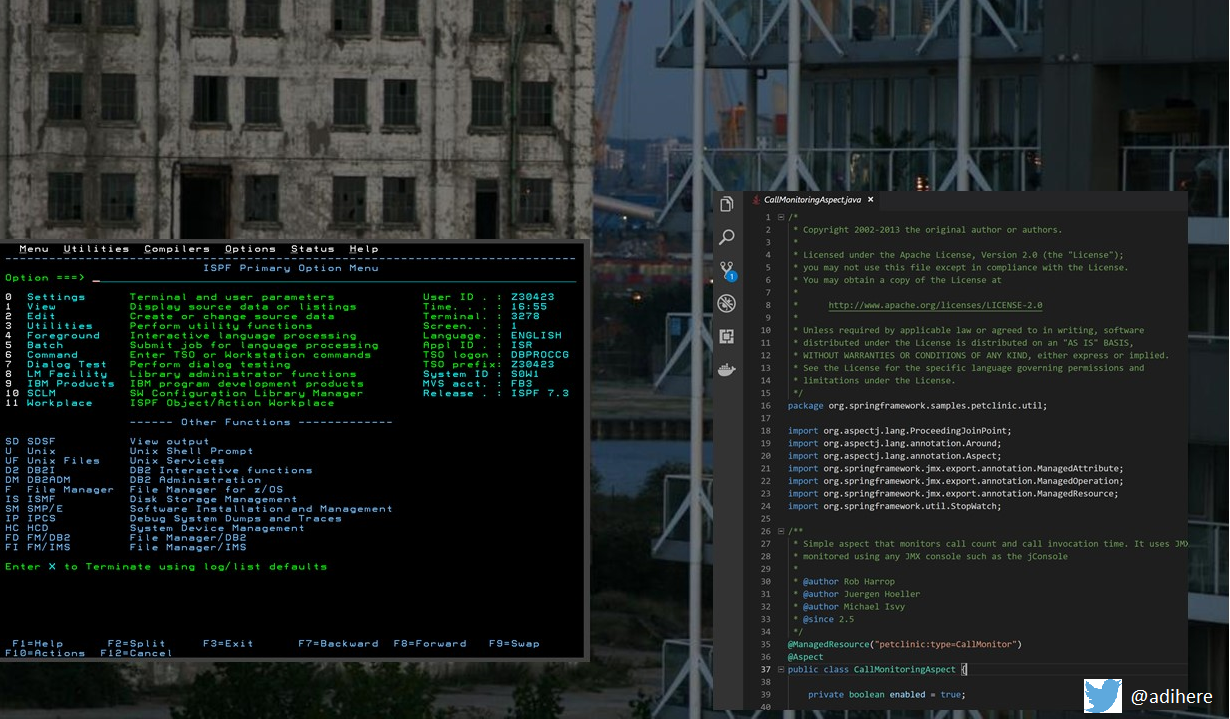
    Cloudflare Pages, for example, enables developers to select their preferred repository, identify what types of frameworks they are using, and then automatically deploy their applications on the Cloudflare CDN. The goal is to automate the continuous integration process in a way that enables developers to focus more of their time and effort on developing code, said Prince.

    Linc’s technology, meanwhile, will make back-end services more accessible to front-end applications using Front-end Application Bundles (FABs) that accelerate server-side rendering by combining front-end and back-end logic. The result is better performance across any type of application that relies on JavaScript, application programming interfaces (APIs) and markup languages, otherwise known as JAMstack, a framework for building complex applications.

    Prince said JAMstack adoption is accelerating because it allows developers to continuously modify the user experience (UX) without the need to modify back-end services. The CDN, meanwhile, has emerged as a platform for continuously deploying applications closer to the point where they are consumed by the end user, said Prince.

    That’s become especially critical at a time when digital business processes require data to be processed in near-time, and as closely as possible to the point where it is generated, said Prince. That’s not possible when application logic runs on a public cloud, Prince added.

    Cloudflare currently has points of presence in 200 cities worldwide, and is actively courting developers as part of an effort to usurp CDN rivals. Most recently, Cloudflare added a Durable Objects capability that makes it possible to run stateful applications across a distributed, serverless Cloudflare Workers service.

    Ultimately, Prince said the goal is to automate the majority of the DevOps process, as code moves from a Git repository to the network edge. A CDN will also provide the means to monitor and secure applications running at the network edge, Prince added.

    It’s not clear how much application logic will be pushed to the network edge via CDNs; however, it’s apparent CDNs are emerging as an important deployment platform that should be incorporated with DevOps processes. How providers achieve that goal is, in part, dictated by the framework used to build an application.

    Cloudflare’s moves are indicative of the larger trends of automating DevOps processes, a development that should make DevOps best practices more widely accessible to many more developers.

  • Reserved.ai Applies Machine Learning to Rein in Cloud Costs

    Reserved.ai Applies Machine Learning to Rein in Cloud Costs

    Reserved.ai has added a new artificial intelligence (AI) tool to more accurately predict cloud computing workloads and rein in cloud spending. The company says its Purchase Planner tool uses machine learning to optimize cloud computing workloads by automatically purchasing cloud reserve instances based on the forecasts it generates.

    Purchase Planner leverages the machine learning algorithms Reserved.ai created to monitor and forecast when organizations should optimally reserve instances on a public cloud. The forecasts are based on customers’ current application workload requirements, as well as what the AI platform estimates overall demand for reserved instances is likely to be in the months ahead.

    The Purchase Planner tool is currently available on Amazon Web Services (AWS), and there is also a public beta edition available for Microsoft Azure clouds with support for Google Cloud Platform (GCP) planned for this quarter.

    Reserved.ai CEO Aran Khanna said Purchase Planner enables Reserved.ai to automatically purchase reserved instances on the AWS cloud. If, for any reason, those reserved instances are not required, Khanna said Reserved.ai will buy them back from customers.

    Given thriving demand for reserved instances on public cloud, Khanna said reselling those instances minimizes any financial risk for the company.

    Historically, many IT organizations have over-provisioned their cloud resources to mitigate the cost of having to purchase cloud instances on demand. In the wake of the economic downturn brought on by the COVID-19 pandemic, Khanna said more IT teams are attempting to optimize their cloud costs by reducing the number of reserved cloud instances they anticipate they’ll need based on their current cloud infrastructure consumption. Achieving that goal requires a massive amount of guesswork that can be more accurately calculated by machine learning algorithms, Khanna said.

    Khanna said the Reserved.ai platform provides the added benefit of requiring only 15 minutes to install, with a minimal infrastructure footprint required.

    Capacity optimization as an IT discipline has been around for decades. In the age of the cloud, however, IT organizations lost visibility into capacity utilization and cloud computing costs as developers spun up virtual machines. Now, finance teams require IT teams to, at the very least, maximize the number of workloads run while more accurately predicting cloud costs. Any actual reduction in cloud spending is a secondary benefit. The challenge today is that most cloud optimization efforts rely on the manual efforts of IT teams, and often, they’re unable to keep pace with the rapid rate of change in the cloud.

    Understanding the true cost of cloud computing will be more critical in the months ahead, as more organizations look to compare the cost of running one type of workload on the cloud versus another. Gaining visibility into those costs today will only be feasible when IT teams can rely on AI platforms capable of analyzing those costs in near real time. Otherwise, by the time an IT team becomes aware of an opportunity to reduce costs, the opportunity has already been seized by another organization.

    Regardless of how IT teams rein in cloud costs in the months ahead, the goal should be to maximize the number of workloads that can run without increasing the budget. After all, most organizations today are focused on maximizing their existing cloud investments to the fullest extent possible.