Category: Continuous Testing

Continuous testing is the process of executing automated tests as part of the software delivery pipeline to obtain immediate feedback on the business risks associated with a software release candidate.

  • GitLab Releases Updates to CI/CD Platform

    GitLab Releases Updates to CI/CD Platform

    GitLab this week made available a 13.9 update that adds more than 60 new features and updated capabilities to its namesake open source continuous integration/continuous delivery (CI/CD) platform.

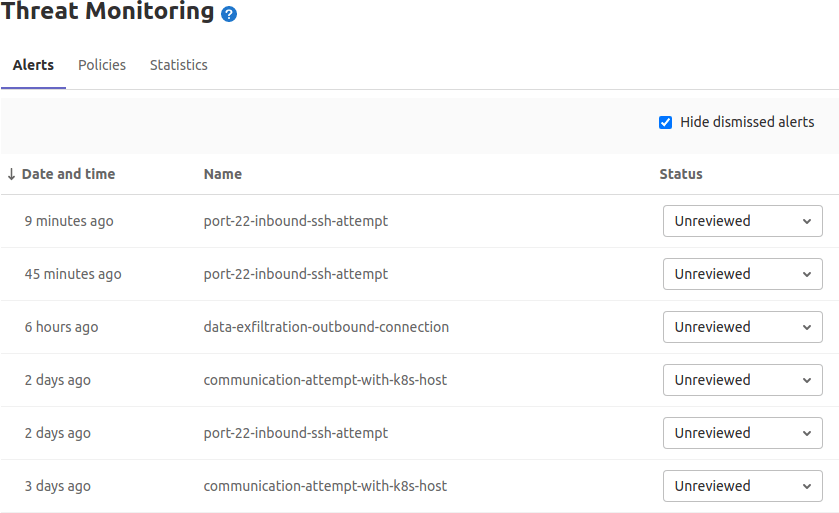
    Brian Glanz, a product marketing manager for GitLab, said chief among those capabilities is a Security Alert Dashboard that enables DevOps teams to triage high-priority alerts more easily. As more organizations embrace DevSecOps best processes, application development teams need to be able to prioritize which security issues are more pressing than others, Glanz said.

    Other new capabilities include the ability to reuse a pipeline of a CI/CD configuration, and a maintenance mode option that keeps instance available while administrative tasks are being performed.

    Additionally, it’s now possible to view group-level analysis of release metrics, in addition to the ability to view a version of a pipeline configuration with all of the include and extends configurations merged together.

    Glanz said GitLab continues to gain traction, because all the capabilities it provides are based on the same integrated code base. The effort a DevOps team needs to exert to take advantage of new capabilities is substantially less than rival platforms, Glanz said.

    At the same time, Glanz noted that the number of contributors to GitLab coming from outside the company also continues to increase. The latest version has 299 merged contributions from the wider GitLab community.

    It’s not clear how much of an appetite organizations have, these days, to replace an existing CI/CD platform. However, it’s not uncommon for organizations to have multiple CI/CD platforms employed by different DevOps teams. In the meantime, the number of teams within enterprise IT organizations that are embracing DevSecOps processes to advance digital business transformation initiatives continues to rise. As more organizations realize how dependent they are on custom software to differentiate themselves from rivals, more enterprise IT organizations will opt to standardize on a single CI/CD platform to both reduce costs and increase overall efficiency.

    A report published last year by GitLab noted organizations can improve application development and delivery by 87%, resulting in a savings of more than $23 million. Overall, the report claims organizations can see a 407% return on investment (ROI) on the GitLab platform.

    Naturally, competition among CI/CD platform providers remains fierce. With most developers working from home to help combat the spread of the COVID-19 pandemic, these platform providers have been touting their ability to support remote work. It’s not clear if developers will be returning to the office en masse now that COVID-19 vaccines are being distributed. However, it’s clear that even once the pandemic subsides, the way application code is created and maintained will be a lot more fluid. Many organizations are now more comfortable hiring developers wherever they can find them.

    Of course, many of those developers are going to be wary of joining organizations that have disjointed workflows, especially when it comes to shifting responsibility for application security further left toward developers. In fact, the ability of any organization to effectively recruit developers is now directly tied to the overall sophistication of their DevOps workflows.

  • Applause Automates App Testing via SaaS Platform

    Applause Automates App Testing via SaaS Platform

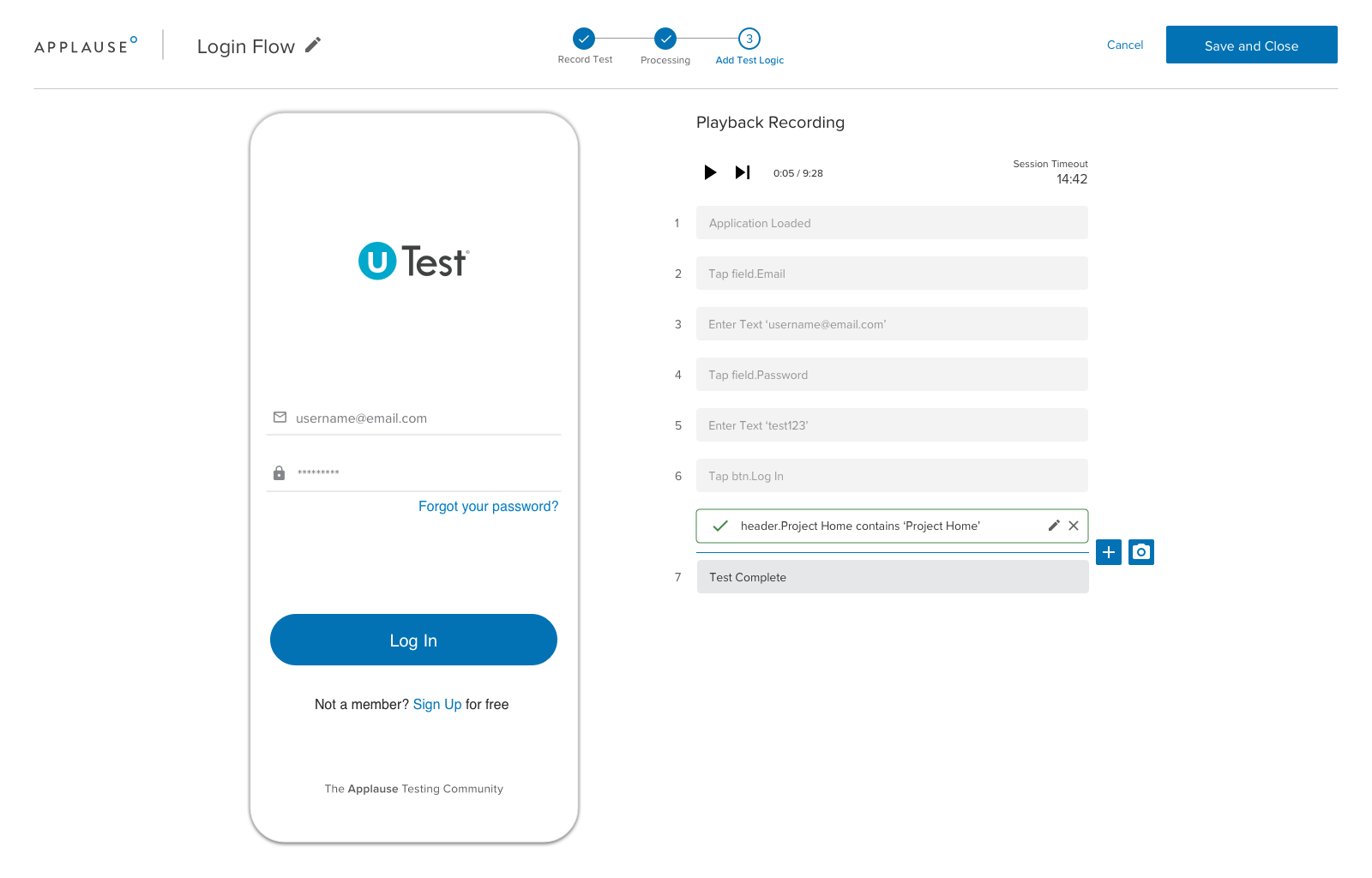
    Applause today unfurled a software-as-a-service (SaaS) platform that makes it easier to automatically create test automation scripts without having to write code.

    At the same time, the company is adding support for an application programming interface (API) through which DevOps teams can send new features to be tested by the Applause platform.

    Both offerings are now being included with a rebranded Product Excellence Platform (PEP) offering, a suite of tools and platform through which Applause is making its portfolio of offerings more accessible.

    Rob Mason, Applause CTO, said the Applause Codeless Automation (ACA) platform makes it possible for testers to record a series of test case scenarios using a SaaS platform that translates those sessions into an automation script without anyone having to write any code. The current offering supports Android and Apple iOS applications with support for web applications planned, Mason said.

    An Applause In-Sprint Testing capability, meanwhile, makes the testing process more iterative using a bi-directional API that can be plugged into any software development life cycle (SDLC) process, Mason said. That bi-directional capability makes it possible to embed the feedback from the testing process into any bug tracking system implemented by an application development team, said Mason.

    Mason said that capability is critical, because it enables DevOps teams to identify issues earlier, thereby avoiding late-stage bug fixes that are more costly to fix. It also provides the added benefit of making it easier for developers to address issues in the moment applications are being written, versus days or weeks later when the context around that issue has long since been lost, Mason added. The SaaS platform provide developers with a just-in-time testing capability, Mason said.

    Ultimately, Mason said the goal is to make it simpler for a wider range of individuals to participate in application testing by making it easier to reuse tests. In addition, he said, it will allow subject matter experts to record tests that can be turned into test scripts on their behalf. That approach will enable organizations to push testing further left, beyond the developers that originally created an application, to include the owners of that application, Mason added.

    The rate at which applications are being built to drive digital business transformation initiatives is increasing, and makes testing more problematic. Automation is the only way to close the gap between the number of application testers an organization can dedicate and all the applications being developed. The automated approach not only reduces the time and effort required to create a test, it also makes it easier to reuse tests across different application use cases.

    Ultimately, it’s only a matter of time before machine learning (ML) algorithms and other AI capabilities play a larger role in application testing. The challenge will be finding exactly where the interface between humans and machines should lie in the context of application testing.

    In the meantime, the more automated testing becomes, the more widely it will be conducted. The results of those tests may not always be welcome news, but the issues they raise are always better addressed sooner than later.

  • Mabl Adds Beta of Desktop Continuous Testing Tool

    Mabl Adds Beta of Desktop Continuous Testing Tool

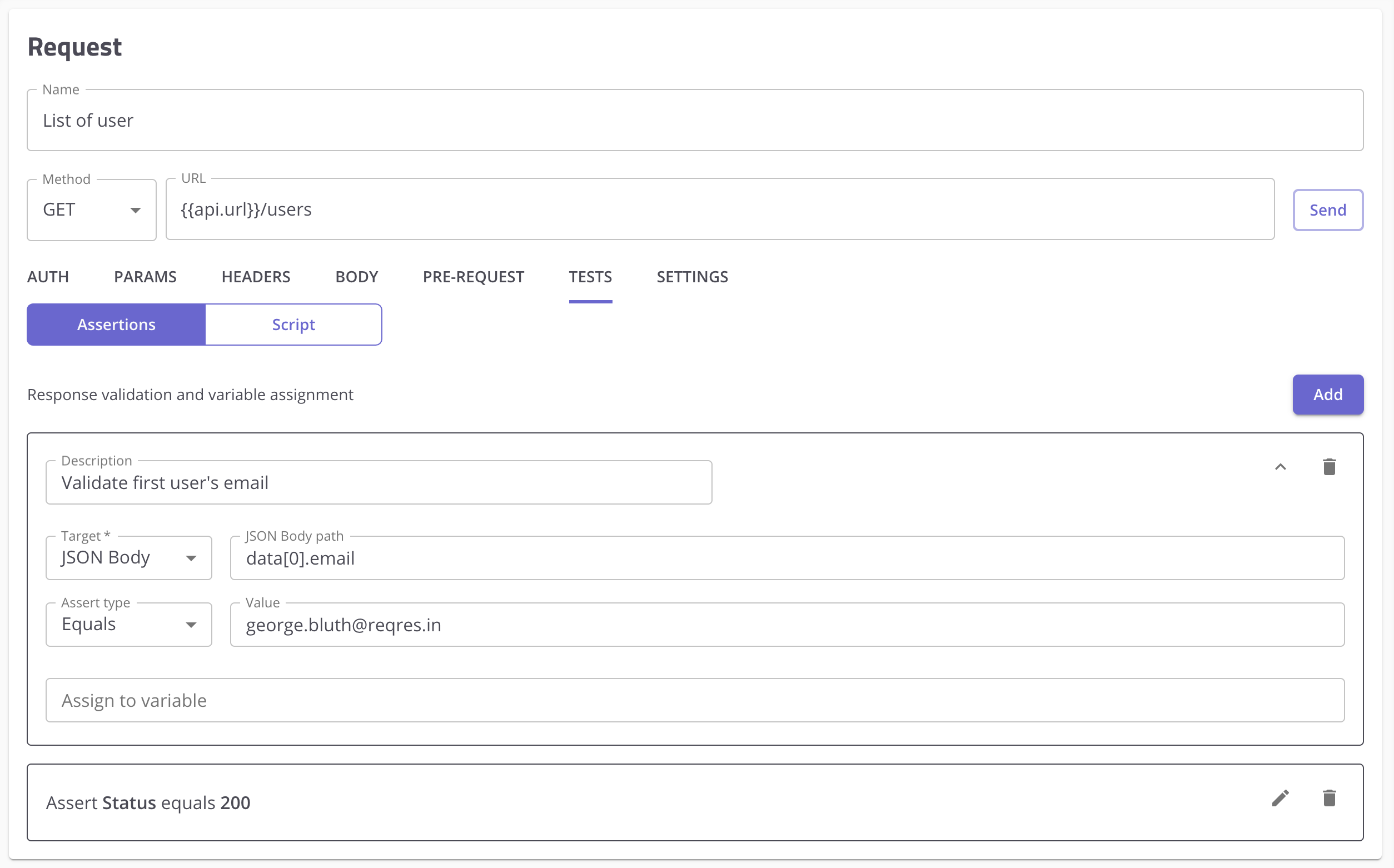
    Mabl today announced availability of a beta version of a desktop tool for creating tests that can be applied to browsers and application programming interfaces (APIs) using a low-code tool.

    Dan Belcher, co-founder of Mabl, said the goal is to make it simpler to streamline testing processes as responsibility for application quality assurance (QA) continues to shift left within the context of a DevOps workflow.

    Mabl provides a low-code tool for testing desktop and mobile browser applications, alongside the APIs they invoke, using an Electron tool that generates tests in a way that eliminates the need to write scripts. Previously available only via a software-as-a-service (SaaS) platform, Belcher said the desktop platform will make it simpler for developers to test code as they develop it on a local machine.

    Developers using the desktop tool can now also manage and run tests instantly via command line interface, versus having to completely exit from a project to invoke a separate testing tool, Belcher said.

    The Mabl testing tools are already integrated with multiple continuous integration/continuous delivery (CI/CD) platforms, such as Bitbucket and Bamboo, as well as the GitHub repository.

    In the longer term, Belcher said it is clear organizations will need to involve more developers in QA testing, as the rate at which applications are being built and deployed continues to increase. Testing teams, on their own, can no longer keep pace with the rate of change, Belcher noted.

    The challenge is achieving that goal in a way that creates the least amount of friction possible, Belcher added. The Mabl platform and desktop application make it feasible for developers to test both web and mobile applications without taking too much time away from developing application code, said Belcher.

    Testing has become a major DevOps issue because, as developers assume more responsibility for applications after they have been deployed in a production environment, they naturally want to vet applications more thoroughly. Issues that arise after an application is deployed simply result in less time available to write new code. There will always be issues that need to be addressed, but the more of them that are resolved as part of a QA process integrated within a DevOps workflow, the more productive an application development team will be.

    Unfortunately, testing is often given short shrift; it primarily occurs at the back end of the application development life cycle. Developers are typically behind schedule, so there is a natural tendency to reduce the amount of time allocated to testing in the hope of making an application delivery deadline. The vicious cycle that ensues is that, inevitably, there are more bugs to fix after an application has been deployed, simply because not enough testing was done during the original development cycle.

    Of course, some development teams have become conditioned to fixing bugs as part of an agile development process that, too often, encourages them to push known issues off to the next sprint. The trouble is, in the absence of continuous testing, it’s not long before all those known bugs start to pile up. It’s not uncommon for applications to be riddled with bugs that development teams – with mixed success – attempt to address all at once. The earlier those issues are addressed, the less stress there will be later for all concerned.

  • Survey: Fixing Bugs Stealing Time from Development

    Survey: Fixing Bugs Stealing Time from Development

    A global survey of 950 developers published today finds more than a third (38%) of developers spend up to a quarter of their time fixing software bugs, with slightly more than a quarter (26%) spending up to half their time fixing bugs.

    Conducted by the market research firm Propeller Insights on behalf of Rollbar, a provider of artificial intelligence (AI) tools to detect software errors, the report also notes that 88% of developers find traditional error monitoring tools are not meeting expectations.

    Daniel Day, vice president of marketing at Rollbar, said the survey makes it apparent that continuing to rely on manual processes to surface errors in code is having a major downstream impact on both DevOps teams, in particular, and the business as a whole.

    For example, nearly nine in 10 developers (89%) also noted that undetected errors take a big toll on the business. More than one-fourth (26%) of developers also said that their employers have lost a significant number of users due to errors in software. The same share (26%) said software errors damage their company’s reputation and its ability to attract investments, and nearly a fifth (18%) said that undetected software problems anger their company’s investors.

    Nearly a third (32%) of developers said they spend up to 10 hours a week fixing bugs instead of writing code, while 16% said they spend up to 15 hours a week. Another 6% said they have to dedicate up to 20 hours a week fixing bugs instead of writing code.

    More than half of developers (55%) said that if they didn’t have to spend so much time fixing bugs, they would have the time to build new features and functionality. Many of these errors are not addressed because current tools require them to manually respond to errors (39%); it takes too long to find all of the details they need to fix bugs and errors (36%); focus on system stability and not enough on code health (31%); make it difficult to detect errors (29%); and have an approach to error aggregation that is either too broad or too narrow (23%).

    Nearly two-thirds of developers (62%) said they have found out about errors from users reporting through the application, while a quarter (25%) said that they have heard about errors from users sharing these issues on social media. Another 17% said media coverage clued them in about errors in their software, while more than a fifth (21%) said they heard about them from their CEO.

    Nearly a third of the survey group (31%) said that manually responding to errors makes them feel frustrated, while more than a fifth (22%) said they feel overwhelmed when using manual processes to address errors in software. Nearly as many (17%) said it leads to burnout. More than a tenth (12%) said it elicits feelings of resentment, and 7% said it makes them want to quit their jobs.

    Nearly two-thirds of all developers said they would rather do an unpleasant activity than fix errors, including pay bills (26%), go to the dentist (21%) and spend time with in-laws (20%).

    Rollbar clearly has a vested interest in convincing developers to increase reliance on AI to surface errors in code. The productivity paradox holds that, the more application code developers write, the more time they spend fixing existing code than writing new code. Most developers have a lot better things to do with their time than manually combing through lines of code looking for those errors. In fact, the problem is, many of them simply don’t have the time required to catch all the issues before an application makes it into a production environment.

  • BluBracket Community Edition of Secrets Discovery Tool now Available

    BluBracket Community Edition of Secrets Discovery Tool now Available

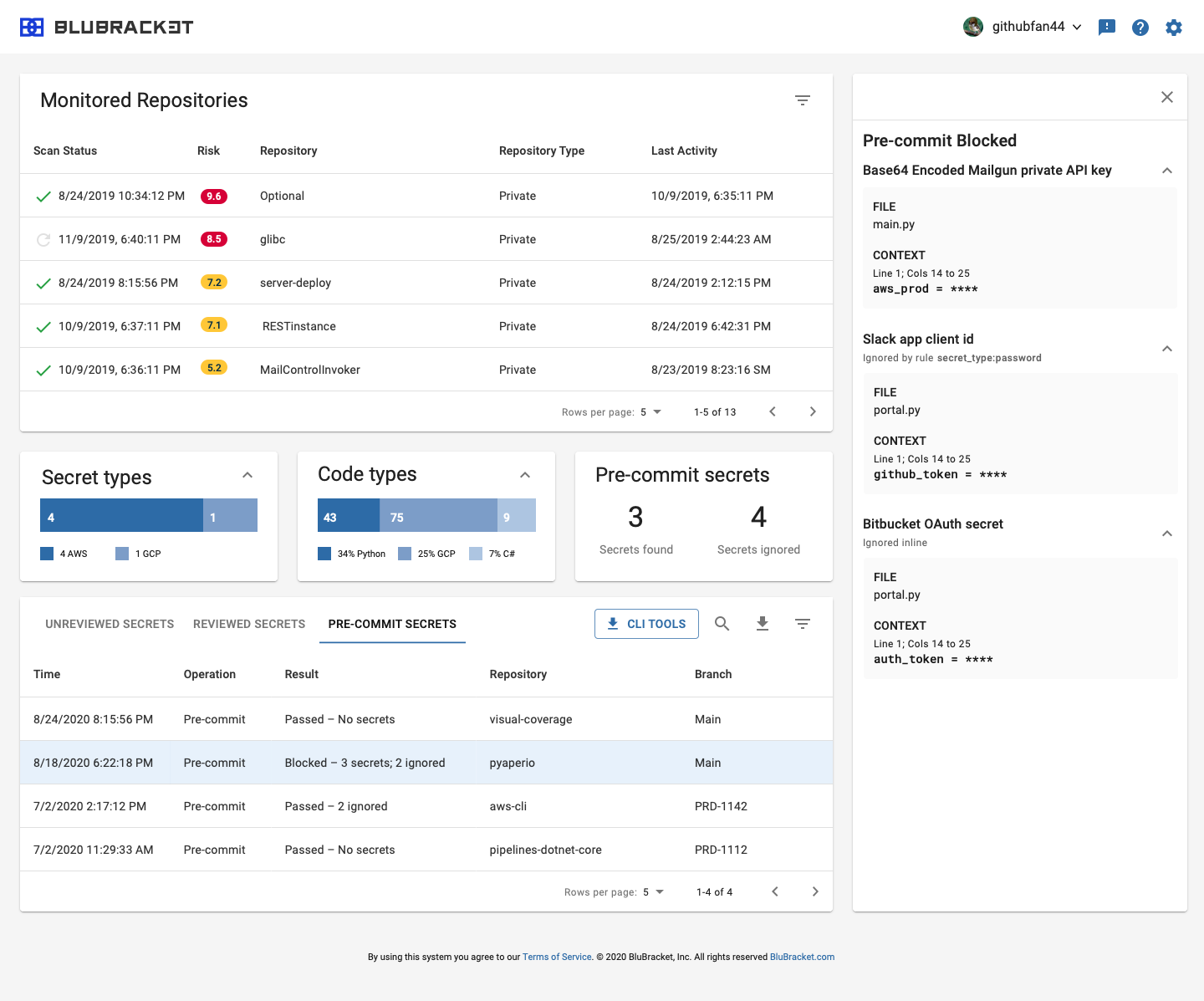
    BluBracket today announced general availability of a community edition of a tool that employs machine learning algorithms to discover passwords, tokens and other security vulnerabilities in code.

    Prakash Linga, BluBracket’s CEO, said application secrets stored in code enable cybercriminals to compromise applications in ways that can impact an entire software supply chain. The community edition of the company’s namesake tool scans commits to determine if any new risks were introduced, and will then block the staged files from being committed. It works with any continuous integration/continuous delivery (CI/CD) platform or integrated development environment (IDE) that supports pre-commit hooks, including VSCode, Jetbrains IntelliJ and PyCharm.

    Developers are then presented with a risk score based on the number of secrets discovered in their code. For example, an active token for Amazon Web Services (AWS) would receive a high score, while a a password in a test environment would be rated low.

    The Community Edition of BluBracket can be accessed via GitHub. The free version of BluBracket can be employed to scan up to 10 repositories and sharing reports in real-time, covering more than 50 types of secrets that might be employed using any programming language.

    Linga said BluBracket also cuts down on false positives by combining machine learning algorithms with a built-in rules engine. In contrast to open source tools, BlueBracket generates far fewer false positives, said Linga.

    Linga said the Community Edition is intended to help foster adoption of DevSecOps best practices among individual developers, in hopes that when those developers are hired, their organizations eventually license the full instance of BluBracket. The company views its tools as being complementary to both tools that surface vulnerabilities in code as well as secrets management platforms, which are often not employed as widely within an organization, Linga said.

    In the wake of recent high-profile breaches that embedded malware in widely-distributed applications, there’s increased focus on securing software supply chains. In some of those instances, Linga said, it’s probable cybercriminals discovered passwords and other secrets that were inadvertently exposed in code.

    However those breaches were enabled, it is apparent cybercriminals are becoming more adept at exploiting a weakness in one application to inflict maximum damage across an entire environment. It’s hard to say exactly what role secrets discovery is playing, but cybercriminals tend to prefer the path of least resistance when it comes to exploiting application vulnerabilities.

    Of course, the hope is that adoption of DevSecOps best processes will reduce the number of breaches by shifting responsibility for cybersecurity further left toward developers. However, that’s difficult to achieve without finding the simplest way possible of getting the security tools required into the hands of the developers that need them most.

  • Sauce Labs Acquires AutonomIQ to Advance App Testing

    Sauce Labs Acquires AutonomIQ to Advance App Testing

    Sauce Labs is acquiring AutonomIQ, a provider of a scriptless test automation platform based on machine learning (ML) algorithms.

    Matt Wyman, chief product officer for Sauce Labs, said the acquisition of AutonomIQ will play a critical role in enabling Sauce Labs to push testing further left toward developers and, ultimately, “citizen testers” that are becoming part of the DevOps testing tool chain.

    The acquisition of AutonomIQ comes on the heels of the company announcing its intent to acquire API Fortress, an application programming interface (API) testing platform provider. Terms of neither acquisition were disclosed.

    Wyman said the rise of DevOps coupled with an increase in the volume of applications being developed using low-code tools are the primary drivers of a need to shift testing further left. As more citizen developers are building applications, they require access to a testing platform that doesn’t require them to know how to write scripts to test applications, said Wyman.

    The AutonomIQ platform employs machine learning to understand, for example, natural language descriptions of test cases or captured mouse clicks. It then generates synthetic data and test cases that can self-heal when an application changes, said Wyman.

    That approach to testing is more feasible in software-as-a-service (SaaS) environments, where a custom application based on a platform such as Salesforce, ServiceNow, Workday, Oracle or SAP doesn’t tend to change as radically as an application being built from the ground up, Wyman said. Those classes of applications will still require either developers or a dedicated team of testers to build tests using scripts, said Wyman.

    In fact, Wyman said testing those applications is becoming more challenging in the age of microservices. The API Fortress acquisition addresses that issue, because microservices are dependent on APIs to communicate with other microservices, said Wyman. In general, Wyman said Sauce Labs is now moving beyond being focusing only on functional testing of user interfaces.

    It remains to be seen how quickly testing will move to the left. Developers are being held more accountable for the quality of their applications, so testing integration within the application development process has increased. This has led to application testing becoming more tightly integrated with continuous integration/continuous delivery (CI/CD) platforms. Less clear is to what degree those efforts might have reduced the burdens of a dedicated application testing team that typically evaluates applications after they have been constructed.

    Exactly where and how citizen testers are being incorporated into those processes is also unclear. In theory, citizen testers can bring more business process expertise to the testing process. Getting individuals with that level of expertise to make time to participate in application testing while an application is being built can be a challenge.

    Regardless of approach, however, it is already apparent that machine learning algorithms, along with other forms of artificial intelligence (AI), will play a much larger role in application testing in the coming months and years.

  • How Shift-Left Testing Improves DevOps Efficiency and Software Quality

    How Shift-Left Testing Improves DevOps Efficiency and Software Quality

    Shift-left testing is the key to deliver quality software at speed. Developers shift testing left to shorten long test cycles, prevent defects and mitigate risk earlier in the development cycle, rather than in later stages, to avoid rework and delays.

    In this interview, IBM Z DevOps Testing Lead Nathan Cassata talks about shift-left testing, the benefits of shifting mainframe application testing to the left and how IBM Z DevOps testing solutions help accelerate enterprise cloud-native development.

    Nathan is also one of the distinguished speakers presenting at Open Mainframe Virtual Summit. During his session, he will explain how to shift left testing for your traditional z/OS applications.

    To learn more about how testing is integrated into a developer pipeline and how to create real unit tests, attend Nathan’s session at Open Mainframe Virtual Summit on Feb. 11. To check out the full agenda or to register for free, visit the Open Mainframe website.

  • The Chaos Mindset: Teaching Your Code to Cope

    The Chaos Mindset: Teaching Your Code to Cope

    Chaos engineering sounds alluring and exciting—it’s fun to experiment, right? But what some misunderstand about this approach is that it’s not about moving fast and breaking things. It’s about designing and introducing disruptions in the software production process that tests the resiliency of the code, much like crash testing in the automotive industry.

    If you think about it, this is the logical extension of the way developers like to think anyway: we’re designing software and systems for the real world. Shouldn’t they be able to handle real-world situations?

    To design effectively for the real world, developer teams don’t necessarily need to become chaos engineers. This isn’t about training for an entirely new set of skills. Rather, it’s about adopting a chaos mindset—a set of systems and perspectives that lets your team engage in controlled experiments to deliver products that can cope with whatever end-users throw at them.

    So, how do you know if your team is ready to adopt chaos engineering principles? And what should you do to help them?

    Chaos Engineering: The Basics

    This approach is all about using distributed systems as a “safe” experimentation environment, so that dev teams can ensure their products will withstand unexpected turbulence in production. Netflix engineers get the credit for coining the term, based on their experiences developing for Netflix on AWS.

    The fun part of chaos engineering is that it lets developers find loopholes in existing systems that allow them to develop for resiliency. By running experiments within existing platforms in a distributed environment, or within a sandbox development environment, teams can supervise and control the experiments without impacting end users.

    Some applications, such as transactional applications in finance or trading, should not be disrupted in production, and developers should test in a sandbox environment instead. Chaos engineering is very easy to put in place if your team uses containerization techniques already – which should be part of any modern DevOps CI/CD process anyway. It is common to setup a DevOps CI/CD pipeline to run a battery of tests on an application before it gets to the publish step. Within that testing step, you can easily add some disruptions; some may be harder to put in place and require a more elaborate environment.

    Dev teams can use existing environments and systems to show each other how unexpected issues could impact production of a software product, allowing them to collaborate and solve the coding mystery before it slows or stops production entirely.

    Applications designed by engineers are subject to common issues, whether the applications run on-premises or in the cloud. We can group these issues into the following categories: hardware limitations, sub system failures, external system failures and software bugs. While we could define more categories, these are the main ones, and the ones that are easy to test.

    Chaos Mindset: The Tao of Chaos

    Like Agile, chaos engineering is more than a set of activities and workflows—it’s also a state of mind. Your people and your culture must be ready and able to adopt chaos principles, as well as chaos processes.

    For the DevOps leader, adopting a new mindset might sound a little, well, vague. But this shift is based on concrete actions, not just philosophical musings.

    Consider an example from the world of cloud infrastructure: a mission-critical application that is hosted within a cloud service could be at risk for failure if, say, that cloud service is centralized in a single location, or within a limited number of microservices within the cloud infrastructure. But if the app is hosted in a distributed way, you can create greater opportunity for application-level availability and resilience, and you can test for that resilience within the existing production environment.

    This kind of distributed architecture isn’t brand-new for most enterprises, and, therefore, the process of developing applications in way that tests for availability in a variety of infrastructure scenarios also shouldn’t be a foreign concept. As a DevOps leader, you can build a culture of resilience-centric thinking by empowering your teams with the tools they need to adopt chaos-style testing, and then showing them how to build that thinking into every sprint and every standup.

    It takes work to train your teams, but you don’t have to do it alone. Netflix’s Simian Army has tons of tools and guidance; Facebook Storm and Amazon Gameday, both war room-type experiences to simulate failures in the cloud, also have helpful examples and ideas.

    Chaos Engineering in Real Life

    Deploying a chaos-inspired experiment strategy isn’t easy. Start with a simple set of operating principles as a guide for designing your chaos strategy:

    • Hypothesis: How we think the system should work, so we know when it doesn’t work.
    • Scenario planning: What are the possible failure events or crisis points that you know can happen in the real world?
    • Set up the experiments: Design and put in production the tests that measure the code’s strength.
    • Configure monitoring: Monitoring will help test the hypothesis and help you see, in real time, the impact and resolution of the disruption.
    • Make the experiment run itself: Automating the tests lets you continuously assess both performance and resilience.
    • Contain the experiment: You don’t want software that’s already out in the wild to get disrupted by your lab experiments, so make sure to design with guardrails in place.
    • Shut-off switch: Even when contained, have a shut-off switch to prevent the disruption from further impacting some users.

    The fundamental irony of chaos engineering is that it’s anything but chaotic. It’s a disciplined approach to breaking things that lets your team get smarter, faster, about how their products and applications will work in the real world. It’s a strategy that harmonizes beautifully with Agile practices. And even though it won’t make your apps bulletproof, it can definitely help you dodge the bullets of failure with greater grace and finesse.

    You must look at the software architecture as a whole to find the most appropriate chaos engineering testing tool for each portion of the architecture. There isn’t a single tool that can test all the components of your architecture; you will have to use different tools for different parts – and don’t forget monitoring! It’s only through proper monitoring that you can assess how the software is behaving in response to a disruption.

    Sometimes, the best approach, and the simplest one, is to build some chaos engineering steps into your software so that the software itself can be disrupted given specific inputs without exposing a security weakness in an obvious way. This is very much like how cloud applications create heartbeat and health check endpoints. We like to think about chaos engineering as a great complement to unit testing and integration testing, except we run it on production systems.

  • Enterprise Software Development Will Break the Speed Limit in 2021

    Enterprise Software Development Will Break the Speed Limit in 2021

    For some, 2020 was the year for software development speed … but not for everyone. Startups and SMEs climbed on board the CI/CD, shift-left and agile development train en masse – and reaped the benefits of faster iterations and tighter release schedules.

    But the “big kids” got left behind. Core enterprise applications – the legacy systems with 1+ million lines of code that do the heavy lifting in many corporations – have not yet made the switch to the world of rapid release cycles. And this is natural; enterprises are rightfully more cautious by nature, and because the technology driving this evolution was not mature by enterprise standards.

    But in 2021, that’s going to change.

    Here are four speedy predictions for pushing enterprises over the speed limit in 2021, and some of the companies making it happen.

    Four Enterprise Software Development Speed Predictions

    #1: AI-based test generation will make enterprise development faster and better

    Testing automation is crucial for any software development organization trying to transition to CI/CD. But enterprise stakes are arguably high, and enterprise code is by nature inflated, often carrying significant technical debt. Preparing suitable test coverage manually is resource-heavy, to say the least. But a new generation of AI-powered testing automation tools solves this problem for you. Solutions from companies like Ponicode and Diffblue allow enterprises with large code base apps to embrace CI/CD by bridging the technical debt gap in testing while still meeting release cycles.

    #2: Test avoidance tech will make a dent in unnecessary testing

    Running tests on an entire build for one small code change is overkill – no one’s arguing that. But until recently, there wasn’t much of an alternative to ensure the ironclad quality that enterprises require. In 2021, solutions from companies like Sealights and Launchable (which counts among its investors Jenkins creator Kohsuke Kawaguchi) will help enterprise software development teams deliver quality at speed. The key is the effective use of machine learning to reduce test cycle times and run only relevant tests, not the entire test suite, to ensure faster iteration cycles.

    #3: High Performance Computing will move toward distributed computing

    Compute power will remain a bottleneck to development in 2021 – but the processing arms race will likely change. As enterprises get used to virtualizing their infrastructure, they will think twice about investing heavily in dedicated multicore build/render machines powered by next-gen processors. Instead, they will look to virtualized processing power like distributed computing, cloud bursting, and spot instances – which provide the massive scalability enterprises require at build time, while still maintaining a more reasonable price-performance ratio.

    #4: Managed CI/CD in the cloud will automate enterprise release pipelines

    Managed CI/CD, like Amazon’s CodePipeline and Azure Pipelines, help enterprises save time setting up and maintaining CI/CD infrastructure, scaling up during peak times and maintaining security. These services, while not for everyone, will continue to gain popularity in 2021. A key reason for increased adoption is that they allow companies to scale much faster: without hardware or software, development teams can push a button and suddenly gain 20 more build servers. Moreover, managed CI/CD enables faster onboarding of new teams, simpler creation of repositories and more streamlined work with multiple geolocations. Finally, pay-as-you-go models, no upfront fees and no commitments are increasingly attractive to enterprises in tough times.

    Put the Pedal to the Metal

    Newly released AI-powered products and mature hosted services from big-name cloud providers are changing the face of enterprise-level development. In 2021, we’re going to see teams supporting backbone enterprise applications increasingly moving to CI/CD, shift left and agile development methodologies. Because everyone – even enterprises – deserves to break the speed limit.

  • How to Overcome Web Test Automation Challenges

    How to Overcome Web Test Automation Challenges

    Web test automation is transforming software development for the better. Automation empowers test teams to easily prepare test data, execute complex test cases across multiple platforms rapidly and accurately, and catch defects early on in the development cycle. Modern-day test automation solutions benefit organizations in multiple ways;  when used correctly, such solutions can boost a test team’s productivity, enhance software quality and accelerate time to market.

    Automation Is Transforming Web Testing

    Today, mobile and web-based applications are important revenue streams for organizations. Various business-critical activities revolve around web apps, so flawless functionality and superior user experience are critical. However, testing often takes a backseat to speed and quality suffers. The limited timeframes in agile development coupled with cost factors make it challenging for organizations to sufficiently identify all the underlying issues and ensure optimum release quality.

    Such concerns can be adequately addressed by implementing web test automation. Automating web testing ensures better test coverage, improves detection of all major underlying discrepancies and allows faster test execution. Test automation is critical to achieving high-quality web applications; however, testers face many challenges performing automated web testing.

    Challenges of Web Test Automation

    Web test automation enables testers to test the functionality of web applications thoroughly and quickly, ensuring there are no deviations in the results from the expected user experience and interactions. However, even this beneficial process involves certain challenges for testers, such as:

    • Handling frequent UI changes: Many components of a web application’s UI are prone to frequent changes to logic, or due to new integrations or the addition of new features or functionalities. As a result, maintenance of UI testing scripts becomes a challenge for testing teams.
    • Multiple error handling: Error handling can be a cumbersome process with web test automation, especially when test teams must tackle large projects with complex scenarios and large data volume.
    • Image comparisons: Accurate detection of pixel variations in shape, size, color and formats are an important part of the web testing process. Test automation can help make handling image comparisons more efficient.
    • Long test script execution time: Typically, web test automation is a time-intensive affair. It requires significant test script execution time, depending upon the number of test cases involved. However, in the fast-paced technology landscape and agile development environment, testers get limited time to ascertain the quality of releases.
    • Complexities in testing various UI elements: As technology evolves, so do the possibilities for enhancing web apps with new capabilities. Modern web apps have complex features such as embedded frames, flowcharts, diagrams, maps and more. As a result, functional and non-functional web testing becomes more challenging.
    • ROI of web testing automation: As mentioned earlier, any application’s UI undergoes constant changes, and the test scripts have to be adjusted accordingly. This primarily increases the time spent on the creation and maintenance of test automation scripts. As a result, it becomes difficult to calculate ROI while continuously performing web tests.

    How to Overcome Challenges

    Mentioned below are some measures that can be implemented to make web test automation efficient, impactful and cost effective.

    • Choose a codeless solution: To maximize benefits, it is essential to choose the right web test automation solution. It is necessary to consider codeless (scriptless) test automation solutions, as these tools ease the process of script maintenance, allowing the testers to save both time and money. Codeless solutions simplify web test automation and improve ROI.
    • Choose common UI elements to uncomplicate UI testing: Organizations should strive to uncomplicate web testing, as much as possible. Developers can help by using common UI elements, so testers more easily understand them and can strategize efficiently and test vigorously.
    • Leverage an object repository: The creation of a shared repository enables organizations to reduce the costs and efforts involved with test maintenance. To ensure the success of UI test cases, it is preferable to reduce the UI test cases during the early testing stages and then slowly increase the count as testing moves forward.
    • Adopt organizational-level best practices for automated testing: For web test automation to be truly successful and deliver sustainable results, it must become a fundamental part of the testing process. Organizations that successfully integrate web test automation have well-established best practices and governance mechanisms. They follow organizational-level best code review processes to ensure the best test automation outcomes.

    Web test automation is a critical testing process that allows testers to verify and validate the functionality of a web app’s UI and backend features. Successful adoption of web test automation enables QA teams to significantly reduce regression testing efforts and time. However, it’s critical to mitigate certain challenges associated with web test automation to truly benefit from such an implementation. Effectively handling these challenges helps teams to deliver a robust and user-friendly web app that delivers superior UI and UX.