Category: Continuous Testing

Continuous testing is the process of executing automated tests as part of the software delivery pipeline to obtain immediate feedback on the business risks associated with a software release candidate.

  • Google Unveils Tool to Better Secure GitHub Repos

    Google Unveils Tool to Better Secure GitHub Repos

    Google today launched a GitHub app that provides automated continuous enforcement of security best practices for GitHub projects.

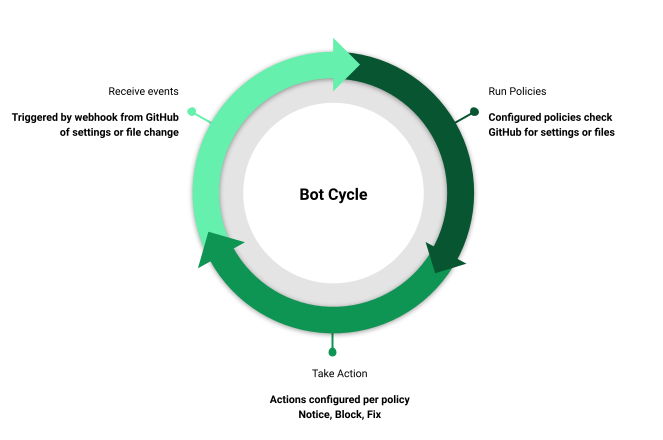
    Kim Lewandowski, a product manager for open source software security at Google, said the Allstar application enables IT teams to assess any project on GitHub to check for security policy adherence. In addition, Allstar sets desired enforcement actions and automatically applies those rules when triggered by a setting or file change in a repository.

    The goal is to provide the open source community with a tool that makes it possible for organizations to have more confidence in the open source software that is being employed within a software supply chain, said Lewandowski.

    Allstar is intended as a companion application for Security Scorecards, a tool that Google made available last year to assess whether, for example, an open source project employs branch protection to ensure that malware isn’t inadvertently committed to a project. Allstar continuously checks expected GitHub API states and repository file contents against security policies and the enforcement actions defined by an IT organization. After it detects a policy violation, the tool can be configured to simply send an alert or to automatically enforce a specific policy to remediate the issue, said Lewandoski. Specifically, she said the options available are to log the security policy violation without taking any additional action, open a GitHub issue or modify the GitHub setting to match the original Allstar configuration.

    At present, Allstar provides a limited number of security policy checks, but more will be made available over the coming months, said Lewandowski. Current security policy checks include branch protection, vulnerability disclosures, access controls and detection of binary artifacts that can’t be scanned. Additional checks that will be added include automatic dependency updates and frozen dependencies.

    Lewandowksi said Allstar and Security Scorecards are part of an ongoing Google effort to give back to the open source community that is being targeted by cybercriminals attempting to compromise software supply chains. Just about every application is now dependent on open source components, to some degree. The maintainers of those projects, however, don’t always have the tools or expertise required to check for malware that has been injected into a codebase, she noted.

    In general, Lewandoski noted that achieving DevSecOps best practices will require a lot more automation of application security. It’s not possible for each developer to become a world-class cybersecurity expert. The challenge is finding a way to introduce that automation into the application development process as early as possible, which, she noted, in many cases starts with open source components that are incorporated in applications.

    It may take a while for every maintainer of an open source project to revamp the processes through which code is added to their project. However, the easier it becomes to continuously review that software, the more confidence organizations that use it will have in its security. In fact, the maintainers of those projects should expect the downstream users of that software to be asking some pointed questions about how security is being managed in the wake of a series of recent high-profile breaches of software supply chains.

  • DataOps Vs. DevOps: What’s the Difference?

    DataOps Vs. DevOps: What’s the Difference?

    There is a mindboggling amount of data today; to even measure it requires using a byte measurement called a zettabyte, which is one sextillion bytes (that’s 21 zeros). Currently, because such a ridiculous amount of data exists, there is a growing urgency to end wasteful data processes. From this environment, DataOps was born. Similar to the way that enterprises adopted DevOps to formalize and streamline wasteful development practices in the past, today, many large organizations turn to DataOps to formalize modern data management practices.

    What, Exactly, is DataOps?

    Primarily, many companies are adopting these principles because they are either trying to avoid or rectify data debt, which is the amount of money required to fix data problems due to the mismanagement of data processes. Data debt is a strong motivator for revamping outdated processes and policies, particularly when decision-makers and stakeholders require metrics before implementing change. Unpaid data debt can be detrimental to a business; the longer it remains unpaid, the more it costs to maintain a data landscape.

    By implementing DataOps principles and data governance, an organization can effectively reduce its data debt and prevent it from growing any larger. Moreover, DataOps practices and software engineering can be used to detect inefficiencies, minimize knowledge loss and capitalize on missed opportunities related to data usage.

    Similarities Between DataOps and DevOps

    Much of the processes that enable DataOps were borrowed initially from the same foundations that built DevOps. Likewise, just as companies need DevOps to provide a high-quality, consistent framework for software and feature development, data enterprises also rely on these same features to realize rapid data engineering and analytics development. For organizations that already have a DevOps framework in place, leveraging DataOps is relativity straightforward. Several important DevOps concepts adopted by DataOps include:

    • Agile development
    • Focus on delivering business value
    • Continuous integration and continuous delivery (CI/CD)
    • Automated testing and code promotion
    • Reuse and automation

    The Differences

    Despite the similarities between the underpinnings of DevOps and DataOps, there are several major differences.

    The human factor: The people using DataOps and DevOps have divergent personalities and skillsets. DataOps participants may be tech-savvy, but often their knowledge is theoretical. DataOps professionals can include data engineers, data scientists and analysts who focus on creating models and visual aids. DevOps, however, was made for software developers and engineers–coding is in their DNA.

    The process: The life cycles of DataOps and DevOps do share similar interactive properties. But, the former deviates in that it consists of a data pipeline and an analytics development process, both active and intersecting. While conceptually, the pipelines of DataOps resemble the development processes of DevOps, typically, experts note that the DataOps process is more challenging.

    Orchestration: In the DevOps process, application code does not require complex orchestration. However, for DataOps, both the data pipeline and analytics development orchestration is an essential component. Although orchestration in the DataOps pipelines occurs frequently and drives data flows, there is usually no such coordination of pipelines in application development and DevOps processes.

    Testing: Again, the two pipelines of DataOps create a significant difference from DevOps; testing in DataOps occurs during both the data pipeline and the analytic development process. These tests attempt to catch anomalies, flag abnormal data values and–unlike DevOps–validate new analytics before deployment. Likewise, these tests get embedded into a data quality framework for continual monitoring.

    Test data management: In most DevOps environments, test data management hardly takes priority; with DataOps, it’s vital to accelerate analytics development so that innovation keeps pace with agile iterations.

    Tools: DevOps is the ‘father’ of DataOps, and as such, the tools needed to support the latter are still in their infancy. While testing in DevOps is primarily automated, DataOps doesn’t have the same luxury – most users modify testing automation tools or build their own from scratch.

    Exploratory environment management: Generally, data teams use more tools than software development teams. Moreover, exploratory environments in data analytics are more challenging from a tools and data perspective; data teams also naturally depart from data islands across the enterprise.

    While foundationally, the concepts of DevOps serve as a starting point for DataOps, the latter involves additional considerations to maximize efficiency when operating data and analytical products. Nevertheless, both serve their intended audiences, reducing data debt and evolving data products or shortening systems development life cycles or providing continuous delivery. For businesses looking to make internal data-related processes more efficient, they should start by examining best practices associated with DevOps.

  • EP 16: How DevOps has Changed Testing Forever

    EP 16: How DevOps has Changed Testing Forever

    DevOps has changed the game in almost every aspect of testing: who, what, when, where and even why. What’s working, what needs to change immediately, and what challenges—and opportunities—lie ahead?

    In this DevOps Unbound episode, hosts Alan Shimel and Mitch Ashley are joined by Abel Wang from Microsoft, Tracy Miranda from CDF, Caroline Wong from Cobalt, Kurt Chase and Ben Simo from Tricentis to share a variety of perspectives on how testing fits into the ever-evolving world of DevOps. The video is below, followed by a transcript.

    DevOps Unbound is sponsored by Tricentis, the world wide leader in automated testing. DevOps Unbound airs biweekly on TechStrong TV, with all episodes available on Digital Anarchist. There is also a live monthly roundtable open to audience participation.

    Alan Shimel: Hey, everyone. Thanks for joining us on this special edition of DevOps Unbound. You’re watching this, probably, at the Tricentis Virtual Event and we are happy to have you join us, happy that you’re attending the event, and we’ve got what we think is gonna be a great discussion on testing and all of its various facets and what does the future – or near future – hold. We’ve got a great lineup of speakers that I’d like to introduce you to who are on our panel today. Let me first start with – she’s on the top of my screen – is Caroline Wong. Caroline, why don’t you say, “Hello” and introduce yourself?

    Caroline Wong: Hello. My name is Caroline Wong. I’m the Chief Strategy Officer at Cobalt. So, at Cobalt, what we do is pen testing as a service. We build a security software platform – like a lot of DevOps companies.

    We have data-driven product-based teams. We have – we really value automation and failing fast. I’ve spent 15 years in the information security industry. I wrote a book called Security Metrics. I host a podcast called Humans of InfoSec, and I teach the OWASP Top 10 Learning Path on LinkedIn Learning, and super excited to be here with this group today. Thanks for having me.

    Shimel: Thank you, Caroline. Next up, we have Kurt Chase.

    Kurt Chase: Hey, everyone. I’m Kurt Chase. I’m currently Head of Release Management and Engineering Services at Tricentis. Engineering Services is a group that supports the engineering function so, we do our own type of testing – testing all the processes and everything we use – to deliver our software at Tricentis. So, prior to Tricentis, I spent some years at Splunk and at AutoDesk. It’s great to be here with all of you today.

    Shimel: Fantastic.

    Chase: Be here today with all of you.

    Shimel: We got what you meant, Kurt. It’s okay. Next up, we have Ben Simo. Ben, why don’t you introduce yourself?

    Ben Simo: Hi. I’m Ben Simo. I’m a software tester of 30 years and past president of the Association for Software Testing who has recently stepped into a product management and product research role at Tricentis trying to discover and develop our testing platform of the future and bring new things to Tricentis customers and hopefully introduce new people to Tricentis with new products that enable new ways of testing.

    Shimel: Okay. Happy to have you here. Next up, Tracy Miranda. Tracy – well, I’m gonna let you introduce yourself. Go ahead.

    Tracy Miranda: Hi, everybody. I’m Tracy Miranda. I’m the executive director at the Continuous Delivery Foundation. It’s an open source organization that’s part of the Linux Foundation, and also home to projects to like Jenkins and Spinnaker, and our members include companies like Netflix and Google. And I have over 20 years of experience in open source so, I love open source and I’ve worked in it as a developer – also in QA and all different facets. So, yeah. Big fan.

    Shimel: Thank you, Tracy. Last, but not least, is my co-host on DevOps Unbound – my partner in crime here, Mitchell Ashley. Mitchell, why don’t you introduce yourself?

    Mitch Ashley: Thanks, Alan. Yes. I’m CEO of Accelerated Strategies Group, which is an analyst firm that focuses on, in addition to cyber security, digitial transformation, DevOps, and cloud-native kinds of applications, which really matches my background very well. I’ve been both a product creator CEO/CTO as well as running IT, CIO, CSO – that kind of thing. So, currently, I’m also CTO with MediaOps – I guess CSO at MediaOps, too, so, I’m trying to collect as many three or four-letter titles as I can. So far so good.

    Shimel: Alrighty. So, first of all, thank you all for coming on today. Secondly, testing – what a wild, mixed-up world we have in testing, right? Just from looking at the folks on our panel today, we have security testing – pen testing, in particular. We have the world of open source and what a factor that is in testing.

    We have product testing, right? We have sort of new product testing – taking testing to new heights. And you know, that variety is sort of a double-edged sword, right? Because it’s like jack of all trades, master of none type of thing. There’s so many aspects of testing, right?

    Even in our audience here at this virtual event, we have testers who come from, you know, what’s called old line QA testing, right, to DevOps enabled testing to visual testing – testers who, if it’s not an open source testing platform, they won’t use it, to proprietary systems. Through it all, though, a lot of times, all of this testing becomes sort of a red-headed stepchild or a whipping boy, if you will, right, to the whole application development system operations teams. It’s like, at the same time, their best friend and their worst enemy, right? They want everything tested, but they don’t want to give you the time, the budget, or the resources to do it, and then, when something doesn’t work, they said, “Well, we should have tested more, right?” So, how – first of all, do we agree that testing has been sort of the whipping boy of a lot of what we’ve seen go down in app dev and operations? Anybody want to jump on that?

    Chase: Well, I think it’s certainly gotten a bad name. I think some of that comes from prior to the digital transformation. A lot of the engineering was waterfall, and testing was always that last stop before the software went out live, you know? Nowadays, I think everyone’s come to realize the speed and scale at which we develop things, you have to do the testing up front at the very beginning. You can’t wait till the end, you know?

    You’re gonna be too slow. So, I think, from that perspective, absolutely. I think that’s why testing has really, I think, gotten a bad name, because they’re kind of the blockers to getting anything out into the public domain, whereas nowadays, you have to enable that up front because you want to get it into the public domain yesterday.

    Shimel: Yeah. And so, in many ways, to me, that sounds like, well, DevOps has been the best thing that ever happened to testing, right? In many ways, DevOps has been the best thing that’s happened to security testing, right? We’ve certainly seen that shift left, if you will. But has that shift left helped – has that rising tide lifted all boats?

    Miranda: I still see –

    Shimel: Oh, okay, Tracy. Go ahead.

    Miranda: I’m gonna jump in and say one thing that strikes me as funny. Like, we have, in our industry, everybody has embraced the DevOps terms, and then, you start to see all these spinoffs to put emphasis on things like, for security, we have DevSecOps, and you’ve got every variant of something with ops. But when it comes to testing, you know, there’s no TestOps. There’s no new buzzwords and it kind of speaks to how much it’s being neglected. Like, we had a conference on continuous delivery, and we asked for talks of everything in the life cycle, and we got lots and lots of submissions except for testing.

    So, again, I think it still is really under-appreciated and just not given the due credit for what it stands for.

    Shimel: Very –

    Simo: Yeah. And I think some of this comes from, as Alan mentioned, that testing is a very broad and diverse subject, and I’ve often watched people argue about testing that each interpret it to their piece of what they do with testing. And things like CI and some of the DevOps practices have helped us improve with the checking that our software can work – you know, demonstrating that it can work – and there’s a lot of people – if you primarily wear a developer hat, you’d look at that’s what testing is. And we’ve automated that.

    There’s been huge improvements in tooling and technology to do that, but sometimes, along with that is we throw out that we need someone involved that’s looking at things from a critical perspective that’s concerned about the safety and efficacy of what we’re delivering that is the, I guess, the one questioning and searching for information that they raise issues that we need to deal with that are reasons to not push things out to production now – so that we can make informed decisions. So, often, I think just that critical side gets thrown out as we improve the other side of testing, which is being able to demonstrate that things can work.

    Shimel: Anyone else?

    Ashley: You know, Alan, one of the ways you can tell who drew a diagram is to look at what’s in the center. And so, if we think about CICD, we kind of surround testing, but we don’t talk about testing. So, in some ways, it’s elevated, and some ways, it still sort of abstracts it out of DevOps. But my experience has been not really, because most teams know that testing has to get automated as part of that process, ’cause you can’t have this automated checking and automated deployment, then let’s kind of let a bunch of manual things happen. And not that testing hasn’t been automated – it has been – but I think it has elevated, at least in part, I think a good deal.

    My experience has been. I haven’t worked in every environment, maybe, where test still isn’t thought of very highly. By the way, the thing that the – it isn’t the last thing in the chain. Documentation is the last thing.

    Chase: That’s true. That’s true.

    Ashley: Let’s give documentation –

    Chase: And release notes. It’s true. I have tech doc’s team, too. You’re right. [Laughs]

    Shimel: And that hasn’t really changed much either, though testing has. No. No. But you know what? Caroline, I’d like you to focus in specifically.

    I mean, I think about – you know, Mitchell and I co-founded a security company, and we came out with a product in 2003 of just a vulnerability assessment and manager – “VAM”, we called it – and at that point, look, we used to beg people to scan their infrastructure at least once a year, right, if not quarterly. We were really pushing for quarterly. And you know, the idea of scanning and testing applications before you deployed them – unheard of. It was unheard of, right? We didn’t have the security tools or people.

    We did that after the fact. Now, that’s not normal anymore, right? Today, at least 85 percent of applications are tested prior to deployment. I don’t know who those other 15 percent are, but that’s a whole nother story. But talk to us.

    You’ve lived through this, Caroline. What do you think?

    Wong: Sure. So, you know, I think there needs to be an acknowledgment. There’s sort of these like, first order priorities and these second order priorities. When I think about security – and I think some of these concepts apply to testing more broadly – there’s a saying that, “You don’t take a $200.00 fence to protect a $5.00 asset.” I think security is about you have something of value and so, you want to test it – rather, so, you want to secure it.

    Testing, I think, is like you made something new and so, you want to test it. You’re not gonna test something unless you have something new. You’re not gonna secure something unless you have something of value. So, it’s okay that security and testing are not sort of the number one thing, you know? Inherently, by their definition, it’s sort of a second order attribute, if you will.

    Now, I think, you know, each of us has been through a version of annual organizational budgeting. You know, each organization says, “Okay. Here are the goals for the years. We’ve got limited resources and budget to accomplish those goals. How are we gonna allocated those resources?”

    And there are some things that, for a lot of organizations, are very clear. You know, even if I take a step way back and I say, “Okay. Most organizations might think about budget allocations in three buckets. Number one – general and accounting; number two – sales and marketing; number three – research and development.” You know, nowhere in those words is either security or testing.

    And that’s okay, you know? I think, Alan, when you share your story about VAM, you know, Vulnerability Assessment and Management, I agree that over the last, I would say, decade-two decades – so, when I started my security career 15 years ago, we were almost trying to convince folks that breaches really happened – that this was really a thing to be worried about. You know, today, everyone knows because it’s on the media headlines every day. This is real. And so, that has been a shift in the perception, I think, in our industry.

    There’s also been a big compliance driver. So, the – in the area that I’m very familiar with, security pen testing, a lot of that pen testing is actually driven by external compliance requirements – things that say, “Because of compliance framework A, B, C, you must actually conduct manual pentest on your application, for example, once a year.” You know, doing it more often than that is often because of perhaps what a lot of this group might think of as a really good thing – trying to actually secure your software, trying to actually test your software to ensure it does what you think and what you intend for it to do, but that’s not necessarily the first thing that comes to an executive’s mind when they’re thinking about budgeting, and there’s a variety of reasons for that, right? There’s an external perception thing. I think there’s also a lot of learning, certainly, that the security industry can do to be more approachable and to really understand better what is the software development methodology that we’re engaging with.

    What is the specific methodology and behaviors of these individuals? And how can we actually collaborate with them most effectively?

    Shimel: Fair enough. I mean, look, I don’t want to be the pessimist in the group or the bluebird of happiness here, but we have had success over the last 5-10 years, Caroline. You’re right. Especially in security, but not just security. We’ve had success in testing across the board.

    Tracy, to your point, the fact that we don’t have DevTestOps, I think, is, you know, testament to the fact that we’ve recognized that testing is so critical to the CICD process that it’s part of it. I mean, you can’t have DevOps, you can’t have CICD without a level of continuous automated testing in there – in my mind, anyway. I mean, prove me wrong. But, you know, I think that has been probably one of the biggest successes that the DevOps movement has brought – has been responsible for.

    Miranda: Yeah. And I really like Caroline’s analogy with security because, you know, that’s something else we think of as fundamental to DevOps, but it’s sort of elevated itself and, in a relatively short space of time, went from being ignored to being, you know, headline news. And I think there’s a lot of lessons there. And I – like, I will say, I do think testing is going through that journey and we’re probably on the cusp of it kind of really exploding and watching a few players in the industry and companies starting to do really interesting work in testing. I think that’s gonna turn around very shortly.

    So, yeah, there’s an exciting space that I think its moment is coming – just like securities has.

    Chase: Yeah. I think it’s all about the testing now, quite honestly. I mean, when you look at the future with low-code/no-code, it all becomes question-question mark ops, you know? Any function in a company could actually put something together and run it, and they’re gonna have to test it, you know, and it becomes less about all the engineering and more about the test patterns and things like that that are needed as you get to these future states. So – and speed and scale is gonna continue, I think.

    That’s driven everything with the digital transformation. It’s speed and scale. Everything needs to come faster, and we want more of it, you know? And so, I think that really pushes the envelope, and that’s what DevOps has responded to and, I think, addressed very, very well, but it’s not over. We’re gonna continue to scale up and go even faster.

    So, we have to be prepared for that, and I think it becomes more about testing in the future, and less about, you know, we’re gonna have these pre-built components – APIs you can piece together however you want – then, testing becomes, I think, almost first order, to Caroline’s point. And security, especially. I think security, we’re seeing that change now. If you’re a SAS company especially, security has to be top in line, ’cause you just can’t put something out there and not have it tested from a security perspective. And, furthermore, with compliance, it’s not just ISO and GovCloud and those programs, but large corporations now are saying, “Hey, if you want software in my ecosystem, these are my rules and I want to see your pentest reports and I want to see this.”

    So, I think more and more people are realizing that if the software’s not tested, it’s not worth it. And so…

    Simo: And, in my experience, part of adopting a DevOps culture and not just tool set is putting testing at the forefront. Some of the most productive teams that I’ve worked with that deliver some of the highest quality software I’ve seen – testing was center to absolutely everything that everyone on those development teams did.

    Ashley: Hm-hmm.

    Chase: Yep.

    Shimel: Yeah.

    Miranda: Yeah. We think – go ahead.

    Ashley: I’m just gonna jump in and say – there’s another factor that actually works to our benefit and that is not only to speed through automation and DevOps process, but contemporary software architectures, containerized micro-services, service mesh – we’re releasing smaller bits of code in encapsulated forms, which means, you know, we’re not testing monolithic applications all the time anymore so, we’re not having to run two weeks’ worth of tests just to get one pass through.

    Chase: Yeah.

    Simo: Right. _____ container solved the “It works on my machine” problem because we can ship the developer’s machine.

    Chase: Yep.

    Shimel: Yeah. That was always a big problem, right? Tracy, you were gonna say something though.

    Miranda: Yeah. No. I think the direction we see it heading is we’ll start breaking the testing monolith to talk about what is unit test, what is system test, and appreciate that is a specialization in itself. And the other things I’m starting to see from some of the end user teams we talk to is this real focus on culture – you know, a continuous quality culture – and seeing that hand in hand as part of the testing movement and again, _____ back to security – you know, the security first culture went hand in hand with that whole emphasis on security so, similarly, the continuous quality culture is starting to be something that – like, the really high performing teas we see pay a lot of attention to.

    Shimel: Absolutely. You know, Kurt, you said something there about low-code/no-code and how that could be a game changer. You know, some people refer to that as the rise of the citizen developer, and I’m wondering if maybe what we need is the rise of the citizen tester, right? Is testing too hard?

    Chase: Yes. I waste gonna say – the one thing we haven’t touched upon – I think Caroline did – is testing is hard. Security testing is super hard. And when you look at today’s modern environment and a lot of the ISVs – at least the ones I’ve seen and been associated with – you have a legacy of monolithic applications that you have to support that are bringing in a ton of revenue, and, at the same time, you’re transitioning – you know, going through your own digital transformation. So, that adds complexity after complexity in testing, and I do think, in the future, testing – you know, a lot of us, like Ben said, to his point, we have to push testing up – you know, shift left, move it far left as we can.

    And that’s gonna continue. I think that has to be the norm. To Caroline’s point, it has to become first order. And I think it’s starting to right now. I really do. Especially the – all the SAS solutions that are out there – you know, shipping code daily, hourly. You need excellent testing to do that and do it with competence.

    Shimel: Yeah. I think you do. But we do have to – and it’s funny that we’re talking about making testing easier because – not security testing, right? Security testing, pentesters – they were always sort of the hired guns of the security space, right? There were SAS or – there weren’t companies like Cobalt, right?

    The pentesters that I knew growing up – growing up – you know, that I knew coming up in the security space were gun slingers. These were, you know, white hat/gray hat folks who would come in and they’d do a little social engineering and pen testing using some open source tools, and you know, they give you a report. But you know, these were folks who traveled around the world doing that kind of thing. You know, we didn’t have a company like Cobalt that did this as a service, so to speak. So, it’s very different.

    But here’s the underlying thing with like, QA kind of testing – and, you know, I don’t mean any disrespect to anyone in our audience today, but for too long, a lot of folks in testing were viewed as failed developers or people who couldn’t be really good developers did testing or maybe testing was a weigh station on the way to becoming a real developer – like a Pinocchio stop or something, right, where you’re not a real boy yet. But that’s not true. There’s also – there’s a whole cadre of professional testers. And you know, in their capable hands, you could do great things. But I guess the question is – does testing have to be so hard that we need professional testing – professional testers to do testing?

    Or can we make testing automated enough that you – I’m not saying it has to be the dunces who don’t become developers. That’s ridiculous. But can we broaden the base of people who do testing? And that includes security testing? I’ll throw it out. Ben, you were a big-time guy in the testing industry. Tell us – what do you think?

    Simo: So, I think we can expand who’s involved in testing and that more people than those currently doing testing can learn to do testing. I don’t know _____ developers learning to become better testers and test their stuff. But I will say that ultimately, the part of the work that is the testing cannot be automated. Tasks that we do in testing can be automated. So, whether – not matter what hat someone primarily wears, if it’s a developer, you know, writing tests to demonstrate their code works or someone’s using TDD and they’re building some tests and then, building some code that matches it, the testing is the critical evaluation that’s going on in their mind of solving the problem and demonstrating that it’s solved – or evaluating how something might go wrong and coming up with some approach to demonstrate that it may go wrong and check for that.

    So, those things, whether you’re doing it automated or the execution is automated or done manually, the actually testing work, I’d argue, is the cognitive work that people are doing. And there is some – that we can never automate away. There are some ways that I think AI can help us. There’s also some ways that may lead us astray. But ultimately, I think we need people to learn to be critical thinkers to understand the technology, to understand the domain of the users and the problems that are being solved, and applying that critical thinking is the testing.

    Of course, then, we want to use tools to help us with some of our tests so, when we come into DevOps and CI, executing those demonstrations of the software working is a key part of that. Now, whether we do it as part of our, you know, building to those tests or we create them afterwards, then they can, at the very minimum, act as changed detectors going forward. But there was some testing in people’s minds that was going on that created those.

    Shimel: Caroline, what about – okay.

    Wong: I agree with quite a lot that Ben is saying. You know, I can’t help but think to myself that – I actually have this sort of visual in my mind, and it’s actually at a circus of a trapeze artists, you know? I think about these people, and they’re sort of like, whirling in the air and they’re doing these like, really incredible feats, you know, and they just do whatever they do, you know? But there’s like, a safety net to catch them if something goes wrong. It also reminds me of a metaphor that is often used in security that says, “We put brakes on a car so that you can go fast.”

    You know, when Mitch said earlier, you know, “These days, we’re releasing smaller pieces of code, modules of code” and there’s a way in which, yes, each small piece of code – each module – can be tested and some of that can be automated. We should automate performance testing. We should automate unit testing. But, to Ben’s point, there’s a lot that can’t be automated. There’s a lot of testing that actually depends on things like human judgment and opinion and it actually requires a person’s decision, you know?

    So, I think there’s – I think there’s a couple of frameworks for us to consider, right? If the first order is about creating value and making something new and the second order is about testing to make sure it does what you wanted it to do and protecting the value created, there’s also this spectrum that says there’s smaller bite-size stuff that may be a good candidate for automated testing, but, I think it’s super important to recognize that these small pieces of code – these modules that Mitch was talking about – it’s also super important to test what happens when they come together. So, to the extent that security folks need to be able to test chained exploits and business logic flaws, you know, those are exactly the types of things that will never be automated – is what I think, anyway.

    Shimel: I don’t disagree. I think security in particular is just there’s some things you’re just not gonna automate. I don’t care what you say. But that’s okay. Anyone else?

    Chase: I do want to make a comment on something you said. This was a long time ago now, when I was a dev manager, that I used to sense that when my developers – you know, if you were on my team, if you wanted to really get me mad, treat your tester badly. Treat them, you know, a bit, like you said, like they’re not quite at the level you are. I would be incensed as a manager. You know, that was a long time ago.

    Fortunately, I don’t see that as much nowadays. I think that role has been elevated where I don’t feel that at all on my teams, and if I do, that is, again, to this day, I’ll get super mad about that because I think it takes all kinds to develop software today and ship software. Testing role is just as critical as an engineering role, just as critical as the ops’ role, the security role. So, yeah, that was one thing that would drive me nuts ’cause I did sense that and go through that, and this back in, you know, the late ’80s-’90s, if you will, before the year 2000 – I’m dating myself – but it definitely was palpable in some of the large ISVs, you know? And as a manager, that was something that would drive me nuts.

    Shimel: Agreed. Agreed. Tracy, open source – look, testing has been inexplicably wound up with open source for as long as I’ve been around, right? Whether it’s security – open source security testing and you know, things like Metasploit and Nessus and Nmap or you know, in QA testing kind of stuff, it’s a rich history of open source testing tools. How do – and part of your mission at CICD is – at the CICD Foundation – is to nurture that, I’m going to assume, correct?

    So, how do you guys nurture that? What are you – what do we do to maintain that rich, open source tradition here?

    Miranda: Yeah. No. Absolutely. And, as I say, we at the Continuous Delivery Foundation, we want to look across the entire software delivery life cycle, and I think it is safe to say, you know, that testing hasn’t risen to the top. We’re actively – like the board wants it to be a more focused-on topic, the technical committee wants to encourage folks to bring us more projects in open source and with testing, but we’re still having to kind of fight through all the noise around other projects.

    And one of the ways we’re approaching it is, for example, our technical oversight committee wants to set out a landscape of the types of projects in each kind of bucket and say, “Okay, look. We need to have something in security. We need to have something in testing that covers these different aspects.” Almost like a call to action to say, “Bring us your testing projects and –” like my favorite saying about testing is, “There’s two key problems in testing – not enough tests and too many tests.” And yeah, I think we’re starting to see some really good frameworks around test generation.

    I’d love to see more open source options for that. And Kohsuke Kawaguchi, the famous creator of Jenkins, move on to focus on testing so, that says a lot about the importance of this area getting more open source focused. So, yeah, I’m excited to see what could come out, but we do have to actively encourage folks to come join us and have those conversations and not to, you know, have it assumed it’s all focused on delivery of pipelines for delivering software.

    Chase: I think another thing you’re seeing today is a lot of people, when they start developing an app, when they start creating something new, that’s the question they ask up front. “How are we gonna test this? How are we gonna automate it? How are we gonna pentest it?” I think those things, at least, are starting to bubble up a lot stronger in the cycle – you know, early on. ‘Cause I know that’s something we recommend highly – is that if you’re developing something new or need to head down a digital transformation, think about the testing. How are you gonna test that up front, you know? And products are actually being developed with that mindset now.

    Simo: And with short iterations, it’s how are we going to test this tomorrow, next week? It can’t be left off for months later to be someone else’s problem. So, people, I think, are learning to deal with those questions about testing from the start of their discussions about what the requirements are.

    Chase: The other thing I love – and in Caroline’s world, has been very successful – I know it is specialized skill set, but trying to teach that throughout your troops – you know, throughout the engineering team. Show them what, you know, across _____ scripting errors. What does it look like in code? That’s super successful. That really, really helps make – ’cause security is difficult, you know, no matter how you slice it.

    Even when you’re looking at product development – if you want to invest in fixing security defects or add a cool new thing for your users, you know, a lot of times, the cool new thing is gonna win out. But that’s starting to change as well, too. I think people are starting to value security – especially in today’s modern world, you know? It has to be up front, really.

    Ashley: Yeah. It’s all about AppSec at the moment. That’s one of the hot topics as well. You know, someone mentioned AI earlier. I just want to offer a perspective about that because we always seem to focus on the shiny new object.

    I know I have. I often do. But I think what we’ll see with AI is select applications when it comes to testing. The sort of vertical place is where it’s really well suited. When we say, “Yeah, AI”, we really mean machine learning in most cases, which is machine learning algorithms, and there’s two types – there’s supervised/unsupervised.

    Supervised is, “That’s a car. That’s a car. That’s not a car, right? That’s a bug. That’s a bug.”

    And unsupervised takes massive amounts of data and intellectual patterns and learnings from that. So, I think that as we’re taking our test automation and our test tools, there may be some of that, and it might be really useful for AI. I wouldn’t get worried about people being replaced as testers. Not in my lifetime, that’s for sure. It is still a – there’s very much a craft to it, just like there is software design.

    There is a craft to testing and a skill and a mentality about it that’s unique, just like with security.

    Shimel: No doubt. Caroline – oh, go ahead, Ben. I’m sorry. No, no, Ben. Go.

    Simo: Yeah. I was gonna say – and with any other sorts of automation – even you know, not learning automation that’s come before AI and machine learning based things, is that it not only has potential, in some cases, to replace some of the mundane work we do, but to enable to the skilled people to focus their work and apply their brain power to the things that really matter. So, I think there’s great potential for AI to help direct people’s attention to the things that maybe should be of concern and help deal with that big question of testing out of infinite possibilities of PaaS and data variations. Which one’s gonna show me the problem? And I think there’s huge potential for AI to help us find that if we’re also aware it may guide our eyes away from something that we do want to see.

    Shimel: Caroline, how does that relate to security, though? I mean, is AI helping Cobalt with pen testing? Be honest.

    Caroline Wong: So, the type of software that we’re building today is actually workflow and collaboration software. So, what we’re trying to do, is we’re trying to bring security folks and developers and penetration testers all together sort of in one place where they can collaborate. The technology piece, for us, is not about automating defect discovery. It’s not – I mean, if we’re gonna us ML or AI in the future, honestly, what we’re gonna do is we’re gonna use it to say, “What are the characteristics of this organization that wants us to do a test on this particular type of asset? What are the attributes of that asset and how might we match that to our talent pool – something that we do totally manually today?”

    I think that’s the opportunity. I don’t think that we’re gonna get to a point where we’re using the AI and the ML for automating the defect discovery itself. Frankly, I think that even if I take a step away from pen testing and I look at the security scans that are in existence today, I think, you know, whether or not they’re referred to as using AI or ML techniques, they’re just simply imperfect, you know? And there’s a super important place for them, but there’s a lot of false positives. There’s a lot of interpretation of data.

    And I think that’s always gonna be the case. I think that no matter what, when it comes to humans and machines, the machines can add a lot of value, but I don’t know that when it comes to software development testing and security in particular that there’s every gonna be a complete substitution. I don’t think that – I don’t think that makes sense.

    Shimel: Absolutely. So, guys, we’re coming up on the end of our time. I need to wrap up. Tracy, let me say this for you, if you don’t mind – and if I’m wrong, correct me. For you testers out there, the CICD Foundation – or CD Foundation, actually; I keep – we always say “CI” like it’s attached at the hip – but the CD Foundation is looking to hear from the testing community.

    Probably some companies – including Tricentis – may want to look into becoming involved with CD Foundation because if you don’t have a seat at the table, you don’t have a right to complain about not being heard. And so, you know, when we look at foundations like Linux Foundation and the CD Foundation, CNCF, we need the testing community – vendors, professionals, folks in it, you know – to be involved and get involved. Be heard and be part of it. So, I’m gonna extend that out there to everyone. But, short of that, though, Caroline, Tracy, Kurt, Ben, and, of course, Mitch, thank you so much for joining us on this special edition of DevOps Unbound.

    We hope everyone enjoys the rest of their Tricentis Virtual Summit. This is Alan Shimel for MediaOps, devopsy.kinsta.cloud, Security Boulevard, Container Journal, Tech Strong TV. Have a great day, everyone, and thanks for joining us.

    [Musical outro]

    [End of Audio]

  • EP 15: Why Testing is so Frustrating

    EP 15: Why Testing is so Frustrating

    In this episode of DevOps Unbound, hosts Alan Shimel and Mitch Ashley are joined by Adam Kalsey of Tricentis, Brian Dawson of the Linux Foundation and Caroline Wong of Cobalt to discuss why testing is considered the most frustrating bottleneck for developers and engineers. Panelists will explain the benefits of testing early on in the SDLC and how to accelerate the feedback cycle with automated and continuous testing, as well the pros and cons of testing, the value of shift-left testing and how to effectively balance quality and speed. The video is below, followed by a transcript.

    DevOps Unbound is sponsored by Tricentis, the world wide leader in automated testing. DevOps Unbound airs biweekly on TechStrong TV, with all episodes available on Digital Anarchist. There is also a live monthly roundtable open to audience participation.


    Alan Shimel: Hey, everyone. I’m Alan Shimel, and you’re watching DevOps Unbound. DevOps Unbound is sponsored by our good friends at Tricentis, and it consists of a biweekly, 40, 45 minute video panel on relevant topics within the DevOps sphere, and featuring a panel of experts that rotates every other show, and really great people, and something I personally really enjoy doing.

    And then, about once a month or once every six weeks, we actually have a live studio audience—or there is no studio audiences in COVID, actually, but we have a live virtual audience that participates in our show. Today’s show is just our panel, though, without a live audience, and I’m really looking forward to our discussion.

    Our discussion today is around testing. You know, with the pressure on developers to deliver code faster, sometimes testing is considered a road bump in the way. Testing is considered slowing down the whole process. There are a lot of developers who’d like to push testing off that plate. Of course, no one wants to go back to testing after we’ve deployed software, primarily, but there is that tension there.

    Let me introduce you to our panel today; we’re gonna discuss this in depth. First of all, making his first appearance as a member of The Linux Foundation on our Tech Strong TV network is our old friend, Brian Dawson. Brian, welcome to DevOps Unbound.

    Brian Dawson: Thank you, Alan. Thank you, Alan. And it’s fitting that the first panel, first webinar I do since joining The Linux Foundation is with you.

    Shimel: It’s our pleasure to have you on. Brian, what’s your position at Linux Foundation now?

    Dawson: So, at The Linux Foundation, I am functioning as the VP of Developer Relations and Ecosystem Development. So, just to help, we’re gonna help The Linux Foundation to the development community while driving more of a DevOps opinion into a growing ecosystem of solutions that support open source development.

    Shimel: Fantastic. Next up is my good friend, Caroline Wong. Caroline is—oh, she’s an anchor on many of our different shows here at MediaOps and Tech Strong. Caroline, it’s great to see you again. A little background, maybe, for people who aren’t familiar with you?

    Caroline Wong: Great to be here. Thank you so much. My name’s Caroline Wong, I’m the Chief Strategy Officer at Cobalt. We’re a pen test as a service company.

    I actually started my DevSecOps career 16 years ago leading information security teams at eBay and Zynga. So, in both cases, we were running online operations 24/7 with millions of simultaneous users daily. And now, at Cobalt, we build security software. And, like many DevOps companies, we’ve got data driven, product based teams. We value automation and failing fast, and super excited or today’s conversation.

    Shimel: Fantastic. Welcome. Great to have you, Caroline. Our third panel member is another returning DevOps Unbound veteran, and that’s Adam Kalsey of Tricentis. Adam, welcome.

    Adam Kalsey: Thanks. Thanks for having me. I lead Developer Relations for Tricentis. I’ve been building web applications since 1995, and have always had a soft spot in my heart for bad applications and broken things. And so, I love to help developers build higher quality software and do it in a more efficient, faster way.

    Shimel: Absolutely, and thanks for being on with us today, Adam. Last but not least, in his Florida outfit here, visiting me in Florida, is my Co-host of DevOps Unbound, Mitch Ashley. Mitchell, welcome.

    Mitch Ashley: Coming to you from the MediaOps Studio B.

    Shimel: Yes.

    Ashley: Great to be here. I’m a former product, both security and software SaaS, CTO as well as a CIO, and now I run Accelerated Strategies Group, an analyst firm that focuses on those things.

    Shimel: Absolutely. Hey, Mitch, thank you.

    So, let’s get started. Adam, you’re with Tricentis, the sponsor of DevOps Unbound, and they’re a testing company, probably the leaders, one of the leaders worldwide in automated testing, continuous testing. Have we put too many straws on the developers’ camel’s back by making them, you know, be more responsible for testing to say we need to test more of our code earlier.

    Is it a bridge too far for many developers? Is it making them resent testing? You know, what’s the current state?

    Kalsey: I think where we’re failing developers is by handing them lots of more things to do without giving them any—without giving them what tools, and I don’t mean just necessarily software tools, but without giving them the things that they need to do it effectively. If we just pile things on developers and say, “Oh, this is your job now” but we don’t give them the support, we don’t give them the training, we don’t give them the expertise, we don’t give them anything to make that better—sure, it’s just gonna be harder on ‘em.

    Shimel: To play devil’s advocate—oh, those poor little testers making a quarter of a million dollars a year each. Do we want ‘em to do testing, too? Right? Is there some of that here, Brian? Or—go ahead, Adam?

    Kalsey: No, no, Brian—please, please, jump in.

    Shimel: Well, he’s from The Linux Foundation, he now represents these folks. [Laughter]

    Dawson: Well, first, not all of them make a quarter of a million dollars a year, right? But I do think what you raise is important when you bring up the investment, right? We are hiring talent with a particular expertise in a particular domain, a particular ability to solve problems and innovate.

    And there is an argument to be said, Alan, that, “Do I want to spend this money, this quarter of a million dollars plus 200,000 in RSUs on having somebody write test harnesses?” Now, I think—you know, that can be balanced by what Adam said. Well, first of all, yes, because we want everybody thinking about quality. But you know what, if we want a return on that investment, we wanna free the cognitive load, then you know what? We need to invest in automation, we need to invest in better collaboration and reducing friction from the process.

    Shimel: Agreed, agreed. Caroline, you know, it’s been a big—this whole DevSecOps movement and shift left has been about shifting security testing left and getting developers more involved in security testing, right? Yet another camel on the—yet another straw on the camel’s back. Should we be doing that?

    Wong: So, I—oh, my Internet is awful. Can you hear me?

    Shimel: Yes, we hear you fine.

    Wong: Okay, fantastic, awesome. I’ll just—I know that there’s post editing, so it’s okay for me to say that.

    Shimel: Mm-hmm.

    Wong: So, Alan, I bring a particularly unique perspective to this group in the sense that I actually oversee people at our company, I oversee Human Resources. And I’ve been with the company since we were 10 people, and today we’re 200. And one of the super interesting things that happens is, naturally, as a company grows, what people do, they specialize and then we have to figure out how to communicate more effectively.

    And I think that if you’ve got an engineering team and you say, “Okay, now you’re responsible for Development and you’re responsible for Ops, and your responsible for security, then there’s got to be some level, depending on the maturity and the size of the organization and what the organization’s trying to accomplish of specialized roles and protocols for engagement.”

    And I think that when, either number one, those roles are not clear to, I think Adam was making a point earlier about security folks need to be providing guidance to engineers where—because engineers are not expected to be security experts, frankly. Security experts are not expected to be engineers. And then, at the point where information is being handed off where the responsibility for taking an action, those, all of those sort of procedures, they have to be clear, otherwise they’re simply not going to happen.

    Shimel: Yeah, agreed. I think they have to be clear. But even if we make them as clear as we possibly can, is it just—are we putting too much on developers? I mean, I think fundamentally, that’s the question here, right?

    Wong: There’s—

    Ashley: Alan, it’s not only—sorry, I’m just gonna jump in. It’s not only quantity of work—is it the right work?

    Shimel: Right.

    Ashley: Because I know from writing software and being part of software teams for so many years, there’s this thing called unintended consequences or unintended use. Well, you’re not supposed to use it that way, but the person who designed it intended it to be used a certain way, but one of the important functions of tests is not just to uncover bugs and elicit those things or security issues, it’s also to push the boundaries about how you might use the software and essentially stretch it to try to find where it’s gonna break where they can. And oftentimes, that’s a different mentality than or perspective, certainly, than the person that wrote the code.

    Dawson: And if I may jump in and say maybe part of the discussion can get to generalist versus specialist, right? There is this idea, Alan, that when you talk about putting a lot in the developer’s hands, this idea that there is this prolific person called the full stack developer that can separate themselves from what they develop to look for security vulnerabilities, to test it, then ultimately deploy and run it, right? And I think we need to give thought to, are we trying to build a bunch of generalists, which doesn’t potentially enable them to do any job the best, or are we enabling specialists to better work together, share information, and crowdsource quality and crowdsource security?

    And I’m just curious if any of the other panelists have an opinion on this concept of full stack developers versus, say, needing traditional, lifelong quality experts.

    Kalsey: Yeah, I like to say that we decided to create cross-functional teams and we did it by removing all of the functions, and we centralized them all in a single person—and that’s not a cross-functional team. That’s—

    Shimel: That’s a cross-functional person.

    Kalsey: Yes. Well, and you end up with the jack of all trades, master of none problem. You have to have the specialists on even a cross-functional team. You have to have, there’s a lack of testers, there’s a lack of UX people, there’s a lack of security people. They have to be part of that team. You have to have people that, dedicated folks to do the hard work. A developer may be able, and a generalist may be able to do a lot of the easy things and a lot of the, “Oh, yeah, we’ve done this before or we’ve seen this, and this is a known know, let’s go fix that.”

    It’s the hard work of figuring out—what don’t we know, and then having the expertise to be able to know what that hard work is, even, to go after it. And without that, of course the developers are going to be overloaded, they’re being asked to do everything and they don’t know what everything is.

    Shimel: Agreed, agreed. I mean, I think, again, security is the poster child for this, right? We’re asking developers to be security people or to make security a priority. Now, you ask most security people four or five years ago, they’d tell you you’re smoking your socks. Developers don’t care about security. They never did. Only we care about security.

    It’s changed. It’s changed a little bit. We do think other—no one wants to develop insecure code. But we can’t ask them to be security people—or can we, Caroline?

    Wong: I sort of think we have to. I think that, you know, the big, bad thing that no one wants to happen is a security breach, and a security breach cripples an engineering team’s ability to execute on a roadmap. You know, if something big and bad happens, then entire teams have to rush and commit to fixing this problem sometimes for months, you know, time which, of course, could be invested more profitably elsewhere.

    I have a quote that I’d love to share from a colleague. Denali Lumma is the VP of Engineering over at Project Ronin, and she also makes a really good point about tech debt. She says, at a certain point, it’s too late, there’s too much tech debt, too much complexity, the code base is too big, and it becomes impossible to do anything about it. What you see there is a business will slowly die because shipping features becomes harder and harder, critical vulnerabilities and bugs are introduced more frequently, and eventually it kills the business.

    You know, I often think of software as a living organism, right? Whether you think of it as a tree or as an animal, there is this balance between making sure you’re doing sort of your fun things, your running, but you’re also resting when you need to heal. You’re also—you know, if we’re talking about a human being, you’re also sort of going to the doctor once a year.

    Shimel: Agreed.

    Wong: Yeah.

    Shimel: Agreed. Thoughts?

    Kalsey: Quality has to be a mindset, security has to be a mindset, user experience has to be a mindset on the developer time, among everybody there. The user experience person needs to understand and have a mindset of developing and of creating a secure experience and not, “Well, we’re gonna get rid of all the security because that’s hard for people to use.” Everybody has to have that mindset, but you still need the experts and you still need the expertise to be able to do things well. Just having a mindset doesn’t make you fantastic at it. You can say, “Oh, I love to get out and I’ve got an exercise mindset, so I’m gonna go run a triathlon tomorrow.” It’s probably not going to work.

    Shimel: Probably not.

    Ashley: You know, it’s interesting—we could’ve had this conversation 20 years ago, 10 years ago.

    Shimel: Absolutely.

    Ashley: You know, why are we still frustrated with tests? What is it with tests that is, you know, it used to be sort of the orphan of the development process, you know, the only thing that happens later than test is documentation. Well, now, [Laughter] it’s still an issue. Why is that? Why are we so frustrated with tests today? I’m curious what folks think.

    Dawson: I’m gonna start with one not very complex thought—it’s actually hard.

    Shimel: It damn right is.

    Ashley: A little more respect—we need a little more respect for tests. [Laughter]

    Shimel: Well, but this was like, I remember when we first launched devopsy.kinsta.cloud, a popular theme was that, you know, DevOps would kill the testing star, right? That there would be less QA jobs because everything was gonna be automated continuously and shift left, we wouldn’t need testers—poppycock, right? We have as many testers as we ever had, if not more. It didn’t kill off testing jobs. I think it was Adam that said we’ve made testing part of the DevOps team. So, we have people on the DevOps team who are responsible for the various, you know, styles and types of testing that we do, including security.

    I think what’s happened, though, is, these DevOps teams—when I first started devopsy.kinsta.cloud, if you spoke to developers, they’d say, “Oh, this DevOps is all about the Ops.” And then you’d talk to the Ops people and they’d say, “This is DevOps, it’s all about Dev, it’s Dev-centric,” right? And that’s the sign of a good compromise when they’re both pointing the finger at that.

    But it has come—at least as far as testing goes, from what I see, it has sort of tilted where, you know, as we’ve shifted testing left, we’ve shifted responsibility left as well, which kinda winds up closer to the Dev, or certainly to the DevOps teams.

    However, though, let’s look at the alternative, and I’m gonna ask all three of you—all four of you have been around the block once or twice. My personal feeling is, is that we do a much better job of test coverage today than we did 7 or 10 years ago, and I think DevOps and continuous automated testing is a big reason for that.

    Thoughts? Anybody disagree? Show me wrong.

    Wong: I will challenge you, Alan.

    Shimel: Okay. I was hoping someone did.

    Wong: I’ll challenge you, and the reason is because—so, we’re all familiar with the OWASP Top Ten.

    Shimel: Very much.

    Wong: There have been a handful of versions of the OWASP Top Ten since the first was produced in 2003. I believe we’re gonna see another version later this year. The current version is from 2017, and if you take the 2017 version of the OWASP Top Ten and you put it right next to the 2003 version, it is sort of mind blowing how similar they are.

    Shimel: Yeah.

    Wong: And what that says to me is, we actually know exactly what the problems are. We know how to find them, we know how to fix them, and we know how to prevent them, but they’re still around, and so I think that’s—

    Shimel: They are, but are there as many of them, right?

    Wong: Absolutely. [Laughter]

    Shimel: You think there’s as many cross-site scripting or buffer overflows than there was 10 or 15 years ago?

    Wong: So, there are some categories that have been eliminated. You know, there are some categories that, for which we can define a secure pattern, and we can encourage folks to use that secure pattern, and for which we can actually eliminate some of these things.

    But there’s others or which we cannot. You know, I think about—I recently visited my sister’s home, and they have two young children, a 2-year-old and a 4-year-old. And at night, what they do is, they run a Roomba, which is brilliant, you know? If you could spend your weekend playing at the park with your kids instead of vacuuming, of course you’d wanna do that. And the Roomba works because they sort of take the time to get all the toys off the floor and make sure everything’s clear and once they use the Roomba, they clean it. There is this different work involved in effectively using a Roomba that’s different from sort of manually using a vacuum.

    And I do think there are these two distinct categories of testing, one category which you could say is known, repeatable, and automatable, and another for which manual testing, I believe, will always need to exist. There are types of security flaws like business logic flaws, race conditions, chained exploits that I don’t believe that in my lifetime, we will be able to figure out how to teach a computer to find these particular types of issues.

    Kalsey: And it’s beyond just security testing. I mean, exploratory testing, from a tester, your automated tests are not going to find, “This error message makes no sense in this context. I did this, I expected—I don’t know what this error message is trying to tell me to do.”

    Your automated tools aren’t going to find that. All they’re going to be able to find is, “It didn’t work, we sent an error message. We had the things we wanted to put in the error message there.” You can test that your code is doing the right thing, but if you didn’t design it to do it right, you’re not gonna find that with an automated test.

    Shimel: Fair.

    Dawson: I would tend to say, for the surveys that we’ve issued and I’ve read, your original statement, “Has test coverage improved significantly?”—yes, I think all indications are, we are getting better at automated testing, we are getting better at that pursuit of that thing we call test coverage.

    But I think what’s more important is, has the quality of test improved? Are we testing the right things, right, from functional testing to security testing, various shades of security testing? And I’d say (1) yes, we have improved there by sort of the qualitative and quantitative measures that I’ve seen. But I also think, as we truly start to focus more on quality, we start to achieve more coverage, we start to implement better tests, it becomes more clear, as I think Adam and Caroline are speaking to how much more work there is to do, how much other things there are to improve testing on. Pair that with a constantly changing technological landscape, right? We’ve gotta learn new stacks, we’ve gotta figure out how to test new stacks. We’ve got half of our put in in a SaaS platform, but then we deploy on prem, et cetera, et cetera, et cetera. And then you add to that that, at the same time, we’re trying to transform organizations.

    So, Adam, you talked about exploratory testing; Caroline, the human element. I think one of the things that pursuit of the full stack Dev, that pursuit of the fully automated processes failed to do in a lot of orgs I speak to is, we talk quality first, but oftentimes, the DevOps transformation doesn’t involve quality engineering first, right? And I think one of the things we need to get better at is engaging with and partnering with Quality and establishing our automated and modern processes.

    Kalsey: Yeah. We talk good in the testing industry a lot about shift left and that testing is moving earlier in in the process, and too many organizations have taken that as, “Well, the developers are the ones that are early in the process, so that means the developers do it.” No! Shift your damn testers left. Get them involved in the design phase. Get them involved in talking about the architecture. Get them involved in the entire thing, not shift the task to the people who are earlier in the process. Shift the whole process, please.

    Dawson: Or to a script, yeah.

    Ashley: I’m gonna take a whole ‘nother tack, and I thought you were gonna go here, Brian, is, I think we need to shift tests down. We need full stack testing. It’s not application testing anymore. Most of the security errors that we have are due to configuration errors. And what Caroline said was absolutely true. We still have SQL injection, cross-site scripting, and overflows may be less so. But why? It’s because it’s not just in the app layer that those things happen, it’s in that software stack. And I know not every tester can be an expert at the stack itself, but maybe that’s, instead of kinda dividing the DAST and SAST and the different kinds of testing that we do and just deciding, can we shift those in one direction is, let’s think about it from a depth perspective, because that’s where a lot of those errors are coming from. It’s not just the app.

    Kalsey: Oh, yeah, and the tooling on this is also, can be super fragmented. You need one thing to test your infrastructure code, you need another thing to test your UI, you need another thing to do the security—and they’re not, consolidating those reports and combining them and figuring out what worked and everything is hard work and there’s nothing that does that. This is a place that Tricentis could definitely improve and improve our own tooling here.

    And then, once you’ve done that testing, the results are often in a silo. Okay, I found out I had a problem—how do I fix it? How do I go see the data behind what was going on in the system to understand this and solve this? And now I’ve gotta dive into a monitoring tool or my logs or an observability tool instead of just having everything all in one place.

    Shimel: So, I think there’s a—I’m sorry, Caroline, you go.

    Wong: No worries, and thank you, Alan. So, we’ve talked about shift left, shift right. Mitch is kinda talking about shift up and down. I think there’s another axis, if you will, which is sort of what I’ll call shift in and shift out. So, you can test things in and out of band, and that’s gonna make sort of a wildly different difference in terms of how those processes run.

    You know, I think 10 years ago, security people appreciated the power that came with being a gate in the process, being an end band process. You know, today, it actually makes sense, I think, for a lot of security testing to be out of band, but that removes the sort of power and authority of security people to say something like, “You must fix this, otherwise you’re not gonna go live if it’s happening out of band.”

    Shimel: Fair. So, I’m getting a little dizzy, we’re going left, right, up, down, in, out. But—

    Ashley: It’s a circle. [Laughter]

    Shimel: Yeah, you know, shake it all about. But here, fundamentally, though, are we just kinda dancing—no pun intended—are we just dancing around the real issue, which is, we wanna do more pre-deploy, we wanna do more, we want better quality software, right? I think we could all wrap our heads around that idea and vote for that. We all want better quality software. Security people are at a premium. We can’t shift security people left or en masse. Testing people are also at a premium, though we’ve integrated them into the DevOps teams. Developers are at a huge premium, they’re probably our most expensive resource in terms of humans.

    What do we need to do to make everyone’s job easier here, to make this function better? Is it a question we’ve gotta automate more? I mean, maybe that’s what it is, if we automate more, or is it a cultural thing, right, where—

    Ashley: There’s also test-driven design, right, which is, as you’re designing it, you talk about, you put together your test strategy of, “Okay, we do it this way. Let’s talk about how we are going to test it, start to lay out the framework for how we think this can be validated.” I mean, it’s not the only thing to do, but I think—so, if you start with that in mind, now you’ve got a path to pursue as opposed to, “Here’s a chunk of software, you folks figure out how to test it, right? We built it, you test it.”

    Dawson: Yeah, and I’d add, I think there’s no—again, not only is the practice of testing harder than we often like to admit, but the, you know, the path to kind of getting to where we fully wanna be, where we don’t dread testing, complex, hard path, and I’d say it’s the DevOps trinity, you know, Alan, and we all can probably hit a few points on each.

    But you have to address people and culture, as Adam brought in earlier. There’s no getting away from, security needs to be a thought for everybody, right? I can install all the locks I want on the front of my door. Actually, over 24 years—today is my anniversary—my wife has programmed me to lock the door when I come in the house without thinking, right? She’s kind of impressed a security culture on me.

    You do have to address people and culture, process, practice, tools and technology. Automation alone will not solve it. A mindset alone will not solve it. All of that needs to come to fruition.

    Shimel: Mitch, make a note—invite Brian’s wife to our next security panel.

    Dawson: [Laughter]

    Ashley: I’ve already looked up her e-mail address—thank you, Brian, appreciate it.

    Shimel: Happy anniversary, by the way, too, Brian.

    Dawson: Thank you, thank you.

    Kalsey: This is one of the places where I think what Caroline said is so important, that this in bound, out of bound—if you’re trying to do everything in line, of course, it’s gonna be harder. In shifting that mindset to doing things continually in the background, we already do so much stuff and process automation in the background where we don’t have people check, “Here’s a step in the process.” No, this is going along in the background, dependency watching and that sort of thing and updates.

    We can be doing testing in the background as well for a lot of it, and identifying what needs to be in the foreground and what needs to be in the background. Look, I’ve seen CI/CD pipelines that take hours and hours and hours to run because the tests take six hours to execute and to build. That can’t work in any sort of a reasonable DevOps system.

    Wong: I think there’s two parts to a solution, and I’m really, frankly, just parroting what Brian said. I think there’s a collaboration piece between the people. You know, to an earlier part of our conversation, you’ve gotta have the folks with those specialized skill sets. Ideally, you’re able to get access to those folks on demand, which historically has not been something that’s been possible, but that’s beginning to happen.

    The second thing is—so, you’ve got your people collaborating, you’ve also gotta have your technology integrated. So, for whatever security tool or processors, how do those outputs actually get to the engineers? What we need is bidirectional integrations for things like Dev ticketing systems. We need things like APIs for test results. I think collaboration at the people place and integration at the technology place—both of which we could call processes—then it’s just, it’s really a repeat of what [Audio skips].

    Shimel: Mm-hmm. I mean, but wasn’t this one of the promises of DevOps? I mean, I got into DevOps because I thought it was a better way to do security, truth be told. But one of the promises of DevOps is, we’re gonna automate more, so we could go faster with more quality—two out of three ain’t bad, right? And, you know, did we lose that somewhere? Is that no longer a goal, or have we taken that as far as it goes?

    Kalsey: We keep trying to solve it with technology instead of by looking at the culture and changing how people think. And you can’t think the same way and apply new technology to it and expect the technology just to magically solve all your problems.

     Shimel: Brian, you agree, or Caroline?

    Dawson: I absolutely 100 percent agree, and I’ll agree and then I’ll just add a point. And I know I’m being a bit nebulous about it, but there’s a human element to this. At the end of the day, it’s humans developing software for humans, right? Whether it’s the code on your electronic control module in your car or Waze on your phone or the OS, at the end of the day, the final endpoint is a human. And you know what? At least now, and I know we’re improving, there’s no way that we can ensure—and I don’t mean to accept security here, but to test the quality of the human experience, right?

    And think about this—at the end of the day, knowing that the language on a screen is self-descriptive and informs me what to do. Testing the fact that, or ensuring that when I submit my credit card number it’s not vulnerable, right? Whether we’re talking API testing, whether we’re talking security testing, all of this at the end of the day boils up to customer or user experience testing.

    And I guess what I’m gonna posit is that we can never entirely automate that. And where we’ve hurt ourselves and possibly made a false promise is, we’re gonna create a bunch of full stack engineers, we’re gonna get rid of, away from operations functions, testing functions, and we’re gonna use TDD and automate everything from the start, Gherkin, yadda yadda yadda. And I believe—look, that has enabled us to go faster, but our impedance mismatch, the limit we’ve hit right now is where we’ve failed to better connect people and enable them to collaborate and share knowledge. So, not just security, not just back end, not just data, but the entire customer experience is of quality. Dev can’t do that alone.

    Shimel: No, sir.

    Dawson: I’m sorry, Alan, did I get, did I—

    Alan Shimel: No, no, that’s all—I’m saying no, sir, you’re 100 percent correct, but I know Caroline wanted to say something.

    Wong: So, I do have a comment about automation. I think that DevOps has figured out how to do automation when it comes to defect discovery. I think we’re sort of good at that. I think what we’re still trying to figure out is automation when it comes to workflow and process so that, actually, again, to Brian’s point, the collaboration can happen automatically, rather than due to a human who’s involved and making it happen. How do we get the right information to the right people in the easiest, most efficient way at the right time, and how do we make it super easy for them to do their jobs?

    I do think that there remains—I do think that the next evolution of automation and DevOps is gonna go from defect discovery automation, which I think we’ve gotten quite good at, to workflow and process automation.

    Shimel: Fair enough. Adam, thoughts?

    Kalsey: I like it. I mean, identifying what you’re automating and what’s working in that automation is important, but also identifying what’s not being automated or what in your automation is broken. And not broken from the standpoint of, it doesn’t execute or it doesn’t run to completion, but broken in, it’s not solving the problem you wanted it to solve.

    Shimel: Fair enough. Guys, we have time for maybe one more question. I’m gonna pose it and throw it out there to you. Is it possible we’ve shifted too far left or that you can shift too far left and we need a little rubber band, here, going the other way, a little pendulum swing? Or you think we just scratched the surface? Caroline, you look like you wanna say something.

    Wong: I think that’s a great question. I do think it’s possible to shift too far left, and the reason is because, while we, I think, are all familiar with the statistics and the studies that say if you fix something earlier in the cycle, it’s cheaper—there’s stuff that exists to the right that doesn’t exist yet on the left. Software development is, you know, to sort of a little analogy that we talked about earlier, I think it’s a dance. I think it’s a dance between people. I think software comes about as a result of the behaviors and the actions and the decisions that various folks take together. And security and quality are emergent properties. They’re not Band-Aids, they’re not vitamins, they’re not painkillers. They have been, as a result of this dance. So, there are some things for which, if you try to test it too early, it doesn’t actually exist in its final form yet. If I take my 6-year-old to the doctor and then I don’t when she’s 21, you know, might we have caught something super important as a 6-year-old that we were able to step in and address right away that would’ve been great? Yes, but as a 21-year-old—guess what? She’s gonna have different problems that were not apparent at age six.

    Shimel: Spoken like a true mom and parent, right? Parents, we worry about that. Anyone else? Thoughts on that? Can we go too far left, or have we gone too far left?

    Dawson: I, Alan, think it just depends. I think we’ve interpreted left different ways. I think it’s a good, catchy term. It’s an important and powerful catchy term, but as I’ve heard others discuss, we sort of overemphasized this idea of left. One, to Caroline’s point, right, we just do everything here and we’re done, good to go, right? But then this idea that we can put everything in Dev? Well, no, I think—I think, for what it’s meant to communicate, shifting left is an apt term.

    I think in terms of ensuring that we’re doing everything we can as far left or as early in the process to mitigate issues later—great. Right? But we don’t just shift security left. Right? Like Caroline said, inbound, out of bound. Actually, we need to shift security everywhere. We don’t just shift quality left, we need to shift quality everywhere.

    So, I think there are—we need to be ensuring that it’s almost zero trust software delivery, right? At every stage of the process, from concept where you should be sitting down with QA and the security team to capture the requirements to test, to deploy, to run, we need to be thinking about it, also.

    Alan, I’d say shift left is good—shift everywhere is really what we meant to be doing, right?

    Shimel: It’s better. Great.

    Kalsey: Any time we engage in sloganeering, there’s gonna be people that pick the wrong things from the slogan. I mean, “Hey, we have DevOps. That means we don’t need Ops anymore!” And that’s not what it meant, and there’s people that have taken the wrong cues from shift left, and instead of shifting the processes left, they shifted the tasks onto the people who were left already, and that’s not gonna work.

    Shimel: Absolutely. Hey, Mitchell, you wanna tie a bow on this?

    Ashley: I’ll put a bow on this. You know, there are admittedly many, many things that I don’t know, but one of the things that I do know is that, if a developer says it’s tested, it’s ready and a QA person says it’s tested and it’s ready, five out of six dentists will choose the QA person. I will, too.

    So, there’s something there. There’s a reason why we don’t have DevQA or DevTest. We don’t talk about it that way, we talk about DevOps or DevSecOps. QA is extremely valid and necessary, and we can’t live without it, and I think we need to invest in helping, elevating how we test and how we think about our software applications to test in. So, those dentists will be happy.

    Shimel: And Crest, the Crest test for QA. Thanks very much, Mitchell. Caroline, Brian, Adam—thanks for joining us on this episode of DevOps Unbound. Great conversation. For our audience out there, do check it out. We have another episode coming up in—well, not next week, the week after, and then I think we have a roundtable the two weeks after that.

    But for now, though, we’re gonna wrap. Many thanks again to Tricentis for sponsoring DevOps Unbound. Thank you for watching, thanks to our panel. This is Alan Shimel, we’re out.

    [End of Audio]

  • EP 13: Observability and Performance Testing

    EP 13: Observability and Performance Testing

    In this episode of DevOps Unbound, Alan Shimel is joined by Christine Yen of Honeycomb, Paul Bruce of Tricentis and Mitch Ashley from ASG/MediaOps to discuss how to effectively test the performance of your applications and how bringing observability into testing environments helps DevOps teams identify and resolve issues early in the SDLC. The video is below, followed by a transcript of the conversation.


    Alan Shimel: Hey, everyone. I’m Alan Shimel, CEO of MediaOps, Editor-in-chief of devopsy.kinsta.cloud, Security Boulevard, Container Journal, and you’re watching DevOps Unbound. DevOps Unbound is a biweekly video series where we have some of the leading lights in our community talk about topics of interest around DevOps. We’re lucky enough to be sponsored, DevOps Unbound, by our friends at Tricentis, so many thanks to Tricentis for their sponsorships. But this is a media ops event.

    Let me introduce you to today’s panel and then we’re going to jump into our topic. Let me first introduce the guy with all the robots in his background there: Paul Bruce, with a 404 shirt. Paul, welcome. Why don’t you introduce yourself to our audience?

    Paul Bruce: Sure. Thanks, Alan. So, my name is Paul Bruce, as you said. I’m on the nerdy side. I’m a performance and reliability geek. That’s just a place of complexity that I love to – it’s just what – it’s just my bag; it’s just what I like to do. On the other side I’m a community organizer. I work with DevOpsDays Boston and the Boston DevOps Meetup. I am hosting an event along with Liz Fong-Jones this year called o11yfest around observability, a vendor-neutral and also – community-focused but also the open telemetry project-focused two-day event. It’s half days so that we don’t burn people out. And I work with the Tricentis team since the NeoLoad acquisition – again, performance reliability. I was with Neotys and NeoLoad for years now. I really loved that team. And I love my new one, the broader one at Tricentis. So, that’s me.

    Shimel: Very cool. Thanks, Paul. And then, joining Paul today is – we’re very lucky to have her – someone I’ve had the pleasure of interviewing more than several times now over this past year of Covid but hopefully soon to see in person, my friend Christine Yen. Christine is CEO of Honeycomb. Christine, welcome.

    Christine Yen: Hello. It’s wonderful to be here. Alan, you shared my title, but my background is as a product engineer. Honeycomb, for anyone who isn’t familiar, is a tool who – a tool for observability. And I love working on it and I love talking about this topic because even though I tend more towards the software engineering side I have done my fair share of breaking production, and so this topic is near and dear to my heart for software engineers to do that less and find out what their code really did more quickly.

    Shimel: Very cool. Thanks, Christine. It’s great to have you here. And then last but not least is my cohost of DevOps Unbound. We’ve worked together for probably longer than either of us want to admit, but it’s hard to believe we’re both only 25. But CTO here at MediaOps, CEO of the Accelerated Strategies Group, Mitch Ashley. Hey, Mitch. Welcome.

    Mitch Ashley: Thank you, Alan. But the best 25 – this year again. Twenty-five again, right?

    Shimel: Yeah, 25 again again.

    Ashley: Good to be here.

    Shimel: Anyway – yep. Thanks, Mitch. So, today’s show, really, we’re going to explore the intersection – or maybe it’s a border between performance, performance testing, and observability. What – how do they play with each other nicely? What is the interaction? What is the relationship? And for those in our audience, you may be looking at it and saying, “Well, observability is kind of almost post-deployment. Hopefully we’re doing some performance testing pre-deployment and then post-deployment.” But how – I don’t know if I see a nexus right away but there’s – in my mind anyway there’s an obvious nexus. There’s an obvious connection.

    So, let’s talk about it at a high level. How is observability and performance testing connected? And how can they – how can we get a one plus one equals five or four out of performance testing and observability? Christine, if it’s okay, I’m going to ask you to kick off with that and kind of lay out the framework, the ground rules, the – and we’ll all jump from there.

    Yen: Well, laying out the framework and ground rules is a little bit of a big ask for early in the morning, but I’ll do what I can.

    Shimel: Okay. I’m sure you’ll do great.

    Yen: I’m wearing the wrong shirt for this. I often – I think I’ve come on one of these interviews with my “test in production” shirt, but it’s a phrase that too many folks – it can be interpreted in many ways. What does testing in production mean? There is a version of it that means, well, I’m not going to run tests beforehand; I’m just going to see what breaks in production and try to fix it after it’s impacted users. Obviously, that’s not what any of us mean. And there’s a version of it that means, hey, look, when you write preproduction tests, when you write any sort of tests, what you’re trying to do is you’re trying to compare actuals versus expected. You’re trying to form a hypothesis, observe reality, and then think about that difference. Isn’t that really just a different phrasing of what we’re trying to do when we’re looking at production, where we’re using our logging or monitoring or observability tools to see what actually happened when our code is in production?

    And so, I love – I think it’s a huge intersection, a huge overlap between things like performance testing and observability because we are all using the same skill set, we’re all using the same brain sequence, but there’s – people seem to think that observability is – can be more exciting because it’s incidents and downtime and alarms are going off. I don’t think it is. I think it’s all the same. It’s just at different points in the development life cycle. It’s on different timelines. It’s with a different level of urgency. But it’s the same thing we’re all just trying to do to come up with hypotheses, validate them, and learn.

    Ashley: I really like, Christine, the way you kind of intersected them together because the environment that we’re doing all of this has changed substantially. It wasn’t that long ago where it was kind of a static flow of writing codes, we’d test it, we’d CI/CD, we’d test it, we’d deploy it into production. And DevOps helped speed that up with automation and tools, and of course tools of automation for testing. But now the software stack is fluid. The infrastructure is fluid. The code is fluid because we may have introduced three new changes to containers, for example, in a cloud-native application since we’ve really had an opportunity to go and debug or determine what the source of that was. We also have dynamic applications that start up and go away, and those things may be long gone by the time we actually look at them. So, I think this key to observability is also giving you insight into an environment that may not exist at the time that happened, and so you need that information to be able to understand “This is really something I need to fix, address” – a bug, a feature, whatever it might be.

    Bruce: Yeah, and I think there’s a lot of intersection between putting pressure on systems, whether that’s through actual users and risking revenues and all sorts of things or doing prerelease type testing or testing in production. There’s a – performance is about how does this system perform to expectations? And there are a number of different people with a number of different expectations. There’s the technical expectation, maybe articulated – hopefully articulated in something as legitimate as an SLO or an – and then measuring them with SLIs and stuff. But there’s also user expectation. There’s the CEO expectation. There’s B2B. If you’re in some kind of regulated industry and that SLA is actually part of a legal requirement that becomes really important. Like, we saw that unemployment sites – I don’t mean to pick on that kind of work, but that was a mess. Same thing with various different – trying to get the vaccines scheduled and stuff. And it’s like why are we still suffering from these systems that are out there and they’re good enough maybe for the day to day but have never been exercised, have never been – the concept of that being – that scaling has never really come about for that system.

    Okay, well, what about systems that do by default have scalability as a first class citizen? Going back to some of the stuff that Christine said – and actually, Christine, I love – your cofounder Charity has a phrase and I’m going to butcher it, but “It’s never not a good idea to have your glasses on when you go driving.” That idea that if you can’t see what’s going on that’s a big problem.

    So, a lot of people traditionally would have used something like “Let’s just throw all our APM tools at production.” And that’s great. But going back to that original thing where I was saying pressure on systems really shows us how well we’re doing engineering, the impact of that pressure matters too. So, as a performance engineer, performance and reliability engineer, I’m constantly not just trying to – as my French team would say – make load on a system, put load, put pressure on a system, but I also care deeply about being able to measure the impact of that.

    I’ll pause there because we probably some other questions. But there’s more to go into about that. It’s not an either-or. And it’s not about just production or preproduction. It’s about what’s not a good idea to have visibility. Isn’t it a good idea to have visibility on a thing, whether it’s putting pressure before release and having visibility or doing that in production? We’ve got a lot of customers who do testing – who do load testing in production on production systems. This is not an impossible thing, folks, you know?

    Shimel: So, let me try to put this in some kind of context that we can jump on. So, here’s what I say Christine saying, which is – and maybe I’m taking it up a couple notches, getting out of the SLO woods – at the end of the day what do we all want? We all want our apps, our infrastructure to run better. We want to have good predictability, visibility into how things are performing. And whether that is an aspect of performance testing, or you want to call it performance monitoring, or do you want to call it observability, at the end of the day the aim is the same, which is let’s understand how our stuff is running and make sure it’s running the way we think it should be running. So, at a very high level it’s almost equating performance or observability – I mean, it’s all with the same goal, which is let’s make sure our stuff’s running good, as the best we can.

    In my mind – and Christine, I’ll defer to you – certainly over the last year, year and a half, maybe two even, observability has taken on – as it’s become more hyped and a real word, a real thing out there, has taken on almost an even bigger mission than that, where it just doesn’t equate with – the goal may be “Hey, let’s make sure things are running the best we can make them run and how we expect them to run,” but there – observability has a whole uber mission of things that people want to do with it or use it for. Paul, you mentioned APM. Kind of observability subsumed APM, AI ops, all of these things. But yet, wait, there’s more. Observability does more than that. It’s become this whole big thing out there. And maybe it – maybe that’s right, maybe that’s wrong. I’m not here to judge.

    But that, I think, is really the crux of this. Yeah, we all have the same goals. Is observability – part of what observability does helping the performance engineer? Absolutely. Is there more to observability? I think so. Christine, you’re the observability expert. I’m going to ask you.

    Yen: You know when you say a word enough times and it starts to lose its meaning and you’re like “This is starting to sound funny”?

    Shimel: Yeah.

    Yen: We – I think you’re – there’s – we are definitely approaching that with observability a little bit. And whenever I get to that point I like to pause and remind folks “Let’s look at the – let’s take a deep breath and look at the English word we are using to describe this. It’s not a bucket full of buzzwords. It’s not a bucket full of types of data. It is an ability to see. And it’s the ability to see into our production systems. What do you want to do with that? What can you do with that if you have an improved ability to see?”

    Okay, well, now we have the laundry list of all the things that we can do once we have the ability to see into these systems that, as Mitchell mentioned, are so different than they were five or ten years ago.

    Shimel: Oh, yeah.

    Yen: And that to me is – that zooming out behavior is what re-centers me when it feels like we’re trying to do all the things. And you’re like “Well, it kind of makes sense. I want to have my glasses on when I’m driving.”

    Shimel: Yeah. Paul?

    Bruce: Christine, you’re definitely right about a buzzword merry-go-round. I have experienced that with “DevOps.” I have experienced that with – oh, man, I can’t believe I’m saying it again but I’ve got to because people will know – “shift left.” These terms that just get all the things. And we go at these things, these different terms, we latch onto them, we try to make it our own. Oh, man, vendors love to do that. We’ll take a word and we’ll make it ours and we’ll try to align it to our product strategy. And at the end of the day it’s like there’s 150,000 different versions of this thing, which as a performance guy I’m kind of like “Well, it’s not bad to have a big sample set,” but the sample set of what’s going on in the delivery chain from good idea to working software that’s making you money is not just in production.

    Let’s take an example of Nike, for instance. This is a known thing that they ship the watch, the watch that you open up on Christmas Day, and you go to connect to the internet and because the servers were swamped you don’t have a good Christmas experience. That’s not the only – I’m just picking on… But that kind of situation is a situation where there’s a lot of stuff you can do to prevent obvious faults from getting to the point where that’s the bad experience. And you also need visibility on the day where your production is having problems. And it’s not just the day; it’s every day. Every day you have a certain un-zero amount of events and issues in your production systems. How do you address those things? Well, there are plenty of situations where if you’re only thinking about observability as it only applies to production – which, by the way, production is where – what makes you money. If code is not sitting in production doing something useful for people you are not making money off of it necessarily. And production isn’t just out for consumers. It could be all the different constituents in your larger organization. So, even private systems are production. And so, if something is not out there then it’s not making money.

    So, is that the only place where we should pay attention, where we should have good visibility on logs, traces, and metrics, on understanding how the business is impacted, long and complicated queues and delays in these systems? No. I mean, yes, in our edge and final production systems, yes, of course we will want that because we don’t want to be in a bad situation not having the right visibility into problems when they’re happening in production. But how do you think problems come about in production? Well, there’s the emergent ones that we can’t possibly know about. Ooh, there’s just so much time in the day. But then there’s a whole bunch of other stuff. Every line of code is not just an asset; it’s a liability. So, as you’re constantly shipping these things out there’s plenty of things you can do to prevent obvious – and I mean dumb and stupid and obvious things from getting out there, causing toil, waste, risk, and loss of brand, revenue, and all that stuff.

    So, I think the observability for me is not just in production. It’s really useful to have classic monitoring in preproduction environments except for that it’s super expensive. Oops. And then, observability, pieces of observability, which Christine would probably be better to go into, all those things that you can do and what you get out of that, and now we can have use cases, that also applies to preproduction situations. That’s why I’m so excited about that open telemetry project and the community over there, this notion of being able to emit information from your systems, to either build it in directly from your systems or put it on sort of after the fact, sort of replacing some of the obvious early agent type stuff that monitoring used to be the only thing that could do. That open telemetry stuff now makes it a standard that we can all benefit from no matter which environment. How about all environments? That would be super nice. And to get tracing and traceability from – all the way from the Web app that somebody is touching all the way down to the database and the 30 different APIs that it touches.

    That’s really useful, not only to firefight in production but to see “Am I risking dependencies? Am I go wildly off my architecture diagrams?” You know what I mean? Those things slide. Your conceived architecture diagram is never what’s actually running in production. So, to actually be able to have visibility on that is really important.

    Ashley: Well, you know, Paul, the lines between production and, let’s say, tests are blurred, to use a phrase – are really kind of blurred, and oftentimes when we adopt whatever new technologies or approaches we’ll attempt to do what we used to do just using a new technology to do it. So, we’ll test the way we used to. And just what sort of clicked with me with cloud early on was how Netflix was doing their rolling upgrades and being able to flip back and forth. The same is really true for testing and performance testing because your availability to resources generally is not an issue, or not the issue it would be normally in an environment where you’re not in the cloud or at least partially in the cloud. So, there’s a lot of things you can do not just in your current testing environment but to set a pretty elaborate – with resources to do different load tests, performance test scenarios, in addition to what you experience in production.

    And I think one of the points that you made is salient, is if you’re paying attention to this you now understand your systems, your applications, your environment enough to identify “Well, we may be able to handle the number of unemployment claims we’re getting today but I know when we reach the next peak these are the three things it’s going to impact. I know those are the things we have to go adjust or fix or whatever it might be.” Because you’ve already instrumented it well enough and you have the information through observability to be able to do that. So, I think that’s a different mindset of how we think about performance testing.

    Shimel: Yeah. So, I tell you, I think one of the big breakthroughs of DevOps has been to create our “testing environments” to be more lifelike, to be more real lifelike. I mean, because prior to DevOps, the world I grew up in, the classic thing is the developer developed, gave it to the ops guy, the ops guy puts it up and says, “Wait a second, this stuff don’t run.” And he says, “Hey, developer, this doesn’t run.” And the developer says, “I don’t know, dude. It ran on my machine.” And so, there was that disconnect between what the developer wrote and ran it on or they tested it on versus the real life production environment. And one of the great things about cloud and virtualization and all of this stuff is that we can theoretically really duplicate our production environments and test environments and we can increase loads and we can do all those things theoretically so that there’s no or less surprises when we go live in production. And that – look, that’s – thank you, DevOps. That’s part of what this whole DevOps thing, I think, was.

    But I don’t know, is – Christine, is that really – does that dog hunt or is that just DevOps urban myth? You know?

    Yen: I think you’re on – right on the ball. I mean, when Charity and I started Honeycomb she came right – that story you told, I was that dev; she was that ops. I did the whole “It works on my machine; I don’t know what you’re talking about.” And when we started Honeycomb we thought honestly we were going to be talking to more of the Charities of the world. We were like “Oh, this is a tool for ops people. They’re the ones who understand the pain.” And as Honeycomb grew and as observability grew it became more and more obvious: “No, this is for the Christines of the world too.” This is for the people who need to understand what happens beyond that testing environment. This is – the boundaries are blurring or – I like to think of it as dev and production are coming closer together because there are more and more things we just can’t test in a test environment. As good as we make the test environment, we just can’t.

    Shimel: I totally agree.

    Yen: And there are so many things that can be learned – the same – by thinking of production as part of the development environment. With feature flags we can start to take code that is really not quite ready for production but test it out in a safe way and learn from it. And that’s so cool. It’s – there’s so much for developers to be able to learn when everyone kind of gets over this mindset of “Well, there’s a wall between development and production.” There isn’t. There shouldn’t be between people or the software. And that’s where all the exciting parts live.

    Shimel: I don’t disagree. I don’t disagree.

    Bruce: So, Alan, one thing that you said – you painted sort of the stage so that we could have part of this conversation. I’m not a big fan of setting up huge staging environments. In classic world it was like, okay, well, here’s production and it uses 36 Oracle back-ends and – if we were going to run a proper performance test of course we needed 36 on our side. And before the cloud that was incredibly expensive and you’d fax your IT person and they’d get back six months later with the right hardware. And I think there’s a myth that, well, yeah, you need to be realistic at some point, especially when you’re putting pressure on a system, to answer the final question, which is – what? – is it ready enough for me to be – what? – confident enough that this thing is going to transition like we talk about in standards, the transition process, that that’s actually going to go smoothly? And not in a waterfall way, just in a – to get away from this notion of “It worked on my machine” and now the ops person is putting out fires and doesn’t know how to operate the thing.

    But I’m not a big fan on spending a ton of money on this staging system which ultimately even if – even if at a very root level it’s exactly the same as the production system there’s always that jerk in the corner going “Yeah, but it’s not production.” And it’s like “Okay, you have a point but you don’t know what goes on.” And the point is I think almost like a – I’m going to do my idiot thing and pull in a mathematical and then probably get it wrong, a mathematical concept of the limit. You remember limits? And the idea is we need to be able to express are we talking about the very ends of things? No, it’s a continuum.

    So, there’s a lot of companies that I work with that actually do have requirements, that they go through a particular amount of testing and particular things before they can transition this to production. They don’t have the luxury of treating production like a dev system. There is a ton of people in the world, and it’s not their dysfunction – that’s not a dysfunction, just because the unicorns can fart rainbows and sneeze glitter and launch whatever they want. I see that happening in Boston all the time in some of the startups, and they do actually put themselves at risk. And even when you don’t do that, when you have an extreme amount of maturity and you’re working with relatively complicated technologies like Kafka things can go wrong pretty quickly. And the question is do you have the people and the process and the technology and the knowledge and the experience and the expertise to handle those when those things do come up in real time?

    How do you get there? How do you get to people who know how to use your monitoring and observability tools really effectively? How do you know what those systems, how close to your perceived architecture versus your actual in production, how do you know how much delta there is there? How often do you exercise the process of disaster recovery is one of those other classic questions you might ask yourself.

    And it gets back to who would be involved when there is a firefight or a last-minute thing like what we’ve done with some of the companies that I worked with very closely through the NeoLoad side of things, is when the education system, when colleges shut down and they finally said, “We are shutting our doors to the people that are paying us money,” that was a scary and real and significant flag for the rest of our US education system to go “Holy crap. We’re going – we have to provide virtual not as a stopgap for the past few months but this is going to be a serious reality for us for the next year.”

    And so, a lot of the vendors that help the education system have the right platforms in place. They go “Holy crap. We really need to test for 10X the size that we’ve ever tested before.” So, they’re testing in production on nights and weekends in various different places and doing it at a smaller pace. But who do they have on the call? Not just the Ghostbusters, but the devs, the ops. There’s people from infrastructure, the DBA teams. They have 20-plus people white-knuckled on the call, like [makes quivering sound] – white-knuckled on the call, and that’s a lot of money. And by the way, you’re asking them to do from 10:00 PM to 2:00 AM to 3:00 AM work. And so, they’re not going to be available for all those fancy meetings, architecture meetings that they should be stakeholders at.

    So, when you get to the point where you’re doing those massive things sometimes it’s necessary to go massive. But the vast majority of the exercises, you go to the gym – not so much me, but you go to the gym to exercise. You go and you get on your bike and that’s an exercise. You don’t expect to run a race without exercising first, without knowing that path a little bit before you just run a 5K race. So, why would you expect to do that with your systems and your teams?

    And that’s where some of the testing, the lower order performance testing comes into play. It’s systematizing the stuff, making a process that can be executed and re-executed no matter which environment it’s pointing to. And the telemetry that you’re getting out of it aligns in each of those environments. If all of a sudden we have really great telemetry in a pre-prod environment but we don’t have it in prod that would be a big problem. Why was it put in here and it’s not represented in production? What if we need that? Or vice-versa: We’re only doing things in production, and so now there’s only – there’s stuff that’s only in production that has no representation of how it would show up in lower environments.

    So, keeping those things in synchronous but also keeping the process and the exercised skills in place is why this isn’t just a big environment at the end kind of a situation.

    Shimel: Again, I think “Thank you, DevOps” where we have been able to say, okay, not only do we need those or can we use those testing dev environments, but as Christine said, with things like feature flags and some of the other technologies, processes that we use, it is possible to continue that – the feedback loops and iterations in real time while using the – while in production. And that again is one of the things that allows us to continually update, continually iterate, continually – and feedback loops was kind of an original concept as part of this DevOps thing. We’re going to have those feedback loops and we’re going to iterate and reiterate.

    But where we’ve gone with observability with that and with performance testing and these things with that have really just opened the floodgates in how we do these things now. I mean, just think about how – when I first started devopsy.kinsta.cloud eight years ago, I mean, there were the unicorns who were updating multiple times a day. But for many people in the world, for many organizations in the world, look, moving from once a year to twice a year, twice a year to quarterly, quarterly to monthly was huge. It was huge. It’s not so huge anymore. It’s common for people to be updating their code daily or more than once a day now.

    I saw – I did an interview this week, a recent survey of developers who they claim that they have sped up their deployments by over 100 percent in the last year and a half. That was – something like 70 percent of developers said that. Think about it. I mean, that’s – a billion here, a billion there, you’re talking real money. Seventy percent of developers say they’re going 100 percent faster. Wow. Wow. What a golden great time to be living. And it’s because of things like observability, DevOps, our better performance testing. Anyway.

    Guys, we’re coming up on our time limit here. I wanted to kind of – let’s wrap it up. Let’s – what advice – for our folks listening in, watching in here, what can we give them? What can we tell them about this nexus of observability and performance that will make their life better? Paul, I’m going to – if you don’t mind, I’m going to put you on the hot seat and ask you to go first.

    Bruce: Sure. Well, there’s a couple things I’ve been working on for a while and then there’s a couple things that I just want to give a shout out to. I’ll start with – Christine doesn’t get to do the pitch thing but I do. Honeycomb is awesome. You see that thing in play and it’s awesome because the team behind it is awesome. You know what I mean? It’s kind of the Conway’s law situation where – the version of it I hear most is the systems are a result of the teams that build them. So, definitely check that out.

    Same thing with some of the other tools around there. But don’t get too bought up into the whole observability – don’t just Google “observability” and look at the first one because most people are paying through the nose for SEO placement there. Really actually look at what’s available, and then also dig into the team, the blog, the spirit behind that thing.

    The second thing I’d suggest is we just released – I was one of the members of a working group for a standard on DevOps principles and practices that applies to highly regulated industries. It’s IEEE 2675-2021, which we’re hoping to get adopted in ISO so it’s global as well. And what it does is really align what is – how are each of the important processes that can be applied continuously through many different life cycles as they’re going along? You know, that DevOps eternity symbol means we’re all going to be stuck in hell forever, that thing is happening, all the things are happening all the time but there are precise things that need to go on in highly regulated industries, and even not. So, we’ve been working on that for four years. And you can reach out to me on LinkedIn, on Twitter – although LinkedIn is probably a better way to go – if you want to know more about that.

    But essentially it’s a body of work that a lot of people have been putting time and effort into to really say, “Hey, look, this is not about what DevOps is. This is about how to do this in these complicated situations.” And you know me; as a performance geek I tried to – I was involved in QM/QA, verification, validation, risk management process, those kind of things. And I tried to make sure that evidence-based decisions, that – which is a hook to basically say visibility, telemetry, the proper SLOs in place, those are definitely in the standard along with other things.

    So, definitely check those two things out: Honeycomb and the IEEE 2675.

    Shimel: Excellent, Paul. Christine.

    Yen: Thank you for that plug, Paul. The one piece of advice I’d like folks to internalize, we’ve talked quite a bit about – or, I’ve talked a bit about developers in production and developers in observability. An asterisk there is that that is not – the practice – the muscles and the practices should transfer well but there are a lot of things in the DevOps world in production that are, well, in some cases outright hostile to developers and in many cases just kind of scary and unfamiliar. And so, if this is something that’s interesting to you, if you’re like “Ah, yes, I would also like to bring development and production closer together,” take a step back and look for things like that. Do your production tools primarily talk about AWS instances and CPU and memory use? Those may be things that might scare your developers off. How can you make the vocabulary that your production tools talk about more familiar to developers? How can you help them bring the concepts and nouns that they’re used to in testing – customer ID or endpoint or logic, something that feels more familiar to the developer world, how can you have that exist in your production tooling as well so that developers can show up and be like “Oh – oh, this isn’t so different”?

    I think that there’s a lot of things that are encoded in certain practices because we assume that a certain persona is the one using them. And those walls are blurring – or those walls are coming down; those edges are blurring. There’s a little bit of work left to do to facilitate it.

    Shimel: Absolutely. Hey, Mitchell, you want to bring it home?

    Ashley: Yeah, I’m going to wrap it up this way because there’s some great practical advice – and by the way, both companies have fantastic products, so please check them out. I think we have this mental model, this habit of thinking of things in one state. Matter has four states – well, five states if you count Higgs boson – Bose higgson. It’s not just solid. It is also fluid. I mean, think of our systems. Don’t think of it as software tools, all the layers of it. Combined together they operate more like a fluid, in a state that’s changing, constantly moving. Things are happening. And that causes you to rethink developers and production, doing production – doing performance testing in a production environment. And the flow of software through that DevOps tool chain is really part of that – the fluidity of that state.

    So, I think we like to think things – of things like “Let’s make everything a solid so it doesn’t change, so we can look at it, observe it, do something with it.” It’s not really that way. That’s not the world we live in today. But if you think about it as something that’s under constant change like a fluid, then I think we have a much better chance of figuring out better ways, whether it’s through technology, new paradigms, new ways of working, of how to make our software the best it can absolutely be.

    Shimel: And at the end of the day that’s what we all strive for. Right?

    All right. What a great way to end this, then. This is a wrap. I think it’s episode 13 of DevOps Unbound. But it’s a wrap on whatever number this was because it’s fluid anyway. It’s a wrap on this episode of DevOps Unbound. Many thanks to Tricentis for sponsoring us on DevOps Unbound. We will be back in two weeks with another great episode. Stay tuned. We also have a big roundtable coming up this month; check that out.

    Paul, hey man, congratulations on joining the Tricentis team as part of the acquisition there.

    Bruce: Thank you.

    Shimel: Christine, they’ve all said great things about Honeycomb, but well deserved. Say hello to Charity for us as well.

    Yen: I will. Thank you.

    Shimel: Keep doing what you’re doing. I hope to see you all soon or a couple months from now in person. Maybe we will do a live DevOps Unbound at some time somewhere. But until then, this is Alan Shimel for MediaOps. You’ve just watched DevOps Unbound.

    [End of Audio]

  • 12 Ways to Bake Security Into a DevOps Transformation

    12 Ways to Bake Security Into a DevOps Transformation

    Security has become an integral part of any DevOps transformation. According to the Upskilling 2021: Enterprise DevOps Skills Report, DevSecOps achieved a must-have percentage vote of 56% in the automation tool category. Security not only protects the business and its customers, but it enables companies to enforce internal and external policies. 

    While considering how to bake security practices into a DevOps transformation, I asked several speakers and sponsors for the upcoming SKILup Day as well as several DevOps Institute Ambassadors to weigh in with their thoughts. Here’s what they shared: 

    Sponsor, Kendall Miller, president, Fairwinds

    “A DevOps transformation is about building great tooling so that developers can own their services all the way into production. The addition of security is the same thing; it’s building great tooling so that developers can also own the security posture of their services all the way through to production. This transformation is about enabling developers to understand security concerns at the application level. Service ownership is still service ownership—ownership of the operational and security pieces.”

    Sponsor, Guy Eisenkot, VP of product, Bridgecrew by Prisma Cloud

    “The key to a strong DevOps transformation that keeps security at the forefront is selecting and leveraging tools and processes that lend themselves to automation for your specific stack. For AppSec and cloud security alike, automation is the name of the game. But automation is only as strong as the processes it can fit into and the feedback it provides. 

    Security feedback will be futile if it’s not actionable and not given at the right time or in the right place. When undergoing a DevOps transformation, it’s important to keep that in mind when implementing tools and processes. It’s also important that the feedback surfaced is actionable and useful so that engineers can actually learn from and implement secure coding practices.”

    Sponsor, Rob Cuddy, global application security evangelist, HCL Software DevOps

    “The best place to start is with design and make sure that your epics, stories, hill statements and use cases all have security elements as part of them.  A great idea here is making ‘misuse cases’ or adversarial use cases and then testing against them.  For example–a misuse case might read, ‘As a bad actor, I can use a malformed URL to gain unauthorized access to a web server,’ or ‘As a bad actor, I can impersonate an endpoint in a transaction and both send and receive data while impersonating without the other parties’ knowledge.’

    It is also vital to have great SCA–software composition analysis. You cannot secure what you don’t know you have, and this includes open source and third-party tools. In a lot of cases, simple code sharing can inadvertently cause dozens of new dependencies to be added in, and those dependencies can add new vulnerabilities.

    It is important to have security aspects tested and validated throughout a pipeline, but particularly at any points in the pipeline where other checks are also being made. A great place to combine this is in QA and wherever functional testing is being done.  Leveraging interactive security testing (IAST) in an environment like this allows for monitoring to occur and for vulnerabilities to be found while application capabilities are being tested.  This greatly reduces the appearance of false positives and provides real-time information about the security posture of applications.”

    Sponsor, Yasser Fuentes, cloud workload security technical product manager, Bitdefender

    “In short, security should not just be considered at the CI, dev and test phases or limited to vulnerability assessments, since most of the vulnerability scanners and assessment tools DevOps teams use today to go over their CI/CD pipelines rely on either known vulnerabilities, signatures and known attack techniques. As a recommendation, we should emphasize the importance of incorporating tools or solutions which allow developers to identify potential threats and security flaws at the runtime level and which provide visibility beyond the typical anti-malware alerts to suspicious and potentially anomalous process-related behavior.” 

    Sponsor, Joni Klippert, co-founder and CEO, StackHawk 

    “To bake security practices into a DevOps transformation, teams need to reimagine how security plays in the software development life cycle. For many organizations today, security testing blocks applications from being shipped into production or tries to play catch-up once software is released. But it doesn’t have to be that way. 

    Security can (and should) live throughout the pre-production phases of software development. Modern security tools automate security testing in the IDE or CI/CD pipeline, alerting engineers if they have introduced a vulnerability or a vulnerable dependency.

    Making security just another type of test that is run in pre-production means teams can find vulnerabilities faster, remediate on the fly and, most importantly, get back to feature development. Baking security into the DevOps pipeline is what all teams should aim for!”

    Stephen Walters, sales engineer, Everbridge

    “The exact same way that any other practice has become baked in as part of DevOps—by following the CALMS principles. Implementing a culture of inclusion and acceptance; integrating automation into security testing, monitoring, builds and repository management; ensuring the flow and feedback of security into delivery and support is performed in a lean way, adding value and not waste; measuring security as a business value through the use of scorecards and as a success criterion for the business; sharing concerns, lessons learned, new practices and techniques.”

    Dheeraj Nayal, global community ambassador & region head – Asia Pacific, Middle East and Africa region, DevOps Institute

    “A proactive approach is the best method for building in the essentials of DevSecOps. This can be achieved by following some best practices.

    1. Teams should be aligned and in-sync
      The first and foremost step in implementing a DevSecOps culture is to train your teams that security is a shared duty of teams from all three systems. Once development and operations units take on the distributed responsibility of guarding code and infrastructure, DevSecOps becomes a routine part of the development cycle.  
    2. Keep the code simple
      Complicated code can carry more security vulnerabilities. And simple code is more comfortable to collaborate on. All your developers should be capable of looking at each other’s code and know what is happening.
    3. Testing
       SAST (static application security testing) is a key security tool that checks security issues regularly and earlier in the development process which enables it to address the issues more efficiently.
    4. Deployment
      To expedite product delivery and add flexibility to the development process, automated deployments are great. One can review properties across the IT infrastructure and implement secure configurations in a system employing an infrastructure-as-code tool.   
    5. Operations
      Operations teams must collude with security practitioners. They are accountable for controlling infrastructure and network arrangements. Operations and security teams unite to set up manual and automated security tests to warrant compliance with network configurations.”

    Peter Maddison, founder, Xodiac Inc.

    “Two main places: within platform engineering to enable the collection of the data you will need for creating visibility, feedback and learning. Next, it is important to engage the security and compliance teams to determine where you can integrate into existing standards or where modifications might be required.”

    Mark Peters, technical lead, Novetta

    “Security practices can be baked in through the standard DevOps approach, through people, processes or technology. Baking in practices with people means getting folks on the ground with your team who can advocate for security. This can happen through having your security experts spend time with the teams, assigning security to be responsible for teams, or even by selecting champions within those teams who regularly interact with security. The first agile principle, after all, is ‘people over process.’

    That component does not allow one to ignore the process.  Building the correct process implies using test-driven development at the start. Every delivery should be tested and those tests should include security testing. Some common security testing, such as code quality, now occurs so frequently many no longer consider it a separate security practice; merely a routine part of development.

    Finally, one can bake processes in through technology. Many security tools allow shortcutting through metrics, logs and traces relayed on the dashboard. These tools evaluate and highlight where security challenges occur. Tools allow integration through infrastructure and maintaining awareness of what functions occur and when. One of the old military strategies uses the OODA loop by John Boyd: observe, orient, decide and act. Just as with intelligence systems in the military, better awareness of your system through dashboards allows one to observe functions within the network, orient against possible problems, decide on a solution and act before those problems ever reach critical mass.”

    Supratip Banerjee, solutions architect, Principal Global Services

    “There are a few ways we can bake security into DevOps:

    1. Security as a mindset: There is a thought process that security in the development process might slow it down. But we must educate teams that the time and effort it takes to fix a security flaw early in the process is lower than doing it later.
    2. Platforms/environment: Proper configuration/sanitation of deployment platforms/environments is extremely important. Infrastructure-as-code (IaC), configuration-as-code, compliance/policy-as-code, secrets management, etc. can help with the process. Increased use of containers and cloud platforms can keep it clean as underlying infrastructures are managed by the provider.
    3. Automation: Include a lot of automation testing in the CI/CD pipeline. Also add static code analysis, third-party testing, AVA testing, code vulnerability checking, container security, intrusion detection and prevention, APM, etc. as automated processes. Make change management, auditing, etc. regular and as self-operating as possible.
    4. Secure architecture: Make sure security is enabled at the time of the software architecture/design phase. An architecture risk assessment must be a mandatory process to catch any design vulnerabilities before development starts.
    5. Culture of curiosity: Create a culture that emphasizes the importance of security, so everyone is interested and ready to discover if anything goes wrong with security in their system.”

    Amiran Alavidze, director of security and risk management, Tasktop

    “DevSecOps is about culture and enablement and making software delivery teams autonomous and efficient. Training and awareness is a core component of that enablement. This also includes focusing on tools that are developer-friendly and automated so that critical security controls are an inseparable part of how things are done, and allows development teams to take on all the responsibility, without a cognitive overhead of expert-level understanding of the security domain.”

    Sharath Dodda, IT development manager, TD

    “By engaging security early in DevOps with as much automation as possible. All the scans that are possible and relevant should be done well in advance in the pipeline, so that the artifact is cleared of all the findings.”

    Learn more about DevSecOps and similar topics, by registering for an upcoming SKILup Day. Or, start your upskilling journey by learning more about the benefits of DevOps Institute membership. 

  • EP 10: Observability & Continuous Improvement

    EP 10: Observability & Continuous Improvement

    Observability at enterprise scale brings with it additional application life cycle management requirements. Success requires knowing which changes result in improvements and which don’t produce positive results and how that information must make it back to the DevOps team through feedback loops. In this episode of DevOps Unbound, Alan Shimel and Mitch Ashley talk with Kurt Chase, senior director, global release management at Tricentis, Charity Majors, co-founder at Honeycomb and Ravyn Manuel, senior application manager at the Smithsonian as they discuss observability and continuous improvement. The video is below, followed by a transcript of the conversation.

    Alan Shimel: Hey, everyone. I’m Alan Shimel and welcome to another DevOps Unbound. We have a great panel in store for you today here on DevOps Unbound. Our topic is observability at a broad level. We’re going to jump into some of this. Let me first of all introduce you, though.

    First I want to introduce you, of course, to my cohost of DevOps Unbound. He’s the CEO of Accelerated Strategies Group, CTO here at MediaOps, my friend Mitchell Ashley. Hey, Mitch. Welcome.

    Mitch Ashley: Alan, thanks. Great to be here.

    Shimel: All righty. Let me introduce you to our panel for today. We have a great panel. I was so happy that this came together. First, coming at us from the mountains of Virginia by way of the Bronx, Ravyn Manuel. Ravyn, why don’t you introduce yourself and where you work?

    Ravyn Manuel: Absolutely. My name is Ravyn Manuel and I work for the National Museum of African American History and Culture, which is part of the Smithsonian. I am the Senior Applications Developer and DevOps Engineer. And thanks for not putting me in West Virginia. I appreciate that.

    [Laughter]

    Shimel: Okay. I don’t blame you. Next up we have the one and only Charity Majors, CTO and Co-founder at Honeycomb. Charity, a little bit about yourself, maybe introduce to the audience?

    Charity Majors: I am an ops nerd. I have been on call since I was 17 racking hardware. I no longer rack hardware anymore. Hardware doesn’t exist, as far as I’m concerned. Instead, I’m trying to save the world through better observability.

    Shimel: Excellent. And then, last but not least, we have Kurt Chase of Tricentis, Tricentis Releasing. Kurt, why don’t you introduce yourself?

    Kurt Chase: Hi, everyone. My name is Kurt Chase. I’m currently Head of Global Release Management at Tricentis, based in Northern California. Nice to join you all today.

    Shimel: Nice to have you here, Kurt. All right. So, team, panel, our topic this week is observability. And given that is the topic, I feel compelled to start with Charity because, Charity, in many ways you and the Honeycomb team are responsible for all this buzz around observability. Tell us about it.

    Majors: Yeah, a little bit. When we started the company a little over five years ago it was not a term that was really in use – used in tech. Now – which is not to say that we invented it. Far from it. But it has this long and impressive pedigree in mechanical engineering, specifically control theory. And in control theory observability is the mathematical tool of controllability.

    So, we started building this startup, Honeycomb, and we knew that what we were doing wasn’t monitoring. We knew that we weren’t reactively monitoring. We knew that we were – it was about instrumenting the code, getting at it from the inside. But for the first five, six months we couldn’t figure out what to call it. It was really hard to figure out how to talk about what we were doing. And then it was mid-July, midway through the first year when I remember Googling “What is the definition of observability?” And when I read it it’s all about “Can you understand what’s happening on the inside of the system just by looking at it from the outside with no prior knowledge?”

    And a lightbulb just started going off. It was like “Ding, ding, ding. That’s what we’re trying to build. That’s exactly –” if you translate that into software terms, what it means is can you explain any system state that – any state that your system can get into without shipping new code to handle that state because shipping that code to handle that state implies that you had prior knowledge. So, it’s all about the unknown unknowns instead of the known unknowns. So, yeah, that’s my story.

    Shimel: And you’re sticking with it. So –

    Majors: Yeah. I mean, it really encapsulates a lot of the problems that people are increasingly having, that there’s a lot that precedes from that definition of “unknown unknowns,” like you need to have high cardinality, high dimensionality, blah, blah, blah, all this stuff. But those are the things that speak to the problems of microservices and multiple storage systems, et cetera.

    Shimel: I get it. So, Ravyn, this is your life. How does this observability and what Charity has describe, the fact pattern or the problem pattern that she came to call observability, how does that in your life, day to day of what you’re doing, how does that kind of manifest itself?

    Manuel: Thanks, Charity, for actually providing a definition because I was like “Okay, are we supposed to define our own meaning of observability?” So, you’ve given a baseline. And I like that you said it’s not monitoring because I can actually feel the nuance. There’s a nuance between monitoring and observability. And it’s – what’s really interesting is that that’s a problem that I’m trying to solve today at work because we’ve got – and – because we’ve got the black boxes. So, you’ve got observability but when you have software there’s a lot of black boxes. You’re not supposed to be asking what’s going on inside the code because you’re not supposed to know what’s going on inside the code. But when you get a – you put a signal in – I was in the military, so I did electronic repair – so, you put the signal in and you don’t get the right signal out but you’ve got a black box. How do you know what went wrong there if you can’t actually observe what’s going on inside of there?

    It’s one thing to know the state of the software when you are the developer. So, as a developer, yes, I know. But when it comes to being the product owner or the project manager or a stakeholder and you’re trying to figure out what – “Why is this doing this?” or “This is not what I wanted,” actually is how that would come from that end, is “That’s not what I wanted.” So, how to get the stakeholders to get what they want when you can’t actually tell – I can’t tell what the code from my coworker is doing? So, in a way observability is a little bit – it is abstracted from monitoring because monitoring is telling you what it’s doing but it isn’t telling you the state. And so, it’s a problem that I’m trying to solve actually today.

    Chase: I was going to jump in here and say from my experience although monitoring, logging, reporting, alerting, they’re not observability, I think they are fundamental foundational pieces that you have to have in place. You can start observability without any of them, but I’ve found that the more you can get your monitoring and reporting and even get some alerting going, it allows you to then start observing the system. And for me, I know at Splunk and now here again at Tricentis I’m really trying to connect all the pieces because it’s not just about the applications, but I find that some of the DevOps engineers, they really help with observability, especially the ones that are super inquisitive, and they don’t just – when a result appears or something happens they don’t just take it at face value. They’re inquisitive. They dig in. They try and find the root cause.

    And I think that’s key with observability, is taking all the monitoring, reporting, alerting you have, taking the feedback from your customers, all of that comes together, I think, to really help you start to define those unknown unknowns that Charity brought up. I think it becomes very complicated. And then I think I’d love to talk about how AI and machine learning now can start to learn some of these things, because I think we get really good at repeatable incidences, observing those and then accounting for those in our systems, but it’s the unknown unknowns, how do we deal with those? That’s the real interesting part to me nowadays for sure.

    Majors: It is, I think, the interesting part. And I also think that AI ops is mostly bullshit and it will be for the foreseeable future.

    Chase: For a while. I agree, yeah.

    Majors: But I wanted to circle back to what you said about logging and everything, which is – so, there’s a technical definition for observability which has to do with high cardinality, all this stuff, and then there is just understanding your systems. And I absolutely agree: You need some alerting, you need some monitoring. I think there’s a question is – of – it log files? Is it metrics? That’s kind of irrelevant for just data. What’s important is can you understand what’s happening in your system when you need to understand it?

    And I do think it’s important to sort of differentiate the technical definition of observability from just the tendency that we have to, say, observing things because there’s a very rich and mature and well-established set of best practices for monitoring, which are in many cases completely mirror opposite from the best practices for observability.

    For example, with monitoring it’s like for years we’ve been saying, “You should not have to stare at graphs all day. The system should inform you when you need to – when there’s something wrong.” Super canonical best practice. With observability it’s exactly the opposite. It’s – we’re saying that most problems that happen are so subtle that you need to be looking for them. You don’t – you can’t page everyone at the threshold – you would drive them nuts if you were like “Oh, every little thing is going wrong. Bing, bing, bing.” You’re just – you would drive people nuts and they would quit. But when you’re an engineer, when you’re working on this endpoint or when you’re trying to solve this problem you should absolutely be looking through, asking questions, iterating on them, and looking for the trails in your observability tool at that very fine grain level.

    Chase: I agree.

    Shimel: So, I hear what all three of you said and it’s funny how everyone brings their own baggage to this issue.

    Majors: Oh, sorry.

    Shimel: No, no, it’s not – don’t be sorry. I love it. Here’s, I think, fundamentally – for those people out here who are watching this whole – I’ve got a lot of people out here who are DevOps people, who are ops folks, SREs, cyber folks, and their heads are spinning because I think there’s a little bit of what Kurt said to them, which is they don’t do – they do a shitty job monitoring, quite frankly. We don’t do a great job of it. People started throwing this AI ops word around, and there are a lot of companies raising a –

    Majors: Yeah, there are.

    Shimel: – crap ton of money around their AI ops stuff. And I never really understood what was real about it and many times it just sounded like another word for monitoring to me. But whatever. There is no AI in it.

    But – and now, look, over the last year, year and a half, two years we’ve seen observability come up here and they don’t get the difference. Ravyn, I think you do because quite frankly your black box analogy with electronic in the military, that is – you’ve got to figure out what the unknowns are from the unknowns. It’s not just getting all these signals that are known and then recognizing patterns and putting some automation behind it. That’s not observability. I’m sorry. Not in my mind, anyway.

    So, I think number one is we need to clearly define it. And Charity, you guys, you are a major kind of evangelist for this: “What is observability versus AI ops versus ALM,” which is before AI ops, and so forth. And there are SREs who are living this and DevOps teams who are living this every single day out here who haven’t got their heads around it. Ravyn, I always look to you as someone who gets it. Where do you fit on the – where do you kind of see it on the – let’s say there’s a scale of ALM, AI ops, blah, blah, blah, observability. What do you think?

    Manuel: I feel like I would be very – most close to observability because, again, all – anything with ops in it, when you start doing DevSecOps and DevOps, all of those ops just become marketing terms after a while. But observability is – because it’s not quite tangible it’s actually more real, because it’s real – because it speaks to exactly what’s coming, what’s going on when you’re trying to get continuous improvement, because you need metrics to show and prove that you’re doing continuous improvement. But how do you get there? What is it – what are the steps to get you there? How are you alerted that you are not improving or that you are going backwards?

    And so, when – I feel for me as far as observability I’m at the cusp, because I didn’t actually know that the word existed until I found out about the talk. I didn’t know that that had been defined. So, it’s really cool to know that I can now call it observability. It’s because it’s that thing that I can’t – there isn’t a tool to actually help me – actually help me know what it is that I’m looking at all the time. Not all the time. There are some tools that help me some of the time but not all the time. And it’s the times that I don’t know that’s when we are stuck, because it could be impacting the way – the system performance or the team’s performance.

    Shimel: Charity, I think you might have a customer there. It sounds like they need a tool.

    Majors: I feel like one of the key differentiators here between observability and AI ops and stuff is what it tries to center. With observability we are not – AI ops are like “Eh, we’ll tell you what to look at. You don’t need to understand your system. We’ll understand your system for you. We’ll tell you what to look at. We’ll tell you what it means. We’ll tell you what’s important.” With observability it’s the opposite. I think that we need to look to solutions that let computers do what computers are good at and let humans do what humans are good at. Computers are good at crunching lots of numbers but they can attach meaning to something. Only human beings can attach meaning to something. If I see a big old spike of red that could be good, that could be bad. You don’t know. There is no meaning until a human has attached them to it.

    And with AI ops, AI ops only really works if the corpus of data that you’re training it on doesn’t change. So, if you’re actually shipping software every day you’re fucking up your corpus. This – it’s kind of incompatible with modern software development. I have many thoughts and feelings on AI ops. God bless them, but mostly I think that what they’re trying to do is take the humans out of the driver’s seat. And I understand why, because the C-level, CTOs, CIOs, whatever – there’s something that kind of blew my mind when I realized it a couple years ago: They trust vendors over their own people. Their employees come and go; vendors are forever. So, whenever a vendor comes along it’s like you give them tens of millions of dollars; your people don’t have to hold all of the wisdom in their heads. You can replace them. They’re fungible. The tool will tell you; the tool will be the source of truth.

    And I just fundamentally reject – I’ve never seen that work well. I think it’s a shitty way to treat your people. And I would prefer to take the –

    Chase: And I would not agree with that statement, quite honestly. I’ve had leads that are –

    [Crosstalk]

    Shimel: All right. “Mr. Vice President, I’m talking.”

    [Laughter]

    Sorry.

    [Crosstalk]

    Majors: – and then using our tools to make them better, to impress them, to give them a better sense of where they sit in time and space in the history and what’s happened before and what they’re – they should be wearing grooves in the system as they wear – as they use it in the [inaudible].

    So, I think that it should – if you’re centering a person it’s observability and if you’re centering the – it’s AI ops. Sorry. Go ahead, Kurt.

    Shimel: It’s okay. Kurt, your turn.

    Chase: No, I was just – in my experience the leads, I’ve had – I’m a senior level director now; it was the same at Splunk – I did not encounter that where my leads trusted vendors more than myself or the people on my team. I was surprised to hear that, quite honestly, Charity. I have not experienced that.

    [Crosstalk]

    Majors: It’s not universal. But it’s – there – it exists quite a lot.

    Chase: Yeah, that’s too bad to hear that. That is seriously wrong and that’s going to go against everything we need to accomplish internally.

    Majors: Yeah.

    Chase: Yeah, if –

    Ashley: Have fun attracting great people with that mental model.

    Chase: Yeah, yeah, yeah. And the other thing – I’d love to hear your opinion on this, Charity – we have very complicated systems we’re running. The source code management, the build systems, the agents. I’ve found that it always is very helpful to distill it down into discrete parts, try not to blow the ocean at once. Let’s start with the source code management system. How are we observing that? What are we doing here? And would you suggest that’s a great way for people to get going? I mean, when you try and look at everything – you have to look at everything for sure, but to get started it seems like find some of the most important pieces. Source code management is a great one. The crown jewels. What’s your suggestion there for getting started and –?

    Majors: Source code management is important but it’s never – it’s almost – it shouldn’t almost ever be in the critical production path. And when people are rolling something out I always advise them to find something that’s – don’t waste your time instrumenting _____ observability, lights, and backwater to the system. Find the thing that you’re trying to understand and fix now. Find the thing that’s broken. Find the thing that’s causing you pain. Because it should be an order of magnitude better at answering your question, observability should, even than monitoring. I don’t think you can look someone in the eye and ask them to switch up what they’re doing and to use something else unless you can tell them it’s going to be an order of magnitude better than what they’ve got now because the costs of transition are so high.

    But with observability you should be able to go from instead of just the aggregate where it’s like “Well, I see a spike but I can’t tell you what it means or how they’re different from –” with observability you should be able to go exactly those rows, in which ways are those events different from all the baseline events, and very quickly go “Oh, I have a much richer view of my system now.” And if – once you’ve got that you should be able to explain way more about what’s going – so, we see this all the time when people are running out – when they’re rolling out Honeycomb. They start rolling – they roll it out to the service and they’re like “Oh, God, there are problems there. Did you know that this is broken? Oh, there –” and we’re like “Yeah, yeah, yeah, but you’re just picking up the rug. It’s been there – it’s been that way for as long as you know.” And they’ll pick up another service and the problems – I’m like “Yeah, but these problems have existed – you just had no idea because we were dealing with [inaudible].”

    So, I feel like the way to pick up momentum, the way to incentivize people to get excited about this is to look for the biggest pain point in your system and –

    Chase: That’s awesome.

    Majors: – then patch that with observability.

    Chase: That’s great advice. I agree.

    Manuel: Charity, a question. Does – can observability actually take in account process? Because you’re talking about if there’s something wrong in the system itself, but sometimes the thing that’s wrong with the system is the process.

    [Crosstalk]

    Majors: Well, everybody is not about process. And you’re totally right. That’s often – that is not something that you should ever ignore. A lot of the biggest problems are process problems. But observability is not the tool for that.

    Shimel: And that’s good to know too because quite frankly – and Mitchell knows this too – we live in a silver bullet world where people think the latest shiny trinket is the cure-all.

    [Crosstalk]

    Majors: – everything, you should –

    [Crosstalk]

    Shimel: No, observability, yeah, it’s not going to cure Covid either.

    Majors: No.

    Shimel: But –

    Chase: And that was the point I was trying to make initially. I think I said it wrong. It’s not that monitoring and reporting, logging aren’t foundational; they’re complementary. You kind of need them all. If you’re running modern stacks – I said that incorrectly at the start – it’s not foundational. There’s – you need them alongside each other.

    Shimel: They’re adjacent. They’re not –

    Chase: Yeah, absolutely. Absolutely.

    Shimel: They’re not – it’s not a pyramid per se.

    Chase: Right. Exactly.

    Shimel: I think it’s part of your stack horizontally.

    Chase: Yes. Yes. And I’ve found –

    Shimel: Can I – we haven’t’ – go ahead, Kurt, I’m sorry.

    Chase: I was going to say I’ve found with especially new individuals and new people to the DevOps team and the DevOps world, getting them involved in the monitoring and saying, “Hey, this is how we start monitoring,” that’s a great place to start. It’s almost entry level for observability, if you – I’d love your opinion on that, Charity, too.

    Majors: Well, I really think that everyone who writes and ships software should be on call for their code, no matter how –

    [Laughter]

    Chase: Yeah, me too.

    [Crosstalk]

    Majors: Software ownership. And so, yes, that’s very empowering, I think, to show them how to find the trail, the alert that’s paging them, trace it all the way to the system and fix it. That’s something that as engineers, we feed on that. That’s exciting to get to know how to run your ship better. Yes, absolutely.

    Shimel: Well, but – so, you know what? Mitchell and I started a company – or, were two cofounders of a company called StillSecure 20 years ago. And that was one of the things. Mitchell ran the engineering team and that was one of the things he instituted, I remember, was that every developer had to take a turn on the help support desk, level one, answer the phone. “Hello, Mr. Customer.”

    Majors: It builds empathy.

    Shimel: And try to explain it because they had to answer the alert. And even when they weren’t on that level one our escalation procedure was if it went to level two or three it was the developer who did the level two and three support.

    Majors: I will say that, yes, and I do think that every engineer should be on call for their work, but you have to couple that with it’s management’s job to make sure that that doesn’t suck, that it isn’t _____ for them, but it doesn’t just kill you with [inaudible]. It is management’s absolute fucking responsibility to make sure that they’re given the time to – away from project work to fix these problems so that they don’t recur, so that they get enough sleep. I think it’s reasonable to ask any engineer to be woken up two or three times a year for their code. That’s it. Because more than that, you’re burning people out hardcore.

    Manuel: Been there, done that.

    Shimel: You know, Charity, Ravyn –

    [Crosstalk]

    M : I have a question. I have a question I’d love to ask all of you. I’m thinking about observability has been elevated because of, in part, the world that we’re living in. Software architecture is changing. We’re dealing with microservices, all these much smaller things that are interconnected to make software. And at the same time as we’re changing the pace at which we release software, not only is it unknown unknowns, it’s like a river – Riven –

    Shimel: Ravyn.

    Ashley: – we’re in the river of the changing software. So, you’re trying to understand all of these things at the same time. It seems like it’s the right time for observability to be the thing to be working on because ops has to be elevated to the same level of the same kind of architecture and processes that we’re using across the – in the life cycle of software. Do you agree with that or not? It seems to me we’re in the right place, right time.

    Majors: Absolutely. I mean, I feel like the first wave of DevOps transformation was all about “Ops people, learn to write code.” And we’re all like “Eh, okay.” But I feel like the pendulum has swung. I think now it’s about “Okay, software engineers, your turn.”

    Ashley: You’ve got to do ops.

    Majors: I have to learn to write operable services and to learn to maintain them and get called for them and – because what microservices has done, all of that complexity and logic has to be bundled up in the app. The app.

    Manuel: Exactly.

    Majors: And now it’s like we’ve been thrown to the four directions of the map. And what that means is that so much of understanding and operating your application has been pushed into the realm of operations and systems. It used to be that if all else failed you could attach a debugger to your app and just step through, see what was happening. Well, you can’t do that anymore now because the process died and jumped to another service, and another service. And part – the way that we instrument for observability is all about packing up the context of the application and shipping it along with it from hot to hot, one event per request per service, so that you can slice and dice and reason about your systems in a way that you used to be able to.

    Ashley: Doing that really changes the design. I’m thinking about Alan’s story of what I did back at StillSecure. What prompted that was when a customer called in and said, “I’m sitting in – we’re using your project and this dialogue box popped up and it says ‘An unknown error occurred’ and that’s all it says. What do I do?” Well, nobody knows what to do with that. So, we all just said, “Look, everybody does support in that case. Everybody does ops.” And that changed: “Okay, we have to figure this out.” And suddenly that was the problem of “How do we make this easier to support and easier to resolve issues with?” So, it does affect behavior and design or product.

    Majors: Yeah, absolutely.

    Manuel: I think microservices is – will actually do good for observability because if you do microservices correctly then each service is atomic. It does one thing and one thing only. It does that thing good. So, if the unknown is not taken out of it because you know exactly what this thing is supposed to do –

    [Crosstalk]

    Majors: Oh, no, honey, the unknown is never taken out of it. The unknown is never –

    [Crosstalk]

    Manuel: In my ideal world it is.

    [Laughter]

    There are no more unknowns –

    Shimel: In Ravyn’s world, yeah.

    Manuel: – in Ravyn’s world. Exactly.

    Shimel: Yeah. But I’m going to tell you something. The flipside to this, though, too with microservices, and I think we’re starting to see this now, is can you have too many microservices running? Does it – is the complexity load in there such that observability almost becomes meaningless or impossible?

    [Crosstalk]

    Majors: I don’t know that complexity can every really be created – no, it typically is not meaningless. It’s your only hope to understand this shit if that’s what you’ve done to yourself. But complexity can only be moved around. It’s just a question of tradeoffs, like which set of tradeoffs – some folks have gone whole hog on microservices and then they’ve found the edges to those design _____. But –

    [Crosstalk]

    Chase: What I find – I was going to say what I find challenging is both at Splunk – Autodesk was interesting. So, to your point, Alan, we used to make engineers buy bagels. You break things; you have to buy bagels. And so, we had a lot of bagels brought in. But both at Splunk and here at Tricentis we have a world where we’re supporting large enterprise applications and delivery of enterprise apps. We’re also – obviously all the microservices – and trying to apply these techniques across the board is very interesting, very challenging.

    [Crosstalk]

    Majors: Oh, yeah. There’s no one-size-fits-all.

    Chase: There’s not. There’s not. And almost to the point you made, Ravyn, observability almost has to be customized for what you’re observing. It’s – I haven’t had a chance to run Honeycomb yet, but for me my experience has been there’s always those little idiosyncrasies about how we run our ops, how we –

    [Crosstalk]

    Majors: There’s no such thing as a perfect _____. No one else can do it for you. It can be – it can get you started. It can give you a boost. But at the end of the day somebody’s got to fucking understand your software and roll that into your instrumentation. Nobody else can do that for you, let alone _____.

    Chase: And that’s where with AI ops, I won’t say it’s complete shit. I think there is some value there. Some of it is just about automating common occurrences. And maybe that’s not valuable but –

    [Crosstalk]

    Majors: – it’s an AI but they’re just using that to make – to raise lots of _____.

    Chase: Oh, sure. Okay. Yeah.

    Manuel: Didn’t work.

    Majors: Like, “Oh, I have an AI too.”

    Shimel: No, but we – and you’re right, AI is a money term. But ML ops is something that’s caught on a bit, more than, I think, than AI ops. And I think that’s really at the heart of it, which was to recognize repeatable patterns or recognize patterns that we can respond to.

    [Crosstalk]

    Majors: Although, I would still challenge – I think in far too many cases people are reaching for the complicated solution instead of fixing it at the start. They’re like “Ooh, I’ve got 50 bazillion e-mails so I – and all of that disk space so I need AI to solve it” instead of turning off the fucking e-mails and setting up a different kind of alert or some automatic _____. Just – is this really a problem we need to solve? Or could we solve it better by just not having it?

    Shimel: There is that.

    Majors: Sorry. That’s my last bitch.

    Shimel: Do we need to solve every – and I think Ravyn – or, not Ravyn – Charity, you were getting at it before. Do we need to solve every problem?

    Majors: Is it the most important problem? Is this going to be the biggest bang for our buck?

    Shimel: Yep. I mean, we used to have a –

    [Crosstalk]

    Majors: – or the _____. Like, senior engineers write software but very senior engineers don’t need software.

    Shimel: Yeah, no, I mean, look, when Mitchell and I were doing the security company we had a product, “Vulnerability Assessment of Management.” VAMP. Internally we called it the Bad News Generator because that’s what it was.

    [Laughter]

    It was the Bad News Generator. And the problem was we would go to an organization like Ravyn’s and it would pop up a few thousand vulnerabilities, and the security or the ops people would be like “What am I going to do?” And “Don’t worry about 95 percent of them. Let’s just worry about the top five percent.” And it was like – it was employment insurance, was what it was, because there would always be more vulnerabilities for us to find next year.

    But that being said, it really was the case where you’re not going to fix everything. We don’t have the time to fix everything even if we wanted to.

    [Crosstalk]

    Majors: And it’s not really doing a great job of giving you differentiation, letting you know what’s really important and what’s just noise. So much of these tools, they just give you so much noise and it’s almost worse than nothing at all.

    Shimel: Well, that’s why with the Bad News Generator people used to – so, Mitchell got the lucky part of designing it. I had to go sell it. That was much harder.

    Ashley: I remember the –

    Shimel: Much harder.

    Ashley: – guy from the federal government called and said, “This thing is spamming everybody in the Defense Department.”

    Shimel: Yes, “We have all these vulnerabilities.”

    Ashley: “How do I turn it off?”

    Shimel: Because we had this automated workflow before we had terms like AI and ML. But it is hard.

    Hey, guys, we’re coming down the home stretch here. We probably only have five minutes or so left. I wanted to – let’s look forward now. I’m big into looking forward these days. I’m hoping we’re going to do conferences in person again; we’re going to – I don’t know if we’ll go back to our offices but…

    What’s next for observability? How does this continue to evolve?

    Majors: What’s next is I think really wrapping traces in as a first, best tool so that – right now too many people are like “I have one tool for metric, one tool for logs, one tool for servability, another tool for –” they’re spending just ____ data again, every time. And it’s worse than that because you can’t actually seamlessly break down a chain of events, so you’re just copy/pasting this idea into that tool or hoping despite – because it seems to line up timewise, it’s actually bees in the logs – you should be paying to store this data once and you should be able to flip back and forth between loads. Are you slicing and dicing? Are you doing aggregations at read time? Are you zooming in? Are you zooming out? Or are you slipping back so you can view it as a logger file by time?

    I think that observability tools like us and Lightstep – which are the only two observability tools out there by my technical definition – although, I will say I do think that this might be the year that that begins to change. I know that so many of the big players have been working as fast as they can for years on the back end. They’re trying to catch up to where we sit technically faster than we can get catch up to where they sit in terms of the business. So…

    Chase: And I –

    [Crosstalk]

    Manuel: I like that you said that. Sorry, Kurt. That –

    Chase: No, no, go ahead, Ravyn.

    Manuel: – Charity – I just wanted to say to Charity –

    Chase: No, no, Ravyn, go ahead.

    Manuel: – about tracing, because that’s actually the solution that I am actually looking for, that I’m looking for –

    [Crosstalk]

    Majors: It’s got a lot of rough edges.

    Manuel: – for organizations. Yes, to be able to follow –

    [Crosstalk]

    Majors: But there are lots of problems we can’t solve any other way.

    Manuel: Exactly. So, I feel good that I’m doing it inherently, like I know what I’m supposed to be doing.

    [Crosstalk]

    Majors: You’re on the right path.

    Manuel: I think I’ve actually found a way to do that. But yeah, tracing I also think is the way to go. That is the only way you’re going to be able to know, because it’s taking you from point A to point B to point C to point D and you’ll be able to see that all. And there will be no unknowns. [Laughs]

    Majors: Oh, honey. You keep saying that.

    [Crosstalk]

    Manuel: It’s my dream. That’s – let me live my little dream.

    [Laughter]

    Shimel: Kurt, what do you got?

    Chase: Yeah, well, where mind – excuse me – where my mind goes to in the future is what are we doing in the education system to really disseminate this information, how monitoring software is developed, how we monitor it. And then also “observability” is such a loaded term because I know at Splunk they would consider observability something much different, for running a SOC and things like that.

    [Crosstalk]

    Majors: Oh, no.

    Chase: So, I think it – I mean, at its core observability is what it is. But how it’s implemented for different disciplines and how they use it, I think companies would definitely take exceptions with some of the things we’ve said here –

    Majors: For sure.

    Chase: – and what observability means to them. And I would just say keep that in mind, that it is a huge field and I think we’re going to see further improvements. I love the tracing. And being able to have that in your tool set would be fantastic.

    Shimel: Charity, final thoughts before we wrap?

    Majors: Oh, I am just enjoying the fact that some people are so interested in this that they’ll show up and argue about it all the time. So…

    [Laughter]

    Shimel: It’s all good. Hey, you know what? It’s a living. Mitchell, as usual, I’m going to give you the last word.

    Ashley: Well, I’ve learned two things today. Don’t call my tool an observability tool or an AI tool unless it really meets the definition, or I’m going to get crucified.

    [Laughter]

    No. No, what – I mean, I love this conversation. I learned a ton. I always do when we have these – what’s so cool to me is that we’re talking about operations and we’re talking about this part of our world and we’re not talking about better ticketing systems. We’re talking about really meaty, interesting things that help us do our jobs better, do a better job for the company, for the customer. That’s exciting to me. It’s just really cool. I enjoy it very much.

    Shimel: Join us for our next show where we’ll be talking about better ticketing systems.

    [Laughter]

    No.

    Chase: And what argument did I miss? I was –

    [Crosstalk]

    Shimel: No, no, no, no. It’s all good. You know what? I enjoy having really bright, smart people who are willing to express their opinions. And when I knew we had this panel, it was the lineup, I knew there was going to be no shortage of opinions, nor any backing down. So –

    Ashley: We’re going to call the next one “The observability mix-up.”

    Shimel: Right.

    Majors: We’re going to have to call it “Observability AI.”

    Chase: I still want to see that sticker –

     Shimel: “AI Observability.” All right. Hey –

    Chase: We need to see the sticker Charity was holding up. We need to see that.

    Majors: Oh.

    Shimel: Oh, we never got to that. Yes.

    Chase: We have to see that.

    Majors: I’ve got a few of those. I’ve got “Release := deploy.”

    Shimel: You’ve got a lot of them here.

    Majors: I’ve got “Ship dangerously.”

    Chase: Yeah, I love that one.

    Majors: “Deploy on Fridays.”

    Shimel: You know what? You used to be able to get these things on conferences. Now we’re reduced to showing them on Zoom.

    Majors: Yeah, you have to.

    Chase: Yeah. Exactly.

    [Crosstalk]

    Majors: “Perhaps this is a good day to deploy.”

    Chase: Maybe.

    Shimel: Okay, yeah. Perhaps.

    Chase: It’s Friday. It’s not a good day.

    Manuel: No, Friday is not a good day.

    Chase: That’s the one, right there.

    Shimel: And there it is: “I deploy from Cron.”

    Ashley: That’s the one to end on right there.

    Shimel: That’s is. We’re going to wrap it. Hey, you’ve watched devopsy.kinsta.cloud. It’s sponsored by Tricentis. Many thanks to them for sponsoring. Just wanted to quickly mention Kurt is from Tricentis. Charity is from Honeycomb, and it’s Honeycomb.io. Go check that out.

    Majors: We have a very generous ____ here.

    Shimel: A very free _____. Ravyn, you can start playing with it now and see if it’s something that gives you tracing and so forth. Mitchell, thanks for joining us.

    Ashley: You bet.

    Shimel: We are back – actually, we are back with a roundtable next, which will be open to the public. Looking forward to having you on for that. But until then, this is Alan Shimel for DevOps Unbound. Have a great day, everyone. We’ll see you soon.

    [End of Audio]

  • WhiteSource Tool Automatically Fixes Code Vulnerabilities

    WhiteSource Tool Automatically Fixes Code Vulnerabilities

    WhiteSource today announced that it has developed the first-ever tool that automatically remediates vulnerabilities discovered in custom code.

    Rami Sass, WhiteSource CEO, said WhiteSource Cure surfaces recommendations for fixing security vulnerabilities in code that developers can then apply with a click of a button. WhiteSource has a long history of providing tools that discover vulnerabilities in open source software that it tracks via a database it manages, but Sass said customers are making it clear they need a way to automatically remediate those issues in a way that doesn’t adversely impact developer productivity.

    The average developer spends, on average, half a day fixing a single vulnerability, so the impact security issues are having on the rate applications are being developed is significant, added Sass. WhiteSource Cure gives each developer the equivalent of their own personal security expert, noted Sass.

    Developers can either apply the remediation suggested by WhiteSource Cure—that manifests itself as a pull request in a DevOps pipeline—or they can fine-tune it as they see fit, said Sass.

    WhiteSource

    WhiteSource Cure arrived as friction and tensions between developers and cybersecurity teams rise in the wake of a series of high-profile attacks against software supply chains. As a result, organizations are instituting more thorough security reviews of application development projects. The concern is those reviews will dramatically reduce the rate at which applications are being delivered.

    Of course, many organizations are looking to shift responsibility for application security further left toward developers to minimize the number of vulnerabilities that might need to be remediated either just before an application is deployed in an on-premises IT environment or, worse yet, after it is deployed. Trying to achieve that goal within the context of DevSecOps best practices, however, is challenging. Organizations first have to acquire vulnerability scanning tools that developers will actually use, and then provide developers with the training required to identify various classes of vulnerabilities.

    The other big challenge is the time it takes to train developers to recognize vulnerabilities. WhiteSource Cure eliminates the need for developers to become security experts, said Sass. In addition to a commercial offering, WhiteSource is also making available a Community Edition of WhiteSource Cure for open source projects that will forever be available for free to developers working on those projects.

    Sass said that rather than relying on machine learning algorithms and other forms of artificial intelligence (AI) to build WhiteSource Cure, the team that developed the tool found that more traditional approaches to software composition analysis (SCA) provided more reliable results.

    It’s unclear whether the ability to automatically remediate known vulnerabilities in code will render much of the DevSecOps debate moot. However, it’s clear that the simplest path forward toward achieving DevSecOps is, as always, to automate as much of the remediation process as possible. The challenge will be waiting to see how much confidence developers and cybersecurity teams will have in the recommendations generated.

  • Redefining Continuous Security for DevSecOps

    Redefining Continuous Security for DevSecOps

    In the mobile app development world, security often takes a backseat to developing features and delivering the app. In fact, the 2021 Verizon Mobile Security Index found that 45% of organizations sacrificed mobile security in order to “get the job done.”

    It really shouldn’t come as a surprise. Certainly, it seems counterintuitive that mobile app development organizations would spend so much time and money to create an exceptional Android or iOS app and then fail to protect it against rooting, jailbreaking, reversing, hacking and other kinds of malicious manipulation. But the average mobile developer releases 12 apps each year; a frenetic pace that requires development to take place in parallel, without ceasing. Schedules and budgets are tight, and competition is fierce. Coding security into an app is both expensive and time-consuming, increasing the risk of a delayed release or budget overages.

    In many organizations, if security is implemented into a mobile app at all, the process takes place during penetration testing. That’s too late, and it’s extremely inefficient. Waiting to implement security after development and delivery are essentially finished will anger developers because now, they have to dive back into their code to make complex changes to work they thought was finished. The code is no longer fresh, so it’s going to take more time than it would have if security implementation had taken place during the development process itself.

    But integrating security into the development process is no simple task either. Imagine two friends are spinning a couple of jump ropes. Jumping in the middle without stepping or tripping on either of the ropes while they are moving is difficult. Each time a security feature is introduced into a mobile app’s software development life cycle (SDLC), the person building the security could step on the rope. Building security features takes time, and they are hard to build and maintain.

    Our Oversimplified Model of DevSecOps

    To solve this problem, DevSecOps was introduced to resolve this conflict and overcome the challenge of integrating security into the mobile SDLC. The idea is that organizations can develop features and incorporate security simultaneously. So far, much of the emphasis in DevSecOps has been focused on the processes development, security and operations that teams use to build, protect and release apps. People have done heroic work creating cultures of security and secure coding practices, which has moved the industry forward toward more secure mobile apps for everyone.

    Let’s take the jump rope analogy a bit further. One friend holding the ropes is the development and engineering team, while the other is the ops/release team. The ropes each represent an iOS and an Android app. In most organizations, the ropes are moving at blazing speeds, as apps are churned out one after the other. Meanwhile, on the sidelines, there’s the security team, whose job is to make sure the ropes meet security objectives, jumping in where needed, all without stopping the ropes from spinning.

    The trouble is that each group has different skills and objectives. Developers aren’t typically security engineers, and security teams don’t typically have developers. Neither group has the resources or skills to meet the needs of the other, and whenever they try, one of them trips on the rope.

    Mobile DevSecOps, Meet Continuous Security

    The only way to keep the current breakneck pace of app releases going while simultaneously providing security is to introduce as much automation as possible. AI systems can fuse security to an app more cost-effectively and consistently, complete with validation that the features required have been implemented. It’s different from code scanning, which occurs after the app is built and leaves remediation to the dev team. I’m proposing that the implementation of security itself be automated.

    The growing threats to mobile apps are too significant for development teams to ignore, but so are the market pressures that force such short delivery timescales. The only way out of this dilemma is extensive automation. Otherwise, the dev and sec teams will keep continuously tripping on each other’s ropes.

  • Shoreline Platform Automates Repetitive IT Tasks

    Shoreline Platform Automates Repetitive IT Tasks

    Shoreline emerged from stealth today to make available a namesake incident automation platform that eliminates the need to manually perform the same repetitive tasks.

    Anurag Gupta, Shoreline CEO, said the platform is based on domain-specific language, dubbed Op, that provides a simple pipe delimited syntax to integrate real-time resources and metrics in a way that allows DevOps teams to invoke an orchestration engine to automate the execution of a task from the Linux command prompt. Op employs a syntax that is familiar to any IT professionals that currently use shell commands and scripting tools to resolve IT issues, said Gupta.

    That same Shoreline tool, however, can also be employed to create remediation loops that check for issues, collect diagnostics and apply repairs automatically in the background, he added.

    Shoreline

    Shoreline achieves that goal by first collecting metrics on a per-second basis via data collected from open source Prometheus monitoring software. Armed with that data, it then becomes possible to distribute queries to both collect data in real-time and run local loops in parallel to automate repairs, Gupta said.

    The platform employs the JAX and XLA frameworks for machine learning algorithms to reduce the amount of CPU resources required to compute metrics and create alarms. Wavelets are also employed to compress the input metric stream. Finally, queries are portioned across historical data stored in the S3 cloud storage service from Amazon Web Services (AWS) and real-time data collected from each node.

    All Shoreline components are designed to be fault-tolerant, added Gupta. Automation can still run locally to Shoreline backends, even when connectivity is lost. All processes have supervisors to restart when failing and reestablish connectivity.

    Finally, Shoreline provides controls to limit the scope of a manual operator action and automate executions in a given time period to help prevent any errors from cascading through an entire IT environment. That approach makes it possible to safely automate tasks in a way that makes it less likely outages will occur because, for example, a misconfiguration winds up being propagated across every system, noted Gupta.

    While IT environments are arguably more complex than ever, Gupta said it’s the repetitive tasks that take up so much of developers’ time. In the absence of any way to automate those tasks, an IT team will, over time, become increasingly burned out, which Gupta noted inevitably leads to mistakes being made.

    At the same time, Gupta noted the Shoreline platform makes it simpler to onboard new members of an IT team because much of the tribal knowledge that once had to be learned on the job has been captured within an automation platform.

    The arguments for automating IT have, of course, been growing louder and more frequent for nearly two decades. Most platforms that promise to automate IT have required a fair amount of expertise to implement and maintain. The Shoreline approach, in contrast, starts with a Linux prompt that many IT teams already routinely use to execute a range of tasks. The difference now is simply the level of scale at which those tasks can be performed with a minimum of programming skills.