Category: Continuous Testing

Continuous testing is the process of executing automated tests as part of the software delivery pipeline to obtain immediate feedback on the business risks associated with a software release candidate.

  • Understanding SaaS Security for DevOps

    Understanding SaaS Security for DevOps

    As Software-as-a-service (SaaS) and DevOps adoption grew, new teams were formed to address emerging security challenges. Traditional solutions weren’t built to detect the new vulnerabilities in the cloud and created excessive noise for an already stressed pool of resources.  

    The combination of emerging zero-day vulnerabilities and an avalanche of false-positives ends up increasing security problems and slowing down DevOps projects. The good news is that recent developments in security and visibility are now increasing speed and improving visibility. 

    Gartner forecasted spending on public cloud services would reach $396 billion in 2021 and increase by 22% to reach $482 billion in 2022. SaaS applications based in the cloud have exploded with the market growing 18% each year; 99% of organizations will be using one or more SaaS applications by the end of this year. 

    What does this mean for security, especially for the security of personally identifiable information (PII) and business data in the enterprise? SaaS data includes, but is not limited to, customers’ sensitive PII and payment information; increasingly SaaS applications also house mission-critical enterprise information including product plans, patent information, business and operational processes and human resource records. 

    The extensive data held in SaaS applications presents huge security risks and costs for organizations globally. The average cost of a data breach exceeded $4.2 million, the most in the 17-year history of the IBM Cost of a Data Breach report, and nearly half of the breaches involved compromised PII, the costliest record type to lose, at $180 stolen record—an increase from $146 per record in 2020.

    SaaS Offers New Ways to Do Business but Introduces Significant Risk

    Salesforce is one of the most recognizable and widely used examples of enterprise SaaS software. Recently, analyst Vernon Keenan explained how Salesforce DevOps required guardrails. “Some companies go too fast when it comes to SaaS, DevOps and security, but smart developers and implementers will respect some basic guidelines to keep their product safe.”

    The same is true of other SaaS software platforms and solutions.

    General purpose application security testing solutions aren’t built for SaaS software environments, and often slow down DevOps processes as well as lack the necessary visibility into SaaS environments. Instead, the patchwork of tools must be replaced with a continuous integration and continuous deployment (CI/CD) approach. Specific steps include:

    1. Check all local and remote libraries. Only checking configurations and access controls, which focus mostly on insider threats, misses application vulnerabilities from custom development or app downloads that could open up your SaaS services to external threat actors.
    2. Carefully and routinely check third-party software libraries. If you are only testing source code and ignoring third-party software libraries, you are only securing half of your software application attack surface. CVEs are publicly reported every day on commonly used open source software libraries, showing attackers a direct path to compromise those key components. Running a software composition analysis (SCA) regularly to check all your locally bundled and remotely referenced libraries is a key step in achieving a secure software supply chain.
    3. Don’t assume you’re protected from common vulnerabilities. Static application security testing (SAST) can often miss cross-site scripting (XSS) or SOQL/SOSL injection attacks on SaaS platforms. 

    By identifying security vulnerabilities faster and more accurately, new SaaS security tools can allow organizations to gain the promised benefits of DevOps with better visibility.


  • Dagger: Standardizing CI/CD is the Holy Grail of DevOps

    Dagger: Standardizing CI/CD is the Holy Grail of DevOps

    Continuous integration and continuous delivery (CI/CD) has become a hallmark of quick software release life cycles. Nowadays, many teams support CI/CD pipelines for their software, offering a repeatable pathway to build, test and deploy code. A CI/CD pipeline is necessary to support an iterative, rapid deployment approach—yet, maintaining one is not an easy task.

    Enter Dagger. Dagger is a utility that aims to streamline how developers create and manage their CI/CD pipelines. Dagger, led by founders of Docker, recently unveiled their public beta launch along with a Series A $20 million funding raise led by Redpoint Ventures. While many open source CI/CD projects already exist on the market, Dagger is unique in offering easier configurations, pre-built components and more reusable actions.

    Akin to traditional supply chain management, software supply chain management is an increasingly complex endeavor involving many third-party dependencies. Development teams truly require a set of standard building blocks to piece it all together. For this reason, Solomon Hykes, co-founder and chief executive of Dagger, told SiliconANGLE that “solving this problem is the holy grail of DevOps.”

    Below, we’ll look at the common stressors inherent in creating and managing modern software delivery chains. We’ll also take a peek into the Dagger beta to see what it’s attempting to accomplish.

    Issues Facing CI/CD

    Software development supply chains are growing larger and larger to support a complex network of software architectures. But DevOps engineers, who must automate this chain, are drowning in tool sprawl—and stitching these components together to make custom pipelines can become a big bottleneck.

    Especially as an organization expands its distributed microservices architecture into the cloud, it can be tricky to scale a repeatable CI/CD pipeline across various department and disparate tech stacks. This often results in many bespoke CI/CD pipelines. Even within the same team, nuances between codebases can complicate each CI/CD process and require engineers to rewrite scripts.

    Simultaneously, organizations are under intense pressure to deliver to meet new digital innovation demands. But, until DevOps can make the release process more efficient, software development automation risks introducing more toil than it takes away.

    Diving Into Dagger

    So, how is Dagger alleviating these concerns? Well, Dagger creators described it as a “portable devkit for CI/CD pipelines.” Using Dagger, DevOps engineers can use a standard set of building blocks to assemble their CI/CD pipelines and then run them on their chosen cloud. It’s like a better developer experience for CI/CD pipeline creation.

    So, how does Dagger work under the hood? Dagger is powered by Buildkit, the Dockerfile-agnostic builder toolkit. Developers then use Cue to specify how their code is run in a container and to link up actions. Cue is an open source configuration language developed at Google.

    According to the docs, it takes about five minutes to install Dagger and the necessary dependencies. Dagger also provides boilerplate code to integrate with pre-existing CI environments. In essence, Dagger doesn’t need to replace your CI tool—it adds “a portable development layer on top of it.”

    Then, there are the actions themselves. Dagger supports a growing library of actions that it calls Universe. At the time of writing, the Universe of actions is limited and is being staged in the main Dagger repository. These actions are reusable Cue packages. For example, this package details how to run and deploy the Nginx web server in Cue:

    package nginx
    
    import (
        "universe.dagger.io/docker"
    )
    

    And then,

    #Build: {
        output: docker.#Image & _pull.image
    
        _pull: docker.#Pull
        *{
            flavor: "alpine"
            _pull: source: "index.docker.io/nginx:stable-alpine"
        } | {
            flavor: "debian"
            _pull: source: "index.docker.io/nginx:stable"
        }
    }
    

    Benefits

    CI/CD can certainly benefit from standard building blocks and more fluid wiring between tools. There are several potential benefits from Dagger’s proposition:

    • Unification: Unifying developer and CI environments could avoid headaches.
    • Localization: Dagger enables testing a closed-loop pipeline locally. This helps for debugging.
    • Reusability: Building blocks help avoid rewriting automation scripts repeatedly.
    • Multi-cloud: Easier ability to migrate a pipeline from one cloud to the other, thus avoiding vendor lock-in.
    • Compatability: Dagger can run in any environment compatible with Docker, meaning it’s probably workable with your current toolset.

    Final Thoughts: Lego Blocks For CI/CD

    Docker revolutionized the software industry by easing the process of managing containerized applications. And now, Docker founders Solomon Hykes, Sam Alba, Andrea Luzzardi and others at Dagger are tackling another meaningful problem within today’s complex software ecosystem. Given the success of their previous endeavors, it’s not too difficult to imagine a network of reusable CI configurations emerging with an excitement similar to Docker Hub.

    Of course, Dagger is still in its early stages and there’s much development ahead. It will undoubtedly be an interesting project to follow in the years to come. Dagger is being built as an open source project on GitHub. The company has also opened a Discord channel to engage with the community.

  • The Missing Link in Continuous DevOps Cycles

    The Missing Link in Continuous DevOps Cycles

    Delivering software quickly, reliably and safely is at the heart of technology transformation and organizational performance regardless of industry. As part of overall technology transformation, many companies are recognizing the benefits of applying DevOps methodologies to areas outside of software development, such as general product development, IT expansion and scaling and new business processes. However, some organizations—and even software development teams—may be missing a crucial step in the product development life cycle. 

    The Missing DevOps Link

    DevOps methodologies are nothing new. In fact, part of the reason organizations are adopting DevOps practices for initiatives outside of software development is because of its tested and proven success when it comes to developing and deploying new processes and features. The exact steps involved in DevOps processes can be debated by reasonable people, but there are three generally agreed-upon factors involved: Continuous integration (CI), continuous deployment (CD) and continuous release (CR). 

    Continuous Integration

    CI refers to a strategy of constantly updating products with new features and code on a regular basis. The cadence of the updates varies from weekly to monthly, but the strategy remains the same: Detect problems early before they can snowball and impact further development down the line. 

    Continuous Delivery

    CD is related to continuous integration but is focused on the delivery stage. CD is executed when new features and development updates are deployed to production. The most critical factor of CD is consistent management of the product’s end environment. To maintain the consistent functionality of a product in the end-user environment, it must be regularly deployed and tested to ensure performance doesn’t suffer as a result of product updates and new features.

    Continuous Release

    CR is the final step before the product development life cycle starts over again. CR refers to the practice of continually releasing new product updates, features and capabilities to end users. The tricky part of CR is that you must execute CI and CD flawlessly to ensure the end user doesn’t experience any bugs or issues caused by an update. 

    But what’s missing? The answer lies in continuous exploration (CE). 

    Why CE is Critical to Product Development Success

    CI, CD and CR are often-discussed product development strategies, but they don’t tell organizations where to start with the DevOps life cycle. To begin developing new products or features, organizations must first identify what exactly they’re building and for whom. As I often say to my product team, you need to get the kitchen ready before you can cook a great meal, but you need to know what meal you’re making before you start cooking the wrong thing.

    CE refers to the continuous exploration of a company’s markets, target audiences and customers to understand their requirements and preferences. This may sound like the job of a marketing department, not product developers, but the two should work together in a coordinated fashion that helps to achieve both teams’ goals. For example, product development teams don’t know what new product features their customers love, which ones they hate or which ones they really need. On the other hand, marketing teams don’t know how to market products if they don’t understand the ins and outs of the new features and how they can be of service to customers. 

    Even departments within an organization that don’t develop products can benefit from CE. For example, if an organization is pursuing a cloud migration of on-premises software, they will likely hire an expert consultant or vendor to help them execute their cloud vision rather than developing their own cloud environment.

    However, simply moving all of the on-premises systems and data to the cloud at once could be a catastrophe. What if you migrate systems and processes to the cloud and they suddenly stop working? Unless you’ve performed the migration at a gradual pace by following CI, CD, CR and CE strategies, you don’t know what, specifically, is causing the system error in the cloud.

    In the same vein, by performing CE internally, organizations can determine which processes and on-premises systems would benefit most from cloud capabilities and execute the migration accordingly. This not only prioritizes technology transformation initiatives based on the needs of the business but may also let the business know which on-premises systems may no longer be needed in a cloud environment.

    Many organizations interested in improving customer experience (CX) and internal processes by leveraging DevOps strategies would benefit greatly from leveraging CE. Products and businesses processes should be designed to meet the needs of customers and drive bottom-line revenue. So, it stands to reason that the first step in meeting the needs of customers is understanding those needs. This cannot be done without CE as the foundational building block of product development life cycles. 

  • GitLab Updates CI/CD Platform to Improve Dev Productivity

    GitLab Updates CI/CD Platform to Improve Dev Productivity

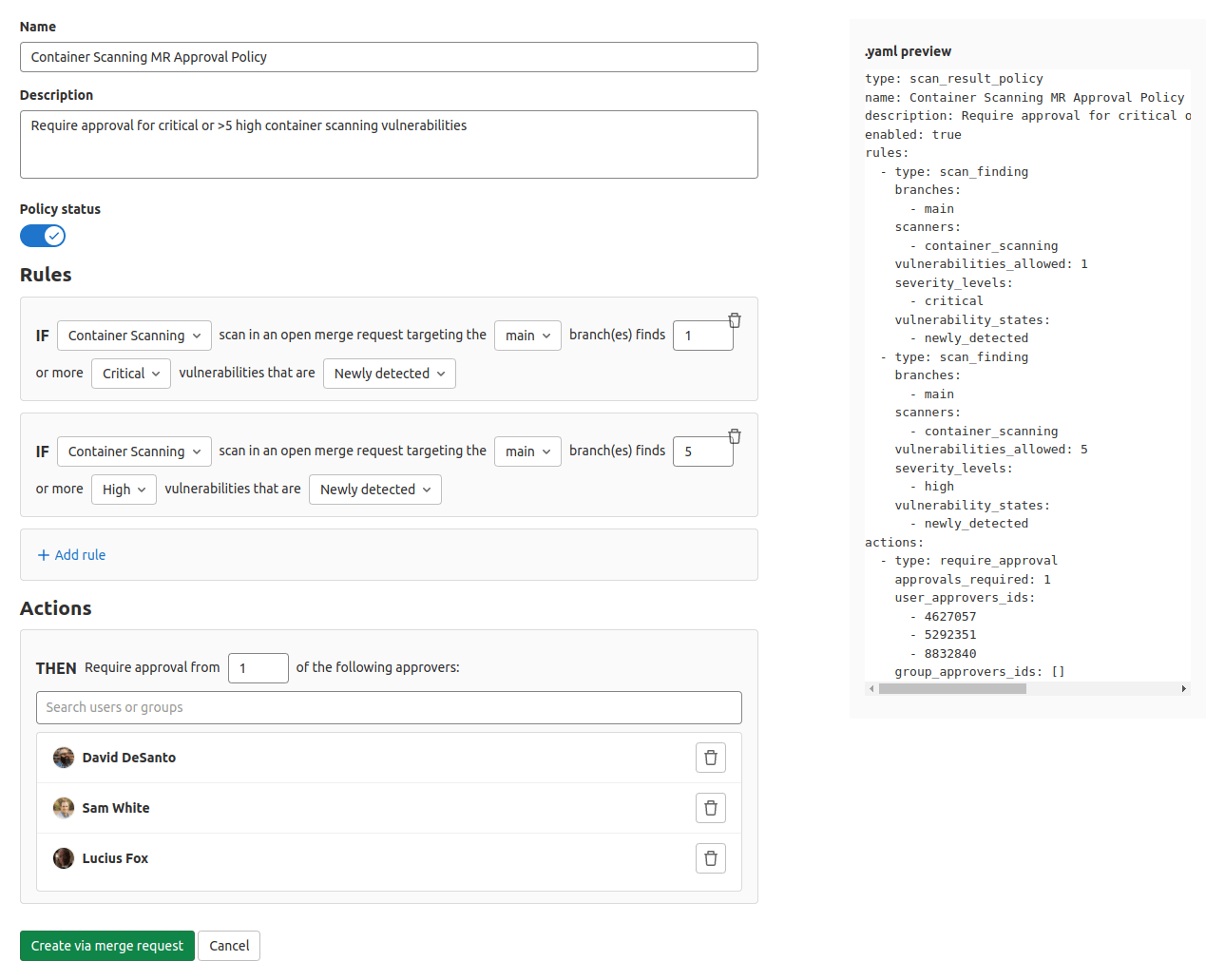
    GitLab has made available a 14.9 update to its namesake continuous integration/continuous delivery (CI/CD) platform that adds epic-linking, integrated security training, rule mode for scanning result policies and a revamped design, among other capabilities. The updated environment makes it easier to discover the state of the application development projects, GitLab said.

    Cindy Blake, director of product marketing at GitLab, said these updates are part of an ongoing effort to embed technologies within the CI/CD platform that will make applications both more secure and compliant with various mandates before they are deployed in a production environment.

    For example, DevOps teams can now take advantage of a user interface through which they can use a rule mode to design and edit policies without the need to access YAML files directly.

    GitLab has also partnered with Kontra and Secure Code Warrior to provide content that will drive security training functionality. This content can be accessed via the GitLab platform whenever a vulnerability is discovered.

    The overall goal is to make it simpler for organizations to shift left because expecting every developer to become a security expert is not especially realistic, noted Blake. The ability to automate many of the security tasks that developers face is a way of showing empathy for the daunting challenges they face.

    In general, as application development becomes more complex, GitLab is moving toward making its CI/CD platform more accessible to a wider range of organizations, including those that might only be starting to embrace DevOps best practices. The epic-linking capability, for example, makes it easier to identify “related”, “blocking,” or “blocked” relationships to better track and manage epic dependencies across GitLab groups.

    The two biggest challenges organizations face today are securing their software supply chains and improving the overall productivity of the developers. In most cases, those two goals are tightly coupled; every minute a developer spends on security is one less minute they spend writing code. In fact, many organizations are finding that, in addition to salary and benefits, many developers are using the level of friction they will encounter when building and deploying applications as a guide to decide which organizations they want to work for. As a result, many organizations are now looking to modernize their application development and deployment environments with an eye toward attracting the best developer talent.

    At the same time, of course, organizations are looking to improve the productivity of the developers they do have. In the age of digital business transformation, there are many more application development initiatives being launched. The challenge organizations face is that hiring and retaining developers remains a major challenge.

    It’s not clear how eager organizations are to replace their existing CI/CD platforms. However, the pressure to improve the overall developer experience is mounting at a time when organizations are increasingly dependent on software. Arguably, going forward, the ability of any organization to compete will be dependent on the productivity of application development teams. Platforms and tools that get in the way of enabling organizations to build and deploy more secure software faster will be discarded.

  • Lapsus$ Shames Okta/Sitel | Bitcoin Nukes Climate | EU DMA E2EE FAIL

    Lapsus$ Shames Okta/Sitel | Bitcoin Nukes Climate | EU DMA E2EE FAIL

    Welcome to The Long View—where we peruse the news of the week and strip it to the essentials. Let’s work out what really matters.

    This week: Okta and Sitel under fire over Lapsus$ hack, Greenpeace and others call for bitcoin change, and Europe still hates encryption. (more…)

  • GitLab Allies With Rezilion to Add Workload Analysis Tool

    GitLab Allies With Rezilion to Add Workload Analysis Tool

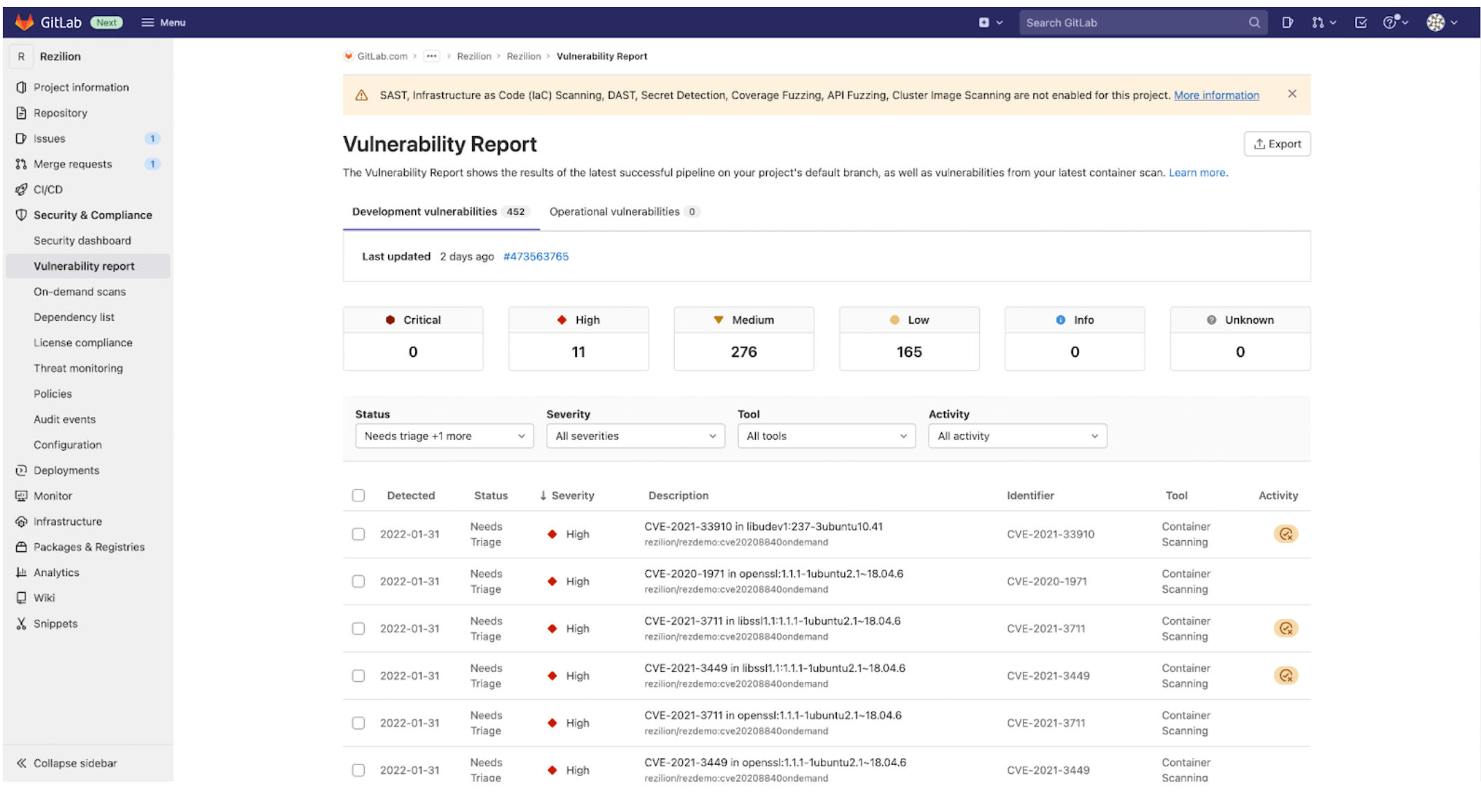
    Rezilion has integrated its workload analysis tool with the continuous integration (CI) framework provided by GitLab. The move is part of an effort to make it simpler for developers to discover issues such as vulnerabilities before they upload code into a repository.

    Sam White, a senior product manager for GitLab, said this integration will provide developers with an instant feedback loop that will enable them to address a wide range of issues before their code is ever reviewed. Rather than experiencing the shame of, for example, missing a vulnerability, the Rezilion platform enables developers to quickly write code while relying on a code analytics tool to surface common mistakes that they can remediate as they see fit, he added.

    Rezilion CEO Liran Tancman added that the proprietary workload composition analysis engine, dubbed Unison, on which the Rezilion platform is based makes it feasible to shift more responsibility for application security further left without requiring developers to become cybersecurity experts.

    Unison automatically creates a model of all the applications that include the underlying infrastructure and runtime environments. It reverse-engineers and maps that environment in memory to dynamically track the inventory, provenance, runtime execution, exposure and interdependencies between each piece of code and can generate a software bill of materials (SBOM).

    The code that is most in need of immediate attention is also surfaced directly with the GitLab user interface, said Tancman. That capability can reduce remediation time of the vulnerability backlog an organization might be working through by as much as 70% over time, he added. Rezilion enables organizations to achieve that goal because non-exploitable vulnerabilities are marked as “false positives” that shouldn’t hold back a release.

    Tancman said that without this level of automation it would be extremely challenging for an organization to implement a set of DevSecOps best practices. It might take developers years to attain the level of cybersecurity training that would be required in the absence of the automation enabled by the Unison engine, he noted.

    Historically, the relationship between application developers and cybersecurity teams has been tense. Cybersecurity teams tend to put off code review until it’s about to be deployed in a production environment. It’s not uncommon for an application to be pulled at the last minute because of a vulnerability discovered by a cybersecurity team. In some instances, that vulnerability is a legitimate concern but in others, it turns out to be a false positive because the flagged piece of code isn’t actually included in the application.

    By providing developers with a workload composition analysis tool within the context of a CI framework, GitLab is trying to reduce the level of friction that the process tends to create between developers and cybersecurity teams.

    It may be some time before most organizations fully master DevSecOps, but it’s clear that merely telling developers they will be held accountable for application security without providing the appropriate tools isn’t going to make applications any more secure.

  • What Donuts Teach Us About DevOps and Delivery Risk

    What Donuts Teach Us About DevOps and Delivery Risk

    Today, most DevOps teams do not think too much about their approach to risk. Usually, the typical attitude focuses on what to add to reduce risk further. In other words, “Can we add more tests? Can we deploy more carefully?” More tests, more processes and less risk are all obviously good things. Or are they?

    As a programmer, I’ve seen a lot of projects where there are so many tests and so many processes that they actually become counterproductive. Those ‘overheads’ presumably do reduce risk, but nobody knows by how much. I call this attitude ‘blind risk avoidance.’ This line of avoidant thinking usually builds up over time as we react to failures. It’s a very natural reaction.

    But when risk avoidance becomes your standard modus operandi, your delivery cycle gets slower and slower over time. Your team starts to feel they are trapped in molasses but, as time goes on, they not only gradually train themselves to tolerate this but to actively justify that it’s a good thing. In the meantime, nobody pays attention to the fact that your software is losing a competitive edge and that you’re being out-innovated and out-executed by others. Nobody pays enough attention to engineering team attrition; losing people as they drop off, one-by-one to move to more modern software development teams with less baggage. The ultimate conundrum lies here: If you move too fast, you break things. But if you move too slowly, your business and your team are doomed.

    So what is the optimal approach for DevOps teams to take when it comes to risk? The truth is, neither extreme is desirable. Blind risk avoidance leads to a failure of value delivery. On the other hand, blindly ignoring risk means crashing and burning.

    The ideal balance lies in not avoiding risk entirely or ignoring the reality of risk. Instead, a sensible middle ground can be found in taming risk.

    Moving forward, DevOps teams and developers must focus on taming risk to deliver software confidently with data-driven actions, speed and quality. 

    Automation Can Reduce Operational Overhead

    Taming risk should become a larger part of DevOps culture. One of the most famous ways this approach has been adopted is by Google’s site reliability engineering (SRE) team. 

    Google’s SRE team embraces two key principles when it comes to taming risk: Automation for reduced operational overhead and structured and rational decision-making for better, data-driven choices.

    To explore this mindset of risk-taming at Google, let’s dive into how the SREs use automation to slash waste, save time and reduce repetitious, low-value tasks and tests. 

    At Google, SREs are software engineers with an extremely low tolerance for repetitive, reactive work. (Aren’t we all?) But here’s the difference at Google: Thanks to a workplace culture of taming risk, operations that do not add value to a service are avoided or automated away.

    The vast majority of DevOps teams hold the same beliefs as Google: That automation cuts down on waste and saves everyone time.

    We all know automation allows for lower operational overhead, frees up software engineers to proactively assess and improve the services they support and boosts team morale. No one wants to spend their time or energy on repetitive, low-value tasks. Automation frees up DevOps teams to expend their energy on what matters most: Continuous quality.

    Bottom line? Automation is integral to the idea of taming risk. Automation of repetitive, low-value tasks is the perfect way to embrace a mindset of taming, not avoiding or ignoring risk entirely.

    Data-Driven Decisions

    Another way that Google’s SRE team tames risk is through structured and rational decision-making based on data. 

    Data-driven decisions are crucial to the success of any software engineering team, project or mission. Without proper data and feedback, there’s no way for software engineers to make the best, most calculated decisions and mitigate risks. 

    A data-driven decision methodology can—and should—be applied to DevOps testing cycles. 

    Another key aspect of data-driven decisions that speaks directly to the concept of taming risk? Service level objectives (SLOs).

    A service level objective is an element of a service level agreement that measures the performance of the service provider. SLOs are created (and agreed upon) between the service provider and the customer and help to mitigate disputes between providers and customers.

    Now, let’s take the concept of SLOs and apply them to engineering and QA teams.

    In traditional organizations, engineering and QA are forced to interact intentionally with a healthy amount of tension. One team produces software and the other team tears this software down. While this kind of necessary and healthy conflict between teams can lead to better results, the inherent push and pull between engineering and QA can create an excess of interorganizational infighting.

    Engineering teams will always advocate for more velocity or blind ignorance of risk, above all else. On the flip side, QA will always advocate for quality, or blind avoidance of risk, above all else.

    Of course, neither side is entirely correct (nor incorrect).

    Instead, the solution to this tension lies somewhere in the middle: The taming of risk, not ignorance or avoidance of risk. This is where an SLO, or the numeric target that represents ‘somewhere in the middle,’ comes into play. For engineering teams focused on velocity and QA teams focused on quality, creating an SLO—a happy medium to work toward with regard to risk—will create a more balanced workplace culture. In short, this approach can be considered a taming of risk.

    ‘Donut’ Slow Velocity

    Now, we’re finally going to get to the donuts. To demonstrate how embracing a mindset of taming, not avoiding, risk can create better, happier and faster DevOps teams, let’s take a look at Krispy Kreme Donuts.

    Krispy Kreme churns out millions of delicious, hot, glazed donuts every single day. However, during production, it’s inevitable that one or more of those donuts will be flawed. (I know, you’re asking, “Is there really such a thing as a flawed donut?!” For the purposes of this analogy, let’s say yes, there is.)

    One common donut defect occurs when the donuts bunch up on the production line and clog it.  Now, let’s assume this common error is caused by the speed of the line. If the Krispy Kreme team attempts to solve this problem by pushing the line even faster, tolerance gets smaller and the risk of even more smashed, defective donuts only rises. That’s certainly not a solution to this issue.

    On the other hand, if the Krispy Kreme team slows down the donut production line speed, there will be a smoother—albeit slower—operation.

    Is Krispy Kreme better served by slowing down its entire production line and sacrificing its velocity to eliminate the risk of a potential defective donut? Of course not! 

    If that’s not true, then is Krispy Kreme better served by cranking up their production line speed to go as fast as possible, regardless of the risk of defective donuts? Again, of course not!

    For sweet success, Krispy Kreme must embrace a mindset of taming risk. By baking careful measurement and an iterative feedback loop into their donut production process, Krispy Kreme is better able to create delicious, high-quality donuts at an optimal speed, producing some flawed donuts. This balance of speed with quality creates the best economic outcome and the mindset and measurement allow for a constant evolution to risk-taming in the future. As the production line changes, the optimal speed also needs to evolve.

    DevOps teams should take this same approach. Tame the risk without sacrificing speed and quality. ‘Donut’ slow velocity to fix a few minor issues!

    If you’re still not convinced, here’s another way to think about taming risk that is decidedly less delicious than warm, glazed donuts: Taxes. 

    The IRS balances velocity and accuracy during tax season as they process millions of tax reviews. While suspect returns are flagged for audits, the IRS simply cannot catch every single flawed tax return. It’s not economical or even possible to run detailed audits on every single problematic tax return, every single year.

    So, instead, the IRS tames its risk with automation and data-driven decisions. The IRS focuses on creating and using methods to detect patterns that correlate with flawed tax returns. Then, once these data-driven problem returns are detected by automation, experts can devote their precious time and mental energy to tackle the biggest of the problematic returns. 

    Again, this approach to taming risk creates an inherent balance between quality and speed and allows for an evolution of the process as economic activities and laws evolve.

    Whether you love eating donuts or doing your taxes, the bottom line is clear. Most organizations need to balance potential risks with maintaining speed, quality and team morale. DevOps teams are no different. 

    How to Tame Risk in DevOps Teams

    So how can we, as DevOps teams, tame the risk?

    The basic idea here is to do smarter testing, not just more testing. The good news is that if you have a reasonable level of automation, the data coming out of your existing automation can make your testing smarter. Approaches like predictive test selection can let you spend your computer hours more meaningfully, allowing you to improve speed and quality at the same time. Approaches like flaky test insights can let your precious engineering resources focus on the most impactful effort to improve the quality of tests.

    The Power of Taming Risk

    What is the right balance between speed and quality? This is the constant question DevOps teams face. But, here’s how I answer this riddle: Taking calculated risk is the most logical and rational approach in the workplace.

    It’s easy to avoid risk. Anyone can skirt around potential pitfalls by avoiding new solutions and sticking to the same old methodologies. But it’s so much more satisfying to take a calculated risk rather than ignore or avoid the risk outright. 

    If you want to improve the velocity and the happiness of your DevOps team, it’s time to embrace a new mindset: Tame the risk, gain control.

  • 3 Must-Haves When Implementing DevSecOps

    3 Must-Haves When Implementing DevSecOps

    The term DevSecOps is already more than a dozen years old. DevOps—the practice of combining software development with IT operations to deploy applications faster—was first coined in 2008 and refined in a historic conference presentation in 2009. DevSecOps—the concept of baking in security at every stage of Agile development, rather than tackling it at the end—followed soon after. 

    Despite a huge amount of industry conversation and activity around DevSecOps, it has been hard to tell just how much traction the movement has been gaining.

    In a 2020 survey of 1,500 IT professionals around the world by the Synopsys Cybersecurity Research Center, 63% reported that they are incorporating at least some DevSecOps activities into their development pipelines. “At least some” indicates, however, that a portion of the adopters have yet to fully embrace DevSecOps. And what about the other 37% who haven’t incorporated it at all?

    Nevertheless, two factors suggest that DevSecOps is starting to pass a tipping point on the way to mainstream adoption.

    One, the prodigious number of cyberattacks that have been hitting companies and government agencies demand aggressive and proactive approaches to address security, which is exactly what DevSecOps does.

    Two, the pandemic has been a powerful accelerant for digital initiatives. For example, global spending on public cloud services was predicted to grow slightly more than 23% in 2021, to $332.3 billion from $270 billion in 2020, according to a forecast from Gartner. In addition to the greater reliance on technology driven by COVID-19, increasing use of emerging technologies such as containerization and edge computing are fueling higher cloud spending. All of this points to the need for organizations to take security risk into account throughout the modern software development life cycle.

    The logic behind DevSecOps is undeniable. Viewing security as a shared, collaborative responsibility among development, operations and security functions starting at the earlier possible stage—the methodology known as shifting left—rather than in silos enables the deployment of secure software at the speed and responsiveness that today’s business conditions require.

    Companies that have successfully meshed the three functions under the broader DevOps paradigm enjoy radically reduced friction in software development and production. These organizations can deploy software faster and more safely with fewer design flaws, misconfigurations and other missteps that can lead to security issues.

    Companies not as far along in their DevSecOps journeys tend to have espoused some of its practices but not consistently. Clunky, linear waterfall approaches persist here and there. Vulnerability management remains a reactive box-checking effort later in the life cycle, forcing developers to backtrack and fix the code rather than a proactive, preventative process seamlessly integrated from design to production.

    The more advanced organizations typically focus on three key ingredients to assure success.

    1. Education. DevSecOps is a cultural shift as much as a technological one. It requires a new mindset that empowers developers to take ownership for creating secure code at the beginning of the software development life cycle. Thus, IT leaders can’t simply snap their fingers and expect DevSecOps to take hold without educating team members on why it is so critical and how it drives rather than disrupts great work.

    “Organizational learning and change are key to allowing DevOps to flourish,” senior Gartner analyst George Spafford wrote. “In other words, people-related factors tend to be the greatest challenges, not technology.”

    This means that before introducing DevSecOps into an organization, it is important to connect the endeavor with the value it will bring and explain why it will allow the business to deliver more value to customers and improve its competitiveness.

    2. Process. The right DevSecOps policies and processes can spell the difference between a nimble software development machine and one still bogged down by inefficiency.

    For instance, many organizations that rely heavily on scanning tools to detect vulnerabilities assign nonsensical policies to their use. Let’s say that vulnerabilities of a particular score or type need to be eliminated before code is deployed to production. But what if the flaw resides in an unimportant section of the code and is unexploitable?

    The best DevSecOps initiatives include policies and processes that seek to understand the entire context of a project, from design to production and handle everything in a way that reflects the context of true risk to security and compliance requirements rather than merely running all code through the same pipeline.

    3. Tooling. Fact: Without the right automated tools that provide deep visibility into code, a DevSecOps implementation doesn’t stand a chance.

    To carry out the qualities of collaboration and agility that DevSecOps promises, organizations should gravitate toward tools that give developers all the relevant information they need to make more informed decisions.

    These tools must truly simplify the addition of security into DevOps methodologies by automating various manual processes that traditionally have slowed everything down—threat models, security and compliance reviews, pentests and risk assessments and the like. The tools can’t just aggregate data from silos — which fails to provide enough contextual information and generates too many false positives —they need to provide holistic relief to overburdened teams in securing applications at the feature request, commit, pull request and CI/CD stage.

    By keeping these three elements in mind, organizations can fulfill DevSecOps’ potential as a true game-changer. As DevSecOps continues to cross the chasm to more universal adoption, organizations can look to earlier adopters for guidance on how to do DevSecOps right.

  • Harness Acquires ChaosNative to Meld Chaos Engineering, DevOps

    Harness Acquires ChaosNative to Meld Chaos Engineering, DevOps

    Harness this week announced it acquired ChaosNative as part of a plan to more deeply integrate chaos engineering with DevOps workflows.

    At the same time, the company added a Harness Service Reliability Management (SRM) and Harness Security Testing Orchestration capability to its continuous integration/continuous delivery (CI/CD) platform.

    Chaos engineering, as a discipline, refers to experiments on a software system that test its resiliency in the face of an unplanned outage. The goal is to deliberately make resources unavailable to see how the application environment either adjusts or whether it fails.

    ChaosNative’s LitmusChaos platform, which manages these chaos engineering tasks, was donated to the Cloud Native Computing Foundation earlier this year.

    Scott Sanchez, chief marketing officer for Harness. said the company plans to shift chaos engineering further left as part of an effort to enable developers to test the resiliency of their applications before they are deployed in a production environment.

    It’s still early days where adoption of chaos engineering within DevOps workflows is concerned. Many IT leaders’ performance is measured based on the stability of application environments. The idea that they should deliberately break something as part of an effort to make an application more resilient requires a shift in mindset, noted Sanchez.

    However, once IT leaders start to appreciate how chaos engineering actually improves the availability of applications it’s only a matter of time before the practice becomes more widely implemented, he added.

    In the meantime, Harness is looking to automate more of the lower-level tasks that today’s DevOps teams often manually manage. Harness SRM enables DevOps teams to automatically track service level objectives (SLOs) that are attached to specific pipelines within the Harness CI/CD platform.

    The Harness STO module, meanwhile, makes it simpler to orchestrate security testing across multiple pipelines.

    In general, there is now more focus on the productivity of DevOps teams as the number of applications that are being built simultaneously increases. The challenge, however, is not just the number of applications but also the dependencies that exist between them.

    Harness is making a case for a CI/CD platform that automates DevOps tasks by employing, for example, machine learning algorithms to identify which applications are most likely to fail before a build is completed. The goal is to reduce the amount of time DevOps teams waste waiting for builds to complete only to discover that the application almost immediately failed.

    The time, effort and cost of maintaining a DevOps platform will naturally vary as the overall environment becomes more complex. However, as DevOps processes become more automated, the platforms themselves become more accessible to a wider range of organizations. Today, the effort required by a DevOps to set up and then support a CI/CD environment is often considerable.

    Nevertheless, as more organizations rely on custom applications to drive digital business processes, it’s only a question of when and to what degree DevOps best practices will be more widely adopted. After all, the total cost of application downtime is only going to rise in the age of digital transformation.

  • Securing APIs at the Speed of DevOps

    Securing APIs at the Speed of DevOps

    In the 2021 State of DevOps Report, 83% of IT decision-makers told Puppet that their organizations were in the process of implementing DevOps practices to improve the quality of their software, the speed of their delivery and the security of their systems. Those DevOps organizations varied in their stages of evolution, however. For example, respondents in the middle stages of their journey reported that culture blockers such as unclear responsibilities and insufficient feedback loops were making it difficult for them to continue their DevOps journeys and join the ranks of high-evolution organizations. Such obstacles help to explain why 97% of high-evolution organizations had already applied automation to their competitive tasks compared to just two-thirds of mid-level and a quarter of low-evolution teams.

    The Importance of APIs to DevOps

    The prevalence of automation ties into the importance of application programming interfaces (APIs) for any organization’s DevOps journey. In the words of IBM, an API “enables companies to open up their applications’ data and functionality to external third-party developers, business partners and internal departments with their companies.” APIs, therefore, enable the services and products of different companies to communicate with one another in a way that streamlines and/or augments functionality for the user.

    That said, users aren’t the only ones who benefit from APIs. DevOps teams do, too. Many of these team members deal with increasingly automated processes as part of their daily tasks, so they need APIs that can help them to deploy and configure their infrastructure. APIs can also help DevOps teams gain detailed information about an app during runtime. DevOps staff can use these insights to proactively address issues before they lead to disruption.

    Security Obstacles of APIs and DevOps

    Despite their benefits, APIs and DevOps aren’t without their security challenges. Contemporary Computer Services, Inc. (CCSI) identified several security hurdles that organizations may encounter along their DevOps journeys. These include the following:

    A fast development process: DevOps introduces a faster speed of software delivery. In their efforts to keep up with this demand, developers might make coding mistakes that leave applications vulnerable to attack. Absent a timely security review, those vulnerable products and services might make it into production, granting attackers an opportunity to exploit the flaws and to try to access affected customers’ digital assets.

    Poor collaboration: No DevOps journey will succeed without collaboration between development and operations. When there’s a lack of joint processes, these teams may stick to their silos. This way of working may leave security gaps if development and operations aren’t communicating about the management of their credentials, tokens, SSH keys and other secrets, for example.

    Those security challenges can then spill over into APIs. The speed of development along with poor team communications may give rise to multiple versions of the same API. This redundancy contributes to a sense of what’s known as API sprawl, a phenomenon where the number and reach of organizations’ APIs grow exponentially. API sprawl comes with its own obstacles including maintenance difficulties and broken clients, issues that provide attackers with more opportunities for infiltrating the organization’s systems. This reality helps to explain why 91% of enterprises experienced an API security incident in 2020 and why malicious API traffic increased by 300% in the middle of 2021.

    How Can Organizations Address These Security Challenges?

    For an answer to this question, we look back to what highly evolved DevOps organizations are doing. Most organizations are focusing on DevSecOps. In Puppet’s report, 51% of respondents said that they are integrating security into their DevOps requirements, with even more saying the same about design (61%) and build (53%). An additional 52% of survey participants indicated that they’re bringing security into their testing. By contrast, mid- and low-evolution organizations mainly engaged in security when they were in the process of preparing for an audit of their production systems or when they learned of an issue affecting production.

    Beyond those areas of focus, organizations need to emphasize runtime protection. Salt Security agrees with this statement, noting how organizations need to “security test your APIs, but know that you will also need runtime protection to catch changes that don’t go through standard build process and abuses that testing tools aren’t designed to find.”

    Finally, organizations need to treat DevSecOps as the cultural change that it is. They can do this by assigning security responsibility to one person from their DevOps team. Doing so will help to ensure that teams won’t overlook security during their jobs. Simultaneously, organizations can conduct security awareness training for their developers and regularly invite both development and operations to share their stories, priorities and successes with one another. This will help to foster collaboration, thereby minimizing instances of API redundancies and API sprawl across their systems.