Category: Continuous Delivery

Continuous delivery is a software engineering discipline that allows organizations to consistently develop and release quality software at a rapid pace. It is achieved by automating the software development lifecycle, enabling tasks such as development, testing and release to occur concurrently and continuously.

  • Oracle Updates Java Development Platform

    Oracle Updates Java Development Platform

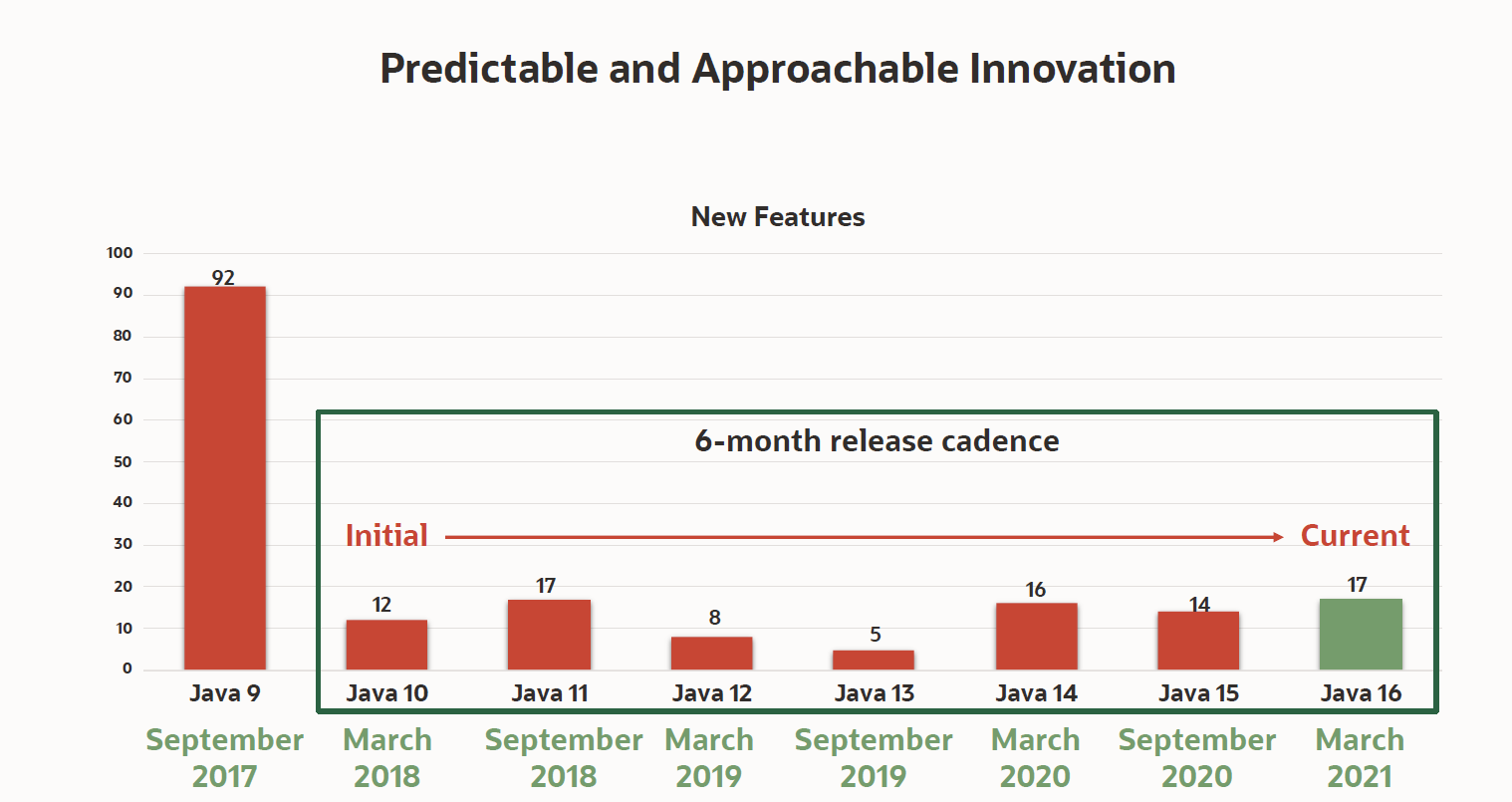
    Oracle announced today the availability of Java 16, which adds 17 enhancements to a software development kit that is now being updated every six months.

    Georges Saab, vice president of development for the Java Platform Group at Oracle, said while most Java development teams are still using Java 8 or earlier editions of the platform, the expectation is that many of them will soon move forward, as updates are made available in smaller increments that are easier to test and vet.

    At the same time, Oracle is committing to make available long term release editions of Java that won’t be updated as frequently. While there are many organizations anxious to take advantage of new capabilities as quickly as possible, Saab noted there are just as many that value stability more than innovation.

    The latest edition adds support for finalized pattern matching for instances and records, as well as other language enhancements that were previewed in Java 14. Developers can also employ a packaging tool to ship self-contained Java applications that will make it easier to deploy in modern IT environments, said Saab.

    Additional capabilities now available include the Vector application programming interface (API), the Foreign Linker API (JEP 389), and the Foreign-Memory Access API that are all available in incubations as well as a sealed classes capability that is being made available as a preview.

    In general, Saab said, one of the primary reasons many organizations don’t tend to update Java more frequently is the frameworks they rely on to employ it at a higher level of abstraction are still optimized for older versions. However, as Java updates are delivered in a more modular fashion, it will become easier for the providers of those frameworks to keep pace.

    It’s not precisely clear to what degree IT teams are employing Java to build next-generation applications based on microservices. However, a recent survey published by VMware, found 95% of respondents have either already used the open source Spring framework, based on Java, to either containerize an application (65%) or plan to do so (30%).

    A quarter of a century after its initial development, Java is still the dominant programming language relied on to build enterprise applications. In many instances, the lack of tools for building Java applications for Kubernetes platforms was a significant inhibitor of adoption for the cloud-native platform. In the last six months, however, the number of tools for building and deploying Java applications on Kubernetes clusters has increased.

    Despite the proliferation of alternative platforms for building and deploying applications on Kubernetes platforms, the appetite for retraining legions of Java developers is low. Most developers will rely on the programming tool they already know, especially when it comes to building mission-critical applications for the enterprise. That may mean some of those applications might not be as fast as they could be, but, given the level of risk, there’s always going to be a natural tendency toward being safe rather than sorry.

  • LinearB Raises $16M for Software Delivery Intelligence

    LinearB Raises $16M for Software Delivery Intelligence

    LinearB announced today it has raised an additional $16 million in funding to advance adoption of a software delivery intelligence platform.

    Ori Keren, LinearB CEO, said rather than relying on antiquated processes that require software development teams to track progress by reentering data into a project management application, it’s now possible to automatically collect all the relevant data required from the tools and platforms being employed to build software.

    The LinearB platform correlates DevOps pipeline data gathered from code, Git, projects and releases to provide visibility and context to every member of the development team. LinearB employs machine learning algorithms to construct and correlate that data, in real-time, to provide accurate insights into project status. That’s critical, because it empowers every individual on that team to make informed decisions about which tasks to prioritize without waiting for an explicit directive, Keren said.

    LinearB will, in part, use the funding to build integrations with a wider range of DevOps platforms and tools, Keren added.

    Software delivery intelligence differs from value stream management (VSM) platforms; though they provide similar insights, those surfaced by LinearB are aimed at developers rather than C-level executives trying to optimize deployment of limited resources across multiple teams, said Keren. In many ways, the data collected by LinearB could be employed to better inform a VSM platform, Keren added.

    LinearB, in contrast, makes it easier to identify which teams and projects need additional help in near-real-time using metrics surfaced in a dashboard that track, for example, cycle times. The goal is to provide insights that make it easier to predict and eliminate project delays, remediate high-risk code before it is included in a production environment, eliminate bottlenecks and make certain the focus of the DevOps team remains on tasks of the highest priority.

    More than 1,500 software development teams are already using LinearB as an alternative to traditional project management applications. Most of those customers are building commercial applications, so the goal now is to extend the reach of LinearB into the enterprise, said Keren.

    LinearB, of course, doesn’t eliminate the need for project managers. However, it does eliminate the need for project managers to nag developers to update a project management application. Given the rate at which application development projects are now updated, much of the data in a project management application is outdated shortly after it is entered.

    There’s a lot of pressure on application development teams these days. Many projects have been accelerated as part of an effort to more rapidly embrace digital business transformation in the wake of the economic downturn brought on by the COVID-19 pandemic. The challenge for many developers is they, too, are working from home to help combat the spread of the virus. That often results in interactions with managers over video conferencing calls that lack context. Having access to a software development intelligence platform should enable everyone with a vested interest in application deployment speed to make more informed decisions faster.

  • How the Pandemic Renewed Respect for the Agile Mindset

    How the Pandemic Renewed Respect for the Agile Mindset

    Agile methodologies were introduced to us around 10 years ago. In that time, we have seen technology advance at breakneck speed and faced many new challenges in the way we work; arguably, never more so than in 2020.

    However, despite the abundance of change we have experienced, the core values of Agile have stood the test of time. Yes, Agile has been agile, adapting to fit our individual needs. But its values and principles are so strong that they ring true for each and every organization touched by this way of working.

    It’s impossible not to mention 2020, and how Agile shifted and adapted to help us through this turbulent time. What did we notice? Well, much like the renewed gratification you feel for your automotive breakdown service when your car gives up the ghost for the first time in years, we noticed that the COVID-19 pandemic changed Agile in a different way: by providing renewed respect for the agile mindset.

    What is the Agile Mindset?

    When we talk about the agile mindset, we’re referring to the core values that combine to establish a set of attitudes held by those embracing agility. There are four of these core values: Make people awesome, deliver value continuously, make safety a prerequisite and experiment and learn rapidly.

    All four values are of equal importance, but they each have a unique impact on the mindset. For example, making safety a prerequisite means providing employees with the confidence to experiment, innovate and not fear mistakes or failure – these are all natural on our path to achieving new things.

    Additionally, delivering value frequently benefits both our customers and employees. It takes away the pressure of bouncing from one milestone to the next and adds value to a consistent level of delivery. Our customers are happy and grateful, seeing constant developments and improvements to what we provide them.

    The final two values (make people awesome and experiment and learn rapidly) are those that were particularly important during the change and adversity of 2020. Let’s dive into them.

    Making People Awesome!

    Agile methodology is massively focused on people: both employees and customers. When we work in an agile way, we want to enrich our people and give them the freedom to express themselves and show off their skills. This, in turn, helps the entire organization to deliver excellent service to our customers.

    With such a focus on people, the mandate for remote work brought about by the COVID-19 pandemic introduced an obstacle to agile ways of working. Our only human interaction with colleagues and customers was through a screen, which, let’s be honest, just isn’t the same as interacting in person.

    Therefore, employee engagement has become more important than ever. Virtual interactions make it harder to truly see how somebody is feeling about work – whether they are happy or unhappy, motivated or unmotivated. It’s important to check in with everybody regularly; ask them directly how they’re doing and encourage honest answers. Keep the Agile team spirit alive by making an effort to break the screen barrier during meetings.

    There are benefits of remote working for Agile, too. For example, it offers a fantastic work-life balance. When employees are less pressured by commuting or less exhausted by the constant energy of the office, they are happier. And happy employees make happy customers!

    So, the value of Agile’s ‘Make people awesome’ tenet became even more important and respected in 2020. We realized that we must optimize our employees so that they can bring their best selves to work, even during uncertain times.

    Experiment and Learn Rapidly

    This been an incredibly important value, hasn’t it? For lots of us, remote working was a brand-new experience. Perhaps we’d spend the odd day working from the sofa to let the boiler engineer in, but five days a week from home – unprecedented!

    Learning and innovating at speed has been key to being able to work effectively from home. We’ve been truly embracing this aspect of the Agile mindset. But how? Essential to agility is the ability to critically review how we operate. Almost half of businesses say they do this every quarter (43%) and 21% say they do this every six months.

    Regularly reviewing and analyzing how we work helps us to identify areas of improvement, areas that we could experiment with innovation, and gaps in our knowledge. Without this, we’d be walking through our working life with a blindfold on, and likely not be able to pivot in the face of change and adversity.

    A great example of the renewed respect given to the ‘experiment and learn rapidly’ value is the COVID-19 vaccine. It normally takes years to develop, test and roll out a vaccine, but we’ve seen this happen in just months.

    You wouldn’t be mocked for not knowing that the vaccine was being developed way before the pandemic of 2020. In fact, scientists began preparing for ‘Disease X’ over four years ago. They analyzed the response to the Ebola outbreak of 2014 and recognized a need to develop a vaccine that could be used quickly, for an infection that did not yet exist.

    Fast-forward to COVID-19, and while scientists still had lots of work to do to prepare a specific vaccine (designing; initiating the correct immune response; testing and more testing and roll out), their agility, started years ago, meant they had a strong foundation on which to build.

    This value has definitely received more recognition in recent months. This is great, because it’s going to be vital for the continued response to our changing world. We must continue to analyze our response to new ways of working and adapt based on what we find. Are you already experimenting and learning to be ready for the new normal?

    An Essential Mindset for Remote Teams

    The core values of agility have had a huge part to play in our adaptation to the changes we saw in 2020. And many of us have embodied this agile mindset without even realizing – we’re calling this ‘unconscious agility.’

    If you’ve tried something new in the face of remote working, made a conscious effort to deliver value continuously rather than in big chunks, checked in more regularly with your colleagues or relayed the message that mistakes and failure are a natural part of innovation, you’ve been working in an agile way. Even if your organization doesn’t consciously work agile, you can still embody this mindset.

    And it’s going to be key for the new normal – we should already be looking ahead to that. We didn’t have time to prepare for what came in 2020 – it was somewhat of a surprise. But we do have time to prepare for what comes next, and the Agile mindset is key for tackling this successfully.

  • The Promise of AI for DevOps in 2021

    The Promise of AI for DevOps in 2021

    DevOps is a natural target for AI-driven efficiencies, as it involves frequently repeated processes that generate mountains of data. It seems reasonable to expect that, like other domains that require decisions to be made based on large volumes of data, AI will play an important role in DevOps, too.

    Definitions of AI vary considerably, so you can’t be blamed if you’ve sat through a discussion of AI and DevOps and still don’t understand exactly how the two intersect. But the bottom line is that AI will prove most useful in situations where there’s lots of data generated by, or passing through, a repeatable process. Humans are pretty good at identifying heuristics to help them make reasonable decisions based on patterns in data. But machine learning (ML) techniques bring with them the promise of teasing out inherent characteristics that underpin the data, and that are often impossible for humans to observe.

    There are two main points in the DevOps process where large amounts of data are generated, and where machine learning would be most useful when applied: testing and release and monitoring.

    1. Testing and Releasing

      Deployment packages: AI can analyze trends in what is actually being deployed. My company, Gearset, is a DevOps solution for development on the Salesforce platform. In that context, AI could track the items of Salesforce metadata a team usually deploys, and optimize requests for retrieving that metadata from its org based on those items, speeding up comparisons and deployments, and, ultimately, release cadence.
      Deployment errors: At Gearset, increasing deployment success rates is a constant focus. To that end, we aggregate and analyze data from deployment errors to identify the most common deployment-blocking errors. We then build problem analyzers that suggest automatic fixes to users. With machine learning running on telemetry data, we could more rapidly identify other patterns of use that trigger common deployment errors, and suggest new problem analyzers we should build, boosting deployment success rates still higher.
      Static code analysis: Static code analysis generates data about the quality and security of new code, judged against a ruleset. Within Gearset, Salesforce developers can choose and customize the PMD rules they want in their ruleset, so they’re warned about the code quality issues they care about. But richer insights would be possible with AI, such as high-priority areas for improvement and refactoring based on trends in code quality and security.

    2. Monitoring

      Infrastructure monitoring. Huge amounts of data can be generated from DevOps monitoring. It’s easier to know what to focus on with AI-driven insights into performance log monitoring. Pattern recognition can also predict usage growth and help with capacity planning.
      Security. This has been a key area for innovation in recent years, with the development of products that use machine learning to enhance threat detection, intrusion detection and vulnerability database compilation.
      Unit testing. Gearset provides tools for monitoring code in Salesforce, such as automated unit testing, which reveals when code is no longer executing as intended. AI could identify patterns in the logs and suggest areas of the codebase that appear to require attention.
      Change monitoring. Changes in the codebase, whether expected or unexpected, are tracked by change monitoring and backup jobs. Gearset currently has smart alerts on backup jobs that users can manually set up to be warned of changes or deletions that are unusual, both in terms of the kinds of records being deleted and how many. But AI could automatically spot anomalous and unusual patterns of churn that should be investigated.

    In summary, AI promises to accelerate innovation in the areas where we currently use data-driven insights to improve the performance of DevOps tools and processes. The result will be even higher deployment success rates leading to increased agility, better code quality and performance, and enhanced security.

  • Lightrun Tool Now Debugs On-Premises Apps

    Lightrun Tool Now Debugs On-Premises Apps

    Lightrun today announced it has made its namesake debugging tools available for applications deployed in on-premises IT environments that, for one reason or another, can’t be deployed on a cloud platform.

    lan Peleg, CEO of Lightrun, said Lightrun is unique in that software teams can capture live production data from software installed on their customers’ sites via a set of command line interfaces (CLIs). That approach eliminates the need for the end customer to set up a separate environment to troubleshot an application, said Peleg.

    Instead, software teams can troubleshoot their software without requiring on-site visits by support engineers or even a phone call, Peleg said.

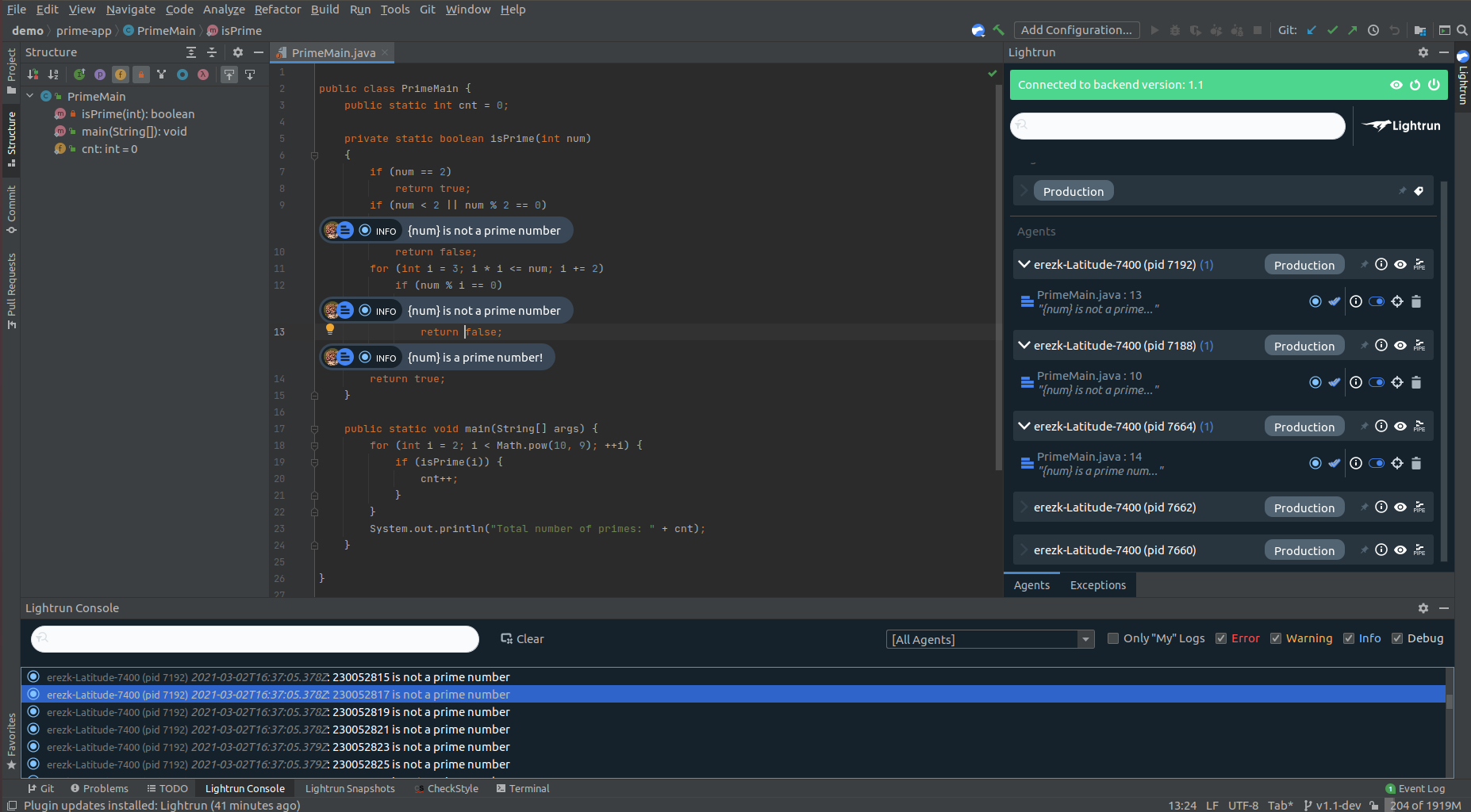
    Lightrun makes it possible to add logs, virtual “breakpoints” and metrics while an application is running. Those capabilities are critical because many applications are not fully instrumented. Lightrun makes it simpler to triage issues by adding a missing log line, instrumenting a new metric or taking a snapshot of an application as it runs in a production environment. Those capabilities make it possible to find bottlenecks and errors without requiring the application to stop running.

    The performance impacts of Lightrun range from tens to hundreds of microseconds per invocation to minimize overhead, Peleg said.

    In general, Peleg said, debugging applications is becoming more challenging. Monolithic applications continue to grow in size while emerging microservices-based applications have dependencies that make them challenging to debug. Many organizations are employing application performance management (APM) platforms and other observability tools to try and address these issues. However, those platforms require IT teams to continuously collect data, and even then there is no guarantee the insights needed to troubleshoot an application will be surfaced. Lightrun, conversely, makes it possible for developers to troubleshoot an application and capture the metrics needed in real-time. That data can then be shared with an APM platform to make it easier to address similar issues if required, Peleg said.

    As developers become more accountable for application performance, many of them are not going to want to employ the same tools and processes that IT operations teams have historically relied on. Lightrun provides a lighter-weight approach to troubleshooting applications, within the context of a DevOps workflow, that doesn’t require as much overhead, said Peleg.

    Although observability is a core DevOps principle, many organizations have been unable to achieve it in a meaningful way. There is no shortage of tools for monitoring IT environments, but correlating all the data those tools generate is problematic. It’s not uncommon for organizations to spend weeks trying to identify the source of an issue that only takes a few minutes to fix. Now that developers are assuming more responsibility for managing the entire lifecycle of an application it is likely different approaches to achieving observability will be considered.

    In the meantime, as the number of applications deployed in production environments continues to increase, different approaches to debugging software will be required. Otherwise, at the current rate of deployment, it won’t be long before developers find themselves spending most of their time debugging existing applications, versus actually writing new code.

  • GitLab Releases Updates to CI/CD Platform

    GitLab Releases Updates to CI/CD Platform

    GitLab this week made available a 13.9 update that adds more than 60 new features and updated capabilities to its namesake open source continuous integration/continuous delivery (CI/CD) platform.

    Brian Glanz, a product marketing manager for GitLab, said chief among those capabilities is a Security Alert Dashboard that enables DevOps teams to triage high-priority alerts more easily. As more organizations embrace DevSecOps best processes, application development teams need to be able to prioritize which security issues are more pressing than others, Glanz said.

    Other new capabilities include the ability to reuse a pipeline of a CI/CD configuration, and a maintenance mode option that keeps instance available while administrative tasks are being performed.

    Additionally, it’s now possible to view group-level analysis of release metrics, in addition to the ability to view a version of a pipeline configuration with all of the include and extends configurations merged together.

    Glanz said GitLab continues to gain traction, because all the capabilities it provides are based on the same integrated code base. The effort a DevOps team needs to exert to take advantage of new capabilities is substantially less than rival platforms, Glanz said.

    At the same time, Glanz noted that the number of contributors to GitLab coming from outside the company also continues to increase. The latest version has 299 merged contributions from the wider GitLab community.

    It’s not clear how much of an appetite organizations have, these days, to replace an existing CI/CD platform. However, it’s not uncommon for organizations to have multiple CI/CD platforms employed by different DevOps teams. In the meantime, the number of teams within enterprise IT organizations that are embracing DevSecOps processes to advance digital business transformation initiatives continues to rise. As more organizations realize how dependent they are on custom software to differentiate themselves from rivals, more enterprise IT organizations will opt to standardize on a single CI/CD platform to both reduce costs and increase overall efficiency.

    A report published last year by GitLab noted organizations can improve application development and delivery by 87%, resulting in a savings of more than $23 million. Overall, the report claims organizations can see a 407% return on investment (ROI) on the GitLab platform.

    Naturally, competition among CI/CD platform providers remains fierce. With most developers working from home to help combat the spread of the COVID-19 pandemic, these platform providers have been touting their ability to support remote work. It’s not clear if developers will be returning to the office en masse now that COVID-19 vaccines are being distributed. However, it’s clear that even once the pandemic subsides, the way application code is created and maintained will be a lot more fluid. Many organizations are now more comfortable hiring developers wherever they can find them.

    Of course, many of those developers are going to be wary of joining organizations that have disjointed workflows, especially when it comes to shifting responsibility for application security further left toward developers. In fact, the ability of any organization to effectively recruit developers is now directly tied to the overall sophistication of their DevOps workflows.

  • Mabl Adds Beta of Desktop Continuous Testing Tool

    Mabl Adds Beta of Desktop Continuous Testing Tool

    Mabl today announced availability of a beta version of a desktop tool for creating tests that can be applied to browsers and application programming interfaces (APIs) using a low-code tool.

    Dan Belcher, co-founder of Mabl, said the goal is to make it simpler to streamline testing processes as responsibility for application quality assurance (QA) continues to shift left within the context of a DevOps workflow.

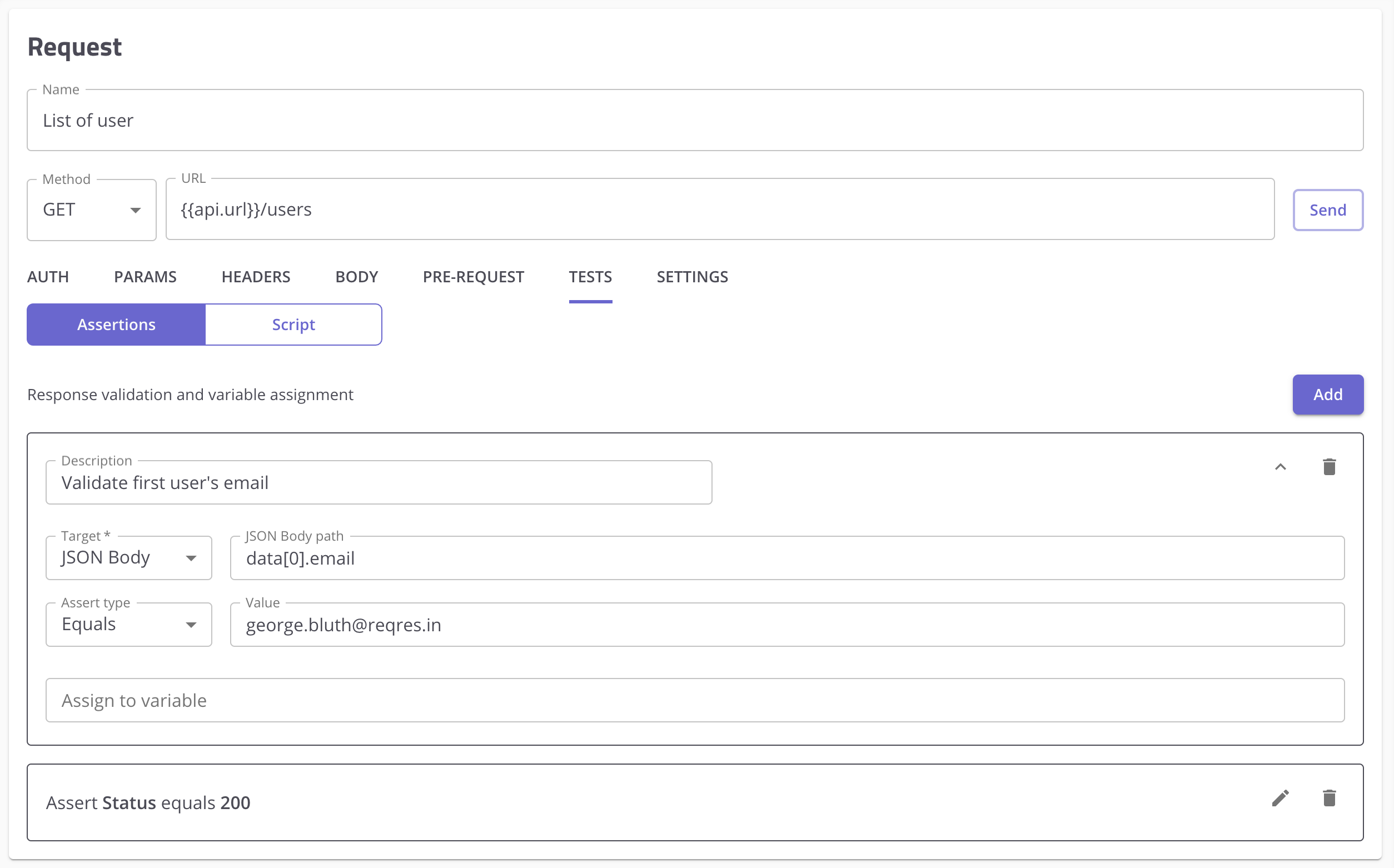
    Mabl provides a low-code tool for testing desktop and mobile browser applications, alongside the APIs they invoke, using an Electron tool that generates tests in a way that eliminates the need to write scripts. Previously available only via a software-as-a-service (SaaS) platform, Belcher said the desktop platform will make it simpler for developers to test code as they develop it on a local machine.

    Developers using the desktop tool can now also manage and run tests instantly via command line interface, versus having to completely exit from a project to invoke a separate testing tool, Belcher said.

    The Mabl testing tools are already integrated with multiple continuous integration/continuous delivery (CI/CD) platforms, such as Bitbucket and Bamboo, as well as the GitHub repository.

    In the longer term, Belcher said it is clear organizations will need to involve more developers in QA testing, as the rate at which applications are being built and deployed continues to increase. Testing teams, on their own, can no longer keep pace with the rate of change, Belcher noted.

    The challenge is achieving that goal in a way that creates the least amount of friction possible, Belcher added. The Mabl platform and desktop application make it feasible for developers to test both web and mobile applications without taking too much time away from developing application code, said Belcher.

    Testing has become a major DevOps issue because, as developers assume more responsibility for applications after they have been deployed in a production environment, they naturally want to vet applications more thoroughly. Issues that arise after an application is deployed simply result in less time available to write new code. There will always be issues that need to be addressed, but the more of them that are resolved as part of a QA process integrated within a DevOps workflow, the more productive an application development team will be.

    Unfortunately, testing is often given short shrift; it primarily occurs at the back end of the application development life cycle. Developers are typically behind schedule, so there is a natural tendency to reduce the amount of time allocated to testing in the hope of making an application delivery deadline. The vicious cycle that ensues is that, inevitably, there are more bugs to fix after an application has been deployed, simply because not enough testing was done during the original development cycle.

    Of course, some development teams have become conditioned to fixing bugs as part of an agile development process that, too often, encourages them to push known issues off to the next sprint. The trouble is, in the absence of continuous testing, it’s not long before all those known bugs start to pile up. It’s not uncommon for applications to be riddled with bugs that development teams – with mixed success – attempt to address all at once. The earlier those issues are addressed, the less stress there will be later for all concerned.

  • Top 4 Challenges for Developer Teams in 2021

    Top 4 Challenges for Developer Teams in 2021

    As remote work continues into 2021, developer teams are still navigating the new landscape for working across distributed teams and how this new way of working affects product delivery. In particular, there are several key challenges that every developer must face this year, including adapting to new tools and workflows internally, balancing the prioritization of keep-the-lights-on initiatives with product initiatives, and understanding how to address emerging customer challenges.

    As developer teams are responsible for keeping both internal systems healthy and maintaining service uptime for customers, addressing these issues and implementing the strategies below will help ensure better delivery, easier deployment of application and software solutions and improved internal communication processes.

    #1 Get Better at Digital Experience Monitoring

    For businesses to survive in this current environment, neglecting to monitor a user’s digital experience across their life cycle can mean losing business to a competitor. At a bare minimum, developer teams must ensure that their application’s basic infrastructure is sound. This means monitoring key metrics like CPU load, memory load, memory used, disk space, queue lengths, API uptime or error codes returned.

    For a fuller user experience, developer teams should also monitor things like page or app load times, drop-off points in an app and crash logs. The third level of digital experience monitoring is keeping tabs on what your users are doing, such as skipping the onboarding flow, inviting friends to your app, posting content or how much total time they’re spending within the app. Robust digital experience monitoring will ensure that you are constantly measuring the quality of your users’ experience and making improvements along the way.

    #2 Expand Where and How You Gather User Feedback

    Beyond initial user monitoring, teams should continuously collect feedback to improve features and fix issues that might not have been discovered during testing. One natural way to do this is to aggregate user reviews and support questions to find common themes that may help product teams prioritize future releases. It is also critical to think outside of the box in terms of where and how feedback is collected. Teams can also collect feedback in other ways, such as conducting data analysis and user research sessions or having direct conversations with customers. Giving key beta users early access to a new release can also help developer teams understand whether their application is meeting users’ needs, and whether it is intuitive to use.

    Ultimately, by engaging with customers in extensive and real conversations, teams may learn where there are disconnects between users and the products, and what they can do to bridge this gap. Once the information is collected, teams should then prioritize what needs to be done first by ranking requests by frequency received, financial value of fixing the issue, strategic importance to the overall organization and engineering effort.

    #3 Prioritize Low-Code and Customer Self-Service Models

    Removing barriers to entry for customers is especially critical right now, as developers consider changing user needs, tighter budgets and fewer personnel to implement new code. Customers just don’t have time for entire enterprise sales and onboarding cycles to implement new solutions, so requiring less code is a great way to introduce a more self-service model. This model is also great for non-developers to implement and ensures that customers (whether fellow developers or even someone on a marketing operations or web team) can easily integrate new tools and software into their existing solutions. This is not only critical for those without a more technical background, but also valuable for time-strapped product teams who want to buy, versus build, a new feature.

    #4 Codify Hiring to Help Developer Teams Succeed

    During the pandemic, both large companies and small startups have pivoted significantly in the way they recruit and onboard engineering, DevOps and technical roles. Leaders of developer teams need to codify their hiring plans and put in place remote work strategies, especially with the hybrid working model that combines remote personnel with in-office staff.

    When hiring for remote teams, consider where individuals are located for both development and customer support purposes. Once you determine these core hubs, there should be guidelines in place to reduce the need for team members to work across major time zone differences. This can mean having a core software team in a centralized region that also overlaps with a major customer base, or having an engineering team located in a similar time zone to the design team for easier communication.

    Overall, the needs of each developer team will differ depending on the size of the company and the industry it serves. That’s why it’s critically important to adapt your systems and infrastructure accordingly. Furthermore, listening to and processing user feedback, building products that meet ever-changing customer demands and continuing to focus on team communications will help ensure long-term success in a post-pandemic world.

  • CircleCI Adds Private Orbs to DevOps Toolchain

    CircleCI Adds Private Orbs to DevOps Toolchain

    CircleCI announced today it is enabling IT reams to configure their own private integrations around its namesake continuous integration/continuous delivery (CI/CD) platform.

    The company enables integrations with third-party services via reusable config packages, based on YAML files, known as orbs. Now, internal IT teams can create private orbs that they can securely reuse to invoke, for example, a frequently accessed microservice via the command line interface (CLI) and invoked via the CircleCI platform.

    CircleCI CEO Jim Rose said the goal is to make DevOps teams more efficient at a time when the number of microservices organizations are reusing is increasing steadily. Rather than having to manually integrate each of those services every time they are needed, a private orb will consistently automate the process using the same template, said Rose. That approach, over time, will enable DevOps teams to more easily build and maintain an ecosystem of microservices, Rose added.

    In general, Rose said, with more DevOps teams now working from home to help limit the spread of the COVID-19 pandemic, there is a greater need to automate as many tasks as possible to enhance overall DevOps productivity. Constructing an orb gives DevOps teams a relatively simple way of achieving that goal, Rose said. Today, there is often a small, elite group within DevOps teams that builds tools to automate processes in a way that the rest of the DevOps team can more easily consume. Private orbs make it easier for anyone on the DevOps team to create a reusable process, said Rose.

    Many of those DevOps teams are, of course, attempting to accelerate digital business transformation initiatives launched in response to the pandemic. Those initiatives are generally based on applications being constructed using microservices that, ideally, developers will reuse across multiple projects. The CircleCI private orbs can be remotely invoked from anywhere via the CI/CD platform the company manages on behalf of DevOps teams that employ it.

    It’s not clear to what degree IT organizations are shifting CI/CD platforms to the cloud in the wake of the pandemic. In theory, a cloud-based platform is more accessible to DevOps teams that, like most employees, are working from home. Even after the pandemic eventually subsides, many members of DevOps teams will undoubtedly be working from home more regularly.

    In the meantime, a recent analysis of data from 11 million workflows on the CircleCI platform suggests that, after an initial spike of activity in the early days of the pandemic, DevOps teams settled into a more deliberate pace of application development after quickly adjusting to what has become the new DevOps normal. That new normal is likely to change again once COVID-19 vaccines become more widely distributed, but there will certainly be no returning to the way applications were built and deployed prior to the pandemic.

  • LinearB Aligns with Clubhouse to Advance Project Management

    LinearB Aligns with Clubhouse to Advance Project Management

    LinearB, a provider of an analytics application for software delivery projects, announced today it has allied with Clubhouse, a provider of a project management application that includes built in collaboration tools.

    LinearB’s analytics application uses code, Git logs and releases to automatically construct and visualize detailed timelines without requiring any manual input. That data can now also be automatically fed into the Clubhouse project management application.

    Dan Lines, COO, LinearB, said the goal is to make it possible for any project participant to keep track of updates without spending hours manually compiling and entering data into a project management application.

    In addition, DevOps teams can use both applications to gain visibility into every feature, bug and chore via a live feed of activity generated by branches, pull requests and releases for Clubhouse stories. Along with tools for tracking individual activity and collecting metrics, blockers, delays, high-risk code and branches merged without review for Clubhouse stories are also highlighted. There is also a shadow work detector that detects activity in a Git repository that is not attached to a Clubhouse story.

    Lines said one of the project management challenges organizations face today is the tools they employ only allow them to see segments of a DevOps pipeline. The LinearB analytics application unifies the data and metrics required to make an informed decision, without having to first collect and then normalize data residing in different tools. Instead, all the metrics required to make an informed decision about how best to allocate limited software development resources is automatically collected from the tools the DevOps team employs, Lines said.

    There is no need, then, for project managers to pester members of a DevOps team to enter data in a separate analytics or project management application, Lines added. Given the rate at which application development projects are now updated, much of the data manually entered into a project management application is usually outdated, anyway.

    LinearB employs the application programming interfaces (APIs) exposed by DevOps tools to gather the existing metadata about the status of any given project. LinearB then employs machine learning algorithms to construct and correlate that data to give DevOps leaders more accurate insights into the status of a project, instead of requiring that data to be entered manually.

    In fact, Lines said meetings should be shorter, too, because rather than the need to provide a status update, it will become apparent to everyone what the real status of a project is before a meeting even starts. That means more time can be allocated to determining how best to optimize limited application development resources, Lines said.

    In the wake of the COVID-19 pandemic, organizations have more application development initiatives underway than ever. Many of these projects are core to digital business transformation initiatives which a core group of developers are working on simultaneously. Being able to dynamically reallocate resources to a faster-moving project from one that is stalled is increasingly critical. The challenge has been that the more projects there are, the harder it becomes to collect data that accurately reflects their true status at any given time. The goal should be to eliminate the need to reenter data that, in one form or another, already exists in another tool.