Category: Continuous Delivery

Continuous delivery is a software engineering discipline that allows organizations to consistently develop and release quality software at a rapid pace. It is achieved by automating the software development lifecycle, enabling tasks such as development, testing and release to occur concurrently and continuously.

  • JFrog Tightens Integration with Cloud Edition of Jira

    JFrog Tightens Integration with Cloud Edition of Jira

    JFrog this week announced that its DevOps platform, delivered as a software-as-a-service (SaaS), can now be integrated with the Jira project tracking and management application, delivered as a cloud service, from Atlassian.

    Casey O’Mara, vice president of worldwide business development for JFrog, said this bidirectional integration makes it possible to link a Jira issue, such as a bug fix, to the binary or build residing in the JFrog Artifactory repository that is part of the JFrog DevOps Platform.

    Available via an application that can be downloaded from the Atlassian Marketplace, this integration extends an existing alliance between the two companies, said O’Mara. There is, for example, already an integration between Atlassian Bitbucket Cloud for continuous integration and JFrog Artifactory repository.

    Creating a link with a Jira issue will make it easier to collaborate by, for example, making it easier to understand why a specific version of an artifact, such as a container image, was created, added O’Mara.
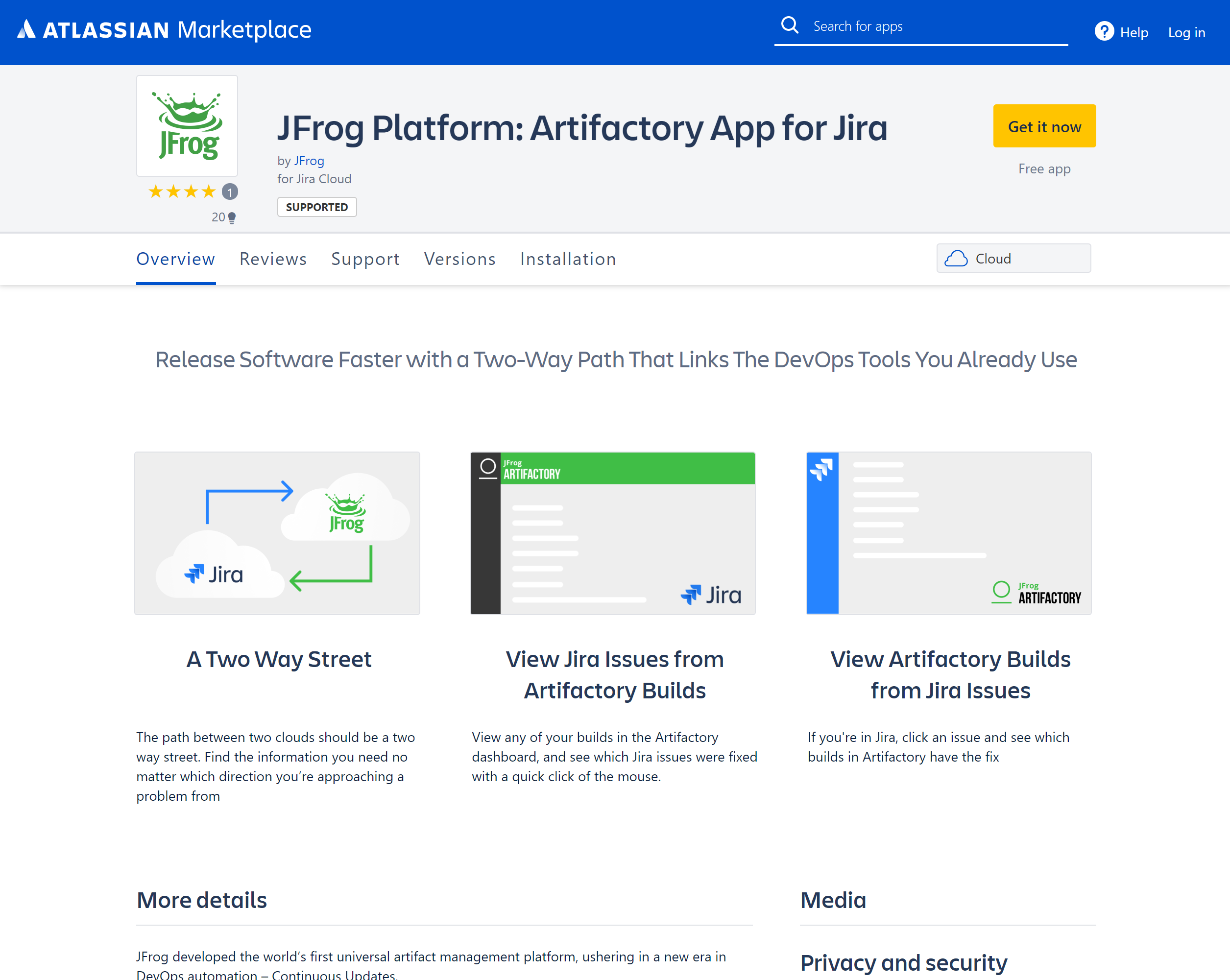
    Artifactory is already able to collect issue key messages from Git that logged alongside builds. The Artifactory dashboard for build information displays a link to each of the referenced Jira issues in the Issues tab. Now, users of Jira can link to the builds in Artifactory.

    Jira remains the dominant project tracking and management application for software development. As more organizations appreciate the degree to which they now depend on software, O’Mara noted the number of stakeholders in an organization using Jira is starting to increase, as application development schedules are tracked more closely. Atlassian is now making Jira more accessible as a cloud service to help foster that increased adoption, noted O’Mara.

    Atlassian is now making a case for transitioning its customer base to the cloud. In the third quarter of this year, it plans to discontinue new server license sales in addition to increasing prices for on-premises products. Ironically, the company reported preliminary results for its most recent third quarter that indicate revenues of between $566 million to $572 million. That’s $85 million more than originally forecasted, because demand for on-premises products has increased in anticipation of their unavailability later this year.

    In general, both Atlassian and JFrog are strong proponents of a best-of-breed approach to DevOps. JFrog, in its most recent quarter, reported $42.7 million in revenue, representing a 39% gain. Cloud revenue in that quarter grew 69% to $9.8 million, representing 23% of total revenue.

    It’s unclear at what rate organizations are shifting to the cloud. The number of workloads moving into the cloud has certainly accelerated in the wake of the economic downturn brought on by the COVID-19 pandemic. However, the bulk of data continues to reside in on-premises environments, and many organizations, because of performance, security and compliance concerns, don’t have any immediate plans to migrate all their applications to the cloud.

    Regardless of where DevOps platforms reside, there will always be a need to integrate them. It just may be easier to achieve that goal when all the tools that make up that workflow are running in the cloud.


  • IBM Unifies Cloud Services to Simplify App Dev

    IBM Unifies Cloud Services to Simplify App Dev

    IBM announced today that an IBM Cloud Code Engine service that unifies the cloud platforms on which applications are built and deployed is now generally available.

    Built on top of a serverless computing platform, IBM Cloud Code Engine is a managed service that unifies access to a platform-as-a-service (PaaS) environment, a container-as-a-service (CaaS) environment and batch workloads, that run on traditional virtual machines, to a single platform.

    At the core of that managed service is an instance of Kubernetes running Knative middleware for invoking an open source serverless computing framework, the Istio service mesh and Tekton pipelines for building DevOps workflows.

    Jason McGee, CTO and vice president for IBM Cloud Platform, said the goal is to eliminate the artificial constructs that developers are forced to navigate in the cloud today that can each trace their lineage to a different era of software development. The IBM Cloud Code Engine unifies the developer experience in a way that makes it simpler to build and deploy applications on the type of cloud service that best makes sense for a specific application workload, McGee said. Developers no longer need to configure code for a specific type of infrastructure; they can simply describe how they want source code or a container image to behave, and IBM Cloud Code Engine automates deployments accordingly.

    The serverless computing framework that IBM Cloud Code Engine is built on also makes it possible for IBM to only charge organizations when code is actually running, versus requiring them to commit to a specific amount of infrastructure to run a set of virtual machines, McGee added. Charges are based on the memory and vCPU consumed and incoming HTTP calls. That approach will, over time, substantially reduce the total cost of cloud computing, said McGee.

    It should also accelerate the rate at which applications are migrating to the cloud, added McGee. Today roughly 20% of application workloads run in the cloud. Getting the next 40% of workloads shifted into the cloud will require providing a simplified application developer experience, noted McGee.

    The challenge organizations are wrestling with today is that they are deploying a mix of monolithic and microservices-based applications in the cloud that, to varying degrees, rely on batch-oriented and real-time platforms. IBM Cloud Code Engine represents an effort to provide a layer of abstraction over a wide range of cloud services that they can flexibly invoke via an event-driven platform, as required.

    The DevOps implications of IBM Cloud Code Engine are potentially profound. DevOps teams today spend an inordinate amount of time provisioning cloud infrastructure on behalf of developers. IBM is now making a case for a platform that automates that process in few seconds. In effect, control over cloud infrastructure will shift even further left to application developers. DevOps teams, in theory, will spend more of their time optimizing cloud environments after an application has been deployed.

    It’s not clear to what degree platforms such as IBM Cloud Code Engine might force cloud service providers to consolidate distinct cloud services they provide to developers today based on the type of application being built. However, it’s already apparent that the writing on the wall heralding that consolidation have now been indelibly inscribed.

  • Applause Delivers Testing Integration Tool

    Applause Delivers Testing Integration Tool

    Applause today made a bi-directional integration capability that simplifies requesting application code tests of, dubbed Applause In-Sprint Testing, generally available.

    Kristin Simonini, vice president of product for Applause, said application owners will be able to, for example, use a Jira project management application to create a ticket that requests a specific piece of code be tested either by a member of dedicated testing team or by a developer that has assumed greater responsibility for application testing within the context of a DevOps workflow.
    Alternatively, that request could be sent to a tester that is a member of uTest, an online community of professional testers that Applause oversees.

    The company also published the results of a global survey of 1,800 quality assurance (QA), product, engineering and DevOps professionals that found 44% of development teams that have shifted application testing left are spending a full workday every week on application testing. More than half the respondents (52%) noted that amount of time spent on testing is impacting developer productivity.

    On the plus side, a full 88% of respondents that release code multiple times per month said their organizations now test features as they are developed versus waiting until the end of application development process, the survey also found.

    The major benefits of shifting testing left cited by respondents are reducing the number of bugs released into production environments (57%), reducing the cost of late-stage bug fixes (48%), and reducing the need for hot-fixes (39%).

    The top two barriers to shifting responsibility for testing left toward developers is they are too busy coding (45%) and that development and quality assurance (QA) efforts remain siloed (37%). Nearly half of developers (44%) said they have issues with context switching as they shift between coding and testing tasks.

    Simonini said Applause In-Sprint Testing will make it easier for application owners to decide when they want to make use of a professional tester versus having a developer run a test. The Applause Product Excellence Platform then enables IT organizations to leverage a software-as-a-service (SaaS) platform to record a series of test case scenarios that can be automatically converted into an automation script without anyone having to write code.

    The overall goal is to simplify testing at a time when the number of applications being built has accelerated in part because of the increased focus on digital business transformation that occurred in the wake of the economic downturn brought on by the COVID-19 pandemic. As organizations realize how dependent they have become on those applications to differentiate themselves, the focus on quality assurance naturally intensifies, noted Simonini.

    There’s no doubt more organizations are testing with greater frequency. The efforts of developers that previously tended to address large numbers of bugs as part of a series of application updates after deployment in production are now being frowned upon. Organizations realize their applications only get one chance to make a first impression with end customers. As a result, the level of attention to detail being applied to application testing has, for better or worse, never been greater.

  • Pulumi Moves to Automate Cloud Infrastructure Provisioning

    Pulumi Moves to Automate Cloud Infrastructure Provisioning

    Pulumi announced today it is expanding the scope of its automation ambitions to make it easier to securely provision cloud infrastructure-as-code.

    Joe Duffy, Pulumi CEO, said the Cloud Engineering Platform enables DevOps teams to use Pulumi Packages to create reusable components for automating IT infrastructure provisioning in a way that can be embedded within workflows and applications using an application programming interface (API) that Pulumi has exposed. IT teams can define a Pulumi Package in the programing language of their choice, Duffy noted.

    The Cloud Engineering Platform is now generally available on the Microsoft Azure cloud, while a preview edition of the offering is available on Google Cloud Platform. Support for Amazon Web Services (AWS) is planned for later this year.

    The platform itself is based on version 3.0 of Pulumi, an open source tool that developers have previously employed to manage infrastructure-as-code. Pulumi is also making generally available a tool for integrating its tools with more than a dozen continuous integration/continuously delivery (CI/ CD) platforms.

    That capability, coupled with existing support for integrated testing capabilities and the tools for managing compliance-as-code based on identities, provides IT teams with a more comprehensive approach to managing infrastructure-as-code, said Duffy.

    Most cloud resources today are directly provisioned by developers using open source tools such as Terraform. The issue that organizations have encountered is that developers are prone to making configuration mistakes that cybercriminals then exploit. Pulumi is making a case for an alternative approach to provisioning infrastructure-as-code that makes it easier to validate configurations using testing tools, while at the same time limiting who can access infrastructure resources by including support for the secure access markup language (SAML) and single sign-on (SSO) capabilities.

    It’s not clear at what rate enterprise IT organizations will be shifting toward platforms that enable infrastructure to be managed as code in a more robust fashion. Developers that don’t always have the greatest appreciation for cloud security issues routinely employ tools such as Terraform to provision infrastructure-as-code with little to no supervision. Cloud resource misconfigurations often result in ports left wide open, and cybercriminals now make use of tools to scan for those types of misconfigurations.

    Pulumi Packages provides a means for IT teams to exercise more control over the provisioning process, using vetted reusable components in a way that doesn’t compromise the rate at which developers can spin up cloud resources, noted Duffy.

    As organizations focus more on software supply chains in the wake of some recent high-profile breaches, it’s only a matter of time before more questions arise about how cloud infrastructure is being provisioned. Much of the concerns organizations already have about cloud security doesn’t stem from the platforms themselves. Rather, it’s the processes employed to provision infrastructure under a shared cloud security responsibility model that results in so many vulnerabilities. Many developers assume the cloud service provider is securing configurations, only to discover later that it was their responsibility to validate those configurations. Security teams, meanwhile, can’t keep pace with the rate at which cloud infrastructure resources are being provisioned.

    Hopefully, there will come a day when DevSecOps best practices leverage automation to resolve this issue once and for all. The challenge is finding the best way to achieve that goal in a way the average developer will accept and embrace.

  • Perforce Adds Synchronization Tool for Cross-Functional Teams

    Perforce Adds Synchronization Tool for Cross-Functional Teams

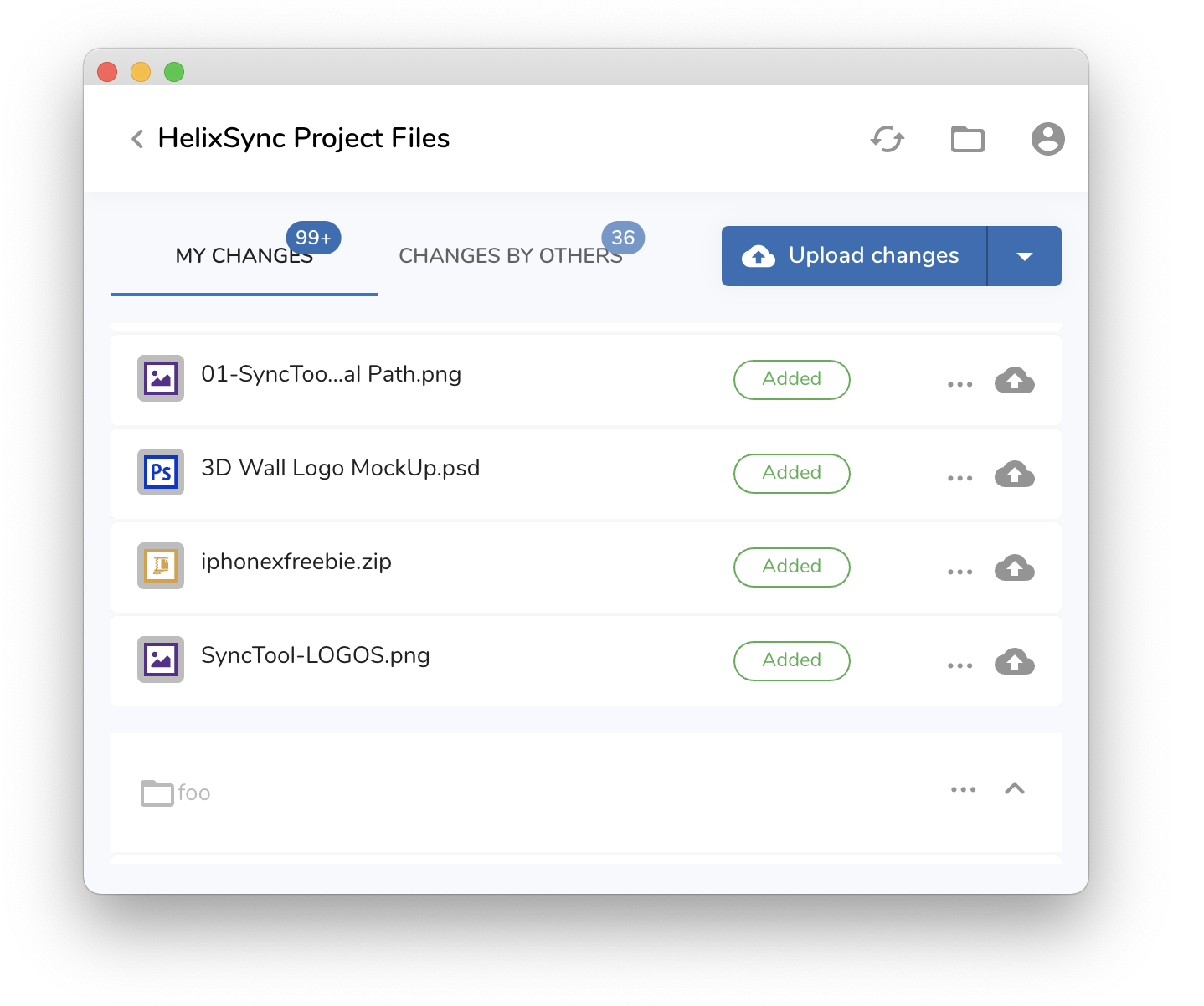
    Perforce Software has added a graphical tool, dubbed Helix Sync, that enables individuals, such as artists, to take advantage of the version control capabilities provided by its software development life cycle (SDLC) platform.

    Gerhard Krüger, cloud architect and product manager at Perforce, said that as DevOps workflows continue to evolve in the gaming and automotive industries, the need to manage artifacts such as drawings, for example, alongside software artifacts is becoming more pronounced among cross-functional teams.

    Helix Sync gives those end users access to a desktop client that enables any individual to upload artifacts into a system by dragging and dropping them into the Perforce Helix Core SDLC platform.

    Previously, end users that lacked coding skills would need to share files with developers via cloud services such as Dropbox. The Perforce approach removes the inherent friction development teams would otherwise encounter, while at the same time making sure the artifacts being shared are more secure, said Krüger. In addition, end users don’t have to be concerned about file size limitations imposed by file sharing services accessed via the cloud, noted Krüger.

    It’s not clear how many organizations are looking to centralize digital asset management within the context of an application development process, but the fewer places that artifacts reside, the more productive IT teams tend to be. At a time when the number of application development projects within many organizations has accelerated, there’s a lot more interest in reducing the number of steps any developer has to monitor and track.

    Diagrams and other types of artwork are not the only kinds of artifacts that are finding their way into software development processes. Data scientists are building massive artificial intelligence (AI) models that need to be incorporated into application development and deployment processes. The challenge organizations face is the individuals that create many of these types of artifacts lack the programming skills required to share them via version control platforms typically employed by developers.

    With the launch of Helix Sync, IT teams should assume that, going forward, Perforce will be expanding its overall content management capabilities, Krüger added.

    It’s not clear to what degree workflows will converge as application development continues to evolve. Organizations are starting to appreciate just how dependent they are on software. As that awareness increases, it’s only a matter of time before workflows start to converge around the software development process that are employed to drive multiple digital business transformation initiatives.

    With more of the creators of those artifacts working remotely, the security of those software supply chains has also become more critical. Cybercriminals are becoming more adept at compromising the credentials end users create to access a cloud file service. Software development teams are more likely to employ more rigorous forms of authentication.

    Arguably, there’s never been more artifacts to track during the history of application development than there are today. The thing that makes managing all those artifacts even more challenging is, just like every other piece of software, they are also being continuously updated in ways that aren’t easy to discern.

  • Seeing the Bigger Picture With BizDevSecOps

    Seeing the Bigger Picture With BizDevSecOps

    Not long ago, if you can believe it, software was shipped on physical floppy disks and CDs. These physical relics contained dense paper instruction books that humans read diligently for hours on end (I guess they had more time to spare back then?). Complexity was a given for computer-based tasks.

    Fast forward past the consumerization of IT to 2021, and you’ll find extremely high standards for technology. End users now expect intuitive apps with instant end value and 100% uptime. If they don’t receive gratification within minutes, they’re likely to trash it.

    In the race to meet digital innovation demands, software companies are increasingly tapping new strategies to deliver iteratively. Thus, disciplines like DevOps, DevSecOps, low-code and SRE have flourished. But are we adequately considering the end value of that work? Some feel business leadership needs a larger seat at the table and more input: enter the newest iteration of these disciplines, BizDevSecOps.

    I recently met with Gregg Ostrowski, CTO at AppDynamics, to discuss how to introduce BizDevSecOps in an organization. For Ostrowski, it boils down to having full-stack observability to connect application performance, security threats and revenue generation. Only by democratizing access to important metrics and identifying runtime weaknesses can business outcomes truly drive production.

    Full-Stack Observability

    Within our new pandemic-first reality, all organizations are amplifying their use of digital services to interact with customers. However, software teams are struggling to keep pace in this new environment — 89% of technologists report feeling under tremendous pressure at work, the Agents of Transformation 2021 report found. This strain has only increased as IT complexity soars amid the pandemic — 83% felt their job became more complex over the past year.

    IT staff is under mounting pressure to perform, and they may not have the correct elements in place to support elegant and profitable applications, said Ostrowski. When it comes to monitoring, in particular, alert fatigue could especially hamper innovation attempts and make it difficult to know what to prioritize.

    Instead, Ostrowski advocates for letting tangible business outcomes, such as conversion rates and performance, drive development. To correlate the impact on revenue more directly, he encourages “giving business leaders a seat at table during the entire CI/CD pipeline.” One aspect to roping in business, security, development and operations is unified observability across the entire stack.

    The Pendulum Swings

    But wouldn’t it be challenging to give business leaders a seat within a technical software delivery process? Well, this wouldn’t be the first time business has directed technological change.

    Ostrowski recalls the mid–2000s and the dawn of the mobile market. During this period, IT became consumerized for laypeople, with glossy apps and impressively intuitive experiences. He recalls a general loss of faith in IT staff, as workers often had “better tech at home than they did in the office.” This drove business leaders to invest heavily in modernizing their companies.

    In the following years, cloud solutions quickly re-empowered IT with new computing models, emboldening them to compete using the same tools as tech companies. However, simple deployments using a single server quickly morphed into arranging multiple workloads on various cloud service providers (CSPs). Virtualization, serverless and microservices architectures also brought novel complexities into the stack.

    “The IT staff is being asked to do jobs they’ve never done before,” Ostrowski said. He explained that SREs, for example, must understand networking, infrastructure and security — a vast portfolio for a single person and role. Supporting many disparate paradigms is simply beyond the scope and scale of what a single person can do, meaning new automation must be constructed — because “if you’re too busy debugging, you can’t innovate,” says Ostrowski.

    Amid mounting complexity and the burden of rising cloud costs, it appears business leaders again have a role in directing and prioritizing technological efforts.

    Getting Busy With BizDevSecOps

    According to Ostrowski, connecting IT and business with BizDevSecOps all hinges on collaboration. “If you don’t get to a point where you can collaborate with all these pillars, you’ll degrade your business,” said Ostrowski.

    BizDevSecOps also could help connect the dots to comprehend anomalies. For example, suppose a commerce application is experiencing a 15% conversion rate, but it drops to 7% after an upgrade. In this scenario, collaboration is crucial to identify usability bottlenecks in production and adjust accordingly.

    Tracking business outcomes can align development around improving the user experience. If broken features are hurting conversion rates, all stakeholders need to know to adjust accordingly. “User experience is the golden gem,” said Ostrowski.

    Other benefits of a BizDevSecOps approach may include:

    • Correlating activity and revenue: Ensuring spikes of activity are associated with revenue generation and not attacks or faulty instances.
    • Workload optimization: Monitoring business outcomes can help adjust the scope and size of machines as needed.
    • Before and after: Comparing financial results before and after migrations, new versions or new feature additions.
    • Postmortems: Pinpoint and correlate data when conducting postmortems.
    • Progressive delivery: A more rapid release frequency helps a business retain agility and pivot when needed.

    Visibility Enables BizDevSecOps

    DevSecOps is now a common philosophy — it promotes development with security baked into the application. Now, BizDevSecOps could be the next iteration; a collaborative approach that considers additional perspectives. BizDevSecOps is a vital method to “continue to build trust and collaboration so everyone has a seat at the table,” said Ostrowski.

    Ninety-six percent of technologists agreed that monitoring the entire IT stack to connect technical performance to business outcomes will be important in 2021, the Agents of Transformation Report found. To enable this, business, security and development must inevitably de-silo. According to Ostrowski, adopting BizDevSecOps depends on a window into performance management and business intelligence, because “when changes happen and no one knows about it, it’s a serious problem,” he added.

  • Survey Shows Mounting DevOps Frustration and Costs

    Survey Shows Mounting DevOps Frustration and Costs

    A survey of 400 developers and DevOps team members in the U.S. and Europe found, on average, 15 hours a week are being spent managing tasks such as debugging pipelines and waiting for tests and builds to complete.

    Conducted by the market research firm Vanson Bourne on behalf of Garden, a provider of a platform for automating application development and deployment tasks in Kubernetes environments, the survey finds more than three-quarters of respondents (76%) said the time spent on these and other manual DevOps tasks is generally being wasted.

    Garden CEO Jon Edvald said, all told, 39% of a 40-hour workweek is typically devoted to these tasks. When the number of developers and DevOps specialists that are employed today are factored into that equation along with their salaries, as much as $61 billion is being wasted on these tasks in the U.S. alone, he noted.

    The top sources of DevOps frustration cited by survey respondents are waiting for pipelines to run (76%), waiting for builds and tests (74%) and setting up, maintaining and debugging pipelines/automation (71%). In fact, only 11% of all respondents are completely happy with their development setups and workflows.

    Those hidden costs may even increase as organizations bring on additional DevOps expertise. A full 83% of respondents said their organizations are planning to hire more staff or increase their use of freelancers/outsourcing into DevOps roles in 2021. Three quarters (75%) said DevOps budgets have increased or will increase compared to 2020.

    In addition, the adoption of more complex platforms, such as Kubernetes, may also conspire to increase costs, noted Edvald. Respondents at organizations not yet using Kubernetes spend an average of 14.3 hours per week on low-level DevOps tasks, as compared to 16.5 hours a week for those who are already using Kubernetes. Nearly two-thirds of respondents (62%) said their organizations are already using Kubernetes, while 31% are currently evaluating it, to varying degrees. A full 95% of respondents using Kubernetes have faced challenges after rolling it out, including training and onboarding (37%) or complexity of setup/configuration (35%).

    Of course, not all the time that might be saved is going to be applied to tasks that increase overall productivity; nearly half of respondents (49%) said if they had it, they would spend more time developing new products and services.

    Specifically, 46% said they would improve speed and delivery of existing products and services, while 44% said they would focus on improving security for existing products and services.

    Edvald said the survey makes it clear there’s still plenty of opportunity to automate repetitive DevOps tasks. Organizations are spending too much time on the care and feeding of DevOps platforms that takes time away from building and deploying applications, noted Edvald.

    Less clear is when organizations will reach some type of DevOps breaking point. Garden is betting that the transition to cloud-native applications based on microservices will eventually force the DevOps automation issue. However, in organizations that only know the DevOps processes they have used for years, change may be a long time in coming.

  • Okta Adds Free Developer Edition to AppSec Service

    Okta Adds Free Developer Edition to AppSec Service

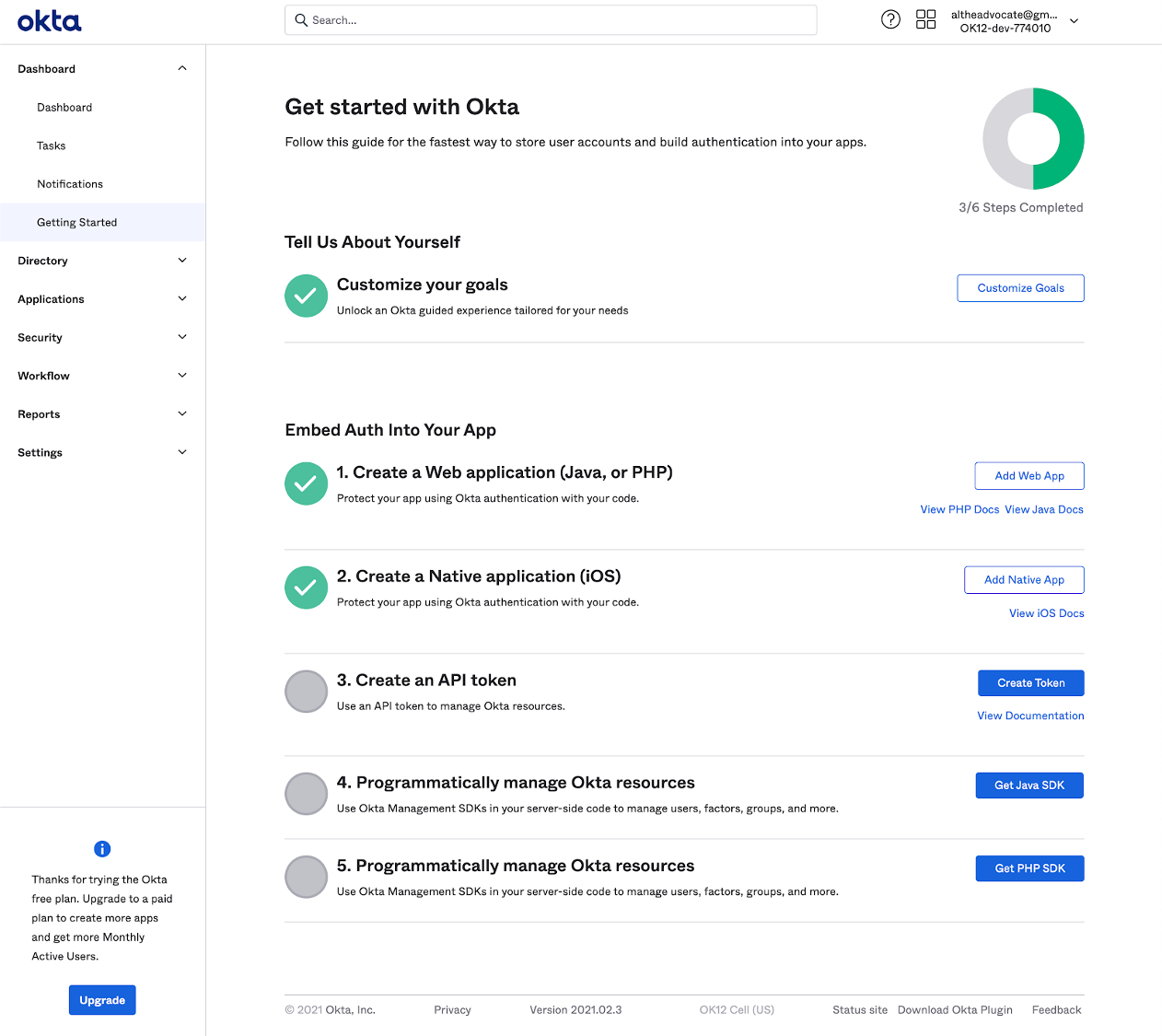
    Okta this week lowered the barrier to adoption of DevSecOps best practices by making available an Okta Starter Developer Edition to enable developers to embed Okta authentication, authorization and user management capabilities into applications at no cost for up to 15,000 monthly active users.

    Randall Degges, head of developer advocacy for Okta, said interest in identity management among developers is rising as a method for implementing zero-trust initiatives that better secure application environments. Rather than having to embed and maintain authentication and authorization themselves Okta is making a case for developers to invoke an application programming interface (API) to access a service that provides those capabilities on demand, noted Degges.

    The Okta Starter Developer Edition, announced at an online Oktane21 event, reduces the friction developers encounter as they look to embed identity management capabilities, such as multifactor authentication, into their applications, Degges said. Developers can, for example, access enhanced documentation and sample applications as well as new integrations with Kong, Heroku and Terraform platforms and tools, alongside integrations with multiple continuous integration and continuous delivery (CI/CD) platforms.

    In general, Degges said, the shifting of responsibility left toward developers is happening at a much faster rate because the level of appreciation for security among developers is now a lot higher. Identity management capabilities are simply another API that developers can now invoke as part of a DevOps workflow, noted Degges.

    The Okta Starter Developer Edition comes on the heels of the announcement of the acquisition of Auth0, a provider of authentication and authorization services that can be easily embedded within an application. That $6.5 billion deal, however, is not expected to close until summer.

    In the meantime, Okta is moving forward with the Okta Starter Developer Edition that could eventually create a large pool of applications that will one day consume Okta services for a fee as they scale. The more applications an organization deploys, the more likely it becomes that they will have more than 15,000 active users per month.

    In the meantime, the level of experimentation involving digital business transformation initiatives is likely to increase. Developers will be able to demonstrate to their often skeptical cybersecurity counterparts that their concerns have been addressed before an application is deployed in a production environment.

    It’s not clear what impact access to initially free identity management services might have on the adoption of DevSecOps best practices. In many cases, developers will take advantage of a service like Okta simply to address a requirement. Their appreciation for how that service fits within the context of a larger DevSecOps workflow might not be all that high.

    Nevertheless, the state of application security should improve in the months and years ahead. In fact, some developers may opt to update existing applications that, at present, do not meet zero-trust requirements to take advantage of identity management services that can be invoked via an API. Alternatively, the may also decide to replace authentication capabilities that are challenging for them to maintain and update with an API that calls a service. Regardless of the path forward, the historic divide between developers and cybersecurity teams appears to be finally narrowing.

  • Gitpod Revamps Dev Automation Tool

    Gitpod Revamps Dev Automation Tool

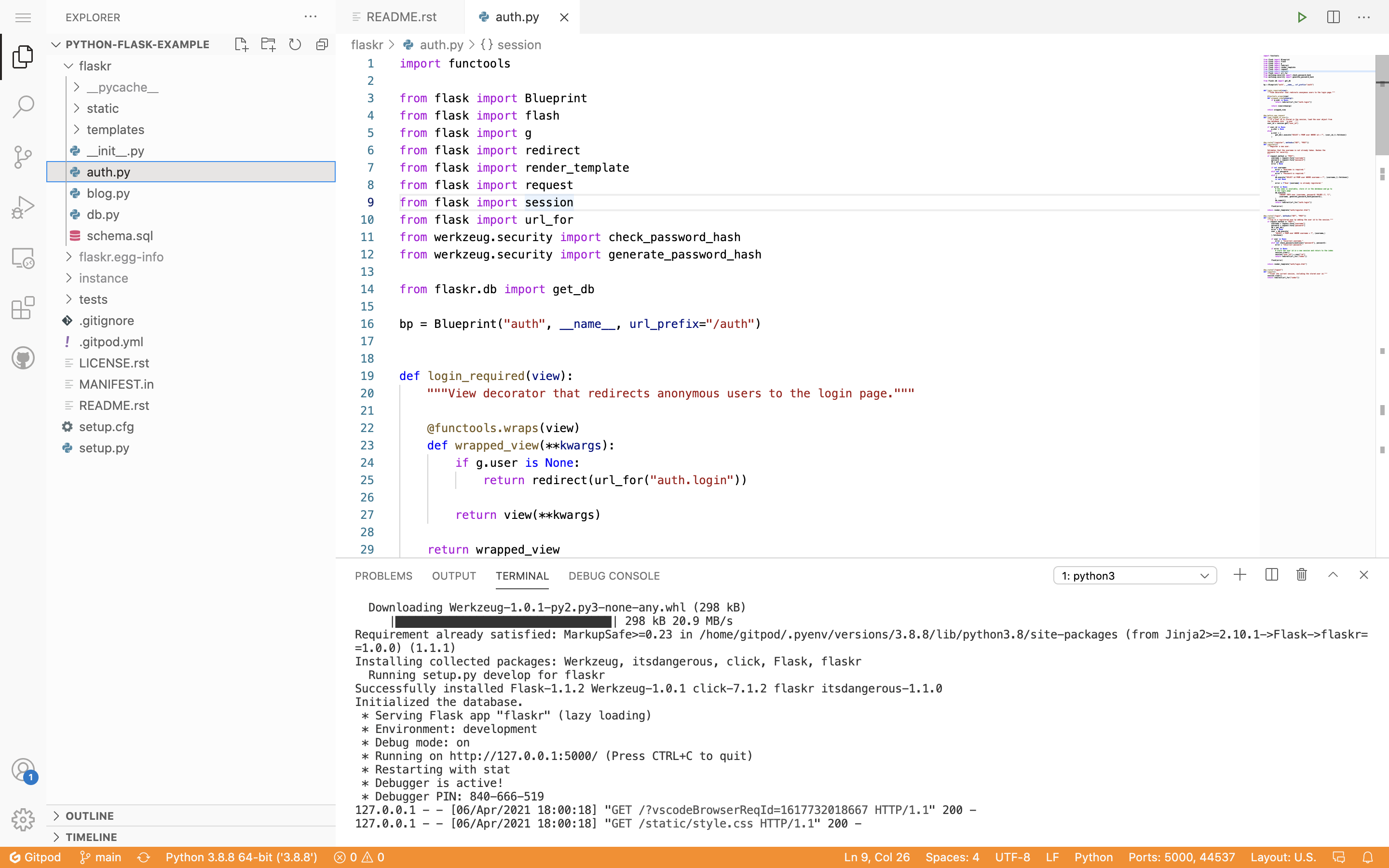
    Gitpod announced today it refreshed the dashboard for its namesake open source tool for automating the deployment of development environments, in addition to making Microsoft VS Code its default tool for editing code.

    In addition, Gitpod has included support for sudo privileges and Docker images using an advanced user namespace to map and limit access to workloads using a built-in Supervisor capability.

    Fresh off raising an additional $13 million in funding, Gitpod CEO Sven Efftinge said now that it’s clear developers will be working from anywhere for the foreseeable future, the need for a tool to automate setting up a developer environment on a local machine outside of an office has become more apparent.

    Gitpod claims there are now more than 350,000 developers using its tool that creates a Kubernetes pod on each developer machine to deploy a complete application development environment, including the integrated development environment (IDE), plugins, compilers, build tools, code generators, databases and application servers. Gitpod makes use of the version control systems provided within, for example, a continuous integration/continuous delivery (CI/CD) platform as the single source of truth for configuring an application development environment.

    The overall goal is to eliminate the time developers waste setting up application development environments so they can write code on their own machines. That approach also makes it simpler for developers to collaborate around the same application development environment regardless of where they happen to be physically located.

    Efftinge said Gitpod provides DevOps teams with a tool to automate setting up development environments across any Git repository that is the equivalent of the Codespaces tool that GitHub recently made available. Rather than having that capability for only one repository, Efftinge noted that most developers work on projects that span multiple types of repositories.

    Automating that process also makes it simpler to align development environments with production environments. One of the reasons why code doesn’t work in a production environment when it is first deployed is because the local development environment has been manually configured in a way that doesn’t accurately reflect the production environment. That issue can become even more problematic when developers are working on multiple projects involving, for example, separate microservices constructed using different repositories.

    In the wake of the COVID-19 pandemic and the acceleration of multiple digital business transformation initiatives there’s naturally a lot more focus on automation and developer productivity. Most developers will be working outside the office for the foreseeable future. Of course, most developers have been writing code outside the office for years. The challenge now is enabling teams of developers to develop applications as efficiently as possible, no matter where they are in the world. In fact, now that development teams have become more distributed, organizations are becoming more comfortable hiring developers wherever they find them.

    Eliminating inefficient manual tasks, such as maintaining development environments, is, of course, going to be a prerequisite for making it possible for those developers to, over time, navigate multiple application development projects without ever having met their colleagues in person.

  • Tasktop Adds Dashboard to Surface VSM Insights

    Tasktop Adds Dashboard to Surface VSM Insights

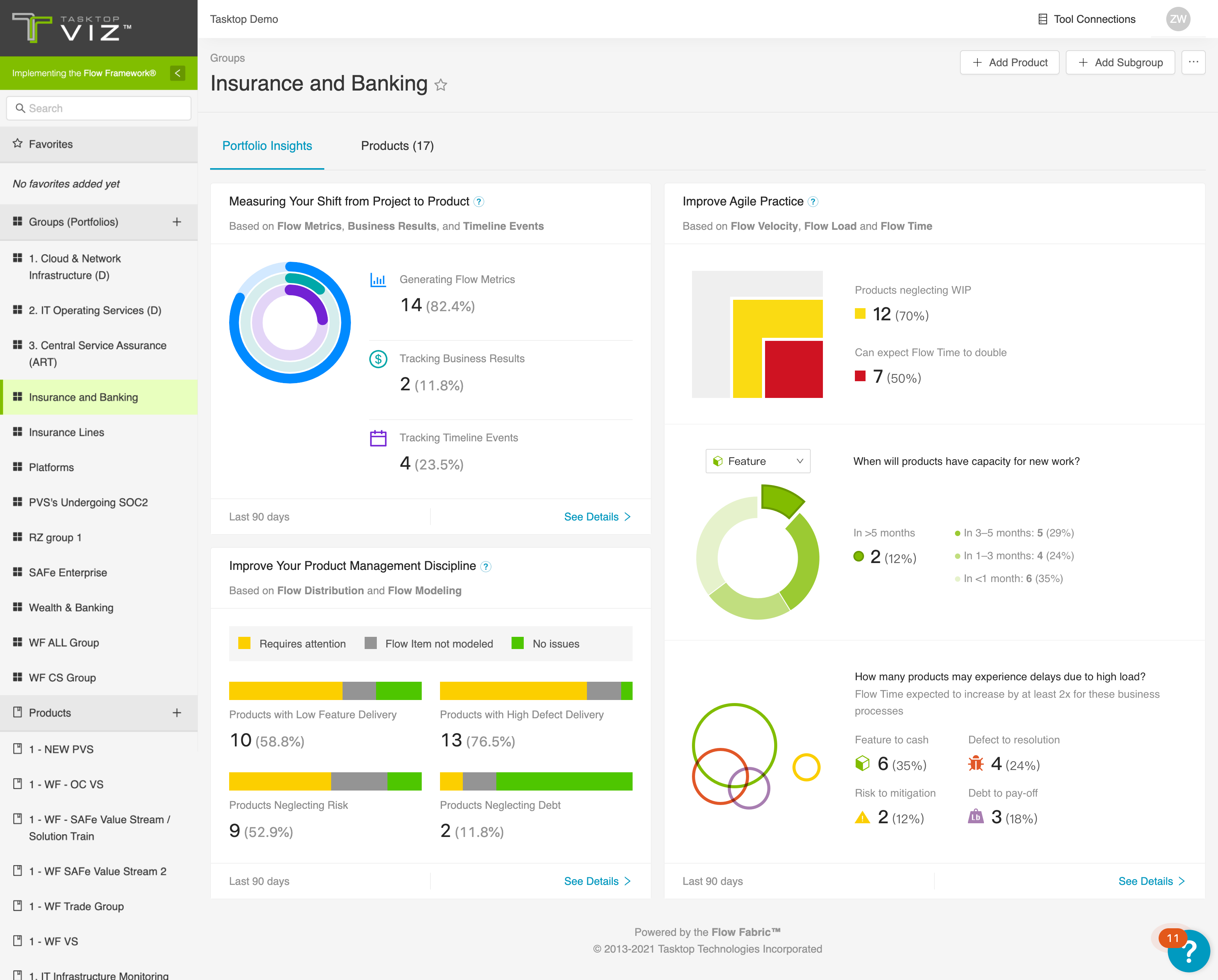
    Tasktop today unveiled a dashboard that it promises will simplify tracking of key performance indicators (KPIs) spanning multiple projects.

    In addition, the value stream management (VSM) platform provider revealed it has garnered an additional $100 million in funding.

    Tasktop CEO Mik Kersten said the Tasktop Viz VSM Portfolio Insights dashboard makes it simpler to surface the insights that the company’s VSM platform aggregates as it collects metrics and analytic data from the tools and platforms that make up a DevOps workflow.

    Organizations are then better able to determine the impact any change to the rate at which an application is being developed will have on the business, noted Kersten. IT and business leaders can also more easily identify how constrained resources or persistent quality control issues might be adversely impacting those business goals, added Kersten.

    As a DevOps discipline, VSM is still relatively new. However, Tasktop claims more than half of the Fortune 100 employ its VSM platform. Customers include BMW, CGI, E*Trade and T-Mobile. Despite the economic downturn brought on by the COVID-19 pandemic, the company reports it saw a 30% increase in revenues driven mainly by organizations that have accelerated multiple digital business transformation initiatives. A recent Forrester Consulting Total Economic Impact Study indicated organizations realize a potential 640% return on investment over a three period after implementing the Tasktop VSM platform.

    Tasktop is also a founding member of the Value Stream Management Consortium, which is seeking to promote adoption of VSM platforms to close the divide that often exists between individual DevOps projects and the strategic business goals of an organization.

    The concept of value stream management traces its lineage back to lean manufacturing methods, which called for each step of a manufacturing process to be continuously measured. As software development has evolved from being a craft to a process that is automated as much as possible using DevOps best practices, the need to monitor the impact of, for example, missed software development deadlines on the business has become more acute as organizations appreciate just how dependent they are on software.

    VSM platforms automatically take technical metrics, gathered via a DevOps process, and match them to a set of key performance indicators (KPIs) defined by business leaders. The challenge many organizations still face is, first, making sure they have the tools in place to collect the appropriate technical metrics and then identifying the KPIs that truly matter to the business. Once those metrics are gathered and KPIs established, organizations are able to apply advanced analytics to optimize allocation of resources that include people, platforms and processes, noted Kersten.

    It may be a while before VSM becomes pervasively applied with organizations. However, those organizations that find a way to consistently deliver quality applications, on time, that have a greater impact on the business will inevitably start to outperform rivals. The challenge and the opportunity is to bring a level of discipline to bear that ensures that goal is always achieved.