Category: Continuous Delivery

Continuous delivery is a software engineering discipline that allows organizations to consistently develop and release quality software at a rapid pace. It is achieved by automating the software development lifecycle, enabling tasks such as development, testing and release to occur concurrently and continuously.

  • Red Hat Brings Ansible Automation to Google Cloud

    Red Hat Brings Ansible Automation to Google Cloud

    Red Hat today announced that the Red Hat Ansible Automation Platform is now available on Google Cloud to simplify the management of yet another cloud platform.

    Using the Ansible Automation Platform, it’s now possible for IT teams that invoke Google Cloud to access pre-integrated services such as Google Virtual Private Cloud, security groups, load balancers and compute and instance groups.

    Pete Cruz, head of product and technical marketing for Red Hat Advanced Cluster Management for Red Hat, said Google Cloud—alongside existing support for rival cloud services—will make it simpler to consistently apply automation across multiple cloud and on-premises IT environments.

    In addition, IT teams can also count the consumption of the Ansible Automation Platform toward any existing enterprise spend agreements with Google.

    Ansible has emerged as a de facto standard for IT automation and is widely embraced by IT vendors and cloud service providers. That level of support has fostered the creation of a level of automation content that is now unrivaled by any other automation framework, noted Cruz.

    In the meantime, the pressure to automate IT processes is building during uncertain economic times. As IT environments continue to become more complex—thanks, in part, to the rise of cloud-native applications—many IT organizations are finding it more challenging to convince business executives to hire additional full-time employees. As a result, many of those IT organizations are now looking to automate as many processes as possible as more workloads are distributed from the network edge to the cloud.

    Rather than create a single playbook to automate every IT process on an end-to-end basis, organizations generally mix-and-match content created by others to automate workflows across highly distributed computing environments, noted Cruz.

    The biggest challenge when automating IT processes is simply overcoming inertia. Many processes are still manual simply because they always have been. In other cases, IT teams are still relying on undocumented scripts created by IT administrators who have left the organization. As the IT environment continues to evolve, it’s not likely those scripts will continue to scale.

    One way or another, IT is becoming more automated. The irony is that after using IT to automate almost every business process imaginable, it’s only recently that IT teams are getting around to automating their own workflows. Many of the rote tasks that used to be performed by entry-level personnel have been steadily disappearing thanks to automation.

    DevOps teams, of course, have always been ruthlessly committed to automating as many IT processes as possible in the name of efficiency. The rise of Ansible, however, makes it easier for every IT organization to achieve that same goal because they don’t have to wait for a specialist to create a playbook to automate a process. An Ansible playbook that can be easily customized or extended often already exists. The real issue may simply be knowing where to look for it.

  • Three Trends That Will Transform DevOps in 2023

    Three Trends That Will Transform DevOps in 2023

    The onset of COVID-19 accelerated digital transformation-related initiatives like cloud migration, microservices, observability and CI/CD, giving long-delayed projects the budget and staffing they needed to build momentum. After almost three years of increased investment and accelerating progress, CTOs and software development teams are navigating how to enable the improvements in time-to-market and customer experience that they set out to achieve. In 2023, we’ll see enterprise DevOps mature and expand its business impact by placing a central focus on quality, delivering improved time-to-market, customer satisfaction and productivity.

    DevOps Matures as a DX Enabler

    The past three years have seen massive growth in cloud computing, observability and pipeline automation as enterprises raced to deliver new, high-quality digital experiences to consumers. Cloud spending alone increased from $270 billion in 2020 to 397.5 billion in 2022, according to Gartner. With new technologies in place, the focus shifts to processes that deliver business agility and efficiency.

    Under increased pressure to deliver faster, businesses need to revisit, evolve—and, in some cases, undo—decades of risk and change management practices built around brick-and-mortar experiences and long software release cycles.

    As digital engagement increases, so will expectations for software quality and scalability. We’ll need to invest in new tools and practices—from testing to observability and beyond—to ensure that we’re meeting or exceeding those expectations.

    The economic uncertainty will compel us to look for ways to improve productivity and decrease waste. Quality practices are central to both. We’ll continue to look for ways to shift left and catch defects early in our pipeline when they are the least expensive to fix. We’ll want to optimize our build, integration, testing and deployment processes to identify bottlenecks and causes of rework that drain the productivity of so many teams daily.

    DevOps, with its emphasis on automation and collaboration, will connect the dots between operational goals, technological investments and improved software. Established frameworks like DORA give software development organizations concrete ways to measure the efficiency and effectiveness of delivery pipelines. The key metrics outlined by DORA—deployment frequency, lead time for changes, change failure rate and time to restore service—enable teams to align on where they can improve development practices and quality practices.

    DevOps Will be Measured by Business Success

    The value of digital transformation and DevOps will also extend even further across the enterprise as CTOs evaluate DevOps practices with structured assessments such as DORA. With several years of accelerated digital transformation under our belts, the software development industry can build out a broader definition of DevOps performance over time. The DORA framework sets the stage for understanding how engineering practices impact the customer experience and, in turn, company growth. In one example, Liberty Mutual, a company prides itself on exemplary customer service, is already seeing how DevOps performance connects to business success.

    Architect Justin Robinson notes in their roundtable on data-driven decision-making and DORA metrics: “For organizations, this is improved organizational performance. If we want to keep investing in great tech and serving our customers as best as possible, [we need] behaviors and practices that we can adopt to continuously get better and hit on every front here. Happier engineers, a better culture and a better bottom line for our company.”

    In 2023, more enterprises will harness DORA to measure DevOps performance and its impact on company growth.

    Customers Will Reap DevOps Benefits

    We’re already seeing how metrics like deployment frequency can support an organization’s ability to attract and retain users. According to the 2022 Testing in DevOps Report, teams that increased deployments by 50%-100% were two-and-a-half times more likely to report high user satisfaction. The ability to innovate—without introducing defects to users—is the next frontier in DevOps success. Quality engineering will serve as a safeguard for DevOps teams so they can deliver new features faster and with confidence.

    The Testing in DevOps Report also illustrated the growing connection between digital transformation, DevOps and quality engineering. A full 88% of teams with highly automated pipelines and mature DevOps practices reported high test coverage, which in turn is connected to high customer satisfaction. Test coverage, a core metric for quality assurance teams, is becoming the connection between code and customers throughout development. Quality teams will expand their testing strategies to cover more aspects of the customer experience, including non-functional attributes like performance and accessibility. Automation, particularly automated testing embedded in CI/CD pipelines, will allow teams to adopt these additional quality factors without slowing deployments.

    Connecting Engineering Transformation to Business Success

    2023 is shaping up to be an unpredictable year in technology. But with the momentum propelling digital transformation to an enterprise-level priority, engineering leaders have the data and the tools to shift focus from DevOps processes to transformative outcomes. DevOps maturity, measured and improved with DORA, will help organizations extract more value from their digital transformations by supporting greater innovation and better customer experiences. Quality engineering, augmented with new testing strategies that measure more of the customer experience, will play a critical role in this evolution by enabling development teams to move faster with confidence.

  • Automation Challenges Holding DevOps Back

    Automation Challenges Holding DevOps Back

    A survey of 500 IT and engineering leaders in the U.S. published today finds organizations build an average of 6.7 internal applications per year themselves in addition to investing in 7.7 separate platforms to build applications.

    Commissioned by Internal, a provider of platforms for building application development environments, the survey also found organizations are spending 40% of their time building and maintaining these internal tools and workflows. While more than three-quarters (76%) of respondents said that this work is necessary, it distracts from building applications that drive business revenue. A total of 82% said a lack of true flexibility and customization is the top reason so much time is spent on building and managing internal tools and workflows.

    A full 94% of respondents said they want a more collaborative platform that enables technical and non-technical users to build internal tools/workflows faster together. The survey also found 91% of respondents believe a platform that encompasses application development and workflow automation would save development time.

    Internal CEO Arisa Amano said one thing that holds IT teams back is that managing the platforms used to build applications requires too much programming expertise. Internal is making a case for a graphical approach to building application development environments so IT administrators can easily construct them using a drag-and-drop interface on behalf of an application development team. That approach makes it possible to allocate more programming resources to building applications, she said.

    More organizations than ever are revisiting how applications are built as the number of projects increases despite an uncertain global economy, noted Amano. Organizations of all sizes are reluctant to hire additional full-time engineers even as digital transformation initiatives demand a growing number of custom applications, she added. The only way to effectively address those conflicting goals is to adopt a platform that automates much of the workflow associated with building an application development environment, said Amano.

    It’s not clear how willing DevOps teams are to replace the platforms they use today to build those environments, but many organizations are still relying on bespoke platforms they built and continue to maintain. Many of those platforms are made up of a collection of tools that DevOps teams cobbled together over the years. However, many of the software engineers that initially built those integrations may have since moved on and the documentation left behind is likely to be scant, noted Amano.

    Most DevOps teams in 2023 will continue investing in higher automation levels to accelerate application development. The quandary they all face is whether to continue to invest in the platforms they have already or migrate to a platform that makes it simpler to build and maintain an application environment using automated workflows built and maintained by a vendor. Regardless of what they choose, it’s certain the days when organizations could afford to throw engineers at every integration challenge have come to an end.

  • Jellyfish Adds Tool to Visualize Software Development Workflows

    Jellyfish Adds Tool to Visualize Software Development Workflows

    Jellyfish today unveiled a tool that identifies bottlenecks in software engineering processes using data the company collects via Git repositories and project management software from Atlassian.

    Krishna Kannan, head of product for Jellyfish, said Life Cycle Explorer provides managers with a tool that makes it simpler to identify the root cause of a process breakdown.

    Life Cycle Explorer goes beyond providing simple top-level metrics to calculate the time consumed at each stage of a workflow for any given process and then visually map it to surface trends, noted Kannan.

    That makes it possible to identify gaps, see where work areas overlap—indicating parallel processes—and drill into how outlier events may be impacting the overall life cycle of a development project.

    The launch of Life Cycle Explorer comes at a time when there is more focus on the efficiency of DevOps teams than at any time in recent memory. During uncertain economic times, organizations of all sizes are looking to optimize DevOps workflows to ensure maximum efficiency because many organizations are hesitant to hire additional full-time engineers.

    The important thing to remember when analyzing DevOps workflows is there is no such thing as the optimal “Goldilocks” workflow that can be universally applied, noted Kannan. Instead, most DevOps leaders will discover one team excels at one segment of a DevOps workflow while others are more efficient elsewhere. Life Cycle Explorer makes it easier to identify those best practices in a way that makes them simpler to replicate when appropriate, said Kannan.

    Life Cycle Explorer follows the addition of a benchmarking tool and DevFinOps offering that addresses cost capitalization reporting for research and development. The core Jellyfish engineering management platform is designed to ingest data from the tools an organization already uses to build applications and then applies proprietary algorithms to create a comprehensive view of workflows across an organization. The challenge many organizations encounter today is they often lack visibility into workflows that have each been individually constructed by a diverse range of DevOps teams working on very different types of software projects.

    At the very least, DevOps teams need to establish a baseline that surfaces the current rate at which software development occurs. Once that baseline is established it then becomes possible to measure the impact changes to software engineering practices are having. Today many organizations make educated guesses about what changes are needed without really understanding the impact they might be having across the entire software development life cycle.

    Of course, it will be up to each organization to determine the degree to which they want to measure workflows. The Jellyfish platform makes it simpler to identify workflow issues, but there are also value stream management (VSM) platforms that track the impact software engineering workflows are having on specific business goals. Those VSM platforms are typically much more challenging to implement and maintain. The Jellyfish approach focuses more narrowly on improving the efficiency of DevOps teams.

    Regardless of approach, things that are not measured are not being managed. At a time when organizations are more dependent on software than ever, the need to manage software development life cycle as efficiently as possible has become a lot more important.

  • How To Build Anti-Fragile Software Ecosystems

    How To Build Anti-Fragile Software Ecosystems

    Just as organisms are susceptible to diseases and viruses, software systems are susceptible to hacks and errors. And within many complex interconnected systems, a minor bug could have a cascading effect across an entire organism, causing it to break. As such, increasing the resiliency of a software ecosystem is something engineers continually strive for. But how do we get there?

    One concept to consider is anti-fragile. Being anti-fragile refers to the ability of a system to thrive in adversity and adapt to change. Specifically, with regard to software, anti-fragile can equate to responsive coding practices, such as auto-scaling or default backups, to mitigate unforeseen events. Chaos engineering, for example, is one method to expose edge cases and build with adaptability in mind. And with the introduction of intelligent automation, often fueled by machine learning (ML) and artificial intelligence (AI), it’s becoming more and more feasible to build anti-fragile software systems.

    I recently met with Asim Razzaq, co-founder and CEO of Yotascale and former head of platform engineering at PayPal, to discover what it takes to build anti-fragile software. According to Razzaq, anti-fragile represents the next evolution of reactive, resilient software systems. And introducing anti-fragile concepts into your application networks can be done with just a few (relatively) simple steps. Below, we’ll define what anti-fragile is and see how this concept can be applied to software development and DevOps.

    Understanding Anti-Fragile

    As the adage goes, “What doesn’t kill you makes you stronger.” And it’s true—many natural systems tend to thrive under inhospitable conditions. As described by Nassim Nicholas Taleb in the book ‘Antifragile: Things That Gain from Disorder,’ anti-fragile systems thrive in adversity. For example, consider how human muscle grows under stress and load. Immune systems similarly adapt and respond to new viruses and improve the body’s resilience over time. So, how does this relate to software development?

    Well, organizations need to develop highly-tolerant software systems to meet rising digital consumer expectations. Especially when under extreme loads, systems must be elastic to adapt and survive. To meet high user demands, as well as specific service-level objectives (SLOs) and agreements (SLAs), most software companies are already investing in cloud-native tools that improve reliability. For example, a hallmark of site reliability engineering (SRE) is introducing automation to enhance the stability of applications.

    One example of gauging anti-fragile in software environments is chaos engineering, says Razzaq. Chaos engineering is the act of throwing a wrench into the machine. You randomly introduce bugs and malformed requests and attempt to create as much havoc as possible to see what happens. This could mean pulling out cables and restarting servers to gauge how software systems respond.

    “Software that can respond the best adapts the best,” said Razzaq. For example, if you manually remove a few nodes from the cluster but the system knows it needs seven to function, it could automatically spin up additional nodes. Or if the whole cluster goes down, ideally, the system would automatically restart and scale to the necessary requirements. In essence, anti-fragile software systems can understand and adapt to new environments without much, or any, human input.

    Tips to Construct Anti-Fragile Software Systems

    So, how can we construct anti-fragile software systems — especially when real-world challenges are often unpredictable? Razzaq shared helpful advice to consider when crafting anti-fragile software architecture.

    1. Start With Your Most Critical Systems First

    First, introduce chaos engineering to your most absolute critical systems. Define these vital components at the heart of your product which must remain functional. For a payments processor SaaS, for example, this would be the infrastructure supporting its transactional engine, such as the login and payment microservices.

    2. Determine How to Test Fragility

    Once you’ve identified this critical infrastructure, figure out how to test for fragility in your environment. Introduce chaos engineering to the component to see how it behaves. For example, returning to our payment platform example, this may include switching off a payment transaction type to see how the system functions in an extreme scenario.

    3. Decouple Components

    If systems are too closely coupled, errors and outages can ripple across multiple software services. To avoid that, it’s a good practice to prevent tight coupling between components—especially between critical systems and non-critical ones.

    4. Introduce Alternate Paths

    One method to decouple is by introducing alternate paths. For example, if a credit card verification component goes offline, the system should naturally accept other forms of payment and automatically suggest another form, such as a bank transfer. If all systems are down, the system could still accept unverified payments in a queue and let this continue until the threshold reaches a certain risk level.

    5. Learn From Past Events

    The next frontier of designing anti-fragile architecture is developing self-learning, autonomous systems. Of course, there is a limit to how automation can respond to unforeseen issues. But by feeding a machine learning model with more and more experiences, it could deal with untested new scenarios more gracefully. Of course, AI has the potential to make harmful decisions and even introduce unintentional bias, so organizations should have accountability for the algorithms they oversee, cautioned Razzaq.

    Benefits of Building With Anti-Fragile in Mind

    The goal is to able to thrive and function even under duress. By identifying the elements of core infrastructure to keep alive and putting it through the wringer, you can discover frailties before they cause significant consequences. And by decoupling components and introducing alternate paths, software systems can be better equipped for whatever may come. Uplevelling system operations with increased automation and AI is likely the future of constructing more fault-tolerant applications.

    “Software is everything in this day and age,” said Razzaq. “It increasingly plays a critical role in life-enhancing capabilities.” As such, the end benefits of developing an anti-fragile style could have hugely positive effects. In health care situations, it could make a difference in saving lives. For other less dire scenarios, increased fault tolerance leads to less lost revenue during peak traffic times and more consistent end-user experiences.


  • The Strategic Product Backlog: Lead, Follow, Watch and Explore

    The Strategic Product Backlog: Lead, Follow, Watch and Explore

    The economic outlook for 2023 suggests many organizations will be leading through a period of resource scarcity as IT budgets are scrutinized and organizational priorities are re-evaluated. For the product manager, smaller budgets and fewer resources place even greater emphasis on ensuring alignment between enterprise priorities and the product backlog.

    Many tools are available to help product managers prioritize individual work items at a tactical level for DevOps teams. These models generally seek to quantify some combination of internal stakeholder value and level-of-effort required for developers and DevOps teams to complete. Higher-value lower-effort items rise to the top.

    Other strategic factors are just as important in the prioritization process, particularly for products living within a larger enterprise product portfolio and competing for scarce resources. For these, a product manager must understand why a given work item or capability should be given priority and how it should be pursued. This involves asking questions such as: On what basis should an item come into the product consideration set? How much should DevOps and developers seek to innovate in delivering a specific capability or feature? What is the product and the portfolio-level opportunity cost of pursuing a given piece of work?

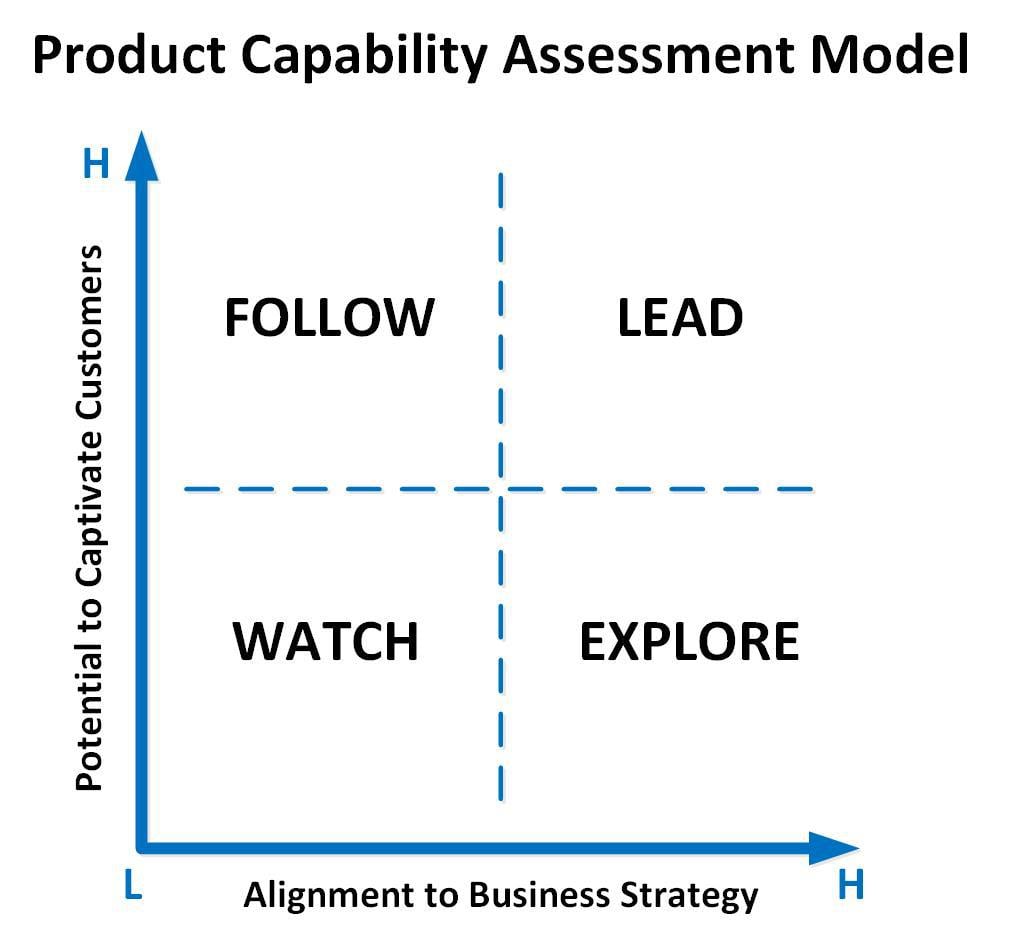
    A strategic model for backlog evaluation helps to set expectations with DevOps, developers and other internal stakeholders and ensure customer needs are front and center in prioritization decisions. It establishes a common language for collaboration. Two dimensions should emerge in evaluating capabilities at higher product and portfolio levels: Capability alignment to business-level strategy and the potential for a capability or feature to not just satisfy but captivate customers with a novel or compelling experience.

    The intersection of business strategy and customer experience factors can serve as a useful model for a product manager to think strategically about their backlog. The model helps to inform not only the question ‘Should we do this?’ but also ‘How should we proceed?’ and make things clearer for DevOps teams.

    Lead

    Items in this quadrant are the unicorns of the backlog and have the greatest potential to both strategically differentiate a product or enterprise and captivate customers. Product focus in this quadrant should be to invest in innovative, industry-leading approaches to satisfying customer needs in a manner that is consistent with business strategy and unique selling proposition. These items should receive the highest strategic priority on the product backlog.

    Follow

    Potential work items in this quadrant have a high potential to delight customers if handled well and irritate them if not. However, these elements are unlikely to be competitively differentiating given the current business strategy. Product focus in this quadrant should be to continually assess competitor treatment of these elements and adopt proven best-in-class experiences within the industry and adjacent industries. The product should focus moderate priority on competitive intelligence for elements in this quadrant and follow existing competitor approaches that enhance the customer experience.

    Watch

    Items in this quadrant are generally not problematic for customers. They are unlikely to differentiate the product or enterprise from competitors given the current business strategy and should be given low priority. The product should monitor proposed solutions in this quadrant to ensure no unnecessary customer effort is being introduced by other backlog items.

    Explore

    Product functionality in this quadrant is either not problematic for the customer experience or represents capabilities that are still emerging in the marketplace. These elements have a likelihood of developing into competitive levers, provided they can be developed in a manner that enhances the customer end-to-end journey. The product should place a high priority on product discovery for elements in this quadrant. It should explore capability innovation through design thinking or similar customer-centered ideation approaches.

    Mapping a product backlog to these four quadrants is as much art as science. It requires a deep understanding of business strategy, intended outcomes and customer needs. As with any strategic model, its value comes from the quality of discussions it produces and its role in surfacing implicit assumptions from the product’s stakeholder group, including DevOps teams and developers. Whatever model is used, having a mechanism to drive strategic product discussions is a critical tool in the product management toolbox and an important step to product management maturity.      

  • Atlassian Extends Automation Framework’s Reach

    Atlassian Extends Automation Framework’s Reach

    Atlassian this week extended its namesake automation framework to include its Confluence collaboration software. In addition, it’s now possible to automatically create bi-directional branches in Bitbucket, GitHub or GitLab platforms from within the company’s Jira project management application.

    At the same time, it’s now possible to automatically generate feature flags from within Jira through integration with the feature management platform created by LaunchDarkly and automate alert and incident responses stemming from the Amazon Web Services (AWS) cloud.

    Dilani Kahawala, head of product for the automation platform at Atlassian, said these extensions to the Atlassian Automation framework are part of a larger ongoing effort to remove the silos within software engineering teams and the rest of the business.

    DevOps teams, for example, will now be able to expand the number of those automated actions being taken because change requests can be automatically created. Atlassian estimated that IT teams will spend 25% less time managing change requests and save 115 hours per month.

    To save more time, templates that automatically create Wiki pages in Confluence can be spun up at the completion of every sprint.

    Since it first launched for Jira in 2020, Atlassian claims more than 10 billion automated actions have been executed across the Atlassian platform.

    Kahawala said as more organizations realize how dependent they are on software to drive revenue, the need to close the divide between software engineering teams becomes much more pressing. She noted that changes to the timetable for one project can have a cascading effect across the entire business. At a time when organizations are counting on digital business transformation initiatives to remain competitive, the speed at which organizations share updates across silos is critical, said Kahawala.

    At the same time, organizations are also striving to become more productive in an uncertain global economy. Automating rote tasks makes it possible for development teams to spend more time writing code, added Kahawala.

    Less clear right now is whether businesses can absorb the pace of change that is enabled by modern software development. Historically, business leaders complained that their dependency on IT was holding the business back because it took too long for IT teams to implement changes. Today, however, many organizations routinely deliver code updates to mission-critical applications daily. While not every delivery may involve a major new update, it’s apparent that the pace of innovation is now occurring at speeds many organizations find challenging to absorb.

    As organizations continue to adopt best DevOps practices, the pace of innovation is only going to accelerate further. The challenge—and the opportunity—is to ruthlessly eliminate as many manual tasks as possible to accelerate the pace of innovation. After all, software engineering pros have better ways to spend their time than manually creating yet another branch in a continuous integration/continuous delivery (CI/CD) platform or, worse yet, reenter data into a project management application.


    Join the makers of Jira for a brand-new (free) Agile & DevOps event. Atlassian Presents: Unleash is designed to help your team collaborate from discovery to delivery to running great software. Get first access and “cheat codes” to the newest Jira Software features and products from Atlassian; network with peers, industry experts, and Atlassian product leaders; and solve real-life challenges around your Jira and toolchain configuration and workflow. Live in Berlin or digitally on February 9. Register for free.

  • GitLab Strengthens Remote DevOps Management

    GitLab Strengthens Remote DevOps Management

    GitLab this week moved to provide remote developers with access to a more secure continuous integration/continuous delivery (CI/CD) platform while at the same time adding a dashboard that makes it simpler to track the overall status of application development projects.

    David DeSanto, chief product officer for GitLab, said GitLab Remote Development takes advantage of an instance of the GitLab CI/CD platform running on a Kubernetes cluster. That cluster is accessed via a Web-based integrated development environment (IDE) to eliminate the need for developers to create development environments on their local desktops.

    That capability reduces developers’ time and effort on tasks other than code and gives organizations more centralized control over the intellectual property being created, noted DeSanto. Organizations will no longer have to worry, for example, about theft of a developer’s laptop that has sensitive data on it, he added. In addition, organizations will be able to more easily create “golden” images that can be consistently accessed by developers residing in multiple locations.

    In addition to making it easier to centrally manage a distributed team of developers, GitLab is also adding a GitLab Value Streams Dashboard that provides senior executives with access to metrics that assess the overall health of an application development project. While GitLab has always provided metrics to DevOps teams, DeSanto said this dashboard, available as a private beta, makes it possible to identify, for example, bottlenecks that might result in delayed delivery of an application.

    Value stream management (VSM) is, of course, not a new idea. The issue that DevOps teams are trying to come to terms with is whether they need to adopt a dedicated VSM platform. The other option is to simply provide a set of dashboards that enable senior IT and business executives to track projects’ progress without deciphering a set of much lower key performance indicators (KPIs). Previously, the GitLab platform surfaced a lot of nitty-gritty details that don’t provide the context senior executives required, noted DeSanto. The Value Streams Dashboard metric surfaces KPIs based on DevOps Readiness Assessments (DORA) metrics from Google alongside other flow metrics.

    These latest offerings are part of a larger case being made for an integrated DevOps platform that reduces the total cost of application development by eliminating the need for organizations to integrate various tools themselves. Each DevOps team can employ as many of the modules GitLab makes available as they need. Once invoked, they take advantage of the same data store as every other element of the GitLab platform. That capability is becoming more critical as organizations embrace platform engineering to reduce the cost of application development using DevOps best practices, said DeSanto.

    It’s not clear how much interest there is in replacing legacy CI/CD platforms that, in some instances, have been in place for nearly a decade. However, as the pace at which applications are being built and deployed continues to accelerate, there is no doubt that organizations of all sizes will need to modernize application development processes.

  • Microsoft Outage Outrage: Was it BGP or DNS?

    Microsoft Outage Outrage: Was it BGP or DNS?

    Welcome to The Long View—where we peruse the news of the week and strip it to the essentials. Let’s work out what really matters.

    This week: All of Microsoft’s cloud services go down, everywhere except China. Redmond’s IaaS, PaaS and SaaS—including GitHub—were dead for several hours, and are still running unreliably—despite Microsoft saying it’s fixed the problem. (more…)

  • Harness Acquires Propelo to Surface Software Engineering Bottlenecks

    Harness Acquires Propelo to Surface Software Engineering Bottlenecks

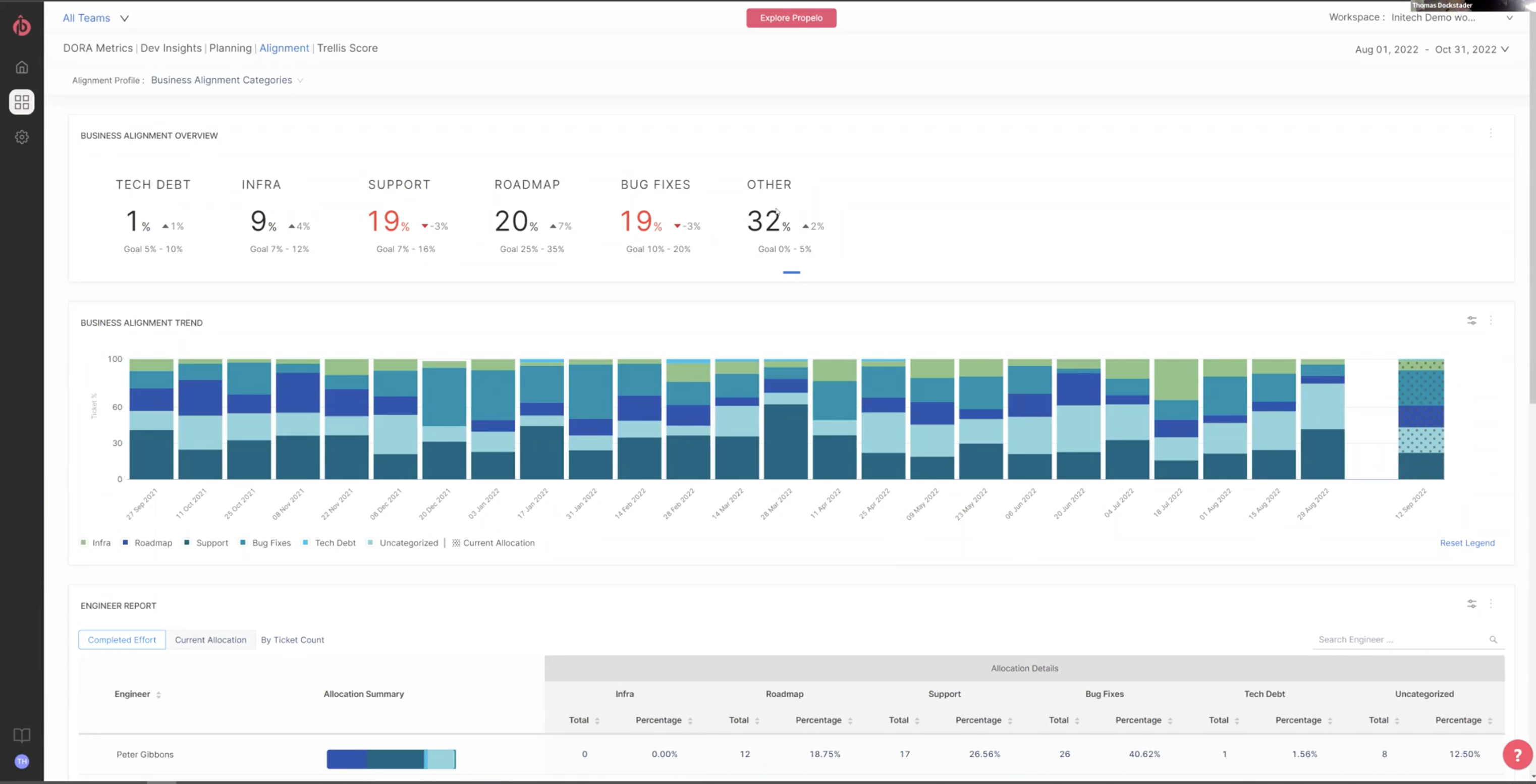
    Harness this week announced it has acquired Propelo, a provider of an analytics tool that identifies bottlenecks in software engineering processes. Terms of the acquisition were not disclosed.

    The Propelo offering will be made available as a module, dubbed Harness Software Engineering Insights, that organizations can choose within the company’s overall continuous integration/continuous delivery (CI/CD) platform.

    Scott Sanchez, chief marketing officer for Harness, said Propelo is unique in that all the integration required to collect data from a wide range of DevOps platforms is already baked into the tool. As a result, DevOps teams can instantly collect telemetry data from not just the Harness platform but also CI/CD platforms such as Jenkins, GitLab and Azure. In addition, there are integrations with more than 40 third-party tools, such as the Jira project management software from Atlassian.

    Those integrations enable the Harness Software Engineering Insights module to surface insights aligned with the DevOps Readiness Assessment (DORA) metrics from Google and the satisfaction, performance, activity, communication and efficiency (SPACE) frameworks.

    In an uncertain global economy, there is more focus than ever on increasing the productivity of DevOps teams, noted Sanchez. More organizations are going to be reluctant to hire as many full-time employees as they once did, so more attention is being paid to getting the most out of existing investments, he added.

    That focus on productivity will naturally lead to a re-examination of workflows to identify bottlenecks in DevOps workflows that, if eliminated, would help increase the pace at which software is being developed, said Sanchez. In some instances, the software development life cycle (SDLC) processes companies are using are as much as 20 years old, he noted.

    The acquisition of Propelo is the latest addition to a portfolio of DevOps tools designed to be deployed alongside existing platforms, noted Sanchez. Organizations that have been using platforms such as Jenkins are not going to rip and replace overnight, he added. The Harness portfolio is designed to be deployed alongside existing platforms to enable organizations to modernize their DevOps workflows in a much less disruptive way than rival DevOps platforms, said Sanchez.

    Harness initially developed a CD platform before acquiring Drone to add a complementary CI capability. It then acquired ChaosNative to add a chaos engineering tool, based on the LitmusChaos open source tool, that is now being advanced under the auspices of the Cloud Native Computing Foundation (CNCF).

    It’s not clear how quickly organizations will modernize legacy DevOps platforms. Still, in many cases, workflows and pipelines that were designed for a different era of application development are not able to support the pace at which modern cloud-native applications are being developed. It will, of course, be up to each DevOps team to determine whether adding additional DevOps tools and platforms makes economic sense; application developers tend to naturally gravitate toward organizations that reduce as much development friction as possible.

    In an era where organizations are counting on developers to drive digital transformation initiatives, the underlying DevOps tools and platforms employed to build applications can easily make the difference between success and failure.