Category: Continuous Delivery

Continuous delivery is a software engineering discipline that allows organizations to consistently develop and release quality software at a rapid pace. It is achieved by automating the software development lifecycle, enabling tasks such as development, testing and release to occur concurrently and continuously.

  • flox Unveils More Accessible Instance of Nix Framework

    flox Unveils More Accessible Instance of Nix Framework

    This week, flox launched a more opinionated implementation of the open source Nix framework that programmatically automates package management and system configuration.

    Fresh from raising an additional $16.5 million in funding, flox CEO Ron Efroni said the company will also make an enterprise edition of its namesake flox framework available later this year.

    The Nix framework has been available since 2003 and provides DevOps teams with a portable, fully isolated development, test and production environment along with a catalog and tools for managing software packages. There are more than 5,000 contributors to the platform, but Nix is based on a unique programming language that many DevOps teams have found challenging to master.

    The flox framework provides a higher layer of abstraction for invoking Nix, and provides a set of guardrails to make the framework more accessible to a wider range of DevOps teams, said Efroni.

    That approach will make it easier to share development environments and packages across teams, machines, individual developers and entire organizations. The framework also provides visibility into the software bill of materials (SBOM) for applications used in production environments to enable real-time vulnerability management and detection without scanning, noted Efroni. That capability makes it easier to discover dependencies spanning multiple architectures; many organizations today still try to track dependencies using spreadsheets and tools that don’t serve to make DevSecOps processes simpler to manage, he added.

    It’s not clear how many organizations are using Nix today, but Efroni said that as software development management continues to become more complex across multiple platforms and architectures, there is a clear need for a different approach to enabling portability at scale. The biggest obstacle is overcoming the psychological biases many DevOps teams have developed toward Nix over the last two decades, he noted. A more opinionated framework should reduce the overall fear factor associated with Nix, noted Efroni.

    Regardless of the frameworks employed, it’s become apparent that DevOps teams are struggling under the weight of all the code they must manage, much of it written in multiple programming languages. Many organizations that embraced DevOps early are now finding the platforms they deployed have become challenging to manage and maintain. As application environments become more complex, there is a need to modernize DevOps workflows. Less clear is whether those efforts might be focused on, for example, containers and serverless computing frameworks versus a framework such as flox that is designed to span multiple architectures and platforms.

    It might be a while before IT organizations develop a unified approach to application development and deployment, given all the preferences of individual development teams. However, with the rise of platform engineering, it’s apparent more organizations are trying to strike a balance between developer freedom and the need to reduce the total cost of DevOps. That cost continues to rise as additional software architectures and platforms are employed.

    In the meantime, flox plans to contribute to both Nix and its own more opinionated version of the framework in the hopes of one day making it easier to achieve that goal.

  • The Differences Between DevOps and GitOps

    The Differences Between DevOps and GitOps

    The transition to a DevOps model has been welcomed by many organizations that are looking to implement more efficient development processes. However, there are multiple models to choose from, with GitOps a popular choice for many. So what is the difference, and which one is better?

    In this article, we will discuss what each model entails and their key differences and establish if one is better than the other for your business.

    What is DevOps? – An Overview

    The DevOps model involves several tools and practices designed to make software development much more efficient. This increase in efficiency is achieved by implementing more automation, adopting continuous delivery practices and improving the communication channels between the developers and operations. 

    Ultimately, DevOps is designed to assist organizations in deploying new products and systems faster. By establishing more collaboration between development and operational teams, changes can be made quickly to best suit the business’s overall goals. 

    There is no single tool that is required for DevOps. In fact, your team can use any tool that effectively improves communication and automates key tasks. 

    How to Integrate a DevOps Strategy

    Adopting and integrating a DevOps strategy into your organization’s overall workflow is not a difficult process, and it can be achieved by following these steps: 

    1. Create a continuous integration/continuous delivery (CI/CD) pipeline.
    2. Configure this new pipeline to enable the automated deployment of changes to your development/production environment.
    3. Set up an alert and monitoring system for your development environment. 
    4. Create collaboration channels so operational teams can inform the developers of new opportunities to improve the business’s workflow. 

    An Overview of GitOps

    GitOps is a modern concept that was initially introduced by the Kubernetes management system Weaveworks. This model uses Git, an open source, distributed version control system, to track any changes to a system and who has made them. 

    The GitOps model uses a Git repository as the single source of truth (SSoT), improving collaboration between developers and operational team members. This, in turn, allows organizations to automate the deployment process. 

    By leveraging CI/CD pipelines like DevOps, changes are automatically applied to the codebase without any need for manual input. Thanks to Git, these changes can also be easily reversed if needed, reverting to a previous working version. 

    How to Integrate a GitOps Strategy

    GitOps can be integrated into a business’s workflow quite simply by following four key steps: 

    1. Set up a Git repository for your organization’s codebase. When integrating a GitOps strategy, an organization does not need to use GitHub exclusively, as any code repository that uses Git commands can do the job. 
    2. Connect this repository to a CI/CD tool.
    3. Configure your chosen tool to deploy automatic changes to your development environment. Popular tools include Jenkins and Circle CI. 
    4. Set up monitoring and alerts for your development environment. 

    It should be noted that the CI part of GitOps still needs to go through your DevOps tool, whether it’s GitHub Actions or AWS CodeBuild. 

    The Differences Between DevOps and GitOps

    The core difference between the two is that GitOps allows teams within an organization to manage and deploy changes to infrastructure using Git as the single source of truth. DevOps, on the other hand, focuses on effectively connecting development and operational teams using a tool of the organization’s choosing. 

    Either model can offer a number of benefits in terms of development and deployment, but there are notable differences between the two that should be considered. It should also be noted that DevOps and GitOps can work in unison as long as continuous integration (CI) is delivered using your chosen DevOps tool.

    DevOps – Key Elements

    • The DevOps model is considered a working culture.
    • DevOps can use a variety of CI/CD pipelines and is not restricted to any one tool.
    • This model increases automation and the regularity of deployment, reducing any human input. 
    • Cloud configuration can be used for coding, supply chain management and other key requirements.
    • The pipeline separates development and operations processes while improving collaboration between the two.

    GitOps – Key Elements

    • GitOps is a development and deployment technique that relies on the Git version control system.
    • Git is used as the single source of truth for all changes to the codebase.
    • GitOps can use Kubernetes and infrastructure-as-code (IaC) practices and various other CI/CD pipelines. 
    • The GitOps model is designed to increase development times and reduce reliance on lengthy scripts.
    • It also enables a smoother transition between a project’s development and operation stages.

    DevOps Vs. GitOps – Which Model Is Better?

    Both GitOps and DevOps are becoming increasingly popular when it comes to adopting new approaches to improve software development processes and making deployment quicker and more efficient. As outlined above, the difference between the two models largely comes down to the tools that are used, but the result is roughly the same in terms of the overall benefits. 

    Deciding which approach is the right one for your organization or determining which one is “better” will always come down to the needs and requirements of your organization. In fact, the ideal scenario would be to integrate GitOps so it works alongside your DevOps approach. 

    GitOps is not a replacement for DevOps, as the CI process still relies on DevOps tools. However, GitOps can improve the effectiveness of the DevOps team thanks to continuous delivery processes. Using Kubernetes-native mechanisms and commands and sticking to standard source code principles, GitOps does not require developers to change how they work, guaranteeing a seamless implementation process.

    Wrapping Up

    DevOps is a working culture that improves collaboration between development and operations teams and utilizes automation tools, resulting in rapid and more efficient software development. GitOps, on the other hand, uses Git as the single source of truth, making it easy to track changes and further increase development times thanks to continuous delivery processes. 

    Although each model can be used exclusively, they can also work alongside each other to deliver rapid software development and high levels of collaboration. Therefore, it is unfair to claim that one model is better than the other, as they can both play their part in an overall DevOps strategy. 

  • Atlassian Extends Scope of Jira Project Management Portfolio

    Atlassian Extends Scope of Jira Project Management Portfolio

    At the Atlassian Presents: Unleash event today, Atlassian announced it is adding a Jira Product Discovery application to its portfolio. Jira Product Discovery makes it easier for organizations to keep track of the ideas that drive software development initiatives.

    At the same time, Atlassian is making available Jira workflow and toolchain templates to make it simpler for software development teams to extend the scope and reach of the project management software they use to track those projects. Rather than each organization developing these templates, Atlassian is now providing them in a way that allows organizations to customize and extend them as they see fit.

    Finally, Atlassian also announced that an existing Jira Work Management tool will be made available for free through March 2024.

    Megan Cook, head of product for software teams at Atlassian, said these additions will make it easier for organizations to collaborate around software development projects that businesses increasingly depend on to drive revenue. The overall goal is to make it easier for multiple stakeholders of the projects to more easily collaborate with software developers that rely on Jira to manage those projects, she added.

    These latest offerings are part of an ongoing Atlassian effort to enable organizations to simplify collaboration and enable organizations to embrace value stream management (VSM) without having to acquire a dedicated platform. In some cases, organizations may decide to adopt a dedicated VSM platform, but a project management application should make it simpler for everyone in an organization to keep track of how software development projects are impacting the business, noted Cook.

    It’s not clear just how many businesses are aligning their internal processes around DevOps workflows, but as more of them realize how dependent they are on software, there is a clear need to collaborate more efficiently with software development teams. In fact, many organizations are now trying to adjust to the rapid rate at which software is being delivered thanks to the adoption of DevOps best practices. In some instances, updates to software are now being delivered faster than many businesses can absorb given the impact those changes have on digital processes.

    The irony is many business executives used to routinely complain about how long it took IT organizations to adjust as business conditions changed. Now, many businesses are rolling out additional digital capabilities via software updates that can be made multiple times a month.

    The rate at which organizations will collaborate across departments will naturally vary, but the days when each department was a fiefdom unto itself are coming to an end. There may even come a day when organizations will need to restructure as the walls that once separated various fiefdoms become more porous.

    One way or another, the way organizations are managed is evolving in the digital age. Organizations are employing software to pivot more frequently as business conditions evolve. Each new idea can not only be tracked but also quickly evaluated for feasibility given the level of software development resources required, noted Cook. The challenge and the opportunity is as much about changing the culture of an organization as it is about modernizing the processes used to build and deploy software.

  • Appdome Integrates Mobile Security Platform With CircleCI CI/CD

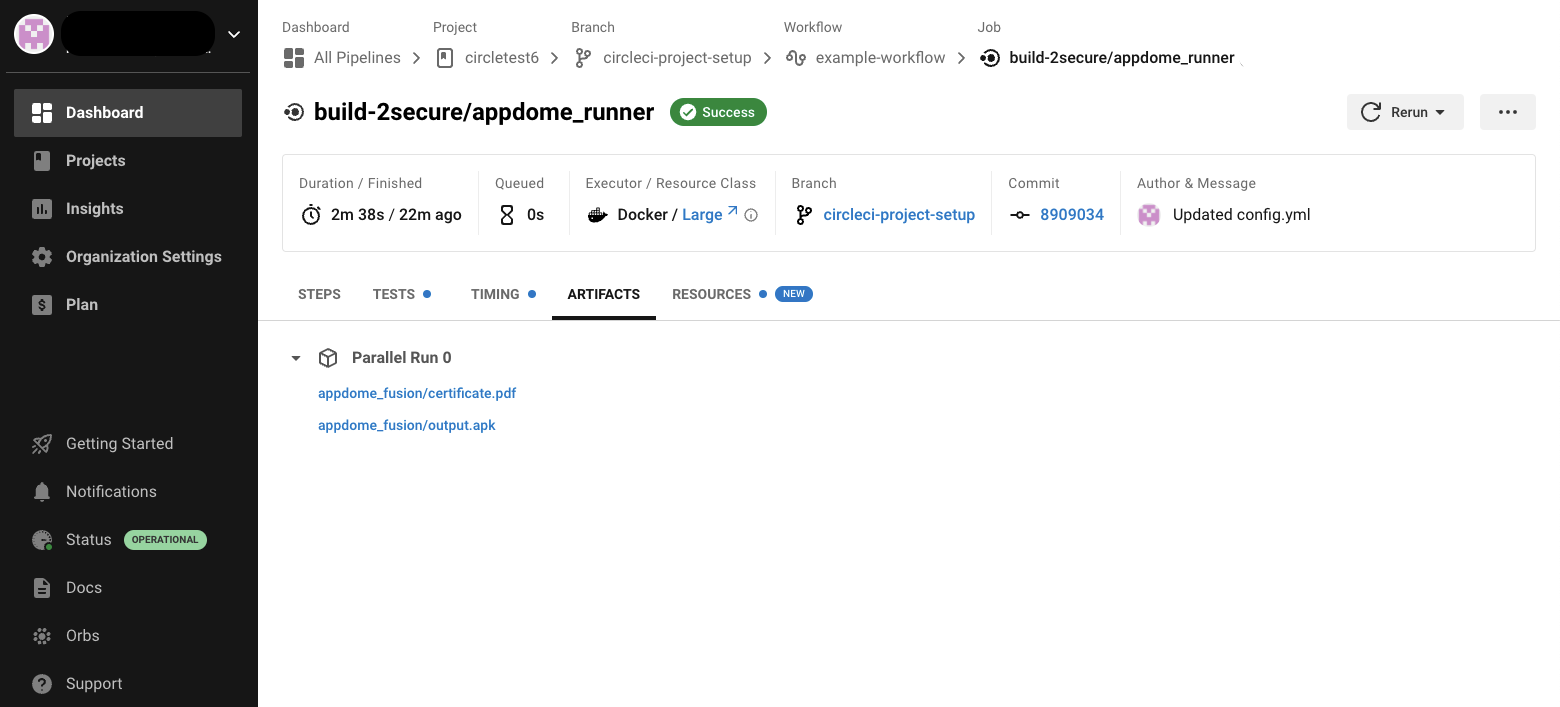
    Appdome Integrates Mobile Security Platform With CircleCI CI/CD

    Appdome this week made available an integration for the continuous integration/continuous delivery (CI/CD) platform from CircleCI that promises to make it simpler to secure mobile applications before they are deployed.

    As a provider of a platform for securing mobile applications running on iOS and Android platforms, Appdome provides a runtime application self-protection (RASP) platform that, among other capabilities, provides code obfuscation, mobile data encryption, jailbreak detection, root detection, man-in-the-middle attack prevention, on-device anti-malware, anti-fraud, anti-cheat and anti-bot capabilities.

    The platform is now integrated with the Circle CI/CD platform via the Orb framework created by CircleCI to simplify integrations with third-party tools.

    Karen Hsu, senior vice president of mobile DevOps and security solutions for Appdome, said the Appdome Build_2Secure Orb for CircleCI is an example of a series of integrations the company plans to make involving DevOps tools and platform that will make it easier to apply DevSecOps best practices to the deployment of mobile applications. That’s critical because it’s not uncommon for teams using different DevOps platforms and tools to be involved in the development of the same application, she noted.

    A recent Appdome survey suggested consumers are about to force the DevSecOps issue for providers of mobile applications regardless of how mature their processes are. A full 94% of respondents said they would promote a brand if the mobile apps protected them versus 68% that said they’d abandon brands that offered no protection.

    Securing mobile applications is especially challenging because once an application is compromised, it’s relatively trivial for cybercriminals to also inject malicious code into other applications running on a mobile device. There are no automated remediation capabilities, so the best defense is to isolate applications in a way that prevents malware from executing in the first place, noted Hsu. At a time when it’s already clear cybercriminals will be using artificial intelligence (AI) platforms to launch attacks, organizations will not have the time required to remediate vulnerabilities before malware is activated, she added.

    That Appdome approach provides the added benefit of reducing tensions between developers and cybersecurity teams that otherwise would be requesting immediate fixes to mobile applications that have been compromised, noted Hsu. As more mobile applications are built and deployed, the overall goal should be to enable both teams to work collaboratively together without unnecessarily disrupting each other’s workflow, added Hsu.

    It’s not clear what percentage of the applications being built and deployed today are destined to run on mobile devices, but securing those applications clearly presents some unique challenges. Many of those applications are deployed on consumer-grade devices attached to wireless networks that are not especially secure. Cybercriminals are increasingly targeting these devices not only to access sensitive data but also because they often provide a gateway through which the rest of an IT environment can be compromised.

    The simple truth of the matter is, sadly, DevOps teams need to assume that most mobile applications are going to be running in the cybersecurity equivalent of a hostile environment where the odds are considerably stacked against them.

  • Voice.ai ‘Stole’ Code ¦ AWS Gets Filthier

    Voice.ai ‘Stole’ Code ¦ AWS Gets Filthier

    Welcome to The Long View—where we peruse the news of the week and strip it to the essentials. Let’s work out what really matters.

    This week: Alleged theft of GPL code, and Amazon will run its data centers on gas. (more…)

  • Running Serverless in Production: 7 Best Practices for DevOps

    Running Serverless in Production: 7 Best Practices for DevOps

    Serverless in production refers to the deployment and use of serverless architecture in a live, production environment. In this context, serverless refers to a cloud computing paradigm where the cloud provider manages the infrastructure and allocates resources as needed to run and scale applications and services.

    In a serverless production environment, applications and services are broken down into individual functions triggered by events, such as API requests or changes in data. These functions are executed in response to these events and the cloud provider is responsible for managing the underlying infrastructure, including servers, storage and network resources.

    In this article, I’ll describe some of the key use cases of serverless in production and provide important best practices DevOps teams can use to run serverless in production safely and effectively.

    Use Cases of Serverless in Production

    Serverless technology has emerged as a popular choice for delivering various applications and services in production. Here is a brief overview of serverless in production for four use cases.

    Microservices

    In a microservices architecture, an application is divided into small, independent services that can be developed, deployed and scaled separately. Serverless allows each microservice to be deployed as a separate function, triggering the function only when needed and scaling it automatically based on demand. This results in a cost-effective and flexible solution for microservices, as the user only pays for the exact amount of computing resources used by each function.

    IoT Devices

    Internet of things (IoT) devices generate large amounts of data, which need to be processed and analyzed in real-time. Serverless functions can process IoT data as it is generated, allowing for real-time analytics and decision-making. With serverless, the processing and analysis can be scaled dynamically, handling spikes in data volume without the need for infrastructure management.

    Multimedia Processing

    Multimedia processing tasks, such as image and video compression, often require significant computing resources. With serverless, these tasks can be performed as functions triggered by events such as the upload of a new image or video. The serverless functions can scale automatically to handle large amounts of data, reducing the costs associated with infrastructure management and increasing efficiency.

    This function-as-a-service (FaaS) is often used for storing and processing user inputs and other data types. For example, FaaS can be used to execute specific processes according to the category of media uploaded by the user. It’s easier to build these services because the developer can write one function that is applied to multiple processing tasks. 

    APIs for Mobile and Web Applications

    APIs are an essential component of many web and mobile applications, providing access to the underlying data and services. Serverless functions can build and deploy APIs, providing a cost-effective and scalable solution. The functions can be triggered by incoming API requests and automatically scaled based on demand, allowing for fast and reliable API access for users. 

    FaaS is especially useful for RESTful applications and event-driven architectures. Containers are also useful for performing processes like API calls, but serverless functions are best suited for highly fluctuating volumes of traffic.

    Best Practices for Running Serverless in Production

    1. Monitor the Serverless Environment

    Serverless monitoring refers to the process of monitoring serverless applications and infrastructure, including serverless functions and event-driven computing services, without the need for dedicated servers or virtual machines. In a serverless architecture, computing resources are dynamically allocated and managed by the cloud provider, so there is no need for organizations to manage and maintain their own servers.

    Serverless monitoring involves monitoring various aspects of serverless applications and infrastructure, including function execution, resource utilization and performance metrics. The goal of serverless monitoring is to identify and resolve issues that may impact the performance and reliability of serverless applications and to optimize resource utilization for cost efficiency.

    By implementing serverless monitoring, organizations can ensure that their serverless applications and infrastructure are performing optimally and that they can quickly identify and resolve any issues that may arise. This helps to improve the reliability and cost-effectiveness of serverless computing and enables organizations to take full advantage of the benefits of serverless architecture.

    2. Implement Authentication

    Serverless authentication refers to the process of authenticating users and applications in a serverless architecture, where computing resources are dynamically allocated and managed by the cloud provider. In a serverless authentication model, authentication is managed through cloud-based services and APIs without the need for dedicated servers or virtual machines.

    By implementing serverless authentication, organizations can ensure that their serverless applications and services are secure and that users are only able to access the resources that they are authorized to access. This helps to improve the security of serverless applications and services and reduce the risk of security breaches.

    3. Ensure Security with API Gateways

    API gateways provide a centralized point of control and security for incoming API traffic. API gateways allow for the implementation of authentication and authorization mechanisms, such as OAuth, to control access to serverless functions. This ensures that only authorized users and clients can access the functions, reducing the risk of unauthorized access.

    API gateways can also manage incoming API traffic, such as rate limiting and request filtering, to prevent overloading the serverless functions and protect against denial-of-service (DoS) attacks. They perform real-time threat detection, identifying and blocking malicious traffic before it reaches the serverless functions. This includes protection against other common attacks such as cross-site scripting (XSS) and SQL injection.

    Finally, an API gateway can enforce encryption for incoming and outgoing API traffic, ensuring that sensitive data is protected in transit. 

    4. Assign Appropriate Roles to Functions

    With serverless, there can be many resources that must be handled, making management potentially complex. Creating minimal suitable roles for each function makes management easier, enhances security and reduces the attack surface of the serverless architecture. This approach means that the least privilege principle is applied, where a function only has the minimum permissions required to perform its intended task. It reduces the risk of unauthorized access to other parts of the infrastructure, such as sensitive data or other functions.

    The right roles ensure that functions are isolated from each other and run in their own security context. This helps to prevent the spread of any security incidents, as well as ensure that the compromise of one function does not affect the security of the rest of the system.

    5. Ensure Dependencies are Secure

    It is common for serverless functions to have dependencies from various repositories like Maven and PyPI. These dependencies may contain known vulnerabilities which can be exploited by attackers. Securing application dependencies is important to prevent security incidents and ensure the reliability and availability of the serverless architecture.  

    This involves tracking and managing the dependencies used in the serverless applications. This helps to ensure that dependencies are used in a consistent and controlled manner, reducing the risk of conflicts or compatibility issues. By regularly monitoring and updating dependencies, organizations can ensure that their serverless architecture is secure and reliable.

    6. Sanitize Inputs to Prevent Injection Attacks

    Serverless applications often use data inputs from users or events. This data enables functions such as data streaming, but the user-supplied data can also pose security risks. Sanitizing event inputs helps to prevent injection attacks—these occur when an attacker injects malicious code or data into a serverless function through the event inputs. 

    By sanitizing inputs, organizations can remove or modify potentially malicious inputs, preventing the attacker from injecting malicious code into the function. One important form of sanitization is input validation—validating that the inputs conform to a specific format or type, such as checking that a string is a valid email address. This helps to prevent attackers from injecting malicious code into the function by ensuring that the inputs are in the expected format.

    Sanitizing data is only one aspect of a defense-in-depth security strategy, which involves implementing multiple security controls to protect against attacks. It is also important to enable data escaping for SQL and noSQL databases. Likewise, the data provided by events shouldn’t be used to evaluate code at runtime or spawn system processes. 

    7. Secure Data in Transit

    Securing and verifying data in transit helps to prevent data breaches and ensure the confidentiality, integrity, and privacy of data transmitted between different parts of the serverless architecture. Here are some guidelines for securing and verifying data in transit:

    • Use HTTPS: This is a secure protocol for transmitting data over the internet. By using HTTPS, organizations can ensure that data transmitted between different parts of their serverless architecture is encrypted, preventing unauthorized access to sensitive data.
    • Implement SSL certificate verification: Verify the identity of the certificate owner and the authenticity of the certificate. This helps to prevent man-in-the-middle attacks, where an attacker intercepts and alters data transmitted between the server and the client.
    • Enable signed requests: These involve adding a digital signature to a request, which is then verified by the recipient. This helps to prevent tampering with data in transit and ensures the integrity of the data.

    Conclusion

    In conclusion, running serverless in production requires careful planning and execution to ensure the security and reliability of the architecture. By following the best practices described here, DevOps teams can reduce the risk of security incidents and ensure the reliability and availability of their serverless architecture. These include:

    • Monitoring the serverless environment
    • Implementing authentication
    • Deploying API gateways
    • Creating minimal suitable roles for each function
    • Securing application dependencies
    • Sanitizing event inputs
    • Securing and verifying data in transit 

    Additionally, regularly monitoring and updating dependencies and implementing a defense-in-depth security strategy can help organizations ensure the security and reliability of their serverless architecture over time. 

  • Platform Engineering: Creating a Paved Path to Reduce Developer Toil

    Platform Engineering: Creating a Paved Path to Reduce Developer Toil

    This article is part one of a series of three on the boom in platform engineering and its role in reducing cognitive load and creating a better developer experience.

    Developer toil and cognitive load in the cloud-native space is real. The complexity posed by microservices, Kubernetes, and “software-defined everything” almost necessitated that ops needed to solve many of these issues to support cloud-native development.

    Developers taking on full dev life cycle ownership and the requirement to shift left have resulted in cross-functional and operational concerns that have added even more complexity to already challenging workloads and unclear workflows.

    To fuel productivity and consistency and enable developers to build and ship apps faster and more securely, one must understand what a ‘paved path’ might look like and where responsibility for different aspects of the development life cycle resides.

    Supporting the Majority of Developers Without Alienating the Rest

    Most developers want and need paved paths, particularly as paradigms shift; the adoption of cloud-native development being one such shift. These paths must help them reach the “safety” and productivity on which they are measured in their daily output and provide focus for completing their tasks. Freedom to make choices about processes and tools is not a priority because it ends up being noise that adds to the cognitive load and, in most cases, does not serve the company’s software shipping goals. This majority needs tighter guardrails and guidelines to do their work and get their code into the world without having to figure out too many operational parameters for themselves.

    The cloud-native tooling landscape is vast, duplicative and overwhelming. Just trying to select and test tools could be a developer’s full-time job. Likewise, many organizations and developers have reported frustration—they are wasting a lot of time on repetitive work and routine tasks that deliver no business value, such as setting up environments and troubleshooting CI pipelines along with slow feedback loops in the development process.

    As organizations increase pressure to deliver more with less and do so more frequently, these responsibilities make for a poor and unproductive developer experience and a far-from-ideal use of organizational resources. Stack Overflow’s 2022 Developer Survey reported that 62% of respondents spend more than 30 minutes a day fixing problems and looking for answers, leading to somewhere between 333-651 hours of lost time per week across a team of 50 developers. This reinforces a need for upfront investment in the paved-path developer platform, which eliminates much of this frustration.

    It’s worth noting there is also a so-called 1% developer–one who wants to experiment and discover new tools on their own. Defining the developer experience within narrow guardrails ends up stifling this minority, which not only hampers their productivity but could stand in the way of innovation for organizations as a whole.

    Building quality software requires accommodating both kinds of developers. For most development teams, the goal is to give them a clear route to building apps faster and shipping safely by prescriptively paving the path. The path also must provide enough freedom for adventure, allowing developers to stray from the path (within reason and where it makes sense).

    Internal Developer Platforms: Paving Just Enough Path With Platform Engineering

    Platform engineering and internal developer platforms (IDPs) are much-touted approaches to taming the toil. It is a part of the solution, and as it gains traction, it is becoming more mature. That is, instead of developers and development teams taking on full responsibility for every phase of the software life cycle and potentially cobbling together something resembling a developer platform, the industry trend is moving toward more comprehensive, commercial out-of-the-box platforms. Whether or not this addresses the actual needs of the development organization, this shift works because developer experience is now a business-critical requirement, and a centralized developer platform facilitates that experience (with flexibility enough to house all types of developer experience and developers working across industries).

    The developer platform concept, supported by architecture, DevOps and SRE teams, contains the ingredients of transformation both for business and for developer experience. As the concept reaches critical mass and the “productifying” of developer platforms matures, one thing seems likely: By shifting to a platform model, development organizations are moving from ops-first to developer-first Kubernetes. The developer experience becomes defined by its optimized tools and workflows (and enables wider adoption of cloud-native development across larger organizations and broader industries).

    Refocusing Developer Efforts: Abstractions, not Distractions

    Cognitive toil will exist for developers regardless of the tools they’re offered. Technologies grow more complex and change frequently, and there are performance metrics that must be met. Taking the focus away from developers’ primary concerns—coding and shipping software and features—contributes to this toil without generating much return. As much as developers should be able to gain enough understanding of the way their code behaves and the consequences it can have downstream when shipping and running it, they should not need to become DevOps experts as a part of their work. This is why DevOps, despite predictions to the contrary, isn’t dead.

    The paved-path developer platform gives developers exactly that: The ability to shift left without drifting right. The platform provides much-needed abstractions and tools that enable developers to refocus on priority work without distracting or overwhelming them with too many choices.

    Becoming dev-first doesn’t kill off ops, either. Dev-first Kubernetes and a centralized developer platform elevate the importance of the developer experience while continuing to highlight the importance of DevOps in supporting and optimizing the developer experience. This is an entire topic in and of itself, which will be explored in part two of this article series.

  • Where Does Observability Stand Today, and Where is it Going Next?

    Where Does Observability Stand Today, and Where is it Going Next?

    As we move into the second half of 2023, it’s only natural to engage in the annual ‘state of the industry’ reviews and take a general inventory of the past year while looking out into the immediate future. Observability has gained traction among DevOps and platform engineering teams over the past year and is poised to continue that velocity. But my observation is that the current observability model is broken.

    Too Much Data

    Long story short: Many organizations (and engineers specifically) agree that they are sending too much data to their monitoring tools, resulting in an inability to garner valuable insights because the systems are massively overloaded. Sending this high volume of data also costs too much and requires an inordinate amount of time for analysis, which many organizations don’t have. Put simply–more data doesn’t mean more clarity; in fact, we see the opposite.

    Massive adoption of cloud-native technologies such as Kubernetes that heighten the challenge of efficiently monitoring environments is also accelerating this problem. Beyond increasing costs and complexity, many teams seem to feel that their current approach doesn’t create the desired level of observability for Kubernetes, full stop.

    Another major issue we see on the observability landscape relates to the overall maturity of monitoring processes and teams. In many instances, even when organizations have effective tools, they struggle to interpret the data produced into targeted conclusions that their teams can translate into effective actions. And this is further amplified by the outstanding engineering talent shortage because good people are harder to find and retain than ever before.

    We also see a lot of pervasive challenges related to organizations’ desire to use popular open source monitoring tools-especially if they are attempting to do so in an integrated manner or to support rapidly growing deployments at scale.

    Overwhelmed by Observability Data?

    In summary, if you’re overwhelmed by observability data, if complexity and costs grow out of control and you’re also struggling to make sense of the available information and improve your cloud applications, we think that means that the current observability model really is broken.

    To that end, gaining a deeper perspective into end user opinions on these topics, among others, is the precise goal of the annual DevOps Pulse Report, currently in its sixth year and now in the survey stage. We predict that this year’s research project will underline the aforementioned challenges and help frame how teams might seek to address them.

    What types of findings do we hope to unearth? Last year, respondents revealed that despite a growing perception of DevOps maturity, it was actually taking them more time to respond to emerging problems. Roughly 64% of respondents reported that MTTR during production incidents was over an hour, compared to only 47% the previous year.

    Last year’s report also highlighted the reality that monitoring complex environments remains difficult with over 52% of respondents citing Kubernetes, microservices and serverless as their primary challenges in gaining improved observability.

    Both of these previous findings also seemed to underline the growing issues of data overload and spiraling complexity. We’ve also seen previous evidence of a lack of maturity around distributed tracing—a critical observability practice aimed directly at increasing visibility into complex architectures—despite the fact that 75% of respondents listed it as a priority in last year’s research.

    Is your team struggling to make sense of its available monitoring data, or do so in a way that aligns with your current processes or budgets? Hopefully, the 2023 DevOps Pulse Report, set to publish early this year, will put some numbers behind these assertions and help us all understand how to move forward.

    If you want to participate, you can do so here.

  • Five Great DevOps Job Opportunities

    Five Great DevOps Job Opportunities

    DevOps.com is now providing a weekly DevOps jobs report through which opportunities for DevOps professionals will be highlighted as part of an effort to better serve our audience.

    Our goal in these challenging economic times is to make it easier for DevOps professionals to advance their careers. Of course, the pool of available DevOps talent is still relatively constrained, so when one DevOps professional takes on a new role it tends to create an opportunity for others.

    The five job postings shared this week are selected based on the company looking to hire, the vertical industry segment and, naturally, the pay scale being offered.

    We’re also committed to providing additional insights into the state of the DevOps job market. In the meantime, for your consideration:

    LinkedIn

    Apple
    San Diego, California
    Site Reliability Engineer (SRE) – Video
    $115,000 to $217,500

    SimplyHired

    ScientiaMobile
    Reston, Virginia
    Senior DevOps Engineer
    $110,000 to $150,000

    Monster.com

    Larsen & Toubro Infotech Ltd.
    Farmington, Connecticut
    DevOps Engineer
    $110,000 to $130,000

    Indeed.com

    TherapyNotes.com
    Remote
    Senior DevOps Engineer
    $105,000 to $155,000

    Dice.com

    MRoads
    Dallas, Texas
    Platform Engineer – SRE
    $100,000 to $120,000

  • OpenAI Hires 1,000 Low Wage Coders to Retrain Copilot ¦ Netflix Blocks Password Sharing

    OpenAI Hires 1,000 Low Wage Coders to Retrain Copilot ¦ Netflix Blocks Password Sharing

    Welcome to The Long View—where we peruse the news of the week and strip it to the essentials. Let’s work out what really matters.

    This week: ChatGPT darling OpenAI wants people to write code in English, and the unintended consequences of blocking shared accounts. (more…)