Category: Continuous Delivery

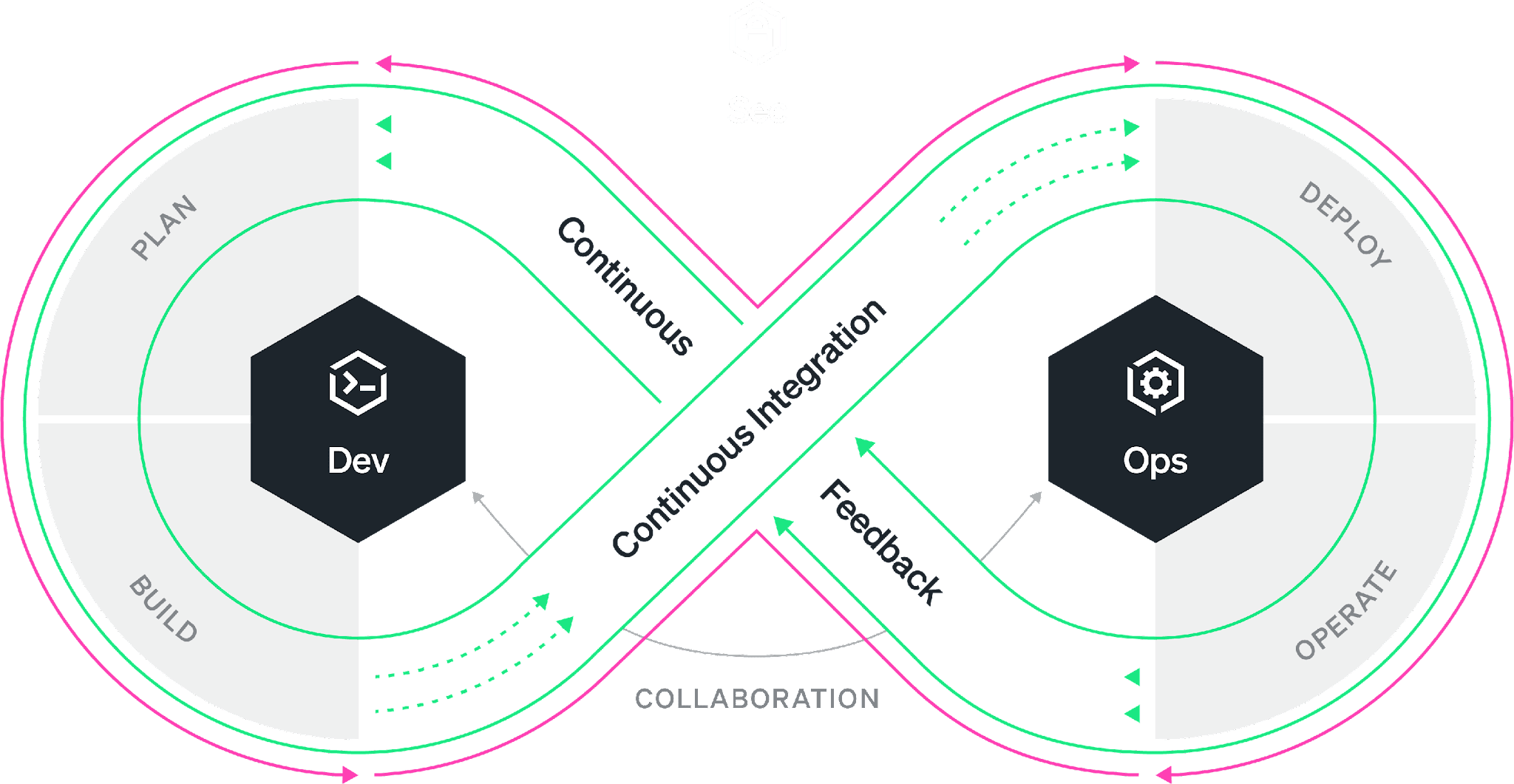
Continuous delivery is a software engineering discipline that allows organizations to consistently develop and release quality software at a rapid pace. It is achieved by automating the software development lifecycle, enabling tasks such as development, testing and release to occur concurrently and continuously.

  • Best of 2022: We Must Kill ‘Dinosaur’ JavaScript | Microsoft Open Sources 3D Emoji

    Best of 2022: We Must Kill ‘Dinosaur’ JavaScript | Microsoft Open Sources 3D Emoji

    As we close out 2022, we at DevOps.com wanted to highlight the most popular articles of the year. Following is the latest in our series of the Best of 2022.

    Welcome to The Long View—where we peruse the news of the week and strip it to the essentials. Let’s work out what really matters.

    This week: JavaScript is a bloated barrier to progress, and Microsoft’s emoji are on GitHub. (more…)

  • Best of 2022: CI/CD is the New Lock-In

    Best of 2022: CI/CD is the New Lock-In

    As we close out 2022, we at DevOps.com wanted to highlight the most popular articles of the year. Following is the latest in our series of the Best of 2022.

    Welcome to 2022! Let’s start this year’s blogging off with a bang, and point out that we are in the process of creating the biggest lock-in that we have ever had. And I do mean ever. Maybe the hardware lock-in of the old days where vendor A was incompatible with vendor B was worse, but at least that one we acknowledged when we signed the contract. This one is growing on us as I type.

    Our DevOps environments in 2022 cannot run without what I like to call the “toolchain controller”: GitLab, Github CI/CD, Atlassian, CircleCI, Jenkins—whatever you are using. Like you need some form of faucet or flow control to make running water work, you need the CI/CD environment to make DevOps work.

    You. Can’t. Live. Without. It. And just like any other vendor solution, CI/CD vendors are not going to be in a rush to help you move to a competitor. It won’t be easy or cheap to switch, largely because we are moving everything that might have been on a computer that once had developed code running on it into the toolchain.

    Sooner or later, we’ll back off the kitchen sink definition of “What is DevOps?”, but I predict even then we will have to answer “…A lot of what we do,” because DevOps is, by definition, end-to-end. It is about the process and all the steps from design to production.

    No matter how long or complex the process through which an organization’s CI/CD tool runs, a plan must be in place to replace it. A workable plan, not a check box plan. When Atlassian decided they preferred cloud-based customers, their customer base was shocked. Atlassian was wise enough to leave an option for customers who really had to have an on-site solution, but it is not difficult to imagine them phasing that option out, or to imagine another vendor dropping on-site support altogether. Some of the more competitive offerings in the space—GitLab springs to mind—are online-only already, making that option more appealing to other vendors as it’s now proven viable.

    So, have a plan. This is more important, IMO, than cloud vendor lock-in. Cloud vendors are a small community, and each understands the others, so if push came to shove you could find help moving between the big three cloud vendors. There are dozens of DevOps master controller-type solutions in regular use, and some of them are not at all CI/CD solutions (application release orchestration tools and software infrastructure management tools are two areas doing CI/CD duty at some orgs, for example), so there is not going to be much help moving between them unless you manage to find a very specialized skill set that matches your desired move.

    So, have a plan. Yes, I am indeed repeating myself. Know what you’re going to have to do before you have to do it. Include what to do if the master DevOps controller goes down. Because it will, sooner or later.

    And keep rocking it. Protect your masterworks by protecting what builds them. And keep rolling out the tools your users need. It’s a new year—learn a new skill and use that to turn out even more cool stuff. I haven’t picked a new skill yet, but I’m taking that last bit of advice myself. And again, in the new year, thank you, for all those who don’t know to say it.

  • Best of 2022: Using Event-Driven Architecture With Microservices

    Best of 2022: Using Event-Driven Architecture With Microservices

    As we close out 2022, we at DevOps.com wanted to highlight the most popular articles of the year. Following is the latest in our series of the Best of 2022.

    Microservices architecture is on the rise, already forming a key part of several current transformation projects, breaking down traditionally monolithic applications into self-contained, independently deployed services that are identified using domain-driven design.

    Stats from a recent study found that more than 60% of respondents have been using microservices for a year or more. In particular, finance and banking lead the way in using microservices, but many other industries are following suit including retail/e-commerce and telecoms.

    Not only do microservices hold the potential for enhanced scalability, flexibility and durability, but the time taken to deploy and maintain components is also significantly improved. This isn’t the case for all microservice architectures. Major impediments come in the form of ecosystem integration challenges and weak distribution processes.

    Busting the Myths of Distributed Computing 

    The implementation of microservices is more complex than one may first think, exacerbated by the fact that many DevOps teams fall into the trap of making false assumptions about distributed computing.

    The list of distributed computing fallacies was originally addressed in 1994 by L. Peter Deutsch and others at Sun Microsystems, and still holds true today. There are key fallacies that hold special importance to microservices implementation: reliable, homogenous, and secure networks, latency is zero and transport cost is zero.

    The smaller you make each microservice, the larger your service count, and the more the fallacies of distributed computing impact stability and user experience/system performance. This makes it mission-critical to establish an architecture and implementation that minimizes latency while handling the realities of network and service outages. 

    Uncovering the New, Updating the Old

    Microservices require connectivity and data to perform their roles and provide business value, however, data acquisition/communication has been largely ignored and tooling severely lags behind. We can see this with API management or gateway products that only support synchronous, request/reply exchange patterns. This only goes to exacerbate the challenges of distributed computing – they don’t have the ability to integrate with or acquire data from legacy systems.

    At the same time, eventing/messaging tools have also been stuck in the antiquated, non-agile world, being incompatible with many of the guiding principles of microservices such as DevOps and self-service. 

    Solving the Logistical Maze of Integration 

    As services become smaller and their purpose more singular, the potential for reusability increases, but that’s contingent on the ability for services to collaborate. Acquiring data for greenfield systems is easy, but microservices almost always come as a side effect of digital transformation, modernization — or the need to build new capabilities at a more rapid pace. 

    The Disconnect

    Most existing systems live on-premises, while microservices live in private and public clouds so the ability for data to transit the often unstable and unpredictable world of wide area networks (WANs) is tricky and time-consuming. 

    There are mismatches everywhere: updates to legacy systems are slow, but microservices need to be fast and agile. Legacy systems use old communication mediums, but microservices use modern open protocols and APIs. Legacy systems are nearly always on-premise and at best use virtualization, but microservices rely on clouds and IaaS abstraction. 

    The case becomes clear – organizations need an event-driven architecture to link all these legacy systems versus microservices mismatches.

    Creating the Perfect Microservices Harmony 

    The smaller the service, the less value it offers the end-user – value comes from orchestration. Historically, orchestration was handled by a central component like BPEL engines or ESBs, or, these days, API gateways.

    Orchestration is a good description – composers create scores containing sheets of music that will be played by musicians with differing instruments. Each score and its musician are like a microservice. In a complex symphony with a hundred musicians playing a wide range of instruments – like any enterprise with complex applications – far more orchestration is required. 

    Microservices are Well-rehearsed

    So, an example of microservices orchestration is when a microservice performs a series of steps within the code. The input or output of a microservice is a data event that has domain significance. But what is key is that since the microservice is merely producing an event, it does not have knowledge of if or when it will be processed. Other services must register their interest in the event, or set of events, and react accordingly. This all needs microservices orchestration. 

    Time to Shift the Focus

    Event-driven maximizes agility as it liberates data from being ‘at rest’ to being ‘in motion’ – consumable in real-time. Choosing the right eventing or messaging platform is one of the most critical steps to realizing the vast benefits of microservices.

    Microservices per se are not enough. Gartner has identified this need as far back as 2018 when it spotlighted ‘event-driven’ as one of its top strategic technology trends, citing “Digital business is event-driven, so organizations need to invest in event-centric design practices and technologies to exploit digital business moments.”

    The Full Potential of Event-driven Microservices

    Merging event-driven architecture with microservices can house major benefits. Developers can build highly scalable, accessible, robust and versatile systems that can digest and aggregate exceptionally large amounts of events and information in real-time. 

    Not only should modern events platforms be able to be deployed in every cloud and platform as a service, but they should also support DevOps automation. In such an ever-changing world, developers need a seamless self-service experience – only made possible with event-driven microservices.

  • Best of 2022: Microsoft Adds Raft of Tools and Azure Cloud Extensions

    Best of 2022: Microsoft Adds Raft of Tools and Azure Cloud Extensions

    As we close out 2022, we at DevOps.com wanted to highlight the most popular articles of the year. Following is the latest in our series of the Best of 2022.

    At its Build 2022 conference this week, Microsoft added a bevy of tools and platform updates as part of its effort to improve the productivity of developers and the DevOps teams that support them.

    A Microsoft Dev Box offering, for example, provides access to a set of pre-configured environments on the Azure cloud that enables developers to be onboarded in seconds, while a previously announced GitHub Copilot tool that makes use of artificial intelligence to make writing code faster will be made generally available this summer.

    Donovan Brown, a partner program manager in the Azure CTO Incubations team, told conference attendees the overarching goal was to enable developers to stay agile while they continue to work remotely in the wake of the COVID-19 pandemic.

    For DevOps teams, a Smart Maps capability was added to the Application Insights module within Azure Monitor. Smart Maps leverages machine learning algorithms to surface performance bottlenecks or failure hotspots and is also available as a technical preview.

    There is also a tool that discovers and groups dependent Hyper-V virtual machines (VMs) and physical servers to ensure all required components are identified and included during an Azure migration.

    Other updates include an App Service Landing Zone Accelerator that provides a combination of artifacts and documentation to automate application deployment using the Azure App Service 3.0 and preview tools for migrating ASP.NET web applications to the platform. In addition, Microsoft is previewing support for Google Remote Procedure Call (gRPC) on the Microsoft Azure App Service. A .NET Multi-Platform App UI framework allows for building natively compiled applications for iOS, Android, macOS and Windows using C# and XAML in a single codebase.

    Microsoft has also extended the reach of its cloud platform for managing application programming interfaces (APIs). The Azure API Management service now supports the Azure Private Link virtual private network (VPN) along with a capability that automatically renews certificates. In addition, Microsoft is previewing support for the GraphQL query language for APIs.

    In addition, a GitHub OpenID Connect (OIDC) with Azure Active Directory (Azure AD) workload identity federation capability has also been added to eliminate the need to store and access secrets outside of the Azure cloud platform.

    Microsoft, in partnership with VMware, is adding a managed Azure instance of the Spring framework for building Java applications and making previews of the Dynatrace observability platform and NGINX proxy software available as software-as-a-service (SaaS) applications on the Azure cloud.

    Finally, Microsoft has added a raft of tools to make it simpler to build cloud-native applications on Kubernetes clusters.

    It’s not clear how quickly developers are adopting these tools, but DevOps teams can expect to see the rate at which applications are developed on the Azure cloud increase in the months ahead. The challenge, of course, will be managing all those applications—both as they are being built and after they are deployed either in Azure or some other compatible IT environment.

  • Best of 2022: Day in the Life of a Site Reliability Engineer (SRE)

    Best of 2022: Day in the Life of a Site Reliability Engineer (SRE)

    As we close out 2022, we at DevOps.com wanted to highlight the most popular articles of the year. Following is the latest in our series of the Best of 2022.

    By now, most of us are familiar with the concept of site reliability engineering (SRE). The term was originally coined by Google and SRE has been gaining traction in recent years as a role dedicated to increasing the resilience of digital ecosystems. To accomplish this, a big part of the SRE doctrine is “automating your job away.”

    Observability and monitoring tools are extremely important to DevOps and for SRE. But what is the day-to-day experience actually like for your average SRE? What activities does an SRE do? And what percentage of their time does an SRE spend on particular tasks?

    I recently met with James Curtis, lead site reliability engineer at a large multinational company. According to Curtis, the SRE approach takes a certain type of person—someone with Ops in their blood and a passion for eradicating repetitive tasks. Below, we’ll use his input and the input from other sources to better understand what it’s like being in the shoes of an SRE.

    Understanding the SRE Role

    Organizations have interpreted the role in different ways. But in a general sense, SREs attempt to maintain high reliability and availability for software applications and respond to incidents as they occur. To aid their efforts, an SRE tries to streamline and automate as many operations as possible to remove opportunities for human error.

    A hallmark SRE goal is to reduce “toil.” Curtis defines toil as “tedious actions that really have no enduring value.” For example, say an admin must manually restart a service in Microsoft Exchange every time a triggering event interrupts the service—this action could certainly be automated away. SREs spend much of their time eliminating toil by coding automation and configuring internal tools to better interact with software infrastructure.

    SREs usually are also in charge of logs and setting benchmarks using a tool like Splunk or Datadog to observe and ingest data. Curtis himself uses Cribl, which offers an observability pipeline to parse and route log data. Since SREs oversee internal service-level indicators, they are typically in charge of normalizing behavior and setting SLOs and SLAs.

    Common SRE Activities

    An SRE juggles a lot of tasks. For proof, read the hour-by-hour day in the life by Yonatan Schultz, SRE at New Relic. Schultz’s average day is spent configuring infrastructure, jumping from project to project, and, of course, hopping into many meetings. Here are some other tasks an SRE might perform on a daily basis:

    Monitoring service-level indicators (SLIs). An SLI could be the number of successful requests out of total requests. Having a high SLI, in this case, would be a target. SREs track other metrics such as availability, uptime performance, latency, error count and throughput. Regularly monitoring systems is essential to ensure proper resource utilization of containers and to avoid out-of-memory (OOM) errors.

    Setting SLOs and SLAs and determining error budgets. Once you have determined baseline system performance, you can set service-level objectives (SLOs). These are typically internal targets like 99.99% availability. While SREs typically oversee functional metrics, some teams set goals for non-functional metrics, as well. SREs help determine service-level agreements (SLAs), which are more legally binding and typically partner-facing.

    Responding to incidents. On-call SREs will be tasked with finding the root cause of issues as they arise. When triaging an incident, it’s helpful to have all the necessary logs and tools immediately at hand. This is one area where automation can assist by pulling relevant details to instantly build a case, said Curtis.

    Writing postmortems. After an incident has been dealt with, it’s important to learn from it. Postmortems are common in cybersecurity practice and often fall under the responsibility of an SRE. These reviews seek to answer set criteria to get to the heart of an incident and identify the root cause(s) of an issue to prevent it from happening again.

    Automating other system tasks. SREs will spend significant time coding and building tools for engineers to interact with infrastructure. For instance, an SRE might generate reliability reports that consider performance over long time periods.

    Cross-department collaboration. SREs don’t tend to own application code. Instead, they support multiple software divisions. This means checking in with other developers, disseminating best practices and reviewing new architectures to represent the reliability side of the equation.

    As you can see above, the SRE role might blend many different activities, and keeping track of them all may be part of the job itself. Anika Mukherji, an SRE at Pinterest, shared that, at Pinterest, there is a weekly meeting where SREs share what they spent time on. For another helpful “day in the life” story, take this account of an average OpenShift SRE’s day. Nikita spends her day responding to open JIRA cards, handling incidents, pushing code to GitHub and syncing with SREs in other regions when shifts change.

    Time Well Spent

    So, how does an SRE allocate their time? As Curtis explained, the ideal goal is a 50/50 split between time spent in work mode and time trying to automate that work away. Of course, this is more like a sliding scale, he admits. When things are broken, attention naturally shifts toward more manual work, says Curtis. While there may be less automation upfront, the scale balances out the more you build.

    This is similar at other institutions too. For example, in an interview with DZone, Paul Greig explained that half of his time is spent on service reliability upkeep and half on toil reduction. John Turner, SRE at Squarespace, said some 70% of his time is spent writing code—much of it automation code.

    Who’s Fit to Be an SRE?

    As mentioned above, the SRE job requires a specific attitude toward solving operational problems. Curtis described this person as “someone who hates the monotony of doing something over and over.” This person should have a drive to continuously solve new problems because as soon as you’ve automated one thing, you move on to the next, he said.

    Don’t assume a role with high automation equals an easy paycheck. We’ve all heard the story of the system admin who secretly automated their job away and never told a soul. While this may fly in other roles, the job of an SRE is never finished. “You’re never going to run out of stuff to optimize,” Curtis said.

    Again, the SRE role is a blend of many different activities. You will likely interface with different developer teams, too. Since the role involves this type of interaction, communications skills and understanding are a must.

    Final Thoughts

    The SRE practice is wide and varied—each company may have its unique flavor. Looking to the future, there are plenty of use cases for machine learning to further empower SRE practices, said Curtis. This is especially relevant in security automation, where algorithms could be trained against real attacks to flag suspicious behavior. Or, with the right amount of data, predictive analytics could be applied to anticipate high CPU peaks, informing server utilizations.

    In both scenarios, Curtis stressed the importance of observability. “It really gives you the ability to look at data and to ask a question later you didn’t realize you needed to ask,” he said. This power hinges on easy data transformation to make things speak the same language. That’s why his team opted for Cribl, that allowed them to normalize that data on the fly and replay it later. “The ability to change data and morph it—that’s the power observability gives you.”

  • Opvizor Extends Monitoring Reach to the Cloud

    Opvizor Extends Monitoring Reach to the Cloud

    Opvizor, a unit of Codenotary, has extended its monitoring capabilities to cloud computing environments starting with support for Amazon Web Services (AWS) and Microsoft Azure.

    Codenotary CTO Dennis Zimmer said Opvizor aggregates data to provide a more efficient approach to applying analytics to surface performance and risk issues.

    Previously, Opvizor was optimized for instances of VMware vSphere running in an on-premises IT environment. Now the unit of Codenotary, a provider of a service for generating software bills of materials (SBOMs), is extending those monitoring capabilities to the cloud.

    That transition comes as many organizations are looking to strike a balance between monitoring pre-defined metrics and observability platforms that make it possible to surface unknown potential issues that could adversely affect IT environments.
    It’s still early days as far as observability is concerned, so Opvizor is focused on meeting most IT teams where they are today as they further embrace cloud computing, said Zimmer.

    Observability, in general, promises to query not just logs and metrics but also distributed traces that are applied to specific processes. In that way, observability allows organizations to detect patterns that have not been predefined. In effect, an observability platform makes it simpler to debug application environments where the number of dependencies that exist between services are becoming too complex to track manually, much less decipher. Without the aid of an observability platform it can take weeks to discover the exact cause of an application’s performance degradation.

    Of course, those applications will need to be instrumented using agent software capable of generating the data observability platforms require. Fortunately, open source projects such as OpenTelemetry are helping to drive down the total cost of instrumentation.

    However, in the absence of observability, most IT teams will rely on existing monitoring tools. Opvizor is making a case for centralizing monitoring across multiple platforms to reduce costs, noted Zimmer.

    Heading into 2023, each IT team will need to decide how and when to rely on traditional monitoring tools versus observability platforms. Many observability platform providers are justifying the acquisition of a new platform based on cost and the ability to eliminate the need for multiple monitoring tools. However, it remains to be seen whether IT organizations will prefer to employ both monitoring tools to track predefined metrics alongside observability platforms.

    Regardless of approach, the reality is that IT environments are becoming more complex to manage. In addition to running workloads in multiple cloud platforms and on-premises IT environments, organizations are deploying emerging cloud-native applications based on containers alongside existing monolithic applications deployed on legacy virtual machines. As workloads are deployed on multiple platforms, the total cost of IT starts to rise. One way to contain those costs is to standardize on a set of tools that can be applied to multiple platforms.

    The pressure to rationalize toolsets only increases during any period of economic uncertainty. The challenge, of course, is convincing one team to give up their preferred tool in favor of another to reduce costs.

  • The DevOps Workflow is Broken. Here’s How to Fix It

    The DevOps Workflow is Broken. Here’s How to Fix It

    While great progress has been made in bridging the gap between developers and operations engineers, fundamental differences in roles and responsibilities, alignment, and access to information hinder further progress. 

    Everyone is familiar with the DevOps infinity loop: This is an ideal workflow where every stage of the software development life cycle feeds into the next. While the philosophy is well understood, organizations have worked on bringing developers and SREs closer together under the DevOps banner. The reality is most of the time, the DevOps infinity loop is broken. Developers continue to focus on building features without the benefit of data-driven insights that production data can provide. Developers often “push and pray” without fully understanding how their changes will affect performance and the user experience. As a result, companies miss the opportunity to improve products faster and delight the customer sooner.

    According to Gartner, 90% of DevOps initiatives will fail to fully meet expectations. And yet, the global DevOps market, which accounted for $7.3 billion in 2021, is expected to reach $37 billion by 2030. So to summarize, we’re all spending billions of dollars on the implementation of initiatives that are expected to fail in some meaningful way 90% of the time. The question is: What is failing and what can be done about it? 

    As the DevOps toolchain continues to expand, collaboration across tools is difficult and success depends on your organization’s ability to simplify and automate while achieving alignment. Developers use a variety of tools from various vendors in their daily work. The most widely used are VS Code from Microsoft, Jira from Atlassian and Slack from Salesforce. The most popular code hosts/repositories include GitHub, GitLab and Bitbucket. Bridging the gap are CI/CD vendors such as Jenkins and CircleCI. Ops engineers typically rely on other vendors for their daily work, such as New Relic, Datadog and Dynatrace. So, how do we ensure that all stakeholders in the SDLC have access to all the relevant information simultaneously, understand the objectives and get an integrated perspective of the different inputs and workstreams independently of the tools used?

    There are three essential areas that DevOps initiatives must tackle to create alignment, collaborate successfully and streamline workflows. Let’s tackle each of these areas individually.

    1. Collaboration. The first step is good collaboration. Most organizations rely on Slack or Microsoft Teams for this purpose, but they are both suboptimal when it comes to collaborating on code and incidents that point to code. Having code and data at the center of DevOps collaboration ensures that everyone has access to the information needed to tackle issues, reducing and even eliminating differences of opinion in the process.
    2. Visibility. Second, ops engineers and developers must have visibility into the performance of applications across the entire tech stack. These three barriers can occur in different aspects of an organization’s operations and their impact can limit the team’s ability to deliver value to the customer just as much as workflow inefficiencies. Visibility helps the organization reach alignment on common objectives.
    3. Context Switching. Third, given the number of processes and tools involved in a successful DevOps implementation, it’s important to work toward reducing context switching and integrating tools within established workflows. Integrating collaboration, tracking, history and observability into a single pane of glass can greatly improve clarity and time to resolution.

    For DevOps teams, increased velocity and transparency are always worthwhile pursuits. However, it’s important to avoid myopic focus on workflows when other nagging problems could be hiding in plain sight.

    By committing production telemetry, developer teams can adopt an objective, data-driven approach to software engineering—saving time and avoiding potentially misguided approaches based on opinions rather than facts. Visibility, transparency and velocity can help engineering teams meet ever-increasing requirements and provide their organization with the best possible business outcomes.

  • 5 Best Practices for Implementing Cloud-Native DevOps

    5 Best Practices for Implementing Cloud-Native DevOps

    As the world transitions to cloud-native offerings as an industry norm, DevOps is gaining traction for its critical role in supporting more efficient IT infrastructure. DevOps is designed to boost collaboration and communication by streamlining the automation process to expedite the creation and deployment of applications. Implementing cloud-native DevOps requires organizations to make a massive cultural shift. Without this change, businesses are unlikely to be as competitive or fully utilize the innovations the cloud has to offer. 

    There’s always a risk in adopting new technology. Following are five best practices to accelerate your company’s implementation process and address potential challenges head-on.

    1. Think cloud, adopt the cloud.

    Optimize technology with a variety of tools tailored for the cloud. Understanding how technology works in the open source environment that cloud-native DevOps relies on is as essential to successfully managing the components as it is to selecting the right tool for you. Don’t get locked into using one tool. Instead, select the right tool for each task while remaining as cloud-agnostic as possible.  

    2. Implement a dynamic security strategy.

    Not considering security is one of the most common pitfalls organizations encounter when using emerging technology. Security must be built into cloud-native development workflows and thought processes and diligently monitored. If funds are available, appoint a chief security officer responsible for scrutinizing DevOps security in the cloud and creating playbooks for each alert triggered. Cybersecurity is becoming more complex due to the unpredictable nature of adversaries and the sheer volume of technologies involved in each solution. One way to start is with a bug bounty program that can bring hackers to your side of the court.

    3. Commit to ongoing training.

    Perform a self-audit and/or penetration testing to reveal weaknesses in company technology, procedures and people. Invest in training to effectively address any gaps in cloud skills. Providing development opportunities will also improve employee engagement and retention, which is a challenge for many employers. Make sure your employees give ongoing feedback to the training’s content, its maintenance and evolution.

    While it may be tempting only to emphasize new-hire training, the rapidly changing technology landscape requires training efforts be geared toward ongoing learning for the entire team. This investment will pay dividends, with DevOps and the cloud netting major long-term savings. To make training more efficient, it can be conducted remotely. Integrate and target training based on employees’ job functions,  but don’t forget about non-IT employees—they must also have a basic understanding of cloud and cloud-native.

    4. Once, twice, automate!

    Automation is critical to minimize software development life cycle friction and eliminate dependence on manual labor. Provisioning networks, infrastructure, application deployment and setup can be automated and versioned with infrastructure-as-code (IaC) tools (such as Terraform). There are also endless automation opportunities for containers, cloud computing, security, testing, monitoring and more. For instance, containers allow developers to compartmentalize applications to work on components without worrying about their potential impact in other areas–making it easier to construct consistent, tangle-free deployments. However, it may be challenging to manage multiple versions, requiring infrastructure and testing investment.

    5. Performance-test your tests.

    Automated testing will save developers time and reduce human errors. It’ll also allow developers to take advantage of doubling up on testing, making sure every change is stable and benchmarked. Test during the development stage and lay the groundwork for an effective CI process, especially if you roll out patches regularly. Automated testing is easier in a cloud-based system and isn’t dependent on sufficient hardware to make it run properly, allowing cloud hosts to scale up or down easily.

    Final Takeaways

    Cloud-native DevOps is revolutionizing the way applications are being built and managed, and it starts with how we perceive our challenges. Embracing DevOps culture enables organizations to leverage cloud and cloud-native solutions to create reliable services that are easily scalable. While it may look resource-intensive, cloud-native DevOps is becoming a business necessity.

  • Rezilion Updates Open Source MI-X Tool to Better Secure App Development

    Rezilion Updates Open Source MI-X Tool to Better Secure App Development

    Rezilion has updated its open source MI-X vulnerability discovery tool to include mitigation and remediation recommendations.

    In addition, the tool can now produce machine-readable output in either a JSON or CSV format.

    Finally, the company added Windows support for Heartbleed and SpookySSL vulnerabilities in Windows environments.

    MI-X makes it possible to use a command line interface (CLI) tool to identify and establish the exploitability of more than 20 well-known common vulnerabilities and exposures (CVEs).

    Yotam Perkal, director of vulnerability research for Rezilion, said Rezilion created the tool as part of its efforts to create a platform that enables organizations to better secure their software supply chains. The primary purpose of the platform is to prevent vulnerabilities from being introduced into applications in the first place by providing developers with the context required to understand the potential severity of a vulnerability, he added.

    There’s no doubt that developers need tools that enable them to easily identify vulnerabilities while writing code. However, shifting responsibility for vulnerabilities entirely left toward developers is not a panacea for application security. DevOps teams need to embrace DevSecOps best practices to ensure that the build created by multiple developers is secure and that the runtime environment where applications run is also free of malware.

    The challenge is that achieving that goal needs to go beyond adding additional tools to a DevOps workflow. The biggest challenge is narrowing the historic cultural divide between developers and cybersecurity teams tasked with discovering vulnerabilities. Most cybersecurity professionals don’t understand how applications are developed, so every instance of vulnerability found in an application looks the same to them—regardless of whether the actual code is externally accessible.

    DevOps teams, meanwhile, are trying to strike a delicate balance between patching innumerable vulnerabilities and building and deploying additional applications. More than anything, those teams need to be able to prioritize their patching efforts based on the actual versus theoretical severity of a vulnerability, noted Perkal.

    It may never be possible to address all the application security debt application environments have accrued over the years. However, as apps are built and application security issues are addressed more proactively, the state of cybersecurity should improve. The issue, of course, is that cybercriminals are now targeting software supply chains; inserting malware into a DevOps workflow creates a potential opportunity to compromise any number of downstream applications. Organizations are now racing against time to secure their software supply chains.

    The good news is that no developer intentionally sets out to build an insecure application. It’s just that far too many of them have been conditioned to think of security as an obstacle they need to overcome rather than address. However, the more tools they are provided to remediate as many vulnerabilities as possible, the better off everyone concerned will be.

  • Navigating the MLOps Revolution: Three Missteps to Avoid

    Navigating the MLOps Revolution: Three Missteps to Avoid

    With nearly 60% of businesses set to adopt MLOps by 2024, this function has quickly established itself as an indispensable part of the enterprise technology world. And with computing needs rapidly expanding as digital transformation efforts continue, the growth of the MLOps market is unlikely to stop anytime soon.

    That said, as with any emerging technology–particularly something as powerful as MLOps–there is no shortage of potential pitfalls that businesses and their tech teams can fall into if they move too quickly. More importantly, these missteps can have significant impacts on a company’s ability to generate revenue and optimize performance.

    With that in mind, below are three of the biggest mistakes that companies tend to make when adopting MLOps.

    Jumping in Without Testing the Waters

    If you doubt your MLOps maturity, you should probably wait. One of the biggest factors that undermine MLOps adoption and long-term success is that companies jump in before they are actually ready to adopt the technology. This not only leads to MLOps feeling like a burden but also often devolves the customer-vendor relationship into a transactional sales relationship rather than what it should be: a partnership. Onboarding technology needs to be a give-and-take process with ongoing dialogue between the customer and the vendor. If not, vendors – even the most ethical ones – have to rely on partial situational intelligence and guesswork to offer solutions that may or may not address the problems and deliver results. The best way to overcome this is for companies to map out exactly what MLOps challenges they are up against, what barriers are present, and also the outcomes they are looking for. With these key components understood and agreed to in advance, not only can companies make sure they are getting the best vendor partner, but the vendor can then provide much more tailored guidance.

    Misunderstanding What MLOps Actually Is

    There is a tendency among new adopters to distill MLOps down to the idea that it is made up of two components: Storage and compute. Yes, these are two significant elements of the MLOps equation, but this view is a massive oversimplification. Also, if it is not clarified at the outset, this misperception can lead organizations to feel overwhelmed by MLOps and make adoption less “sticky” as a result.

    The fact is, MLOps is composed of numerous pieces–from experimentation to deployment–that each come with their own specific nuances. Each of these parts is interconnected to the next and can derail MLOps results if not properly planned for and maintained. In addition, making sure that every necessary component is functioning the way it should in order to meet the needs and expectations of each client takes time. So businesses and their broader DevOps teams need to be prepared to exercise patience if they have any hopes of successfully adopting MLOps in a way that is geared towards long-term sustainable results.

    Not Realizing the Amount of Iteration MLOps Takes

    When looking at projects from a traditional DevOps perspective, there is a common belief that if a project is stable enough to get it to DevOps, it is ready for production. With MLOps projects, however, this simply isn’t the case. In comparison to DevOps, MLOps is prone to evolution – meaning that iteration and reiteration are incredibly common. For example, in the midst of the MLOps process, companies will want to iterate over the existing process, sometimes at a much more frequent cadence than their software release cadence. This means that there is greater ongoing contact and collaboration between MLOps teams and other teams. This interaction stands in stark contrast to traditional DevOps projects where once production is complete, developers hand over the keys and are essentially hands-off. Businesses and their traditional DevOps teams need to become comfortable with this new way of doing business and build in the flexibility and leeway to make sure that while their MLOps is able to function correctly and grow, that it does so in a way that works for them.

    Businesses are right to be excited about the prospect of adopting MLOps. However, to hit the ground running and deliver impact over the short, medium, and long term, it is essential that companies deploy a comprehensive strategy to ease onboarding headaches and make the process as seamless as possible. And by keeping these key missteps in mind, businesses can do just that.