Category: Application Performance Management/Monitoring

  • CloudBolt Commits to Applying AI to FinOps

    CloudBolt Commits to Applying AI to FinOps

    CloudBolt Software today revealed it plans to infuse artificial intelligence (AI) into the financial operations (FinOps) capabilities it provides via its IT management platform over the coming year.

    Kyle Campos, chief product and technology officer for CloudBolt, said given the inherent complexity of modern IT environments, there is a need to apply machine learning algorithms and other forms of AI to enable IT organizations to apply policies in real-time to reduce costs. That capability is especially critical in cloud computing environments where services are often invoked by developers with little to no oversight, he noted.

    FinOps is a discipline that promotes a shared responsibility for an organization’s cloud computing infrastructure and costs. Rather than having disparate procurement teams working in silos to identify and approve costs, business, financial and IT leaders establish policies and best practices for usage that are programmatically enforced. The FinOps Foundation, an arm of the Linux Foundation, has been defining a set of FinOps best practices, but many organizations still lack the discipline required to implement them. One of the major reasons organizations lack this discipline is that many of them have been allowing application developers to provision cloud resources themselves. It’s not until the bill comes due at the end of the month that finance teams realize there is an issue when there is a sudden spike in costs.

    Rather than deploying a separate platform to manage FinOps, CloudBolt is making a case for integrating a framework for managing FinOps within the same platform IT teams use to manage those IT environments. That approach makes it possible to apply FinOps policies in a way that ensures best practices for controlling costs are implemented without creating yet another silo within an IT organization, said Campos.

    Running application workloads in the cloud is fundamentally different than running them in an on-premises IT environment where costs are largely fixed. Not many developers have much of an appreciation for the additional storage and cybersecurity expenses that are generated every time a new workload is added. As a result, many organizations lack visibility into the total cost of cloud computing until the monthly bill arrives. By then, it’s too late for IT teams to have any impact on the outcome.

    In the face of ongoing economic uncertainty, more organizations are clearly moving to reduce cloud computing costs more aggressively. In an ideal world, IT teams would be able to instantly see what impact any change to an IT environment will have on costs as part of any scenario planning exercise, said Campos.

    While most organizations would like to reduce their cloud costs, it’s just as important to ensure that the bills being incurred are predictable. Finance teams don’t appreciate surprises, no matter how important an application may be. IT leaders are now being held more accountable than ever to make sure cloud computing costs meet expectations from one month to the next. The challenge now is finding a way to inject controls in IT environments long after applications have already been deployed.

  • Snyk Acquires Helios to Extend Reach of ASPM Platform

    Snyk Acquires Helios to Extend Reach of ASPM Platform

    With its acquisition of Helios, Snyk plans to add an ability to capture application runtime data to extend the capabilities of its application security posture management (ASPM) platform.

    Manoj Nair, chief product officer for Snyk, said Snyk AppRisk will soon provide real-time insights into runtime environments using a Helios observability platform that provides them with deeper insights into issues that need to be resolved. That capability will provide developers with additional context as more responsibility for application security continues to shift left toward application development teams, he added.

    Armed with that insight, it then becomes simpler to prioritize remediation efforts based on the level of risk a vulnerability actually represents to the organization, said Nair. That’s critical to close a longstanding divide between cybersecurity and application development teams that, in the absence of any real ability to determine the severity of a vulnerability, results in developers wasting what limited time they have to allocate to remediation, he noted.

    Nair said the overall goal is to enable organizations to deploy more secure applications while minimizing adverse impacts on developer productivity.

    Snyk last year acquired Enso Security to add an ASPM platform to its portfolio that serves as the foundation upon which Snyk AppRisk was built. It also includes Insights, a Snyk tool that makes use of multiple types of artificial intelligence (AI) models to identify, prioritize and fix vulnerabilities.

    There’s often not a lot of love lost between cybersecurity teams and application developers who typically don’t have a lot of cybersecurity expertise. Most of the issues that cybersecurity teams are tasked to address start with mistakes made by developers that cybersecurity teams then need to convince developers to allocate time to fix.

    Thanks to the rise of DevSecOps best practices, the overall security of software supply chains is improving, but there is still a long way to go before application security truly improves. The one thing that is certain is the level of accountability for vulnerabilities is only going to rise as more stringent regulations go into effect in the months and years ahead.

    In the meantime, DevSecOps teams should assume there will be many more vulnerabilities to remediate. Developers are increasingly using generative AI tools to write code. The challenge is general-purpose large language models (LLMs), such as the one used to drive ChatGPT, were trained using examples of code of varying quality collected from across the web. A lot of the code these platforms generate, not surprisingly, contains vulnerabilities that many developers will not immediately recognize without the aid of some type of scanning tool.

    At the same time, cybercriminals are becoming more efficient at discovering and exploiting vulnerabilities that exist in applications that have already been deployed in production environments. DevSecOps teams should expect that, as a result, more zero-day vulnerabilities requiring immediate attention will soon be discovered.

    One way or another, the percentage of time allocated to application security issues is only going to increase. The only thing left to determine is how best to go about reducing the time and effort needed to make applications as secure as possible.

  • Diffblue Integrates Generative AI-Based Testing Platform With GitLab

    Diffblue Integrates Generative AI-Based Testing Platform With GitLab

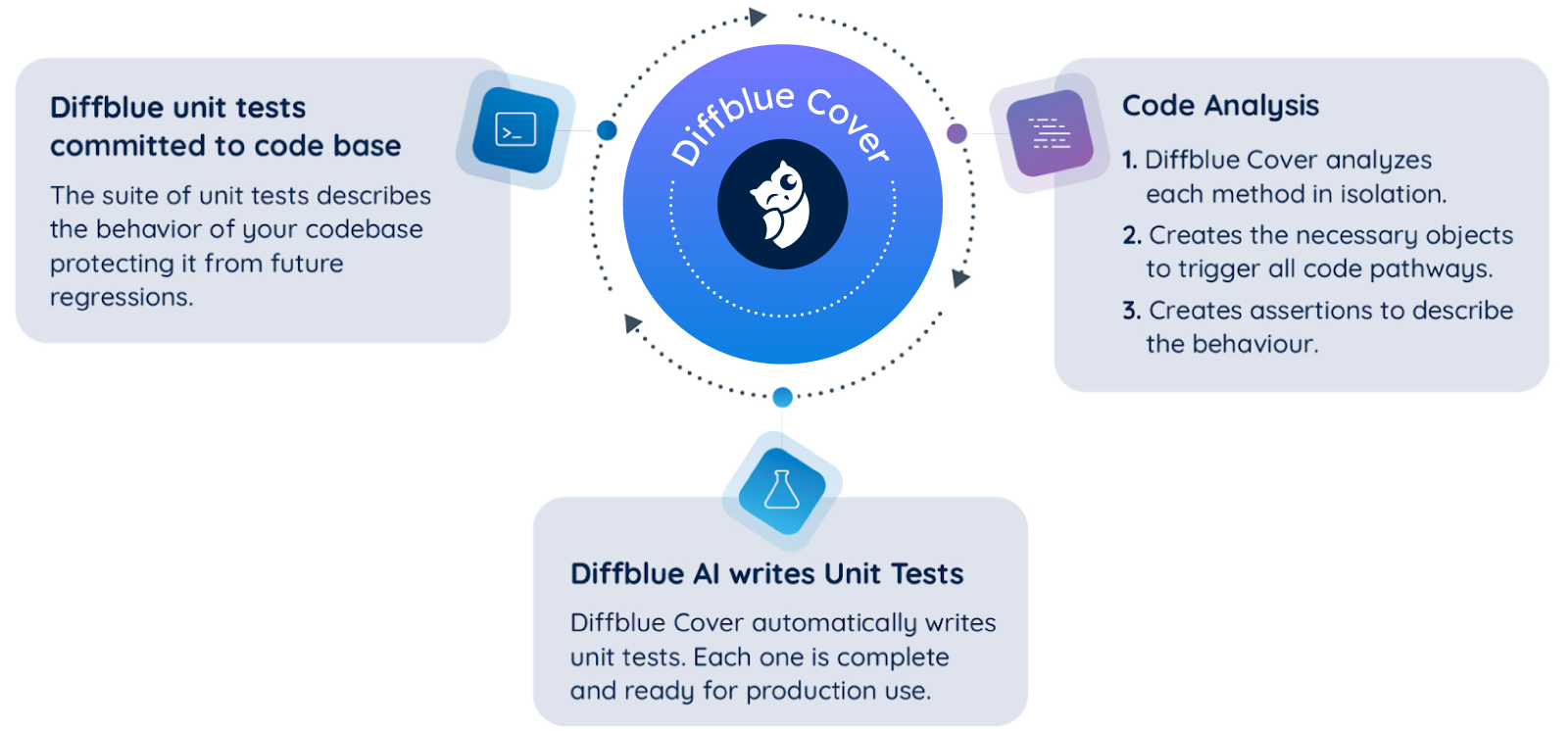
    Diffblue this week generally made available an integration between its automated unit testing platform for Java and the DevSecOps platform from GitLab.

    The Diffblue Cover platform makes use of generative artificial intelligence (AI) to automatically create unit tests based on reinforcement learning technologies that don’t rely on LLMs—avoiding their drawbacks of sometimes introducing hallucinations and also requiring human review.

    Diffblue CEO Mathew Lodge said the integration with the continuous integration capabilities found in the premium and ultimate editions of the GitLab platform would, for example, streamline regression testing in a way that should ultimately improve both application quality and security. Diffblue Cover, for example, can update tests as much as 250 times faster than a human developer can write them manually without developer review.

    That approach also serves to reduce the level of friction many DevSecOps teams encounter when bottlenecks involving testing processes emerge, noted Lodge. The overall goal is to make it simpler for developers to test as much of their own code as possible before integrating it into a build, he added. Otherwise, developers will get fed up because testing is continuously breaking the build, noted Lodge.

    Ultimately, instead of having to write unit tests, developers become supervisors of a platform that automatically generates them on their behalf, said Lodge. The job of a developer doesn’t go away, but it does fundamentally change, he added.

    To achieve that goal, developers need to be able to access a platform that writes the tests and can then also execute them automatically. If it takes too long to create the test, chances are high that most developers won’t run it. On average, writing and evaluating a single unit test can take a developer 10 minutes. Over the course of any project, thousands of tests need to be written, so the amount of time testing takes away from coding is often much greater than most IT leaders fully appreciate.

    Automating those tests should improve developer productivity as more time is available to focus on writing code rather than testing. That doesn’t necessarily eliminate the need for a dedicated testing team, but it does mean that more tests will be run without slowing down the overall pace of application development.

    Developers naturally want to be able to test code at the very instant they create it. AI platforms can make that happen by, for example, employing reinforcement learning to write unit regression tests.

    Most developers are not going to resist assuming more responsibility for testing if the tools to automate that task are more accessible. Instead of merely shifting responsibility for testing left toward developers, DevOps teams need to find ways to streamline the process. Otherwise, testing just becomes one in a series of tasks that are being shifted to developers in ways that many of them are coming to resent.

    It may take some time before AI is fully integrated into software engineering but it’s clear with each passing day more previously manual tasks are being automated. Among the lowest hanging fruit for applying AI to software engineering are clearly testing processes that, if truth be told, few indeed enjoy conducting.

  • Survey: Widespread Inability to Remediate App Vulnerabilities

    Survey: Widespread Inability to Remediate App Vulnerabilities

    A survey of 621 IT and security professionals published this week found only 20% are confident in their ability to detect a vulnerability before an application is released.

    Conducted by the Ponemon Institute on behalf of Security Journey, a provider of cybersecurity training services for developers, the survey finds 61% struggling to remediate vulnerabilities effectively, with 55% blaming misalignment between development, security and compliance teams for delays.

    A third of respondents (33%) said teams lacked a common view of applications and assets, with 38% acknowledging they lack the ability to hold departments accountable for patching applications. Only 11% of organizations believed they patch vulnerabilities effectively in a timely manner, the survey finds.

    In the 12 months prior to the study, 54% of respondents suffered a security incident due to an unpatched vulnerability, with 51% experiencing more than eight incidents.

    Overall, half (50%) admitted they fail to test the security of their applications after they have been released. Only 36% specifically teach developers to write secure code. Just one-fifth (21%) educated developers on vulnerability remediation. Less than half (43%) have invested in training provided by a third party.

    When training is provided, 68% of respondents also admitted immediate feedback is not provided and less than half (47%) said secure coding training is customized to meet developer needs. Half (50%) of those who provided training have no formal assessment to measure knowledge gain, the survey found.

    Amy Baker, chief marketing officer and security education evangelist for Security Journey, said the survey makes it clear much work still needs to be done in terms of teaching developers how to write secure code.

    In addition, too many software development teams are overly optimistic about their ability to remediate known vulnerabilities the next time they plan to update an application, said Baker. Many developers move on to the next application simply because either the pressure to meet delivery deadlines is too intense or there is some other emerging technology, such as large language models (LLMs), that needs to be learned, she added. In fact, too many organizations are far too focused on the rate at which applications are built and deployed at the expense of cybersecurity, Baker noted.

    That’s especially problematic because cybercriminals have become much more adept at monitoring application deployments and updates, she added.

    The amount of time between when code is deployed and when cybercriminals begin scanning it for vulnerabilities is now measured in hours rather than days. Developers, unfortunately, are deploying more insecure code than ever. In fact, much of that code is insecure by design, noted Baker.

    Overall, nearly half of respondents (48%) only train developers annually, bi-annually or when an incident occurs. More than two-thirds (68%) only train developers on how to implement secure coding practices to meet compliance requirements. In effect, because developers are not taught security in school, what training they do receive is on the job, said Baker.

    Clearly, there is still much work to be done when it comes to implementing DevSecOps best practices to improve application security. In the meantime, the amount of code that needs to be patched has already reached proportions that most application development teams are never going to be able to effectively address.

  • Configuration-as-Code: Trends and Predictions for 2024

    Configuration-as-Code: Trends and Predictions for 2024

    Configuration-as-code, often abbreviated as CaC, is an innovative approach to managing and provisioning computing resources. It refers to the practice of handling changes, deployments and updates to software and systems via code rather than manual processes. CaC allows for a version-controlled, reproducible and automated method of managing environments, leading to more consistent and reliable systems.

    The essence of configuration-as-code is to treat system configurations the same way that software code is treated. This means that configurations are written in a code format, stored in a version control system and applied through automated processes. This approach brings several benefits, including consistency, repeatability and the ability to test changes before applying them to live environments.

    This concept is not just a theoretical approach but rather a practical tool for managing modern digital infrastructure. It’s a key component of DevOps practices, enabling teams to move faster while maintaining control and minimizing the risk of operational issues. Configuration-as-code is a critical tool for managing complex systems and achieving the highest levels of operational efficiency and reliability.

    The Evolution of CaC in Recent Years

    Over the past several years, configuration-as-code has grown from a niche concept into a mainstream practice adopted by many leading technology companies. This evolution has been driven by several factors, including the increasing complexity of digital systems, the rise of cloud computing and the broader adoption of DevOps practices.

    In the early days, system configurations were often managed manually or through ad-hoc scripts. This approach was prone to errors, hard to scale and lacked visibility into changes. As systems grew more complex, the need for a more robust, scalable, and reliable method of managing configurations became apparent. This led to the creation of configuration-as-code.

    The rise of cloud computing has been a significant driver in the adoption of configuration-as-code. With cloud platforms, resources can be provisioned and managed via APIs, making it possible to handle configurations through code. This has allowed for much greater scalability and flexibility enabling companies to manage large, complex environments more effectively.

    The adoption of DevOps practices and increasingly mature automation frameworks have also contributed to the growth of Configuration as Code. As infrastructure-as-code (IaC) becomes the norm, CaC is becoming a staple of modern DevOps practices.

    Trends in Configuration-as-Code for 2024

    Looking ahead to 2024, several trends are likely to shape the future of configuration-as-code:

    Increased Adoption of Cloud-Native Environments

    As more companies adopt cloud-native technologies, the use of configuration-as-code is set to increase. Cloud-native environments are inherently dynamic and complex, making them an ideal fit for configuration-as-code. With CaC, teams can manage these environments more effectively, ensuring consistency, scalability, and reliability. Cloud-native technologies like Kubernetes and Docker also natively support configuration-as-code, making it easier for teams to adopt this approach.

    Use of AI and Machine Learning in Configuration Management

    Artificial intelligence and machine learning are set to play a significant role in the future of configuration management. With AI and ML, teams can automate even more aspects of configuration management, reducing the risk of human errors and freeing up time for more valuable tasks. For example, AI could be used to predict the impact of configuration changes, while machine learning could help automate the process of optimizing configurations for performance and cost efficiency.

    Shift Toward Immutable Infrastructure

    Immutable infrastructure means that servers are never modified after they’re deployed. Instead, any changes are made by deploying a new server with the desired configuration. This approach reduces the risk of configuration drift and ensures a consistent environment. Configuration-as-code is a key enabler of immutable infrastructure, making it easier to manage and deploy servers in a repeatable, automated way.

    Collaboration and Democratization of CaC

    Finally, the trend towards collaboration and democratization in technology will also influence configuration-as-code. With CaC, configurations become more visible and accessible, allowing for greater collaboration between teams. This can lead to better decision-making, less siloed working, and improved overall outcomes. At the same time, configuration-as-code also enables democratization by making it easier for non-technical stakeholders to understand and participate in configuration management.

    Predictions for Configuration-as-Code in 2024

    CaC is Becoming a Cornerstone in the DevSecOps Approach

    The integration of development, security and operations—commonly known as DevSecOps—aims to embed security practices into the DevOps process. As we look towards 2024, configuration-as-code is set to become a cornerstone in the DevSecOps approach.

    By treating infrastructure as code, teams can apply the same security practices they use for application code to their infrastructure. This includes performing code reviews, using automated testing, and tracking changes to the environment. With configuration-as-code, security can shift left—being considered earlier in the development process—leading to more secure systems.

    Moreover, configuration-as-code can help bridge the gap between security and operations teams. It allows for a shared language and shared tools, fostering better collaboration and communication.

    Growth of CaC-as-a-Service

    Configuration-as-code-as-a-service is an emerging trend that is set to grow significantly by 2024. This approach allows businesses to outsource configuration management to a specialist third party, which uses configuration-as-code to automate the process. Cloud-based configuration management solutions provide advanced capabilities such as secrets management, centralized configuration management and orchestrated workflows.

    Version Control Features Specifically Designed for CaC

    Version control systems are a key component of configuration-as-code. They allow teams to track changes to their environment, revert back to previous versions if necessary, and collaborate more effectively. In 2024, we can expect to see the evolution of version control systems with features specifically designed for CaC.

    These features might include support for infrastructure-specific languages and better integration with infrastructure tools. Version control tools might also introduce improved support for collaborative configuration workflows, making it easier for teams to work together on infrastructure configuration.

    Increased Role of CaC in Managing Edge Computing Environments

    As we move into 2024, we can expect to see an increased role for configuration-as-code in managing edge computing environments. Edge computing is rapidly growing due to its ability to bring computation and data storage closer to the location where it is needed, improving response times and saving bandwidth.

    With the rise of edge computing, managing these environments becomes increasingly complex. CaC can automate the process of setting up and maintaining these environments, reducing human error and increasing efficiency. This also allows for consistency across different environments, leading to more reliable systems.

    In conclusion, the future of configuration-as-code looks promising. As we move towards 2024, we can expect to see an increased role for CaC in managing edge computing environments, its evolution as a cornerstone in the DevSecOps approach, the growth of CaC-as-a-Service, and the evolution of version control systems specifically designed for CaC. These developments promise to bring about greater efficiency, security and collaboration in the realm of infrastructure management.

  • How Network APIs Will Finally Realize the Potential of 5G Slicing

    How Network APIs Will Finally Realize the Potential of 5G Slicing

    The applications used by people and businesses today run over the top of the network. That is, they use the network to transmit data from one point to another but don’t interact with the network in any way.

    As those applications get more advanced, that comes with a risk. If the network isn’t provisioned adequately, a self-driving car, for instance, might suddenly lose connectivity and freeze in the middle of an intersection.

    That’s why developers are progressively realizing they’re going to require more from the network if they are to create revolutionary new applications. But the catch is they’re also not network specialists.

    Instead, they yearn for quick and simple ways to tap into and onboard 5G network capabilities within their applications — to dynamically adjust connectivity speeds based on real-time conditions, for example. That’s where network application programming interfaces (APIs) enter the picture.

    In 2023, the telecoms industry committed to unprecedented levels of openness with the announcement of the GSMA Open Gateway initiative and the growing popularity of the CAMARA project.

    In 2024, there is an expectation that there could be even more momentum around and demand for open network APIs as developers start to get real access to them — and begin to explore the potential of leveraging specialized network capabilities, delivered through techniques such as network slicing for their enterprise and consumer applications.

    What are Network APIs and How Will They Be Used?

    A network API is like any other API that allows for two or more applications to communicate with each other. It’s just that, in this case, one of those applications is the network itself.

    This is possible because today’s cloud-native 5G networks are fundamentally software-based, meaning they are also programmable through APIs and other software development tools. So unlike the networks of years ago, which were more hardware-dependent and closed in nature, developers can now get easy access to deep functionality and data within the network.

    Through a network API, applications and networks can share information about their status and needs, allowing for optimizations to be made on either side. The network could signal to a drone or autonomous vehicle where other related devices are operating or whether congestion is likely to occur in a given area, enabling on-the-fly route changes to maintain optimal performance. Or the application could use that information to request specialized capabilities from the network in certain situations, such as low-latency connectivity or more uplink capacity.

    The ability to deploy specialized network capabilities for specific applications in specific locations may sound familiar. It’s essentially the promise of network slicing, which was promoted heavily in the early days of 5G rollouts but never really caught on as expected.

    This is largely because network slices have to be planned for and provisioned well in advance — a dealbreaker for applications that need to manipulate parameters such as quality of service based on real-time conditions.

    Network APIs change that, providing access to specialized network capabilities in a dynamic, automated way — whether by spinning up a network slice or through the use of other telecommunications tools. The emerging applications of tomorrow will increasingly require such specialized network capabilities.

    Consider beyond visual line of sight (BVLS) drones that are operated remotely by a person hundreds of kilometers away. As the drone travels, it will need different network capabilities at different parts of the journey based on the unique conditions it encounters along the way.

    Deutsche Telekom has been working to deploy network APIs for this very scenario, which includes APIs for location verification (for more precise tracking of the drone’s position) as well as “quality on demand,” so that as it passes over highly congested areas where thousands of people are also using up network capacity, the drone can get greater prioritization to ensure it doesn’t fall out of the sky.

    That’s just one potential use case. Network APIs can open up innovations for industrial robots, real-time streaming of immersive video using multiple cameras, latency-sensitive applications like VR and cloud gaming, and much more.

    Creating a Network-Powered System Ecosystem

    APIs can help foster a network-powered ecosystem of digital innovation that brings benefits to everybody involved. By being able to leverage specialized network capabilities on demand, developers can create innovative applications and experiences for their customers — transforming their ideas into real solutions.

    Existing applications can also be enhanced for better performance, such as drones that can reliably transmit high-definition video from any location and under any circumstances to improve the situational awareness of first responders and public safety agencies.

    For the communication service providers (CSPs) who operate the networks, these APIs will help deliver a better return on investment for their 5G infrastructure. Revenue growth for traditional communications services in both the consumer and enterprise markets is limited by an unwillingness to pay more for those services and the perception that value lies in the applications rather than the network.

    Thus, the need for CSPs to develop new revenue streams has never been greater. By charging developers for access to the network APIs — and by forging closer connections to the applications that will use the capabilities within the network — CSPs will be better able to generate monetizable value from their networks.

    What’s Ahead for Network APIs

    APIs have been around for more than two decades. The fundamental principles of network slicing have been talked about since the introduction of 4G. While these technologies have been around for years, they will come together in exciting new ways in 2024, enabling entirely new possibilities.

    In the year ahead, there will likely be a greater demand for specialized network capabilities among application developers. That demand will be driven by early digital adopters in industries such as oil and gas, automotive, industrial and high-tech manufacturing, public safety, security, gaming and entertainment, and others.

    But it’s important to note that no one company can make all this work. There needs an ecosystem of companies coming together. Developers need to demand it, and CSPs need to build systems and platforms to support it.

    Infrastructure vendors will play a role as well, with network as code platforms to provide easy access to network APIs — serving as the bridge that enables greater levels of collaboration, innovation and mutual growth so everybody can harness the full potential of 5G networks.

  • Chronosphere Acquires Calyptia to Process Log Data More Efficiently

    Chronosphere Acquires Calyptia to Process Log Data More Efficiently

    Chronosphere today announced it has acquired Calyptia to add additional pipeline management capabilities to its observability platform.

    Calyptia created Fluent Bit and Fluentd, a set of open source log processors that are now being advanced under the auspices of the Cloud Native Computing Foundation (CNCF).

    Chronosphere CEO Martin Mao said these log processors will be embedded into the company’s namesake observability platform to enable the routing, transformation and optimization of log data at scale. That issue has become problematic because cloud-native applications based on microservices create exponentially more telemetry data than legacy monolithic applications. If it becomes too costly to analyze that data, then DevOps teams will begin to limit the number of applications they will observe, noted Mao.

    The Calyptia platform achieves that goal using filters at the data source to reduce the volume of data that might otherwise be shared by 30% or more.

    The shared data can then be analyzed in real time rather than waiting for it to be stored and indexed. In addition, DevOps teams can enrich that data in flight to include additional context.

    Calyptia cofounder Anurag Gupta added that the primary mission for the company has always been to make log data more accessible to developers as they build and deploy applications.

    The acquisition of Calyptia comes on the heels of a log management alliance between Chronosphere and CrowdStrike through which a log storage and virtualization capability, dubbed Logs powered by CrowdStrike, has been added to the observability platform. The overall goal is to simplify the management and analysis of logs via a single click of a graphical tool or within the context of a larger DevOps workflow based on a command line interface (CLI) without requiring data engineering expertise, said Mao.

    It’s not clear how fully DevOps teams have embraced observability, but it’s apparent the legacy monitoring tools that collect a set of predefined metrics are not able to keep pace with the complexity of cloud-native application environments. An observability platform makes it simpler to query log data and discover the root cause of an issue—hopefully before a catastrophic event occurs. The challenge, of course, is providing that capability without incurring massive increased storage costs for log data.

    Despite those concerns, the need for observability is becoming a more pressing issue with each passing day. Organizations have never been more dependent on applications to drive revenue. A degradation in performance is usually an early indicator of a disruption that often has a direct impact on revenue and profitability.

    There is, of course, already no shortage of observability platforms. The issue most DevOps teams encounter is finding the funding needed to employ one at a time when organizations have become much more sensitive to IT costs. There may be an opportunity to rationalize some monitoring tools to help pay for the cost of a more modern observability platform, but regardless of approach, an ounce of prevention is always going to be worth a pound of proverbial cure.

  • Unlocking Accountability: How Real-Time App Monitoring Empowers Engineering Teams

    Unlocking Accountability: How Real-Time App Monitoring Empowers Engineering Teams

    In today’s fast-paced software development environment, traditional infrastructure monitoring is no longer sufficient. As engineering teams take on more responsibility for code ownership and software quality, the need for comprehensive real-time application monitoring becomes crucial. This isn’t just an addition to standard infrastructure checks; it’s a fundamental shift toward a more accountable and empowering engineering culture.

    A Case for “Real-Time Application Monitoring?”

    Infrastructure monitoring is ubiquitous, and we’ve gotten really good at monitoring the health of our servers, our containers and our data stores. APM tools have come a long way and give us insights into how pieces of our code perform from a speed and error context.

    At the same time, the business side of the house is monitoring things like traffic, leads, conversions and an important performance metric—sales. However, for most businesses, this monitoring is rarely in real-time, and visibility gaps are created in the spaces between where problems are introduced, discovered and resolved.

    Let’s look at a concrete example using an auction marketplace. Core to this business is the ability for users to place, accept and pay for accepted bids. The business probably looks at these metrics on a daily basis, at best. What if a delivered change to their application broke and removed the ability for users to conduct one of these actions?

    Placing a bid probably has a “normal” volume pattern, and a change could impact this in a positive or negative way. If the volume of bids drops after a deployment or even spikes, what happens? How quickly can that change be reported, seen and acted upon, if necessary? How quickly can they get back to “normal” before a customer reports it or before the rest of the business notices?

    If this business is limited to once-daily monitoring, how quickly can they realistically expect their engineering team to be able to identify and remediate such an issue?

    How valuable would it be to the business if their engineering team could instrument these metrics with their own real-time tooling?

    Key Metrics for Trust and Satisfaction

    Customer trust and satisfaction are critical for any software product. The most obvious indicator of customer satisfaction is churn–the retention rate of your customers. This metric, while influenced by various factors, remains a vital sign of how well we are doing. At Stoplight (acquired by SmartBear in August 2023), we focused on reducing customer bug reports. A spike in these reports prompts an immediate investigation into the root cause. It’s about understanding what changed and how to address it.

    Moreover, new customer acquisition isn’t just about retention; it’s also about word-of-mouth referrals. Satisfied customers often become your best advocates. Thus, keeping an eye on churn rates and incoming bug reports and setting realistic targets for these metrics is crucial. It’s about balancing resource allocation without striving for impractical perfection.

    Net Promoter Score (NPS) scores, although often dreaded by customers, are a critical metric. As engineers, we might dislike them, but they offer a holistic view of user satisfaction. If you’re deploying daily and consistently breaking things, expect your NPS scores to reflect that.

    We can also demonstrate real-time ROI of real-time application monitoring in a security context using login successes and failures. Tracking the volume of these activities in our engineering tools allows us to quickly identify and assess the threat of anomalous behavior. Did the rate of successful logins drop? Did we break something with a deploy (I’ve broken logins before). What if either successes or failures spike? Are we under attack? How can we mitigate it to protect our users?

    Employee Retention and Developer Satisfaction: Essential in an Era of Real-Time Monitoring

    In the realm of software development—particularly with the advent of real-time application monitoring—employee retention, especially of developers, is paramount. Their deep understanding of the nuances of our applications and their ability to respond swiftly to the insights provided by real-time monitoring are invaluable.

    Maintaining a team of satisfied, engaged developers is crucial in this context. It’s not just about reducing turnover; it’s about fostering a culture where the engineers feel invested in the continuous improvement and success of our products. When developers are genuinely satisfied with their work and their environment, it reflects in the quality of their output. They become proactive in identifying and addressing issues, often before they escalate, thanks to the real-time data at their fingertips.

    The shift toward more dynamic monitoring practices has underscored the need for a supportive, collaborative environment. A culture where developers are encouraged to share insights and take initiative leads to a more responsive and adaptable team. This environment not only supports the technical aspects of our work but also enhances the overall morale and commitment of our developers.

    Engineers will seek out organizations that adhere to better practices. Interestingly, when good practices are in place, developers are more open to being on call. They accept responsibility for their code and their peers’ code as a trade-off for the autonomy and value they can deliver through frequent, quality deployments.

    Starting Small: Embracing the Journey of Incremental Improvements

    The journey to adopting best practices in engineering, such as real-time application monitoring, often begins with small yet significant steps. Reflecting on my past experiences, particularly at a shipping marketplace, the path to continuous deployment was transformative. Initially, we had no automated tests, and the challenges were substantial. However, the commitment to deploy continuously led to an evolutionary process in our practices.

    This approach isn’t just about technology; it’s about mindset. In my earlier days, inspired by the continuous deployment practices I observed in financial institutions, I realized the power of incremental changes. We began with what we had, deploying continuously, and with each step, we uncovered new areas for improvement. It was a process of building our capabilities piece by piece–from integrating automated tests to refining our deployment strategies.

    The essence of this journey lies in its continuous nature. Much like the principles of agile and DevOps, it’s a perpetual process of evolution. You don’t reach a finish line and stop; it’s about relentlessly pushing for betterment, identifying gaps, and adapting to new challenges. It’s about creating a culture where continuous improvement is the norm, where each small step contributes to a larger goal.

    Building a Culture of Continuous Improvement and Excellence

    Adopting real-time application monitoring is more than implementing a new set of tools; it’s about fostering a culture of continuous improvement, accountability, and excellence. In my experience, this cultural shift has a profound impact on every aspect of our work. It’s about ingraining a mindset that constantly seeks to exceed our standards with each release.

    Creating this culture involves a holistic approach to our engineering practices. It’s not just about the technical side of things; it’s about enhancing the collaborative and innovative spirit of our teams. It’s important for engineering leaders to do their part to foster an environment where every team member feels empowered to contribute ideas and take initiative. The ROI of this approach can lead to significant improvements in your team’s processes, as well as a deeper sense of ownership and pride in their work.

    Moreover, this culture of continuous improvement often extends well beyond the engineering department. It can influence the entire organization, encouraging departments like sales, marketing, and customer support to adopt similar principles. By doing so, we create a unified approach to product development, customer service, and business growth.

    Conclusion

    Embracing real-time application monitoring is not just about adding another layer to our development practices; it’s about fundamentally shifting our mindset toward a culture of accountability and continuous improvement. By focusing on key metrics, understanding the psychology of developers, and starting small, we can drive significant improvements in both product quality and employee satisfaction. As engineers, we are in a unique position to influence this change, and it is imperative that we lead the charge in adopting these essential practices.