Author: Mike Vizard

  • Massdriver Adds Cloud Cost Controls to Internal Developer Platform

    Massdriver Adds Cloud Cost Controls to Internal Developer Platform

    Massdriver has made available tools for tracking cloud costs and generating a cloud infrastructure bill of materials (Cloud IBOM) to internal developer platforms (IDPs) as part of an ongoing effort to streamline platform engineering workflows.

    The Cloud IBOM makes it possible, with a few clicks, to map hybrid cloud resources such as databases, machine learning pipelines and serverless computing frameworks.

    Massdriver CEO Cory O’Daniel said collectively, these tools reduce expenses by preventing misconfigurations that result in unexpected costs. Rather than solely providing a summary of costs incurred, the tools provided by Massdriver surface how much cloud services are going to cost at the time the developer is invoking them, he noted.

    In the absence of that context, developers will nearly always overprovision cloud resources to ensure maximum availability regardless of cost, says O’Daniel. The overall goal is to help organizations reduce the total cost of IT by providing developers with insights into costs in real-time, he added.

    Earlier this year, the company launched an IDP that comes with platform engineering tools that, for example, make it possible for DevOps teams to build a catalog of infrastructure components that developers can access within the context of guardrails they define. The platform also includes observability and visualization tools that make it simpler to track metrics and monitor the usage of cloud resources.
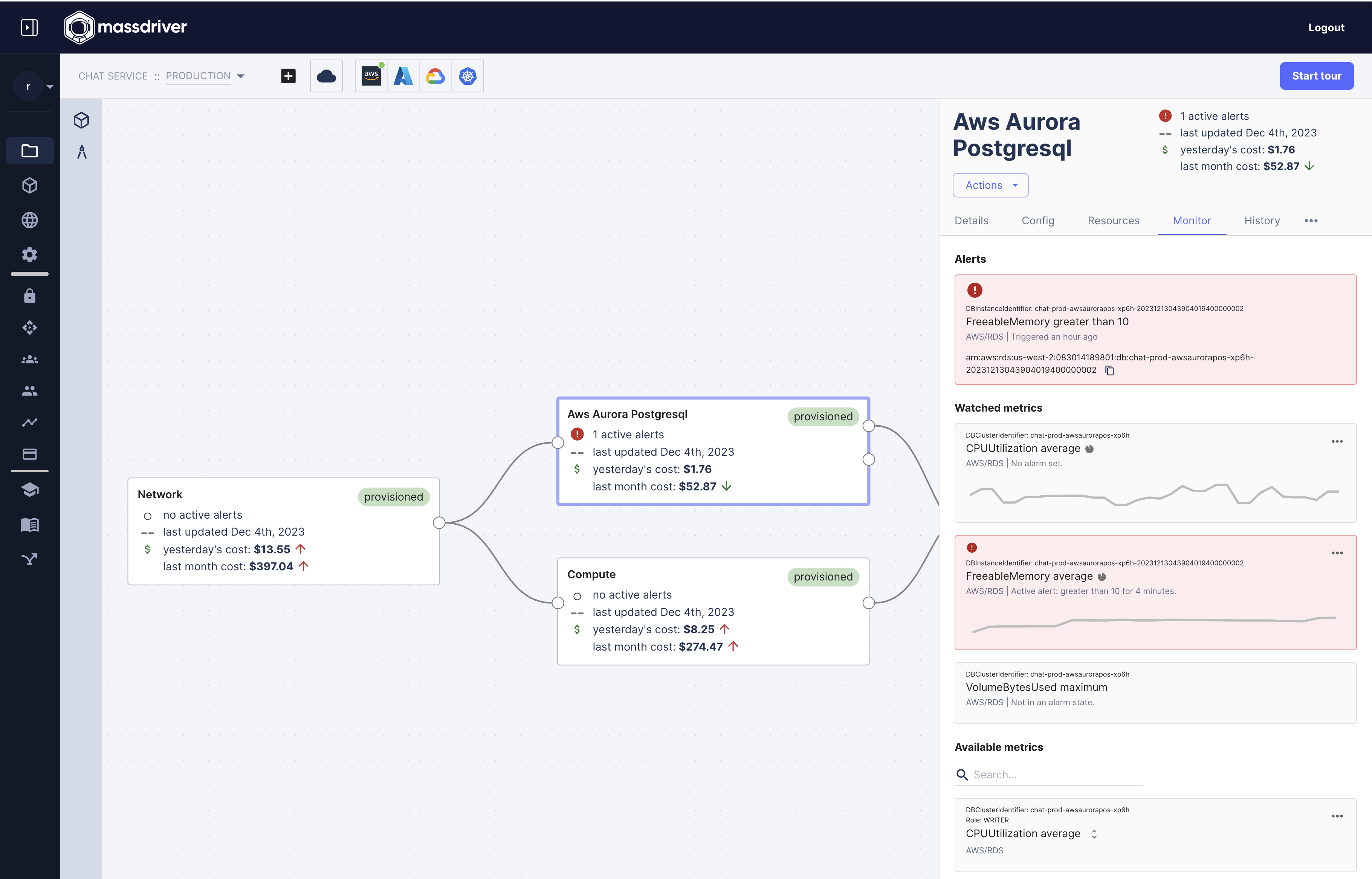
    Massdriver is making a case for an IDP that provides built-in tools and workflows that enable organizations to embrace platform engineering as a methodology for managing DevOps workflows at scale. The goal is to reduce the level of expertise required to build and deploy applications in cloud computing environments, said O’Daniel. One of the primary reasons there are not more applications running in the cloud today is that these environments are still too complex to successfully manage, he added. An IDP abstracts away that complexity within a set of workflows that have been vetted by a DevOps team, he added.

    There are, of course, multiple approaches to building an IDP, but rival approaches require too much effort to set up and maintain, said O’Daniel. A proprietary platform provides a more turnkey approach that doesn’t require DevOps teams to either build their own or customize an open source platform, he added.

    It’s not clear at what pace organizations are embracing platform engineering, but there is a clear need to strike a balance between delivering IT services managed by a centralized team and the desire a developer might have to embrace new tooling whenever they see fit. Today, too much responsibility for provisioning IT environments has been pushed left toward developers who now have less time than ever to write code.

    There is, naturally, no guarantee that reducing the cognitive load for developers will increase productivity. Building applications requires streaks of inspiration, but, in theory, an IDP should provide more time for inspiration to strike. DevOps teams, as part of that effort, should be continuously working toward eliminating any bottlenecks that have emerged in their DevOps workflows.

  • Five Great DevOps Job Opportunities

    Five Great DevOps Job Opportunities

    DevOps.com is now providing a weekly DevOps jobs report through which opportunities for DevOps professionals will be highlighted to better serve our audience.

    Our goal in these challenging economic times is to make it easier for DevOps professionals to advance their careers.

    Of course, the pool of available DevOps talent is still relatively constrained, so when one DevOps professional takes on a new role it tends to create an opportunity for others.

    The five job postings shared this week are selected based on the company looking to hire, the vertical industry segment and, naturally, the pay scale being offered.

    We’re also committed to providing additional insights into the state of the DevOps job market. In the meantime, for your consideration:

    Indeed.com

    MedStudy
    Remote
    Senior DevOps Engineer
    $125,000 to $165,000

    SimplyHired.com

    Raytheon
    Tewksbury, Massachusetts
    Technical Fellow – DevSecOps/Cloud Native
    $122,000 to $155,000

    CareerBuilder.com

    State Street Corp.
    Quincy, Massachusetts
    Azure DevOps Engineer
    $120,000 to $202,500

    Dice.com

    USEReady
    New York, New York
    Senior Azure DevOps Engineer
    $120,000 to $160,000

    LinkedIn

    Northrop Grumman
    Dulles, Virginia
    Senior Principal DevOps Engineer
    $107,300 to $199,600

  • ScienceLogic Unveils Revamped AIOps Platform

    ScienceLogic Unveils Revamped AIOps Platform

    Via an early access program, ScienceLogic this week made available a Hollywood update to its artificial intelligence for IT operations (AIOps) platform that, among other capabilities, provides root cause analysis capabilities that can be invoked via a natural language interface.

    For the first time, this release of the ScienceLogic SL1 platform incorporates predictive and generative AI technologies the company gained with the acquisition of Zebrium in 2022.

    Michael Nappi, chief product officer for ScienceLogic, said Zebrium provided ScienceLogic with an AI model that surfaces insights in a way that is simpler for IT teams to understand and act on. In addition to recommending automated workflows to run, the platform gives IT teams the option to automatically run them when, for example, there is an IT incident that an existing workflow has been defined to address, he added. Each organization will need to determine its level of comfort in automating those processes based on the level of potential risk to the business, noted Nappi.

    In addition, the SL1 user interface displays IT operational information at the business service level to provide IT teams with a guided experience that makes it simpler to prioritize tasks based on their relevance to the business, noted Nappi. There is also now an SL1 toolkit that DevOps teams can use to build or customize PowerPacks templates for monitoring specific processes and services.

    Finally, SL1 is now integrated with Slack and WebEx to streamline collaboration across IT teams. Previously, the platform only supported Microsoft Teams.

    In effect, SL1 now provides IT teams with a cockpit through which they can invoke AI to autonomously manage a wide range of tasks, said Nappi.

    It’s not clear how much advances in AI might one day soon democratize the management of IT, but it is clear the level of expertise required to manage complex IT environments is declining. The overall goal is to reduce dependency on IT professionals, such as software engineers, who are hard to find and retain.

    The rate of change being made to complex IT environments is now also occurring faster than IT teams can track without the aid of AI, noted Nappi. ScienceLogic, in the longer term, is working toward making it possible to interact with a chatbot in real-time to enable IT teams to meet that challenge, he noted.

    Each IT organization will need to decide for itself how heavily to rely on AI to manage IT functions, but in time, many IT professionals are not going to want to work for organizations that don’t provide some level of AI to reduce the level of toil they regularly encounter today. Rather than having to manually perform a series of monotonous tasks, AI should enable IT professionals to act more like supervisors in an IT environment.

    It may be a while before that aspiration is fully realized, but in the meantime, IT teams would be well-advised to start identifying which tasks will soon be automated using AI because roles and responsibilities will evolve. The challenge and the opportunity now is determining how IT teams can add more value to the business as those transitions occur.

  • Copado Expands Beta of Generative AI Tools for Salesforce DevOps Platform

    Copado Expands Beta of Generative AI Tools for Salesforce DevOps Platform

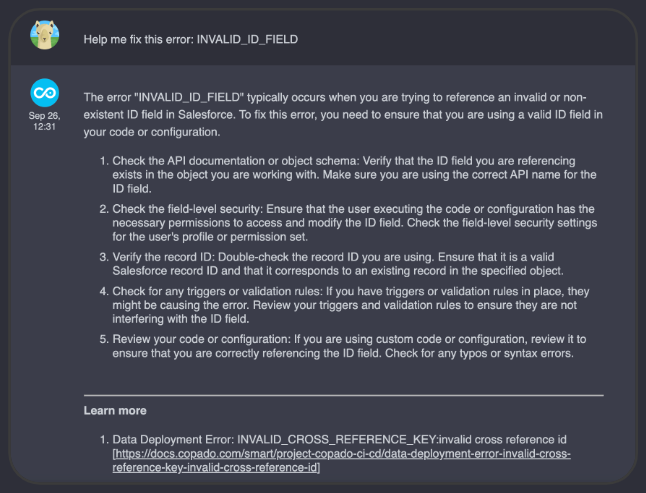
    Copado today announced it has expanded a beta program through which it provides application development teams building applications for the Salesforce software-as-a-service (SaaS) platform access to generative artificial intelligence (AI) capabilities enabled by ChatGPT.

    David Brooks, SVP of Evangelism for Copado, said the company, via the usage of vector databases, has exposed instances of ChatGPT to everything in its knowledge base that has been collected over the last 10 years. That approach enables Copado to extend the large language model (LLM) used to train ChatGPT without exposing any data that might be used to one day train the next version of the generative AI platform.

    The goal is to enable DevOps teams to generate code and tests faster while simultaneously reducing the time required to handle support calls, said Brooks.

    In addition, Copado is using ChatGPT to enable impact analysis and conflict detection to reduce the level of friction encountered when deploying applications in a production environment. That latter capability is critical because, in many instances today, DevOps teams don’t have a firm understanding of how code needs to be deployed, resulting in unnecessary rollbacks of application deployments, noted Brooks.

    Generative AI will also automate the creation of documentation, such as release notes for every application deployed, to reduce the overall level of toil DevOps teams experience, noted Brooks.

    Copado also plans to provide governance tools that will enable DevOps teams to ensure the code written by an LLM is not based on a hallucination that results when trying to reconcile conflicting data, added Brooks. There will, of course, always be a need for a human to review code before it is deployed in a production environment, he added.

    In the longer term, Copado will make it possible for organizations to invoke multiple LLMs to address various functions as they best see fit, said Brooks. In fact, DevOps teams should expect to soon be employing multiple copilots trained to address specific tasks such as writing code, deploying applications, assessing cybersecurity and addressing compliance mandates, he added.
    Ultimately, application development and deployment efforts that today require weeks to complete will soon be accomplished within the same day, said Brooks.

    At the same time, organizations will also be able to better manage application environments that today operate at levels of scale few IT teams can manually track. Generative AI capabilities, in effect, will make it simpler for DevOps teams to effectively manage application environments at much higher levels of scale, said Brooks.

    Each organization will naturally need to determine to what degree they are prepared to absorb that level of innovation, but it’s clear the pace at which applications are built and deployed is about to exponentially increase. The issue organizations will increasingly encounter is that business processes will not be able to absorb the rate at which software can be built and updated.

    It’s not clear just yet to what extent generative AI will transform DevOps, but as advances continue to be made, many of the manual tasks and bottlenecks that today conspire to slow down application development and deployment are about to be eliminated in ways that few would have thought possible a little more than a year ago.

  • Survey Surfaces Significant Platform Engineering Gains

    A survey of 100 software engineers working at organizations in the U.S. and Western Europe published today found nearly all (99%) have embraced platform engineering to some degree as a methodology to manage DevOps workflows at scale, with more than half (53%) having done so in the last year.

    Conducted by Port, a provider of a proprietary internal developer portal (IDP) platform, the survey also found 83% of respondents have also incorporated GitOps workflows into their platform engineering practices.

    The survey also found 85% are working for organizations that have either started deploying IDPs or plan to do so in the coming year. However, what constitutes an IDP is not exactly clear, with more than a third (35%) that have implemented one reporting they are relying on spreadsheets to manage their IDP. A little over half (53%) of respondents, in contrast, are using an IDP to provide developers with self-service capabilities for setting up environments to write code that either was custom built, is based on open source Backstage software originally developed by Spotify or a commercial IDP platform.

    Among the 85% of respondents using or planning to use an IDP, the main measure of success is to improve developer productivity (56%), followed by reduced time to deployment (25%). Despite those initiatives, only slightly more than a third (34%) said IDPs are helping DevOps teams enforce software engineering standards.

    Roni Floman, chief marketing officer for Port, said overall, the survey suggests developers are wasting a lot of time on tasks that have little to do with writing code. For example, the survey finds that prior to embracing platform engineering, developers spent three to four hours a day on non-core activities, resulting in weeks being required to eventually deploy software in a production environment.

    The biggest challenge organizations face when embracing platform engineering is convincing developers that a centralized team has their best interests at heart. Many application development teams embraced DevOps as a best practice in the first place to escape the tyranny of a centralized IT team. The issue is that, as a result, many of them now find themselves managing tasks that have little to do with writing code. Platform engineering seeks to strike a balance between giving developers the ability to adopt new tools when they see fit and the benefits of having a dedicated platform engineering team that automates processes on their behalf.

    Unless platform engineering teams find a way to get developers to buy into the effort, however, it’s unlikely they will succeed, noted Floman.

    Each organization will need to determine for itself what level of platform engineering makes sense for them to implement, given their unique culture. In most cases, a platform engineering initiative will start small before increasing in size and scope as momentum is gained. In the meantime, the most important thing any platform engineering team clearly needs to do in the short term is engage developers. After all, the best way to get support for any change to a DevOps workflow is, as always, to convince developers it was their idea in the first place.

  • Atlassian Delivers on Generative AI Promise for DevOps and ITSM

    Atlassian Delivers on Generative AI Promise for DevOps and ITSM

    During a virtual Unleash event, Atlassian today announced its generative artificial intelligence (AI) capabilities are now generally available across its Jira and Confluence suite of tools for managing IT and DevOps workflows.

    In addition, Atlassian also committed to adding generative AI capabilities to its Bitbucket continuous integration/continuous deployment (CI/CD) platform to enable DevOps teams to review pull requests and leave comments automatically with suggested changes around syntax and code conventions via a natural language interface. Developers will also be able to autogenerate pull request descriptions from commit messages.

    Matt Schvimmer, head of products for the Agile and DevOps division of Atlassian, said the capabilities provided by Atlassian Intelligence will reduce the level of toil and stress DevOps teams experience at a time when the velocity at which applications are being developed and deployed only continues to increase.

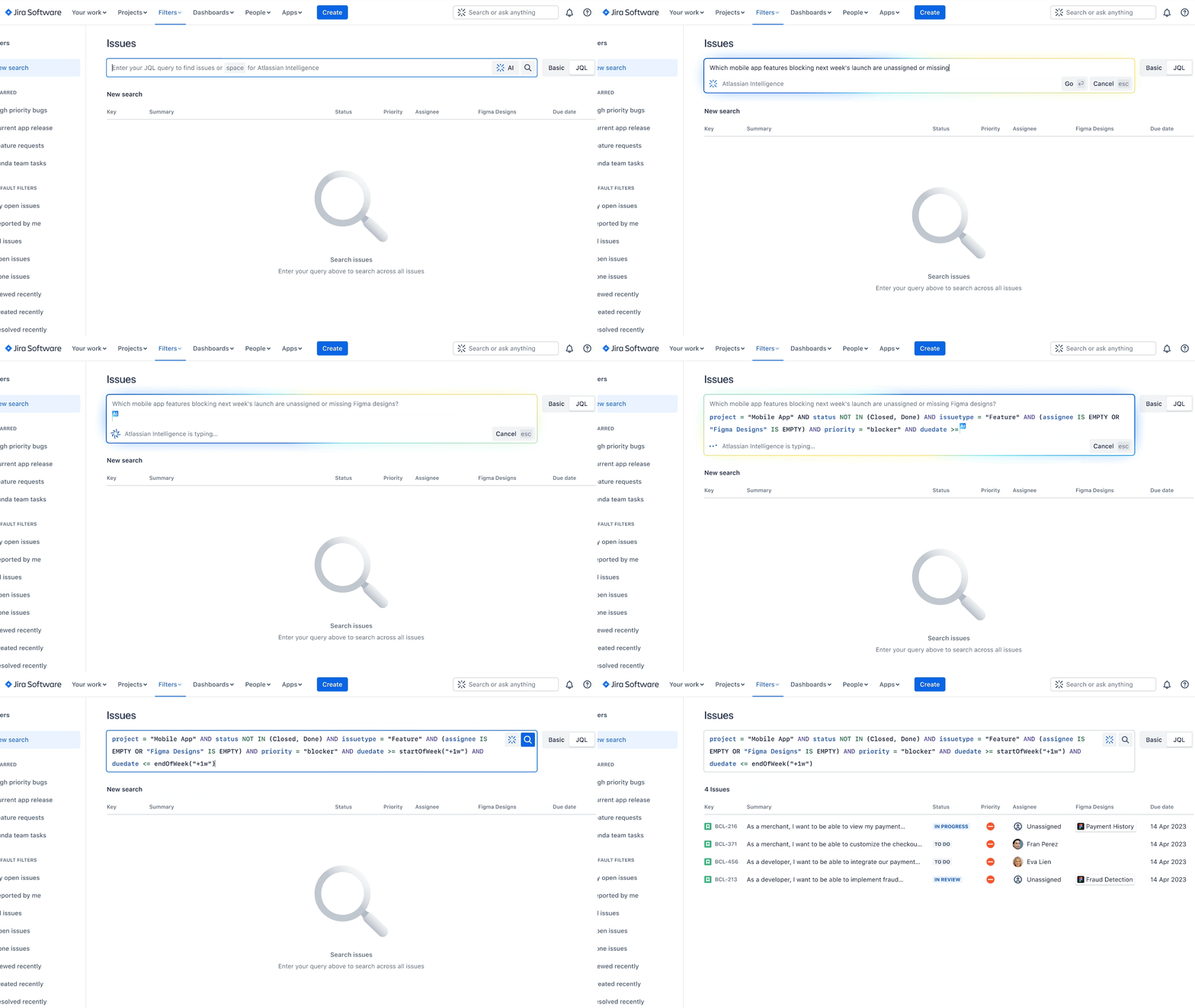
    Atlassian reported nearly 10% of its more than 265,000 customers have already leveraged Atlassian Intelligence since the launch of the beta program. Organizations, for example, can instantly create user stories within Jira Software tickets, change the tone of a customer response within Jira Service Management, create summaries, launch workflow requests via prompts and generate a starting point for a test plan in Confluence.

    Natural language capabilities, currently available for Confluence, will shortly be generally made available for Jira. An ability that promises to help demystify company-specific concepts, jargon or acronyms is also available now in beta, with support for Jira Software and Jira Service Management to shortly follow.

    There is little doubt at this juncture that AI will be pervasively applied across both ITSM and DevOps workflows. As those advances are made, it should also become feasible to reduce the level of toil these teams regularly encounter. At the same time, the level of scale at which ITSM and DevOps workflows can be effectively managed should also increase substantially.

    Each organization will need to decide how quickly to incorporate AI into those workflows, but hopefully, the level of burnout experienced by IT personnel will be sharply reduced as more tasks are automated. Less clear is the impact AI will have on the size of IT teams required to provide those services, but for the foreseeable future, there will always be a need for some level of human supervision.

    In the longer term, the war for IT and DevOps talent that has been waged now for multiple decades should diminish as managing these workflows becomes more accessible, noted Schvimmer. Organizations will not need to rely so much on the expertise of a handful of specialists, he added.

    Organizations, however, would be well-advised to make sure AI is embraced from both the bottom up and the top down to ensure optimal adoption, said Schvimmer.

    In the meantime, IT teams should take an inventory of the processes that are likely to be automated by AI today with an eye toward restructuring teams as more tasks are automated. Ultimately, the goal should be to let machines handle the tasks they do best to enable the IT staff to provide services that deliver more value to the business.

  • Five Great DevOps Job Opportunities

    Five Great DevOps Job Opportunities

    DevOps.com is now providing a weekly DevOps jobs report through which opportunities for DevOps professionals will be highlighted to better serve our audience.

    Our goal in these challenging economic times is to make it easier for DevOps professionals to advance their careers.

    Of course, the pool of available DevOps talent is still relatively constrained, so when one DevOps professional takes on a new role it tends to create an opportunity for others.

    The five job postings shared this week are selected based on the company looking to hire, the vertical industry segment and, naturally, the pay scale being offered.

    We’re also committed to providing additional insights into the state of the DevOps job market. In the meantime, for your consideration:

    Indeed.com

    Sony Electronics
    New York, New York
    DevOps Engineer
    $125,000 to $135,000

    SimplyHired.com

    Fiddler AI
    Palo Alto, California
    DevOps Engineer
    $120,000 to $152,000

    CareerBuilder.com

    Leidos
    DevOps Engineer
    Olivette, Missouri
    $120,000 to $125,000

    LinkedIn

    Capital Group
    Irvine, California
    DevOps Engineer
    $92,423 to $147,877

    Dice.com

    CA-One Tech Cloud
    Austin, Texas
    DevOps Engineer
    $80,000 to $100,000

  • Sauce Labs Adds Visual Testing Tool to Platform

    Sauce Labs Adds Visual Testing Tool to Platform

    Sauce Labs has added native visual regression testing capabilities to its testing platform to enable DevOps teams to streamline workflows.

    Marcus Merrell, vice president of technology strategy for Sauce Labs, said Sauce Visual provides the ability to test user interfaces without requiring DevOps teams to acquire, maintain and integrate a separate tool.

    The overall goal is to make it possible to test functions and user interfaces in parallel by adding a single line of code to a DevOps workflow, he added. Updates to the visual presentation of a page are automatically highlighted, with any visual inconsistencies automatically surfaced. In comparison, a standalone visual testing tool increases the time it takes to execute a test suite, noted Merrell.

    Sauce Visual natively uses the same tools as the rest of the Sauce test automation platform, and can be integrated into any continuous integration/continuous delivery (CI/CD) workflow. At launch, Sauce Visual is compatible with Java/JUnit, Java/TestNG, WebDriverIO, Selenium, Appium (web) and Cypress testing tools with support for Playwright, Puppeteer, TestCafe, Espresso, and XCUITest forthcoming.

    The Sauce Labs approach also serves to reduce the total cost of application testing at a time when the number of applications organizations are building and deploying only continues to increase exponentially, said Merrell.

    In general, organizations are attempting to strike a balance between shifting responsibility for testing too far left toward developers that typically lack testing expertise and the need to verify application experiences are delivered as expected. Many organizations have shifted more responsibility for testing toward developers in the hope of improving code quality and reducing the number of vulnerabilities that might find their way into a production environment. The challenge is those efforts have also increased the level of cognitive load developers need to carry at the expense of having more time to write application code.

    Of course, in time, artificial intelligence (AI) tools will make it easier to generate test scripts, but there is still going to be a need for testers who were not involved in the writing of code to validate it, noted Merrell. The difference is those testers will not necessarily need to be rocket scientists as the process of creating tests becomes more automated, he added.

    Testing user interfaces is especially problematic for developers because many of them don’t have a lot of expertise in the business functions that the application they are building enables. In addition, there are often minute changes to user interfaces that developers are not always going to discern.

    As always, one of the first things that tends to be reduced whenever a developer falls behind schedule is testing. In a recent Sauce Labs survey found more than two-thirds (67%) admitted they pushed code into a production environment without testing, with more than a quarter (28%) acknowledging they do so on a regular basis.

    The assumption is that if any issues do arise, they can be addressed via the next update to the application. End users, however, are less tolerant of that approach when, in the age of digital services, an alternative application is readily available.

  • PagerDuty Previews Generative AI Copilot for ITSM

    PagerDuty Previews Generative AI Copilot for ITSM

    Under an early access program, PagerDuty, Inc. is making available a tool that brings generative artificial intelligence (AI) capabilities to its IT service management (ITSM) platform.

    Jonathan Rende, senior vice president of products for PagerDuty, said PagerDuty Copilot for the PagerDuty Operations Cloud extends previous investments in machine learning algorithms the company has made as part of an ongoing effort to apply AI to ITSM.

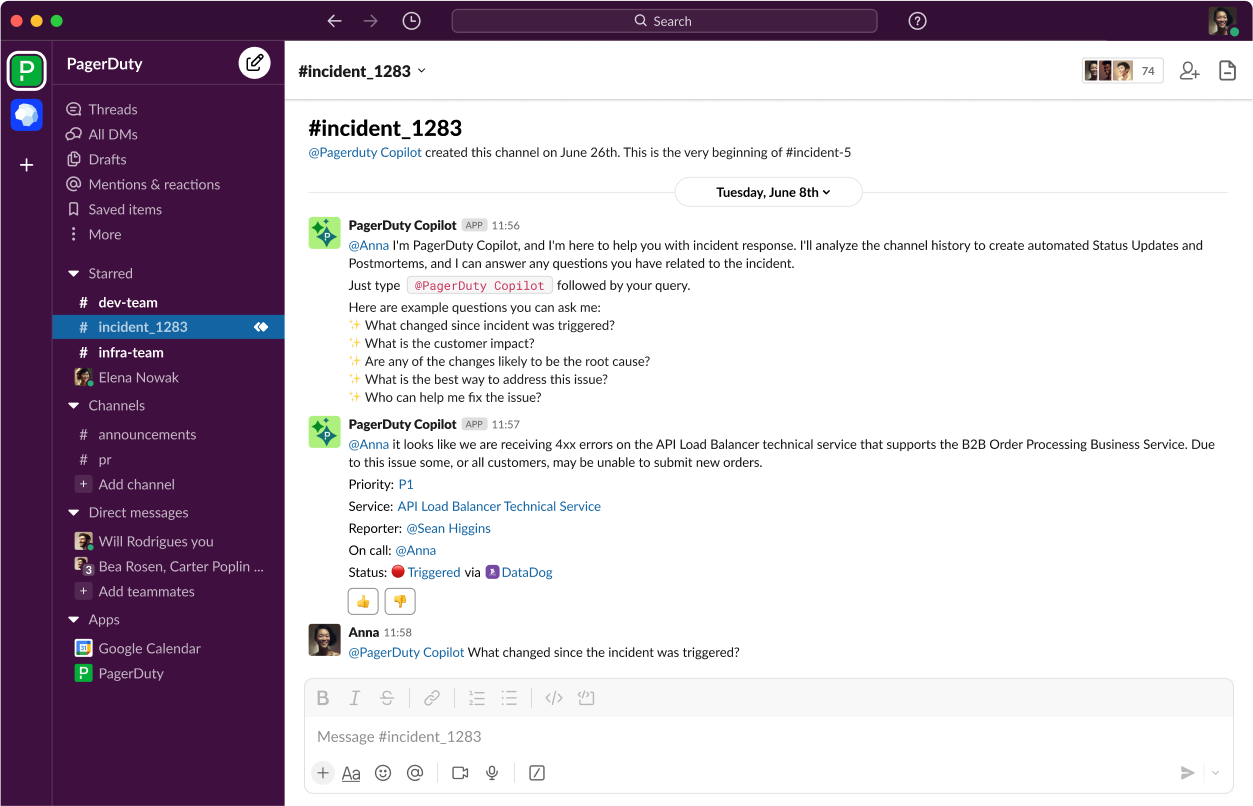
    Designed to be invoked via Slack, PagerDuty Copilot makes use of multiple large language models (LLMs) to automate tasks ranging from providing summarization of IT incidents to creating code to automate workflows. PagerDuty plans to transparently swap LLMs in and out of its platforms as AI advances continue to be rapidly made, noted Rende.

    PagerDuty Copilot provides a level of abstraction for invoking AI models along with appropriate guardrails that make it simpler to manage IT operations without IT teams needing to have AI expertise, said Rende.

    The overall goal is to boost the productivity of IT operations teams by eliminating much of the drudgery and toil that conspires to make working in IT tedious, noted Rende. AI technologies are not likely to replace the need for IT personnel as much as they will enable IT teams to focus on tasks that add more value to the business, he added.

    It’s now only a matter of time before generative AI capabilities are pervasively applied across both ITSM and DevOps workflows. Less clear is the impact those capabilities will have on the best practices currently relied on to manage those workflows as more tasks are automated. Ultimately, however, AI should make it easier for more organizations to embrace those best practices as the level of skill and expertise required to manage IT at scale is reduced.

    In addition, the whole concept of issuing tickets to manage tasks tracked by a central system of record may need to evolve simply because AI has automated requests for service. There will naturally need to be some system of record for tracking requests. Still, ultimately that process will be managed via copilots rather than by a ticket created by an end user that is then tracked via an ITSM platform.

    Savvy IT teams, in the meantime, are already moving to determine which tasks and workflows will be automated in anticipation of AI becoming more widely embedded in ITSM and DevOps platforms. Roles and responsibilities within IT teams will inevitably evolve as AI increasingly automates mainly mundane tasks, such as creating reports that many IT professionals would rather not spend time writing.

    The biggest IT management platform challenge in the future might not necessarily be adjusting to AI as much as it will be orchestrating requests that are likely to be generated by multiple types of copilots that have been embedded into almost every application.

    One way or another, AI is about to transform how IT operations are managed. As disruptive as those advances will be, AI, more importantly, will also enable organizations to manage IT at levels of scale that were previously unimaginable.