Author: Mike Vizard

  • Harness Enables DevOps Teams to Rein in Cloud Costs

    Harness Enables DevOps Teams to Rein in Cloud Costs

    Harness today unfurled its Continuous Efficiency application, which enables DevOps teams employing its continuous delivery platform delivered as a service to monitor the cost of deploying applications on a public cloud.

    Company CEO Jyoti Bansal said cloud costs are spiraling out of control within many IT organizations because DevOps teams lack visibility into the true cost of deploying an application on not just one cloud versus another but also specific tiers of services made available by cloud service providers.

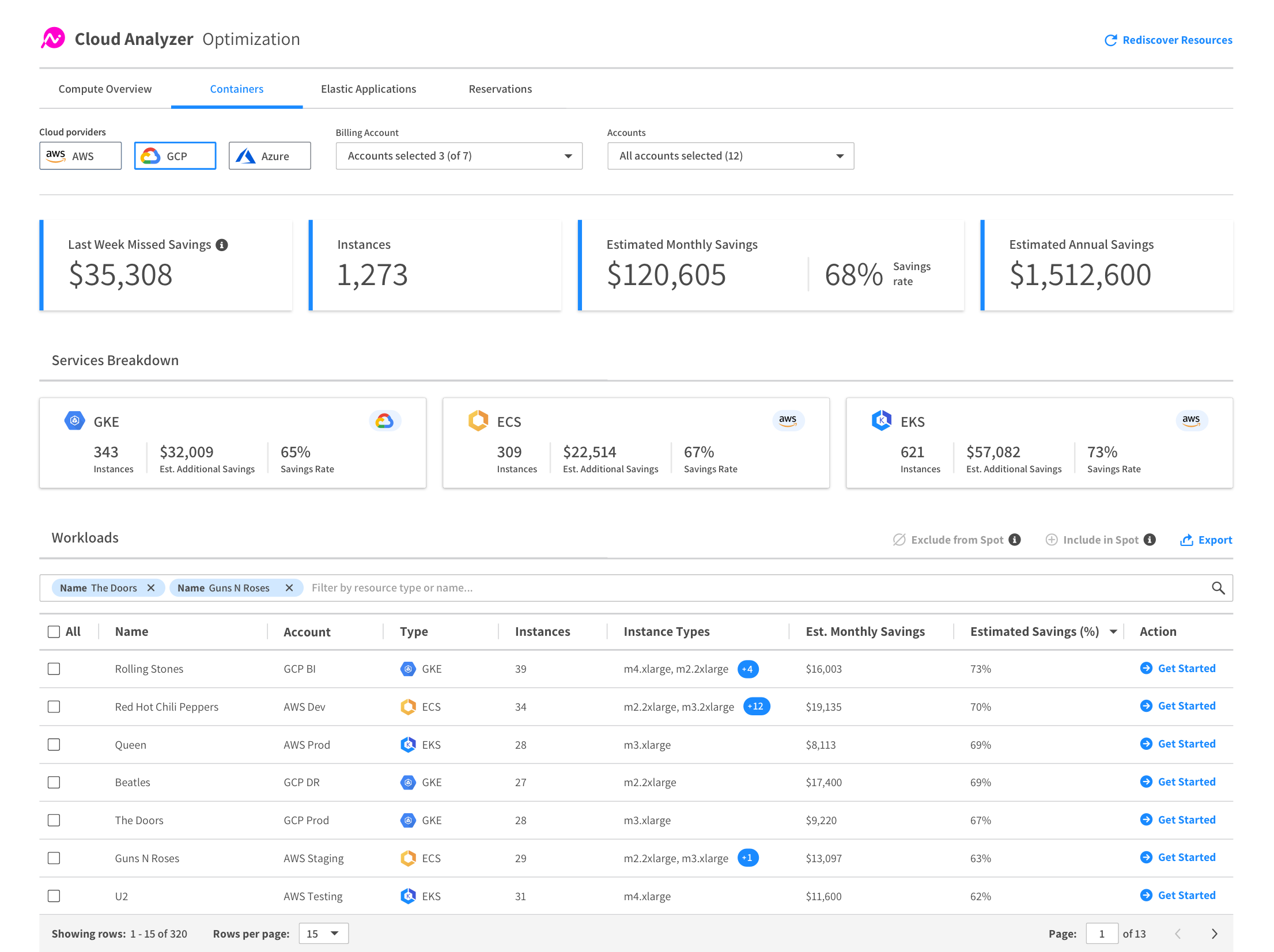
    Continuous Efficiency provides DevOps teams with granular cost breakdowns by cloud provider, cloud service, application, microservice and environment, as well as by Kubernetes cluster, namespace, workload, node and pod.

    Bansal said that capability is crucial for organizations looking to identify underutilized resources that they today typically only become aware of when a monthly bill is presented by the cloud service provider. Even then, it’s too late for the DevOps teams to proactively optimize the cloud environment to minimize costs.

    In fact, it’s currently too difficult to correlate the monthly bill presented by a cloud service provider with specific application services that might have been consuming that infrastructure, he noted, adding Continuous Efficiency is specifically designed for DevOps teams rather than the finance team.

    In the wake of the economic downturn brought on by the COVID-19 pandemic, DevOps teams are under more pressure than ever to reduce cloud costs, said Bansal. Not only has the cloud become the single largest expense for DevOps teams, but also IT leaders are being required to better predict costs at a time when organizations are unsure how much revenue they are able to generate from one month to next. The days when DevOps teams could view the cloud as essentially a free resource are now over, he noted.

    Beta customers who tested Continuous Efficiency have been able to realize as much as $500,000 in annualized savings on their cloud costs, Bansal added.

    Harness is leveraging its continuous delivery service to auto-discover cloud costs without requiring IT teams to manually tag cloud resources. As a CD platform accessed as a service, Harness is able to aggregate all that data in real-time on behalf of its customers. The Harness platform supports Amazon Web Service (AWS), Microsoft Azure and Google Cloud Platform, including the Kubernetes based services provided by those services.

    Much like the rest of the IT environment, Bansal said responsibility for managing cloud costs will increasingly shift left toward DevOps teams. As one of the primary consumers of those services, it’s typically DevOps teams who have the most variable consumption of cloud services. All too often, it turns out that costs are being incurred because developers have reserved instances of virtual machines on a public cloud for sake of convenience but are not actually using. When many organizations are deeply concerned about cash flow, tolerance for that behavior is quickly dropping to near zero.

    Rightsizing of cloud computing environments has, of course, been inevitable. The thing that has changed is the current economic climate has transformed rightsizing from being merely the desired goal into an absolute requirement.

  • A10 Networks Allies with Dell for ADC Infrastructure

    A10 Networks Allies with Dell for ADC Infrastructure

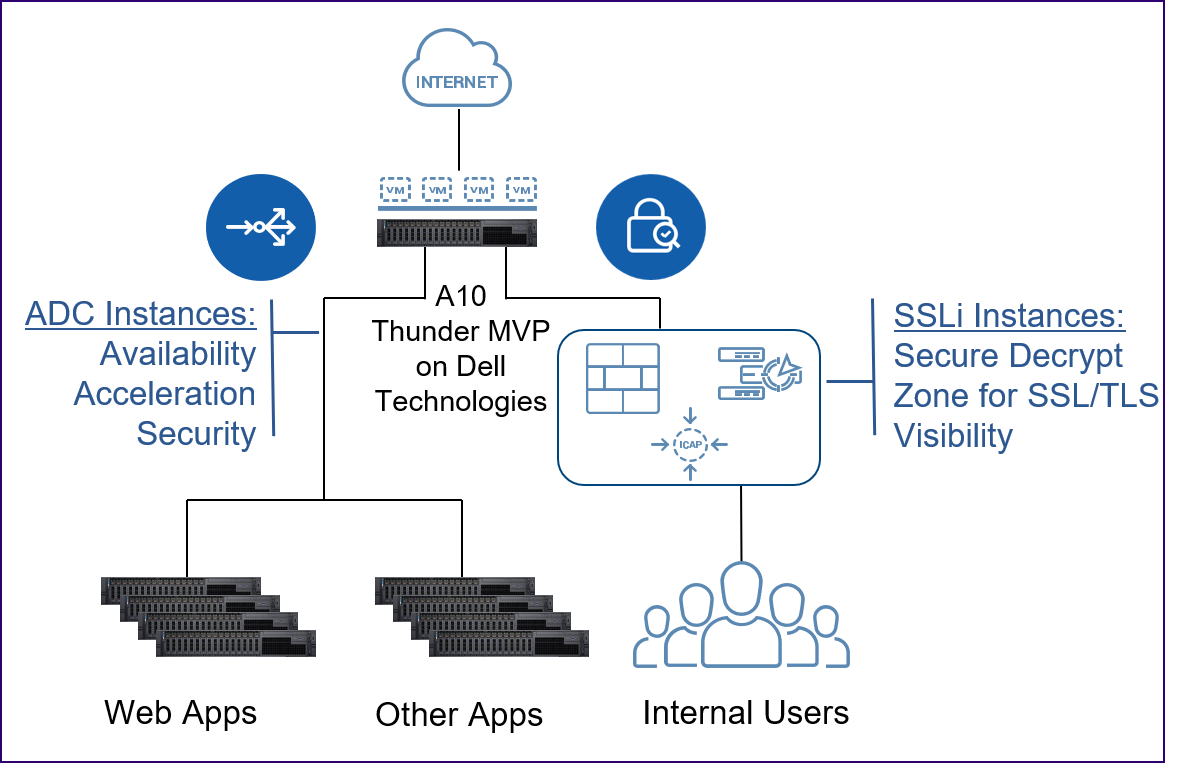
    A10 Networks announced today it has partnered with Dell Technologies to make its application delivery controller (ADC) and A10 Thunder Multi-tenant Virtual Platform (MVP) available on Dell servers.

    Gunter Reiss, vice president of worldwide marketing for A10 Networks, said this alliance reduces the cost of deploying ADCs in on-premises IT environments by taking advantage of industry-standard hardware platforms based on x86 processors beginning in the third quarter. Those servers, however, will only be available in the Americas market.

    Specifically, the A10 Thunder ADCs are designed to run on Dell EMC PowerEdge R640XL and R740XL servers, as well as Dell EMC Virtual Edge Platform 4600. The A10 Thunder MVP is designed to run on Dell EMC PowerEdge R640XL and R740XL servers. IT teams can move A10 ADC licenses across these platforms as they best see fit, said Reiss.

    In the wake of the economic downturn brought on by the COVID-19 pandemic, A10 Networks expects more IT organizations will look to rationalize their server portfolio, he said, noting as a major supplier of those servers, partnering with Dell affords A10 Networks an opportunity to expand the base of potential customers.

    Standardizing on a single server platform also affords some organizations the opportunity to reduce their carbon footprint in the data center, he added.

    It’s too early to say how aggressively IT organizations will be consolidating IT infrastructure. However, the total cost of IT increases whenever an organization adds a new platform or vendor. Many IT organizations have already standardized on a single server vendor as part of an effort to reduce management costs. In fact, Reiss said A10 is betting rival ADC vendors will be shut out of IT environments if they require IT organizations to acquire dedicated hardware.

    In the meantime, the number of ADCs required by IT organizations is increasing as the application environment becomes more complex. The rise of microservices-based applications is requiring IT teams to focus more on application latency issues that occur when more modules of code are sharing access to the same IT infrastructure.

    A10 Networks helps address that issue by embedding analytics into that A10 Harmony Controller that is employed to centrally manage all A10 ADCs deployed in a distributed computing environment. That capability makes it simpler for IT organizations to embrace best DevOps practices, Reiss noted.

    ADCs are also playing a larger role in security by first offloading encrypted SSL/TLS traffic and then providing visibility into that traffic to prevent data leakage.

    In general, Reiss said DevOps teams are exercising more ownership of ADC platforms. Network and security operating teams still play a major role; however, it’s clear IT functions are starting to converge, he said.

    It remains to be seen to what degree those roles will ultimately converge. Each IT organization is likely to pursue a slightly different path toward converging network operations and DevOps. The challenge and the opportunity will be overcoming the inherent cultural challenges associated with bringing together IT teams that historically have not had much cause to interact with one another.

  • The Linux Foundation Adds Free Jenkins Training Course

    The Linux Foundation Adds Free Jenkins Training Course

    The Linux Foundation, in collaboration with the Continuous Delivery Foundation (CDF), today launched a free introductory course to the open source Jenkins continuous integration/continuous delivery (CI/CD) platform as part of what it plans will become a series of free and paid online DevOps tools courses.

    Clyde Seepersad, general manager of training at the Linux Foundation, said that while the foundation already provides access to some higher-level conceptual DevOps courses, the launch of the CDF last year provides a knowledge base from which the Linux Foundation can now provide online courses specific to DevOps tools. The CDF is an arm of The Linux Foundation.

    The Linux Foundation will also provide courses on Spinnaker, a CD platform, and other DevOps tools that, along with Jenkins, are now being developed under the auspices of the CDF, he added.

    In general, Seepersad said demand for DevOps expertise is increasing as organizations more aggressively embrace digital business transformation initiatives in the wake of the COVID-19 pandemic. At the same time, IT teams are adopting a wider range of cloud-native technologies to build more flexible and resilient applications. DevOps platforms such as Jenkins make it possible for IT teams to build those applications faster.

    The challenge many organizations underestimate is the extent of changes to their internal IT culture required to make that transition, Seepersad said—too many organizations still put tools into the hands of developers without really thinking through the workflow issues between developers and IT operations teams.

    The most important thing for any organization to do, he said, is to make sure there is an open DevOps dialogue versus tiptoeing around issues that will tend to increase resistance only further.

    Ultimately, free training should help expand the overall size of the DevOps community at a time when many IT professionals are trying to increase their skills. DevOps professionals not only command higher salaries, but they are also less likely to be laid off. DevOps teams oversee the development and deployment of applications and can also programmatically manage levels of infrastructure that IT administrators relying on traditional graphical user interface (GUI) tools can’t match. That’s a critical issue when many IT organizations these days are trying to do a lot more with even less.

    There’s nothing quite like an economic crisis to focus everyone’s mind. The biggest DevOps challenge any organization typically faces is overcoming inertia. Too many IT professionals have relatively narrow skillsets that conspire to increase the total size of the IT organization. In addition to relying on increased levels of automation to reduce costs, IT leaders want to be able to scale IT environments without having to increase headcount.

    It may take a little while longer for the transition to DevOps to fully play out. However, it’s now more of a question of existential survival rather than if or even to what degree to embrace DevOps. Organizations that don’t embrace DevOps processes to ruthlessly automate the management of IT now might very well never get another chance.

  • MongoDB, Storj Labs Work to Reduce Data Security Costs

    MongoDB, Storj Labs Work to Reduce Data Security Costs

    MongoDB Inc. and Storj Labs announced today they have jointly created a backup service for the open source MongoDB database that leverages a global network for excess storage capacity.

    Storj Labs has created a Tardigrade Decentralized Cloud Storage Service based on an open source object storage system that is compatible with the S3 application programming interface (API) defined by Amazon Web Services (AWS). That object storage system distributes 80 slices of a file across a subset of thousands of nodes that each contain only a slice of the data required to reconstruct that file when needed. Only 29 of those slices are needed to reconstruct a file, which enables IT teams to secure data without having to manage encryption keys.

    Via a connector from Storj Labs, the Tardigrade Decentralized Cloud Storage Service now can be invoked via MongoDB DevOps Manager, which is made available in the commercially supported enterprise edition of the open source databases provided by MongoDB Inc.

    Storj Labs CEO Ben Golub said the Tardigrade Decentralized Cloud Storage Service provides a less expensive alternative to backup and recovery platforms based on the cloud, as excess capacity on devices ranging from servers to individual desktops is readily available, The challenge has been finding a way to marshal all that excess capacity in a way that makes it simple for IT organizations to consume, he said.

    IT organizations, Golub said, should expect Storj Labs to build additional connectors to databases and other platforms that require a less expensive approach to data protection. In the wake of the economic downturn brought on by the COVID-19 pandemic, he noted, more organizations than ever are open to innovative approaches to reducing storage costs.

    Of course, most IT teams are well-used to employing a range of data protection platforms to back up and recover data. The Tardigrade Decentralized Cloud Storage Service is likely to be viewed as one more option that might find traction at a time when the number and types of databases being deployed across the enterprise continue to expand rapidly. Developers are especially fond of adopting open source document databases that don’t require a database administrator (DBA) to get approval for a license from a central purchasing organization. It’s usually not too long, however, before developers look for help from central IT to manage all those databases, especially after an application is deployed in a production environment.

    Naturally, not all those applications are of equal value, so given the current economic climate, there might be a greater willingness to at the very least experiment with alternative approaches to data protection.

    Regardless of platform, however, the one thing that is clear is data protection alongside the rest of IT infrastructure is being driven more by APIs. As such, responsibility for data protection is also being pushed further left toward DevOps teams, who have the expertise required to continuously automate back up and recover using APIs. That might not always sit well with traditional IT administrators who have been using tools based on graphical user interfaces (GUIs) for decades. Nevertheless, IT times are clearly changing.

  • Hasura Launches Beta of GraphQL-Based Remote Joins Tool

    Hasura Launches Beta of GraphQL-Based Remote Joins Tool

    Hasura today announced the public beta of Remote Joins, which makes use of an open source GraphQL query language for application programming interfaces (API) to join disparate data sources residing in different repositories.

    Company CEO Tanmai Gopal said Remote Joins extends a GraphQL engine the company has developed around a project that is now hosted by the GraphQL Foundation, an arm of the Linux Foundation. The GraphQL Foundation counts among its members Airbnb, Amazon Web Services (AWS), Apollo, Coursera, Elementl, Facebook, GitHub, IBM, Intuit Hasura, Paypal, Prisma, Shopify and Twitter.

    Originally developed by Facebook, GraphQL has emerged as the basis for a more streamlined alternative to REST APIs. GraphQL provides a complete description of the data made available via an API and is organized in terms of types and fields rather than traditional endpoints. In addition to making it more clear what data is available via that API, developers can employ types to avoid writing manual parsing code.

    Hasura is now taking that concept a step further by enabling IT organizations to join data residing in different databases and microservices to enable that data to be queried as if it were a single data source. The core Hasura engine automatically generates the GraphQL engine, which enables those remote joins to be created in a few minutes.

    Gopal said joining data across a complex portfolio of modern applications based on microservices and legacy monolithic applications is becoming increasingly difficult as the number of microservices in an IT environment continues to proliferate. The Hasura engine addresses that issue by providing data access and flow tool base on a GraphQL type system for managing APIs that can be applied to GraphQL APIs as well as REST APIs or other protocols, he said.

    The join, authorization logic and consistency checks are all managed by the Hasura engine. Hasura also provides data change management, observability, auditing, security and performance management capabilities. That approach makes it possible for data sources and APIs to evolve independently while still allowing organizations to query data flexibly, noted Gopal.

    As DevOps and DataOps processes continue to converge, IT organizations will need to find a way to advance application and API development in a way that doesn’t result in data access becoming a major bottleneck. Too many DevOps teams are rapidly building applications and APIs only to find themselves waiting to be given access to data. GraphQL could provide a foundation on which IT teams can manage DevOps and DataOps processes more collaboratively.

    It’s not likely IT teams will be replacing existing REST APIs wholesale overnight. However, it’s also apparent that REST APIs may not enable IT environments to scale as efficiently as GraphQL, which is the primary reason why Facebook developed it. Of course, it’s still early days as far adoption of GraphQL is concerned. However, with more IT teams under pressure to innovate faster, interest in a more streamlined approach to building and managing APIs is likely to gain additional momentum.

  • NetApp Acquires Spot to Rein in Cloud Costs

    NetApp Acquires Spot to Rein in Cloud Costs

    NetApp this week announced it has acquired Spot, a provider of a service that enables IT teams to continuously optimize costs for cloud workloads.

    Anthony Lye, senior vice president and general manager for public cloud services at NetApp, said the Spot service is based on an application programming interface (API) that IT teams add to each application workload. That API then makes regular calls to Spot, which leverages algorithms that determine when and on what types of instances a workload should run to reduce cloud costs.

    The Spot service will then move workloads automatically between on-demand, reserve and spot instances on Amazon Web Services (AWS), Microsoft Azure or Google Cloud Platform (GCP). It is not designed to enable arbitrage across different cloud services; rather, it optimizes the allocation of compute resources on whatever cloud platform an IT team decides to deploy a workload on.

    Lye said cloud computing often winds up being more expensive than on-premises IT environments because IT teams don’t have the tools required to cost-optimize cloud platforms in real-time. Developers often programmatically deploy workloads in the cloud without understanding many of the implications of using one tier of service versus another. Even when they do appreciate the cost, most IT teams don’t provide them with the tools needed to do anything about it. In fact, it’s usually assumed the IT operations team will find some way to optimize costs as they monitor the cloud environment.

    Then, at the end of the month, the IT operations and finance teams receive a bill from a cloud service provider that is all but indecipherable in determining what workloads consumed what level of compute resources and when. In the absence of the Spot service, Lye said the best IT teams could hope for was an analytics report that offered suggestions about how to optimize cloud instances after the fact.

    NetApp views Spot as a complement to its approach to optimizing the consumption of cloud storage resources by deploying its software on a public cloud to manage those resources, said Lye. Collectively, those offerings enable IT teams to address what has now become the single largest cost in the enterprise.

    In addition, Lye noted that Spot can play a key role in enforcing service level agreements (SLAs) because, among other things, it automatically detects whenever a spot instance of a virtual machine is going away. It then automatically spins up additional instances to ensure a workload remains available.

    The debate over the real cost of cloud computing has been going on for years. Initially, most cloud service providers claimed cloud platforms were less expensive than on-premises IT environments because compute resources were paid for on a consumption basis. While that proved to be true for workloads that ran for a finite amount of time, longer-running workloads have proven to be in most cases more expensive to run in the cloud.

    As organizations look to the cloud to deploy cloud-native applications that are more flexible and resilient in the wake of the COVID-19 pandemic, which has made many on-premises IT environments less accessible, the debate over costs is flaring up again. While organizations need a more flexible approach to IT, they are simultaneously trying to reduce the total cost of IT in the wake of the economic downturn brought on by the pandemic.

    It’s too early to say to what degree IT organizations will embrace continuous optimization alongside continuous integration (CI) and continuous delivery (CD). However, given the current economic climate, it’s more now a question of when, not if, cloud cost optimization will become a major area of focus for IT teams large and small.

  • CloudBolt Acquires SovLabs to Advance Hybrid Cloud Strategy

    CloudBolt Acquires SovLabs to Advance Hybrid Cloud Strategy

    CloudBolt Software this week announced it has acquired SovLabs, a provider of a framework that extends the reach of automation frameworks from VMware.

    Company CEO Jeff Kukowski said that as a provider of a cloud management platform, the SovLabs framework will extend CloudBolt’s reach deeper into VMware environments that have already invested in automation tools from VMware.

    As IT environments become more widely distributed across a range of platforms, demand for a platform that enables IT teams to centralize the management of multiple cloud computing environments has increased, Kukowski said. The addition of SovLabs to the CloudBolt portfolio will make it easier to bridge the divide between cloud computing platforms and enterprise on-premises IT environments that have standardized on VMware.

    CloudBolt has been making a consistent effort to enable IT teams to invoke its cloud management framework via whichever IT automation framework they have adopted, including tools such as Terraform. The goal is to reduce the need for IT organizations to rely on their own custom-built code to achieve that goal, said Kukowski.

    In general, many IT organizations are now investing more heavily in centralizing the management of multiple IT environments as part of an effort to reduce the total cost of IT in the wake of the economic downturn brought on by the COVID-19 pandemic. That shift is accelerating a transition to hybrid cloud computing models that require increased reliance on IT automation.

    The challenge many organizations face is enterprise IT environments tend to have many islands of IT automation in place. CloudBolt is pursuing a strategy that enables IT teams to extend those islands of automation or access CloudBolt directly to manage hybrid cloud computing environments.

    The CloudBolt approach offers IT teams an alternative to relying on a single platform vendor to achieve hybrid cloud computing. VMware, for example, has been making a case for deploying VMware vSphere on multiple clouds versus relying on the virtual machines provided by a cloud service provider. Most of the large cloud service providers are simultaneously pushing to deploy instances of their platforms in on-premises IT environments that can be managed as an extension of a public cloud.

    It’s too early to say how this titanic battle for control over hybrid cloud computing will play out. CloudBolt, however, is betting that rather than getting locked into a single platform, many IT organizations will prefer to run toward some neutral ground to deploy a control plane capable of managing multiple clouds and on-premises IT environments.

    Of course, CloudBolt is not the only provider of a cloud management platform making this case. Competition between providers of hybrid cloud management platforms is heating up as interest in hybrid cloud computing starts to move beyond the theoretical. Regardless of the path forward chosen, history would suggest that most IT organizations in the months ahead will be seeking more control over their IT environments.

  • AWS Looks to Accelerate Windows Migrations to the Cloud

    AWS Looks to Accelerate Windows Migrations to the Cloud

    Amazon Web Services (AWS) is ratcheting up pressure on Microsoft by devoting more resources to enable IT organizations to migrate Windows workloads to the cloud.

    Fred Wurden, general manager for enterprise engineering at AWS, said a Migration Acceleration Program (MAP) for Windows, now generally available, provides IT teams with prescriptive guidance, consulting support, tools, training and service credits to help reduce the risk and cost of migrating to the cloud.

    The service is being delivered in collaboration with partners including Rackspace, 2nd Watch, Accenture, Cloudreach, Enimbos Global Services, Onica and Slalom. Wurden said AWS has been migrating Windows workloads to the cloud for more than a decade now and claims to have more than half of all Windows workloads deployed in the cloud.

    Microsoft has clearly been making strides in recent years to close the gap between it and AWS by running both Windows and Linux workloads on its cloud alongside instances of Microsoft Office 365. Microsoft most recently reported a 39% year-over-year growth in commercial cloud revenue, reaching $13.3 billion for its fiscal third quarter. However, Microsoft does not break out Azure revenue from Microsoft Office 365 revenue or disclose what percentage of the workloads running on Azure is based on Windows versus Linux.

    At the same time, Microsoft now charges more for instances of SQL Server that run on other clouds. AWS contends that decision will only accelerate the rate at which organizations are transitioning to open source databases deployed on Windows or Linux.

    Competition for Windows workloads is growing in ferocity in the wake of the COVID-19 pandemic because more workloads are being lifted and shifted into the cloud as organizations realize that on-premises IT environments can be rendered inaccessible. IT staffs in many geographies will be working from home at least through the end of the year. Many organizations are also moving workloads to the cloud in anticipation of a second potential outbreak of the pandemic.

    At the same time, the rate at which new workloads are being deployed in the cloud is also accelerating. Many of those cloud-native workloads are based on containers running on Kubernetes. Support for containers on Windows platforms is still relatively nascent when compared to Linux platforms.

    AWS and Microsoft, along with a host of rival cloud service providers, are focusing on legacy workloads because the expectation is that monolithic workloads running on Windows will be re-engineered to run as a set of microservices that can be updated more flexibly within the context of a larger digital business transformation initiative. It may be a while before that transformation fully manifests; however, it’s clear the battle for control over millions of workloads in anticipation of that transition is reaching a higher level of intensity.

    There’s no doubt many of those workloads will run on the Microsoft Azure cloud. However, the degree to which Microsoft might be winning in the cloud era may not be as great when everything that is being lost to AWS and other cloud service providers is taken into consideration.

  • Morpheus Data Automates Hybrid Cloud Management

    Morpheus Data Automates Hybrid Cloud Management

    Morpheus Data has updated to its cloud management platform by making it easier to dynamically integrate different implementations of automation tasks created using different tools and frameworks any Git or GitHub repository.

    In addition, the company has expanded the operating systems it supports to include Amazon Linux 2, Red Hat Linux 8.x and SUSE Linux, in addition to extending existing support for Microsoft Azure, Amazon Web Services, Oracle Cloud and Google Cloud Platform.

    Morpheus Data has also added support for VMware NSX-T and Unisys Stealth networking software as part of an effort to advance DevSecOps by making it easier to apply microsegmenation to networks to create a zero-trust IT environment. Interest in zero-trust IT environments is on the rise as a way to combat the lateral movement of malware once an IT asset is breached.

    Finally, Morpheus Data has updated the graphical user interface (GUI) it provides as a single pane of glass for managing multiple cloud platforms.

    Brad Parks, vice president of business development for Morpheus Data, said DevOps teams can now employ the Morpheus cloud management platform to orchestrate tasks developed in Ansible, Python, Groovy, Shell, Powershell, jRuby and even e-mail. Those tasks can then be chained together to create a workflow process, said Parks.

    The update to the GUI also makes it possible to create custom views of application instances across clouds as well as export custom datasets into CSV or JSON data formats for analysis, including chargeback, showback and project reporting. Navigation has also been streamlined with updates to global search, navigation and granular sorting of tabular data.

    Parks said in the wake of the economic downturn brought on by the COVID-19 pandemic more IT organizations will need to reduce the total cost of IT. The challenge they face is the IT environment has become more distributed than ever. The Morpheus platform makes it possible to centralize the management of multiple platforms, which should enable IT teams to substantially lower the total cost of IT by applying IT automation more aggressively across a hybrid cloud computing environment. Today most organizations have adopted multiple clouds, each of which is usually managed in isolation. That approach not only requires tools to manage each platform but also dedicated IT support specialists for each platform.

    It’s not clear to what degree IT organizations will move to centralize the management of IT in the wake of the pandemic. Many of the cloud platforms that organizations are employing have been funded by line-of-business executives rather than the central IT organization. However, now that many of those business executives are under pressure to reduce costs, the amount of discretionary spending made available to business executives might be curtailed. At the same time, however, many organizations are increasing investments in digital business transformation initiatives that most commonly involve applications being deployed on the cloud.

    Regardless of the path forward, the one thing that is clear is the current status IT quo within most organizations is not going to hold.

  • Camunda Extends Reach of BPM Platform

    Camunda Extends Reach of BPM Platform

    Camunda, a provider of a business process management (BPM) platform written in Java, this week added support for an open application programming interface (API) to make it easier to integrate its namesake software with applications written in Javascript/Node.js, Python and C#.

    Company CTO Daniel Mayer said at a time when many organizations are investing in digital business transformation initiatives, the latest updates to the Camunda BPM platform adds support for an OpenAPI standard advanced by The Linux Foundation to enable IT organizations to integrate business processes spanning modules created using different programming languages. In the case of Camunda, IT organizations will be able to generate a REST API client using their preferred coding language that can be integrated with the core Camunda BPM platform, he said.

    In addition, Camunda announced that version 7.13 of the Camunda BPM platform will be available in the form of a lightweight distribution, dubbed Camunda BPM Run, that can be deployed as a Docker container to create a standalone engine with no Java or application server knowledge required.

    Camunda has also added support for Camunda’s Optimize 3.0 to provide a unified view of real-time process insights from any data source and the ability to visually track changes across different versions of process models using its Cawemo tool.

    Finally, Camunda has added support for version 1.3 of the Decision Model and Notation (DMN) specification as well as version 1.2 of the Friendly Enough Expression Language (FEEL) defined by The Object Management Group.

    In the wake of the economic downturn brought on by the COVID-19 pandemic, many organizations are looking to reduce costs by streamlining business processes. The decision many of them need to make is determining to what degree they want to rely on packaged applications to achieve that goal versus a platform that enables them to create custom business processes. While many rote processes can be automated using packaged applications, Mayer said the Camunda platform makes it possible to create business processes that truly differentiate organizations from rivals. Packaged applications, in contrast, drive organizations to employ the same business processes in the same way.

    Of course, organizations can customize packaged applications. However, at that point, most of them will have embarked on an application development project that would be easier to complete using a platform designed for that purpose, he noted.

    Naturally, there are other platforms for integrating business processes that revolve around graphical user interfaces. Camunda has been making the case for an open source Java-based platform that enables developers to create and deploy custom business processes using best DevOps practices at a much lower total cost. The company also commercially makes available an enterprise edition of its platform. In total, Camunda claims there are now than 100,000 developers participating in the Camunda community.

    It’s too early to determine to what degree organizations will rely on packaged applications versus BPM platforms to drive digital business transformation initiatives. However, given the current economic climate, it’s apparent these projects have never been more urgent.