Author: Mike Vizard

  • Dynatrace Embeds DX Monitoring in Observability Platform

    Dynatrace Embeds DX Monitoring in Observability Platform

    Dynatrace has enhanced its analytics capabilities to enable digital experience monitoring, including session replays, based on the logs, metrics and traces it collects via its observability platform.

    Steve Tack, senior vice president of product management at Dynatrace, said this update makes it simpler for DevOps teams to track user journeys across the multiple components and microservices that make up a modern application environment. Rather than trying to, for example, determine the impact of an issue by parsing through log data without any context, Tack said Dynatrace’s analytics capabilities will automatically fire up a session replay to enable DevOps teams to view the exact nature of the application issue being experienced.

    Previously, DevOps teams would have needed to deploy the Dynatrace session replay offering separately. The overall goal is to remove much of the friction DevOps teams encounter when trying to fix an application issue by providing context in a way that is more accessible, he added.

    In general, as observability continues to advance, it’s now become much less about the amount and types of data that can be collected, said Tack. The data is table stakes for achieving observability, he added. The focus now needs to be on the richness of the actionable analytics being surfaced once that data is collected, he said.

    In fact, as more organizations start to build and deploy applications based on highly interdependent microservices, the richness of the analytics is now more critical than ever, noted Tack. While microservices-based applications are more resilient than monolithic applications, troubleshooting them is more challenging whenever application performance degrades, he added.

    It’s not clear at what rate DevOps teams are embracing observability. The concept has always been a core DevOps principle, but, for the most part, more mature DevOps teams have only been able to achieve what amounts to continuous monitoring of pre-defined metrics. Observability platforms promise to surface anomalies indicative of IT issues before they escalate; DevOps teams can then launch queries to better determine their root cause and potential severity.

    Dynatrace is making a case for an observability platform, accessed as a cloud service, that employs the company’s Davis AI engine and machine learning algorithms to surface the root cause of application issues.

    As observability platforms continue to evolve, the days when IT teams determined the root cause of an IT issue by process of elimination are finally coming to an end. DevOps teams will be gaining more visibility into their application environments in ways that surface more meaningful actionable intelligence. That intelligence is especially critical for externally-facing applications driving digital business transformation initiatives.

    There is, of course, no shortage of options when it comes to observability platforms. In some cases, IT organizations are opting to rely on cloud services while others are extending DevOps platforms they built themselves and continue to maintain. Regardless of the approach, the issue will no longer be how to collect data as much as what to do with it once it’s collected.

  • Oracle’s Free Managed Service Integrates With Microsoft Azure

    Oracle’s Free Managed Service Integrates With Microsoft Azure

    Oracle today extended its alliance with Microsoft to include a managed service that makes it simpler for IT organizations to embrace hybrid cloud computing. Oracle Database Service for Microsoft Azure integrates Windows applications with Oracle databases running on Oracle Cloud Infrastructure.

    Leo Leung, vice president of products and strategy for Oracle, said the managed service is an extension of an existing capability that was rolled out in 2019. However, many IT organizations found it too difficult to provision hybrid cloud computing environments themselves. The managed service makes it easier to access Oracle databases across a high-speed network spanning 11 global regions, Leung said.

    There is no charge for the Oracle Database Service for Microsoft Azure, the Oracle Interconnect for Microsoft Azure, data egress or ingress when moving data between OCI and Azure, said Leung. Organizations will pay only for the other Azure or Oracle services they consume.

    DevOps teams have often spent significant amounts of time trying to integrate diverse cloud computing environments. Now, with just a few clicks, Oracle is making it possible to connect Azure subscriptions to OCI. The service automatically configures OCI and Azure environments, federates Azure Active Directory identities and enables monitoring with Azure Application Insights.

    Oracle and Microsoft, of course, are locked in a fierce database contest as Microsoft looks to drive adoption of SQL Server as an alternative to the Oracle relational database. However, there are many organizations that today run Oracle databases on Windows servers in on-premises IT environments. Oracle is looking to make it easier to migrate those environments to the cloud with minimal disruption, noted Leung.

    Theoretically, organizations are embracing multi-cloud computing to ensure they don’t find themselves locked into a single provider. The challenge is that each cloud computing environment has its own set of management tools that need to be mastered. As organizations add additional clouds, the actual total cost of IT rises as more specialists are brought on board to manage those environments. Oracle’s approach addresses that issue by enabling IT teams to manage Oracle databases via a single pane of glass that resides on the Azure cloud, said Leung.

    Oracle has been trying to gain market share in the cloud by reducing the total cost of cloud services. A free managed service for integrating Azure cloud with OCI also reduces the incentive any existing Oracle customer might have to replace Oracle databases as they migrate to the cloud.

    It’s not clear how far the Oracle service will advance hybrid and multi-cloud computing, but it does set a new benchmark for what IT organizations should expect. The days when cloud service providers largely ignored each other are coming to an end. In this day and age, IT teams should not have to devote resources to integrating low-level APIs simply because cloud service providers don’t want to acknowledge the fact that application workloads are routinely deployed on multiple clouds.

  • Poor App Remediation Creates a Vicious Vulnerability Cycle

    Poor App Remediation Creates a Vicious Vulnerability Cycle

    A survey of 200 security professionals found nearly 83% of respondents reported that an increase in the rate at which applications are being deployed has led to an increase in the reintroduction of previously remediated vulnerabilities.

    The survey, conducted by Waratek, a provider of tools for managing security-as-code, found 93% of the security professionals polled currently work for organizations that have embraced DevOps or Agile development methodologies. Half of the respondents (50%) described maintaining security in those environments as challenging, with a slightly higher percentage (58%) noting that implementing security within DevOps process does slow down the rate at which applications are deployed. A full 85% also noted that manual security work slows the rate at which applications can be deployed as well.

    Surprisingly, more than two-thirds (67%) of security professionals also said they would be willing to sacrifice security to allow applications to be delivered on time.

    Nearly three-quarters (71%) also said they expected that keeping pace with DevOps teams would only become more difficult, with 61% also noting that keeping pace with DevOps teams resulted in delays to other critical security projects.

    Waratek CEO Doug Ennis said the root cause of the application security challenge can be traced back to continued reliance on manual processes. It’s too easy for developers, for example, to reuse code that contains vulnerabilities that were fixed in one version of an artifact but not another, he noted.

    That lack of automation also conspires to increase overall cybersecurity fatigue, added Ennis. More than 50% of survey respondents reported they spend days or weeks each year investigating false positives. There simply are not enough cybersecurity professionals available to make sure applications are secure without relying more on automation, said Ennis.

    In the wake of a series of high-profile security breaches, there is more focus on software supply chain security than ever. However, it’s not clear to what degree organizations are embracing automation and DevSecOps best practices to secure those software supply chains. The challenge is finding a way to build more secure applications without slowing down the rate at which those applications are built and deployed.

    Many organizations are clearly already shifting more responsibility for application security left toward developers and DevOps teams with hopes of achieving that goal. However, it’s still the cybersecurity team that get the call whenever there is a breach, noted Ennis. There must be workflows in place that enable automatic remediation in ways that don’t always require organizations to wait on a developer to build and deploy a manually-applied patch that is usually inconsistent, he added.

    The Log4Shell vulnerability is a perfect example of how flawed the current process for building and deploying patches is, Ennis explained.

    In fact, as more applications are deployed, developers often find themselves spending more of their time fixing vulnerabilities than they do writing new code. A new approach to building and deploying secure applications that leverages automation is clearly required. The challenge is creating automation that consistently achieves that goal each and every time required in a way that doesn’t break any of the applications that need to be fixed.

  • Atlassian Bitbucket CI/CD Cloud Service Aims for the Enterprise

    Atlassian Bitbucket CI/CD Cloud Service Aims for the Enterprise

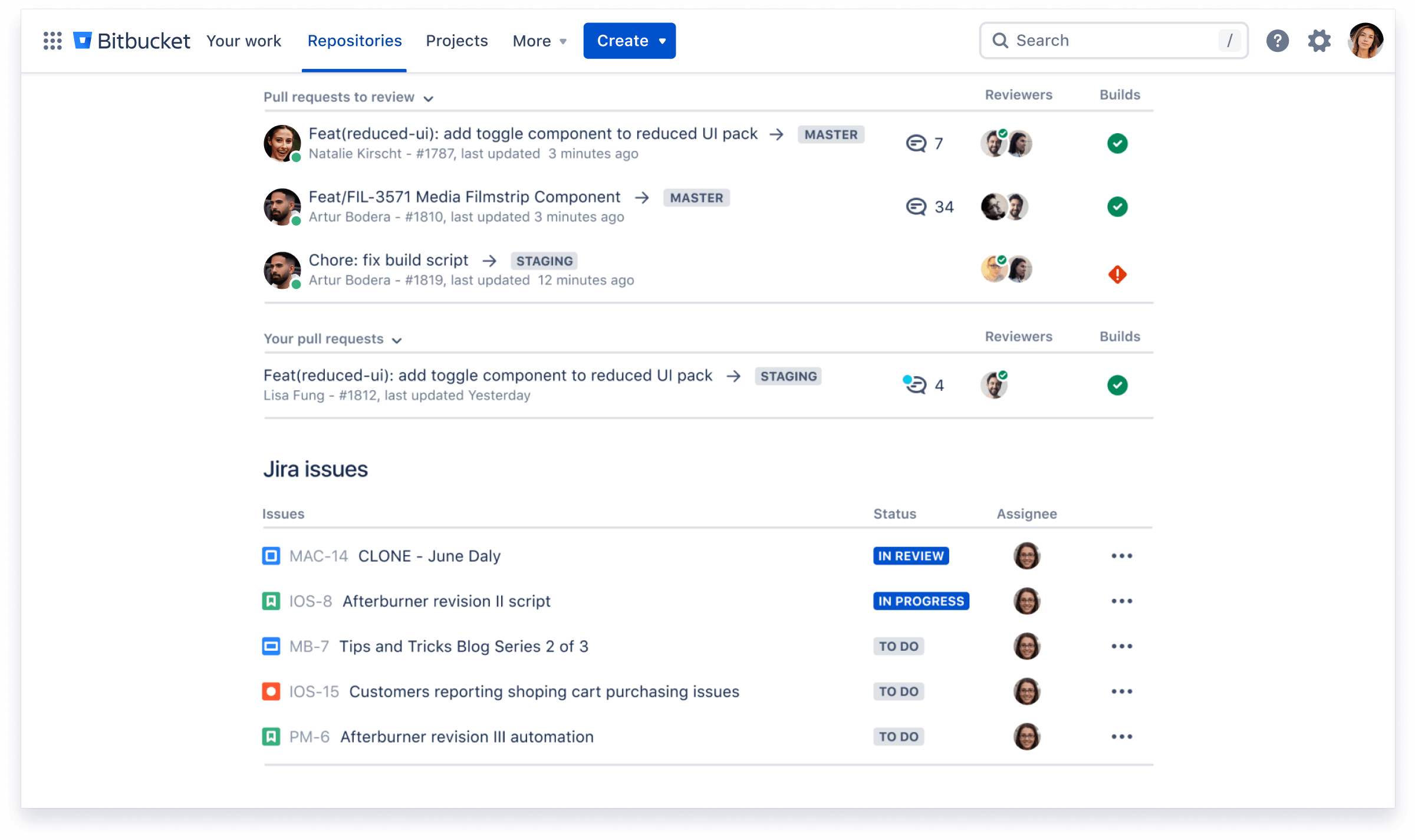
    Atlassian today outlined its strategy to increase the appeal of the Bitbucket continuous integration/continuous delivery (CI/CD) cloud service among enterprise IT organizations. Atlassian said it plans to focus on four core pillars: Performance, management, extensibility and security and compliance, starting with an update scheduled for the third quarter.

    Dan Tao, head of engineering for Bitbucket Cloud and Compass at Atlassian, said the overall goal is to make it simpler to use the Bitbucket Cloud service running on the Amazon Web Services (AWS) cloud at scale as organizations increase the rate at which they build and deploy software.

    Atlassian is still supporting the Bitbucket Server and Data Center editions of the platform, but it’s apparent more organizations are shifting software development to the cloud, he noted. Atlassian is now moving to not only simplify migrations to the cloud by, for example, providing a Bitbucket Cloud Migration Assistant tool, but it is also moving to ensure applications can be developed at scale.

    Achieving that goal includes making use of a more advanced diff algorithm that is four times faster in larger DevOps environments, he added.

    Other planned enhancements include the ability to execute CI/CD workflows via Bitbucket pipelines, the ability to reuse multi-step pipelines across repositories, tighter administration integration with other Atlassian applications, the ability to encrypt data at rest and integration with the Snyk tool for discovering vulnerabilities in software to improve security.

    Finally, the Bitbucket Cloud service will also soon support Bitbucket Mesh, a distributed storage capability that is already employed in Bitbucket Data Center.

    Overall, Atlassian sees the migration to the cloud as a means to not only make DevOps workflows more accessible to a wider range of organizations, but also give organizations that have already invested in DevOps the opportunity to streamline those processes, said Tao.

    Many DevOps teams today maintain complex platforms with custom integrations that they need to maintain and support. Atlassian provides DevOps teams the option to either employ an integrated platform or use connectors it has created as part of the Atlassian Open DevOps framework to make it simpler for teams to use whatever mix of tools they prefer, he added. In either case, the total cost of maintaining a DevOps environment can be significantly reduced, said Tao.

    It’s not clear to what degree organizations that have already invested in DevOps are considering replacing their existing CI/CD platforms. However, as the pressure to accelerate the rate at which software is built and deployed steadily increases, the pressure to further automate DevOps workflows also builds. At the same time, DevOps teams are now being asked to integrate security gateways that require additional custom integrations within legacy platforms that they would need to support alongside existing integrations.

    At the very least, more organizations than ever are weighing their DevOps options. The issue, of course, is that the total cost of switching out DevOps platforms is not inconsequential given the current dependency on existing workflows.

  • Survey Warns of Looming Software Testing Crisis

    Survey Warns of Looming Software Testing Crisis

    A survey of CEOs and IT professionals involved in application testing finds a significant gap in terms of how acceptable it is to release software that has not been properly tested.

    The survey, conducted by the market research firm Censuswide on behalf of Leapwork, a test automation platform provider, polled 480 CEOs in the U.S. and the United Kingdom (UK) from organizations with more than 500 employees and 480 heads of quality assurance, testers, release and delivery managers and site reliability engineers (SREs).

    A full 85% of the CEOs in the U.S. and 69% in the UK said it’s acceptable to release software that hasn’t been properly tested, as long as patches are tested and applied later. Less than half of the IT professionals surveyed (49%) agreed. A full 94% of CEOs also said they’re confident the software released is tested regularly.

    However, 79% of the IT professionals admitted that as much as 40% of software goes to market without sufficient testing. As a result, 68% of UK and 52% of U.S. IT professionals said their teams spend five to 10 days per year patching software.

    The survey also made it clear that everyone involved is well aware of the risks that lack of testing creates. Nearly every CEO (95%) is concerned about losing their job in the wake of a software failure. Slightly more than three-quarters of the IT professionals (76%) surveyed have the same fear.

    More than three-quarters of CEOs (77%) also noted that software failures have harmed their company’s reputation in the last five years.

    Many organizations today assume that Agile development and DevOps best practices will enable them to apply patches quickly in the event an issue arises. The trouble is, in the absence of sufficient testing many of those organizations are essentially experimenting on end users.

    Leapwork CEO Christian Brink Frederiksen said the primary reason so much software is not being properly tested is that most organizations continue to rely on manual testing processes that can’t keep pace with the rate at which applications are now being developed; one major factor is the use of low-code and no-code tools.

    Of the IT professionals at organizations that release insufficiently-tested software, a full 40% cited underinvestment in test automation as a factor, with only 43% of respondents using some type of automation. Other reasons cited for the lack of appropriate testing included lack of time (34%) and increased rates of deployment (29%).

    Just over a third of CEOs (34%) and about four in 10 testers (42%) whose companies use or develop in-house software that goes to market without being tested also cited a lack of available skilled developers. More than a third of CEOs (34%) also cited underinvestment in testing personnel.

    At a time when more organizations than ever are dependent on software to drive digital business transformation initiatives, it’s apparent that an application testing crisis is imminent. The only thing left to be determined is how catastrophic the fallout will be because existing processes don’t scale to meet the challenge.

  • Deloitte Aligns with Dynatrace for Observability

    Deloitte Aligns with Dynatrace for Observability

    Deloitte has expanded its cloud observability practice to include the Dynatrace Software Intelligence platform.

    Jay McDonald, managing director and co-chair for modern delivery at Deloitte, said the IT services provider will now provide traditional DevOps and observability consulting expertise along with a set of instances of the Dynatrace Software Intelligence Platform that it will manage on behalf of organizations.

    Deloitte opted for the Dynatrace platform because it employs a single agent for collecting metrics, logs and traces that are then analyzed by its Davis artificial intelligence (AI) engine to enable observability, said McDonald.

    While there is a growing appreciation for observability to enable DevOps teams to identify the root causes of IT issues before they become major problems, deploying an observability platform requires a lot of specialized expertise. Many organizations are opting to rely on third-party organizations such as Deloitte to manage that task within the context of a larger DevOps workflow, said McDonald.

    Managing those workflows has become especially challenging for many organizations to deploy and maintain as they move to build and deploy microservices-based applications, he added.

    Michael Allen, vice president of worldwide partners for Dynatrace, said there are now already more than 4,000 organizations using the Dynatrace Software Intelligence Platform, a number that will continue to increase as observability platforms are consumed as a service.

    It’s not clear at what rate DevOps teams are embracing observability. The concept has always been a core DevOps principle, but, for the most part, more mature DevOps teams have only been able to achieve what amounts to continuous monitoring of pre-defined metrics. Observability platforms promise to surface anomalies indicative of IT issues before they escalate; DevOps teams can then launch queries to better determine their root cause and potential severity.

    One of the benefits of the Davis AI engine is that machine learning algorithms surface the root cause of many of those issues without requiring DevOps teams to know exactly how to construct the right query, noted Allen.

    However, the biggest challenge many DevOps teams encounter is they lack the skills required to deploy and manage observability platforms. In fact, many of them are now relying on third parties to manage a wide range of DevOps platforms so they can concentrate their efforts on actual workflows. Hiring and retaining DevOps professionals also has become more challenging as the total number of applications being built and deployed expands beyond DevOps teams’ abilities to effectively manage.

    One way or another, the days when IT teams determined the root cause of an IT issue by process of elimination are finally coming to an end. DevOps teams are gaining more visibility into their application environments in ways that surface more meaningful actionable intelligence, regardless of who sets and manages the observability platform. The opportunity to employ that intelligence to improve overall application resiliency and drive a wide range of digital business transformation initiatives is well within DevOps teams’ reach.

  • JFrog Integrates DevOps Portfolio With Microsoft Teams

    JFrog Integrates DevOps Portfolio With Microsoft Teams

    JFrog this week announced it has integrated its DevOps portfolio with Microsoft Teams to enhance collaboration.

    Deep Datta, a senior product marketing manager for JFrog, said JFrog Artifactory repository and the JFrog Xray software composition analysis (SCA) tool have been integrated via a JFrog App for Microsoft Teams tool that is now available.

    The goal is to make it simpler for DevOps teams to collaborate with other members of an organization that has standardized on Microsoft Teams for collaboration, said Datta.

    In general, as more organizations are realizing how dependent their business is on software, individuals ranging from application owners to cybersecurity professionals are now looking to collaborate with DevOps teams, noted Datta. In fact, in many cases, business process workflows now need to align with DevOps workflows as businesses become more dependent on software, he added.

    While many DevOps teams already use a range of collaboration tools, many of those same teams also need to access Microsoft Teams to engage individuals outside of those teams, said Datta.

    The emerging challenge is the number of communication channels that DevOps teams now find themselves using. Each new communication channel added doesn’t necessarily supplant existing platforms; it’s not uncommon for DevOps teams to use Microsoft Teams alongside Slack as well as traditional email depending on the type of messaging and collaboration required. In some cases, for better or worse, DevOps teams find themselves required to juggle multiple collaboration platforms over the course of any application development project.

    In general, the relationship between DevOps teams and the rest of the business is evolving in the age of digital business transformation. The pace at which applications are delivered and updated now has a material impact on business goals. Organizations are finding they need to align everything from marketing and customer support to financial planning with software development. A delay in one software development project can have a cascading effect that impacts every aspect of the business. The sooner information is shared via a collaboration platform the easier it becomes for the rest of the business to adapt and respond.

    Naturally, not every DevOps team is excited about the level of transparency required. Many issues a software development team would previously have handled internally are now exposed to the agenda of the board of directors. Application delivery and update deadlines are influenced more heavily by revenue goals than the available developer expertise. The key to managing all those expectations is to communicate more frequently. However, all that communication can also take time away from building applications. It’s important to isolate development teams from distractions—like a constant barrage of messages shared with multiple lines of business and across multiple communication channels.

    Of course, the only thing worse than all those messages is a failure to communicate critical information in a timely fashion. The challenge is to find a way to filter out all the noise and get critical information to the right person at the right time.

  • Security Compass Makes Visualizing AppSec Threats Simpler

    Security Compass Makes Visualizing AppSec Threats Simpler

    Security Compass this week updated its threat modeling platform for developers to make it easier to surface application security issues.

    The latest version of SD Elements 2022 adds support for developer-centric threat modeling diagrams, reusable components, more advanced reporting capabilities and 114 more just-in-time training (JITT) modules. In addition, Security Compass has now integrated its platform with the Black Duck software composition analysis (SCA) tool.

    Drew Koelemay, director of product management for Security Compass, said the goal is to make it easier for application development and cybersecurity teams to collaborate using a platform that visualizes cybersecurity threats within a DevOps workflow.

    That approach to application security is critical because it becomes easier for developers to understand how changes to applications improve the overall cybersecurity posture of complex app environments where there are lots of dependencies, he said.

    Once that visualization is achieved it then becomes possible to create reports highlighting the most prevalent threats and weaknesses across that portfolio, Koelemay noted.

    In the wake of a series of high-profile application breaches, organizations of all sizes are looking to better secure their software supply chains by implementing DevSecOps best practices. The issue that immediately arises is the cultural divide between application development teams and cybersecurity professionals. The Security Compass platform surfaces developer-centric visualizations of security issues to help bridge the historic divide that exists between those teams, said Koelemay.

    For the most part, cybersecurity professionals view development teams’ lack of cybersecurity expertise to be the root cause of many of the issues they encounter. It’s not that a developer deliberately sets out to build and deploy vulnerable applications. By the time the application is reviewed—often just a few days before it’s supposed to be deployed—it’s often too late to do much about most of the vulnerabilities that are discovered. Cybersecurity professionals and application development teams need to meaningfully engage each other much earlier in the application development life cycle.

    The simple truth is developers are not likely to reach out first simply because they don’t know what cybersecurity issues to look for in an application environment. Most of the time they are rushing to meet an application delivery deadline, which makes them perceive cybersecurity as a hurdle to overcome rather than an automated process integrated within their workflow. Cybersecurity professionals, therefore, need to find a way to more constructively engage developers. The onus is on cybersecurity teams to insert themselves at the front end of the application development process rather than waiting at the backend for an inevitable issue to arise.

    One way or another, application security is going to improve. The only thing yet to be determined is how painful the process will be. Tools that enable DevOps teams to see for themselves what issues are being encountered should go a long way toward reducing both the level of pain being experienced and the amount of time required to resolve the cybersecurity issue at hand.

  • Scribe Security Unveils Pair of Tools to Secure Software Supply Chains

    Scribe Security Unveils Pair of Tools to Secure Software Supply Chains

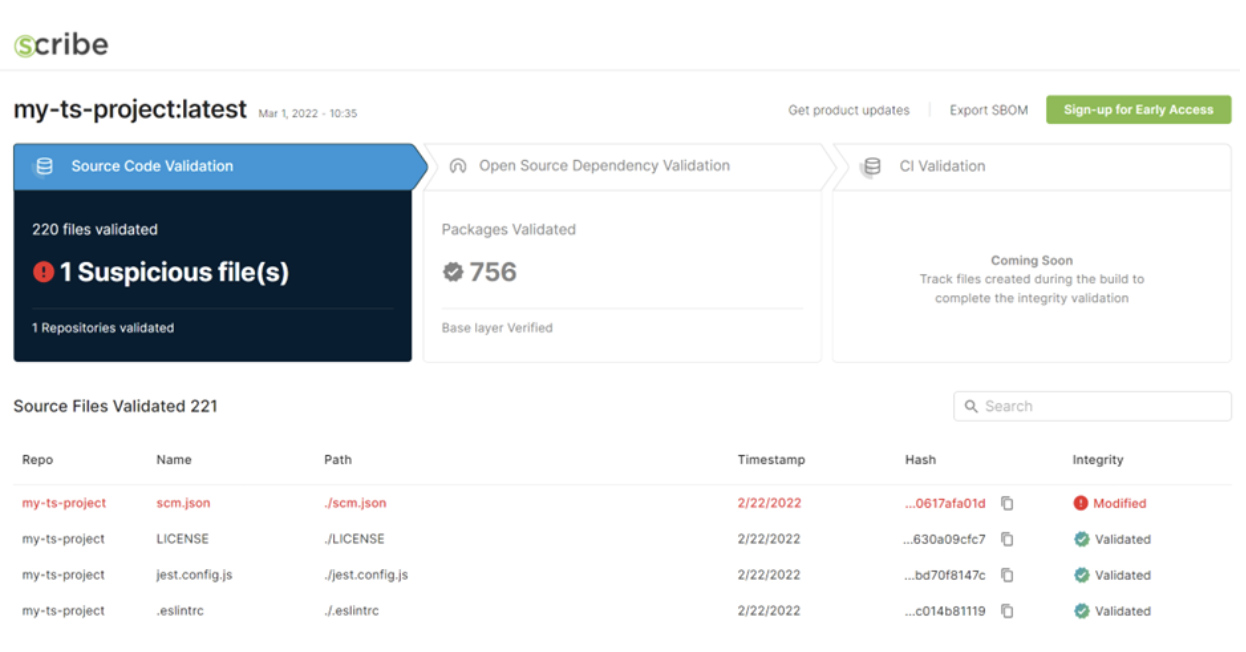
    Scribe Security today unveiled a Scribe Integrity tool that scans software artifacts to make sure they comply with IT organizations’ security policies before they are integrated into an application.

    The Scribe Integrity tool authenticates open source and proprietary source code before it is uploaded into a build. It assumes that all artifacts are “guilty” until they can prove their innocence, said Rubi Arbel, CEO of Scribe Security. That approach makes it possible to ensure the integrity of the overall software supply chain is maintained in a way that doesn’t adversely impact the productivity of developers, he added.

    In addition, the company launched GitGat, an open source policy-as-code tool based on Open Policy Agent (OPA) agent software that enables DevOps teams to periodically run reports that surface insights into the security posture of code residing in GitHub repositories.

    Arbel said that, in time, GitGat’s reach will be extended to add support for additional continuous integration/continuous delivery (CI/CD) platforms.

    The first release of Scribe Integrity addresses Node.js code and the npm package manager with support for additional types of code planned.

    The Scribe Integrity tool also identifies all dependencies to enable DevOps teams to generate an accurate software bill of materials (SBOM) as each software artifact is included in the application, he noted. That’s critical because it enables developers, IT operations and cybersecurity teams to simultaneously see what artifacts, including containers, make up an application, noted Arbel. In the future, the company plans to make available a Scribe Hub that will make it easier to share insights into those software artifacts, he added.

    A series of high-profile security breaches clearly demonstrated cybercriminals’ skill at injecting malware into software artifacts and compromise any application that incorporates that artifact into an application. That malware can then be activated at some later date to potentially compromise any number of downstream applications.

    Those incidents resulted in a greater appreciation for DevSecOps best practices to maintain the integrity of software supply chains. The issue that DevOps teams are trying to address is how to build more secure applications without slowing down the rate at which those applications are built and deployed. As such, DevOps teams are adding tools to the application development process that make it easier for developers to scan code before it is included in an application and verify the integrity of any software component that becomes part of a DevOps workflow.

    It’s unknown how long it may be before the adoption of DevSecOps best practices has a meaningful impact on application security. However, waiting to focus on security until after an application has been deployed is way too late. Cybercriminals today can discover flaws and misconfigurations in applications in a matter of minutes. As more applications are deployed, developers can find themselves spending more of their time fixing vulnerabilities than they do writing new code. A new approach to building applications that are secure from the ground up is clearly required.

  • Styra Unfurls Cloud Service for Implementing Compliance-as-Code

    Styra Unfurls Cloud Service for Implementing Compliance-as-Code

    Styra, Inc. today launched an authorization service based on the Open Policy Agent (OPA) software that can be invoked via an application programming interface (API).

    Torin Sandall, vice president of open source for Styra, said the Styra Run cloud service will make it much simpler to embed enterprise-grade authorization capabilities within applications. Today, developers spend too much time building, maintaining and operating their own authorization platforms to manage permissions across multiple applications.

    In addition to enabling developers to access pre-built OPA logic, Sandall noted the service also offloads storage and global replication of end-user permissions data to a cloud service.

    The service itself currently runs on Amazon Web Services (AWS), but Styra plans to make the service available on other cloud platforms in the future, he added.

    OPA makes use of a general-purpose policy enforcement engine that developers can embed within applications using the Rego language. OPA is now being advanced under the auspices of the Cloud Native Computing Foundation (CNCF) and is gaining traction among cloud-native application developers. OPA provides a means to enforce compliance-as-code across a wide range of microservices that now routinely access a wide range of distributed data.

    However, Styra Run should make OPA more accessible to a wider range of organizations, especially those that are looking to shift responsibility for security and compliance further left toward developers as part of a set of DevSecOps processes, noted Sandall. Developers that don’t have a lot of compliance expertise can now rely on a cloud service that enables them to focus more of their time and effort on writing code, he added.

    The arrival of Styra Run also comes at a time when more organizations are reviewing their software supply chain processes in the wake of a series of high-profile security breaches. It’s not clear to what degree compliance and cybersecurity teams have developed an appreciation for OPA, but as more organizations embrace compliance-as-code, the pressure on those teams should decrease as those applications are inherently more secure than legacy applications.

    There will, of course, be some developers that prefer to embed OPA into applications themselves, but a cloud service accessed via API will be the path of least resistance for most developers building software-as-a-service (SaaS) applications, said Sandall. The issue may simply be making developers aware that another low-latency option exists; one that doesn’t require them to deeply master the Rego programming language for the sole purpose of achieving compliance, he added.

    Regardless of approach, the general expectation going forward is that applications will more easily be able to meet a wide range of compliance mandates without requiring IT teams to deploy and maintain dedicated compliance infrastructure. As such, there may soon come a day when any application that doesn’t use some type of compliance-as-code framework will simply be rejected out of hand.