Author: Mike Vizard

  • Survey Shows Steady DevSecOps Progress

    Survey Shows Steady DevSecOps Progress

    A survey of 200 DevOps and IT/information security professionals published this week by Mezmo, a provider of an observability platform, conducted in collaboration with the market research firm Enterprise Strategy Group (ESG), finds only 22% report their organization has a formal DevSecOps strategy to integrates security into their software development lifecycle (SDLC) processes.

    Among those that have adopted best DevSecOps practices, however, 60% saw an acceleration in incident detection, while 53% saw a reduction of incidents in production environments.

    Overall, the survey finds 62% of respondents report their organization is actively evaluating use cases for, or has plans to implement DevSecOps.

    Mezmo CTO Rob Fry said the primary challenge organizations face when it comes to DevSecOps remains cultural. In fact, 99% of survey respondents said establishing a culture of collaboration between development and cybersecurity teams is either critical (51%) or important (48%). Building cross-functional DevOps teams that have the required level of security expertise, however, is a major hurdle when there is a general shortage of cybersecurity expertise, noted Fry.

    The survey finds that on average it takes 17.5 person hours to triage and understand security incidents, an amount the survey finds that 82% of respondents desire to reduce.

    However, organizations are also struggling with the sheer volume of data collected by DevOps teams. More than half the respondents (52%) said the variety of data to be captured, analyzed and be acted on throughout the software development lifecycle (SDLC) hinders security efficacy/efficiency. A total of 43% said the scale of data to be captured, analyzed and acted on throughout the SDLC also hinders security efficacy/efficiency.

    Organizations surveyed capture several (54%) or even hundreds (32%) of terabytes per month, with 6% capturing a petabyte or more per month. Well over two-thirds (69%) do not capture certain data sources because of the high cost of storage/retention, which Fry noted is going to be problematic if there is an incident. Log data (35%), followed by metrics (29%) and traces (22%) account for most of that data, the survey finds.

    In all, 84% of respondents said getting the right data and tools to developers is key to achieving success. A full 91% of respondents are using multiple tools to get the most value out of their data. Two-thirds (66%) have dedicated logging analysis tools, while 59% have a security information event management (SIEM) platform. Cloud to two-thirds 64% have a data lake hosted in the cloud, while 55% have one in an on-premises IT environment.

    A full 87% are using open source tools as part or all of their observability stack because they are more customizable. However, 84% noted that over time it will become challenging to manage, adapt and scale with these solutions. Nearly all survey respondents (98%) said they will likely investigate a managed observability solution over the next 12 months.

    The application security issues that plague organizations today have been around for decades, so it’s not likely they will be resolved in a few short weeks. On the plus side, at least, there’s now a lot more awareness of the root cause of the problem than ever.

  • Why DevOps Teams Need Security Engineers

    Why DevOps Teams Need Security Engineers

    In the episode of View with Vizard, Mike Vizard sits down with Om Vyas, chief product officer for oak9, as he explains why security engineers need to become part of every DevOps team. The video is below followed by a transcript of the conversation.

    Vizard: Hey, guys. Thanks for the throw. We’re here with Om Vyas, who’s Chief Product Officer for oak9. We’re gonna be talking about all things related to DevSecOps and cloud security. Om, welcome to the show.

    Om Vyas: Yeah. Thanks for having me, Mike. 

    Vizard: We, of course, have been talking about DevOps for the better part of a decade. And then we decided that the security people couldn’t be left out, but they wanted to have the word “sec” thrown in there to make things a little more confusing, so then we got DevSecOps. And some of them even argue that I guess it should be SecDevOps. But who knows? My question to you is it seems like we’re still struggling with getting this idea across to people. It’s become more important in the cloud era, obviously, ’cause more developers are programming stuff. But what, from your perspective, is the fundamental challenges that we’re seeing with getting people to really implement DevSecOps practices?

    Vyas: Yeah. I think if we take a quick step back, I think you hit it on the head. There’s DevOps, there’s DevSecOps, there’s SecOps. There’s a lotta buzzwords and a lotta different ways that these adoptions are being thrown around. I think fundamentally, my take is DevSecOps or DevOps, it’s first and foremost a cultural transformation. The technology and the people process really come after. So really, one of the biggest challenges is that embracing this notion of being able to work together, being able to have shared responsibility and a collaborative environment.

    If you think about kinda where we’ve come from, and in fear of dating myself, I’ll say that when I used to develop long ago with my DevOps, my development teams, our focus was only towards application development. And then it was like the packaging, the art effects, once they were created, it was like, “Hey, kinda ” the notion around, “Hey, throw it over the wall to IT ops people,” or having formalized security review processes, right? And really, this cultural transformation is, I think a key area where I think a lotta the folks in the organizations, they’re struggling. They’re struggling to embrace the culture of DevOps, culture of DevSecOps.

    And then when you factor in, as you said it yourself in the beginning, that the security people are getting left behind. And what that really means is they don’t have the visibility and they don’t have the automation to be able to keep up with the amount of churn that’s happening with the development, the DevOps. Because the dev teams are using the automation, which is the technology part of this transformation, to really create this velocity in which they are churning over new features, doing rapid deployment into production. Five, seven years ago, we used to do maybe one release a month, one release a quarter. And now, I’m seeing organizations, ours included, where we’re doing tens of releases a day, hundreds of releases a day. So this is really where the security or the “sec” part of the DevSecOps is really struggling to keep up with that velocity and that change.

    Vizard: Does that mean we need to slow down? Or can we build and deploy secure applications just as fast? What’s the tradeoff?

    Vyas: Yeah. I mean, I think maybe slow down is not the right answer. Because I think velocity is really being utilized as a differentiation for a lotta the – lotta the organizations. I think the right answer is – I think, not necessary just slow down to a halt. The right answer in my opinion is really, how do we integration security into the processes of DevOps to truly give them the visibility at the point of time when these changes are happening and then really arm them with the automation that they really need to give them full visibility, give them ability to be able to really quickly identify how that application is changing? How are those new capabilities that are being added, and how is that impacting security of that application? And the sooner we give visibility to security engineering of all of those changes and where security matters in those changes, the sooner we can continue to operate with that velocity.

    Vizard: How do we go about doing that? ‘Cause a lotta the developers, they didn’t really set out to build something that’s insecure. It’s just more often than not, they have a tool that lets them manage a cloud as infrastructure, as code. But then they misconfigure something ’cause they’re not security experts, and maybe a port gets left open or something like that occurs. So how do we lock all that down and how do we kinda tighten that up without necessarily requiring the developer to become a security expert, ’cause that seems unlikely?

    Vyas: Yeah, you’re absolutely right. I think that a developer is not a security expert. And I think if you look at kind of where dev engineering is today, especially with the Cloud Native architecture, especially with DevOps, it’s dev engineering or developers are taking on lot more responsibility, right? But I do think as a developer myself, what I’m interested in is not that I don’t care about security. It’s that what I wanna know is, “Hey, help me understand what I need to do to move fast. What do I need to do? What are the five things or ten things or whatever number of things that are related to security that I can do to not only help my security team, but really quickly move this feature capability from development and implementation to testing and to production?”

    So from that perspective, I think what really also helps is if I have the ability to, within my own workflow, within my own tools – if somebody educated me and gave me kinda the prescriptive guidance of, “Hey, here is all you need to do to ensure that all of these different security aspects of security-related things in this infrastructure’s code that you change. Here’s what you need to be aware of. Here’s what you need to change, and to really help you move forward.” I think that’s what, I think as a developer, I’m looking for. Because again, I have many, many different things that I’m managing today beyond just application code. 

    Vizard: Mm-hmm. How automated can all this get? Seems to me the key to this whole thing is if the developers still need to program the cloud environment, we need to find a way for them to make fewer mistakes, put more guardrails in place, and kinda just gently lock down the environment, I guess, is the phrase I’d say. So what is the challenge, what is the state of the art at the moment?

    Vyas: Yeah. I think it’s interesting. You said “gently lock down the environment.” I think absolutely, right? I mean, I think that developers, what we’re seeing today with a lot of our customers is they want lotta freedom because that freedom will enable them the agility and the velocity that they are looking for. But at the same time, we do need guardrails because they’re important.

    And I think how do we gently lock down the environments? I think that’s kinda the key. I think one way we can talk about this is that when we think about that infrastructure’s code, we’re really talking about codifying the entire environment under which your application is running in the cloud. And what that actually enables us to do is be able to then say, how do we actually remediate? How do we actually focus on automation that doesn’t always just point out all the challenges or all the problems in that code around security? But then taking it that last mile, as I like to think about it, which is actually fixing it for that developer.

    So I think that’s really where the trends are. And I think that’s really where things need to be, is really say, “Hey, I analyzed this infrastructure’s code. I have identified where all of the security challenges are. Here’s how to risk-appropriately secure this code. Because all of this infrastructure’s code is declarative. So it’s predictable in how it can be changed and what the impacts would be.”

    So I think that’s really where it needs to be, is when I look at some of our customers and infrastructure’s code, it’s getting pretty complex, right? So we have customers that have 40,000, 50,000, 60,000 lines of Terraform code. So even cloud infrastructure code or infrastructure code itself is getting pretty complex. So no security engineers or no number of security engineers or even DevOps or developers can actually keep up with understanding, what are all the security implications in this code? So the real answer in my mind is, how do we automate this thing, take it to the last mile, and say, “Hey, here are all the recommended changes in this code as far as the security aspects of it is concerned?” So as a developer, now I can focus on the functional aspects, and I have an automated tool, an automated process, that will really enable to me to then not have to worry about the security aspects of that infrastructure’s code.

    Vizard: And maybe no one ever needs to know how much I don’t know about security. But do you think that we’re gonna see a lot more of so-called artificial intelligence thrown at this problem? And is that part of this automation curve? Or are we making too much of AI and security these days and it’s just gonna require something a little more fundamental?

    Vyas: Yeah. I think the short answer is yes. But I think my opinion is that AI kinda gets thrown around a lot. And I think when we’re talking about some of the deeper learning concepts in AI, we’re talking about some neural network things, I think those things are coming. But I think we still have to recognize that we’re in the infancy stages of this. So I think really to me, it starts with the fundamentals first. Can we actually provide these recommendations, this automation, to really help educate the user, that developer, that practitioner, that is today, lot more often than not is kind of utilizing lotta the modularized code that’s available in the web without really understanding, what are the implications as it relates to their own world or their own applications or their own context?

    And lemme sort of dive in deeper. So not all applications or workloads in the cloud are created equal. So if you are a health care company that’s securing health care applications that’s utilized by your patients, that’s using PII data, their requirements around security may be completely different than if I’m building a marketing website where most of the data that’s on that website is publicly available. Both of those applications are not created equal. So how do we secure those two different applications is actually different.

    So there’s an element of this dynamic nature. There’s element of understanding, what are the requirements of that application? What are maybe the compliance adherence to those applications? So really then, when we talk about securing those two applications, that’s also different. So it’s really what I think about the context behind that application and how you secure that application really becomes important or a focal point of, then what are the recommendations that you’re providing to that end user, that developer, within that infrastructure’s code? So I think that has to take that into consideration.

    And then I think, to your point, it’s not simply just saying, “Hey, here are the ten things you need to do, developer. Go and here’s a tool that will actually remediate it for you.” That’s great. But I think part of it can be used really as an educational tool to really better understand, “Hey, developer, help us a little bit. Help us understand the context of this application. What are, what is it that you’re trying to do?” And then I think once you kind of cover those fundamentals, then I think as we go deeper beyond the infancy stages of this cloud infrastructure journey, then I think what we can do is we can learn behaviors. We can learn from the industry that this developer or this organization is in. And we can say, “Yeah, this is a health care industry vertical or this is a particular type of architecture or workload that’s being deployed in the cloud,” and secured.

    And then I think we can start to get into intelligence around deep learning and other heuristics to say, “Hey, how do we react to then risk-appropriately secure this application,” right? Because otherwise, if we start treating all applications, all workloads that are run in the cloud, in the same way, there’s a lot more that we’re asking of the developer. There might be hundreds of things that we need to do to risk-appropriately secure a health care application that’s using PII data versus we might only need to do a handful of things to ensure that a marketing website that has publicly-available data is secure.

    Vizard: What will be the role of the security team in all of this? Because one of the things that comes to mind is if we are shifting more responsibility or at least the enablement left, then what exactly does the security team need to do to kinda work alongside, then? Or will they just kinda set the policies and the rest of it will be automated?

    Vyas: Yeah. I think, first and foremost, about kinda the role of security engineering today in the DevOps world or DevSecOps world, is really understanding and gaining visibility into what’s happening. Because if you have engineering teams that are deploying tens of times a day into production, they’re fundamentally changing, potentially, the architecture of that entire application. So I’ll give you an example. Today, with lotta the sort of building blocks or the way I like to think about it is cloud service providers are really offering these Lego pieces. So they’re outta-the-box capabilities.

    Now, I can plug in an analytics service into my architecture and seamlessly provide analytics dashboard into my application or into my workload that I didn’t have a week ago. But that fundamentally changes, or it fundamentally has the ability to change, the architecture, and therefore the security implications. So first and foremost from the role of security engineering is really getting the visibility and getting the visibility as early as possible so that they can understand how, fundamentally, this application is changing and what are the security implications of that. So it, and I’ll say for that aspect of it, this is the people process side of embracing DevOps, is really engaging that security engineer as early as having that requirement or having that capability from business that says, “Hey, we need this analytics dashboard,” really getting the security engineering involved as early as possible.

    And from that point forward, again, then it goes back to technology and automation. How can security engineering really understand, what are the implications of adding this analytics service from AWS or some analytics service from GCP or Azure? What does that mean for the security of my architecture? So there might be hundreds of different configurations. There might be thousands of different implications around putting in that one analytics service that’s available outta the box as a feature or service from the cloud service provide. And the reality is no security engineering can actually keep up with that.

    So having a tool that really understands down to the configuration level, what are the impacts or the configurations of that analytic service to securely deploy that service and then what security engineering can do is security engineering can say, “Hey, let me understand the implications and the architecture when my development team is adding this analytics service.” And if we start early, if we get the security engineering involved early, if we enable, then, automation to take away the implications of down to the hundreds of configurations of securely deploying that analytics service away from security engineering, but then give them the visibility, then I think we have a really great starting point to enable all of the teams to work together with the same operational velocity that the dev engineering really desires.

    Vizard: Mm-hmm. What is your best advice to folks? I mean, should I just take all these developers and security people and lock ’em in a room till somebody comes to an agreement? Or is there some more intelligent way to go about this?

    Vyas: Yeah. I think locking everybody up in a room is not the right answer, right? I mean, I think what I’ve seen work really well is there’s lotta different ways to sort of come to a solution. I think there’s no one silver bullet here. But I think depending on the size of the organization, depending on the size of the teams, I think one of the things that should be done, and I’m starting to see some trending around this, is really add a security engineer to the engineering team as a whole so you really have a dedicated security engineer that’s spending part of their time with these engineering teams.

    So typically, we’ve seen, in more of the modern development shops, you see lotta the dev engineering, it started out with just developers in a single team. Then we kinda focused on scrum teams. So there was development teams, there was a product engineering or QA involve.We’ve seen a DevOps engineer or SREs get involved in these teams. And I think, to me, the answer is, again, being able to put that security engineer in these teams, as well, to work closely with the developers, work closely with the SREs. Because then, what will start to happen is that engagement, that early visibility and understanding. So I think that’s one.

    And then I think the other area for lotta the larger organizations where this may not work is I think the notion around excellence centers , so you have visibility across these little center of excellence teams. So there’s cloud ops teams, there’s security teams. It’s really good to incorporate lot of your security engineering and security architects into these cloud center of excellence teams. Because I think then again, it goes back to that visibility, goes back to engagement, and it goes back to helping security teams really understand, what are the different architectures? What are the different capabilities that lotta the dev engineering groups are using today? Is it the serverless architectures? Is it the micro services that are being built with containerized architectures?

    And then what security engineering can start to do is they can start to build these reference architectures or guardrails around 80 percent of the, “Hey – ” recognizing that 80 percent of the workloads across my organizations are built with serverless architectures, as an example, in the cloud, or it might be that containerized architectures in the cloud. And that will really help them start to build these guardrails in an effective way. And then I think, you talked about sort of, early on, gently locking down environments. So I think if we then start to think about, in the DevOps pipeline, how do we incorporate these security automation tools that enable us, both the development teams, the SRE teams, and the security teams, to identify, what are all of the security underpinnings, vulnerabilities, design gaps that we are identifying, be it with the application code, be it with runtime, be it with cloud infrastructure security?

    So it’s really, where possible, building these automated tools within the pipelines without actually blocking the pipeline so that you’re actually what you’re doing is you’re really enabling the development engineering and the DevOps engineering to really start to build in the process around, how do we ensure that all of these security design and the best practices are actually incorporated within the pipeline? And then as the teams learn and grow, then these tools can become those guardrails. So maybe you’re not blocking or completely blocking the pipeline or failing the pipeline at or in the development or sandbox stages, but then you start to guardrail those as that feature capability’s moving through user acceptance testing or staging or before it goes into production. And I think those are some of the key things that can be done to really enable more of this collaborative, but shared responsibility culture that I think is really going to drive lotta the benefits that are needed to build security in.

    Vizard: Hey, Om, thanks for being on the show. It’s all about making sure that if you find a pattern, build a guardrail, and rinse and repeat.

    Vyas: Yeah, absolutely. Thanks for having me, Mike.

    Vizard: All right. Back to you guys in the studio.

  • Civo Report Surfaces Growing Cloud Lock-in Concerns

    Civo Report Surfaces Growing Cloud Lock-in Concerns

    A survey of 100 IT professionals conducted by Civo, a provider of cloud services based on Kubernetes, finds a total of 82% currently rely on either Amazon Web Services (AWS) or Microsoft for public cloud infrastructure. However, more than a third (34%) of respondents also report they now feel locked into the public cloud service provider.

    The primary reason survey respondents cited for feeling that way is data transfer costs are too expensive to move off their current cloud (65%).

    Simply inertia also seems to be a factor. A third of the total respondents (33%) said they had always used the same cloud service provider. Nearly two-thirds (62%) also noted they were concerned that alternative cloud providers would suffer more outages. At the same time, however, 45% of respondents conceded they are under growing pressure to reduce cloud costs.

    Civo CEO Mark Boost said it’s already apparent that cloud outages are not just limited to alternative cloud providers. In fact, most application workloads are relatively simple in the sense they can run equally well with the same level of resiliency on any number of cloud services at a lower cost than the major hyperscalers currently charge, he noted.

    In effect, cloud computing, except for some more complex workloads, should largely be viewed as a commodity, added Boost.

    Cloud service providers, of course, discourage migrations using exorbitant data egress charges that often make moving data off their platforms cost prohibitive. In fact, most applications are deployed on a single cloud versus in a truly hybrid cloud model because data management can become exceedingly complex. Ideally, IT organizations would like to be able to play one cloud service provider off another to reduce costs. In practice, however, once an application is deployed, it rarely moves to another platform.

    On the plus side, however, microservices-based applications deployed on Kubernetes clusters are easier to move because each instance of a Kubernetes cluster exposes a consistent set of APIs. However, stateful applications deployed in Kubernetes environments can like any other application become dependent on, for example, a proprietary database.

    The tradeoff, of course, is that each cloud platform added to an enterprise IT environment tends to increase total costs. IT staffs typically need to hire additional specialists that require tools to manage each cloud. There are, naturally, platforms that span multiple clouds but the cost of acquiring, provisioning and maintaining those platforms can be considerable. In the meantime, more organizations find themselves separately managing and attempting to secure multiple clouds simply because individual departments prefer one cloud service versus another.

    It’s not clear to what degree organizations may soon decide to consolidate cloud workloads as part of an effort to reduce costs. However, a lot of workloads in the immediate aftermath of the COVID-19 pandemic were shifted to the cloud with little regard for cost. Now that organizations are adjusting to the so-called new normal, many of those decisions are, at the very least, being re-evaluated to see what might make the most financial sense as the general economy seems to become less predictable with each passing day.

  • Contrast Security Adds API Support to Security Platform

    Contrast Security Adds API Support to Security Platform

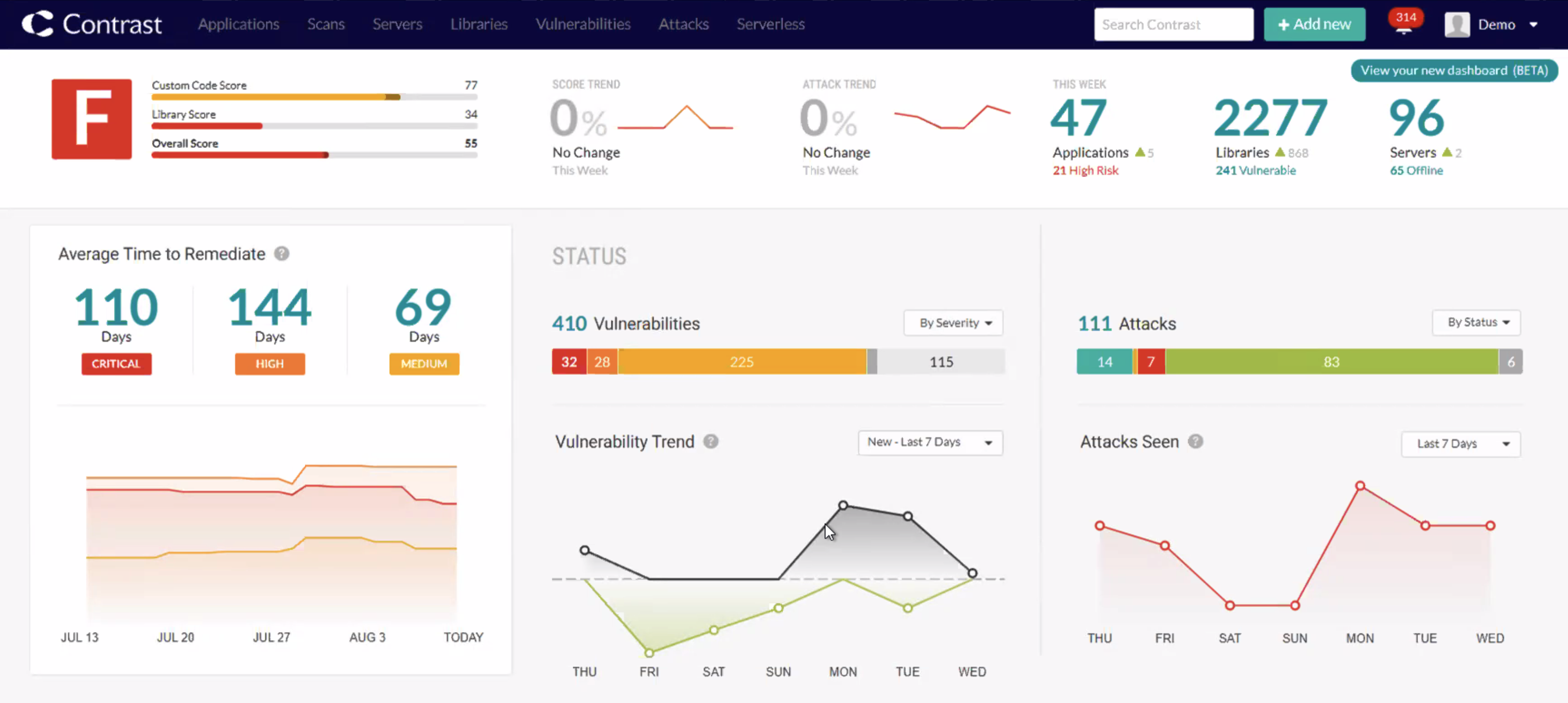
    Contrast Security has fully extended its vulnerability scanning and runtime application self-protection (RASP) platform to now include application programming interfaces (APIs).

    Company CTO Jeff Williams said the Contrast Secure Code Platform embeds agents directly into code to detect vulnerabilities using a combination of integrated static and dynamic application security testing tools. That approach makes it simple to embed vulnerability scanning and exploit prevention capabilities within a DevOps workflow as an application is built and deployed, he noted.

    In contrast, traditional approaches to application security depend on legacy platforms such as web application firewalls (WAFs) that are deployed by cybersecurity teams to protect applications in a way that doesn’t provide the same level of granular control at the API level, said Williams.

    Contrast Security claims the Contrast Secure Code Platform improves scan times by a factor of ten while fixing defects 45 times faster. It also reduces false positive alerts by being 200% more accurate, the company claims.

    As more organizations start to embrace best DevSecOps practices to better secure software supply chains, many of them are trying to achieve that goal without slowing down the rate at which applications are built and deployed. That approach, however, requires giving developers and DevOps teams the tools needed to build and deploy secure applications without requiring a lot of direct intervention on the part of a security operations team.

    In general, there is also now a lot more focus on API security as more organizations build and deploy microservices-based applications that rely on APIs to interconnect discreet components. Those APIs should be built, deployed and secured by DevOps teams before they are deployed just like any other software component, noted Williams. The current process of building applications is at its core, from a security perspective, fundamentally broken, he added.

    Application security, in general, has always been somewhat problematic. Cybersecurity teams tend to fund the tools and platforms they regularly employ. The assumption is that application development teams will invest in the tools they need to build and deploy applications. Alas, application development teams that have limited cybersecurity expertise assume that cybersecurity teams are securing both the underlying infrastructure and the applications deployed on top of it. As a result, application security is frequently underfunded.

    In the wake of a series of high-profile breaches of software supply chains there are now at least more reviews of application security being conducted. Contrast Security is making a case for securing the entire application, including the APIs, it invokes using agent software that is injected into the application at the time it is constructed.

    It’s not clear to what degree application security issues will be addressed using agent software rather than traditional cybersecurity platforms managed by security operations teams. Responsibility for application security is shifting left toward developers and the DevOps teams that support them, but as long as humans write code, mistakes will be made, said Williams

    The issue, of course, is many of the members of those teams are still focused a lot more on writing code and deploying applications than they are on cybersecurity.

  • Five Great DevOps Job Opportunities

    Five Great DevOps Job Opportunities

    DevOps.com is launching a weekly DevOps jobs report today through which opportunities for DevOps professionals will be highlighted as part of an effort to better serve our audience.

    Our goal in these challenging economic times is to make it easier for DevOps professionals to advance their careers.
    Of course, the pool of available DevOps talent is still relatively constrained, so when one DevOps professional takes on a new role it tends to create an opportunity for others.

    The five job postings shared this week are selected based on the company looking to hire, the vertical industry segment and, naturally, the pay scale being offered.

    We’re committed to providing additional insights into the state of the DevOps job market in the weeks ahead. In the meantime, here are five DevOps jobs for your consideration:

    Indeed.com

    Mayo Clinic
    Phoenix
    Senior MLOps/DevOps Engineer
    $121,701 – $176,446 a year – Full-time

    Dice.com

    AWS – Professional Services
    Anywhere
    DevOps Engineer
    $131,000 Base Pay

    LinkedIn

    Kasisto
    New York
    Director of DevOps
    $160,000 to $180,000

    Monster.com

    University of North Carolina
    Chapel Hill, North Carolina
    DevOps Developer
    $80,000 to $95,000

    SimplyHired

    Tide Cleaners
    Cincinnati (Preferred)
    Senior DevOps Engineer
    $120,000 to $160,000

  • Dynatrace Extends Reach of Application Security Module

    Dynatrace Extends Reach of Application Security Module

    Dynatrace has extended the Application Security Module it provides for its observability platform to protect against vulnerabilities in runtime environments, including the Java Virtual Machine (JVM), Node.js runtime and .NET CLR.

    In addition, Dynatrace has extended its support to applications built using the Go programming language.

    The Dynatrace Application Security Module leverages existing Dynatrace tracing and artificial intelligence (AI) technologies to detect threats in real-time and then apply appropriate policies to automatically secure applications. At the core of the Dynatrace approach to application security is its OneAgent software for application instrumentation, which collects data and feeds it back to an observability platform that includes an AI engine dubbed Davis.

    Amit Shah, director of product marketing for application security at Dynatrace, said by extending the Application Security Module to support runtimes in the most widely adopted programming languages Dynatrace is now providing real-time visibility and vulnerability analytics across the entire application stack, which includes custom code, open-source and third-party libraries, language runtimes, container runtimes, and container orchestrators.

    The Dynatrace platform not only identifies vulnerabilities across each of these layers automatically but also analyzes them to reduce false positives by only surfacing alerts concerning code that is actually running, noted Shah. Without those capabilities, it becomes impossible for development teams to prioritize their application remediation efforts in the absence of any context, he added.

    In general, achieving and maintaining application security will require more responsibility to shift both left and right, said Shah. While it’s critical to discover as many vulnerabilities as possible before applications are deployed it’s also crucial to make it simpler to discover vulnerabilities in runtimes after an application is deployed, he noted. The goal is to enable DevOps teams to employ the same observability platform they are using to manage and optimize applications to also ensure application security, Shah added.

    That Dynatrace approach provides the added benefit of also avoiding the need to convene a “war room” to discover where all the vulnerabilities in those application environments might reside once they are discovered, Shah noted.

    The primary application security challenge organizations face is the rate at which applications are now being deployed. Cybersecurity teams, because of a chronic shortage of talent and expertise, can’t keep pace. As a result, more responsibility for application security is being shifted left toward developers and DevOps teams as well as right toward IT and security operations teams. In effect, application security is finally becoming a team sport within IT organization as cybersecurity teams focus more of their efforts on securing runtime environments, noted Shah.

    It may be a while before that approach has a major impact in terms of reducing the number of vulnerabilities being regularly introduced into application environments. However, as more tools and platforms that specifically address application security are deployed, the overall state of application security will steadily improve.

    In the meantime, however, the volume of attacks aimed at the application layer of the IT stack will, unfortunately, continue to increase as cybercriminals focus more of their efforts on exploiting both now and zero-day application vulnerabilities that are increasing in volume with each passing day.

  • Cycode Expands Scope of AppDev Security Platform

    Cycode Expands Scope of AppDev Security Platform

    At the Black Hat USA 2022 conference, Cycode this week announced it has added static application security testing (SAST) and container scanning capabilities to its software composition analysis (SCA) platform that is based on a graph database.

    Amnon Even-Zohar, director of product management for Cycode, said the addition of these tools brings to eight the total number of modules that are now integrated with its Knowledge Graph database. Those modules address application security requirements spanning everything from infrastructure-as-code misconfigurations and DevOps pipelines to binary and source code analytics in a way that reduces both the number of false positives being surfaced, he added.

    That approach makes it possible to provide more context to software remediation efforts by pulling data from across the entire software development life cycle rather than focusing solely on vulnerabilities found in source code, he noted. Cycode, for example, can pinpoint where vulnerable dependencies are found in test and production environments, said Even-Zohar.

    A Cycode Pipeline Composition Analysis tool also provides insights into which components enable a vulnerability or security issue, how pipeline components relate to each other and if they are present in runtime environments, he added.

    While there’s a lot of interest in implementing DevSecOps best practices in the wake of a series of high-profile AppSec breaches, many organizations still lack the tools required to secure an application development environment on an end-to-end basis. The Cycode platform leverages the data that already exists in DevOps workflows to enable organizations to better prioritize their remediation efforts and lower the total cost of doing so, said Even-Zohar.

    The goal is to not only enable organizations to shift cybersecurity further left toward developers but also further right by more closely integrating cybersecurity and DevOps teams, he noted.

    The DevSecOps challenge that most organizations are trying to navigate is that, historically, a list of vulnerabilities discovered by cybersecurity researchers is shared with DevOps teams without much context. Developers don’t know which vulnerabilities are most critical or, for that matter, whether the vulnerability identified is actually present within their application environment. SCA tools, in theory, could make it easier to identify, for example, where a Log4j or a shell vulnerability might be found. Graph-based tools take that capability to the next level by making it easier to visualize where any instance of a vulnerability might be found. In the absence of such tools, IT organizations would spend weeks looking for each instance of a vulnerability.

    It may be a while before DevSecOps workflows become commonplace but at the very least there is now more awareness of software supply chain security issues. The Biden administration has also issued an executive order that requires federal agencies to review the security of software supply chains. Many enterprise IT organizations are now following suit. One way or another, application security is going to improve. The only thing that remains to be determined is what impact those improvements will have on the rate at which software can be built and deployed.

  • CloudNativeDay: WASM to Drive Next IT Epoch

    CloudNativeDay: WASM to Drive Next IT Epoch

    WebAssembly (WASM) is poised to drive the next era of development of cloud-native applications that can truly run anywhere.

    Liam Randall, CEO of Cosmonic, a provider of a platform for building and deploying WASM applications, told attendees at a virtual CloudNativeDay event that WASM will be at the core of a new IT epoch that will enable organizations to more quickly build highly portable applications that are not tied to any IT infrastructure platform and more secure.

    WASM, at its core, is a portable binary instruction format for building software that describes a memory-safe, sandboxed execution environment. The World Wide Web Consortium (W3C) drove the development of WASM as part of an effort to create a common format for browsers executing JavaScript code. Wasm is now being extended beyond browsers and JavaScript to enable developers to create a set of universal binaries that could work on any platform without modification.

    That approach replaces the current predominant method for building software that relies on the aggregation of software components that tend to lack distinct boundaries between them. One of the issues of that approach is that it becomes relatively simple for malware to infect all the components of an application.

    The Cloud Native Computing Foundation (CNCF) is now trying to advance the adoption of a Cosmonic’s WASM runtime that makes it possible to run WASM applications on any platform versus being constricted to building applications that can only run, for example, on Windows or Linux.

    That level of portability will prove crucial as more organizations look to drive application deployments on a wide range of edge computing platforms, noted Randall.

    It may be some time before WASM becomes the preferred artifact for building applications, but it’s clear the walls that have separated one IT platform from another are finally starting to crumble. Once applications become much more portable, the longstanding goal of writing an application once and then deploying it anywhere may finally be achieved. That’s not only critical in terms of overall application developer productivity, it has major implications in terms of streamlining the management of DevOps workflows as it becomes easier to both initially deploy applications and continuously update them.

    In the meantime, as organizations continue to review their application development practices to better secure software supply chains, it’s become clearer that legacy approaches to building applications are fundamentally flawed. Rather than attempting to reengineer processes to encourage developers to better secure applications, it may be more effective to change the way applications are built. After all, considering all the processes required to secure legacy approaches to application development, it may be cheaper and easier to adopt a new app development method.

    The challenge, of course, is, as always, taking that first initial step away from the inertia of legacy application development approaches.

  • GitHub Brings 2FA to JavaScript Package Manager

    GitHub Brings 2FA to JavaScript Package Manager

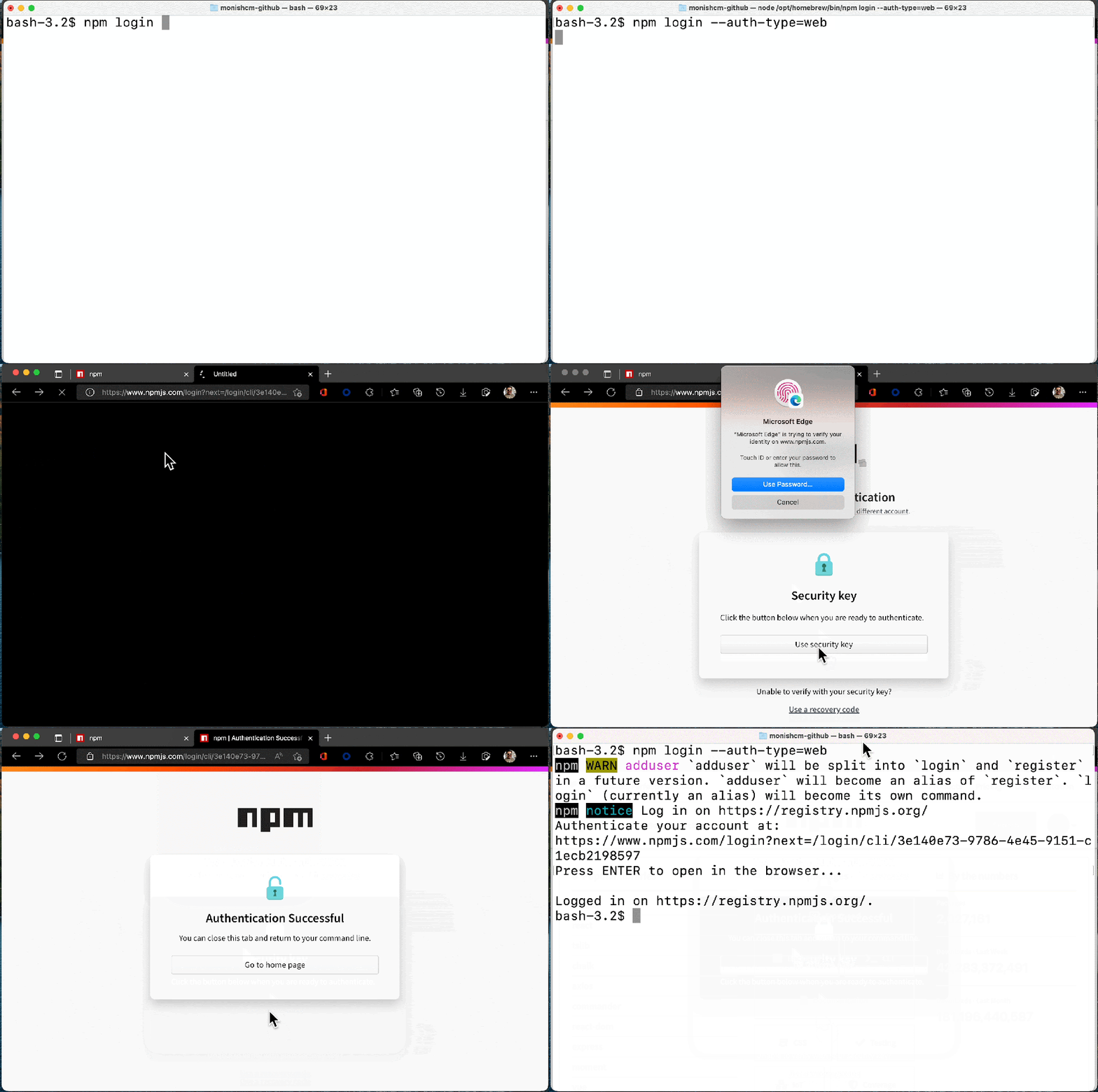
    GitHub has made generally available a two-factor authentication tool for the package manager for JavaScript applications maintained by its NPM, Inc. arm.

    In addition, all npm packages have been re-signed and there is now an npm command line interface (CLI) command to audit package integrity.

    Finally, GitHub has added the ability to connect GitHub and Twitter accounts to npm along with a streamlined login and publishing experience with the npm CLI.

    Myles Borins, staff product manager for open source at GitHub, said these enhancements are part of an ongoing effort to enable organizations to better secure their software supply chain by better protecting credentials against being used to take over GitHub accounts.

    There isn’t a huge volume of these types of attacks, but it’s apparent cybercriminals are attempting to compromise the security of software supply chains by gaining illicit access to the platforms used to build applications, noted Borins. Once cybercriminals gain access, they could potentially insert malware in software components that could find its way into any number of downstream applications. That malware can then be used to, for example, potentially launch a ransomware attack or simply exfiltrate data. More troubling still, that malware might begin to spread laterally across an entire application environment.

    GitHub is currently dealing with the fallout from a report that its repositories were attacked; that turned out to be a false alarm. The repositories attacked turned out to be either forks or clones of real, popular repositories with names similar to legitimate repositories on the GitHub platform. No malicious code was actually merged into any of the original repositories; however, it’s apparent cybercriminals are using a technique known as spoofing commit metadata to attempt to trick developers into committing code to a fake repository.

    The challenge that GitHub is trying to navigate is the degree to which some security controls should be enabled by default based on the level of risk, said Borins. Individual developers, for example, might have a higher tolerance for risk than an enterprise IT organization building an application that is core to the processes that drive the business, he noted. In some cases, organizations may opt to restrict access altogether whenever a user name/password can’t be remembered while others will simply limit access to ensure productivity is maintained, added Borins.

    In general, the average enterprise IT organization is likely to have a higher tolerance for disrupting workflows to make sure critical intellectual property is always protected, he added.

    The critical issue, of course, is no one knows for sure what open source component might one day wind up in what application. Regardless of the type of application, developers now routinely reuse code that could contain any number of known vulnerabilities or zero-day vulnerabilities that have yet to be discovered. The foundation for building secure DevSecOps workflows for most organizations at a bare minimum is going to start with implementing two-factor authentication, said Borins.

    Regardless of the DevSecOps approach, just about everyone recognizes there is a need to better secure software supply chains. The one thing that remains to be determined is what impact achieving that goal might actually have on the rate software is being built and delivered.

  • CREST Defines Quality Verification Standard for AppSec Testing

    CREST Defines Quality Verification Standard for AppSec Testing

    At the Black Hat USA 2022 conference, CREST today shared a quality assurance verification standard to improve application security testing. The standard is based on the open source framework defined by the Open Web Application Security Project (OWASP).

    Tom Brennan, executive director for Americas at CREST, said the OWASP Verification Standard (OVS) measures an organization’s ability to execute and deliver assessments related to Level 1 and Level 2 of the OWASP Application Security Verification Standard (ASVS) and OWASP Mobile Application Security Verification Standard (MASVS).

    The goal is to provide a consistent methodology for accrediting companies that provide application security testing services, said Brennan. Ultimately, organizations of all sizes will then be able to require application software providers to pass an OWASP accreditation test rather than testing the security of every application they use, he noted.

    Organizations need to be accredited through CREST Penetration Testing to apply for the OVS program, which requires companies to demonstrate that they can meet the program requirements and execute and deliver Level 1 and Level 2 ASVS and MASVS services. Level 1 determines whether or not applications store or handle sensitive data; that determination then defines whether or not they need the more rigorous controls of Level 2 or 3. Level 1 controls can be checked either automatically using tools or manually without access to source code. Level 2 ensures that security controls are in place, effective and used within the application. In addition, all organizations will need to ensure that their teams have completed CREST’s Skilled Person Register and have each signed the CREST code of conduct.

    CREST is a nonprofit organization that was originally known as the Council of Registered Ethical Security Testers. CREST works with governments, regulators and multinational organizations to improve application security using CREST OVS Mobile and CREST OVS Apps accredited services. It’s becoming more common for organizations to require OVS to better ensure application security in much the same way they require compliance with frameworks such as the System and Organization Controls (SOC) framework, said Brennan.

    OWASP is administered by a separate nonprofit foundation that works to improve the security of software by sponsoring community-led open-source software projects and training application developers. By aligning with OWASP, CREST creates a verification standard to provide a more structured approach to implementing ASVS and MASVS, noted Brennan.

    OVS, of course, is arriving at a time when there is now a much greater focus on software supply chain security in the wake of a series of high-profile breaches. It is apparent cybercriminals have become more adept at discovering and exploiting a wide range of known software vulnerabilities. The Biden administration has even gone so far as to issue an executive order requiring federal agencies to review the security of their software supply chains.

    It may be a while before application testing using OVS becomes routine, but as more organizations embrace DevSecOps best practices to secure their software supply chain it’s clear there is a greater need for application security testing standards. Especially those that organizations can extend versus reinventing the wheel.