
Author: contributor

  • Fast Pass: Your Ultimate Guide to the Best of Jenkins World

    Fast Pass: Your Ultimate Guide to the Best of Jenkins World

    At the end of the month, Jenkins users and DevOps professionals from around the world will head to San Francisco for the annual Jenkins World conference, taking place Aug. 28-31. The conference lasts four days, but time flies when you’re attending trainings, keynotes, sessions and networking events. To make sure you get the best of everything at Jenkins World, we’ve put together a guide that will ensure you have the most productive and enjoyable experience.

    NOTE: devopsy.kinsta.cloud readers can get 20 percent off registration with the code JWDEVOPSCUST.

    Take the Time to Develop Your Skills

    The first two days of the conference will be full of workshops and training sessions. Regardless of skill level, there are trainings for everyone. Those just getting familiar with Jenkins can attend an “Introduction to Jenkins” training for free and learn how to easily create pipelines while putting in place best practices for continuous integration (CI) and continuous delivery (CD).

    Those a bit farther along their Jenkins journey can attend workshops such as “The Final Mile: Jenkins Pipeline and Patterns for Operations,” where attendees will review patterns of common problems and solutions specific to operations teams in a CD environment , as well as how to create Jenkins pipelines that address the needs of operations.

    Don’t Miss These Essential Sessions

    All attendees should make sure they make it to each of the keynotes, of course! Keynote speakers include Sacha Labourey, CEO of CloudBees; Kohsuke Kawaguchi, founder of the Jenkins project; and Jez Humble, CTO at DevOps Research and Assessment LLC.

    In addition to top-notch keynote speakers, there are a number of DevOps professionals you’ll want to hear from while at the show. Try to attend at least one of these sessions:

    Keep an Eye Out For …

    Make sure you listen in to find out who the winners are of the first annual Jenkins World Awards Program. There are two awards tracks: Jenkins Community Awards and CloudBees Innovation Awards. Each track has several categories including Jenkins Contributor Award, DevOps Automation Excellence Award and more. Winners will be announced Thursday, Aug. 31, at the show.

    You’ll also want to stop by the sponsor expo hall to check out dozens of great vendors. As with any good conference, there will be plenty of swag passed out. Exhibitors will include GitHub, BlazeMeter, Docker, JFrog, Fugue, Sonatype and others. Don’t miss out on taking a photo with the famous Jenkins butler at the CloudBees booth!

    Can’t Forget to Network

    With so many great sessions to attend, don’t forget to make time for networking events. It would be a waste to not take advantage of dedicated networking time to speak with experts and peers who have likely dealt with some of the challenges your organization may be facing. There will be several networking opportunities, including a reception Aug. 30 sponsored by CA BlazeMeter. Or if you’re looking for ways to stay active, attend a scheduled walk or yoga class.

    If you can check off all of the above activities, you’re bound to leave Jenkins World a better professional! Make a checklist at the start of the conference to ensure you hit all the events and sessions you’re most excited for.

    If you haven’t registered yet, there’s still time! Use the promotional code JWDEVOPSCUST for 20 percent off.

    About the Author / André Pino

    André brings more than 20 years of experience in high technology marketing and communications to his role as vice president of marketing at CloudBees. He has experience in several enterprise software markets including application development tools, middleware, manufacturing and supply chain, enterprise search and software quality and testing tools. André has particular expertise in working with the executive teams of enterprise software companies to create unique competitive positioning, build pipeline and establish sustainable market leadership. Prior to joining CloudBees, he served as principal analyst serving technology marketers at Forrester Research. He has also held a number of senior management positions in marketing and communications with companies such as Segue Software, Hewlett-Packard, Unisys Corp. and Bluestone Software. André holds a BS from Eastern University.

  • Creatures of Habit, Snowflakes and Integration Tax

    Creatures of Habit, Snowflakes and Integration Tax

    Donovan Brown of Microsoft, in conversation with Matt Hilbert of Redgate Software, discusses database DevOps’ biggest challenges

    When DevOps was first talked about in Flickr’s seminal “10 deploys per day” Velocity presentation in 2009, it was regarded by some as strange and alien to corporate culture. It was the antithesis to the accepted way of doing things, a threat to established and proven processes—it was downright dangerous.

    Times have changed. Unicorns such as Uber, Airbnb, Spotify and GitHub couldn’t live without it. Microsoft has embraced it and actively promotes it. It’s become the key to gaining competitive advantage in a technology marketplace that is moving faster and changing quicker than it ever has before.

    But what about the database? Why are practices such as version control, continuous integration and automated deployment being introduced to application development but left on the shelf when it comes to the database? The 2017 “State of Database DevOps survey,” for example, found that continuous integration was in place for 39 percent of applications, but fell to 20 percent for databases. What’s going on?

    In search of some answers, we spoke to Donovan Brown, Principal DevOps Manager at Microsoft and DevOps advocate. Also known as The Man in the Black Shirt, his unofficial tagline is #RubDevOpsOnIt. He lives DevOps. In fact, you can’t stop him talking about it and enthusing about its advantages.

    He describes DevOps as “the union of people, process, and products to enable continuous delivery of value to our end users.” The most important of those three, according to Donovan, is people. It’s also, conversely, the most difficult to fix.

    ‘People are Creatures of Habit.’

    “If you’ve been doing something the same way for 30 years,” he said, “why would you fix it? We all resist change, even if change is for the better, and DevOps requires a lot of change.”

    A large part of that needs to come from the Ops side of the equation because, while processes including version control and continuous integration have become second nature to developers, Ops teams traditionally don’t do them on a daily basis. In fact, Ops are often seen as the opponents of change.

    Donovan does, however, hold his hand up as being partly responsible for the division. “Historically,” he said, “they’ve had to become the gatekeeper because developers like me 20 years ago were wreaking havoc on production servers, running on there with admin credentials. Their job in my opinion has never been to deploy software for us. Their job is to protect and manage the infrastructure, to make sure it runs as efficiently as it can. That history, though, stays with us because there is so much regulation and red tape to get code from the fingers of developers to the hands of users.”

    He sees DevOps as the solution to the problem. “What I’m hoping is that DevOps will help automate what we’re forcing them to do, which was never their job, and rebuild the trust between Dev and Ops. We really need to help Ops people realize that we’re not trying to replace them, we’re trying to empower and enable them to allow us to continuously deliver value.”

    It’s not down to Ops teams on their own, however. C-level executives also have a part to play because they often favor a traditional approach to software development, with targets and long term strategies standing in the way of DevOps.

    “What I’ve noticed in a lot of companies that are struggling to adopt DevOps is that they’re not getting the backing from the executive level,” Donovan saids. “You have this waterfall mentality from the top that still wants GANT charts and milestones, and things that just do not line up with agile thinking at all. I’ve had the best success implementing DevOps in organizations where the C-level executive got it. When you have a grassroots team who get it, but no one else does, they usually get snuffed out by tradition.”

    The database is not separate from Donovan’s goal of people, process and products coming together. Prior to joining Microsoft, he was a Process Consultant and Scrum Master, helping a range of companies introduce DevOps to their development practices. He made sure the database was part of that.

    Then, as now, including the database was a challenge, but Donovan worked around it, using the technologies available to allow customers to treat the database just like every other element in their DevOps solution.

    He does, however, admit it was hard work. “It’s actually the most difficult part of the pipeline to automate because of the risk of failure,” he said. “You can easily roll back a front end; you can’t do the same for your database because any transactions that have occurred during the deployment could potentially be lost. So, it’s a crucial, integral part of your DevOps pipeline and I challenge any company that claims to be doing DevOps that only does it for the front-end but their back-end is still done manually. To me, they’re faking it.”

    ‘Infrastructure as code should not be a special snowflake. It’s just part of your solution.’

    The key is to remember that the code written to make changes to a database is just that: code. Traditionally, it has been managed outside of and separate to application code, with database changes often managed on-the-fly, at the last minute. Consequently, deployments have become worrying at best, with teams on hand for the expected firefight against downtime.

    Include it in version control, however—and continuous integration and automated deployments—and the database can be developed in parallel with applications. Problems are then picked up earlier, deployments become predictable and reliable, downtime and rollbacks are a thing of the past.

    What has made this even more appealing is the tooling now available—software that in Donovan’s days as a consultant was only just emerging. As he admitted: “The tooling had to mature to allow us to get over a lot of the hurdles that are unique to database deployments so that we can have everyone incorporated into the DevOps pipeline, not just the unicorns. Everyone should have the power available to them to be able to take their databases and incorporate them as part of their DevOps pipeline. Until you do, you still have that being the bottleneck.”

    There is a price to pay, however, if by introducing tools to bring DevOps to the database, companies get bogged down by what Donovan calls “the vendor explosion.”

    ‘Every vendor you add to your pipeline also adds integration tax.’

    Integration tax is the cost to companies, in terms of training and introducing unfamiliar ways of working, to use a new piece of software that resolves a piece of the DevOps puzzle. If that cost is too high by, for example, moving people out of the development environment they’re comfortable with, it betrays the ideals of DevOps. One onerous way of working is simply replaced by another.

    Donovan is keen to remove that tax by encouraging companies to work with as few vendors as possible—and preferably those vendors who have already paid the integration tax in advance. By, for example, introducing tools that work inside or alongside existing software, thereby reducing the time it takes to become familiar with them, and making the most of the current infrastructure rather than adding to it.

    Otherwise, Donovan concluded, “You’re paying tax for that integration. When we at Microsoft have partners who create extensions for our products, it’s the vendor and Microsoft who pay the tax in advance.”

    Finally, I asked Donovan what the biggest challenge was for companies who adopt DevOps for the database. His answer was the most telling.

    “If you’re doing DevOps differently for your database and the rest of your system, to me there’s something wrong there. When I think of DevOps, the database is part of that. I don’t need a separate conversation about it.”

    About the Author/Matt Hilbert

    Matt Hilbert is a technology writer at Redgate Software with 20 years’ experience working for lots of the world’s biggest tech companies – and many of the smallest. He has a particular fascination for emerging technologies and is on a continuing mission to decompile, untangle, and explain techspeak to a wider audience, and excite people about the endless possibilities technology offers.

     

  • Cybersecurity Improvement Act of 2017:  The Ghost of Congress Past

    Cybersecurity Improvement Act of 2017: The Ghost of Congress Past

    It seems like yesterday when when Representative Ed Royce proposed legislation titled the “Cyber Supply Chain Management and Transparency Act.” Almost three years have passed since Congressman Royce introduced his bill in November 2014 and helped educate the world about serious security vulnerabilities (such as Apache Struts and Heartbleed) lurking inside open-source components that are commonly used by anyone and everyone building modern software applications.

    Broadly speaking, Royce’s bill would have required technology vendors selling software to the U.S. government to do the following:

    1. Provide customers with a bill of materials documenting all open-source components utilized in the software application;
    2. Demonstrate that the component versions utilized in the application have no known vulnerabilities (CVEs from NVD) for which less-vulnerable alternatives are available;
    3. Provide a mechanism to promptly remediate new vulnerabilities when they are discovered.

    Despite dying a quiet death, the Royce bill helped to pioneer an important conversation between government and industry leaders with respect to the age-old question of software liability.

    This conversation continues to evolve—and just recently Sen. Mark Warner, a Democrat in Virginia, and Sen. Cory Gardner, a Republican from Colorado, introduced the “Internet of Things Cybersecurity Improvement Act of 2017“—an attempt to force companies selling IoT devices to federal agencies to adhere to new security standards.

    Just like the Royce bill before it, the newly proposed legislation from Sen. Warner would require vendors selling IoT-connected devices to government customers to do three simple things:

    1. Provide written certification that IoT devices do not contain hardware, software or firmware components with any known security vulnerabilities or defects listed in the NVD or similar databases.
    2. Notify government customers of any new security vulnerabilities or defects subsequently discovered.
    3. Provide a mechanism that allows for any future security vulnerability or defect in any part of the software or firmware to be patched or fixed in a timely and secure manner.

    As Bruce Schneier observed more than a decade ago, there are no real consequences for having bad security or having low-quality software of any kind. Even worse, the market often rewards low quality. More precisely, it rewards additional features and timely release dates, even if they come at the expense of quality.

    Although the Royce bill failed and the future of the Warner bill is yet to be determined, there is an increasingly steady breeze blowing from Washington, D.C., that is gently nudging the entire software industry toward a future in which vendors will no longer be immune to liability for damages due to known security vulnerabilities or defects.

    About the Author / Matt Howard

    A proven executive and entrepreneur with over 20 years experience developing high-growth software companies, Mr. Howard leads Sonatype‘s corporate marketing, strategic partnering, and demand-generation initiatives. Prior to Sonatype, he co-founded, developed and successfully sold two software companies. Earlier in his career, Howard led sales and marketing at USinternetworking (acquired by AT&T) and Groove Networks (acquired by Microsoft), where his teams distributed workgroup collaboration products to enterprise customers. Howard holds a Bachelor of Arts degree from The George Washington University and a Master of Arts from George Mason University.

  • SecOps: The Next Stride for DevOps

    SecOps: The Next Stride for DevOps

    Global IT spending is now touching a figure of $4 trillion. In today’s technology-intensive environment, data is the biggest commodity, more valuable and powerful than ever. And like Peter Parker’s uncle Ben noted, “With great power comes great responsibility.”

    Security has always been a big concern for valuable things and IT is no exception. IT as a whole is trying to push security left in the development cycle—trying to involve it in every step of the development cycle. And just when development and operations teams are getting used to the “esprit de corps” we call DevOps, I think it’s time we add the third musketeer: security.

    What is SecOps?

    SecOps is a collaboration between security and operations teams, just like development and operations teams collaborate on DevOps front. SecOps is a set of practices organizations need to follow, processes they need to execute and tools they need to use to ensure the security of their application environment. SecOps is making sure organizations do not sacrifice security to attain set performance and uptime indexes.

    In a typical development cycle—requirements gathering, design, development, testing, implementation or deployment and maintenance—security normally is introduced in the later stages, somewhere between testing and deployment or even later. But SecOps is all about making sure to introduce aspects around security much earlier or at each stage of the software development life cycle (SDLC).

    I know what you are thinking: This is going to complicate things and increase the time to delivery. This is where operations and development teams need to join forces to uncomplicate the things and make it time efficient practice. Next thing you must be thinking of is, Why so much hassle? Think of it the other way. Wouldn’t it save more time when you address the security concerns at much earlier stages than at the time of delivery or implementation? All it takes is an amalgamation of the security group, development team and operations team; a little bit of planning; and a whole lot of execution.

    SecOps + Containers

    Containerization is slowly but steadily moving from an alternative to full virtualization to a serious platform for running your applications. Containers have some obvious advantages including scalability and flexibility, and this solves most of the problems related to resources in case of application development. Reduced size; reduced time to provision application environment and testing; platforms including Docker, Solaris Zones, BSD Jails; and orchestration platforms including Kubernetes, CoreOS Fleet, Amazon ECS and OpenShift make containers a more preferred option for application development environments.

    This increased traction toward containerization points to the increased need to concentrate on security aspects. Here are some best SecOps practices for container environment you and your organizational teams can follow:

    • Authentic sources and images: Always check for authenticity of container images. There are various tools such as Docker’s security scan. With Docker Cloud and Docker Hub you can scan images to check for potential security vulnerabilities. Most images are built from some base image and not built from scratch, so there is always a threat with the used images.
    • Vulnerability management tool: There are tools available in the market to analyze container image formats and libraries for threats before you actually start using them.
    • Follow benchmarks and hardening guidelines: Always make sure you do the checks and follow hardening guidelines for containers, images, hosts and platforms before you start with production. There are few standards and benchmark checks for containers such as CIS’s Docker security benchmark, PCI compliance checklist, etc.
    • Periodic auditing: Regular auditing of your application environment can help you save yourself from the future troubles. Moreover, automation of auditing process can help in detection of unused images and containers.
    • Use of management frameworks: Use frameworks that can automate behavior profiling and control all the users, authorize the access to the containers, images and hosts.
    • Security built in to container engine systems and third-party security solutions: Third-party vendors have a number of applications for container security in addition to security systems of container management platforms.

    Dev + Sec + Ops

    With the continuously increasing business demands for new applications and software, and new practices and development trends such as DevOps, Agile, cloud, automation, CI/CD and others, traditional security needs to upgraded in the new paradigm. Thankfully, some of these practices facilitate the security. Consider CI/CD as an example: Continuous integration requires continuous integration tools, or what we call build servers. Some popular examples are Jenkins, TeamCity, GitLab CI, Travis CI, Bamboo, Go CD, CircleCI and Codeship. The best SecOps practice is to check and fix vulnerabilities at early stages as a part of CI/CD workflow. Integration between authentication, scanning, management tools and CI/CD pipeline tools could be the best possible solution to your security-related problems. Some easy-to-implement solutions can include automated security testing, static code analysis, authentication checks and login tracking.

    SecOps enable organizations in lifecycle management, analysis of security threats, incident management, optimizing and measuring the effectiveness of security controls, reduced breach response time, reduced security risks and increased business security. The basic principle on which SecOps works is Avoid, Analyze, Respond, Review, Repeat. By analyzing the security events and data, you can build incident response plans to avoid future unwanted events.

    Frameworks and Tools

    Now that you have a clear understanding of why you need your security, development and operations teams to work together, let’s see what tools and frameworks you can use.

    • Docker-native tools: If you are using Docker as a platform then you can use few security tools provided by Docker itself for the security of production environment: Docker Bench and Docker Notary. Docker Bench is a script that checks common best practices around deploying Docker containers in production. Docker Notary enables you to check whether content is from a trusted publisher.
    • Chef: Chef provides different tools including Inspec to automate security testing.
    • Puppet: Puppet provides security compliance and policy defining frameworks.
    • Ansible: Ansible provides system tracking, setting up firewall rules, user lockdown and compliance automation solutions.
    • CoreOS Clair: CoreOS Clair is an open-source project for vulnerability analysis in applications and Docker containers.
    • SaltStack: SaltStack can help in orchestration and automation of security practices solutions for containers.

    This is just a look at some of the most popular ones. If you want, there are a number of others that can look after the security of your application environment.

    The main motive behind implying SecOps practices in any organization is involving security team at all possible stages to remove any ambiguity in any stage of development rather than security team providing analysis reports to the operations team and then sitting back and enjoying the show. When these teams perform in a synergistic manner, the business focus can be shifted to other important things.

    About the Author / Chaitanya Jawale

    Chaitanya Jawale is founder and CEO of Opcito Technologies, a leader in microservice-based product engineering and automation. Chaitanya comes with strong background in product engineering, data center automation, DevOps and multi-cloud orchestration and management.

  • 15 Things Your Competitors Know About DevOps

    15 Things Your Competitors Know About DevOps

    It’s no secret that DevOps is revolutionizing IT, helping organizations do more, faster. DevOps success is now essential for organizations in their quest to remain competitive. According to the “2015 State of DevOps Report” by Puppet, organizations utilizing DevOps deploy software 30 times more frequently and have lead times that are 200 times shorter. Plus, their failures are limited to 60 times while recovery is 168 times faster.

    Here are the 15 things your DevOps-enabled competitors know that you might not be aware of:

    Easier Code Evaluations

    Code evaluations have become easier than ever. Developers now can move on to tasks and get rid of frequent changes in the code. Successful enterprises quickly react to the changes within the system with ultimate results. This enables greater benefit for the end-user applications.

    Quality Software

    DevOps training is all about transforming the way businesses think about software.

    DevOps elements are meant to be employed in individual teams or projects. But, the real success of the organization lies in the support from the whole. Successful organizations change the way its IT operates, supports and leads the enterprise.

    Different Definition

    Successful DevOps adoption is different for different organizations. Whether it is continuous delivery, quality or speed, every enterprise defines DevOps differently. It depends on you how you define DevOps that meets your enterprise necessities in a clear and consistent tone. Focus more on the results than the methods.

    Continuous Delivery – Streamlining development and avoiding the hurdles to achieve efficient functionality.

    Release Speed – Effectively meeting the expectations of consumers.

    DevOps is Beyond IT

    DevOps has consistently evolved beyond the typical IT concept. It involves software, applications and tech-based services. It brings together the responsibilities of everyone in the company, and not just IT.

    This way the whole enterprise collaborates more closely on a defined DevOps platform. Complexities are effectively eliminated due to fewer barriers between IT Operations and Development teams.

    Transforming the IT Culture

    Transition to a DevOps operating model mainly depends on tools and principles. However, DevOps is all about changing the enterprise IT culture rather than just tools and processes.

    DevOps culture is all about removing the barriers and getting the whole team at one place, which further, improves the work efficiency. It is necessary that everyone—within and outside IT—must understand the importance and competitive advantages of a business to become more agile.

    Digital Transformation

    Digital Transformation is in high demand in recent years. Its foundation lies in applications that constantly create new channels that encourage customers and keep employees productive. DevOps is critical for the success of application strategy and forms an important element of digital transformation.

    Holistic Approach Toward Metrics

    Metrics are the parameters that guide any kind of organization. Your DevOps-enabled competitors are successful because they effectively measure the metrics and change them accordingly to improve growth in the industry.

    The right metrics make sure that DevOps transformation is working. Make a full-dimensional approach of metrics including:

    • Mean Time To Resolution (MTTR)
    • Mean Time Between Failure (MTBF)
    • Process and People Metrics
    • Active Users
    • Development-to-Deployment Lead Time

    Incorporating Automation

    Agility plays an important role in all processes of the DevOps operating model. To make the process more agile, it is essential to employ automation for repetitive tasks. This maintains the workflow of the whole process.

    Automation has expanded to all stages, including, development, testing, production and operation teams. The kinds of automation are:

    • Release Automation – Using tools such as Chef and Puppet.
    • Runbook Automation – Application performance management and monitoring solutions.
    • Automation achieves desired quality goals by maintaining compliance. It reduces costs and delivers a faster response.

    Feedback and Feedforward Cycles

    DevOps promotes agility through healthier integration within the organization. Feed forward and Feed backward in the development life cycle is critical in determining this agility.

    Different functions of the company interact smoothly only when tools lay their focus on software development process. This provides information on the content that is relevant to each audience. Context relevance enables easy creation of dashboards and present this information to the audience in a way which makes sense.

    Real-time Approach to APM

    DevOps is more about culture than just tools. Right tools and right actions highly improve odds of success and evade negative impact.

    Solutions you choose must provide visibility into future problems. Software development and implementation must be maintained in a volatile, fast-paced environment that requires production-ready APM solutions. Your competitors are highly efficient because they are aware of the trick: monitoring applications down to specific functions. Working together ensures quality and makes it easy to predict the success of applications.

    Application Analytics Improve Software Strategy

    Analytics plays an important role in improving software strategy. Utilizing analytics solutions prior to quality user expectations achieve competency.

    Software is not all about just software; it is about how it connects with customers to generate revenue. Ideal analytics are capable of connecting application performance with user management and business data. Be sure to define the vision and establish organizational priorities within the budget.

    Customer-centric and Innovation Cocused

    DevOps improves the communication between developers and IT Operations by building customer experience. DevOps provide value under pressure to the enterprises. Having DevOps within an organization is a definite necessity. It always upholds the competitive advantage and effectively delivers the software to the customers.

    Study Case Studies

    If you are the one aiming to make bigger by employing DevOps in your organization, read case studies and real-world examples. This effectively manages the DevOps transition for any size of the enterprise.

    Macro Environment

    Budget, roles and responsibilities and departments have a come a long way. Product releases have been reduced from annually to quarterly, monthly, weekly, daily and now to several times a day. Microbuilds, microreleases, microupdates, microtesting and microcheck-ins have now become an easy task.

    Welcome Ops Movement

    Don’t stop with the existing movements. Go and explore the Ops and its related tools: viz. DevOps, DevSecOps, BizOps, etc.

    Final Thoughts…

    It is clearly evident that investing in DevOps culture is pure benefit. DevOps is here to transform the way organizations develop, monitor and handle the applications and its underlying infrastructure. It has readily progressed from a niche concept to a business imperative. Every enterprise, small and large, aspires to integrate DevOps tools and principles. Employ the above points to successfully drive the DevOps conversation within your enterprise.

    About the Author / Sirisha Paladhi

    Sirisha Paladhi is a content writer at Mindmajix. During her career, she has written many articles on technology innovations. Connect with her on LinkedIn.



  • 9 Essential Ingredients for Modern Enterprise Applications

    9 Essential Ingredients for Modern Enterprise Applications

    Digital transformation. It’s the latest in a series of buzz phrases intended to describe how enterprises are embarking on top-to-bottom modernization of their IT environments. It’s easy to see why it’s a hot topic. Emerging technologies including cloud, containers, microservices and distributed applications hold the promise of greater flexibility, lower cost and faster release cycles. The benefits to companies that make this journey can be enormous.

    Unfortunately, making this journey can take years with today’s manual processes and antiquated tools. Not to mention that most IT budgets are at least 80 percent focused on keeping the lights on. Application modernization projects can be extremely complicated since legacy, monolithic enterprise applications are intrinsically dependent on underlying infrastructure and data stores. Cloning complex application environments, including critical production data, for upgrades or testing often can take days or weeks, slowing down cycles and contributing to lower quality releases. Even new applications are too often designed with infrastructure dependencies, trapping organizations onto specific cloud, server or container vendors. This vendor lock-in reduces choice and leaves IT organizations open to unexpected price hikes down the road.

    The truth is that the way we have designed, built, deployed and managed enterprise applications needs to change. Business-critical software is too often built in monolithic blocks that are nearly impossible to move to new infrastructure or storage options without lots of effort and time. The applications are hard to upgrade since updating even one small portion means rebuilding and retesting the entire thing. Managing the various versions of the discrete application modules and the resulting testing permutations can be quite challenging. It’s not unusual to hear from CIOs that they feel trapped in a world where they can only reasonably expect to update critical enterprise applications just twice a year at most.

    Business needs to move faster. There’s no reason why release cycles, even for enterprise applications, couldn’t be every few days instead of months. Application quality should actually be better in this world. Continuous delivery models such as DevOps should be an integral part of the process. And security should not be an afterthought; it should be built-in. To accomplish this, the future of enterprise applications must look very different from today.

    What are the essential ingredients for modern enterprise application platforms and tools in this new world? Here are a few suggestions.

    Complete Portability, Without Code Change

    Enterprise applications must be abstracted and separated from any dependency on underlying infrastructure, including sources of data. By abstracting the functions of an application into components that can run anywhere, it’s possible to then move the application to different infrastructure combinations, without changing a single line of code. It’s only through complete portability between cloud environments, container tools and servers that IT organizations will break vendor lock-in and gain the flexibility required to move their applications to vendors that offer the best combination of price, performance, reliability and features.

    On-Demand

    All enterprise applications should be on-demand, meaning the provisioning of new instances should be hands-free and fully automated. This implies tight integration with orchestration tools that most companies are already using to provision infrastructure. The key difference here is that the provisioning of storage options also needs to be fully automated. This is made possible by the fact that modern applications won’t have any dependencies on the specific data stores they rely on. This on-demand nature is not restricted to technical teams but includes business users that can easily perform user acceptance testing by simply provisioning full-fledged application environments.

    Self-Healing

    Modern enterprise applications should be self-healing, which means applications not only should have measurable data points to define their health but can then react based on these metrics. They must be able to scale up (or down) based on performance characteristics up to a certain cost threshold, restart on a healthy node in case of infrastructure bottlenecks and cache or deploy closer to the user based on latent use performance.

    Composable (DevOps-friendly)

    All enterprise applications should consist of a number of building blocks: APIs, web servers with content, databases seeded with data, security policies, the operating system, network configurations, deployment configurations and application binaries. By breaking apart monolithic enterprise applications into smaller components that can then act as independent services, IT organizations gain the flexibility to upgrade and automatically deploy individual components through standard DevOps processes and orchestration tools. The services can run anywhere desired, giving flexibility of choice in infrastructure or sources of data. And developers can use a point-and-click UI to pull pre-defined components together to build larger functions of an application.

    Model, Snapshot and Clone

    Once an application is separated into its essential components, a catalog can be maintained that makes it easy to create new versions of the application. Developers, test engineers and DevOps teams can then pick and choose whatever combinations of components they need to create or clone complex application environments for testing or deployment. The state of the application environments can be snapshotted, cloned and replicated. This cloning process should be efficient and quick. This dramatically speeds up development and testing processes, which to-date have been largely manual.

    Scalable

    Scaling application and infrastructure environments automatically, on-demand, and in near real-time is one of the essential capabilities that makes modern infrastructure so valuable. Any solution that is used to develop, test, deploy and manage enterprise applications should offer these same capabilities, giving the ultimate in cost flexibility, performance and scalability. As containers are moving quickly from the lab into production environments, look for a container-based solution that complements this strategy.

    Security is Included

    Application security should not be tacked on after deployment. This slows down continuous delivery processes like DevOps and creates friction between development/ops and the security team. Instead, security should be considered an essential component of the overall application environment and treated the same as any other component and baked into the application from the start.

    Push-Button Upgrades

    Upgrading enterprise applications should be made much easier by taking a point-and-click, push-button approach through a modern UI and integration with continuous deployment tools. Once an application is blueprinted into its various components, using a modern UI to choose versions and assemble the final application becomes entirely possible, saving time and reducing manual errors.

    Single-Pane-of-Glass Application Management

    By taking an end-to-end view of the enterprise application development, testing, deployment and management process, it’s now possible to create a “single pane of glass” console that gives development and deployment teams a powerful way to manage what’s been deployed to various infrastructures in the organization. With this approach, it’s also now possible to collect invaluable utilization and cost metrics which can help an IT organization continuously improve their portfolio.

    Enterprise applications of the future are going to look very different from today’s monolithic behemoths. By leveraging new technologies and processes, IT organizations will be able to dramatically speed up their modernization efforts and release cycles, improving competitive position. The inherent cost savings of this approach will be transformational as well, as IT budgets shift toward net-new innovation, not just keeping the lights on. The future looks bright indeed.

    About the Author / Rahul Ravulur

    Rahul Ravulur is the cofounder and CEO of appOrbit, which was founded in 2014. Most recently, he was the Director of Product Management at VMware managing the Availability suite of products. Before that, Rahul managed the vCenter Server and Client set of products with a special focus on scalability and extensibility to chart the evolution of vCenter to a broad virtualization management platform. Prior to VMware, Rahul held engineering leadership roles at BMC Software and Marimba.
  • Cloud Capabilities Turn Developers into Operational Experts

    Cloud Capabilities Turn Developers into Operational Experts

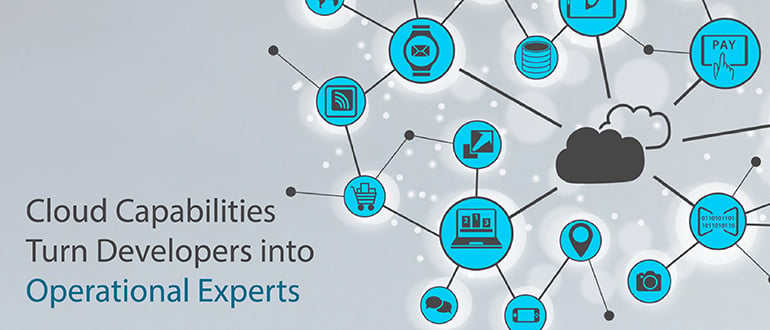
    The upside-down world of digital transformation can leave you feeling like you’ve fallen down an internet rabbit hole. If you’re a DevOps denizen, the swirling pace and scale of virtualization might give you that “lost in the Technicolor forest” feeling when it’s time to release an app into the wild. “Curiouser and curiouser!” you say as you try to sort through hybrid combinations of private and public clouds, CDNs, and data centers.

    As a developer, you worked hard on the design, build and test—now you want to make sure it takes the best, fastest path to microservices and users. It’s folly to trust the answer from any one source—synthetic measurements may purr like a Cheshire Cat over hardware health, meanwhile the White Rabbit of RUM (real user measurements) is spazzing out over latency and traffic jams. The lesson Alice finally learns in Lewis’ timeless tale? She must learn to control the journey herself.

    Developing for the Complex Cloud

    Fortunately, there’s a way for developers to mix that “just right” solution that will reveal the right path through the internet forest. This used to be the purview of operations—setting up servers and delivery conduits. In the pre-cloud era, developers just wrote code. Somebody in Ops pushed it live, and that part of the process was opaque to the developer. With the proliferation and maturation of the cloud, the Ops team is increasingly focused on dynamic infrastructure and services. Developers routinely spin up their own servers. As DevOps teams focus more on microservices and containers and less on “stacking and racking” servers, performance, control and delivery become the focus areas that matter.

    As the division between Dev and Ops experts continues to dissolve, each becomes increasingly aware of the other’s roles, responsibilities and skill sets. The goals of agile development, non-stop testing and optimized delivery become the shared destination; paths merge until everyone is creating momentum around the prized feedback loop. As infrastructure and services become more abstracted, the focus is less on writing original code and building stacks and more on selecting resources. The selection and use of these resources has to be strategically guided by real-time intelligence to meet multiple performance and business objectives. The more abstract and hybridized the infrastructure becomes—and it is moving rapidly in that direction for every business—the harder it is to navigate. If you can’t keep all your resources straight, you can’t optimize them. Centralizing and automating tracking and traffic management is mission-critical.

    The Delivery is in the Code

    Which brings us back to the developer’s mandate to control and optimize delivery from the application. Cloud-based delivery tools combine real-time user measurement with scriptable application traffic shaping and built-in cost controls. Gone are the days of blaming poor performance on the network. End users expect seamless, instantaneous experiences, no matter what. This is a tall order for modern apps that combine video, microservices and dynamic content. To ensure high quality of experience (QoE), you have to automate and optimize with software-defined delivery. Developers can now contribute to optimization by coding in delivery intelligence.

    This isn’t merely another task for the developer; it’s an opportunity. Developers are now empowered to deliver the functionality of their product or service exactly as designed. Developers are now actively part of the process that brings together global and local traffic management data (RUM and infrastructure health), application performance management and cost considerations to ensure the cheapest, fastest path to that microservice. The balance and mix of these factors can be customized and fine-tuned by the developer (a.k.a., the newly minted operations expert).

    The Bleeding Edge Becomes the Bedrock

    You know the cloud is no fairy tale when 74 percent of tech CFOs claim that this year the most measurable impact on their business will come directly from cloud computing. Spending on cloud computing is set to grow at 19 percent CAGR through 2020, six times the rate of overall IT spending. Developers who can harness the magic of hybrid cloud/CDN for video, web content and application delivery will be rock stars. Picture it: fully automated delivery based on business rules, actionable data from real user and synthetic testing, and self-healing network optimizations. Developers can push their capabilities and control right to the bleeding edge, making them an even more agile contributor to the continuous improvement cycle.

    Soon enough, as technology progresses and infrastructure is increasingly software-defined, these skills will become a requirement. Over the next few years, this data-driven approach to app and content delivery will be considered a standard capability for digital businesses and a core responsibility for developers. The forward momentum of organizations that have committed to both cloud-first and DevOps-first strategies is powerful and will quickly boost early adopting competitors out of reach. The number of developer-operators capable of managing application delivery in capacity-aware, consumer-responsive, application-tuned ways will soon build to critical mass. Don’t get left behind, wandering lost in the woods.

    About the Author / Andrew Marshall

    Andrew Marshall is the Director of Product Marketing for Cedexis, and has driven product marketing efforts at New Relic, Amazon Web Services, and Microsoft. Connect with him on LinkedIn.

  • 4 Ways to Give DevOps Teams the Support They Need

    4 Ways to Give DevOps Teams the Support They Need

    If it weren’t hard enough for IT infrastructure teams to innovate and keep the lights on, a host of technologies designed to drive efficiencies are introducing new levels of complexity across the data center. Virtualization, cloud computing, software-defined storage and digital are making it much more difficult for the infrastructure team to control, manage and administer an organization’s IT.

    Just when IT professionals think they’ve figured out the support model, DevOps steps in. As the number of apps continues to explode, more organizations are adopting a DevOps model to accelerate development efforts.  A recent Coleman Parkes Research survey of 1,770 senior business and IT executives revealed 87 percent have adopted DevOps.

    Unsurprisingly, the growing emphasis on DevOps is placing an added burden on infrastructure teams already struggling to cope with the digital transformation of their organizations. Traditional storage systems are often unable to match DevOps’ requirements for an enterprise infrastructure that is simple, flexible and automated. Some DevOps teams also work in silos, which produces an additional level of complexity and opportunities for failure.

    Also, occasional tensions between development and IT operations can flare up over different approaches to infrastructure and competition for resources.

    IT operations teams with traditional storage hardware backgrounds are normally focused on accelerated release cycles, availability, reliability and streamlined data management. Developers, on the other hand, spend little time thinking about what technology they need versus keeping test data up to date with production and having easy access to capacity when needed.

    A Support Structure That Works

    Set against this backdrop, choosing the right platform to underpin these growing changes within the enterprise cloud can play a big part in ensuring a DevOps model that works and makes life easier for the IT infrastructure team. Here are four ways to help make the enterprise cloud infrastructure fit a DevOps model:

    Copy Data Management

    Copy data management provides up-to-date, “virtual” copies of production data to the DevOps team, eliminating the need for physical data duplication. Copy data management helps remove the load on production storage and protects the performance of applications. With snapshots, cloning and replication, modern enterprise cloud systems can enable data copies. The same technologies make it possible to protect and manage the development side of the environment in case of failure or data corruption.

    QoS and Performance Guarantees

    Quality of service (QoS) and guaranteed performance is a significant concern when adopting DevOps. QoS enables IT to allocate different storage workloads to control performance. QoS can set levels of maximum and minimum input/output operations per second (IOPS) or bandwidth. IT can also configure QoS at the virtual machine (VM) or virtual disk (vDisk) level. With the power of all-flash, DevOps can be consolidated on the same platform as production. This makes it easier to access production data sets and reduce the storage footprint.

    Monitoring and Troubleshooting

    The ability to monitor the infrastructure and correct problems and misconfigurations rapidly is valuable when moving to a DevOps environment with continuous integration and continuous deployment. Ideally, the foundations of an enterprise cloud platform should provide basic and advanced monitoring capabilities, predictive analytics, integration with other monitoring tools and VM-level monitoring.

    Automation

    From an infrastructure point of view, it is also critical to provide the capability to provision and manage IT infrastructure programmatically. Automation enables organizations to create and break down environments as needed, incorporate advanced features such as snapshots and cloning as daily workflows, and eliminate the potential for error from manual or interactive configuration.

    As organizations move relentlessly to a mixture of virtual and physical, on-premises and cloud-based IT, infrastructure teams have to manage, control and administer all those resources while matching them to a diverse range of business, development and user requirements. By implementing an enterprise cloud platform that can work across physical and virtual environments, infrastructure teams can help DevOps teams achieve their goals without constraints around performance, scalability, manageability, resilience or flexibility.

    IT organizations are achieving this level of support by replicating the agility of public cloud within the data center to make it easier to manage enterprise and cloud-native applications. This approach can help support the DevOps model and ensure it is implemented with as little friction and disruption to the infrastructure as possible.

    About the Author / Chuck Dubuque

    Chuck Dubuque is the VP, Product Marketing at Tintri. Prior to Tintri, he was at Red Hat where, as director of product marketing for the virtualization business unit, he was responsible for Red Hat Enterprise Virtualization (RHEV) and Red Hat Enterprise Linux OpenStack Platform (RHEL-OSP) market strategy. Before Red Hat, Chuck worked at a value-added reseller for VMware, NetApp and Cisco and also spent several years in biotechnology in marketing and business development. Follow him on Twitter.
  • Move the Needle in DevOps with Continuous Testing

    Move the Needle in DevOps with Continuous Testing

    Shift-left testing, risk based testing, early testing and technical debt reduction are all predicted to be some of the most sought-after trends in product development life cycle. All of these can be achieved with continuous testing through DevOps, as it emphasizes quicker transitioning of quality products to production environment at a reduced business risk.

    Software Engineer in Test (SEiT) or Software Developer in Test (SDiT) was long-spoken earlier and now implemented as part of DevOps culture. As the software side of the organization moves to continuous testing practices, so, too must the product side of the organization. External market forces including competition, innovation quotient, faster time to market, scalability and lean process initiatives definitely play a role in driving the continuous testing trend.

    From a technical standpoint, test environment creation, full test coverage, regression testing and integration testing of multiple endpoints are key parameters to ensure a faultless production environment when a new feature is added.

    Adopting Testing Tools for DevOps Implementation

    Continuous testing implementation not only includes adoption of right tools and test automation, but also a cultural change to incorporate testing at each stage of the agile development life cycle. It will involve changes right from test planning, test scenarios creation, automation feasibility analysis to test execution.

    Teams need to be restructured in an agile setup to align testers closer to developers and operations teams, and have common goals for product/software delivery. This involves changing the culture and organization structure, which generally takes a longer gestation time. Test management tools such as JIRA and TestNG can help expedite this structuring, as both parties would be aware of the product features that need to be delivered and can view the progress at all times. There also are various open-source tools, including Selenium, Appium, Python robot framework/pytest and JMeter, that aptly meet the needs of agile testing.

    Regression testing generally takes up the bulk of the time, as new features need to be tested every time they are added to avoid critical failures. Hence, automating regression tests have become an imperative as part of continuous testing. JUnit, which is a unit testing framework, promotes test-driven development and early code quality improvement. Bamboo can run tests in parallel batches and support hundreds of build agents providing an early feedback to developers. Automation scripts for test data cleanup, load and execution saves the testing effort of the operations team. Selenium test automation framework for web applications is one of the most famous tools for continuous testing, as it works with a host of programming languages including Java, C#, Groovy, Perl, PHP, Python and Ruby. Appium is another tool used frequently for cross platform mobile application testing.

    Ensuring an Effective Product Release

    Testing UI components and functionality of a product through API-based test automation is another important phase in continuous testing. API test scenario creation also generally needs involvement from the ops team. Considering virtualization of devices, along with applications or services, will accelerate test setup environments. Device virtualization using Raspberry pi helps in testing end–to-end use cases in IoT scenarios. Network virtualization for performance testing ultimately helps improve uptime and reduce outages.

    The orientation of continuous testing with continuous integration and continuous delivery pipeline within an enterprise will determine the long-term success and standing of the final product in the market, from a quality perspective.

    About the Author / Urvashi Babaria

    Urvashi Babaria is a Product manager at eInfochips working in new age areas like IoT, DevOps and CloudOps. She is a techno commercial marketer with nine years of experience in product and project management, business analysis and transformation. She has keen interest in areas of data science including visualization, analytics and modeling. Connect with her on LinkedIn.


  • The Role of QA in the DevOps World

    The Role of QA in the DevOps World

    The need for faster time to market and superior quality is getting intense in the software development process. Software trends for 2017 suggest that DevOps will grow as a trend and become more widely accepted across enterprises. Organizations are reaping the benefits of DevOps approach and are incorporating the rules within every aspect of software testing. A case in point: DevSecOps—security testing integrated with DevOps—is an emerging concept and is being considered by enterprises to execute application security testing.

    The underlying objectives of adopting DevOps are to make the testing and development process more collaborative, ensure software quality and to help launch the product faster to the market. This makes quality assurance (QA) a key component in the DevOps methodology. New-age applications need real-time changes and updates to meet the growing demands of the consumer. This requires continuous testing, continuous development and continuous delivery/deployment. DevOps enables teams to constantly upgrade and deliver.

    In 2016 a number of enterprises adopted DevOps. According to industry experts, 2017 will see more defining moments for DevOps. The idea of accepting DevOps is to consider a cultural shift and not just a technical shift. As digital transformation expert Jeff Sussna says about DevOps, “The key to following the continuous delivery path is to continually question your own assumptions about what’s possible.” Currently, DevOps is on the route of being questioned and defined at every level. It will result in bringing more value to the methodology.

    Every enterprise and its style of working differs. The way they would adopt DevOps will differ, too. But digital transformation and the need to be available for customers all the time with new updates is transforming the way enterprises adopt new practices and methodologies. Every enterprise has to evolve in a sustainable manner, so quality is at the core of every practice, including DevOps.

    Why is QA Integral to DevOps?

    In the DevOps scenario, QA integrates into the testing and development process and takes the collaborative approach. Quality is ensured throughout the testing and delivery cycle and both the testing and development teams are responsible for it. In the traditional pattern, quality creeps in toward the end, but with DevOps it comes in at every level.

    In terms of code development, the QA team pushes the new development code into production and DevOps facilitates to ensure a seamless deployment of infrastructure and tools. Thus, it helps in releasing a code on a consistent basis and the responsibility to ensure quality is not just limited to killing the bug; it is built in the overall application release.

    In the current scenario, hourly releases are required to meet the demands of the consumers and deal with competition. Web/mobile applications such as an ecommerce or financial services application need to be updated frequently. It is a key business requirement. DevOps helps to make this possible, but with QA involved, the quality of the release is ensured. Moreover, with DevOps, the reality check can happen in real time rather than taking the code offline and testing it.

    On the whole, the popularity of DevOps over the years has intertwined quality into every engineer’s responsibility, which is a positive sign. This helps in addressing the needs of the market and ensure that customers do not suffer. QA further enables and directs teams to check the application for performance and quality before it is delivered.

    The role of QA in the current software development process is changing, where the customer comes into focus and the needs of the customer are brought into perspective while delivering the application. Releasing new and functional builds at any point through the application’s life cycle can become a disaster if quality is not ensured constantly. Automation of tests plays a critical role to guarantee quality and bring speed.

    Building a QA strategy with the necessary best practices is essential for organizations that are embracing the DevOps movement. This will help in delivering effective software development and operations to achieve user experience. DevOps practices are adopted to improve the regularity of the releases and reduce the defects. It is a methodology that boosts rapid, short, iterative development and deployment of applications.

    So, the idea of incorporating QA is to ensure continuous improvement in the delivery process. DevOps helps digital enterprises to meet the needs of the competition and enable overall business growth. As a result, enterprises are able to streamline and pace up the delivery of applications with changes and innovation.

    Best Practices for Incorporating QA in DevOps

    The key aspect to consider while merging QA with DevOps is that the QA and testing teams must team up with the technical teams. In this way QA becomes an enabler for ensuring quality in the software development cycle. In addition, it is important to define tangible aspects of the quality that are expected from the project/application. This helps in achieving results within stipulated time frames.

    Putting down the quality metrics is absolutely critical in DevOps, which helps teams to identify bugs early in the development cycle. Defining the metrics also enables teams to integrate them within the organizational culture at various levels. In this way, quality is ensured at every level and development teams also get enabled.

    The idea of DevOps is to make the developer think in line with testers and constantly check the code for potential errors. On the other hand, a tester who holds the responsibility to test the application/software with various testing tools and methodologies also needs to fix the code. In this way, enterprises with an inadequate QA or testing strategy cannot ensure continuous testing and continuous delivery.

    In Conclusion

    The application scenario is changing and it is getting very complex. DevOps can speed up the development, but what can you expect without a robust QA strategy? QA is absolutely integral to the DevOps process. Continuous development and delivery is impossible without a comprehensive QA/testing strategy.

    This blog has been drafted in collaboration with Cigniti Technologies, an independent software testing company. Click here to read more blogs on DevOps.

    About the Author / Komal Lopez

    Komal Lopez works with Cigniti Technologies and is instrumental in helping enterprises take better decisions related to Quality Assurance products, tools and services by leveraging research and content. She specializes in writing about technology trends, testing trends and has been in the Marketing and Communications industry for over a decade. Connect with her at komal.lopez@cigniti.com