Tag: value stream management

  • Plutora Dives Deeper into Value Stream Analytics Data

    Plutora Dives Deeper into Value Stream Analytics Data

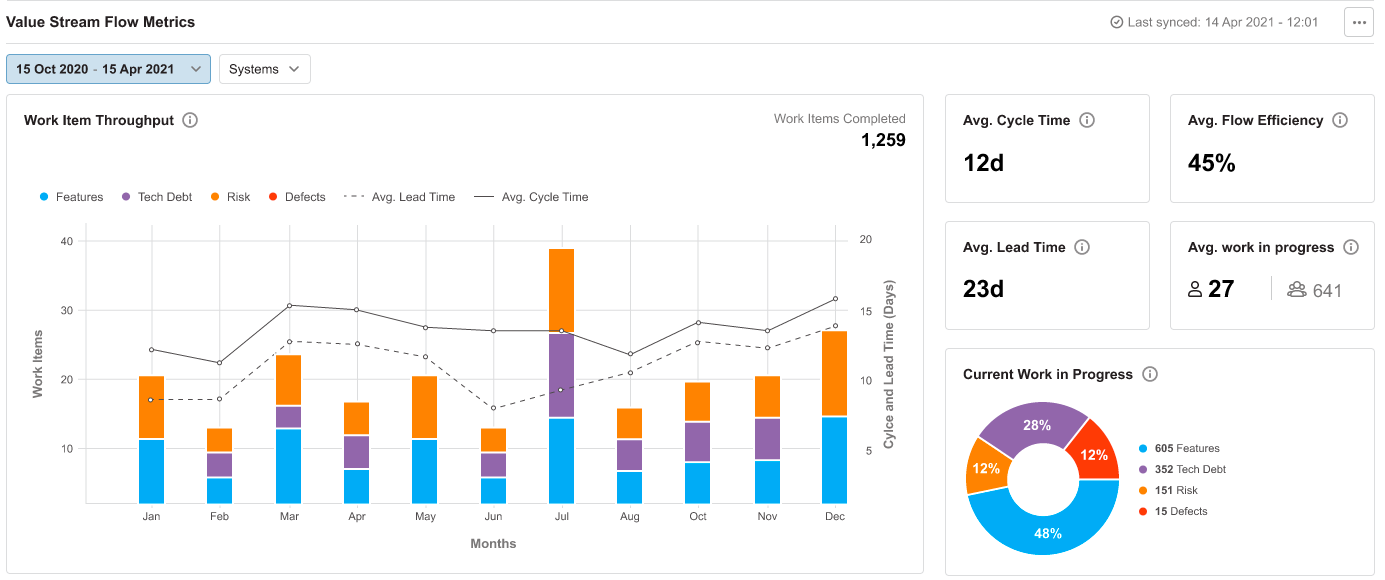
    Plutora announced today it has extended the capabilities of its value stream management (VSM) platform to include a common object data model that more efficiently normalizes data collected from multiple DevOps tools and platforms.

    Jeff Keyes, vice president of product marketing and strategy for Plutora, said the goal is to expand the level of scale and depth at which the Plutora analytics engine embedded within the Plutora Platform can analyze flow metrics.

    VSM has emerged as a distinct DevOps discipline that provides a framework for enabling organizations to optimize workflow across DevOps environments in a way that allows them to accelerate application development. The core concept traces its lineage to lean manufacturing methods that continuously measure each step of a process to improve production.

    As organizations develop a deeper appreciation for their dependency on software, the level of interest in understanding how software is constructed has increased. Organizations, for example, want to better understand the impact of missed software development deadlines on revenue, which a business might not be able to generate as quickly as anticipated.

    Plutora is making a case for a dedicated analytics platform that pulls data from multiple platforms. Alternatively, more value stream analytics capabilities are now being embedded in everything from project management software to continuous integration. Plutora contends, however, that navigating multiple value stream dashboards surfaced by different tools that make up a DevOps workflow is not as simple or effective as relying on a single platform that collects data from every tool employed.

    Metrics that track lead and cycle times for projects as well as overall throughput become much easier to surface and comprehend, noted Keyes.

    One way or another, more transparency is coming to DevOps workflows. Historically, collecting this data has been challenging because it required DevOps teams to manually collect data from each tool being used. In effect, DevOps teams were wasting time copying and pasting data from one tool into an analytics application.

    As it becomes simpler to aggregate all that data, the data model provided by Plutora makes it simpler for multiple analytics tools to analyze the same data. A business user, for example, may prefer to analyze data using the Tableau analytics platform that is now owned by Salesforce.

    In general, analytics is being applied more widely across software development processes because organizations need to increase productivity while simultaneously reducing costs. It will be up to each organization to decide to what degree they may want to use that data to better train DevOps teams versus simply using it to remind those teams to stay focused on a specific set of key performance indicators (KPIs).

    In the meantime, the number of requests for reports being made to DevOps teams should decline as the process of collecting metrics becomes more automated. The challenge now will be making sure everyone reading those reports has the same firm understanding of what’s actually possible to achieve using not only the resources at hand, but also how any additional DevOps expertise might positively impact that equation.

  • GitLab Updates Approach to Integrating DevOps Workflows

    GitLab Updates Approach to Integrating DevOps Workflows

    GitLab today took the wraps off a major update to its continuous integration/continuous delivery (CI/CD) platform that embeds analytics tools in workflows to identify the root cause of inefficiencies, among other additional capabilities.

    David DeSanto, senior director for product management at GitLab, said that capability is part of an ongoing effort to include value stream analytics within the core GitLab 14 platform as an alternative to acquiring and deploying a separate platform. There are also additional charts and dashboards that enable DevOps teams to uncover bottlenecks over time.

    In addition, GitLab announced it is extending the security capabilities of the platform by adding integrations with open source Semgrep and Trivy vulnerability scanning tools as part of an effort to enable organizations to embrace DevSecOps best practices within workflows. GitLab has also added support for the fuzz testing tool it gained via the acquisitions of Fuzzit and Peach Tech to enable DevOps teams to test application security more thoroughly along with making available additional dashboards to track security metrics.

    As part of an effort to enable organizations to better secure their software supply chains, GitLab has also added support for immutable pipeline definitions that can’t be altered without specific levels of permissions being granted. That capability also enables DevOps teams to more easily achieve compliance with any number of regulatory frameworks, noted DeSanto.

    The company is also adding a pipeline editor that provides access to a visual tool for creating, managing and visualizing pipelines. That tool is designed to both make DevOps more accessible to novices and provide experienced DevOps teams with an alternative tool for managing pipelines in a way that doesn’t require them to write additional code.

    Finally, as part of its comprehensive approach to DevOps, GitLab is also making available agent software for Kubernetes clusters to eliminate the need for organizations to acquire a separate DevOps platform to build and deploy cloud-native applications based on microservices constructed using containers. The company now provides IT organizations with the option of crafting a GitOps workflow for Kubernetes using either an agentless or agent-based approach.

    Gitlab is betting that, as DevOps continues to evolve and mature, more organizations will prefer to replace the various tools they need to integrate themselves with a platform that lowers the total cost of DevOps. Gartner is forecasting that, by 2023, 40% of organizations will have switched from multiple point solutions to a DevOps value stream delivery platform to streamline application delivery, versus less than 10% using such a platform in 2020. Today, only 10% of organizations are employing such a platform, according to Gartner.

    There should also be many more organizations employing DevOps workflows to build applications. Organizations of all sizes now realize how dependent they are on software to drive a wide range of digital business transformation initiatives. The rate at which that software can now be securely developed and updated, in many cases, goes to the heart of their ability to compete. The issue is finding a way to achieve that goal without constructing a platform that ultimately takes time and resources away from building secure software.

  • Broadcom Adds VSM Platform to DevOps Portfolio

    Broadcom Adds VSM Platform to DevOps Portfolio

    Broadcom Inc. today added a dedicated value stream management (VSM) application to its portfolio of DevOps offerings as part of an effort to make it simpler to prioritize software development initiatives.

    Serge Lucio, vice president and general manager for the enterprise software division of Broadcom, said that while the company has previously provided VSM capabilities within its tools this addition to its ValueOps portfolio marks the first time Broadcom is making available a complete VSM application.

    The offering is unique because it combines the IT investment capabilities found in the Clarity project management software provided by Broadcom with the Rally platform for managing agile software development processes, added Lucio.

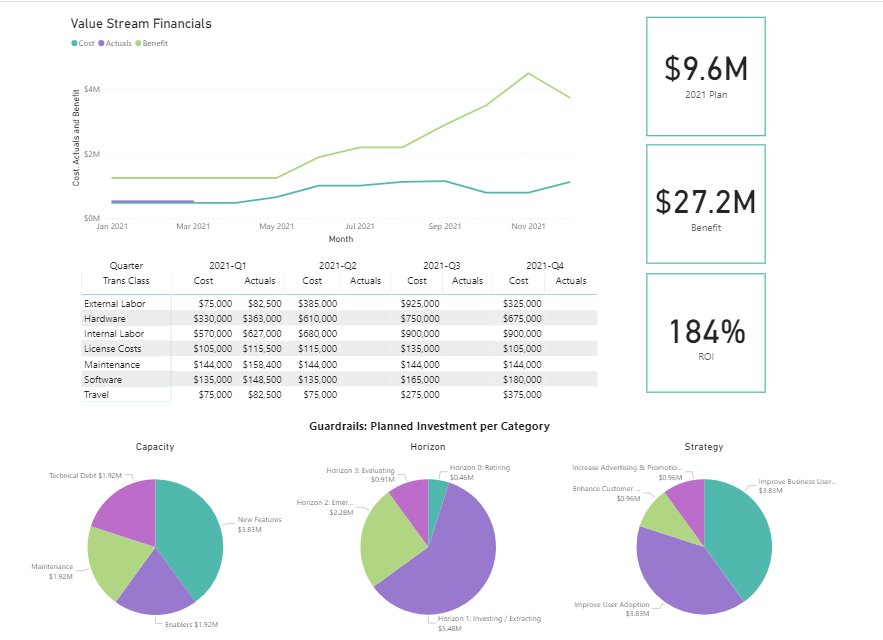
    In comparison, other VSM offerings don’t provide the same level of depth in terms of connecting software development projects to actual financial costs, noted Lucio. The Broadcom platform, for example, in addition to surfacing dependencies between software projects and potential developer capacity issues, also enables IT organizations to forecast the impact changes to funding will have on software development projects, said Lucio.

    In fact, Lucio noted that tracking code as it is developed is relatively easy. Surfacing the financial implications of software development projects requires an additional level of analytics not found in rival VSM offerings, he said.

    VSM, as a concept, traces its roots to lean manufacturing methods, which called for each step of a manufacturing process to be continuously measured. As software development has evolved from being a craft to a process that is automated as much as possible using DevOps best practices, an appreciation for the value of monitoring the impact of missed software development deadlines on the business is growing as organizations realize how dependent they now are on software to achieve business goals. A VSM platform aggregates technical metrics gathered from DevOps workflows and then maps them to key performance indicators (KPIs) defined by business leaders. Once those KPIs are defined it then become possible to apply advanced analytics to assess the financial impact changes to software development schedule will have on the business.

    In general, Lucio said organizations are evolving their approach to software development as they embrace digital business transformation. Rather than managing individual software development projects in isolation, organizations are now managing software development in much the same way they manage product development. As a result, a collection of related software development projects are now being managed in a way that better aligns to the strategic business initiatives, he said.

    It’s not clear at what rate organizations are adopting VSM platforms, but as the number of stakeholders in an organization that have a vested interest in software development increase there is a need for tools that enables those individuals to more easily track processes in a way that doesn’t depend on them mastering the project management application employed by the software development team.

    Regardless of approach, the appreciation of software development in organizations has never been greater. That same increased appreciation, naturally, is creating a level of anxiety among business leaders that need to make decisions that impact the entire organization based on processes that today they often have limited visibility into much less actual understanding.

  • Digital.ai Deepens Value Stream Management Integration

    Digital.ai Deepens Value Stream Management Integration

    Digital.ai announced today it has expanded usage of machine learning algorithms within its namesake value stream management (VSM) platform to include modules to optimize flow and improve application quality in addition to enhancing its risk prediction and process optimization modules.

    In addition, Digital.ai has expanded the number of pre-built integrations it now provides for hundreds of DevOps tools and platforms.

    Derek Holt, general manager of agile and DevOps for Digital.ai, said the goal is to expand the bi-directional flow of data between the core Digital.ai platform and modules and tools provided by the company and its third-party DevOps partners.

    Digital.ai was formed from the merger of XebiaLabs and CollabNet VersionOne. The combined company has rolled up Numerify, a provider of analytics tools infused with artificial intelligence (AI), Experitest, a set of testing tools and Arxan, a provider of an application security platform. With the latest release, these capabilities have been integrated into the core Digital.ai platform in a way that goes well beyond merely providing access via a common user interface, said Holt.

    The goal is to provide organizations with a VSM platform through which better decisions can be made to optimize software development and delivery by first collecting data from all the DevOps tools employed and then using machine learning algorithms to surface optimization recommendations, noted Holt. As application development environments become more complex to manage, it’s already apparent that most IT teams will require AI capabilities embedded in a VSM platform to manage interdependent projects, noted Holt.

    Armed with those recommendations, it becomes simpler to reallocate resources in the event a critical project is going to be completed later than planned or shift resources to make sure that project is completed on time. A VSM platform also enables IT organizations to assess the impact those decisions will have on the rest of the business at a time when organizations have never been more financially dependent on the timely delivery of software. The late delivery of a single application module can wind up having a profound impact on revenue projections for organizations that increasingly rely on digital processes to engage customers.

    A recent survey conducted by Digital.ai found that many digital transformation initiatives are struggling, to some degree. Nearly half of respondents (49%) said they are not seeing the results they expected from their digital transformation efforts, and 54% admitted they were worried about their ability to compete. Over 90% need to see a better return on their digital transformation investments.

    Digital.ai claims it currently has more than 1,200 customers, including Allianz, Commerzbank, eBay, Janus Henderson and Levi’s that are using elements of the Digital.ai platform to better manage software development projects. Many of the users of those tools now include business executives and other application stakeholders that are employing a VSM platform to track the progress of application development projects. Digital.ai Analytics Lenses that are domain-specific make it simpler for different classes of end users to access pre-built dashboards and metrics, noted Holt.

    The market research firm Gartner has predicted that 70% of organizations will employ a value stream management platform by 2023 to improve flows across their DevOps pipelines. However, as DevOps platforms and project management applications continue to evolve, many are also adding many of the analytics capabilities found in a VSM platform. Each IT organization will need to decide which approach makes the most sense for them, but Digital.ai is clearly betting that as application development becomes more challenging, the need for an integrated VSM platform will become much more apparent.

  • Atlassian Extends Open DevOps Ambitions

    Atlassian Extends Open DevOps Ambitions

    At an online Atlassian Team 2021 event this week, Atlassian launched a two-pronged effort to provide organizations with more insights into software development workflows constructed using tools from multiple vendors.

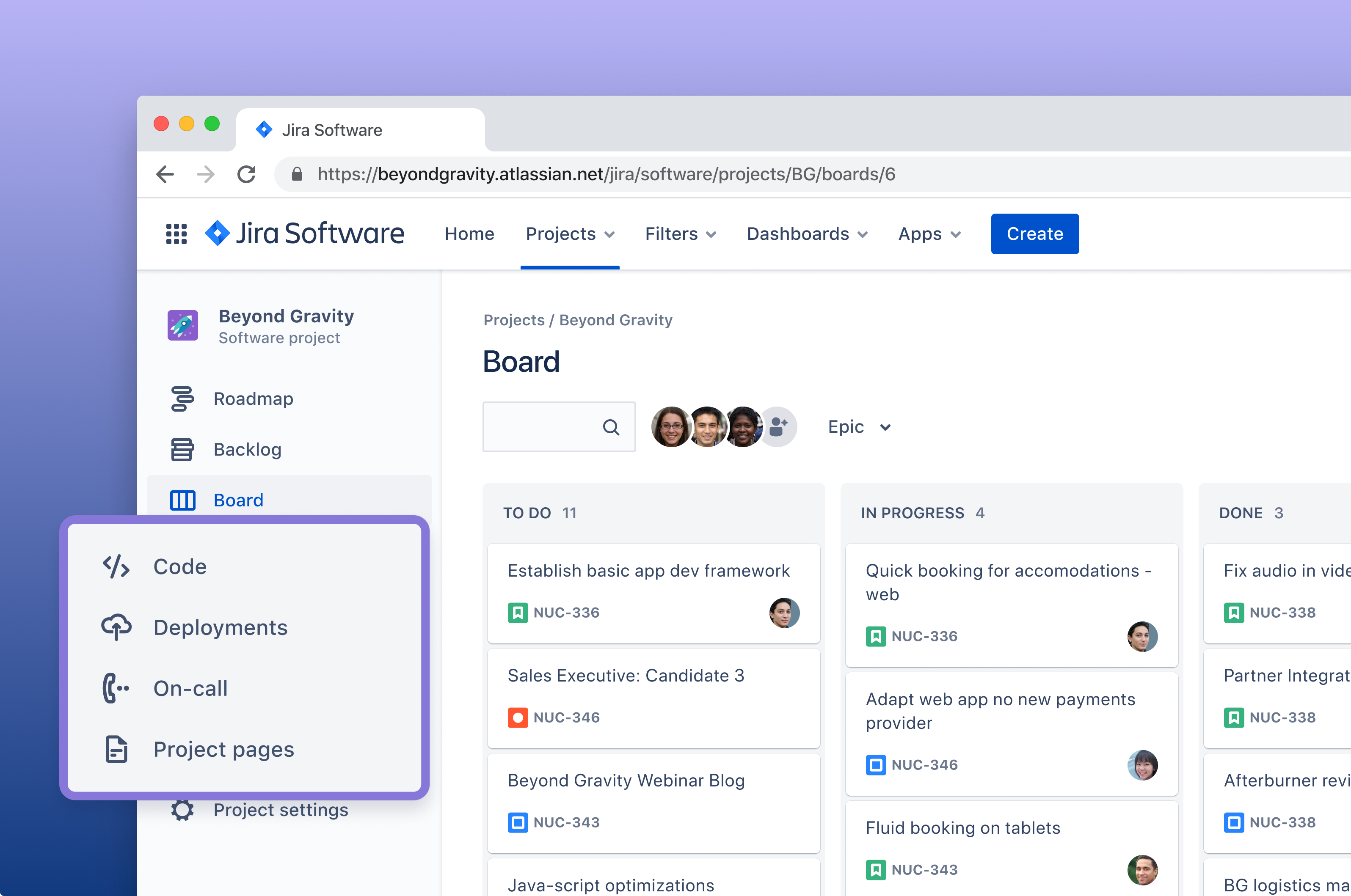
    Suzie Prince, head of product for Atlassian, said an Open DevOps initiative will tighten integration between the Jira project tracking and management tools provided with Atlassian and a wide range of tools commonly employed by DevOps teams. The goal is to not only make it easier to correlate issues that are listed in Jira with artifacts found in various software platforms, but also to collect data from DevOps tools to automatically update Jira.

    That data will then be employed to inform the key performance indicators (KPIs), based on graphs that Atlassian provides within Jira, to keep track of value streams. Rather than having to acquire a separate value stream management (VSM) platform to track software development progress, the insights needed to understand the impact of, for example, a delay to one project becomes a dividend of using Jira.

    At the same time, Atlassian is moving to making it easier for other stakeholders in an organization to track software development projects. A Jira Work Management application is specifically designed for business users that require a higher-level tool to track projects. At the same time, Atlassian revealed this week it has acquired ThinkTilt, a provider of low-code application development tools optimized for Jira.

    Atlassian for the first time this week revealed that half of Jira users are not software developers. As organizations increasingly appreciate the degree to which they are now dependent on software to drive digital business transformation initiatives, Atlassian is adding a set of project tracking applications designed specifically for users that need to consume Jira data in a more intuitive fashion.

    Prince said Atlassian is committed to making it simple to replace one DevOps tool integration for another with a single click. Rather than requiring organizations to standardize on a single DevOps platform, Prince added that developers will be able to continue to rip and replace tools and platforms as they see fit without compromising visibility into application development workflows.

    In addition, the integrations being provided by Atlassian will reduce the time and effort required to configure all the tools that make up a DevOps workflow, from roughly 60 steps today to about six.

    As DevOps workflows become more pervasive, the way organizations operate is fundamentally changing. Formal product launches are giving way to a steady stream of software updates that add new capabilities to any platform with little to no fanfare. End users ranging from sales teams to custom support personnel now need to track updates to platforms more closely as new capabilities are continuously added.

    Of course, not every organization has the same level of maturity. However, as competitors start to add new features to rival offerings, it is now only a matter of time before most business processes – that increasingly revolve around software updates – begin to evolve and change. As the pace of software development continues to accelerate, the pressure on legacy business processes will only continue.

  • Seeing the Bigger Picture With BizDevSecOps

    Seeing the Bigger Picture With BizDevSecOps

    Not long ago, if you can believe it, software was shipped on physical floppy disks and CDs. These physical relics contained dense paper instruction books that humans read diligently for hours on end (I guess they had more time to spare back then?). Complexity was a given for computer-based tasks.

    Fast forward past the consumerization of IT to 2021, and you’ll find extremely high standards for technology. End users now expect intuitive apps with instant end value and 100% uptime. If they don’t receive gratification within minutes, they’re likely to trash it.

    In the race to meet digital innovation demands, software companies are increasingly tapping new strategies to deliver iteratively. Thus, disciplines like DevOps, DevSecOps, low-code and SRE have flourished. But are we adequately considering the end value of that work? Some feel business leadership needs a larger seat at the table and more input: enter the newest iteration of these disciplines, BizDevSecOps.

    I recently met with Gregg Ostrowski, CTO at AppDynamics, to discuss how to introduce BizDevSecOps in an organization. For Ostrowski, it boils down to having full-stack observability to connect application performance, security threats and revenue generation. Only by democratizing access to important metrics and identifying runtime weaknesses can business outcomes truly drive production.

    Full-Stack Observability

    Within our new pandemic-first reality, all organizations are amplifying their use of digital services to interact with customers. However, software teams are struggling to keep pace in this new environment — 89% of technologists report feeling under tremendous pressure at work, the Agents of Transformation 2021 report found. This strain has only increased as IT complexity soars amid the pandemic — 83% felt their job became more complex over the past year.

    IT staff is under mounting pressure to perform, and they may not have the correct elements in place to support elegant and profitable applications, said Ostrowski. When it comes to monitoring, in particular, alert fatigue could especially hamper innovation attempts and make it difficult to know what to prioritize.

    Instead, Ostrowski advocates for letting tangible business outcomes, such as conversion rates and performance, drive development. To correlate the impact on revenue more directly, he encourages “giving business leaders a seat at table during the entire CI/CD pipeline.” One aspect to roping in business, security, development and operations is unified observability across the entire stack.

    The Pendulum Swings

    But wouldn’t it be challenging to give business leaders a seat within a technical software delivery process? Well, this wouldn’t be the first time business has directed technological change.

    Ostrowski recalls the mid–2000s and the dawn of the mobile market. During this period, IT became consumerized for laypeople, with glossy apps and impressively intuitive experiences. He recalls a general loss of faith in IT staff, as workers often had “better tech at home than they did in the office.” This drove business leaders to invest heavily in modernizing their companies.

    In the following years, cloud solutions quickly re-empowered IT with new computing models, emboldening them to compete using the same tools as tech companies. However, simple deployments using a single server quickly morphed into arranging multiple workloads on various cloud service providers (CSPs). Virtualization, serverless and microservices architectures also brought novel complexities into the stack.

    “The IT staff is being asked to do jobs they’ve never done before,” Ostrowski said. He explained that SREs, for example, must understand networking, infrastructure and security — a vast portfolio for a single person and role. Supporting many disparate paradigms is simply beyond the scope and scale of what a single person can do, meaning new automation must be constructed — because “if you’re too busy debugging, you can’t innovate,” says Ostrowski.

    Amid mounting complexity and the burden of rising cloud costs, it appears business leaders again have a role in directing and prioritizing technological efforts.

    Getting Busy With BizDevSecOps

    According to Ostrowski, connecting IT and business with BizDevSecOps all hinges on collaboration. “If you don’t get to a point where you can collaborate with all these pillars, you’ll degrade your business,” said Ostrowski.

    BizDevSecOps also could help connect the dots to comprehend anomalies. For example, suppose a commerce application is experiencing a 15% conversion rate, but it drops to 7% after an upgrade. In this scenario, collaboration is crucial to identify usability bottlenecks in production and adjust accordingly.

    Tracking business outcomes can align development around improving the user experience. If broken features are hurting conversion rates, all stakeholders need to know to adjust accordingly. “User experience is the golden gem,” said Ostrowski.

    Other benefits of a BizDevSecOps approach may include:

    • Correlating activity and revenue: Ensuring spikes of activity are associated with revenue generation and not attacks or faulty instances.
    • Workload optimization: Monitoring business outcomes can help adjust the scope and size of machines as needed.
    • Before and after: Comparing financial results before and after migrations, new versions or new feature additions.
    • Postmortems: Pinpoint and correlate data when conducting postmortems.
    • Progressive delivery: A more rapid release frequency helps a business retain agility and pivot when needed.

    Visibility Enables BizDevSecOps

    DevSecOps is now a common philosophy — it promotes development with security baked into the application. Now, BizDevSecOps could be the next iteration; a collaborative approach that considers additional perspectives. BizDevSecOps is a vital method to “continue to build trust and collaboration so everyone has a seat at the table,” said Ostrowski.

    Ninety-six percent of technologists agreed that monitoring the entire IT stack to connect technical performance to business outcomes will be important in 2021, the Agents of Transformation Report found. To enable this, business, security and development must inevitably de-silo. According to Ostrowski, adopting BizDevSecOps depends on a window into performance management and business intelligence, because “when changes happen and no one knows about it, it’s a serious problem,” he added.

  • Survey Finds Digital Transformation Outcomes in Doubt

    Survey Finds Digital Transformation Outcomes in Doubt

    The COVID-19 pandemic forced organizations, both large and small, to either launch or accelerate digital business transformation initiatives that, to varying degrees, depend on their level of DevOps acumen to succeed. Value stream management platform provider Digital.ai today published the results of a survey of 200 IT decision makers, 200 security decision makers and 200 business executives in organizations with at least 500 employees which suggests that, while there’s a lot of confidence in those initiatives, the business outcomes those efforts are intended to enable are still very much in doubt.

    The survey finds 95% of respondents believe their digital transformation initiatives are going well, with 22% reporting they have been completed. Just under a third (32%), however, said they still have a lot to accomplish. Just under half (49%) said they have yet to see the results they expected. In fact, more than half of respondents (56%) also noted they are concerned about the return on investment (ROI) of those initiatives.

    Overall, the survey suggest optimism continues to prevail. A full 92% of respondents said they are creating new value for the business, with 93% claiming the business as a whole remains competitive. However, more than half (57%) are concerned that business, IT and security goals might be misaligned. More than half (54%) are concerned about meeting customer needs. Nearly two-thirds are concerned about software vulnerabilities.

    More challenging still, 94% of respondents need software development and delivery to be better aligned to business objectives. Only 54% claim to be strategically aligned. Almost every respondent (99%) needs more visibility into business planning processes, with just over a third (34%) noting they are not especially good at attaining that visibility.

    Not surprisingly, a full 91% said they still need more time to work on their digital business transformation initiatives.

    Derek Langone, head of strategic transformation for Digital.ai., said the survey makes it apparent there is a much greater need for a set of key performance indicators (KPIs) for IT teams that are tied to specific business objectives. As organization of all sizes realize how dependent they have become on software, any delay can have a major impact on revenue and profitability projections, noted Langone.

    Of course, not every digital business transformation project is going to succeed, no matter how optimistic business and IT leaders may be. Many initiatives were hastily conceived during the early days of the pandemic. Others were simply accelerated without enough due diligence. Digital.ai is making a case for a value stream management (VSM) platform that enables organizations to first understand the true status of these projects by synthesizing all the data residing in various DevOps platforms, and then assessing the impact any delays might have on the business.

    It’s not quite clear how many organizations have managed to get as far as they have without at least some VSM platform equivalent. However, as software development continues to become more complex, it’s also apparent that without a VSM capability, the odds various digital business transformation initiatives currently underway will eventually be derailed are substantially higher than many IT and business professionals would like to admit.

  • Tasktop Adds Dashboard to Surface VSM Insights

    Tasktop Adds Dashboard to Surface VSM Insights

    Tasktop today unveiled a dashboard that it promises will simplify tracking of key performance indicators (KPIs) spanning multiple projects.

    In addition, the value stream management (VSM) platform provider revealed it has garnered an additional $100 million in funding.

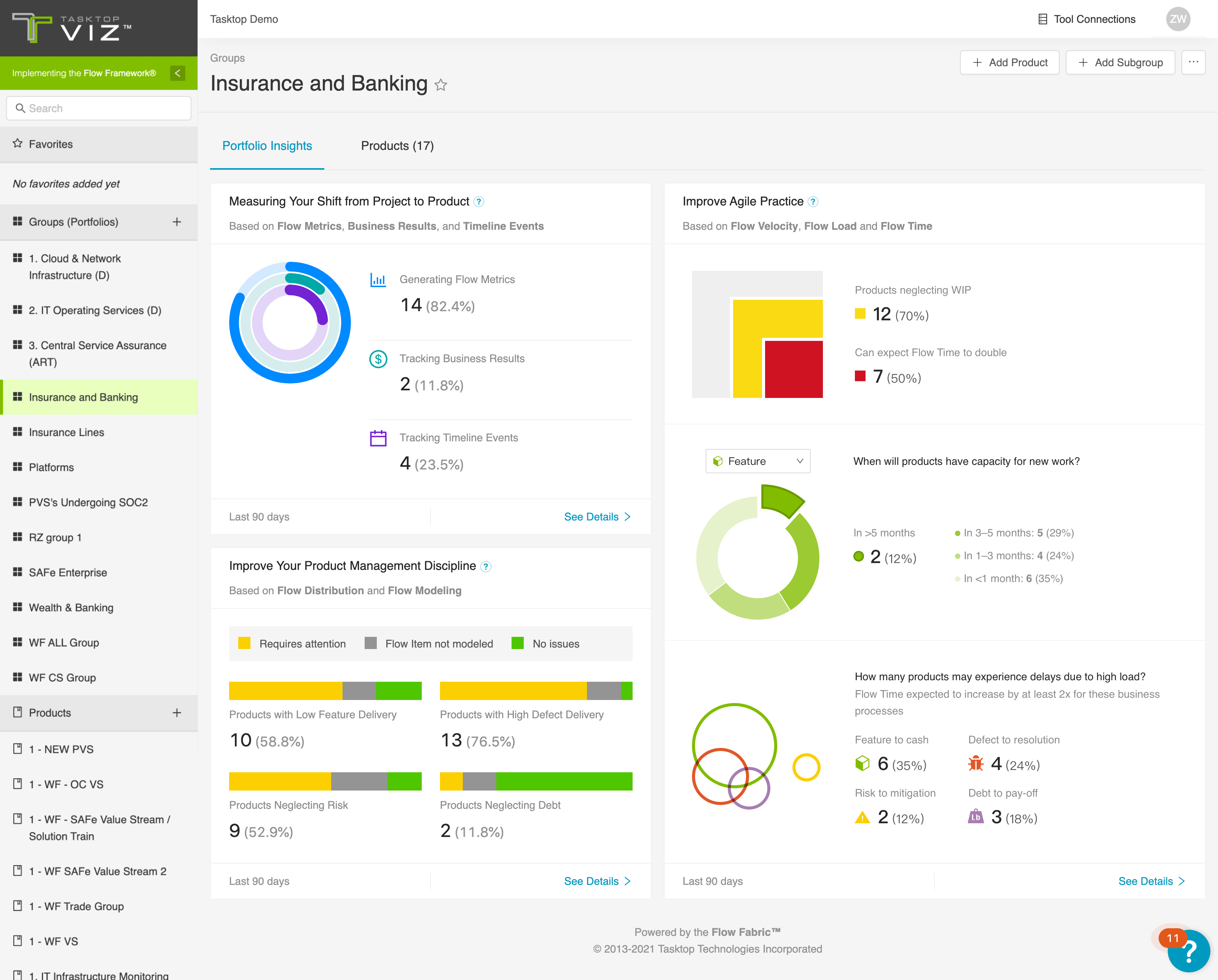
    Tasktop CEO Mik Kersten said the Tasktop Viz VSM Portfolio Insights dashboard makes it simpler to surface the insights that the company’s VSM platform aggregates as it collects metrics and analytic data from the tools and platforms that make up a DevOps workflow.

    Organizations are then better able to determine the impact any change to the rate at which an application is being developed will have on the business, noted Kersten. IT and business leaders can also more easily identify how constrained resources or persistent quality control issues might be adversely impacting those business goals, added Kersten.

    As a DevOps discipline, VSM is still relatively new. However, Tasktop claims more than half of the Fortune 100 employ its VSM platform. Customers include BMW, CGI, E*Trade and T-Mobile. Despite the economic downturn brought on by the COVID-19 pandemic, the company reports it saw a 30% increase in revenues driven mainly by organizations that have accelerated multiple digital business transformation initiatives. A recent Forrester Consulting Total Economic Impact Study indicated organizations realize a potential 640% return on investment over a three period after implementing the Tasktop VSM platform.

    Tasktop is also a founding member of the Value Stream Management Consortium, which is seeking to promote adoption of VSM platforms to close the divide that often exists between individual DevOps projects and the strategic business goals of an organization.

    The concept of value stream management traces its lineage back to lean manufacturing methods, which called for each step of a manufacturing process to be continuously measured. As software development has evolved from being a craft to a process that is automated as much as possible using DevOps best practices, the need to monitor the impact of, for example, missed software development deadlines on the business has become more acute as organizations appreciate just how dependent they are on software.

    VSM platforms automatically take technical metrics, gathered via a DevOps process, and match them to a set of key performance indicators (KPIs) defined by business leaders. The challenge many organizations still face is, first, making sure they have the tools in place to collect the appropriate technical metrics and then identifying the KPIs that truly matter to the business. Once those metrics are gathered and KPIs established, organizations are able to apply advanced analytics to optimize allocation of resources that include people, platforms and processes, noted Kersten.

    It may be a while before VSM becomes pervasively applied with organizations. However, those organizations that find a way to consistently deliver quality applications, on time, that have a greater impact on the business will inevitably start to outperform rivals. The challenge and the opportunity is to bring a level of discipline to bear that ensures that goal is always achieved.

  • Why a Unified Enterprise DevOps Platform is Necessary

    Why a Unified Enterprise DevOps Platform is Necessary

    As a senior DevOps consultant working with large organizations over many years, I have been involved in more than 70 digital transformation projects, with hundreds of applications. While many things have changed over time, one thing has been a consistent source of problems that presents a formidable impedance to these transformations. The diverse number of DevOps platforms and tool variants used in those platforms results in a chaotic software delivery environment. From the point of view of any one application, almost any choice of DevOps platform and toolchain is fine, to an extent. But when you stand back and look at the larger picture, an enterprise with many variations of DevOps platforms and tools is at best chaotic; at worst, it is a gross impediment to overall organizational agility – which undermines the very purpose that DevOps is meant to serve.

    I relate to the quote “You don’t need another CI/CD automation tool. You have too many already.” The aggregate set of platforms and tools is like a Frankenstein’s monster with many incompatible parts resulting in an awkward looking product that is hard to control, replicate and evolve.

    DevOps Platform Blockages

    Success with DevOps requires frictionless interplay between the people, processes and technologies that need to cooperate for continuous deliveries to happen effectively. All three of these factors are impacted when an organization has too many variants of DevOps platforms.

    People factors – It starts with leadership. Business leaders want to leverage the values of continuous flow of software improvement made possible by DevOps. However, the flow is bottlenecked when the services of the organization must be delivered through a disparate combination of unconnected pipelines, each with separate processes to monitor, manage, troubleshoot and maintain.

    Process factors – Continuous delivery works because the DevOps platforms enable automation of processes to remove bottlenecks in flow. Process management and improvements are seriously slowed down when the details of automating the orchestration, execution and monitoring for software version management, integration, testing, security assurance and deployment processes are not standard between different DevOps platform variants.

    Technology factors – Often application development teams have their own favorite DevOps platform and a chosen set of tools. However, when application development teams in the same organization choose different DevOps platforms and tools, sharing knowledge, process data and practices becomes difficult. These incompatibilities slow down the overall evolution of continuous delivery for the organization.

    Requirements for a Unified DevOps Enterprise Platform

    Culture barriers, process problems, and DevOps platform “wars” are factors impacting the progress of digital transformations. A new unified enterprise DevOps platform would accelerate time-to-value and realize efficient, safe operation for digitally transforming enterprises and organizations. The following are general requirements for a unified enterprise DevOps platform.

    ● A new unified approach that supports end-to-end capabilities for continuous delivery of software, as a managed service, for multiple streams of pipelines is needed.
    ● Unified capabilities should include visibility, orchestration, integration, security, compliance, governance, traceability and management of flow for application value streams across multiple pipelines.
    ● Businesses need unified metrics that show business value, costs of the value stream and timing for end-to-end continuous delivery flow across multiple pipelines.
    ● A new unified approach is necessary to simplify and accelerate toolchains that support new cloud-native and cloud-adapted applications, infrastructures, machine learning, commercial off-the-shelf and open-source software.

    What This Means

    Digital transformations are an imperative for modern enterprises and organizations to remain competitive. However, the transformations of many enterprises and organizations are being seriously impeded by having too many DevOps platforms and tools. A new unified enterprise DevOps platform is needed to resolve the technical problems of broken, leaky, “Frankenstein” toolchains and processes.

  • Ambassador Insights: Value Stream Management

    Ambassador Insights: Value Stream Management

    Value stream management is the next critical evolution for enterprises and organizations that want to further mature their efforts toward smart, efficient and effective software development and delivery. The need for ongoing software innovation and delivery is becoming a top priority for all businesses today, thanks to the new digital demands organizations are facing from their employees and customers.

    Value streams help ensure that software and services under development deliver on the promise of value for employees or customers. But it’s not as easy as it seems; plenty of enterprises still struggle to know exactly what value is being derived from their software development efforts.

    In our third episode of Ambassador Insights we talk with DevOps Institute ambassadors Siddharth Pareek, the Global DevOps Center of Excellence Leader at NatWest Group; Garima Bajpai, the founder of Canada DevOps Community of Practice; and Steve Pereira, founder of Visible, about how value stream management can help enterprises on the next step of their software development journey.

    The video is below, followed by a transcript of our conversation. Enjoy!

    Transcript

    Charlene O’Hanlon: Hey, everybody, welcome back to TechStrong TV. I’m Charlene O’Hanlon, and I am here now with a group of very, very smart people in the value stream management space. They are part of the DevOps Institute Ambassadors, and they are here for our monthly installment of the DevOps Institute Ambassadors Insights Panel Discussion.

    This month, the topic is on value stream management, so like I said before, these guys are experts in the field, and I’m sure we’re gonna get some really insightful information from them. Thank you, all three of you, for joining me today.

    We have Siddharth Pareek, who is the Global DevOps Center of Excellence Leader at NatWest Group. Siddhartha, thank you so much for joining me today.

    Siddharth Pareek: The pleasure’s all mine.

    O’Hanlon: We also have Garima Bajpai, who is the Canada DevOps Community of Practice—is that correct, is that your correct title, Garima?

    Garima Bajpai: Yes, I’m the Founder for the Canada DevOps Community of Practice, and thank you for the introduction.

    O’Hanlon: Alright. Well, thank you for joining me today. And last but certainly not least, we have Steve Pereira, who’s the Founder of Visible. Steve, thank you so much, it’s great to see you again.

    Steve Pereira: Thanks. Great to see you, it’s great to be here.

    O’Hanlon: Alright, great. So, let’s talk value stream management. You know, it’s something that we’ve been talking a little bit about here and there on devopsy.kinsta.cloud over the last couple years, but it seems like in the last year or so, especially, it has taken on more steam, if you will. It’s definitely more significance, a lot more people having the conversation about value stream management and its role in organizations, but I think it’s probably important that we at least start at the beginning, level set a little bit, and maybe, Steve, we can start out with you. Can you just kinda maybe loosely define what value stream management is and what it means to organizations?

    Pereira: Yeah, absolutely. That’s a great starting point. I think folks in the DevOps space are familiar with the origins to a degree where we had agile kind of be wildly successful in boosting development performance, right, and then all of a sudden, we hit this block where it’s like, okay, well, we can’t really go any faster unless we look at the bigger picture, right, and we start to involve Operations.

    Well, that’s where I see value stream management now is that DevOps has reached this point where we’re seeing massive performance improvements, we’re seeing a lot of positive outcomes, and we’re hitting the boundaries of that where all of a sudden, the bottlenecks and the opportunities are elsewhere at a further zoom point. So, if we now zoom out again and look at a larger sphere of influence, there’s a ton of opportunity outside of DevOps where value stream management is really the recipe for success. It’s a holistic operational capability that allows you to tie together this big picture view of your organization—and not just software development, but value streams are everything in your business, right? Your entire organization is just a collection of value streams delivering value to customers.

    So, the ability to organize, visualize, measure, and manage all of that in a very, let’s say, low touch, high automation way is going to be a game changer for organizations of all kinds, whether they are primarily software driven or building and delivering software, or if they are supply chain health care logistics, it really doesn’t matter. It’s gonna touch everything, because it has to, to drive the level of performance that we want and that end to end level of productivity.

    O’Hanlon: Okay, alright. Garima, have you, in your position, you’re obviously very deeply embedded in the DevOps space, have you seen kind of an increased interest in value stream management over the last year, especially in the DevOps space?

    Bajpai: Yes, I have, and I actually come from a large enterprise background and I work with complex systems, largely monolithic environments, which are transitioning into cloud native applications.

    Now, when we talk about these large enterprises, value stream mapping, to me, has been a tool in the toolbox of value measurement. So, I would actually reflect from the standpoint where Steve had left. So, value stream mapping, to me, is as much an art as it is science. So, what Steve was mentioning, the scientific aspect of value stream management, which is basically leading to more productive, cost-efficient organizations where we can bring speed and scale.

    But it has also an element of creativity where we bring the discovery part of the value, right? So, how do we ensure your value stream management is able to discover new value for the organization? That’s the first point. The second point is, visualization of that value is also important. So, how your value stream management is able to map all the complex value streams which you have in an enterprise and bring it together to visualize that value in one way. So, that’s the second thing.

    I also wanted to bring another point, which I have experienced when working with large organizations. When you think about a data-driven approach towards value, there is no unified process to combine the value in one way, to build consensus in the organization. There are various functional silos and complex structures, and there is a maze of organizations which we have to bring together for consensus building. And that is where value stream management is pretty useful.

    And the fourth aspect I would like to bring from a creative aspect is, we also combine value stream management with applied data science to produce the future of the organization, the future state, defining the future state.

    So, these are the four elements I would like to bring into the conversation, probably changing the conversation a bit as well, so, let’s see how it goes. [Laughter] 

    O’Hanlon: [Laughter] Alright, great. So, Siddharth, kind of expanding on that, is your organization currently using value stream mapping or value stream management, and if so, have you guys noticed any changes in when you’re using it versus before you started using it?

    Pareek: I’ll put it this way. We’re at the starting phase of the journey of adoption of these value stream mapping concepts. And I could easily answer and say that what Steve and Garima said, I’m done with it. But I’ll add something to the flavor so that the audience understands value stream mapping more.

    What you are doing when you’re talking about DevOps is, you’re talking about reducing failures. We are talking about releasing early, we’re talking about less failures, less bugs, all those things. What is really the customer’s, the end user who is really worried about it, really concerned about it, maybe not. They are probably concerned about the customer satisfaction. They’re talking about how much reviews they’re getting on their product on different platforms, or maybe more.

    And what is happening is, there is a gap between these two things—what developers are delivering and what the customer is expecting. And that is where the role of value stream mapping comes from, where it bridges the gap between the IT side and the business side, which is clearly visible to everyone across the stream. And what it does is, it tells you a similar story for everyone. When you ask a Dev guy what are the values you’re delivering, he will not talk about incident reductions or chain failure occurrence or DORA metrics, all those things. They will talk about, we are delivering what businesses expect of us.

    Coming back to the story of why, how much it is done within the organizations of ours, I think this needs to be picked up and probably come up in the later conversations. Why it has not been done so much, because of the problems that exist within the organizations.

    So, in short, we are starting the journey, but miles to go.

    O’Hanlon: Okay, alright. So, it sounds like value stream management is a great idea and organizations really should be considering it, but it might not be as simple as just flipping a switch or saying, “Hey, let’s do value stream management.”

    So, what are some of the things, then, that may be tripping up organizations as they start on their value stream management journey? And Siddharth, since your organization is kind of in that place right now, what are you seeing as kind of the roadblocks, if you will, to value stream management in your organization?

    Pareek: I mean, we talk about value stream mapping, we talk about a holistic view of the place on the left-hand side where the idea generates to the place on the right-hand side somewhere, where the value is delivered to the customer. And over there, software development teams or a testing team has a small role to play. 

    The bigger roles are your governance, your security, your compliance. How can you visualize them? How can you make, you know, process re-engineer them? For example, the NatWest Group which I worked for, they have huge compliance laws that need to be followed. Can just a simple value stream exercise streamline them? Maybe yes, maybe no. And why I say either of them is, because it depends upon the deep-rooted problems that could be solved or could not be solved going forward.

    O’Hanlon: Alright, great. Steve, I know your organization deals a lot with companies that are going through the value stream management kind of adoption journey. So, what are you seeing as some of the things that organizations are having trouble with as they start out using value stream management or as, even in their consideration phase?

    Pereira: Yeah, there’s a lot going on. There’s tons of complexity. There’s a huge spectrum of circumstances. Certainly, Siddharth really touched on a major one, which is the existing requirements in an organization that enforce the status quo, right? The things that keep us where we are, are these powerful forces of, like, things need to be done a certain way and we expect them to follow process. So, thinking of how to improve process or things that will affect the flow of value through the organization always get pushed to the wayside, right? Because it would be nice to have that, but we gotta keep everything rowing as is, right? We can’t risk that and we can’t ever forget about the fact that nothing can fall through the cracks in the status quo.

    But that’s where we see that drift, you know, the slow drift into legacy and calcification and friction is that. That doesn’t mean that you’re moving forward, right? It doesn’t mean that you’re going to make progress. And the promise, here, of value streams is really in re-orienting the entire organization to be driving vastly improved value flow, but also, as Garima mentioned, innovation, right? It’s not only just making things better, it’s making better things and it’s making different things, right? It’s this idea of thinking in terms of value and orienting towards value allows you to re-imagine your entire organization, and that is kind of the promised land. 

    But to get there, you have to get over the realities of the org chart, right? The realities that we structure our organizations based on legacy hierarchies where everyone has to fit in and report to somebody and then they have reports and you have to go up and over through the org chart. If you look at an org chart and you map the flow of value to the org chart, it’s just this wandering path that goes all over the organization and no wonder it’s inefficient, no wonder we struggle to deliver value and really make meaningful improvements.

    So, I think I would say demoting the org chart in terms of importance and focusing more on the streams and the interactions between the streams, starting to see those streams, and then aligning our teams and aligning our activities and our operations to those streams is no easy feat, but we can start really easily by just seeing it, right? Just seeing what’s going on, just observing the current state, that lays the groundwork.

    So, I would say that there can be a lot of defensive reactions to the idea that the org chart is not that important to customers, to value delivery. That could threaten people who are really invested in that hierarchy and their position in it. But ultimately, it does bring everybody together in a much more meaningful way to think in terms of streams.

    The other challenge, I think, is that, when we think about surfacing gaps and surfacing issues, a lot of cultures means that people get pointed at, right, and it’s, they’re scapegoating and there’s people, individuals who are responsible or those challenges, and we know that that’s not true. But the cultures that are in legacy trouble, are in these calcified states and not succeeding with transformation efforts, it’s often because that’s the mindset. The mindset is, we need to find the person accountable and force them to tackle the problem. It’s not our problem, it’s their problem, because I have my problems and someone’s trying to scapegoat me for something, so it’s only fair it’s going around, right? 

    And the level of visibility and the metrics and the measurements that you can get from value stream management can be used or abused, right? You can use those measurements to draw all kinds of conclusions, and in the wrong culture, it can be weaponized. That’s not to say that there’s not a ton of value and a ton of promise there, it’s just, if it’s misapplied or it’s done in a way that’s more kind of tailoristic or legacy founded, you’re potentially doing harm by surfacing all of this reality that people tend to ignore and just go about their business.

    O’Hanlon: You bring up some good points, and obviously, it doesn’t sound like value stream management, adopting it, is a walk in the park, but obviously, there are clear benefits, otherwise organizations really wouldn’t be considering it.

    I’m wondering if you could maybe kinda choose one or two things that maybe organizations need to do to derive the value from value stream management. Garima, I’d like to start with you. What are some of the things that, as I said, organizations really need to do to kinda derive that value from value stream management? Considering all the things that Steve just said, it sounds like there’s really an uphill battle for a lot of organizations.

    Bajpai: Right, and I think we will start from what Siddharth as well as Steve has mentioned that, coming from a large enterprise background, I see that there’s a lot of valueless complexity in large organizations, which quickly leads us to job security. So, there is a lot of organizations which are struggling with this problem.

    Now, to disable this problem, I think what we will necessarily have to do is, first of all, nobody wants to do a useless job. We need to be sure that we have inculcated behavioral aspects into value stream mapping. And, you know, looking from a bird’s eye view perspective, there are three things which we need to necessarily do.

    The first and foremost thing is empowering people and building accountability where you can actually visualize that in your value stream map, everybody is accountable for a value, you know? Nobody wants to do a useless job, right?

    The second part of this whole problem is making the value stream mapping as efficient as there is a loop that is basically, you’re incrementally building the value, you’re not trying to kind of big bang this approach of doing your value stream mapping and engaging everybody to kind of ensure that we decompose this complexity in the organization.

    And the third aspect, which is really very important, is that, first set the strategy. Whenever you are trying to do a value stream management, what is the objective? There can be four objectives—cost, you might need to ensure speed, you might need scalability in the organization, or you want to introduce new value into the value stream. So, there are four possibilities. So, what are your key objectives? Just define that strategy before you prioritize or you do any kind of decomposition of the value stream, from a value stream management perspective.

    O’Hanlon: Alright. Siddharth or Steve, do you have anything that you’d like to add onto that?

    Pareek: Yep. One thing is, and the organizations started very wrongly is, to confuse value stream mapping with the process mapping, to think both are somehow a similar exercise. However, people need to understand, process mapping talks about a very micro view of what things are happening, whereas value stream mapping talks about the macro view.

    And why that is important to know is, if you go into the process mapping stage, you may optimize one component of your whole floor, which is good for that component, but if you look holistically, it may create chaos for other components as well. 

    So, let’s suppose, you know, you will have streamlined a manual process of delivering certain products at a faster rate. You’ve improved that process, but what you’ve done is, maybe for other components, you have created a long stack of inventory to clear it out. And that is where this value stream mapping would come across. Because you’re going one level above the thought process, or from micro to macro. So, that is one proof that people make it happen.

    The second thing that makes it happen is, people go with jumping on the value stream mapping exercise or sessions they need to have. The first and primary thing is, they need to get the buy-ins of those stakeholders, because after the exercise, this scenario, the output would be very scary for people, accept and to action upon. So, they should have a good acceptance that yes, we agree to what happens after these sessions. Two things. I think that’s it from my side.

    O’Hanlon: Okay. Steve, any thoughts?

    Pereira: Yeah, I think that one thing that I want to clarify for the audience is that we’re talking a lot, I mean, this session is about value stream management and we keep talking about value stream mapping. And it speaks to the starting point, you know? It speaks to how you actually start to make traction with this and get going is understanding the big picture and it starts with mapping. And for me, it starts with mapping outcomes to obstacles and key objectives in the organization.

    So, starting with clarity, and we’re talking about the difficulty involved here and how complex this is. Really, we’re getting so much better at adopting these techniques, because we’re starting to realize that you can’t get there with agile, you can’t even get there with DevOps, and we struggled for decades trying to make this work. The value stream thinking approach, the holistic approach, the fact that this is the entire organization and it’s entire ecosystems that are involved in this. The flow of value is larger than we imagined initially, right? It’s not software development, it’s not even Development and Operations, right? It affects everything in the organization, but that perspective puts you decades ahead of where we were stuck in the mud.

    And so, just adopting that way of thinking and stepping back and saying, “Okay, well, what’s really going on here? What are we dealing with in the current state?” That’s gonna put you in this really strong position to adopt things like value stream management. But value stream management to me is the act of managing the value stream. It’s not software. There are tools that are available to do that job and we’re in early days of that, but management is the act of managing value, right? It’s visualizing, it’s tracking the flow, it’s understanding the flow of value through the organization.

    So, that really, to me, starts with mapping and this baseline view. And I’ll echo everything that the other folks said—bringing in the right perspectives from the top to the bottom is really gonna make that happen. And it’s really, you know, the first opportunity where we’ve had that invitation in a very accommodating way, right? This is truly inclusive. There’s something in this for the business. There’s something in this for customers there’s something in this for technical folks, and everybody gets some value out of it. Everybody gets tons of value out of it, but it’s not just, “Yeah, you need to look at DevOps, because otherwise, this tech thing is gonna get out of control.”

    O’Hanlon: Mm-hmm.

    Pereira: There’s messaging and there’s value in it for the business, and there’s something in it for the customers, and that’s unique and that is a perspective that we’ve never had before, but is starting to come to reality.

    O’Hanlon: Alright. Well, definitely, as I said before, we’ve been having the conversations on devopsy.kinsta.cloud about value stream management and value stream mapping, and I firmly believe that, at the very least over the next year, we’re going to be hearing a lot more about value stream management. 

    So, Steve, Garima, Siddharth—thank you, all three of you, for bringing your expertise to today’s DevOps Ambassadors Insights Panel on value stream management. I appreciate it very, very much, and I do value your expertise, so thank you, all, for joining me today. I really do appreciate it.

    Pereira: Thanks for having us. Great to see you all.

    O’Hanlon: Alright.

    Bajpai: Thank you. Bye bye.

    Pareek: Thanks, Charlene. Goodbye, everyone.