Tag: software testing

  • AI Is Forcing a Rethink of Software Testing and QA

    AI Is Forcing a Rethink of Software Testing and QA

    SmartBear vice president of AI and architecture Fitz Nowlan explains why maintaining software integrity in the age of artificial intelligence requires organizations to double down on testing and quality assurance. He discusses how AI-driven development increases risk and why stronger QA practices are essential for reliable software delivery.

    Nowlan argues that AI-driven development increases risk in a few ways. More code gets produced, more quickly, which means more surface area for defects and more opportunity for issues to slip into production. He also notes that relying on traditional, manually authored testing approaches can’t keep up with the churn created by AI-generated code. As a result, organizations need to “double down” on testing and quality assurance, and they need to modernize how QA is done.

    A central theme of the conversation is the rise of AI-powered QA. Nowlan explains why the same wave of automation transforming software creation must also transform test management, test execution, and even test authoring. He points to functional specifications—requirements and definitions of correctness—as the source of truth that can guide both what gets built and what gets tested, especially as roles blend across development, QA, DevOps, and product management.

    The discussion also tackles a common concern: can you use AI to test AI-written code without “letting the fox guard the henhouse”? Nowlan says the key isn’t necessarily a different model, but a different structure—separating the frameworks and prompts used for QA from those used for building features, and expanding validation beyond just code to include operational signals like latency and system behavior.

    Finally, Nowlan looks ahead to “vibe coding” and citizen development, where prompts and specs matter as much as source code. His message: speed is great, but reliability still wins—and in an AI-driven world, stronger QA practices are the only way to maintain software integrity.

  • Applying AI/ML to Continuous Testing

    Applying AI/ML to Continuous Testing

    Artificial intelligence (AI) and machine learning (ML) can play a transformative role across the software development lifecycle, with a special focus on enhancing continuous testing (CT). CT is especially critical in the context of continuous integration/continuous deployment (CI/CD) pipelines, where the need for speed and efficiency must be balanced with the demands for quality and security. AI/ML contributes by automating complex tasks, predicting potential issues before they occur and providing actionable insights, thereby reducing manual efforts and enabling more strategic use of human resources.
    Moreover, the application of AI/ML extends beyond mere automation of tests. It encompasses the capability to learn from data, adapt to new information, and improve over time. This ability is invaluable for identifying patterns, anticipating vulnerabilities and optimizing testing strategies. In quality assurance, AI-driven tools can predict areas most likely to fail and tailor testing efforts accordingly. In security, ML algorithms can detect anomalies that signify potential threats, while in operations, AI can enhance feedback mechanisms, leading to more resilient and responsive systems.

    AI/ML for Continuous Testing

    Here’s how AI technologies can be applied to reduce bottlenecks associated with testing activities across various testing activities:

    1. Requirements Analysis
    • Explanation: Ensures test scenarios align with business requirements and user needs.
    • Bottleneck: Misinterpretation or incomplete analysis can lead to inadequate test coverage.
    • AI/ML Solution: NLP can automate the extraction and interpretation of requirements, ensuring comprehensive and accurate test coverage.

    2. Test Strategy
    • Explanation: Outlines the testing approach, objectives, and resources.
    • Bottleneck: An unclear strategy may lead to inefficient testing efforts and resource allocation.
    • AI/ML Solution: AI can analyze historical data to suggest the most effective test strategies and predict resource needs.

    3. Test Plans
    • Explanation: Detailed documents guiding the testing process, timelines, and responsibilities.
    • Bottleneck: Inflexible plans can struggle to adapt to project changes, causing delays.
    • AI/ML Solution: Machine learning algorithms can suggest adjustments to test plans based on ongoing project developments and past outcomes.

    4. Test Cases
    • Explanation: Specific conditions under which a test is executed.
    • Bottleneck: Time-consuming development and significant effort to maintain.
    • AI/ML Solution: AI can automate the generation of test cases from requirements documents, improving efficiency and coverage.

    5. Test Scripts
    • Explanation: Automated scripts that execute test cases.
    • Bottleneck: Script development and maintenance can be resource-intensive.
    • AI/ML Solution: AI can generate and update test scripts based on changes in the application or test cases, reducing maintenance effort.

    6. Test Data
    • Explanation: Data sets used during testing to simulate real-world scenarios.
    • Bottleneck: Creating, managing, and maintaining accurate test data is challenging.
    • AI/ML Solution: AI can automate the generation and management of test data, ensuring relevance and variety.

    7. Test Environment
    • Explanation: The setup where testing is conducted mirrors production environments as closely as possible.
    • Bottleneck: Configuration and maintenance of test environments are complex.
    • AI/ML Solution: AI can predict and configure optimal test environments based on test requirements, reducing setup time.

    8. Coordination with Dependent Systems
    • Explanation: Ensuring the system under test interacts correctly with databases and other applications.
    • Bottleneck: Dependency management can cause delays.
    • AI/ML Solution: AI can automate the detection and resolution of integration issues, enhancing coordination efficiency.

    9. Test Environment Setup
    • Explanation: Configuring infrastructure and tools necessary for testing.
    • Bottleneck: Setup complexity and resource contention lead to delays.
    • AI/ML Solution: AI algorithms can optimize environment setup, automatically adjusting resources as needed.

    10. Test Campaign Setup
    • Explanation: Organizing and scheduling a series of test executions.
    • Bottleneck: Requires careful planning and can be hindered by resource limitations.
    • AI/ML Solution: AI can assist in scheduling and prioritizing test campaigns based on risk and impact analysis.

    11. Test Execution
    • Explanation: The process of running test cases and scripts, both automated and manual.
    • Bottleneck: Time-consuming, particularly for manual tests.
    • AI/ML Solution: AI can prioritize test execution and identify flaky tests, streamlining the process.

    12. Test Verdict Reporting
    • Explanation: Determining and reporting the outcome of test executions.
    • Bottleneck: Manual verdict determination can be slow.
    • AI/ML Solution: AI can automatically interpret test outcomes, speeding up reporting.

    13. Logging of Data
    • Explanation: Recording data relevant to the test for further analysis.
    • Bottleneck: Extensive data collection can overwhelm resources.
    • AI/ML Solution: AI can intelligently filter and log pertinent data, reducing noise.

    14. Test Result Analysis
    • Explanation: Analyzing test outcomes to identify defects and issues.
    • Bottleneck: Requires significant time and expertise.
    • AI/ML Solution: ML algorithms can quickly identify patterns and anomalies in test results, highlighting potential issues.

    15. Test Result Reporting
    • Explanation: Communicating findings to stakeholders.
    • Bottleneck: Compiling reports is time-intensive.
    • AI/ML Solution: Automated reporting tools powered by AI can generate insightful and comprehensive reports quickly.

    16. Waiting for Resource to Fix Failed Tests
    • Explanation: Downtime while awaiting fixes for identified issues.
    • Bottleneck: Halts testing progress.
    • AI/ML Solution: AI can predict which areas might fail and propose potential fixes

    Challenges

    Applying AI/ML to software testing activities offers numerous advantages but also introduces several challenges. Addressing these problems requires a combination of technical solutions, process adjustments, and cultural changes.

    1. Lack of Intuitive Understanding of the Application Being Tested
    • Problem: AI/ML models may not fully grasp the application’s context or the nuances of its functionalities, leading to less effective test scenarios.
    • Solution: Enhance AI models with richer contextual data and incorporate feedback loops where testers can refine and adjust AI-generated test cases. Employing techniques like reinforcement learning can also help AI models better understand application contexts over time.

    2. Repeatability and Consistency Between Test Sessions
    • Problem: AI-driven tests may generate different outputs for the same input over different sessions, complicating test consistency and traceability.
    • Solution: Implement versioning for AI models and their training data, ensuring consistency across test sessions. Use deterministic approaches in conjunction with AI to maintain a core of stable, repeatable tests.

    3. Lack of Understanding of the Tests Generated
    • Problem: Testers may find it challenging to understand or trust the rationale behind AI-generated test cases, impacting their ability to evaluate test outcomes effectively.
    • Solution: Incorporate explanations into AI/ML models to provide insights into their decision-making processes. Foster a culture of trust and understanding through education and transparency regarding how AI models operate.

    4. Test Coverage
    • Problem: There’s a risk that AI/ML might not adequately cover all testing scenarios, potentially missing critical defects.
    • Solution: Combine AI/ML with traditional testing methods to ensure comprehensive coverage. Regularly review and adjust the criteria used by AI/ML models to generate test cases, ensuring they align with evolving application features and risks.

    5. Compatibility with Different Test Tools
    • Problem: AI/ML models might not seamlessly integrate with existing testing tools and frameworks, limiting their utility.
    • Solution: Develop or use AI/ML solutions with extensive API support and integration capabilities. Work with tool vendors or contribute to open source projects to enhance compatibility.

    6. Acceptance by Teams
    • Problem: Testers and developers may be skeptical or resistant to AI-driven testing due to concerns about job displacement or mistrust in AI’s effectiveness.
    • Solution: Educate and involve teams in the development and implementation of AI/ML testing strategies. Demonstrate the value of AI/ML in augmenting their roles rather than replacing them, focusing on AI as a tool to tackle mundane tasks and allowing them to focus on more complex and rewarding work.

    7. Data Quality and Availability
    • Problem: AI/ML models require large amounts of high-quality data for training. Inadequate or poor-quality data can lead to ineffective testing.
    • Solution: Invest in data curation and generation strategies such as synthetic data creation to ensure models are well-trained.

    8. Continuous Learning and Adaptation
    • Problem: AI/ML models may become outdated as applications evolve.
    • Solution: Establish continuous learning mechanisms where models are regularly updated with new data and feedback, ensuring they remain relevant and effective.

    9. Ethical and Bias Considerations
    • Problem: AI/ML testing models might inherit or amplify biases present in their training data, leading to unfair or discriminatory outcomes.
    • Solution: Implement ethical guidelines and bias detection methodologies for AI/ML model development and use. Regularly audit models for biases and correct them as needed.

    By addressing these challenges with thoughtful strategies, organizations can maximize the benefits of AI/ML in testing activities while mitigating potential drawbacks, leading to more efficient, effective and trustworthy processes.

    Summary

    This blog explained use cases of artificial intelligence (AI) and machine learning (ML) within the realm of continuous testing of the software development life cycle. By harnessing the power of AI/ML, we’ve seen how organizations can significantly enhance their development processes, making them more efficient, secure and responsive to user needs. The exploration of specific AI/ML applications across various activities has provided a blueprint for automating and optimizing tasks that traditionally required significant manual effort.

  • Cycode Discloses GitHub Actions Vulnerability in Google Bazel Project

    Cycode Discloses GitHub Actions Vulnerability in Google Bazel Project

    Cycode today revealed it discovered a command injection vulnerability in the way the GitHub Actions continuous integration/continuous delivery (CI/CD) platform was used to update the open source Bazel project that many organizations employ to build and test software.

    The vulnerability, now remediated, could have been used to create a backdoor through which malicious code could have been inserted into a codebase that is managed by Google.

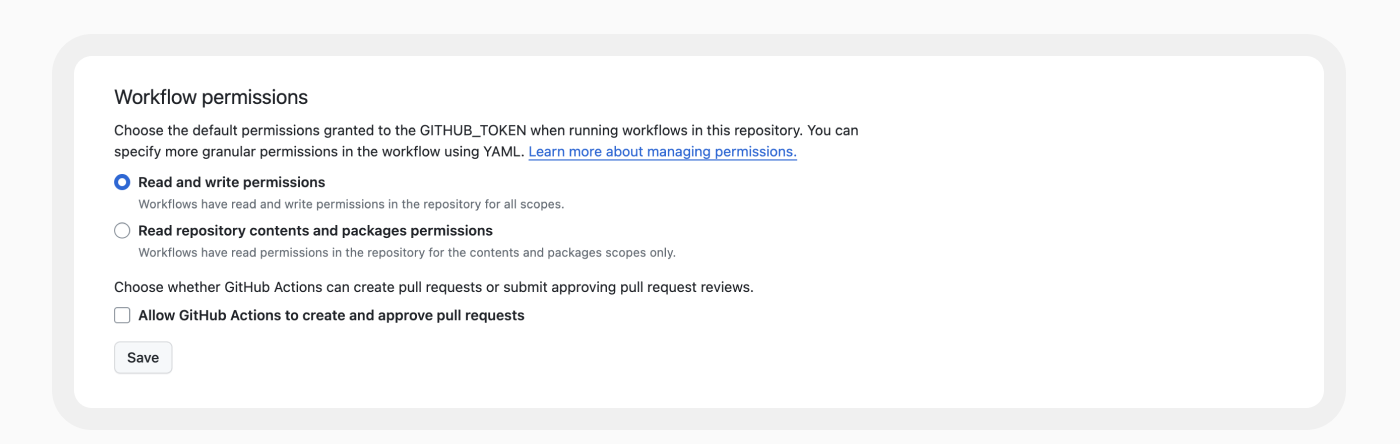
    Cycode researchers shared their discovery with Google, which has since updated the way it employs GitHub Actions to manage the Bazel codebase. Specifically, Google updated the base permissions to embrace least privilege principles to resolve the vulnerability discovered by Cycode.

    The vulnerability was discovered using RAVEN, an open source tool for scanning CI/CD platforms for vulnerabilities that Cycode makes available.

    Elad Pticha, senior security researcher for Cycode, said the vulnerability is the latest example of an instance of an open repository for building software that has been shown to be potentially vulnerable to an attack on a software supply chain that could theoretically impact any number of downstream applications and projects, including Kubernetes, Angular and platforms and services provided by Uber and LinkedIn.

    A Custom Actions capability that enables application development teams to create their own workflows presents any cybercriminal attempting to compromise of software supply chain with a tempting target, noted Pticha. A few changes to lines of code in a workflow can translate into thousands or even millions of lines of code, many of which an organization may never detect. Out of 3.4 million workflows examined by Cycode, nearly all (99%) make use of one or more Custom Action.

    Cycode has previously identified dozens of vulnerabilities in open source projects by mainly focusing on vulnerabilities within workflows. This latest research shows those vulnerabilities extend to indirect dependencies, such as Custom Actions, noted Pticha.

    Each DevOps team should review its own workflows for similar vulnerabilities at a time when more cybercriminals than ever are intent on compromising software supply chains. While many organizations have embraced DevSecOps workflows to improve application security, there is a natural tendency to overlook vulnerabilities that might exist in the workflows used to build and deploy software. The challenge is that DevSecOps workflows are still immature. A recent survey of 500 U.S. CISOs, AppSec directors and DevSecOps team members conducted by Cycode found 78% admitted application security attack surfaces are unmanageable, with 90% acknowledging relationships between their security and development teams need to improve.

    It’s not apparent if the vulnerability discovered by Cycode was actually ever exploited, but as most cybersecurity professionals know, if it can be imagined, someone has tried it. As such, any organization that uses Bazel might be well-advised to conduct a code review.

    In the meantime, it’s already apparent that regulations pertaining to securing software supply chains are only going to become more stringent in the months ahead. In the wake of the executive order from the Biden administration requiring federal agencies to lock down their software supply chains, it’s now only a matter of time before similar requirements are baked into legislation and various other regulations are implemented. The challenge and the opportunity now is to get ahead of this issue before a mandate with a hard deadline that can’t be ignored winds up disrupting the entire software development life cycle.

  • Coexisting With AI: The Future of Software Testing

    Coexisting With AI: The Future of Software Testing

    If 2023 was the year of artificial intelligence (AI), then 2024 is going to be the year of human coexistence with the technology. Since the release of Open AI’s ChatGPT in November 2022, there has been a steady stream of competing large language models (LLMs) and integrated applications for specific tasks, including content, image processing and code production. It’s no longer a question of if AI will be adopted; we have moved on to the question of how best to bring this technology into our daily lives. These are my predictions for the software quality assurance testing industry for 2024.

    Automated testing will become a necessity, not a choice.

    Developers will lean heavily on AI-powered copilot tools, producing more code faster. That means huge increases in the risk profile of every software release. In 2024, testers will respond by embracing AI-powered testing tools to keep up with developers using AI-powered tools and not become the bottleneck in the software development life cycle (SDLC).

    The role of the tester will increase and evolve.

    While AI is helping software engineers and test automation engineers produce more code faster, it still requires the highly skilled eye of an experienced engineer to determine how good and usable the code or test is. In 2024, there will be a high demand for skilled workers with specific domain knowledge who can parse through the AI-generated output and determine if it’s coherent and useful within the specific business application. Although this is necessary for developers and testers to start trusting what the AI generates, they should be wary of spending inefficient amounts of time constructing AI prompts, as this can ultimately lead to decreased levels of performance. For instance, a developer could easily spend most of their time validating the AI-generated output instead of testing the release that will be deployed to users.

    Being able to distinguish between when to rely on AI and when to forego AI’s help will be key to streamlining the workflow. Eventually, we’re going to start seeing AI-powered testing tools for non-coders that focus on achieving repeatability, dependability and scalability so that testers can truly use AI as their primary testing tool and ultimately boost their productivity.

    The rise of protected, offline LLMs and the manual tester.

    As enterprise companies show signs they don’t trust public LLMs (e.g., ChatGPT, Bard, etc.) with their data and intellectual property (IP), they’re starting to build and deploy their own private LLMs behind secured firewalls. Fine-tuning those LLMs with domain-specific data (e.g., banking, health care, etc.) will require a great volume of testing. This promises a resurgence in the role of the manual tester as they will have an increasingly important role to play in that process since they possess deep domain knowledge that is increasingly scarce across enterprises.

    As we stand on the brink of 2024, it is evident that the synergy between artificial intelligence and human expertise will be the cornerstone of software quality engineering. Human testers must learn to harness the power of AI while contributing the irreplaceable nuance of human judgment. The year ahead promises to be one where human ingenuity collaborates with AI’s efficiency to ensure that the software we rely on is not only functional but also reliable and secure. There will likely be a concerted effort to refine these collaborations, ensuring that AI serves as a reliable support rather than an overpromised solution.

  • Generative AI and Software Testing Tools to Manage Technical Debt

    Generative AI and Software Testing Tools to Manage Technical Debt

    It is easy to take a pessimistic view of generative AI and large language models (LLMs), especially when a growing list of AI experts and public figures have voiced concern about their potential to lead to dire consequences—even to human extinction. But we must also consider how these same technologies might mitigate these risks. There is no doubt that we are living in an accelerated cycle of technological progress and repercussions. However, the intelligence, speed and agility of AI—and particularly machine learning (ML)—may be just what we need to roll with the punches.

    As the speed of development outpaces our ability to mitigate potential risks posed by the systems we build, we are set on a path to accruing massive technical debt—the ever-increasing costs associated with modernizing code later rather than sooner. Too often, organizations in the private and public sectors are reluctant to pay off this debt, choosing an “if it ain’t broke, don’t fix it” mentality toward software maintenance and security. The problem is that as technology outgrows and outpaces our critical infrastructure systems, the potential for catastrophe escalates.

    Machine Learning: A Tool for the New “Space Race”

    Automated testing has proven superior in regression testing, especially in visually recognizing potential issues at the pixel level. If, for example, an important element of your interface is missing from the screen after an update, a visual test script can identify that faster than a human can. AI (and in particular, machine learning) generates test plans that provide more comprehensive coverage of the system under test and more practical coverage.

    Traditional testing methods usually begin with a broad and hypothetical analysis of user interactions. Test engineers begin by casting a wide net to cover the many possible user engagement scenarios they imagine. In contrast, AI-assisted systems learn from actual user interaction, building script libraries that focus on known points of weakness and vulnerability. It also does this at speed and scale. This technology is going to be essential to software test engineers as they inevitably find themselves unable to keep up with the abundance of code generated from LLMs using traditional testing methods.

    Technical Debt is Inevitable but not Unsolvable

    Every new iteration of software has the potential to introduce unforeseen problems ranging from glitchy bugs to catastrophic failures. The risks of releasing new software vary immensely between applications: It’s one thing if the latest release of your music streaming app crashes and quite another if the system that runs the regional power grid fails. One will result in unhappy customers; the other, the potential loss of life.

    The most critical systems (e.g., financial, transportation, safety, medical) are more likely to get frozen in time. Once a stable iteration is released, companies are generally not keen to make changes unless absolutely necessary—beginning the cycle of technical debt accumulation that grows until that debt is paid off by modernizing the code.

    Deciding when to pay off technical debt has always been a matter of weighing pros, cons, costs and benefits. But sometimes, such as in the case of an epic failure, that decision is forced. Both the risk of breaking the system and the cost of modernization compel developers to leave well enough alone. Meanwhile, the longer a system remains unchanged, the more isolated, outdated, and obsolete it becomes, setting the stage for failure.

    By introducing generative AI technology to the development stack along with other tools for authoring, compiling and testing software, developers will soon find themselves driving in the fast lane. With the security of knowing that code can be produced rapidly and released safely, owners of aging legacy systems will be more likely to modernize software sooner, helping them to pay off technical debt more quickly. That, in turn, could lead to increasingly rapid software development and release cycles, more work for developers, and more innovation. Such a workflow could very well become the embodiment of accelerating change, taking us from an “if it ain’t broke, don’t fix it” mentality to one where we anticipate the need for new code and avoid future catastrophic failures, or for that matter, human extinction.