Tag: serverless computing

  • Data Theorem Extends Scope of App Analyzer Portfolio

    Data Theorem Extends Scope of App Analyzer Portfolio

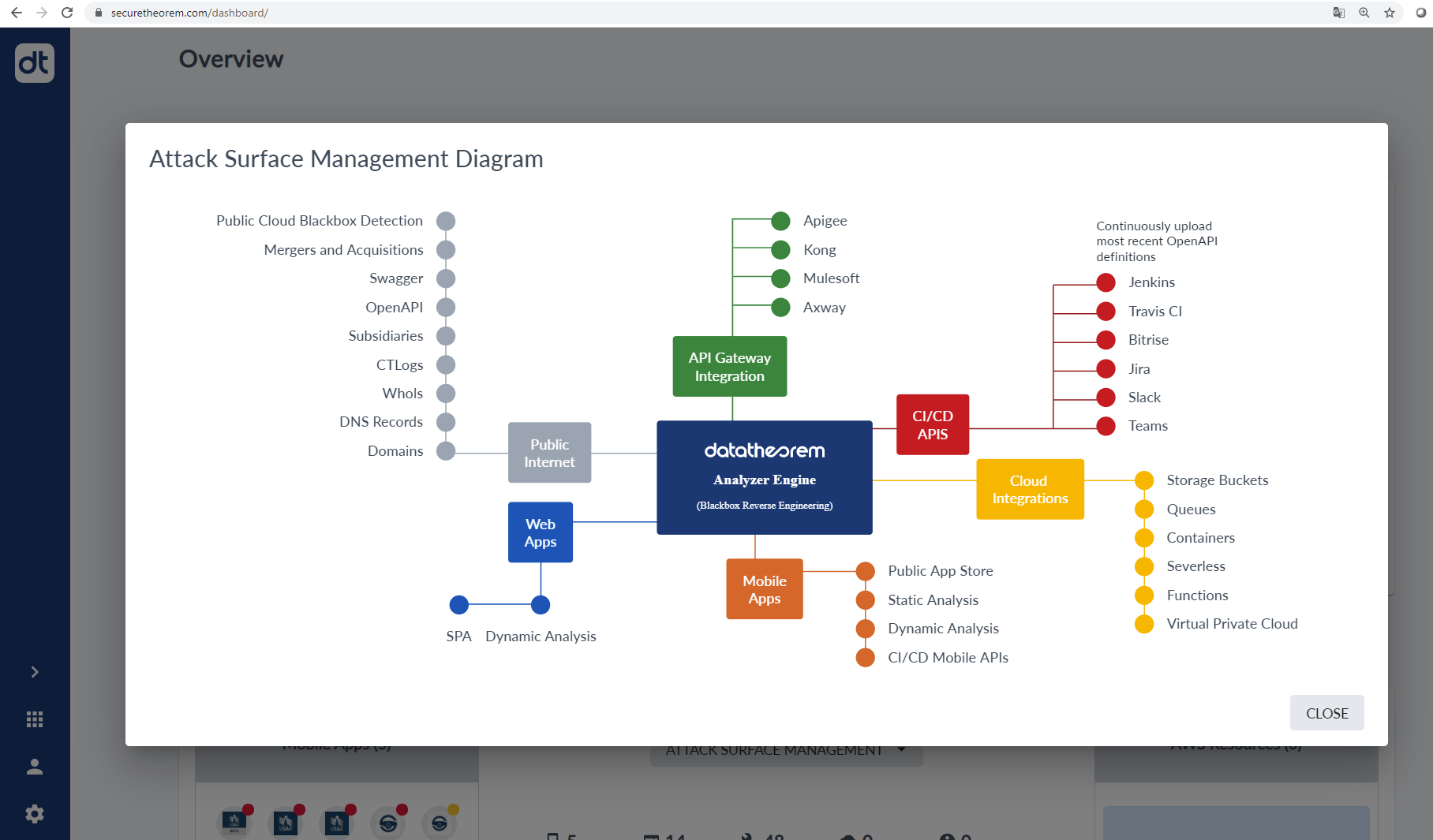
    Data Theorem, Inc. today added to its portfolio a Cloud Secure analyzer that promises to provide full stack visibility into applications through the client, network and cloud layers of a distributed computing environment.

    Doug Dooley, Data Theorem COO, said Cloud Secure extends an existing Analyzer Engine offering that is currently widely employed to identify vulnerabilities found in applications running on public cloud services. That enables DevOps teams to analyze application runtimes using a tool that can be integrated within a continuous integration/continuous delivery (CI/CD) platform as part of a DevSecOps workflow, Dooley noted.

    Cloud Secure now extends that capability to include the client layer for both mobile and web applications, as well as REST and GraphQL application programming interfaces (APIs) at the network layer, to provide a more comprehensive approach to attack surface management, Dooley said. That’s a crucial capability, because in modern IT environments, the single biggest attack surface is now all the APIs that need to be secured, Dooley added.

    DevOps teams can also employ multiple Cloud Hacker Toolkits, created by Data Theorem, to simulate hacks against various types of applications, including those now running on serverless computing platforms. That approach eliminates the need to rely on manual penetration tests that can’t keep up with the rate at which DevOps teams are now building and deploying applications, Dooley noted. For organizations to achieve DevSecOps, the whole security process needs to be just as automated as the rest of the DevOps workflow, he added.

    In general, Dooley said most of the results of penetration testing shared with DevOps and cybersecurity teams lack much-needed context. They may inform members of an IT team that there is a leak, for example, in an S3 bucket hosted on a cloud storage service from Amazon Web Services (AWS). However, they don’t identify what type of data is at risk. That’s critical information at a time when IT organizations need to make high-stakes decisions about where to prioritize their DevSecOps efforts.

    As developers assume more responsibility for application security, the biggest challenge organizations will face is finding security tools that can be easily integrated into application development processes that have become more extended as applications, made up of microservices, are deployed across highly distributed computing environments.

    It’s still early days as far as adoption of DevSecOps best practices are concerned, but as more tools become available, it’s becoming more feasible for organizations to make that transition from the bottom up. No developer sets out to deliberately write and deploy an insecure application. However, DevSecOps edicts issued from on high will fall on deaf ears if the developer lacks the tools required to achieve the goal. Tools that a developer embraces are going to be more widely employed than any tool that is specifically mandated by IT leaders that don’t really understand how applications inside their organization are constructed.

    Regardless of how DevSecOps is achieved, the one thing that is certain is as more applications get deployed, the probability there will be a major security incident becomes all but certain.

  • Cloudflare Expands Range of CDN Alternatives to the Public Cloud

    Cloudflare Expands Range of CDN Alternatives to the Public Cloud

    Cloudflare, a provider of a content delivery network (CDN) based on more than 200 data centers, this week announced it has made available a Durable Objects capability in beta that makes it possible to run stateful applications across a distributed serverless Cloudflare Workers service.

    Company CEO Matthew Prince said Durable Objects provide a truly unified approach to managing storage and state that ensures low application latency across the CDN service.

    Cloudflare this week also launched API Shield, which employs client certificate-based identity and strict schema-based validation using hosted public key infrastructure (PKI) that only allows application programming interfaces (APIs) with known behavior and identities to access the CDN service.

    The company also added a Cron Triggers tool that enables IT teams to schedule jobs on Worker nodes rather than always having to make HTTP requests.

    Finally, Cloudflare this week added a free Cloudflare Web Analytics tool and a free Cloudflare Radar tool that allows IT teams to view global traffic and security trends across the internet as they happen using data gathered from a network that touches more than 25 million internet properties in more than 100 countries.

    As applications become more distributed than ever thanks to the rise of edge computing, there is a growing need to deploy stateful applications that process data closer to where it is generated and consumed. Rather than IT teams having to manually deploy those edge computing platforms, Cloudflare has been making a case for a serverless computing platform that enables IT teams to leverage platforms it manages on their behalf.

    A Durable Object, in the case of Cloudflare, is an instance of a class that can be written in any programming language. Each object has a unique identifier and exists in only one location. Any Worker running anywhere in the world that knows the object’s ID can send messages to it. Durable Objects can have persistent state stored on disk. Each object can also maintain a consistent copy of the state in memory to eliminate latency. The in-memory object will be shut down when idle and can be re-created later on-demand.

    The Cron Trigger tools provide IT teams with more control over how they consume capacity on the Cloudflare CDN, added Prince.

    The Cloudflare CDN ultimately provides a lower-cost alternative to cloud services for deploying edge computing applications that gives IT teams more control over where and when application workloads run, Prince said.

    In the age of COVID-19, the days when IT organizations dispatched IT staff to physically install and update physical infrastructure may be coming to an end. There’s no real need to incur the cost or put IT staff at risk of contracting the virus. The issue now is determining whether to employ a cloud service provider or rely on any one of several CDN options that have historically been employed to optimize web applications.

    Regardless of the path chosen, the ability to remotely deploy any type of application on IT infrastructure resources has never been greater or easier.

  • How to Secure the Intangible — Cloud Native Security in the New Age

    How to Secure the Intangible — Cloud Native Security in the New Age

    People don’t want to buy a quarter-inch drill. They want a quarter-inch hole.

    Companies aren’t interested in managing IT; they’re more interested in results. They want to deliver software quickly and focus on their core product or service. This is where the concept of cloud native computing comes in—and why securing it has become critical. 

    Traditionally, companies had many servers and resources. Today we’re moving toward a simpler reality. Developers are focusing on what’s needed to deploy business logic, regardless of what it’s deployed on. That’s why it’s particularly appealing to move to software without the server and the added complex management of IT overhead. 

    If a company can push its offerings without hardware, patch management, storage and so forth, and it can do it more affordably and faster, it’s a great win. 

    The Paradigm Change

    2012 was the golden age of IT, where admins ruled the world and developers got in line. Moving from that era to 2016, we come to the age of the cloud, where developers were kings.

    For many years, the IT department led—and perhaps stifled—innovation within organizations. Developers’ paths for innovation were limited to the area which they had control, i.e., the application layer. Anything beyond that was the IT department’s call. This included hosting, load balancing, database management and whether to adopt virtualization or advanced networking technologies.

    With the emergence of NFV and cloud computing, that changed. There has been a continuous erosion of the abstraction layers that developers were faced with in the past. In 2020, developers are the masters of their own destiny, pushing their organization toward innovation. All of this is possible not only due to virtualization and cloud computing, but also to the relative simplicity of a developer setting up a full application stack on their own laptop.

    In many organizations, the CTO focus has moved from an infrastructure orientation to an application focus. Developers are the new golden children of these organizations. They hold the keys to increasing company profits.

    What Cloud Native Brings to the Table

    There are many numbers being thrown around about the efficiency of cloud native. Whether it’s 300% reduction in deployment time or a mere 30%, the reality is that the time savings are huge. Many developers will never see a traditional data center again in their lives. In fact, new applications are developed as microservices or at the very least as containers, simply because they’re faster.

    There’s no going back. This new approach enables developers to invest in scalable solutions without making companies preallocate unnecessarily large sums of money. Both applications and infrastructure can scale up or down quickly, using the right amount of resources to provide the best service. 

    Businesses that are seasonal or peak-oriented gain a lot from the movement to cloud native architecture. Users also stand to gain from the move, as they receive the best service possible, without downtime. Everyone comes out on top.

    A Look at the Future

    This movement to broader use of cloud native architectures is a trend that will continue to grow over time.

    By 2025, VMs and bare metal will be as anachronistic as mainframe and token ring networks are today. In fact, most medium-to-large organizations already have some kind of a migration project from VMs to containers in progress. Many developers don’t need to spin up VMs anymore, since they can have a whole application stack running on their laptop using containers. When they are done, they simply lift and shift it to staging and production environments.

    In addition, on-premises and cloud environments are becoming a single entity rather than two separate infrastructures. People used to think that the entire data center was going to move to managed clouds for economical reasons. Today, however, most deployments are becoming hybrid. Organizations are opting to keep some of their on-prem systems (mostly legacy applications that cannot be easily moved to the cloud). IT administrators are starting to think about the deployment in the cloud as an extension of the on-prem data center rather than a separate network that needs to be managed.

    This trend will most likely continue, making it all the more important to understand the changing expectations around how to secure the hybrid network environment. The rate of change for cloud native environments is monumentally faster than on-prem, initiating code in milliseconds.

    Most legacy solutions weren’t built to cope with ephemeral networks and compute entities that go up and down within seconds, one million times a day. So, what’s the best way to future-proof risk management in this ever-changing environment? There is no singular answer, but in general prevailing advice suggests you consider the long view, exploring the options best suited for your approach and then look at each through a one, three and five year lens. 

    Cloud Native Security

    When thinking about the future of security, the basics stay the same and the threat modeling concepts stay the same. However, there are a number of security issues to consider, including policies, permissions and authorizations. As networks are converging, the security tools are as well. Looking forward, only solutions that can provide a genuine single pane of glass to control your digital estate will have a real impact on security.

    When looking at solutions to help apply security to cloud native architectures, ask the following questions:

    • Can I improve visibility in my cloud service? Applications may be deployed over multiple cloud instances and on servers in different sites, and even different regions, making it more difficult to define clear security boundaries. The right tool can help you to understand the scope and layout of your cloud resources, particularly if it automatically discovers applications on your cloud deployment and maps the data flows between them, making it easy to understand applications that you have running in the cloud and how they interact with one another.
    • Can I achieve a single view of multiple environments? The tools used to apply security need to adapt to be able to control hybrid networks across on-prem and multicloud organizations. For example, if your architecture requires policies to be deployed to the edge, how is it managing convergence? Numerous network solutions are barely aware of layer 7 process level, let alone containers. 
    • Can I set and maintain policies across these environments? Consider how solutions address network policies and understand potential challenges from both a technical and procedural point of view. Securing application traffic within cloud native architectures or between applications and external networks is a good start, but in the cloud, it’s necessary to implement micro-segmentation so you can define policies at the application level. By defining which applications are allowed to interact and the types of interactions that are permitted at a granular level, it’s possible to provide the level of security necessary for applications operating in the cloud. Look for tools that provide automatic policy recommendations that can be effectively applied on any cloud infrastructure, streamlining your organization’s security policy for deployments.
    • Can I future proof my cloud native security posture? When planning your future roadmap, think about what your network is going to look like. What type of workloads and network constructs are going to be used? Make sure the security vendors you select provide full coverage for your roadmap.

    When implemented correctly, modern micro-segmentation techniques can offer a simple way to secure a cloud native environment, including solving the unique challenges of containers and providing the ability to create dynamic application policies down to process level. Look for tools that provide a single view and foundational visibility, automatically discovering all network flows and dependencies. This allows your business to take advantage of the best of serverless computing without increasing risk or complexity for security.

  • LightStep Adds Regression Monitoring to APM Platform

    LightStep Adds Regression Monitoring to APM Platform

    LightStep this week announced it has added a Service Health for Deployments module to its namesake observability platform designed from the ground up for microservices and serverless computing frameworks.

    Talia Moyal, senior product manager for LightStep, said Service Health for Deployments will make it possible for DevOps teams to monitor performance regressions both during and after an application is deployed.

    DevOps teams can also take advantage of aggregate trace analysis functionality such as latency histogram comparisons, operations diagrams and an automated correlation engine for performing rapid root cause analysis to understand why a regression is occurring.

    Finally, a built-in instrumentation scoring capability enables DevOps teams to compare performance before, during, and after a deployment; compare latency across instances to estimate the size and scope of a regression; correlate tags that have the biggest impact on latency; and map critical path latency for each operation or service.

    As organizations embrace microservices and serverless computing frameworks, the overall IT environment becomes more complex to manage. As an application performance management (APM) platform, LightStep makes use of OpenTelemetry software to gather metrics that are then fed into a statistical engine to detect anomalies, which the APM can then record and replay. By employing OpenTelemetry, LightStep is able to employ distributed tracing to surface more context than traditional APM tools, said Moyal.

    Given the costs involved in employing APM platforms, most IT organizations historically have limited their use to their most critical monolithic applications. However, the dependencies that exist between microservices and serverless computing frameworks that make up a modern cloud-native application are now requiring IT organizations to apply APM platforms more broadly. In fact, observability is a core principle of best DevOps practices that many organizations are embracing more widely as they build and deploy cloud-native applications. Many of those applications will run just fine when initially deployed, but over time performance can degrade for a whole host of reasons that span everything from increased storage access latency to too many calls being made to the same application programming interface (API).

    Of course, there is no shortage of options when it comes to APM platforms. LightStep is making a case for OpenTelemetry because it provides a single set of open source APIs, libraries, agents and collector services to capture distributed traces and metrics. That approach makes it easier for developers to instrument their applications in a way that allows platforms such as LightStep to surface more insights into application performance. LightStep claims it has already employed that approach to analyze more than 1.4 trillion traces. OpenTelemetry is currently being developed under the auspices of the Cloud Native Computing Foundation (CNCF).

    It’s too early to say to what degree traces will supplant traditional sampling methods to analyze application performance. The one thing that is certain is as developers are held more accountable for application lifecycle management, many of them are demanding access to more sophisticated APM tools to provide the visibility they require to resolve application performance issues faster.

    — Mike Vizard

  • Trends and Benefits of Serverless Computing

    Trends and Benefits of Serverless Computing

    Gartner estimated that by 2020, 20% of the world’s organizations will have gone serverless. Serverless computing initiates a mind shift in the way businesses are run and improves the accuracy and impact of technology services. Leading to higher functionality, reduced AWS bills, increased delivery speed and multi-cloud support, serverless computing paves the way into the future. 

    The scope of serverless is yet unexplored. With new and high-potential developments (such as FaaS and GitOps) still in their nascent stages, organizations can expect massive benefits leveraging the power of serverless computing going forward. 

    Servers have been a very important part of the computing architecture for decades. But, with the introduction of cloud, we’ve moved to predominantly web-based server infrastructure, and the migration to serverless architecture has begun.

    Serverless computing–abstract and virtual server support–has made the computing landscape more dynamic, robust, intuitive and powerful. But advancement in serverless technology is still in its nascent stage. The next few years are expected to bring in numerous developments and transformations.

    First, let’s take a look at some serverless trends you should keep an eye out for.

    Kubernetes Will Become the Go-to Serverless System

    Kubernetes has become synonymous with open-source containerization. But in the next few years, we will see Kubernetes become the base for serverless infrastructure. Features such as networking, service discovery, agile scaling and multi-cloud environment support make Kubernetes the perfect choice for serverless. 

    Additionally, with Knative already released, the process of standardization and interoperability of serverless platforms may soon become a reality. 

    Stateful Applications Will Also See the Usage of Serverless

    Restriction of serverless for stateless apps is a thing of the past. The next few years will see stateful apps benefiting from the immense power of serverless. Developers will be able to use database connections, BaaS and event payloads to run their applications.

    FaaS Industry Size Will Grow 

    The FaaS market is expected to grow to $7.72 billion by 2021. Large-scale adoption of serverless will be seen across the world, and there will be a 32.7% CGAR. 

    GitOps Will Be the Next Big Thing 

    The version-controlled system of DevOps, GitOps, will see more takers in the future, especially in FaaS. GitOps is expected to improve operational workflows, especially in fast-moving projects, and enable implementation of technologies such as Kubernetes and other cloud solutions. 

    Additionally, this will enable cloud vendors to provide greater ecosystem support and tooling capabilities to users.

    Containers Versus Serverless

    Containers by nature are segmented, isolated and contained spaces of application-specific servers. While they offer high degrees of specialized (and often customized) tools, resources and support, they suffer from numerous challenges:

    • They are very resource-inefficient compared to serverless. 
    • Their ecosystem is fractured as opposed to the wholesome environment offered by serverless. 
    • Data storage and retention are complicated, necessitating frequent data migration across containers. 
    • Graphics support is limited, resulting in poor-quality deployments. 

    The challenges that come with containers prompt organizations to choose serverless. Already, many companies have implemented serverless.

    Here is how the move to serverless will benefit you, too.

    Serverless Computing Eliminates the Need for the Set-Up of Complex Application Stacks

    Developing even the most basic server-bound application is a challenging task. It requires the set-up of high-powered and complex application stacks that can be both difficult to build and difficult to manage. By going serverless, organizations can eliminate all these heartaches. 

    Serverless stacks, such as Lambda and Azure, create a robust and intuitive environment for the development of agile applications, by providing organizations with a large set of capabilities and allowing them to run at scale, at the lowest costs.

    It Reduces the Organization’s Capital Expenditure

    Unfortunately, IT infrastructure is considered a capital expenditure by many organizations. So, building your own servers can lead to a high CapEx.

    Consider this. Physical servers are vulnerable to breakdown and depreciation, which add to CapEx. If you report this value as expenses in your income statement, it may ultimately negatively affect your P&L and your company valuation. Going serverless allows organizations to avoid such a challenge and maintain their profitability and high valuation.

    Plus, serverless infrastructure reduces the need for human resource deployment as focus on batch processing decreases. Additionally, serverless allows organizations to convert workflows into step functions, which reduces the number of EC2 and SWF issues. Together, these reduce company expenses tremendously. 

    It Shortens the Standard Release Cycle Significantly Due to Microservices and Nano-Services

    Serverless computing allows organizations to benefit from the magnificent power and scope of microservices. From making minute application-specific developments to isolating and rectifying issues, to managing and deploying individual applications, organizations can do a lot of things using serverless computing. 

    In fact, a survey shows that utilizing serverless microservices can bring down the standard release cycle from 65 days to a mere 16 days.

    It Allows Easy Completion of ELT Tasks and Cron-Type Jobs 

    Again, serverless computing microservices gives organizations the flexibility, technical support and clarity needed to process data. ELT tasks become more consistent and allow the creation of structured data warehouses.

    Similarly, since isolated components and applications can be created, deployed and fixed in serverless, it’s easier to implement cron-type jobs as well. 

    It Allows Organizations to Escape Traditional Workflows Through Event-Based Computing 

    Adoption of serverless computing allows organizations to shift from the restrictive, time-consuming and draining traditional workflows and engage in event-based computing. Now, coders can just write the algorithms and allow the serverless provider to take care of the data storage and computing needs. Not only will this reduce the time of transaction processing and the cost of DevOps, but it will also free up the time and space for coders to take on other business logic tasks. 

    It Enables Green Computing 

    With climate change becoming such an imminent threat to the world, it’s important for organizations to become mindful about the way they operate. One way to become sustainable is to go serverless.

    For one, serverless computing ensures organizations don’t over-utilize electricity. Additionally, with no physical servers and data centers that emit toxic radiation as they cool down, there will be lesser concerns about health and climate change. 

    Another aspect is scalability. Serverless is highly-scalable, meaning you don’t need to set-up more servers at your office. Given that 30% of the world’s servers are unused at any point in time and most servers only utilize 5%-15% of their total capacity, serverless may be the best way to go green.

    It Promotes Deployer Autonomy and Encourages the Adoption of New Mindsets

    Serverless computing gives organizations the freedom to focus on their core business offerings and deal with only low-level OS issues. This time, money and opportunity can be used by deployers, coders and top management to develop competitive offerings, which can help the organization overtake competitors. 

    With physical servers, it’s more likely than not for organizations to focus on technical server issues than the business process.

    Conclusion

    Serverless computing could be one of the most exciting developments of the 21st century. It is breaking down old barriers and allowing organizations to expand and explore new frontiers. Its high deliverability, coupled with the immense opportunities it promises, makes it a must-adopt in any organization.

    — Subramonian

  • Serverless and GraphQL: Build and Launch at the Speed of Thought

    Serverless and GraphQL: Build and Launch at the Speed of Thought

    Websites and apps are now, often, one and the same. Traditional development methods for an online or downloadable app can take months, given the backend development aspects that need to be managed—infrastructure provisioning and management, security, scalability, consistency and more, particularly for companies that have users around the globe and potentially very high usage demands.

    In addition, once the app is built, it can take several days to launch and ensure global availability. Once launched, the app can require ongoing maintenance and supervision to ensure availability and performance, as well as constant fine-tuning of the balance between over- and under-provisioning to manage costs.

    Serverless computing, when combined with GraphQL APIs, is the Holy Grail of application development. These technologies make it possible for developers to build and launch apps lightning fast by removing server provisioning and management concerns. Developers need only worry about building a compelling app with usability features that optimize engagement. Additionally, with serverless and GraphQL, an app can essentially be launched to a global user base within hours or even minutes, rather than days, while avoiding the need to manage servers. Let’s take a look.

    What is GraphQL?

    GraphQL is an API standard for building modern, data-driven applications based on the widely known HTTP Protocol. First created by Facebook in 2012, GraphQL was key to the social media giant shifting its mobile app from HTML5 to a native mobile app. Based on its success, Facebook made GraphQL available to the public as an open-source project in 2015.

    With GraphQL, you define an agnostic Domain Specific Language (DSL) around your data structure in terms of:

    • The programming language you use. As an API standard, GraphQL is open for implementations in many languages, such as JavaScript, Java and C#. You can essentially use the standard with your language of choice.
    • The database engine you use. GraphQL is only concerned with having the data ready, rather than the source of the data and where it is coming from, so you have the freedom to implement a GraphQL API with almost all database engines.

    What’s All the Fuss About Serverless?

    Serverless represents a major paradigm shift in the way we create and run web services and apps. Serverless computing operates in the cloud, freeing developers from the burden of thinking about back-end tasks, such as managing infrastructure, scaling servers and provisioning capacity and resources.

    Below, I’ve listed some specific benefits that serverless provides, looking specifically at serverless databases—many of these advantages are part of other serverless offerings as well. The overall impact is that with serverless technologies, developers only pay for what they use, or what the app uses depending on user demand. Developers can scale up to virtually infinite disk space and compute loads in seconds when traffic spikes hit, and scale back down when users go offline. The NoOps aspect of serverless means maintenance costs and burdens are removed. Additionally, global availability zones allow for replication between different locations and allow you to keep data where it’s needed—close to the user to minimize latency. Built-in encryption means developers can secure their apps with only basic security know-how.

    • Consumption-based billing.
    • Auto-scaling.
    • No operations overhead.
    • Global low latency.
    • Secure by default.

    When these benefits are combined with the advantages of GraphQL, one will notice a perfect synergy between the two technologies. Not only does the process become more automatic, the standard facilitates communication between internal teams and makes it easier for clients to integrate with your software, through:

    • API discoverability and automatic documentation.
    • Consolidation of data.
    • Language and data source-agnostic.
    • Type safety.

    Serverless Plus GraphQL Equals Developer Nirvana

    There are numerous examples of companies that have managed to build faster and cut costs with serverless. One of the most impressive demonstrations is when students in Australia managed to rebuild the census application and handle loads that the official $9 million system could not handle, at a fraction of the cost using serverless technology. GraphQL takes these advantages a step further.

    Airbnb, a company already known for its serverless adoption, claims to be moving 10x faster thanks to GraphQL, while Coursera noticed that their frontend developers found it easier to discover and query new data as their API evolves. These benefits are not just limited to a developer’s own company. For example, GitHub clients can now fetch data more efficiently and more easily thanks to the GraphQL-based public-facing API. GraphQL is even competing with SQL—when databases such as FaunaDB offer a native GraphQL API, users move to GraphQL at a rapid rate.

    Given the advantages of serverless in removing server provisioning and maintenance, and the freedom GraphQL gives developers when it comes to using programming languages and database engines, developers are essentially able to build and launch apps on a global scale as quickly as they think of them. And in the end, don’t we all want our customers to have a better experience?

    — Brecht De Rooms

  • New Relic Bolsters Serverless Monitoring Strategy

    New Relic Bolsters Serverless Monitoring Strategy

    New Relic has strengthened its ability to monitor serverless computing frameworks by acquiring IOpipe, a provider of a monitoring tool for the serverless computing framework service provided by Amazon Web Services (AWS).

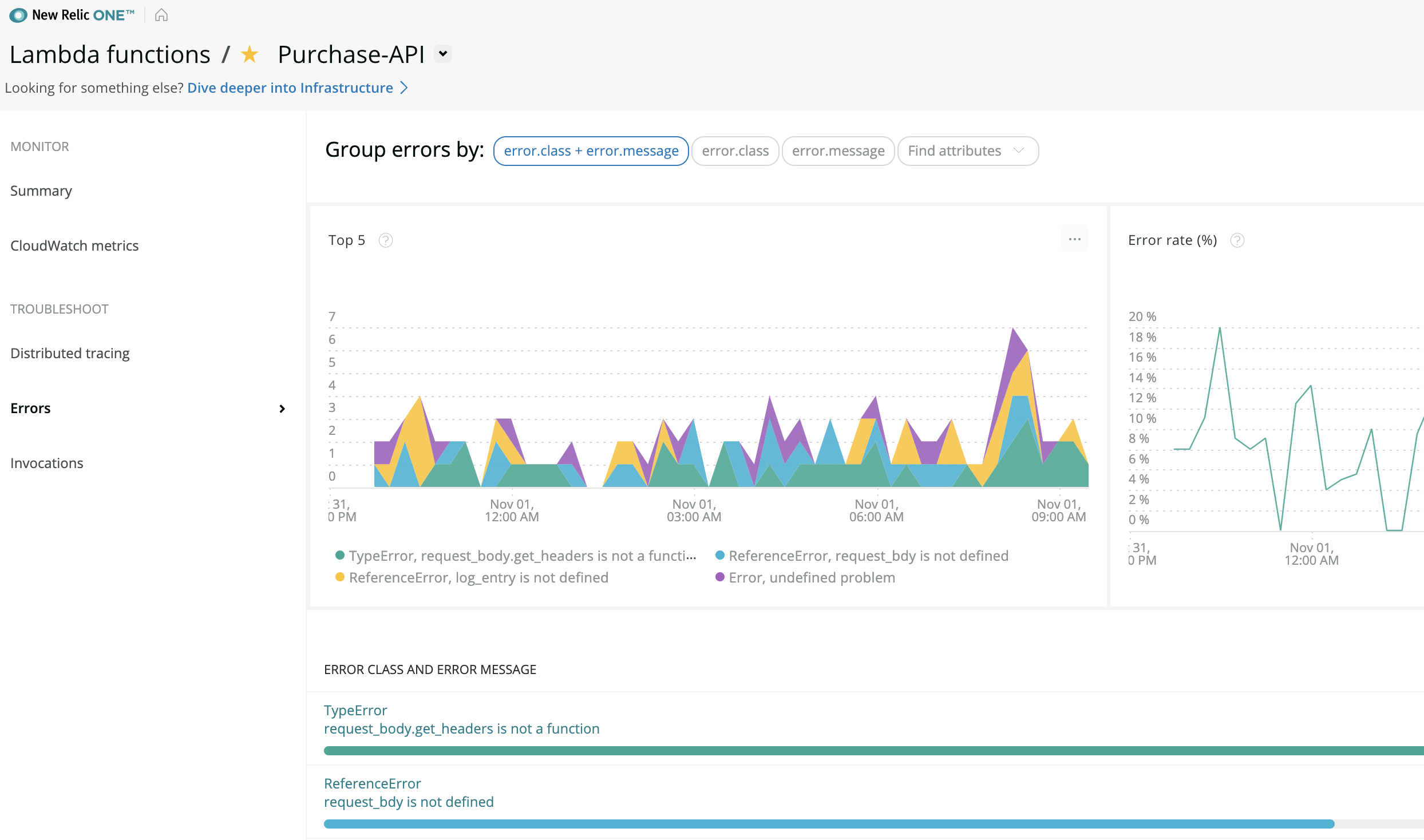
    Andrew Tunall, general manager for serverless and emerging cloud services at New Relic, said IOpipe’s monitoring technology will be used to augment the monitoring tool for AWS Lambda included in the New Relic One platform, which was launched earlier this year.

    New Relic also plans to expand its observability capabilities for serverless computing to other platforms based on customer demand, said Tunall.

    Serverless computing frameworks are gaining traction because they enable developers to write less code within their applications by allowing them to employ functions to call on a cloud service to process, for example, analytics externally rather than within the application itself. The challenge serverless computing frameworks create from a DevOps perspective is they don’t create any logs that can be analyzed. Instead, monitoring tools need to be able to employ distributed tracing tools to analyze the streams of metadata that serverless computing frameworks create based on event-driven architectures. That requirement has forced providers of monitoring tools to extend the capabilities of their core platform to enable the consumption of that metadata.

    Adoption of serverless computing frameworks is already outpacing the ability of many DevOps teams to observe. According to AWS, hundreds of thousands of customers are already doing trillions of invocations a month of AWS Lambda. Gartner has predicted that by 2023, 100% of enterprises using IaaS or public cloud will also use some form of serverless platform-as-a-service (PaaS) capability in production applications, up from 25% in 2019. In most cases, those serverless computing frameworks will be employed to process stateless workloads, while stateful workloads continue to run on a virtual machine or within a container.

    While most of the usage of serverless computing frameworks thus far is on public clouds, it’s only a matter of time before organizations increasingly make use of multiple serverless computing frameworks in on-premises IT environments. There are already more than a dozen different types of serverless computing frameworks, most of which are being made available as open source projects.

    Naturally, the rise of serverless computing frameworks complicates DevOps even further. DevOps teams will now need to build, deploy and update applications that are making frequent external application programming interface (API) calls to potentially multiple serverless computing frameworks. Rather than requiring organizations to acquire separate tools to monitor serverless computing frameworks, New Relic is making a case for extending a single platform to monitor all the various types of IT platforms being employed.

    There’s almost no doubt most organizations will wind up invoking serverless computing frameworks in one fashion or another, but it’s too early to say how pervasive serverless computing frameworks will be. However, DevOps teams will be required to monitor those serverless computing frameworks alongside every other platform already being employed across an increasingly diverse IT environment.

    — Mike Vizard