Tag: REST APIs

  • Hasura Adds Engine to Transform REST APIs to GraphQL

    Hasura Adds Engine to Transform REST APIs to GraphQL

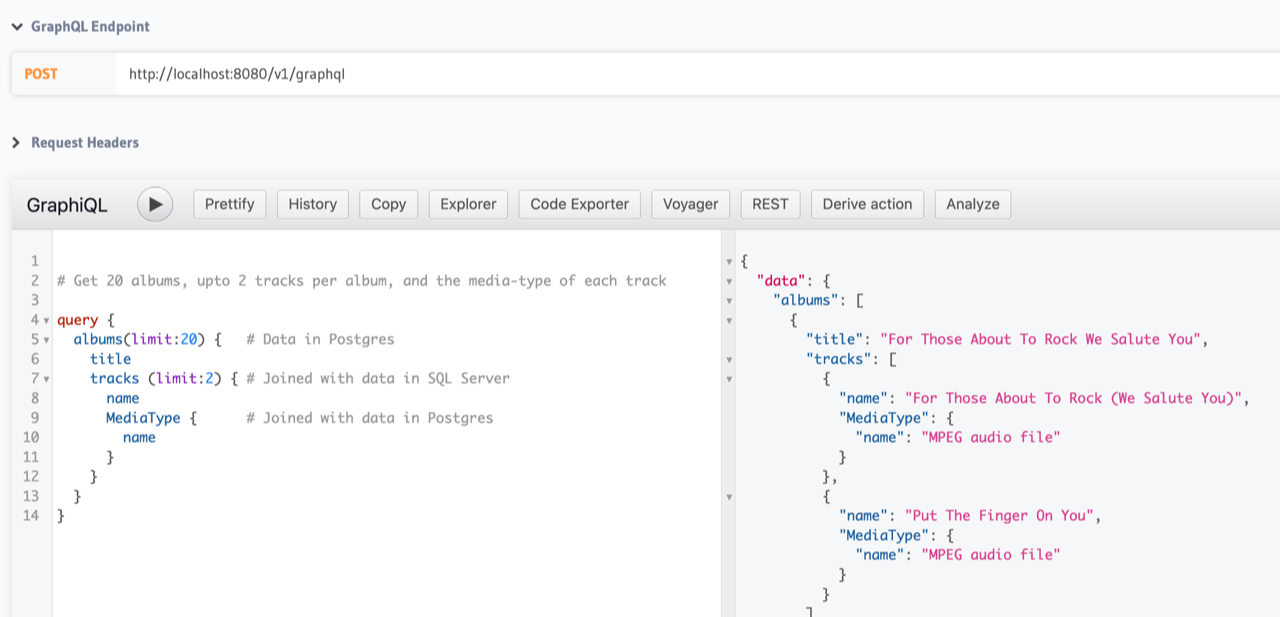
    Hasura today unveiled a Data Hub repository for integrating application programming interfaces (APIs). The repository includes a connector that makes it easier for IT organizations to convert REST APIs into ones based on the GraphQL specification.

    Tanmai Gopal, Hasura CEO, said the connector eliminates the need to write custom code to connect existing REST endpoints to a GraphQL API using an update to the transformation engine developed by Hasura. Instead, the model for the GraphQL API is automatically overlayed on top of the REST API endpoint, explained Gopal.

    Originally developed by Facebook, GraphQL has emerged as a popular alternative to REST APIs because it enables developers to retrieve data at a more granular level, which results in improved performance. Hasura provides an instance of a GraphQL engine the company has developed around a project that is now hosted by the GraphQL Foundation, an arm of the Linux Foundation. GraphQL provides a complete description of the data made available via an API and is organized in terms of types and fields rather than traditional endpoints. In addition to clarifying what data is available via that API, developers can employ types to avoid writing manual parsing code.

    Hasura claims its engine has been downloaded more than 400 million times since its introduction in 2018. It automates the repetitive work involved in mapping models to APIs by providing common access patterns for pagination, filtering, joining, setting up authorization rules and optimizing performance. Hasura also provides APIs that are able to connect to multiple services and data sources, embed domain-specific authorization logic and provide additional layers of security.

    Hasura is now also adding a way to create identity-specific authorization policies for any GraphQL service or data source, enforcing security by limiting the models and fields of the GraphQL APIs in a way that eliminates the need for IT teams to cobble together disparate libraries and frameworks, said Gopal.

    In addition, Hasura is adding support for Google Cloud to Hasura Cloud in beta, a managed API integration service the company already provides via the Amazon Web Services (AWS) cloud. Support for the Microsoft Azure cloud will be forthcoming in 2022, added Gopal.

    It’s not clear the degree to which organizations are looking to replace existing REST APIs with ones based on GraphQL. However, Gopal noted there are plenty of instances where organizations need to overlay a GraphQL API on top of a REST API that they may not own. For example, a software-as-a-service (SaaS) platform that currently exposes a REST API may not have any plans to support GraphQL, he said.

    There’s no doubt the number of GraphQL APIs being employed in the enterprise is about to dramatically increase. The challenge now is finding a way to manage them alongside the previous generations of APIs that remain. The trouble is that many of those APIs were created by developers that may not have documented the APIs they created or, in some cases, never informed DevOps teams that they existed in the first place.

  • The Graph Donates $48M to Advance GraphQL Platforms

    The Graph Donates $48M to Advance GraphQL Platforms

    The Graph, a provider of indexing and query tools based on the GraphQL language designed for blockchain platforms, today announced it has given $48 million to The Guild, a group of developers advancing an open source application programming interface (API) platform to further development of GraphQL-based technologies.

    Administered via The Graph Foundation, a nonprofit consortium that oversees the development of an open source graph database dubbed ONgDB, the agreement also calls for members of The Guild to contribute to the development of indexing and query tools being advanced by The Graph over the next four years.

    Eva Beylin, director of The Graph Foundation, said the goal is to fund the development of projects that leverage GraphQL, an open source data query and manipulation language for application programming interfaces (APIs) originally developed by Facebook, to create subgraphs used on blockchain platforms like Ethereum to index data in a way that is more accessible to developers.

    The open source community that is starting to evolve around blockchain platforms, also known as Web3, is now a major contributor to a range of GraphQL projects, noted Beylin. Those blockchain platforms are now being used to drive decentralized finance (DeFi) applications that do not rely on any single platform to process transactions. Those platforms are being employed by both startup and incumbent providers for financial services around the globe.

    It remains to be seen, however, how the GraphQL community will address security concerns. GraphQL APIs can easily suffer from broken object-level authentication issues just like any other API. The issue is a single GraphQL query could exfiltrate much more information than a typical API request. If the GraphQL provider does not have granular authorization checks for each particular method and resource, a GraphQL endpoint could become a major vulnerability.

    Cybercriminals also tend to launch brute-force attacks against APIs. With REST APIs, that malicious behavior is easier to catch with standard web application firewalls (WAFs) because it’s easier to notice hundreds of peculiar malformed requests. However, with GraphQL, a brute-force attack is harder to detect. It’s easier to limit this type of nefarious traffic with REST APIs by assigning access parameters to each resource and handling authorization checks one at a time.

    It’s not likely GraphQL APIs will replace REST APIs overnight. However, as the backend platforms for managing GraphQL APIs become more robust, the number of these APIs being used in a production environment by DevOps teams will dramatically increase—assuming there are no objections from cybersecurity teams.

    In the meantime, the open source community is clearly starting to rally around GraphQL, which should result in innovations applicable across a wide range of use cases. The challenge now is not only determining which type of API to employ and when, but also deciding whether any existing legacy APIs need to be replaced. One way or the other, however, the managing and securing of APIs—like it or not—is only going to become that much more challenging in 2022.

  • GraphQL as a Meta Layer

    GraphQL as a Meta Layer

    There’s a lot of interest in GraphQL lately. The query language is excellent for data retrieval, and it could act as a more usable mechanism to evolve the traditional REST API integration approach. But as adoption grows steadily, architects are now considering the implications of managing GraphQL at scale.

    Certain issues may hinder GraphQL in practice. To review, security concerns require a nuanced approach to authorization. This is because it wraps multiple data retrieval points into a single request. Without native caching, performance could also suffer. Changeability is also required to continually update the graph, which may ruffle feathers with those seasoned in the world of REST where a guiding tenet is to build for longevity using web-compliant methods.

    According to Jens Neuse, CTO, WunderGraph, there is a simple way to mitigate most of these issues and harmoniously work with various API styles. To Neuse, the core problem is that GraphQL is not meant to be exposed over the internet. Instead, he advocates for interacting through a gateway. Such an intermediary would enable more implicit calls and proper authentication and authorization for specific underlying functions and resources. Using GraphQL as an internal integration layer could also help combine disparate APIs into a similar language, exposing GraphQL-like usability for frontend developers while allowing them to hit any API style on the backend.

    Below, we’ll consider the drawbacks of exposing GraphQL directly and see how an intermediary layer could benefit development. We’ll also uncover what open source software is on the horizon that could power this setup.

    Why GraphQL Shouldn’t be Exposed Publicly

    Facebook, the creator of GraphQL, uses an internal GraphQL API to power all of its apps across Android, iOS and web browsers. (This is not to be confused with their public Graph API). Interestingly, if we look at Facebook’s use of GraphQL, we see these endpoints are not exposed to the public web at all.

    It’s true. Open up Developer Tools in Chrome, and you’ll see there is not a single mention of a root HTTP endpoint like https://api.graphql/. Functions name GraphQL, sure, but they call it more implicitly. Other companies, like Twitter and Airbnb, use a similar abstracted approach to interact with a private GraphQL.

    In fact, most GraphQL APIs are not public. APIs.guru only charts 35 public GraphQL APIs—notable services include GitHub’s GraphQL API, Shopify Storefront and GitLab. This number is minuscule compared to the total number of public APIs, at over 24,000 according to ProgrammableWeb.

    A Layer In Between

    If we treat it as Facebook intended (and how they use it in production today), it could reverse the issues above, said Neuse. “These problems come down to our core belief that GraphQL is not supposed to be exposed over the internet,” he said.

    But if clients do not access a GraphQL endpoint, what are they interacting with? According to Neuse, the ideal architecture involves a layer between the client and the server. Such a layer would validate queries and represent verbose calls with simple functions. The process would involve a handshake as follows:

    1. Take query, store it on a server.
    2. Validate it; make sure it’s not malicious.
    3. Send back a handle to the client.
    4. Then, execute the query.

    Such a process could also enact universal policies on a per-function basis, thus solving potential authorization issues when fetching data from multiple backend services with a single query.

    “The issue is that using the query language comes with a cost,” Neuse said. “Not exposing GraphQL directly but ‘compiling’ it to a JSON-RPC API when deploying solves these problems.”

    Thus, the scalability issue isn’t so much an issue of size but of access. “GraphQL can be very valuable, even in small environments,” said Neuse.

    The Next Evolution of a Virtual Graph

    Another potential benefit of using GraphQL as an intermediary is combining APIs; a “virtual graph,” as Neuse calls it. This virtual graph offers a common integration language to interact with various API styles, whether REST, GraphQL, gRPC or webhook, in a GraphQL-like manner.

    Consider the ease with which package managers like npm enable developers to instantly install dependencies. For example, installing a package like React.js is as simple as initiating the command npm install react within Terminal.

    On the other hand, the API integration is very cumbersome. Users must read through documentation, create an account on a third-party site and download an SDK to call the service in their preferred language. So, why isn’t looping in dependencies like APIs and cloud services as simple as other common dependencies?

    According to Neuse, one reason is that the REST paradigm is obsessed with the resource constraint—aside from HATEOAS, it lacks a concept of relationships between data and fields. A virtual graph could enable a straightforward process similar to package managers, said Neuse. Interestingly, the WunderGraph team plans to open source a project that allows just that ability.

    GraphQL as a Meta Layer

    Many folks assume that GraphQL and REST are mutually exclusive. However, as we’ve seen, there are ways to use them in combination. Plus, with an abstraction layer, the REST versus GraphQL comparison becomes just an underlying technical nuance.

    “If you compare GraphQL to other specifications, like OpenAPI spec, you see GraphQL has the fastest-growing community,” said Neuse. As of 2021, JSON Schema is the most popular, used by 75% of developers, followed by Swagger 2.0 (54%), OpenAPI 3.0 (40%) and GraphQL (31%) according to the Postman State of API Report. While this number may be small now, 35% of respondents also said they plan to use GraphQL in the coming year.

    “It’s a very, very interesting movement,” said Neuse. What began at Facebook as a framework for data fetching for React apps has now expanded into something much bigger. Within this second new movement, largely driven by companies like Apollo and Hasura, GraphQL becomes the new data layer, he said.

    “Still, everybody is looking at GraphQL thinking they must migrate from REST—this is the wrong direction,” said Neuse. Instead of migrating all existing REST APIs to GraphQL, he predicts the industry will coalesce on using GraphQL as the integration language for querying REST APIs. A meta layer, if you will.

    Of course, meta has been a bit co-opted lately with Facebook’s rebranding …

  • Managing GraphQL at Scale

    Managing GraphQL at Scale

    GraphQL, the query language invented by Facebook, has attracted a lot of interest as a means to conveniently access data programmatically. GraphQL structures internal services with a unified schema for data, empowering product engineers to easily grab what they want from many microservices to populate the user interfaces (UIs) they’re creating. By unifying company data into a single graph, GraphQL combines the benefits of SQL with the ubiquity of API access.

    However, GraphQL does introduce some challenges when you’re trying to scale it across a large enterprise and partner ecosystem. For example, since GraphQL channels all requests through a single endpoint, security must carefully segment access to all the underlying infrastructure to avoid data overexposure. Matt DeBergalis, Apollo’s co-founder and CTO, also identified potential issues around changeability and performance when adopting a graph at scale.

    As the use of GraphQL within large organizations grows, development teams will have to overcome these obstacles—especially if companies intend to productize public APIs and reuse the same single graph company-wide. I recently met with DeBergalis for an update on managing GraphQL at scale. According to DeBergalis, we’re still in the early days of the graph revolution. And, future GraphQL maturity will require more rules-based declarative architecture, efficiency improvements and the adaptability to enact agile iteration of graph schemas.

    State of GraphQL Adoption

    So, what is driving the rise of GraphQL? Well, DeBergalis noted three key contributing factors:

    1. Many many microservices. In recent years, there has been an explosion of microservices. These modular services can be challenging to wrangle and are often exposed inconsistently throughout a software ecosystem.
    2. The rise of omnichannel platforms. Product engineers must now port the same data across disparate devices, whether streaming in a browser or on a Peloton screen.
    3. Users expect a hefty, data-rich experience. Expectations are at an all-time high. It’s now expected that an e-commerce shop, for example, will include product recommendations, auto-fill keyword search, pricing by geography and many more advanced features.

    Juggling all these factors creates a “complexity bottleneck,” DeBergalis explained.

    GraphQL responds to such complexity, helping unify the backend to enable product developers to fetch precisely what their client applications require. And, GraphQL adoption took off pretty quickly, particularly among product engineering teams, DeBergalis added. GaphQL plays nicely with familiar languages and frameworks like JavaScript, React and Relay. It’s also a bit different than previous trends, with demand being driven more by the database folks; “query people are really leading the charge,” he said.

    With the right technology stack, developers can add a graph layer between the underlying core APIs and the UI they are building, creating a universal API with a self-documenting schema. “For the developer, the amazing thing about GraphQL is throwing away all this boiler code,” DeBargalis said. GraphQL acts as “a foundation for tomorrow” to help deliver future business requirements, he said.

    With regard to architectural styles for APIs, 94% still use REST and 31% use GraphQL, according to the 2021 State of API Report from Postman. Though this percentage may seem small now, GraphQL adoption is steadily growing among large companies, such as PayPal, Netflix, Shopify, GitHub and Airbnb.

    Three Issues When Scaling GraphQL

    Using GraphQL is like using a mobile phone. You wouldn’t want to use a different phone every time you called a different number, would you? You would rather have all your contacts accessible from the same device. Similarly, GraphQL excels the more functionality is added.

    “Due to the network effect, a graph becomes more interesting as we publish more into it,” said DeBergalis. “What we have found is that GraphQL is most interesting and valuable at scale.” So, what are some inevitable consequences of GraphQL at scale? DeBergalis outlines three main architectural issues.

    Performance

    Performance downsides are one disadvantage that developers often cite when considering GraphQL. GraphQL has no built-in caching features, and the payload query could introduce additional latencies. Mitigating lower-level issues around throughput and reliability will likely require additional tooling from the community, DeBargalis said. This is partially why the Apollo team has begun to embrace Rust in new attempts to make infrastructure for GraphQL routing hyperefficient.

    Changeability

    A second problem enterprises may encounter when scaling GraphQL is embracing agility for such an all-encompassing fabric. “The companies that do GraphQL really well change it all the time—they treat it like a product,” said DeBergalis. This agility is at odds with the traditional REST API approach of building for longevity, which makes that approach extremely averse to breaking change.

    The reality is that when a company embraces a single graph, it may be pushing hundreds of schema changes every day. Different internal teams may maintain their own slice of the graph, defining it differently. Plus, maintenance roles may shift from team to team over time, noted DeBergalis. “If you try to waterfall what your inventory model should look like, you won’t get anywhere,” he said.

    Balancing change and stability will likely require a two-pronged approach to GraphQL. You want to continually iterate the graph with experimental features but also depend on certain functionality to preserve backward compatibility for client integrations. Satisfying both sides will likely require a change management strategy for iterating quickly, as well as enterprise-grade service level agreements (SLAs) to retain a firm bedrock on which to build more permanent data models.

    DeBergalis also described how observability is important for obtaining a clear picture of graph environments. This is one area where GraphQL shines—since clients request precisely what they need, you are never left wondering which methods are fetched but not implemented in production, as could happen with REST API management. According to DeBargalis, tracking fine-grained GraphQL usage with KPIs can help direct how the data model should evolve over time.

    Authorization

    Finally, perhaps the most significant concern surrounding GraphQL at scale is apportioning the appropriate access to users and devices. As a single unified endpoint can connect to a vast array of data behind the scenes, large GraphQL implementations will require a strategy for how that one unified graph can be implemented in parts.

    Without the proper access control, GraphQL could improperly expose personally identifiable information (PII). For example, a FinTech company may have a rule that requires a customer service representative to only have visibility into a customer’s transaction history if the customer has filed a support ticket in the last few days. Or consider data custody—a business working in the EU must comply with regulations on where data can and can’t live.

    Safeguarding GraphQL will require a declarative setting that integrates authorization control and context into GraphQL queries. To implement this, DeBergalis advocated for a command-and-control style. First, you build the schema around the data and problem statement. Next, you integrate rules field-by-field, marking sensitive touchpoints as PII.

    With rules baked into the query, you can have a more solid understanding of the surrounding context. “Authorization is actually a lot better at graph level,” said DeBergalis. “It’s the layer that has semantic understanding.”

    Future of GraphQL Scalability

    “Once you have a graph, you want to use it for everything,” said DeBergalis. The heritage of GraphQL is JavaScript, the language of the product world. And, the graph approach delivers an excellent experience for product engineers. The sheer usability and productivity benefits of GraphQL indicate incredible potential for projected use in the years to come.

    As we’ve discussed, scaling GraphQL across an enterprise will likely require performance improvements, a path for schema adaptability, policies to handle authorization for queries and greater accountability for business metrics. While GraphQL certainly has existing momentum among a subgroup of engineers, there are plenty of opportunities to introduce more training and educational curriculum to spread greater awareness.

    Furthermore, for those coming from a traditional REST API mindset, GraphQL is a bit of a new paradigm that will require some massaging to expose graph endpoints as a productized API. Doing so will likely involve marking select parts of the larger graph to expose to partners. “Starting with an internal GraphQL use case works really well, but productization around GraphQL is coming,” said DeBergalis.

    The value of a unified graph is so strong, and the bottom-up hunger for a graph environment is so intense that increased GraphQL adoption feels like a given. “At this stage, the focus is on expansion,” said DeBergalis. “How do we roll this out to more teams?”

    “We know there’s going to be a graph in every company—not a lot of little ones,” said DeBergalis. “Every company’s going to need a graph.” When that day comes, the architectural challenge will be breaking apart the graph into pieces. “That’s the next big frontier.”

  • Apollo GraphQL to Provide More Control Over APIs

    Apollo GraphQL to Provide More Control Over APIs

    Apollo GraphQL today previewed an update to its Federation platform for tracking and managing application programming interfaces (APIs) based on the GraphQL query language to give organizations more control over how APIs are reviewed and ultimately approved.

    Matt DeBergalis, founder and CTO, Apollo, said the alpha edition of the Federation 2 platform provides a unified view of distributed APIs based on GraphQL so they can be more easily governed.

    Federation is based on a unified graph created by Apollo GraphQL to initially provide more visibility into how APIs based on GraphQL are employed within an organization. That capability makes it simpler to increase collaboration among development teams that typically build APIs in isolation from one another, noted DeBergalis.

    The latest version of Federation also adds a shared ownership model that empowers teams to evolve unified graphs across smaller teams, he noted.

    In general, DeBergalis noted that Federation reduces the chances developers are going to create redundant APIs because they can more easily discover existing ones. They can then either employ those APIs as-is or modify them to suit their requirements as they increasingly compose an application using tools such as Apollo GraphQL Studio versus building every capability from the ground up themselves.

    GraphQL

    Overall, Apollo GraphQL claims that Federation is currently being downloaded more than one million times a week, with more than 30% of Fortune 500 companies such as Netflix, PayPal, Zillow, Walmart, Peloton and Priceline already using its tools.

    The company is also now making Federation and the rest of its tool portfolio available under the Elastic License 2.0 which provides the right to use, copy, distribute, make available and prepare derivative works of the software, but prevents organizations from offering a managed service, circumventing license key functionality or removing/obscuring features protected by license keys or remove or obscure any licensing, copyright or other notices.

    GraphQL, originally created by Facebook, is gaining traction as an alternative to REST APIs because it gives developers more control over how data is accessed via an API using a set of query capabilities. That capability is especially appealing when constructing digital business processes that require access by specific classes to large volumes of data. In fact, DeBergalis notes that, in many cases, it’s the existence of a rich set of APIs that enables organizations to construct digital processes that bridge the various isolated processes organizations previously had in place.

    Most IT teams will not be replacing REST APIs with GraphQL-based APIs overnight. However, there will soon be enough APIs based on GraphQL to have a significant impact on how applications are built and deployed. Many applications may wind up invoking external services via both REST and GraphQL-based APIs for many years to come.

    In the meantime, the rate at which applications are being built should substantially increase as tools such as Federation make development teams more productive. The challenge many DevOps teams will soon face is managing a large volume of deployments and associated application updates as more applications are deployed in production environments.

  • Hasura Extends Scope of GraphQL API Platform

    Hasura Extends Scope of GraphQL API Platform

    During its online an HasuraCon ’21 conference, Hasura today announced that it has made it possible for developers to employ GraphQL application programming interface (APIs) to launch queries against data residing in multiple databases.

    At the same time, Hasura announced a preview of schema sharing capabilities along with support for workflows based on GitOps processes that it will make generally available later this year. The Hasura Cloud platform can now deploy local migrations from staging to production with a simple git push in addition to accessing previews of applications on every pull request to the git repository.

    The schema sharing capability added to the Hasura GraphQL Engine is intended to bridge the gap between beginner and power users by allowing them to share and install samples of permissions, relationships and metadata. In addition to improving collaboration, the goal is to make it easier to onboard software engineers as projects evolve and become more complex.

    Originally developed by Facebook, GraphQL has emerged as a popular alternative to REST APIs because it enables developers to retrieve data at a more granular level, which results in improved performance.

    Hasura is a provider of an instance of a GraphQL engine the company has developed around a project that is now hosted by the GraphQL Foundation, an arm of the Linux Foundation. The GraphQL Foundation counts among its members Airbnb, Amazon Web Services (AWS), Apollo, Coursera, Elementl, Facebook, GitHub, IBM, Intuit Hasura, Paypal, Prisma, Shopify and Twitter.

    GraphQL provides a complete description of the data made available via an API and is organized in terms of types and fields rather than traditional endpoints. In addition to clarifying what data is available via that API, developers can employ types to avoid writing manual parsing code.

    Since last summer, Hasura has been making available a pilot of a GraphQL implementation that is capable of supporting remote joins across disparate databases. That capability is critical because data sets that are related to a specific business process may wind up being stored in multiple databases.

    Hasura

    Tanmai Gopal, Hasura CEO, said the open source Hasura GraphQL Engine has already been downloaded more than 250 million times this year. Downloads in 2020 reached 100 million. The challenge is that while GraphQL offers a superior alternative to REST APIs, most of the API tooling that exists within organizations is still designed around REST APIs, noted Gopal.

    To accommodate that reality, Hasura has made a tool available that will convert a query designed using GraphQL into a set of calls that are compatible with REST APIs. Developers still gain the benefits of being able to launch more granular queries, noted Gopal.

    REST APIs, in general, are becoming more problematic as organizations embrace microservices-based applications. It often takes minutes to refresh a simple dashboard because of the amount of data that REST APIs are trying to pull from various data sources. As organizations embrace digital business transformation, they are also encountering application latency issues that can be traced back to the amount of data being called from multiple microservices.

    Hasura says in addition to providing a more efficient method to access data, Hasura is also working on adding caching capabilities to its core engine to further improve performance.

    It’s not clear at what rate GraphQL might replace REST APIs, but DevOps teams should assume organizations will wind up employing a mix of both for years to come. The challenge is going to be determining when to make the transition as organizations become more dependent on APIs.

  • Why API Quality Is Top Priority for Developers

    Why API Quality Is Top Priority for Developers

    It is no secret that web APIs have become increasingly important to the operation of modern businesses. According to RapidAPI’s Developer Survey and Insights report, 61% of developers used more APIs in 2020 than 2019, with 71% planning to use even more in 2021. We are no longer tied to a small number of monolithic service providers. Businesses tend to gravitate toward specialized managed services, such as billing and authentication, which are backed by APIs. Business models for new products and services are constructed based on APIs. Trust has become a necessity for APIs. APIs that perform consistently and with high quality earn trust, and those that do not are abandoned for a competitor.

    Why Does Quality Matter?

    If a market exists for an API, it’s a given that there will be competition. To remain competitive, APIs must build and maintain trust with their consumers; sales and marketing can only go so far. The highest quality APIs will inevitably capture the largest slice of market share. Quality isn’t a destination, either—it is a collection of goals that require continuous investment.

    What Does Quality Mean for an API?

    Just like the code that drives an API, the quality of an API itself is quantifiable. The following facets describe some broad categories used to measure API quality. The weight of each facet will vary depending on how business-critical the API will be when in production.

    Resilient. An API is resilient when it continues to operate in the face of adverse conditions. Can an API continue to operate (even at reduced capacity) if the database is down? How does it handle network traffic spikes?

    Robust. A robust API is liberal in what it accepts, but conservative in what it sends. Will it crash when presented with a poorly formatted request, or respond with instructions on how the caller can fix the problem themselves? Can the code be restructured without breaking the API contract?

    Secure. API security is vital in most deployments. Are efforts made to check for OWASP Top 10 Web App security risks? Are open source vulnerabilities known and addressed in a timely manner? Are secure endpoints gated with authentication?

    Discoverable. APIs that are well documented and well structured are much easier to consume and integrate with other services.

    Consistent. A consistent API is one that changes without negatively impacting existing consumers. Changes are backward compatible or versioned as new features are introduced. API consumers should know far in advance if a breaking change will be coming if it cannot be avoided.

    How Do I Get There?

    Processes, tools and, most importantly, culture, are the key to high-quality APIs. Let’s explore how we can approach each API quality facet.

    Resilient. Processes such as chaos engineering, load testing and manual quality assurance can uncover situations where an API is failing to handle unexpected situations. Deploying your API to a cloud provider with a compelling SLA instead of your own hardware and network shifts the burden of infrastructure resiliency to a service, freeing your time to build features for your customers.

    Robust. A comprehensive suite of automated tests isn’t always sufficient to provide a robust API. Edge cases, unexpected code branches and other unplanned behavior may be triggered by requests that were not considered when writing the test suite. Traditional automated tests should be complimented by fuzz testing to help uncover hidden execution paths. Canary and blue-green deployments can further expose your API to the real world in a limited manner and prepare for when even more unexpected requests will hit.

    Secure. API security is a moving target. It is expected that most APIs are built on layers of open source libraries and frameworks. Software composition analysis is a necessity to stay on top of zero-day vulnerabilities by identifying vulnerable dependencies as soon as they are discovered. OWASP guidance is a must-have—directing API developers to implement attack mitigation strategies such as CORS and CSRF protection. Application logic must be well tested for authorization and authentication.

    Discoverable. For REST APIs, the OpenAPI initiative provides a consistent language for describing the API. Many frameworks, such as Spring Boot, can even generate OpenAPI documentation directly from your code. gRPC-based APIs offer similar benefits by providing both instructions for accessing the API and building the clients to communicate with it. Adding support for GraphQL allows developers to connect multiple APIs together with consistent tooling. Whichever direction you choose, it is vital to keep API documentation up to date and accessible.

    Consistent. To be consistent, the API development process should make incompatible changes obvious. Code reviews can catch many breaking changes right at the source. API contract testing and integration testing can be used to discover API changes as part of the build. When working in a microservices environment, staging environments may alert engineers if an API change will cause problems before production.

    Quality Builds Trust

    According to the RapidAPI survey, 58% of executives said participating in the API economy was a top priority for their organization. The figure was even higher in certain industries such as telecommunications, where the number is 89%. Whether you are building APIs for internal use or for public consumption, your goal should be to earn the trust of API consumers. Investing in the culture, tools and processes to build quality APIs will pave the way to building and maintaining that trust.

  • Our API Mess is Coming

    Our API Mess is Coming

    APIs are the satisfaction of a long and deep need to be able to create consistent and reliable integrations between disparate systems, operating systems and datasets. As we started to use REST-based APIs, we also realized they fulfilled a previously little-addressed gap in automation. Frankly, they are a force multiplier in DevOps delivery.

    Early efforts at system-independent APIs were not great, but we learned lessons and are steadily getting better. While REST is the default solution for APIs, it probably isn’t the end of the road, as we continue to learn and improve. That’s what we in tech do – get excited about an idea, drive it to broad use and then iteratively improve it.

    And that’s the root of the problem. We have been, and are, saturating our applications with APIs. Internal, external, external-that-rely-on-another-external. The thing that comes to mind every single time I look at an API dependency map for even a medium-sized application is “spaghetti code.” Those lines are going all over, quite frequently returning to themselves.

    And we’re going to have to maintain this creation. Maybe not us, individually, but us as in IT and DevOps teams. The only constant is change, and far too many of us are not only failing to plan for API changes, but failing to even think about them. Because things are generally going swimmingly and most IT managers and DevOps teams have more urgent things to think about.

    But risk management – particularly broad risk – is an essential part of future planning. If you lose access to external API X, what will you do to keep your application running? If you lose an entire internal system that hosts API Y, how can you recover in a timely manner? While most organizations will identify and repair single points of failure, the solution is a pool, and the impact of losing Z servers in the pool needs to be understood, if nothing else – questions like, “At what point would user experience be impacted?” need to be asked, and a plan formulated to keep that from happening.

    We are already seeing issues created by using external APIs. All of them are predictable – an API going offline, or even disappearing completely; an API interface or attendant data format change; a change to the algorithms underlying the API, causing a change in data results, etc.

    API usage is far easier than it has historically been – and companies are working hard to make it easier to access APIs, both yours and others’. This is a good thing, as it means less time spent figuring out and tweaking API calls and request data. But it means our API dependence will only grow, and the number of lines in our dependency graphs – each representing some amount of risk – will only grow.

    “But we’re doing things in the cloud, so we can auto-scale, and failures are no longer and issue for us!” some shout. While that can help some scenarios, it doesn’t help others – if a vendor goes under and takes an API you use with it, or a preferred vendor (or inside component) becomes a security risk, you’ll still need to take steps. Knowing what and where your weaknesses are before they become issues is important, and worth your time.

    Most of you are killing it, cranking out solutions faster, iterating to make them better, using APIs to extend functionality and reduce delivery times. I’m just saying, stay aware of the technical debt you’re creating, because debts always come due, and risks eventually become issues. So know what’s a risk in your infrastructure, and have a plan to react when it does cause problems.

  • Apollo GraphQL Makes Federated Server More Accessible

    Apollo GraphQL Makes Federated Server More Accessible

    In advance of its online GraphQL Summit this week, Apollo GraphQL announced today it has updated its Apollo Federation offering that enables a GraphQL Server to span multiple platforms, making it more accessible to a wider range of developers using different tools.

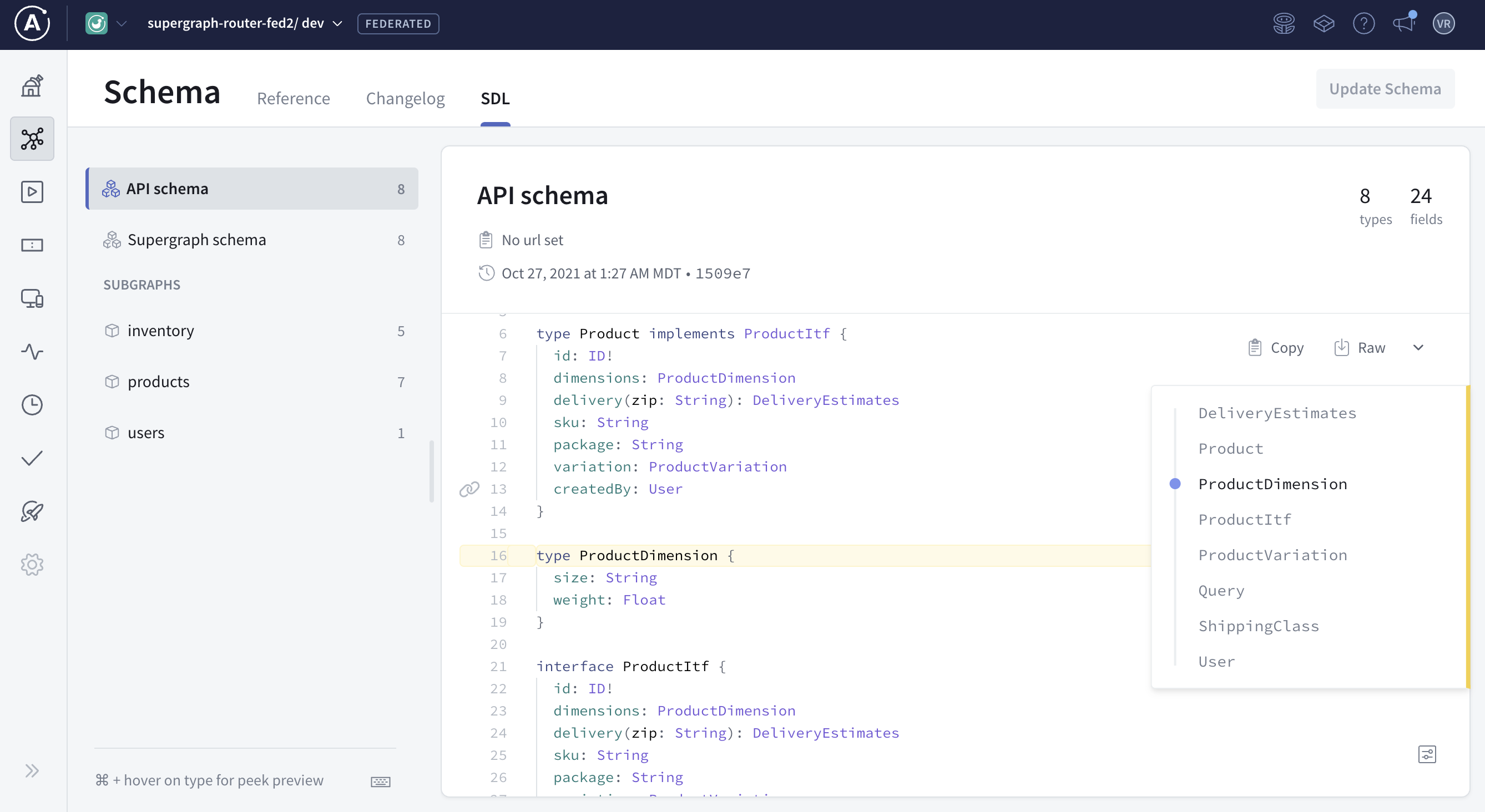
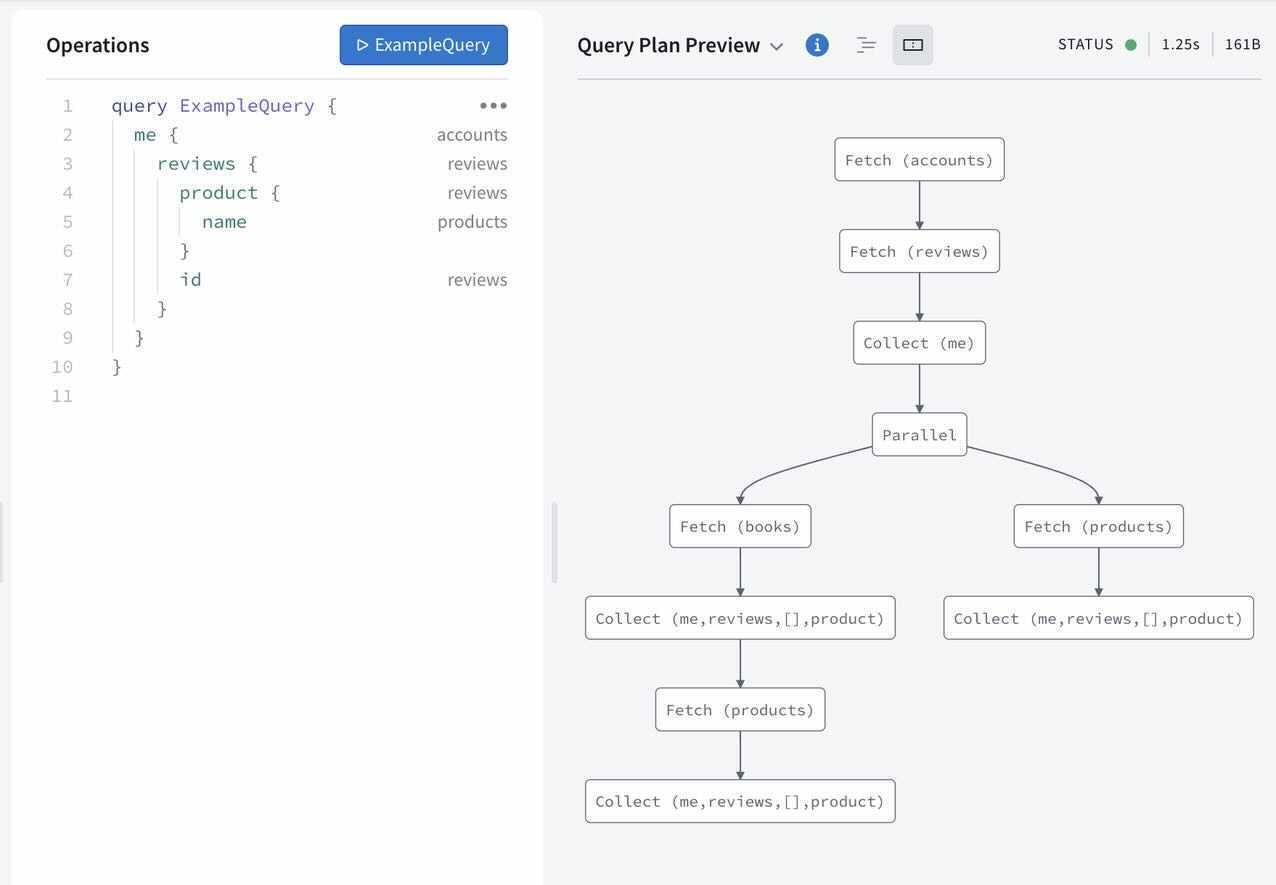
    Apollo Federation is now integrated with both Apollo Studio, a web-based tool for navigating GraphQL application programming interfaces (APIs), and Apollo Workbench, a plugin for Microsoft Visual Studio.

    At the same time, Apollo GraphQL is making available a command line interface (CLI), dubbed Rover, that makes it simpler to integrate Apollo Federation within a DevOps workflow.

    Matt DeBergalis, CTO, Apollo GraphQL, said GraphQL is continuing to gain traction as an alternative to more rigid REST APIs as more organizations begin to appreciate how dependent they have become on software. REST APIs may be simpler for developers to create, but APIs based on GraphQL are easier to update and manage, DeBergalis noted.

    Apollo GraphQL

    The challenge organizations encounter is that a GraphQL Server can become too large to easily navigate. Apollo Federation provides a mechanism that enables of subset of those APIs to be managed on multiple platforms that make up a federated instance of a GraphQL server, DeBergalis explained.

    DeBergalis also noted that IT vendors that have embraced GraphQL are also starting to add support for Apollo Federation. DataStax, a provider of a curated instance of the open source Cassandra database, has added Apollo Federation to the open source data gateway Stargate it provides to access data stored in a Cassandra database.

    At its core, QraphQL provides an open source data query and manipulation language for APIs along with a runtime for fulfilling queries. Originally developed by Facebook, the GraphQL Foundation is now an arm of the Linux Foundation. As more organizations embrace APIs to construct applications based on microservices, GraphQL adoption has steadily increased. It’s not likely GraphQL will completely replace REST APIs any time soon, however, given how pervasively deployed REST APIs already are.

    However, DeBergalis said that organizations that require a more agile approach to building and deploying software are voting with their feet for GraphQL APIs that are easier to update. As the rate of change in software environments continues to increase, the need for a more flexible approach to deploying and updating APIs becomes that much more apparent, added DeBergalis.

    GraphQL is also more efficient than REST APIs in terms how much data is shipped back and forth between a client and a server. At a time when the amount of data that is being consumed is steadily increasing, the need to give clients more control over how data is returned from a server has become more pressing. Apollo GraphQL claims more than two billion queries per day are now being launched against instances of its GraphQL Server.

    Regardless of what types of APIs are employed there are more of them with each passing day. As the number of digital business transformation initiatives increased in the wake of the COVID-19 pandemic, so too did the number of internal and external facing APIs. Developers may have their own individual preference for the type of API they want to use, but as developers are increasingly being tasked with both building and managing APIs after they are deployed, the appeal of GraphQL becomes harder to ignore.

  • Linux Foundation Takes Control Of AsyncAPI Specification

    Linux Foundation Takes Control Of AsyncAPI Specification

    The Linux Foundation announced today that it now plays host to an AsyncAPI Initiative that has developed a specification and a suite of open source tools for asynchronous application programming interfaces (APIs) and event-driven architectures.

    Founding sponsors of the AsyncAPI Initiative include Ably Realtime, Apideck, Bump, IQVIA Technologies, Slack, Solace and TIBCO. Most recently, Postman, a provider of API management tools, committed to providing engineering resources to the project as well.

    AsyncAPI provides a language for describing the interface of event-driven systems, regardless of the underlying technology, and supports the full development cycle of event-driven architecture. That approach helps unify documentation automation and code generation, as well as managing, testing and monitoring asynchronous APIs.

    Chris Aniszczyk, CTO and vice president for developer relations at the Linux Foundation, said the Linux Foundation will work with the member organizations to facilitate a governing framework similar to the frameworks other open source projects have adopted under its auspices.

    In general, reliance on event-driven architectures is on the rise thanks, in part, to the rise of digital business process initiatives that require the processing and sharing of data across multiple platforms in near-real-time. The AsyncAPI Initiative makes it simpler for disparate event-driven platforms to be integrated. It’s unlikely multiple organizations involved in a digital business initiative are ever going to standardize on the same event-driven platform, so an AsyncAPI specification provides a critical linchpin.

    Usage of the AsyncAPI Initiative is already fairly widespread, with Adidas, PayPal, Salesforce, SAP and Slack all employing it in production environments. In fact, the Linux Foundation cited research that identified AsyncAPI as the fastest-growing specification being implemented by developers, after seeing adoption rates in production environments triple from 2019 to 2020.

    Event-driven IT architectures have, of course, been around for decades. However, as they have gained traction in the modern era of software development, the need for the equivalent of a REST API for asynchronous communications between platforms, based on different event-driven architectures, became apparent. The AsyncAPI doesn’t replace the need for other types of API specifications, but Aniszczyk noted that, over time, it will soon player a larger role, especially as cloud-native application environments become more distributed and the number of use cases that can’t be addressed using traditional batch-oriented techniques continues to rise.

    In the meantime, the number of providers of event-driven platforms based on proprietary architectures spans vendors ranging from Oracle and IBM to cloud service providers such as Amazon Web Services (AWS). At the same time, open source messaging platforms such as Apache Kafka are starting to have a significant impact on how IT teams build their own event-driven platforms.

    The level of enthusiasm for an API specification that makes all those platforms more interoperable than they would otherwise be is unclear. However, as modern IT platforms continue to evolve, more IT teams are becoming aware of the crucial role API specifications play in preventing them from becoming locked into one platform.