Tag: Puppet

  • Splunk Aims to Trigger DevOps Processes

    Splunk Aims to Trigger DevOps Processes

    Splunk this week at its .conf18 conference continued a campaign to extend the reach of its operational analytics platform into the realm of DevOps through a partnership with Puppet.

    Spunk also announced the 4.0 release of Splunk IT Service Intelligence (ITSI), which extends a platform for managing IT using machine learning algorithms by integrating it with incident management software Splunk gained via its acquisition of VictorOps. Other new capabilities include support for a set of key performance indicators (KPIs) for tracking metrics such as application workloads and the ability to do root cause analysis on any event the machine learning algorithms predict.

    Andi Mann, chief technology advocate for Splunk, said the alliance with Puppet furthers Splunk’s ambitions to be a primary source of data used to inform automation frameworks that are at the heart of any set of DevOps processes. Over time, Splunk will continue to expand its DevOps partnerships with an eye toward being the analytics platform used to trigger automated processes using frameworks developed by Puppet and others, he said.

    At the same time, Splunk continues to develop orchestration capabilities of its own based on technologies it gained via its acquisition of Phantom. While that orchestration software primarily is used today in a security management application, Mann said Splunk is now looking at applying that software more broadly, as it encouraged developers to build applications using a Splunk Developer Cloud now in beta.

    Mann said that when it comes to machine learning in IT operations, otherwise known as AIOps, the most challenging task ahead is establishing trust. IT professionals are not going to sanction a “black box” approach that doesn’t enable them to see how a machine learning framework is determining what to automate. Because of that issue, Mann said, providing a root cause analysis capability in ITSI is critical.

    The next big issue facing organizations, he noted, is improving the quality of the data being used to inform a machine learning framework. One of the benefits of the DevOps movement is that, as developers take responsibility for both building and running applications, more of them are paying attention to how log data is being created. Mann said the notes developers leave within an application on how to resolve issues are becoming more detailed, a process that Splunk refers to as “semantic logging.”

    Mann noted the goal is to create a closed-loop system where every IT issue eventually creates a ticket in a DevOps system for developers to address. The bridge between those processes will be the chat capabilities provided by the VictorOps incident management platform. In fact, Mann said Splunk is moving from being a provider of log analytics software to being a provider of a continuous monitoring solution that analyzes data both stored in logs and in near real-time using a Splunk Data Stream Processor, which is currently in beta.

    It may take a while for that loop to be completely closed. But it’s clear that many of the tools that IT operations teams rely on today are becoming increasingly DevOps-friendly.


    — Mike Vizard

  • Puppet Report Sees Long DevOps Journey Ahead

    Puppet Report Sees Long DevOps Journey Ahead

    A recent report published by Puppet suggests the level of DevOps maturity within most organizations is still relatively slight. In fact, most of the respondents reported high levels of manual work still occurring across configuration management, deployment, testing and change approval processes.

    Alanna Brown, director of product marketing for Puppet, said the “State of DevOps: Market Segmentation Report” makes it clear that DevOps is being embraced to solve specific pain points with specific IT departments. As a result, silos of DevOps processes are springing up across the enterprise. That next challenge IT organizations will face is trying to unify all the DevOps processes, she said.

    The survey finds deployment automation, version control, continuous integration and infrastructure automation were the most common starting points for DevOps. Less-common starting points were lean practices, visualization of key quality and productivity metrics and setting limits on work in progress.

    Brown said the one surprising thing that study found is there is little correlation between the size of the companies surveyed and their relative DevOps maturity. Reliance on DevOps process may have more to do with needs arising from satisfying customer demand than anything else, noted Brown. The survey finds that media and entertainment and retail industry have the lowest percentage of low IT performers, while financial services, insurance and manufacturing companies had the highest proportion of low performers.

    Not surprisingly, given the relative amount of DevOps immaturity, the survey also finds that reliance on IT automation frameworks is not yet especially widespread.

    The Markets Segmentation report is based on the 2017 “State of DevOps” survey of 3,200 IT professionals that Puppet previously published. While it’s possible many companies may have advanced further down the DevOps journey since then, the report makes it clear that for both technical and cultural reasons fully embracing DevOps is an extended process. In fact, Brown said the report shows DevOps is still mainly being driven by the bottom of the organization up rather than by senior IT leaders. It’s only when DevOps success becomes visibly demonstrated that organizations attempt to replicate that success elsewhere in the organization. At the same time, widespread usage of DevOps processes suggests that DevOps itself is now much more than a grassroots movement, she said.

    Change obviously comes hard to enterprise IT organizations. Many DevOps concepts were initially pioneered by web-scale companies that have the luxury of not having to support legacy applications and processes. Traditional enterprise IT organizations now typically are trying to support DevOps processes alongside process based on Waterfall and ITIL methodologies. Not every application being supported requires that number of release updates that many modern applications require.

    Nevertheless, it’s also clear that as the number of applications being built, tested, deployed and supported continues to grow, the average IT organization is increasingly short-handed. Finding IT professionals with DevOps skill sets is a major challenge. But as more companies come to realize they are really a software company that happens to be selling a specific thing, the higher priority DevOps becomes.

    — Mike Vizard

  • Puppet Announces State of DevOps Market Segmentation Report, Dives Deeper Into Trends and Patterns by Industry, Region, Company Size and More

    Report reveals surprising industry gaps in IT performance as well as differences in DevOps starting points and more

    PORTLAND, Ore., May 31, 2018 (GLOBE NEWSWIRE) — Puppet, the standard for automating the delivery and operation of the software that powers everything around us, today announced the findings of the State of DevOps: Market Segmentation Report. The new report is the first of its kind, revealing additional insights by industry, region, department and company size, based on the 2017 State of DevOps Survey data [1]. Over the past six years, Puppet has surveyed more than 27,000 technical professionals, making the State of DevOps Report the most comprehensive and longest-running study on the topic of DevOps.

    This new market segmentation report reveals how companies across industries and regions are progressing on their DevOps journey. Among the findings:

    • Most organizations start their DevOps journeys by addressing their most acute pain points.
      Deployment automation, version control, continuous integration and infrastructure automation were the most common starting points for the DevOps journey. Least common starting points were lean practices, such as working in small batches to allow single piece flow, visualization of key quality and productivity metrics, and setting limits on work in progress.
    • The larger the company size, the higher the proportion of low IT performers. We found that there’s little difference in the proportion of high IT performers between companies of various sizes. However, as the company size grows, the proportion of low IT performers also increases.
    • Automation is not as pervasive as you think.
      The majority of our respondents reported high levels of manual work across configuration management, deployment, testing and change approval processes. As they adopt DevOps practices, automation is a key enabler along the journey, though it remains inconsistent and spotty across their organizations.
    • Industry matters.
      While all industries have about the same proportion of high IT performers, the proportion of low IT performers by industry varies greatly. The media and entertainment and retail industry have the lowest percentage of low IT performers, while financial services, insurance and manufacturing companies had the highest proportion of low performers.

    “Today, every company around the world has the same priority – automation at scale – and they’re achieving this through DevOps,” said Nigel Kersten, State of DevOps Report author and Puppet’s Chief Technical Strategist. “While the data shows that companies of all types and sizes are making progress, we still have a long way to go to eliminate manual work that prevents companies from scaling automation success. More importantly, the State of DevOps body of research underpins that every business has the potential to become a top performer and we’re excited to help on that journey to pervasive automation.”

    The full State of DevOps: Market Segmentation Report is available for download. The release of today’s report marks the launch of Puppet’s 2018 State of DevOps research initiative. The 2018 State of DevOps Survey will open the first week of June and the 2018 State of DevOps Report will be available in September.


    About Puppet

    Puppet is driving the movement to a world of unconstrained software change. Its revolutionary platform is the industry standard for automating the delivery and operation of the software that powers everything around us. More than 40,000 companies—including more than 75 percent of the Fortune 100—use Puppet’s open source and commercial solutions to adopt DevOps practices, achieve situational awareness and drive software change with confidence. Headquartered in Portland, Oregon, Puppet is a privately held company with more than 500 employees around the world. Learn more at puppet.com.


    [1] The 2017 DevOps Survey and its resulting database are the property of Puppet, Inc. and DevOps Research and Assessment, LLC. All rights reserved.


    Media contact:

    Allie Cefalo

    pr@puppet.com


  • Puppet Expands Scope of Pervasive Automation Initiative

    Puppet Expands Scope of Pervasive Automation Initiative

    Puppet today unveiled a series of initiatives as part of a continuing campaign to make IT automation available pervasively across the enterprise.

    Omri Gazitt, chief product officer for Puppet, said the first step in that effort is making it easier for IT organizations to discover what assets they need to manage. Puppet Discovery is an agentless tool through which organizations can monitor their IT environments continuously. Any changes or additions are captured immediately in a database.

    Scheduled to be available in May, Puppet Discovery replaces a traditional configuration management database (CMDB) with a platform that more accurately reflects the state of the IT environment because it’s always up to date, Gazitt said.

    Puppet is also extending the reach of its IT automation framework to include modules spanning platforms from Barracuda Networks, Cisco Systems and Nutanix, as well as the Azure cloud service from Microsoft.

    Modules for Cisco ACI software-defined networks (SDNs) and Cisco Meraki wireless networks are now available, along with a private beta of a module for the Cisco IOS operating system widely employed on the Cisco network infrastructure.

    Similarly, Puppet modules are now available for security and data protection offerings from Barracuda Networks and the hyperconverged infrastructure (HCI) platform developed by Nutanix.

    Puppet, in the context of the cloud, is now adding a module for Azure Resource Manager, as well as adding support for Windows PowerShell Desired State Configuration (DSC) and the Microsoft Task Scheduler 2.0 application programming interface (API) used in Windows.

    In related news, Microsoft, Barracuda Networks and Puppet also announced they are combining their respective capabilities to create an Azure Accelerator program to automate and secure mission-critical workloads. Organizations that participate in the program can get started at no cost, with free software from Puppet and Barracuda and no Microsoft Azure infrastructure charges while migrating workloads to Azure Cloud.

    Other new members of the Puppet Technology Alliance Partner program include Lenovo and xMatters.

    Finally, Puppet announced scheduled June availability of Continuous Delivery for Puppet Enterprise (PE), an update to Puppet Enterprise that includes role-based access control for Tasks, which can define node groups corresponding to business functions or units to limit who can run tasks within a specific node group. Puppet also has added Puppet Bolt Task Plans, which enable customers to orchestrate a set of tasks across thousands of Puppet Enterprise nodes using Puppet Orchestrator. Continuous Delivery for PE is based on a continuous delivery platform developed by Distelli that Puppet acquired last year.

    Puppet Enterprise has also been enhanced with easier backup and recovery capabilities to automate disaster recovery and support for a Puppet Development Kit (PDK), which includes a new resource application programming interface (API) that Gazitt said can be used to create custom Puppet modules to automate the management of any platform.

    In general, Gazitt noted that IT automation and DevOps increasingly are becoming synonymous. The biggest issue now, he said, is unifying all the independent silos of DevOps implementations that now span many enterprise organizations.

    Of course, IT organizations can apply IT automation without necessarily embracing DevOps. But once an organizations begins to adopt DevOps, it’s pretty clear IT automation quickly becomes indispensable.

    — Mike Vizard

  • Puppet CEO Sanjay Mirchandani Reflects on a Year at Puppet

    Puppet CEO Sanjay Mirchandani Reflects on a Year at Puppet

    As Mike Vizard detailed, this year’s Puppet Conference featured an impressive lineup of new products and services brought to market. The company appears to be firing on all Puppet CEOcylinders. The event also marked the first anniversary of Sanjay Mirchandani as Puppet CEO. I had a chance to sit down with him to review the past year, as well as the announcements at the conference.

    I will leave the product stuff to Mike’s article, but I asked Sanjay what he thought was his greatest accomplishment over the last year. He said that hands down it was assembling the great team he has put together. To be frank, I agree with him. In a time when execs at tech companies seem to hop around like fleas, Sanjay has assembled a world-class, enterprise-proven leadership team.

    In my opinion, this builds on Puppet’s greatest strength, which is its community. Puppet, like many successful DevOps companies, builds on its free, open-source roots and is nourished by a passionate, involved worldwide community. This was once again in full view at Puppet Conference. Frankly, my favorite time of the day was lunch (no surprise there, but not for the obvious reasons), where I would get a chance to sit down with “strangers” and listen to their experiences, what challenges they face at their jobs and where they see things going. I love those opportunities for unfiltered dialogue with real practitioners. The feedback I heard was pretty consistent.

    They enjoy using Puppet and they appreciate what the company is doing. They noted was that even though the company is developing products that compete with other tools they are using currently, they like the fact that Puppet doesn’t force them to make an either/or decision. They can continue using the tools they are comfortable with or start adopting Puppet’s new tools, all the while using Puppet for what they have always used it for.

    I asked Sanjay another key question: “What is your biggest failure or disappointment this year?” The answer was surprising. He said he failed to understand that some people really were not clear whether they could use Puppet in a cloud environment. Mind you, this is during a conference in which several relationships with cloud providers were announced. But evidently, some people did not understand that it works in cloud environments as well as on-premises—and, for that matter, in a hybrid environment as well.

    Mirchandani is not underestimating this view any longer. Puppet is emphasizing its cloud chops at every turn. As I mentioned, I was not aware of this view either, so it is interesting.

    In any event, this year’s Puppet Conference was the biggest (about 1,200 people) and best yet. I thought the company did a great job trumpeting a number of new products, ideas, partnerships and a clear path forward. As one of the founding and leading DevOps tools providers, its future continues to look bright.

    — Alan Shimel

  • With Distelli Technology, Puppet Expands DevOps Portfolio

    With Distelli Technology, Puppet Expands DevOps Portfolio

    At its PuppetConf 2017 conference, Puppet made it clear its ambitions now extend well beyond its namesake IT automation framework for IT infrastructure. On the heels of acquiring Distelli in September, the company announced it is adding several products to its portfolio based on technologies developed by Distelli.

    The new offerings include Puppet Pipelines for Apps, to automate commits; Puppet Pipelines for Containers, to automate the building of Build Docker Images from a source repository and then deploying them on a Kubernetes cluster; and Puppet Container Registry, to host Docker images and unify views of them regardless of whether the repositories are local or remote.

    At the same time, the Blueshift platform developed to automate deployments of container platforms such as Kubernetes, Docker Swam and Mesos is also being enhanced. The Kubernetes module now installs the container cluster in a more secure way that is also highly available. The Docker module adds support for Puppet Code Manager, Docker Swarm mode and Docker Secrets. A Kream tool makes it easier to deploy Kubernetes and Helm, a package manager for Kubernetes, at the same time. Helm also now can manage applications deployed on Kubernetes.

    In addition, the company announced Puppet Discovery, a tool that makes it simpler to identify infrastructure distributed across a hybrid computing environment, and Puppet Tasks, which employs new open-source agentless software dubbed Puppet Bolt to automate entry-level IT tasks. Bolt is capable of running existing scripts written in any framework and executing them on any platform that Puppet supports.

    The company is also adding a Task Manager to Puppet Enterprise that makes it easier to manage ad hoc tasks and executing them across hundreds of Puppet nodes. The latest release of Puppet Enterprise includes tools for inspecting packages deployed on and a tool to simplify configurations of those nodes.

    Puppet has also expanded its alliance with Splunk to tighten integration between the two IT operations’ platforms, and formed new alliances with Baracuda Networks, CloudPassage, Conjur/CyberArk, Cumulus Networks, Electric Cloud, F5, Intelliment Security, Onyx Point, Praecipio Consulting and Sensu. In addition, the Puppet module for the Microsoft Azure cloud has been updated to provide access to more disk storage, expanded networking support and support for Azure tags.

    Tim Zonca, vice president of marketing and business development, says with these products Puppet should no longer be considered a one-product company. It is now committed to developing a full range of DevOps management capabilities. That’s significant, notes Zonca, because today there is too much tension between IT operations teams and developers caused by silos of automation across various DevOps processes. As part of that effort, the company is also committing to start to synchronize the release cycles of the various elements of its portfolio.

    As DevOps continues to mature, the line between how infrastructure, applications and security are managed continues to blur. Many IT organizations prefer to acquire a set of DevOps tools from one vendor because it simplifies purchasing and support. Over time, those vendors combine those tools into an integrated suite that aims to unify the management of infrastructures, applications and security. Most vendors today are a long way from unifying those functions, but a wave of consolidation across the DevOps sector suggests the race is on to provide a unified DevOp stack capable of being employed across multiple platforms.

    The percentage of IT organizations that make extensive use of IT automation frameworks such as Puppet is relatively small. Much of the resistance to IT automation frameworks can be attributed now to simple inertia. But as the size and scope of IT environments exceed the capabilities of an internal IT team to manage manually, it’s now only a matter of time before reliance on IT automation increases.

    Puppet and other vendors also have infused their platforms with machine learning algorithms to expand the scope of what can be automated within an IT environment. In general, Zonca says reliance on those capabilities tends to increase in time once the DevOps teams gains confidence in the algorithms’ abilities to make the right decision. Until such time, Zonca says most IT professionals employ those algorithms to either present them with a series of suggested options based on the most recent events that have occurred. Given the nearly infinite number of possibilities that can be inferred from those events, most DevOps teams already are going to need all the machine learning algorithm help they can get.

    — Mike Vizard

  • Puppet Partners with Google Cloud to Support Migration and Management in the Cloud

    New GCP Modules For Puppet Help New and Existing Puppet Users Take Advantage of Google Cloud Platform

    PORTLAND, OR–(Marketwired – Oct 10, 2017) – Puppet, the standard for automating the delivery and operation of the software that powers everything around us, today announced a new partnership with Google Cloud, including Puppet Approved modules to accelerate cloud adoption and dedicated engineering teams. This collaboration helps Puppet customers quickly adopt Google Cloud Platform (GCP) services, including its advanced machine learning and data analytics capabilities, while reducing IT costs and gaining the agility and flexibility of the cloud.

    As more businesses look to capitalize on the advantages of the cloud, migrating and managing applications as they move to the cloud remains a challenge. Migration often means rearchitecting your environment in the cloud which is time consuming and error prone when done manually. With Puppet, users define their infrastructure as code once and can apply those configurations across their on-premises and cloud environments. Puppet accelerates migration to the cloud and provides Day 2 management which increases operational efficiency in dynamic, hybrid environments. As part of the joint effort, customers are now able to leverage a set of Google-developed modules that automate the provisioning, configuration, and ongoing management of GCP services to help Puppet customers quickly and effectively take advantage of GCP.

    Google Cloud recently released a set of Puppet Approved modules on the Puppet Forge for managing infrastructure-as-a-service components and Kubernetes, including; Google Compute Engine (GCE), Cloud DNS, Cloud SQL, Google Container Engine (GKE), Cloud Storage, and Google Authentication credentials. Puppet Approved is a designation given to modules that pass specific quality and usability requirements. At PuppetConf 2017, Google Cloud will release additional modules to increase coverage for Google Cloud products, with the next set of modules focusing on data processing, including Google Cloud Pub/Sub, Cloud Spanner, and Stackdriver. They will continue working to release new modules over the next several months.

    Google Cloud will also be releasing the technology they used to generate modules so the Puppet module ecosystem can move faster and keep up with rapidly changing APIs in the cloud. Google’s Puppet code generation tool is a boon to module developers because it enables faster development and broader coverage.

    “As enterprises move to the cloud, they are looking for ways to leverage their existing infrastructure investments,” said Eric Johnson, Engineering Manager, at Google. “With our new Puppet modules for Google Cloud, we’re enabling customers to more rapidly migrate to the cloud and manage their on-premises and cloud environments with Puppet.”

    “Our customers want choice, flexibility and the ability to manage everything they have, from their physical infrastructure to cloud resources for maximum operational efficiency and scale,” said Nigel Kersten, Chief Technical Strategist, Puppet. “With Google Cloud’s expertise in providing world class infrastructure and Puppet’s widely adopted enterprise management platform, we’re helping customers accelerate their move to the cloud.”

    Additional resources

    • Learn more about Puppet.
    • Subscribe to the Puppet blog.
    • Follow Puppet on Twitter @puppetize.
    • Try Puppet Enterprise for free.

    About Puppet
    Puppet is driving the movement to a world of unconstrained software change. Its revolutionary platform is the industry standard for automating the delivery and operation of the software that powers everything around us. More than 33,000 companies including more than two thirds of the Fortune 100 — use Puppet’s open source and commercial solutions to adopt DevOps practices, achieve situational awareness and drive software change with confidence. Based in Portland, Oregon, Puppet is a privately held company with more than 400 employees around the world.

  • DevOps, Security, AI Convergence on Horizon

    DevOps, Security, AI Convergence on Horizon

    DevOps is regarded as practice that can drive performance advantages. Artificial intelligence is showing very real promise across the security market. Most public and private-sector organizations know that they must explore new and different ways of defending their networks against modern threats. These three factors make it clear that DevOps, AI and security are ripe for convergence.

    Defining AI

    Anyone reading this post doesn’t need me to explain to them what DevOps and security are; both of these categories are well-defined. However, AI is really in an emergent stage, with different types in use and many definitions floating around. Because of this, I think it is important to let readers know that in this post, AI refers to a class of technology that can:

    • Consume data, learn and get smarter on its own
    • Automatically identify and solve problems
    • Operate independently, without human supervision
    • Scale massively
    • Move at near real-time speed
    • Achieve levels of accuracy that are beyond human capabilities

    DevOps and Security are United

    DevOps and security have merged. For several years now, organizations have been leveraging automation technologies and DevOps practices to continuously deliver security and compliance policies across data centers and clouds.

    Further legitimizing the union is the fact that leading DevOps and automation players such as Puppet, Chef and Ansible have formed numerous partnerships that deliver effective security capabilities to their customers.

    There are, of course, other signs that show how successful the DevOps and security marriage has been. One of which is the emergence of the term “rugged DevOps.” It is now so widely recognized that it commands its own section on this site and is often the subject of discussion at several notable security conferences.  

    DevOps and AI are Dating

    The relationship between DevOps and AI is in the early stages, with the courtship between the two well underway. Examples of its progress are found in numerous blogs and articles, several of which include:

    DevOps and AI have certainly not yet intertwined as deeply as DevOps and security have. These examples (and others out there) do show they the two will continue to integrate beyond what we are currently witnessing.

    DevOps, Security and AI

    DevOps and security are wed. DevOps and AI are moving closer toward each other. It’s only a matter of time until all three get together.

    Because several DevOps leaders are already in the business of security, it’s logical to assume that a partnership between one of them and an AI-driven security provider will be what ultimately leads to a marketable solution.

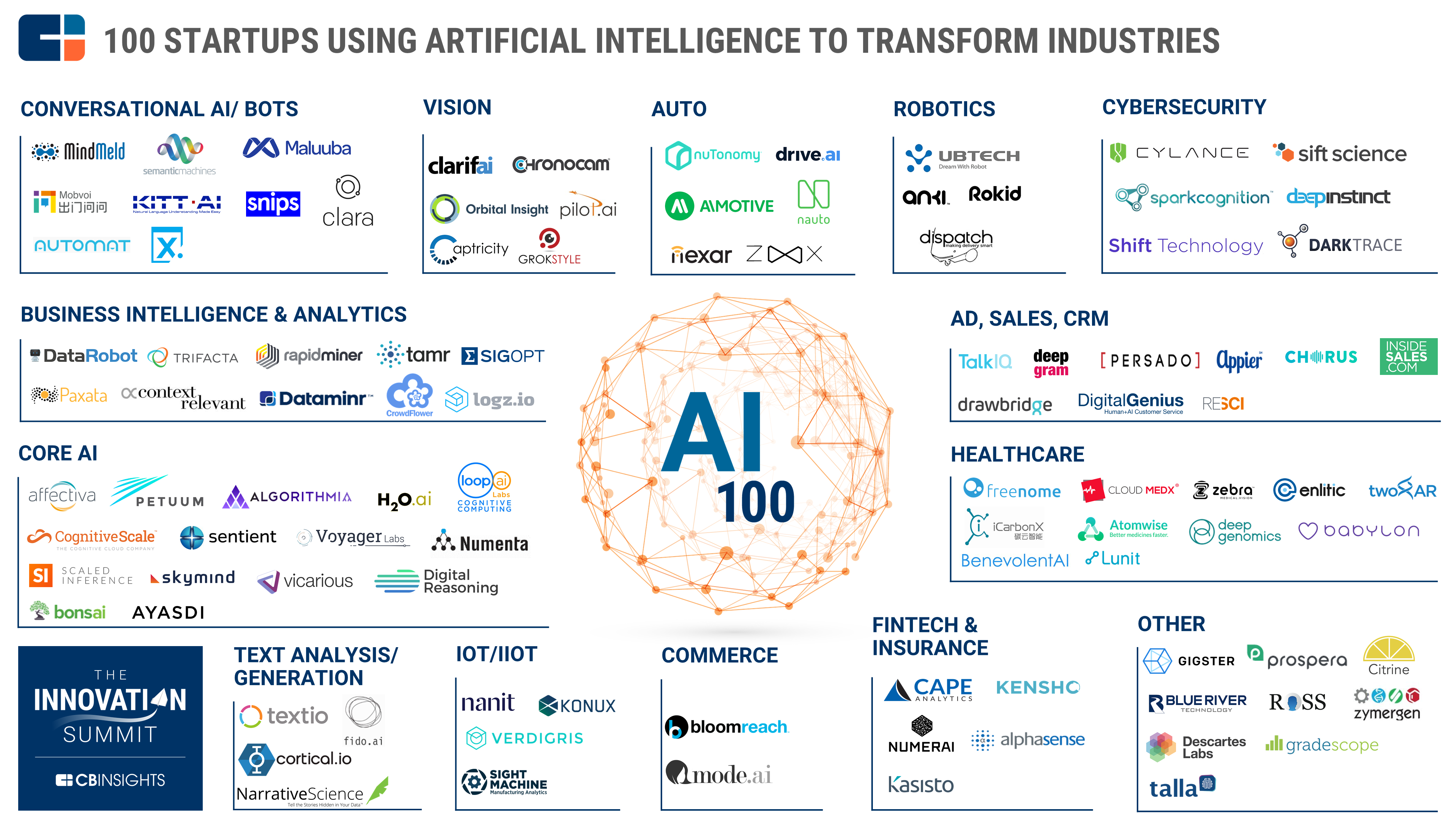
    DevOps provider candidates with the potential to move on a partnership that can combine DevOps, security and AI have a raft of new and established security providers available to work with. Several of the startups in this class are recognized in the CB Insights AI 100 2017 infographic. Companies such as Cloudera (NYSE: CLDR), which is using AI and machine learning to solve security problems, are among the more established providers that may make for a perfect partner. 

    How quickly will the market see such a partnership? That remains to be seen. However, with DevOps now fully accepted as a methodology that can positively impact bottom lines, AI coming into its own, and the need for new and different ways of defending organizations against attacks at a critical stage, it seems almost certain that the convergence will be upon us sooner rather than later.

    — Joe Franscella

  • VMware Cloud on AWS Will Bring DevOps Issues to a Head

    VMware Cloud on AWS Will Bring DevOps Issues to a Head

    Now that instances of VMware are starting to become available on Amazon Web Services (AWS), a DevOps ecosystem is starting to emerge around the management of applications workloads moving into and out of AWS.

    Among the more than 4,500 applications that VMware claims already support VMware Cloud on AWS are those from Blue Medora, CA Technologies, Chef, Cloudbees, Dynatrace, Jfrog, Puppet, SaltStack and the Ansible arm of Red Hat.

    VMware CEO Pat Gelsinger told attendees at the recent VMworld 2017 conference that VMware and AWS are just now scratching the surface of what they plan to accomplish together. AWS CEO Andy Jassy added that, unlike other alliances, which consisted mainly of marketing, engineers at both companies are working closely together to deliver VMware globally across all AWS availability zones. At present, VMware Cloud on AWS is available in the AWS availability zone hosted in Portland, Oregon. The service soon will be extended to the east coast of the United States, followed by rest of the world over the course of 2018.

    The availability of VMware Cloud on AWS should force several DevOps issues within enterprise IT organizations that have deployed the VMware stack of software mainly on-premises. Many of those organizations have also been employing public clouds such as AWS. But because those environments are based on different hypervisors, it was never easy to migrate workloads between the two platforms. There are plenty of options for running VMware software in the cloud, but because AWS is the largest provider of public cloud services, there are many customers who want to seamlessly move workloads between their on-premises IT environments and AWS via a common stack of VMware software.

    In many organizations the desire to shift applications workloads into AWS will bring many DevOps issues to a head, as VMware and AWS use has occurred in independently of each other. There could be many workloads running on each platform, but for all intents and purposes, IT organizations have managed both platforms in isolation. Now that VMware is becoming available on AWS, all the challenges associated with moving workloads between a public and private cloud come to the fore.

    Most of those DevOps issues will be focused first on moving some classes of workloads running on VMware into AWS. Application workloads that don’t need to run constantly will be among the primary candidates followed by a slew of data protection applications that will enable IT organizations to back up and archive massive amounts of data inexpensively. Next up will be applications that need to be distributed globally to increase availability.

    At the same time, a lot of VMware shops will be moving application development into the cloud. But just because an application is developed in the cloud doesn’t mean it will stay there. Many IT organizations have already discovered that when it comes to long-running applications, the total cost of deploying them on-premises is less than deploying them on a public cloud. The DevOps tasks ahead, of course, will start with figuring out which VMware-based applications make the best candidates from a financial and availability perspective to be deployed on AWS.

    — Mike Vizard

  • Puppet Makes Development Kit Available to Advance DevOps

    Puppet Makes Development Kit Available to Advance DevOps

    Organizations that embrace DevOps often find themselves moving from having a paucity of IT automation tools to an embarrassment of riches in short order. As a result, many of the teams involved in those DevOps processes wind up making different IT automation choices. Before too long, the organization finds itself trying to bridge too many islands of automation.

    Puppet is working to bridge the automation gap between developers and IT operations teams with the release of a Puppet Development Kit that makes it easier for anyone to generate code that can be executed using the Puppet IT automation framework.

    Michael Olson, senior product marketing manager for Puppet, says all too often developers automate various tasks using their own favorite tool. When it comes time for IT operations teams that have standardized on Puppet to deploy that code, they have to rewrite various routines. Puppet Development Kit makes it possible for developers to now write code that can be shared seamlessly with IT operations teams that have adopted the Puppet IT automation framework.

    In some environments, DevOps has literally become too much of a good thing. Olson says the Puppet Development Kit represents an opportunity to truly unify fragmented processes in a way that developers can easily consume. The Puppet Development Kit includes unit test modules from Windows, OS X and Linux workstations to ensure that Puppet code is creating and managing configuration resources as intended.

    The existence of the Puppet Development Kit should also make it easier for organizations that have not embraced DevOps to get started. A recent survey conducted by Puppet finds that organizations that have embraced DevOps are delivering new applications and updates at rates that far exceed other organizations. The longer it takes for organizations to embrace DevOps the wider that gap grows. By making it easier to include developers in more structured approach to DevOps, many companies that are getting started late with DevOps now have an opportunity to close that gap.

    Developers don’t always have a lot of respect for IT operations. Many of them have been throwing code over the proverbial data center wall because deploying code in a production environment was always someone else’s problem. Tools such as the Puppet Development Kit essentially steal a page from the same playbook Tom Sawyer used in the book by Mark Twain to get the kids in the neighborhood to help him paint a picket fence.

    At the other end of the spectrum, however, are developers who are firmly convinced they can program the IT operations team out of existence now that “infrastructure is code.” In reality, most of those developers quickly discover that the ongoing care and feeding of hundreds of applications deployed in a production environment still requires a fair amount of human intervention. In fact, without some form of IT automation framework in place, deploying applications at that level of scale would not be possible. The challenge is striking the right balance between what can be automated and higher-level tasks that still require human expertise.

    — Mike Vizard