Tag: open source

  • Harness Revamps User Interface for CI Platform

    Harness Revamps User Interface for CI Platform

    Harness today announced it has updated the community edition of its continuous integration (CI) platform with, among other updates, a revamped user interface.

    Formerly known as Drone.io, the latest release also adds pipeline execution visualizations, governance and security controls and live CI pipeline debugging capabilities. Harness last year acquired Drone.io, an open source CI project, to extend its existing continuous delivery (CD) platform into the realm of CI. Harness claims there are now more than 50,000 active monthly users of the community edition of Harness CI.

    Brad Rydzewski, co-founder of Drone.io, said the user interface for Harness CI will soon be applied across the entire portfolio.

    The update to the community edition of Harness CI comes at a time when the debate over how tightly integrated CI and CD platforms need to be is heating up. Harness launched a namesake CD platform before it acquired Drone.io to add a CI capability. While most DevOps teams are proficient with CI, the CD side of the DevOps equation has proven more elusive. There are now GitOps advocates that contend the rise of Kubernetes makes it more advantageous to enable a separate CD platform to pull updates from a Git repository, rather than having them pushed out by a CI/CD platform. The challenge with CD has always been that each platform on which code is deployed is unique. Kubernetes, however, now provides a de facto standard layer of abstraction that runs atop multiple platforms.

    Rydzewski said the integrated CI/CD approach will ultimately prevail, because it enables DevOps teams to more easily integrate a range of processes, including testing, that are required to consistently build and deploy applications at scale. Harness is, essentially, making a case for solving the CD challenge using a platform that encourages – but doesn’t require – a DevOps team to replace their existing CI platform.

    Regardless of how DevOps evolves, the CD issue needs to be addressed. As the enterprise becomes more extended with the rise of both cloud and edge computing, the number of platforms a DevOps team needs to support continuously expands.

    Despite the fact that DevOps teams employ CI/CD platforms, it is clear most of those organizations are not overly committed to the way they currently manage CD. It may be years before most organizations finally implement a consistent set of processes for automating application deployment.

    In the meantime, the number of organizations just starting out on their DevOps journey continues to increase. There are still plenty of instances where organizations have yet to deploy any type of CI/CD platform. It’s also worth noting that, in many cases, different DevOps teams within the same enterprise have decided to deploy different CI/CD platforms.

    Regardless of how DevOps evolves the pressure to automate is rising. The challenge many DevOps teams face today is the current platform they are relying on to automate the building and deployment of applications requires a small army of specialists relying on all too often manual processes to maintain.

  • How Open Source Software Powers Digital Innovation

    How Open Source Software Powers Digital Innovation

    Open source has permanently altered how we work and conduct business. Linux, and thousands of other open source projects and open standards, now dominate the software landscape, supporting emerging technologies like artificial intelligence and edge computing. Without open source, the DevOps tooling ecosystem would lack Docker, Kubernetes, service mesh, popular databases, and many CI/CD tools used by DevOps teams daily.

    Now, more than ever, companies are searching for ways to meet escalating user demands. The pandemic has amplified this urgency, accelerating existing digital transformation initiatives. Arguably, open source is the engine that now powers the digital innovation required to compete. Leveraging open source could also help check rising cloud costs. With proprietary solutions falling out of favor, many enterprise leaders are adopting open source alternatives for infrastructure modernization and application development.

    Red Hat recently released its third annual State of Enterprise Open Source report. The report surveyed 1,250 IT leaders worldwide on their open source adoption and usage patterns. The findings validate what most of us already know — open source is now fundamental to most technology stacks. Without it, most development projects would fall flat in an instant.

    Open Source Use Cases

    Open source is at the heart of modern software development. According to the report, 90% of enterprise IT leaders are using open source. So, where is open source being applied? Well, 64% of enterprises use open source software for IT infrastructure modernization. The report surmised that this could be due to Linux and open source infrastructure replacing proprietary systems.

    The report also found 54% of enterprises use open source for application development. This is no surprise, as engineers routinely adopt open source libraries and packages to construct B2B and user-facing experiences. In a digital-only environment, applications are the lifeblood for many businesses, and open source is critical scaffolding.

    The third top use case for enterprise open source is digital transformation, at 53%. This figure has increased by 11 percentage points in the last two years alone. Open source will likely continue to replace non-digital or manual processes with software-based, automated processes.

    In the enterprise, open source is used in networking, adopted by 54% of enterprises, databases, at 53% and security, at 52%. Other areas mentioned in the report include big data analytics and cloud management tools.

    In recent years, multi-cloud has become a notable trend. The idea is that organizations will seek out multiple cloud vendors to support different use cases. The Red Hat report confirmed that hypothesis, finding that 69% of respondents prefer to use multiple vendors for their cloud. As hybrid, multi-cloud setups profligate, cloud expertise and smart multi-cloud economic practices continue to gain importance.

    Containers and K8s

    Open source components are the foundation for containers and container management utilities. As reliance on containers grows, so will the dependence on open source technology. The report found just under half of enterprises now use containers in production. An additional 37% also use containers for development-only purposes.

    To orchestrate these containers, IT teams have coalesced around Kubernetes. Sixty-six percent of respondents view Kubernetes as very or extremely important. As Kubernetes becomes ubiquitous, growth in container usage is slated to continue — about one in three respondents reported their container usage will increase significantly in the next 12 months.

    “Kubernetes has become the de facto standard for Linux container development,” said Michael Hinterland, team lead, ICS cloud & automation and ICS system & middleware, Porsche Informatik.

    While Kubernetes is flourishing, there are certainly variances across industries. For example, 62% of financial services and telecommunications respondents adopted containers in production, while other sectors, such as health care and retail, saw a lower adoption of containers in production, at 47% and 50%, respectively. The highly-regulated financial services sector also scored high on Database DevOps, a separate report recently concluded.

    Open Source Benefits and Barriers

    There are numerous benefits to using enterprise open source software. For one, a commitment to open source brings transparency and collaboration improvements. Respondents also cited higher quality software, access to the latest innovations and improved security as being among the top benefits to adopting open source software.

    But open source has its drawbacks, too; 42% of tech leaders reported a lack of support as a top hurdle to enterprise open source adoption. This checks out – community-driven projects don’t typically offer traditional support systems. Without accessible frameworks for learning, creating a Center of Excellence at scale becomes difficult.

    Other top barriers to enterprise open source adoption include compatibility, code security and a lack of internal skills. Introducing open source within an enterprise means upskilling the workforce and encouraging secure-by-default settings to avoid costly misconfigurations. It could also mean working with trusted allies that further open source initiatives, the report recommended.

    Open Source Fuels Emerging Tech

    “Open source has solidified itself as an innovation engine for the software industry,” wrote Paul Cormier, president and CEO, Red Hat.

    Indeed, open source is at the heart of most cutting-edge emerging technologies. For example, 55% of respondents report using enterprise open source in edge computing and internet of things (IoT) settings. Simultaneously, 48% of respondents use open source for artificial intelligence and machine learning (AI/ML). Amid open source projects like OpenAI and GPT–3, AI is eating the software world, Forbes reported.

    Both categories are slated to increase by nearly 20 percentage points in the next two years, whereas the use of proprietary solutions for AI/ML will decrease. Open source will continue to affect buying decisions, as 83% of IT leaders are more likely to choose a vendor that has contributed to the open source community.

    Within a COVID-19-influenced world, “the problems are too big for one person, one company or one organization to solve,” said Cormier. “But it’s in moments like this where open source truly shows its power.”

  • Scarf Gateway Tracks Open Source Software Usage

    Scarf Gateway Tracks Open Source Software Usage

    Scarf today exited stealth to launch a gateway that makes it simpler for individuals or organizations to track usage of open source software.

    Avi Press, founder of Scarf, said the Scarf Gateway is an online service through which providers of open source software can redirect downloads from a wide range of repositories and registries. That extra step then provides those entities with data and insights about the type of individuals and organizations using their software.

    Fresh off raising initial seed funding, Press said the Scarf Gateway will make it easier for developers of open source software to employ multiple repositories to distribute their code, because they won’t become overly dependent on metrics shared by the provider of a single repository.

    Most of those registries today only provide download counts for packages. Scarf Gateway will provide insights into, among other attributes, downloads by version, platform, location, company and cloud environment(s).

    The majority of organizations making open source software available don’t have a lot of visibility into how their offerings are being employed until organizations using the software sign up for commercial support. Armed with more insights into how their software is being used, many of those providers would be able to more proactively collect feedback, in addition to promoting their commercial services.

    Many open source project maintainers have a difficult time prioritizing what capabilities to add or fix, simply because they don’t know enough about how their software is being employed, Press said.

    The ability to more granularly track usage comes at a time when tensions over open source monetization and compensation are rising. In many cases, providers of open source software are changing the way they license their software to prevent cloud service providers from reaping most of the benefits of their work. Startups, typically funded by venture capitalists, make their software available as open source code in an effort to build a customer base on the strength of their support services. Cloud service providers have discovered they can take the code these vendors create to launch their own service. Those cloud service providers may contribute code to the project, but the startup vendor doesn’t typically enjoy any of the economic benefits.

    Many individual contributors don’t work for a company that sponsors their contributions, and also want to be paid for their efforts. A survey of 4,440 developers who actively participated in open source projects in 2020 finds more than half (54%) of respondents said they feel individuals should be paid for their contributions to open source projects. The survey, conducted by Digital Ocean, a cloud service provider, found only 14% of respondents are currently paid for their contributions.

    It’s too early to say what impact the ability to track usage of open source software may have. Many individuals using open source software may prefer their current level of anonymity. Others might participate more in a project if engaged. Like it or not, however, large swaths of the open source community want to know the degree to which their efforts are making an actual difference.

  • GitLab Releases Updates to CI/CD Platform

    GitLab Releases Updates to CI/CD Platform

    GitLab this week made available a 13.9 update that adds more than 60 new features and updated capabilities to its namesake open source continuous integration/continuous delivery (CI/CD) platform.

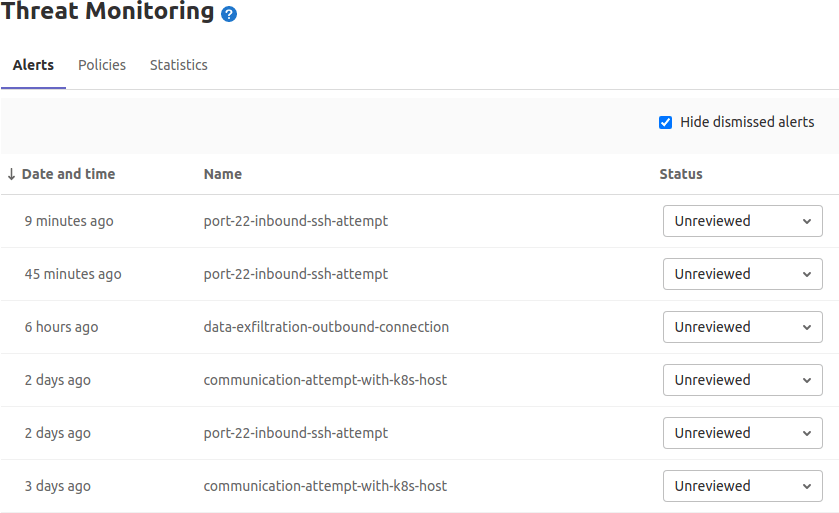
    Brian Glanz, a product marketing manager for GitLab, said chief among those capabilities is a Security Alert Dashboard that enables DevOps teams to triage high-priority alerts more easily. As more organizations embrace DevSecOps best processes, application development teams need to be able to prioritize which security issues are more pressing than others, Glanz said.

    Other new capabilities include the ability to reuse a pipeline of a CI/CD configuration, and a maintenance mode option that keeps instance available while administrative tasks are being performed.

    Additionally, it’s now possible to view group-level analysis of release metrics, in addition to the ability to view a version of a pipeline configuration with all of the include and extends configurations merged together.

    Glanz said GitLab continues to gain traction, because all the capabilities it provides are based on the same integrated code base. The effort a DevOps team needs to exert to take advantage of new capabilities is substantially less than rival platforms, Glanz said.

    At the same time, Glanz noted that the number of contributors to GitLab coming from outside the company also continues to increase. The latest version has 299 merged contributions from the wider GitLab community.

    It’s not clear how much of an appetite organizations have, these days, to replace an existing CI/CD platform. However, it’s not uncommon for organizations to have multiple CI/CD platforms employed by different DevOps teams. In the meantime, the number of teams within enterprise IT organizations that are embracing DevSecOps processes to advance digital business transformation initiatives continues to rise. As more organizations realize how dependent they are on custom software to differentiate themselves from rivals, more enterprise IT organizations will opt to standardize on a single CI/CD platform to both reduce costs and increase overall efficiency.

    A report published last year by GitLab noted organizations can improve application development and delivery by 87%, resulting in a savings of more than $23 million. Overall, the report claims organizations can see a 407% return on investment (ROI) on the GitLab platform.

    Naturally, competition among CI/CD platform providers remains fierce. With most developers working from home to help combat the spread of the COVID-19 pandemic, these platform providers have been touting their ability to support remote work. It’s not clear if developers will be returning to the office en masse now that COVID-19 vaccines are being distributed. However, it’s clear that even once the pandemic subsides, the way application code is created and maintained will be a lot more fluid. Many organizations are now more comfortable hiring developers wherever they can find them.

    Of course, many of those developers are going to be wary of joining organizations that have disjointed workflows, especially when it comes to shifting responsibility for application security further left toward developers. In fact, the ability of any organization to effectively recruit developers is now directly tied to the overall sophistication of their DevOps workflows.

  • Amex, Adobe Join GitHub Intern Program

    Amex, Adobe Join GitHub Intern Program

    GitHub revealed today that Adobe and American Express have joined its Summer 2021 Fellowship program, a 12-week, hands-on curriculum where interns work alongside developers to contribute to open source projects hosted on the GitHub repository.

    Vanessa Gennarelli, senior director of education at GitHub, said the overall goal of the program is increase the pool of developer talent with experience working remotely on an open source project that requires a fair amount of collaboration with other developers.

    The program was developed in collaboration with Major League Hacking (MLH), which organizes hackathons for students. Each intern participates in a series of short hackathon sprints involving multiple open source projects over the 12-week period. GitHub originally created the fellowship program as a way to address the demand for online internships during the COVID-19 pandemic.

    Those internships have provided open source maintainers with access to a pool of talent that can reside anywhere versus, for example, always trying to recruit individuals located in a specific geographic area, Gennarelli said. GitHub is also trying to increase diversity within the open source community, Gennarelli added.

    Three quarters of open source maintainers (76%) that have worked with MLH interns reported their open source project was in a better state after working with MLH Fellows. Of eligible fellows who were matched for jobs with an MLH Fellowship partner company, more than 20% ended up receiving full-time offers at that company.

    Mike Swift, MLH CEO, said the internships provide a way to partially close a gap in developer expertise that only continues to widen. Organizations are especially keen to find developers that have open source expertise, Swift added.

    A survey of 3,400 developers and technology managers conducted O’Reilly Media on behalf of IBM finds 65% of respondents preferred skills related to the underlying open source technologies. The same percentage agreed that contributions to open source projects impress potential employers and result in better professional opportunities. In many cases, open source projects are among some of the most innovative development initiatives in the IT industry, Swift noted.

    Of course, as open source becomes a primary driver for building software, more contributors are looking to get paid for their efforts. Much of that compensation comes in the form of organizations that hire developers for the express purpose of contributing to open source projects that they deem critical to their operations.

    Regardless of how developers are compensated for their time and effort, it is apparent open source projects are the fountainhead from which many opportunities spring. Future success in any endeavor has as much to do with who someone knows as it does actual talent. The best place for any developer to expand their base of industry contact is to collaborate on an open source project. The more projects they contribute to, the greater the reach of their personal network and, by extension, their net worth, will become.

  • DevSecOps Trends to Know For 2021

    DevSecOps Trends to Know For 2021

    For DevSecOps leaders, 2021 will be the year of the open source supply chain attack. It’s already starting, in fact. On January 7, security researchers at Sonatype identified three malicious Java components in the Maven Central repository. The components had identical names to reputable components. Then on January 20, the same research team found three more compromised packages in the node package manager (NPM). In all cases, these malicious components had nearly identical names to common Java and NPM packages.

    The bad packages were downloaded thousands of times before they were removed, compromising the open source software supply chain. Such incidents are increasingly common. The practice of intentionally or unintentionally deploying poorly vetted code — we call it shadow code — is inevitable. Shadow code happens when developers include  third-party software code in applications without approval or sufficient safety validations. Developers do this for the same reason that they use libraries and other components – it is quicker than writing the functionality from scratch. Often, these components offload compute-intensive or specialized features. Some examples are shopping cart software, payment systems or responsive design requirements. Sometimes, too, developers mistakenly include shadow code that is fake, but has a similar name (this is referred to as typosquatting), like the examples we described above.

    Shadow code, plus a growing reliance on open source, magnifies the security risk and attracts more bad actors. Modern applications are composed of anywhere from 50% to 90% open source code, depending on the code audit. Rapid code iterations make it impossible for security reviews to police all code changes and dependencies. With many open source libraries containing hundreds of internal dependencies, even the best-automated code checking tools cannot keep up.

    How Shadow Code and Supply Chain Attacks Play Off Each Other

    The compounding risks of shadow code and supply chain attacks are one of the most pressing issues that will face DevOps and DevSecOps teams in the coming year. Security researchers at Sonatype tracked a 430% increase in supply chain attacks against 24,000 open source software components in 2020. The report blamed the growth of these types of attacks on two factors; first, DevOps teams are increasing code velocity to accelerate time to market. Second, security teams are responding to traditional zero-day vulnerabilities more quickly, shortening the window for exploits. Combined, the two factors encourage more supply chain attacks.

    Attacking the Modern Extended Software Supply Chain

    In modern web applications, most front-end and middleware application code comes from third-parties. Some is proprietary, but most code is open source, due to cost considerations. Open source component source code is a massive attack surface that is often poorly monitored, measured and inventoried. DevSecOps teams should create plans to reduce the impact of these attacks in 2021 and beyond.

    Because supply chain attacks are often used either as launch pads for other attacks or to steal sensitive information, the business and financial risk from these compromises is considerable. In its annual “Cost of Breach” survey, IBM found that the average data breach cost $3.8 million and required 280 days to fully contain.

    Supply chain attacks are likely an even more expensive subset of attack, due to several factors. Because they take advantage of trusted relationships, these attacks may go undetected for months or even years. Supply chain attacks also tend to be sophisticated and target an organization’s most valuable assets.

    Evidence is emerging of coordinated attacks attempting to take advantage of supply chain weaknesses at the same time. Multiple attackers have targeted known users of vulnerable and end-of-life (EOL’d) versions of the online shopping platform Magento (aka Magecart attacks). We suspect that advanced hacking groups are either running the same scanning software packages to identify vulnerable targets, or are buying lists of viable targets via the dark web.

    The Open Source Supply Chain Risk

    The benefits of using open source software in building web and mobile applications is clear. Development teams, DevOps and DevSecOps teams can reuse code or libraries maintained by someone else to ship code faster and reduce the amount of code they must maintain.

    Nowhere is this more of a risk than JavaScript and Node.js. The meteoric rise of Node.js as middleware has dramatically increased the number of packages and libraries that can be used by developers. NPM, the package manager for Node.js, is the most frequently downloaded piece of software in use today.

    The rapid usage growth of Node.js and JavaScript has created a chaotic environment conducive to supply chain attacks. Attackers can inject code into trusted open source packages in a variety of ways. (To be clear, Java, Python, PHP, Golang and Ruby have the same potential supply chain vulnerabilities. But JavaScript is, by far, the largest target and it dominates the front-end and near-front-end, where user data is easiest to skim).

    Some big, corporation-backed libraries, such as React (backed by Facebook), are well maintained. But many other commonly used libraries are maintained by under-resourced groups of developer volunteers. These unpaid maintainers have little incentive to do the “grunt work” of following rigorous security best practices, such as setting up automated code analysis or responding quickly to reports of security problems.

    The cost of running all widely used open source JavaScript libraries through a proper code review would likely be in the tens or hundreds of billions of dollars. Because the maintainers of this code rarely profit from their work, they are not inclined to pay for and set up automated review systems. This is true even when maintainers work at large companies; the sheer amount of work behind maintaining a popular open source project can be backbreaking without major organizational support. Even code reviews and running code analysis tools is no panacea. Many popular open source projects change rapidly due to numerous and frequent code commits. So, a clean code review is no guarantee that the component remains safe a week or a month later.

    For projects run by unpaid developers, commit access to core repositories is often poorly regulated, because maintainers are happy to get any help at all on their project. Reviews of pull requests may be superficial and miss well-obfuscated attacks. Worse, sometimes developers just get tired and stop maintaining their library. They may or may not notify users. Their ghost library may sit in GitHub or NPM, still downloading properly, but with no one paying any attention to bug reports or other suspicious activity.

    The problem of abandoned or outdated code is often underestimated. According to a May 2020 study by Synopsys, 91% of commercial applications contain abandoned or outdated open source components. For these reasons, compromising open source libraries that have either been abandoned, are outdated or are lightly policed is a favorite tactic of malicious hackers looking to mount supply chain attacks – and that threat will only grow in 2021.

    Learning to Live with Shadow Code and Supply Chain Risk

    Getting rid of all shadow code is not an option. There’s just too much of it in use; halting the process entirely would negatively impact development cycles. Restricting developer behaviors in a heavy-handed manner usually ends badly (with more shadow code). Likewise, getting rid of the supply chain risk is impossible. Modern applications are too complex, with dependencies on open source components that themselves contain numerous third-party dependencies.

    That doesn’t mean DevSecOps should do nothing. Developers can and should be educated about the risks of shadow code and supply chain attacks. Taking some simple steps to reduce the risk can go a long way. For example, ask developers to create simple checklists for every piece of third-party code they use to ensure the component meets the most basic risk standards. A checklist might include, “recently updated, responds to emails, has more than X number of downloads.” For open source code, use modern software composition analysis tools like Snyk and Sonatype that check open source libraries and can be dropped into the DevOps pipeline as part of the continuous integration process.

    From the other direction, DevSecOps teams should attack the shadow code/supply chain problem by thinking about what application behaviors might indicate a compromise. To this end, teams should create a list of behaviors that are anomalous and create filters or notifications for those. For example, if a sign-up page starts taking consistently longer for users to complete, that might be a red flag for form jacking. As a final backstop, look at using machine learning systems to spot anomalous application behaviors. These systems can monitor all application behaviors, at scale, in a way that humans never can.

    Combined, these defensive practices should reduce shadow code and supply chain risks for DevOps and DevSecOps teams. While thinking about these problems is not fun, a proactive approach to tackling this malicious duo will keep your development process and applications far more secure.

  • Open Source Advocates Want Share of Wealth

    Open Source Advocates Want Share of Wealth

    The egalitarian spirit of the open source community might be starting to fray as individual developers begin to question who is really benefiting most from their efforts.

    A survey of 4,440 developers who actively participated in open source projects in 2020 finds more than half (54%) of respondents said they feel that individuals should be paid for their contributions to open source projects. The report, conducted by DigitalOcean, a cloud service provider, finds only 14% of respondents are currently paid for their contributions.

    Developer opinions vary, depending on age group, about whether individuals should be paid for their contributions to open source, with those between the ages of 18-25 being more likely to be in favor (60%), while only 34% of those aged 55 or above agreed.

    “A lot more people want to be compensated,” said Raman Sharma, vice president of product marketing for DigitalOcean. “That may mean there will be a need for more sponsorships by vendors.”

    The DigitalOcean report arrives just after Elastic announced it is changing the licensing terms under which it makes Elasticsearch available. Elastic is shifting away from an Apache license to a dual license strategy that includes a server-side public license, or SSPL, along with a proprietary Elastic license. That shift was made to help ensure more of the revenue generated by Elasticsearch winds up in the hands of Elastic rather than cloud service providers, such as Amazon Web Services (AWS), that routinely launch paid services based on open source code. AWS responded to the Elastic move by announcing plans to fork Elasticsearch code that it will now curate.

    Nearly half of respondents (47%) to the DigitalOcean survey said they think technology companies should fund the payment of open source contributions, while a quarter (25%) believe project owners or individuals should pay.

    Discontent among startup vendors has been building for months. Startups typically are backed by venture capitalists, and make their software available as open source code in an effort to build a customer base on the strength of their support services. Cloud service providers have discovered they can take the code these vendors create to launch their own service. Those cloud service providers may contribute code to the project, but the startup vendor doesn’t typically enjoy any of the economic benefits.

    In most cases, the open source code used by the cloud service provider comes from a small cadre of developers that work for the startup company. Most of those startup companies are hoping to build a community around their code that includes individual contributors, external to the company, to help defray those costs. In fact, that business model has contributed to open source projects’ role as one of the primary drivers of IT innovation in recent years. If more independent developers demand to be paid for those efforts, the innovation rate of open source projects is likely to slow. The labor required to support those projects simply won’t be as freely available.

    In contrast, massive open source projects, such as Linux, have already reached a level of sustainability that other projects can only dream of. The Linux community is still ruled by Linus Torvalds, who some say is something of a benevolent dictator. Many of the contributors to Linux, however, are full-time employees working for vendors like IBM and SAP, which have a vested interest in the underlying open source platform.

    In contrast to the Linux community’s approach, the Eclipse Foundation, The Open Infrastructure Foundation (formerly the OpenStack Foundation), the Apache Software Foundation and the various arms of the Linux Foundation have stepped in to provide some level of independent governance for a wide range of open source initiatives, with mixed success. The Cloud Native Computing Foundation (CNCF), for example, as an arm of the Linux Foundation, has played a major role in spurring Kubernetes adoption. However, Google recently spurned the CNCF when it decided to create its own steering committee to oversee development of the Istio service mesh.

    Despite all the internecine rivalries and the potential for more forking of open source projects, overall, these projects are still viewed favorably. A survey of 3,400 developers, conducted by O’Reilly Media on behalf of IBM, finds 94% of respondents said they rate open source software (OSS) as equal to or better than proprietary software. Nearly two-thirds of respondents (65%) also agreed that contributions to open source projects impress potential employers and result in better professional opportunities.

    Of course, one of the primary reasons so many developers prefer open source is that there is no purchasing process for them to navigate.

    “Developers can move faster,” said Todd Moore, vice president for open source at IBM. “Programmers can move at the speed of light.”

    Regardless of motivation, it’s clear open source software isn’t going away. However, how it is built and exactly what is permissible under an open source license may soon vary much more widely from one project to the next.

  • Join the Open Source Languages for z/OS User Forum

    Join the Open Source Languages for z/OS User Forum

    Why join the Rocket Open Source Languages and Tools for z/OS forum? It’s a place where you can ask questions about our open source languages and tools and get answers from other mainframe professionals like yourself, as well as members of the Rocket team.

    As a Forum member, you can engage with your peers, learn how they’re using Rocket Open Source Languages and share your own experiences. You can crowdsource solutions and get access to exclusive information and experiences, including invitations to work directly with product teams on future releases and enhancements.

    Access general installation and use postings
    Leverage experience of other users
    Post your own questions

    Join the Forum NOW!

  • Download Rocket Open Source Languages for z/OS Today!

    Download Rocket Open Source Languages for z/OS Today!

    Empower your developers to use their preferred open source languages. We offer many open source languages and tools—including Git, R and Python—that allow any developer to harness the power of the mainframe without spending months learning new skills.

    Git
    Git is a version control system (VCS) for tracking changes in computer files and coordinating work on those files among multiple people. It is primarily used for software development, but it can be used to keep track of changes in any files. The z/OS port of git supports automatic tagging and conversion of text files between ISO8859-1 (ASCII) and IBM-1047 (EBCDIC) character encodings.

    Bash
    Bash is an sh-compatible shell that gives users a command-line interpreter through a traditional interface via text window and a script execution capability. It is the default shell on Linux and Mac OS X.

    Bison
    Bison is a programming utility for creating parsers. It’s commonly used in both build automation and build automation generation, and converts annotated context-free grammar into a C, C++ or Java parser. Bison is used by PHP, Bash, Ruby and many other languages and tools.

    bzip2
    bzip2 is a data compressor for single files (it is not a file archiver). It typically compresses files to within 10% to 15% of the best-available techniques of statistical compressors at rates approximately twice as fast at compression and six times faster at decompression. This version of bzip2 was not written to exploit z Systems architecture; Gzip may work best for these needs.

    cURL
    cURL is an open source tool that can transfer data to and from servers using one of the supported protocols (HTTP, HTTPS, FTP, FTPS, TFTP, DICT, TELNET, LDAP or FILE). This tool can work without user interaction. cURL functionality includes proxy support, user authentication, FTP upload, HTTP post, SSL connections, cookies, file transfer, resume and more.

    Diffutils
    Diffutils is a package of several programs intended to find differences between files. The diff command, for example, shows exact line differences between two files.

    Gzip
    Gzip is a popular data compression/decompression program (our ported tools have been compressed using this utility). This version of Gzip has also been modified to exploit z/OS EDC compression hardware, if present on your system.

    libssh2
    libssh2 is a software library that allows developers to use the SSH-2 network protocol in an easy-to-use, self-contained package. This package only contains LIBSSH2 libraries intended for use by other programs or utilities.

    m4
    M4 is a general-purpose macro processor. Most users require M4 simply as a dependency of Autoconf or Bison, although the language is used in other contexts such as text template re-use, text editing and text-processing applications.

    Make
    Make controls the generation of program executables and other non-source files from the program’s source files. Make allows users to build, install and update packages without knowing the process details.

    Mktemp
    The mktemp utility takes a given filename template and overwrites a portion of it to create a unique filename. Mktemp also manages the creation of temporary files and directories that allow the user to avoid cleaning up files that are not needed permanently.

    OpenSSL
    OpenSSL is a software library used in applications that need to secure communications against eavesdropping or need to ascertain the identity of the party at the other end.

    Pkg-Config
    pkg-Config is a programming tool that assists with compiling applications and libraries. It helps you insert the correct compiler options on the command line without the need for hard-coding values on where to find glib (or other libraries).

    Sed
    sed (stream editor) is a utility for parsing and transforming text. It is typically used for extracting part of a file using pattern matching, or substituting multiple occurrences of a string within a file.

    sudo
    sudo is a command-line utility that allows admins to delegate authority, giving certain users the ability to run commands as a super-user or as another user, while providing an audit trail of the commands and their arguments.

    Unzip
    UnZip is an extraction utility for archives compressed in .zip format. Unzip is also compatible with PKZIP and PKUNZIP utilities for MS-DOS as well as Info-ZIP’s and supports bzip2 compression methods, as well.

    Vim
    Vim is a highly configurable text editor built to make creating and changing any kind of text very efficient.

    Zip
    Zip is a compression and file packaging/archive utility. Zip puts one or more compressed files into a single ZIP archive, along with information about the files.

    zlib
    zlib is a general-purpose, lossless data compression library providing in-memory compression and decompression functions, including integrity checks of the uncompressed data.

    Download Now
    Read more about Rocket Support for Open Source Tools
    Join the FREE Rocket Open Source Tools Forum

  • Get Support for Rocket Open Source Languages

    Get Support for Rocket Open Source Languages

    Ready to learn more about support options for Rocket open source tools? All Rocket maintenance contracts include new versions, releases, modifications, service packs, access to the Rocket Customer Portal, chat, 24×7 phone support, proactive alerts, tech notes and how-to webinars.

    There are no support tiers—all customers receiving maintenance services get the same premium level of support.

    Get Support for Rocket Open Source Languages