Tag: microservices

  • Trends in the API Industry

    Trends in the API Industry

    The application programming interface (API) economy is chugging along full steam ahead. The API management market alone is expected to expand 35% by 2025, supported by the sheer number of web APIs coming to market. APIs have become ubiquitous across microservices architectures, public product initiatives, SaaS platform offerings, IoT and partner-partner integrations.

    The industry has proliferated and continues to change, introducing new API use cases across all industries. This ubiquity creates a heightened need for an API program to maintain a quality developer experience and remain competitive. There are also different styles and specification options on the market, meaning designing the right API strategy is a moving target. And, amid peaking cyberattacks, developers now have a strong imperative to retain high security and reliability for these integration points.

    I recently met with the CEO at Stoplight, Steve Rodda, to discuss the above trends and other forces pushing the API industry forward in 2022. Below, we’ll dive into these trends to see how they affect API strategies and what developers need to know to stay on top of their applications.

    Non-Software Companies Embrace APIs

    As software eats the world, more companies are becoming software companies. And, an API strategy is part and parcel of this digital transformation. A big trend that Rodda recognizes is increased API strategies among traditionally non-software companies.

    For example, Rodda explained how a large beverage manufacturer evolved to adopt APIs company-wide to better use and scale their data. Standardizing the API development and design process helped avoid the “rat’s nest” of custom code, said Rodda. “APIs are no longer a byproduct; they’re a design artifact,” he said.

    APIs are no longer reserved for startup cloud-native unicorns like Stripe or Twilio, either. We now see many industries and sectors like supply chain management, health care, shipping, built environments and mainframe modernization adopting API approaches. The financial services sector is especially keen to open up APIs as open banking is being driven by regional regulation or market pressures.

    A Rise in Internal API-First Adoption

    ProgrammableWeb, the most comprehensive API directory, lists over 24,000 APIs at the time of writing. There’s no doubt that public-facing APIs are very well documented. But this is only a sliver of total API adoption.

    The 2021 Postman State of API report found that only 15% of APIs are publicly available. Most APIs are either partner-facing (27%) or private (58%), according to the report. In fact, the most popular use case for APIs is integration between internal applications, programs or systems. Along with the growth of internal API use, API-first thinking is gaining mind share. Postman defined API-first as “defining and designing APIs and underlying schema before developing dependent APIs, applications or integrations.”

    Internal use cases are less frequently discussed but are pervasive for large enterprises, said Rodda. Whereas in the past, development teams paid less attention to style guides and documentation for internal services, he now notices that these practices are shifting. The zero-trust approach is influencing teams to take more care in defining and standardizing internal APIs as if they’re external-facing. This also eases consumption. “You need to take care of the folks next door to you and treat them with just as much respect,” said Rodda.

    The Growing Need for Robust API Security

    APIs have a security problem. Many don’t handle authorization correctly and expose far too much information. A hacker can often escalate their privileges or simply swap a different user ID into an API call to return loads of sensitive data or even make changes to the data. Many HTTP API endpoints that are intended to be private really aren’t. As a result, OWASP lists broken object-level authorization as a top API vulnerability.

    In recent years, we’ve seen what can happen when APIs are improperly configured. For example, a Facebook API lacked an authorization check for unlisted posts, allowing a client to post on any user’s behalf. A similar authorization hiccup occurred with Peleton that allowed hackers to alter any user’s back-end account. APIs constantly work with sensitive data and must carefully navigate the various data privacy regulations around the globe.

    According to Rodda, a design-first mindset is vital to ward off security woes early in the API life cycle. This means deciding on a structure with a common design and choosing appropriate style guides well before coding. “Good documentation, good design guides and good discipline around building something with a cross-functional nature will increase security and scalability,” said Rodda. When you know what’s going on, you have more control and things are inherently more secure, he added.

    OpenAPI Carries The Day

    The OpenAPI specification, formerly known as Swagger, is an industry-standard specification for describing REST web APIs. OpenAPI can help direct your API’s design and development. OpenAPI tooling can also help generate useful documentation, sandboxes and SDKs, making it a valuable specification for creating interoperability between partners.

    “OpenAPI is going to carry the day for a while,” said Rodda. The OpenAPI Initiative has gotten the support of big names in the tech industry. Yet, Rodda estimated only 40% of companies have adopted OpenAPI in production. Rodda said he believes tooling will make it easier for more groups to maintain OpenAPI adoption across their organization, reducing the redundancy of writing “yet another YAML file.”

    REST is still by far the most-adopted API design style—59.7% of developers use REST for production APIs, according to RapidAPI’s State of APIs Developer Survey 2021 report. Yet, asynchronous event-driven communication protocols are gaining traction, and those protocols tend to prefer alternative description formats like AsyncAPI. Websockets, gRPC and GraphQL are other options consistently used by a significant percentage of API developers.

    Developer Experience Matches User Experience

    Another major trend is the rising importance of developer experience (DX). DX is akin to user experience but is all about increasing usability for developer consumers and improving their ongoing relationship with software-as-a-service. “DX is as big a deal as UI/UX these days, if not bigger,” explained Rodda. “Developer experience directly translates into efficiency and reusability.”

    In the context of APIs, increased consideration of developer experience means reducing the onboarding effort and maintaining more reliable connections. For example, users will likely look to other solutions if a third-party API has poor uptime and routinely introduces a breaking change. Better DX likely will also equate to increased abstraction layers and more code generation. Rodda pointed to GitHub’s CoPilot as an example of the use of AI and automation in the developer-of-tomorrow’s workflow.

    “We’ve evolved as a developer society,” said Rodda. Just as consumers expect high-quality real-time applications, developers expect highly performant APIs. To help get there, one increasingly popular philosophy is the API-as-a-product perspective. “If you treat it all as a product, you’re building it with the same standards and quality that you would share externally,” he explains. “Then, there’s no attention to detail that goes missing.”

    Final Thoughts: The Design-First Mentality

    More industries are utilizing APIs than ever before, and APIs are seeping into traditionally non-technical companies to aid their internal integration efforts. But data privacy is a pressing concern when opening up data, requiring careful measures. Taking a design-first approach with standards like OpenAPI could help organizations stay alert and ensure consistency across their portfolio of services.

    There are other trends at work in the API economy, too. For example, one interesting Web3 initiative is an attempt to combine the world of blockchain and APIs by enabling on-chain smart contracts to interact with traditional HTTP APIs. There is also a lot of development activity around GraphQL, which could act as a command line for consuming multiple APIs, thus making integration easier.

    Rodda said the biggest takeaway is that APIs should no longer be treated as byproducts. He compared it to a construction project: When building a house, you must start with a blueprint before installing the foundation, wall, roof or electrical system. Similarly, APIs require solid forethought to ensure stability and scalability.


  • When to Use API Management and Service Mesh Together

    When to Use API Management and Service Mesh Together

    Though sometimes described as competing architectures, API management and service mesh have slightly different use cases and can actually work well together. Whereas API management provides the business logic for outside-facing traffic, a service mesh excels at handling intercommunication between microservices. An organization could certainly adopt both simultaneously across their projects. So, when does it make sense to use both API management and service mesh?

    I recently chatted with Mark Cheshire, director of product, Red Hat, to discuss the nuances between API management and service mesh. According to Cheshire, API management and service mesh can work quite well side-by-side for particular use cases. For example, a large organization using service mesh could benefit from applying API management that wraps microservices in a usable contract for internal departments. Or, API management could help a company expose specific APIs from the mesh to outside partners.

    When to Combine API Management with Service Mesh

    Say you already have service mesh—do you need API management, as well? Cheshire offered four questions to keep in mind that may influence your decision.

    1. Consider the number of connections and the number of consumers: Is it many-to-one or one-to-many?

    Within a monolithic application, communication is more centralized—there is more of a one-to-one relationship. However, when you break apart services into microservices and reuse them across an organization, a service may now have many consumers. This is a good indication you need an API management approach for the interface.

    “When environments get larger and larger, you can’t manage that as a flat mesh,” explained Cheshire. “You need some kind of organizational grouping by line-of-business or by the functions that you may have.”

    API management can create more formal interfaces between internal groups in a large organization that likely have little to no contact with one another. For example, perhaps the customer data team needs a formal method to connect with the sales organization. Or, maybe a security team supporting a login microservice needs to access financial details from an accounting division.

    2. What sort of access control and limiting does the system require?

    Consider what access control is necessary to secure your environment and avoid service disruption. A service mesh will typically use a zero-trust approach, applying mutual TLS over every ingress to each microservice. API management can also bring authentication controls and more advanced authorization and traffic mechanics.

    API management can provide a streamlined way to apply fine-grained controls for inter-domain traffic that follows the business logic. This helps assign access to specific resources to different requesting parties, such as read-only access for basic users or update access for admins. Amid increasing API attacks, setting fine-grained policies and permissions around your endpoints is becoming increasingly important to avoid data overexposure. This imperative increases as the binary between external and internal traffic fades with more public cloud use, remote work and third-party contractors.

    API gateways also place greater emphasis on communication rules and patterns. Rate limiting, for example, is very important to avoid collapsing entire networks, explained Cheshire. In addition to rate limiting, filtering, pagination and content negotiation are also standard API management capabilities that further optimize the exchange between the client and server.

    3. Do you require documentation for the services?

    In a monolithic setup, you likely have all developers sharing the same repository, explained Cheshire. This may still be true within an internal network of distributed microservices wherein each microservice is independent, yet developers can still access each other’s repositories. When you’re connecting services inside a domain, it’s often just the code itself (and perhaps some in-line commenting) that represents the contract between services.

    However, north-south traffic requires much more formalization, he said. Formal contracts are often necessary when one domain is communicating with another within the same company. In this scenario, there’s less tribal knowledge around how things work. API management is useful, in this case, to produce a developer portal with human-readable documentation that explains the methods, request types, URL structures and sample calls. This makes it much easier for someone without preexisting knowledge of the system to integrate with it.

    This formal contract is often generated from a specific file, such as OpenAPI Specification, which has emerged as industry-standard metadata for describing REST APIs. Groups can use OpenAPI to automatically generate documentation and even drive specification-first development. All in all, standardizing the way you document APIs and microservices can significantly improve the knowledge-sharing around how services connect.

    4. What is the nature of interactions?

    Another trait to keep in mind is the nature of interactions between services, Cheshire said. He divided systems into two large types: First is a graph model, in which any service can connect to any service. The second is a hierarchical model in which north-south traffic enables one service to have multiple consumers. A hierarchical model is necessary for productization and SaaS since it creates a single intercept point to the underlying resources. Maintaining hierarchy here is vital to retain simplicity, as you wouldn’t want the consumer to be able to hit all private microservices in a connected graph (unless that’s the intent!).

    API management thus enables the sharing of APIs on the mesh. “While they both use communication proxies, and while there are parallels in function, the differences in domain set them apart, and most companies will see significant benefits from using them together,” wrote Dino Chiesa and Greg Kuelgen on the Google Cloud blog.

    Better Together

    In summary, API management and service mesh go well together. “The two are complementary and can work together,” added William Morgan, CEO, Buoyant. Joaquim Moreno wrote, “they are not mutually exclusive; we should think about them as different layers in your infrastructure.”

    Specifically, combining the two is beneficial when:

    • Exposing and productizing APIs on the mesh
    • Formalizing inter-service communication in large corporate networks
    • Applying fine-grained access control; rate limiting for API-based microservices
    • Standardizing services with more formal documentation
    • Interaction is a more hierarchical communication model
    • Providing access to partners
    • When you need to externalize data to third-party plugins or integrations

    “The worlds of APIs and services mesh are becoming ever more closely connected,” said Cheshire. And API management won’t stop at REST—as developers adopt new integration styles like Kafka, GraphQL and asynchronous formats, the solutions will evolve. “It’s essentially a governance layer for all your integration points.”

    Large companies that seek to standardize inter-domain traffic within organizations will likely benefit from API management. But API management also offers the potential to productize internal infrastructure. Another benefit is that an API management gateway may also monitor and log requests, helping spot actors at the perimeter and keeping a helpful tally of incidents.

    Of course, adopting both API management and service mesh may be overkill for some scenarios. And, it’s good to remember that introducing additional layers inherently increases overall latency. It’s up to developers and architects to weigh the options and determine what’s appropriate for their unique environment. To enable this, a healthy culture of open communication is important to ensure teams are on a similar page across divisions, to avoid mismatched adoptions that only increase technical debt.

  • Speedscale Makes Free API Observability Tool Available

    Speedscale Makes Free API Observability Tool Available

    Speedscale today announced it is making a free edition of its observability tool for application programming interfaces (APIs) available to developers.

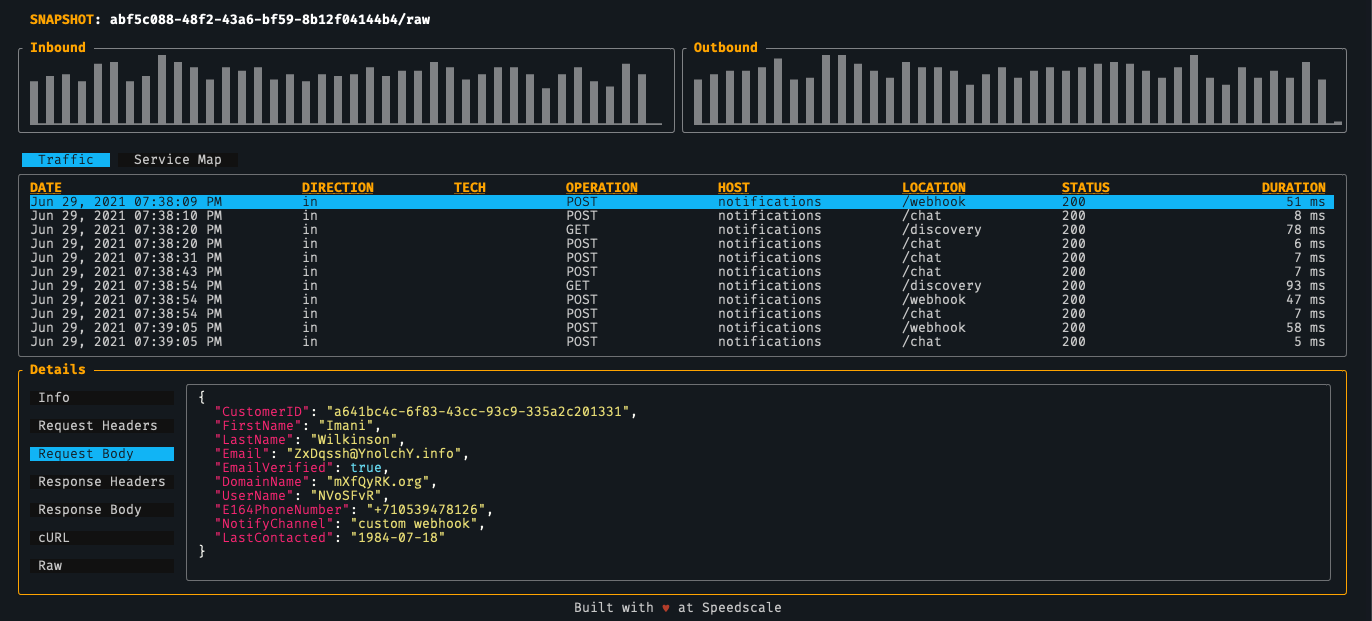
    Ken Ahrens, Speedscale CEO, said the goal is to expose more developers to the company’s API testing tool that can be accessed on their local machine via a command line interface (CLI). Dubbed Speedscale CLI, it is designed to enable individual developers to inspect, detect and map API calls on local applications or containers rather than having to subscribe to the company’s current API testing platform via a software-as-a-service (SaaS) model.

    That approach should reduce the number of disruptions DevOps teams are likely to encounter after an application is deployed in a production environment, noted Ahrens.

    Speedscale CLI features include service mapping, which enables developers to auto-detect and map external dependencies that could break, a traffic viewer for logging and tracing API calls and latency detection tools that show how code changes are impacting performance. In a forthcoming update, Speedscale also plans to include load generation capability to enable developers to run tests locally. The overall goal is to enable IT organizations to shift more responsibility for the management of APIs further left toward the developers that create them, said Ahrens.

    Naturally, Speedscale is also hoping that, as more developers are exposed to its observability platform for APIs, there will be increased demand for its SaaS platform among DevOps teams that need to manage and maintain APIs in production environments within their existing workflows. Speedscale exposes a set of APIs of its own to enable that integration, noted Ahrens.

    At its core, the Speedscale SaaS platform is designed to enable DevOps teams to replay how calls are made between APIs and external mock services to make it easier to diagnose issues.

    In general, there’s a lot more focus these days on APIs, thanks to digital business transformation initiatives that are dependent on APIs to integrate processes. The challenge organizations face is many of those APIs are built by separate development teams. In some instances, organizations can find themselves deploying redundant APIs. Other organizations will create APIs that, over time, are simply forgotten about or that go dormant when the developers that created them leave the organization. These “zombie APIs” often represent a security risk because cybercriminals now routinely scan IT environments for unattended APIs through which they can exfiltrate data without anyone noticing.

    One way or another, the management of APIs is becoming a distinct discipline within many organizations as they come to appreciate the level of IT flexibility they enable. Replacing backend services is a lot simpler when the APIs calls that invoke them both internally and externally remain relatively simple. The challenge is that building and maintaining microservices-based applications based on APIs is a more complex endeavor than building a monolithic application. The first step toward reducing that complexity is, of course, to provide more visibility into the application environment for all concerned.

  • Top 10 DevOps Things to Be Thankful for in 2021

    Top 10 DevOps Things to Be Thankful for in 2021

    Thanksgiving has been observed in the U.S. since 1861 and was officially designated as an official holiday in 1863 by president Lincoln. Of course, the tradition itself traces its lineage to the early days of the Pilgrims.

    This past year, of course, has been one of recovery from a pandemic that caused the deaths of millions of people around the world. Vaccines have saved the lives of countless more, so there is much to be thankful for despite all our recent trials and tribulations. In that spirit, there are more than a few things for DevOps professionals, in particular, to be thankful for this year starting with:

    Digital business transformation: Organizations of all sizes have had to adjust their business models because of both major changes in buyer behavior and an ongoing supply chain crisis. DevOps teams are at the core of any major digital business transformation initiative, so the demand for DevOps expertise continues to outstrip the available supply. Going forward, it’s been predicted we’ll see more digital transformation in the next 10 years than in all the last 40 years combined. The vast majority of those initiatives would never see the light of day if it were not for the expertise of developers and engineers working hand-in-hand to build and deploy applications faster than ever.

    Low-code platforms: As the demand for applications to drive digital workflows spiked in the wake of the pandemic, professional developers relied more on low-code platforms to decrease the time required to build an application. While many complex applications will still be built using procedural code, it’s clear not nearly as many applications could have been deployed without relying on low-code platforms to build them. It remains to be seen how many of the next generations of low-code applications will be built by so-called citizen developers that may soon be flooding DevOps pipelines with application code.

    Microservices: As an architecture for building applications the core concept of employing loosely coupled services together to construct an application goes all the way back to when service-oriented applications (SOA) were expected to be the next big thing in the 1990s. Microservices have, of course, been around for several years themselves. However, with the rise of containers as a software artifact for building microservices, it’s only now becoming apparent that building an application constructed using microservices not only takes less time but is easier to maintain and also more resilient.

    Observability: As a concept, observability traces its lineage to linear dynamic systems. Observability in its most basic form measures how well the internal states of a system can be inferred based on knowledge of its external outputs. In the past year, a wide range of IT vendors introduced various types of observability platforms. These make it easier for DevOps teams to query machine data in a way that enables them to proactively discover the root cause of issues before they cause further disruption. That’s a major advance over monitoring platforms that typically only provide predefined metrics to identify when a specific platform or application is performing within expectations.

    Biden’s executive order: In the wake of a pernicious attack against IT service management software from SolarWinds, the Biden administration published a sweeping executive order that requires federal agencies to implement a wide range of security best practices. Foremost among them is guidance concerning the security of software supply chains; which resulted in many organizations reviewing their entire software supply chain to make sure similar breaches will not occur.

    DevSecOps: As an extension of any DevOps best practice, DevSecOps generally describes an overall shift left in terms of making developers more responsible for application security. While still in its relative infancy, DevSecOps is starting to gain traction as DevOps and cybersecurity teams look to bridge a cultural divide that is as wide as any in IT. The ultimate goal is to deliver more secure applications without reducing the speed at which they are being built and deployed.

    GitOps: At its core, GitOps is an operational framework that takes DevOps best practices used to automate application development and extends them to infrastructure. The basic idea is that the configuration software created to manage infrastructure-as-code is just another software artifact to be stored in a Git repository. The approach provides a means for IT teams to achieve a continuous delivery goal that, more than a decade after DevOps best practices were defined, remains elusive. It’s still early days as far as GitOps best practices are concerned, but this has been the year when GitOps become part of the mainstream DevOps conversation.

    Kubernetes: Simultaneously one the most powerful and most complex IT platforms ever to come down the proverbial enterprise IT pike, Kubernetes has emerged as a de facto standard for building and deploying container applications that can more efficiently scale up and down as required to consume IT infrastructure. The challenge (and the opportunity) now is to make Kubernetes much more accessible to mere mortal IT administrators that typically don’t have the programming skills of a site reliability engineer (SRE) and which are both hard to find and retain.

    GraphQL: Employed as a query language for application programming interfaces (APIs), GraphQL provides a more efficient means of accessing data than the REST APIs that have been employed by developers in the past. Originally developed by Facebook, GraphQL adoption is still in its infancy but it’s clear APIs based on GrapQL will one day be as plentiful as REST APIs. That’s especially critical for microservices-based applications that rely on APIs to access data across a highly distributed computing environment that requires a more efficient means for transferring data.

    Venture and Wall Street capital investments: Investment firms are helping fuel DevOps advances as they continue to make capital available for companies vying for their share of a market that is expected to see compound annual growth rates of 24.7% through 2026. There will, of course, eventually be a wave of consolidation as merger and acquisition activity inevitably ensues. In the meantime, however, there is a wide range of DevOps technologies that might not otherwise be as broadly adopted if it were not for all the cash being poured into DevOps companies.

    The most important thing, of course, is that so many DevOps professionals are still here to build and deploy applications. It’s been a trying year for all concerned; however, as the pandemic crisis continues to recede, we can all be thankful for the opportunities that lie ahead.

  • Cortex Expands Microservices Catalog to Improve Collaboration

    Cortex Expands Microservices Catalog to Improve Collaboration

    Cortex, a provider of a catalog for tracking the ownership of microservices, today announced it has added a service creation capability that enables developers to use templates to scaffold new services in five minutes.

    In addition, the company has added a Cortex Teams offering that improves collaboration across teams of developers working on interdependent microservices.

    Fresh from raising an additional $2.5 million in funding, Cortex claimed it has increased its customer base by a factor of 10 since initially launching last May. Those customers include Rappi, Grammarly and 8×8.

    Cortex CTO Ganesh Datta said the company’s microservices catalog makes it simpler for teams of developers, DevOps engineers and security professionals to collaborate at a time when software development is becoming more complex. While microservices-based applications are easier to update and generally more resilient than monolithic applications, composing an application based on interdependent microservices created by different development teams can be more challenging to build and maintain.

    In some cases, organizations can even discover that different teams within their organization have built redundant microservices. Part of the reason that occurs is many IT teams still rely on spreadsheets to keep track of what microservices are being built and which ones are already deployed in a production environment.

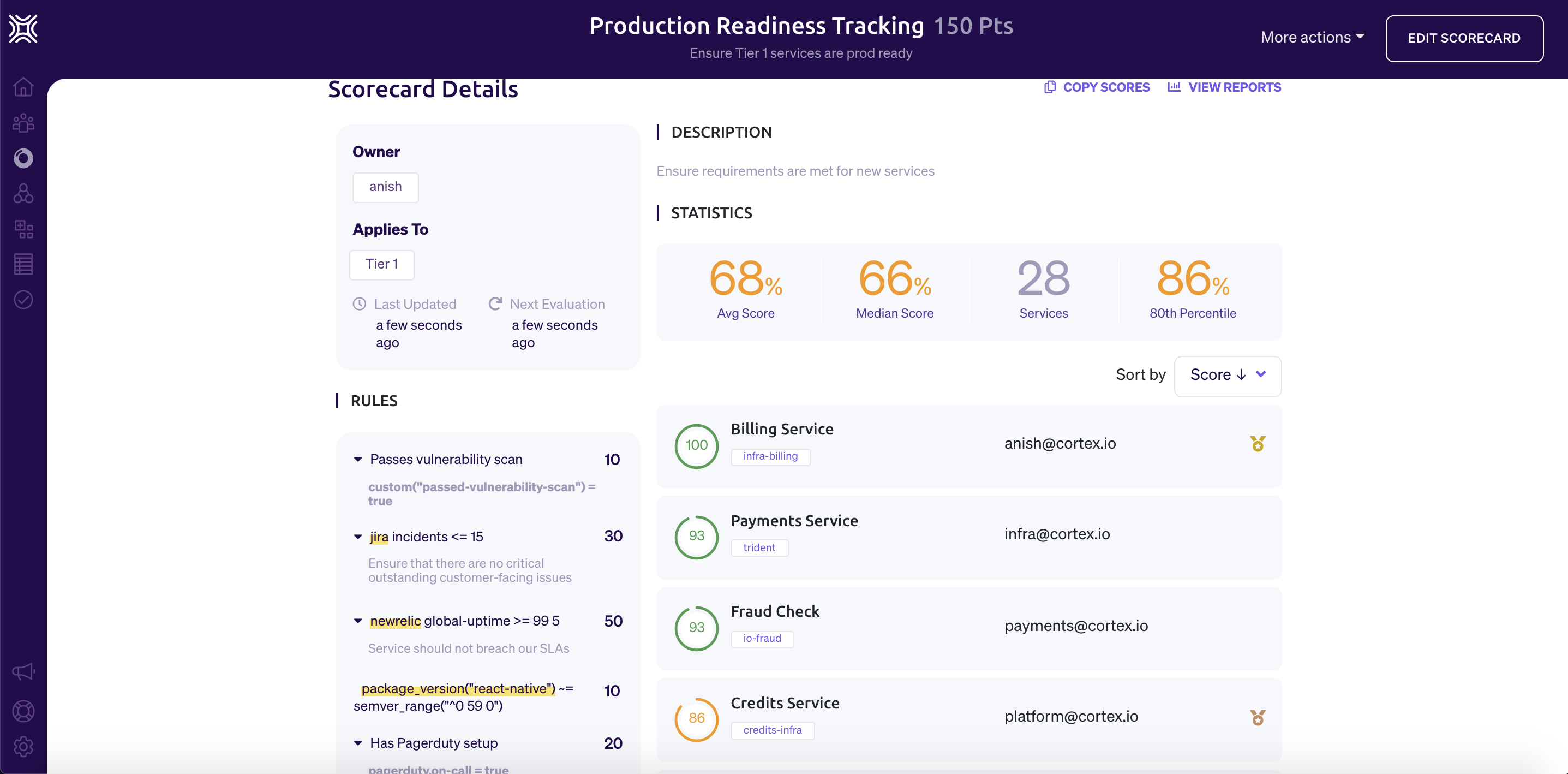
    Cortex, in contrast, automatically imports data residing in developer tools to surface who within an organization is responsible for maintaining which microservices. A Cortex dashboard also enables DevOps teams to see which developers are on-call in the event of an unexpected incident as well as monitor and track the latency rate microservices are experiencing and which vulnerabilities have yet to be remediated.

    At the core of the platform is Cortex Query Language (CQL), a domain-specific language that allows DevOps teams to define granular rules that can be applied to, for example, on-call rotations, security vulnerabilities, package versions, service level objectives (SLOs) and the overall health of the microservice. Engineers can employ code in the form of YAML files to set reliability standards across teams and types of services.

    Grades can also be assigned to specific microservices based on associated metrics. That approach allows DevOps teams to apply gamification techniques using a scorecard to encourage developers to continuously improve their microservices. That capability makes it apparent to other developers which microservices can be most reliably employed.

    It may be a while before microservices-based applications dominate the enterprise landscape. Monolithic applications will be running in production environments well into the next decade. However, many of those monolithic applications are essentially being converted into a larger microservice that other applications can invoke via application programming interfaces (APIs) before being eventually being re-engineered into a set of logically connected microservices.

    The one thing that is clear, however, is that as the number of microservices expands, it becomes more difficult to determine precisely what capabilities are already available to highly distributed application development teams.

  • NextArch Foundation Launched to Focus on Microservices

    NextArch Foundation Launched to Focus on Microservices

    The Linux Foundation this week launched the NextArch Foundation to define frameworks and specifications that promote interoperability between microservices that span multiple cloud computing environments.

    More than 40 organizations, including Tencent, Arm, Kong and Ampere, have committed to contributing to 10 technology projects in 2022 in addition to frameworks for three vertical industries.

    Mark Shan, chairman of Tencent Open Source Alliance, said within the next five years the NextArch Foundation expects to have defined a set of standards and best practices that will have been widely adopted.

    The NextArch Foundation’s mission is to provide a home for a set of emerging technologies that would otherwise not get the attention they deserve within the confines of an existing consortium, said Shan.

    NextArch Foundation’s areas of focus will include how continuous integration/continuous delivery (CI/CD) platforms are employed to build microservices and reducing latency between microservices residing in highly distributed computing environments, added Shan.

    It’s not clear where the efforts of NextArch will begin and end as compared to the Cloud Native Computing Foundation (CNCF), another arm of the Linux Foundation that focuses on platforms such as Kubernetes that are widely used to build and deploy microservices-based applications based on containers.

    In general, however, it’s already apparent that microservices are at the core of most digital business transformation initiatives that span everything from artificial intelligence (AI) projects to edge computing environments. The global digital transformation market size was valued at $336.14 billion in 2020 and is expected to grow at a compound annual growth rate (CAGR) of 23.6% from 2021 to 2028, according to market research firm Grand View Research.

    As organizations embrace microservices to build and deploy software, the need to establish a set of DevOps best practices to manage them given the level of dependency that exists between multiple microservices within any application.

    Challenges associated with managing microservices are not likely to deter organizations from adopting them, but they do slow down the transition. Most new applications are intended to run on mobile devices that access cloud services, and typically run more efficiently when constructed as a set of microservices that scale up and down based on usage. The levels of agility and resilience that microservices have are crucial to any digital business transformation initiative, so the general expectation is that the percentage of microservices-based applications that will be running in production environments will increase sharply.

    The challenge, of course, is that, over time, microservices-based applications are more challenging for developers to build and maintain than a traditional monolithic application, though they are easier to update. It’s not likely microservices-based applications will replace existing monolithic applications overnight, but many existing monolithic applications are being converted into a set of microservices that makes it easier for developers to reuse the core functionality of that application.

    Of course, it’s still early days as far as microservices in the enterprise are concerned, but as developers shift toward a new way to build software, the need for a wider range of de facto standards should become more apparent.

  • Microservices Adoption and the Software Supply Chain

    Microservices Adoption and the Software Supply Chain

    Software development is undergoing industrialization, with more and more software rapidly assembled out of components and an emphasis on building automation around software validation and release processes.

    Modern cloud-native software is no longer a monolithic application living in a single repo with the majority of its dependencies self-contained. It is integrated from third-party components provided by vendors, cloud providers and open source software (OSS) components, with as much as 90% of code coming from such dependencies. This allows developers to build applications much faster but makes maintenance much harder as it is no longer entirely under their control. If the third-party vendor makes a change to their API, developers are on the hook to update their applications before they break. 

    Each microservice interacts with hundreds of other microservices and each is built and released independently, making it hard to understand how to coordinate API changes across them. For example, if you want to make an API change to a microservice, what impact will this have on the consumers in the organization? Who will need to coordinate the change? When it was all within the same repository and released all at once, it was much easier to make such changes.

    The Changing Nature of Technical Debt

    What we continue to call technical debt is really the activities that are related to tending to and upgrading our software when third-party components are evolving or have common vulnerabilities and exposures (CVEs) and need to be upgraded.

    These are tedious, repetitive tasks that usually fall to the most experienced engineers as they require technical expertise to do correctly. Such activities can paralyze engineering organizations and are a tremendous burden on engineers; that often leads to burnout. Up to 30% of engineering time is spent on technical debt. The perception that somehow developers were responsible for accruing this technical debt and are doing something wrong that prevents them from keeping up is hugely demoralizing and demotivating. 

    However, if we reframe technical debt as software supply chain management and stop blaming engineering for it, we can make maintenance more predictable and consistent. By taking steps like inventorying third-party components and determining how pervasive they are in the application (frameworks take more effort to maintain than a third-party API that you just call from one part of the application), an organization can arrive at a maintenance estimate. 

    These activities are highly repetitive across organizations, as everyone is integrating some subset of the same third-party components to create business value. This high level of repeatability points us to automation. 

    Specialized Developer Tools for Software Maintenance Don’t Exist

    When developers write code, their hands often lag behind their thoughts. They think much faster than they are able to type the code. You often hear developers finishing a tedious task and complaining, “My fingers hurt.” When their IDE can autocomplete syntax, it helps reduce this lag to minutes.

    When a major framework version is released, developers contemplate the codebase. Maybe they need to change this type to that, reorder some method arguments or change dependencies. The types of changes they need to make are enumerable and must be made almost immediately; again, the ability to implement them lags far behind their recognition of the problem. Often, this type of lag can represent months or years of work when dealing with a large codebase. Accumulate enough of this lag and the codebase can grind to a halt.

    That lag kills the joy in development for most senior developers and leads to burnout. Upgrades/migrations amplify that lag by orders of magnitude.

    However, there are few (if any) tools that focus on helping developers automate these remediations/upgrades/migrations. The IDE’s focus is rightly on helping developers write new code and maintain their own code, but code maintenance needs to be coordinated across multiple places across the codebase, within the same repository or across the repository boundaries. Often, developers have a pattern they want to change in their repository, but the IDE only suggests this as an improvement in their current location (one file). Other times, changes need to be coordinated across repository boundaries if developers want to change APIs and their consumers. That’s why this technology needs to exist outside of the IDE.

    OpenRewrite

    OpenRewrite is an open source project that offers semantic analysis and refactoring of code as standalone operations so that everyone can use and contribute over time; composing more and more refactoring operations that make whole framework migrations possible. It is integrated with build tooling and can be plugged into different workflows, from CI integrations to mass refactoring of multiple microservices/repositories. Similar to an IDE or other developer tools, OpenRewrite manipulates an abstract syntax tree (AST) representation of code, but this AST has special characteristics that allow it to transform this AST and generate code back to the standard text representation. 

    The OpenRewrite AST is produced by guiding the compiler through the first two phases of compilation to generate compiler type-attributed AST. This is then mapped to the OpenRewrite AST, preserving formatting and breaking cycles in the AST. The three unique characteristics of OpenRewrite AST are:

    • Type aware, allowing 100% correct semantic code analysis and transformation.
    • Style-preserving, so transformations produced are idiomatic within the projects they are applied to. So, the same transformation applied to multiple projects will potentially look different.
    • Serializable, allowing to output the AST from the build and operate on it outside of the build en masse.

    OpenRewrite ASTs is full of metadata about code. Visualizing the code itself as a highly connected tree of various vertices and edges, we can start to get an idea of the density of this representation. Syntactic elements alone are blue, type attribution is yellow and formatting information is red. If we were to just represent syntactic elements, the tree might look something like this.

    Adding type attribution and formatting, the tree looks quite a bit denser.

    A spanning tree of the data involved in this AST can be laid out in three-dimensional hyperbolic space and then projected onto the unit sphere similar to the way that two-dimensional space can be projected onto a disk—the famous Poincaré disk model. This three-dimensional approach was pioneered by Tamara Munzner at Stanford.

    Every edge that isn’t part of the spanning tree is rendered as a lighter gray, and, as you can see, it is dense! In fact, to make this layout more tractable, we’ve omitted in this view an additional 600,000 vertices representing type information that make the syntax itself seem tiny.

    OpenRewrite calls a single code search or transformation operation a recipe. It provides a number of building block recipes such as find method, change method, find transitive dependency, upgrade or exclude dependency. These recipes, in turn, can be composed into more complex recipes by grouping them together into a composite recipe. When the building blocks are not enough, a recipe can be written as a program in the same language as the code we want to transform, allowing us to encapsulate complex logic with the full expressiveness of the language already familiar to developers. We don’t need to learn a new DSL or programming language.

    These building blocks abstract away many of the details to ensure that edits that we make to source code obey the original style of the project. This is possible for even complex changes like this automated migration from Spring Boot 1.x @ConditionalOnBean to Spring Boot 2.x AnyNestedCondition looks idiomatically consistent in the context of the project that it is inserted into:

    It is important to note that OpenRewrite is not a replacement for an IDE. With software now composed of so many independent components, we need to start to remediate and manage it using new approaches that go beyond single lines of code to looking across entire code repositories.


    Olga Kundzich, co-founder of Moderne, co-authored this article.

  • CNCF Advances OpenTelemetry Initiative

    CNCF Advances OpenTelemetry Initiative

    The Technical Oversight Committee (TOC) of the Cloud Native Computing Foundation (CNCF) has voted to accept OpenTelemetry as an incubating project as part of an ongoing effort to simplify instrumentation of software using open source agent software.

    OpenTelemetry is a collection of tools, application programming interfaces (APIs) and software development kits (SDKs) that can be employed to collect metrics, logs and traces that make it simpler to determine the root cause of an application issue.

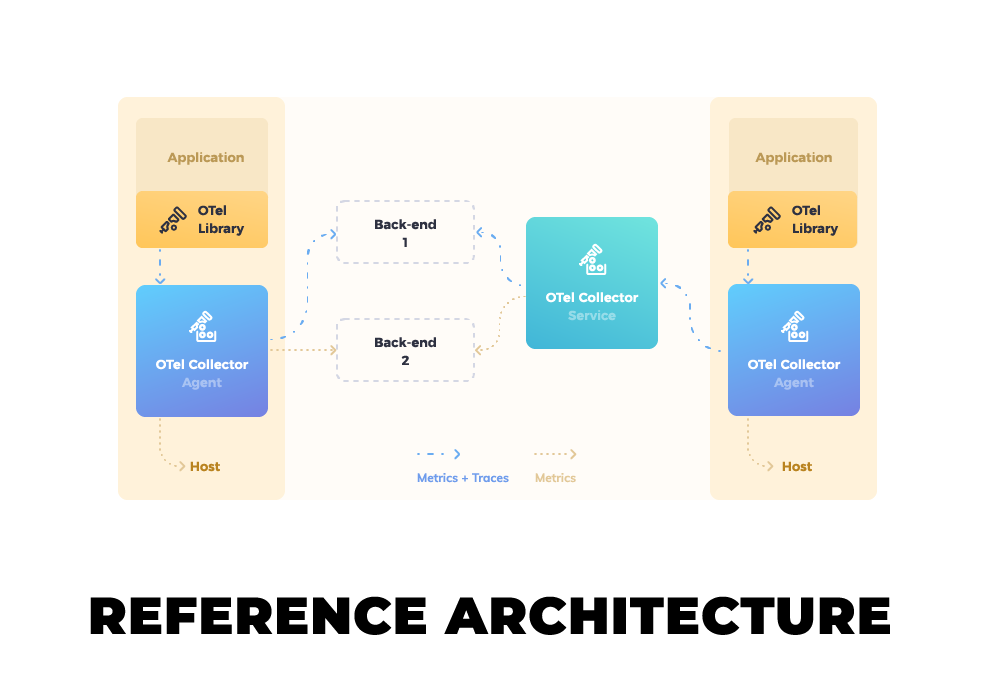
    At its core, OpenTelemetry is based on an OpenTelemetry Protocol (OTLP) specification that describes the encoding, transport and delivery mechanism of telemetry data gathered from sources, intermediate nodes and backend platforms. An OpenTelemetry Collector provides a vendor-agnostic implementation for receiving, processing and exporting telemetry data. APIs and SDKs that make it possible to instrument applications are available for 11 different programming languages.

    Previously a sandbox-level project within the CNCF, the next step would be for OpenTelemetry to become a graduated level project alongside other open source offerings such as Kubernetes and Prometheus, a platform used to monitor IT environments.

    The OpenTelemetry project was created via the merger of the OpenCensus and OpenTracing projects in May 2019. Since then more than 500 developers from 220 companies, including Amazon, Dynatrace, Google, Honeycomb, Lightstep, Microsoft, Splunk and Uber have contributed to the project.

    Most providers of observability platforms have at least signaled their intent to support OpenTelemetry as an alternative to proprietary agent software they had previously created to collect metrics, logs and traces.

    Ben Sigelman, one of the co-creators of both OpenTracing and OpenTelemetry and CEO of Lightstep, said different elements of the OpenTelemetry project are at varying stages of maturity. As such, support for the elements of the project are being added to platforms depending on the degree to which a vendor has confidence in, for example, the ability of OpenTelemetry agent software to collect logs.

    Liz Fong-Jones, principal developer advocate for Honeycomb.io, a provider of an observability platform, said that, in time, most observability platforms will support all the elements of the OpenTelemetry initiative to reduce their own engineering and support costs. In time, those savings will be passed on to organizations that will be able to instrument applications more affordably, she noted.

    It may take a while longer for OpenTelemetry to be widely employed, but the faster organizations transition to microservices-based applications the more pressing the need for open source telemetry software becomes. The dependencies that exist between all the microservices that make up multiple applications will be unmanageable without some form of telemetry. The challenge organizations face is finding an affordable way to instrument all those microservices.

    Of course, organizations have been instrumenting applications for decades. However, the time, effort and cost associated with instrumentation have tended to limit its use to only an organization’s most mission-critical applications. The issue now is that not only do microservices-based applications require instrumentation to manage them but in the age of digital transformation the percentage of applications deemed mission-critical is also steadily rising.

  • Establishing Trust in Multi-Cloud Environments

    Establishing Trust in Multi-Cloud Environments

    Modern applications are transforming enterprises into digital innovation factories. However, the distributed nature and complexity of modern apps have made it extremely difficult for organizations to maintain trust and compliance across multi-platform, multi-cloud environments. 

    Although Kubernetes is the standard for application platforms today, each cloud service provider (CSP) has a different offering for infrastructure-as-a-service (IaaS) or their own platform-as-a-service (PaaS) with varying capabilities and APIs. Not only are these APIs incompatible (with the exception of Kubernetes if no vendor extensions are used), each infrastructure and platform are treated and managed in silos. These silos act as an isolated and non-overlapping administrative boundary,  preventing cross-boundary visibility and trust between microservices.  This makes it much harder for enterprises to know and consistently remediate their security posture across clouds and platforms, opening them up to attacks.

    To solve this problem, organizations are extending enterprise security controls to cloud environments. The problem is that application teams and security teams have traditionally had competing goals—agility versus risk and control—and security operations have not evolved at the same pace as application operations. This creates friction between the teams and forces application operation teams to make a choice: 

    1) Slow down application delivery and operations to reduce risk and miss out on the transformative benefits of multi-cloud or 

    2) Continue to develop and ship applications as quickly as possible without considering security and compliance. 

    Neither is a good option. To unlock the power of modern applications running in multi-platform and multi-cloud environments, organizations need to find a way to integrate security seamlessly throughout the software delivery life cycle at the speed users expect.

    Integrating Zero-Trust into the Application Delivery Cycle

    The key to securing applications in a multi-cloud world is zero-trust. Building zero-trust principles directly into modern applications allows organizations to identify threats early, reduce attack surfaces and ship security functions alongside the rest of the application stack—regardless of the underlying application platforms and cloud stacks underneath.

    In this use case, one of the key components of zero-trust is application segmentation; in other words, how to make access decisions between different applications or components of applications. Zero-trust must provide identity-aware, adaptative and on-demand access to any app from any user or app in a way that improves the flexibility and the agility of application access through a scalable model.

    Application segmentation must be provided to application operation teams so that they can embed it into their application quality processes as another gate. Application operation teams can do this by implementing application segmentation policies that identify workloads as they are created through rich, dynamic attributes. The more intrinsic/static attributes (IPs, digital certificates, namespaces, labels, etc.) and extrinsic/dynamic attributes (user behavior, workload behavior, network behavior, etc.) that are identified, the more fine-grained your access decisions can be. 

    Incredibly, application segmentation today continues to be done manually. But with millions of transactions happening across multiple cloud environments, there’s no way a person—or even a team of people—can manually assign policies to each workload. Organizations need a way to deliver zero-trust application segmentation in a scalable, transparent and automatic fashion. 

    A Connectivity and Security Platform 

    The way to do this is through the use of a modern application connectivity and security platform. Through a service mesh, an attribute-based access control (ABAC) model consolidates multiple third-party tools that provide visibility and security across application platforms and multi-cloud environments. This single view operational model gives application teams the ability to seamlessly and simply orchestrate security services across multi-cloud environments, automatically and at scale. 

    Unfortunately, granular policy management through microsegmentation increases complexity, which is the enemy of security. Suddenly, an organization may find itself with thousands of policies that dictate how different workloads access and interact with entities inside the network. These policies need to be continually updated and maintained, creating massive headaches for both application and security teams.

    When a workload is deployed, the associated policies are created along with it and move through the environment with the workload until the workload reaches the end of its life and is decommissioned. As applications run over time, they are being characterized by their unique behavior. This runtime security characterization allows policies to be automatically selected and applied directly to the workload.

     However, for a service mesh to work and enable secure applications in a multi-cloud environment, it needs to follow zero-trust principles without adding complexity and without slowing down the agile delivery cycle. Here’s how you do that:

    1. Baselining trust: A modern app connectivity and security platform should have native observability and self-discovery capabilities, such as being able to automatically discover APIs, catalog APIs and generate API documentation based on the OpenAPI standard. The modern app connectivity and security platform should be able to continuously baseline application behavior and detect anomalous application behaviors. This needs to alert on unknown and zero-day attacks, especially exfiltration of sensitive data.
    2. Establishing trust: It is critical to define the interconnectivity needs of different pieces of the application right off the bat. This explicit declaration of intent is typically done manually by application teams during the deployment of the application as part of a CI/CD pipeline. Another option is to automatically discover the connectivity intent during the testing phase of the application and allowing the service mesh to identify and record the resulting communication flows between microservices’ APIs. These are the basis of the application’s segmentation policies.
    3. Enforcing trust: There also must be a mechanism to automatically apply the appropriate application segmentation policies to enable the necessary communication for the application to run as intended. In the microservices model, different pieces of the application are spun up and down dynamically to enable the application to run as intended. It’s critical that the application segmentation policies that govern accessibility also adapt to these changes. This is done through the service mesh control plane that interacts with the application platform to gather the inventory of workloads.
    4. Dynamically adjust trust: As the applications run over time and clients interact with them, they are being characterized by a behavior. In this case, a security behavior. Observing this behavior can be accomplished through various runtime analysis tools that organizations already have in place that detect process, container, network and user behavior to provide security context. However, to maintain trust, there needs to be a way to integrate these tools through the service mesh to create a single source of truth. 
    5. Extending the trust model to the edge: Applications also interact with software-as-a-service (SaaS) platforms such as Salesforce or SAP, and other apps outside the data center. Ideally, the service mesh/zero-trust application segmentation model can integrate with other security solutions in the cloud such as secure access service edge (SASE), secure web gateway (SWG), cloud access security broker (CASB) and other zero-trust security components. This standardizes the processes for establishing trust across the data center, multiple cloud service providers, SaaS platforms and web apps—ensuring consistent security and compliance posture across the entire organization.

    Modern applications are transforming how business works by enabling agility and real-time decision making, but they will never reach their full potential unless application teams work with security teams to protect users, data and applications in multi-cloud environments. It’s clear that organizations need an evolved security model that application teams can use to seamlessly establish trust and orchestrate application segmentation across multi-cloud, multi-platform environments. Service meshes can provide the visibility and control needed to establish and continually evaluate trust.

  • Engineering Applications for DevOps (Part 6)

    Engineering Applications for DevOps (Part 6)

    This blog series explains how to engineer applications for DevOps.

    Topics covered in this blog series include:

    • Factors used to decide whether an application is a good candidate for DevOps.
    • Practices to engineer designs for DevOps.
    • DevOps applied to enterprise apps and software services.
    • DevOps applied to COTS systems.
    • DevOps applied to manufactured (embedded) systems software.
    • Five levels of application maturity.

    This blog covers five levels of application maturity. You can read part one here, part two here, part three here, part four here and part five here.

    Five Levels of Application Maturity

    Why is it that younger applications are more mature than older applications? DevOps works best with incremental changes rather than large complex changes that are time-consuming to change, build, test and deploy. DevOps also works best in ephemeral cloud computing infrastructures that can be scaled up and down quickly depending on short-term workload demands of supporting build, test and deployment requirements.

    While existing applications will eventually be modernized to take advantage of the cloud, greenfield applications should be designed to exploit recent advancements in cloud-based platforms and application delivery.

    The following paragraphs describe the characteristics of five levels of application maturity.

    Spaghetti applications are older, monolithic legacy application designs that tend to be large and complex, like a big messy bowl of spaghetti. This complexity occurs partly because these older apps accumulate a massive amount of code and patches over time and partly because the architectural approaches at the time they were conceived did not have modular, cloud-oriented requirements in mind. Spaghetti applications are the least capable of taking advantage of cloud infrastructures.

    Modular applications emphasize architecture designs that separate application components into functionally independent, interchangeable modules, such that each contains everything necessary to execute only one aspect of the desired functionality.

    A module interface expresses the elements that are provided and required by the module. The elements defined in the interface are detectable by other modules. Modules often use a design style known as service-oriented architecture (SOA), where services are self-contained black boxes that provide capabilities to the other application modules, as a service, through a network protocol. SOA may be confused with microservices architecture.

    There are key differences between SOA and microservices architecture that are important to DevOps. Microservices are preferred over SOA architecture because microservices are more fine-grained and restricted in what they can do. SOA uses an enterprise service bus for communication, whereas microservices use more lightweight stateless protocols and APIs managed as a product.

    Changes to SOA modules usually require a new application release, while a change to a microservice usually only requires the microservice to be replaced. Migration of modular applications to the cloud may require rework to take advantage of cloud features such as autoscaling.

    Cloud-ready applications that use the twelve-factor application modular design principles are more advanced. These modular designs emphasize declarative formats for automation, clean contracts with the underlying operating system and portability between execution environments. Deployment on modern cloud platforms obviates the need for servers and systems administration, minimizing divergence between development and production and enabling continuous deployment for maximum agility.

    These characteristics and capabilities enable the application to scale up without significant changes to tooling, architecture or development practices. Cloud-ready applications can be easily mapped to virtual machines (VMs) available through cloud infrastructure services (IaaS) for VMs based on VMware vSphere or Microsoft Hyper-V.

    Cloud-ready apps do not require rearchitecting or refactoring. They offer least-effort migration to the cloud with a lower availability rate. However, workloads such as legacy databases, third-party applications and homegrown business applications that are typically not designed for clustering or high availability suffer from a single point of failure.

    Cloud-ready apps are expensive to maintain. This is primarily due to the way they consume computing, storage and network resources, even when idle. Each component of an app runs in a dedicated VM with no scope for optimization. Upgrading or patching results in downtime and makes maintenance complex and expensive. Ultimately, cloud-ready apps derive less value from the cloud than cloud-optimized or cloud-native applications.

    Cloud-optimized applications take advantage of managed services offered by cloud providers. For example, instead of running a database in a VM, they consume database-as-a-service (DBaaS). Cloud-optimized apps typically target the platform-as-a-service (PaaS) delivery model of the cloud. They are portable and can be deployed in IaaS or PaaS. This reduces the deployment footprint, offering flexibility to IT teams. These apps are elastic, with the ability to easily scale in and scale out which results in optimal utilization of resources. Upgrading, patching and maintaining cloud-optimized apps is more manageable when compared to cloud-ready apps.

    The downside of cloud-optimized apps is the learning curve involved in migrating to the cloud. Developers, operators and system administrators will have to learn new ways of deploying and managing workloads. Line-of-business applications with access to source code are great candidates for being cloud-optimized apps. They can be redesigned and rearchitected to take advantage of the cloud. Cloud-optimized apps can integrate and interoperate with cloud-ready applications.

    Cloud-native applications are the most recent iteration of applications that are born in the cloud. They take full advantage of the cloud by exploiting capabilities such as elasticity, event-driven resource optimization and faster release cycles. Apps that are in the early stages of design and architecture are perfect candidates for cloud-native.

    Cloud-native applications are designed as federated microservices, packaged and deployed as containers and managed through modern DevOps processes. When your organization needs to scale to thousands of services in the cloud, microservices application architectures offer major benefits over monolithic modular architectures, including the following:

    • Separate microservices are better suited to different technology stacks.
    • Federated microservices enable independent deployment of different parts of the system.
    • Isolated deployments add to the resilience and fault-tolerance of the system.
    • Scaling characteristics may be different for each microservice.
    • APIs are used as connectors.
    • Stateless protocols help assure seamless recovery.
    • Event-driven programming reduces overhead and process latency.
    • Antifragile practices inoculate against unanticipated failure modes.

    The target deployment environment for cloud-native applications includes containers-as-a-service (CaaS) and functions-as-a-service (FaaS). This breed of apps delivers ultimate scalability and availability. Combined with continuous integration and continuous deployment, software is delivered rapidly, which accelerates time-to-market. It brings closed-loop feedback among developers, testers, operators and end users.

    Cloud-native apps demand new skills of containerization, microservices and build and release management. However, the ROI is higher when compared to other app models. Greenfield applications that are still in the design phase are ideal for adopting the cloud-native pattern.

    Diverse Applications for Cloud Migrations

    Large enterprises moving to the cloud will deal with a diverse set of applications. Through hybrid connectivity and integration, spaghetti, modular, cloud-ready, cloud-optimized and cloud-native applications will co-exist and interoperate with each other. If you are after the benefits of modularity, make sure you do not trick yourself into a microservices-only mindset.

    Explore the in-process modularity features or frameworks of your favorite technology stack. You will get support to enforce modular design instead of having to just rely on conventions to avoid spaghetti code. Then, make a deliberate choice whether you want to incur the complexity penalty of microservices. Sometimes you have no choice, but often, you can find a better way forward.

    What This Means

    This blog is one of a series that explained how to engineer applications to be most suitable for DevOps. Topics covered in this blog series include:

    • Factors used to decide whether an application is a good candidate for DevOps.
    • Practices to engineer designs for DevOps.
    • DevOps applied to enterprise apps and software services.
    • DevOps applied to COTS systems.
    • DevOps applied to manufactured (embedded) systems software.
    • Five levels of application maturity.

    This blog covers five levels of application maturity. You can read part one here, part two here, part three here, part four here and part five here.

    For more information regarding how to engineer applications for DevOps refer to my book Engineering DevOps.