Tag: mainframe

  • Mainframe Code Modernization Patterns

    Mainframe Code Modernization Patterns

    In today’s enterprise digital landscape, mainframe modernization is no longer a back-office technical exercise. It has become a strategic initiative tied directly to innovation velocity, operational resilience, regulatory compliance and long-term competitiveness. Organizations are not abandoning the mainframe, but they are rethinking how code, architecture and platforms evolve to meet modern business demands.

    Techstrong polled its community of infrastructure, DevOps and mainframe professionals to understand how organizations are approaching application modernization, code transformation and AI-assisted development on the mainframe. Our findings reveal that modernization is now a mainstream priority, with most enterprises balancing deep architectural change and operational stability while evaluating hybrid placement strategies and security-first platform decisions.

    Techstrong brings you this PulseMeter report sponsored by BMC, supported by our independent research data. Learn more by downloading the full report.

    Download PulseMeter Report


  • Breaking Through – Beating Mainframe Delivery Bottlenecks

    Breaking Through – Beating Mainframe Delivery Bottlenecks

    The mainframe powers large – and vital – elements of the global economy. Mainframe DevOps and new innovations offer the potential for delivering greater value, faster. Yet market data suggests significant challenges in achieving it. What can be done to beat the bottlenecks in mainframe delivery? 

    The Mainframe: Powering the Future of Enterprise Computing

    The mainframe market comprises thousands of well-known, successful organizations and institutions worldwide. These organizations span the financial services, insurance, retail, logistics, transportation, and government sectors, among others, serving millions of clients. Their IT infrastructure is among the most active, processing billions of transactions as they support vast areas of the global economy. 

    The core business systems of these organizations rely on the IBM mainframe, which is considered by reputation to be the most powerful and resilient machine available. 

    To learn more about the mainframe market and the opportunities—and challenges—it faces today, PopUp Mainframe recently commissioned a survey, conducted in 2025 by market researchers Vanson Bourne.

    The survey revealed overwhelming loyalty to the mainframe platform and a positive outlook regarding the opportunities Linux provides on the mainframe by using the specialist processor IFL. The market responses showed a clear commitment to the mainframe, now and into the future:

    • 98% rely on the IBM mainframe to run their organizations
    • 94% confirm their potential to leverage additional workload capacity on specialist/Linux environments on Z
    • 97% seek to increase the use of specialist mainframe processors

    The Challenges Ahead

    The same survey, though, highlighted areas of concern. Organizations face significant operational challenges across the mainframe delivery process. Nearly all respondents encountered difficulties during development and testing phases using the mainframe. Concerns over the availability of mainframe environments were widespread, while a third of respondents required four or more teams to complete mainframe deliveries. Additionally, 80% cited staffing and tooling limitations as hindrances to business operations.

    The research further emphasized five strategic areas where the mainframe environment struggles to meet aspirations: cost efficiency, flexibility, speed of delivery, risk management, and sustainability. More than 80% of respondents indicated that improvements were needed in each area.

    Addressing the Bottlenecks 

    PopUp Mainframe offers an innovative solution to these bottlenecks and their strategic impacts. It’s instantly available mainframe environment supports development, testing, training, and other typical mainframe activities, accessible with the click of a button. Functionally equivalent to mainframe z/OS, it runs on the customer’s choice of hardware, enhancing availability and usefulness.

    PopUp addresses key bottlenecks head-on: in an ideal mainframe scenario, everyone involved in the SDLC—analysts, programmers, QA staff, business users, administrators, DBAs—logs into the mainframe to perform their tasks in sequence. However, in reality operational complexities and restrictions often hamper innovation and impede mainframe delivery. PopUp Mainframe addresses these complexities and provides instantaneous resources for those who need them by enabling dev, test, and training activities in a compatible, virtual mainframe environment.

    Cornerstone Capabilities

    PopUp Mainframe ensures compatibility with the mainframe z/OS environment it replicates. Key product highlights include:

    • Integration with mainframe environments and tools, including IBM, BMC, third-party, and open-source DevOps tools.
    • Full compatibility with z/OS applications.
    • Support for data compliance and regulation using advanced masking technology, with the option to keep data on the mainframe.
    • Easy access and availability, with environments up and running in minutes, supporting IT sustainability goals.
    • Universal usability, accommodating both ISPF access and GUI IDE tools simultaneously.

    PopUp Mainframe acts as a virtual mainframe environment, designed to support each organization’s unique selection of tooling for mainframe application delivery processes. To do so, the product will integrate with a wide variety of popular mainframe toolchain elements. For example, PopUp Mainframe supports mainframe DevOps setups using VS Code or IDZ as the developer IDE, and open-source tools like Galasa and COBOL Check for unit testing, with orchestration tools such as GitHub managing these processes. 

    Fully flexible and scalable, the solution allows organizations to deploy as many PopUp Mainframe instances as needed. Two editions of the PopUp Mainframe product are available: Z edition (Linux on Z or LinuxOne installation) and X edition (x86 on premise or cloud installation).

    Revolutionary Results

    The opportunity for improvement by using PopUp Mainframe is both instantaneous and significant: one client demonstrated the solution’s efficacy by completing a POC in a single afternoon. Another client significantly improved delivery speed by several hundred percent. Other observed outcomes show PopUp Mainframe has helped clients meet several strategic goals:

    • Accelerate development and testing while protecting production MIPS.
    • Initiate development, testing, training, and R&D projects flexibly and quickly.
    • Quadruple mainframe deliveries through efficient resource usage.
    • Ensure data compliance in mainframe testing by keeping data on Z.
    • Enhance sustainability and reduce emissions by deactivating unused environments.

    Futurum Research Perspective

    “Hosting critical time- and availability-sensitive business functionality on the mainframe remains a vital part of IT in the enterprise and much of the public sector,” said Guy Currier, Analyst, The Futurum Group. “But change management on the mainframe can be slow and inefficient, especially as business complexity and regulatory pressures increase. Innovative technologies such as PopUp Mainframe offer mainframe teams opportunities to accelerate the delivery velocity of their business-critical systems.” 

    Learn More

    Watch our recent devopsy.kinsta.cloud webinar on demand to learn more about this topic. We will also be presenting at the forthcoming Tech Field Day Extra at SHARE Cleveland 2025 on August 19-20. 

    For further information, datasheets, and release highlights, visit the PopUp Mainframe website. 

  • 6 Transformative Mainframe Predictions for 2024

    6 Transformative Mainframe Predictions for 2024

    The success of organizations in today’s digital economy demands speed — the ability to quickly respond to market trends with new applications and services, instant access to critical data, and resolution of issues even before they affect service. As we move into the new year, the adoption and adaptation of emerging technologies on the mainframe will enable enterprises to embrace changing market forces, turning them into a competitive advantage.

    Below are six predictions of how mainframe organizations will leverage new technologies to advance the platform in 2024.

    Prediction: AI/ML Adoption Grows

    The roles of artificial intelligence (AI) and machine learning (ML) and their adoption across the mainframe, from application development to monitoring to data management, will continue to grow.

    The generative AI revolution is real and here to stay. In the coming year, organizations will continue to explore best-use cases for its integration into mainframe management. Development teams will leverage key AI-recommended insights into automated workflows and code generation, improving developer productivity. Database administrators (DBAs) will look to automate data management processes to efficiently handle the demand for the diverse datasets required by generative AI tools, and mainframe operations teams will increase their reliance on AI-driven predictive analytics and root cause analysis.

    As adoption increases and experience is gained, organizations will work past their AI trust issues and begin to harness the power of automation to become a fully autonomous digital enterprise. At the same time, there will be a growing need to govern AIOps and MLOps to ensure the validity and accuracy of ongoing model development.

    Prediction: DevEx Comes to the Forefront of Companies’ Innovation Strategies

    With the long-awaited shift of mainframe workforces from those with decades of experience to a new generation of stewards now in full effect, organizations will find a new imperative to attract and retain top talent by providing developers with familiar tools and development environments.

    Professionals who have recently graduated from college or are moving from other platforms bring with them an expectation of integrated and automated DevOps practices. The move towards enterprise-wide DevOps and continuous integration and continuous deployment (CI/CD) pipelines will continue, with many companies also looking to employ cross-platform tooling. By giving developers the freedom to use their integrated development environment (IDE) of choice, organizations can decrease onboarding time and get new mainframe developers up to speed faster, enabling them to understand code and its function quickly and easily, and creating a seamless, frictionless way to make changes, debug, and deploy.

    Prediction: Database DevOps Bridges the Gap Between DBAs and Developers

    Changing customer demand and the need for agility will accelerate the drive for developers to seamlessly access and manage data sources. The demand for an agile development environment that extends from applications to databases will increase the inclusion of database DevOps in CI/CD pipelines, including version-controlled database schemas and data, automated database provisioning, and database testing as part of the pipeline.

    By embracing agile practices, such as incremental database changes and rolling deployments, organizations will bridge the gap between DBAs and developers and ensure that mainframe databases evolve alongside application code. This cohesive approach will enhance collaboration, reduce conflicts, and expedite application development, positioning mainframes as agile and adaptable components within the rapidly changing IT landscape.

    Prediction: Democratizing Mainframe Data

    The move ― and the need ― to democratize mainframe data, making it available to AI/ML analytics engines, will gain momentum.

    Organizations have matured their data lakes and gained valuable insights from data housed on distributed and cloud platforms, but the efforts needed to extract and transform mainframe data stored on tape and virtual tape libraries (VTL) has left volumes of business-critical data behind. By operationalizing mainframe integration with the cloud, organizations can make it easier and faster to access mainframe data and transform it into open formats, making it accessible to analytics engines and AI/ML applications.

    The ability to realize the hidden potential of data they already store will make cloud-based storage of mainframe data a prerequisite for enterprises looking to digitally transform their businesses and gain competitive advantage.

    Prediction: Object Storage Becomes Critical for Security

    Mainframe-dependent organizations will seek to integrate hybrid cloud object storage to fortify mainframe data protection against escalating cyberthreats and ransomware attacks.

    In 2024, cyberthreats will almost certainly increase in number and sophistication. The European Union’s Digital Operational Resilience Act (DORA) seeks to ensure that organizations remain vigilant and protect their systems and their customers’ data against increasing threats.

    With DORA set to come into effect in January 2025, and further regulations and guidelines on the horizon, managing mainframe data across diverse locations while prioritizing immutable data copies will be imperative. Organizations will pivot towards proactive strategies, aligning their mainframe infrastructure with hybrid cloud solutions to meet evolving compliance standards and shield against the growing sophistication of cyberthreats.

    Prediction: Innovation Takes the Lead

    Organizations will adopt ruthless prioritization, shifting focus from maintaining services and applications to building new ones for the future.

    Having seen firsthand the success of ongoing mainframe modernization efforts, organizations will place a new focus on building skills and specialties that align with future goals and product roadmaps, putting them in a position to capitalize on coming trends and giving them the ability to quickly respond to changing market forces with innovative new products and services.

    As companies mature their approaches to AI on the mainframe, many will turn to building “applied AI” teams tasked with developing proactive solutions to better analyze data and forecast trends. In short, organizations will think logically about how to embrace AI rather than being embraced by it.

    In 2024, mainframe organizations will accelerate the adoption of emerging technologies like AI and the cloud to increase the adaptability, resilience, and efficiency of the platform while situating it for even greater success in the future. The mainframe will continue to be a platform of innovation, integrating with new technologies and practices borrowed from other platforms to further the evolution of a hybrid IT environment that meets and exceeds the demands of the modern digital economy.

    The role of AI, the impact of data governance regulations, the mainframe skills gap, affordability, and interoperability requirements are all brewing a perfect storm around the mainframe that will mark 2024 as a year of significant transformation that will define the leaders from the laggards.

  • IBM Adds Lower-Cost Linux Mainframe to Portfolio

    IBM Adds Lower-Cost Linux Mainframe to Portfolio

    IBM today made its most aggressive move yet in its quest to make mainframes running Linux more affordable, launching an entry-level platform starting at $135,000.

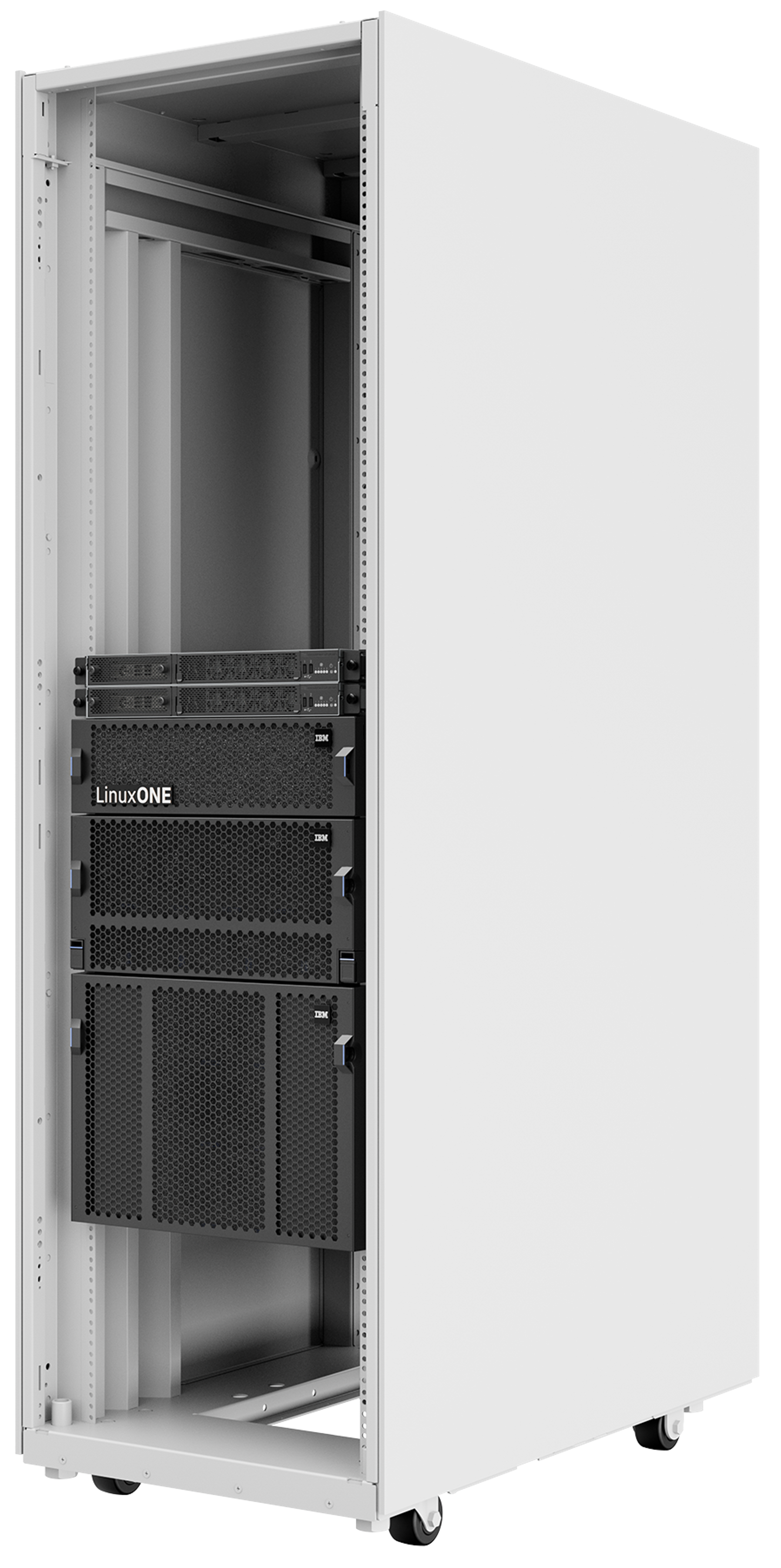
    The IBM LinuxONE 4 Express is a pre-configured rack system that is based on the same 5.2Ghz IBM Telum processor that IBM uses in its Z16 series of mainframes.

    In addition, the platform supports IBM Secure Execution, which is designed to thwart any attempt to decrypt data in the future using quantum computers.

    IBM claims organizations that move Linux workloads from x86 servers to an IBM LinuxONE 4 Express can save over 52% on their total cost of ownership over five years.

    The overall goal is to make it simpler for organizations to consolidate workloads that otherwise would need to be deployed across a distributed computing environment, she added. That approach ensures higher levels of availability for workloads that are increasingly processing massive amounts of data using two levels of physical and two levels of virtual cache in a way that consumes less energy, noted Tina Tarquinio, vice president of product Management for IBM Z and LinuxONE.

    The IBM LinuxONE 4 Express also includes an integrated accelerator for running artificial intelligence (AI) inference engines using more than 6 TFLOPs compute capacity per chip.

    IBM expects that as more organizations process sensitive data to drive AI applications, there will be increased interest in deploying applications in more secure on-premises IT environments, said Tarquinio. Mainframes provide a more cost-effective way to achieve that goal at a time when DevOps teams are embracing methodologies such as platform engineering to centralize the management of workloads, she added.

    At the same time, increased reliance on automation is making it simpler for IT teams to rely on multiple types of platforms to optimally process workloads. That capability enables IT teams to make platform decisions that are based on fit-for-purpose best principles more easily, noted Tarquinio.

    It’s not clear how many organizations will now be able to afford a mainframe when the initial cost of an x86 server is still much lower. But in the face of ongoing economic uncertainty, it seems more organizations are willing to consider all their options. The issue is that adding additional X86 servers is often viewed as the path of least resistance to increasing compute capacity.

    Naturally, each IT team will need to decide what path forward makes the most sense for them, but as workloads continue to become more data-intensive, it’s clear that infrastructure requirements are changing. The more data that needs to be processed, the more challenging it becomes to maintain service level agreements that are based on maintaining specific levels of application performance, noted Tarquinio.

    The challenge now is determining where best to run those workloads across an increasingly hybrid cloud computing environment that continues to offer more options as IT platforms evolve and expand.

  • BMC Adds More Tools to Modernize Mainframe Applications

    BMC Adds More Tools to Modernize Mainframe Applications

    BMC this week added a BMC AMI DevX Code Insights tool that makes use of machine learning algorithms to break apart monolithic COBOL mainframe applications into subprograms that are easier to update and refactor.

    In addition, BMC is now making available BMC AMI zAdviser Enterprise, a commercial instance of a previously announced free tool that uses machine learning algorithms to collect telemetry data from mainframe applications. The commercial version of the tool adds a dashboard built and maintained by BMC that makes it simpler to consume that data.

    John McKenny, senior vice president and general manager of Intelligent Z Optimization and Transformation at BMC, said BMC AMI DevX Code Insights visually maps a mainframe application to analyze data flow and debug applications made up of millions of lines of code in real-time that would otherwise be too complex to unravel. Armed with the insights gained, IT teams can then isolate business logic, refactor subprograms, add application programming interfaces (APIs) or remove dead code as they see fit, he added.

    BMC AMI DevX Code Insights also makes it simpler for organizations to onboard new developers to a project at a time when many of the original developers of COBOL applications are retiring, said McKenny.

    In the coming year, BMC is also committed to adding generative artificial intelligence (AI) tools to its portfolio for reengineering mainframe applications, added McKenny. Those tools, for example, will make it simpler to create documentation for legacy applications, he noted.

    It’s not clear how quickly organizations that have mainframes are looking to re-engineer applications, but as more of them adopt DevOps best practices, they are being updated more frequently. The less monolithic the application, the simpler that task becomes. The issue is that mainframes tend to run large applications that access large amounts of data, so many IT teams are naturally fearful of breaking them if they are reengineered, noted McKenny.

    While there is no doubt that the process of reengineering applications will become more automated in the years ahead, software engineers will still be needed to manage the overall process, said McKenny. The role of the software engineer will undoubtedly evolve, but it’s not likely software development and deployment will be wholly automated any time soon, he noted.

    In the meantime, IT organizations that manage mainframes continue to embrace DevOps best practices to varying degrees. There may be some applications that they continue to build and deploy using waterfall methodologies, but as mainframe applications become integrated into digital business workflows, the need to update them faster becomes more apparent.

    The challenge, as always, is not only providing IT teams with the tools to make that transition but also navigating the cultural issues that inevitably arise any time a change of this magnitude is made to the software development life cycle (SDLC). Regardless of the approach, the building and maintenance of mainframe applications are evolving. The only issue that remains to be resolved is finding ways to reduce the level of friction that transition creates as quickly as possible.

  • BMC Mainframe Survey Results Show a Platform on the Rise

    BMC Mainframe Survey Results Show a Platform on the Rise

    What if I told you that the oldest active computing platform is also one of the most innovative, seen as a platform for growth and new workloads, not just by seasoned professionals, but by a new generation of stewards, too? The 2023 BMC Mainframe Survey shows just that. In addition to an overwhelmingly positive perception and growth mindset regarding the mainframe, the survey reveals that the majority of those who are most enthusiastic about its future are relative newcomers to the platform.

    Now in its 18th edition, the annual BMC Mainframe Survey gauges the opinions of more than 800 executive and technical professionals on a range of topics, from overall perception of the platform to top priorities, common practices and greatest challenges.

    This year’s results show that 94% of respondents have a positive perception of the mainframe, with 62% citing it as a platform to grow and attract new workloads. This tracks the 62% who report adopting DevOps practices on the platform. It’s no surprise, then, that two of the top five priorities cited by respondents are efforts to enhance automation and modernize applications. Organizations around the world recognize that the mainframe can be a leader in innovation, powering their digital transformations.

    Modern Management Approaches

    This innovation goes beyond the software and services developed for the mainframe to include those used to manage the platform. It’s reported that 35% of respondents listed the implementation of cloud technologies as one of their top four priorities for the coming year, with 41% saying they are considering cloud-based storage and backup. With the growing volume of mainframe data and the emergence of new regulations and standards governing data security and recovery, organizations are turning to cloud-based data management to reduce costs and improve recovery options.

    Year over year, the number of survey respondents reporting the use of AIOps hasn’t changed considerably, but those reporting its cross-platform use on both mainframe and non-mainframe systems has jumped 7% from 2021.

    Organizations are recognizing the need to take advantage of the greatest business values of AIOps — cited in the survey as improved uptime and the ability to detect problems quickly, understand trends and respond proactively — as part of a holistic approach to enterprise IT operations management.

    With increased cross-platform use, significant benefits and a decrease in the number of respondents reporting implementation challenges like cost, complexity and the need for specialized skillsets, BMC sees AIOps as an area ripe for significant growth in the coming year.

    Investment Pays Dividends

    Improving the availability, quality and efficiency of the mainframe, of course, requires investment. In our report on the results of the 2023 BMC Mainframe Survey, we compare the responses of maximizers (those planning to increase investment in the platform) with those of minimizers (those planning to decrease investment levels). The results are eye-opening.

    Maximizers have invested in future-proofing their workforce in a variety of ways, and the data bears that out; 81% have ten or fewer years of experience on the platform. The new generation of stewards sees the mainframe not as a legacy platform, but one of continued growth and innovation, worthy of the investment required not just to keep it modern, but to place it at the forefront of digital transformation.

    Another key difference between maximizers and minimizers relates to security, which was cited as the top overall priority of survey respondents for the fourth consecutive year. Maximizers are more likely than minimizers to have a dedicated resource to investigate security events and to have dedicated ransomware recovery capabilities in place. It should come as no surprise, then, that maximizers were 20% more likely than minimizers to report that their mainframe security controls for ransomware are extremely effective.

    These results show that the differences between maximizers and minimizers go beyond outlook, producing tangible effects on outcomes. The maximizers increasing their investment in the mainframe report fewer challenges with staffing and skills shortages and a stronger stance against increasingly sophisticated cyberthreats. The minimizers decreasing their investment in the platform not only have greater difficulty in maintaining a skilled workforce, which increases the risk of falling behind competitively, but it also puts their organizations at serious risk of potentially catastrophic security breaches.

    A Bright Future

    In short, the results of the 2023 BMC Mainframe Survey reflect a positive outlook for the platform’s future. By investing in their workforces and the tools required to advance and protect the platform while adopting modern techniques and practices, organizations can reduce risk and promote innovation that delights their customers.

  • DevOps is Making Gains on Mainframe Platforms

    DevOps is Making Gains on Mainframe Platforms

    A survey of 800 executive and technical professionals conducted by BMC found close to two-thirds (62%) are employing DevOps workflows to build and deploy applications.

    In addition, the survey also finds that just under a third of respondents (32%) are applying artificial intelligence to IT operations (AIOps) across all platforms.

    John McKenny, senior vice president and general manager of intelligent Z optimization and transformation at BMC, said the survey shows that organizations continue to invest in mainframe applications alongside distributed computing environments.

    In fact, 61% of respondents noted that data volume on mainframes increased in the last year, with 56% reporting an increase in the number of databases running. Well over a third of respondents (35%) also reported increased interest in taking advantage of cloud technologies to handle, for example, storage and data protection.

    Overall, the survey found that 94% of respondents have a positive perception of the mainframe, with nearly two-thirds (63%) reporting increased mainframe investments over the past year.

    Compliance and security lead the list of priorities for mainframe organizations, with 61% of respondents citing these as top issues, followed by cost optimization (49%), enhancing automation (41%) and data recovery (40%).

    In general, organizations with mainframes are adopting modern application development tools such as VS Code to attract a younger generation of developers. It’s critical to continue to attract developers to mainframe platforms that continue to run the most mission-critical applications in the enterprise, said McKenny. Many of those applications are being modernized using DevOps tools and practices rather than being moved to another platform, he added.

    He added that the appetite for using generative artificial intelligence (AI) to write code for mainframe applications is less clear because of intellectual property concerns. Most organizations are not going to want to expose their mainframe code to a general-purpose large language model (LLM) that drives a public generative AI platform, but there will be a role for private LLMs that are trained using code that has been validated, noted McKenny.

    Regardless of how generative AI evolves, there’s still much work to be done to further the adoption of DevOps best practices in mainframe environments. Each organization will determine how stringently to apply those practices based on the frequency at which applications running on mainframes need to be updated. In most cases, organizations with mainframes will use a mix of waterfall and DevOps-based approaches to building and deploying applications for many years. The decision as to which approach to employ will, naturally, have as much to do with culture as it does the rate at which the application needs to be built and deployed to drive, for example, a digital business transformation initiative.

    The days when mainframes were managed in isolation from the rest of a distributed computing environment are slowly coming to an end. A mainframe is, arguably, just another node for deploying applications. The challenge and the opportunity now is getting the right DevOps tools in the hands of the IT team managing heterogeneous IT environments, including mainframes.

  • VS Code for Mainframe: The Enterprise Developer Tipping Point

    VS Code for Mainframe: The Enterprise Developer Tipping Point

    Optics matter. At a recent industry conference, a university lecturer reconfirmed what many in attendance already knew, “3270 [green screens] scare off the young generation of developers.” No matter how state-of-the-art the platform or mission-critical the applications, perceptions are formed largely based on optics, and green screens are not a good look.

    Beyond optics, though, a new option offers the promise of a more normalized developer experience (DevX) and DevOps productivity across platforms, along with the staffing flexibility it brings. In short, Visual Studio Code (VS Code) is a big step toward breaking down the mainframe silo.

    VS Code’s extensible, ‘any language, any platform’ design makes it the perfect tool for mainframe developers and with the free and open Code4z extension pack, VS Code is mainframe-ready. Developers are now using VS Code for mainframe AppDev just like their peers, taking advantage of the extraordinary ecosystem and the other many benefits that have made it a runaway success.

    Per my previous article, Git for Mainframe: Back to the Future, combining VS Code with Git (i.e., editor and source interfaces) makes the experience complete.

    So how does Code4z make VS Code mainframe-ready?  Let’s explore the answers from a functional perspective.

    Editing & Debugging

    Mainframe is closely associated with core languages like COBOL, Assembler and JCL, which are often ignored in the world of modern tooling. With VS Code’s extensible framework, however, incorporating these languages is simple and seamless.

    The Language Server Protocol (LSP), which was developed for VS Code, is now an open standard also used by the next generation of browser-based editors, providing a degree of future-proofing. LSP extensions provide a rich editing experience with a wide range of popular features including IntelliSense, which offers capabilities like syntax checking, verb formatting suggestions and variable name completion.

    Code4z offers LSP extensions for COBOL and High Level Assembler (HLASM) while additional extensions are available for languages like JCL, REXX, Db2, and Easytrieve. The extensibility of this technology has already been used to extend syntax awareness to specific language dialects.

    Similar to LSP, the Debug Adapter Protocol (DAP) provides a native interface and layer of abstraction for debug services. Code4z’s debugger extension facilitates the debugging of CICS and batch COBOL programs, an integral part of the end-to-end experience.

    Access & Security

    Mainframe applications, the lifeblood of many businesses, require rock-solid security throughout the entire SDLC. Code4z leverages Zowe, the award-winning open source framework that extends mainframe security and access controls to tools like VS Code. The Zowe Explorer extension, built on the Zowe CLI, provides access to data sets, jobs and USS files and developers also use it to issue TSO and MVS commands and to submit JCL. Zowe Explorer is packaged with Code4z as is a data editor for mainframe data sets including VSAM. This extension is built on Zowe Explorer, again leveraging the extraordinary extensibility.  A Zowe Explorer for CICS is also available.

    Similarly, developers can access a rich and growing set of conformant Zowe CLI extensions via the terminal and scripting.

    Access to SCMs tools is also supported. In addition to VS Code’s native Git integration, there are extensions for Endevor, ChangeMan ZMF, and related tools.

    DevOps Automation

    Since my introductory article a few years ago, Z is for Zowe – the Open Path to Mainframe DevOps, Zowe has enjoyed wide adoption with 69% of surveyed sites either currently using or planning to use it within the year.

    With mainframe teams now using Zowe to adopt modern shift-left practices, scripts for scanning, building, deploying and testing can be run manually by developers from VS Code, in addition to automatic triggers from code commits. This flexibility further empowers developers to own their code throughout the SDLC and beyond.

    With VS Code, mainframe developers can be equipped with more self-service capabilities like Db2 schema provisioning to accelerate the testing process. With capabilities like these, developers can remain in the VS Code experience focused on editing rather than being distracted by low-value infrastructure activities, like requesting and waiting for DBA action.

    Playing the Long Game

    While VS Code is the dominant tool today—almost 3 times as popular as its closest competitor according to Stack Overflow with the lead growing—what is the long-term opportunity?

    Demand for a modern, enterprise-aligned experience spans many domains, from increasing productivity to backfilling retiring staff. Elevating team morale and future-proofing vital mainframe assets ensure this adoption trend will only increase.

    But tools change. Browser-based editors and in-the-cloud collaboration are gaining greater acceptance and the AI-assist excitement is palpable. Bringing mainframe developers onto an enterprise platform ensures mainframe teams will be able to benefit from the same advances as distributed peers. Enabling VS Code and its cloud equivalents demonstrates a commitment to the long-term success of these applications and by reducing the idea-to-production cycle, product owners become champions.

    While not all mainframe developers will embrace VS Code, especially those close to retirement, the vast majority will, as we have experienced within our Broadcom engineering organization. The bottom line is that VS Code makes them even more productive, as illustrated in Confessions of a Career ISPF Programmer.

    Many of today’s developers are proficient with multiple languages (i.e., polyglot) so picking up an additional language like COBOL becomes less daunting if everything else—editor, repo, DevOps processes, etc.—is familiar.

    Getting Started

    For a closer look at the many free and open Code4z extensions, check out the Developer Cockpit, which simulates a COBOL/Db2/CICS developer configuration. And read From VS Code to Mainframe Developer Cockpit for more detailed use cases.

    Most importantly, try it! Code4z is available on the VS Code Marketplace.

    And stay tuned for additional Code4z extensions in the pipeline. There’s never been a more exciting time to be a mainframe developer!