Tag: machine learning

  • How Cloud Data Platforms Help Enterprises Drive Business Value

    How Cloud Data Platforms Help Enterprises Drive Business Value

    Cloud data platforms make businesses more scalable and flexible and more cost-efficient

    The need for actionable data is nothing new. Enterprises spend time, money and resources working to get their data into a format that is usable for analytics. But most are still struggling to do just that. More than 90% of enterprises say that making data available for insights is a key challenge in their analytics programs. The journey to modernizing your data infrastructure is challenging, especially if performing data transformation quickly is holding back your business.

    To compete effectively with data, you need “analytics-ready” data. This requires scalable data transformation—the ability to join together siloed data, denormalize, enrich and apply business logic. This process is imperative for getting to the insights that will help you solve business challenges at pace. So how much can data transformation benefit your business? It can rapidly improve your data preparation process, consolidate your data sources, save money, make accurate forecasts and predictions and most importantly, provide you with the insights you need for business growth.

    Cloud-native Solutions and the Cloud Data Warehouse

    A modern data infrastructure works best with cloud technology. Legacy data warehouses hold businesses back from scaling alongside data volumes and bringing data together into a single view. Cloud data warehouses help companies move quickly, and cloud-native solutions use the economics and power of the cloud to handle big and varied data volumes. This is especially helpful with a cloud ELT (extract, load, transform) solution. Traditionally ETL (extract, transform, load) is used to perform data transformations. But the modern ELT approach allows you to move data directly into your cloud data warehouse and then perform the necessary transformation. When enterprises employ a modern data environment and cloud-native tools, it is easier to proactively use data to glean insights—and save on provisioning costs.

    Take, for instance, a large cloud security organization that needed a centralized data repository that was modeled to handle diverse data sources and increasing data storage and reporting needs. This company moved off of its legacy system onto a cloud data platform with a cloud data transformation tool, allowing them to reduce application spends by 84%. Now with a single view of data, they can easily run unified reports to analyze data quickly, opening up greater possibilities to extract insights.

    Preparing and Transforming Data Quickly for Faster Time to Insights

    The act of wrangling data is time-consuming. In a recent survey by IDG, nearly half of data professionals reported that it takes more than a week to prepare data for analytics. ETL, ELT and data preparation workloads are bogging down precious data engineering resources and wasting valuable time that could be better spent innovating with data. Data preparation is a challenge for organizations because the work is code-heavy and manual.  Cloud-native ELT solutions can reduce the burden of data wrangling and provide a much faster, low-code process to prep data.

    Data transformation tools that take advantage of the power of the cloud, have intuitive and automated data preparation processes that eliminate the need for coding.

    This enables businesses to transform data for advanced use cases such as machine learning. For example, a global logistics company that made 100 million deliveries to 37 million unique customers across 72 countries needs to use massive amounts of data, from a variety of sources, to fuel its daily operations. Using data transformation inside their cloud data warehouse helped them to join together disparate data and improve business processes. The company deployed 200 machine learning models in a single year, used to make 500,000 predictions every day. This significantly increased the efficiency of its delivery operations and helped the customer service team reduce inbound call center inquiries by 40%.

    High-quality, Accurate, Timely Data Makes the Difference

    New data sources are proving beneficial—and challenging—for businesses to integrate into their organization. As the pace of data increases, the need for recent and accurate data rises along with it. An analytics platform built in the cloud can provide a much-needed pipeline of high-quality data that can be used in a timely manner, with insights provided quickly.

    As another example, a software company that wants to improve its data-driven culture by relying on fast data integrations using a cloud analytics platform to ingest information. Instead of analyzing data that was days old, the software company used a cloud data transformation tool to load data in real-time from all external sources in the business. By taking advantage of reusable components built in the cloud, the team reduced their data ingestion process from as many as 10 workflows down to just one. This allowed them to reduce their data warehouse and ETL administration, freeing up developer resources to innovate within the business.

    Scaling Resources and Saving Costs With a Cloud Data Platform

    The results of cloud data transformation speak for themselves, as enterprises from different industries see accelerated time to value, scalability and cost savings that validate their investment in modern solutions.

    Data transformation, performed in the cloud, can help you rapidly improve data management and existing processes. Analytics-ready data can help you solve critical business problems and ultimately generate revenue. As external factors contribute to pressure on budgets, resources and road maps, transforming data with an ELT solution will help reduce development time and accelerate innovation with new insights. Cloud ELT and data platforms make businesses more scalable and flexible, cost-efficient and better-prepared to leverage data in advanced use cases involving IoT data, machine learning and artificial intelligence that can predict what comes next and what to do about it.

  • Algorithmia Allies With Datadog on MLOps Observability

    Algorithmia Allies With Datadog on MLOps Observability

    Algorithmia today launched a performance monitoring for machine learning (ML) model that tracks algorithm inference and operations metrics generated by the enterprise edition of its namesake platform for building these models.

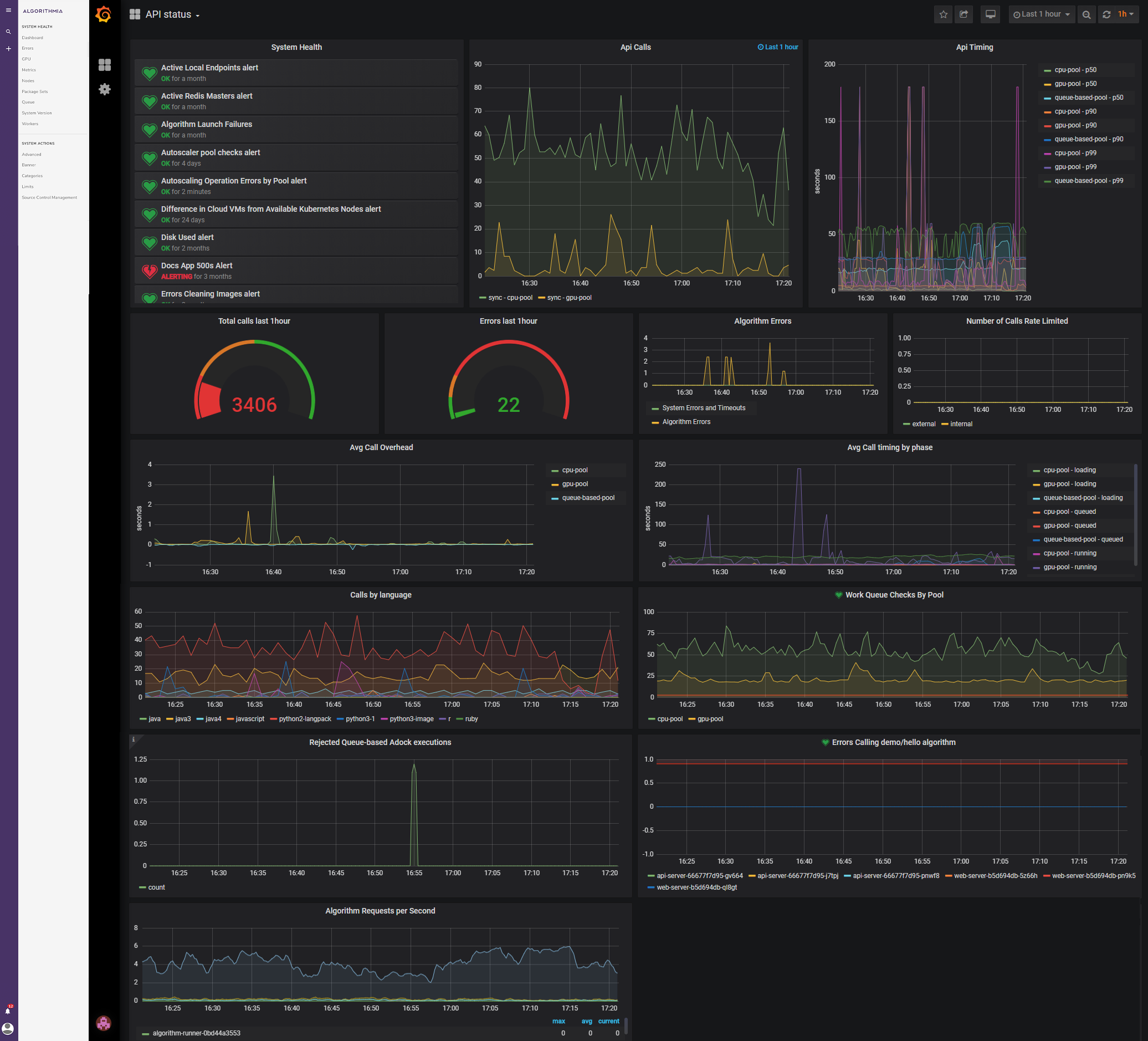
    Company CEO Diego Oppenheimer said Algorithmia Insights provides a level of observability into ML models that DevOps teams have come to expect from applications. To make that monitoring capability more accessible, Algorithmia has partnered with Datadog to stream operational and user-defined inference metrics from Algorithmia to the open source Kafka data streaming platform, from which the Datadog Metrics application programming interface (API) can consume that data.

    That capability will enable DevOps teams that have adopted the Datadog monitoring platform to employ a single pane of glass to both monitor their IT environments as well as detect data drift, model drift and model bias with an ML model, Oppenheimer said.

    As organizations infuse ML models into applications many of them are encountering DevOps workflow challenges. It can take six months or more to develop an ML model, which then needs to be embedded with an application that often is updated several times a month. At the same time, organizations are discovering that ML models often need to be replaced either because assumptions about business conditions have changed or additional relevant data sources have become available. In many cases, data scientists have adopted DevOps principles to create a set of best practices known as MLOps to update their models.

    The alliance with Datadog is significant because it enables IT teams to start melding DevOps and MLOps processes, noted Oppenheimer.

    At this juncture, it’s apparent that almost every application to varying degrees will eventually be enhanced using machine learning algorithms. Most of the data scientists that create these models, however, have little experience deploying and updating ML models in a production environment. It’s now only a matter of time before ML models become just another artifact flowing through a DevOps workflow. Organizations that have invested in ML models, however, will need to spend some time bringing together a data scientist culture that is currently distinct from the rest of the IT organization.

    To further that goal, Algorithmia earlier this year made it possible to write and run local tests for algorithms as shared local data files. Desktop tools that have been integrated with that process include PyCharm, Jupyter Notebooks, R Shiny, Android, iOS, Cloudinary, Datarobot and H2O.AI.

    A recent survey of more than 100 IT directors conducted by Algorithmia finds the COVID-19 pandemic has required 40% of survey respondents to make adjustments to at least half of all their AI/ML projects either in terms of priority, staffing or funding. Over half the respondents (54%) said AI/ML projects prior to the pandemic were focused on financial analysis and consumer insight. In the wake of the pandemic, survey respondents said more of their AI focus is now on cost optimization (59%) and customer experience (58%).

    The survey also notes respondents were spending at least $1 million annually on AI/ML prior to the pandemic, with 50% saying they are planning to spend more than that going forward. Overall, nearly two-thirds (65%) said that AI/ML projects were at or near the top of their priority list before the pandemic, with 33% now saying these applications are now higher on their list.

    It may be a while before every DevOps team regularly encounters ML models, but at this point, it’s more a question of when rather if before DevOps processes expand to include ML model artifacts.

  • Harness to Apply AI to DevOps

    Harness to Apply AI to DevOps

    Harness, at its {Unscripted} 2020 conference today, announced its plans in the fourth quarter to make available as a beta a module that leverages machine learning algorithms to optimize build and test cycles on the Harness Continuous Integration (CI) Enterprise platform.

    At the same time, Harness is adding a beta of a Continuous Features module to enable DevOps teams to employ feature flagging to simplify the application development process. A visual dashboard for feature verification and analytics monitors all flags, including active, inactive, live and unrequired flags, as well as customer issue tickets, to simplify the management of new capabilities being added to an application.

    Harness is also updating its continuous delivery (CD) platform to include a revamped user interface, GitOps and pipelines-as-code processes, bi-directional synchronization and conflict management, and templates to standardize deployments across teams.

    Finally, Harness is adding a Harness Next Generation Continuous Verification tool to provide visibility into the impact changes have on IT environments. This tool can be deployed standalone or used in conjunction with any CD platform and is intended to make it easier for DevOps teams to discover the root cause of issues that typically stem from recent changes made to an otherwise stable IT environment.

    Harness CEO Jyoti Bansal said artificial intelligence (AI) in the form of machine learning algorithms are poised to play a major role in taking DevOps automation to the next level. The Harness AI module can reduce test cycle time by up to 75% by correlating and isolating tests to changed code rather than requiring all tests to be executed with every change. The Harness approach means only relevant test cycles are run, he said.

    Continuous Integration Enterprise will also be able to identify gaps in test plans by highlighting code changes that are not covered by existing test cycles. Library caching and container image size optimization will also be added in the future to make builds more efficient.

    Harness also announced its intent to apply machine learning algorithms more broadly. Algorithms will enable DevOps teams to control, optimize and accelerate the flow of software pipelines rather than requiring engineers to manually verify builds, tests, deployments and releases. Harness will also apply data science techniques to observe the quality, performance, cost and reliability of code as it flows through each pipeline step and, if need be, automatically abort or roll back the delivery of software.

    As each build is committed, the opportunity to collect even more metadata about the workflow process only increases, Bansal added.

    Obviously, Harness is not the only provider of a CI/CD platform looking to apply machine learning algorithms. Thanks to machine learning algorithms, the rate at which applications are developed and deployed could increase by several orders of magnitude in the months ahead. The issue now is to what degree the rest of the business will absorb that potential rate of change.

  • MLOps: More Than Automation

    MLOps: More Than Automation

    Recently, there has been a lot of talk about MLOps from the DevOps and software engineering perspective. The message often comes across as, “Hurry, DevOps community, let’s set some standards before MLOps reinvents the wheel,” or “The purpose of MLOps is to allow anyone who knows how to code to get ML into production.” Let me tell you, as a data scientist this disappoints and sometimes scares me. Why? Because neither of these points of view captures the pain of the data scientists or the people that are subject to ML algorithms.

    A good example of this attitude toward MLOps is Google’s recent announcement. If you have read Google’s blog, you’ll see that some of the pain points they have identified are needs for data scientists: We do need continuous evaluation, continuous monitoring, metadata management and lineage and a feature store for collaboration. But where I find the announcement falls down for me is in the company’s goal “to make machine learning act more like computer science.”

    Here’s the reality. DevOps wasn’t created to make software development behave more like a different field. It was created as a set of principles to enable software engineers to quickly and easily apply incremental improvements based on the needs of their customers, with a focus on quality. MLOps is more than automation. Centering on the needs of the users and the customers is what made developing products, ideas and a set of principles successful as DevOps.

    For MLOps to learn from DevOps, we must center the needs of data scientists and the people that are impacted by their models first. It isn’t enough to say that practicing MLOps means advocating for automation and monitoring at all steps to do things faster. Without this focus, we will see an increase in the deployment of models that have uninspected and unintended consequences that often disproportionately impact marginalized communities.

    So, as a data scientist, what is it that I need? Keeping up with the latest and greatest event streaming services, distributed systems or methods of continuous deployment of integration isn’t where my mind lights up. I would like to spend most of my time understanding the domain space of the model I’m about to build, the nuanced impact of that model and whether it’s going to meet the needs of my customers and the people they serve.

    There are a few ways to notice if you’re applying MLOps basically as a Band-Aid, a way to just go faster, that will ultimately break down. When looking for a solution to automate, consider if you’re only reducing the work required for manual processes or if you’re also enabling data scientists to focus on the hard problems they’re trained to tackle. Another way to look at your MLOps practice and tools end-to-end is to see if they allow your data scientists to know the impact of their models across more dimensions than just the outcome. Let’s take a few examples.

    Automation of Data Pipelines Can Slow You Down

    Today, data engineers have been reluctant to allow data scientists to have access to all of the data that exists in all of its forms. There are many reasons I’ve been given in my years of experience, some of which are good, such as not all of the tools that data scientists have available for experimentation support all of these data sources. Other reasons, however, might include grumbling about creating additional work for data engineers. It’s a continuous challenge to get data such as event streams into a format that can be explored by data scientists. Each new feature I hope to create comes at a cost to other teams.

    With our shiny new culture of MLOps, someone proposes a solution: Automate! But, remember, MLOps is more than just automation. This is a great place to stop and look at the data scientist’s workflow and find a way to automate a solution that fits their needs and gives them new capabilities while reducing the work on the data engineering team.

    A simple automation instinct might look like this: Ask data scientists to list out all the data they’ll ever need, and create batch jobs to serve up those needs. A better solution would be to find a way to connect multiple types of data sources to a single environment, allowing data scientists to explore data as it becomes available. Then create features and make them available for production without having to change development environments or languages or to be proficient in reading crystal balls to know what data they’ll need into the future.

    Continuously Monitoring the Wrong Things

    Another common pitfall of applying MLOps without focusing on the people your ML models will ultimately impact is using continuous monitoring only to measure performance, without tracking the impact of your features across various demographics. It’s not enough to check—one time—that your models aren’t systematically disadvantaging marginalized groups. We need to do this continuously.

    People change, so do our biases and patterns. It’s easiest to conceptualize this for me in our use of language over time: The words are the same but their impact changes. We often don’t know that the underlying data has changed because society itself has evolved. But we can commit to measuring the impact across dimensions to react quickly, ultimately reducing harm.

    Ultimately, MLOps isn’t just about automation. It is also a set of principles to guide how we build tools for sharing outcomes. At my company, we are thinking about ways to help identify and flag data and features that could introduce bias in our feature store product.

    The gains from efficient ML development are significant. Data scientists and data engineers are sharing new tools to speed development and foster collaboration at higher velocity. And with better tools and processes, we are able to share responsibility for productionizing ML. MLOps, at its best, incorporates these components and more into your organization.

    If we’re not careful, however, teams will focus on making data scientists more like software engineers, vendors will create tools that fail to address the entire problem, and companies will spend millions of dollars on quickly releasing models that fail to serve their customers—ultimately at the cost of humanity.

  • Oracle Launches Observability Platform

    Oracle Launches Observability Platform

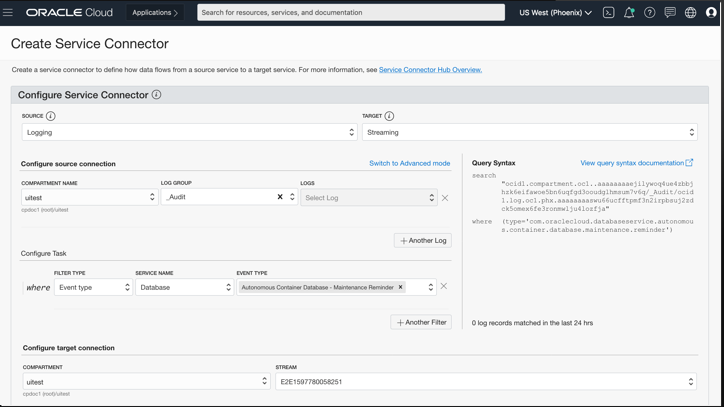
    Oracle, at its online Oracle Live event today, unveiled the Oracle Cloud Observability and Management Platform, which combines newly added logging, log analytics, database management, application performance monitoring, operations insights and service connector hub services with existing Oracle monitoring, notifications, events, functions, streaming and operating system management capabilities.

    Dan Koloski, vice president of product management for Oracle, said the Oracle Cloud Observability and Management Platform provides IT organizations with access to a unified observability platform running on the Oracle Cloud Infrastructure (OCI) service that, in keeping with best DevOps practices, offers more context than traditional monitoring tools.

    In addition to being able to observe applications deployed on Oracle infrastructure, on-premises or in the cloud, the Oracle Cloud Observability and Management Platform interoperates with Slack, Grafana, Twilio, PagerDuty and other platforms to enable organizations to craft end-to-end DevOps workflows, Koloski added. Oracle is also working toward making it possible to import and export data to open source Prometheus monitoring platforms, noted Koloski.

    Oracle Cloud Observability and Management Platform employs machine learning algorithms to automatically detect anomalies and enable remediation in near-real-time. The company has also automated the instrumentation process to the point of one-click agent deployment, he added.

    Koloski said IT organizations are moving to rationalize a raft of tools to monitor silos of applications and infrastructure that historically were employed with mixed success. An observability platform provides more context by unifying all those tools in a way that makes it easier to troubleshoot the overall IT environment, he noted.

    As IT environments become more complex, thanks mainly to the rise of microservices and containers across hybrid cloud computing environments, Koloski said a new approach to managing IT is required. Advances in observability in the form of distributed traces are also creating a need to shift IT monitoring platforms to the cloud, as the amount of data that needs to be analyzed steadily increases, noted Koloski.

    With the launch of Oracle Cloud Observability and Management Platform, Oracle is also signaling that database management is being incorporated into DevOps processes, Koloski said.

    IT teams today still spend a fair amount of time in “war rooms” trying to ascertain the root cause of an application performance issue. Observability platforms promise to reduce the amount of time IT teams need to spend trying to determine the root cause of those issues. Most of the time it only takes a few minutes to fix an issue that an IT team may have spent weeks trying to uncover.

    Of course, embracing an observability platform doesn’t necessarily mean an IT organization has embraced best DevOps practices. However, because observability is a core tenet of DevOps, it does mean a lot more IT teams will be further down that path.

  • Snyk Acquires DeepCode to Apply AI to DevSecOps

    Snyk Acquires DeepCode to Apply AI to DevSecOps

    Snyk today announced it has agreed to acquire DeepCode as part of an effort to apply artificial intelligence (AI) to DevSecOps.

    DeepCode has developed an interpretable machine learning semantic code analysis tool that scans code anywhere from 10 to 50 times faster than existing approaches. DeepCode currently supports Java, JavaScript, Python, TypeScript and C/C++ programming languages. Developers get started by connecting the DeepCode bot to their GitHub, BitBucket or GitLab accounts or directly within their integrated development environment (IDE). DeepCode then immediately starts reviewing each commit with no additional coding required. The bot is currently free for teams of up to 30 developers.

    Snyk CEO Peter McKay said those machine learning algorithms dramatically reduce both false negatives and false positives as they learn the application environment. That code scanning occurs in real-time, thanks to a Datalog solver developed by DeepCode, which McKay said means code scanning can now keep pace with the rate at which applications are being developed.

    While there’s widespread agreement that more responsibility for application security needs to shift left toward developers as part of any effort to embrace best DevSecOps processes, getting the right security tools into the hands of developers has been a challenge. Developers tend to resent having to wait for security scans to be completed, especially at a time when the rate at which applications are being developed and deployed has been accelerated as organizations embrace digital business transformation more aggressively.

    In effect, code scanning as implemented today is often viewed as a bottleneck. That issue goes away, however, if scanning can occurs in real-time. Armed with that data, it then becomes possible to also prioritize which vulnerabilities to address in code first in addition to in, some cases, automating bug fixes.

    In an ideal world, security will become a natural extension of any quality assurance process implemented by a DevOps team. The challenge right now is bridging a cultural divide between DevOps and cybersecurity teams that have workflows that operate at dramatically different cadences. The more automated the code scanning process becomes at the front end, the fewer security issues will need to be addressed by theses teams as applications are either being deployed or, worse yet, after they are already running in a production environment.

    Fresh off raising an additional $200 million in funding that was used in part to acquire DeepCode, Snyk claims there are already 1.5 million developers using its tools worldwide and that its revenue grew 275% in the last year. Privately held, Snyk claims to have a valuation of $2.6 billion. The next challenge is to expand adoption of Snyk tools across the roughly 24 million developers that are writing code today, said McKay. As part of that effort, Snyk recently formed technology alliances with both Red Hat and Docker Inc.

    Naturally, it may take some time for that goal to be realized. However, with more developers now being held accountable for security, the chances are good that many of them will soon be looking to ruthless automate security in much the same way they are moving to automate every other aspect of IT.

  • Eggplant Employs AI to Surface Test Recommendations

    Eggplant Employs AI to Surface Test Recommendations

    Eggplant this week announced it has extended the capabilities of its application testing platform infused with machine and deep learning algorithms to now include recommendations to help improve tests.

    In addition, the latest update to the Digital Automation Intelligence (DAI) Platform makes it easier to onboard new members to an application testing team.

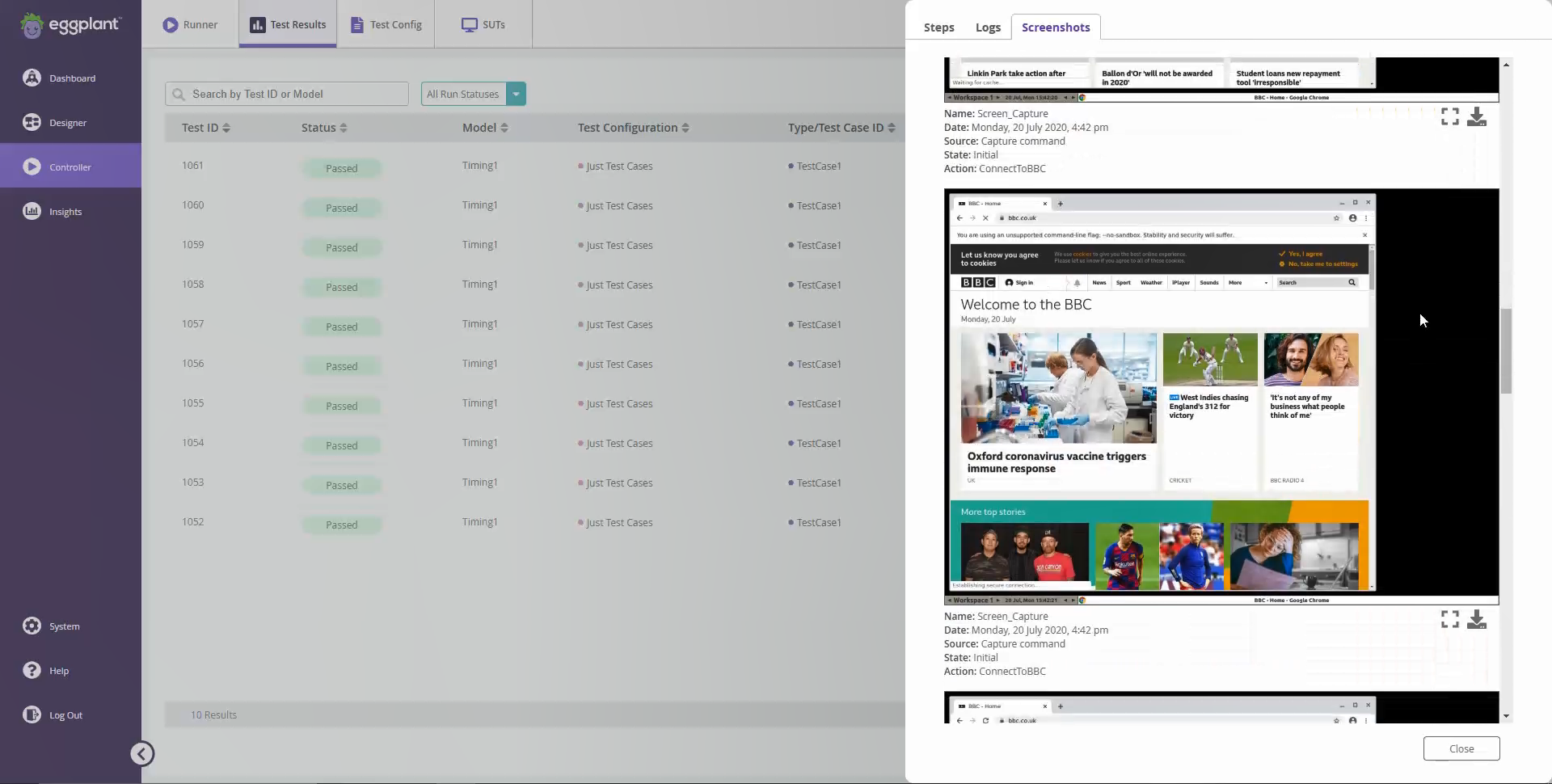
    Finally, Eggplant is making it easier to capture snapshots of the testing environment to more easily identify areas that require additional test development.

    Eggplant COO Antony Edwards said the goal is to extend a low-code platform that employs modeling tools to make testing more accessible to both developers and end users. There is simply not enough testing expertise available to keep pace with the rate at which applications are now being developed thanks mainly to the rise of DevOps, he noted.

    By employing a testing platform based on a low-code platform that enables tests to be created using modeling tools, it becomes feasible to include more end users in the testing process, he said. Generally, end users have the best understanding of how an application should function, so including them in the testing process also yields higher quality applications that will be accepted sooner, Edwards added.

    Eggplant, which was just acquired by Keysight Technologies, has been making a case for applying artificial intelligence (AI) to application testing to increase the overall capacity of testing teams. Using AI makes it possible to conduct more than 100 tests in parallel because most of the mundane tasks associated with building and updating tests have been automated, said Edwards.

    There will always be a need to include humans in the testing process, but Edwards noted AI can augment the capabilities of testing teams in a way that not only allows more tests to be conducted faster but also ensures more resources are allocated to writing code, versus continually debugging applications.

    Many IT organizations are now caught up in a vicious DevOps cycle. They can develop more applications faster, but the more applications they develop the more time they need to spend debugging them. Ultimately, organizations find themselves spending more time debugging existing applications than developing new ones. AI-infused testing tools break that cycle by identifying issues before applications are deployed, which is when they are easiest and least costly to fix.

    Breaking that cycle has become more of an imperative because in the age of microservices, the overall application environment is becoming more complex, Edwards said. Most testing teams are not going to be able to create the tests needed to assure the quality of those applications unless it becomes possible to generate more sophisticated tests using modeling tools that automate much of the process.

    Naturally, it may take some organizations time to trust the tests and recommendations generated by an AI platform. However, in the wake of the economic downturn brought on by the COVID-19 pandemic, it’s apparent DevOps processes need to be streamlined. Arguably, one of the best places to begin that process is by automating as much of the application testing process as possible.

  • The Role of AI, ML-Powered DevOps in Digital Transformation

    The Role of AI, ML-Powered DevOps in Digital Transformation

    Global businesses are in the midst of an enormous digital transformation wave. As we step into the realm of industry 4.0, exponential technologies are becoming a fundamental segment of traditional business settings.

    Despite having access to transformative technologies, however, many organizations fail to embrace disruption and harness their potential to stay ahead of the curve. Much of this stems from their inability to foster a collaborative environment wherein myriad teams and operating IT systems work in unison to achieve their goals. Without a strong foundation of infrastructure automation and well-chosen team collaborations, embarking on the digital transformation journey is difficult. And to do that, adopting a DevOps mindset is necessary. In essence, organizations need to incorporate DevOps practices to transform, compete and protect their new value pools without sacrificing quality, stability and productivity.

    Digital Transformation and DevOps

    DevOps helps enterprises succeed with digital transformation by triggering a paradigm shift in the cultural mindset of the business, breaking down silos and driving continuous change and rapid experimentation.

    There are multiple benefits of merging DevOps with a digital transformation strategy. First, this methodology breaks down the silos between IT and business operations, thereby ensuring consistent levels of productivity, efficiency and service delivery. This has a direct impact on companies’ time-to-market. Second, bug fixes are much easier due to the automation of toolchains. Third, the automation that DevOps introduces improves developer/IT productivity as they can focus more on innovation rather than being caught in a cycle of bug-fixing and firefighting.

    Despite DevOps’ contribution to digital transformation, its adoption in many industries is still slow due mainly to scarcity of skills and the right toolset. Complete automation remains elusive. Additionally, patchy adoption has given rise to a two-paced overall technology environment—one part is fully integrated with DevOps and the other part is users still mulling over the “how” of tightly integrating it in the overall process.

    Advanced technologies such as artificial intelligence and machine learning could resolve these issues. They can alleviate operational complexities in DevOps to help organizations transform at a faster pace. The following are some of the benefits offered by these technologies.

    Better Automation

    The need to rely on manual processes can be reduced with AI- and ML-based technologies, which has an enormous impact on data analysis. Organizations can use powerful AI data mapping techniques to automate data transformation processes with ease and speed. They can make use of the predictive ability to accelerate the process, increasing accuracy by leaps and bounds. This transformed data can be easily integrated using another solution AI integration, and so it becomes easier for users to work on data for extracting business intelligence and streamlining decision-making. This entire process takes only a few minutes to complete. Plus, since the need for manual intervention is curtailed, developers who previously were mired in handling transformation operations can move on to more strategic tasks such as governance, control and resource planning.

    Better Security Through Intelligent Anomaly Detection

    AI and ML-powered technologies, with their highly precise features, augment system security to deliver better performance. With a centralized logging architecture, users can record and root out suspicious activity on the network. These technologies togehter with DevOps can help mitigate the impact of threats and hacker attacks to help companies drive their digital transformation initiatives with precision.

    Better Team Collaboration

    In any organization, two teams function in parallel: the developer team, which has the responsibility to code fast, and the operations team, which ensures minimal disruption. While maintaining this balance can be difficult, transformative technologies such as AI and ML can help these two teams work in unison, improving collaboration by helping them have a single, unified view into system issues across the business ecosystem.

    Better Customer Experience

    AI-based technologies can have a direct impact on organizational productivity and performance. They can develop and launch their products faster (keeping customer expectations in mind) with lower TCO. Plus, DevOps-inspired service teams are able to provide a higher level of service, resulting in more satisfied customers

    AI-powered technologies are critical to kickstart DevOps performance and ultimately drive digital transformation initiatives. Infusion of AI not only improves enabling faster development and deployment cycles through automation, but also enables better collaboration and uncovers and remediates key issues, helping businesses unlock digital transformation value.

  • Algorithmia Looks to Meld MLOps and DevOps

    Algorithmia Looks to Meld MLOps and DevOps

    Algorithmia, in the latest update to the enterprise edition of its namesake machine learning operations (MLOps) platform, is enabling software development lifecycle practices to be applied to the building of algorithms by making it possible to debug them using desktop tools that are widely employed.

    The enterprise edition of Algorithmia will enable users to write and run local tests for algorithms as shared local data files. Desktop developer tools that can now integrate with that process include PyCharm, Jupyter Notebooks, R Shiny, Android, iOS, Cloudinary, Datarobot and H2O.AI.

    In addition, Algorithmia MLOps has extended its support for the latest graphical processor units (GPUs) available on Amazon Web Services (AWS) and Microsoft Azure.

    Finally, the company has added support for AWS C2S, a private cloud for intelligence services, and AWS GovCloud.

    Algorithmia CEO Diego Oppenheimer said IT teams building artificial intelligence (AI) applications are applying many of the same best DevOps practices employed elsewhere in the organization. Making it possible to debug those applications on a local desktop makes it easier for organizations to construct those DevOps workflows, he said.

    The Algorithmia platform enables IT teams to control the provenance of all components of ML operations, including certificate authorities, operating systems, container images, code, dependencies and ML models employed.

    Many organizations today are struggling with how to meld MLOps and DevOps processes. The rate at which AI models are created and updated is typically much slower than the rate at which the applications those models are infused is typically much slower. Data scientists are now coming to terms with how to deploy and update AI models within the context of a larger set of DevOps processes.

    In the wake of the COVID-19 pandemic, interest is AI is rising. Organizations are looking for ways to leverage machine learning algorithms to both drive down costs and increase revenue by automating a wide range of tasks. A recent global survey of 2,737 information technology and line-of-business executives conducted by Deloitte finds nearly two-thirds of the survey respondents (61%) said AI will substantially transform their industry in the next three years. More than half (53%) also noted they have spent more than $20 million during the past year on AI technologies and the talent required to master them.

    However, the same survey noted over half the respondents (56%) said their organization is slowing adoption of AI technologies because of the emerging risks. Obviously, improving the debugging process for applications that incorporate machine learning algorithms could go a long way toward reducing those risks.

    It’s not clear to what degree AI might one day transform the application experience. It is safe to say that eventually, almost every application will incorporate machine and deep learning algorithms to automate one or more processes. Those algorithms won’t eliminate the need for humans as much as they will automate rote processes that today consume more time than anyone prefers. The challenge, of course, will be making sure algorithms perform those tasks consistently as more data becomes available.