Tag: Low Code

  • Dual-Track and Low-Code’s Excellent Adventure

    Dual-Track and Low-Code’s Excellent Adventure

    Digital transformation can be a bogus journey. Here’s how low-code and dual-track transformation efforts can help.

    Large-scale enterprise digital transformation can take a while. Transformation initiatives like cloud migration, mainframe upgrades or refactoring monolithic systems could easily take five to seven years. Yet, this slow pace is at direct odds with today’s digital innovation standards and the pressure to release software rapidly.

    COVID–19 has amplified this drive to innovate, especially complicating matters for non-cloud-native companies, which struggle to attract and retain talent amid a developer shortage. Not to mention, developers are experiencing surmounting pressure to perform, which could result in burnout if not supplemented by new strategies.

    To maintain agility while diligently advancing multi-year digital transformation projects, some proponents argue for a dual-track approach. This approach uses low-code platforms to increase operational agility (the fast track) while digital transformation initiatives (the slow track) progress methodically on the side.

    I recently sat down with Jay Jamison, chief product and technology officer at Quickbase, to discuss today’s digital transformation concerns. According to Jamison, implementing a dual-track approach affords great rewards, but it requires an organizational cultural shift. He recommends establishing centers of excellence (COE) to evangelize low-code practices and encourage citizen development, enabling subject matter experts of lower technical acuity to automate operational workflows and operations.

    Dual-Track Transformation

    “Digital transformation is an important element for businesses of all sizes,” said Jamison. However, mainstream digital transformation projects, like rationalizing an ERP, moving to the cloud, or upgrading a network, can take an exorbitant amount of time and money. It’s hard for IT to meet business requirements. “We really need a second track of digital transformation — one that is more agile.”

    Jamison likens dual-track transformation to chipping out “small rock” projects from the larger digital transformation cliff. This strategy focuses on streamlining realizable goals in shorter timespans, empowering teams of people — with subject matter expertise — with tools to transform and digitize their workflows.

    Low-Code’s Role in Dual-Track

    A recent study conducted by Harvard Business Review found that 80% of executives “strongly agree” that a dual-track approach is essential for digital transformation. Yet, only 31% of companies have adopted said approach.

    To realize a dual-track process, Jamison recommends low-code for its “low-risk, high-throughput capability.” According to Jamison, low-code enables the edge of business to quickly adapt new solutions and run them in parallel with big rock digital transformation. For example, non-engineer government employees in a Texas county recently used a low-code platform to help distribute coronavirus vaccines.

    For a citizen developer culture to flourish, “you really need to have all hands in the pile,” Jamison said. IT stakeholders and business members must collaborate and work together to bring low-code to fruition. This process combines setting goals, outlining guardrails, and forming learning groups with progressive leadership at the helm.

    Introducing Centers of Excellence

    Naturally, many factors can affect IT innovation (leadership commitment, collaboration, organizational expectations, etc.). But arguably, the most common roadblock to digital innovation is culture. In fact, 45% of executives report that organizational structure is a major transformation challenge.

    That’s where centers of excellence (COE) come in. No, centers of excellence is not an archive of Bill & Ted’s adventures. COEs aim to fix the cultural barrier by encouraging progressive leadership, collaboration, and innovation. The Playbook for Centers of Excellence defines COE as “a concentration of expertise and resources in a specific capacity, designed to maximize the focus on a specific project.”

    A COE aims to foster shared understanding between IT leadership and business leadership. In Jamison’s words, “a center of excellence provides the ability to utilize low-code to sustainably build and empower applications in a safe, sustainable way.”

    Building a Most Triumphant Center of Excellence

    The COE goal is to empower business users to innovate. Yet, COE is a governance framework, which seems a bit contradictory. So, how does an organization go about implementing it? Well, there is a range of how companies adopt COE, but Jamison shared some common steps:

    Step one is establishing your goals. This could be increasing productivity, enhancing customer satisfaction or improving service reliability. Step two involves inviting the right people and perspectives — the key personnel to own the COE program.

    Next, develop transparent policies around security. This helps preempt concerns around data security and compliance. Finally, now that goals and rules are established, communicate the initiative across an organization.

    Throughout this process, investing in training is paramount. There are many project management philosophies for encouraging low-code adoption, but Quickbase recommends a training and education team to “roll out information and goals in a structured, targeted way”. They also encourage a community focus — user groups, internal events and knowledge-sharing initiatives can build excitement within the employee base.

    Benefits of Low-Code Enabled COE

    A COE aims to bring disparate parties to the same table. For example, companies could hold what Jamison described as an “appathon,” in which business executives present their goals, like rolling out new installations or driving 5G deployments. Then, priorities are assigned to individual groups, who apply domain knowledge to construct applications.

    Setting up a COE by accelerating ground swell innovation “catalyzes the dual-track innovation that we think is really key,” said Jamison, reducing the mean cycle-time to introducing new features. Low-code could also lower the integration barrier, enabling connectivity with CRM systems, or connecting with big, heavy systems like SAP or Oracle.

    Jamison also described low-code platforms as encompassing “the spirit of microservices,” as they introduce a relatively lightweight application process and easy deployment model. Furthermore, if teams are tapped into the same PaaS, they receive data reusability benefits, he said. “Everyone can utilize the same data in a way that’s relevant for what they need.”

    Citizen Developers: Bogus or Non-Bogus?

    Personally, I think it would be great if the future of application development ushered in a democratizing effect, allowing more people to participate in software creation. Yet, the skepticism around a fully working citizen developer model is hard to shake.

    The “citizen developer” seems to have a negative connotation among coder elites, too. As one reader commented:

    “So top talents are overpaid extravagance and bored secretaries working from home will be driving innovation by writing no-code workflows, am I right with understanding what is written here?”

    I pressed Jamison on the reality of the citizen developer concept in practice and how he responds to naysayers. He jokingly equates it to a witch hunt.

    “Saying that only people that get to participate in software development is professional software developers is ridiculous,” he said, noting the importance of subject matter expertise.

    According to Jamison, companies often fail when they attempt to transmit subject matter expertise to developers. Organizations would rather teach subject matter experts low-code than teach the subject matter to programmers, he noted. It’s not hard to imagine why allowing subject matter experts to build their own workflows for specialized fields, such as accounting, natural science, or mathematics, makes sense.

    Regardless, Jamison adds there’s nothing really to worry about — “The full stack developer isn’t going anywhere.”

    Dual-Track Digital Transformation? Excellent!

    A dual-track approach combines large-scale transformation and rapid-cycle development. By separating “small rock digital transformation” out from the larger puzzle, organizations can increase operational agility to meet business needs a bit quicker.

    Establishing a center of excellence seems to boil down to bringing people together to share ideas, collaborate, and drive better productivity. If anything, this way of thinking will help operationally-intensive industries consider how they can automate parts of their business.

    Ultimately, the goal here is to enable organizations to collaborate better and drive better productivity. By empowering more creators, you can start seeing creativity at the edge of business emerge too, said Jamison. If that involves citizen developers creating event-driven workflow automation, so be it. “We invite people to take on the challenge,” said Jamison.

    Hopefully, then, business and IT can be excellent to each other.

  • DARPA Enlists GrammaTech to Apply AI to Reverse Engineer Code

    DARPA Enlists GrammaTech to Apply AI to Reverse Engineer Code

    The Defense Advanced Research Projects Agency (DARPA) has awarded a research contract to GrammaTech for low code technology that will make it possible for end users to leverage artificial intelligence (AI) without requiring intervention from the original software developer.

    GrammaTech’s AI tool, dubbed ReMath, aims to ease application updates by automatically inferring high-level mathematical representations from existing binaries in systems and embedded software. The tool is currently in development.

    Dr. Alexey Loginov, vice president of research for GrammaTech, said development teams spend a lot of time using low-level tools such as disassemblers, debuggers and decompilers to manually analyze binaries. ReMath will accelerate that reverse engineering process by recovering and converting machine language into representations that end users can directly manipulate, said Loginov.

    The goal is to free developers up to build new software, rather than continuously updating software that has already been deployed, noted Loginov. This approach should ultimately reduce the backlog of application and software development projects organizations have, added Loginov.

    GrammaTech

    The ReMath project is the latest in a series of DARPA contracts awarded to GrammaTech. In general, the company is working towards applying AI to advance DecSecOps via a static application security testing (SAST) tool that identifies vulnerabilities in code. The ReMath project focuses on applying AI to use cases involving, for example, industrial control systems. These systems could benefit from allowing domain experts, with no coding expertise, to maintain and update them on their own, said Loginov.

    Other DARPA projects GrammaTech is actively researching include a type-ahead capability that automatically recognizes existing artifacts in a software repository, said Loginov. This capability will make it simpler for developers to reuse code within the context of a GitOps process without inadvertently introducing additional errors, Loginov said.

    In the future, the potential impact of AI on software development could be profound, as more reliable code moves into production environments. The percentage of code graduating into those environments on the first attempt should increase considerably in the years ahead. That should enable more reliable delivery of application code via continuous integration/continuous delivery (CI/CD) platforms.

    As software development becomes more efficient, the current developer shortage should also ease, and open up resources to launch a greater number of application development projects. Rather than spending time on manual tasks that provide no differentiated value, Loginov said software engineers will be able focus more of their time and energy on process innovation.

    In the meantime, developers should expect to see a rash of development tools with AI capabilities in the months ahead. None of those tools are likely to eliminate the need for developers any time soon; however, much of the drudgery involved in writing code today is likely to be sharply reduced as machine learning algorithms and other forms of AI are applied to software development.

  • Low-Code Opens API Integration Potential for Citizen Developers

    Low-Code Opens API Integration Potential for Citizen Developers

    APIs have an accessibility problem. Could a low-code API approach make them more inclusive and accessible for citizen developers?

    Most software today integrates with third-party SaaS. TomTom for geolocation. Stripe for payment. Twilio for SMS. Kairos for facial recognition. AWS for NLP … the list goes on. Whatever function you’re looking for, there’s probably an API for that.

    These specialized utilities help software teams avoid reinventing the wheel for things outside of their core competency. They’re standardized, too — most services are programmable following REST or GraphQL guidelines. Serving integrations over HTTP aids in decoupling the business logic from the client interface. Furthermore, OpenAPI Specification, now part of the Linux Foundation, has risen as a standard description format, making APIs more defined and interoperable.

    However, for all this progress, there’s still friction in the integration process, even for seasoned developers. Each API is a bit unique. It takes time to read through the documentation to authenticate and discover methods, parameters and accepted fields. It requires effort to test requests within Postman, decipher error messages and set up calls within your unique environment. On top of all this, downtime and breaking changes are legitimate concerns for over-the-wire dependencies.

    APIs require effort and maintenance, and just integrating third-party APIs alone won’t build you a fully functional application. Yet, organizations find themselves scrambling to find and hire engineers, and increasingly the onus is on non-tech folks to create new digital workflows. Naturally, companies are currently searching for even more low-code solutions.

    So, what’s the glue holding together API products? How can we better connect APIs to the software applications we’re already building and allow citizen developers to reap the benefits?

    My theory: If low-code platforms decrease the API integration hurdle, more problem-solvers can stitch together business utilities to create more advanced internal applications. Making third-party APIs more inclusive for citizen developers could boost the API economy at large and enable creative solutions to flourish throughout enterprises.

    The Need for Low-Code API Integration

    Perhaps the best way to demonstrate the need for low-code is to scare you with some code. Let’s say you want your application to initiate a direct deposit into a bank account.

    You don’t want to build a financial service from scratch, so you turn to Stripe API. You set up an account, grab a key, and dig in to the ‘Getting Started’ materials. You peruse their comprehensive documentation, and find out how to create a payout.

    The docs demonstrate a sample HTTP curl request for creating a payout. Other parameters to pass include destination, methodor source_type.

    curl https://api.stripe.com/v1/payouts \
     -u sk_test_4eC39HqLyjWDarjtT1zdp7dc: \
     -d amount=1100 \
     -d currency=usd

    If there are no errors with the request, the response will be a payout object, formatted in structured JSON. It details the balance, data created, currency type and other fields. It looks something like this:

    {
     "id": "po_1HmNKQ2eZvKYlo2CuRNBRWUW",
     "object": "payout",
     "amount": 1100,
     "arrival_date": 1605116514,
     "automatic": true,
     "balance_transaction": "txn_1032HU2eZvKYlo2CEPtcnUvl",
     "created": 1605116514,
     "currency": "usd",
     "description": "STRIPE PAYOUT",
     "destination": "ba_1HmNKQ2eZvKYlo2CzlT6m5gk",
     "failure_balance_transaction": null,
     "failure_code": null,
     "failure_message": null,
     "livemode": false,
     "metadata": {},
     "method": "standard",
     "original_payout": null,
     "reversed_by": null,
     "source_type": "card",
     "statement_descriptor": null,
     "status": "in_transit",
     "type": "bank_account"
    }

    Now, you can parse the response into data your application can ingest. You can also send other requests to update, return and cancel this payout object.

    For specialists familiar with HTTP calls and JSON, this is pretty straightforward. Stripe docs typically generate sample requests for many languages, like PHP, Ruby, Python and others to help within your own environment.

    But what if your users are more comfortable with UIs? Integrations are pretty opaque to the non-technical. Even for seasoned developers, APIs can quickly become too dense, and not all have a great developer experience.

    Hurdles In API Integration

    There are many issues preventing non-tech-savvy users and novice programmers from inserting API-driven business logic into their applications:

    • Onboarding time: Setting up an account, acquiring authentication, reading docs and testing calls to familiarize yourself all takes time.
    • Data Types: Data passed in headers must conform to explicit data types, or else requests may fail.
    • Parsing: Responses are often too verbose; developers must parse the JSON object responses to retrieve the data they need.
    • Programming language: Each language handles network communication differently, meaning requests look different in every language.
    • Breaking Change: Third-party services change often, so if you’re not actively maintaining an integration, you may face breaking change.
    • Differing formats: There are various API standards. REST, SOAP, GraphQL all are designed a bit differently. Plus, webhooks, event-driven and publish-subscribe patterns have nuanced communication models.
    • Security and legal: If APIs aren’t appropriately secured, hackers could easily steal user data or cause outages.

    As you can see, a simple programming task like “make a bank deposit” becomes extremely complex the more closely we look at the logistics of actual implementation.

    Furthermore, just because you’ve made an integration work, that doesn’t mean you have a fully-functional application, securely deployed in the cloud, with a friendly UI  that’s universally accessible. A single application may have numerous integrations, meaning the integration process must be duplicated for every external service you connect.

    API Categories

    Overcoming these challenges is a lot to ask of non-professional developers, who may not be comfortable consuming business applications from the command line. This issue is further compounded as integration extends beyond public APIs, too.

    In a recent interview with Divyesh Kharade, co-founder/CEO at DronaHQ, he identified three main API categories:

    • Ready-made SaaS APIs: Microsoft Teams, Slack, Sendgrid, Twilio, Google Sheets, etc. These are the connections to third-party operational business utilities and applications.
    • Connecting to databases: Many companies require secure connections with custom internal databases or legacy internal MySQL databases.
    • Internal custom software: These are private or partner APIs. They may be new API-first microservices or custom-built legacy internal apps. Such middleware may expose many APIs.

    If a low-code application wants to become a holistic software development add-on, it must anticipate all potential environments. This includes integration realities for various scenarios.

    Citizen Developer vs. “Non-Tech”

    So who, exactly, benefits from more accessible integrations? The term citizen developer is often used to refer to any non-professional software developer with minimal programming training. “When most people speak of citizen developers, they mean functional guys that can build tech,” says Kharade.

    As I’ve said previously, fostering a culture of citizen developers is becoming a bigger priority amid dwindling developer talent and a combination of other forces impacting software development requirements.

    Yet, citizen developer tends to means something a bit different to everyone involved in the low-code space. Kharade seems to prefer the term “non-tech.” Non-tech users may include designers who may not have a software background but the relevant UX/UI knowledge to assemble workflows. “Design is a big part of any application,” said Kharade.

    Masking the Complexity of APIs

    If low-code tools mask complexity and make APIs more accessible for these non-engineers, it could inspire many creative solutions. With low-code, “creativity is limitless, and integrations really help with that,” said Kharade. “Once they see that power, they aren’t going back again.”

    For example, if an internal application requires chat functionality, Slack could be a great addition. Low-code layers could hide complexity in the backend, to the point that it “doesn’t feel like a request in background,” noted Kharade.

    The solution works both ways. Utilizing low-code platforms to manage data and expose APIs could enhance visibility and extensibility. Kharade described an industrial manufacturing use case, in which shift workers manually entered machine operations data on paper. That was before COVID; once lockdowns were mandated, the company started digitizing this record-keeping process.

    Access to real-time data, and the ability to filter and organize historical data, is already beneficial.  “Six months down the line, they may consider how to make this data accessible using APIs,” said Kharade. “The journey has just started — it will only get smarter and better.”

    Trigger-Based Workarounds Were A Start

    Of course, tools like IFTTT and Zapier have already been making APIs accessible to laymen for years. These platforms use friendly, UI-based front ends over the foundation of complex integrations, allowing users to set up trigger-based automation. If this particular service does this, this other service should do that.

    These are cool tools for stitching together service-service communications. However, these workflows are a bit isolated from the larger application development picture. For example, an application for hiring employees may require more than connecting a form API’s input to a Google Sheets field. This could require a custom database, a way to upload documents and the ability to deploy an application to the cloud.

    Since low-code already has standard components for drag-and-drop, adding a common method to insert third-party API integrations feels like a natural feature enhancement for these platforms.

    Making Integration More Accessible

    ProgrammableWeb records 23,000 APIs as of this moment. Clearly, many innovative, programmable SaaS offerings are ripe for the picking. Some paid, some open, all with slightly different integrations.

    “It’s difficult for a non-tech user to register and interact with an API,” said Kharade. Figuring out authentication, OAuth, headers, payloads and responses requires expertise. Though a professional developer may be required to “register them once,” says Kharade, once third party integrations are set up, they “should be drag-and-drop and click-to-use.”

    Solving integration problems is just one of the many arenas where low-code platforms could shine. If platforms can successfully establish (and maintain) connectivity, consumers could more easily access the core logic they are searching for. Democratizing robust solutions for traditionally non-tech companies is especially important amid the COVID-19 crisis.

    To be clear, I don’t believe it’s the API provider’s job to cater to end-users. Instead, they should focus on creating excellent developer experiences. Naturally, the type of business application you are trying to construct and your access to software engineering talent will, to an extent, determine a project’s technical stack. The JAMstack style, for example, may be a better fit for your team’s makeup and project objectives.

    That said, there seems to be room in the market for additional low-code layers to open up integration. In the same way APIs avoid reinventing the wheel for specialized utilities, low-code layers could standardize the pains of integration itself.

  • SAP Makes Available Free Cloud Tier to Build Applications

    SAP Makes Available Free Cloud Tier to Build Applications

    SAP announced that next year it will make available a free tier on SAP Cloud Platform for developers that are building applications.

    Announced at the SAP Tech-Ed conference, the free tier comes at a time when SAP is encouraging developers to use its applications as a foundation for digital business process transformation initiatives.

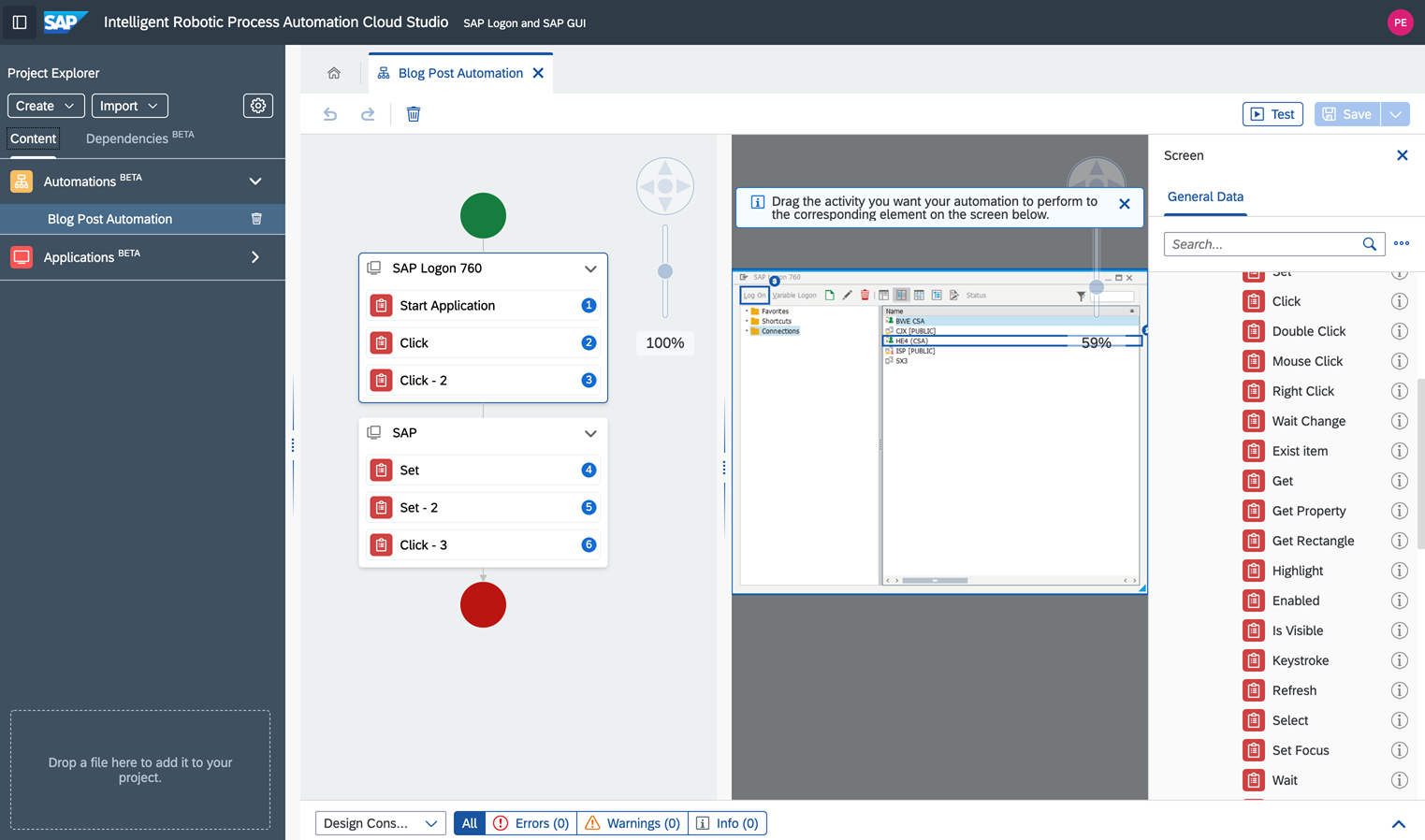
    As part of that effort, SAP is also extending the capabilities of the low-code tools it makes available to customize SAP Cloud Platform Workflow Management and SAP Intelligent Robotic Process Automation (RPA) 2.0 to make it easier to integrate these offerings with other applications. SAP beginning in January is also promised to include a limited edition of SAP Intelligent RPA in every SAP S/4HANA Cloud subscription.

    Finally, SAP is beta testing SAP Ruum, a set of no-code tools it plans to make available alongside the low-code tools it already includes in its portfolio of tools for building custom applications that extend the packaged applications it provides on-premises and in the cloud.

    At the heart of the SAP digital business transformation strategy is SAP Business Technology Platform, which makes it possible to share data across SAP applications via a common data and object model. SAP makes available SAP Cloud Platform to provide a distinct platform-as-a-service (PaaS) environment through which developers can build extensions to its applications.

    Most recently, SAP has made SAP Graph tools in beta offering as a complement to a revamped SAP API Business Hub that will be available in beta this month.

    Thomas Grassl, vice president and global head of developer relations and community for SAP, said the company is also embracing continuous integration/continuous delivery (CI/CD) platforms as it continues to encourage developers to move away from waterfall-based approaches to building and deploying applications.

    The free tier of resources SAP is providing developers will encourage organizations to experiment more at a time when many organizations are now quite certain what digital process may ultimately gain traction with their end customers and suppliers. SAP is also focusing on no-code and low-code tools to enable organizations to accelerate the development of those applications. SAP already has an existing partnership in place with Mendix, a unit of Siemens, to make available low-code tools.

    SAP’s biggest concern, of course, is that digital business transformation initiatives will revolve more around application platforms from Oracle, Salesforce, ServiceNow and Workday. Every major provider of enterprise applications offers low-code and no-code tools to customize their applications. Many enterprise IT organizations are employing these tools more widely to accelerate digital business initiatives as an alternative to building entire applications from the ground up.

    The challenge these organizations will soon encounter is that as the backlog of applications that need to be deployed starts to build, they will have to modernize their approaches to deploying applications to keep pace.

    As a dominant provider of enterprise applications, SAP is in a position to drive digital business transformation in a way that extends the reach and scope of its enterprise resource planning (ERP) portfolio. The issue is finding a way to accomplish that goal when organizations thanks to the COVID-19 pandemic have a pressing need to transform much sooner than later.

  • Low-Code To Become Commonplace in 2021

    Low-Code To Become Commonplace in 2021

    A new study finds 85% of engineer leads predict low-code and no-code will soon become common

    New findings from an Internal-endorsed study suggest 2020’s software development challenges will undoubtedly carry into 2021. Many businesses are making immediate transitions to a digital-only economy, forcing a ton of new app development requirements. Yet, hiring top engineering talent is especially difficult, amid a developer drought and pandemic uncertainties.

    One in three organizations has implemented a hiring freeze. Respondents also cited rising development challenges and insecure internal software, putting a strain on normal operations. To help address these challenges going forward, a whopping 85.1% believe implementing low-code and no-code will become more and more omnipresent within their company.

    Below, we dive into the report’s major findings, which surveyed 500 IT and engineering workers at medium-to-large enterprises. Using this data, we’ll forecast hurdles software development teams may face in 2021, and gauge if low-code tooling adoption is the ultimate panacea or no more than a Band-Aid for a much larger ongoing problem.

    Development Challenges Will Increase

    In the thick of the pandemic, software is often the only touchpoint many traditional companies have with a user. Naturally, the number of digital experiences required to meet this new reality is skyrocketing. Experts and data show this trend has no signs of stopping.

    In fact, 60.1% of surveyed saw app development increasing due to work-from-home policies. Only 9.7% reported a decrease in app development. One could easily attribute rising app development with growing software requirements brought on by the current digital-first climate.

    In this new economy, finding bold ways to increase productivity is critical. Improving the efficiency of engineering teams was a priority for most respondents and a high priority for 40% of respondents. For small groups with lean margins, improving automation for software delivery could help compete with larger players.

    Talent Will Become More Competitive

    The biggest challenge employers face is finding talent—30.6% of respondents cited increased competition for talent as a top challenge in 2020 and 22.2% also recognized developer drought as a significant obstacle. If you had trouble finding skilled software engineers in 2020, good luck next year …

    Looking to 2021, 45% see competition for talent remains a top challenge. Trailing problems include developer drought, immigration issues and a poor reaction to new work-from-home policies.

    Hiring Practices Will Continue to Shift

    With COVID–19 in full force and a developer scarcity, you’d think hiring would come to a freeze. Yet, the results of this study were mixed—hiring practices are pretty varied across teams.

    According to the report, 34.5% of organizations surveyed had paused hiring new engineers. Conversely, 37.3% have hired more engineers, and 18.5% of organizations reported no change to hiring practices at all. About 10% had layoffs.

    Whereas some tech companies are thriving in the new normal, others may pause hiring due to uncertainness around COVID-19. These companies could be turning to low-code technologies as a replacement. “If you pause hiring, you still need to build, and low-code is a great option for that,” said Arisa Amano, CEO of Internal.

    Low-Code Will Become Commonplace

    To address the above issues, companies are turning to low-code solutions. These platforms help relieve the development burden for internal business tools and open up citizen developer use. And, it’s more than a fad—the report was able to squarely demonstrate an uptick in low-code use.

    Most companies (75.2%) have already implemented a combination of low-code and traditional engineering methods. It appears that low-code is complementing existing software engineering practices at a number of institutions.

    In addition, 28.8% of respondents predict low-code and no-code will become a high priority in the coming months, and for 21.6%, it will become an essential focus. Impressively, 85.1% of developers foresee low-code and no-code as becoming more commonly implemented within their company.

    Low-Code Will Open Doors for Non-Tech

    The citizen developer concept has been gathering marketing steam, but it might not be just hype. Now, data suggests low-code tools are actually opening doors for such non-developers. Seventy percent of companies said non-developers in their company already build tools for internal business use, and nearly 80% predict to see more of this trend in 2021.

    It should be noted that low-code and no-code do not seek to replace all engineering talent; instead, to free them up to engage in more complex tasks. “With low-code, you free up your engineers to work on harder problems, instead of having them work on basic things,” said Arisa Amano, CEO of Internal. She believes this could translate into more innovation companywide.

    Surprisingly, bringing non-traditional engineers into the development fold is not being met with ambivalence—69.2% of respondents foresee that citizen developers positively affect engineering teams, with the rest primarily exhibiting a neutral reaction.

    Improved Access Control Will Boost Internal Security

    The costs of internal security threats are high. Breaches could decrease customer trust, harm brand reputation and lead to escalating legal fees. With cyberattacks a prevalent concern, cybersecurity must come back in style.

    Not only are threats external, but internal too—46.8% of respondents were extremely concerned about employees having access to customer data. The cause for concern is duly noted, as the majority, 58.1%, have experienced internal data security breaches in the past.

    The reasons for internal breaches vary across the board. Respondents attributed the top cause simply to a rise in the number of employees and contractors with access to sensitive information—a surge in employees means a greater chance of human error or leaked credentials. It also means an increase in the number of devices with access to sensitive data—this is particularly tricky, as CISOs face a dilemma on how to govern privileged access for housebound laptops and mobile devices.

    Respondents also noted the increasing complexity of technology and the overabundance of new cloud applications. It’s hard to expect DevOps to secure modern infrastructure when they’re still trying to figure out how it works! As a knowledge gap could quickly introduce vulnerabilities, 62.7% of respondents are actively investing in increased employee security training.

    Other security problems, such as a lack of granular access control or lack of logging and audit trails, seem like they could be mitigated with the right configurations and DevSecOps approach. In fact, 55.4% of respondents are in the process of baking in fine-grained access controls. “Having that at the forefront of internal tools is key,” said Bob Remeika, co-founder, Internal.

    Shifting security left could correct an age-old trend of adding security after the fact, which only prolongs the problem. On the whole, companies require a combination of better access enforcement, multi-factor auth and increased monitoring to mitigate mounting threats.

    Low-Code Becomes Mainstream in 2021

    Software development teams face many challenges in the coming year. Demands for new software will increase and processes to increase efficiency will fall under the microscope. Rising engineer competitiveness and developer drought will also continue to shift hiring practices.

    Companies that weren’t 100% digital will be forced to embrace the new norm and develop internal software and automation. Yet, building internal tools isn’t straightforward and will be especially difficult for companies less technical than their software-as-a-service counterparts. All this, paired with ongoing security threats, means internal app development in 2021 has its challenges.

    Although conditions look dicey, the underlying issues are not unusual, Remeika said. They have just been amplified. “There’s always been a developer drought, companies have always been trying to find ways to do more with less, and competition for talent is never getting less fierce,” he said.

    Though we’ve seen a spike since COVID-19, the desire to offload work has been everpresent. Remeika believes sophisticated low-code platforms will empower technical non-engineers and assist with things people typically tend to disregard when building internal applications, such as security, deployment, testing and review capabilities.

    Nevertheless, development team output appears to be resilient throughout work-from-home policies. And as I recently covered, a low-code movement could also enable a democratization effect, helping SMEs who can’t afford the top talent to still compete at the same table as large tech companies. We expect low-code and no-code adoption to spill well into 2021, seemingly, as a panacea to these mounting concerns.

  • Demystifying the Low-Code Category

    Demystifying the Low-Code Category

    The low-code category is estimated to grow substantially in the coming years. By 2024, Gartner projects 75% of large enterprises will have adopted four low-code or no-code tools for both IT application and citizen development needs. But what exactly is low-code, and what are the scenarios in which it is needed?

    Low-code, like so much other software jargon, is somewhat ambiguous. Under this umbrella term exists a well of various tool types—website generators, form builders, API connectors, database builders, workflow automators and more, each requiring varying levels of technical proficiency. Some are 100% codeless and UI-based with drag-and-drop templates. Others need programming acumen to set up to complement a developer’s pre-existing workflow. When we talk about low-code, we’re typically referring to platforms that help create internal business utilities.

    I recently connected with Divyesh Kharade, co-founder and CEO at DronaHQ, to demystify the low-code category. Below, we define citizen developers, break apart low-code versus no-code and dig into specific types of low-code scenarios. Given this knowledge, technology leaders can better identify what tools they need to increase rapid development for their business needs.

    Hard Code Is to No-Code as Manual Is to Driverless

    So what’s the difference between traditional coding, low-code and no-code? To demonstrate the nuances between emerging code paradigms, Kharade compares them to automobile types.

    Manual Coding

    Traditional coding is like a manual car with a gearbox

    With a manual car, you must know how to switch between gears. Not to mention, you must understand driving itself and how to navigate busy streets, all while following traffic laws. We can compare manual driving to traditional coding. Manual coding is for trained developers.

    For example, consider we need to develop an application to interact with a database. To create this from scratch, this could mean coding a PHP application, connecting it to a back-end database management system such as PostgreSQL and hard-coding commands for ingesting data and manipulating entries.

    Manual coding requires an adept understanding of programming languages and development frameworks and libraries and collaborative development processes such as git. Naturally, traditional coding is in the professional developers’ realm and often necessary for software teams developing proprietary software-as-a-service offerings. It affords ultimate customizability.

    Low-Code

    Low-code is like an automatic car

    With an automatic car, you must still know how to drive, but gear-switching is automated. Cruise control is a nice perk, too. Similarly, low-code seeks to make development easier. It even enables some non-tech folks to construct applications. Low-code is used by professional developers and citizen developers.

    If we consider our database example, a low-code solution would likely involve a one-time registration of a database. This would require a little technical expertise to initiate, Kharade said. However, after which, it would be smooth riding—a user interface would be utilized to develop applications that interact with the database.

    Low-code platforms often incorporate various drag-and-drop building blocks to help develop applications. These pre-generated components may include tables, textboxes, dropdowns, charts, maps, forms, user directories and other elements. Low-code solutions typically make code under-the-hood accessible and portable, too. Degrees here vary. Some, such as some-code, are more geared toward alleviating operational tasks for skilled engineers.

    Low-code solutions also may assist with the surrounding operations necessary to create a fully functional app, such as hosting, deployment and monitoring. Example providers in the low-code spectrum include Appian, Claris Filemaker, Mendix, Outsystems, Quick Base and Salesforce Lightning.

    No-Code

    No-code is like a driverless car

    In an automated car, AI handles all. Driving through traffic and re-routing is automated. You don’t need your hands on the wheel—but you do need a destination. Similarly, no-code is the most usable, non-tech option for application development. No-code is geared toward citizen developers and non-tech users.

    No-code takes low-code usability to a new level—100% UI-driven, with pre-built templates and the ability to string together utilities. No-code is popular in connectivity and triggers, taking the burden out of integration. Of course, the more you automate, the more granular control you sacrifice. Many no-code options simply require logins and permissions for business applications you already use. Examples include Zapier, IFTTT, Kissflow, Airtable and Retool.

    The trend toward low-code and no-code is industry-agnostic, too, having seen adoption by banking, manufacturing, consumer goods, eCommerce, and other areas, Kharade said.

    5 Common Low-Code Scenarios

    Now that we understand the variants, what are enterprises building using low-code? Kharade sees four common scenarios:

    1. Building internal forms: Collecting data in a form, such as for an inspection or audit. May require PDF generation. Non-tech folks with an understanding of their industry could create forms.
    2. Extending with publicly available forms: Making the form public for registration or lead generation. Requires little added functionality and a no-code user could likely implement.
    3. Working with databases: Junior engineers will readily understand database mechanics, but it’s not entirely non-tech, said Kharade. For example, skills may be required to synchronize databases with other cloud operations.
    4. Business process management (BPM): Digitizing the traditional corporate project approval processes. What was once paper-based or email-based is streamlined. It could involve picking up an order, pushing to a manager and a manager approves. Digitizing this process requires a deep understanding of the data structure.
    5. Purely open applications: Perhaps used for onboarding or internal job postings. Requires a fuller amount of user interaction design, workflows, file hosting and API connectivity. May require skilled developers.

    “Building your data structure at the start is extremely critical,” Kharade said. To him, more complex projects will still likely require skilled engineers at some point. But, as you can see above, there are many areas where low-code and no-code could streamline the creation of simple apps and tools.

    Low-Code, Demystified

    In other pieces, I’ve attributed the rise of low-code to an ongoing developer drought and the emergence of a digital-first economy during COVID. Throughout the pandemic, “there has been a frenzy to digitize any manual process,” noted Kharade. “People are scared even to use a pen someone has used.”

    Low-code has in part become a critical option to stand up replacement business applications rather effortlessly, providing citizen developers or non-tech users new digital capabilities. With its surge in popularity, the marketing language around this area is a bit befuddling, and many applications claim to be low-code or codeless.

    Of course, you could call any tool with a UI “no-code.” Technically, your iPhone apps are codeless from a user’s point of view. However, what sets these low-code development styles apart is their use in forging internal business applications and automating repetitive software development tasks. By utilizing low-code, traditionally non-tech companies could wrap operational capabilities around basic applications and scale them like tech companies.

    Another key to low-code, which I will expand on in a follow-up piece, is solving the integration hurdle with third-party APIs. “It’s difficult for a non-tech user to register an API,” Kharade said. One must understand authentication, OAuth, payloads, HTTP methods, responses and headers just to make a single call.

    API-driven services have needed better usability for quite some time. Low-code layers could make consuming a vast array of SaaS more inclusive—a fascinating prospect to problem-solvers of all skillsets.

  • The Future of Application Development

    The Future of Application Development

    What lies ahead for application development? Can we look forward to a less hierarchical system?

    The current state of application development has an often overlooked problem: It’s inaccessible.

    Top tier companies such as Google, Microsoft, Apple and Facebook are at a major advantage. With their large capital, they can invest in innovative development tools and round up extensive workforces of leading talent to use them—which matters, especially amid an ongoing developer drought. Meanwhile, companies lacking these privileges must make do with a leaner toolset and smaller, less cherry-picked workforce—which is not to say that they don’t make smart, creative use of what’s available to them, but that they deserve to play ball on a more equal playing field.

    Unfortunately, the pandemic compounded this issue, at times bringing even greater advantages to the tech giants. To overcome what some consider a trend of software elitism, efforts have been made to accelerate the pace of application architecture for all. Employing no-code and low-code tools, for example, could help the smaller guys compete. However, as Robson Grieve, CMO of enterprise software company OutSystems sees it, “these latest approaches are mostly point solutions solving a limited set of problems.”

    I recently invited Grieve to share more of his take on this issue and how he envisions a future of application development that works inclusively for a wider set of companies.

    Application Development: The Other 99%

    “It’s frustrating that the best, most advanced development tools have traditionally only been accessible to the largest, richest companies,” said Grieve. “Everyone else suffers with ballooning backlogs and struggles to take advantage of the latest, greatest technologies.”

    While it may sound like a platform out of a Bernie Sanders speech, recognizing the advantages of the top 1% in the application development world brings up a valid line of questioning as to whether maintaining this status quo is really how we want to go forward. After all, wouldn’t it be better if more companies had access to the best technologies? Wouldn’t we all benefit from that?

    Creating a More Equal Playing Field in Application Development

    Luckily, we are already feeling the winds change in this department, as top tier companies are beginning to lose their stronghold on the crème de la crème of development tools. What’s beginning to change, Grieve believes, is “access to the most sophisticated tools and advanced technologies are being democratized … sophisticated, feature-rich, beautiful, and mission-critical applications are no longer the sole domain of the elites.”

    How is this being realized? In many ways, it’s coming from the makers of the development tools themselves, who are bringing careful thought and creativity to tool design. Some of the strongest approaches in Grieve’s eyes include the following:

    • Holistic approaches that streamline the most critical innovations into single, integrated platforms.
    • Low-code approaches that help accelerate development while retaining the power and expressiveness of traditional code.
    • Platform approaches that offer design, development, deployment, monitoring and management capabilities in one place.
    • Multi-functional approaches that serve a diverse team, support the full DevOps life cycle and, in effect, improve productivity and collaboration. For example, platforms crafted to serve the unique needs of UI/UX experts, business analysts, professional developers and architects.
    • Automated approaches that allow applications to be continuously updated and seamlessly modified once they’ve been deployed, using an AI-powered automation layer that underpins the tool, managing application dependencies and providing self-healing capabilities to ensure that regardless of what changes are made, the tool never breaks.

    One thing that stands out here, according to Grieve, is the idea that broad, multi-functional development platforms reign supreme. As Grieve noted, “the most valuable tools are the ones that solve the broadest set of problems.” In general, approaches that keep in mind security, scalability, reliability and availability will be robust solutions for diverse teams, both large and small. A bonus is if the tool is visually appealing and model-driven for the best ease of usability and user experience.

    All for One, and One for All

    The issue of software elitism is one problem that can be seen as a clear opportunity, and that opportunity is not being missed among the smartest makers of development tools. As Grieve said, “Modern application platforms have the potential to help the vast majority of the economy succeed by offering a better approach—one that takes state-of-the-art technology and makes it more approachable, accessible and adaptable.”

    Again, we see a version of AI democracy at play. This is an exciting shift for many companies and teams that exist outside the elite tier. As an example, Grieve said that instead of “procedural code or minimalistic point solutions,” modern applications platforms “harness the power of advanced technologies and AI to create efficiencies for companies outside of the tech bubble.”

    This could be one way to level the playing field and allow companies of all sizes to complete the work needed, shrink backlogs, overcome developer drought with tools that are friendlier to citizen developers, support team collaboration, accelerate efficiency, and—for the underdogs—compete with the big dogs.

    Looking to the Horizon

    So, what does Grieve see for the future of application development? To him, it is bright if we continue on the current trajectory. “More and more,” he said, “successful development projects will require business and IT to work together and collaborate closely.”

    This means investing in sophisticated technologies, with powerful built-in AI, that can help companies ensure that even though applications are built quickly and efficiently, they are built securely and reliably—and in ways that can be easily scaled and evolved.

    If this is all to be realized, Grieve forecasts that we can look forward to “a bright future that is welcoming of a much more diverse and representative community of people who build applications together to solve all the most pressing problems.” It’s an optimistic view, but one that many will welcome as a fresh breath of air in what have been some particularly trying times.

  • Low Code: A Modern Approach to Software Development

    Low Code: A Modern Approach to Software Development

    Low-code development is not a new concept, but since the onset of the COVID-19 pandemic earlier this year, it has become increasingly popular. Low code helps businesses adapt to ever-changing environments quickly by allowing them to build, customize and deploy apps with little to no coding. It enables organizations to accelerate their innovation, automation and transformation efforts.

    “With low-code applications, business analysts, project managers, operations teams and other business users are empowered to implement solutions for themselves,” said Prodly CEO Max Rudman. “Consequently, technical developers have more time to focus on projects that require specialized skills. Because developers are now able to focus on tasks that really do require programming expertise, they become more productive, too.”

    On Nov. 19, the low-code community will come together for the first Low Code Today Virtual Summit to take a look at low code/no code in today’s new normal and highlight the impact of the rapid acceleration of low code use in the wake of COVID-19.

    Here’s a sneak peek of some of the discussions that will take place during the event by some of the distinguished speakers presenting at Low Code Today.

    Accelerate Digital Transformation With Low Code

    In this interview, ServiceNow CIO Chris Bedi shares the main benefits of low code and talks about the ServiceNow Citizen Developer Program. During his keynote presentation, Chris will share a CIO perspective on rolling out low-code applications at scale, best practices from rolling out ServiceNow Citizen Developer Program and suggested guardrails to ensure a successful and secure implementation.

    Empowering Citizen Developers With Low Code

    During this interview, Kianda Chief Operating Officer Derya Sousa explains how low code accelerates digital transformation and empowers citizen developers. Derya will be presenting at Low Code Today Virtual Summit along with Kianda CEO Osvaldo Sousa. During their session, Derya and Osvaldo will discuss how organizations use low-code/no-code platforms to build fully responsive, easy-to-deploy enterprise applications – all without the need for any coding.

    How Low Code Is Transforming Software Development

    Rackspace CTO Jeff DeVerter joined us to explain how low code is transforming software development and how Robotic Process Automation (RPA) complements low-code application platforms. During his keynote presentation, he will explain the newfound prominence of low code and outline how enterprises can best utilize the technology to accelerate the delivery of software and applications.

    Low Code Today features a full day of keynotes, panel discussions, Q&As, workshops and more from low-code pundits and pioneers. Attendees will get an intimate look at how organizations are embracing low-code technologies to advance their business while improving user experience.

    Some other speakers presenting at the virtual event include:

    • Matt Calkins, CEO at Appian (keynote speaker)
    • Jennifer Sable Lopez, Sr. Director, Community and Advocacy at OutSystems; Malcolm Ross, Deputy CTO at Appian; Marcus Torres, VP Product Management, Platform Business and Foundation at ServiceNow; Sephanie Louis, Global Head of Developer Community, Pega (keynote panel)
    • Lori Breitbarth, Sr. Principal IT Program Manager at MedTronic
    • Dan Stoll, Director of Technical Product Marketing and Sean Fiene, Senior Technical Enablement Manager at Nintex (joint discussion)
    • Mayur Shah, Senior Director Product Management at WaveMaker
    • Purnima Bihari, Technical Product Manager at Security Compass
    • Boris Crismancich, Head of Business Development at Katulu
    • Mitch Ashley, CEO at ASG and Parker Yates, CRO at MediaOps (joint discussion)

    The virtual environment features auditoriums with three tracks where attendees can watch the sessions by industry experts and an exhibit hall lined with booths showcasing the latest solutions from leading low-code companies. In the exhibit hall, attendees can download resources and interact with partner sponsors including ServiceNow, Appian, OutSystems, Prodly, Skuid, WaveMaker and DB Maestro.

    To check out the full agenda or to register for free, visit the Low Code Today website.

  • How Low Code Is Transforming Software Development

    How Low Code Is Transforming Software Development

    Low code/no code is a business catalyst enabling technologies to automate processes and allowing developers to create real-time solutions for their business. With low code, businesses are able to build, customize and deploy apps with little to no coding.

    In this interview, Rackspace CTO Jeff DeVerter explains how low code is transforming software development and how Robotic Process Automation (RPA) complements low-code application platforms.

    Jeff is one of our distinguished speakers presenting at Low Code Today Virtual Summit. During his keynote presentation, he will explain the newfound prominence of low code and outline how enterprises can best utilize the technology to accelerate the delivery of software and applications.

    Find out why low code doesn’t mean “lone-coder” and why it’s important to have capabilities increased for the citizen developer by attending Jeff’ session at Low Code Today Virtual Summit on Nov. 19. To check out the full agenda or to register for free, visit the Low Code Today website.

  • Accelerate Digital Transformation With Low Code

    Accelerate Digital Transformation With Low Code

    This year many organizations have gone through a lot of changes due to the COVID-19 pandemic. Businesses need to be more agile, adapt to the new normal and accelerate their digital transformation. We have a new future of work we need to be ready for, and that requires more automation than ever before. Low code enables organizations to accelerate their innovation, automation and transformation efforts. Low-code platforms enable developers and non-technical teams to quickly deliver applications by automating the creation of apps with a drag-and-drop interface.

    In this interview, ServiceNow CIO Chris Bedi shares the main benefits of low code and talks about the ServiceNow Citizen Developer Program.

    Chris is one of our distinguished keynote speakers presenting at Low Code Today Virtual Summit. During his keynote presentation, Chris will share a CIO perspective on rolling out low-code applications at scale, best practices from rolling out ServiceNow Citizen Developer Program and suggested guardrails to ensure a successful and secure implementation.

    To find out more about the future of work with low code and how it can benefit your business, attend Chris’ session at Low Code Today Virtual Summit on Nov. 19. To check out the full agenda or to register for free, visit the Low Code Today website.