Tag: linux

  • Leveraging eBPF for DevSecOps

    Leveraging eBPF for DevSecOps

    eBPF is a revolutionary technology originating from the Linux kernel. It is used to safely and efficiently extend the kernel’s capabilities without requiring changing the kernel source code or loading kernel modules/extensions.

    Today, eBPF is used extensively to:

    • Provide high-performance networking and security in modern data centers and cloud-native environments
    • Extract fine-grained security observability data at low overhead
    • Provide insights for performance troubleshooting
    • Provide preventive application and container runtime security enforcement

    eBPF-Enriched Context

    eBPF is the base data layer that is needed in runtime cloud security. eBPF gives you information at a high level on Layers 3, 4 and 7, allowing you to see all network communication and correlate it with processes and specific applications that are communicating on those ports.

    To fully leverage eBPF, you need to pair this raw data with additional cloud infrastructure context to gain a full understanding of which resources and services are in use.

    For example, by leveraging eBPF, you can determine if you have 10 different applications all communicating on port 443, whereas a traditional network monitoring tool would tell you that you have a certain amount of traffic on this port but wouldn’t be able to segment this traffic and show how much of that traffic is coming from each individual application.

    Knowing which communication is coming from an individual application increases visibility. It allows you to see what your applications are doing in real-time and identify signs of compromise or decreased performance.

    Increasing Observability With eBPF

    eBPF provides users with intrinsic, comprehensive insight into communication flows across the entire system. The applications for enhancing security observability with eBPF are vast, ranging from enabling highly detailed process visibility to facilitating end-to-end observation of processes and flows.

    When dealing with Layer 4 to Layer 7 traffic involving multiple protocols, eBPF emerges as an optimal solution. Through eBPF, TLS traffic traversing pods, nodes and cloud platforms can now be uniformly instrumented across layers.

    In other words, with eBPF, you can observe your application and your node and gain a vast amount of raw data, which, with the right tools, you can correlate to understand your entire network topology.

    Beyond eBPF Raw Data to Context and Correlation: Layer 7 and Beyond

    Specifically for observability, you can use eBPF to apply filters directly in the kernel, which reduces the overhead and allows you to ingest significantly more raw data. eBPF’s architecture allows you to do all of this, observe network traffic and Layers 3, 4 and 7 without compromising your security or performance.

    With eBPF, you are able to understand the execution events, system call events and all of the network ingress and egress. But it’s not always enough.

    You will need to correlate it with Cloud APIs, Kubernetes identities, pods and namespaces to understand the actual identities and relationships between the individual workloads, all the way down to the application layer. By doing so, you are able to understand application-level identity and use this context to understand your application behavior as well as your most critical risks and threats.

    Leveraging eBPF for Threat Detection and Response

    Security and networking observability are inherently interconnected. eBPF helps you to gain insights such as abrupt shifts in behaviors, spikes in activity within specific processes indicating potential exploitation or attacks, service-to-service communication trends and more. These projects enable users to examine network transactions, identifying the pods, processes and system calls involved.

    With eBPF, you can see OS-level runtime threats. eBPF gives you the ability to listen to system calls but also to go one step further and block or terminate any process, PID (process identifier), system call or network packet. This allows for a more granular approach to automated threat detection and response without damaging your system or hurting your infrastructure.

    You can also use eBPF to implement prevention rules, meaning you can instruct eBPF to automatically block any malicious processes or pre-designated system calls or network packets, going beyond traditional uses of eBPF for monitoring and security, to become a more proactive, preventative tool for securing your infrastructure and applications.

    Real-World Benefits of eBPF

    eBPF presents a number of real-world benefits, going beyond traditional monitoring, observability and security to help with overall alert noise reduction and improved forensic analysis.

    How eBPF Contributes to Noise Reduction

    By itself, eBPF does not reduce noise. In fact, it increases because of the influx of raw data from every system call. However, with the right tools, you can leverage this raw data and correlate it with additional context to understand your infrastructure and application behavior. This effectively reduces the alert noise that you would otherwise receive because you can view more detailed insights into resource behavior.

    By filtering and aggregating this data, you receive more insights about applications, overall giving you less noise because you’re focusing on what actually matters.

    By having this eBPF raw data at runtime, you can apply intelligent filters to filter through the most important data and use it accordingly, resulting in better prioritization, more focused efforts and increased operational efficiency.

    Forensic Analysis

    Another important real-world use case for eBPF is conducting forensic analysis. By leveraging eBPF’s raw runtime data and applying intelligent filters, you can quickly pinpoint problem origins and conduct forensic analysis at the application level.

    By leveraging eBPF’s raw data from Layer 7, you gain a granular understanding of applications and the process-level communication within an application, allowing you to foresee the potential blast radius if an application were compromised in terms of who it could interact with and what damage could occur.

    Conclusion

    In summary, eBPF is a powerful technology that can be effectively leveraged for monitoring, observability and security purposes. However, when eBPF’s raw data is combined with context from cloud APIs, it can be leveraged even further with intelligent filters to provide unparalleled cloud infrastructure and application context, allowing you to understand application-layer identity, provide real-time security, pinpoint problem origins and stop threats with surgical, active response.


    To hear more about cloud-native topics, join the Cloud Native Computing Foundation, Techstrong Group and the entire cloud-native community in Paris, France at KubeCon+CloudNativeCon EU 2024 – March 19-22, 2024.

  • IBM Adds Lower-Cost Linux Mainframe to Portfolio

    IBM Adds Lower-Cost Linux Mainframe to Portfolio

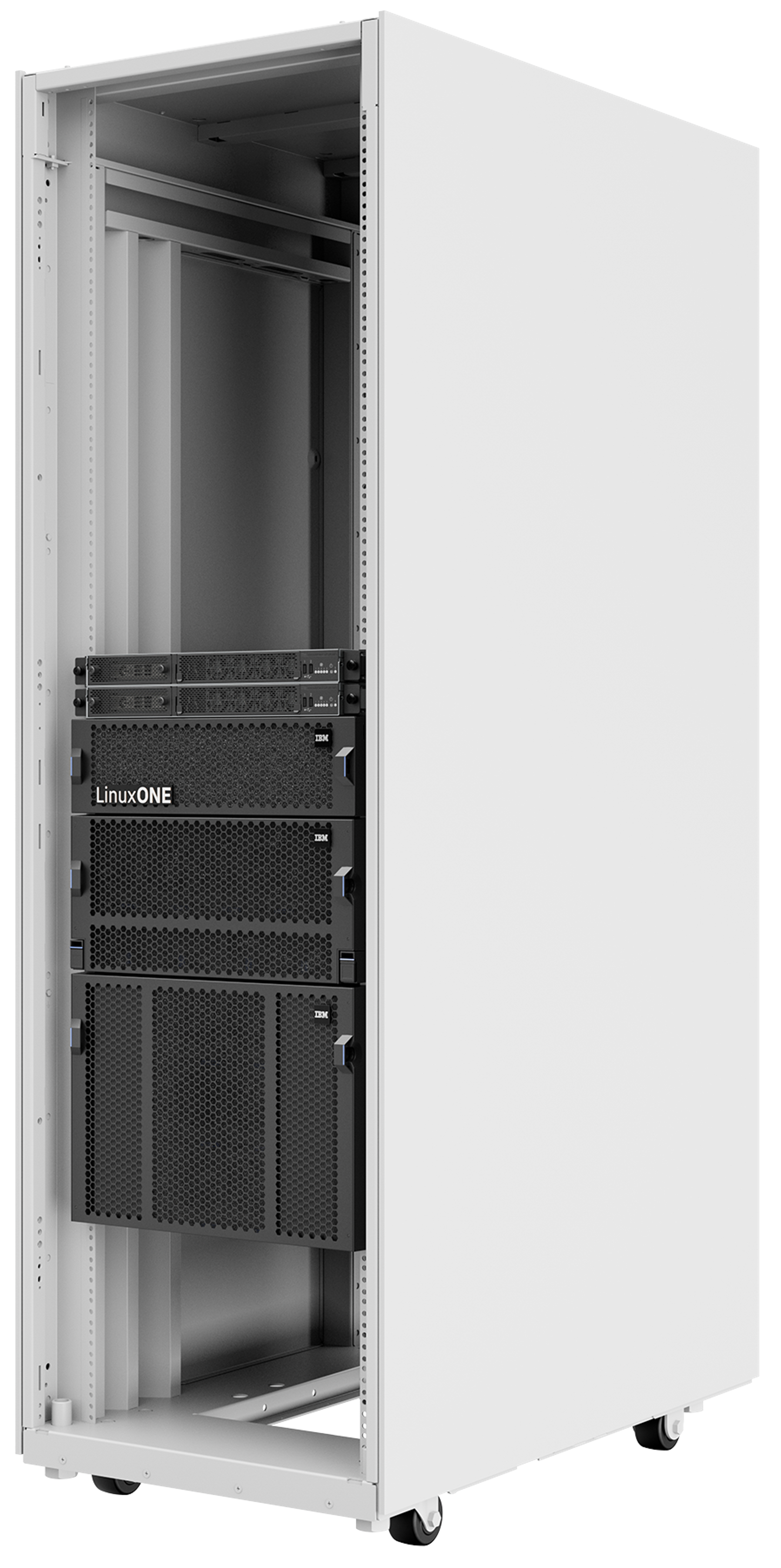
    IBM today made its most aggressive move yet in its quest to make mainframes running Linux more affordable, launching an entry-level platform starting at $135,000.

    The IBM LinuxONE 4 Express is a pre-configured rack system that is based on the same 5.2Ghz IBM Telum processor that IBM uses in its Z16 series of mainframes.

    In addition, the platform supports IBM Secure Execution, which is designed to thwart any attempt to decrypt data in the future using quantum computers.

    IBM claims organizations that move Linux workloads from x86 servers to an IBM LinuxONE 4 Express can save over 52% on their total cost of ownership over five years.

    The overall goal is to make it simpler for organizations to consolidate workloads that otherwise would need to be deployed across a distributed computing environment, she added. That approach ensures higher levels of availability for workloads that are increasingly processing massive amounts of data using two levels of physical and two levels of virtual cache in a way that consumes less energy, noted Tina Tarquinio, vice president of product Management for IBM Z and LinuxONE.

    The IBM LinuxONE 4 Express also includes an integrated accelerator for running artificial intelligence (AI) inference engines using more than 6 TFLOPs compute capacity per chip.

    IBM expects that as more organizations process sensitive data to drive AI applications, there will be increased interest in deploying applications in more secure on-premises IT environments, said Tarquinio. Mainframes provide a more cost-effective way to achieve that goal at a time when DevOps teams are embracing methodologies such as platform engineering to centralize the management of workloads, she added.

    At the same time, increased reliance on automation is making it simpler for IT teams to rely on multiple types of platforms to optimally process workloads. That capability enables IT teams to make platform decisions that are based on fit-for-purpose best principles more easily, noted Tarquinio.

    It’s not clear how many organizations will now be able to afford a mainframe when the initial cost of an x86 server is still much lower. But in the face of ongoing economic uncertainty, it seems more organizations are willing to consider all their options. The issue is that adding additional X86 servers is often viewed as the path of least resistance to increasing compute capacity.

    Naturally, each IT team will need to decide what path forward makes the most sense for them, but as workloads continue to become more data-intensive, it’s clear that infrastructure requirements are changing. The more data that needs to be processed, the more challenging it becomes to maintain service level agreements that are based on maintaining specific levels of application performance, noted Tarquinio.

    The challenge now is determining where best to run those workloads across an increasingly hybrid cloud computing environment that continues to offer more options as IT platforms evolve and expand.

  • Improvement Cycles and AI

    Improvement Cycles and AI

    It’s that time of year when pundits start to crank out their predictions for the next twelve months! I’ve been asked to contribute to a private group (and occasionally, Techstrong Group asks me to contribute to their annual list), so I won’t thrill you with my predictions just yet; but I will discuss the cycles and trends that previous predictions have shown.

    Back when I was testing physical servers, we thought of throughput bottlenecks in terms of where the problem was. The circle would go disk->memory-> CPU, and in the case of things like NAS, insert network in there somewhere, too. When one bottleneck was resolved, another would crop up. And users will always seem to be pushed to the next bottleneck.

    We see similar cycles in DevOps. First, Agile made development faster, and that caused us issues throughout the rest of the process. Then, DevOps helped with the build and a little with the testing and deployment steps, but in the early days it was more standardization than speeding up. And since then, we have been in that cycle. We’re seeing GitOps speed up and automate deployment and upgrades—based upon the automation that came before—we’re seeing test and security tools feeding directly into the IDE to speed resolution, we’re seeing container automation cause “cloud-first development” (I hate that name; Kubernetes has cloud-like interfaces, but is not precisely cloud) to be fully automated, and thus faster.

    And we’re looking at that cycle continuing. No doubt you will hear a lot of predictions that start with “AI …” For the most part, AI is a tool and/or technique. Listen for what it is improving because it is doing very little that’s actually new. (Delete list of things that sounded alarmingly like those predictions I said I wouldn’t make.)

    All in all, we are still living in a very cool technological time. We can have a tool generate code snippets of the dull work for us so we can focus on the important bits. Some shy away from this use of “AI,” but honestly, we already use libraries to do the grunt work—I haven’t written to a screen buffer in forever—because we don’t have to. Same story—use the tools that make you productive. Some of the more obscure bits of Linux command lines are far better dealt with by asking an AI to give me examples than searching through tons of docs across several platforms. Never was much of a fan of man output for complex commands, this makes it easier. The nice bit is that bash and UNIX utilities don’t change much over time, so answers can be a bit dated and perfectly accurate. That’s not true for much of IT.

    The environment has consistently gotten more complex, while the building blocks have gotten easier to use. This allows things to keep moving and changing while it offers us better ways to serve the organization’s needs. This does change at some point—infinite change is indeed a thing, but any technology does have its limits—but I honestly can’t see the point at which we are content with our IT tools and stop looking for more. Oh, most organizations go through those cycles—organizationally, once an infrastructure and process works correctly, it is likely to hang around until better is found—but the industry will keep changing.

    And you’ll keep learning and changing. That’s one prediction I will make for next year. Teams and IT staff will grow and learn new things, because at its heart, that is what we do. We learn new things and keep the lights on. In good years, we offer sweet new tools and functionality to the company or our customers. But either way, we keep things online. Year after year. You all rock, so that’s an easy prediction.

  • Latest eBPF Advances Are Harbingers of Major Changes to IT

    Latest eBPF Advances Are Harbingers of Major Changes to IT

    The open source community advancing the extended Berkeley Packet Filter (eBPF) gathered at a virtual eBPF Summit today that featured a demonstration of eBPF being used in a Windows environment. eBPF enables applications to run within a sandbox in the Linux microkernel.

    Microsoft has signaled its intent to employ eBPF within Windows like the latest version of Linux already does today. That capability makes it possible to, for example, run networking, security, observability and storage software closer to the kernel to dramatically improve performance versus running that software in user space.

    Liz Rice, chief open source officer for Isovalent, a provider of networking software based on eBPF, said that while it’s clear eBPF will have a major impact on IT, the transition to eBPF won’t be a single event. Instead, it will be more of an evolutionary process that will occur as organizations upgrade their operating systems and the various tools and applications they employ.

    The eBPF Foundation, an arm of the Linux Foundation, was formed to expand the use of eBPF across all operating systems. Members of the eBPF Foundation include Facebook, Google, Isovalent, Microsoft and Netflix.

    In effect, eBPF changes the way operating systems are designed. It bridges the boundary between kernel and user space by enabling developers to combine and apply logic across multiple subsystems that were historically completely independent. That approach enables, for example, a security tool to scale to the point where it can identify threats at much higher levels of throughput at a time when brute-force cyberattacks are overwhelming existing cybersecurity tools.

    Similarly, networking, storage and observability tools should be able to run at much higher levels of scale. That’s especially critical for DevOps teams embracing observability platforms that need to dynamically process massive amounts of data in near-real-time.

    Less clear is the degree to which eBPF might one day drive convergence across distinct categories once multiple tools and applications run at the microkernel level.

    IT organizations would be well-advised to ask their vendors when they plan to support eBPF as they plan their upgrade cycles. It’s not likely IT teams are going to want to upgrade every tool and application that can benefit from eBPF all at once. In fact, updates to these applications that don’t support eBPF might even be postponed in the knowledge that a much larger and arguably more critical update is on the immediate horizon.

    In the meantime, as the number of organizations running the latest versions of Linux continues to increase, more hands-on experience with eBPF will be gained. IT teams may not need to concern themselves with what is occurring in the microkernel of the operating systems, but they should at least understand how eBPF ultimately helps reduce the total cost of running IT and how it makes the Linux microkernel more programmable. Those IT teams, however, will soon discover how stark a difference in performance there will be.

  • Convert COBOL Easily? Yes, Please!

    Convert COBOL Easily? Yes, Please!

    I was reading Mike Vizard’s article about IBM previewing an AI tool to convert COBOL to Java and mentally cheered this move. No, seriously—massively cheered this move.

    There are a lot of uses of large language models (LLM) right now, and many of them are not all that exciting, in my opinion. This one, though? This is huge. In the course of my career, I have been involved in three projects to convert COBOL and one to convert FORTRAN, with some projects that required interfacing with RPG III systems. In all of these cases, the costs were prohibitive. Two of the three COBOL projects never made it past estimates because the cost of resources who know both COBOL and Java were prohibitive, as is the complexity of most mainframe applications as they were modified over the years. The Fortran project never got past resourcing, and the RPG III interfaces were just that. We had to pull the data as it was presented by RPG III systems and only act on our copy, with a separate process used to update the core systems. Why? Because modifying the RPG was impractical, but we could be agile. It was … painful, to put it mildly.

    What all of these projects shared was the lack of a skilled workforce. And what IBM is offering is an LLM that acts as that workforce. If you get the application into Java, there is a large pool of developers that can then troubleshoot it. While the environment issues will still exist and people skilled in tools like JCL are increasingly hard to find, that part can be rebuilt in the new environment. (One question I have about IBM’s project is, “Can it convert to Java for a Linux LPAR/VM?” I suspect that this iteration converts within z/OS, but it would be cool to see increased options in the future.)

    Honestly, this trend will only increase. While IBM’s use of LLM is aimed at moving COBOL to Java, there are an incredible number of lines of Java out there to train on, so soon enough, there will be other conversions in and out of Java. And that’s all good news. We recreate the wheel a lot. The longer-term implication of AI-assisted conversion is that we won’t have to. Think about it: We could feed in a mathematical routine in Fortran and get the language of our choice out the other side.

    Way back in the day, a collection of compilers named TopSpeed let you develop in any of several languages, even mixing and matching to create applications that used each language (and developer) for their strengths. This is the TopSpeed dream writ large. (Disclaimer: I was a huge TopSpeed fan. Bought their intro kit and wrote systems mixing C/Pascal/ASM without having to mess with things like parameter sequences. Yeah, I was cool.)

    We have had too few developers for a very long time. Now, we are about to have a world where developers can focus on truly unique functionality, and the rest is generated based on the mass of implementations we already have. Think in terms of sorting algorithms—99% of the sorting problems out there were mastered decades ago, and yet we frequently see people re-implementing, even today. Now we can tell a system, “Generate a tree sort,” and just make calls. Every time we implement a new language, this type of thing has to be re-implemented, and often it is re-implemented because we don’t know about the available solutions. In the future, we will have solutions at our fingertips.

    And as with the other benefits of automation, we’ll do less busy work and add more business value. While there will be some pain, I think in the long term that is a huge benefit. And you’ll still be there, making things go zoom.