Tag: jumpcloud

  • ACCELERATED STRATEGIES GROUP LAUNCHES RESEARCH STUDY INTO CORONAVIRUS’ IMPACT ON IT INDUSTRY WITH ‘HEALTH EMERGENCY IT PREPAREDNESS’ SURVEY

    Coronavirus Outbreak Causes IT Industry to Identify New Threat Preparation Strategies, Accelerated Strategies Group, MediaOps, JumpCloud, and DevOps Institute Commission New Study

    BOCA RATON, Fla. and BOULDER, Colo. – Feb. 17, 2020 – Accelerated Strategies Group, the analyst company whose mission is to democratize access to industry expert knowledge, MediaOps’ IT as Code community platform, DevOps Institute and JumpCloud, have launched a research study and survey to better understand the IT community’s preparedness and response to the current coronavirus threat and future health emergencies.

    The Health Emergency IT Preparedness Survey (HEIPS) is available at http://acceleratedsurvey.com. The survey focuses on actions in response to the coronavirus threat, its potential impacts to humanity and business, and the importance of technologies such as cloud and collaboration tools in the event the coronavirus threat has a greater impact on global, national and local businesses. Results from the survey will be widely available, embodying Accelerated Strategy Group’s tenet, “Knowledge Wants To Be Free.”

    “Our goal is to connect with the IT community to identify needed preparedness before situations like the coronavirus or future events become even more serious,” said Mitchell Ashley, CEO and managing analyst at Accelerated Strategies Group. “The coronavirus is already impacting supply chains, international travel and business continuity planning. It’s vital we know: Are IT departments prepared for the impact of a substantial virus outbreak? What are IT departments doing in reaction to the current and future threats? Are technologies like the cloud a sufficient strategy to provide ongoing business continuity?”

    In addition to the survey, MediaOps CEO Alan Shimel announced the Conference Disaster Plan (CDP) that leverages MediaOps’ online platform and expertise to offer a virtual, near in-person conference experience in situations where travel is restricted or not possible.

    “Health crises are humanitarian crises,” said Jayne Groll, CEO of the DevOps Institute. “First and foremost, we need to understand the scope of how humans are impacted in order to understand the scope of the overall business impact.”

    “The coronavirus has been devastating and is going to leave an indelible mark on the world. It very well may change this generation’s corporate leaders’ view on work,” said Rajat Bhargava, CEO of JumpCloud. “We have already seen an impact on our broad customer base, and we feel it is important for us to commission primary research on the impact of coronavirus on the IT community. The data will prove beneficial for millions of organizations worldwide as they think about how to deal with these catastrophic events.”


    About MediaOps, Inc.

    MediaOps is a premier global media platform for technical communities including DevOps, Security and Containerization. Its brands, which include devopsy.kinsta.cloud, Container Journal, Security Boulevard and Digital Anarchist, attract and engage a thriving online community of technology professionals around the world. Resources include award-winning editorial, creation of high-quality custom content, multimedia production and distribution. As the leaders in these emerging segments, MediaOps’ properties include powerful, integrated marketing and communication platforms to help clients maximize their campaign ROI and paid media investments. https://mediaops.io

    About Accelerated Strategies Group, Inc.

    Accelerated Strategies Group (AccelST) was formed with the mission of disrupting the technology analyst market by utilizing the same principles of the open source, free model now prevalent in the greater technology/software market. AccelST focuses on the areas of Digital Transformation, DevOps, Cloud-Native and Cybersecurity. https://accelst.com

    About JumpCloud

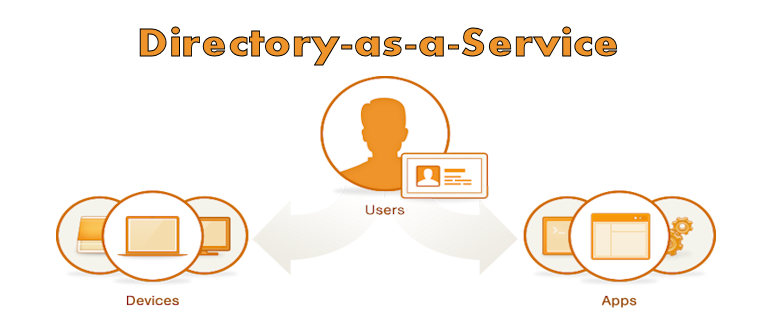
    JumpCloud® Directory-as-a-Service® is Active Directory® and LDAP reimagined. JumpCloud securely manages and connects users to their systems, applications, files, and networks. Try JumpCloud now.

    About DevOps Institute

    DevOps Institute is dedicated to advancing the human elements of DevOps success. As a global member-based association, DevOps Institute is the go-to learning hub connecting IT practitioners, education partners, consultants, talent acquisition and business executives to help pave the way to support digital transformation and the New IT.  We help advance careers and support emerging practices within the DevOps community based on a human-centered SKIL framework, consisting of Skills, Knowledge, Ideas and Learning.  All of our work, including accreditations, research, events and continuous learning programs, is focused on providing the “human know-how” to modernize IT and make DevOps succeed. https://devopsinstitute.com/

    For more information, visit https://accelst.com and https://mediaops.io

    Press Contacts: 

    CDP@devops.com

    OR

    Terri Douglas
    Catapult PR-IR
    303-581-7760

    tdouglas@catapultpr-ir.com


    ###


  • MEDIAOPS OFFERS CONFERENCE DISASTER PLANS AMID GROWING CORONAVIRUS CONCERNS

    Virtual Event Capabilities Allow Event Organizers to Afford Attendees, Speakers and Sponsors a Near Identical Experience to In-Person Physical Events


    BOCA RATON, Fla. — February 17, 2020 — Amid growing concerns over the spreading coronavirus, MediaOps, the leading global media platform for technical communities, is now offering a Conference Disaster Plan (CDP) aimed at providing conference organizers with a virtual event platform and capability that is nearly identical to the experience of an in-person physical event.

    MediaOps has produced more than 10 virtual events in the last 18 months that have offered dozens of concurrent sessions, multiple expo halls and thousands of attendees each. The platform can accommodate both live and recorded multi-track sessions in private virtual auditoriums, complete expo floor and booth capabilities, signage, chat, treasure hunt activities and more. The MediaOps platform provides all the capabilities of a live conference, including keynotes, panel sessions, Q&A, booths, attendee interaction, sponsorships and much more. Virtually anything possible at in-person events is available via the platform. Additionally, MediaOps has the personnel and expertise to produce events in a timely manner, which gives event organizers the ability to simulate a real-world setting without the travel.

    “We take this current situation very seriously; the health and well-being of our community is essential. So, for this CDP, we want to offer options that are safe and effective,” said Alan Shimel, CEO and founder of MediaOps. “Like it or not, this virus outbreak may be a tipping point in moving from the real world to virtual events. They offer comparable experiences without the travel, expense and loss of work time that physical events impose.”

    Additionally, MediaOps, through its new IT as Code community platform and along with analyst firm Accelerated Strategies Group, DevOps Institute and JumpCloud, will be conducting a survey to better understand the community’s thoughts and concerns about travel amid the current health crisis and possible implications for future events.


    About MediaOps, Inc.

    MediaOps is a premier global media platform for technical communities including DevOps, Security and Containerization. Its brands, which include devopsy.kinsta.cloud, Container Journal, Security Boulevard and Digital Anarchist, attract and engage a thriving online community of technology professionals around the world. Resources include award-winning editorial, creation of high-quality custom content, multimedia production and distribution. As the leaders in these emerging segments, MediaOps’ properties include powerful, integrated marketing and communication platforms to help clients maximize their campaign ROI and paid media investments.

    For more information, visit https://mediaops.io

    Press Contacts:

    CDP@devops.com

    OR

    Terri Douglas
    Catapult PR-IR
    303-581-7760
    tdouglas@catapultpr-ir.com


    ###


  • Adding users to Google Apps quickly

    Adding users to Google Apps quickly

    With over 5 million organizations using Google Apps (yes it’s that many), the market is demanding enterprise-class solutions for administration and management of the Google productivity suite. Yeah sure you can have a decent word processor with with collaboration features, even a spreadsheet and presentation program. But if you want to play with the big boys you need management and administration built around it.  Only then can Google Apps really rival MS Office for the mainstream market.

    Beyond that though, Google Apps is only part of the story. There is the whole “Google Infrastructure”.  One of Google’s aims seems to be to bring Google like capability to IT teams the world over. This is one of the aims with Kubernetes, as well as CoreOS Tectonic (see our article in ContainerJournal on this).

    So what is holding you back?  There are 5 areas that you need to focus on according to a recent ebook by JumpCloud:

    1. SECURITY AND COMPLIANCE
    2. SSO
    3. DEVICES AND SERVERS
    4. WIFI
    5. DIRECTORY SERVICES

    The directory services can be added to the mix via integration with JumpCloud’s Directory-as-a-Service (DaaS). This gives Google Apps an equivalent to Microsoft’s AD except in the cloud and available as a service. Think about it, you don’t just set up a user to use Google Apps, you want them to use your entire infrastructure where appropriate. Also you don’t want to be setting up users one at a time in an enterprise setting. Both of these use cases are handled by a directory-as-a-service solution like JumpClouds’. 

    Two keys to effective directory management using Google infrastructure are authentication protocols and device management. Directory-as-a-Service can deal with both of these issues if done correctly. Once you have bridged this gap, it opens up a wide range of uses and interactions with the rest of your Google infrastructure, other infrastructure, your users and your devices.

    The book by JumpCloud featuring devopsy.kinsta.cloud’s own Ericka Chickowski does a great job of explaining this along with how to overcome some of the security issues that using Google infrastructure can present. You can download the book below.

    jumpcloud ebook
    There is also a good infographic with some metrics around this topic here.


  • 11 DevOps start-ups funded for a busy 2015

    11 DevOps start-ups funded for a busy 2015


     Slides

    [seoslides embed_id=”4b8ee43e173e” script_src=”https://devopsy.kinsta.cloud/embed-script/11-devops-start-ups-funded-busy-2015/title/” overview_src=”https://devopsy.kinsta.cloud/slides/11-devops-start-ups-funded-busy-2015/” site_src=”https://devopsy.kinsta.cloud” site_title=”devopsy.kinsta.cloud” title=”11 DevOps start-ups funded for a busy 2015″ /]
    Advance slides with arrow buttons or touchscreen

  • JumpCloud Introduces Directory-as-a-Service

    First Cloud-based Directory Service Builds upon the Company’s Strong User Management, Orchestration, and Security Foundation

    BOULDER, Colo.–(BUSINESS WIRE)–JumpCloud today announced the availability of the industry’s first Directory-as-a-Service (DaaS) solution. Through a SaaS-based offering, organizations can move the last vestiges of their legacy, on-premise IT systems to a fully-managed cloud service, providing an alternative to solutions such as Microsoft Active Directory® (AD) or Lightweight Directory Access Protocol (LDAP).

    “As we have seen with the transitions from Siebel to SalesForce, Exchange to Gmail, and file servers to DropBox, JumpCloud is enabling the transition of one of the last on-premise technologies to a fully managed service: the user directory”

    JumpCloud’s DaaS is the first cloud-based directory with the ability to authenticate, authorize, and manage users, devices, and applications. The service acts as a single-user store for an organization or can extend existing AD/LDAP user stores to the cloud. Further, it integrates with single sign-on (SSO) providers without forcing IT admins to manage multiple directories.

    “Jumpcloud understands the need for directory services in the cloud,” said Salvatore D’Agostino, CEO of IDmachines. “Building on their secure shell configuration management tools, this offer puts in place cloud-to-machine, user authentication and other directory services. At IDmachines, we see this as a big need in current XaaS.”

    “As we have seen with the transitions from Siebel to SalesForce, Exchange to Gmail, and file servers to DropBox, JumpCloud is enabling the transition of one of the last on-premise technologies to a fully managed service: the user directory,” says Rajat Bhargava, JumpCloud’s President and CEO. “Directory-as-a-Service brings IT teams the simplicity, ubiquity, and security of user and device management, all from the cloud.”

    A single, secure user directory is a foundational element of any company. By moving the directory to the cloud, organizations are more agile, efficient, and secure. Further, DaaS enables IT admins to take advantage of major IT innovations, including cloud services such as IaaS and Gmail, and additional device/operating system combinations, such as Linux and OSX, among others.

    JumpCloud has reimagined the directory for the cloud era. The company’s new Directory-as-a-Service meets three critical enterprise needs:

    • Organizations who need a user directory – With the combination of a hosted LDAP offering as well as an agent-based authentication mechanism, this offering takes the heavy lifting off of IT and places it on JumpCloud while enabling the customer to authenticate and authorize cloud infrastructure, servers, IT applications, and internal devices.
    • Organizations extending their AD or LDAP to the cloud – With the adoption of Infrastructure-as-a-Service (IaaS), managing server users is largely a manual process and can create reliability and security issues due to the complexity introduced around networking and security configurations. JumpCloud easily, reliably, and securely extends an existing user directory to cloud-based servers and infrastructure.
    • Organizations replacing AD – Many organizations have migrated to Gmail from Microsoft Exchange, but are still forced to leverage AD for continued management of devices (functionality not available with the Google Apps Directory). JumpCloud’s DaaS gives IT admins a fully cloud-based solution that connects and manages users, their devices and IT applications.Pricing and availability
      JumpCloud’s Directory-as-a-Service is available immediately. Pricing plans start at $10 per user per month, and the first ten users are free forever. JumpCloud supports the LDAP protocol and works with Windows, Mac, and Linux devices.About JumpCloud
      JumpCloud, the first Directory-as-a-Service (DaaS), is Active Directory® and LDAP reimagined. JumpCloud securely connects and manages employees, their devices and IT applications. Try JumpCloud’s cloud-based directory free at jumpcloud.com.
  • JumpCloud launches new Directory-as-a-Service offering

    JumpCloud launches new Directory-as-a-Service offering

    The cloud is a great equalizer that enables startups and smaller companies to scale quickly, and play on a more or less even playing field with larger organizations. Managed cloud services free businesses up from implementing, configuring, and maintaining the underlying infrastructure, and allow individuals to focus on the business. With all of the freedom cloud services provide, though, there is still a need for a directory service that defines who the users are, and controls which individuals have access to which resources. JumpCloud wants to move that to the cloud as well.

    JumpCloud has established itself as a leading solution for managing security across a vast, rapidly-changing, virtual ecosystem in the cloud. Today, JumpCloud is announcing a new offering that takes builds on that foundation, and applies its experience to deliver Directory-as-a-Service (DaaS). JumpCloud claims its new service will allow organizations to stop managing directory services locally, and enable them to move to a fully-managed, cloud-based alternative to LDAP (Lightweight Directory Access Protocol) or Microsoft AD (Active Directory).

    “As we have seen with the transitions from Siebel to SalesForce, Exchange to Gmail, and file servers to DropBox, JumpCloud is enabling the transition of one of the last on-premise technologies to a fully managed service: the user directory,” says Rajat Bhargava, JumpCloud’s President and CEO in a press release statement. “Directory-as-a-Service brings IT teams the simplicity, ubiquity, and security of user and device management, all from the cloud.”

    The JumpCloud DaaS services can act as the sole user store for an organization, or it can extend existing AD or LDAP user stores to the cloud. JumpCloud DaaS also integrates with single sign-on (SSO) providers so that IT admins are not forced to manage multiple directories.

    “JumpCloud understands the need for directory services in the cloud,” said Salvatore D’Agostino, CEO of IDmachines. “Building on their secure shell configuration management tools, this offer puts in place cloud-to-machine, user authentication and other directory services. At IDmachines, we see this as a big need in current XaaS.”

    JumpCloud DaaS promises to help organizations be more agile and more effective whether they’re just implementing a directory service, extending an on-premise directory service to the cloud, or migrating locally-managed directory services to the cloud.

    A cloud-based DaaS offering makes sense. No matter what size an organization is, managing the user directory through local, manual processes is an obstacle to realizing the full benefits of other cloud services. It creates complexity, and introduces reliability and security issues. Cloud-based services need a cloud-based directory service—a directory service that can keep up in terms of availability, scalability, and flexibility.

    JumpCloud DaaS—like other managed cloud offerings—takes the burden off of local IT to manage the backend of the directory services infrastructure, and places it on JumpCloud. Customers can focus on building things, and authenticate and authorize cloud infrastructure, servers, applications, users, and devices.

    JumpCloud’s Directory-as-a-Service is available immediately. Pricing plans start at $10 per user per month, and the first ten users are free forever. JumpCloud supports the LDAP protocol and works with Windows, Mac, and Linux devices.

  • Gene Kim interviewed by JumpCloud CEO Rajat Bhargava

    Two members of the devopsy.kinsta.cloud Board of Advisors, Gene Kim and Rajat Bhargava filmed an interview that is on YouTube and on JumpCloud’s blog.

    We are putting it up here and hope you enjoy it.

  • DevOps adoption – Enterprises (part 2 of 2)

    DevOps adoption – Enterprises (part 2 of 2)

     A large enterprise has institutionalized an incredible number of processes. Their fundamental approach to IT has been built over years if not decades of experience. Their leaders may have grown up with these methodologies and approaches.

    In this article I wanted to continue the thread I started in my last article about how different organizations adopt DevOps differently. The focus of this article will be on how enterprises adopt DevOps. I will also contrast it with how startups adopt DevOps, which was the focus of the first part of this article.

    To recap the first part of the article, we discussed how startups are adopting DevOps. We stated that adoption occurs organically because of the nature of startups. Because they only start with a few people and they have little to no process, DevOps starts through the addition of tools. The founding developers or CTO will find tools to solve the practical problem of automating different aspects of their development, QA, or operations functions.

    With so few resources, automation is critical. As a startup grows they add more people to the team and process becomes more critical. So, they extend Agile into other areas of their product development process. They become more intentional with developing a DevOps oriented team.

    As the company continues to grow, DevOps is embedded into the culture. Hiring decisions are made based on whether a candidate understands how to be a part of a team practicing DevOps. The rest of the company starts to beat to the drum of rapid iteration, cross-functional integration, and increased automation. DevOps adoption in startups follows the tools, process, and then culture sequence.

    Enterprises follow a different path, and so usually take a contrasting trail to DevOps adoption for a variety of reasons. A large enterprise has institutionalized an incredible number of processes. Their fundamental approach to IT has been built over years if not decades of experience. Their leaders may have grown up with these methodologies and approaches. Further, their entire business is beating to a certain IT drumbeat. Changing the beat throws everybody in the organization off.

    There are also other major issues to DevOps adoption within an enterprise. Institutional resistance and inertia is a significant one. Change is always difficult to people. Some groups handle change better than others, but in any organization – especially a large enterprise – change needs to be orchestrated and worked effectively. Change in large organizations takes time and perhaps nothing takes longer than bringing people on board with a new approach. In addition to the personnel aspect, the organization has built strong, existing processes. Those have been over many years. Changing complex processes doesn’t happen overnight. Those processes have been built with internal and external customers in mind. Those customers expect their “solutions” delivered in a specific manner and timeframe. Accelerating that though DevOps may be great, but not if they aren’t on board and can accept the increased pace.

    DevOps impacts the entire system of an organization. The system has been tuned to a certain speed and level of quality. Increasing the front end of the process will not necessarily increase overall throughput unless the rest of the organization can increase their speed in concert. In a startup, that system is generally small and contained. Most of the individuals, systems, and processes are contained and when the pace increases, the rest of the organization can react quickly or better yet the entire organization has been built with those expectations in place. Not so for a large enterprise.

     The startup approach of adopting DevOps through adopting tools, changing processes, and embedding into the culture, will be easily rejected by a large enterprise. Even if the IT organization can deliver much faster and does, the rest of the organization won’t know what to do with the completely different approach. Perhaps the rest of the organization will even continue operating at their pace while IT operates at a different one. While not catastrophic, it is not helpful either. As larger organizations think about the best way to adopt DevOps understanding this perspective aids in adoption. Enterprises have a much harder uphill climb when it comes to adoption, however, the rewards can also be monumental.

    An enterprise’s journey into DevOps – if it is to be successful across the entire organization – starts at the cultural level. And, as we all know, cultural change in a large organization is perhaps the hardest step. Clearly the positive here is that the organization adopting DevOps will have an opportunity to perform far more effectively. Cultural change starts with the key stakeholders at the senior level creating a commitment to adopt this new methodology. Then that commitment needs to be evangelized through the organization. A top down edict doesn’t work just as a grassroots movement without senior level support doesn’t. It should be reasonably straight forward to bring those two groups together to build a shared commitment to moving to DevOps (or not). Note that large organizations can adopt and test DevOps in one of their divisions or smaller groups to understand how different the approach will be from their previous business methodology.

    Once a shared vision is reached, some of the detail work can begin. As discussed earlier, a different pace of product development needs to be matched by a different pace of distribution, sales, and marketing too. Updating and changing processes is the step that makes this happen. How will development processes change? And, how do those changes impact existing customers both internal and external? Can the same approach to quality be taken or do new processes in development require new processes in QA? Security? Operations? All of these downstream impacts will need to be matched, reviewed, and changed. Changing processes that are upwards of decades old is also fraught with risk. Many of those steps exist for a reason. Altering them may have consequences that aren’t known to all. This is yet another reason why DevOps adoption doesn’t happen overnight at large enterprises.

    Finally, as processes are updated and the cultural shift is largely underway, the IT organization can turn its attention to finding better tools. These tools need to match the processes built and, of course, the cultural style of the organization. This is why large organizations would be better served by deeply understanding their newfound processes before diving into tool selection or even purchases. Only after they understand their needs is it worthwhile to embark on deep tool selection.

    As we said in the last article as well, we’ve shown this to be a serial process, and, of course, it is never so cut and dry, especially, in a large organization. There will be overlap, there will be things that happen out of sequence, there even may be areas that jump far ahead, but largely, the adoption approach takes on the character of culture first, process second, and tools third. DevOps can be transformational for a large organization with some even going so far as to say that a DevOps culture is a predictor of stock performance. Understanding how DevOps takes shape at a large organization will help those in other large organizations as well as the vendors and consultants supporting their efforts.

  • DevOps Adoption – Startups

    DevOps Adoption – Startups

    This is part 1 of a 2 part article

    DevOps is somewhat unique in that it has applications to both large enterprises and to startups.  The way DevOps is adopted in startups is incredibly different than how it happens in large organizations. The profile of how DevOps is adopted in each of these cases is the focus for this two part article series.

    In this first installment, we will study how DevOps is adopted within startups and in the second, how enterprises adopt DevOps. There are lessons for each in the way that DevOps is adopted. Organizations can leverage this information to enable better, faster, and easier adoption of DevOps.

    Much of the DevOps way is rooted in startup culture. From methodologies such as Agile, lean principles, and just in time manufacturing, startups adopted DevOps as a means to compete, innovate, and move faster. DevOps is inherently a quicker, better way to get product to market – a perfect fit for startups. They could adjust quickly, iterate again and again to get to the point where customers en masse were interested in their technology.

    In order to understand how DevOps is adopted in startups, we need to look at how startups evolve. In the high-tech world, a startup gets going when a founder or group of founders has an epiphany for a new product or service. Generally one of the founders will start to develop the solution by writing some code. The startup may add a couple of developers but it is usually just a few folks cranking out the first version of the product. There is often a business or product focused function where requirements and feedback are gathered from potential users or customers.

    In this first phase, the development team often adopts Agile as a way to quickly iterate on the development process. These short-term sprints build the initial functionality of the product. While initially, there isn’t really much to release to potential customers, the core developers are starting to build their development and release cadence. The short sprint help to keep the functionality requirements small and the team on-track to deliver a small piece of functionality in a short amount of time. This foundation also ends up being an important part of the future development process. And, just as importantly becomes the kernel of DevOps.

    As a small team building the initial releases of the product, the culture and environment of the startup is generally fast, highly communicative with little to no process. Often the development team is sitting side-by-side cranking out code quickly. No specs, just a list of what needs to be done often stored in Pivotal Tracker or some similar tool. Sometimes mockups and screens designed to describe the functionality. There isn’t a rigorous process in the choice of technology platforms – language, database, etc. are chosen often based on what the core team knows or thinks is the right solution rather than on research. This small, agile environment is critical to understand when thinking about how DevOps is adopted.

    There is little formal process at most startups. Things are evolving and moving so quickly that there just isn’t time. The goal, after all, is to get a product into market and start selling. While startups are high adopters of Agile as a development methodology, there is generally little rigor in its implementation. There doesn’t need to be because the team is so small and trying to move quickly. Adding in product management, sales, and marketing functions are often ad hoc. There isn’t a well-developed end-to-end product release process. The movement from development to operations is also less than well defined. Often, the developers building the product are the operations people deploying and managing the product or service. Process gives way to the practicality of just getting things done.

    The first phases of DevOps adoption start to occur at this early stage in a company’s life. Developers as they are building their product often encounter some basic challenges and begin to solve these issues. How they solve them often dictates whether they take a DevOps path or not. One of the first things that developers do is build an environment to test their software. Often, they will find a cloud provider and start spinning up a few instances to host their application. They also may need a database server to round out their testing. They might manually do this a few times, but as they test more and potentially on different platforms they will start to look for some tools to automate this process. Of course, at this stage, there are likely zero operations people, so the tasks fall on the developers. And, developers wanting to spend more time coding pick-up some tools to do this work.

    The tools might include infrastructure providers like AWS, Rackspace, or SoftLayer to configuration automation tools such as Chef or Puppet. There may be a variety of other toolsets chosen as well including project management tracking, libraries, language frameworks, and others. The goal with this first wave of tools is just to save time. That could be by not having to code basic functions, the setup of test environments, or manually tracking tasks. As the organization launches and brings their product or service to market, they may adopt some management and monitoring tools to help them gain visibility into their product or service. Generally at this early stage the decisions are focused on driving short-term problem solving. A developer needs a test environment quickly and repeatedly. A solution to that need is quickly found and implemented. The underlying paradigm is to move fast, solve problems, and get to market.

    While tools are hardly a complete DevOps methodology, they are the catalyst for the next step in a startup’s journey to adopt DevOps. Many of the tools chosen in this first period have APIs, can create automation, and are highly configurable. As a startup keeps moving forward and increasing their users, the flexibility of these tools and the various ways that the developers utilize them starts to drive some conversation around process. A few hiccups in the production environment with some bugs, outages, or failures, and the technical leaders begin to start to say the ‘p’ word. Process. While there may be some Agile components already embedded, the growth of the startup starts to create a desire to add in some control, accountability, and guard rails around the product development process. Many organizations will also start to loop in the business side so that there is a more comprehensive process around releasing a product to market. Agile now starts to extend up and down the organization in a more rigorous way. DevOps is starting to take hold and become more fully formed.

    The early stage DevOps lifecycle wraps up with it becoming a part of the culture. The organization now shifts into a mode where this methodology becomes a fundamental underpinning of the business. Values such as agility, intense customer focus, rapid iteration and others are a part of the fabric of the company and encompass the entire organization. Hiring decisions are made based on whether the candidates match the philosophy and culture of the company. DevOps is viewed as more than just a process that the company follows, but a competitive advantage in fulfilling its mission to its stakeholders. At this point, DevOps is firmly embedded into the organization and becomes its way of life.

    Startups are unique in their approach to adoption of technology and methodologies because of their size, focus, and evolution. DevOps adoption, as we have seen out in the wild, seems to go through some natural stages. While the stages may overlap, it generally follows a tools, process, and then culture sequence. It could be said that some startups just start with the culture of DevOps, and that can be true for some, but many that we see are often so small at that stage that the culture is largely undefined. IT leaders who understand this sequence can become more intentional about the way that DevOps is adopted, perhaps accelerating it or even shaping it earlier in the company’s lifecycle. A little bit from now, our hypothesis is that startups won’t even start without DevOps embedded into their plan.

    In part 2 of this series, we will examine the adoption of DevOps at larger companies.

  • My Journey into DevOps

    My Journey into DevOps

    Like many developers, I started my career in a waterfall-based development environment. I was at a very large telecom, working on a product that had been around literally for decades. We’d spend weeks or months in the requirements phase before any code was written. We’d throw the code over the wall after our development period, and QA would file defects that would take weeks to prioritize and triage. It took about a year to ship a new version of this product. All progress came at a crawl, and I felt so disconnected from the customers that I would forget they even existed — the work I did was to get the project manager off my back, not to please users.

    Moving to a startup that practiced Agile development was a relief. Far less mature product, smart people contributing at every level, rapid development — and a rapid feedback loop, too. It felt so natural and right that I forgot there was ever another way of building software. We talked to real customers and heard about how they wanted the product to work. Our priorities were based on actual need, with estimates based in reality and with a focus on iterative improvements to functionality. My teams designed and implemented features and had it tested and accepted quickly… software development was thrilling again.

    However, it wasn’t perfect. While we could rapidly build features, and get those features right, we still had the problem of getting those features to customers rapidly. We’d design and implement and test great functionality in a matter of days, but that great stuff would sit on the shelf for weeks or even months before anyone would actually use it.

    The problem was this: we feared disrupting a working production environment. Every time we’d push to working systems, we’d bring in the operations team and the senior developers on a weekend, sit tensely while the new code was fired up, and then spend hours fixing things that had somehow crept in. Sometimes interactions between different new features hadn’t been properly vetted. Months of changes had accumulated so the changes were huge, and deployment was a nightmare. And because it was a nightmare, we didn’t want to do it often… so releases got bigger and bigger over time. It’s a vicious circle.

    I’m sure you know where this is headed — the answer to this problem is continuous deployment. Over time, we reduced our multi-month release cycles to weekly and finally daily, releases. The things that were most painful, we do more often — addressing the problems and automating the process. By releasing more often and in smaller chunks, we were able to clearly know what had changed if a problem occurred, and with that isolation of code changes, we started to fix problems much faster. Classic continuous deployment story.

    It wasn’t easy, of course. We struggled, for instance, with distributing the necessary keys to remote systems automatically — otherwise each deployment (and individual machine affected by that deployment) required hands-on interaction. We also wrestled with getting the ability to roll-back to prepare for the inevitable “bad release”. We tried redeploying the code from a tagged branch in the repository, but it was just too slow and led to several minutes of downtime. Ultimately we ended up duplicating almost the entire infrastructure in order to build a “Blue-Green” environment, letting us swap back to the last known good state as easily as re-pointing our load-balancer.

    In making that transition — in bringing that deployment pain forward – our development team needed to do a lot of tasks that were traditionally operational. We set up servers that mirrored our production environment. We learned that they needed to be reproducible, so we worked with the operations experts to make servers that could be spun up from scripts and effortlessly deployed to any environment. We felt the pain of manual installs and updates of our product, so we simplified it, hardened it, automated it – we did everything we could to make that part of our life simple. We learned firsthand the ugliness of needing to manually make changes to point to the correct database and roll the logs via cron jobs, so we made these things configurable. We uncovered the engineering assumptions and design decisions that made our product difficult to maintain and manage in production. We organically evolved into a DevOps organization. We learned to manage the servers and take on operational tasks, and we improved our process in order to make those tasks simpler.

    In retrospect, it was natural – just like the transition to Agile from waterfall. To me, this is the way software should be created. Agile allows us to quickly discover and develop the products that our customers really want. DevOps extends that concept, and teaches us how to take that product and get it into the hands of our customers more quickly, and how to maintain and support that product most effectively.

    I’m thrilled to be working in DevOps and can’t imagine ever going back.