Tag: InterConnect

  • Can’t Miss Events at InterConnect Next Week

    Can’t Miss Events at InterConnect Next Week

    devopsy.kinsta.cloud will be live from IBM’s InterConnect conference in Las Vegas all next week. You can expect a pretty steady stream of updates in all forms of media. We will be posting articles, live blogging, tweeting, podcasting and even broadcasting video throughout the week. So if you can’t make it out to Vegas, you can follow along here on devopsy.kinsta.cloud

    Whether you are going to Vegas or following along from home, I wanted to give you my picks for the top DevOps related content at InterConnect next week. Here are my top picks:

    1. Well I would be remiss if I didn’t start-off with my own panel which I am moderating. I am joined by Michael Azoff from Ovum, Dan Berg of IBM, Raghunath Ragman of Kaiser Permanente and Gene Kim. The topic is what will DevOps look like in 3-5 years. It should be a great discussion.
    2. Right before my panel is another great panel on DevOps and multi-speed IT. That panel features my friend Carme DeArdo of Nationwide, Hayden Lindsey and Sanjeev Sharma of IBM, Brad Schick of Skytap and Tapabrata Pal of Capital One. That is an all star cast and it should be a great discussion.
    3. Both of the above panels are on Wednesday, the keynote on Wednesday morning looks like another great one. It features IBM VPs Angel Diaz and David Linquist, Gene Kim, Tapabrata Pal of Capital One, Sam Ramji of the Cloud Foundry Foundation and John LeFreniere of Hertz. The topic is Innovate Like a Startup and Scale for the Enterprise.
    4. Talking about innovation like a startup and scaling like an enterprise, a different kind of session is the workshop that Sanjeev Sharma and Mustafa Kapadia, two of my friends at IBM are putting on. I have seen these two conduct this workshop before and it really is a great experience to help in your DevOps journey.
    5. Bluemix Garage Method on the Expo floor. There is a large DevOps Zone on the expo floor and there is also a full set up with the Bluemix Garage Method. We have featured the Bluemix Garage method in a few articles before. If you are not familiar with it you should check it out as it really represents lessons learned on IBM’s own DevOps journey.

    Well those are my top 5 but it is hard to pick from over 200 DevOps related sessions. There are 3 and half days chocked full of learning here, so this barely scratches the surface.  Not to mention an Elton John and/or Pitbull concert Wednesday night thrown in.

    If you want to see more can’t miss DevOps activities at InterConnect below is a YouTube that has all of the above and more. If you are going to InterConnect look for us and say hi. If not you can read, hear and see all about it right here.

  • Application Analytics for DevOps will be Presented by Nastel Technologies at IBM InterConnect 2016 in Las Vegas

    Join us and learn about analyzing shared metrics and tracking transactions in order to reduce support costs and deliver continuously. Visit Nastel in booth #660

    Melville, NY (PRWEB) February 18, 2016

    Nastel Technologies, a global provider of software for Application Performance Monitoring (APM), delivering real-time application analytics, transaction tracking and forensics will present “Application Analytics for DevOps” at IBM InterConnect 2016 in Las Vegas. The presentation will be delivered on February 22nd at 7 pm in the Expo Theater in the Mandalay Bay Solution Expo.

    Many organizations struggle with adopting DevOps. These businesses have invested in a large assortment of tools to make this work and yet there is still finger-pointing instead of collaboration. Nastel AutoPilot provides forensics for IT. Analyze the data from multiple sources, compare behavior across different times and locations, create metrics and search for the patterns that emerge.

    Join Nastel Technologies and learn how AutoPilot can help by providing: continuous monitoring, tracking and analytics. Nastel AutoPilot creates and analyzes shared metrics across HDFS, Logstash, Flume, Syslog, Kafka, MQ, Spark, Log4j, JMS, Java and other data sources; tracks transactions across applications; and provides an easy-to-use natural language to inquire or subscribe to live metrics.

    Nastel is also exhibiting at IBM InterConnect 2016 in booth 660. Nastel will be demonstrating its new AutoPilot Insight solution and end-user monitoring capabilities. AutoPilot Insight helps businesses gain instant insight into application performance by providing: a unified application analytics platform, automated transaction tracking, a wide array of data collectors and an English-like query language. All of this is built on an elastic architecture using clustered computing and NoSQL.

    jKool will also be presented in the Nastel booth and show a solution that provides real-time analytics for the Internet of Things (IoT).

    “2015 was an outstanding year for Nastel, with large wins, happy customers and new product innovation. Our laser focus on ensuring the highest levels of customer satisfaction combined with our relentless technical innovation has been the key to our revenue growth. With the addition of our new cutting edge analytics and forensics capabilities we are excited to provide continued competitive advantage to our global customer base” said Charley Rich, VP Product Management at Nastel Technologies.

    Recently, Nastel was honored by Gartner’s recognition of its accomplishments in the 2015 Magic Quadrant for Application Performance Monitoring Suites

    The chosen APM solution for over 200 Fortune 500 and Global 2000 corporations, Nastel AutoPilot has earned a reputation for helping companies significantly reduce the frequency and duration of costly application outages. By providing real-time analytics and transaction tracking across multiple event sources, Nastel AutoPilot is able to evaluate situations in IT Operations as a whole as opposed to just individual events. This powerful approach can infer a root-cause from multiple events and deliver meaningful, actionable alerts at the same time it prevents false alarms.

    About Nastel Technologies

    Nastel Technologies is a global provider of application performance monitoring solution with real-time analytics, comprehensive transaction tracking and forensics. Nastel is a privately held company headquartered in New York, with offices in the U.S., the U.K., France, Germany and Mexico, and a network of partners throughout Europe, the Middle East, Latin America and Asia. For more information, visit us at http://www.nastel.com.

  • Preview of IBM InterConnect Speakers

    Preview of IBM InterConnect Speakers

    Next week devopsy.kinsta.cloud will be in Las Vegas to cover IBM’s InterConnect Conference. With over 200 DevOps related sessions, there is something for just about everyone on the schedule.

    We thought it would be useful to give you a peek at some of these presenters. Below are interviews of some InterConnect speakers from their recent appearances at the DevOps Enterprise Summit this past October.  While most will be presenting on different topics, there will still be a DevOps angle.

    So here is Alan Shimel, Editor-in-Chief at devopsy.kinsta.cloud, with several InterConnect scheduled presenters:

    First is an interview with DevOps leader, author and researcher, Gene Kim. Gene is the host of the DevOps Enterprise Summit and will be at InterConnect in several sessions.

    Next up is Mustafa Kapadia, IBM practice leader and devopsy.kinsta.cloud contributor.

    CJ Paul and David Myers join Jayne Grohl, founder of the DevOps Institute who was scheduled to speak at InterConnect but had to withdraw to an injury.

    Of course how can you talk IBM DevOps without Rosalind Radcliffe, distinguished engineer and multi-speed IT expert.

    In this clip, CJ Paul and Rosalind Radcliffe are joined by Gary Gruver, author of Leading the Transformation and well known DevOps expert.

    Finally, Rachel Reinitz CTO Bluemix Garage and IBM VP Angel Diaz and Kristal York talk about innovating like a startup, scaling like an enterprise.

    We are bringing the video gear to InterConnect and hope to have lots of new video interviews for you in the coming weeks!

  • DevOps Chat: Dan Berg on Open Technologies and the Open Enterprise

    DevOps Chat: Dan Berg on Open Technologies and the Open Enterprise

    I had a chance to speak with Dan Berg, distinguished engineer at IBM. Dan and I discussed open technologies, open enterprise and open tool chains. A whole lot of open there.  We also talked about how open technologies will be part of the upcoming IBM InterConnect event.  Below is the stream of our conversation and below that is the transcript if you would like to read along.

    Enjoy!

    Alan Shimel:                Hi everyone, this is Alan Shimel, Editor and Chief of devopsy.kinsta.cloud, and welcome to another DevOps chat. Today, our guest on DevOps chat is Dan Berg of IBM, and we will be talking about DevOps and open technologies. Dan, welcome to DevOps chat.

    Dan Berg:                   Thank you, Alan.

    Alan Shimel:                So Dan, before we jump into the whole open technologies, open enterprise subject, can you give our listeners just a little bit of background of who you are, what you do and why you’re here today?

    Dan Berg:                   Sure. So as you pointed out, my name is Dan Berg. I do work for IBM. I’m a distinguished engineer, working in our cloud platform organization, which fundamentally means I’m responsible for working with a set of very energetic teams that are building out services in our cloud foundation. So the IBM cloud platform, specifically in IBM Bluemix, things like our container service, log-in and monitoring services, several DevOps based services. So services such as things like we call active deploy that help deploy microservices within a cloud architecture. So I do a lot in that space, helping the teams identify the strategy and the architecture that we’ll use. I’m also very much involved in our DevOps organization within IBM cloud, focusing on both cloud native applications, as well as hybrid cloud applications.

    Alan Shimel:                That’s fantastic, and Dan, you know, we talk about DevOps, and certainly when we talk about cloud, one could say we’d have no DevOps or no cloud without open source. What do you think about that statement?

    Dan Berg:                   I think that’s a pretty profound statement. Open source is a strong component of cloud strategies.

    I think almost all customers are looking at cloud as a direction. I talk to a lot of our customers, and I can’t say any of them that do not have a cloud strategy or at least pursuing a cloud strategy.

    And one of the areas that comes up quite often is this notion of being able to have the flexibility of choice. I want to be able to choose my cloud provider and I might want multiple cloud providers.

    And the only way to really achieve that is to have an open community and open standards that allow you to develop your workloads, develop your applications in such a way that you can move them from one provider to the next in their run, as you would expect them across multiple providers.

    And as I pointed out, you’re not gonna get that unless you’re focusing on a strong open community that is driving open standards.

    Alan Shimel:                Yeah, you know Dan, so I’m old and I remember when I first got into IT and technology, there was a time where there was tremendous pushback about open sourcing the enterprise.

    We’ve all read the books and we’ve listened to Richard Stallman and the book is escaping me now. What’s the great book about open source? Something about the bazaar and the – oh, whatever.

    Gosh, I’ll find it but the more important thing is you know we’ve – and what was the pushback?

    How can the enterprise rely on open source without support, without vetting and all of that?

    And really it’s been companies like IBM and dare I say, even Microsoft now that have kind of helped pave the way for open source into the enterprise. What do you – what’s your thoughts on that?

    Dan Berg:                   Well, so it’s interesting to see how the open source has evolved, how developing in the open has really changed the way in which developers learn, and how they adopt technologies.

    You first and foremost look to the open communities as a way to understand new technologies and to join a community in which those technologies are evolving and you’re right.

    Enterprises often look at or have in the past looked at open source as, okay, that’s cheap software that people are doing on the side. They’re not part of any company. How can we trust this?

    Is it enterprise ready? We’d better not touch it. Right, we’d better develop our own. I think that mentality has changed dramatically for a number of reasons.

    One, the communities have become extremely large. I mean look at things like the open stack community or the cloud foundry community, the Docker community.

    These communities have established a base set of users and contributors, and have grown substantially over the last several years, and what they’re developing is being developed with an enterprise mindset. I mean it’s not just for kicking the tires or playing around.

    We’re developing enterprise grade solutions in the open, and the reason why it’s being done in the open is because with the community around these initiatives, you end up getting more input from various stakeholders and ultimately at the end, you get better solutions that cater to a larger set of stakeholders.

    I know within IBM, I mean we’ve been developing in the open for many years. I can remember way back, 15 years ago, working in the open.

    While it may be difficult initially, when you’re thinking oh, I’ve got to work with a community of people and get agreement, that is true to some degree.

    But what you find is that as more people start working together and collaborating across the globe on a set of technologies, an open set of technologies, it actually picks up pace and you can innovate much faster, because you just have a larger pool of resources and developers working on that code base.

    And that’s what we’ve been seeing, and adopting that back into an enterprise and using it has become easier because you’ve got enterprises like IBM, like Microsoft, like others that are contributing to these open communities and ensuring that enterprise requirements are added into those code bases, so that they can be consumed by an enterprise.

    So it is shifting. I think more and more, enterprises are adopting open source capabilities because of the innovation and the enterprise grade quality that’s coming out of those communities.

    Alan Shimel:                Absolutely. By the way, Dan, the book was The Cathedral and the Bazaar.

    Dan Berg:                   Yeah.

    Alan Shimel:                By Eric Raymond, and I’m sure you read it too. It’s – you know what, at this point, I’m ashamed to tell you. It’s like 15, 20 years old but, whatever, it’s still good.

    So Dan, let me pivot a little bit with you and let’s quickly turn. This month we have the IBM interconnect show, which is sort of IBM’s big cloud in mobile and I like to say DevOps event as well.

    And the open enterprise and open source is front and center, and rightfully so, in light of what you’ve just told us.

    What can you highlight for us a little bit maybe about the open source, open enterprise at Interconnect this year?

    Dan Berg:                   Yeah, so there’s gonna be a number of exciting things. I mean we do really drive the notion of open source and open technologies.

    We’re gonna be discussing obviously some of our core initiatives around open stack, around node and JavaScript, Docker as well.

    We’ve got a number of exciting sessions and activities that we’re driving within those communities.

    The open container initiative, another big one that we’re involved with and discussing the direction that we’re helping to forge in that community to drive where we see containers going.

    So that’s Docker based containers and other containers, really driving a stronger community around the container movement. Even around DevOps, the great, great thing that we’ll be showing off there is some of the work that we’ve done with the IBM garage method.

    So it’s an open set of processes and practices that we announced late last year, and then moving into this year in the envelope a little bit further, and what we’re doing is associating with the practices, a set of tools.

    And these tools are obviously some tools that we provide, services that we provide, but a lot of them are open tools as well that are being developed and made available in the open communities.

    But one of the exciting things in this area that we’re driving is something we call the open tool chain, and open tool chains are a set of capabilities that allow organizations to define their best of breed practices and DevOps capabilities in a tool chain.

    An integrated set of practices and tools that can be instantiated by other parties.

    So we’re pretty excited about that initiative. It’s still early days but we do see the potential there and the flexibility that’s being achieved by bringing together these open technologies into a unified tool chain that drives cloud native deployment and delivery mechanisms.

    So we’re very excited; lots going on in these communities and we’re really excited about sharing that information at Interconnect in about two and a half, three weeks.

    Alan Shimel:                Absolutely, you know, Dan, I think I might have been out with you in San Francisco when they announced the open garage method at – I forgot what conference it was but in any event, it was a DevOps enterprise summit.

    Dan Berg:                   That’s right.

    Alan Shimel:                As you mentioned.

    Dan Berg:                   That’s right.

    Alan Shimel:                And you know, to me that was a little different, especially for an IBM in that it wasn’t an open source project. Right, it wasn’t a particular tool.

    This was really more of an open methodology with tools tied into it and you talk about a supply chain.

    It is a sort of that software supply chain where the software or the app you’re developing, not all of it is going to be open source.

    But there are open source components that make it easier for us to develop apps in real time continuously, with continuous delivery and integration, and all of this goodness we see in DevOps.

    And to me that was sort of the power of the garage method, right, was this software supply chain, if you will, with open source components, making up a lot of it, wrapped around IBM’s experience and know-how in bringing this together. I think it’s powerful.

    Dan Berg:                I definitely agree, and as I pointed out it’s still early days but it’s showing the promise. I mean we all know how difficult it is sometimes to piecemeal together your delivery tool chain with the various open source tools as well as third party vendor specific tools.

    It can be quite complex and what’s really nice about the open tool chain is it takes some of that complexity out of your way and really helps you focus in on your key initiative, and that is deliver high quality code as quickly as possible.

    So I’m really excited about it. It does build upon some of our core technologies, but I’m really excited about how it brings in some of these key open technologies and open communities to drive better DevOps experience overall.

    Alan Shimel:                Yeah, agreed. You know, Dan, unfortunately we’re coming up on the clock but this is – you know, the whole subject of open source of software supply chains, of the open enterprise.

    And how enterprises are incorporating open source components into their supply chain is one that fascinates me and one that I think you’ll see more of on devopsy.kinsta.cloud, as well as it sounds like quite a bit of it at Interconnect later this month.

    Dan Berg:                   Absolutely, and if anyone’s gonna be out at Interconnect, definitely look me up. You can find me. I’m doing a number of different sessions, and you can grab me on Twitter at DanCBerg.

    Alan Shimel:                Yeah, well and they could also look for you on the Interconnect site, Dan and probably search by speaker.

    Dan Berg:                   Absolutely.

    Alan Shimel:                Just we don’t have any time but which of your talks or sessions are you most looking forward to?

    Dan Berg:                   Oh gosh, there’s a number of sessions but there is one, and I’d have to look. I forget the name but it’s a DevOps panel that I’m looking forward to.

    And there’s a number of us on there including myself and Gene Kim are gonna be on the panel. I believe it’s on Tuesday, if I’m not mistaken.

    Alan Shimel:                I believe that would be my panel.

    Dan Berg:                   I’ll have to look in my —

    Alan Shimel:                What does DevOps look like in the next five years?

    Dan Berg:                   Ah, that’s right, it’s yours

    Alan Shimel:                Thanks for the plug, Dan

    Dan Berg:                   Not a problem.

    Alan Shimel:                I welcome people to come out and check it out. We’re looking forward to a great panel. What a way to end our conversation.

    Dan Berg, distinguished engineer for IBM, thank you so much for joining us today on DevOps chat, and I’ll see you later this month at Interconnect.

    Dan Berg:                   Absolutely, looking forward to it.

    Alan Shimel:    Okay, bye bye. This is Alan Shimel for devopsy.kinsta.cloud and we’ll see you on another DevOps chat.

  • DevOps Chat: Rosalind Radcliffe and Bimodal IT

    DevOps Chat: Rosalind Radcliffe and Bimodal IT

    I had the pleasure of sitting down with IBM distinguished engineer Rosalind Radcliffe the other day to talk about bimodal IT, systems of engagement, variable speed DevOps and IBM’s upcoming InterConnect 2016 event.  I have interviewed Rosalind many times over the last few years and it is always informative and interesting. I hope you find it to be so as well.

    Below is the SoundCloud streaming audio interview, followed by the transcript of our talk.  Enjoy!

    Alan Shimel:                Hi, Alan Shimel here with another DevOps Chats, and my guest is – for this session is a friend of mine, Rosalind Radcliffe of IBM. Rosalind, welcome.

    Rosalind Radcliffe:      Thank you. 

    Alan Shimel:                Rosalind, I think you’ve appeared on DevOps Chats before, and of course we have done webinars and videos together, and so many other things. But for members of our audience who may not be familiar with who you are; do you want to give a brief background?

    Rosalind Radcliffe:      Sure. So I’m Rosalind Radcliffe, I’m a Distinguished Engineer at IBM, and I’m responsible for our DevOps strategy for Enterprise Systems. So I am not only responsible for driving our product direction, but I really spend a lot of time with clients helping them with their DevOps transformations for their Enterprise Systems – mostly mainframe, and their systems of record.

    Alan Shimel:                Excellent. Rosalind, of course, we’re going to talk a little bit about today about this term that’s been creeping up, Bimodal IT, and then I want to spend some time talking to you about the upcoming InterConnect Conference as well. Maybe we can combine Bimodal IT and InterConnect; I don’t what we would call that, but Trimodal. Anyway, so Rosalind in talking offline before we jumped on here I think we both agreed that we weren’t big fans of the term Bimodal IT, and all that seems to have entailed now. Do you want to share with our audience why you may not be a fan?

    Rosalind Radcliffe:      Yeah. I think the term and the way it’s used isn’t implying that there is a defined slowness for the systems of record. I think it’s important instead of saying Bimodal to say more variable speed IT or something that implies that the systems may move at different speeds. I’m not going to disagree with that, but it’s not that one is inherently faster and one is inherently slower. It’s that hopefully for your system of record you’ve built that as a set of API’s or services, and so you don’t have to change the services as often as you need to change that system of engagement to entice the users to stay connected.

    So it really should be about how the systems of record and the systems of engagement can work together through loose coupling, and through proper services. I do think that is going to happen; there are going to be different speeds at different times. Sometimes, honestly, the systems of record might be moving faster than the systems of engagement, because there are changes needed – regulation changes, etc. But it’s – we need to pay attention to it from that standpoint and that’s the reason why I don’t like Bimodal IT. It’s really variable speed.

    Alan Shimel:                Yep. The other point that gets me with it is this whole idea of Bimodal IT, it almost takes that we have two tracks if you will, that move at different – or two trains on a track that move at very different speeds. But they never interact; it’s almost – it almost reminds me of civil rights, separate but equal. We have the water fountain for the mainframe guys, and a water fountain for the cloud dudes, and they both serve water so that’s okay. But the mainframe guys can’t drink from the cloud dude’s water fountain.

    It didn’t work for civil rights, and – I don’t think it works for IT either. I think a better model when we talk about systems of record, systems of engagement, and this whole world, is more – I call it the Swiss watch model. Where you have gears that turn at different speeds, but they all mesh together in a fine tuned timepiece. To me, that’s a much better model than this idea of separate tracks, if you will. What do you think about that Rosalind?

    Rosalind Radcliffe:      I actually think that’s a wonderful way of putting it. Because I think that – it would be a much better interpretation with the gears and the Swiss watch, and Swiss watch timing is always excellent with their gearing system; so that’s exactly what it is. The teams need to work together, and they need to be using the same tools, the same practices, the same processes, and each system needs to go at the speed that is required for the changes that they need to make. But they’re obviously interacting. Your systems of engagement is nothing without your systems of record. So they need to interface properly, they need to work together to provide this end-to-end solution for their end users.

    So they have to be collaborating, and I – honestly I think the organizations that have brought the teams together, that do the systems of engagement and the systems of record into one team, actually do the best. They’re the most efficient; so they may have variable ability in the speed they’re delivering on different parts. But they’re all working together, they’re all collaborating, they’re all one team; not this separation idea. I think your example is very good, it’s not separate, but equal, it’s one team.

    Alan Shimel:                I agree wholeheartedly. I’m not here blaming Gartner for pushing this whole Bimodal IT name and paradigm. But, Rosalind at last year’s InterConnect I remember having a bunch of conversations with you and Sanjeev Sharma and Carmen Diardo, and we were using the term variable speed IT. Right?

    Rosalind Radcliffe:      Yes, absolutely.

    Alan Shimel:                To talk about it – the similar thing, and, of course, I – we’ve heard other people use the term two speed IT. But I think in larger organizations, there’s actually more than two speeds; there’s a lot of different pieces that move at different speeds.

    Rosalind Radcliffe:      That’s really the right answer. I really think it’s important have that ability to move at the speed required by businesses – the business demands, and that’s why it’s necessary. I think there’s a lot of thought process about Bimodal IT, because there are still or there seem to be people out there that still think the mainframe can’t move as fast, that it can’t use DevOps practices. I think that’s actually the core of the issue. We have to break down this thought process that the systems of record – the mainframe can’t move as fast, can’t be DevOps. It really can be, and it’s a reality – I guess it’s a hot button in a sense right now. I’ve just spent the last two weeks with two different clients, and this week with one of them – the first principle they put up was that there’s nothing about the mainframe that means it shouldn’t be DevOps. That the first principle is it needs to be DevOps, it needs to take advantage of the same pipeline, the same functions, the same capability to be able to move as fast as required in a reliable, consistent way with all the advantages of automated testing and automation.

    Alan Shimel:                Absolutely. Rosalind, let’s turn a little bit to this year’s InterConnect where we will have – whether you want to call Bimodal IT, variable IT. There are out of the 200 or 300, I forget how many DevOps related tracks there, there will be some great ones, and I want to talk to you a little bit about that.

    Rosalind Radcliffe:      Yeah, I’m looking forward to the event as well, though I’m not ready for it yet. There will be a lot of discussion and a number of sessions, both customers as well as IBMers talking about the variable speed IT or the different ways that different parts of the application development need to interact, and need to work together. One of the clients I was speaking with this week will be there talking about their DevOps development, particularly about how they’re literally building brand new applications on the in COBOL CICS applications using DevOps principles. So I look forward to all the different client discussions that are held there, bringing their teams together, and I think your Swiss gear interpretation is a good way of putting it. Because that’s what they’ll be talking about, how they’ve geared the teams together to be able to work together to provide the value the company needs.

    Alan Shimel:                Absolutely. Rosalind, are you allowed – can we mention to our audience what company is that presenting? Are you allowed to say at this point or no?

    Rosalind Radcliffe: So in that case, it’s Rabobank, because they’re published as a session speaker; so they’ll be speaking. There are actually quite a few. Rabobank’s one, UBS is another; there are numerous speakers scheduled – client speakers scheduled who are going to be speaking about their efforts and their transformations.

    Alan Shimel:                Rosalind, what about you? I’m sure you’re speaking.

    Rosalind Radcliffe:      Yeah, I have quite a few sessions that I’ll be discussing DevOps overall, working with clients and their transformations, the capabilities available, as well as having more discussions on the ops side of DevOps. I think one of the things that has been an interesting challenge is the how do we really bring ops into DevOps since we really do have ops organizations. That’s going to sound really strange, but when we think about DevOps a lot of the discussion has really focused on automation and delivery, not really focused necessarily on running the systems. So I’m trying to help some of the discussions bring more of the ops side in. How do we really get the ops collaboration coming in? How do we tie the teams together from a complete end-to-end standpoint?

    Alan Shimel:                Excellent. Rosalind, it’s hard to pick among many, but what do you – besides the ones you just mentioned, give our audience – if they’re wondering should I go, should I not go, not sure; what are the two or three biggest either sessions or points of learning that you think people should know about to jump in here?

    Rosalind Radcliffe:      Honestly, I think there are too many sessions to name, but the way to think about it is there are too many sessions to name. There are lots of client sessions, we’re going to be discussing their experiences. So the value out of a conference like this, one of the key values is the ability to hear from your peers, and to network with your peers to understand how they’ve done this, how they’re getting value. That’s the best way to learn from other people who are already experienced or who are experiencing. You’re going to learn from people who are headed for you, and you’re going to be helping people who are behind you. So it’s the networking, it’s the opportunity – hear those sessions, and the opportunity to meet all of the different people who are working in this space.

    I think that’s the value of conferences like this; the chance to network and take advantage of that. Many people I’ve met in prior InterConnect’s have said it’s the collaboration, it’s the conversations, it’s the meeting of people that have given them the most value. Attending the sessions is also very important, but it’s the sessions that give them those contacts. So they learn in the session, and then they have this contact that allows them to continue to discuss. You always get fun – learn something new, you get some fun stories, you get something you’re really going to be able to take back and provide value to your organization.

    Alan Shimel:                Absolutely. Rosalind, believe it or not we’re just about out of time; we probably have gone over. As usual it’s always — when this happens whenever we talk I apologize. But, I am looking forward to seeing several of your sessions at InterConnect, as well as I should mention – this is a quick plug, I am moderating a session myself on what DevOps will look like in the next three to five years, and I have none other than Gene Kim on the panel with me, which should be a lot of fun. So if anyone listening is attending Interconnect, please come on down for that one.

    But, Rosalind, it should be quite a show, and I’m looking forward to how this whole Bimodal IT, variable speed IT, how it plays out. We’ve said it before, mainframes aren’t going anywhere, and the new way of doing things like DevOps and Agile and stuff it’s going to influence how we use our systems of engagement, but it’s not going to negate them. It’s always a pleasure to speak with you, and look forward to seeing you in Las Vegas February 21 to the 25th correct?

    Rosalind Radcliffe:      Correct. I’m looking forward to it as well, and as you mentioned the panel discussions, those are always wonderful. I’m hoping that I can make it to your session with Gene Kim if I’m not in another session myself. So I’m looking forward to it, and it’ll be a great week.

    Alan Shimel:    Absolutely. Rosalind Radcliffe, Distinguished Engineer IBM, thanks for joining us today on this edition of DevOps Chats

  • Kicking Off InterConnect 2016

    Kicking Off InterConnect 2016

    Our InterConnect 2016 coverage kicks off with online events

    Once again this year devopsy.kinsta.cloud will be providing extensive coverage of InterConnect. InterConnect 2016, features hundreds of sessions and tracks around DevOps. We think InterConnect offers more DevOps related tracks than any conference in the world.

    We are kicking off our InterConnect 2016 coverage with some great online events leading up to conference which takes place on February 21-25 at Mandalay Bay and MGM Grand in Las Vegas. You don’t have to go to Vegas though to participate and attend these events though.  Mark your calendar for these:

    • Twitter Crowd Chat, DevOps: Outthink Delivery January 22nd, 1 pm EST. Join me and some of the clients, partners and IBM experts for this free-form, lively twitter conversation on how to deliver innovation and start-up performance at enterprise scale.
    • Google Hangout #1: What Will DevOps Look Like in 3 to 5 Years, January 27th, 1 pm EST. This is a preview of a panel I am moderating at InterConnect featuring Gene Kim, Dan Berg and Raghunath Raman.
    • DevOps Chat: DevOps for multi-speed IT and DevOps & Open Technologies IT, January 21th and February 8th. My interview with IBM Distinguished Engineer, Rosalind Radcliffe and Dan Berg. This will be a recorded podcast that unfortunately will not offer audience participation live. However, if you have any questions that you would like me to ask Rosalind or Dan, please leave them in the comments on this article.
    • Google Hangout #2: DevOps for multi-speed IT, February 3rd, 4 pm EST. Join Sanjeev Sharma (IBM ), Carmen DeArdo (Nationwide), Brad Schick (Skytap) and myself as we discuss Bi-Modal IT and DevOps. Link will be available shortly.
    • Google Hangout #3: Innovate Like a Startup, Scale for the Enterprise, February 10th, 1 pm EST. Join Gene Kim, IBM VPs Angel Diaz and David Lindquist and another special guest (still confirming) with me moderating for our last pre-InterConnect event. Link to be provided.

    We will also feature more related content leading up to InterConnect in a dedicated section of the site, DevOps@InterConnect.

    At the conference itself we will be on scene with live coverage, video interviews, blogging and tweeting, so stay tuned.

    In the meantime please join us for these great upcoming events.

  • DevOps Chat: Randy Newell, IBM InterConnect 2016

    DevOps Chat: Randy Newell, IBM InterConnect 2016

    Last week I had a chance to sit down with Randy Newell, Marketing Director for DevOps at IBM.  We talked about the buzz starting to build around InterConnect 2016 this February in Las Vegas.  The call for speakers is open until September 25th.  Randy and I spoke about last years event and what to expect this year,
    Below is the audio of our conversation and below that is the transcript if you would like to follow along.  Enjoy!

    Alan Shimel:                Hi. This is Alan Shimel and this is another DevOps chat. Our guest today is a friend of mine, Mr. Randy Newell, Worldwide Marketing at IBM. Randy, I’m pretty sure I messed up your title. Why don’t you correct me for our audience?

    Randy Newell:             Sure. I’m Marketing Director for DevOps at IBM.

    Alan Shimel:                Fantastic. Randy, we’re on today to talk because the buzz has already started building for InterConnect 2016, which is February 21st though the 25th, if I’m not mistaken, out at the MGM Grand in Mandalay Bay Hotels in Las Vegas. Is that correct?

    Randy Newell:             That’s right, Las Vegas, Nevada, USA.

    Alan Shimel:                Welcome to fabulous Las Vegas. Randy, for a few people in our audience maybe who are not familiar with InterConnect, can you give us a quick background on the conference?

    Randy Newell:             Sure. IBM InterConnect is IBM’s Premier Cloud and Mobile Conference. The first time event was actually last year. It was a mash-up of three different events that IBM has been doing previously, Impact, Pulse, and Innovate, all having different angles to them. We mashed them together and then kind of put in an overall mobile and cloud focus on it.

    We ended up having somewhere in the neighborhood of 20,000 attendees last year, and delivered an enormous amount of curriculum and content, about 2,500 sessions. It was a tremendous success. So we’re excited to be back at it and planning it now for next February.

    Alan Shimel:                Randy, near and dear to the hearts of our listeners here on devopsy.kinsta.cloud, under those 2,500 or so sessions there was a tremendous amount of dev-ops related content and curriculum at the show, wasn’t there?

    Randy Newell:             Yes, there was. I think in all the number was something like 385 dev-ops sessions, and that includes presentations, labs, workshops, et cetera. So it was one of the major streams. I think we had five total streams last year. Dev-ops was one of them. Streams is just conference vernacular for a grouping of tracks. We’re essentially doing a similar approach this year, so there will be a similar major presence for dev-ops, somewhere in the neighborhood of 300 or 400 total sessions.

    I think what’s interesting about this year is you’ll actually see dev-ops in addition to being in its own stream, its own set of tracks, will actually permeate a number of the other streams as well like hybrid cloud, mobile, Internet of things, security, et cetera. So that’s kind of neat because we’ll see it put into the context of some of these other streams.

    Alan Shimel:                And that very much is in line with where dev-ops is in the market today. It seems to be everywhere. Randy, for those who are listening, I wrote an article just the other day about “Up Your Game” when you go to these conferences. Rather than participating by listening, participate by speaking. The call for speakers is still open, correct?

    Randy Newell:             That’s right. It actually closes out on Friday, September 25th. So those who are reading your blog and taking the challenge to get themselves out and present this year, we really encourage them, if they’ve got a good story of their dev-ops journey, to really consider putting together a response to that call for speakers and getting that submitted by this Friday, by September 25th.

    Alan Shimel:                Randy, I’ve spoken to dozens if not more of people who say, “Oh, why do people want to hear about me? What do I have to say to people?” Can you give us sort of a peek into what are the kinds of stories or presentations that you guys are looking for, for InterConnect this year?

    Randy Newell:             I think that’s a great question. First of all, just maybe a minute on the way that we’ve organized dev-ops at the conference, the way that the stream looks. Dev-ops is the overall stream, and then think of it organized into a couple of interesting tracks. One really positions dev-ops overall as an enabler of transformation. So if you’re thinking about submitting and you have stories about the way dev-ops has helped transform application development delivery generally or transform for faster innovation, which is really where we’re seeing a lot of these come in now, consider that particular track.

    Then there are a series of tracks that are knitted together that dive into what we refer to as option paths or phases of the software delivery lifecycle, so focus on plan, dev, test, deploy, operate. So if you’ve got a particular story in that space, then I would encourage you to think about that context.

    Then we’ve got a track that actually addresses the unique considerations of dev-ops in large enterprise, where you’ve got multi-platform environments, so considerations relative to Z mainframe, for example, power environments, and get into neat concepts like variable speed IT, bimodal, those sorts of concepts within that context.

    Then of course the other tracks that I mentioned are streams on hybrid cloud, on mobile, security. So first I’d think of, “Hey, do I have a story that fits particularly well into this framework,” not that you have to work within that framework, but it would give you some context.

    Then I think what we saw playing particularly well last year, so conference sessions that end up getting scored particularly well are about your dev-ops journey, and think of sharing it at really one of two levels, because InterConnect is very broad and we should probably talk about that a little bit. But what’s interesting is we have management topics and we have technical topics. So I would generally think about whether you’re grouping your story into one of those two.

    The management topics and technical topics can actually play against everything that I’ve mentioned so far, but the important thing is sharing the journey. What were your successes and also your challenges? Envision yourself sitting in the seat. Am I learning something? What am I learning from this particular session? So I’m listening to the presenter. Tell me about their journey and not just, “Hey, we hit the following KPIs around speed or quality or engagement,” or what the particular metric might be for your particular execution, but what were the challenges politically, especially cultural issues. How did we get that first starter project through? What were the challenges on scaling for the next project?

    I think it’s those sorts of things that work particularly well. I would encourage people the way to get your track approved and, importantly, that in most cases will get you a free conference pass which is worth a couple thousand dollars, which is good, is to get specific about the learnings, the metrics, what you were able to accomplish with some good quantitative aspects behind it.

    But as I indicated, don’t forget some of the qualitative aspects that would say, “Hey, while this was dev-ops and was largely about increasing speed or increasing quality, what did it allow the business to do?” Because in the end we were after gaining some business agility or some increased market speed, and what did that mean. Increased market share. Were we able to launch a new business venture? Did we increase customer sat? Those sorts of things come out extremely well, especially if you’re talking some of the management tracks.

    Then if you’re looking at a technical track, really peel back and look at some of the leading edge implementations and use cases. I think that’s where we’re going to see a lot of excitement.

    Alan Shimel:                Absolutely. Randy, I always like to tell people talk about what you’re passionate about, and chances are there will be other people who are passionate about the same thing, and birds of a feather will flock together and they’ll join in your passion. There’s nothing better than a presentation where you have a room full of people that are passionate about the subject that’s being presented. It makes for the best presentation.

    So I highly, highly encourage you. If you are thinking about it, dipping your toe in, whether you’ve spoken before at conferences or not, if you’ve got something you think you want to share with the world and talk about your dream and your path and your journey, as you said, Randy, it is open till September 25th, the call for speakers.

    I believe you can get to it at www.ibm.com/cloud-computing/us/en/interconnect. But don’t worry if you didn’t write that down. We do have it up on our website at devopsy.kinsta.cloud. You can find it there under an article I wrote called “Up Your Game: Speak at a Conference” or something to that effect.

    Randy Newell:             You can also just use your favorite search engine to just search on IBM InterConnect 2016 call for speakers.

    Alan Shimel:                That sounds too easy.

    Randy Newell:             It might take you right there.

    Alan Shimel:                Yeah. That’s another way. Randy, all work and no play makes us dull boys and girls. The other great thing about InterConnect is it’s such a great networking event. I don’t mean switches and routers. I mean human networking. Talk a little bit about some of the social activities maybe from last year and what we might look to see this year.

    Randy Newell:             I think one thing to note and obviously anybody that’s paying attention to devopsy.kinsta.cloud knows that there are an awful lot of conferences that are going on in the industry. I think what’s neat about InterConnect and what’s maybe a little bit different than some of the other conferences is the breadth of the conference itself.

    As I indicated earlier, we intentionally blended a number of prior events into this, and then obviously have extended the curriculum to be largely around mobile and cloud. Surprise, surprise, it’s about the enterprise. That’s where IBM plays. So it’s a very rich enterprise environment.

    But what really hit home last year, we used to have a prior event called Innovate, which was a dev conference. We had another conference called Pulse, which was kind of an operations conference. We had another conference that was Impact, which was largely about middleware integration concepts, et cetera. All of those, every one of them had 4,000, 10,000, 12,000, and now this is combined and we’ll do well over 20,000 at this event this year.

    When you put all those together and you have a topic, especially like dev-ops, and we might have addressed in prior years and it might lean towards a dev topic. It might lean towards an ops topic, depending on which of these events. When you put this attendance base together, it really is exciting because you’ve got major enterprise customers that are sending in some cases dozens if not over 100 attendees from a given organization, and they’re from different parts of the organization, yet you’re hearing the same major conference topics. You’re able to segment your path, your personal roadmap through the event to get what you want out of it, but you’re able to basically go share experiences as well.

    So if you want to go onto the show floor, going back to your question about what’s going on socially, the mix of sessions and labs and workshops and going out onto the show floor, whether it’s demos and touch and feel and let’s build an app together and those sorts of things, especially when you do it with your colleagues who might represent your dev-ops team. That’s kind of cool.

    Alan Shimel:                I agree, Randy.

    Randy Newell:             We do some neat stuff, too, and I know you were there last year and I appreciate your collaboration around the event. IBM knows how to throw a party as well. Last year we had Aerosmith there and we took over the MGM coliseum. Obviously it was sold out. I think it was well over 12,000 or 13,000 people. And it rocked.

    We end up kind of blending what turns out to be very long days with lots of excitement and lots of technology and lots of learning and sharing and networking, but there’s an awful lot of play time, and Vegas is certainly a great place to do that. There’s certainly an awful lot of distractions and opportunities for –

    Alan Shimel:                For those who want to partake. Randy, I will just mention as a participant last year, as an attendee, as an observer, what I really loved about the InterConnect experience was it is a really big show, and sometimes though one can get lost in a really big show. What I liked about InterConnect was the keynotes were by the kinds of luminaries you would expect to see at a show of this magnitude. These were real headliners, not just keynotes, headliners.

    But because of the breadth and width of this show, almost 400 dev-ops tracks, if there was a particular aspect that you wanted to explore and take a deeper dive into – so many shows have dev-ops and three-quarters of the things are: what does dev-ops mean to me? What is dev-ops? Why should you care? At a show like InterConnect you could slice minute slices into stuff that you’re really important on. How can I facilitate better continuous delivery and better feedback loops in a banking scenario, in a financial institution scenario? How is a Fortune 100 bank delivering mobile applications based upon mainframe technology?

    Those are the kinds of deeper dives that you’re not going to get at a show that doesn’t have that depth, doesn’t have that breadth. So I highly recommend it for that reason.

    Randy Newell:             I don’t think we’re unique in this, but I think what we’re getting better at with the InterConnect Conference and IBM conferences in general is tagging the content. So if you go on to your personal agenda builder as you’re readying for the conference, you can build yourself a personal track based on: am I looking for management tracks on this topic? Am I looking for technical tracks? When I’m thinking about how advanced the tracks are, am I signing myself up for novice stuff? Am I going for double black diamond? Those sorts of things.

    So I think there’s ability in all of that breadth to actually really find a personal track through it. I think we uncovered some gems last year based on ratings, based on attendance, and of course our updating that based on what we’ve been hearing over the last year, since the last conference, is we’ve evolved in the dev-ops space from a lot of clients trying to understand what dev-ops is, and we still answer that question and will answer the question this year with sessions that are designed for that, but we’ve seen customers evolve not just from doing pilot dev-ops projects or drilling down in a particular adoption path area like deployment automation or agile planning or something like that, but to actually now start to build full integration across the lifecycle so that they’re actually achieving real continuous delivery. That’s really cool.

    For the clients that haven’t gotten to that point, there becomes a question that says: how do I get started? One of the things that we delivered last year and I think you’re aware of is we ran some workshops. The workshops were designed to do a dev-ops assessment. Where are you on your readiness for dev-ops?

    These were kind of cool environments where you’d bring in either a single client and you’d actually get 10 or 12 people in the room all from that client, or you might run it in a multi-client environment and just a common topic. But the point was you do an assessment right there live as a workshop, and these things are run by pretty heavy-duty folks from IBM. These are distinguished engineers. They might be IBM fellows. They might be global services partners or directors who bill out for a fair amount of money. You’re talking about live, basically included in the price of your conference fee, consulting on how ready are you for going towards dev-ops and getting to a point of, “We understand where we’re broken and where the right starting point is.”

    We’re going to keep building on that for this year. So we’ll continue to see those types of workshops, like I just discussed, but we’ll actually progress it and blending it with some of the stuff that we’re doing now in our Bluemix Garages, for example. I don’t know if you’ve heard about this, but we’ve opened up a whole host of Bluemix Garages and these utilize a neat approach. It’s a startup methodology that they use.

    What we’re finding is that enterprise customers are coming into that garage environment, and they’re understanding how you can very rapidly use this kind of startup culture as well as a kind of rapid methodology that’s there, to go from ideation to MVP in a matter of a couple of weeks. If you’re talking about line of business, being able to see that kind of responsiveness, that’s exciting, and that becomes kind of the way that you can go back to the enterprise and scale that sort of startup culture within the enterprise environment. We’re trying to harness that.

    So being able to put that kind of environment into InterConnect to say, “Let’s go from your assessment,” if that’s where your readiness is, to understand where you are, for those who have progressed and want to understand some of the design thinking and aspects that go into this very rapid movement from ideation to MVP, so that you can start to show this to your business stakeholders. That’s a neat thing that we’ll be experimenting this year as well within the context of InterConnect.

    There are a few things that have enabled that. Last year we were working off of a beta version of Bluemix, which is IBM’s platform as a service. Bluemix together with SoftLayer have become a really pivotal part of the way that we can deliver dev-ops in a hybrid cloud environment. Bluemix has since gone GA last summer and is now actually the fastest growing platform as a service in the industry right now, and that’s the tip of the arrow for doing rapid dev-ops environments. So you have this immediate standup environment that’s available on the Bluemix platform, and then you have this integrated experience for your dev-ops team within that environment, and able to go right from build to test to automated deployment instantaneously, literally a one-click environment within that context.

    So that’s something that we’re going to leverage in the InterConnect environment, to be able to show that speed with which you can get to that initial end.

    Alan Shimel:                Fantastic. Randy, we’re way over time here, so I’m going to have to wrap it up. You know what? We’ll be doing more chats as we get closer to InterConnect certainly.

    Just a quick reminder again, if you listened to nothing else today, if you want to speak at InterConnect September 25th is the deadline. Don’t miss it. There are a lot of openings, a lot of slots. So I encourage everyone to share their journey and apply.

    Randy Newell, thank you very much for giving us a little InterConnect 2016 insight today. We look forward to having you again as a guest on our show.

    This is Alan Shimel for devopsy.kinsta.cloud. Till next time, thank you very much.

    Randy Newell:             Thanks, Alan.
  • DevOps Golden Rule: Writing More Code for Test Than For Production

    DevOps Golden Rule: Writing More Code for Test Than For Production

    Continuous improvement can help completely turnaround a staid IT organization into an innovation machine. But without effective test automation, that transformation is a non-starter. So says Gary Gruver, who has led DevOps journeys both at HP and Macy’s and now works as a consultant guiding other organizations through his firm, Practical Large Scale Agile.

    Last month at IBM InterConnect, Gruver gave audience tons of great big-picture advice on leading DevOps from the top of the food chain. But perhaps one of the best takeaways when drilling down into the details was his emphasis on test-driven development.

    “It needs to be reliable, it needs to be stable, it needs to be maintainable. i would say test automation is something that’s the most important if you’re going to transform your  organization,” Gruver said. “And it’s one of the things that’s most often done wrong. If you do it right it’s extremely valuable, if you do it wrong it’s going to be a maintenance nightmare.”

    He provided real world lessons he learned from his stints at Macy’s and HP, explaining, for example, a situation at HP where unstable tests and unstable codes on trunk had kept the team from checking in code for four days. With a $2 billion business “breathing down my neck,” Gruver admitted he was getting antsy at that point and found out that the instability prompted them to add even more tests to the process.

    “So we weren’t getting any better because no code was making it in to get fixed and what we really needed is a process that lets the good code in and keeps the bad code out,” explaining that his team eventually settled on gated commits. “That’s where if the code doesn’t pass the system tests it needs to for red build, then it doesn’t make it into SCM and doesn’t make it on to the trunk.”

    Meanwhile, when he got to Macy’s he was told there were 1,000 automated tests ready for use. But when he started marrying those tests with the burgeoning continuous delivery team, they found not a single one worked reliably enough to depend upon. He recommended to the audience to take a look at the architecture philosophy’s put forth in Jeff Morgan’s Cucumber and Cheese, which helped in his work at Macy’s, where by the end of his stint the IT department was running over 5,000 automated tests several times a day, versus 1,300 every 10 days.

    He explained that he’s a firm believer that quality assurance should be brought together with the architects to make sure the automation framework is sustainable for the long haul.

    “Get your lead architect on the development side to engage with your lead on the quality assurance side and think about how to architect your framework for your test automation where its maintainable,” he said. “If not, you’re going to die under the weight of test automation.”

    If done right, an organization will very well likely write more code for test than for running its product.

    “And that’s not a bad thing,” he says. “You’ll find when you write good test automation it forces you to write better code.”

  • Shift Left: Can you be left out?

    Shift Left: Can you be left out?

    One of the most popular terms bandied about in DevOps is “shift left”.  I was at a workshop last month at IBM InterConnect conducted by Sanjeev Sharma and Mustafa Kapadia. They put on a great workshop which was a preview of an exercise they perform in the field for clients.  A central theme of their talk was the idea of shifting left to address issues earlier in the development process.

    iBM, Sanjeev and Mustafa (both of whom write here on devopsy.kinsta.cloud) are not the first or only people who speak about shifting left in DevOps.  Derek Weeks of Sonatype wrote a blog post about it back in September of 2013. Almost a year to the day later, Dibbie Edwards of IBM (and the focus of a good article by George Hulme) wrote a good article about shifting left with continuous testing. Andrew Storms wrote a post here on devopsy.kinsta.cloud some months back about shifting security left in DevOps.  Indeed shift left is generally regarded as a basic foundation of DevOps.

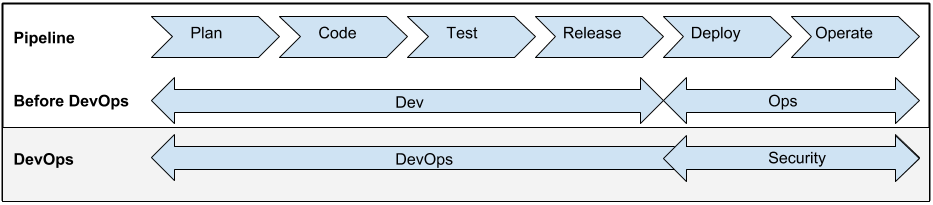
    Before we dive into what this means to you, we should make sure that we all understand what shift left really means.  For me looking at a standard flow of the development/deployment process is the best illustration of this. I think Andrew Storms used a good one in his article, so let’s repurpose it here:

    left 1

    Pay no attention for now to the before DevOps or DevOps rays for now.  Take a look at the top line which is the pipeline.  You can see the flow of an app from plan to code and all the way to operate.  The flow runs from left to right.  At its simplest shift left moves tasks further left.  Security, continuous testing, continuous integration, continuous delivery are all shifted left.

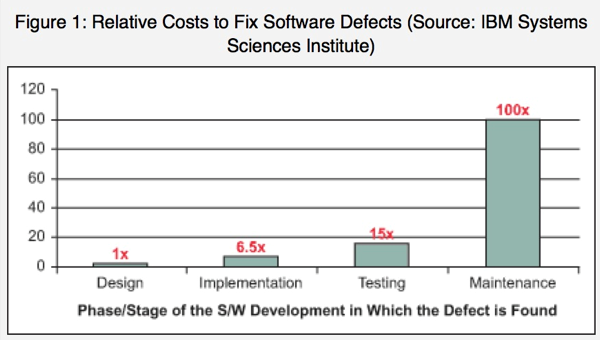
    In doing so potential issues are addressed earlier in the lifecycle. What is this a good thing?  A chart from Dibbie Edwards article gives us the obvious answer:

    left2

    As can be seen the earlier you can get to issues, the cheaper it is too fix them.  That alone is a reason to shift left.  But also concepts such as addressing security issues before it effects your customers is appealing. The same can be said for many other functions you can shift left.

    For me though the question is by shifting everything left, do we just wind up with a big pile at the very left?  How do we prioritize all of these left shifted functions?  You can only shift left so far before you come to the beginning of the time line. This is not the birth of the Universe where you had a big bang which defies the laws of physics.

    At some point can you shift too much left? This is a question I am going to pose to Sanjeev and Mustafa. I also pose it to you the reading audience.

    I recognize that the concept of shifting left is not so efficient that everything that can be shifted is in fact shifted left.  But as we get more efficient, more and more tasks are left shifted in the process. At what point do we reach the point of diminishing returns?

    How do you feel about this? Can we shift too much left? I am interested in some of the different views on this. I am a big proponent of shifting security left, but are there other priorities?

    Let us know your feedback.

  • Reaching Millennials with new Mainframes and agile technology

    Reaching Millennials with new Mainframes and agile technology

    “I’ve been with IBM for 25-years and been with the mainframe. We hear either that the mainframe is dead or that it will be retired in one or two years,” says Mike Fulton, IBM DevOps for Enterprise Systems CTO, and blogger at https://makingdeveloperslivesbetter.wordpress.com/. But IBM and Fulton have built bridges from the largely new and improved mainframe to the new IT professional, making access easier and more inviting.

    IBM has made it easier for Universities teaching about the mainframe to build and use very high quality education programs in order to educate students about the mainframe and about application development for the mainframe.

    “One of the neat things University folks have done is to create free MOOCs so that students and others globally can learn the mainframe and log on to a real mainframe from the Internet to develop their skills,” says Fulton.

    Reaching the Millennials

    In Fulton’s session about reaching Millennials with the mainframe, he starts with the realization that they address the mainframe differently than he would. Where everything used to be a green screen on a dumb terminal, now it is web based.

    “I see people facing challenges in how to adapt to the workforce of people coming in who have this different approach to work and life. The key thing is to focus on the people expertise and on training the millennials on the business side and the technology side related to apps and not so much on the kinds of tools used to access the mainframe,” says Fulton.

    People whose work and lifestyles are mobile with remote working can work from the Internet and access the same applications on the mainframe to accomplish the same business tasks. DevOps has led to improvements allowing people to move on to these new tools including web tools for systems of record and web tools for systems of engagement.

    IBM is reaching out to the millennials. “We partner with Universities for this,” says Fulton. Customers with mainframes and massive apps should look beyond next quarter and into the future to how to train the new batch of people taking over on how to use these web tools to accomplish mainframe tasks.

    Security

    Securing the data is one of the big challenges for Millennials and anyone working with information systems today. People can engage Millennials with how secure the mainframe is. “Fundamentally if you are building any app of interest today, security has to be at the top of the list and it is important if you are a millennial or anyone else because you can easily destroy your business with one security slip up,” says Fulton.

    IBM bakes security into the mainframe so it is natively secure without additional security configurations. “Additional configurations give you the opportunity to make mistakes,” says Fulton. But an app designed to work on Java using sockets on the z/OS will automatically be locked down and secure because it will use TLS, which IBM uses by default, explains Fulton. The customer doesn’t have to code all this manually and IBM knows that it is fundamental regardless of what technology you use that you must be aware of security vulnerabilities in order to address them, says Fulton.

    The mainframe is an obvious choice for security because IBM has been baking security into it for 50-years now, says Fulton. “It’s easier to guarantee security on the mainframe where it is native than it is on systems where people are still adding security in after the fact,” exclaims Fulton.

    The mainframe and its security are based on a proprietary, closed-system approach. You would have to be one of the few people who know even one of the internal subsystems, then you would have to be able to get into the mainframe and use that knowledge to get from one system to another, which requires another type of proprietary expertise.

    The System z memory architecture keeps any one application from gaining any access to the data or processes of any other application. IBM’s user authentication and authorization software also keeps individual applications from accessing other areas of memory. The mainframe further offers more encryption than other platforms. When it comes to security, the mainframe has a strong feature set that makes it attractive.