Tag: ibm

  • IBM Power Systems Enhances Hybrid Cloud Capabilities with Red Hat

    New pre-configured private cloud platform, innovative cloud-consumption payment model, and more Red Hat software now supported on IBM Power Virtual Servers

    ARMONK, NY – February 23, 2021 – IBM (NYSE:IBM) announced availability of Red Hat software on IBM Power Systems as well as new IBM Power Systems hardware. These announcements further expand IBM Systems commitment to help clients modernize by empowering them with the latest tools from Red Hat to develop cloud-native applications and deploy them into hybrid cloud environments.

    Today’s announcements include:

    • Expanded Red Hat Capabilities on IBM Power Systems – IBM Power Systems will now feature Red Hat OpenShift on IBM Power Virtual Server leveraging OpenShift’s platform-agnostic installeri, Red Hat Runtimes, and new certifiedii Red Hat Ansible
    • New IBM Power Private Cloud Rack Solution – Providing clients an optimized, production level environment to modernize traditional environments to cloud native applications, the IBM Power Private Cloud Rack combines on-premise hardware, a complete software stack of IBM and Red Hat tools, and installation from IBM Systems Lab Services to deliver 49% lower cost per request x86iii.
    • Extended Cloud-Like Capacity Scaling on IBM Power Systems – Enhancements to IBM Power System’s capacity management to quickly scale processing power across the hybrid cloud on Linux, IBM i, and

    “Twelve months ago, IT practitioners faced a vastly different landscape before the world was transformed by the global COVID-19 pandemic,” said General Manager of IBM Cognitive Systems Stephen Leonard. “But despite the challenges, they recognize that a hybrid cloud approach can offer 2.5x the value derived from a single public cloud, as measured by IBM’s Institute of Business Valueiv. IBM Power Systems, along with the greater IBM Systems portfolio, plays a critical role in this transition to hybrid environments.”

    IBM Power Systems and Red Hat Drive Client Success with Hybrid Cloud

    Shree Cement Ltd., one of India’s largest cement producers with nearly $2 billion in revenue last year, selected IBM POWER9-based IBM Power Systems to run a combination of Red Hat and AIX to help them modernize their IT infrastructure with hybrid cloud. When Shree needed to streamline their supply chain while also increasing its computing capacity, they knew they needed to refresh their existing Oracle- based infrastructure.

    “We were in the midst of technology modernization and were looking for a dependable IT infrastructure support that could deliver 24/7 capabilities and integrate the operations, logistics, resources, export- import supply chain, said Manoranjan Kumar, Chief Information Officer, Shree Cement Ltd. “The two operating systems on IBM Power Systems, namely IBM AIX and Red Hat Enterprise Linux, helped us move away from vertical business silo approach. This allows us to operate horizontally across thecompany to bring in synergy amongst multiple manufacturing plants to drive business results and ensure business continuity even during the migrations.”

    Shree Cement wanted to build around an infrastructure that would allow them to scale with future business expansion while maximizing the utility of their hardware, and by selecting Red Hat Enterprise Linux on IBM Power Systems, Shree Cement has laid a foundation that positions them to capitalize on the expanding hybrid cloud capabilities from IBM Power Systems and Red Hat, such as:

    • Red Hat OpenShift on IBM Power Virtual Server – Recognizing that OpenShift is a critical part in helping organizations build an agile hybrid cloud, the container platform is now available on IBM Power Virtual Server leveraging OpenShift’s platform-agnostic installer1. The IBM Power Virtual Server is an enterprise Infrastructure-as-a-Service offering built around IBM POWER9 and offering low-latency access to over 200 IBM Cloud services. In addition, IBM Power Virtual Server clients can now run leading business applications like SAP HANA in an IBM POWER9-based
    • Red Hat Runtimes on IBM Power Systems – To help organizations and developers create cloud-native applications, Red Hat Runtimes is now supported on IBM Power Systems. Red Hat Runtimes is a set of products, tools and components designed to develop and maintain cloud-native applications. Now, developers looking to create cloud-native applications on IBM Power Systems have access to leading open-source frameworks and runtimes that provide a single development experience for hybrid applications spanning IBM Power Systems and other platforms.
    • New Red Hat Ansible Modules – Red Hat Ansible, made available on IBM Power Systems last year, is an open-source based tool that allows for simple automation of common IT jobs, freeing up IT administrator time as well as compute resources. IBM Power Systems has added 22 new Ansibles modules that bring new automation capabilities for common tasks like Patch Management, Security Management, OS & Application Deployment, Continuous Delivery, Centralized Backup and Recovery, and Virtualization Management & Provisioning, bringing the total number of POWER-supported Ansible modules to 102, and they have been downloaded over 11,000 times on GitHub as of February 23,

    Simplified Deployment and Management of Hybrid Cloud

    To help clients not only quickly deploy a hybrid cloud, but also scale with agility to respond to spikes in demand, IBM is announcing two new technologies designed to bring simplicity to hybrid cloud deployment and management:

    • The IBM Power Private Cloud Rack Solution – A pre-configured system with compute, storage, networking and pre-installed software to match an organization’s existing infrastructure, be it based around Linux, IBM i, or AIX, to help organizations operationalize their cloud management and provide an IaaS environment to help clients accelerate development and operations for Kubernetes container-based cloud-native applications with Red Hat OpenShift Container
    • Cloud-like Capacity and Pricing Across the Hybrid Cloud – IBM had already enabled scalable capacity for select on-premises IBM i and AIX IBM Power Systems servers, allowing users to

    unlock additional compute cores as needed and get cloud-like consumption-based pricing. Now, IBM is extending that ability to the hybrid cloud by piloting hybrid capacity credits, which can be purchased and used to unlock capacity on on-premises servers as well as IBM Power Virtual Servers. IBM is also working with other ecosystem partners to further extend dynamic capacity across multiple Linux distributions.

    “IBM’s latest expanded support of their hybrid cloud and application modernization initiatives will enable our customers to easily attain the efficiencies and flexibility of combining on-premises and cloud solutions using the latest open source and tooling,” said Jim Dixon, Vice President, Software & IBM Power Systems at Mainline Information Systems. “Availability of hybrid cloud credits and appliance-like options of hardware and Red Hat software solutions, combined with Red Hat OpenShift consistency between on-premises IBM Power Systems and off-premises clouds, will surely offer ease of entry into this new and important IT paradigm.”

    IBM IT Infrastructure Continues to Evolve for Hybrid Cloud

    Later this year, the next generation of the IBM Power Systems servers based on the IBM POWER10 processor, which was built from the ground up for hybrid cloud, will debut. In addition, later this year the next generation of the AIX operating system, version 7.3, is expected to continue the legacy of innovation with enhanced capabilities that deliver the resiliency, security, and scale needed for the hybrid cloud.

    To round out a hybrid cloud ready infrastructure, IBM Storage recently announced new entry-level IBM FlashSystem models with comprehensive container support as well as support for Red Hat OpenShift and Ansible, while IBM Z and IBM Power Systems also announced new hybrid

    cloud container offerings for IBM Z across Red Hat OpenShift and IBM Cloud Paks.

    For more information on IBM, please visit http://www.ibm.com.

    For more information on IBM IT Infrastructure, please visit https://www.ibm.com/it– infrastructure/power.

    ii Red Hat Ansible certification involves Red Hat testing the Collections developed by IBM and a commitment to provide enterprise support. The Collections for AIX and IBM i are maintained and supported by IBM.i Red Hat Knowledge Base article, “Deploying OpenShift 4.x on non-tested platforms using the bare metal install method – https://access.redhat.com/articles/4207611 [2] Power Systems encryption based on IBM Hyper Protect Crypto Service, the only service in the industry built on NIST FIPS 140-2 Level 4-certified hardware.

    iii The results were obtained under laboratory conditions, not in an actual customer environment. IBM’s internal workload studies are not benchmark applications. Prices, where applicable, are based on U.S. prices as of 09/20/2020 from IBM and x86 hardware pricing is based on IBM analysis of U.S. prices as of 09/20/2020 from IDC. Price comparison is based on a 3-year total cost of ownership including HW, SW, networking, floor space, people, energy/cooling costs and three years of service & support for production and non-production (dev, test and high availability) environments.

    iv Based on IBM internal, cross-industry assessment

  • Project OWL announces new release of ClusterDuck Protocol to build emergency mesh networks

    An opportunity for developers to use, test, and contribute to an open source communications systemthat provides connectivity in the wake of disasters  

    By Bryan Knouse, CEO & Co-Founder, Project OWL

    Despite the pandemic, the power of the open source community of developers working together virtually around the world has helped Project OWL(Organization, Whereabouts, and Logistics) advance the ClusterDuck Protocol(CDP) wireless technology in the past year.

    The CDP project provides a system to manage an ad-hoc mesh network of Internet-of-Things devices (Ducks) based on LoRa (Long Range radio) that can be deployed quickly and cheaply. Project OWL invented the technology as part of the inaugural Call for CodeGlobal Challenge in 2018.

    In March 2020, Project OWLlaunched the open source ClusterDuck Protocolproject together with IBM and The Linux Foundationto provide a home for the community and to expand the ecosystem to additional stakeholders around the world.

    Today we are excited to announce four technology updates for our users, and we invite developers to help us improve the hardware, software, and analytics that drive them, to help provide connectivity wherever it’s needed in the wake of disasters.

    What we are announcing today

    DMS Lite Dashboard GitHub 1.0 release: The DMS (Duck Management System) Lite Dashboard is Project OWL’s offline data collection platform for the ClusterDuck Protocol. It’s an open source dashboard for viewing a mesh network in the browser.We’ve released version 1.0 and call on developers to improve and extend the architecture. All the data sent over a ClusterDuck network can be collected by the DMS Lite to visualize network activity and data provide analytics for remote and offline areas.

    Refactored object-oriented codebase: The updated library supports many additional hardware platforms, so you can use various new types of devices. Developers can extend and add their own hardware to fill the roles in the mesh network depending on what they have, or prefer, to use.

    New Android app:A mobile app that local authorities, first responders, and affected individuals can download. The ClusterDuck app provides Bluetooth connectivity to a nearby Duck device instead of connecting to its local WiFi point. Bluetooth connectivity will help provide stronger security and utilize significantly lower energy while providing another channel for emergency response communication. Developers can help us improve the Android app and begin on an iOS version.

    More resilient communications format and protocol: We are releasing a new message format together with an updated protocol for connecting devices and relaying messages. This makes the platform more efficient, reliable, and performant in adverse conditions. It also strengthens support for additional transport options, including satellite connectivity.
    Ourrelease notes include details on the message format, new device support, and updated documentation for these and other new features.

    Open Source Community Engagement

    It’s been very inspiring to see the response from the open source community since open sourced the ClusterDuck Protocol under the governance of The Linux Foundation last year. The open source community has grown to hundreds of contributors from around the world, and there is always an opportunity for people to join in the conversation on ourSlack workspace and GitHub repository.

    Three developers, who connected with us through the community, are New York-based Zachary Neuhaus, Portland-based Amir Nathoo, and Dallas-based David Mandala. They have been integral to the development of the additional connectivity options, object-oriented refactor, and better message format and protocol.

    Developers who are new to the project will have a more seamless experience thanks to the added capabilities. With faster and easier access to the open source technology, we hope more individuals around the world can get involved, build their own networks, and continue to build the protocol with us as we try to bring connectivity to the people and places that need it most.

    IBM’s Ongoing Mentorship

    Since winning the 2018 Call for Code Global Challenge, IBM continues to mentor our team to implement open source best practices, for example, by helping us innovate in the open source upstream ClusterDuck Protocol and integrate that downstream into our own Project OWL packages, similar to the successful Red Hat model.

    They have also been instrumental to the expansion of our network of partners. For example, Project OWL won a grantthrough The World Bank’s TechEmerge Resilience India Challenge in early 2021, and is in discussion to test our technology with the State of Disaster Management Authorities (SDMA) of Himachal Pradesh in the mountainous Himalayan region. This will be an invigorating engineering challenge for us, as the terrain in this region is unlike the vast and versatile deployment sites we encountered working with IBM Service Corps in Puerto Rico and multiple North American locations.

    OWL is looking forward to returning to field tests around the world together with local stakeholders in 2021. We are also open to working with new partners to test and improve our open source codebase to ensure it can make an impact wherever it’s deployed by Project OWL or others.

    How you can get involved today

    This is a great time for developers in the open source community to take part, regardless of where you are in the world or your level of technical expertise.
    OWL is seeing demand from local governments as well as organizations in the public and private sectors, which is driving innovation and helping us expand to more industries. We invite you to join the community today:

    ·        Visit the website to learn more about how you can contribute to the ClusterDuck Protocol open source effort: www.clusterduckprotocol.org
    ·        Find the codebase on GitHub: https://github.com/Call-for-Code/ClusterDuck-Protocol
    ·        Join the conversation with developers around the world: www.clusterduckprotocol.org/slack

  • Open Source Advocates Want Share of Wealth

    Open Source Advocates Want Share of Wealth

    The egalitarian spirit of the open source community might be starting to fray as individual developers begin to question who is really benefiting most from their efforts.

    A survey of 4,440 developers who actively participated in open source projects in 2020 finds more than half (54%) of respondents said they feel that individuals should be paid for their contributions to open source projects. The report, conducted by DigitalOcean, a cloud service provider, finds only 14% of respondents are currently paid for their contributions.

    Developer opinions vary, depending on age group, about whether individuals should be paid for their contributions to open source, with those between the ages of 18-25 being more likely to be in favor (60%), while only 34% of those aged 55 or above agreed.

    “A lot more people want to be compensated,” said Raman Sharma, vice president of product marketing for DigitalOcean. “That may mean there will be a need for more sponsorships by vendors.”

    The DigitalOcean report arrives just after Elastic announced it is changing the licensing terms under which it makes Elasticsearch available. Elastic is shifting away from an Apache license to a dual license strategy that includes a server-side public license, or SSPL, along with a proprietary Elastic license. That shift was made to help ensure more of the revenue generated by Elasticsearch winds up in the hands of Elastic rather than cloud service providers, such as Amazon Web Services (AWS), that routinely launch paid services based on open source code. AWS responded to the Elastic move by announcing plans to fork Elasticsearch code that it will now curate.

    Nearly half of respondents (47%) to the DigitalOcean survey said they think technology companies should fund the payment of open source contributions, while a quarter (25%) believe project owners or individuals should pay.

    Discontent among startup vendors has been building for months. Startups typically are backed by venture capitalists, and make their software available as open source code in an effort to build a customer base on the strength of their support services. Cloud service providers have discovered they can take the code these vendors create to launch their own service. Those cloud service providers may contribute code to the project, but the startup vendor doesn’t typically enjoy any of the economic benefits.

    In most cases, the open source code used by the cloud service provider comes from a small cadre of developers that work for the startup company. Most of those startup companies are hoping to build a community around their code that includes individual contributors, external to the company, to help defray those costs. In fact, that business model has contributed to open source projects’ role as one of the primary drivers of IT innovation in recent years. If more independent developers demand to be paid for those efforts, the innovation rate of open source projects is likely to slow. The labor required to support those projects simply won’t be as freely available.

    In contrast, massive open source projects, such as Linux, have already reached a level of sustainability that other projects can only dream of. The Linux community is still ruled by Linus Torvalds, who some say is something of a benevolent dictator. Many of the contributors to Linux, however, are full-time employees working for vendors like IBM and SAP, which have a vested interest in the underlying open source platform.

    In contrast to the Linux community’s approach, the Eclipse Foundation, The Open Infrastructure Foundation (formerly the OpenStack Foundation), the Apache Software Foundation and the various arms of the Linux Foundation have stepped in to provide some level of independent governance for a wide range of open source initiatives, with mixed success. The Cloud Native Computing Foundation (CNCF), for example, as an arm of the Linux Foundation, has played a major role in spurring Kubernetes adoption. However, Google recently spurned the CNCF when it decided to create its own steering committee to oversee development of the Istio service mesh.

    Despite all the internecine rivalries and the potential for more forking of open source projects, overall, these projects are still viewed favorably. A survey of 3,400 developers, conducted by O’Reilly Media on behalf of IBM, finds 94% of respondents said they rate open source software (OSS) as equal to or better than proprietary software. Nearly two-thirds of respondents (65%) also agreed that contributions to open source projects impress potential employers and result in better professional opportunities.

    Of course, one of the primary reasons so many developers prefer open source is that there is no purchasing process for them to navigate.

    “Developers can move faster,” said Todd Moore, vice president for open source at IBM. “Programmers can move at the speed of light.”

    Regardless of motivation, it’s clear open source software isn’t going away. However, how it is built and exactly what is permissible under an open source license may soon vary much more widely from one project to the next.

  • Using IBM ADDI and VTP to Enhance Observability in Mainframe Development

    Using IBM ADDI and VTP to Enhance Observability in Mainframe Development

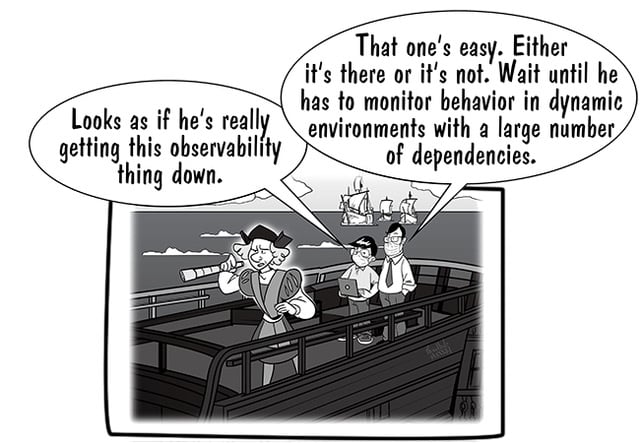
    Observability has always been a key factor in software development – not so much on the mainframe. However, the rise of the internet as the go-to platform for modern commerce has caused an explosion of transactional activities. There’s much more complexity behind the scenes than the request/response activity that used to be the usual interaction between a client and a single server. That necessitates ubiquitous observability as a mission-critical necessity for any modern application. As computational activities increase, so, too, does the risk of failure. One way to avoid disaster is to rely upon observation technologies that monitor not only runtime behavior, but design-time behavior, as well.

    Analytical Insights are Key to Application Modernization

    IBM observabilityModern computing activity goes well beyond simple request/response interactions. Today, one request can traverse any number of computing resources before resolving to a completed response. These resources range from application logic that’s encapsulated and then exposed to the network at a number of endpoints, to a diverse mixture of data storage mechanisms. And, if the application is part of an event-driven architecture in which messages are passed around to a large number of recipients, ancillary logic can be executed in ways that are unknown to the originating request. This can cause significant side-effects, nonetheless.

    Given the complexities inherent in modern applications running at web-scale, without ubiquitous observability, developers are flying blind. This is true not only for what we have come to know as commodity computing, in which applications are hosted on racks of X86 servers housed in private and public data centers but also for mainframe computing.

    The Emergence of Observation Technologies

    Over the last decade, a growing number of observation and monitoring technologies have emerged for network applications and database environments. Open source projects such as OpenTracing, OpenTelemetry, and Prometheus give developers insights into the runtime behavior of applications. Also, there are a plethora of commercial observability products that companies can buy to meet their specific monitoring and observability needs.

    At the development level, there are open source tools such as JSHint for JavaScript developers, PyLint for Python developers and FindBugs for Java developers, just to name a few. These tools can inspect static code and point out shortcomings. Some tools, such as .NET analyzers, will go as far as to correct code as the developer is writing it. The easiest bugs to fix are those that are never created. Correcting code as it’s being written brings a whole new dimension to design-time observability.

    However, while the X86 development community has benefited from observability tools for a while, their mainframe counterparts haven’t had it so easy. Commodity developers require nothing more than a click on a web page link to access any number of powerful observability tools, but mainframe developers have been starved for these types of tools.

    Until now.

    Applying the Principles of Observability to Modern Mainframe Development

    One of the big challenges of mainframe programming is getting a clear picture of application dependencies. Unlike programming under Java, C# or Node.JS, where external dependencies are defined in a central configuration file, or internal dependencies can be discovered with a code analyst tool, mainframe programming makes knowledge of dependencies a difficult undertaking. This type of design-time observation hadn’t really existed until technologies like IBM’s Application Delivery and Discovery Intelligence (ADDI) came along.

    An important thing to understand about dependencies in most mainframe computing is that they exist at both the function and executable levels. A developer can create a function, which, in mainframe parlance, is called a routine. That one routine might be used by dozens, if not hundreds, of other routines. Sharing code from a common resource is not unusual in X86 development, where binary libraries get shared all the time. However, in mainframe computing, these shared routines, along with file layouts and resource definitions, are physically copied in with the developer’s code using a technology called a copybook. Then, the code is compiled and linked to create an executable file. Once turned into an executable, the code becomes opaque. As a result, observing what’s going at runtime and design-time within the executable can be a herculean task. For many years, it was.

    Fortunately, you can use a tool like ADDI to overcome this obstacle. IBM’s ADDI provides important insights and analysis into the code that makes up a mainframe application. Both developers and system analysts can use ADDI to determine not only application dependencies but also to gather information about the execution environment; for example, scheduler settings and database configuration.

    As with X86 development where ancillary application intelligence, well beyond information about the source code, can be displayed in the developer’s integrated development environment, ADDI also makes it possible to report information in the developer’s IDE. Also, systems analysts can use the additional information provided by ADDI, such as the structure and segmentation of an application, to make decisions about how to refactor code when it comes time to make improvements.
    Providing a broader scope of observability into design-time activity is but one aspect of enhanced observability in the modern mainframe environment. ADDI also reports test coverage metrics. Knowing what and how much code has been tested is an important part of observability, even more so when used with tools that are focused on mainframe testing. One such tool is Virtual Test Platform (VTP).

    Leveraging Observability in the Mainframe Testing Process

    Until VTP came along, mainframe developers were flying blind – they had limited visibility into the transactions that their code used and the dependencies that their code relied upon. They had an enormous amount of work to do to figure out transactional behavior throughout the application. They spent a lot of time doing archeological digging in legacy codebases to get a clear idea of what was happening. And, it didn’t get any easier as testing demands on all types of applications, both X86 and mainframe, increased due to the rise in commercial activities on the internet at a global scale.

    According to Chris Trobridge, senior offering manager at IBM, “The testing load for developers has been increasing tremendously, and with the introduction of agile development processes, developers just can’t keep up with the testing load that they have.”

    VTP addresses many of these testing issues, both in terms of observability and quality assurance. “VTP really is observing what goes on at runtime, but without knowing anything about the application,” Trobridge said.

    VTP can monitor an application and capture and record all its interactions. This type of observability enables developers to make modifications and then run those changes against observed behavior. It’s a novel approach to mainframe development in which the benefits of both design-time and runtime observability are leveraged in a synergistic manner. In order to understand how groundbreaking this capability is, you need to remember that only five years ago, while X86 developers were enjoying a maturing set of monitoring and tracing tools; for mainframe developers, this type of observability wasn’t possible. Now it is. It’s a dramatic step forward.

    “VTP is a tool that enables developers to automate a lot of the testing, and, in turn, enables the recording of a transaction environment without having to know a lot about the environment,” Trobridge explained. “The recordings themselves can be played back rapidly without compromising security. This is an important aspect of VTP. This level of observability and interactivity really is something that mainframe developers have not had access to before. It’s a transformational technology in the mainframe world.”

    Technologies such as ADDI and VTP are a transformational approach to enhancing observability in mainframe environments. In many ways, the focus on exposing the granularity of computing at the routine level is a harbinger of things to come for all developers, in both the X86 and mainframe worlds.

    Taking a Function-Centric Approach to Observability

    Historically, for commodity developers, observing request/response behavior between services at runtime, along with identifying code quality and complexity issues at design time, allows for identification and remediation of most issues in software development.

    For the mainframe developer, request and response behavior is only the tip of the iceberg when analyzing application behavior. In a mainframe environment, one sub-routine might be used by thousands of other functions and subroutines at any given time. Commodity developers have been spared the burden of accommodating the function as the fundamental deployment unit because, until recently, functions were grouped into well-encapsulated deployment units, such as Java’s .jar file, .NET DLLs or, more recently, containers. If something went wrong, the error would generally appear in one of the deployment units.

    However, with the current rise of serverless computing, where the function becomes the primary deployment unit, X86 developers are in the same boat as their mainframe counterparts. In the past, for the X86 developer, one application might use a limited number of components that could have dozens, maybe hundreds of functions. Now in the serverless world, all these functions are exposed as standalone units, in which each function is the responsibility of a distinct team. We’ve gone from an ecosystem that has a limited number of deployment units to an ecosystem that can contain thousands. Fixing bugs can require hours of poring over logs and examining minute details just to determine the root cause of an issue.

    As mentioned above, this depth of dependency at the function level is something that mainframe developers have been dealing with for years. Fortunately, tools such as ADDI and VTP provide a high degree of observability for very complex mainframe applications at both runtime and design-time.

    It’s strange to say, but the large, function-based ecosystem issues that mainframe developers are solving today will become a growing concern for X86 developers in the very near future. In many ways, tools such as ADDI and VTP are setting an example for X86 tool development moving forward. The mantra, “You can’t fix what you can’t see” is as true today as it has ever been. That the mainframe community is at the vanguard of creating new ways to work in massive computing environments is a testament to the power of rejuvenation in the most unexpected ways.

  • IBM joins the Crossplane community

    IBM joins the Crossplane Community to advance the development of hybrid cloud application platforms.

  • IBM Acquires Instana to Advance Observability Strategy

    IBM Acquires Instana to Advance Observability Strategy

    IBM this week announced it plans to acquire Instana, a provider of an application performance management (APM) platform that is optimized for microservices.

    Robin Hernandez, vice president of hybrid cloud management and AIOps for IBM, said Instana will plug an observability gap that has emerged in IBM’s portfolio as organizations start to build and deploy cloud-native applications more broadly.

    Previously, IBM provided APM capabilities via a Tivoli portfolio of tools that were optimized for core static Java applications, noted Hernandez. Instana will add an APM platform designed from the ground up to automatically instrument applications as they are being deployed by DevOps teams, he said.

    Istana also provides distributed tracing capabilities that the existing Tivoli portfolio lacks, Hernandez added.

    The data collected by the Instana agents injected into those microservices also will play a critical role in IBM’s overall approach to applying artificial intelligence to IT operations, also known as AIOps. The IBM approach to AIOps seeks to combine data from platforms such as Instana and Tivoli with third-party data sources such as ServiceNow to advance IT automation, he said.

    Available both as a software-as-a-service (SaaS) platform and as software that can be deployed in an on-premises environment, Instana has gained traction as organizations have embraced observability as a core tenet of a set of best DevOps practices. Historically, IT teams only employed APM platforms to monitor their most mission-critical applications because of both the cost of the APM platform and the inherent difficulties involved in applying agents pervasively.

    Hernandez said observability takes monitoring to the next level because instead of simply tracking a known set of processes, platforms such as Instana make it possible to observe interactions in a way that discovers unknown relationships and dependencies between applications and infrastructure.

    IBM plans to primarily focus its Instana efforts on microservices-based applications. However, Instana can also be applied to observe existing legacy applications. IBM is still studying that use case as part of its ongoing due diligence, he noted.

    Massive amounts of capital have been pouring into observability startups that are trying to supplant legacy APM platforms as organizations transition to microservices. Providers of legacy APM platforms, meanwhile, are re-engineering their platforms to support microservices-based applications that are most often deployed on Kubernetes clusters. IBM is addressing that challenge via an acquisition that complements its renewed focus on hybrid cloud computing and AI, Hernandez said.

    It’s too early to say which vendors will triumph in the observability wars, but the one thing that is certain is there is no shortage of options. It’s not clear to what degree the shift to observability will result in the rolling up of a variety of tools to manage IT, but the days when IT tools simply monitored a process are starting to fade away.

  • Application Modernization Video with IBM’s Rosalind Radcliffe

    Application Modernization Video with IBM’s Rosalind Radcliffe

    Application modernization is the process of updating existing legacy applications and modernizing their infrastructure, architecture and features, by using modern technology stacks. Monolithic applications are difficult to update and expensive to scale.

    In response to today’s business requirements of growth and innovation, enterprises must deliver new applications in an agile fashion while minimizing risk. Many have turned to a hybrid or multicloud strategy where choice and flexibility are foundational.

    In this interview, Rosalind Radcliffe, distinguished engineer at IBM, explains the benefits of modernizing applications and how IBM provides all essential components to update your legacy applications.

    Rosalind will take a deeper look at application modernization during her session at IBM DevOps Virtual Summit. During the virtual event, attendees will learn how to keep their applications running smoothly with automation and data-driven solutions that can reduce mean time to resolution and explore IBM solutions to help innovate hybrid environments, disrupt cloud native development and transform existing mainframe infrastructures. The free virtual event will take place on Oct. 29 at 10 a.m. ET.

    For more information and to register, please visit the IBM DevOps Virtual Summit website.

  • How open source leads to open doors

    Black Girls CODE awarded IBM Open Source Community Grant

  • Call for Code for Racial Justice Needs You: Join the Movement

    IBM has never avoided taking on big challenges. At IBM, we are privileged to drive impact at scale. We take on challenges that transform our clients, impact people’s lives and innovate for future generations as we strive to effect systematic societal change. Over the course of our 109-year history, the evidence has become clear that scaled change is best achieved through the focused deployment of technology, and especially tech for good.

    Given the tragic deaths of George Floyd, Ahmaud Arbery, Breonna Taylor and too many others, remind us that the fight against systemic racism is more urgent than ever. Today, we are launching Call for Code for Racial Justice, a vital initiative that brings together technology and a powerful ecosystem to combat one of the greatest challenges of our time: racial injustice. As global citizens, we must act now and be part of a tangible change that we want to see today, tomorrow and for generations to come.

    Call for Code for Racial Justice facilitates the adoption and innovation of open source projects by developers, ecosystem partners and communities across the world to drive sustainable change in three focus areas: Police & Judicial Reform and Accountability; Diverse Representation; and Policy & Legislation Reform.

    The new initiative emerged from an internal IBM program called the Call for Code Emb(race) Challenge. It was started by Black IBMers who, along with Red Hatters and IBM allies, applied their ingenuity and expertise to design and develop technology solutions to address the problem of systemic racism. These solutions are now being opened up to the world as open source projects through the Call for Code tech-for-good platform.

    Call for Code has a proven record of successful global programs that for three years have been addressing some of the most pressing challenges of our time,  including Covid-19, climate change and natural disasters. Call for Code has grown to include an impressive ecosystem of technology and humanitarian experts, and more than 400,000 developers across 179 nations.

    Today, the IBM Call for Code for Racial Justice team is contributing solution starters to the open source community. These projects were built using technologies such as Red Hat OpenShift, IBM Cloud, IBM Watson, Blockchain ledger, Node.js, Vu.js, Docker, Kubernetes and Tekton. We’re asking developers and ecosystem partners to join us in combatting racial injustice by testing, extending and implementing these open source solutions, and contributing their own diverse perspectives and expertise to make them even stronger:

    • Five Fifths Voter: This web application empowers Black people and other minorities to ensure their voices are heard by exercising their right to vote. It is a virtual one-stop-shop to help determine optimal voting strategies for each individual and limit the impact of previous suppression issues.
    • Legit-info: Local legislation and policies can have significant impact on areas as far-reaching as jobs, the environment and safety. Legit-info helps individuals understand in their own language the legislation that shapes their lives.
    • Incident Accuracy Reporting System: This platform for police incident reporting allows witnesses and victims to corroborate evidence from multiple sources and assess against an official police report. The system creates a more reliable record of all accounts of the incident.
    • Open Sentencing: To help public defenders better serve their clients, Open Sentencing identifies racial bias in data such as demographics that can help make a stronger case.
    • Truth Loop: This app helps communities simply understand the policies, regulations and legislation that will impact them the most.

    Together, we’re harnessing open source technology to drive scalable innovation and meaningful change. This will be a persistent, open, always-on initiative and will continue to introduce new open source solutions to inspire global adoption and innovation to help dismantle systemic racism and strive for equality and equity.

    IBM is providing the technology. But in keeping with the principles of Call for Code, we know it takes an ecosystem to scale change. Call for Code’s growth and success is a product of the unique ecosystem that IBM and Call for Code creator David Clark Cause have convened to unite the technology development community with humanitarian organizations to ensure  that solutions are robust, efficient, innovative and easy to use.

    United Nations Human Rights (UNHR) advocates for solutions to tackle racial discrimination and encourages global mobilized ecosystems, like Call for Code, to create scalable solutions.

    Together with partners like Black Girls Code, Collab Capital, Dream Corps, The United Way Worldwide, American Airlines, Cloud Native Computing Foundation and Red Hat, Call for Code for Racial Justice is inviting developers to apply their skills and ingenuity to combat systemic racism. Black Girls Code is also the most recent recipient of IBM’s Open Source Community Grant and has also formed a newly expanded partnership with IBM. We’re counting on the diversity of the global open source community to lean in and help build real solutions to serious problems.  It’s easy to get involved. If you’re a developer, expand upon the solution starters and spread the word. You have the skillset and ingenuity to make a difference. If you’re an organization, we invite you to join our growing partner ecosystem. Together, we have the power and responsibility to help scale and implement solutions for this important cause.

  • Accelerate Your Digital Transformation with IBM

    Accelerate Your Digital Transformation with IBM

    DevOps practices, processes and solutions help businesses accelerate their digital transformation by improving the speed and quality of software development. DevOps tools enable teams to do their job more efficiently by embracing automation, increasing agility and building speed, versatility and security into the framework.

    At the IBM DevOps Virtual Summit, attendees will learn how to keep their applications running smoothly with automation and data-driven solutions that can reduce mean time to resolution and explore IBM solutions to help innovate hybrid environments, disrupt cloud native development and transform existing mainframe infrastructures. The free virtual event will take place on Oct. 29 from 10 a.m. to 2 p.m. ET.

    IBM leaders will discuss the benefits of DevSecOps, how to increase business value, SRE best practices and how IBM Cloud software and services can help organizations succeed on their DevOps journey.

    The virtual event will feature four educational sessions from leading DevOps technologists:

    • “Application Modernization Enabling Hybrid Cloud with IBM Z,” by Rosalind Radcliffe, distinguished engineer and chief architect for DevOps at IBM.
    • “The Modern DevOps Manifesto,” by Andrea Crawford, distinguished engineer at IBM.
    • “DevSecOps in a Hybrid Multicloud World,” by Sunil Joshi, executive architect at IBM.
    • “Common Tooling Approaches from Kubernetes to the Mainframe,” by Eric Minick, program director at IBM.

    For more information about the virtual summit or to register, please visit the IBM DevOps Virtual Summit website.