Tag: generative AI

  • 4 Things Engineering Leaders are Thinking About Right Now

    4 Things Engineering Leaders are Thinking About Right Now

    Spiderman and engineering leaders have something in common: They both have great power and great responsibility. Engineering leadership is more critical than ever, with more than 4.4 million software developers in the United States building our experiences daily.

    Leaders do more than just manage the day-to-day. They are called to influence, empower and motivate their teams. For engineering leaders, this means grappling with new challenges and opportunities as the technology landscape changes and evolves. This shift impacts how humans work, where we work, what our work looks like and how we need to be supported and seen in our roles across the board.

    Let’s dive into four challenges and opportunities that engineering leaders face and how they shape the future of software engineering.

    Communication in Remote & Hybrid Work

    It has been over three years since the way that we work shifted dramatically. Choosing the right fit between remote, hybrid and in-office is a challenge that companies across industries are still wrestling with. The hardest part? Communication.

    There’s no doubt that the flexibility of remote work is beneficial for workers’ mental health. The 2022 State of Remote Engineering Report found that developers reported better work-life balance (64%) and less stress (48%) from working remotely. However, they also reported that collaboration and inclusion took much more effort. Although flexibility is good for mental health, it may hinder spontaneous interactions. And although in-office work fosters face-to-face collaboration, it may limit geographical diversity. Striking a balance is top of mind.

    No matter what the office structure is, engineering leaders must establish clear communication channels, guidelines and regular check-ins with their teams. Engineering metrics are a great way to identify and address the wins, challenges, solutions and bottlenecks. They help leaders foster an environment that encourages collaboration, cross-functional teamwork, and knowledge sharing through regular team meetings, brainstorming sessions and collaborative projects to promote engagement and a sense of collective ownership no matter where teams and team members work.

    Generative AI

    Generative AI is top-of-mind for the whole world right now. It’s an exciting and potentially stressful time for engineering leaders to consider how generative AI may reshape the way we work. While there is a fear of AI replacing human roles, a more positive (and realistic) way to look at AI is by asking: What will this revolutionize, evolve, and enhance and what are the risks?

    Developers are thinking primarily about the emergence of large language models (LLMs) for code creation. Leaders should consider how AI can integrate into workflows to increase development speed, accuracy and efficiency. This is also an opportunity to enhance and leverage AI for tedious tasks so developers can focus on creative projects.

    Leaders must also consider the risks of generative AI. AI simply cannot replicate the complexity of the human experience, which will call for a layered approach to integrating AI into engineering teams. It also begs the question: What responsibilities do engineers have when working with AI? The benefits of streamlining, speed and accuracy may also alter what quality control and testing look like. It’s an exciting time for engineering leaders to embrace the future of work mindfully and strategically.

    Meaningful Metrics and Outcomes

    Engineering metrics are vital for measuring impact and outcomes to drive progress and inform decision-making. Engineering leaders must carefully evaluate and select metrics that align with their team’s objectives and adapt measurement practices accordingly. DevOps Research and Assessment (DORA) metrics are popular, serving as a jumping-off point for engineering leaders. When leaders carefully evaluate DORA metrics as applied to their team’s specific objectives and complement them with other relevant metrics, they can ensure that they capture the desired outcomes and provide a complete picture of engineering health to drive meaningful purpose.

    The added pressure to deliver results while upholding developer morale and efficiency underscores the significance of choosing appropriate evaluation methods that capture the desired outcomes. But most importantly, leaders need to consider what metric visibility means and how best to offer support.

    Fostering Engineering Team Health

    Besides technical aspects, engineering leaders are increasingly concerned about the health and well-being of their teams. Balancing meetings, focused work time and creating a positive work environment are vital factors that contribute to developer health and productivity. Engineering leaders should consider the individuals and team when encouraging breaks, time off and flexible working hours to prevent burnout and promote overall well-being. Some teams have implemented “No Meeting Wednesdays” and similar strategies to provide dedicated time for deep work and to minimize interruptions.

    Leaders should be focused on creating a culture that prioritizes psychological safety where team members feel comfortable expressing their ideas, concerns and feedback without fear of judgment or reprisal. In this fast-paced world, a leader must remember to be human first and encourage open communication, active listening and empathy within the team. Prioritizing collaboration, work-life balance and a healthy team dynamic is critical for engineering leaders aiming to foster long-term success.

    Engineering Leaders Have Great Responsibility

    Engineering leaders are at the forefront of shaping the future of software engineering. Balancing communication in remote and hybrid work environments, leveraging the potential of generative AI, choosing meaningful metrics and outcomes and fostering team health and well-being are critical areas they must address. By embracing these challenges and opportunities head-on, engineering leaders have the power to drive success and create thriving, innovative teams. So, let’s step up to the plate, embrace the evolving landscape of software engineering, and lead with purpose, empathy and strategic vision. Together, we have the power to shape a brighter future for the world of technology. With great responsibility comes great opportunity. Are you ready to don your leadership cape and web-sling your way to success?

  • Snyk Survey: AI Generating More Vulnerabilities in Code

    Snyk Survey: AI Generating More Vulnerabilities in Code

    A survey of 404 IT professionals conducted by Snyk found the use of artificial intelligence (AI) to write code is creating a security paradox. On one hand, just over three-quarters of respondents (77%) said AI tools improve code security. At the same time, however, 59% are concerned that AI tools trained using general-purpose large language models (LLMs) will introduce security vulnerabilities that first appeared in the code used to train them.

    The challenge with general-purpose LLMs is that they are trained using a combination of excellent, mediocre and flawed code. As a result, any recommendation surfaced has the potential to be a suboptimal security result.

    Randall Degges, head of developer relations for Snyk, said that as AI tools increase the velocity at which applications can be constructed, it’s probable that DevOps teams will discover more vulnerabilities in their code.

    In general, 61% of respondents also noted that automation has increased the number of false positives, with 62% of respondents reporting that at least one out of every four vulnerability alerts they received from automation tools were false positives. Well over a third (35%) said false positives represented over half of the vulnerability alerts.

    On the plus side, however, more organizations are paying closer attention to application security issues in the wake of several high-profile breaches of software supply chains and disclosures of vulnerabilities. A full 96% reported their organizations are addressing supply chain security problems on an ad hoc basis, yet only half have a formalized supply chain security strategy in place.

    The survey also finds 87% of respondents work for organizations impacted by a software supply chain security issue in the last year, with 61% having implemented new tools and processes as a result.

    A total of 62% of respondents work for organizations that have a software life cycle assurance process in place, but only 42% of organizations are using software bills of materials (SBOMs). In addition, only 40% have formal security ratings for the open source packages that developers employ, and 31% ignore risks that arise from indirect dependencies.

    However, only 40% of organizations have embedded security testing tools into their integrated development environments (IDEs), with 40% not using software composition analysis (SCA) or static application security testing (SAST) tools at all. In fact, even though 80% of respondents reported working for organizations that ship code daily, only 27% claim to continuously audit their code.

    As a result, many vulnerabilities remain unpatched, with Java (42%) and JavaScript (31%) topping the list in terms of code with the most ignored vulnerabilities.

    Finally, the survey also noted that vulnerabilities involving open source code are now being remediated faster than proprietary code. Maintainers of open source software are now paying more attention to cybersecurity issues thanks in part to the tools and best practices provided by the Open Source Security Foundation (OpenSSF), said Degges.

    There will, of course, come a day when AI is more widely used to analyze vulnerabilities in code. In effect, AI will be used to solve some of the security issues general-purpose LLMs create. In the meantime, however, DevSecOps teams would be well-advised to proceed with caution.

  • Breaking Boundaries: Integrating Generative AI for Developers

    Breaking Boundaries: Integrating Generative AI for Developers

    Many organizations are experiencing deficits in technical skills and gaps in productivity that ultimately harm their bottom line. To overcome those obstacles and drive growth, businesses can use generative AI tools like ChatGPT and Bard to handle large volumes of data and increase the speed and output of basic tasks without draining valuable human capital. Already, businesses are finding that saving time is one of the most valuable benefits generative AI can deliver. However, there must be oversight of deployments to avoid recurring pitfalls, as the technology contains just as much risk as it does opportunity.

    Generative AI provides developers with helpful task automation while simultaneously creating new challenges. Security, bias and IP questions have DevOps teams scratching their heads at how to best ethically and operationally implement generative AI. Developers must embrace these challenges to remain competitive in an increasingly automated and technologically-driven world.

    Maintaining Confidentiality of Company Code

    Generative AI’s ability to understand and solve code-related issues makes it an ideal tool to help software developers optimize code for faster feature development and quicker releases. By identifying where it can contribute to tasks, like legacy code conversion or automation of processes, companies can free up valuable developer time for building the tools that can grow the business or drive new initiatives. An added benefit is that development teams can automate the coding of new applications or systems by updating old code or re-using existing examples.

    ChatGPT, for example, can also turbocharge development time by scouring swathes of information on GitHub and other forums to find examples of whatever a coder is trying to build. A 2022 study published in the Proceedings of the Association for Computing Machinery on Programming Languages (PACMPL) found that developers could code faster and work more efficiently thanks to generative AI. Tedious searches in tech forums and manual copy-and-paste procedures are replaced by simply asking the right questions (via prompts).

    However, generative AI tools are not closed systems. As users enter data into ChatGPT, it is saved and aggregated to continuously train the language model, opening the door for potential leaks of sensitive company information. There is a serious, potential risk of employees using AI tools as sensitive data already makes up 11% of what employees paste into ChatGPT.

    As a third-party system, AI tools absorb every query, comment and question without any privacy guardrails for users. If an AI bot’s security is compromised, businesses can unintentionally hand over data to bad actors. Even without a hacker’s involvement, sharing confidential customer or partner information may violate contractual agreements and create long legal battles. Developer teams must remain conscious of AI’s security risks.

    Avoiding Bias Creeping Into Results

    It is of utmost importance that businesses make reliable, fair and traceable decisions based on the latest facts. Currently, ChatGPT-4 hasn’t reached the maturity level necessary to be trusted by most companies without significant verification measures. Already, testers have persuaded ChatGPT to make statements that are either inaccurate, biased or both.

    One key concern in generative AI is the ingrained and accidental bias in answers due to the human-generated content used to train large language models. ChatGPT works by searching for textual content relating to the question and recombining it for a distillation. In an almost democratic way, the majority opinion will dominate. For instance, if most people believe that the Swedish are hard drinkers, ChatGPT will say so. While the technology provides remarkably accurate responses in an alarmingly convincing way, it’s important to remember that it’s not always the most reliable or balanced source that wins.

    Furthermore, OpenAI, the creator of ChatGPT, has explicitly stated that its goal is to create a system where queries can be pre-processed before they are fed to the neural net. Answers can then be post-processed before being shown to users. But this safeguard lacks clarity around its objectives and opens the door for ideological or political manipulation.

    Companies considering implementing AI tools must carefully examine their potential applications to ensure they avoid scenarios where bias can result in insights and output that could end up harming the company and its reputation.

    Minimizing Developer Function

    Enterprises are looking for tools to integrate generative AI into existing business processes to enhance numerous functions and deliver greater value to their customers. While the technology still isn’t capable of replacing human developers responsible for updating and maintaining largescale software, updates to generative AI tools and integrations are occurring at a rapid pace, leaving businesses to determine which programs are most viable for developer function.

    As the economy continues to tumble closer to a recession, companies seek ways to minimize costs. And those looking to use generative AI to work with the source code and technical documentation the company uses to run its own operations—rather than the open source code tools like ChatGPT provide—face budgetary decisions. Implementing generative AI programs into the business model can be extremely costly if done wrong, leaving executives to weigh the benefits of adopting the tech versus the cost of trying to hire a full team of developers.

    Connecting the Enterprise to Avoid AI Pitfalls

    For businesses looking to build the connected experiences their employees, partners and customers desire, generative AI is a great resource to accomplish this. However, it’s just one piece of the puzzle that is a modern enterprise. These tools can only deliver smart answers if they get smart questions and businesses connect their internal processes and applications to enable machine learning on accurate and holistic datasets.

    Although AI poses many benefits for developers, such as increased efficiency, accuracy and the ability to handle large amounts of data, they must be wary of the potential security, ethical and budgetary concerns that impact employees, customers and the enterprise as a whole.

    However, once the concerns are overcome or managed, the power of large language models will be leveraged in all kinds of technology and business use cases. Certainly a truly transformational shift and a step change towards a world where technology and software play an unprecedented role in business and society.

  • Dynatrace Adds Generative AI Capabilities to Davis Engine

    Dynatrace Adds Generative AI Capabilities to Davis Engine

    Dynatrace today revealed it has added generative artificial intelligence (AI) capabilities to its Davis engine it uses to apply machine learning algorithms to its observability platform.

    Steve Tack, senior vice president for product management at Dynatrace, said that hypermodal approach to AI will allow DevOps teams to take advantage of probabilistic AI capabilities provided by Davis CoPilot that are enabled by large language models (LLMs) originally developed by OpenAI.

    The generative AI capabilities effectively provide DevOps teams with a tool that surfaces workflow recommendations via a natural language interface. The recommendations are based on historical data such as sales and customer experience trends, seasonality and cloud application health. It is also able to analyze dependencies across large sets of data while retaining context accessed via the Dynatrace Grail data lakehouse and the Dynatrace Smartscape application visualization and mapping framework.

    Dynatrace is now making a case for a multimodal AI platform that uses a common set of metrics, traces, logs, user behavior and topology to enable machine learning algorithms to predict anomalies and causal-AI dependencies to determine the root cause of an IT issue and then leverage generative AI to provide recommendations to resolve it. The company is forecasting IT teams will achieve 10% to 20% productivity improvements year-over-year as a result.

    It’s too early to determine the full extent to which a multimodal approach to AI will transform IT management, but it’s clear that as IT operation teams become more productive, more time will be freed up for innovation, noted Tack. Many of the manual tasks that IT teams still need to perform divert time away from building and deploying additional applications, he added.

    Naturally, there’s a lot of speculation concerning the impact AI will have on DevOps. Some contend it’s only a matter of time before the entire software engineering process is automated. As those advances are made, the cost of building applications will effectively drop to zero. Others argue that AI will augment DevOps teams in a way that makes it simpler to manage IT at scale using either the same number or possibly even fewer engineers.

    The one thing that is certain is that AI will soon be pervasive, which will drive the adoption of automation frameworks as organizations look to operationalize the insights surfaced by AI platforms. As rich as the insights any AI model surfaces might be, they only provide real value when integrated with an automation framework, noted Tack.

    Ultimately, most DevOps professionals will not want to work for organizations that don’t provide them with AI tools that make it more likely for them to be successful. Organizations that embrace AI may not have a sustainable competitive advantage when every other organization is doing the same, but those that don’t will soon be left behind. Those that succeed will benefit from managing application environments at a previously unprecedented level of scale at minimal additional cost. The challenge is determining which tasks will be automated with an eye toward planning how DevOps roles will need to evolve.

  • Using Generative AI for Issue Remediation and Software Reliability

    Using Generative AI for Issue Remediation and Software Reliability

    In today’s fast-paced digital landscape, keeping your services up and performant, especially for cloud-based and online services, is crucial for staying competitive. Downtime or latency issues can drive customers away, especially when all it takes is a click to switch over to a competing SaaS solution. DevOps and site reliability engineering (SRE) teams face the constant challenge of minimizing mean-time-to-remediation (MTTR) when dealing with errors and issues. As valuable as search engines like Google are, the sheer amount of information available can make finding the right solutions a time-consuming task. What if there was a way to automate and streamline this process, making error investigation more intelligent, focused and efficient?

    This article will walk you through the journey of error resolution from the first obscure log line to identifying the problem hidden within it. We’ll resolve the issue using several tactics, ultimately leading to the use of generative AI to cut MTTR and provide precise IT recommendations. This journey includes useful measures and principles that can be applied by DevOps teams and explores the potential for applying generative AI.

    The Current Experience of DevOps/SRE

    Picture this: A log line pops up with an obscure error message, and the first instinct is to search for this message on Google for potential solutions. After all, someone else must have encountered a similar problem, right? However, the abundance of resources and search results can be overwhelming. The search results are often displayed based on website relevance, not necessarily the relevance of the error itself. Consequently, precious time is wasted sifting through countless search results, leading to a longer time to understand and remediate the error. For DevOps and SRE teams responsible for maintaining system stability, reducing MTTR is a crucial key performance indicator (KPI). This begs the question: How can we leverage automation and artificial intelligence to improve the search process and accelerate error resolution?

    Our First Step: Cognitive Insights

    In our organization’s initial attempt to tackle this challenge, we focused on leveraging crowdsourcing techniques to get more relevant results than the brute-force Google search. Moreover, we wanted to automate the process and run it offline so that when an incident occurs, we can offer useful insights rather than starting the search as the system is down or malfunctioning.

    The approach involves an offline phase and an online phase. The offline phase involved analyzing all our ingested logs and identifying common log patterns. This also allowed us to count how often this pattern occurred in our system and how prevalent it is. Then we crawled relevant technology forums like StackOverflow, Google Groups and Bing Groups for relevant discourse around these log patterns that could offer relevant solutions. The next step was to rank the search results by relevance and take the top five most relevant links.

    The offline phase resulted in a library of known log patterns and, for each one, a cognitive insight containing these links, as well as additional information such as the severity level, how many times this pattern occurred in the logs, the date of first occurrence and additional tags of involved technologies, tools and domains.

    The online phase occurs in real-time as new logs come in. Upon ingesting the log, it is automatically matched against all known patterns; if it matches one, it gets the cognitive insight for that pattern. This means that as soon as the problematic log comes in, the DevOps engineer already has focused and ranked search results and context to start from, which accelerates the investigation process.

    The Next Step: Why Don’t we ask Generative AI?

    After reflecting on our initial approach, we had an epiphany. Large language models (LLMs) like ChatGPT had already crawled the web and absorbed a vast amount of information. So, why not leverage their capabilities and ask them directly for insights? The idea was simple: Let the AI “read the posts” for us and provide us with recommendations. We started by formulating specific questions such as “What could the possible errors be?” and even went a step further by asking for further investigation steps. However, implementing this seemingly straightforward approach came with its own set of challenges. We needed to run preprocessing before asking the generative AI, as well as running post-processing on the answers it returned, to get what we expected. Let’s see what that process entails.

    How we Did It: Analyzing, Sanitizing and Validating

    Before asking ChatGPT (or any other generative AI tool) for assistance, several preparatory steps were necessary. First, we had to analyze incoming logs, identify patterns and score them based on severity. This allowed us to prioritize the most critical issues.

    Secondly, we had to carefully design our prompts for the generative AI using prompt engineering, ensuring that we framed our questions in a way that yielded precise and relevant responses. Prompt engineering is the practice of strategically designing effective prompts or instructions for language models to achieve more accurate responses. It involves carefully specifying the input format, context or constraints to guide the model’s generation process and obtain more accurate and desired results. This is true for any use of generative AI, and for our case in particular. Beyond accuracy, prompt engineering helped us tune the requested format and length of the answer to fit the “executive summary” paragraph we popped up for the user. This ensured it wasn’t too lengthy nor too short to provide meaningful insights.

    Additionally, we took great care in sanitizing the queries and removing any sensitive data to maintain privacy and security. This step was especially crucial for those working with public services, highlighting the importance of protecting users’ personally identifiable information (PII), such as names, emails, phone numbers, IP addresses or GPS coordinates.

    With all this preprocessing done, we sent the prompt to the generative AI. It is important to note that public services may not always be available (as some returned a “service is busy” message when working with ChatGPT and other services), so automation should take care of delays and employ retries as needed.

    Finally, as responses were received from the AI, it was essential to validate those. We ran an analysis and filtered out non-relevant answers from different domains (after all, a log is also a product of a tree, and Kafka is also a novelist), ensuring there was no offensive content or misleading information. The semantic integrity of the responses was also carefully evaluated.

    These AI insights have proven to be a powerful troubleshooting tool, and we’ve made it an integral part of our service.

    This journey is not unique. In fact, DevOps teams can employ similar measures for their own telemetry data to serve their own operational workflows. These principles, such as data sanitization and validation, even apply to other types of data and use cases.

  • AI ‘is Getting Worse’ ¦ AI ‘Will Lose India Jobs’ (Probably Isn’t ¦ Probably Won’t)

    AI ‘is Getting Worse’ ¦ AI ‘Will Lose India Jobs’ (Probably Isn’t ¦ Probably Won’t)

    Welcome to The Long View—where we peruse the news of the week and strip it to the essentials. Let’s work out what really matters.

    This week, a conundrum: On the one hand, researchers say ChatGPT is losing the plot; and on the other, we hear outsourced coding jobs in India will be replaced by AI. (more…)

  • Splunk Adds Generative AI Tool and OpenTelemetry Collector

    Splunk Adds Generative AI Tool and OpenTelemetry Collector

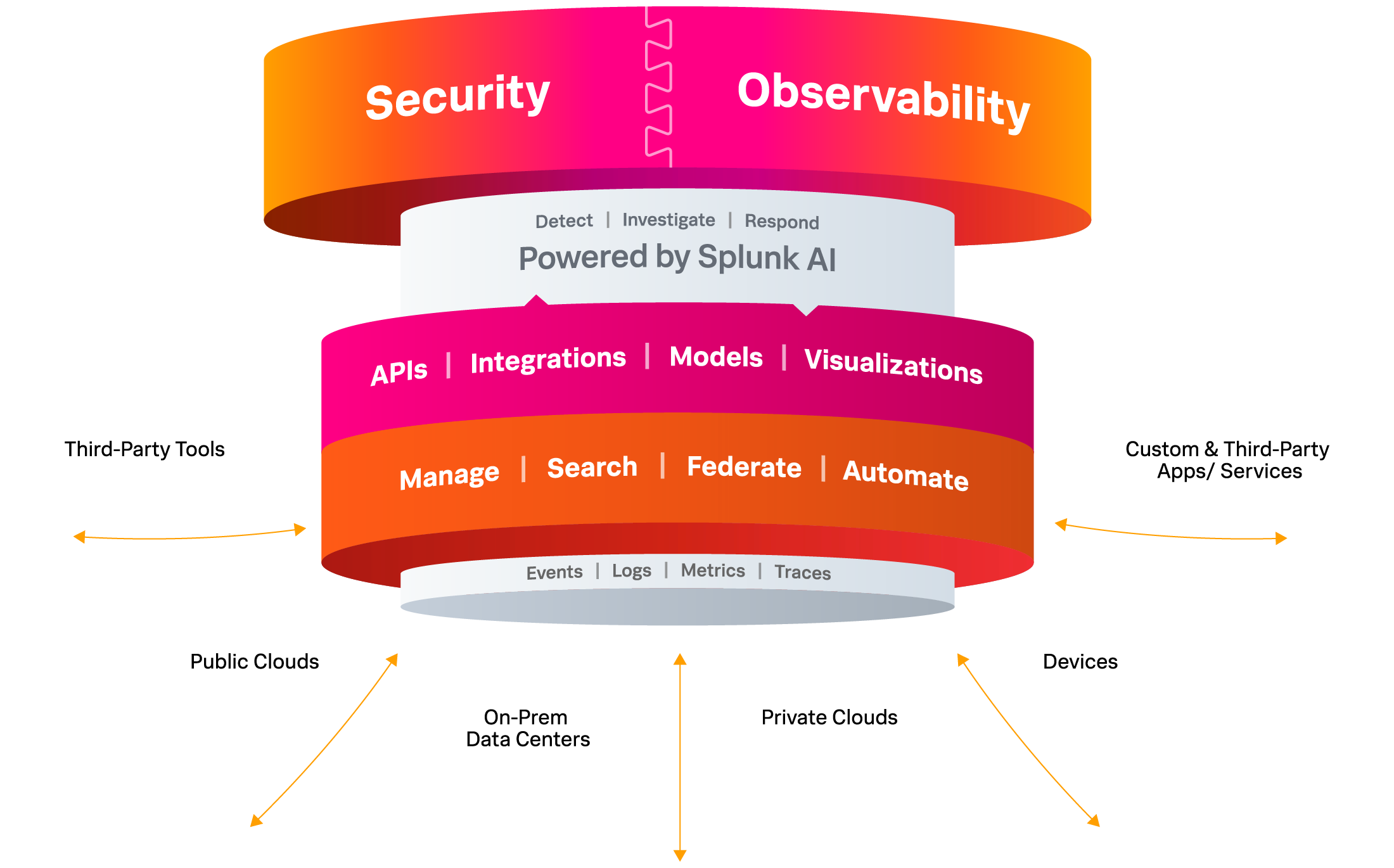
    At its .conf23 conference, Splunk today revealed it added a slew of capabilities to its portfolio of operational analytics tools, including an assistant that leverages generative artificial intelligence (AI) capabilities that use large language models (LLMs) the company developed to enable IT teams to use natural language to invoke the Splunk Processing Language (SPL).

    In addition, Splunk is also previewing OpenTelemetry Collector, an add-on that uses open source agent software being developed by the Cloud Native Computing Foundation (CNCF) to capture metrics and traces. It is designed to enable IT teams to use OpenTelemetry alongside existing agent software that Splunk uses to capture metrics.

    Tom Casey, senior vice president for products and technology at Splunk, said the domain-specific LLMs that the company created enable Splunk Assistant to write or explain customized SPL queries in a way that augments rather than replaces the need for IT professionals. Splunk Assistant is designed to surface recommendations to optimize IT environments to reduce toil rather than automate entire processes, he noted.

    Splunk is adding other tools infused with machine learning algorithms to its portfolio. These include the Splunk App for Anomaly Detection and an Outlier Exclusion for Adaptive Thresholding to detect and omit abnormal data points that has been added to version 4.17 of the Splunk IT Service Intelligence platform.

    In addition, Splunk is previewing an ML-Assisted Thresholding tool for Splunk IT Service that uses historical data and patterns to create dynamic thresholds with a single click.

    The company is making available a 5.4 update to the Splunk Machine Learning Toolkit (MLTK) 5.4 and a Splunk App for Data Science and Deep Learning (DSDL) 5.1 toolkit that provides access to additional data science tools that can extend MLTK to enable organizations to build their own custom LLMs and AI assistants.

    Finally, Splunk added Unified Identity to make it simpler to access Splunk Cloud Platform and Splunk Observability Cloud along with an update to Splunk Cloud Platform and Splunk Enterprise that make it simpler to ingest, route, search and export data.

    It’s still early days as far as the application of generative AI is concerned, but it’s already clear that the way IT is managed is about to be transformed. Coupled with tools such as OpenTelemetry that make it less expensive to collect massive amounts of data, the opportunity to train LLMs that streamline a wide range of processes is immense. Those capabilities won’t replace the need for humans to manage those processes, but they will most certainly cause staff realignments as many manual tasks become increasingly automated.

    In fact, it’s hard to imagine an IT team that would not want to take advantage of AI capabilities to simplify the management of complex IT environments that now function at a level of scale that few IT professionals can successfully manage on their own. One way or another, AI is going to be broadly applied to IT workflows. The only thing left to be seen now is the ultimate impact.

  • State of API Report Highlights Productization and Generative AI

    State of API Report Highlights Productization and Generative AI

    In today’s software landscape, an API-first strategy is increasingly popular. It’s the bedrock of how applications are built and connected. APIs help promote internal tech reusability, helping developers do more with less. Due to this increasing API reliance, maintaining quality control is increasingly important for internal and partner integrations and ensuring the reliability and security of these connections remains a top priority.

    Due to the rising API ubiquity, nearly half of the total development energy is spent working with APIs. And to continually improve these interfaces, taking a product mindset is proving helpful. In fact, 60% of API developers now view their APIs as products. Generative AI has also shown incredible promise and is now being used in tandem with traditional tools to increase API code quality.

    Postman recently released its fifth annual State of the API Report. The 2023 edition, which surveyed thousands of developers and API professionals, found subtle changes in tooling preferences and styles. It also sheds light on the ongoing API productization movement and API developers’ use of generative AI. Below, I’ll focus on these two key areas and review the report for its other key takeaways.

    API Productization is Hot

    The majority of API developers now view their API as a product, and this figure rises to 68% in large companies. A full 65% of respondents said their API generates revenue, too. This news is significant, as it demonstrates the industry is maturing its view of APIs. They are no longer offshoot developer toys but fully functional services contributing to overall business growth.

    But how much growth? Well, of those monetizing APIs, 43% now say APIs generate a quarter of company revenue. For some companies, APIs generated more than 75% of total revenue! There also appears to be a parallel between API revenue generation and large companies.

    Do you view your APIs as products? Most developers say "yes."
    Do you view your APIs as products? Most developers say yes.

    Other industry reports unearthed similar API productization potential. Rapid’s 2022 State of APIs report found that 42.6% of organizations are now monetizing APIs. And investment into API-first products remains strong even amidst a broader contracted tech investment climate. These findings come as social media giants like Reddit and Twitter attempt to monetize their APIs.

    That said, for 28% of companies, API revenue still equates to less than 10% of total revenue. APIs still don’t get the lion’s share, perhaps because they’re packaged with an existing platform or because of the many other indirect ways APIs might benefit the business. Furthermore, consumers are becoming more cost-conscious, as 60% cite pricing as a factor before integrating with an API. Still, the numbers are significant firsts for the burgeoning economy.

    Most API Developers are Using Generative AI

    Generative AI interfaces like ChatGPT and Bard have certainly taken the tech industry by storm due to their ability to generate code snippets, debug code and more. And for the first time, the State of the API Report spotlighted generative AI and its use within the API economy.

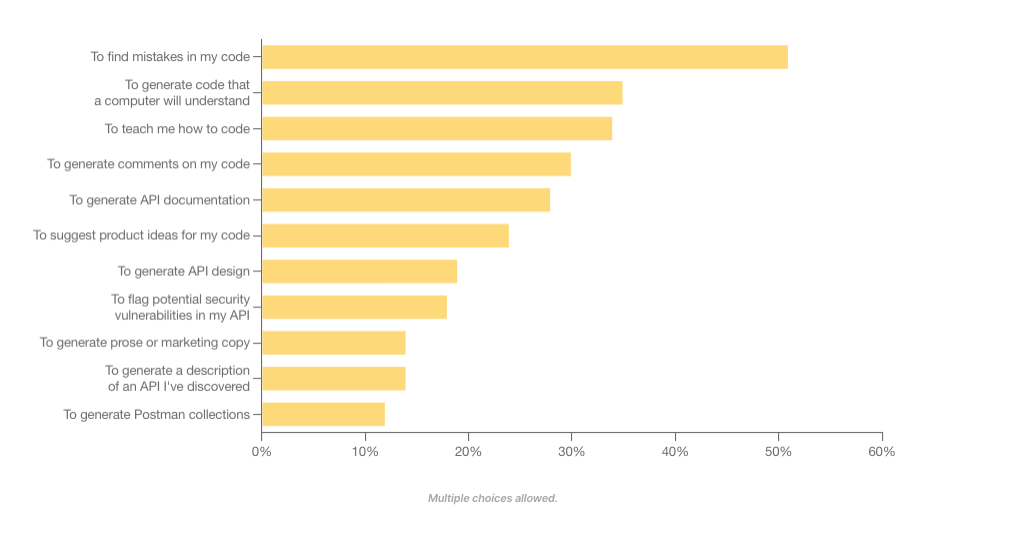
    Today, 60% of API professionals are using generative AI on the job. API engineers commonly use generative AI to find mistakes in code, generate machine-readable code and increase learnability around their programs. Some even use generative AI to suggest potential security flaws in their APIs.

    Compared with other app development endeavors, developers are by far most excited about building generative AI-powered applications in the year ahead. Yet, the efficiency gains are modest—many engineers forecast productivity improvements of 10% to 25%.

    How are API developers using generative AI in their work?
    How are API developers using generative AI in their work?

    Generative AI is set to accelerate many areas, including DevOps and API operations. Yet, contrary to some headlines, generative AI can’t automate all aspects of the software development life cycle. Rather, the technology is more likely to augment the API developer’s workflow than replace the need for seasoned professionals altogether.

    Other Key Takeaways

    Similar to last year’s report, integrating between internal applications, programs or systems remains a top concern for integrating an API or producing an API. The good news is that these integrations continue to increase in quality.

    The report found that deployment failures and times-to-recovery are improving on average. More than half (56%) of respondents said API security incidents occur less than once a year within their organization. This shouldn’t overshadow the significant impact API security breaches can have but signals that DevSecOps is beginning to respond to persistent API vulnerabilities.

    There are more API-first leaders than ever before. And API owners continue to evolve how their services are built and deployed. For example, REST is still by far the most common API style, used by 86% of developers. Webhooks made second place at 36%. However, GraphQL rose in usage, bumping SOAP into fourth position.

    SOAP slips on API architectural styles
    REST is still the dominant style, but GraphQL makes gains as SOAP slips.

    Other Quick API Factoids

    • More non-developers are becoming interested in APIs, as evidenced by 53% of survey takers being non-developers.
    • Most APIs are private—61% percent of businesses’ APIs are for internal use only.
    • After the technology group, business/IT services, financial services and health care are the most common sectors to adopt APIs.
    • Microservices is still the dominant architectural style of APIs, at 42%.
    • Performance, security and reliability are the top factors evaluated when integrating with a new API.
    • Improper authentication, authorization or access control is the most commonly cited API risk.
    • Common API tools include Postman, SwaggerHub, Datadog, SoapUI and Insomnia. Top gateway and API management platforms include AWS API Gateway, Azure API Management, Apigee and Kong.
    • JSON Schema is by far the most popular API specification.
    • The financial industry is a leader in API-first strategies—32% of respondents spend more than 20 hours a week working with APIs.
    • Most developers deploy APIs to production once a week to once a month.
    • When developers leave a company, their departure can cause outdated documentation, zombie APIs and a loss of institutional memory.

    API Obstacles Remain

    Looking to the future, investment in APIs is projected to climb. In fact, 92% of developers said their organization plans to invest the same or more time and resources into APIs in the coming year. Yet, some obstacles remain—a lack of documentation and poor service discoverability are still prominent roadblocks to API consumption. Furthermore, a lack of time and talent are major concerns that might stunt API development.

    The Postman State of API Report surveyed over 40,000 developers and API professionals, making it the largest study conducted on APIs to date. It should be noted that, given Postman’s specific focus in the market and its surveyed pool, figures may be skewed to represent increased API enthusiasm. For deeper insights, you can read the entire report here.

  • Is ChatGPT Helping or Hurting Your Developers’ Productivity?

    Is ChatGPT Helping or Hurting Your Developers’ Productivity?

    ChatGPT’s ability to translate natural language into working code has sparked tremendous interest in the programming community. Developers are exploring ways to use ChatGPT to reduce redundant tasks, from creating code snippets to analyzing and debugging programs. This also allows them to focus on more complex tasks like data analysis and monitoring with the help of a strong full-stack observability platform. Despite ChatGPT’s impressive capabilities, developers and their employers are split on whether the AI chatbot significantly boosts developer productivity.

    We will explore how to use ChatGPT to benefit your developers’ productivity and go over the advantages and disadvantages of ChatGPT to help you make the right decision for your business.

    How to use ChatGPT for Better Productivity

    ChatGPT has quickly become the most popular intelligence chatbot, with over a million user signups in its first five days and over 100 million in the first two months. Here are a few ways ChatGPT, developed by OpenAI, can help boost productivity in your organization.

    Improve Their Code
    Sometimes manually written code snippets consume additional CPU resources. Using ChatGPT, developers can optimize their functions for better performance. Additionally, ChatGPT can also write test cases and spot security vulnerabilities in their code, helping developers work faster.

    Simplify Documentation
    ChatGPT can give a simple explanation for the layman, avoiding technical jargon to a large extent. For instance, a developer at Twitter fed ChatGPT their code and it responded with a pretty detailed explanation. Using ChatGPT to generate the first draft of a company’s internal documentation would make knowledge transfers easier. New hires could quickly get up to speed on the company’s codebase. Further, ChatGPT could also be used for external-facing documents where other developers can learn how to use the company’s APIs and frameworks.

    Test and Understand Code
    ChatGPT can write automated tests for code that is fed into it. Although many developers consider testing boring and stressful—and sometimes a waste of time—it’s a critical step in ensuring that published applications are bug-free.

    With ChatGPT, developers can output reliable, well-tested code much more quickly and easily. ChatGPT can also give high-level and line-by-line explanations of code and even teach developers how to use external modules and APIs in their own code, helping them build much faster.

    Debug Code
    ChatGPT makes a great debugging tool for developers. It can take in error messages and output information on the likely cause of the error and how to fix it. This is typically a lot more time efficient than browsing forums and blogs for a solution.

    The tool can also suggest helpful code alternatives. Many developers claimed that ChatGPT can be much faster and less mentally challenging than the conventional approach of searching the web for a solution.

    As the CEO of Replit, Amjad Masad, put it, “ChatGPT could be a good debugging companion; it not only explains the bug but fixes it and explains the fix.”

    Code Comprehension
    ChatGPT’s terabytes of training data come from various sources, including common crawl and WebText2. This training data makes it easy for ChatGPT to simplify explanations of complex pieces of code for developers. Therefore, developers can save time deciphering any code’s underlying logic and structure.

    For instance, Stanford instructor and well-known developer Matt Harrison used ChatGPT to build a simple graphic design tool. He explained, “I’m using ChatGPT to create a GUI program for drawing lines. I haven’t used QT [a development framework] in years, yet I can throw this together really quickly.”

    Generate Documentation
    Writing code documentation is often considered a mundane task by developers. With ChatGPT, developers can significantly cut down on the amount of time needed for documentation. For instance, they can expedite the creation of troubleshooting guides, tool user manuals and test cases by asking ChatGPT to perform code analysis and generate detailed technical reports. Accelerating this documentation process allows for easier onboarding of new developers and faster product release times.

    Writing Tests
    ChatGPT can analyze code snippets and automate testing for them, saving developers lots of time and helping them output reliable code. Test coverage is an essential metric for most enterprises, and ChatGPT could help streamline the process.

    ChatGPT Disadvantages

    While many developers have praised ChatGPT for increasing developer productivity, others have criticized it as unreliable. Let’s understand some key areas where the tool falls behind.

    Outputting Buggy or Unusable Code
    Developers have complained that the chatbot would sometimes output plausible-looking code that doesn’t work. This might result from misunderstanding the user’s requirements or simply being unable to come up with a correct answer—then faking it.

    Programming Q&A forum Stack Overflow even issued a temporary ban on ChatGPT-generated answers. The ban was because the chatbot generated an influx of answers whose average accuracy was pretty low. ChatGPT sometimes uses nonexistent commands and outdated modules in its code, so while they theoretically might make sense, they don’t work in practice.

    Writing Outdated Code (and Forgetting Previously Written Code)
    Since ChatGPT’s training data cut off in September 2021, the chatbot has no knowledge of the recent developments in programming languages and modules after that. As a result, ChatGPT often needs to use outdated commands, modules and paradigms in its code.

    ChatGPT also occasionally forgets the context within which it is working, affecting code output. Some users have reported that ChatGPT sometimes forgets about the task at hand and begins generating incompatible code.

    Security Concerns
    Security concerns are the biggest drawback to having developers work with ChatGPT. Open AI uses the data users input into ChatGPT to train the underlying AI model.

    Research by cybersecurity firm Cyberhaven has shown that 11% of the data employees input into ChatGPT is confidential. This presents a significant risk, as such data can be used in the chatbot’s next responses. Corporations like JPMorgan and Verizon have even gone as far as to block employees’ access to ChatGPT because of these concerns.

    Lacks Problem-Solving Skills
    A developer’s job is to understand the business problem and develop customized solutions to address it. Although AI/ML tools like ChatGPT help developers code faster, they can’t help in problem-solving or implementing a software application.

    Furthermore, when developers become overly reliant on AI-generated code, they’re discouraged from upskilling on new programming frameworks and languages. This can hurt the organization in ways that might not be evident immediately.

    To ChatGPT or not to ChatGPT

    As Google’s head of developer experience Bret McGowen said, “While AI will transform software development in many ways, human judgment, intuition and creativity will remain essential to building great products.”

    While ChatGPT may not be a perfect solution for every aspect of software development, it can be a useful addition when combined with human problem-solving skills. However, companies should be careful while allowing the usage of AI in day-to-day processes. Guidelines educating in-house developers on the fair usage of AI are a must to protect sensitive information and maintain a high-quality control process.

  • Forking RHEL! Oracle and SUSE Join the Fight ¦ Silverman Sues AI Firms

    Forking RHEL! Oracle and SUSE Join the Fight ¦ Silverman Sues AI Firms

    Welcome to The Long View—where we peruse the news of the week and strip it to the essentials. Let’s work out what really matters.

    This week: SUSE announces a Red Hat Enterprise Linux fork after Oracle said a similar thing, and Sarah Silverman says OpenAI and Meta have stolen her words. (more…)