Tag: devsecops

  • Jit Emerges to Address Cybersecurity Policy-as-Code Orchestration

    Jit Emerges to Address Cybersecurity Policy-as-Code Orchestration

    Jit today emerged from stealth with a free namesake orchestration platform beta that automatically implements security plans as code.

    Aviram Shmueli, chief product officer for Jit, said the company will both make security plans it developed available as code within GitHub. In addition, Jit will make available a service through which customers can submit documents and spreadsheets that Jit will convert into a custom security plan that can be executed as code.

    Fresh from raising $38.5 million in seed funding, Jit is aiming to advance the adoption of DevSecOps best practices by enabling cybersecurity policies to be more easily implemented as code via its orchestration platform, said Shmueli. The Jit platform enables developers and DevOps teams to take advantage of a graphical tool to automatically implement security policies within a DevOps workflow with a single click, he noted.

    The goal is to eliminate the need for separate DevOps teams to create security policies that each would need to individually manage, added Shmueli.

    In theory, DevSecOps best practices require shifting left the responsibility for security toward application development teams. The challenge is that development teams generally don’t have the expertise required to craft effective cybersecurity policies. Jit is making a case for a platform that makes it simpler to automatically implement vetted cybersecurity policies.

    Exactly how far responsibility for application security will shift left remains to be seen. Developers generally prefer to spend as much time as possible creating business logic rather than implementing cybersecurity policies. As such, it’s frequently left to a DevOps team to find a way to consistently implement cybersecurity policies across multiple applications. Each DevOps team will need to decide how much they can rely on the policies defined by Jit versus opting to implement a set of policies defined by their internal cybersecurity teams. The issue that often arises is cybersecurity teams lack programming skills; the only means available to define cybersecurity policies is some type of document or spreadsheet that, one way or another, needs to be converted into code.

    Given the ongoing chronic shortage of cybersecurity expertise, it’s apparent that more efficient methods for sharing cybersecurity best practices are required at a time when application environments continue to both rapidly expand and increase in overall complexity.

    Regardless of the DevSecOps approach, the pressure to address application security is mounting in the wake of a series of high-profile cybersecurity breaches. Organizations of all sizes are now reviewing software supply chains that are increasingly being targeted by cybercriminals. Security policy-as-code tools make it possible to ensure that applications don’t, for example, communicate with an external system without express permission.

    One way or another, the level of application security currently being attained will improve in the months ahead as more mandates are enforced. The only real issue remaining is the amount of disruption to existing processes that will be required to achieve that goal.

  • Why is Security Still in the Way? A Look at DevSecOps Right Now

    Why is Security Still in the Way? A Look at DevSecOps Right Now

    According to industry trend reports for 2022, DevSecOps is now considered to be one of the most effective approaches to building software quickly and securely. This effort, of course, means development, security and operations teams commit to addressing security as early as possible in the software development life cycle (SDLC). The goal of the shift into DevSecOps revolves around the need for more automation, streamlined CI/CD pipelines, less friction among teams and plenty of time for productive innovation. Incorporating DevSecOps practices into an organization unites security, compliance and development issues into a collaborative concern, one that allows DevOps to move fast without jeopardizing code quality. 

    As we approach the middle of 2022, it’s worth looking back and considering why security is still standing in the way of smooth software development. Security vulnerabilities have always been present in the process, and yet these pesky bugs continue to be the biggest threat to software performance. The question is, why?

    The Truth About Security

    Software has always been deployed and shipped with some existing bugs. But as software and services continue to dominate our everyday lives, the reality of this statement continues to plague both businesses and the end user. On some level, software development has yet to evolve into the next phase of security. Code is still rolled out regularly, only to discover security vulnerabilities in production. Some say the way software is developed today actually lends itself to defects, mostly because the pace of work required supersedes best practices around AppSec. 

    While the larger cybersecurity industry—and every DevSecOps team in the world—is striving to make software more secure, many organizations still prioritize speed and productivity over digital risk. This means the state of security (and, to some extent, the DevSecOps world) has become somewhat lopsided, with some enterprises making great efforts while others embrace a more lackadaisical approach. To make matters worse, many professionals today believe there has been a general under-investment in cybersecurity over the past several decades. 

    The Next Phase of DevSecOps

    The shift to remote and hybrid work models has led to mass adoption of cloud technologies and digital transformation, across all sectors and industries. As a result of this evolution, organizations today need to bear in mind that the more services they use, the more digital threats and overall risk they face. As this exposure to vulnerabilities increases, so does the need for new approaches to security. 

    The majority of modern enterprises do, in fact, have a security process in place, as well as other risk management solutions. But with the cybersecurity reckoning of 2021 and the stakes of cloud computing being higher than ever, businesses right now are feeling the pressure to think long and hard about why security still isn’t a guarantee. The trend of slowing down software development to address security more thoroughly, also known as the secret sauce of DevSecOps, is not free from roadblocks—but it is also far from optional. For many organizations, the implementation of DevSecOps practices feels less like security and more like speed bumps that just slow down the shipping of software. 

    Even so, the effort to improve security is happening now. Organizations do not need several solution platforms or tools to get started. They can begin right away; evolving their security tools and practices as they grow the business. With this growth comes one of security’s biggest challenges—scalability. Because toolchains across the cloud have become more and more complicated, setting policies and/or workflows in one tool is challenging. While these issues can be largely addressed by the adoption of an end-to-end security solution, organizations must continue to focus on strengthening supply chains, improving security oversight, and bolstering their approach to DevSecOps. Some ways to make this happen include:

    • Making sure CI/CD pipelines are integrated with DAST and SAST testing in development
    • Ensuring developers and DevOps teams complete vulnerability scanning before commit or merge, as they write code
    • Minimize manual security as much as possible with automated AI/ML tools to support more effective scanning and monitoring
    • Invest in management solutions that improve security in a multi-cloud environment

    Addressing the Supply Chain

    According to an industry survey, 60% of companies have decided securing the software supply chain should be a top priority for 2022. When we think about software supply chain attacks, we need to think about better controls to validate its integrity through all stages of the SDLC. Obviously, DevOps and automation have provided considerable help in this area; however, they cannot pull all the weight of security without proper governance and guardrails. 

    With a secure supply chain comes better security, as well as compliance, privacy and transparency. When a supply chain is secure, it can automatically enforce policy requirements for things like instrumentation, testing and architecture. As a result, software development and deployment become a repeatable process that is also reliable. Teams across the organization can rest assured that the products and services they are building comply with security expectations, such as validating code before production with static analysis and scanning tools. 

  • When DevOps-as-a-Service (DaaS) Meets Security

    When DevOps-as-a-Service (DaaS) Meets Security

    One of the most recent IT methodologies to be offered as a service is DevOps, a cultural and practical approach that brings development and operations teams together under one umbrella of work. DevOps-as-a-Service (DaaS) ensures that everything related to the selection, management and maintenance of DevOps tools and infrastructure, including all policies and procedures, are addressed through a centralized team who are able to provide this service to development teams across the organization. 

    From a 30,000-foot view, DaaS represents DevOps capabilities made accessible to practitioners through portals and APIs. Because DevOps capabilities vary among organizations, there is no standardization of these services. For the business, DaaS enhances competition. Application users and developers find DaaS improves overall software development, while specialized DaaS teams say it improves the management of DevOps capabilities.

    What Are the Other Benefits of DaaS?

    DaaS offers many benefits, especially to development teams who no longer want to spend all their time configuring and deploying the necessary security tools to run DevOps pipelines. This means it’s no longer necessary to understand all the differences between DevOps tools and the underlying infrastructure, as the appropriate tools and technologies are automatically deployed for development teams. As a result, developers are able to focus their efforts on creating innovative software at the speed of business. 

    Further, Daas delivers clear business and operational benefits in the form of a more streamlined process for facilitating DevOps across the enterprise. Daas supports governance while also enabling centralized oversight and visibility into development workloads and productivity. As we know, this shift leads to increased accountability among teams and an overall optimization of business processes. Add on resource efficiency and cost savings through tool selection, and it’s easy to see why DaaS has found a home in the world of software development. 

    But despite the benefits, Daas also presents new security challenges that can’t be fully addressed by traditional management solutions. These approaches are often sluggish, expensive, and/or incredibly complex to manage.

    What About Security and DevSecOps?

    Because the principles of DevSecOps proactively address the risks and threats associated with DevOps processes, it has seen rapid adoption in recent years. By integrating AppSec tools and strategies within a DevOps pipeline, developers are able to find and fix security vulnerabilities earlier within the software life cycle—not after the fact. This ability is what allows developers to generate secure and high quality software from the beginning, while also preventing any deployment delays stemming from last-minute security checks in production. With DevSecOps processes in place, AppSec testing becomes seamless and transparent for developers, who need a frictionless experience to facilitate steady and reliable software development and deployment. 

    DevSecOps is a  natural fit for the as-a-service delivery model. Similar to DevOps, AppSec involves various tools, policies and processes that demand a certain degree of professional expertise—not to mention the time and resources it takes to to select, maintain, and deploy them to drive DevSecOps practices. Security and development teams looking to  implement and manage DevSecOps can reap major benefits from a centrally defined and managed process, to be administered by a specialist team and delivered “as a service” to those in charge of DaaS.

    Standardizing AppSec through a DevSecOps-as-a-Service offering would guarantee security is applied evenly across all DevOps activity, thereby allowing businesses to produce secure and high-quality software consistently while also supporting AppSec compliance demands. This shift also establishes a foundation where a holistic and homogenous view of AppSec can be found, one that is critical to the assessment and management of application and business risk. 

    Developing DaaS Metrics

    First, don’t try to boil the ocean by measuring all applications at the same time. Instead, choose an application that’s supported by DaaS processes and appoint a specialized team to develop metrics for the application. This team can look many ways—but would likely include stakeholders, developers and other DaaS-supporting roles. Service-level indicators (SLIs) and service-level objectives (SLOs) are also baked into this model, which are chosen to best suit the requirements of an individual application. 

    Once the most valued SLOs of DaaS are determined, the service can be tailored to identify the most critical SLIs. With this knowledge, things like instrumentation, telemetry and analysis requirements can be identified and used to design alerts, dashboards, analyzers and more. Next, setting up policies and procedures around accountability establishes a complete solution. And once the solution for the chosen application is tested, confidence kicks in and creates an easier process for adapting and expanding the process around other applications. 

    This means DaaS can provide many key capabilities to both the organization and the teams who rely on them. A specialized DaaS team can then figure out the best metrics for larger implementation on any application. As a result, SLOs can be evolved for other future applications, to be used as a baseline for future improvements. 


  • Orca Security Adds CLI to Improve Cloud Security

    Orca Security Adds CLI to Improve Cloud Security

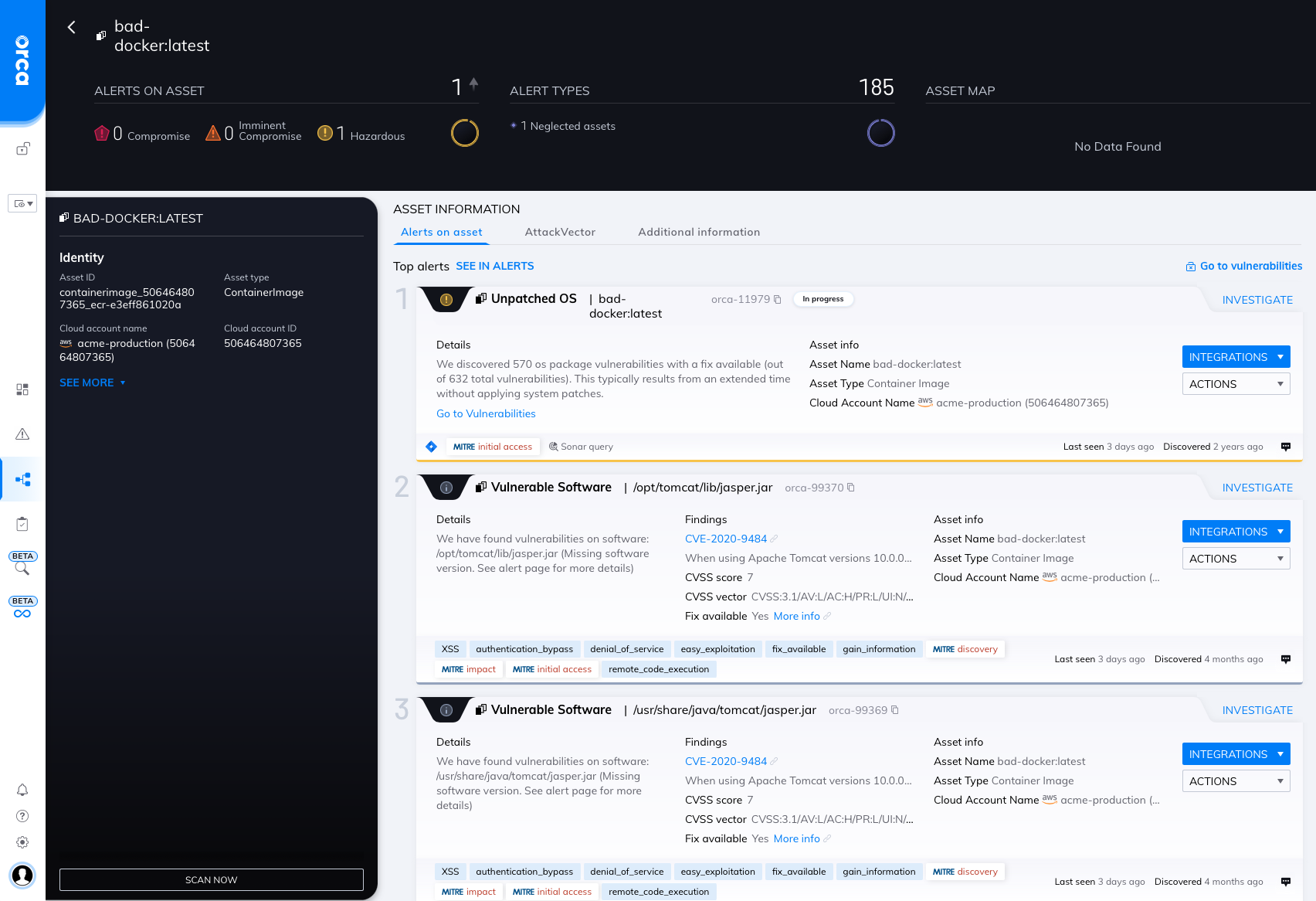
    Orca Security has extended its cloud security platform via a command-line interface (CLI) that makes it simpler to integrate with a wide range of DevOps tools.

    Rather than relying on agents, the Orca Security platform creates a risk profile using read-only access to block storage accessed via a runtime hosted on Amazon Web Services (AWS), Microsoft Azure or Google Cloud Platform. That approach, dubbed SideScanning, eliminates the need for DevOps teams to deploy and maintain agent software to ensure cloud security.

    The platform then scans both workloads and cloud configuration metadata to build a map of risks that better enables DevOps teams to prioritize cloud security efforts.

    Orca Security CEO Avi Shua said the CLI will now make it easier to shift responsibility for cloud security further left toward developers and the DevOps teams that support them by making it easier to scan for vulnerabilities with the context of a larger set of DevSecOps best practices.

    Cloud security remains a major challenge because infrastructure is often provisioned by developers that have little to no security expertise. It’s almost inevitable that mistakes will be made. Orca Security is making a case for a tool that enables organizations to identify those security issues without deploying additional agent software across a wide area network.

    The challenge, of course, is determining how far left to shift responsibility for application security. Even when alerted to a security issue, many developers may not fully appreciate the severity of that issue, noted Shua. Many developers also assume their cloud service provider is providing a level of security that they actually don’t. It’s the responsibility of the entity deploying the application to secure it and the associated configurations used to deploy it. Integrating a cloud security tool within a DevOps workflow becomes critical because it enables more members of a DevOps team to evaluate potential risk to the business as the application is being built rather than after it’s running in a production environment, he added.

    Many existing DevSecOps tools don’t provide enough context; all they do is provide static analysis of the code that’s been deployed, Shua noted. Developers need to have a deeper understanding of which issues represent a level of risk that requires their immediate attention, he said.

    There is, of course, more focus than ever on cloud security as more organizations review how their software supply chains are constructed in the wake of a series of high-profile cybersecurity breaches. Many are discovering that the level of security visibility they have into cloud computing environments is limited, at best.

    It’s not likely security concerns will slow down the rate at which applications are now being deployed in the cloud. Instead, the challenge is better understanding how to secure those applications using substantially different tools and processes than those used to secure applications within an on-premises IT environment.

  • The APIs You Really Don’t Know About

    The APIs You Really Don’t Know About

    A few years ago, we were rightly warned about the amount of exposure our APIs created. A massive attack surface that often used “security by obscurity” as its primary method of protection. We’ve come a long way since then, building secrets, tokens, RBAC and even more into our API interfaces.

    We’re still behind in getting comprehensive lists of APIs, but this bit is getting better as time moves on. Increasingly, both API management and DevSecOps markets are helping to catalog new APIs, and both the API management and application and API protection markets are helping to protect APIs that are unknown by tracking calls moving through the network. By using proxies, it is relatively easy to capture calls to APIs and report the list of APIs (and sometimes much more; about parameters and data transport, for example) to security or operations staff.

    In summary. the API management and security market has been doing great work, searching out the various APIs that are active in our systems, and cataloging new APIs as they are created. This gives us a comfortable and complete look at our current API environment and how it is protected. Most of these tools help protect what isn’t currently well protected.

    If only that really were all of the APIs in our networks. Unfortunately, that’s not the case. Because the ones not in this “complete list” can be the most insidious. As always, it is what you don’t know that poses the biggest risk.

    You see, there are APIs that are not currently maintained and are not currently actively accessed. Say you have an application that you installed from a third party—open source or purchased, either one—and then stopped accessing. Well, it is still sitting out there. The APIs are available—not necessarily documented and not necessarily secured. For security staff, this is how nightmares begin.

    Historically, we could count on these interfaces to be private. Those days are long gone in the hybrid environment. They might be private, but the definition of “private” is much looser than it has historically been and if there is a route from the internet to the API, it’s not private, and for well-known applications, is a time-bomb.

    This is another reason to clear out old versions and/or redundant installations of things like web servers and databases. Don’t make excuses—just upgrade them to the most recent version or remove them entirely. You can do this by merging what they do with a newer/better-protected installation or by just stopping them and fixing the apps that this impacts. “Turn it off and see what breaks” is admittedly a risky step, but sometimes will prove necessary to lock down the environment. If you don’t know what is using it, I’d argue your security risks are larger than an unprotected API hanging about, but that’s a topic for another blog.

    Meanwhile, keep rocking it. There is so much in your purview that we have to discuss what you don’t know about in the domain you are the specialist in. That’s not a weakness in you, that’s a statement about how much crap is tossed on your plate while making the org more competitive. And you’re dealing with it. So smile, keep kicking and lock down the scary bits.


  • Why DevSecOps Should Be Top Priority

    Why DevSecOps Should Be Top Priority

    DevOps culture and process are integral to maintaining the pace of cloud-native software development for organizations, especially when code deployments might take place many times a day. The ability to instantly create, populate and scale cloud applications and infrastructure, often automated through code, allows enormous agility and incredible speed. But moving this quickly means security is often left in the dust.

    The reality is many organizations still haven’t come to grips with how to properly secure the cloud. A lack of cloud security experience, coupled with legacy security policies that don’t encompass the cloud and a shortage of cybersecurity expertise relevant to cloud environments, presents a challenge. And cybercriminals are moving quickly to exploit these gaps: a 2021 report showed that almost half of the more than 2,500 disclosed cloud-related vulnerabilities recorded were disclosed in the last 18 months. 

    Due to the agile nature of cloud technologies, security must be integrated at every stage of the DevOps life cycle—also known as DevSecOps. A DevSecOps mindset is an absolute necessity for any organization that is leveraging the cloud, and requires new security guidelines, policies, practices and tools.

    The Cloud is Vulnerable

    Data breaches are among the most urgent concerns of any organization today. A 2021 report revealed that data breach costs rose from $3.86 million USD in 2020 to $4.24 million USD in 2021. The techniques that adversaries used to infiltrate the cloud differ from on-premises environments. Malware attacks are far less prevalent; instead, attackers exploit misconfigurations and other vulnerabilities.

    Another major concern is that organizations are usually using multi-cloud, which can cause a visibility issue. It can result in cloud workloads and traffic that are not properly monitored, leaving security gaps to be exploited by attackers. Also, DevOps teams tend to provide employees with far more privileges and permissions than needed to perform their job, which increases identity-based threats. According to research, nearly 80% of cyberattacks leveraged identity-based attacks to compromise legitimate credentials. 

    Threat actors will also deploy a variety of attack methods to compromise an organization’s cloud environment. Lateral movement is a common technique that involves threat actors going from the point of entry to the rest of the network (for example, infiltrating an end user or system hosted on-premises and then shifting their access to the cloud). Research showed that adversaries move quickly—in just 98 minutes they can move laterally from a compromised instance to another instance within the victim environment. 

    Alternatively, another way for attackers to profit from cloud vulnerabilities is by installing cryptominers onto a company’s system. Cryptocurrency mining is an activity that requires large amounts of computing power. Threat actors will use compromised cloud accounts to carry out this process and extract as much profit as possible, while simultaneously using up the company’s resources. 

    Shifting Security Left

    Protecting the cloud means securing an increasingly large attack surface that ranges from cloud workloads to virtual servers and other technologies that underpin the cloud environment. Attackers are always looking for soft spots they can exploit, particularly vulnerable cloud applications. With organizations moving to the cloud now more than ever to meet the needs of a remote workforce, opportunities to exploit cloud apps have increased. 

    Traditionally, code is subjected to security as the last phase before release. When vulnerabilities are exposed, either the release is delayed or the development team has to scramble to correct each security issue while the security team has to scramble to check the revisions. For DevOps teams, shifting security left ensures vulnerable code is identified as it is developed rather than in the testing phase, which reduces costs and results in secure cloud apps.

    The concept of shift left security is an essential part of the software development life cycle, and getting it right must be a top priority. By embedding security into the earliest phases of the development process, organizations can achieve DevSecOps and significantly reduce the security concerns around cloud-native software and application development. 

    Effective Cloud Security can Enable DevSecOps 

    Organizations that use DevSecOps tools and practices can build a powerful and secure cloud foundation. Unifying the visibility of multi-cloud environments and continuous intelligent monitoring of all cloud resources are essential in cloud security. That unified visibility must be able to detect misconfigurations, vulnerabilities and security threats while providing actionable insights and automated remediation for developers and DevOps teams. 

    Additionally, it’s essential to have the right security policies in place that enforce cloud security standards to meet (or exceed) industry and government regulations across the entire infrastructure. This includes everything from multi-factor authentication to general security best practices for all employees and robust incident response that ensures the company is prepared for an attack.

    However, the core of any effective cloud security strategy should always be up-to-date threat intelligence. Adversaries are constantly finding new ways to target the cloud and search for any weaknesses they can exploit. Having the latest data about threat actors and their tactics, and then applying it to breach detection is an absolute must. Threat intelligence enables security teams to anticipate threats and prioritize defense, mitigation and remediation effectively to preempt them. Delivering all this functionality from the cloud and for the cloud through DevSecOps provides organizations with the prevention, detection, visibility and response capabilities they need to beat attackers.

  • Competing Priorities Prevent Devs From Creating Secure Code

    Competing Priorities Prevent Devs From Creating Secure Code

    The recently released Secure Code Warrior State of Developer-Driven Security Survey revealed that developers continue to wrestle with secure coding practices in a working environment that has long prioritized features and functionality and speed at the expense of security. 

    Of the more than 1,200 developers who took part in the survey, only 14% named security as their top priority. Security was seen as a bottleneck—an astonishing 67% of these developers said they routinely left known vulnerabilities and exploits in their code and 48% shipped products with known vulnerabilities.

    These statistics raise eyebrows, sure, but they are also unsurprising. In the survey, application security fell behind creating quality code, application performance and the ability to solve real-world problems on the list of developers’ priorities.

    In many cases, these results showed that security is either ignored in favor of meeting demanding timelines, developers would rather improve an application’s performance or they simply lack the required training to fix security problems. Regardless of the reason, it is a continuing problem.

    The Need to Balance Security in Development

    As the survey showed, developers often worked with secure code in silos. Security controls were limited to a single category instead of a holistic view of fundamentals. In many cases, developers relied on existing or pre-approved code rather than writing new code free from vulnerabilities. This assumed that the code inserted meets proper security needs, but that assumption often fell short.

    That said, developers who write code often find themselves inadvertently introducing vulnerabilities. This is not entirely the fault of those developers, but some of the blame lies with the cultural risk acceptance of the organization.

    The software organizations themselves must put more onus on secure development. As we saw from the SolarWinds attack, deficiencies in code can lead to massive disruptions. While not all application vulnerabilities have the reach of SolarWinds, businesses often allow for too much risk to pass in their code; that gets passed on to customers and developers are made the scapegoats.

    Provide Developers With the Right Skills

    Security leaders must first ensure developers have the requisite skills to code securely and to make improvements. That includes not just writing the code but also how code is committed through the entire development process. Developers often need hands-on training in proper coding patterns created in the languages and frameworks they commonly use.

    Organizations can no longer overlook security and ship potentially exploitable software. Security must be added earlier in the development process and be seen as imperative to success. The survey showed that many developers believe secure coding is out of their realm of expertise. A staggering 86% said they found it challenging to practice secure coding, while 92% of developer managers said their teams needed more training in security frameworks.

    This highlighted that developers do not get the right kind of training—nor are they get enough exposure to security best practices. It also underscores that designing for security is not seen as an essential skill for developers to have.

    Reasons for Optimism

    While our survey highlighted a disturbing trend, it also offered reasons for hope. The survey showed that attitudes have changed, and 66% of developers expected security to become a more significant priority over the next 12 to 18 months. Hiring managers echoed this sentiment—82% expressed an interest in hiring developers who are knowledgeable in security over those who are not.

    Businesses today have put themselves and their customers in a risky situation; organizational leaders must be agents of change to mitigate this risk. They need to apply a security-first mindset and empower their developers to better integrate security into the development process. Timelines must be revised to allow this to happen. If it continues, the current state of application security will only lead to more (and more severe) breaches. Now is the time to ensure DevOps teams and developers have better access to security training and more time to put those practices into action to ensure long term success. 

  • DevOps and Hybrid Cloud: Life in the Fast Lane?

    DevOps and Hybrid Cloud: Life in the Fast Lane?

    Scream if you want to go faster! When it comes to a dual hybrid-cloud-and-DevOps rollout, most organizations would admit they’re eager to get going a little bit faster. But what started so enthusiastically can turn to frustration (and a different kind of screaming starts) when they’ve accelerated into this major transformation without considering all the necessary elements.

    The benefits are clear. Hybrid cloud backed up by DevOps is an efficient vehicle for change. A robust DevOps platform can be a make-or-break factor in developing a hybrid cloud strategy that goes the distance. Together, they are a force for transformation, and if organizations aren’t already implementing both DevOps and hybrid cloud, they should be asking themselves why not.

    It is true that the move to hybrid cloud is a different journey for cloud-enabled organizations than it is for cloud-native ones. The trip is harder for cloud-enabled, particularly for larger enterprises. Increased release frequency requires tighter alignment and collaboration than is traditionally seen between lines of business, development and IT operations, and this, in turn, drives the need for enhanced collaboration, automation and information transparency.

    But although the transition might be harder, it must be seen as inevitable. Organizations could wait another year, maybe a little more, but the transformation of technology and business is going to happen—so why not get started? In the first of two articles, I’m going to take a look at what needs to change so that organizations can start living life in the hybrid cloud and DevOps fast lane.

    A Cultural Phenomenon

    As has been covered in these pages in some detail already, the move to hybrid cloud backed by DevOps is doomed to fail if organizations think all they need to worry about is tooling and hiring. It’s not. Underlying both of these transformations is a sweeping cultural change. DevOps is about agility, trust and autonomy, and so is hybrid cloud.

    Most of all, though, DevOps and hybrid cloud are a commitment to enhancing an organization’s developer experience (DevX), and that’s not something that can be achieved with simply a ticketing tool or by adopting a GitOps approach. DevX means autonomous, unbound movement. It means empowerment, user experience and self-service. These are changes that can only happen with a successful change in business culture, not a tool. And this is an important starting point that many organizations are still struggling to understand.

    The People Problem

    People are another well-worn topic, but one that continues to present a major challenge. The cultural transition required to successfully implement DevOps can, theoretically, start with just one person. But for a successful outcome, it actually requires long-term change as deeply-ingrained beliefs are disbanded and tribal loyalties are broken down.

    For instance, many believe that implementing DevOps requires hiring new people. That belief embraces two fallacies: One, that organizations will be able to hire the teams they need and two, that DevOps is just a job title. As we know, a good DevOps team is not hired, it is developed through the melding of development and operations. The old silos, where devs developed and ops operated, is a relic from less-enlightened times.

    Today, it requires learning how to build automation, often open source, while managing on-premises, private and public cloud infrastructure. DevOps is a philosophy that seeks to help others, and with that comes the need for collaboration, encouragement, persuasion and other soft skills.

    Security and Privacy Are not Straightforward

    Moving to a hybrid cloud means that more care needs to be taken with regard to security and privacy. One of the main problems is that it’s no longer enough for security teams to reign from on high. With control moving from the server room to the cloud and from highly-siloed ops engineers to the whole team, security policies also need to change. Competent developers will make the right decisions, but they need the right bottom-up tooling that takes their decisions from theory to reality and safeguards those who aren’t as aware.

    These must be a catalyst to make organizations sit up and take a long look at what security in the age of cloud, containers and microservices really means. If the simultaneous move to DevOps and hybrid cloud is that catalyst, then so be it. Just as DevOps is revolutionizing the way teams approach their work, DevSecOps is going to revolutionize the way they look at security.

    Security shows its face at various stages of infrastructure: When a cloud organization is created and structured; when a vault is integrated to ensure that key passwords are secured and even when a pipeline is launched that triggers dedicated security software. This isn’t an exhaustive list, but it illustrates how organizations need to start taking a methodical, step-by-step look at security in their hybrid cloud.

    What About GitOps?

    Gartner recently found that the average company uses 28 infrastructure tools. That’s simply too many to be handled and understood by one person. Even specialist DevOps engineers can’t be experts in all the cloud providers, OpenStack and VMware. Other studies showed that a developer generally only uses 5% of their Git repositories or an average of five repositories.

    The mistake lots of companies make is thinking that suddenly shifting to using APIs with a GitOps approach is adequate to handle the change to hybrid cloud. It’s not, and can actually be detrimental to DevX. Why? There’s too big a gap—it’s like just doing a long weekly run the day before a marathon. You might start, but you’ll be severely compromising your ability to meet your goal. Even DevOps engineers struggle to maintain a single source of truth and well-maintained reusable repositories.

    The solution is to plan for the long term. It’s not realistic to believe that one or two DevOps engineers can be the saviors of a hybrid cloud approach. There are far too many tools, best practices and options—between Ansible, Terraform, Kubernetes and Concourse CI/CD to name just a few—to be managed by a handful of devs, no matter how talented they are.

    That’s why the true way to hybrid cloud mastery lies in the ability to get the whole tech team pulling in the same direction, collaborating, upskilling and leveraging their strengths to support the parts that make the whole. This might sound like a pipe dream, but there are companies out there talking the talk and walking the walk.

    Start Your Engines

    It is futile to tell an organization exactly how to get started since many are already taking the first steps and every organization’s situation is unique. There is more to cover; in the next installment, I’ll be taking a look at areas like FinOps, automation and cloud waste. Hopefully, you’ll see the fast lane is clear up ahead.

  • DevSecOps Deluge: Choosing the Right Tools

    DevSecOps Deluge: Choosing the Right Tools

    In the last few years, DevSecOps has become the security process of choice for many forward-thinking enterprises. 

    These organizations have come to understand that fixing bugs in the latter stages of product and application development offers no favors to anyone but cybercriminals. So, they have overhauled traditional processes and united development, operations and security teams to form DevSecOps where the teams now work in tandem, cooperating to embed security into the entire process of application and software development.

    The benefits of this are clear; finding and fixing bugs early closes doors on cybercriminals while bringing peace of mind, cost savings and better products to customers. However, one of the challenges many organizations face when transitioning to DevSecOps is making the process seamless, ensuring it doesn’t slow down the software development life cycle, make security checks more cumbersome or cause frustration among teams. 

    Security teams need to ensure their DevSecOps program is delivering value to the culture of the organization while speeding up time-to-fix, capturing the right metrics, and categorizing and prioritizing issues based on their risk so that nothing goes live that could cause major damage.   

    Additionally, they also need to select the correct DevSecOps toolkit to carry out application security testing while ensuring the tools easily integrate into software development and can be used across multiple projects. When identifying tools for testing, DevSecOps teams are often overwhelmed by the huge range and volume available, which makes choosing which ones to use and learning how to use them a minefield, even for those with the right training and know-how. 

    A DevSecOps automation program needs lots of technical tools and cultural aspects to come together to make it work. Security teams need static analysis tools to check the code, third-party library analysis to check the dependencies, separate analysis to check the infrastructure-as-code (IaC) configuration, scanners to check containers for issues, tools to test the running system, cloud security checks and infrastructure testing for patches and ports. They also need to match these tools up to the right technology each team is using and keep up with the constant changes.

    Given all of these complexities, how can DevSecOps teams overcome these challenges and build out an effective DevSecOps program with the correct toolset? 

    Here are some top tips to help them along the way.

    Keep Security Processes Flexible 

    Your teams are going to be using different technology stacks, different languages, frameworks, and so on. If you tie your process too tightly to a few tools, it’ll be harder to slot in new checks when things change. Remember that the aim is a consistent, repeatable security process with the right visibility—the technical tools feed into that, but they are not the whole process. What security checks will you need in 12 months that you don’t have now? What about 36 months? These are questions that must be asked continuously. 

    Automation is Your Friend

    If development pipelines are running smoothly and automatically, then any manual security steps are not going to fit in with the process. Automating security tools together—from orchestrating their running to aggregating their responses and managing issues—will save a lot of time and give you the results you need in line with your releases.

    Keep an Eye On Your ROI

    It’s very common for big-ticket commercial tools to be underused; you have the licenses for repeated testing and you have frequent code drops, but the processes or the integrations mean testing isn’t applied as often as needed or the results take time to collect and process. Explore ways to bring commercial tools easily into the existing processes.

    There’s No Such Thing as a Free Lunch

    The open source community provides great security tools, but remember: There is a cost associated with the time it takes your teams to use them and to manage the outputs. From developers learning how to run them to the time it takes to actually run them or extract the results or manage false positives—these aren’t free. A ‘free’ tool that costs two hours of work every release might not be worth it.

    DevSecOps is All About Collaboration

    Weaving security checks into development processes, CI/CD pipelines, ticketing systems and sprint meetings help security to be part of the development process, but not every developer is—or wants to be—a security expert. Think about how the aims of development and security can meet in the middle. How can developers include security without much effort or thought? How can security help supply the tooling and help triage issues in developer pipelines? How can the process conform to auditors’ tools and with correct profiles, not just turned down to zero to avoid reporting issues? How can security add value at scale to help developers fix issues faster regardless of the tooling being used?

  • Managing Hardcoded Secrets to Shrink Your Attack Surface 

    Managing Hardcoded Secrets to Shrink Your Attack Surface 

    The practice of hardcoding secrets—such as authentication credentials, passwords, API tokens and SSH Keys—as non-encrypted plain text into source code or scripts has been common in software development for many years. It is an easy way to save time and labor, but it is also highly insecure. The issue is that anyone with access to the code also has access to these hardcoded (or embedded) credentials, meaning your code is supremely vulnerable to attack.  

    Of course, today’s DevOps-oriented software development life cycles are all about velocity and efficiency—the goal is to advance and launch products not in weeks or months, but in days or even hours. Anything that might slow that pipeline is to be avoided, which is why hardcoded secrets are not going anywhere. They are going to be with us for many years to come.  

    At the same time, cybersecurity experts are right to be alarmed about the growing problem of secrets sprawl, which occurs when an organization stores secrets in a variety of locations, including source code, text files and spreadsheets. In today’s multi-cloud DevOps environments, it is simple arithmetic: As the number of users grows, your attack surface grows, too, in many cases expanding exponentially. 

    The Right Tools to Manage Secrets

    According to Gartner, “Hard-coded secrets embedded in source code and scattered throughout the DevOps pipeline pose significant risk. Technical professionals responsible for DevSecOps must introduce tools that securely store and manage secrets and enforce access controls without disrupting automated DevOps workflows.”

    What has come to the fore as many organizations have adopted cloud infrastructure, containerization and microservices architecture—especially regarding the software development life cycle (SDLC)—is that conventional technologies for secrets governance and entitlements management are not at all adequate in the cloud. Vault technology for static secrets is a well-understood set of capabilities that has been a cornerstone of cybersecurity best practices for many years. SecOps and DevOps teams realize that they need to adapt vaulting to cloud environments, but progress toward effective cloud secrets governance has been held back by several challenges.

    Just-In-Time For the Cloud 

    First, as noted above, disrupting continuous integration/continuous delivery (CI/CD) processes is not seen as an acceptable practice. DevSecOps teams very much expect to deploy secrets management capabilities without slowing or otherwise impeding the development process and without having to expend additional resources. Yet many standalone vaulting services are cost-prohibitive for most SMBs. Further, in many cases, conventional approaches to secrets management cannot deliver full governance capabilities, including clear visibility and attestation, across multiple vaults or within cross-cloud environments.  

    The good news is that today’s advanced dynamic permissioning platforms incorporate just-in-time (JIT) secrets provisioning capabilities and zero standing privilege (ZSP) enforcement mechanisms and can overcome these obstacles. The automated granting and revocation or expiring of permissions—JIT privilege grants—is highly effective at minimizing attack surfaces. These solutions—increasingly grouped under the banner of cloud infrastructure entitlement management (CIEM)—work based on the concept of zero-trust, which means no one and nothing is trusted with standing access to your cloud accounts and data.  

    With JIT, elevated privileges can extend either for the duration of a session or task, for a set amount of time or when the user checks the profile back in manually. Once the task is complete, those elevated privileges are automatically revoked—all without sysadmin involvement. Where a user previously had standing access privileges potentially extending around the clock for months or years at a time, converting to JIT granting compresses that attack surface to several hours per month.  

    Even better, as cloud-native entities, these solutions can support highly effective secrets governance initiatives for SMBs and enterprises alike. CIOs, engineering managers, CISOs and other IT security officers looking to better protect their multi-cloud DevOps environments should be looking to adopt an automated secrets governance platform that enables them to deliver on these four priorities: Visibility, enforcement, automation and investigation. 

    Visibility 

    Cross-vault visibility into all your secrets, secrets owners and secrets users is a must-have. You need to be aware, at any given time, of every human and machine user that has access to a secret, and you need to be able to uncover and monitor your highest-risk secrets or accounts across vaults.  

    Enforcement 

    You need to be able to enforce your secrets policies across vaults, which necessarily includes the ability to automatically rotate your static secrets across all vaults based on organizational policy. JIT permissioning is key here because it enables users to generate temporary credentials on the fly, and necessarily incorporates the automated granting and expiring or revocation of permissions—JIT privilege grants—which is highly effective at minimizing attack surfaces. 

    Automation 

    You need to be able to manage the identity life cycle for your secrets—preferably through an automated joiner/mover/leaver process. Consider, for example, if several people have access to a shared secret. Sharing accounts is not a best practice from a security standpoint, but it is common (and becoming more so) with the growing use of cloud resources within DevOps organizations. If one of those individuals in the shared secrets group leaves the organization, that permission/privilege then becomes a potential vulnerability. Automated shared secrets rotation that is invoked by policy directly addresses this issue. 

    Investigation 

    Security incidents are an inevitable eventuality in any organization. When an incident occurs—data breach, lost device, ransomware attack—you need to be able to tie secrets back to identities for proactive monitoring and post-incident investigation. Understanding which identities or individuals were exploited—and how—is essential for addressing vulnerabilities or bad practices. Analysis and reporting are also a critical capability for looking into access changes, addressing policy drift and identifying risky behaviors. 

    There’s no question that secrets governance in cloud environments requires rethinking and retooling established vault technologies and best practices for securing static secrets. JIT permissioning and secrets grants based on ZSP precepts provides an effective path forward. Consider that with JIT and ZSP, elevated privileges are circumscribed, and time-limited to minimize the permissioning and privilege threat surface. Taken together, these capabilities can deliver highly effective secrets governance to secure your entire organizations, without slowing or otherwise impacting your DevOps teams.