Tag: DevOps transformation

  • Keys to the Kingdom: Protect Your Server from Hackers

    Keys to the Kingdom: Protect Your Server from Hackers

    Automation and DevOps undeniably improve the agility and responsiveness of IT. Most of us have taken up at least a bit of the wave of automation that DevOps and Agile have brought to our door, and many are far along on their DevOps journey.

    But every once in a while, we need to look back and lend a hand to those still coming. The fact of the matter is that sometimes we forget to warn those who are new to massive automation about some serious issues.

    It is intuitively obvious, if you think about security at all, that putting together a command and control server—we’ll use Ansible in this blog, but any tool that can roll out applications to a collection of servers—creates a big screaming target for any hacker that gets into your infrastructure. You cannot assume that will never happen, so organizations need to think about protective systems/architectures early, or spend more time patching things up. Remember, the more you build, the more weight there is to making major changes.

    For starters, severely limit access to the command and control machine. It belongs on a management subnet/VLAN with only a few access points. The servers it is managing absolutely should not have access back to the command and control server. If they do, any one of them getting controlled will provide a pathway to all of them getting controlled.

    Next up, early on there were quite a few debates/discussions about which user accounts should be able to run command and control scripts (Playbooks in Ansible). Eventually, the bulk of the community settled on each individual running them, not a single generic user with a name like “ansibledeploy.” Some still use a central user, but the majority wants the ability to track down the leak that individuals running commands allow—searching for strange/uncommon command execution in logs will cough up which account got compromised and allow for rapid response—which outweighs centralization.

    Third, learn and use the security features available in your application. Ansible offers Ansible Vault to allow encryption of playbooks. Since many playbooks require root access, encryption allows those playbooks to hide root access. Use of Ansible Vault has grown over time, and there are excellent tutorials out there to help use it to lock down command and control. Your product will have a similar tool, because putting root passwords in plain text, all over the disk, is just not acceptable.

    In the Ansible Galaxy/Github repositories, you can find excellent roles to help in your quest to lock things down. Geerlingguy is one of the most popular, and his Ansible Role – Security is excellent if you follow the caveats he provides in the readme.

    This is simply an advisory, not a step-by-step solution set. Overall, just remember that putting together a command and control server makes a tempting target. And like Geerlingguy points out in his readme, your security is your concern.

    Look at where the server can be accessed from, who can access it, where sensitive data bits such as passwords are stored—hint: plain text passwords in files went out of fashion when mainframes were hooked up to LANs—and how to protect all of the above. It’s been done, there are plenty of resources to help in your given environment. Take the time to look them up and implement relevant suggestions.

    After all, I won’t get a call in the dead of night if your servers are all taken over, you will. Do everything you can to avoid getting that call. And keep rocking. Everyone remote working has made many organizations more susceptible to all forms of attack, don’t let your guard down.

  • EP 6: How to Lead a DevOps Transformation

    EP 6: How to Lead a DevOps Transformation

    Is C-level support required to have a successful digital transformation? In the sixth episode of DevOps Unbound streaming broadcast on TechStrong TV and devopsy.kinsta.cloud’s sister site Digital Anarchist, Mitchell Ashley of ASG and Alan Shimel are joined by Eveline Oehrlich of the DevOps Institute, Louise McCarthy of Bain & Company and Mark Settle, author of “Truth from the Valley, A Practical Primer on IT Management for the Next Decade,” to discuss DevOps and digital transformation at the C level.

    The video is immediately below, followed by the transcript of the conversation. Enjoy!

    Transcript

    Alan Shimel: Hi, everyone. Welcome to another edition of DevOps Unbound. DevOps Unbound is brought to us by our friends at Tricentis. So, thanks for their sponsorship. But, you know, they sponsor but we pick the topics. We pick the guests. And we have a lot of fun here talking about relevant topics around DevOps. Today’s topic centers around DevOps and digital transformation at the C level. And let me introduce you to our panel. First of all, we have Louise McCarthy. And, Louise, I’m gonna ask you to kinda introduce yourself with a little background for our audience.

    Louise McCarthy: Yes. Thank you, Alan, and hi, everybody. I’m Louise McCarthy. My background more recently is doing large, complex digital transformations mainly for the financial services. And mainly through the eyes of the business rather than the technology, although I have held roles as CFO and I’ve held roles COO and CIO as well.

    Shimel: Excellent. Next, we have Mark Settle. Mark, welcome.

    Mark Settle: Thank you. So I am a seven-time CIO and I most recently left Okta about a year ago and have been advising startup companies since then. I’m based here in Silicon Valley. And probably my encounters with DevOps are focused on supporting DevOps communities in terms of infrastructure requirements if they have, and also introducing the concept in actually business application support within a conventional kind of an IT group.

    Shimel: Thank you and welcome. And then Eveline Oehrlich, Eveline, please.

    Eveline Oehrlich: Yes, hello there. Eveline Oehrlich. I’m the chief research director at the DevOps Institute. Before that I spent 13 years as vice president at Forrester Research studying a variety of topics, and DevOps of course was one of them, working with many enterprises and C levels and others to explore the challenges and the fun of DevOps.

    Shimel: Very good. I’ve never heard anyone talk about the fun of DevOps but I’m looking forward to discussing that. And then, last but not least, of course is my cohost here on DevOps Unbound, Mitch Ashley of Accelerated Strategies Group. Mitchell? 

    Mitch Ashley: Good to be here. I’m Mitch Ashley, CEO of Accelerated Strategies. We focus on digital transformation, DevOps, cloud native, and cybersecurity. I’m also a former CIO. Not nearly as experienced as Mark is, but have led transformations and also implementation of DevOps as well as been a CTO, CEO of product companies. So I’ve lived on both sides of DevOps. 

    Shimel: Great. What a great panel we have today. I’m really looking forward to it. So we’re talking about DevOps at the C level. As I mentioned to you all before we started today’s show, our friend Gary Gruver wrote a book, “Leading the Transformation.” He wrote several books. One of ’em was “Leading the Transformation.” And Gary is a big proponent of what he calls the top-down approach to DevOps and digital transformation. And in Gary’s view – and I’m not saying right or wrong. In Gary’s view, you cannot have a successful digital transformation or DevOps transformation without sponsorship, support, air cover, if you will, from the C level, including the CIO or CTO, depending on the organization. CEO, et cetera. 

    Let’s start there. Is C-level support absolutely positively required to have a successful transformation? Anybody?

    [Crosstalk] 

    McCarthy: Do you mind if I go first, Alan?

    Shimel: Sure.

    McCarthy: I would actually say, my recent – I’ve done about five or six transformations and tried all sorts of ways to actually get them going. There’s always blockers on the way and it’s usually the blockers that slows the whole problem down. And the blockers either come from the ground up, from the employees or the people that run the processes today, or you get the blocker in terms of the C-level-suite people who tend to wanna own things, and it’s a big of ego that actually blocks things going that way.

    And the most recent transformation was successfully owned by the C-suite. So they drove it. They owned it. They were the stakeholders. But most of the engagement actually came from the employees, from the process owners. So we ran the whole transformation from the process owners actually owning and identifying where the transformation needs to take place. And that really made it hugely successful because you didn’t have people fearing for their own jobs. ‘Cause with digital transformation it always means or often means that there’s gonna be heads that unfortunately are lost in various areas of the – in the transformation. But mainly doing transactional-type work. But if it’s the transactional people that are running the processes, they highlight their pain points and then we work with them to actually change those pain points into something positive. 

    So, I would arguably say both from top-down, but also if you don’t do it with engagement of the people running the processes today, it won’t work.

    Settle: I’ll chime in. I think I have the same answer but I’m gonna state it in a slightly different way. I think the way the question gets asked, it sounds as if the CTO or the CIO’s gonna come down from the mountain with the DevOps tablets and then ____ employees and team members _____.  “I’ve been converted and now it’s your turn. We’re all gonna go do this together.” [Laughs]. Most of the time that doesn’t work. For one person to come in – well, take an example where a startup company here that’s been reasonably successful. Maybe they get up to a product team of, I don’t know, a generic team of 500 people or something like that. They hire a new chief product officer or a chief technology officer who says, “We’re gonna do this completely different. I have a vision.” Et cetera. Well, they’re gonna do it but that’s gonna be a slog to kinda get there.

    What I’ve seen be more successful is almost like – what’s the right term in a battle when you send the beach guy out? The beach master that’s moving people around. So you really want almost like a fifth column movement down at the grassroots level of people who are genuinely interested in exploring these ____ ways of doing business. And then I think what the C-level person adds are the methodological resources to drive scale. And so many DevOps initiatives fail because they sound interesting; they sound contemporary; people think, “Other people do it so it must be beneficial.” 

    But then after like 18 months, everybody scratches their head; “Where are the benefits? We thought this was gonna be transformational.” It’s not. The technical people are having fun. They’ve developed this new terminology, et cetera. And if you scratch below the surface, well, guess what? You’re doing DevOps in like five different ways because the little C-groups have all picked the tool they wanted and decided that they’re gonna have a daily scrum twice a week or whatever. They’ve got their own little process set up. And then people say, “Where’s the benefit? This was supposed to be transformational.” So at some point in the early stage of the journey, it’s needed to drive scale and ____ of endorsement. But I think it can almost backfire if it’s launched from the brain of Mark Settle that, “Yea, and verily, I’m gonna lead you to the promised land.”

    Shimel: Sort of a Charlton Heston beard I’m picturing on you there, Mark. Eveline, how about you?

    Oehrlich: Yeah. I actually would say it should be outcome-driven DevOps. It doesn’t really matter if it is from the C level, from the individual, from the inside-out, from the outside-in, from the top to the bottom, the bottom to the top, from the middle to the whatever. It needs to be outcome-driven. What I mean by that is: Only metrics will make us change. Just like I drive through my town here – this is a little analogy. I drive through my town. They installed one of those things where they measure the speed and if you go over 50 kmh you get a ticket. Well, my husband, even though that thing has been there for two years, my husband manages to get a ticket every three months. But what he does is he intercepts the mail and then he doesn’t tell me that he has gotten that ticket. 

    So now what I have done to stop those 15-euro tickets every two months – because if you add it up you can go for a nice dinner – I am going to go through the mail before he gets home so I see how many tickets he gets. And he gets little lines. And that metric is on the refrigerator – I should’ve brought a picture of it – and that has actually reduced how he is driving through town.

    And so if you go back to the DevOps teams and the digital transformation and you ask the individuals at C level or VP level or practitioner level, “How successful have you been or what’s the challenges around?” It’s easy to point to somebody. But data, if you have data which shows where you are and it maps to where you want to go and you share that amongst all these different individuals, there is no argument. It’s not the guy with the long beard, as Mark would come in, or it is not somebody at the lowest level who could argue with that. We could huddle around it and figure out: What do we need to do?

    So I think it’s not really about who – of course we do need some individuals who pays for it. We need some kind of a fund and budget and all of that. But I really think it’s outcome-driven rather than organizational-level-driven.

    Settle: Can I just chime in on that one, too? So I would agree 100%. And outside of maybe the CTO or CPO or IT organization, bringing evidence of improved sophistication, operational metrics around the process to almost any other C-level executive – they don’t really care. The CFO – if you show that, I don’t know, the year throughput, the story whatever – in one of my books, it’s like reading a Bible to the cat. The cat will look at you and feign interest. But it has absolutely no idea what you’re talking about. And that’s sorta what you get outside the technical functions, everybody – “But that’s your job. You figure out what needs to get done.”

    And, again to your point, it’s more of a business outcome. Like, are we actually getting customer request enhancements through in greater quantity or are we able to respond to a competitor’s new feature set faster than we did at their last result cycle? Or whatever those things are. That’s what people wanna talk about.

    McCarthy: Yeah. And – [Crosstalk]

    At the end of the day, the outcomes is aligned to the strategy of the organization. So you’ve gotta be doing a transformation for a reason. And there’s usually three or four reasons why you’re doing a transformation. It’s around the customer journey so the customer needs to improve the satisfaction. You’ve gotta costs. You’re trying to grow your revenue. And then the one that’s usually an outliner that’s become ____ at the moment is carbon emissions. So for every one of these paint points that I mentioned earlier, there should be a business case that shows measurement of success against each of those four measures. And that’s what you – bottom-up, you report at top level to the C suite to say, “This is why we’re doing it. This is the measure of success of what we’re doing it.” And even breaking some of the pain points and the business cases down to quick wins. So ones that you can be getting on with relatively quickly that free up cash that then can pay for the more strategy-type things.

    Shimel: Yeah. So I think this brings up – all three of you have touched on it. And it brings up what I think is really sort of an entry question, which is – it’s the genesis of digital transformation. Why and how does any organization decide to go through the potential pain, heartache, and change of digitally transforming, of adopting DevOps or agile? Louise, I’m pretty sure we spoke about this – was it at an Emmet Keeffe Insight IGNITE in Iceland that you were at?

    McCarthy: Yes.

    Shimel: I was there with you and I remember talking to you about this. You know, Eveline, in your day, someone like Mark might go to a Forrester conference and come back and say, “Wow, Eveline Oehrlich from Forrester just presented this presentation study on the benefits of digital transformation and DevOps adoption. And, god darn it, she described us to the T. We really need to do that here.” And maybe that worked then, right, seven years ago, ten years ago? I don’t know if that’s the genesis of digital transformation today. I think a lotta times digital transformation today does start with technical champions lower down whispering in Mark’s ear that, “If we were doing DevOps or agile or whatever, we could really make better customer experiences. We can give customers what they want. We could do it better, cheaper, faster.”

    [Crosstalk] 

    Ashley: I think we have a chasm that we have to cross, and that is: DevOps can be sort of a vanity project for the IT or the development organization, right? It can be a purely self-interest: “We’re doing what we do better.” Which is always a good thing, but at the end of the day does it move the needle for the business? You have to be able to translate that into what Eveline said was the why. Louise also said the why. But what is the real benefit we’re trying to get out of it? And when you have a purpose for doing it, now you have metrics you can put around that. Is it revenue? Is it competitiveness? Is it responsiveness to the market? Is it changing customer expectations and behaviors? What is it? That’s truly – then the development or the IT organization knows that they’re making a difference. 

    Otherwise how do you know whether you should be working on more releases per hour, per day, or you should be working on just fixing the backlog? How do you know? You don’t other than just sort of your own internal metrics. And I guess it kinda reminds me of that phrase of the – what was it? Belly-button gazing, right? You’re sorta looking at yourself and what you think’s important. But I think that connection – you have to cross that chasm, whether the business is coming to you or you have an idea of what we can do better and how it might help, and then let’s then make that connection. 

    Shimel: That’s my point. Someone like Mark – Mark, what does it take to push you over the edge and say, “God darn it, we gotta do this; we’re committed”?

    Settle: Yeah. Let me _____. One thing’s funny about this whole line of conversation is of course, in the world that I live in out here, there’s no question about doing it. It’s like: Who is the most sophisticated – [Crosstalk] or more sophisticated? So, in the war for talent, that same 500-person organization I referenced – they might look at each other and say, “Who do we know at Google or Facebook, in their engineering group? We know we should be doing this better. We’ve kind of played around with the concept. We’ve hired some lower-level people who’ve said, “You guys are just behind the times here. So we need some real leadership inserted.” So that’s the other side of the coin. In parts of the country where maybe it’s like an accepted practice, there’s almost a competition to be the most sophisticated or get the most benefit. 

    But the spark plug, the question you’ve asked – I’m thinking about some second-tier markets – and I really hate to call out specific locales, but what the hell? As a consultant, you can talk like that. So if you’re in a place like St. Louis and you’re in an organization that just has done business the same way forever, all the IT management, all the technical management has come up through the ranks kinda doing things the old-fashioned way, quarterly releases, and they don’t keep the same kinda metrics that you would in a DevOps environment, to blow a place like that up – there’d have to be some kind of competitive imperative.

    Or, you know, the white knight does show up from time to time, right? So if you think about it, sometimes when the new CPO or the CTO comes in – and I’ve experienced this in my own career – there’ll be a cause or a initiative that I promoted during my entire tenure – the new guy or gal comes in and they get it done like in a year. And I think, “What the heck happened here?” 

    There was one company where I was trying to get them off of Microsoft Dynamics, get ’em onto Salesforce. There was another company, I was trying to get production systems up into the cloud. And we did every kinda seed activity you can imagine. The cloud one, we sent people up to Redmond for some AWS instruction. We did some prototyping, et cetera. New CIO comes in and says, “We’re going to the cloud,” 12 months later like half the production systems are in the cloud. Like, “How did that happen?”

    So sometimes change at the top – which gets us back to where this kinda started – maybe that is the seminal spark plug. And especially if that person’s been brought in because there’s a broader C-level recognition that, “We’re not keeping up with the times; we need to make some kinda change.” So you have that broader support. When people start to whine, they know that the whining’s not gonna get them out of the change that’s about to come. 

    But for just self-generated change for people that’ve – then I go back to, you know, Mitch, where you said: then you can always have a vanity project which you can point to as evolutionary. Like: “We’ve got a small group. They’re putting their toe in the water. They’re doing some interesting things. So we are keeping up with the times.” But then you just don’t get the scale benefits at the end of the day. 

    Oehrlich: I think there was – just to add to something to what Mark said, as the ecosystem of our organizations has expanded, we have to think of – well, the travel industry doesn’t exist at this point in time, but think of maybe manufacturing, right? In the area where I am in, I’m in Stuttgart, we have large car manufacturers, and they’re connected to Bosch and others, and the ecosystem is rather broad. And these folks at all levels are collaborating, connecting. Not as much now with where we are, but they have exchanged thoughts and ideas, they go to events, and they learn from each other. At all the different levels. And so I think there is that – as Mark said, to some extent there is this – not really a competition, but the exchange of ideas, which has brought additional adoption of DevOps at all levels, right? 

    So if I am the C level of Bosch and I go to a genomic car-driving event and I meet the CF C level of the CF industry down in Friedrichshafen and they are telling me about, “Wow, we really improved our reliability scores and we have really punched up our cadence around the product X, Y, and Z,” I go back and I say to my team, “Hey, I just met this team over there. They’re doing something fantastic. Can we start?” It’s that spark, which to some extent happens to cross over in this ecosystem as we start to be much more connected and dependent. I think that’s one point.

    The other one is: if you look at the individuals who are today in IT, they don’t look like this anymore. I’m a Cobol, Pascal, HP 3000, JCL person. That’s when I grew up. That’s my heritage in operations. The guys and the girls today in these teams – they are completely different. They want Python. They wanna do sexy things. They wanna do fun things. They wanna show what they can do. And they’re looking for inspirations from their leaders as well, and they want to see that they can make a difference. I think that is also, from a cultural perspective, I think – of course it’s important but I think that’s also a driving force. And that’s not just the individual contributors but also the consultants and the C levels who are – I call them the flip-flop-wearing, chino-looking guys who go to the conferences, which we’re seeing them; I’m like, “Oh, I think I’m overdressed with my suit.” That’s the people who actually make DevOps happen, and they wanna have fun. They wanna do things. They don’t wanna do JCL and things like I did in a boring ops group dying of boredom.

    Ashley: I think you’re talking about a couple of things, Eveline. One is the attracting talent, right? People have more selection, economic conditions aside, more selectivity about the kind of work that they wanna do, the companies that they wanna work for. There’s also just: how do you learn to develop software? If DevOps is what you’re coming into, a way of developing software, you’re looking for organizations and you expect that approach. So I think your point is right on. It’s also the audience of the people who are gonna be the adopters or the embracers or the champions of doing this. So that all makes a big difference. The command from on high, as Mark was talking about, the tablets – there’s an expression for that: “This too shall pass,” right? That’s the reaction, usually, of those kinds of initiatives. You have to have an option. And I think you spoke to that really well.

    Shimel: Look, if you’re a Silicon Valley cool kid or you work at one of these organizations where flip-flops and jeans are the rule and you do the hair thing and all of that – I don’t do that so well anymore – that’s cool. But, Louise, you’ve done transformations at what we may think of as large, stodgy financial organizations, right? And they’re not Silicon Valley-based and they’re not a jeans and flip-flop culture. So how does it play there?

    McCarthy: Actually, funny you were talking about flip-flops, high fives and cappuccino. I worked in government actually for a little while, the tax authority, and that was a time when the government was setting up its ____ global digital authority. And everybody in the government, all of a sudden they change from suits to wearing flip-flops and high fives and cappuccinos, and it was like a world away from the starchy government.

    But, anyway, moving on to the financial services, yeah, the financial services – I’ve been lucky enough actually to do transformation in legacy financial services, and the big boys like the HSBCs, for example, which is complex. It’s like turning the Titanic around. And I’ve often written articles around: it’s like moving deck chairs around. The reason why I say that is because automation is the way forward. We talk about automation in many guises. Automation takes out people. It takes out transactional-type activities. But the legacy banks just struggle to do it. So I say it’s like moving the deck chairs around the Titanic because of the legacy system they’ve got. Transformation – they talk about it. They move things around. But nothing real and concrete actually comes out of their transformation, which is really sad. Because there’s great opportunities there in the legacy banks. 

    And on the other side of the fence, I’m working currently with a contender bank, a digital bank, which is new. It’s new. It’s fresh. It’s green. It’s almost as green as your screen there, Alan. It’s a green ____. And it’s great to be able to take the whole end-to-end customer journey and see it digitalized. And how quickly you can change and transform. And developing and changing technology with that suite, the same thing end to end, it’s just awesome to be able to see how quickly it happens. Whereas the legacy banks are still thinking about planning it, talking about it, cogitating over it, when the small guys are out with a new technology. 

    And one of the things that I’m often transforming whenever I do my transformation – it’s not transformation, it’s Christmas; it’s for life in my mindset. So it’s around continuously thinking about the innovation and it’s about encouraging these legacy banks to have innovation departments that are constantly thinking about the new technology that’s out there to take them ahead of their competitors. So like these digital banks, if the legacy banks are doing this, they’re actually seeing a way of making it happen quickly. And I think that’s the problem that we’re constantly battling: the bureaucratic slowness of moving Titanic.

    Shimel: So clearly the kind of organization you’re at determines, or will have a huge impact on this. Guys, we’re coming on the back side of our time limit here. I wanted to talk a little bit about: okay, we’ve made the decision. We are moving forward with our transformation. We are adopting DevOps and agile and these new ways. How at the sea level do we – short of coming down from the mountain with the two tablets in God’s own writing, how do we translate that to the troops? How do we effect the organization? That this isn’t some passing fancy of the CIO and it’s not gonna pass in the next quarter. This is really the way we’re doing it. How do you make that change down the ranks, get people adopting as champions and being successful with it? Mark?

    Settle: You know, it’s not unlike an initiative around security. When you talk about cultural change within an organization, I think leaders don’t always appreciate what a huge impact they have on the people that they lead. You know, people take cues from the way you use your time, the things that you show interest in, things you follow up on. Your time management sends tons of signals to the organization. And some of the operational metrics that I poo-pooed before as being of no interest whatsoever to people outside the technical areas are a great way to kind of keep score. You go back to what Eveline said: If there’s a sense we’re making progress, some of those ____ celebrations can be really important.

    I’ll just leave you with a thought. I worked with a guys several years ago who used to say, “What interests my boss fascinates me.” As long as there’s some sustained interest – and to go back to, Alan, what you said before: I can just come back from the Forrester meeting all jazzed up, and then two months later I go to a Gartner meeting and now I’m on a whole different tangent. Now I think it’s automation; we gotta get RP robots in here. That’s gonna blow the business up. And then people in the trenches are like, “This too shall pass. He’ll go to another meeting. But I’m not gonna get my –

    [Crosstalk] 

    Shimel: Come back with some other toy, yeah. 

    [Crosstalk] 

    Settle: “He’s so crazy.”

    Shimel: Yeah. I used to feel it was whatever was the last book I read. That was the next greatest thing to me, right? ‘Cause I just read that book. But, Eveline, fundamentally – and this is something the DevOps Institute is deeply ingrained in – it also becomes a question of: how do we upskill our workforce? How do we prepare – do we just go out and hire new people? That’s hard. Do we upskill our existing people for this? At the C level, how do we effect that?

    Oehrlich: Yeah. So, from our research at the DevOps Institute, we know that most organizations are actually preferring to leverage their existing resources to train them and to upskill them. Now, upskilling of course has its challenges because you don’t just upskill around processes of learning a new way of doing continuous delivery, or it’s not just about upskilling new technical skills. It’s also about human skills. That’s I think the challenge. A lot of organizations are biting themselves into that – or pushing themselves, or actually locking themselves into the corner. They think, “Yeah, let’s give them AWS training. Let’s let them understand what the latest DevOps platform is and give them some language skills around whatever the latest hotshot technology programming language is.” 

    But it’s also soft skills or human skills which are necessary. People need to understand how to work empathetic, how to collaborate, how to connect, how to cross functional borders, how to understand when a security individual tells me something. So having skills around these different categories is important. And there is investment needed. We see that, unfortunately, 7% of survey participants we had last year said that they have no idea what their upskilling programs are. We know 37% of these individuals – a very large sample size of almost 1,200 – said that, “We don’t have a program in upskilling.” And the rest of them either are planning one or have one. So that’s really unfortunately poor and not enough. So, anybody listening in, get ready to upskill your people. Start thinking about training. Start thinking about exchanging knowledge and allowing them to learn. Give time.

    I, for myself – and we’re doing that at the DevOps Institute a little more, and our CEO does that a little as well. I call Friday my learning day. And it doesn’t matter what happens. Unless the CEO wants me there, Friday is my learning day. I learn French. I learn about design thinking. And I’m learning about metrics. That’s it. And we all have to do that. It’s very important. 

    Shimel: Agreed. Louise, you go in as a consultant. In terms of the skill level of the workforce, do you try to upskill them? Do you supplement it with fresh talent? It’s hard getting fresh talent in. Mark, you know in the Valley they cut each other’s throats for this. How do you do that?

    McCarthy: It’s an interesting thing because you’re trying to fly an aircraft while changing the engine in some cases. And the same people _____ transform are the same people that need to drive the aircraft. And also if you call in too much fresh talent, then you would probably put the noise in the joint of the people that are supposed to be helping you run the process anyway. 

    So the way I’ve done it is I’ve gone in and we’ve identified some highly skilled people that know the processes really well and then supplement them with some more transactional process mappers and people like that. So that those people that run the processes can also see things like: how do they do the process mapping and how do they identify the paint points? How do they convert it into business cases? How do they use it and then convert it into technology?

    So on that journey, the people that are running their processes are also being upskilled at the same time into continuous improvement and transformation. But I’d say that there’s also – it’s not about upskilling necessarily on all sorts of things. Because as technology’s changing, there’s less the need for upskilling because a lot of technology is self-serve-type technology now. A lot of the RPA touring now. People can do it like they learn Excel, like they learn Word and things like that. so the upskilling like it used to be, about spending months and months programming and that type of thing – there’s less the need for that. It’s more about the upskilling in terms of continuous improvement. And it’s a cultural change, I think somebody mentioned earlier. So it’s going in and using the resources that’re there, upskilling those people, and slightly supplementing them and doing hands-on job training.

    Shimel: Excellent. Mark, Mitchell, I’m gonna give you each a chance to kinda close it out here, and then I think we’re about outta time. Mark, final thoughts?

    Settle: Let me just make a final comment along the lines of this last topic. I’ve gone through many of these reskilling things, and seeding that group with new talent I think is essential. I mean, if somebody came into me and said, “We’re gonna go to DevOps and you can have consultant money; the consultants will come in; they’ll be here 90 days, 120 days” – this is an acquired skill. It’s almost an art form at its finest. And the devil is in the details. And the day the consultants leave, everybody’s left to their own devices, and it’d be just like saying, “Let’s just shut down the data center and move everything in the data center up on AWS, and we’ll get some AWS consulting in here, and then they’ll leave after 90 days, and you guys run all the production systems up there in that whole new environment after 90 days of familiarization.” I don’t think too many companies would take that kind of a risk.

    So I think people get so carried away with thinking that reskilling can be effective, that people will come to embrace it. And, again, I hate to say this, but in my personal experience, if you reskill a population of people, 20% will be superstars, 20% won’t get it, and 60% will be good enough. But if one of the 60% left, you’d recruit somebody in with a higher skill level than the person that left. So they make forward progress. I’m not denigrating people’s commitment to new things. But you’ve gotta bring in that fresh talent that’s been there and done that. They know what it’s supposed to look like, right? And they can look around a corner and they can see the big fuzzy hole in the road that we’re all gonna fall into here in the next two months. 

    So that’s my thing.

    Shimel: Mitchell, you wanna bring it home?

    Ashley: Yeah. I’d like to just wrap with the human element, but maybe from a little different perspective. You know, people react to change in different ways. Your advocates – great, they’re all about it. Your resisters – love them ’cause you can actually work on that. You can help. You can help bring them along. It’s that passive unspoken middle ground, the folks that’re waiting to see: “Before I commit myself – I’m not gonna put myself, my job, my career at risk for this next thing. I don’t know if I can do it.” And the idea of bringing people in – I think one of the main purposes is to show the team, A, it can be done, and, B, they can learn it. So it isn’t: bring the consultants in for 30 days, hand over what they did, and now everybody goes, “Now what do I do?” Right? 

    So I think if you can de-risk, address the fear of what this means, that: “You’re gonna be able to do it and we’re gonna stick with you to help you get there, help everybody get there. And if there’s some folks that choose not to go along the journey, that’s okay too. But we’re all in this together.” I think you’ve gotta address the human element from a very personal: how does each person feel about this and whether they’re signed on to do it? And that’s gonna guide your success. That’s been my experience. 

    Shimel: Absolutely. Well, guys, we’re about outta time. Mark, Eveline, Louise, and of course Mitchell, thanks for joining us on this episode of DevOps Unbound. Many thanks to our friends at Tricentis for their sponsorship. Until next time, this is Alan Shimel for DevOps Unbound. Be well, be safe, and we’ll see you soon. Bye-bye.

  • Untapping the Potential of DevOps, Part 4: Tips for Launching a DevOps Team

    Untapping the Potential of DevOps, Part 4: Tips for Launching a DevOps Team

    DevOps has become a hot strategy for IT teams across just about every industry—and for good reason. DevOps is built around increasing the velocity of the development pipeline, and in businesses where time to market is a key to success, it’s easy to imagine why DevOps has gained traction. While the tools and processes put in place are certainly essential, building the right team—from top to bottom—is maybe the most important factor for getting the most out of a DevOps strategy.

    To help get the most out of DevOps initiatives—and to set teams up for long-term, sustained success—here are some basic tips for creating the team that will take development pipelines to new heights.

    Change Is Coming

    When kicking off a DevOps strategy, it’s clear that changes will be made. But, the extent of those changes may be underestimated. To get the most out of DevOps, it’s not just about changing up the tool stack or switching up meeting styles. The mindset around DevOps is at least as important as the processes. To squeeze the most juice out of a DevOps initiative, make sure the company and leadership understand what all DevOps entails and create the understanding that it requires a lot of internal changes to the existing culture. Getting leadership on board with the cultural changes that come with DevOps will go a long way toward driving success.

    Talent Talks

    This may go without saying, but it is imperative to build a team with the right skills for the task at hand. It can be easy to try to shoehorn people into roles, especially when trying to move quickly. But make sure to set individual talent up for success—both employees and the company will benefit. This means having DevOps engineers and leadership with the skills—whether they are technical, interpersonal or something else—to perform the work required.

    Get Your Budget Right

    DevOps helps create efficiencies. Leveraging automation, maximizing value delivery and getting products to market faster are all key tenets of a good DevOps strategy. But that doesn’t mean you should skimp on the important items. Like any project worth doing, it’s a lot easier (and more successful) when it is budgeted properly.

    Make sure to have an adequate budget to create a team, perform the work and support the appropriate environments and infrastructure to perform the DevOps tasks and initiatives that need to be done. Doing this in advance will save a lot of headaches down the line and help develop a clear understanding of what is really needed to get from point A to point B—and help keep spending in line while the DevOps train is moving.

    It’s Not Just About IT

    Remember there are two parts to DevOps—dev and ops. It is often easier to get the developer side to buy into the strategy—after all, many of the tenets of DevOps speak to the technical teams. But overall buy-in is necessary for cooperation and involvement of all teams needed to achieve goals. That means development and operations—plus other departments within the organization, such as sales, marketing, the executive team, etc. Getting everyone on board with the process and rowing in the same direction will fundamentally change the mindset around how to design and deliver products. When the whole team is moving in lockstep, that’s when success can really be visualized.

    By keeping the thoughts above in mind when planning a DevOps journey, organizations can help ensure teams are organized and set up for long-term success. But remember, every organization is different and has different requirements. What may work for one organization may not for the next.

    When considering the potential of DevOps for your organization, it can be tempting to dive right in and skip some important considerations for setting up the initiative. But the key points listed above are tried-and-true and carry weight, no matter the size or scope of business. Having a leader who acts as a champion for DevOps efforts is essential, so IT professionals tasked with leading the organization into the DevOps transformation should arm themselves with these tips to be better positioned for success.

    — Jonathan Fries

  • Untapping the Potential of DevOps, Part 3: Keys to Success

    Untapping the Potential of DevOps, Part 3: Keys to Success

    Over the course of this series, we’ve talked about some of the common mistakes we have seen organizations make as they either launch or continue their journey into the world of DevOps. But just as it is important to understand the pitfalls that may happen during a DevOps transformation, it is perhaps even more important to know what the key indicators are that drive success. With that in mind, here are a few tried-and-true tactics for making the most out of your DevOps initiatives.

    Start With Automation

    One of the most powerful areas of impact for DevOps is in driving automation. It accomplishes several things: it increases the velocity of the development pipeline, it can reduce the number of errors or potential errors in code and it often frees up time for developers, allowing them to focus more on creating value and less on repeatable and mundane tasks. By ensuring that DevOps automation goals, including CI/CD, test automation, monitoring, Infrastructure as Code and GitOps are included at the outset of projects, you can better set up your organization for successful software development and delivery—both in the short term and for the long haul.

    Strong Communication

    When it’s all boiled down, DevOps is like any other advanced business tactic as it relies on strong communication to deliver the most success. As the name implies, DevOps engineers must bridge the worlds of development and operations, so to be truly effective they need to possess fluency in both worlds. Can you have success if you have engineers who are only strong on one side of the equation? Technically, yes. But you will not maximize the amount of value from your DevOps initiatives without stakeholders who can adeptly manage both sides. Additionally, communication with the business and other non-technical sides of the organization is critical. The entire organization should be on board with DevOps, with clear visibility into the transformation—your successes and challenges will come from frequent, effective communication.

    Adhere to Processes

    DevOps is process-driven, particularly as organizations scale. To work effectively, and to serve real enterprise environments, creating and adhering to processes is key. While automation is important for the rapid delivery of value, effective change management is important for sustainable development and system operations. Process and compliance are an important part of sustainability for large environments. It is also extremely important for organizations where compliance is vital—think industries such as finance, medical and government. By implementing and adhering to well-defined processes, you can avoid future headaches or rework that will slow down the pipeline.

    Leadership Buy-in

    The most impactful changes have one thing in common: strong leadership. Leadership dedicated to delivering customer value and understanding the software’s prominent role in delivering that value is key. Organizations that cling to outdated methods of development and delivery (i.e. waterfall) lead to slower delivery of value, which is the ticket to extinction. DevOps also benefits greatly from having leaders within the organization who serve as champions for change. By keeping a finger on the pulse of your organization from within, you can better practice change management, identify potential weaknesses earlier on and make your DevOps initiatives work for you.

    DevOps can be an extremely effective way to deliver the most customer value from your software pipeline. By keeping these four key indicators in mind, you can better position your team for success and enjoy the benefits of your DevOps journey.

    — Jonathan Fries

  • Untapping the Potential of DevOps, Part 2: Common Mistakes

    Untapping the Potential of DevOps, Part 2: Common Mistakes

    Many companies are turning to software to differentiate themselves and drive success. But with an increased focus on software comes ever-increasing customer expectations on performance and updates. One of the best structures that IT organizations turn to is DevOps—a strategy that is designed to deliver value quickly and strategically.

    Being successful in DevOps takes careful planning and execution. Is the organization structured to execute on DevOps principles? Is the company aligned in culture and goals? But just as there are commonalities for success, there also are common threads that can lead to failure. When it comes to DevOps, it indeed holds true that failure is an opportunity to learn.

    With that in mind, here are three of the most common mistakes organizations encounter when diving into DevOps.

    Misunderstanding Goals and Definitions

    Many organizations are still grasping at a firm definition of DevOps and what it means for them. Simply labeling existing IT as DevOps isn’t going to make a difference. Furthermore, having clearly defined goals is key for just about any meaningful business endeavor. How can you know that you have succeeded if you don’t have a clear picture of what success looks like?

    Before jumping onto the DevOps train, first understand what it means for your organization and decide on concrete, measurable goals to make sure the transformation is adding value. One of the key benefits of DevOps is it lends itself extremely well to data and measurement. After all, DevOps is about delivering value with velocity. How fast can you get your solutions into the hands of your customers? How close to perfect can you get your releases through automation? This measurability is what makes DevOps so satisfying—embrace it. It is a great feeling to watch the performance of a new streamlined development pipeline improve.

    Fear of Change

    Being fearful of rapid changes and new technologies is a killer of innovation and success. An overly cautious approach with too much manual intervention will stifle the progress of a DevOps transformation. Understand there will be change and the change may be significant for your organization, particularly depending on the current structure and processes. One of the biggest changes may be culturally—DevOps certainly requires different tools and structures, but also requires a change in understanding about how your organization fundamentally views and delivers software. Use DevOps as a catalyst for change—the speed may be daunting but can reap major long-term benefits.

    Overestimating DevOps

    DevOps alone can’t re-calibrate applications or change corporate culture—real leadership is required to push through organizational inertia and bring teams together. This goes back to the cultural change mentioned above. Simply putting DevOps into place and then sitting back and waiting for results will not work. Teams will need DevOps champions, not just at the beginning, but always. DevOps is a constantly growing and changing strategy, built to adapt to customer demands. It holds great power to help teams perform at new levels, but people are always the most important. Empower teams to grow with this new strategy and enjoy the benefits of a sound DevOps strategy.

    Adopting DevOps is necessary to stay competitive in any market. However, while uniting people, tools and processes sound simple enough it can be a much more challenging feat than meets the eye. A DevOps transformation does not happen overnight and bumps in the road are to be expected. However, keeping in mind some of these common challenges can help keep the journey on the right track.

    Bottom line: Take it one day at a time and make sure to optimize a transformation for organizational goals and long-term strategy.

    — Jonathan Fries

  • To Build a Healthy DevOps Culture, Look to Your Ecosystem

    To Build a Healthy DevOps Culture, Look to Your Ecosystem

    How do you do DevOps?  Here’s a hint: Don’t fixate on finding the right tools or implementing the right processes. Instead, think about the broader ecosystem in which you operate, the culture that prevails in that ecosystem and which parts of the culture you can borrow to help enable your DevOps transformation.

    This is true no matter which type of ecosystem you work in–even one that depends in part on mainframes. In other words, to quote from Rouan Wilsenach, writing on Martin Fowler’s blog, “Even with the best tools, DevOps is just another buzzword if you don’t have the right culture.”

    Keep reading for tips on what this means in practice, and how to build a successful DevOps culture by engaging your ecosystem.

    Tools and Processes in DevOps

    To be sure, tools and processes are a key part of DevOps. We’ve yet to see an organization that achieves continuous delivery successfully without the help of a continuous integration server or a continuous feedback process.

    But the reality is tools and processes are not what ultimately separates DevOps success from DevOps failure. Tools and processes help you to implement DevOps; but on their own, they don’t deliver the cultural priorities that allow DevOps organizations to thrive.

    This is an important point to digest. The market is teeming with tools pitched as critical enablers of DevOps, and there is no shortage of articles about why processes such as shift-left testing or de-siloing your team are important for DevOps.

    It would be a mistake, however, to assume that doing DevOps is as simple as implementing one of these tools and processes. If it were, we wouldn’t be spending so much time talking about DevOps in the first place, because it would be a trivial thing for anyone to achieve.

    DevOps Culture

    What matters above all in DevOps is culture. By culture, we mean the values and viewpoints that shape how your team approaches software delivery.

    If your team members don’t believe in constant collaboration and transparency as cultural values, no amount of continuous integration servers or real-time communication tools are going to enable you to achieve the type of team-wide collaboration necessary to support continuous delivery. Similarly, if your developers, software testers or admins don’t recognize the importance of doing continuous delivery in the first place, having the tools and processes in place to perform continuous delivery is not enough to ensure it actually happens.

    This is why instilling key cultural values is critical for DevOps. This isn’t an exhaustive, universally applicable list of essential DevOps cultural values, but most folks would include the following items in this category:

    • Collective accountability. Everyone on your team should assume responsibility for ensuring that software is delivered on time and meets expectations. Software delivery is everyone’s responsibility in DevOps.
    • A blameless environment in which the team as a whole, rather than individuals, owns the system.
    • In a DevOps culture, all team members should have constant visibility into what other members of the team are doing.
    • DevOps places a priority on minimizing manual effort. It promotes automation over allowing some team members to perform tasks manually in order to protect their turf or increase their individual value.
    • Collaboration and shared roles. In DevOps, no single engineer should exclusively own a particular task. Some people might bear primary responsibility for certain tasks, but at the end of the day, everyone should be permitted, qualified and willing to assist with any task.
    • Support from management for all of the above. Executives need to embrace the concept of collective ownership for IT processes, while also giving IT teams the flexibility to scale and change tools and processes as needed.

    Your Ecosystem and Your Culture

    How do you actually construct a DevOps culture founded on principles like those described above? Part of the answer lies in evaluating your current internal company culture, of course, and taking steps to change it.

    But another important part of the answer lies in your business’s ecosystem. After all, culture is not something that develops only on the basis of internal factors. Culture is influenced to a tremendous extent by what is going on around you.

    So, in order to build a healthy DevOps culture, think about what other companies you engage with are doing. In many cases, you can jump-start your DevOps cultural transformation by borrowing ideas from partners who have already been there.

    To be clear, I’m not suggesting you look only for partners who have won accolades as DevOps-first organizations, or startups that have had the benefit of coming of age when DevOps was already a big deal. Think also about established companies that have deep experience working with an array of different technologies, integrating those technologies and bringing them up-to-speed with modern software delivery practices.

    Those are the organizations that have sophisticated, organic cultures. They’re also the ones that know what it takes to update existing cultures to support DevOps. And they may be able to help you identify the specific tools and processes that will enable DevOps for your business.

    Building a Healthy DevOps Ecosystem

    As an example of what the process of constructing an effective DevOps culture might look like in practice, consider how you might approach this challenge if your ecosystem (like many today) includes a mix of modern, cloud-based infrastructure on the one hand, and mainframes on the other.

    This might seem like a difficult circle to square. Conventional wisdom tells us that mainframes may be difficult to integrate with modern DevOps processes.

    But that is not the case. IBM offers a range of solutions to help integrate mainframes into the rest of your ecosystem. For example, Z Open Development makes it possible to standardize your SCM and build processes for mainframes using modern, Git-based tooling. Likewise, Z Open Unit Test makes it possible to bring modern unit testing to mainframe applications. And you can even test and build mainframe apps on commodity x86 servers using Z Development and Test Environment.

    Of course, integrating mainframe infrastructure into the rest of your ecosystem using tooling like this also requires a culture and attitude adjustment. Developers and ITOps admins must move past the cliché that mainframes have no role to play in modern DevOps shops, or that they are too difficult to integrate into modern ecosystems. That’s not at all true and building a successful DevOps culture that embraces the mainframe means discarding this inaccurate viewpoint.

    Conclusion

    In short, succeeding at DevOps means adopting the right cultural principles to turn a DevOps toolset into an actual DevOps workflow. The good news is you don’t have to invent those principles from scratch. Look for an experienced ecosystem partner or partners who can help you in your DevOps cultural journey.

    — Chris Tozzi

  • A Culture-Driven Approach to DevOps Transformation

    A Culture-Driven Approach to DevOps Transformation

    One of the most challenging aspects of a DevOps transformation isn’t automating and overhauling technology. The biggest challenge of DevOps is changing an organization’s culture and purpose. You can’t “buy a DevOps.” DevOps demands the involvement of people, process and tools working together.

    Unfortunately, I’ve seen too many companies get carried away with the latest shiny object and neglect the people aspect. So, the end results they were expecting do not come to fruition. Research from Google Cloud and Harvard Business Review supports the importance of a people-first DevOps strategy. This research confirms DevOps transformation projects are worthless without addressing the people aspect.

    Of course, such large-scale transitions are difficult. People have to put their reputations on the line to sell the transformation. Employees may become stressed or resist the cultural changes that come with a DevOps transformation. Therefore, communication throughout the entire transformation must be your primary goal. Communication includes measuring the effectiveness of the transformation vision and goals and sharing that information with your team. Keeping them informed ensures they understand the critical role they play in this vision, as well as the value of their work. These measurements need to also show how participation in change translates to value for the business.

    Here are some best practices for prioritizing people and process when working through your DevOps transformation.

    Communicate Every Step of the Way

    It’s important to establish a level of empathy for your employees and understand exactly how changes will affect them. Employees’ professional identities develop over many years, and you can’t expect them to change overnight. Here are some questions your employees are wondering about:

    • What happens to my job when we have to start adhering to this new process?
    • Will I lose my job when all this automation is implemented?
    • How am I going to learn the skills to be effective and contribute to this new way of working?

    Expect their questions and listen for more areas of concern. Be proactive about sharing both the questions and the answers with everyone.

    It’s critical that you keep an open channel of communication with your employees to help them through this change. Don’t view this as an add-on exercise–it should be the cornerstone. Focus on communication, and devote time to your staff, so they are completely integrated into the new DevOps process.

    Your communication strategy needs to include all the teams involved with application delivery. Hold regular meetings across all departments, not only development and operations teams. Think about how the DevOps transformation impacts departments such as marketing, human resources and finance. What challenges have they run into? Have there been any negative impacts thus far? Listening and addressing each issue in real time will ensure the transformation is moving in the right direction.

    Measure What Matters

    When it comes to measuring your success, don’t worry about what other companies may be doing. The metrics that matter are the ones that support your ultimate business goal, which in this case is a better software delivery process.

    Identifying metrics for your business demands you understand how your company’s process drives behavior. Ask questions such as: What corners were cut to get from development to production on time? Did meeting this deadline impact the timelines and performance of other teams and the quality of other applications?

    Meaningful metrics allow you better insight into your processes in the real world. And meaningful metrics help determine whether your pipeline is moving in the right direction to deliver high-quality, high-value software.

    Remember those regular meetings I mentioned earlier? These are also a great time to focus on metrics so employees understand how their work impacts the business. It’s also an opportunity to hear what’s happening on the ground in the delivery pipeline. This real-world information can determine progress, as well as test if the right metrics are being tracked.

    Conclusion

    A DevOps transformation requires changes to staffing, organizational structure, performance and culture. As a result, the success of your transformation involves moving the entire organization forward—building a strong culture ensures all people at all levels are invested in it. Measuring and communicating results must be the standard for every release you do.

    DevOps can fundamentally change any organization for the good. By continually communicating a clear vision of the goals and expectations of your transformation, people will feel confident they are on a winning track.

    — Tj Randall

  • The Role of Bots in DevOps

    The Role of Bots in DevOps

    DevOps has evolved from its infancy into a mainstream focus area for a majority of CIOs. DevOps has become a main focus and has been shaping the world of software and infrastructure engineering and operations for the last few years.

    Some of the key DevOps trends include:

    • DevOps assembly lines automation.
    • Smart, actionable alerts from monitoring tools.
    • Monitor and orchestration infrastructure.

    Improved Collaboration

    With the increase of DevOps adoption, organizations today face many challenges in the end-to-end service delivery life cycle.

    • For applications with complex environment configurations, creating, setting up and deploying a new environment is costly, time-consuming and prone to errors.
    • Due to manual interventions, moving/promoting code across environments involves risks and may give rise to outages.
    • Development teams are looking to maximize change by writing new code or enhancing existing code, while operations teams are looking to minimize change to keep up with key performance indicators (KPIs) and service level agreements (SLAs). These goals are opposing in nature and create a culture of blame between dev and ops teams.
    • Organizations are unable to keep dev, test and production in synchronization due to process and tool gaps. A manual process cannot bridge this gap in consistency; thus, outages in production are common.

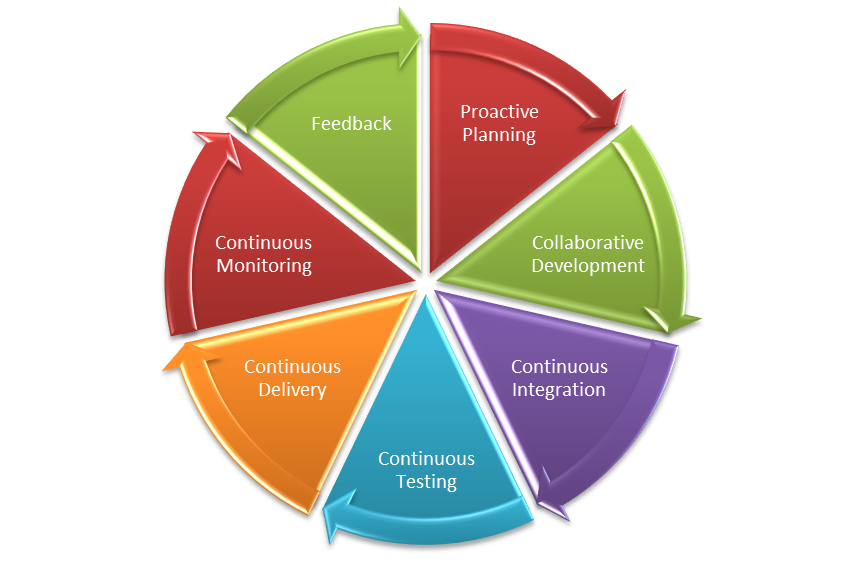
    Various collaboration mechanisms let teams work and learn together to produce better results. The figure below depicts the end-to-end life cycle of DevOps. Collaboration across the phases is essential to the success of your enterprise DevOps transformation.

    DevOps Lifecycle

    What are ChatOps and Bots?

    ChatOps is a term coined by GitHub to describe “putting tools in the middle of a conversation.” In a typical CI/CD pipeline, there are multiple tools that you interact with that have varied functionalities, such as source code management (SCM), defect management, continuous integration, continuous deployment and others. These are all discrete tools, but there is nothing that bridges them together. This is where ChatOps comes into play.

    A bot is a bridge between the collaboration tool and the DevOps tools. The bot receives a request from the user in the form of a chat command through a collaboration tool, analyzes the request and executes a set of commands on the target DevOps tool.

    The main components of ChatOps and bots are:

    Chat app/collaboration tool: This is the front-end chat system that connects the various stakeholders and enables them to interact between themselves and the systems around them.

    The bot: This is the core of ChatOps. A bot is the glue between your collaboration tool and your systems. It facilitates a two-way communication channel where you can fetch relevant information from the systems and act on the information received. A bot fits in between your collaboration tool and the DevOps tools, e.g. Hubot, Lita, ErrBot or AWS Lex.

    Target platform/infrastructure: Integration with the target platforms/DevOps tools is a key ingredient to a successful implementation of bots. These are the target tools and platforms on which the bot will execute the required commands. The tools integration allows your bot to communicate with tools and execute actions such as build, deploy, test, provision and scale infrastructure directly from the chat window.

    Where Bots Fit in the DevOps Pipeline

    Bots can prove to be an accelerator in various stages of the CI/CD pipeline. Below are the details of the integration with various DevOps tools in each phase of the life cycle:

    • Proactive planning – JIRA
    • Requirements management – JIRA
    • Continuous integration – Jenkins
    • Continuous deployment – Ansible, Chef
    • Continuous monitoring – Nagios, Grafana, Splunk
    • Continuous feedback – JIRA

    A chatbot plays a major role in bringing the different teams together into a single, persistent chat room to triage and resolve the issue at hand. In addition to just troubleshooting and triaging issues, bots can be used for various other business-as-usual jobs including:

    • Cleaning up servers.
    • Kicking off build and deployment jobs.
    • Rotating server logs.
    • On-boarding application on the monitoring tools.
    • Collecting metrics from tools such as Nagios or AppDynamics.

    Bot Technical Blueprint

    To achieve the aforesaid targets, we need to have a supportive bot platform in place. How closely the tools integrate with the bot ensures the quality of the implementation and opens new opportunities of automation.
    Bot Blueprint
    As the diagram depicts, the chatbot is hosted on a chat tool such as Slack. This can be on the cloud platform or an existing chat/communicator application. The bot is integrated with a key-value pair reference database, which is fed with the responses depending upon the activities or capabilities that have been fed to it. The key could be the name of the application to retrieve data from or any unique ID that would reduce the number of reads. A lookup of the defined key corresponding to the secondary key is performed on the response database and a response is sent back to the chatbot. Depending upon the number of outputs, the queries can be defined and stored in the response database.

    DevOps Bots: Use Cases

    Below are some examples of use cases for bots. This includes the complete life cycle of DevOps:

    Proactive Planning
    Create new user stories in sprint planning tools and assign sprints to teams. Update sprints and product backlogs.

    Build and Continuous Integration
    Execute build jobs and report back statistics of the build job. Perform daily/nightly builds and report on the status of the build to the relevant teams.

    Continuous Deployment
    Run deployment jobs and perform deployments across environments. Roll back deployments in case of failures, status checks, perform post-deployment actions such as JVM restarts.

    Infrastructure Provisioning and Configuration Management
    Kick off Chef jobs to provision infrastructure or provision application environments. Enable monitoring and restarting services and servers.

    Continuous Monitoring
    Provide application statistics or performing daily data lookups and grabbing metrics.

    Continuous Feedback
    Monitor application health and perform analytics.

    Key Measurement Metrics

    To achieve optimization and enhance performance of the continuous delivery process, metric measurement is the key. These indicators will help in taking certain corrective and preventive actions based on the results. Below are some of the key metrics indicators that can be measured.

    Effort Reduction
    Indicates the reduction of human/manual efforts for tasks such as triggering a build or deployment or collecting metrics from monitoring tools.

    Human Error Reduction Rate
    Reduction in the effort required due to rework caused by human errors.

    Reduce Issue Triaging time
    Indicates the time taken to resolve issues where multiple parties are involved and triaging of problems is required.

    Conclusion

    DevOps bots can significantly improve team efficiency, as well as a team’s ability to respond to emergencies. They save time and money, are fun to build and use and can have a positive impact on team morale, as well as increases the overall productivity of teams. This applies to both the engineering and operations teams. Enterprises embracing digitization are looking for partners with an engineering mindset who know how to bring in collaborative agile teams with the very latest knowledge of open source platforms and DevOps toolchains.


    Contact the Authors

    For more details please contact the authors on LinkedIn @
    Shriniwas Sathe
    Saswati Mohanty

    — Shriniwas Sathe

  • 5 Mistakes to Avoid When Chasing DevOps Transformation

    5 Mistakes to Avoid When Chasing DevOps Transformation

    In less than a decade, DevOps has become a buzzword of the IT industry, and enterprises are already reaping its benefits.

    But the implementation part still remains a question for many firms, considering the key mistakes that many organizations report in their very approach to DevOps. Most firms are also unsure about what outcomes they want to see from the process.

    Wondering if you’re making the same mistakes? Here are the five most common mistakes that can be included as part of a checklist to successful DevOps implementation.

    Misaligned Focus

    While automation and tools are the elements that steer DevOps, most firms believe that DevOps is all about tooling and automation. In reality, tools are mere enablers and automation takes off the burden of manual work. This collaboration helps firms to realign focus, eliminate process repetition and effectively manage the available software.

    Ultimately, the value of tools lies in what people achieve through them and hence, firms should focus on utilization to achieve expected goals.

    Faster = More Value

    Time-to-market is another key aspect of DevOps that needs a different viewpoint. In general, most firms think of DevOps as a process to increases the pace of the software process.

    But it has to be understood that DevOps takes a lean movement. By developing software on an exponential pace, DevOps process lets you have products delivered more frequently.

    The lean manufacturing process achieves success in software delivery by breaking the chunks of code into manageable units, which naturally results in continuous delivery. Moreover, if you need to alter one component, you can do it simultaneously without impacting the other. This allows you to deliver at optimum speed and still maintain business agility.

    Lack of Continuous Improvement

    As you learn more and get better, you’ll find better ways to improve or cut down steps that add no value. But this will require some amount of effort and investment.

    DevOps delivery pipeline consists of feedback loops, which allow you to inspect, reflect and decide if you are going in the right direction. The faster you improve, the sooner you benefit from the improvements in the process.

    It’s just not about reviewing the process twice a year or every quarter. Continuous improvement demands that every individual part of the DevOps process should get better all the time.

    Dishonesty About Your Progress

    It is important to be clear about goals and timelines as an individual contributor in the software development process. A delay from an individual contributor can lead to a delay on everyone’s part in the process. This also adds to the lack of trust on a team’s potential.

    Whether it is about building features or changing processes, make realistic estimates. It is important to break your tasks into smaller pieces, making it easier for estimates.

    Change Comes Easy

    Change is a part of the growth process and it’s inevitable. But most people fail to adapt to change and continue with familiar patterns, especially when change is difficult.

    It is important to keep adapting to changing trends in the industry, processes and technological advancements including the software delivery lifecycle to evolve and grow, even when it is tough. Increased success will always bring more willingness to change.

    Conclusion

    DevOps is a process that drives innovation and business growth at a faster rate, provided you keep a check on the pain points that hinder the successful DevOps implementation.

    — Veritis

  • DevOps Video Chat: DevOps Transformation with Tasktop’s Carmen DeArdo

    DevOps Video Chat: DevOps Transformation with Tasktop’s Carmen DeArdo

    Carmen DeArdo is well-known in the DevOps space mostly because of his work at Nationwide, where he was DevOps leader and technology director. In August of last year, Carmen moved to Tasktop, where he works with other DevOps luminaries Mik Kersten and Dominica DeGrandis, helping organizations along their transformational journeys.

    In this DevOps Video Chat, we speak with Carmen about his move to Tasktop and the culture shifts that are almost universal in embracing DevOps.

    The video is immediately below, followed by the transcript of our conversation.

    Transcript

    Alan Shimel: Hi, everyone, it’s Alan Shimel, devopsy.kinsta.cloud, and welcome to a DevOps Video Chat. Today’s guest on our DevOps Video Chat is well-known DevOps personality, Carmen DeArdo, as well as huge Pittsburgh Steelers fan. Carmen, welcome to DevOps Video Chat.

    Carmen DeArdo: Thank you, Alan. Great to be here. Glad to be talking to you.

    Shimel: Absolutely. So, Carmen, to paraphrase a religious question, this one’s a little different than all other chats we’ve done before, in that we’ve always spoken to Carmen from Nationwide Insurance DevOps team, where you really pioneered a lot of DevOps – not only at Nationwide but set the tone and the course for a lot of DevOps journeys throughout the industry. But now you come to us as Carmen DeArdo as part of Tasktop.

    DeArdo: As you said, I always enjoyed, within the DevOps community, talking to other companies. You know, we talked a lot at conferences, where I was a reference customer for some other customer – companies, like IBM, and I was just really intrigued by Mik’s book, which I know we’ll be talking about, and some of the concepts that Tasktop was getting involved with because we were a customer. And I really liked their vision and now I’m here on the Tasktop roster, so to speak, working with customers to help them go through the kind of journey that we went through at Nationwide and also to bring in some of the concept of Mik’s book, which I think can take it beyond, to the next level of what we were doing at Nationwide.

    Shimel: That’s fantastic, Carmen, and I – first of all, I wish you a lot of luck in the new position, new sort of career path, and I’m sure you’ll do great because you’re just a great person with this. Well, you mention Mik’s book and I happen to have a copy of it here. It’s called Project to Product. It’s by Mik Kersten. And, not to brag, but I happen to have a signed-by-the-author copy of it, you know?

    And I will tell you, Carmen, I was fascinated with some of the concepts in the book and I’ve discussed some of these concepts with people, as part of my devopsy.kinsta.cloud communication, and it really is – this concept of moving from a project-centric IT environment, right, to a product-centric is really – I mean, it’s fundamental, in a lot of ways, right?

    DeArdo: Yeah, it is. So I think, you know, we were at DOES London and that’s where they galley copies of the book came out, so the official copy, I think, the coming out party, officially, I think is gonna be in the Vegas conference, and then the book will be available shortly after that to everybody. But – through IT Revolution, but it is a fundamental change and it was something even that Mik and I had been talking about and we had been trying to work through at Nationwide because, before I worked at Nationwide, I worked at Bell Labs for quite a while. And one of the things that struck me when I came to Nationwide was we went – at Bell Labs, we already had this concept of kinda like products, right, because you had your switches, you had your network control points, you had – so work really came to the team. And so we were always working on the next set, for example, way back when I worked on Advanced 800 features, and so we had a team that stayed together and the work came to us and we were very focused on our product, that 800 service concept and then the systems that we build.

    So I came to Nationwide, what struck me was almost all the work was done through projects and these projects seemed to have a life cycle, a lot of ’em, that got funded as part of the funding for that year. They started up. You brought all these people to the team. You went through the “norming and forming and storming” kind of parts of the project. And then, once they were done, the project dispersed and the people went. And what you would do – it was very difficult to do – was, if a project touched five or six systems, you would start to allocate – you know, we were using Clarity – two people, three people, a half a person, a quarter person, whatever you thought you needed from those systems.

    And so it was a very fragmented kind of experience because the project was temporal; the systems people were all separated and spread out among these projects. Sometimes, a person might be working on a half-dozen projects at the same time. And, you know, you were constantly forming in these teams and so one of the ideas of the product focus is you have a set of people that are focused on that product. They’re gonna live, eat, drink around that product. And it may be more than one team – we’d like to say it’s a two-pizza team that can solve the world’s problems, but we know, sometimes, it’s gonna be more than one team – but still their focus is on the product and now the whole idea of bringing them a continuous flow of work, you’re bringing it to this established product teams.

    And the other thing that came up with projects a lot was there was this tension between doing the feature work versus the defects and the risk items and some of the technical debt because project managers were very focused on “You have a budget. You have a set of scope. You’re supposed to deliver that.” So who wants to pay if there’s a vulnerability in a Struts library or making the next thing faster, right? Technical debt is always about – is really about investing to make the next thing go faster, so, if you don’t really have a long-lived relationship with what you’re working on, you tend, just because of the nature of business –

    Shimel: You make short-term decisions.

    DeArdo: Make short-term decisions. Right.

    Shimel: Yeah. I mean, you know, Carmen, that was one of the things I realized in talking to people, about shifting from a project focus to a product focus, and, to me, it was almost – I learned a lesson. I helped take a company public back in the dot-com days – ’99, 2000 – and the difference in how we managed the company as a pre-public, as a private company, to a public company just blew me away. Right? All of a sudden, we were managing in three-month cycles, right? ‘Cause we were managing quarter to quarter ’cause we had to just, you know, go to the street and tell them our results. And you start making decisions that ultimately led to the failure of the company, frankly, because we were making very, very short-term decisions that were maybe good for the short term but not for the long term.

    DeArdo: Right. And you know I’m a – you know, we talk about Deming a lot and Deming warned about things like that, right, about the short-term thinking and lack of systems thinking, but you’re right. It drives you that way because the market’s saying, “Well, what’s your next earnings per share? What’s your next report gonna be?” So it does take more – it’s a different way of thinking about things and, really, you’re more in it for the long haul. Now that’s not to say you can’t do things well in the short term because absolutely you can. You can apply all the DevOps practices we’ve talked about. You can run your experiments or ideas of what you think is gonna get value. You can get that feedback much more quickly.

    So you can still apply all the things that we’ve talked about and everything, over the last five, six years, but now you’re doing it for the benefit of that product and you can start to tie the business in with how the value’s actually flowing, right? Because, a lot of times, you don’t – a business doesn’t wanna go up and show ’em an Agile team board, with a bunch of different stories, if they can’t relate it to “What’s the value of what I’m getting through this value stream? Right? Where is my value? What’s going on with what I’m trying to do?”

    And, with that product focus, it kinda tears down that wall and opens up that black box of IT and says, “Okay, all the way from the idea through deployment, we’re gonna make this work visible and we can see it and we can make decisions and priority calls based on how we’re gonna deploy our resources. And it’s across the features, the risks, the defects, and the investment in debt items so that we can continue to make this product good, not just now but in the future.”

    So it seems subtle, but, actually, it’s a very different way of thinking and it even gets back into how things are funded. So I think, in the past, with Agile and DevOps, we stayed away from that left-hand side of the value stream, closer to the customer – we’re kind of in our comfort zone – but now it forces you to engage the business and really have them come along to the journey with you. So that’s another change, I think, in how this applies, versus some of the things we’ve done up to this point.

    Shimel: Good. Now – I mean, Carmen, I think you’re so right on with that, though, in that it sounds subtle, but yet it’s so fundamentally different. And I guess one of my biggest fears around it is people are so resistant to change.

    DeArdo: Right.

    Shimel: And, thought – you know, maybe that it sounds subtle will help sneak it in, right, as a Trojan horse or whatever, but to tell people that they’re gonna have to shift the way they think about this, about the way they go about doing IT in products, knee jerk is “No, we’re not.” Right? It’s –

    DeArdo: Right.

    Shimel: And that makes it hard.

    DeArdo: It makes it hard. And that’s an excellent point, Alan, and I think we’ve been talking about this since I joined, which it’s almost two months now, about the fact that, just like – when I was at Nationwide and gave some of the talks with Cindy and Jim, we talked about the journey. We even had that mountain which showed you climbing to the summit. This is a journey, right? And, if you start out with what you just said and saying, “Okay, you can’t even get started until you do all these things and they involve your business,” you’re right. You’re gonna lose folks right there because “Wait. I gotta change my organization. I gotta change how we do funding. I gotta change this.”

    So the way you have to present it and the way I think we’re looking at is we’re taking the customer on a journey. And that journey starts, really, with – and I  used to talk about this with you – thinking horizontally. Right? So, when you think of a value stream, a value stream starts and ends with the customer. And if you start to get people to think horizontally and the concept across that value stream and the artifacts that flow from your PPM, your portfolio planning, through your build cycle, through your deploy, and the fact that, in order to get flow, your tools have to be connected, which is where Tasktop essentially was started, was around this concept of connecting your tools, making your tools talk, synchronizing artifacts from tools so, when a defect is created in quality center, it can flow into the backlog of your Agile team. When an instance’s created in ITSM, it can become a defect; it can flow.

    So it’s really starting with this concept of “Let’s start with getting the tools talking. Let’s get your artifacts flowing.” And even – and this may sound heresy – even if those artifacts initially are really focused on the work of an initiative or a team or even a project, dare I say, you can still start to utilize the concepts in Mik’s book around the flow framework and see things like lead time, flow time, the flow efficiency, flow velocity. You can still see those things as part of this journey.

    Now I think, ultimately, yes, you need to turn the boat more to get that product focus, to get some of the things – advantages we just talked about, but you can start this journey, I think, from wherever you are, as a enterprise, and just take those incremental steps in order to get to the point where then you’re ready to experiment with one product. Right? And then you just wanna start with one product. Pick one product, get one business owner that is interested in this.

    And then, from that, you even call it maybe an “experiment,” get some results, and then that’s what starts to change the culture. Right? It’s not gonna be me talking or giving talks; it’s gonna be – you know, I used to joke about this at Nationwide, right? When I would go around to different areas and talk, that didn’t have near the impact of getting one team to actually do something and get results ’cause then that opened people’s eyes and said, “Okay, that is possible. It’s possible right here, right now, and I wanna create my own story.” So you’re absolutely right. It needs to be structured in a way that allows companies’ teams to go on that journey; otherwise, the impact of the change is gonna be too much and you’re not really gonna get any traction.

    Shimel: I agree. You know, Carmen, that was one of the first lessons I learned in business a long, long time ago, which is nothing succeeds like success.

    DeArdo: [Chuckles]

    Shimel: No one wants to jump on a sinking ship; everyone wants to be with the winner. And if you could show that you’re winning somehow, that you’re succeeding, you have upside, everything kinda flows from there. Right? People wanna be associated with that and they’re willing to tolerate and even embrace change, in some –

    DeArdo: Yeah. Absolutely. And, you know, and some of the – you know, you can’t just decide you’re gonna wake up today and change culture, right? I mean, you have to do things through what you’re talking about, right? Creating those experiences, those successes, those stories. Stories are very powerful. That’s what ultimately will change the culture, right? Sharing credit. Right?

    If it looks like – you know, at Nationwide, if it looked like, “Well, this is Carmen’s show,” that’s not gonna get anywhere. It has to be everybody’s show. It has to be Jim’s show and Jane’s show and Donna’s show and everybody’s show, where they’re now showing how they can be successful. That then really has the impact of changing the culture and showing people that, yeah, this is possible because that team on the fifth floor’s doing this, right? It’s not in this book. It’s not in this conference. It’s that team. It’s that team on the fifth floor and why can’t we do it?

    Shimel: Agreed. Agreed. So, Carmen, you mentioned you’ve been at Tasktop now two months. We spoke a bunch about the book, Project to Product, by Tasktop CEO, Mik, but the Tasktop people have really amassed a great Murderers’ Row lineup there. They’ve got you; they’ve got Mik. And I can’t –

    DeArdo: Dominica.

    Shimel: Dominica DeGrandis, of course. You know, that’s a lot of brainpower. Lot of brainpower over there. What else are you working on?

    DeArdo: Well, I mean, it’s obviously a pleasure. There’s a lot of – it’s a great company, it’s a great culture, and Dominica beat me over here by a few months, but to be able to collaborate with folks like Dominica and Mik and then just the whole community, right? Because they were folks that were already in the great community that has been built, that Gene’s built, other folks like yourself have helped build this whole community. I mean, yeah, it’s a pleasure. It’s an honor to be able to talk about these ideas. I mean, Dominica’s concepts of flow and visibility naturally just relate to what we’re talking about.

    I thought it was interesting, in the London talk, the London conference, I mean, you go to all these conferences and you can sorta see, over year to year, how things are going and what topics now are becoming more in the mainstream. And there’re a number of talks this year where flow was either in the title or key concept. Jonathan Smart talked about it; Fin had a talk about flow. So flow is kinda where it’s at, I think, now, as people are seeing, “If I’m gonna accelerate my delivery, become more responsive, I gotta understand flow and, as my ex-boss, Tom Payter, would say, where things aren’t flowing.”

    And so, with Dominica’s great work that she’s done with making work visible and concepts of flow, her book, Mik’s book now, I mean, yeah, it’s a great opportunity to be involved with just a great company, great culture, and great folks, to see how we can help other companies succeed in the marketplace.

    Shimel: I think it also speaks to the coming maturity of the DevOps marketplace, where we’re seeing sort of leaders kinda come together, community leaders come together and combining in ways that it’s sorta synthesis, right? _____ synthesis and I think it’ll lead to yet another wave of innovation, another wave of thinking about these things.

    DeArdo: Yeah, I agree. I mean, I think people like Gene have done a great job of bringing people – creating forums for people to come together and the community, as you know and as you contribute to, is very open about sharing ideas. Right? So, for example, I would use – Topo Pal, we both know at Capital One – I would use his example all the time at Nationwide, when people would say, “Well, we can’t do this. We’re not a unicorn. We’re a regulated industry.” I’d go, “Well, let’s see what Capital One has to say about this,” right? They’re a bank. They had a great presentation with auditing, where I think Jennifer Brady was the auditor that came up on stage with Topo and gave a talk.

    So it’s just such a great community where people are willing to share and – you’re right – that allows everybody to get better and the whole community is kinda propelling each other forward. So it’s really been a great blessing, honor to be involved, getting to know all these folks and getting to do this kind of work.

    Shimel: Absolutely. Well, Carmen, we’re about out of time, but I wanna wish you luck at Tasktop. I think they’re really, really lucky to have you. I’m sure we’ll run into you somewhere on the DevOps conference circuit and we’ll catch up in person. But congratulations on the move to Tasktop. You’ll make us proud, Carmen. Keep innovating. Keep leading. And thanks for being our guest today.

    DeArdo: Well, I appreciate the kind words, Alan. It’s always great talking to you and I look forward to keep the conversation going. Thank you very much.

    Shimel: All right. Carmen DeArdo – you know, Carmen, I forgot to ask, what’s your title at Tasktop?

    DeArdo: My title is senior value stream management strategist.

    Shimel: Carmen DeArdo, senior value stream management strategist at Tasktop, our guest today on DevOps Video Chat. Thanks, everyone. Have a great day.

    — Alan Shimel