Tag: DevOps networking

  • What Are the Seven Layers of the OSI Model?

    What Are the Seven Layers of the OSI Model?

    Working in the software field, it’s not uncommon for engineers to refer to different “layers.” Perhaps you’re working with protocols at the “networking layer” or evaluating a solution that sits at “Layer 4” or “Layer 7.” Although these concepts are obvious to some, not everyone knows what these layers refer to. To get you up to speed, below, we’ll define the seven layers of the OSI Model.

    What Is the OSI Model?

    The Open Systems Interconnection model (OSI model) is a conceptual model to help visualize a computerized network. Made up of seven layers, it represents the distinct levels that make up an end-to-end computing system. In the spirit of promoting open interoperability, the model is intended to represent a universal standard that’s agnostic to a specific technology or vendor.

    The OSI Model was co-conceived by International Organization for Standardization (ISO) and Internet Engineering Task Force (IETF) and first published in 1984. It has since been redefined as ISO/IEC 7498-1:1994. Although the OSI Model has been around for decades, it’s still referenced quite often.

    The Seven OSI Model Layers

    The OSI Model is split into seven abstraction layers: Physical, data link, network, transport, session, presentation and application. You can think of the bottom one, Layer 1 (the physical layer), as the closest to the most rudimentary electrical connections. The farther up you rise, the closer you get to Layer 7 (application layer), which is the most user-facing category.

    1. Physical Layer

    The physical layer, Layer 1, represents the lowest level of data transmission. This category refers to raw unstructured data bits—and the process of converting them into electrical signals for a device to read. “Physical” hardware like network hubs, modems, adapters, cabling and network controllers work in this layer. Bluetooth, Ethernet and USB describe physical layer specifications.

    The data link layer deals with data packaged into frames. Technologies in this layer assist in node-to-node data transfer, and the protocols here describe how to establish and terminate a connection and how the connection should flow. The data link layer is further divided into two sublayers: Media access control (MAC), responsible for how nodes connect with one another, and logical link control (LLC), which checks for errors and orchestrates the frame flow and synchronization. An example data link layer protocol is Point-to-Point Protocol (PPP). MACsec also can work to apply encryption at this layer.

    3. Network Layer

    The network layer is responsible for sending and receiving data frames structured in packets. Technologies in the networking layer use routers to send packets to nodes on different networks. The network layer might split or fragment the message if it exceeds the maximum network packet sizes. You’re probably familiar with the network layer if you’ve looked up your IP address—the network layer uses the IP protocol (or other logical protocols) to find locations. Such protocols specify a message along with the address of the intended recipient node.

    4. Transport Layer

    The transport layer deals with the transmission of data segments, which are sequences of data at variable lengths. The goal of the transport layer is to optimize data transmission by performing data segmentation and adjusting the size of the package or the rate of transmission. Transport layer protocols include TCP and UDP. Tunneling protocols also operate at the transport layer. The OSI Model also defines five classes of the connection-mode transport protocol.

    5. Session Layer

    The session layer handles the communications between two or more computers. Protocols here are used to create a “session” between entities, which is common in applications that use remote procedure calls. The session layer handles the connection and authentication between a client or server, including actions like logon, look up, log off or session termination. DNS, along with name resolution protocols, operate in the session layer.

    6. Presentation Layer

    The presentation layer is about data translation and formatting. In this layer, protocols handle things like encryption, decryption, compression and decompression. The goal of the presentation layer is to transform data in such a way that it can be sent over a network in syntax that fits the constructs specified by the application layer. For example, technologies that serialize data structures to XML or JSON can be thought of as working for the presentation layer. This sort of data translates into what is graphically displayed for the end-user.

    7. Application Layer

    The application layer is the top layer of the OSI Model and sits closest to the end-user application. User-facing software directly interacts with the application layer through functions like file sharing, message handling or database access. High-level protocols such as HTTP and FTP are used in this layer to share resources. Web browsers and email clients are examples of applications that interact with the application layer.

    The OSI Models: A Helpful Taxonomy

    There you have it—a primer or refresher of all seven OSI Model layers. It’s important to note that the model does not intend to serve as an implementation specification itself—it’s purely a conceptual framework. But it does help provide context into where tools operate and how they interact with elements of a distributed computing system.

    In the context of DevOps technologies, Envoy-based service mesh is often described as working on Layer 4 (the transport layer) and Layer 7 (the application layer). Or, since eBPF filters network frames, it can be said to work at Layer 2 of the OSI Model.

  • What SASE Means for DevOps Teams

    What SASE Means for DevOps Teams

    You have probably heard the acronym secure access service edge (SASE), and it’s hard to ignore its impact on the technology industry. SASE is a cool new way to implement networking in hybrid environments, and the most important thing about it is that it bakes security into the network fabric. In plain English—when you plug in, you are secure by default. 

    SASE will have a special impact on two fields near and dear to the hearts of DevOps teams:

    1. Cloud security—SASE has the potential to transform how we practice security in the multi-cloud, and unify it with security in the central data center.
    2. DevSecOps adoption—SASE can make DevSecOps easier to adopt and might become essential infrastructure for globally distributed DevSecOps teams.

    Let’s understand the anatomy of the SASE beast, and understand how it will affect DevOps in the years to come.

    What Is SASE?

    SASE is a cloud service that extends networking and security capabilities to support hybrid organizations’ dynamic, secure access needs. 

    SASE combines WAN capabilities with network and security functions, such as firewall-as-a-service (FWaaS), zero-trust network access (ZTNA), secure web gateway (SWG) and more.

    A SASE platform bundles multiple security capabilities, including SD-WAN and services like SWG, CASB, ZTNA, FaaS and SaaS. This multi-region, multitenant architecture supports a distributed and remote workforce. SASE uses inspection engines located at points of presence (PoPs) near the endpoints rather than in the data center. SASE clients send traffic to the nearest PoP. 

    The core characteristics of a SASE architecture are:

    • Global SD-WAN—A private SD-WAN backbone helps reduce latency by avoiding the public internet. 
    • Distributed architecture—SASE inspects traffic and enforces policies at the edge using multiple inspection engines. 
    • Cloud infrastructure—SASE delivers services via the cloud, so tenants don’t have to maintain hardware and other infrastructure resources. This approach is scalable and cost-effective.
    • Identity-based access—Access controls use identity markers like the user’s location and device. 

    SASE Adoption Drivers: Why Do Organizations Want It?

    Cost Reduction

    Using physical and virtual appliances from multiple vendors is highly cumbersome and costly. SASE enables organizations to replace this disparate model with a single, cloud-native solution. Organizations can use SASE to deliver more technologies and services via one provider instead of several. As a result, it eliminates the cost of miscellaneous network appliances and optimizes cloud costs, by reducing the resources and bandwidth needed to operate a cloud environment. 

    Edge-to-Edge Security

    SD-WAN is an integral component of SASE, providing features such as an active-active failover and WAN optimization that improve performance and increase network resilience. SASE solutions are based on the concept of security automation, with a fully managed network security stack that typically includes SWGs, next-generation firewalls (NGFW), next-generation network architecture and intrusion prevention systems (IPS). This model helps protect all edges, achieving better network visibility.

    Data Protection

    SASE provides a holistic data protection experience that automates multiple DLP processes, including data discovery and data classification of storage locations, data usage and data in transit. It employs various security measures, such as user and device authentication, to enable control over access to data and resources at all times. Additionally, SASE DLP seamlessly rolls out protection policies across the entire network.

    Impact: How SASE Will Transform the Cloud Security Stack

    The emergence of services like PaaS, SaaS and IaaS has encouraged organizations to allow remote work. The cloud supports distributed workforces and streamlines business processes, but it also exposes companies to network-based threats. Many organizations store sensitive data with third parties accessed online.

    The cloud security stack can easily become siloed, with team members unsure of their responsibilities and overlooking critical processes. A siloed stack is more labor-intensive and harder to track because the security team uses multiple security systems. It can also create alert fatigue, making it hard to identify threats. 

    While employees mostly work in the cloud, security efforts often focus on the data center. SASE shifts the focus to the cloud while ensuring seamless integration between security services.

    With SASE, a single provider delivers the entire security stack, ensuring it functions as a unit. For instance, an SWG uses threat intelligence data to block suspicious traffic, sending unidentified files to a sandbox for testing. The security team can manage the entire stack from one intuitive interface. 

    Most activities occur at the edge—SASE secures the edge using an identity-driven approach. It is also cloud-native, ensuring a seamless experience. 

    Impact: How SASE Will Promote DevSecOps Adoption

    SASE provides the following advantages for adopting DevSecOps.

    Facilitating Collaboration 

    SASE helps reduce the challenges involved in cross-team collaboration. Essentially, SASE combines network security with WAN optimization. Modern DevOps teams are physically separate but must work together, requiring reliable and secure connections between team members. 

    The DevOps approach emphasizes time-to-market, so DevOps teams look for ways to accelerate the CI/CD cycle and push releases faster. An important part of the process is reducing the DevOps team’s reliance on the network and security teams. SASE solutions help optimize performance and enhance security, so the DevOps team doesn’t have to wait for the infrastructure team to configure resources. SASE gives DevOps teams the necessary control and operational cadence without compromising security or performance.

    Enhanced Networking

    SASE can improve the overall network performance by providing integrated failover and load balancing capabilities. DevOps teams must have reliable connectivity and cannot tolerate disruptions when deploying new software or fixing bugs. Fast, reliable application performance is key to the DevOps workflow. 

    The SASE architecture improves the networking, ensuring the organization’s edge devices, cloud resources, data center and remote users remain connected. The DevOps team doesn’t have to handle the infrastructure because it is self-healing, fully optimized, and secure. The solution automatically switches to another path if a line fails or a path becomes congested.

    Security By Default

    SASE protects DevOps projects with built-in security features. When implemented properly, it integrates many security technologies into the network stack. The DevOps team doesn’t have to worry about attackers intercepting sensitive information. Every security service shares the same, unified context to increase visibility and fill gaps that are often present in traditional security architectures. SASE mitigates the vulnerabilities exploited by attackers using NGFW, SWG, IPS, MDR and antivirus services in a single architecture.

    SASE can secure internal applications and their interactions, reducing the burden on the DevSecOps team. Applications running on a SASE-based SD-WAN benefit from the added protection of zero-trust network access (ZTNA) and software-defined perimeter (SDP). These technologies help ensure that all interactions between applications and endpoints are secure. 

    Proprietary apps are often too sensitive to expose to the public Internet. SASE secures these applications by obfuscating traffic, securing all entry points with NGFW, and restricting access with zero-trust network architecture. It constantly inspects all internal application traffic for cybersecurity threats. 

    Conclusion

    In this article, I explained the basics of SASE, which packages multiple networking and security solutions into one managed service. 

    SASE is giving organizations a new level of flexibility and agility with regard to their core infrastructure and is introducing the concept of security-by-design. Instead of fighting hard to “secure all the things,” we are moving nearer to a world where the “grid” our organization operates on is secure by default. This won’t make DevSecOps any less important. But it will allow us to build our applications and services within a secure, controlled hybrid environment.

  • How Work-From-Anywhere Impacts DevOps

    How Work-From-Anywhere Impacts DevOps

    Brian Lavallée from Ciena talks with Mike Vizard about how the work-from-anywhere movement has impacted DevOps, networking and security. The video is below, followed by a transcript of the conversation.

    Mike Vizard: Hey, guys. Thanks for the throw. We’re here with Brian Lavallée who is senior director for solutions marketing at Ciena. Brian, welcome to the show.

    Brian Lavallée: Thanks. Nice to be here.

    Mike Vizard: You guys just put out this study talking about what’s happening on the technology impact from working from home. A lot of folks are accessing cloud resources. They have home networks that may or may not be up to the task. Are we looking at some sort of networking crisis coming up as we move to working from anywhere? Do people understand that bandwidth is going to be an issue?

    Brian Lavallée: I wouldn’t say it’s a crisis, but it is a work in progress. Just over the last year, year and a half, the global pandemic, our homes have turned into the new branch office, the new classroom. People are learning, playing, and working from home, and it’s put additional stress on the network. One of the main challenges is speeds, because now you have two, three, four people accessing the same broadband connection from home at the same time, and then you have the whole security aspect, where if your home is the new branch office, very often you need additional security to do work, not only with your head office, your colleagues, but also with your cloud applications.

    Mike Vizard: I have found myself trying to fight for bandwidth with an 11-year-old, so I know what the issues are and what the problems can be. Do you think companies, as we go forward, are going to turn around and say to their employees, “Here is the router we want you to use”? Are they going to give them that router, or the access point at home? How far will they go to make all this happen and maybe provide that additional layer of security?

    Brian Lavallée: Yeah, I think, for sure, adding additional security, even availability, a more resilient connection is necessary going forward. Companies or enterprises are going to implement this differently. Some may do a lot of their security capabilities in the cloud. This allows you to have a centralized location to do all your security, you know, talking about SASE, _____ connectivity, and because it’s centralized, it’s easier to implement and control, rather than having specialized devices or specialized software sitting on everybody’s laptop. If you’re a large enterprise, you can have thousands to many thousands of people working from home, so centralizing your security aspect with a high-speed connection is probably the way moving forward.

    Mike Vizard: What impact does that have back on the core networks? I mean, if everybody has suddenly got more bandwidth at the edge, does that have a cascading effect up through the rest of the network infrastructure? Do I need additional core routers or networks? How will this play out in your mind?

    Brian Lavallée: Yeah, _____. Content is created and consumed at the edge, and that’s from humans or machines ‒ think sensors, cameras, and so on. Definitely, as we open up the access ramps, 5G is a way of opening up the wireless access ramp, plus you have a variety of wireline broadband technologies for the home, even the offices. For sure, it has a knock-on effect into the core network because, if you think about it, most of the content and applications that you access, whether it’s on your smart phone, your laptop, tablet, or whatever device you’re using, it’s sitting on a datacenter somewhere. That could be a datacenter close to you, an edge datacenter maybe sitting in the same city as you. It could be a datacenter on the other side of the world sitting in Norway or Sweden or Finland.

    Mike Vizard: I’m feeling like a lot of the applications that people are starting to build, consume data and analyze data at the point at where it’s created more, it’s more happening out at the edge. Is there a lot more sensitivity around latency? Will the laws of networking physics come back and bite us soon, and are we seeing new classes of applications?

    Brian Lavallée: Yeah, and that’s a good question because it leans into the topic of discussion, one of the hotter ones today, which is edge computing or edge cloud. By putting storage and compute access closer to the end-users ‒ again, those end-users could be humans or machines ‒ it does inherently reduce the latency only because you have a shorter physical distance to travel. But, we have to remember latency is not just about distance, it’s about the amount of network nodes that are sitting between you and your content, so the more network devices you go through ‒ switches, routers, and so on ‒ the more latency is incurred and accumulated. Pushing the storage and compute closer to the edge with high-speed connections is a very good way of reducing latency, and it also opens up a whole bunch of new applications where latency is a critical factor beyond just increased speed.

    Mike Vizard: I feel like right after the pandemic, we sent everybody home, we gave them their little wireless network, we hooked them up with a VPN, and they accessed the applications in the office. Then, they went out to the cloud and they had this kind of backhauling effect of the network traffic flow. You mentioned SASE. Are we going to change the way we think about how applications are deployed and how we access them, whether they’re up in the cloud? Is the routing concept that we’ve known all these years changing? How do you think we’re going to go forward from here?

    Brian Lavallée: Yeah, so I think the increased adoption of cloud-based services is an unstoppable juggernaut. It is happening. There are security concerns. Our survey that we did, the study, we did show that there was a security concern of moving more and more into the cloud, but the cloud providers, the telecom operators, they’ve done a lot of excellent work over the last few years to address security, make increased security for their end-users. The cloud-based service providers, they realize that security is top of mind above everything else, so I think that will continue going forward. As more and more end-users are accessing cloud-based applications and content, the network becomes a critical factor because the network now is sitting in between you and the content you’re trying to access.

    Mike Vizard: Do you think the bad guys have figured all this out and they’re targeting people at the end point now and looking at these slightly misconfigured networks? Sometimes we’re using fraud RDP protocols. Are they getting it? Are they after us?

    Brian Lavallée: They’ll always be there, nefarious actors, bad actors, whatever you want to call them, so they will always be there, but the cloud providers, the telecom operators, they know this, so they are consistently upgrading, modernizing, and putting increased security capabilities into their network. It’s always going to be a battle of people who want to do not so good things with the network and content, and the people that actually run those datacenters and networks. I think that will continue going forward, it’s kind of human nature, but we’ve made great strides as an industry, and that’s across IT, telecom, and cloud-based services in terms of security. With more and more people from home, I mean right now we’re living in probably the largest working-from-home experiment of our species, and, if you think about it, the network, it has bent in a few places, right?

    Most of the networks are running hotter, but it hasn’t broken. The Internet has not broken. A lot of people early on thought that if everybody moves home, it’s not that you have more capacity coming to the home, but the traffic patterns have changed. During the day, when a lot of people went to school and work, the traffic was to the schools and the head offices, but now the whole traffic pattern has moved into the home. Although a lot of people were concerned, I think the telecom operators deserve a lot of credit. The network has bent in a few places, but it hasn’t broken, and they’ve just learned a lot over the last year, and the networks will just be that much more reliable going forward.

    Mike Vizard: Prior to the pandemic, the carriers were trying to encourage people to offload from the network and use WiFi. Now we have 5G, and people are talking about 6G and who knows what comes after that. Are we getting to a point where we can just run 5G into the home? Will that get cost-effective at some point and we won’t have all these WiFi routers, or will it always be some sort of a balance between 5G, 6G and WiFi and we have to figure it out?

    Brian Lavallée: Yeah, I mean my personal opinion on that, I think it will always be a mix of technologies. I’ve been in this industry long enough to know that a technology network completely disappears, at least not in my career. It always has places of use. The big difference with 5G over 4G LTE and previous technologies, and even WiFi, previous generations of mobile technologies, it brings a lot of new benefits to the table, right? If we look at the faster speeds, this is what gets the most press coverage because that’s what people will see right away, but it also brings much lower latency. We’re talking order of magnitudes lower latency. It connects to a wider variety of connected devices, such as sensors and smart devices, and then we have this whole concept of network slicing, which can guarantee end-to-end performance.

    You can guarantee the speed, latency, and resilience. We haven’t had that in the past with any mobile network generation, and, to a large extent, we haven’t even had that on the wireline technologies. So, 5G coming right into your home, if you think about it, if you’re a network operator, it’s much easier just to send a 5G hotspot, it could be a router, residential gateway to somebody’s home, they turn it on, they plug it in the wall, and it discovers the mobile network and then BOOM, you’ve got one-gigabit-per-second capacity right to your home. That is, I think, the way of the future in many cases, but there are some technical challenges that still need to be overcome. But, most operators are looking at 5G fixed wireless access to the residential, but even businesses as something in their toolkit going forward to compete with wireline technologies.

    Mike Vizard: Do you think there is a rebellion coming among the end-users who are using this stuff? When you hear them, they’re kind of complaining a lot about the experience, so do you think that at some point they’re going to start picking what companies they want to work for based on what kind of work-from-home, work-from-anywhere experience they can get? Will that factor into hiring and retention more than it has in the past?

    Brian Lavallée: Yeah. I mean, the network is critical infrastructure today, especially for the younger generation who were born and raised on having always-on connectivity. I think that will continue going forward. But, as more people work from home, I know we hear a lot of talk about the new normal, what ire the workplace, for instance, or the school systems going to look like after the pandemic subsides? We don’t really know. But, what I think we do know is more people will be working from home. I see it in my personal life, I see it with my colleagues, I see it with friends and family. Their companies are looking at implementing working from home at least a couple of days a week. There are a lot of benefits to the company to do this, as well, so the network will become that much more important.

    I think people will shop around if the provider they have, the network provider, is not giving them the performance that they need, and it will become a highly competitive marketplace. I mean, it is pretty competitive now, but I think it will be that much more so going forward in terms of speed, latency, and availability, the three main things that you need with a high-speed connection to your home.

    Mike Vizard: I might even one day factor networking costs into my compensation packet, but we’ll see what happens.

    Brian Lavallée: There you go.

    Mike Vizard: What is your best advice to people who are on the IT side of this equation, they’re the network managers, they’re security people. What is the conversation that they should be having higher up the food chain to the board of directors about what needs to happen to really enable this next wave of work?

    Brian Lavallée: Yeah, I mean, the higher speed to the home is something that a lot of people talk about. We just talked about it earlier, more people working, playing, and learning from home, so capacity will always be at the forefront of discussions and having competitiveness for an operator with another operator. But, I think increased security features, this could be wrapped around a broadband connection to your home, so rather than just buying a high-speed pipe to your service provider, they would also provide you with SASE type of capabilities, so security, firewalls, and so on. I think looking at bundling, IT services with the connection is definitely the way to go. It is a differentiator, and it is what people will be looking for because if you’re the average home user, whether it’s for playing, learning, or working, you really don’t care what technology you’re buying, as long as it’s cost-effective and it meets your needs.

    I think my advice for the operators is to look at what is available recently, some of the newer technologies ‒ virtualization and SASE technologies and the SD _____, a whole bunch of other technologies ‒ and start to wrap these into a bundle that you solve most, if not all of the needs of the subscriber, and then you could differentiate far above and beyond just a higher speed.

    Mike Vizard: All right, guys, you heard it here. Faster things that are insecure do not necessarily represent progress. Hey, Brian, thanks for being on the show.

    Brian Lavallée: Happy to be here. Thank you.

    Mike Vizard: All right, guys, back to you in the studio.

    [End of Audio]


  • Enable Multi-Cloud Networking With Automation

    Enable Multi-Cloud Networking With Automation

    As we enter a new era of technology, we’re experiencing a “third wave” of cloud innovation that brings new complexities into the IT landscape, mainly centered around multi-cloud networking. With every wave of cloud technology advancement, networking components are becoming more complex and distributed across multiple groups. Further, multi-cloud networking brings new challenges around connecting and managing across dispersed environments comprising private and public clouds, along with physical data centers. Organizations must unify their network operations in a way that enhances their capabilities into a new level of skill and efficiency. 

    Augment Strategies

    Looking forward to new capabilities offered by automation tools, technology leaders can augment their 2022 IT strategies. How?

    • Support a more seamless transition to cloud within hybrid IT infrastructures.
    • Cultivate new values brought to an organization from network engineers.
    • Enable executive leaders to easily align operations across multiple teams – spreading innovation across the entire organization.

    Connecting Hybrid IT Infrastructures

    As more IT leaders invest in an assortment of digital tools to streamline network operations – some engineering teams might feel more reluctant to leave behind old processes or feel intimidated by the multitude of new capabilities at their fingertips. With modern tools and processes gradually being incorporated into the workflow of IT departments, it’s critical to find the right balance in this “hybrid” environment, which will include a combination of both traditional on-premises systems with new cloud applications. Automation can help smoothen the transition to new technologies by simplifying manual processes previously relied on, while also bridging together the plethora of systems for easier management.

    Leveraging Cloud-native automation

    When bridging together disparate systems, leveraging cloud-native automation solutions that provide API capabilities can make all the difference. These solutions not only build the appropriate connectivity required between different applications but also provide the flexibility to manage networks in a cloud-friendly way. Additionally, automation can be deployed to ensure compliance of device configurations that span both on-premises network devices, as well as those connected to cloud-based infrastructures. For example, with automation it’s possible to quickly perform a configuration back-up, check for compliance and execute “intelligent remediation”. This translates to a network device or group of devices that can be backed up and the current configuration compared against the existing golden configuration standard. Changes can be automated to ensure the network is adhering to the current compliance standard. Further, automation is changing the way that IT teams approach daily operational challenges.

    Evolving Value in Network Teams

    Network engineers play a unique role in organizations by performing tasks that require years of training, and an understanding of the complex ins and outs of their internal systems. Although the performance of these manual tasks might be assumed to be the value-driver for engineers – the adoption of new technologies has pushed the boundaries of what network professionals are familiar with. In turn, this has evolved expectations for what constitutes true success and impact. Organizations are looking for engineers to harness the power of these new technologies and execute on a modern strategy – utilizing automation to support this new mindset. 

    Streamline the Adoption of Integrated Multi-cloud Environments

    Breaking down the silos between technologies and teams is critical in order to understand how to get the most out of their investments. For network teams to fully embrace multi-cloud networking, they need to practice deeper management, segmentation, security and control of cloud networks. As with segmentation – automation can help network teams lean away from using overlays, and instead use the native software tools in AWS, Azure, etc. Additionally, many network teams might be under the false misconception that automation requires them to learn to program and write code – when in many new tools, network elements can be managed and orchestrated directly from within the code of an application. This will make network programmability part of the cloud software fabric, and streamline the adoption of integrated multi-cloud environments. Network teams can implement both compliance and automation to standardize both on-prem or new cloud programs, simultaneously building their automation skills without the need to write a single line of code.

    Aligning Operational Efficiency

    When investing in new IT infrastructures across organizations, IT leaders typically build up their programs “vertically” within each department. However, this creates a gap between teams, as each is operating in separate models and functionalities – driving up unnecessary costs and inefficient business practices. To successfully align multi-cloud initiatives for increased operational efficiency in 2022, IT leaders will be required to invest more “horizontally” across their organizations – and in doing so, incorporate automation tools to reduce time and stress. 

    Implementing NaaS

    Achieving operational efficiency can reduce the time and stress experienced by IT teams – this is where the adoption of networking-as-a-service (NaaS) tools can play a beneficial role. IT leaders can invest in networking services directly from the cloud rather than building a new network. Over the next year, as cloud infrastructure expands, NaaS implementations will in tandem grow in importance – enterprises and other organizations (including service providers) will have opportunities to leverage cloud infrastructure without building new networks themselves. Automation tools can help accelerate the time-to-complete and automate the highest percentage of tasks in the activity, eliminating as much idle time as possible.

    Moving Models and Making Improvements

    When considering the investment in these types of tools, it is important to keep in mind how they impact the entire process versus individual tasks. By automating an entire process, not just individual tasks, the operator gains the flexibility to do more in much less time with fewer resources — making innovation possible. With increased flexibility and more time available, engineering and operations teams can focus their attention on strategic activities of greater value instead of performing routine, time-intensive activities. Operations are improved when IT leaders can move from a “human-centric” paradigm to an “automation-centric” model. For example, for maintenance checks, the team can let systems run an increasing number of pre-checks in seconds – enabling the process to execute more efficiently and safely. The key is adopting a model that automates the entire process versus individual tasks.

    Moving Forward

    In the next year, as more workplaces operate in hybrid models, IT leaders will need to evolve their processes to not only unify operations/approaches for remote and in-person employees – but move forward with this new wave of cloud modernization. In doing so, automation can help mitigate and manage the challenges that come with multi-cloud networking,  bolstering skill and efficiency for long-term business impact.

  • Ensuring Network Connectivity With SD-WAN and AIOps

    Ensuring Network Connectivity With SD-WAN and AIOps

    Recently, Facebook experienced an outage. If companies relied on that app to do business, their IT teams were likely swamped with end-user complaint calls. 

    How would teams traditionally respond? They’d dive deep into the rabbit hole, analyzing issues on a case-by-case basis, asking countless questions, including: 

    • Could there be a problem with the enterprise network?
    • Is the service provider experiencing issues?
    • Are just a few users affected or is the issue more systemic?

    Traditionally, this manual process requires significant knowledge sharing and time to complete as teams break the problem into smaller pieces to triangulate an issue’s root cause.

    Oftentimes, it’s an enterprise network that experiences connectivity issues—not apps like Facebook. 

    Some companies pay an arm and a leg to leverage highly reliable WAN links, such as MPLS, for connecting to the internet and connecting branches to their data centers. Conversely, they may save a buck or two by using commodity links, like cable or DSL, which deliver less reliability. Both choices introduce tough tradeoffs—could there be a better way to ensure enterprise-wide connectivity?

    Enter SD-WAN. 

    Combining the same service-level agreement (SLA) as a dependable WAN link with the affordability of a commodity link, SD-WAN specializes in handling brownout situations, rerouting link traffic to maintain network connectivity — ensuring users’ access to their must-have apps. 

    And by incorporating artificial intelligence for IT operations (AIOps), teams can harness the power of analytics to radically reduce their response time, ensuring that if problems do happen, they get fixed fast. In fact, 90% of IT professionals acknowledge that powering network management with AIOps will improve their companies’ business outcomes.

    Drowning in Data: Understanding Traditional Network Issue Investigation Headaches

    To determine the root cause of a service disruption, teams spend considerable time assessing the landscape of all the different apps that people use and the links they follow to use them. These apps could be located anywhere—forcing teams to find needles across vast haystacks of data to determine what went wrong.

    And this data is exploding at such an extraordinarily high rate that it’s practically impossible for anyone to keep track of it all. Only by leveraging an advanced analytics system like AIOps can teams gain the necessary insights to swiftly solve problems. 

    SD-WAN and AIOps: A Problem-Solving Dream Team

    How do SD-WAN and AIOps work together to enable a highly reliable, always-connected network?

    SD-WAN quickly addresses all potential local issues and optimizes performance and connectivity across multiple WAN links—or even just a single WAN link that may be unreliable. SD-WAN also ensures that business-critical apps are prioritized correctly and are offered the precise amount of error correction that avoids any issues or disruptions as much as possible over the WAN. 

    Where does AIOps come into play? It analyzes data at a far more granular level for extended periods over a global topology. What is it looking for? Everything. It’s examining emerging patterns that are impacting individual apps. It’s searching for systemic issues that affect multiple SD-WAN edge devices simultaneously, worldwide. It could also be investigating how edges or apps are being affected over a particular time period. 

    By surfacing all that data, AIOps analyzes much more than SD-WAN can. And by deriving insights from that data, it highlights issues affecting everything from a lone user on a single application to a systemic issue that’s impacting an app across a far broader cohort of users. In certain cases, AIOps can cue the SD-WAN to heal itself and automatically fix the problem, then verify that the issue was fixed. As a result, end-users remain connected to their network.

    Inside a Wholly Adopted SD-WAN/AIOps Environment

    Imagine you’re an IT admin, supporting an extremely complex enterprise network, spanning thousands of different sites that use diverse security services for connecting to apps. Even if you’re on a huge team that’s charged with monitoring the network, it would be nearly impossible to have full visibility across the network to solve problems as they occur.

    By adopting SD-WAN together with AIOps, you gain a superpower. No, you won’t be able to fly or become invisible, but AIOps will make you omniscient, enabling you to:

    • Harness powerful analytics firepower to find and fix network trouble spots instantly and precisely before users complain—in some cases before they even notice
    • Understand which sites perform better than others to pinpoint where improvements can be made
    • Propose configuration changes that help the network self-optimize and self-heal
    • Detect and optimize degraded links to boost user experience

    And if issues ever do arise, AIOps advises you immediately as it monitors the network 24/7, providing you with full situational awareness and insights, solving problems as they occur.

    SD-WAN & AIOps: Maintaining Connectivity by Self-Healing

    The Facebook event was unusual in that it globally impacted the world’s users, who couldn’t access the app through any Facebook data center. In that scenario, AIOps simply identified the app disruption and noted the root cause.

    But what if the situation had been different? For example, imagine if Facebook’s U.S. west coast datacenters were deemed unavailable but its east coast datacenters were operational. By combining SD-WAN with AIOps, a similarly affected company could have performed diagnosis and ensured app connectivity. 

    How could that have played out? 

    First, AIOps would have detected the issue and its root cause. It would have reported that the application was unreachable to users on the west coast but available to users on the east coast. Finally, SD-WAN would have self-healed by rerouting end-user application traffic to the eastern data centers to maintain app connectivity.

    Using the old-school method of manually monitoring and troubleshooting networks is nearly impossible for most IT teams. Instead, teams are relying on SD-WAN and AIOps. This combined capability gives teams an unbeatable superpower, enabling them to substantially improve connectivity across the enterprise and rapidly respond to issues as they occur.

  • Driving Software Delivery Automation With AI/ML

    Driving Software Delivery Automation With AI/ML

    What if we could use an artificial intelligence (AI) engine to predict the next lines of software code to build? What if machine learning (ML) could trigger the creation of automated test cases to validate our solutions?

    Automation has been a focus for the information and communications technology (ICT) industry for years, and there are some lessons that could apply to the software developer community, too, as well as other verticals. Today, more streamlined execution of operational and software delivery processes, such as continuous integration, continuous delivery and continuous deployment (CI/CD) in app development, continue to drive new levels of cost reductions, allowing products to get to market and update faster. 

    However, with the increased amount of data comes more complex ecosystems and the need for the next level of automation. Hyperautomation, or the use of AI/ML to further streamline processes, could build on these CI/CD processes, revolutionize the way multiple industries deliver software and optimize operational processes.

    Today’s Network Complexities and Challenges

    In the telecommunications industry, disruptions from hyperscalers and other innovative players, as well as increasing levels of investment in 5G technology, are forcing the hand of communications service providers (CSPs). This is causing them to turn to automation to improve their levels of operational efficiency and innovation to keep up with the need to push frequent updates. 

    However, challenges remain in the form of:

    • Total cost of ownership and operating costs: With more frequent needs for upgrading existing networks, additional levels of automation including AI/ML and hyperautomation are required to manage and maintain today’s complex networks. 
    • Time to market: In an increasingly competitive market, the CSP’s ability to react to market needs and/or new marketing ideas and to rapidly launch those needs and ideas to their end users and enterprise customers is a key competitive differentiator. 
    • Customer experience: Digitalizing business processes, providing an increased level of self-service and seeking ways to optimize customers’ overall journey remains an important need.
    • Employee productivity: In an effort to increase revenue, more efficiently drive their networks and improve end user customer experience, CSPs also need to increase employee productivity. They can do this by engaging their employees to solve bigger problems. As a result, the simplest and most repetitive low-level tasks can be automated.

    The Power of AI and ML

    The automation journey started with breaking down complex processes into smaller parts and automating discrete parts using scripts, runbook automation (RBA) and/or robotic process automation (RPA). 

    With the introduction of AI emulating human intelligence through mechanical and computational processes and ML using algorithms that learn from data to make predictions and decisions, CSPs can now bring automation and hyperautomation to the next level. 

    The potential use cases for the delivery and maintenance of telco software solutions are unlimited, and many of these lessons can be applied to other sectors. Some examples include:

    Autonomous Fault and Anomaly Detection for Cloud-Native Solutions

    Today’s network solutions are deployed on containers and microservices. The identification of issues and assurance of service quality becomes increasingly challenging with thousands of workloads running in parallel. Container failure can cause severe service disruptions. In fact, a single service failure or abnormal behavior could have a butterfly effect on the overall system and negatively affect customer satisfaction. 

    A proactive, AI-based monitoring solution can continuously search for anomalous behavior in the environment. Different container metrics and logs can automatically analyze and detect problems proactively and help find the right corrective actions for the application workflows. This is based on identifying anomalies in the container orchestration metrics related to pods, workloads and namespace. These techniques enable a more reliable and predictable application runtime environment with higher service quality and faster identification and resolution of system faults and, ultimately, a better overall customer experience

    Machine Learning-Triggered Closed-Loop Automation

    Large clusters of compute, storage and networking resources are managed throughout a data center to enable the deployment of custom workloads. Due to the inherent nature of applications running on the virtualized and cloud infrastructure, there are usage highs and lows which need constant infrastructure component deployment or reconfiguration of the cluster to ensure cost-efficient service availability. 

    A machine learning-based solution can detect anomalies in the infrastructure. Specifically, with closed-loop automation, enterprises can bring in a layer of intelligence over the current setup to monitor application performance and infrastructure metrics and identify anomalies that require immediate system attention. If those are found, they can trigger the automated addition of capacity to the infrastructure. When anomalies have subsided and once the utilization is capable of being handled by the original capacity, the solution can consistently monitor metrics to roll back the virtual or cloud-native functions. This allows for an efficient and fully automated use of network capacity, minimizing human oversight.

    Smart Code Recommendations

    One of the most clear-cut ways tools can reduce the effort of software development for programmers is through code completion. AI-powered code completion is a convenient way to access descriptions of functions and their parameter lists. These solutions also speed up software development by reducing keyboard input and the necessity of name memorization. They also allow users to refer less frequently to external documentation, as interactive documentation appears dynamically in the form of tooltips. AI-powered code completion can also use an automatically generated in-memory database of classes, variable names and other constructs or references based on machine learning to open code repositories.

    AI-Driven Test Recommendation

    Significant time is spent understanding solution requirements and identifying critical scenarios for testing. This is usually followed by a manual test plan creation and execution. To solve this, AI/ML techniques can be applied to identify what tests will need to be done during each cycle of the software development stage, including automating the analysis of required documentation. This can be used to increase overall test-cycle time and improve productivity. 

    AI-Enabled Test Automation

    API testing is critical for validating application logic and needs to go beyond the GUI layer to validate the core of an application. This implies complexity because the protocols are usually difficult to understand, the API inventory is usually large and sequencing of the API calls is critical to a successful test specification and execution. With AI/ML and natural language processing techniques, the analysis of the solution test plan can be automated to obtain recommendations on what test frameworks to utilize, identify and suggest the parameters for each test case, identify the API call sequence and automate the development of test cases based on reusable functions. This can increase overall quality of service, simplify change management, improve the productivity of the testing team and offer more reliable test cases.

    Test Failure Analytics

    During execution of automated test cases, multiple failures can be observed in various logs. Manually analyzing the logs and correlating them with the application issues can be time-consuming. Also, the identification of unreliable tests impacting system stability is complex. 

    AI/ML techniques such as vectorization, K-means clustering or topic modeling can be applied to automate the collection of test logs across applications and label failures including the type of cluster failed tests. The test subject matter expert (SME) is provided with a failure analysis report summarizing issues and problems automatically from many logs across applications, simplifying the identification of issues in test automation areas or scripts. These techniques can significantly increase test productivity and overall troubleshooting time.

    Accelerated Root Cause Identification and Analysis (RCI&A)

    When a problem occurs in a telco network, it tends to cause a ripple effect, affecting other integrated services and creating an alert storm. In such scenarios, root cause identification can become complex and cumbersome. Event aggregation and synchronization are needed to reduce environment complexity and variance. 

    Machine learning weighted analysis techniques can be used to determine the influence individual IT metrics have in affecting the overall health and performance of hosted applications and services so that pinpointing the root cause of any service impact in real-time can become easier for the team operating the network. Efficient AI/ML techniques for accelerated RCI&A can lead to significant timeline reductions. 

    AI/ML Driving Operational Innovation and Market Agility

    In telco, there is great potential for AI/ML-driven use cases to further improve the cloud-native journey and enable an IT-like software life cycle management process for the solutions of the future.

    More broadly, highly automated and self-healing networks will drive higher levels of efficiency and customer satisfaction. This includes faster testing with less resources; more efficient utilization of network resources and cloud infrastructure; faster time-to-market with more software releases per year with similar capacity as well as an increased quality for faster and more agile monetization of the CSPs capabilities.

  • Edge Computing: Tech’s Next Trillion-Dollar Opportunity 

    Edge Computing: Tech’s Next Trillion-Dollar Opportunity 

    Even as technology continues to move into the cloud, a simultaneous shift is already underway in the opposite direction as computing increasingly moves to the edge. One key reason: by 2025, the number of connected devices in use is expected to exceed 56 billion units, according to IDC. Edge computing is not a successor to the cloud, but another expansion of technology’s reach that represents an exceptional opportunity for investment and growth.

    As edge-device and computing adoption continues to skyrocket, organizations need to process the proliferating data from these devices locally so they can act on it in real-time. This will require investments in edge-adapted infrastructure and related tools and platforms. Enterprise technology is about to be transformed yet again — the need to process and analyze some data at the point where it is both created and consumed is becoming a business requirement as mandatory as moving other parts of the technology stack into central locations in the cloud.

    Organizations already must deliver compelling customer experiences with edge devices based on data that must be continuously refreshed. The alternative—uploading and downloading data to and from a cloud service or local data center—often takes too long. Whether the data is on a consumer’s smartphone or a manufacturing floor, organizations need to process and analyze data as near as possible to the point where a real-time data-driven response is required.

    The competition to provide these capabilities is already intense. Many vendors—ranging from cloud service providers to telecommunications carriers to longtime providers of server and storage infrastructure—view edge computing as their next trillion-dollar opportunity.

    Why We Compute at the Edge

    Edge computing has been around for decades in various forms. There are countless examples of standalone software being deployed on, for example, devices used on factory floors that automate various aspects of a manufacturing process. In recent years, many of those systems have been connected to the Internet to enable organizations to collect and share data more easily. The challenge now is that the amount of data being generated at the edge often exceeds the point where it is practical to transfer that volume of raw data across a wide area network (WAN). Platforms that can process and analyze large amounts of data at the network edge are required. The aggregated results of data processed on an edge platform can then be shared more efficiently with other applications running in the cloud, in an on-premises IT environment or even on the network itself.

    Low-latency requirements are today’s biggest challenge. In many scenarios, an application running on a gateway at the edge of a telecommunications network needs to be able to respond in a fraction of a second to a mobile computing application’s request for data. In other circumstances, an edge application is driving an automated factory operation that needs to dynamically adjust to analytics processed at the edge of an extended enterprise.

    There are even more advanced use cases, some of which are described below. These include in-car computers that process computer-vision data in real-time for driverless vehicles and robotics applications that promise to transform manufacturing.

    Hardware Advances Enable Edge Computing

    The often competing demands of low-latency network connections, high-power computing and large storage requirements are driving innovations in edge hardware.  Electric carmaker Tesla, for example, has added custom-made devices to its processors capable of pre-processing massive amounts of data, performing machine learning inference to make quick driving decisions and predictions and even do some deep learning model training on the vehicle itself–before sending a subset of the data to central systems to do even more training.

    Earlier this year, Tesla unveiled a processor with six billion transistors. According to the company, its device boosts performance by 21 times compared to the Nvidia GPU it replaced in its Tesla Model S, Model 3 and Model X models. These powerful devices are used in addition to CPUs from traditional providers such as AMD and Intel for workhorse applications like infotainment.
    With this computing power at the edge, a Tesla car can process sensor data that allow it to recognize and self-pilot around pedestrians, other cars on the road, emergency roadside signage and potentially hazardous moving objects. This sensor data is also processed with pre-loaded mapping data and GPS connectivity. Additionally, Tesla’s in-car computers relay information over Tesla’s network to massive storage facilities where the data is analyzed to improve Tesla vehicles’ self-driving and other functions. Improvements to the vehicle’s software stack are then downloaded to it over the network.

    Healthcare is an example of a sector with similar needs for advanced machine learning-taught devices and software. Images from MRI and other scanning devices with inference-computing capabilities deployed at numerous locations would also require computing power and network infrastructure similar to that which Tesla’s cars need. Most hospitals, however, don’t have the interest or wherewithal to build their own powerful edge computing hardware and will need to consume this capability from technology vendors.

    As advances in semiconductor circuits approach seven nanometers and smaller, the ability to run applications at the edge in an energy-efficient manner becomes more realistic for a wider range of organizations. With each new iteration of processors, the total cost of edge platforms will continue to decline while the amount of horsepower available to run applications steadily increases.

    Networking at the Edge

    Regardless of how much data is processed and analyzed at the edge, the sheer volume of data creates more demand for network bandwidth and, consequently, the potential for bottlenecks. One main bottleneck is at the backhaul—the stretch between the edge towers and central servers and network. Whether tomorrow’s edge network infrastructure will consist of 5G, more ultra-powerful WiFi connections and devices, low-latency daisy chain systems, fiber systems such as those that Google is developing, satellite connectivity, yet-to-be-created technology or a combination of these is still unclear–but one thing is certain: Data volumes are increasing faster than network bandwidth.

    Today, organizations have a choice of connecting edge platforms among several available wired and wireless network alternatives. The number of use cases involving edge computing is expanding in part because wireless 5G networks make it possible to share data across multiple interconnected edge platforms. For example, manufacturing employees wearing augmented reality headsets that can share data and analytics in near-real-time not only with their coworkers on the floor but with colleagues hundreds of miles away.

    As telecom carriers continue to virtualize the network infrastructure they employ to deliver 5G services, the cost of delivering them should steadily decline across a widening range of geographic areas. Today, a 4G network can support roughly 4,000 devices per square mile. A 5G network could pack up to three million devices in the same area.

    It’s still early days as far as 5G is concerned. A Capgemini survey of 1,000 industrial organizations that plan to incorporate 5G into their operations finds less than a third (30%) have progressed to trials and real-world implementations. Yet, carriers are already at work defining the next generation of 6G wireless standards that promise to deliver another giant leap for wireless networks in another decade.

    Regardless of the network employed, organizations will still need to strike a balance between how much data needs to be processed, stored and eventually disposed of at the edge versus the amount of aggregated data that needs to be transferred over a WAN and incorporated within various other platforms that process data centrally or function as systems of record.

    Factoring in Security

    Arguably, the biggest obstacle to edge computing is security. Each time an organization deploys an edge platform, the attack surface they need to defend grows. Many of these edge platforms are also managed by operational technology (OT) teams that don’t have as much cybersecurity expertise as does, say, the data center security team at Google. Most organizations are trying to meld their OT and traditional information technology (IT) teams in an effort to deploy, manage and secure edge platforms. However, the cultures of these two teams are significantly different. It takes time for organizations to harmonize the efforts of these two groups.

    More challenging still, cybersecurity expertise is hard to find and retain. Cybercriminals have discovered how vulnerable OT environments are. Attackers affiliated with various nation-states have already demonstrated that industrial control systems controlling electricity grids and other critical infrastructure systems are primary targets should war erupt. From their perspective, each edge computing platform connected to a network is yet another vehicle through which malware can be introduced into an IT environment. It only takes a few minutes for malware to propagate laterally across an entire platform.

    Ultimately, organizations will soon spend billions of dollars securing edge platforms. Once the edge systems are locked down and secure, edge processing can improve overall cyberdefense—processing more data at the edge without moving it around as much can dramatically reduce the attack surface.

    How the Edge Computing Ecosystem is Evolving

    Once the right level of infrastructure is in place, the next challenge is building applications. The widespread adoption of container technologies has allowed developers to build applications using artifacts that require much less memory and storage. Most container environments today, like those based on Docker and Kubernetes, are decentralized, in a sense, but are run in centralized environments like data centers. But work is progressing on even smaller container formats that make it even easier to deploy application software on, for example, an oil rig hundreds of miles from any server or gateway.

    Lighter-weight instances of the open source Kubernetes container orchestration engine are starting to gain traction. Kubernetes, by surfacing a consistent set of application programming interfaces (APIs) regardless of what platform it is deployed on, provides an opportunity to centralize the deployment and management of modern microservices-based applications across highly distributed computing environments.

    Industry API specifications and frameworks are also beginning to emerge for machine learning, data science and other technologies that empower edge computing. An example is oneAPI, supported by Intel and others, which provides a framework for developing edge applications.

    Providers of development platforms are also racing to create frameworks that make it simpler to build applications within edge architectures that seamlessly invoke backend application services running in the cloud. Distributed event-streaming platforms like Apache Airflow and Kafka can play a role in allowing edge computing platforms to share data with those backend platforms at scale. Some organizations will also invoke the services of content delivery networks (CDNs) to improve the performance of applications deployed across a global network of points-of-presence (PoPs) that have already been constructed.

    Finally, stateful applications deployed at the edge can require local databases that provide access to persistent forms of data. The bulk of container applications deployed today are stateless—they store data on an external storage system. Building stateful applications that access data in containers on a local Kubernetes cluster is more challenging.

    There are already millions of developers familiar with container platforms who are standing by until improved hardware and software simplifies and secures deployment of highly portable applications as far out on the edge as possible.

    The Coming AI and Data Management Challenge

    The most exciting edge innovations ahead will likely be driven by the rise of machine learning and AI. Today, AI models are typically trained within centrally located cloud computing platforms. An AI and machine learning inference engine can then be created and deployed in a production environment, where a trained AI engine deduces what actions to take as new data is discovered.

    Over time, those inference engines are subject to drift as the amount of new data collected exceeds the parameters on which the original AI model was based. Data science teams working in collaboration with IT and OT teams then need to train a new AI model to replace the inference engines at the edge. Advances in new AI and machine learning capabilities, in conjunction with lower-power and higher-performance processors and other components to help lower costs, can improve the accuracy and performance of prediction systems, but typically doesn’t reduce the degree to which this drift happens.

    If AI models can be at least partially retrained at the edge, this can help to reduce prediction accuracy drift. However the software and hardware infrastructure required to retrain an AI model efficiently within an edge platform is still very early-stage. That said, as the cost of increasingly high-powered hardware declines and edge machine learning software systems improve, the ability to train at the edge will become more feasible.

    The Economic Impact and Investment Opportunity

    The global edge computing market was valued at approximately $3.6 billion in 2020 by Markets and Markets. The research firm forecasts this market will reach $15.7 billion by 2025, representing an astounding 34.1% compound annual growth rate (CAGR).
    McKinsey forecasts that the economic value generated by use cases involving internet of things (IoT) applications alone will be somewhere between $3.9 trillion and $11.1 trillion per year by 2025. Add in all the other use cases for edge platforms and the potential for positive economic impact becomes enormous.

    Increased computing at the edge will be a huge technology market in its own right and will also drive increased demand for centralized cloud computing. Gartner notes that by year-end 2023, 20% of installed edge computing platforms will be delivered and managed by hyperscale cloud providers. The other 80% of this massive emerging market opportunity is up for grabs.


    Lonne Jaffe co-authored this article.

  • How IT Can Use AI To Prepare For Uncertainty

    How IT Can Use AI To Prepare For Uncertainty

    The past year has been unpredictable for businesses – from migrating to remote work to planning for a return to offices to keeping pace with shifting government guidelines. With so much in flux, it was and is a good reminder that organizations must be prepared for the unexpected and have contingency plans in place.

    From an IT standpoint, this means ensuring that employees are well equipped to work efficiently and safely, no matter what work may look like in the year ahead. Fortunately, artificial intelligence (AI) technologies are evolving quickly, enabling enterprises to better manage an ever-changing hybrid workforce.

    The following are three AI-enabled strategies that organizations should implement to help prepare for times of uncertainty:

    Invest in Self-Driving Networks

    When companies quickly and unexpectedly moved their employees to remote work last year, networks experienced increased pressure on multiple fronts: usage, quality and issue remediation. These factors compounded on top of the fact that networks have continued to become more complex in the past few years as workloads become more distributed across public and private clouds. Even under the best circumstances, building and maintaining a traditional network requires a team of dedicated experts and can be time consuming. Due to their complexity and the increasing amount of data, networks are becoming more difficult to manage via command-line interface (CLI) and are required to adapt to changing workloads and employee connectivity – this is where AI comes into play.

    A self-driving network eases complexity by using AI and automation to run the network’s end-to-end user experience with minimal human intervention. This includes monitoring for issues such as bad cables and capacity hotspots within the network and solving them before they impact the end user. By ensuring networks are running smoothly on the foundational level, self-driving networks allow IT teams to spend their valuable time tackling more complex problems and driving innovation.

    Empower IT With AI Assistants

    Another way to free up the IT team’s time is to make a new hire – not a traditional employee, but rather an AI assistant. More specifically, an AI assistant that can answer questions and manage networks on par with a network domain expert – one that learns and improves as you work with it. As AI truly delivers on completing functions on par with humans, this is where AI and machine learning are disrupting industries.

    Today’s AI assistants, through conversational interfaces, are delivering more than simple “yes” and “no” answers to IT questions – they are able to answer complex open-ended questions such as, “Why is Bob having a poor Zoom experience?” They’re even learning to solve more complex problems, helping IT teams minimize the number of support tickets issued by frustrated remote workers. As businesses recognize the value AI assistants bring to their team, they now see them as members of the IT team that help them simplify the ever-growing complexity of IT networks.

    Educate Employees on the Benefits of AI

    In 2021, we expect the adoption of AI in networking to accelerate. Ensuring the right AI technologies are property executed starts with trust. Therefore, getting teams to perceive AI assistants as more of a teammate and less as a job-threatening technology is an important step toward successful AI implementation. The end-user experience is more important than ever, and AI is becoming more crucial for enterprises to manage this experience.

    To many employees, the concept of AI can be scary. A common misunderstanding is that AI will take over humans’ jobs. However, people are starting to understand the importance of AI by seeing it solve real problems. As companies implement AI technologies into their solutions, they should first prioritize open conversations about the business benefits of AI. By ensuring everyone is on the same page, teams can work toward building a better process together. After all, the goal is for AI to ultimately make their jobs easier.

    The last year has been difficult to navigate, but it serves as a reminder of the importance of planning for the unexpected – this is necessary to continue running a business efficiently and supporting employees remotely. Though there are sure to be more uncertain times ahead, we have the tools to prepare the best we can today.

    By taking steps toward building a self-driving network, investing in AI assistants and educating employees on AI, organizations can have peace of mind that they’re on the path to building themselves, their employees and their stakeholders a stable future that’s prepared for whatever uncertainties come their way.

  • OpsRamp Extends AIOps Reach to the Network

    OpsRamp Extends AIOps Reach to the Network

    OpsRamp today announced its AI-enabled IT operations management (AIOps) platform now has the ability to analyze network flows and communications traffic.

    Ciaran Byrne, vice president of product management for OpsRamp, said the new analytics capabilities will make it possible for IT teams to correlate the IT events OpsRamp already tracks on servers and storage systems against multiple types of traffic moving across a corporate network.

    OpsRamp is based on a software-as-a-service (SaaS) platform that simplifies IT adoption of AIOps without having to build and maintain their own management platform or install an AIOps platform on their own infrastructure.

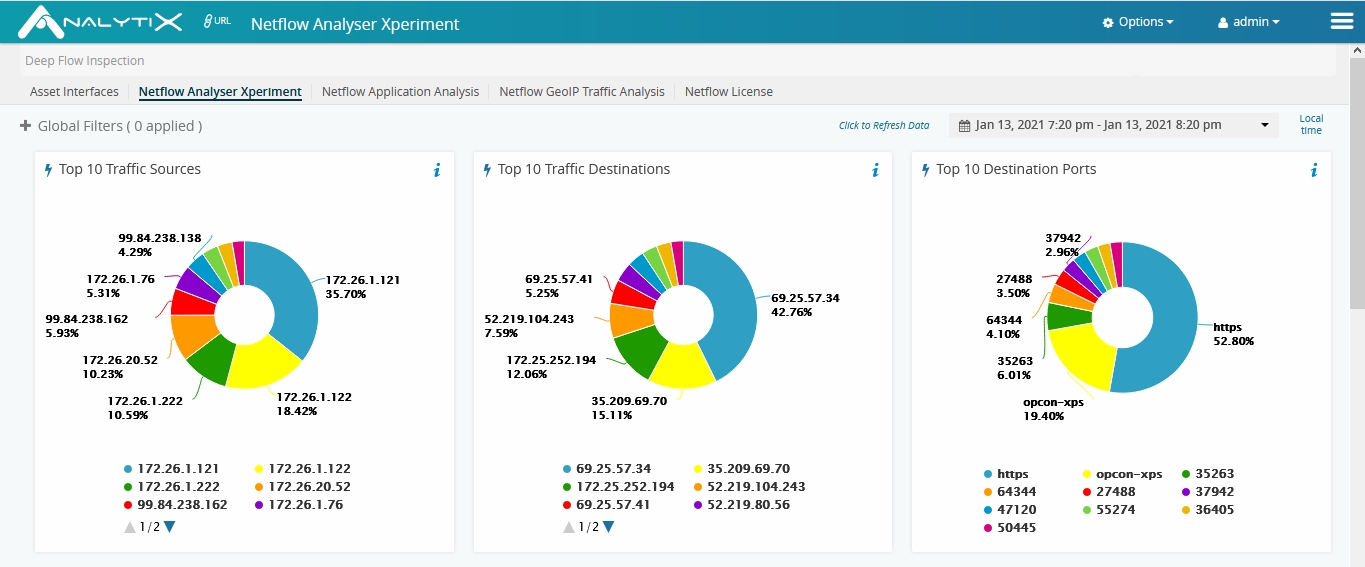
    Rather than acquiring a separate platform to analyze network traffic, OpsRamp is adding an OpsRamp NetFlow monitoring module, for analyzing packets using the NetFlow protocol developed by Cisco, and an OpsRamp Unified Communications monitoring module, for analyzing voice and collaboration data.

    OpsRamp NetFlow provides real-time diagnosis of network latency across wide area networks (WANs). It generates alerts based on network traffic utilization, and delivers insights into network utilization patterns by identifying source, destination, protocols and applications that impact services.

    OpsRamp Unified Communications works in a similar way, surfacing alerts and insights about traffic patterns impacting, for example, Zoom or Microsoft Teams.

    With more employees working remotely, the need to analyze network traffic has become more acute, said Byrne. Network performance degradations can have a major impact on overall application experience, Byrne said.

    Communications and collaboration platforms like Microsoft Teams pose particularly stubborn challenges, because they offer IT teams little to no visibility into that traffic, Byrne said.

    It’s unclear whether – and to what degree – networking and other IT operations will converge, but as AIOps platforms become more accessible, the ability to correlate IT events across multiple infrastructure classes as they transpire will steadily improve. While that may not lead to IT role consolidation anytime soon, it should enhance the level of collaboration teams can achieve.

    In the meantime, AI is poised to have a profound impact on how IT environments are managed. The amount of time spent in “war rooms” performing root cause analysis can be sharply reduced through the use of machine learning. As algorithms surface insights, IT teams will be better able to proactively address issues before they have a major impact on application performance and user experience. It may take time for IT teams to fully trust AIOps platforms, but in the near future, IT professionals will avoid working for organizations that don’t have such platforms in place. For IT professionals, keeping complex application environments running without AIOps platforms will be nearly impossible.

    Of course, transitioning to any type of new IT management platform is no small undertaking. However, as AIOps platforms continue to evolve, the overall cost of managing IT should also decline as leadership justifies the costs of these tools.

  • Focus on High-Level Policy Requirements to Accelerate Network Processes for DevOps

    Focus on High-Level Policy Requirements to Accelerate Network Processes for DevOps

    Network operations traditionally has been the missing piece in DevOps processes. It’s not difficult to see why. Network management has lagged behind server and workload automation. Updating network policies and configurations typically requires a great deal of analysis, testing and time, undermining the goal of DevOps agility. But once we shift how network devices are administered and how changes are validated, there are emerging ways to incorporate network updates and policies into DevNetOps processes through automation.

    Shift the Focus to Policies, Not Configurations

    DevOps has taken off, thanks in part to the ability of virtual networking and software defined networks (SDN) to automate the placement of workloads, establish connectivity and deliver Layer 4 to 7 services in a few minutes. But virtually all network policy updates, particularly those addressed in the underlay, were constrained by having to reconfigure individual network devices through traditional management platforms or command line interfaces (CLI). New application deployments may require new network paths, access to cloud resources, punching holes in firewalls, etc. There was no way to automate these policy-related tasks through existing network management platforms, and DevOps processes were limited to simple changes that could be made in the overlay network.

    Figure 1: The CLI management model and box-by-box management, in general, do not facilitate DevOps processes, which require higher level policy specifications and requirements. DevOps requires the automation of such policy analysis and verification.

    What’s wrong with updating individual network devices through CLI? Network administration is hampered by the inherent nature of IP networks individual devices never have a holistic end-to-end view of network policies and behavior. They are usually configured to know what to do with traffic locally, when to drop it and when to forward it to which nearest neighbor. This is not how policy requirements are formed (see Figure 1).

    If a new DevOps deployment needs to ensure a rack in Data Center 1 can reach a rack in Data Center 2 through a specific secure gateway, then to a cloud-hosted database and return traffic appropriately, then we need a much broader, path-based view than any individual device or CLI can give us. If we are going to automate any of this analysis or verification, we are going to need a solution that maps our intended policy requirements to network implementations across many devices.

    Intent-Based Networking Aligns With Policies and Intent

    This is where intent-based networking (IBN) can help. IBN can help bridge our application policy requirements with the network design and configuration. It can allow us to verify if a particular policy requirement is supported in the network currently or help with a path-oriented search to quickly identify which devices need to be updated to deliver the particular policy. Changes, such as updating a firewall rule, ultimately may still be made to a single device through a CLI, but we have accelerated the analysis if the policy is currently supported, what changes need to be made and how such a change may adversely affect other existing policies and requirements.

    For example, it may be an enormous benefit to application development teams prior to deploying a new workload, to be able to determine if connectivity from our Rack 1 servers to a remote database is available for new traffic requirements. Typically, this might involve a request to the network team, which would have to analyze the policy requirements or arrange for a test scenario. A trouble ticket request such as this would take more than just a few minutes, even if the network team could jump right on it.

    Application Team Self-Service

    Imagine instead the application team could self-service their request by querying an IBN system that could immediately verify the implementation of the policy. Perhaps the application team could use a simple internal messaging platform such as Slack to specify their policy requirement and get an immediate answer without further analysis by the network team. They wouldn’t even need to learn the GUI or capabilities of the underlying IBN platform with a Slack messaging front-end.

    An IBN solution gives teams the power to avoid thinking in terms of individual device rules and opens the door to end-to-end automated policy analysis for the first time. Application teams could never be expected to understand firewall configurations or be able to self-service their queries about those capabilities, but they can think in terms of high-level application policy requirements and end-to-end path behavior, which IBN platforms can deliver (see Figure 2).

    Figure 2: A sample policy query is constructed in the top bar, as the IBN platform shows a number of available paths between data centers that map to the policy requirements.

    Automating Network Verification

    To further accelerate key network policy changes required for DevOps processes, imagine updates are required to individual devices in the underlay network. Not only can those changes be identified nearly immediately now through IBN, but also the verification that the changes were made correctly and didn’t adversely affect any other applications or policy requirements can be completely automated. These IT tasks of analysis and verification were usually the most manual and time-intensive in the network operations workflow. But now that much of the workflow can be automated, DevOps can benefit greatly.

    The verification process would consist of a long list of existing policy requirements that were already in place and implemented. After a proposed change to network configurations, all of those policies could be analyzed quickly to determine if the new update adversely affected any prior requirements, preventing rollbacks or potential security or compliance breaches.

    The question naturally arises, What is really enabling this shift in network operations from a box-by-box focus to an end-to-end, path-oriented policy focus? IBN platforms have generally replicated much of the analytical intelligence of network engineers to determine overall behavior from analyzing individual device configurations and state information. Much of this intelligence is based on mathematical models of the running network in software and much less so now on analyzing live traffic under limited scenarios. This analysis of the mathematical model in IBN platforms now can provide definitive verification of policy requirements for the first time, and even identify configuration errors long before they can cause loss of service or an outage.

    The key to accelerating network analysis and updates in support of DevOps processes is to shift focus up from individual box-by-box device management and CLI interfaces to focus on end-to-end network behaviors that align with application policy requirements. Application team self-service for many policy-related network requests and automation of network verification tasks are just a few of the benefits for DevOps teams that IBN can deliver today and into the future.

    — Chiara Regale