Tag: data security

  • 4 Challenges OEMs Face When Implementing New Technology

    4 Challenges OEMs Face When Implementing New Technology

    Like many others, the manufacturing industry is moving to a subscription-based business model. This new way of doing business is being referred to as servitization and it is forcing manufacturers to no longer strictly sell new products, but instead sell access to and the outcome those products deliver. This is fundamentally changing the way manufacturers have traditionally done business and is not only encouraging a shift to subscription-based pricing models, but also Products-as-a-Service.

    As manufacturers implement the processes and resources necessary to make servitization a reality, implementing new technology will be key to success–laying the foundation for success today and in the future. More specifically, machine learning and predictive analytics will become especially important for predictive maintenance, process optimization and supply chain management. While there are opportunities to capture a significant competitive edge using these technologies, there are also significant challenges specific to the manufacturing industry. Some of these noteworthy challenges include:

    Efficient and Secure Data Connectivity

    Complex, capital equipment (think construction equipment, agricultural equipment or industrial machinery) is built and designed to last, on average, 30 to 40 years. As a result, these machines must be very reliable. Today, however, the majority of equipment in service has upwards of 20 to 30 years remaining in its lifespan. However, almost none of these products were built or designed for IoT connectivity–creating the challenge of retroactively fitting existing equipment with IoT-enabled parts.

    In addition, a majority of this equipment operates in some of the harshest and most rugged environments in the world. Whether it’s an electro-submersible pump 3,000 feet below the surface of the ocean or a mining truck in a remote mine with little to no cellular connectivity, efficiently connecting this type of equipment to collect relevant data is a difficult challenge and oftentimes cost prohibitive.

    Even if manufacturers manage to connect this equipment, there is an added challenge of doing it in a way that ensures cybersecurity. Rogue elements that could gain malicious access to this equipment could have serious safety and economic consequences–and could even implicate national security in some instances.

    Sparse Data

    Newer machine learning algorithms, such as Deep Learning and Recurrent Neural Nets, have been groundbreaking for capabilities like image and voice recognition. However, these algorithms are also very data hungry, requiring millions–if not billions–of similar data points from millions of users.

    Because complex industrial equipment is intended to last for decades, failures are generally rare. Think about it: There have been just a handful of actual engine failures during flights for the entire global commercial fleet, which amounts to nearly 30,000 aircraft. Assuming an average of 2.5 engines per plane, the global commercial aircraft engine fleet is less than 100,000. While certainly a large number by itself, it is relatively small when considering these engines vary greatly in design and thus any single engine type that could be modeled together would be even smaller.

    Manufacturers of industrial equipment or durable goods also tend to be reluctant to share data, especially if their competition could potentially benefit from it. The challenges of efficient connectivity, rare failures and relatively small numbers of similar equipment in a fleet leads to the sparse data problems in the Industrial IoT (IIoT) realm.

    Domain Expertise

    While domain expertise to successfully apply machine learning and predictive analytics is required in the consumer world, in the manufacturing space, it is much more critical. Machines and processes are designed using physics and engineering principles. And, the context in which machines operate and behave is very important for accurate training models and analyzing results. Without appropriate context, there becomes a “garbage in, garbage out” problem as sensor data and machines alone do not capture or provide any context. This is where domain experts who can make sense of historical data for accurate model training as well as interpreting results are critical.

    The impact of making an incorrect decision can have expensive–and sometimes catastrophic–results that aren’t seen in the consumer-facing domain. For example, re-routing an aircraft mid-flight could cost millions of dollars for an airline. If that decision is made because of bad data and an incorrect prediction, it would be a very costly mistake. For us as consumers, we have some aspect of domain expertise for problems in the consumer world, whereas a trained pool of engineers with the relevant design, operational and maintenance expertise is a very small pool. And this, combined with the problem of baby-boomer retirement where expertise is lost at a significant rate, there is a real challenge to capture the knowledge and best practices required to deliver value.

    Data Ownership

    Currently in the manufacturing sector, there aren’t industry standards for data security, ownership or accessibility. Currently, many manufacturers are wrestling with who owns and has access to the data. Is it the manufacturer who designs and builds the equipment? Or, is it the third-party entity that rents and operates it? Or, is it the financial entity that may be the legal owner? What about the supplier that provides a component that is part of a larger piece of equipment (e.g. an aircraft engine that works in conjunction with the aircraft, with each component manufactured by a different entity)?

    Manufacturers being risk-averse in nature, are being very conservative in interpreting and applying the myriad patchwork of regulations being brought in other industries, including data security standards. This is limiting them in adopting more connected processes and strategies. The industry must accelerate efforts to establish industry-wide standards as well as regulatory frameworks for data ownership, data-sharing, interoperability and testing of systems and end-to-end security to overcome the roadblocks for faster adoption of these technologies and realize the promised benefits.

    The shift to servitization will require manufacturers to completely re-think how they operate–new organization structures and skilled resources, new incentive models, new KPIs to measure success and new processes. They will have to become data-driven organizations investing in technologies to connect and track products, collect data and efficiently analyze massive amounts of operational and service data, using technologies like IoT, machine learning and predictive analytics. This will strain manufacturers’ existing organizations and IT infrastructures, necessitating investment in highly scalable, cloud-based solutions to lay the foundation for a successful future. Manufacturers that embrace these changes will be the winners, while others will struggle to stay relevant. In fact, the ones that can successfully adapt to these paradigm shifts will be able to gain significant competitive advantage and market share.

    — Vivek Shah

  • Top 5 AWS Security Mistakes: Leaky S3 Buckets

    Top 5 AWS Security Mistakes: Leaky S3 Buckets

    As we get ready to discuss our list of the Top 5 AWS Security Mistakes in the upcoming devopsy.kinsta.cloud webinar, we wanted to provide a preview of the type and depth of information we’ll be discussing. Since the most-talked about, and likely the most vulnerable, aspect of AWS security is inevitably those leaky S3 buckets, it’s a given we’ll tackle S3 first.

    In this article, we’ll dig into S3 buckets, explain how they become vulnerable, cover eight different ways they can inherently become open to the public and how to find and protect any public facing S3 data.

    The S3 Bucket

    S3 is one of the oldest services in AWS—so old that parts of it still support XML-based policies instead of the JSON you see everywhere else. S3 also has a lot of features that aren’t as commonly known or used anymore, such as allowing someone else to host put objects in your bucket yet still maintain ownership of them.

    Think of an S3 bucket as a server that can have subdirectories and files. Because S3 buckets can have a different root url (e.g. “dops.s3.amazonaws.com”) and have their own life cycle and settings, we tend to think of buckets as servers, not directories. Also, directories in S3 allow you to organize objects, but don’t have any distinct settings of their own, other than a name.

    AWS has a wide range of use cases it needs to support, which is why we have all these mechanisms. Sharing publicly, within an account, between accounts, hosting websites and so on, creates complexity. The good news is S3 always defaults to secure and private. The bad news is AWS allows human beings to use it (and therefore weaken security) and can be confusing to manage. For example, S3 supports both read and write permissions (and list, for buckets). It’s possible to have no public read but public write permissions, which could lead to people placing bad files in your directories.

    8 Ways AWS Data Becomes Public

    There are at least eight different ways an AWS S3 bucket can inadvertently become open to the public and be exposed to a data breach.

    • Bucket ACLs (Access Control Lists): This is an XML document that defines the first layer of access. By default, only the account owner has access, but this can be opened up to other AWS accounts or the public at large. Amazon recommends against using these at all, but it’s also the easiest way to make something public quickly, so we see it all the time.
    • Bucket Policies: These are super-flexible JSON policies that allow you to set things such as IP-based and other conditional permissions on a bucket. While this should be the primary way for managing public access, ACLs are the first tab and about three clicks to make something public. It’s this flexibility that leads to mistakes such as opening up to a wider range of IP addresses than intended or using a negative to block access to some IPs but inadvertently granting access to everyone else.
    • IAM Policies: These are the normal IAM permissions you use to control access throughout your AWS account. You can’t make a bucket public with them, since they only govern AWS users, but you can open up access to the bucket by authorizing another AWS service access, and then that service exposes the content.
    • Object ACLs: These are the primary object-level controls. It’s just like a bucket ACL and uses XML to allow access from other accounts or the public. Objects do not necessarily inherit bucket ACLs. You can totally make an object public even if the bucket is private.
    • Explicit IAM or Bucket Policy Statements: IAM policies and bucket policies can have explicit statements referencing the object, which will override the object ACL (if you own the object), since they are evaluated first.
    • Pre-Signed URLs: These object-level policies must be created using code (not the console) and provide temporary access for anyone with the URL. It’s used, for example, to share files for a few minutes or an hour for someone using your app to download a media file.
    • CloudFront Origin Access Identity: CloudFront is the AWS content delivery network and can serve as the front end to S3. You can create something called a CloudFront origin access identity to write an IAM policy that allows CloudFront to access the S3 content. If the CloudFront allows public access, it can access the S3 content and that won’t show in a bucket policy or ACL.
    • Cross Origin Resource Sharing (CORS) Policies: CORS is required if you use S3 in a website and don’t want the browser to break due to same site security settings. CORS in S3 won’t override an ACL or bucket policy but could mask public access in limited situations where the data is exposed in the web code through the authorized site.

    All put together, AWS evaluates IAM permissions first. Within those, the only one to make a bucket public over the web is the CloudFront Origin Access Identity. AWS then turns to the bucket ACLs and policies for any explicit deny statements. Then it looks at the object ACLs for public access. If you make an object public and the bucket policy doesn’t have an explicit deny, it is still public, but otherwise a good bucket policy will block everything. Besides, a lot of the problems are open bucket ACLs, not object ACLs.

    4 Ways to Find Your Public S3 Buckets and Protect Your Data

    What’s the best way to find public buckets? It’s relatively easy.

    1. Log into the console, click on S3 and look for the Public tag. AWS uses some advanced back-end math to evaluate all the bucket policies to figure out if something is public, which catches most of the fringe cases, but it does not show if the bucket is private and objects in it are public.
    2. Check CloudFront to see if you use any origin access identities. It’s easier to look here than in all your bucket policies (usually). This saves you from looking through object ACLs as well.
    3. Check any CORS policies, if you use them. This is the least common situation and I even hesitated to complicate this post by mentioning them.
    4. The bad news … there is no easy way to find public objects. Even finding them programmatically can be difficult if you have a large number. Also, changing a bucket ACL doesn’t cascade to the object ACLs so you need to run through and fix them one by one. However, if the bucket is locked down the attacker would need to know the full URL/name of the object to find it. It’s not perfect, but it’s better than nothing.

    That’s it. Although, if you know of any other fringe cases, please don’t hesitate to let us know. While conducting assessments, we find well over 90% of the problems are just basic bucket ACL and policy mistakes. Object ACLs are also an issue, but slightly lower risk since you need the exact URL to find them if your bucket is otherwise secured properly.

    If you are curious about the other 4 Top AWS Security Mistakes, sign up for the Aug 14 webinar.

    — Mike Rothman

  • American Express Uses DevOps for Better Breach Response

    American Express Uses DevOps for Better Breach Response

    It was 6 a.m. Saturday when the phone rang and awoke the American Express CIO. When the phone rings at 6 a.m., it is never good news. Never. This instance was no different: In this case, a third-party supplier just suffered a breach, and that breach would impact American Express cardholders.

    Immediately following that call, the CIO activated the company’s Cyber Crisis Response team. The job of the Cyber Crisis Response team is to help identify impacted cardmembers and prepare to reach out and assist any who have questions or need help regarding the breach.

    The need to respond swiftly to customers and provide them with the correct information is essential today, not only to stay on the right side of regulators, but to also help customers avoid fraudulent transactions and identity theft. When it comes to such effective data breach incident response, rarely does DevOps come into play—but the experience American Express shared at the most recent DevOps Enterprise Summit revealed just how better DevOps organizations can be when it comes to effective breach response.

    Within hours of the initial call between the CIO and the Cyber Crisis Response team, the primary breach response was divvied into three teams. The first team focused on what data breach bridge teams typically focus on: how to identify impacted customers. The second team was comprised of business and product owners, as well as customer care staff, whose objective was to take the findings from the response investigation and communicate them to American Express customers.

    The third team consisted of DBAs and system specialists, who understood all the systems, as well as enterprise architects, who might be able to quickly solve any technical challenges that arose.

    Getting to the Right Breach Information

    By 3 p.m. that Saturday, the first team determined that it could pull together all of the information it needed to identify affected cardholders. That was the good news. The bad news was that there would be tens of millions of production records that would need to be evaluated to make the final determination.

    If the team was to pull those tens of millions of records in production, the demand would start to slow those production systems. “How do we pull these records out of production without impacting our availability? That was the challenge,” said Aimee Cardwell, vice president of Engineering, Consumer Product Development at American Express.

    As the day moved forward and the teams worked to find a way to access those production records without impacting availability, one of the engineers on the team pitched an idea that would have been scoffed at in most organizations: Why don’t we clone production? But the novel idea wasn’t immediately rejected. The team on the call began to weigh the pros and cons of cloning production, and concluded that it could, in fact, clone production quickly, and all of the impacted card data could be aggregated without negatively impacting American Express’s servers and associated availability.

    After the team successfully cloned the production systems, it worked all night to identify the impacted card members, which required cross-referencing the cloned production system with other data stores, Cardwell explained.

    “What was really important here was the comfort level everyone had when it came to bringing up an idea that was really off the wall. And, in the end, they came together to make it happen because together the various teams had a string understanding of the people, technologies, and processes in place necessary to succeed,” said Chad Avery, director, DevOps implementation at American Express.

    It was now 6 a.m. Sunday and the teams had worked nonstop since the CIO’s phone rang Saturday morning. The teams managed to evaluate the relevant data from various systems and collected a list of potentially impacted card members. And after a careful analysis, they were able to determine who had been affected by the breach and who hadn’t.

    What made this success possible? Both Avery and Cardwell believe that it was the integration of business, product and technical teams. “The fact that we had business, product and technical teams working together in this incident was a huge win for us,” Cardwell said.

    Avery contended the ability for an organization to successfully integrate its technical, business and product teams makes the difference. If those teams hadn’t been working together from the beginning, he said, they may not have been able to find a solution and, if they had, it would have taken much more time to do so.

    Disclosure Day, and a Final Big Win

    It’s a good thing it worked out quickly. By Monday morning, the breached third-party was ready to go public with its data breach disclosure. That announcement would immediately impact not just American Express cardmembers, but those of most other credit card providers as well. Many customers would have pressing questions about whether their accounts were impacted, and, if so, what to do.

    Customer service lines had to be ready.

    That proved to be the final challenge that needed to be solved: How would customer service representatives know which customers calling were affected? Tight team integration and collaboration proved to be a deciding factor once again.

    The engineers on the product team had spent the previous 24 hours building a tool that they shared with American Express customer care professionals. When individuals called the customer care team, the tool could alert the team whether a customer was in the impacted group.

    The tool also came equipped with a data collection feature that would enable everyone to learn from the event and even prepare better for next time. “We want everyone to get better. We want ourselves to get better,” Cardwell said. “We want to know what percentage of customers who called were impacted, and what percentage of customers that called were not impacted. We wanted to know our response time on those customers. We wanted to know any other data that would help us to do better next time.”

    And it will have been that dedication to collaboration among technical teams, business units, developers, operations and security teams that enabled them to quickly and successfully manage a third-party data breach and prepare themselves to do even better next time. “They all were able to develop a solution quickly. They were able to identify the customer impact, design a solution, build it, test it and get it deployed. And, oh by the way, the teams did it in a weekend,” Avery said.

    — George V. Hulme

  • Moving Security Beyond SSH and PKI

    Moving Security Beyond SSH and PKI

    SSH (secure shell) is still the most common method of remotely accessing a Linux server, which makes it a common target for attackers attempting to infiltrate corporate networks. While the protocol itself carries a number of advanced security properties, it does allow for human error, opening the door for unwarranted privileged access to sensitive company resources.

    Keeping track of all valid credentials across a company is something that IT departments continually struggle with. The stakes are high if they fall into the wrong hands, essentially handing over the proverbial “keys to the kingdom.” A recent study by Dimensional Research found that 90 percent of respondents do not have a complete and accurate inventory of all SSH keys, and 63 percent don’t actively rotate keys, even when an administrator leaves the company.

    Managing privileged access to servers has always been a rigorous exercise in key management. There are a number of best practices to follow to avoid the many common pitfalls, such as storing private keys in a vault service or maintaining a strict rotation policy, but they don’t get to the crux of the matter: The credentials are static. Here’s a (not so) crazy thought: What if we got rid of them entirely? Static credentials are a thing of the past, representing the failed perimeter model of corporate security.

    Problems with Traditional PKI

    The traditional PKI (public key infrastructure) that backs SSH was built for a different time, when a key exchange meant enough to grant trust. Without a proper authentication process, there is no clear way to attribute to a person, nor a feasible way to provide any historical context. As these keys get issued and distributed across fleets of infrastructure and cloud services, the challenge only compounds. Each public key accrues more privileges over time; the longer it’s been alive, the more likely it’s been shared with a resource, making it extremely difficult to track and subsequently revoke. With this model, time is a bug that can’t be fixed.

    Authorizing a specific request should also go beyond the mere presence of the public key within the authorized_keys file of the server. Independent of authentication, authorization is about who should and should not be able to access a specific server from a known device, and what permissions they have on the machine. You may have a policy that states only members of the engineering team can only access a production server through a bastion host. Adhering to that policy in practice, however, is impossible without a proper authorization process.

    Enter Zero Trust Security

    We’ve come to a consensus across the industry that the network perimeter is breaking down in the modern cloud era. It’s time to take that one step further and agree on a new model of trust attestation to match, where decisions are removed from the network layer and handled correctly at the application layer. Flipping the model around like this means starting with zero privileges by default, and only granting access to a resource once a request has been fully authenticated and authorized. Verify, then trust—the mantra of Zero Trust.

    Google’s BeyondCorp is the marquee example of Zero Trust done right, an internal initiative meant to better secure how employees access corporate resources. The end result is a carefully crafted distributed system that makes real-time trust decisions based on what is known about a user and their device, allowing the thousands of Googlers across the globe to work securely from any location without the use of a VPN. BeyondCorp is just one example, and we’ve seen more and more companies start to adopt a similar approach.

    Ephemeral Client Certificates

    The thinking behind ephemeral credentials is that a request triggers independent authentication and authorization processes, where a trust attestation is made against the policies of the resource. If valid, a single use credential is issued, which is used to initiate a secure session with the resource. This credential is tightly scoped to the specific request, rendered useless in any other scenario.

    The fundamentals of this workflow can be accomplished through a client certificate-backed PKI architecture. Client certificates became a supported feature of OpenSSH in 2011 with the introduction of version 5.4. Unlike standard SSH keys, which carry no metadata, certificates are cryptographically verifiable metadata objects that can inject information such as usernames, roles and more. Time now becomes a feature because the scope of the credential truly represents a dynamic attestation of trust.

    The fine-grained access controls inherent in a client certificate-backed PKI architecture solves for the problems with SSH keys because the credential can be tied to an actual user. The threat vector of lost, stolen or misused credentials is also eliminated, saving managers from the numerous headaches associated with SSH key management.

    To put these ephemeral credentials into action, you need to surround the client-certificate PKI with the supporting access controls. Companies with the means can build their own system similar to Google’s BeyondCorp, but this is no simple task, as you need to operate your own Certificate Authority along with a distributed system capable of performing dynamic authentication and authorization against policies in real time.

    About the Author / Ivan Dwyer

    Ivan Dwyer is the VP of Product Marketing at ScaleFT, working with the community to raise awareness around BeyondCorp and Zero Trust for organizations of all kinds looking to modernize their security architecture. Connect with him on LinkedIn and follow him on Twitter.

  • Application Development: Ripe for Encryption

    Application Development: Ripe for Encryption

    As businesses look to accelerate application innovation and move more and more workflows to the cloud, their needs can be at odds with the need to secure the data. This article will outline current challenges faced by application developers to protect data in this new cloud/DevOps environment. It will also provide insights on how to eliminate the burdens from the DevOps team while significantly improving the security of data stored in cloud databases.

    Cloud Migration

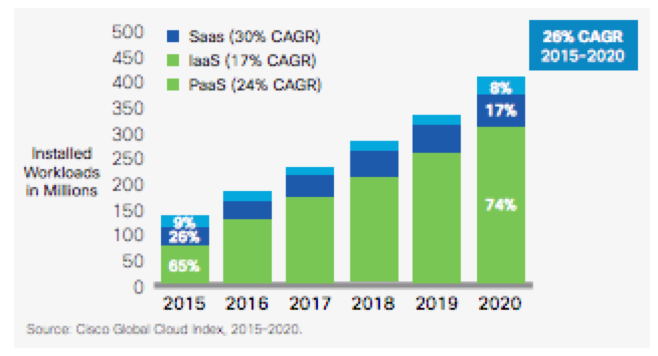
    Businesses are looking to accelerate application innovation and move more workflows to the cloud.  Cisco’s Global Cloud index projects a 26 percent growth rate of cloud workloads between 2015 and 2020. As this trend accelerates, IT project owners increasingly run into audit and compliance requirements that prevent transfer of sensitive data outside the traditional security perimeters. The overwhelming benefits of the cloud including the ability to obtain unlimited scalability of infrastructure, set up and tear down rapidly and gain cost advantages due to economies of scale make this trend impossible to contain.

    Application Development Challenges in the Cloud Era

    As applications migrate to the cloud, application developers are using microservices to accelerate application development because they dramatically reduce development time and help them focus on their key value proposition, be it hailing a cab or booking a place to stay. The success of microservice players including Twilio and Braintree demonstrate the benefits of delegating non-core features such as calling, messaging and payment processing to domain experts.

    Surprisingly, when it comes to something as critical as data security, enterprises still leave the burden on the application developers. This distracts them from working on business objectives as they worry about security problems such as how best to encrypt at data and when to change encryption keys—problems best handled by security domain experts.

    Securing Cloud Workloads

    As it turns out, encryption is not easy to incorporate into enterprise workflows. Encrypting application data prevents databases from processing it. Then there is the problem of managing keys, which could be lost or become stale. Encrypting cloud workloads brings a whole new set of challenges as the issue of control comes up. If the cloud vendor has access to the keys, what prevents them from being subjected to a subpoena from a government that is using national security as justification to decrypt the data? Add to that the complexity of migrating from on-premises databases to the cloud without risking the data.

    Pragmatic Approach

    A pragmatic approach to solving this problem is to use existing encryption solutions that provides the detection, classification, policy enforcement and monitoring of sensitive data at all times. These solutions can protect application data at a columnar level but easily integrate into existing enterprise workflows. Application developers can identify sensitive data based on a data classification matrix and the sensitive data is automatically protected as it is inserted into the database. Using existing cryptography techniques, that data can even be processed without ever being decrypted, ensuring the highest level of security.

    About the Author/ Ameesh Divatia

    Ameesh Divatia is CEO and Co-Founder of Baffle, developer of the world’s first solution for end-to-end database encryption. Ameesh is a serial entrepreneur with a track record of converting innovative ideas into successful businesses. Connect with him on LinkedIn.

  • When Did Safety Nets Become Optional?

    When Did Safety Nets Become Optional?

    There are various reasons why some organizations would not be interested in protecting their data. These reasons could range from the lack of financial resources to the lack of non-financial resources, such as engineers to implement a solution. Regardless of whether there is a good reason to not protect your data, the net result is the same: If organizations don’t do it and something bad happens, they will be in a world of hurt.

    Data is the lifeblood of any business. It’s true that not all data is created equal, so some organizations may be comfortable losing some data. And it’s also true that there are some systems or applications that are built to not only tolerate data loss, but also seamlessly absorb the loss of data. The reality is that this is not 100 percent of the systems in your business, nor is it 100 percent of the data. If you were to completely lose the users table in your application or have it suffer from data corruption, how would you explain this situation to your customers? Can you realistically tell them that the money wasn’t there, or you didn’t have the resources to protect their data and yours? What type of trust would that instill in them for you as a provider of services? What type of trust would that instill in the business for your technology team?

    For most businesses, data protection should be thought of as a component of the overall security strategy. If you wouldn’t set up a network infrastructure without a firewall for protection, why would you create an application without protecting the data that powers it?

    Unfortunately, some form of system failure is inevitable. There will come a time when something bad happens. The best thing you can do is to be prepared as possible. Providing yourself with a safety net when this happens is doable, but shouldn’t be thought of as optional. There are some basics tenets that should be involved in providing a proper safety net. The most important of them is to plan for and failure and test your recovery procedures. This team education is your primary line of defense against disaster. It will help mitigate many of the potential failure scenarios through awareness. Data protection is for what happens when things get past this point. And protecting data should not be optional.

    — Jeannie Liou

  • Threat Protection Appliances: As Valuable to Security as Your Toaster

    Threat Protection Appliances: As Valuable to Security as Your Toaster

    Nothing in the IT security community is as widely deployed and universally reviled as anti-virus. But, threat detection appliances, including intrusion prevention appliances, application firewalls and advanced threat protection appliances, should be almost as reviled. These appliances are nearly as useless as they are toxic. They do a horrible job finding problems and ultimately create more costs for security organizations than they save by crippling organizations with false alerts.

    Protection is Impractical

    In terms of security, detection appliances have never been effective, since the network makes a lousy location for any kind of security hub from the outset. Few network protection devices can even prevent attacks, much less respond to them, and most appliances are simply used for detection, even those with rudimentary prevention capabilities. In theory, an intrusion prevention device can drop a connection before letting the bad stuff through, but, in practice, that seldom happens.

    In most enterprises, security detection appliances are sitting off to the side, only capable of looking at a copy of network traffic as opposed to the actual network traffic itself. Organizations choose this less-than-ideal setup to avoid the inevitable network latency issues that otherwise occur when a single point of failure such as an appliance gets flooded or has a bug, for example.

    That’s not to say a network appliance can’t respond to an attack in progress in any way. If an appliance determines a particular network connection is malicious, and there is complete confidence in the appliance’s judgment, then an organization can have the device signal something that is in-line, such as a router or firewall. That device can then take action by killing the connection or blacklisting the offending IP address.

    The problem with that scenario is that often there isn’t enough context at the network layer. If a network appliance tries to make fast decisions, it’s going to produce an extraordinarily high number of false positives, making its judgment suspect.  Whenever there’s any doubt about an appliance’s judgment, it shouldn’t be trusted to make decisions whether to take action. Action in such circumstances could affect legitimate connections, which could have catastrophic consequences for the entire business.

    Appliances: What’s Really Happening  

    While old-school devices (e.g., traditional intrusion prevention devices) sacrificed accuracy for speed, today’s more sophisticated appliances do a better job of processing available data, which gives vastly superior results with far fewer false positives.

    The typical “next-gen” security detection appliance (such as an “advanced threat detection” appliance) tries to give as good an answer as possible about whether the connection represents an attack by simulating the end destination of the traffic to predict whether anything malicious will happen. This is done by running a copy of the traffic into a specialized virtual machine, and then monitoring the simulated outcome. If something malicious is found at the destination in the virtual machine, then there’s reasonably high confidence that the connection represents an attack. The goal of this approach is to limit false positives to the point where the organization can respond to every event. Some organization may even be willing to automate that response, by killing the connection if a suspected attack is detected in time, for example.

    While this class of a device tends to reduce noise, it doesn’t eliminate “false negatives,” which allow attacks to sail through without being noticed. In fact, some believe they make the false negatives problem of appliances even worse.

    If an attack works against an actual end user but not in the virtual environment, it could easily be overlooked by an appliance. Imagine a company buys an appliance and configures it to test network traffic by sending it to a virtual machine running Windows 10, but the traffic being tested only runs its proper course if running on Windows 9. In that case, if the network traffic’s destination is a user’s desktop that is running Windows 9, the attack can easily be successful, since the appliance won’t find the problem (because it’s running Windows 10).

    This class of problem was first discovered for network intrusion prevention by Ptacek and Newsham in 1998. While “next-gen” technologies are capable of more accurately modeling the systems they’re trying to protect, this problem will never go away when protecting from the network. Even when companies attempt to force all systems onto a single “gold” image, exceptions tend to quickly come out of the woodwork. For example, users within development and technical organizations often may find themselves in need of software that isn’t on the gold image, or they may need to run older software for testing purposes. Also, the gold image approach tends to only work for desktops.

    Making things worse, the “black hat” community can get their hands on the same appliances and reverse-engineer the virtualization technology and detection techniques it uses. Then, they figure out how to detect whether they’re running on such a device. Once they’ve done that, their real-life attacks will go unnoticed on the appliance, while still reaching the intended target.

    In the “advanced threat detection” appliance space, this problem is prevalent. A dirty secret of the appliance sector is that the majority of detections from these devices are discovered on machines that have already been infected, which are then beaconing out to external command-and-control infrastructure. If instead, these appliances had detected the actual inbound threat, the attack might have been prevented.

    Alert Fatigue: Poor Detection Quality  

    Drowning in alerts is perhaps the single biggest problem IT sSecurity organizations face. Even after all the raw data coming from around the network goes through a best-of-breed correlation and analysis engine, there is still an overflowing sea of information. These besieged engines generate so many alerts that organizations can’t possibly and cost effectively provide proper review for every priority alert they would like to investigate.  As it turns out, the vast majority of alerts are likely to be false positives anyway. Even the best talent can often and easily miss real incidents when pouring through so much superfluous data.

    Imagine the proverbial needle in the haystack, but multiply the number of haystacks so that the entire state of Kansas is covered in hay. Now you can begin imagine the scope of the problem. Sure, you might find an occasional needle or two—especially with some ingenuity. But, there’s virtually no chance that you could tractably look for them all even if you wanted to. That aside, your vigilance is likely to wane for at least a haystack or two, which is all it takes for one devastating needle to puncture your organization.

    Security appliances—particularly more traditional devices—represent the single biggest contributor to alert fatigue by far.  When you’re limiting your investigation to network traffic and trying to get work done as quickly as possible, you don’t have enough context to make good decisions. So, if you want to err on the side of caution, keep in mind that appliances will give you plenty of reason for caution, while uncovering few actual problems.

    If we are serious about eliminating the problem of alert fatigue, we must move beyond appliances and begin managing all of our detection at the machine-level. On a machine we can see what’s happening on the file system, what’s happening in memory, what’s happening in the OS and even what’s happening in the application (for common applications). That’s far more telemetric data to isolate signals and ignore noise (assuming we use all that data wisely).

    Many of the “next-gen” approaches live in a poor middle ground; they try to simulate the machine but generally can’t afford to create an accurate or effective simulation. If an organization is trying to protect a thousand servers, how many appliances would be needed to thoroughly simulate every inch of network and each bit of traffic that crosses? The answer is about a thousand appliances, which is far too cost-prohibitive. Most organizations prefer one appliance to protect hundreds or even thousands of machines, which is clearly insufficient.

    The Future: Will Be Worse

    The standards community is finally embracing the less is more philosophy as it prepares to launch TLS 1.3. This new protocol will ensure there aren’t straightforward back doors to subvert end-to-end encryption. Right now, most security appliances rely on those back doors as a means to provide detection (they need to be able to see the decrypted traffic). The new standard is going to require IT organizations have man-in-the-middle for every hop if they want their security appliances to work. That will add massive latency and expense, so most people won’t do it and appliances will become even less reliable as a result.

    Additionally, the rise of containerization and microservices will exacerbate the situation further, since putting container-to-container traffic on the same machine is well beyond the reach of any appliance.

    Security appliances may seem better than anti-virus, because they occasionally provide some value and don’t add as much attack surface. On the other hand, anti-virus software doesn’t drown organizations in an ocean of spurious reports. Besides, at least anti-virus now has credible alternatives, unlike an appliance. Security appliances are not worth the silicon they’re printed on and should be cursed in the same breath as anti-virus.

    About the Author / John Viega

    John Viega is CEO of Capsule8. Previously, he served as EVP of cloud security provider Silversky, where he led the technological advancement of the company’s cloud-based security suite. Following the successful acquisition of SilverSky by BAE Systems, John went on to serve as EVP of Product. Prior to SilverSky, John was SaaS CTO at McAfee. John is an award-winning author with a half dozen books to his name, including “Building Secure Software” and “Network Security with OpenSSL.”  He also co-designed the GCM encryption algorithm, which is nearly universally supported in the HTTPS and IPSec standards. Connect with him on LinkedIn and Twitter.


  • Protect Your Data with IRMaaS

    Protect Your Data with IRMaaS

    Anyone who works in information security knows that security is often a treated as a token afterthought. It is the necessary evil that is begrudgingly tacked on with duct tape and chewing gum after a hot new product or technology gains mainstream acceptance. Anyone in information security also knows that security can be done more effectively, at lower cost and with fewer headaches, if it is built into the fabric of the product or technology in the first place. To that end, Vera has unveiled an information rights management (IRM) solution to make it easier for organizations and developers to weave security in from the ground up.

    In most cases, security essentially boils down to data security. It’s nice to be able to prevent malware from infecting a laptop or prevent an attacker from compromising your network, but the real goal is to prevent the malware or attacker from gaining access to or exposing sensitive data. The ability to limit and control access to data, track who has accessed the data—including when and where—and monitor where that data goes and how it is used is crucial to providing security.

    Vera’s core business is based on the notion of securing data no matter where it goes. Vera’s new product is IRM-as-a-Service (IRMaaS), which uses Vera’s software development kit (SDK) and RESTful APIs to allow developers to directly protect and manage access to data within custom-built applications. The ability to easily integrate IRM into an application and automate as much of it as possible has the potential to make better security accessible to a much larger audience.

    “In today’s world, we can no longer afford to treat data security as an add-on or afterthought. Instead, we must establish a security model that can be woven directly into the enterprise software and hardware stack,” said Ajay Arora, CEO and co-founder of Vera, in a press release statement. “We’re building a future where businesses don’t have to worry about where their data travels or who has access. Our team is establishing Vera as the trusted standard for securing and sharing any type of business information. The next step in this journey is to make our IRM platform available as a service to anyone, because this kind of impenetrable and invisible security is key to the success of every business application.”

    One of the defining goals of security—at least security that you want people to actually use—is convenience. The negative perception of security is largely a self-perpetuating cycle. Security is often cumbersome and ineffective because it’s tacked on as an afterthought, which leads both developers and users to dislike security and also treat it as an afterthought. Anything that makes it easier for developers to weave security in at an earlier stage and that provides invisible (as much as it can be) security is a definite win-win.

    Developers can use the Vera client SDK to include the ability to secure data, set IRM policies and permissions and even revoke access to sensitive data right into custom business applications. Legacy applications can be retrofitted with IRM capabilities using the RESTful APIs in Vera’s cloud platform.

    Regardless of its reputation and generally negative perception, effective security is crucial for the long-term success of any application or service. Lowering the bar for implementing effective security—both in terms of cost and complexity—and providing developers with the tools necessary to protect sensitive data is definitely a step in the right direction.

  • Continuous Security Key to Defending Your Data Well

    Continuous Security Key to Defending Your Data Well

    Defending data isn’t easy. If it were, we wouldn’t see new data breach headlines on a weekly—or sometimes even daily—basis. That said, defending data also isn’t rocket science. A new report from Nuix highlights some of the major concerns with protecting data, and also illustrates some of the ways in which consistent vigilance is half the battle.

    The Nuix report, compiled by principal researcher Ari Kaplan, covers a broad spectrum of concerns related to data security. Some of the key findings from the report include:

    • Increased granularity of security budgets: Respondents report there is a growing trend to specify how the security budget should be broken down and allocated.
    • Regulatory impact on spending has doubled: Government and industry compliance mandates continue to take a sizable bite out of security budgets.
    • Greater focus on insider threats: More than 70 percent of respondents have some sort of insider threat policy or program.
    • BYOD continues to play a role in security: 82 percent of respondents have some sort of BYOD (bring your own device) policy in place. A growing number of companies, however, are prohibiting remote access by employees.
    • Cloud adoption slowing: According to the study, about 70 percent of companies are migrating data to the cloud—a number consistent with the previous year—but fewer companies are moving systems or servers to the cloud. More than four out of five respondents agreed that the cloud creates unique cybersecurity concerns, and only 43 percent indicated plans to move systems or servers to the cloud.

    What sorts of unique security concerns does the cloud bring? According to the survey respondents, there are a variety of potential issues, such as:

    • losing visibility into the management of data
    • being at the mercy of the cloud provider’s security skills
    • reduced control over access to data; and
    • confusion about the privacy/legal issues when a government or law enforcement agency wants to access data.

    In a nutshell, none of this is really new or different. Compliance, insider threats, BYOD and concerns over security and privacy in the cloud have been prevalent factors in network and computer security for years—and likely will continue to be for years to come. What has changed, though, is the focus on ways to implement better security and the tools to do it.

    One of the primary issues with traditional computer and network security is that it’s reactionary. Scans provide moment-in-time confirmation that there are no known threats, but do little or nothing to protect against unknown threats or prevent exploits and compromises between scans. DevOps, and continuous security, change the game by enabling organizations to monitor for and detect security issues on a consistent, proactive basis.

    “Security practitioners cannot continue to rely on manual, human controlled processes to defend against attacks,” agreed Andrew Storms, VP of Security Services for New Context. “Automation is a requirement for the next evolutionary phase of security protection.”

    Nick Galbreath, founder and CTO of Signal Sciences, also believes that automation and continuous DevOps principles are key components of effective security. “I have argued that continuous deployment (how rapid the ‘continuous’ is up to the organization and risk-dependent on the nature of the code) is actually the most important security tool since without it, I don’t really know how you make things better rapidly.”

    There are a lot of names tossed around for various aspects of DevOps automation. The actual name is not as important as the actual practice of proactively automating security processes for more effective security. Take a look at the report from Nuix to learn more about the general state of data security, but make sure you embrace DevOps and continuous security if you really want to do something about it.

  • Build security into your app development

    Build security into your app development

    Integrate security testing into your dev process now or else face cyber-attacks later

    The way we develop software has been radically transformed in the last few years. Agility and speed are vital components for any company that wants to compete in the market. In order to achieve that it has proven necessary to break down barriers. The idea of separate silos with developers, operations, testers, and management working in isolation, sometimes even in opposition, is dated and flawed.

    We’ve accepted the logic of bringing development and operations together with the DevOps movement. The recognition that testing is required earlier in the process has come. Now it’s time to apply the same logic to security. It’s time to bring InfoSec into the fold.

    The security threat

    Trends like cloud computing, big data, SaaS, and the BYOD end of the mobile revolution have created new opportunities for increased efficiency and productivity, but they also represent unique challenges for security. Sensitive data, financial information, and intellectual property are all exposed to risk when security is a secondary concern.

    The issues that splashed back from the waterfall model for testing apply to security as well. Only passing applications through the QA process at the end of production, when time pressures to release were the greatest and it was too late to make significant changes, resulted in fixes being more expensive and software quality suffered.

    If we don’t integrate security testing into the development process and make it part of the software development lifecycle now, then we run the risk of encountering exactly the same problem. We waste time retro-fitting functionality that should have been there in the first place, and we all know the pain of securing a hybrid system with legacy software that wasn’t designed with modern security threats in mind.

    How to address security in software development

    Automation for testing has enabled developers to move towards a continuous delivery system where new features can be rolled into live software as they are created. How do we ensure that security is maintained?

    • Secure programming education is required to make sure developers are limiting and testing inputs, storing minimum data and encrypting, compartmentalizing the system, questioning requirements that may introduce security risks for little gain, limiting privileges, and analyzing and auditing the code.
    • IAST (Interactive Application Security Testing) allows you to combine elements of static and dynamic techniques to run automated tests continuously on the software under development and see how it copes with malicious traffic. Since IAST monitors data inside the application it can pinpoint issues that might arise from real-world attacks, enable a useful assessment of the impact, and make it easier to remediate.
    • Security analysts are needed to properly configure your tools and interpret the results. You can buy the best security tools in the world, but you have to know how to leverage them and act on the data. An external analysis can provide real insights that will boost application security.
    • OWASP (The Open Web Application Security Project) is a great community where you can find innovative solutions to modern software security challenges. It can help you understand secure development standards and it’s packed with invaluable resources and advice from experts around the globe.

    Bringing InfoSec on-board from the outset will help you build security considerations like this into your development pipeline. It will save time and money in the long term.

    Ongoing research and modelling

    It’s important to model potential threats and test for them, but you must be aware that new threats evolve and emerge all the time. Dedicated InfoSec employees will continually research and explore the new trends and risks in the security industry. Opening a direct line between DevOps and InfoSec enables them to pass along that wisdom and fold it into the mix when it’s relatively cheap and easy to do.

    The security testing in your development pipeline is no more static than any other element. It has to be continually reviewed and modernized to ensure it continues to deliver results. Continuous real-time monitoring will deliver the oversight you need.

    Building for the future

    There’s no question that cyber-attacks will come, but if you prepare properly you can detect and nullify them with minimal effort. When considering the investment now, you must factor in the cost of lost confidence, post-mortem forensic investigation, and significant redevelopment to close any gaps in your defenses in the event of a future breach.

    Once you have built solid foundations for security in your application development they will benefit every project going forward. Taking a long term view makes financial sense and results in better quality software.


    About the Author

    MichelleDrolet_BlackcropMichelle Drolet is founder of Towerwall, a data security services provider in Framingham, MA with clients such as Smith & Wesson, Middlesex Savings Bank, Brown University and SMBs.  You may reach her at michelled@towerwall.com.