Tag: data security

  • Redgate Automates Pulling of Test Data From Production Databases

    Redgate Automates Pulling of Test Data From Production Databases

    Redgate today added a Redgate Test Data Management (TDM) tool that automates the pulling of masked test data from databases running in production environments.

    David Gummer, chief product officer for Redgate, said this capability eliminates manual tasks that previously inhibited testing or resulted in personally identifiable information (PPI) being inadvertently used to test applications.

    Redgate TDM automatically classifies and masks data residing in SQL Server, PostgreSQL, MySQL or Oracle database before it is used to test an application. It then produces a copy or clone of that data that is a fraction the size of the original, said Gummer.

    That approach creates a repeatable process for DevOps teams that can withstand a regulatory audit of application development processes, he added. In fact, with the increased focus on software supply chain issues, more auditors are specifically reviewing how data is secured during the application development process.

    Designed to be invoked via a command line interface (CLI), within an integrated development environment or via a graphical interface, Redgate TDM reduces the friction that currently occurs when DevOps teams request test data from database administrators (DBAs), said Gummer. Many DBAs are either too busy to fulfill those requests or reluctant to provide access to sensitive data that would result in the organization running afoul of a compliance mandate.

    Developers then often resort to using anonymous data that doesn’t actually reflect the environment in which their application will ultimately be deployed.

    The amount of data that developers need to build applications is only going to increase. In the absence of any way to effectively automate the process of accessing that data, it ultimately takes longer to build and deploy stable applications. In many cases, applications are simply not tested as thoroughly as they should be before being deployed in a production environment, resulting in rollbacks that might otherwise be avoidable.

    Advances in artificial intelligence (AI) are making it easier to create test scripts, but much of the testing setup process is still based on manual processes that increase the overall level of toil.

    At a time when more organizations than ever are trying to increase developer productivity, automating relatively mundane tasks such as pulling test data can have a big impact. Developers want to spend as much time as possible focused on writing code. Everything else is a task that gets in the way of achieving that goal. While there is a general desire to empower developers, that doesn’t necessarily mean they want the cognitive load associated with building applications to increase. In fact, one of the reasons platform engineering has emerged as a methodology for managing DevOps workflows at scale is to reduce the current level of cognitive load developers experience today.

    Of course, DevOps teams are, by their nature, ruthlessly committed to automating as many processes as possible. The challenge is bottlenecks in those processes conspire to slow down the overall rate at which applications can be built and deployed despite the best intentions of all involved.

  • Mainframe Output Management That Drives Efficiency

    Mainframe Output Management That Drives Efficiency

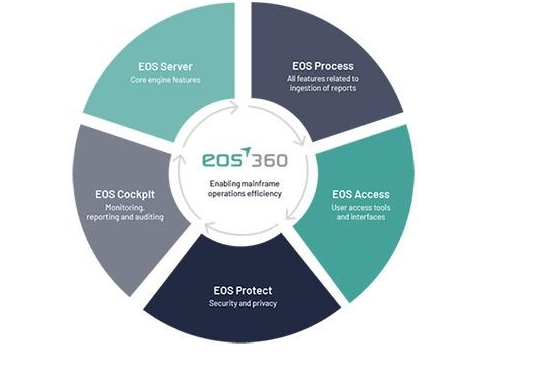
    Mainframe output management that drives efficiency and increases security
    Simply providing access to reports and data on the mainframe is no longer enough for today’s stakeholders. Your users—whether they’re employees, partners or customers—increasingly expect a more modern digital experience and efficient workflows. And with more regulation and restrictions impacting data security, you’re expected to protect all data, regardless of platform. Rocket® EOS 360 integrates with mainframe environments to capture output from applications, manage the storage of that data and provide fast and secure access for users.

    Quickly improve mainframe output management efficiency
    Rocket EOS 360 allows you to allocate precious MSUs to business-critical applications, improving the efficiency of your output management system.

    Rocket EOS 360 Platform:

      EOS Server: Integrated components for storing and managing the data
      EOS Process: High speed, scalable ingestion of large data streams
      EOS Cockpit: Insight into EOS activity
      EOS Protect: High level encryption module to secure sensitive data
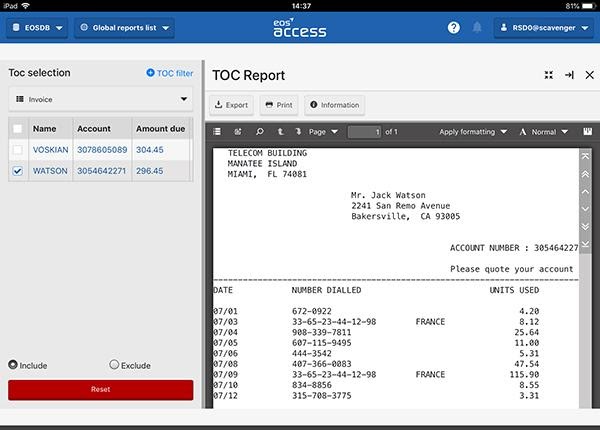
      EOS Access: Secured access to reports from any device through a modern interface

    Ensure data security and regulatory compliance
    Rocket EOS 360 centralizes your data and provides a single, secure point of access to ensure you stay in compliance with any regulations and minimize the risk of a data security leak.

    Improve user experience and optimize workflows
    Rocket EOS 360 provides a modern user interface that helps you retain talent and the ability to integrate with web services to build customized experiences for users such as partners and customers.

    Expertise in mainframe management
    Rocket Software is helping a new generation of managers and stakeholders to not only understand and leverage the mainframe intelligently, but also to merge modern technology with legacy infrastructure for a competitive edge and drive the user experience for today and tomorrow.

    Read the datasheet.

  • Tiering Cold Data to the Cloud Without Tears

    Tiering Cold Data to the Cloud Without Tears

    The cloud provides inexpensive storage. But like everything else in the cloud, there are hidden costs. Cloud storage providers (CSPs) charge to put data into and retrieve data from the cloud. They charge for the API calls and they generally charge an egress cost when the data is extracted from the CSP. So, to keep enterprise storage costs low, infrequently accessed data such as snapshots, logs, backups and cold data are best suited for tiering to the cloud.

    By tiering data, on-premises storage arrays need to only keep hot data and the most recent logs and snapshots. Typically, 60% to 80% of enterprise data has not been accessed in over a year. By tiering the cold data as well as older log files and snapshots, the capacity of the storage array, mirrored storage array (if mirroring/replication is being used) and backup storage is reduced dramatically. This is why tiering cold data can reduce overall storage costs by as much as 70%.

    The many advantages of this approach include:

    • Lower acquisition cost. Flash storage, used for fast access to hot data, is expensive. By tiering off infrequently used data, you can purchase a much smaller amount of flash storage, thereby reducing acquisition costs.
    • Lower backup and mirroring costs. By continuously tiering cold data, you can reduce your footprint, license costs and storage costs for backups and replication if the cold data is placed in robust storage (such as that provided by the major CSPs).
    • Improve performance and lower capacity of your storage array. By running storage at a lower capacity and by moving access to cold data to another storage device or service, you can increase the performance of your storage array and get by with a smaller storage array.
    • Enable processing of cold data without burdening the storage array. Processing and feeding your cold data into your AI/ML/BI engines is critical to staying competitive. With cold data in the cloud, you’re also reducing the load on your storage array, thereby extending its life.

    Know First, Then Tier

    A key challenge of cloud tiering is determining what data to tier. End users should not have to decide which data to archive or handle the management of shared files. This issue may result in IT organizations keeping too much data in expensive, hot storage. One way around this is to automate the process through business policies dictating when and how the process is applied. It’s also helpful to provide transparency of the data by keeping it in the existing namespace. Users can still find the data and access it as if it had never been tiered. Transparency enables IT to tier cold data continuously and systemically across all storage devices in the entire organization without requiring end user assistance.

    To help IT make the right decisions, analytics is needed to see just how much data you have, and how much has not been touched in three, six or 12 months. It will be even more compelling if IT can run what-if scenarios to determine how much they will save with cloud tiering. The last thing you want to do is tier data in the dark. Take time to understand your data assets before you invest in the effort.

    Here are other considerations, beyond analytics, when embarking on a cloud tiering initiative:

    • Transparent, continuous tiering. Tiering should be transparent to the user. If someone can still search for and access data that’s tiered without any change to the experience, IT can realistically tier data systemically across the enterprise. Without transparent tiering, it’s an onerous process to tier data because you will need user permissions.
    • Flexible tiering policies. You need the flexibility to exclude certain data sets, include others and select from a large range of data ages. Be aware that many tiering solutions provide an extremely limited set of policies.
    • Tiering across multi-vendor storage arrays. Most enterprises have storage arrays from multiple vendors, and each appliance will have different tiering solutions if any. This makes it difficult to roll out a consistent, global tiering policy across the organization. Look for a solution which can encompass all the storage devices you have today and might acquire tomorrow.
    • Fast access to tiered data. Accessing data from the cloud will incur a much higher latency than accessing data on the local storage array. But once the cold data has been retrieved you can cache it locally to eliminate future latency and reduce egress costs. If the data set is large, the tiering solution should stream it so that users can access it even while the rest of it is being recalled.
    • Native cloud access to tiered data. The tiering solution should allow access to the cold data directly using the cloud storages native access tools. For instance, if you tier cold data to AWS S3, you should be able to access the data directly from AWS using a standard S3 browser like CloudBerry. Unfortunately, most storage array tiering devices store the data in a proprietary format, meaning that you can only access it from the source storage array.

    Cloud tiering is a practical and easy step on the path to the cloud. When done right, it gets you into the cloud while reducing storage costs. There are new solutions available that make this approach seamless with no disruption to users and your existing data protection workflows. By running an analysis of data assets across your storage ecosystem, and setting up policies for migration of cold data, you can ensure that data is always living in the best places from both a cost and business perspective.

  • 4 Ways SASE Fuels DevOps Productivity

    4 Ways SASE Fuels DevOps Productivity

    Many enterprises are adopting secure access service edge (SASE) solutions as part of their digital transformation efforts. SASE, in a nutshell, merges together SD-WAN and security stacks to deliver secure networking and improved WAN performance, making it a logical choice for cloud-enabled businesses going through the throes of digital transformation. However, SASE offers other benefits, which may be of particular interest to DevOps teams.

    Let’s take a look at four ways SASE can enhance the productivity of DevOps teams.

    Reducing Collaboration Challenges

    SASE reduces the challenges associated with team collaboration. SASE, by design, integrates WAN optimization with cybersecurity. Today’s DevOps teams need to work together, despite being physically separated, and must have reliable, secure connectivity amongst the team. “DevOps are all about time-to-market, and DevOps teams are looking for ways to shorten their  CI/CD cycles. A critical part of that process is reducing their dependency on the networking and the security teams,” said Boaz Avigad, director of product marketing, CATO Networks. “Since SASE solutions already provide optimized performance and robust security, DevOps [teams] are free from waiting for infrastructure teams to provision the necessary resources. SASE provides DevOps the control and operational cadence they need without compromising performance or security.”

    SASE Improves Networking

    SASE improves overall network performance with integrated load balancing and failover capabilities. DevOps teams cannot afford to lose connectivity, especially when rolling out new iterations of software or resolving bugs. “For DevOps teams, fast and reliable application performance is critical,” said Avigad. “SASE architectures free DevOps [teams] from worrying about the infrastructure by connecting all the company’s edges, data centers, mobile users and cloud resources, with the same self-healing, secure and fully optimized global network. Should a line fail or a route become congested, SASE automatically switches to an alternate path.”

    Better Security Built In

    SASE helps to secure DevOps projects with native cybersecurity capabilities. When properly implemented, SASE integrates numerous security technologies directly into the network stack. “DevOps teams worry about information interception and protecting their applications from threats. All security services share a single, unified context, improving insight and closing the gaps in legacy security architectures; gaps attackers often exploit,” said Avigad. “SASE not only includes NGFW, IPS, SWG, AV and MDR services, it also converges them together into a single-pass architecture.”

    SASE Removes DevSecOps Burdens

    SASE secures internal applications, along with the interactions with those applications, which in turn helps to reduce the burdens on DevSecOps team members. Applications that run over SASE/SD-WANs are further secured by zero-trust network access (ZTNA) and software-defined perimeter (SDP), technologies that help to keep all interactions between an endpoint and an application secure. “Many proprietary applications are too sensitive to run over the public internet. SASE protects those applications by obfuscating traffic, protecting all entry points with a NGFW and restricting access with its zero-trust architecture,” said Avigad. “All internal application traffic is also continuously inspected for threats.”

    Adopting SASE for DevOps teams is beginning to make a lot of sense. The technology addresses many of the pain points that DevOps teams experience as businesses drive toward digital transformation. What’s more, the security benefits offered bring forth additional productivity, while also unifying the security stack. 

  • Cloud Misconfigurations Threaten Cloud Migration

    Cloud Misconfigurations Threaten Cloud Migration

    If we’ve learned one thing during the COVID-19 pandemic, it’s that digital-native business models are essential to survival. That means cloud adoption is more important than ever before. Research shows that the public cloud market is expected to grow to $308.5 billion in 2021, an increase of 16% from 2020.

    But while the cloud holds incredible potential, we have an outstanding security issue to address. That issue is cloud misconfigurations. Through 2025, 99% of cloud security failures will be the responsibility of the customer, quantifying the need for security professionals to turn their attention to security hygiene issues like cloud misconfigurations.

    Digging Into the Cloud Misconfiguration Problem

    To get to the root of the problem, we must fully understand the risk of cloud misconfigurations and how they differ from more traditional vulnerabilities. While traditional vulnerabilities can be patched, cloud misconfigurations can create vulnerabilities in otherwise secure applications and infrastructure. Imagine cloud infrastructure like a highway system and cloud misconfigurations as road hazards. They can be incredibly dangerous and lead to accidents.

    As a specific example of cloud misconfigurations, let’s look at identity and access management (IAM). Poorly configured IAM, such as misconfigured roles or a lack of multi-factor authentication (MFA), can lead to compromised administrative accounts. If a threat actor hijacks a legitimate administrator account, they potentially can take full control of an entire cloud environment. Because IAM sits above the cloud infrastructure layer and all workloads and data within, once it is exploited a threat actor will often be able to circumvent your other security barriers, such as network segmentation, leaving you defenseless.

    Cloud Misconfigurations Can Easily Scale

    Where misconfiguration risk dramatically increases is through the adoption of cloud-native applications and practices like infrastructure as code (IaC) templates used by DevOps teams. These templates offer teams greater speed and scale for building and managing applications, but the downside is that misconfigurations can be unknowingly replicated from development environments to production environments (where sensitive data is stored) at greater velocity.

    In short, the biggest risk to organizations right now is scaling these misconfigurations through the cloud. As the cloud grows in adoption and scale, we’re witnessing these misconfigurations scale right alongside it. Where before, a misconfiguration might have been limited to a siloed application or environment, today, that same misconfiguration can impact the entire organization without checks in place to catch it. Worse, many cloud storage buckets have logging disabled, meaning once threat actors are able to identify a misconfiguration and access an internal cloud bucket, an organization won’t even be able to see what data was accessed.

    Understanding the Shared Responsibility Model

    This all points to a higher-level, hygiene-related issue to keep in mind when securing cloud environments: responsibility. Particularly, organizations struggle to understand the shared responsibility model and how it applies within their own organizations. While some may fail to delineate between cloud provider responsibilities and their own, the major issue at stake is the shared responsibility between various internal teams that often goes undiscussed and undocumented until there is a security event.

    When thinking about software-as-a-service (SaaS), to a much lesser degree the responsibility falls on consumers. However, when considering infrastructure- and platform-as-a-service (IaaS/PaaS) and all the moving parts such as network, user credentials, resource configurations, workloads, identity configurations and more, cloud consumers become responsible for much more. A key consideration to note is that one can never outsource accountability, no matter which cloud model is used. To put this more simply, if one puts data in any cloud provider, they are still accountable for that data.

    Enabling a Holistic Cloud Security Strategy

    When advising security and business leaders on how they can better secure their cloud environments and applications, I highlight what my team calls “The Big Cloud 5,” a set of recommendations developed to help organizations adopt a holistic cloud security model that accounts for proper security hygiene and shared responsibility.

    • Gain awareness and deep cloud visibility
      The very first step to ensuring cloud security is understanding how teams are using cloud technologies, leveraging shadow IT and cloud provider APIs. This allows you to get situational awareness and make informed decisions today as well as in the future. This is not a one-time event, but something you’ll need to do continuously.
    • Set guardrails to automatically prevent the most serious cloud misconfigurations
      Drawing lines in the sand around the most offensive (and potentially destructive) misconfigurations that should never exist in an environment is key to automating protection in the cloud. This will help keep templates and practices controlled, so that poor hygiene doesn’t inadvertently take root and spread. Think of this as your “dirty dozen.” What configurations should never exist in your cloud environments?
    • Standards are the precursor to automation
      One can’t automate what hasn’t been standardized, and while there aren’t widely accepted security standards yet, key stakeholders in an organization must be in agreement about how to secure cloud infrastructures.
    • Train and hire security engineers who code
      To fully leverage APIs, security teams must have engineers who know how to code and automate security processes. An assessment of skills that exist across your security team (e.g., knowledge of coding in the likes of Python or Ruby) can point to areas in training and hiring that need further investment.
    • Embed security in the development pipeline
      Map out who, what, when, where and how your organization pushes code into the cloud. Once mapped, identify the least disruptive insertion points for security processes and tools, so that they can exist in as much of the development pipeline as possible.

    If you feel your organization is a step behind on proper cloud security hygiene, know that you’re not alone. Earlier in 2021, the Cybersecurity and Infrastructure Security Agency (CISA) released a report highlighting the importance of strengthening security configurations based on the uptick in successful cloud attacks, often attributed to poor hygiene and the mixed use of computing devices in the remote work environment. While this is a growing problem, it is also a reversible trend. Best practices, cyber hygiene and a shared responsibility model can help companies safely and securely migrate to the cloud.

  • Rewind Acquires BackHub to Protect GitHub Repositories

    Rewind Acquires BackHub to Protect GitHub Repositories

    Rewind, a provider of a software-as-a-service (SaaS) platform for backing up cloud services, today announced it has acquired BackHub to gain control of a platform for backing up GitHub repositories.

    Based in Germany, BackHub adds a data protection platform to a Rewind portfolio that includes offerings for backing up everything from QuickBooks to Shopify. Fresh from raising an additional $15 million in funding, Rewind CEO Mike Potter said BackHub addresses a critical issue involving the protection of some of the most valuable intellectual property any organization has in a cloud service. GitHub, a subsidiary of Microsoft, is the largest host of source code in the world, with over 40 million users and 190 million repositories. BackHub claims it protects data in those repositories for more than 1,000 organizations.

    Rewind GitHub backup

    While GitHub itself is a reliable cloud service, the code residing in GitHub is subject to the same potential threats as it would be in any other cloud service. It’s not uncommon for a malicious actor to gain access to credentials that they exploit, for one reason or another, to delete or alter data – or, in the case of GitHub, code. BackHub makes it possible to back up code stored in GitHub to another cloud service where it can be easily recovered.

    Potter said the ultimate goal for Rewind is to make it possible to back up the entire cloud. Achieving that goal will require both additional acquisitions and internal product development, said Potter.

    In the meantime, the company is focused on providing data protection for specialized cloud services usually overlooked by other backup and recovery tool providers. For now, it leaves the backup and recovery of data stored on widely used cloud services, such as Microsoft 365, to other vendors. Rewind claims more than 80,000 organizations are using its platform to protect data, stored in a wide range of cloud services, that address a specific niche use case.

    Given the prominent role GitHub plays in software supply chains, it is not surprising that the code stored in Git repositories becomes a target for cybercriminals. Much of the intellectual property stored in those repositories is a high-value target for organizations looking to reduce the amount of time required to re-engineer a rival company’s functionality.

    Nation-states around the world have cyber-espionage programs aimed at gathering any type of digital asset that might benefit their military or economy. Naturally, copying code isn’t always enough when, in one fell swoop, add code that might derail that project long enough for them to catch up.

    Unfortunately, there have been some high-profile breaches involving software supply chains. The best way to determine if a project has been compromised is to compare code bases. Repositories, by definition, provide application development teams with version control capabilities. However, backing up a GitHub repository provides one extra layer of security that can make it easier to recover from a breach.

  • A Pragmatic Approach to DevSecOps

    A Pragmatic Approach to DevSecOps

    In response to market and competitive forces, many companies are using DevSecOps to develop higher quality and more secure software. Whether that software is their own product or is a component of their product, quality – and especially security – have become required rather than optional. To accommodate the security requirements, some companies have adopted DecSecOps overlays to their software development process that can, and has, caused significant disruption.

    Barriers to DevSecOps Adoption

    The main barrier to the transition from DevOps to DevSecOps is organizational rather than technical. Many companies are already employing special security teams tasked with ensuring applications are secure and that policies are being followed. However, they tend to act as gatekeepers to the release process – nothing gets released without security testing. This approach is prone to be “too little, too late,” as the security team is usually involved near the end of the development life cycle. Attempts to “test in” security rarely succeeds. Security needs to be built in from the start; “shifted left” so that security is fully integrated into the process from the start. Let’s break down these barriers:

    • Lack of motivation and awareness:  There’s a lack of awareness about security issues, and about the risks and impacts security vulnerabilities pose to the organization in terms of liability and reputation. Vulnerability statistics make it clear that many companies are still not taking security seriously enough. This indifference remains, even when 63% of companies had, or nearly had, vital data breaches in 2019 and each breach cost an average of $3.9 million to deal with.
    • Distrust: Lack of trust between teams is expected in most organizations, but it’s particularly problematic between software developers and security teams. Developers view security as impeding their success, and security teams view developers as incapable of delivering secure software.
    • Poor Perception: The prevailing view of security is that it’s difficult to implement and somebody else’s problem. If security teams are solely responsible for security, then it’s easy for developers to delegate to them. Companies often think that security can be tested into the product at the end of development – with disastrous results. Vulnerabilities discovered at this late stage are more difficult to debug, with subsequent impacts on time-to-market, budgets, product quality and reputation.
    • Gatekeeping: The security team sometimes acts as gatekeepers of release candidates, which is a source of friction between developers, testers and security experts. Placing security as a last, QA-like step before delivering a release is too little, too late. Developers also don’t like other teams imposing restrictions on their work, which is an issue when trying to put security controls, like secure coding practices, in place.
    • Lack of integration: Without integrating security practices and tools through the entire development process, security improvement initiatives have trouble getting off the ground. In fact, the key tenet of DevSecOps is to integrate security practices into each phase of development.

    These barriers might seem daunting, but it’s not unlike other corporate cultural shifts. Security teams need to delegate aspects of security to development teams and integrate secure practices as early as they can in their work. Developers need training and understanding of how critical security is to their work. Developers already have an appreciation for safety and quality, but lack some of the basics of good security practices.

    It doesn’t need to be this way. However, removing these barriers won’t happen overnight, so a practical and gradual approach to improving security is needed.

    Easing Your Way into DevSecOps

    Transitioning to a more secure software development process across an organization rarely works when done with a “big bang” approach. There’s often lack of buy-in from the teams, and general resistance to change when new approaches haven’t proven themselves. The cultural barriers to adoption remain, and the initiative fails. As with any large task, it makes sense to start small; to learn and adapt before expanding to more teams. The move from DevOps to DevSecOps should be organic.

    Start Small

    The alternative to the doomed “big bang” approach is to start with a small, motivated team, where it’s possible to implement new practices from the very beginning of a project. By keeping the scope, and thus, the technical and business risk, of the project smaller, it is possible to allow time for learning and adjustments along the way. Think of this as an incubator project, where the results are analyzed and used to evaluate gains, losses, what went right and what went wrong. This team can learn, and then teach the larger organization what works and what doesn’t. Importantly, they set the standard for how to approach DevSecOps, and kick off the organic growth needed for a smoother transition.

    Starting small extends to the use of new tools, as well. It’s one thing for a small team to adopt new technologies, but they can be quickly overwhelmed. Static application security testing (SAST) tools can produce a lot of information. It’s important that initial projects concentrate on high impact, high probability vulnerabilities, first and foremost. It’s easy to get bogged down in the details, and discipline is needed to focus on the highest impact, and to get the most ROI out of new tools.

    Start at the Beginning (Or as Early as you Can)

    This is where “shift left” plays an important role in the transition to DevSecOps. A small team can introduce new techniques without a large initial impact on productivity. They can also start integrating security from the beginning, right at the concept phase of development. They can introduce new tools, and become proficient at using them. It’s at these early stages where the payoff is the greatest. Finding and fixing possible vulnerabilities, and adopting more secure design and coding practices, greatly reduces the downstream impact. It’s not hard to justify the effort, when security attacks and data breaches in production systems can cost millions in fixes, downtime and reputation.

    Measure Success

    The interesting thing about measuring DevSecOps success is looking at what isn’t there; security vulnerabilities and potential software weaknesses. To understand how well a new DevSecOps transition is working, it’s important to have a baseline of vulnerabilities that exist in your other applications. For example, how many vulnerabilities were discovered during security testing? How many vulnerabilities made it into shipping products? If these statistics are known, then it’s a case of measuring how well the new project does versus the baseline performance.

    Other metrics are important, too, such as measuring the number of vulnerabilities detected, identifying those that are true risks and those that were removed through corrective action. SAST tools provide information on a per-build basis, so it is possible to look at trends over time. You can evaluate the DevSecOps process in terms of vulnerability trends over time; are they converging to a goal? How quickly is the convergence?

    The ultimate measurement of success is a more secure product and, ideally, security testing at the later stages of development should find fewer vulnerabilities than in the past. After building in security and starting at the beginning with a shift-left approach, vulnerabilities are caught sooner and removed more quickly.

    Start your DevSecOps Transition

    The critical time to detect new security vulnerabilities is as soon as developers write new code (or test cases) before it’s submitted to a build or software control system. It’s also critical that tools work in your favorite development environment (be that VI, Emacs, Microsoft VS Code or Visual Studio, or any of a number of Eclipse-based environments). It’s at this point where SAST tools shift security improvement via automation to the earliest point in the development cycle. Finding and fixing vulnerabilities here is less risky, cheaper and easier.

    Equally critical is establishing an initial baseline inventory of your third-party software assets, whether that is open source, reused internal code from other projects and/or third-party commercial software. This is done at the very beginning of the project, about as shift left as it gets! Software composition analysis (SCA) is critical throughout the development process since the open source and third-party software that you depend on is likely to have updates and introduce new security threats over time (including after you release the product).

    Early adoption of SAST and SCA tools can have many benefits as part of your DevSecOps adoption. These tools used in conjunction with a security “built in” approach make this transition easier:

    • Improve security awareness by exposing vulnerabilities in existing code, third party software and newly developed code. SAST tools provide all the necessary information to fix potential vulnerabilities, but also provide an explanation of the severity and risk. Developers get more experience with the types of software weaknesses that lead to vulnerabilities, and learn to avoid them.
    • Illustrate ROI by measuring success, and have a goal in mind. Eliminating just one serious vulnerability justifies much of the investment. However, communicating this ROI is important, and needs to be put in the proper context of how costly and risky vulnerabilities are once a product is released.
    • Remove gatekeeping so that developers and the security team are working together. Security teams provide the security controls that developers need to follow with a “trust, then check” approach. Developers learn more about secure practices over time, and integrate that knowledge into their existing workflow. In the end, there is no security team gate at release, and all members of the team know and understand the state of the product.
    • Integrate security practices into software development gradually, starting with a small team and small project. As experience is gained, these teams train the rest of the organization on best practices.

    DevSecOps From the Ground Up

    DevSecOps is a way to build security into an application, and the transition from an existing CI/CD and DevOps process is made easier with the right approach. Successful transition depends on breaking down the resistance to security practices that exist in many organizations. A “start small and start early” approach is recommended where new techniques, processes and tools, such as SAST and SCA, can be integrated with less downtime and cost.

    Most importantly, you need to decide what the success factors are. Measuring success and the ROI of the effort is needed to grow DevSecOps organically within the organization. Tools and automation provide the data needed to show progress, but communicating the ROI needs to be done in business terms. In the end, success results in a more secure product, and reduces your company’s exposure to data breaches and cyberattacks.

  • BYOPC Solves Endpoint Provisioning Challenges

    BYOPC Solves Endpoint Provisioning Challenges

    For many cloud-first companies, workstation imaging isn’t “a thing.” The notion that an IT organization might need several days – or even weeks – to onboard a new employee by provisioning an imaged laptop with correct security policies and only approved applications on it is absurd. The constraints of operating in an admin-centric model for IT service delivery would completely erode the agility that cloud native engenders.

    But let’s say your company was born before the cloud era. Or, suppose your company operates in a highly regulated industry, like financial services or health care, for example. For your company, workstation provisioning may still be a very real thing, and it may be weighing you down. That’s why a bring-your-own-PC (BYOPC) policy could be the answer.

    Now, take that basic provisioning problem and multiply it by a few orders of magnitude. That’s what happened to many companies in the crush to support remote workers in response to COVID-19. Most weren’t ready for the scale of the problem, and some had no means to enable secure remote work for their privileged users. So, when it came time to pivot to a remote-first stance, many IT organizations were unprepared, unprotected and overwhelmed. Between budgeting, acquiring endpoints and the provisioning of those devices, many companies incurred enormous opportunity and financial costs.

    But what if that didn’t have to be the case? What if, instead, there was an option to enable every new employee or newly remote worker instantaneously? What if the company didn’t have to bear the capital expense of purchasing new laptops for each employee? And what if the company didn’t have to carry the operating expense of having an army of IT admins whose job requirements are little more than commissioning and decommissioning workstations as new hires come on, as existing employees pivot from working in-office to working at home, and as others leave the organization?

    Scaling and Simplifying Enterprise Endpoint Provisioning

    Companies can unburden themselves by instituting a bring-your-own-PC (BYOPC) policy. BYOPC allows companies to scale back on investments in new laptops while allowing them to scale up their support for remote work. BYOPC provides employees the freedom to work how and from wherever they want, on whatever endpoint makes them most comfortable. Allowing employees to use their laptop of choice also offers the side benefit of helping to maximize worker productivity.

    At the same time, BYOPC helps companies to reap significant capex and opex savings. Permitting employees to use non-corporate devices reduces demand on IT admins’ time while also avoiding cost attributed to the purchase and maintenance of corporate endpoints. BYOPC, then, is a rare win-win for employees and the IT organizations that must support worker productivity, as long as the IT organization can effectively operationalize it.

    Gartner recognizes that BYOPC is on the rise, saying that companies need to “… support BYOPC practice, as it will be necessary for a long-term work-from-home strategy.” Further, our own research bears this out: in a survey we conducted recently in conjunction with Team8, we found that more than three out of four companies (78%) allow employees to access corporate networks or applications from a non-corporate device.

    Pairing BYOPC with a New Model for Endpoint Security

    Of course, a company can’t simply institute or dramatically scale a BYOPC policy without deploying or commensurately expanding a robust endpoint security policy. And this is where things get interesting: according to Forrester, spending on endpoint security had been rising, year-over-year, even before COVID-19 pushed so many companies to expand their remote access policies. During 2020, that investment has soared. However, we also know that 70% of security breaches start at the endpoint. So, it’s reasonable to conclude that something in the endpoint security ecosystem has to change, regardless of whether companies institute BYOPC or stick with traditional provisioning of corporate-managed devices to provide secure remote access.

    Companies have traditionally relied on a variety of isolated workspace approaches to provide corporate security while permitting workers to download questionable applications or visit dubious websites. Think app sandboxing or legacy remote access solutions like virtual desktop infrastructure (VDI) or desktop-as-a-service (DaaS). VDI and DaaS separate desktop images and applications from the user’s device. The images and applications reside on servers that are usually positioned in the cloud.

    Authorized users access VDI or DaaS resources from thin clients, corporate-managed laptops or user-owned devices, leaving no corporate assets vulnerable on the endpoint. With app sandboxes, threats that come in from the sandboxed application are contained within the sandbox, preventing malware from affecting the operating system (OS).

    These isolation methods have provided some level of protection, but each has shortcomings that experienced bad actors are able to exploit. Likewise, browser isolation is yet another strategy that works well within its confines – blocking malicious web content – but browser isolation also leaves other vectors completely exposed. Given that each of these isolation methods has significant gaps that leave corporate assets vulnerable to attack, the isolated workspaces market has been ripe for disruption.

    That disruption has come in the form of OS-based isolation. OS-based isolation allows an end user to have multiple operating systems on a single endpoint, allowing unrestricted access to the internet, email and non-privileged information via an unlocked OS while reserving a second, privileged OS for accessing only high-value corporate assets, including sensitive data and other systems.

    This privileged OS restricts internet access, prevents the user from installing or running unsanctioned applications, and rejects all peripherals. Corporate data is encapsulated on the same endpoint in the isolated environment and cannot be exfiltrated.

    From an enterprise perspective, key attributes of an enterprise-grade OS isolation solution must include purpose-built tools to centrally manage isolated environments remotely, supported by a robust and fine-grained set of networking, clipboard and data security policies such as access control, application management and insights across the entire workforce. With OS-based isolation, breaches may still happen in the non-corporate environment, but there’s no possibility of exfiltration of malicious code, meaning the corporate environment remains protected.

    There were days when every employer provided its workers with company-managed mobile devices. In many cases, those days are long gone. It may still take a while before the expectation of working on a company-provided laptop becomes nothing more than a memory, too. But the time is right to give workers the freedom to use an endpoint of their choice without opening up the company to security threats. Doing so will make workers happy, relieve the budget pressures on IT, and still allow security teams to sleep at night. That’s what we call a win-win-win trifecta.

  • Managing Data Risk in 2021

    Managing Data Risk in 2021

    You can’t protect your data if you don’t know where it is stored. The first thing to consider when creating a risk-based approach to data protection is the ability to identify and prioritize data, and control who has access to it. But, how do we do this? How do we prioritize data?

    In this TechStrong TV episode, Ron Bennatan, senior vice president and general manager of data security at Imperva, joins Mitch Ashley to discuss privacy, compliance and managing data risk in data lake environments in 2021.

    The video is immediately below, followed by the transcript of the conversation. Enjoy!

    Transcript

    Mitch Ashley: I’m very happy to be joined by Ron Bennatan, who is GM of Imperva Data Security. We’ve talked before—Ron, it’s good to be speaking with you again.

    Ron Bennatan: Hey, Mitch. Nice to see you again.

    Ashley: As always, yes. Data and security—two of my favorite topics. [Laughter] Welcome to 2021.

    Bennatan: Yeah, 2020 finally is over. [Laughter]

    Ashley: Ooh! You know, it takes a pretty big rearview mirror to look at that, but I’m not sure I wanna look back too much. [Laughter] Well, we’re gonna be kinda talking about looking forward into this new year. First, would you introduce yourself, tell us a little bit about you, and also a little bit about Imperva?

    Bennatan: Yeah. So, Imperva is kind of the market lead for data and application security. We secure all paths to data. So, it kind of straddles between both covering how data is accessed and where data is accessed, kind of covering everything regardless of on prem and cloud, hybrid cloud.

    Ashley: Mm-hmm.

    Bennatan: And I am the GM for the data security side, and really glad to be here.

    Ashley: No small problem you’re solving. [Laughter] Data is everywhere, you know?

    Bennatan: One problem, yeah.

    Ashley: [Cross talk] data. At least not very many of ‘em. So, let’s talk about it. I mean, you know, we have the whole government breach in 2020 Russia—you know, Russia, Russia, Russia, that whole thing.

    Bennatan: Yeah.

    Ashley: It certainly brought a lot of attention to supply chain attacks. Of course, you know, that being an intelligence brief, it’s collecting a lot of data, right? You know, that could, of course, happen on a—it is, did happen on corporate networks, it could also be for financial gain; it doesn’t mean it has to be a national state attack. So, I imagine that’s gonna be a—supply chain is a word we’re gonna hear a lot about this year.

    Bennatan: Yeah, I think so. I think, you know, as a, just an individual, my fear, by the way, is—you know, there’s a really big project coming for the entire world, which is the delivery of the vaccines, and that itself is a supply chain. I just hope nothing messes up there, you know? Like, you know, knowing that whatever vaccine you’re getting is actually the valid one and not—you know, there’s a lot of…everything is in data and everything at the end sits in some kind of a, like, what’s the lineage of something? What’s the providence of something?

    Ashley: Mm-hmm.

    Bennatan: You know, it doesn’t necessarily—you know, we in the data governance area talk a lot about providence and proving the correctness of data, but you know, it goes all the way to the vaccine as well. So, I think this issue that we’re seeing, whether it’s breach—breaches get headlines, okay? And, you know, so this SolarWinds thing gets a big headline, the thing that these attacks on MySQL with ransomware, that gets headlines. But really, the bigger issue is getting control of our data and creating kind of a complete risk oriented approach, not just plugging a hole here and plugging a hole here and plugging a hole here. It’s—that’ll never work, right? It’s much easier to create a new hole than to plug all the holes.

    Ashley: The whack a mole strategy. “Here’s another mole to whack.” [Laughter]

    Bennatan: The whack a mole—yeah, the whack a mole doesn’t work. Whack a mole doesn’t work. And especially today when the complexity of the data environment is so much greater.

    Ashley: Mm-hmm.

    Bennatan: You know, 20 years ago—okay, 40 years ago, we just had some dashboard on the mainframe. Twenty years ago, we just had Oracle sitting on some Unix server. Today, it’s such a complex environment, data moves from place to place, you know, you look at what a data lake implies. It’s no longer a single stack, it’s a combination of stacks. Whack a mole doesn’t work.

    Ashley: Mm-hmm.

    Bennatan: So—and most companies understand that. Most companies are in this process of investing in a non-whack a mole approach, in a risk based approach that says, “Okay, I need to know where my data is. I need to prioritize which. You know, not all data is created equal. I need to scan, I need to understand, I need to know who has the ability to access something. I then need to know who is accessing something. I need to control what they’re accessing.”

    So, you know, I think there’s a better understanding that whack a mole doesn’t work.

    Ashley: Mm-hmm.

    Bennatan: I think 2021 is still gonna be a transition year. I don’t think we’re gonna necessarily get there, but we’re gonna transition.

    Ashley: We won’t have universal enlightenment [Laughter] on day—

    Bennatan: It just takes time. I mean, it takes time.

    Ashley: It does.

    Bennatan: There’s a lot of data.

    Ashley: I wanna ask you about—you did a nice job of kind of outlining, you know, identifying what data you have, prioritizing it, access to it. One of the things that I’ve always struggled with is that second step. How do you prioritize? What are the things to consider? You know, there’s obviously sorta crown jewels of my business—this is the customer data or secret sauce or that kind of things, but is there a good sort of stratification of how to prioritize data?

    Bennatan: Okay, there’s a technical answer and there’s a human answer.

    Ashley: Okay.

    Bennatan: Okay, technically, there are very good ways to do this. It takes some effort, okay? You can—you really do this based on a scoring of a bunch of dimensions, okay? So, one dimension could be the sensitivity level of the data, okay? Another dimension could be, what is the impact if something happens, okay? Which—but the reality is that we’re all people, and people are driven by incentive, and incentive is not necessarily, doesn’t always necessarily create the right prioritization. It creates whatever prioritization the incentive is structured around.

    So, I’ll give you an example. A lot of projects going on around privacy—a lot of projects. Because it’s a very, it’s a relatively new thing, less understood, and people don’t always equate the fact that we have been doing the work, almost the identical work, we just didn’t call it privacy, right? We called it classification.

    Ashley: Mm-hmm.

    Bennatan: But when you look at what privacy implies, it’s the same, but very new terminology—different semantics, different terminology. So many people don’t start from an investment they’ve already done in the last five years, they start from scratch, and the incentives are created because there’s a new role in the company. There may be a new—you know, a data privacy officer, okay, and that person has certain mandates and they drive things top down.

    And so, I think that the reality is, prioritization is driven by the projects and the funding that these projects have, and they’re also driven by breaches, okay? Because breaches are very dramatic.

    Ashley: [Cross talk] response, right? [Laughter]

    Bennatan: Dramatic, immediately created. So, I think that the reality is gonna end up somewhere kind of in the middle where things are gonna be driven bottom up and top down and they’re gonna meet somewhere.

    Ashley: Mm-hmm.

    Bennatan: But it’s not terribly complex to create a good prioritization strategy, but it’s not trivial, either.

    Ashley: Yeah, you definitely have to put some thought into it, and it’s not a textbook exercise, right? It’s all contextual.

    Bennatan: Yeah.

    Ashley: What’s important to the business.

    Bennatan: And I think you’ll find in—I mean, my prediction in 2021 is that there’s gonna be a lot of, you know, privacy is not gonna just drive a lot of these from a compliance perspective. Okay, until now, privacy is really—you know, when a company embarks on these privacy and classification projects, or at least what I see from our customers, is that it’s driven a lot by compliance, okay? They need to comply with a CCPA, they need to comply with GDPI.

    Ashley: Mm-hmm.

    Bennatan: I think we might end up having also, like, an attack flavor, okay, around privacy, which is not intuitive, not necessarily intuitive. And it has to do with the fact that, you know, part of the mandate is, you know—so, say that I am, you know, year one of my consumers and you store, I store some of your data. That means I—you have the right to demand some things from me. Like, you have the right to demand that I delete you from my system.

    Ashley: Mm-hmm.

    Bennatan: You have the right or portability, you have the right to ask me what data do I own or do I store about you? And you can come to me with these requests, okay? Different terms, different subject rights request or data access requests. You know, you can easily think about what is the effort that I, as a big company, have when you ask me to do this? It’s not a small effort. So, okay, if you—now, the nice thing is, most people don’t do that, okay? I’ve never called somebody up and told them, “Hey, delete me, okay?”

    Ashley: [Laughter] No, I think that’s probably very much an exception—maybe a rare exception.

    Bennatan: Yeah, but what happens is some people realize that this is the way to cripple a company.

    Ashley: Mm-hmm.

    Bennatan: What happens if they organize and they say, “Hey”—

    Ashley: Or protest, right?

    Bennatan: – protest, you know?

    Ashley: Moving of Facebook onto whatever.

    Bennatan: “We don’t like you, let’s organize 10,000 of our friends and we’ll all hit them at the same time.” What do you think that’s gonna do from a work perspective? It’s pretty serious.

    Ashley: Yeah, I’m guessing it’s not just press a button—that’s gonna consume some resource at the company, people resource, things like that.

    Bennatan: Yeah.

    Ashley: You know, one thing I was wondering, too, is, with this year, there’s discussion now about do we need a national cybersecurity strategy, things like that, just to mention politics, the Biden administration is talking about working with other countries to establish sort of norms of what we do when it comes to cyber whatever with each other and what is considered an attack.

    It seems like that is—maybe not this year, but that’s certainly potential for regulation of those kind of discussions, whether it comes out of any national strategy or not or could be another country that says, “Okay, now we’re gonna take this to the next level.” Like, what is our position around data? Not just privacy, but if it’s compromised, then what happens to you as a firm? I mean, it could get kind of interesting.

    Bennatan: Yeah, it could. You know, I mean—again, we’re delving into, like, opinions and politics.

    Ashley: [Laughter] Yeah, I know.

    Bennatan: I’m not a fan of—I’m not sure that something like this could go that route. But I do think that it goes other routes. So, for example, like, I’m reading a book on kind of the history of the Mossad, okay, the Israeli intelligence service.

    Ashley: Mm-hmm, mm-hmm.

    Bennatan: And you can see—and whenever you read any of these books, you see that all of the intelligence community, they have back channels, right? They agree on things.

    Ashley: Right.

    Bennatan: So, to me, if we wanna have something like that, it should be, like, the cyber czar of the U.S. and some other—you know, the big players, they have to agree. It doesn’t need to be regulated, it doesn’t need to be at the politician level, it has to kind of stay at the—

    Ashley: Kinda behind the scenes with the cyber czar.

    Bennatan: Behind the scenes with the experts at the—but, you know, there’s definitely an issue with state nations, okay? This does need to be addressed. Now, you know, it’s not necessarily that every—you know, we always think that, you know, we’re the good guys, they’re the bad guys, you know?

    Ashley: We would never do anything like what they did to us, right? [Laughter]

    Bennatan: Well, you know, there’s examples in history, okay, of things. So, I do think this is coming. I don’t believe it would happen at a politician level, it will happen at the actual subject matter experts. And by the way, there are good examples of things that have happened like that, especially in the financial services community. I mean, for years, maybe even decades, you know, FS-ISAC, they work together to create some level of standards across investment banks or banks. These things work, I just don’t think it’s political.

    Ashley: Interesting. Well, I wanted to kinda tap your thoughts on that. I know I threw the line pretty far out there in the water, [Laughter] just to kinda get your thoughts on that.

    Well, let’s reel that back in a little bit and talk—you know, there’s GDPR and CCAPE for California. A lot of people are still in this, I think in this kinda implementation stage, even though we’re supposed to have those things all covered, right? Maybe a little farther along with the GDPR, of course, but is that something, this year, you think it’s—we’re in this, okay, let’s now institutionalize some of those things in the organizations and really take care of our knitting there or do you think there’s more things on the horizon that are gonna come at data people?

    Bennatan: I think it’s gone into an implementation phase, for sure—which is good.

    Ashley: Mm-hmm.

    Bennatan: You know, there’s a lot of things, many things are not terribly clear, by the way, even though it’s in implementation. I’ll give you an example, right, this notion of being—my ability to request that you delete me, okay? But let’s take something else, which is a different type of compliance requirement, which is for you to keep logs for a certain period of time, activity logs. There are a whole bunch of other compliance requirements that require you to do that.

    Ashley: Data retention requirements, yeah.

    Bennatan: Yeah. Okay, so—now, what happens if part of the activity logs has my identity in it and I request you to delete it?

    Ashley: Mm-hmm.

    Bennatan: Should you delete it, or should you not delete it? One, in order to comply with one thing, you should delete it. In order to comply with another thing, you can’t delete it, maybe for three years. So, there’s even things like this, which are conflicting messages. And at the end of the day, it’s going to depend on some level of interpretation.

    Ashley: Mm-hmm.

    Bennatan: Which, at the implementation level, I can tell you, I can see two approaches. One is—okay, this interpretation needs to be given by legal or it’s okay for the business to give the interpretation to that. So—and you know how it is. If it goes to Legal, it takes a longer time; if the business can make the decision, then it goes much faster. And I’m seeing more and more of this moving to the business, taking ownership, and making the decisions, in which case, it goes much, much faster.

    Ashley: Well, and oftentimes, it seems that that always happens with laws and regulations, right? There’s what it is and there’s the interpretation of it, and there’s sorta those middle tier organizations, the consultants, the larger firms to sort of establish the frameworks that, “This is our interpretation of it,” so if you do that, you’re sort of in the norm with what the industry is doing. Who knows if that’s the right interpretation or not? It’s always subject to change, but that’s usually where that help comes from, at least on the big thing.

    Bennatan: Well, yeah. I mean, it starts from there and then usually what happens or what it evolves to, which makes it really go much faster, which is what’s happening now is that if—and by the way, it goes back to your question about this nations coming together or an industry coming together. The minute you have some critical mass within a certain peer group and you say, I don’t know, maybe I’m an insurance company, if my peers have taken upon themselves a certain interpretation, I usually don’t even care where they got it from.

    Ashley: Mm-hmm.

    Bennatan: Maybe they got it from these consultants, maybe they didn’t. But if three big players in my industry are doing the same thing, I’m gonna do the same thing.

    Ashley: Yeah.

    Bennatan: And that’s what’s happening now is that, you know, I know the insurance industry well and I know the banking industry well, and I can see that they’re now, “Oh, we’re gonna do like them” and then it’s much easier to follow, like, a track that seems to be proven than to try to invent it. And that’s happening and that’s why I think there’s an acceleration for a lot of these things.

    Ashley: Yeah, I agree with you. That makes a lot of sense. What are your other thoughts about 2021? What are we gonna be thinking about that we didn’t realize is gonna be on our radar for this year?

    Bennatan: I think we are going to kind of understand this notion of, you know, look at the data from every way that you can get at the data, not try to—like, historically, there have been a focus on pillars or silos, which were more and more, or in the past were driven really by tool specialization, okay? Like—okay, I’ve got the DLP and I’ve got this and I’ve got FAM and I’ve got databases, and I’ve got big data.

    And today, the lines are so blurred, especially on the cloud services, they’re even more blurred that there’s starting to be a realization that we really need to look at all paths to the data and all ways to secure the data and look at it instead of individual silos, looking at it as, “This is my data fabric.” Okay, so you’re starting to hear things like, you know, data lakes, data fabric, data services, and the data service could be structured by different implementation stacks. But you’re no longer trying to secure each stack by itself, you’re trying to secure the entire fabric.

    Ashley: Mm-hmm.

    Bennatan: And it’s really the right thing to do. It’s the right way to think about it. It is something that requires a transition, because even organizationally, many companies had one group doing this and one group doing this and one group doing this. And this notion of, you know, looking at a single overlay control layer, okay, which can drive policy down or can bring things up is, you know, it’s time for that. And I think 2021 is gonna be, part of this year is going to be starting to deliver things at that level of abstraction, and it’s also enabled by the fact that there is technology that can kind of bubble everything up into one level, right? You don’t need to look at it as 20 different tools, you need to look at it as kind of like a federated layer, and at least it’s doable, right? Ten years ago, it wasn’t doable to do any of it.

    Ashley: You know, it’s interesting. What it makes me think of is maybe some norms that we’ve had for a while of thinking about data owners, and that sort of puts the blinders on of, now I create that vertical view of, “This is that data for that purpose for that business unit for that application or process, whatever it might be.” And what you’re saying is looking at it more systemically, right? The entire collection of data, and securing it, but also uses of that data and sort additional intelligence and things you can mine from it.

    It’s interesting—so much, as we continue to move more and more into the digital economy, digital world for how we operate, all of those digital activities generate their own data, too. So, now, we’re adding that to the fabric of the data of, you know, we have a lot more usage information, we have a lot more telemetry that we never had. You know, it seems to be expanding exponentially. So, our ability to even just fathom what’s there and how it’s—what uses it might have and how it might be correlated in new ways sort of boggles my mind. [Laughter]

    Bennatan: Yeah, yeah. And, you know, I mean, it used to be this—one of the things people used to talk about when they started building big data platforms was that, you know, until recently, we just, we couldn’t use our data. We just threw 97% of our data away, and now we don’t wanna throw it away, but you’re right, it’s a beast that feeds itself.

    Ashley: Mm-hmm.

    Bennatan: But yeah, I think it’s, I think looking at the risk profile of the entire thing and not cutting into separate projects, which then have no tie to each other, right? I mean, if you want to reduce the risk, you asked about prioritization. Okay, prioritization needs to drive everything, right? Needs to drive reducing service area, needs to drive access control policies, needs to drive audit. If you start separating each one of them, not only is it not very effective, but it means you’re working 10 times harder, because you need to do this many, many, many times.

    So, this notion of a single kind of data security platform which kind of can have this internal feedback loop and use whatever effort you’re doing, it doesn’t matter if your effort is driven by compliance or security or privacy, whatever investment you make needs to build into this platform, not do itself over the next time you do anything. Otherwise, we’re just wasting our time. We’ll never get done. Because you said the data’s growing exponentially—if we’re chasing, if we’re not leveraging what we’re doing for one purpose when we wanna do the next purpose, we’re gonna lose. It’s gotta be a single platform.

    Ashley: Well, and to your point, it seems that once you sort of make that shift, right, to that platform view of data, now you can apply that to how you look at the data across all sources, all uses, all former kind of vertical siloed—you know, you may still want to look at it that way, but it’s not like, “Okay, now we’ve figured it out for compliance, but we’ve gotta go start over to do it for something else for operational process or whatever.”

    Bennatan: Exactly.

    Ashley: No, it’s there, you kinda take that—

    Bennatan: Exactly.

    Ashley: – those same tools and look at the data, analyze it. Now you’ve got that capability to do that for lots of things.

    Bennatan: Yeah, it’s exactly—it’s exactly right. I mean, you know, it’s like, in the business world, there was always this notion of a customer 360 where, you know, what’s the point that I have one system for quotes and one system for support and one system for my policy and I never know what’s going on, and I can’t upsell, and I can’t cross sell. It’s the same thing in security, okay?

    There’s this notion of data 360, data security 360 where, if it’s there, you know, then prioritization becomes easier, right? If you can check your configs and your vulnerabilities, okay, and you get this huge list—what are you gonna do? But if you know that, of this huge list, your consumer data is here and that, you know, the crown jewels are here—great, you don’t have to boil the ocean.

    Ashley: Mm-hmm.

    Bennatan: And if, at the same time, you can bring in and you can check your entitlements and you can say, “Well, you know, I have this vulnerability, and it is important data, but I did a really good job at narrowing it down and access to it is only by these individuals and access is Kerberized and—I don’t know, and maybe I also regulate the policy very tightly—these are all related, okay? So, if you have that single platform, you’re in much better shape than…you know, it’s like, I’m trying to think of a metaphor of, you know, when you have a single viewpoint, that viewpoint may be wrong. When you have—it’s kind of like, you know, these days, this discussion about whether news means anything any more, because it’s so tailored to what you wanna hear.

    Ashley: Mm-hmm.

    Bennatan: But it’s kind of like somebody forcing you to go and watch Fox and CNN and NPR and—you must watch all of these before you make a decision. It’s the same way. We can’t reduce risk by just looking at one thing at a time.

    Ashley: Yeah, we certainly have our own selection bias and data as we do our news programming as well, right? [Laughter]

    Bennatan: Yes, exactly.

    Ashley: Well, this has been a lot of fun talking with you. I just have a sense 2021 is already off to a good start with vaccines and the COVID situation. Hopefully—

    Bennatan: Hopefully.

    Ashley: – you know, we’ll round that hump and folks can really figure out new ways of collaborating with each other without worrying about COVID. Maybe that day’s down the path not too far, but we hope, anyway.

    Bennatan: Yes.

    Ashley: So, it’s been fascinating talking with you. So, we didn’t talk about, you know, go into product stuff, it wasn’t that conversation, but tell us a little bit about where folks can find out more about Imperva.

    Bennatan: So, Imperva.com, we are—you know, if we’re talking about data security, then there’s a whole section there, and you’ll see that we’re investing a lot in, you know, things that we believe 2021 and our customers are implementing. So, a lot of kind of complete security, complete security, whether it’s for compliance, security, privacy—a lot of effort in privacy, a lot of effort around data lakes, everything around cloud. Any cloud that you can think of or any data service, any data-centric workload on the cloud is something that we’ve worked very hard with the cloud vendors to provide support for. And yeah, I think 2021 is gonna be an exciting year because of this modernization that everybody’s embarking on.

    And my hope and what we’re trying to do with Imperva is that the path of modernization for the applications and for functionality also brings with it modernization of security, updated security. That’s really what we’re working on.

    Ashley: I would definitely suggest folks check you out. In thinking about our conversation before of the response to regulation and policies and things like that of looking at what other leaders do, Imperva works with some very impressive companies who are solving the data challenge from a platform standpoint. So, there’s a lot of good reasons to check out Imperva, because there’s a lot of problems you’re solving on the advance that could help a lot of organizations, so I hope people will do that.

    Bennatan: Yeah. Well, thanks, Mitch. Always great to talk.

    Ashley: You bet. Good to talk with you, Ron, and thanks, everybody, for listening in. It’s been a great conversation, and I wish all of you a great 2021 as well.

  • Data Security in the Cloud with Imperva

    Data Security in the Cloud with Imperva

    Database security startup jSonar, founded by Ron Bennatan, was recently acquired by Imperva, a leading cybersecurity company focused on data and application protection.

    In this episode of TechStrong TV, Ron Bennatan, general manager of data security at Imperva, joins us to discuss the plethora of data security challenges across cloud environments. They also talk about the significant increase in data usage and creation as a result of COVID-19.

    The video is immediately below, followed by the transcript of the conversation. Enjoy!

    Transcript

    Mitch Ashley: I have the pleasure of being joined today by Ron Bennatan, who is GM of Imperva Data Security. Welcome, Ron.

    Ron Bennatan: Thanks. Glad to be here.

    Ashley: Good to be talking with you. I’m excited to chat a little bit about data security. Let’s start out with, just introduce yourself, a little bit of your background. I know you had a recent event with your company, Imperva, and tell us a little bit about what Imperva does.

    Bennatan: Okay, yeah. I’ll just start with what Imperva does. So, we’re a cyber security leader, we have over 6,000 global customers and we’re just focused on helping them protect data and all paths to it. And kind of what that means is, we have both application security products and data security products, both of them leading in those spaces. 

    But kind of the, our view is that, in order to do a good job around data security, you really have to look at this as a whole thing, otherwise it becomes, like, a blanket thing, right? You pull it to one direction and you expose yourself on the other side. Because data is—yeah, it’s very complex. And securing all data and all ways that people access data is a difficult thing.

    So, like, for example, I could be—I could be really good at securing access to data from privileged insiders, but then you also get access through the applications. And the way that the data tier looks at things, it doesn’t see enough when it’s accessed through the application, so that’s a problem. And then if you do a good job on the application side, you know, maybe on bots and APIs, but maybe you also have insiders, and maybe insiders are different when they access it directly or they’re admins of the data tier or they’re admins of the application tier.

    So, really, our view is, in order to do a good job, you really need to look at the whole access and all the paths to it.

    Ashley: Excellent.

    Bennatan: How did I get here? So, I’m a 30-year data-slash-security guy, so I’ve been both, kind of working on the data side, whether it’s a DBA or application side, but also on the security side.

    So, I started my career in the military. I then worked on Wall Street for a while, areas around Sybase and Sybase security, Oracle and Oracle security. Then I was one of the founders of Guardium back in the early 2000s, built this database security business, got acquired by IBM, was the CTO of data security at IBM for a while. Last, founded jSonar, also in the data security space, and then a month ago got acquired by Imperva, so I now lead the data security setup there.

    Ashley: You just keep getting acquired. I need to hang out with you a little bit more.

    Bennatan: [Laughter] 

    Ashley: [Laughter] Going back to Sybase—wow. Yeah, I was a Sybase customer. [Cross talk] 

    Bennatan: [Laughter] You know, it’s still being used all over the place.

    Ashley: Isn’t it amazing? Technology never goes away.

    Bennatan: It never goes away.

    Ashley: We just don’t talk about it as much as we used to. [Laughter] Well, you know, data security is such a fascinating topic. And I don’t mean this in a pejorative way, but it’s a bit like whack-a-mole, right? It’s everywhere and as soon as you think you’ve kinda gotten control over it, it pops up over here, sorta like that balloon that squeezes between your fingers, [Laughter] you think you’ve got your hands around it. And plus, it’s not a static thing, it’s growing and it’s evolving, it’s being used by different applications in different ways.

    It’s a huge challenge. I mean, how do you even begin to tackle that from a data security company?

    Bennatan: Yeah, so, I mean, first of all, you’re absolutely right. And, you know, we’re all security professionals, so to us, it looks like a bad thing, but before we go down that route, it’s actually a good thing, right? 

    I mean, the fact that it is so complex, it is because it’s just hyper efficient, right? The people who are building data architectures are amazing. They’re doing an amazing job. Because if you look at data architectures 20 years ago or even 10 years ago compared to what they are today, it’s just—it’s like, it’s like an immature baby compared to what’s happening now.

    Ashley: Mm-hmm.

    Bennatan: And it’s a good thing, because these are highly optimized systems, very diverse types of workloads, very diverse technologies, right? A database today is not even close to what it was 20 years ago. A data lake today is an amazing thing, okay? You know, it’s hard to even put your finger on exactly what it is, a data lake, when you look at, say, an AWS data lake or an Azure data lake or a GCP data lake. They’re amazing.

    So, these are good things, right? Our applications are getting better, they’re getting faster. We can do, like, crazy things with machine learning algorithms doing analysis, telling us how to improve our lives, okay?

    Now, as security people, we’re always playing catch up, okay? We’re always—these people are creating these things, and security is never exactly baked into that stack, although it is getting a little better or we’re trying to get it a little better. So, we are playing catch up, and it does create a lot of challenges on what it means to secure it well. 

    So, you know, the fundamentals have never really changed, right? There’s authentication, there’s authorization, there’s audit, there’s the notion of finding where the data is, classifying the—that stuff doesn’t change. What does change is the complexity of doing each one of those tasks.

    So, if you look at—you know, even the first thing you kind of need to start looking at is, you know, find all your sensitive data and make a catalogue of it and know the lineage and—you know, 40 years, we’re doing the same thing. And it just gets harder and harder, because you look at one of these data lakes, you know, I think 10 years ago, when we were building a data lake or thinking of a data lake, we would think of, “Okay, we’re probably doing some kind of a Hadoop project,” okay?

    Ashley: Mm-hmm.

    Bennatan: Which, in itself, was complex enough as it is, because you’ve got, like, eight or nine different services running, each one doing something a little different.

    Ashley: It wasn’t that long ago. I mean—

    Bennatan: It wasn’t that long ago, but it’s dead, right? It’s [Laughter]—that part’s dead. Now, we’re building something which is infinitely more complicated. Because—like, I’ll give you an example. A lot of my customers are building things on AWS.

    So, you’ve got this—it’s not like the data lives in one place, okay? You’ve got S3 buckets, and then you’ve got access sometimes from Athena, sometimes through Spectrum, sometimes from both. And then you have some DynamoDB or DocumentDB databases for doing transient things, and then you shove it into Redshift so your Tableau can access it. And then you have AWS Glue moving things around, and maybe you even have a Hadoop stack inside EMR for the landing area.

    Ashley: You have data in databases inside containerized—

    Bennatan: Yeah, everywhere. And then you say, “Well, how do I secure one of these beasts?” And so, yeah, it’s complicated, it’s risky, and we just need to keep up with these guys who are doing a good job with making very innovative architectures. And, you know, it would be great, by the way, if we could’ve baked this into the stack before they even started, okay?

    Ashley: Mm-hmm.

    Bennatan: But, like, I’m too old to believe in fairytales.

    Ashley: You stopped chasing that rainbow, right? [Laughter]

    Bennatan: Yeah. And we just do need to keep up with them. We need to keep up with them, we need—you know, because a lot of my customers are larger, and if they’re larger, then sometimes they’re regulated, somehow, or they need to adhere to something.

    Ashley: Mm-hmm.

    Bennatan: And certainly, these days, they’re all also troubled by all kinds of privacy compliance issues. So, we need to give them controls that they’re used to getting, you know, on the stuff that they’ve been building for the last 30 years on prem. And it gets to a point that the application team wants—you know, they’re ready. They finished everything, they’re migrating it up, and even simple things, not even complex things like cloud. They have an application using SQL on prem and they want to move it to SQL on Azure—simple enough, right?

    Not really, because on prem, they know what their tooling looks like, they know what their controls are, they know what they’re doing with privileged access, they know how to scan, they know how to create the policy for defining access. They know how to manage—they know how to do change management around that policy. Now, they all move it to the cloud. Sometimes, those controls are there; more often, they’re not there. 

    And, you know, so, for example, one of the things that we view as being fundamentally important for us is to make that transition seamless, okay? Same controls. Different methods, different tools, different policy orchestration, but to them, it should look the same. If it looks the same, then when the app team wants to move it over, security stops being this bad guy that says, “Nope, stop. Okay, tell me what you did, here.” 

    I mean, we can’t be the bad guys, okay? We have to—

    Ashley: Can’t be the cops, can’t be the roadblock.

    Bennatan: Yeah, yeah. We need to help. We can’t keep stopping things. It’s just a bad, bad—bad dynamic.

    Ashley: So, let me ask you. There’s so many dimensions to this and usages of data. So, is that one, instead of, like, getting ahead of all of it and designing it up front, which we wish we always could and doesn’t happen—is that the right approach?

    I’m thinking about how do we do security right—is that creating the, whether it’s the tooling or the framework or the structure of how we secure data, making that consistent so, no matter the environment, we now know how to do it, and we can do it in a reasonably consistent way and know that it’s been done as opposed to, you know, n+1 for every environment that we’re in, it’s all different and it’s all complex and nobody can keep track of any of it, more or less secure it. Is that sort of getting our hands around this problem?

    Bennatan: Yes, that is absolutely the one sentence summary is exactly that.

    Ashley: A lump sentence, but [Laughter]—

    Bennatan: A lump sentence. [Laughter] Yeah, yeah, because we need to—we need to abstract things out and hide the complexity, right?

    Ashley: Mm-hmm.

    Bennatan: We need—the fact that the data environment is so complex, it doesn’t change that if you go high enough, the problem statement or the what you need to do statement is the same, okay? The problem is that when you translate it to, “Okay, what actually happens?” then it tends to be different here, different here, different here.

    But at a high enough level, it’s exactly the same thing. So, you know, what—if the environments are getting more sophisticated and the architectures are getting more complex in a good way, if securing them also gets more complex, then we’ve lost. So, what we need to do is make it maintain a single abstraction layer, and then do the magic that translates it into the individual changes.

    So, it’s absolutely what we need to do. Now, some of this is a heterogeneous question. Okay, some of it is a heterogeneous thing where, you know, you have different silos and you know, historically, people have always looked at data as a bunch of silos.

    Ashley: Mm-hmm.

    Bennatan: Okay, there’s like the database silos, the big data silos, the file silo. That stuff gets blurred (a) because in the cloud, it’s very blurry, okay? Like, you can definitely say that S3 is a file system, okay? It’s an object store, it’s kind of like a file system, but then you slap a FINA on top of it, and that gives you SQL queries on top of that file store. So, is it now a file system, or is it a SQL database? What is that thing? It’s—

    Ashley: And DynamoDB and now you’ve got a whole bunch of different ways of accessing and using that data.

    Bennatan: Yes. So, that’s one piece of it. The other piece of it, which is almost the same sentence that you said, but semantically, it has a different meaning, okay? If you look at kind of the concept of data governance, okay, from—in the last 20 years, it’s always been, like, at the top, there’s things like policy and things like, you know, what are the business requirements? And at the bottom, there’s the tooling. And always, whenever you talk to anybody in this space, they always say, “Don’t start here, don’t start at the bottom by just implementing tooling, start here and then do this.” Well, I’ve yet to meet a single company that has started here. You always start here.

    Ashley: When do you get the luxury, right?

    Bennatan: Yeah! Look, part of it is just us people, okay? We’re—us people are problematic, okay? [Laughter] People can understand very concrete things very well, and therefore, we can go do a project that does this and we can do a project that does—and the vendor landscape has never helped, because products are like this and like this, so… And you go to the analysts, and the analysts say, “Oh, you need to pick one of these and one of these and one of these.”

    So, you know, for many years, it’s been one of these, “Okay, nobody started here, everybody started here.” And then projects have operationalization problems. It’s not that, you know, tools have problems, it’s the fact that, even if a tool does everything it was supposed to be doing, it gets hard to operationalize things. And then you start looking at it and you say, “Okay, within these silos, there’s actually no difference to operationalize things.” It’s the same thing, okay? You need the same processes, you need the same decisions, you need the same policy push down.

    So, why are we doing it six times? Why are we not doing it one time? Well, we’re not doing it one time because we didn’t start here. And so, over time, you know, I kind of gave up on people starting here and assumed people would always start here. The question is, that abstraction—can you now take work that you’ve done within any one of those silos and leverage that in order to create that kind of in the middle, like a single control layer, okay?

    Ashley: Mm-hmm.

    Bennatan: I mean, a single control layer that then uses those tools, but creates something that is, you know, consistent. And if you start creating something that is consistent, then you’re not, you know, you’re not balled into these silos. And then when you’re—when you get some of these more kind of advanced architectures, you know, you’re not screwed, because you didn’t create something just for this silo and this silo and this silo.

    Ashley: And then you know that all the bases are covered, too, you’re not having to do a unique process or solution for all the checkmarks you’ve got to put in place, and who knows if those work reliably in every environment, whatever way you figured out to secure the data or do access control or manage data integrity, whatever that is.

    Bennatan: Yeah.

    Ashley: Let me ask you. I think, maybe other than you getting acquired by Imperva, most of us want to put a checkbox on 2020, kinda wrap it up and, you know, in cellophane, put it into a bucket of cement and drop it in the river, you know? [Laughter] Kinda, let’s get past this year and move on to 2021.

    So, as you think forward in getting security right, we’re in this COVID era, right? And, you know, that light switch isn’t gonna turn off any day soon. We’re gonna be some evolution of this for, you know, whether there’s vaccines or not, right? But that has rapidly, I mean, seriously accelerated digital transformation projects, and changed some things fundamentally about assumptions we make. We’ve kinda, we can go to shed some of that evolution and we’re there, in many cases.

    How has that affected your thinking around data security in this era? Because we’re in it, we’re not heading towards being transformed, we’re living it right now.

    Bennatan: Yeah. You know, I think this is actually one of the few positive side effects of COVID, you know? I can’t tell you how sick I am of being here. I need to go somewhere. I really need to go somewhere, I’m like, sick, but—

    Ashley: I know. What day is it, anyway? I can’t figure it out.

    Bennatan: Yeah. I just, I just can’t even tell you. [Laughter] But the acceleration that this has given to cloud projects is one of the side effects that I think is very positive. Because, for years, you know, I’m a technology guy, and you know, if it were up to me, everything would be on cloud, bar none. Nothing, nothing—there would be scorched earth everything else. And, you know, I keep hearing people saying, “Yeah, but you know, it’s more expensive.” You know, it’s more expensive only if you look at it at the actual numbers of the cost you pay the cloud providers. But if you look at how much more effective it is and how much easier, it’s like buying super-duper IT, okay?

    Ashley: Mm-hmm.

    Bennatan: That’s really what it’s about. It’s not about anything else, it’s about finding people who know exactly what they’re doing and that you never get to a point that you always have when you build your own stuff where you’ve got people finger pointing, you know? “No, it’s a storage problem,” “No, it’s a host problem”—it just works, okay?

    So, I think it’s great. I think it does create a lot of challenges or security, just because it’s very new, okay? It’s very new and it’s very, very fast. And new doesn’t mean it’s, like, six months old. But even if it’s six years old, it’s all new. It’s like, somebody built everything that anybody built around data centers from scratch, really, okay? Or it looks different or it’s called different. 

    And then the problem—again, going back to people, the problem is always people. So—so, a lot of companies, what they’ve done in order to accelerate this very, very quickly is, they’ve built a separate security architecture for the cloud group to parallel the cloud architecture group, which is different from the old guys, okay?

    So, now you get people who understand data security pretty well, because they’ve done it for many, many years. You have people who understand data very well. And then you have people who understand cloud very well, but they’re not the same people, okay?

    Ashley: Mm-hmm.

    Bennatan: So, now, you get a skills issue and almost like a language issue, okay? It’s like Babel again in some respects. It’s like, how do you call this? What is this? Is it the same? You know, what’s a VPC, how many different ways do you have to connect things into a VPC? What does that impact my data architecture, and what are the flows?

    And so, I do look at 2021 as a great, great year, because, you know, if people have been going at a certain pace into the cloud, it’s all accelerated. It’s—

    Ashley: You know, I think that is a really important point, because when you’ve been disrupted—and we’ve all been disrupted in our personal lives, but when you accelerate something that fast, you know, the saying, “necessity is the mother of invention”? Well, necessity with urgency is, like, the mother of invention right now.

    Bennatan: Yeah.

    Ashley: And it’s almost like you can’t do things the way you’ve been doing, you can’t go along in parallel paths, because suddenly we’re all now here. We’re all in the cloud together or in a place that’s much different than we were.

    Do you think that that is enough of an accelerant to get sort of those silos of people across cloud security and on prem security and those start to work together of thinking how we manage? Because so much more of it now has moved to the cloud—or is that a good assumption? I mean, tell me what your thoughts are.

    Bennatan: Eh, you know, it’s—because it’s people—

    Ashley: [Laughter]

    Bennatan: – [Laughter] I, I don’t know how to answer that, you know? We’re getting into the realms of psychology more than anything. But I can tell you that, you know, it’s gotta happen, and we’re gonna make mistakes, right? As an industry, we’re gonna do this, it’s good that we’re doing it. And we’re gonna make more mistakes, because it’s less known, because we don’t always have the right skills.

    Ashley: Mm-hmm.

    Bennatan: And I think it’s our job, you know, our job in the industry is to try to reduce those mistakes. Because mistakes lead to things that we don’t want to happen, and we do have the ability to avoid mistakes, okay? We just need to be very clear—we can’t be, like, super techies about it, okay? We have to do things that are practical. Because what you asked is about human behavior. So, really, it’s not enough we create technology, we need to create technology that is accessible to people and that people can consume very easily.

    It’s one of the things that, kind of, in security, I think we never—I think we’re doing a much better job now, and my entire focus is really on this, on making things practical and usable very often more important than a certain feature function, okay?

    Ashley: Mm-hmm, mm-hmm. I totally agree with that, yeah. Well, you know, what I was thinking about is that, when you have that disruption, think about choosing productivity tools. How many organizations were debating, “We’re gonna go to Teams, we’re gonna go to Slack, let’s study it for a year” and it turns into two years and you final make a decision. All of a sudden, that decision gets made in two weeks or a week or a day—a couple days.

    Bennatan: Yes.

    Ashley: Like, how could—you just have to. You’re forced to make some decisions and make some changes.

    What I’m wondering is, if you accelerate to the cloud and you have, you know, a framework, an architecture, something like an Imperva that—okay, we’ve solved some of those issues, let’s just solve them for other folks and help each other save some time, right? You don’t have to—sure, check me out, validate it, you think this is all the right thing to do. But if you’ve got to do something quick, we’ve got a good bit of that problem solved. It seems like you’re in a good position from that standpoint.

    Bennatan: Yeah, and I do believe so. I think that we started very early with the cloud and how do you do this well, and so we are in a good position.

    I also really [Laughter]—you know, you said something about this productivity tools making the decision in two weeks, and it’s one of my, you know, one of my pet peeves for my entire life has been something—I don’t see it changing, by the way, yet, but I really wish it would change, okay? Is this concept of a POC, okay? Where you—you know, you need something, like, go back to your two years versus two weeks. What does that mean? It means, somebody picked without doing a POC, right? [Laughter] 

    Ashley: Make a bet and if it’s wrong, we’ll change it.

    Bennatan: Okay, make a bet, and make a bet based on what? You made a bet based on, you know—

    Ashley: Best [Cross talk].

    Bennatan: – either something that’s more usable or very usable, [Cross talk] or something that everybody else is using.

    Ashley: [Cross talk] at the result. I think that’s what it comes down to, right? What is gonna get us the quickest understanding? Nothing’s gonna be perfect, we’re gonna have issues with whatever we choose already, of course.

    Bennatan: Yeah, yeah, and this entire industry forever has been, “Okay, I can’t pick anything until I do a POC, but when I do a POC, I’m actually not even checking what’s important, because I can’t reproduce my production environment. I can’t reproduce the load, so I’m just gonna test something, okay? I’ll test, like, really simple things—can you do this, can you do that?”—which has absolutely no bearing on whether you’ll succeed or not.

    And what I’m starting to see, especially on the cloud, because it’s much easier to just look at things, much easier to talk to people, much easier to see what your colleagues are doing, what your peers are doing is, I’m hoping that that accelerates things. Because if we need to do something tomorrow, we’re just not gonna wait. We’re not gonna wait nine months.

    Ashley: So, here’s what might start to change that behavior. I’m not gonna proclaim that it’s changed that behavior, but through this COVID experience, using that productivity tool example—guess what? Executives, the non-techies of the company, look at us and say, “How come we can make a decision in two days when we were gonna take two years to do it? If we can make that decision in two days, I want us to make the other decisions quickly. Maybe it’s not always two days, but we’ve proven we can make some good decisions under some very difficult conditions and rapidly. Let’s exercise and build up that muscle and do that more often than the thing that we debate about forever.”

    Bennatan: Yeah.

    Ashley: So, I think there may be some pressure from the business, who’s also, by the way, very disruptive, they’re having to adjust, they’re having to go into defense or offensive mode in the business climate, and they want to be able to experiment very quickly—that’s part of what digital transformation is about, right? Try some things, experiment, and market, go after—you know, learn quickly, much like we do in kinda continuous improvement.

    So, that might be the thing that nudges us off of the comfortable stool of, “Let’s take nine months-slash-two years to study it and make a decision or run it—you know, do an RFP for everything.” I hate RFPs, but—

    Bennatan: Yeah.

    Ashley: – just like POCs for you. [Laughter]

    Bennatan: Yeah.

    Ashley: But maybe that’s the thing that tilts it a little bit. I mean, I’m not gonna declare success yet, but…

    Bennatan: I agree, I agree. I think it’s—you know, I’ve been in startups all of my life, okay? So, one of the things that is really fundamental when you look at a VC that’s investing in a company, they’re investing in the people, not in the company.

    Ashley: Exactly.

    Bennatan: I mean, this technology, they don’t know yet, okay?

    Ashley: They know you don’t have it figured out, otherwise somebody else would’ve done it.

    Bennatan: Yeah, yeah.

    Ashley: Right? So, your job is to figure it out, but get the right people that can do it.

    Bennatan: But they invest a lot of money very quickly, okay? They don’t take nine months, right? So, I believe that, you know, when people look at their partners, who they’re gonna partner with, they need to look at, you know, what are the founding principles of the company? How much is the company gonna care about me? What is it gonna do for me? Are they gonna be there when I need them?

    And I’m not saying technology’s not important, because product is everything, but it’s product and the people that stand behind it, and the decisions need to be made, also, from the business level.

    Ashley: So, we’re kinda running up against our time, here. I’m gonna point out this irony and hopefully you’ll come back and talk about it. So, you were just talking about investing in people, which is what VCs do, I totally agree with that. And earlier we were talking about—well, the problem we were talking about is human behavior and people, right? So, [Laughter] there are conditions of which will drive different behaviors, and hopefully that’s something we can explore about data and data security some more. We’ll have you back again soon.

    Bennatan: Yeah. Okay, I’d love that.

    Ashley: Good. Well, Ron, it’s been a pleasure. I wish you all the best. Congratulations on the acquisition and hopefully, you’ll be able to get out of your four brick wall cell there at some point and get out and enjoy the world again. [Laughter]

    Bennatan: [Laughter]

    Ashley: All of us will, but I wish you the best. It’s been great talking with you.

    Bennatan: Hopefully. Thanks, Mitch.

    Ashley: Great. Thanks for joining us today, folks. We’ll talk to you soon.