Tag: data protection

  • SaaS Data Backup and the API Bottleneck

    SaaS Data Backup and the API Bottleneck

    The need to protect SaaS data has never been greater. A recent global survey from Odaseva found that 51% of ransomware attacks are targeting SaaS data, and they are more likely to succeed (52%) than were attacks on cloud, endpoint and on-premises data. 

    But there are plenty of reasons beyond the threat of ransomware to protect SaaS data. Employees accidentally—and maliciously–delete data. And while outages are not common, they do happen, and when they do, it can cause a lot of pain. Atlassian, for instance, suffered a two-week outage in April. If the data isn’t backed up, the organization is completely at the mercy of the provider to get the service back online before they can access it.

    And though all respondents said their organizations say they have some form of SaaS data protection in place, 57% said they still have SaaS data that remains unprotected. Likely, that’s why only half of respondents whose SaaS data had been successfully encrypted by an attack said they were able to recover all of it, compared to more than eight in 10 (81%) who were able to do so for on-premises data.

    That’s not surprising, because backing up SaaS data is very different from on-premises data protection. For starters, of course, IT has limited control, at best, over the application and data. IT will need to rely on APIs to back up and restore SaaS data, and those API calls will have hard caps. SaaS providers almost always run their services on a multi-tenant architecture, so they need to make sure API resources are available for everyone. To accomplish this goal, they set hard caps on API calls, typically over a 24-hour period, which means that IT must carefully manage API usage for backup and restore operations. And with many different APIs with different capabilities and limitations to choose from, IT will need to make some hard, complex choices. 

    Navigating APIs With Hard Caps

    Managing API usage is important, and not just for backup. These same APIs are also vital for connecting other applications integrated into the SaaS application. And for core SaaS apps, such as CRM or ERP, there will likely be many such integrated applications that require the use of those APIs. 

    To get the best performance, IT needs to be very careful with the APIs it uses for backup and recovery. Let’s take Salesforce as an example. The Salesforce REST API can transfer up to one million records per hour, while the BULK API can do up to ten times more in the same amount of time. And if you use parallel calls to multiplex data, the BULK API can do up to 300 million. The upshot is that the API you use can make a huge difference in your recovery point objectives (RPOs) because transferring more data faster means more backups throughout the day.

    Unfortunately, Salesforce customers won’t be able to depend on BULK API for all their backup and recovery needs. Some objects can only be accessed via the REST or other APIs, for instance, and that BULK API will also be useful to other apps—you don’t want to hit that hard cap and leave other applications unable to connect. And you can’t always use the same API to write data as you do to read it.

    The SaaS backup infrastructure has to achieve a balance of API usage, which must be closely managed. And don’t forget about restore, which can consume a ton of API resources. Make sure you have enough to account for a big restore—you really don’t want to hit the API cap while you’re trying to get your users back in business after a data loss event.

    Lastly, APIs change over time and the backup system has to be able to adapt. You’ll need to make sure you keep up with API documentation so the system can be updated regularly; otherwise, data may go unprotected.

    It’s now becoming widely accepted that SaaS data needs to be protected, but building a SaaS backup solution that meets an organization’s RPOs and RTOs is more complex than many in IT may realize. A strategic plan for API management is a must-have for any SaaS backup management solution. 

  • Why Data Lineage Matters and Why it’s so Challenging

    Why Data Lineage Matters and Why it’s so Challenging

    Change introduces risk. It’s one of those foundational principles of software development that most of us learned very early in our careers. Nevertheless, it always seems to keep cropping up in spite of those repeated life lessons. Our inability to foresee the impact of changes, even small ones, often leads to negative outcomes.

    As the complexity of interconnected IT systems has increased, this problem has grown worse. It’s harder and harder to predict how even a small modification might impact systems upstream or downstream of the change. Data lineage accomplishes that, but it’s extraordinarily difficult to do data lineage well.

    Why Data Lineage Matters

    In the old world, data resided in silos with relatively few connection points between them. Today, data flows multi-directionally among multiple systems. Many of those systems share data with external organizations, which means that information subsequently flows to internal systems there, as well. Consequently, it’s easier than ever to overlook the impact of a single change on multiple other systems.

    Imagine, for example, that your company provides a mobile app that enables customers to quickly and easily request a new service call. In the past, your customers could specify which product variant they owned. Your design team has determined that since you already have that information in your CRM database, you no longer need to collect it from users of the mobile app.

    You’ve been tasked with simplifying the app, so you remove that input field and replace it with a query that pulls the customers’ product information from your CRM. Theoretically, the resulting work tickets should include all of the information that your field service personnel need to get the job done.

    Unfortunately, there’s a problem; some of the customers’ product records in your CRM system contain null values. Your mobile app is querying that information, but it’s delivering invalid results to your ticketing system. Your field service personnel no longer know how to prepare for their next service call.

    That might sound like a relatively simple problem of data quality—one that might have been foreseen if someone had been more thorough about vetting the CRM data. Even that might not have solved the problem, though, if null values in the CRM database were not introduced until later. If customer data from a newly acquired company is merged into your CRM system, for example, you might not have product information tied to those new records.

    Sometimes these issues are more difficult to predict, and they may not be apparent right away. Imagine what happens when your marketing team decides to redefine its customer segmentation criteria. A new data field is added to designate the customer category; then it’s populated with values for all customers and the old field is deprecated.

    Unbeknownst to the marketing department, though, the company’s top executives are still looking at the old data. They’re using dashboards that rely on data from the deprecated field. New customers are being added every day, but no one is entering any values in the deprecated field. As a result, the executive team is looking at distorted data. Suddenly, the C-suite is tracking very different KPIs than the rest of the organization. What’s worse, no one even notices that there’s an issue until weeks or months after the fact.

    Next, imagine a similar scenario, but instead of populating an executive dashboard, the source system is feeding data to the AI algorithms that drive customer recommendations on your e-commerce site. When AI is trained on flawed data—or if the data changes materially in some way—it can dramatically impact the effectiveness of that technology. In this case, it distorts your customer recommendation engine.

    Tackling the Challenge With Data Lineage

    Data lineage tools provide a systematic means of understanding the impact of changes by presenting a complete roadmap of potential implications, both upstream and downstream.

    This amounts to risk reduction and cost control. If we can predict how changes might impact other systems, we can avoid creating problems like the ones we described earlier. That leads to less wasted effort, faster time-to-market and lower costs. We’re all familiar with the principle that says it’s faster and cheaper to solve a problem when you catch it early in the development process; data lineage provides a critical missing link, potentially ferreting out problems before they even reach QA.

    There are benefits to data governance and regulatory compliance as well. When the European Union passed the General Data Protection Regulation (GDPR) back in 2016, it set off a chain of new requirements for systems that house personally identifiable information (PII). If a customer asks you to delete their data, you’re legally obligated to comply with that request. But what happens upstream and downstream of that change? Will it break anything? Or will some of the customer’s PII remain elsewhere in your systems, rendering you non-compliant with the law?

    Data lineage addresses these questions by automating the process of detecting upstream and downstream effects. It provides clear auditability that can help determine where changes originated and how the data arrived at its current state.

    Column-level data lineage is especially difficult because it requires that SQL queries be parsed to discern exactly what changed and how. This means tapping into database logs, but because there are so many database vendors—each with their own unique SQL dialect—parsing that information for various databases can be particularly challenging. As each of those SQL dialects evolves over time, data lineage tools must constantly be refined to accommodate those changes.

    An example column-level lineage view that shows all the tables and columns that are involved in computing the sales table used for reporting in an imaginary e-commerce business selling craft beers.

    As interconnected systems extend their reach even further and the flow of information accelerates, column-level data lineage will become more important. Today, it’s an extraordinarily useful tool that saves time, effort and money. Soon, data lineage will be indispensable.

  • Optimizing Security in Data Collection Processes

    Optimizing Security in Data Collection Processes

    How you collect and process your data has a direct impact on the security of that data. By following best practices for data collection and processing, DevOps professionals can minimize the risk of data breaches and other security threats. In this article, we’ll share some best practices and tips for optimizing your data collection processes for better security.

    Make use of rotating proxies

    One way to optimize data collection processes is to make use of rotating proxies. This will help to prevent your IP address from being banned or blocked by web servers. Rotating proxies will also help to increase the anonymity of your data collection process.

    Use a Secure Connection

    When you are configuring data collection processes, it is important to ensure that all data is transmitted using a secure connection. This can be accomplished by using TLS/SSL encryption for all communication channels. This will help to protect your data from being intercepted by third parties and will also ensure that the data remains confidential.

    Implement Access Control Measures

    Another important way to secure your data is to implement access control measures. This means that you will need to restrict access to the data to only those individuals who need it. You can do this by using role-based access control or by implementing a least-privilege model. By doing this, you can help to prevent unauthorized access to the data while still giving different business functions across the organization access to the data and tools they need to do their jobs well. 

    Use Data Encryption

    Another way to protect your data is to encrypt it. This means that the data will be converted into a coded format that can only be decrypted by authorized individuals. This can help to prevent unauthorized access to the data and can also help to ensure the confidentiality of the data. There are a variety of encryption methods available to you, including public key encryption and symmetric key encryption.

    Make use of Data Loss Prevention Measures

    Another way to protect your data is to make use of data loss prevention measures. This can help to prevent accidental or unauthorized deletion or modification of the data. Data loss prevention measures can include things like setting up auditing and logging, implementing data recovery plans and using access control measures.

    Create Backup Copies

    It is also important to create backup copies of your data. This way, if the data is lost or corrupted, you will still have a copy that you can use. You should store the backup copies in a secure location and you should encrypt them to help protect the data. The reason backups are such an important part of modern cybersecurity comes down to the threat of ransomware and the rise of cyberextortion.

    Ransomware groups around the world have been increasingly targeting businesses of all sizes in recent years in an effort to extort money from them. And while some businesses have been lucky enough to avoid being targeted, others have not been so fortunate. The end result can be a total loss of reputation and even bankruptcy.

    Monitor Activity

    Another way to help secure your data is to monitor activity. This means that you will need to track who is accessing the data and what they are doing with it. This information can be used to identify unauthorized access and can also help you to determine if the data is being used appropriately.

    Restrict Physical Access

    It is also important to restrict physical access to the data. This means that you will need to ensure that only authorized individuals have access to the physical location where the data is stored. This can help to prevent unauthorized access and can also help to protect the data from being damaged or destroyed.

    Destroy Data When no Longer Needed

    When you no longer need the data, it is important to destroy it. This means that you will need to delete the data from all storage devices and ensure that it cannot be recovered. This can help to prevent unauthorized access and can also help to protect the data from being used inappropriately.

    Implement Security Policies and Procedures

    It is also important to implement security policies and procedures. This means that you will need to develop policies and procedures that govern how the data is to be used and accessed. These policies and procedures should be reviewed regularly and updated as needed.

    Educate Employees

    Another way to help secure your data is to educate employees. This means that you will need to provide training on the importance of protecting the data and on the procedures that should be followed. This training can help to ensure that employees are aware of the importance of security and can also help to prevent unauthorized access.

    Employee education is your first line of defence against cybercrime because your people constitute your largest threat and cybersecurity vulnerability. This is not because of maliciousness or nefariousness, but simply because most people are not aware of many of the necessary cybersecurity best practices when it comes to data collection and handling.

    Conduct regular audits

    It is also important to conduct regular audits of the data. This means that you will need to review the data regularly to ensure that it is being used appropriately and that no unauthorized access has occurred. This can help to identify any security issues and can also help to ensure that the data is being used correctly.

    Use encryption

    As mentioned before, another way to help secure your data is to encrypt it. This means that the data will be converted into a coded format that can only be decrypted by authorized individuals. This can help to prevent unauthorized access to the data and can also help to ensure the confidentiality of the data.

    Implement access control measures

    Another way to help secure your data is to implement access control measures. This means that you will need to restrict access to the data to only those individuals who need it. This can help to prevent unauthorized access and can also help to ensure that the data is being used appropriately.

    Conclusion

    When it comes to data security, there are a number of steps that you can take to help protect your information. By taking the time to implement these measures, you can help to ensure that your data is safe and secure.

  • Does Your Organization Need a Data Diet?

    Does Your Organization Need a Data Diet?

    The scenario is all-too-familiar: There’s a security breach, and afterward, the affected organization asks what it must do to better protect its data.

    But what if that organization never collected and stored that sensitive information in the first place? Often, the best defense against an embarrassing and costly breach is to collect only data that is essential to an entity’s mission.

    Some who work in computer privacy circles refer to this as “going on a data diet.” They know the temptation is great for organizations to bulk up on data of all kinds. After all, storage costs are low. With the move to the cloud, an organization doesn’t even need to invest in hardware and upkeep to store the information it collects. So why not grab whatever data a customer or client is willing to provide?

    Because we live in a time when the only sensible approach to computer security is to wonder when your entity might be breached—not if. That’s why it pays to not only go on a data diet, but to adopt a regimen for keeping your organization’s databases lean and, as a result, your customer relationships healthy. 

    Too often, companies collect data just because there’s a chance it might be useful or they think it’s harmless. I’ve seen this play out firsthand. Sales departments seek any small edge they can find; who knows what small shard of data might prove useful in the pursuit of potential customers? The same is often true of an organization’s marketing unit, whose people are working hard to reach a broader audience for their product or message. If information flows freely from the potential and current customers, they collect it in pursuit of any leg up in the competition for people’s attention.

    But there are costs to an organization beyond the price tag of data storage. That includes reputational risk and exposure to lawsuits and the distractions these and other problems bring. More info might seem better—until hackers have broken into a system and the head of an organization is forced to explain why that data was gathered in the first place.

    Weaponizing Seemingly Harmless Data

    It was not that long ago that there seemed to be two distinct types of data: In one bucket there was personally identifiable information (PII) such as a name, address, phone number and email address and critical financial information like bank account and credit card numbers. Throw in personal health information (PHI) and other obviously sensitive information; everyone knew this sort of data must be zealously safeguarded.

    The second bucket was everything else: The seemingly extraneous bits we all leave behind living in a digital world such as what time you visited a website, the language you choose for a website, what products you viewed. Think of it as a mop bucket—messy if spilled, but not vital to corporate security.

    But those distinctions have blurred in recent years. An individual piece of data might seem innocuous, but not when combined with other sets of data that do not fall under the definition of PII as set out by law. What makes Big Data so promising to an organization’s sales and marketing teams is also what makes it potentially dangerous to collect: The connections that a clever algorithm and today’s awesome computing power can deliver crawling through vast data stores. If you link information that is personally sensitive (a person’s tastes or habits or activities) but not technically PII, it can be weaponized to harm individuals.

    As an example, think of the tracking data offered by people’s cell phones. If a person leaves the same street address at around 8:30 every morning and makes the same drive back and forth, it’s quickly obvious where someone lives and where they work. Given other open records, a hacker with dark motives can find our commuter’s name and other information. It’s not a big jump to connect this information to crimes like theft or even stalking and blackmail.

    Adopting a New Data Discipline

    Given the risks, forward-looking organizations are now adopting privacy programs that force their teams to ask the hard questions before collecting information. For these privacy practitioners, any time someone internally proposes that a new piece of data be grabbed or used in a new way, a conversation ensues about its usefulness and the validity of collecting it.

    Maybe the policy is conducted through an internal privacy committee that meets to debate its appropriateness. Maybe it’s a rigorous process that means checks and balances throughout an organization. But whatever the method, only data that can be justified as fundamental to an organization’s operation is collected.

    Another idea gaining popularity among those focused on privacy concerns: A process for jettisoning old data. (An example: Does an organization need to know a person’s last several addresses or just the current one where they can be reached?)  Under such a data diet, all information that an organization continues to store beyond its immediate use requires a specific justification.

    After all, the information you don’t have is the easiest to protect.

  • Popular iOS Apps Request Excessive User Data Permissions

    Popular iOS Apps Request Excessive User Data Permissions

    Most apps require some sort of user data to function properly. Google Maps needs location data to offer routing services. Twitter needs photo library access to upload a photo, and so on. Many users are quick to allow access to personal information without hesitation. However, in recent years, it’s become apparent that many apps are collecting (and leaking) an excessive amount of personal data, resulting in serious privacy issues. This has led Apple to give user privacy a heightened focus in recent iOS updates and marketing campaigns.

    Often, user data is being collected in the background for legitimate use cases, such as tailoring personalized user experiences and refining app performance. But, many apps are also monetizing user data by reselling it to third-party advertising data brokers without explicit user consent. More seriously, recent studies show that commercially available “anonymous” data can be de-anonymized. If location data is exposed, it could put at-risk people in actual danger. These are nuanced privacy violations that U.S. regulators have yet to respond to and address.

    To shed light on the data that apps are collecting, a recent study conducted by Jamf analyzed the iOS permissions requested by nearly 100,000 popular apps on the App Store. The study found the four most-requested mobile app permissions to be photo roll, camera, location data and microphone. The findings also revealed that popular apps are consistently requesting access to data that does not serve the application’s core purpose.

    Users should consciously be aware of the data they allow apps to access. Yet, the onus is also on business leaders and app developers to limit unnecessary data collection and reduce the potential for data overexposure. In the wrong hands, access to device hardware, such as a microphone or camera, could be used to steal sensitive material. And, if leaked, personally identifiable information (PII) exploits could be disastrous to the business.

    Below, I’ll review the key takeaways from the Jamf study and consider if the constant barrage of permissions requests is exacerbating privacy issues during the application development process.

    Four Most-Requested App Permissions

    The Jamf research found the top four types of app permissions were photo library access, camera access, location data and microphone access. In addition, other popular areas included calendar information, contacts and Bluetooth. Less-requested app permissions included voice processing, health data and local network access. The study arranged apps by their App Store categories, such as business, education, entertainment, news, shopping, travel and other areas.

    user data permissions

    1. Photos

    By far, the most requested data access type is photos. At least half of apps across all categories request access to user photo libraries. Naturally, this request is most common among photo and video apps such as YouTube, FaceApp or Splice; 96% of such apps request access to photos. This is followed by 87% of shopping apps (Amazon, Shop, eBay, etc.), and 84% of social networking apps (Facebook, Instagram, Twitter, etc.).

    At issue here is that the level of intended photo library access can be highly variable. For example, granting access to an entire camera roll along with decades of old personal photos just to upload one picture grants a rather invasive privilege. This has led Apple to enhance privacy controls—users can now choose to allow access to select images only or their entire roll.

    With these new constraints in mind, app developers should take steps to respect user privacy. Be aware of potential photo limitations and design apps to only collect necessary photos for the task at hand.

    2. Camera

    The next-most requested permission is for camera access. This is most common among photo and video apps, among which 90% request camera access. This is also common among shopping and social networking apps (83% each) and business apps (75%) like Zoom, Slack or WebEx. Similar to findings about photo library access, enabling camera access is ubiquitous. However, it is also one of the most dangerous permissions to grant indefinitely. If a bad actor obtained account access, this vulnerability could enable them to spy on users.

    Again, developers should consider introducing camera functions only when it’s essential for the task at hand. Obviously, it’s unethical to invoke camera access when users are unaware. Even camera-related bugs can have extreme repercussions. For example, a 2020 lawsuit against Instagram argued the app was spying on users. Due to its threat potential, high-security facilities have disabled camera hardware entirely.

    3. Location

    Location tracking is another permission that can be very useful but is, at times, overprescribed in modern app development. Location data includes cellular, Wi-Fi, GPS and Bluetooth data used to determine a user’s approximate location. The categories that collect location data most often include shopping and food and drink, both at 81%. Social networking and photo and video app categories follow at 72% and 68%, respectively.

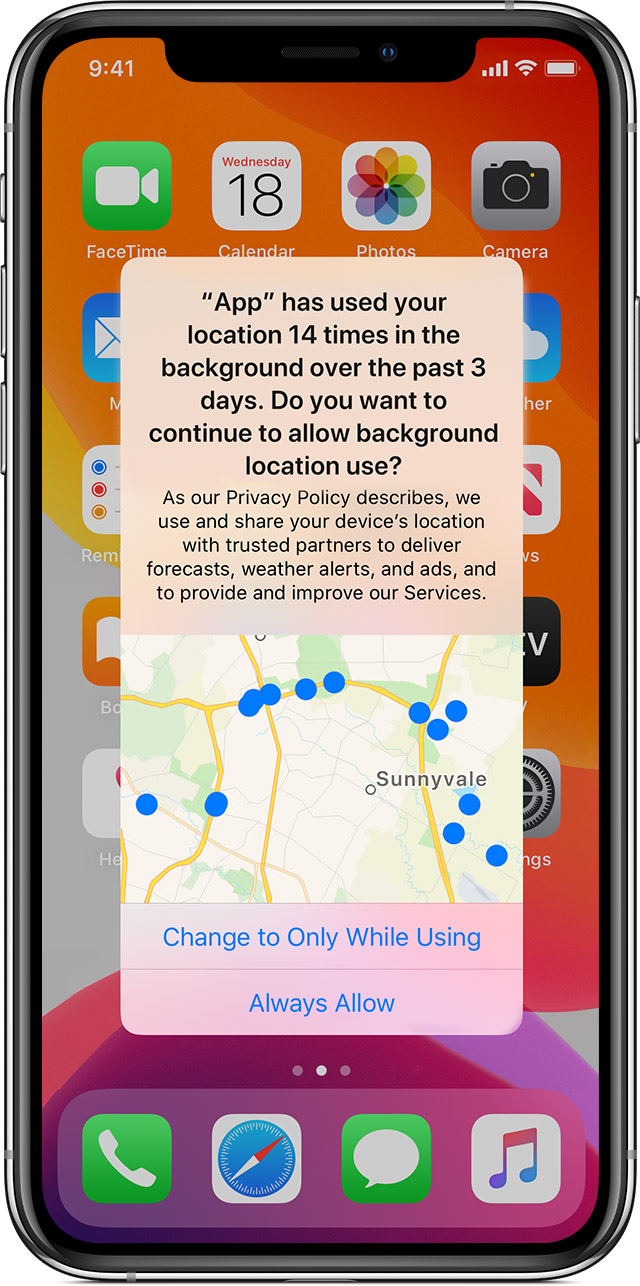
    Nowadays, iOS privacy settings offer a check against tracking location data in the background. iOS users can now choose between: ‘Allow While Using App’, ‘Allow Once’ or ‘Don’t Allow’.

    user data

    When an app tracks data in the background, a blue indicator now displays in the status bar to increase user awareness. iOS also reminds users when apps use significant amounts of location data and offers ways to turn location services completely off. Android has followed suit with an ‘Allow only when the app is in use’ function, too.

    user data

    Location tracking feels a bit creepy. In the wrong hands, it could easily be leveraged for nefarious purposes. Out of all the permission-granting options, location data presents much more of a physical safety concern for the end user. From the user’s standpoint, they should only enable access to location tracking while using an app. From a developer’s standpoint, they should be extremely careful when collecting and storing such PII to ensure regulations aren’t broken.

    4. Microphone

    Lastly, access to the user’s microphone is the fourth most commonly requested permission. The survey found 69% of social networking apps, 64% of photo and video apps and 41% of both business and productivity apps (Asana, Google Calendar, TimeTree, etc.) all want to be handed the mic.

    Here, potential privacy concerns are similar to those involving camera access. Bad actors could potentially activate the mic to listen to private conversations, record ambient noise and sell findings to advertising brokers. To increase user awareness, iOS 14 now requires an orange dot to display, indicating when the mic is in use.

    Other User Privacy Concerns

    User behavior tracking and app-to-app information exchange is another ongoing area of privacy concern. Companies often resell such information to data brokers, which is then used to refine highly targeted ad campaigns on third-party sites. This is how your search on Google results in product advertisements popping up in your Instagram feed. Apple is just starting to counter this practice with their App Tracking Transparency feature. In iOS 14.5, app devs must ask whether they can track your activity.

    Recent analysis has confirmed that commercially available consumer data, though labeled as “anonymized,” can successfully be used to piece together an accurate picture of a user by corroborating behavior on other apps. For example, users were able to track and pinpoint behavior that resulted in the outing of a catholic priest on Grindr. Smartphone app data could similarly be used by predators to spy on celebrities or politicians, posing a tangible security threat.

    Another cause for concern is metadata associated with photos. People often enable GPS-embedding into images to help organize their photo memories. If this is inexorably linked to photos, it essentially permits location data sharing to parties with photo library access who might not otherwise have location tracking permissions.

    From Big Data to Big Problem

    Perhaps the most curious finding of this report is that all apps are requesting permissions that seem irrelevant to their core value proposition. For example, why do 87% of shopping apps need access to a user’s entire photo library? Do 46% of food and drink apps really need access to a user’s personal contacts to place a food delivery order? Do navigation apps really need your personal calendar information to calculate a route downtown?

    The answer is not a pretty one. There has been a business imperative, for years, to track and collect large amounts of user data. There is undoubtedly an argument to be made for enhancing the user experience with innovative features and the role of big data in AI. However, this ongoing practice continues to creep into ethical gray areas. The fact is, the more personal data an app collects, the more potential privacy issues and security threat vectors are created in the process.

    Requesting permissions to on-device hardware and data collection is not always necessary. Thus, to stay safe and limit data overexposure, don’t overprescribe data collection. If it’s not fundamental to your app’s core function, don’t collect it, and don’t store it. Think twice before requiring many device permissions, and regularly audit app permissions requests to keep them to a minimum. As iOS and Android introduce new platform guidelines to elevate user privacy, developers should be prepared for users to grant fewer and fewer data collecting permissions. This is their right.

    It would be great if tech companies invested in honest, ethical business models that didn’t rely on harvesting and reselling user data to shady advertisers. And for those that mine user data but say it’s anonymous, I would point to reports that show anonymous data is nothing but pure myth.

  • Managing Data Risk in 2021

    Managing Data Risk in 2021

    You can’t protect your data if you don’t know where it is stored. The first thing to consider when creating a risk-based approach to data protection is the ability to identify and prioritize data, and control who has access to it. But, how do we do this? How do we prioritize data?

    In this TechStrong TV episode, Ron Bennatan, senior vice president and general manager of data security at Imperva, joins Mitch Ashley to discuss privacy, compliance and managing data risk in data lake environments in 2021.

    The video is immediately below, followed by the transcript of the conversation. Enjoy!

    Transcript

    Mitch Ashley: I’m very happy to be joined by Ron Bennatan, who is GM of Imperva Data Security. We’ve talked before—Ron, it’s good to be speaking with you again.

    Ron Bennatan: Hey, Mitch. Nice to see you again.

    Ashley: As always, yes. Data and security—two of my favorite topics. [Laughter] Welcome to 2021.

    Bennatan: Yeah, 2020 finally is over. [Laughter]

    Ashley: Ooh! You know, it takes a pretty big rearview mirror to look at that, but I’m not sure I wanna look back too much. [Laughter] Well, we’re gonna be kinda talking about looking forward into this new year. First, would you introduce yourself, tell us a little bit about you, and also a little bit about Imperva?

    Bennatan: Yeah. So, Imperva is kind of the market lead for data and application security. We secure all paths to data. So, it kind of straddles between both covering how data is accessed and where data is accessed, kind of covering everything regardless of on prem and cloud, hybrid cloud.

    Ashley: Mm-hmm.

    Bennatan: And I am the GM for the data security side, and really glad to be here.

    Ashley: No small problem you’re solving. [Laughter] Data is everywhere, you know?

    Bennatan: One problem, yeah.

    Ashley: [Cross talk] data. At least not very many of ‘em. So, let’s talk about it. I mean, you know, we have the whole government breach in 2020 Russia—you know, Russia, Russia, Russia, that whole thing.

    Bennatan: Yeah.

    Ashley: It certainly brought a lot of attention to supply chain attacks. Of course, you know, that being an intelligence brief, it’s collecting a lot of data, right? You know, that could, of course, happen on a—it is, did happen on corporate networks, it could also be for financial gain; it doesn’t mean it has to be a national state attack. So, I imagine that’s gonna be a—supply chain is a word we’re gonna hear a lot about this year.

    Bennatan: Yeah, I think so. I think, you know, as a, just an individual, my fear, by the way, is—you know, there’s a really big project coming for the entire world, which is the delivery of the vaccines, and that itself is a supply chain. I just hope nothing messes up there, you know? Like, you know, knowing that whatever vaccine you’re getting is actually the valid one and not—you know, there’s a lot of…everything is in data and everything at the end sits in some kind of a, like, what’s the lineage of something? What’s the providence of something?

    Ashley: Mm-hmm.

    Bennatan: You know, it doesn’t necessarily—you know, we in the data governance area talk a lot about providence and proving the correctness of data, but you know, it goes all the way to the vaccine as well. So, I think this issue that we’re seeing, whether it’s breach—breaches get headlines, okay? And, you know, so this SolarWinds thing gets a big headline, the thing that these attacks on MySQL with ransomware, that gets headlines. But really, the bigger issue is getting control of our data and creating kind of a complete risk oriented approach, not just plugging a hole here and plugging a hole here and plugging a hole here. It’s—that’ll never work, right? It’s much easier to create a new hole than to plug all the holes.

    Ashley: The whack a mole strategy. “Here’s another mole to whack.” [Laughter]

    Bennatan: The whack a mole—yeah, the whack a mole doesn’t work. Whack a mole doesn’t work. And especially today when the complexity of the data environment is so much greater.

    Ashley: Mm-hmm.

    Bennatan: You know, 20 years ago—okay, 40 years ago, we just had some dashboard on the mainframe. Twenty years ago, we just had Oracle sitting on some Unix server. Today, it’s such a complex environment, data moves from place to place, you know, you look at what a data lake implies. It’s no longer a single stack, it’s a combination of stacks. Whack a mole doesn’t work.

    Ashley: Mm-hmm.

    Bennatan: So—and most companies understand that. Most companies are in this process of investing in a non-whack a mole approach, in a risk based approach that says, “Okay, I need to know where my data is. I need to prioritize which. You know, not all data is created equal. I need to scan, I need to understand, I need to know who has the ability to access something. I then need to know who is accessing something. I need to control what they’re accessing.”

    So, you know, I think there’s a better understanding that whack a mole doesn’t work.

    Ashley: Mm-hmm.

    Bennatan: I think 2021 is still gonna be a transition year. I don’t think we’re gonna necessarily get there, but we’re gonna transition.

    Ashley: We won’t have universal enlightenment [Laughter] on day—

    Bennatan: It just takes time. I mean, it takes time.

    Ashley: It does.

    Bennatan: There’s a lot of data.

    Ashley: I wanna ask you about—you did a nice job of kind of outlining, you know, identifying what data you have, prioritizing it, access to it. One of the things that I’ve always struggled with is that second step. How do you prioritize? What are the things to consider? You know, there’s obviously sorta crown jewels of my business—this is the customer data or secret sauce or that kind of things, but is there a good sort of stratification of how to prioritize data?

    Bennatan: Okay, there’s a technical answer and there’s a human answer.

    Ashley: Okay.

    Bennatan: Okay, technically, there are very good ways to do this. It takes some effort, okay? You can—you really do this based on a scoring of a bunch of dimensions, okay? So, one dimension could be the sensitivity level of the data, okay? Another dimension could be, what is the impact if something happens, okay? Which—but the reality is that we’re all people, and people are driven by incentive, and incentive is not necessarily, doesn’t always necessarily create the right prioritization. It creates whatever prioritization the incentive is structured around.

    So, I’ll give you an example. A lot of projects going on around privacy—a lot of projects. Because it’s a very, it’s a relatively new thing, less understood, and people don’t always equate the fact that we have been doing the work, almost the identical work, we just didn’t call it privacy, right? We called it classification.

    Ashley: Mm-hmm.

    Bennatan: But when you look at what privacy implies, it’s the same, but very new terminology—different semantics, different terminology. So many people don’t start from an investment they’ve already done in the last five years, they start from scratch, and the incentives are created because there’s a new role in the company. There may be a new—you know, a data privacy officer, okay, and that person has certain mandates and they drive things top down.

    And so, I think that the reality is, prioritization is driven by the projects and the funding that these projects have, and they’re also driven by breaches, okay? Because breaches are very dramatic.

    Ashley: [Cross talk] response, right? [Laughter]

    Bennatan: Dramatic, immediately created. So, I think that the reality is gonna end up somewhere kind of in the middle where things are gonna be driven bottom up and top down and they’re gonna meet somewhere.

    Ashley: Mm-hmm.

    Bennatan: But it’s not terribly complex to create a good prioritization strategy, but it’s not trivial, either.

    Ashley: Yeah, you definitely have to put some thought into it, and it’s not a textbook exercise, right? It’s all contextual.

    Bennatan: Yeah.

    Ashley: What’s important to the business.

    Bennatan: And I think you’ll find in—I mean, my prediction in 2021 is that there’s gonna be a lot of, you know, privacy is not gonna just drive a lot of these from a compliance perspective. Okay, until now, privacy is really—you know, when a company embarks on these privacy and classification projects, or at least what I see from our customers, is that it’s driven a lot by compliance, okay? They need to comply with a CCPA, they need to comply with GDPI.

    Ashley: Mm-hmm.

    Bennatan: I think we might end up having also, like, an attack flavor, okay, around privacy, which is not intuitive, not necessarily intuitive. And it has to do with the fact that, you know, part of the mandate is, you know—so, say that I am, you know, year one of my consumers and you store, I store some of your data. That means I—you have the right to demand some things from me. Like, you have the right to demand that I delete you from my system.

    Ashley: Mm-hmm.

    Bennatan: You have the right or portability, you have the right to ask me what data do I own or do I store about you? And you can come to me with these requests, okay? Different terms, different subject rights request or data access requests. You know, you can easily think about what is the effort that I, as a big company, have when you ask me to do this? It’s not a small effort. So, okay, if you—now, the nice thing is, most people don’t do that, okay? I’ve never called somebody up and told them, “Hey, delete me, okay?”

    Ashley: [Laughter] No, I think that’s probably very much an exception—maybe a rare exception.

    Bennatan: Yeah, but what happens is some people realize that this is the way to cripple a company.

    Ashley: Mm-hmm.

    Bennatan: What happens if they organize and they say, “Hey”—

    Ashley: Or protest, right?

    Bennatan: – protest, you know?

    Ashley: Moving of Facebook onto whatever.

    Bennatan: “We don’t like you, let’s organize 10,000 of our friends and we’ll all hit them at the same time.” What do you think that’s gonna do from a work perspective? It’s pretty serious.

    Ashley: Yeah, I’m guessing it’s not just press a button—that’s gonna consume some resource at the company, people resource, things like that.

    Bennatan: Yeah.

    Ashley: You know, one thing I was wondering, too, is, with this year, there’s discussion now about do we need a national cybersecurity strategy, things like that, just to mention politics, the Biden administration is talking about working with other countries to establish sort of norms of what we do when it comes to cyber whatever with each other and what is considered an attack.

    It seems like that is—maybe not this year, but that’s certainly potential for regulation of those kind of discussions, whether it comes out of any national strategy or not or could be another country that says, “Okay, now we’re gonna take this to the next level.” Like, what is our position around data? Not just privacy, but if it’s compromised, then what happens to you as a firm? I mean, it could get kind of interesting.

    Bennatan: Yeah, it could. You know, I mean—again, we’re delving into, like, opinions and politics.

    Ashley: [Laughter] Yeah, I know.

    Bennatan: I’m not a fan of—I’m not sure that something like this could go that route. But I do think that it goes other routes. So, for example, like, I’m reading a book on kind of the history of the Mossad, okay, the Israeli intelligence service.

    Ashley: Mm-hmm, mm-hmm.

    Bennatan: And you can see—and whenever you read any of these books, you see that all of the intelligence community, they have back channels, right? They agree on things.

    Ashley: Right.

    Bennatan: So, to me, if we wanna have something like that, it should be, like, the cyber czar of the U.S. and some other—you know, the big players, they have to agree. It doesn’t need to be regulated, it doesn’t need to be at the politician level, it has to kind of stay at the—

    Ashley: Kinda behind the scenes with the cyber czar.

    Bennatan: Behind the scenes with the experts at the—but, you know, there’s definitely an issue with state nations, okay? This does need to be addressed. Now, you know, it’s not necessarily that every—you know, we always think that, you know, we’re the good guys, they’re the bad guys, you know?

    Ashley: We would never do anything like what they did to us, right? [Laughter]

    Bennatan: Well, you know, there’s examples in history, okay, of things. So, I do think this is coming. I don’t believe it would happen at a politician level, it will happen at the actual subject matter experts. And by the way, there are good examples of things that have happened like that, especially in the financial services community. I mean, for years, maybe even decades, you know, FS-ISAC, they work together to create some level of standards across investment banks or banks. These things work, I just don’t think it’s political.

    Ashley: Interesting. Well, I wanted to kinda tap your thoughts on that. I know I threw the line pretty far out there in the water, [Laughter] just to kinda get your thoughts on that.

    Well, let’s reel that back in a little bit and talk—you know, there’s GDPR and CCAPE for California. A lot of people are still in this, I think in this kinda implementation stage, even though we’re supposed to have those things all covered, right? Maybe a little farther along with the GDPR, of course, but is that something, this year, you think it’s—we’re in this, okay, let’s now institutionalize some of those things in the organizations and really take care of our knitting there or do you think there’s more things on the horizon that are gonna come at data people?

    Bennatan: I think it’s gone into an implementation phase, for sure—which is good.

    Ashley: Mm-hmm.

    Bennatan: You know, there’s a lot of things, many things are not terribly clear, by the way, even though it’s in implementation. I’ll give you an example, right, this notion of being—my ability to request that you delete me, okay? But let’s take something else, which is a different type of compliance requirement, which is for you to keep logs for a certain period of time, activity logs. There are a whole bunch of other compliance requirements that require you to do that.

    Ashley: Data retention requirements, yeah.

    Bennatan: Yeah. Okay, so—now, what happens if part of the activity logs has my identity in it and I request you to delete it?

    Ashley: Mm-hmm.

    Bennatan: Should you delete it, or should you not delete it? One, in order to comply with one thing, you should delete it. In order to comply with another thing, you can’t delete it, maybe for three years. So, there’s even things like this, which are conflicting messages. And at the end of the day, it’s going to depend on some level of interpretation.

    Ashley: Mm-hmm.

    Bennatan: Which, at the implementation level, I can tell you, I can see two approaches. One is—okay, this interpretation needs to be given by legal or it’s okay for the business to give the interpretation to that. So—and you know how it is. If it goes to Legal, it takes a longer time; if the business can make the decision, then it goes much faster. And I’m seeing more and more of this moving to the business, taking ownership, and making the decisions, in which case, it goes much, much faster.

    Ashley: Well, and oftentimes, it seems that that always happens with laws and regulations, right? There’s what it is and there’s the interpretation of it, and there’s sorta those middle tier organizations, the consultants, the larger firms to sort of establish the frameworks that, “This is our interpretation of it,” so if you do that, you’re sort of in the norm with what the industry is doing. Who knows if that’s the right interpretation or not? It’s always subject to change, but that’s usually where that help comes from, at least on the big thing.

    Bennatan: Well, yeah. I mean, it starts from there and then usually what happens or what it evolves to, which makes it really go much faster, which is what’s happening now is that if—and by the way, it goes back to your question about this nations coming together or an industry coming together. The minute you have some critical mass within a certain peer group and you say, I don’t know, maybe I’m an insurance company, if my peers have taken upon themselves a certain interpretation, I usually don’t even care where they got it from.

    Ashley: Mm-hmm.

    Bennatan: Maybe they got it from these consultants, maybe they didn’t. But if three big players in my industry are doing the same thing, I’m gonna do the same thing.

    Ashley: Yeah.

    Bennatan: And that’s what’s happening now is that, you know, I know the insurance industry well and I know the banking industry well, and I can see that they’re now, “Oh, we’re gonna do like them” and then it’s much easier to follow, like, a track that seems to be proven than to try to invent it. And that’s happening and that’s why I think there’s an acceleration for a lot of these things.

    Ashley: Yeah, I agree with you. That makes a lot of sense. What are your other thoughts about 2021? What are we gonna be thinking about that we didn’t realize is gonna be on our radar for this year?

    Bennatan: I think we are going to kind of understand this notion of, you know, look at the data from every way that you can get at the data, not try to—like, historically, there have been a focus on pillars or silos, which were more and more, or in the past were driven really by tool specialization, okay? Like—okay, I’ve got the DLP and I’ve got this and I’ve got FAM and I’ve got databases, and I’ve got big data.

    And today, the lines are so blurred, especially on the cloud services, they’re even more blurred that there’s starting to be a realization that we really need to look at all paths to the data and all ways to secure the data and look at it instead of individual silos, looking at it as, “This is my data fabric.” Okay, so you’re starting to hear things like, you know, data lakes, data fabric, data services, and the data service could be structured by different implementation stacks. But you’re no longer trying to secure each stack by itself, you’re trying to secure the entire fabric.

    Ashley: Mm-hmm.

    Bennatan: And it’s really the right thing to do. It’s the right way to think about it. It is something that requires a transition, because even organizationally, many companies had one group doing this and one group doing this and one group doing this. And this notion of, you know, looking at a single overlay control layer, okay, which can drive policy down or can bring things up is, you know, it’s time for that. And I think 2021 is gonna be, part of this year is going to be starting to deliver things at that level of abstraction, and it’s also enabled by the fact that there is technology that can kind of bubble everything up into one level, right? You don’t need to look at it as 20 different tools, you need to look at it as kind of like a federated layer, and at least it’s doable, right? Ten years ago, it wasn’t doable to do any of it.

    Ashley: You know, it’s interesting. What it makes me think of is maybe some norms that we’ve had for a while of thinking about data owners, and that sort of puts the blinders on of, now I create that vertical view of, “This is that data for that purpose for that business unit for that application or process, whatever it might be.” And what you’re saying is looking at it more systemically, right? The entire collection of data, and securing it, but also uses of that data and sort additional intelligence and things you can mine from it.

    It’s interesting—so much, as we continue to move more and more into the digital economy, digital world for how we operate, all of those digital activities generate their own data, too. So, now, we’re adding that to the fabric of the data of, you know, we have a lot more usage information, we have a lot more telemetry that we never had. You know, it seems to be expanding exponentially. So, our ability to even just fathom what’s there and how it’s—what uses it might have and how it might be correlated in new ways sort of boggles my mind. [Laughter]

    Bennatan: Yeah, yeah. And, you know, I mean, it used to be this—one of the things people used to talk about when they started building big data platforms was that, you know, until recently, we just, we couldn’t use our data. We just threw 97% of our data away, and now we don’t wanna throw it away, but you’re right, it’s a beast that feeds itself.

    Ashley: Mm-hmm.

    Bennatan: But yeah, I think it’s, I think looking at the risk profile of the entire thing and not cutting into separate projects, which then have no tie to each other, right? I mean, if you want to reduce the risk, you asked about prioritization. Okay, prioritization needs to drive everything, right? Needs to drive reducing service area, needs to drive access control policies, needs to drive audit. If you start separating each one of them, not only is it not very effective, but it means you’re working 10 times harder, because you need to do this many, many, many times.

    So, this notion of a single kind of data security platform which kind of can have this internal feedback loop and use whatever effort you’re doing, it doesn’t matter if your effort is driven by compliance or security or privacy, whatever investment you make needs to build into this platform, not do itself over the next time you do anything. Otherwise, we’re just wasting our time. We’ll never get done. Because you said the data’s growing exponentially—if we’re chasing, if we’re not leveraging what we’re doing for one purpose when we wanna do the next purpose, we’re gonna lose. It’s gotta be a single platform.

    Ashley: Well, and to your point, it seems that once you sort of make that shift, right, to that platform view of data, now you can apply that to how you look at the data across all sources, all uses, all former kind of vertical siloed—you know, you may still want to look at it that way, but it’s not like, “Okay, now we’ve figured it out for compliance, but we’ve gotta go start over to do it for something else for operational process or whatever.”

    Bennatan: Exactly.

    Ashley: No, it’s there, you kinda take that—

    Bennatan: Exactly.

    Ashley: – those same tools and look at the data, analyze it. Now you’ve got that capability to do that for lots of things.

    Bennatan: Yeah, it’s exactly—it’s exactly right. I mean, you know, it’s like, in the business world, there was always this notion of a customer 360 where, you know, what’s the point that I have one system for quotes and one system for support and one system for my policy and I never know what’s going on, and I can’t upsell, and I can’t cross sell. It’s the same thing in security, okay?

    There’s this notion of data 360, data security 360 where, if it’s there, you know, then prioritization becomes easier, right? If you can check your configs and your vulnerabilities, okay, and you get this huge list—what are you gonna do? But if you know that, of this huge list, your consumer data is here and that, you know, the crown jewels are here—great, you don’t have to boil the ocean.

    Ashley: Mm-hmm.

    Bennatan: And if, at the same time, you can bring in and you can check your entitlements and you can say, “Well, you know, I have this vulnerability, and it is important data, but I did a really good job at narrowing it down and access to it is only by these individuals and access is Kerberized and—I don’t know, and maybe I also regulate the policy very tightly—these are all related, okay? So, if you have that single platform, you’re in much better shape than…you know, it’s like, I’m trying to think of a metaphor of, you know, when you have a single viewpoint, that viewpoint may be wrong. When you have—it’s kind of like, you know, these days, this discussion about whether news means anything any more, because it’s so tailored to what you wanna hear.

    Ashley: Mm-hmm.

    Bennatan: But it’s kind of like somebody forcing you to go and watch Fox and CNN and NPR and—you must watch all of these before you make a decision. It’s the same way. We can’t reduce risk by just looking at one thing at a time.

    Ashley: Yeah, we certainly have our own selection bias and data as we do our news programming as well, right? [Laughter]

    Bennatan: Yes, exactly.

    Ashley: Well, this has been a lot of fun talking with you. I just have a sense 2021 is already off to a good start with vaccines and the COVID situation. Hopefully—

    Bennatan: Hopefully.

    Ashley: – you know, we’ll round that hump and folks can really figure out new ways of collaborating with each other without worrying about COVID. Maybe that day’s down the path not too far, but we hope, anyway.

    Bennatan: Yes.

    Ashley: So, it’s been fascinating talking with you. So, we didn’t talk about, you know, go into product stuff, it wasn’t that conversation, but tell us a little bit about where folks can find out more about Imperva.

    Bennatan: So, Imperva.com, we are—you know, if we’re talking about data security, then there’s a whole section there, and you’ll see that we’re investing a lot in, you know, things that we believe 2021 and our customers are implementing. So, a lot of kind of complete security, complete security, whether it’s for compliance, security, privacy—a lot of effort in privacy, a lot of effort around data lakes, everything around cloud. Any cloud that you can think of or any data service, any data-centric workload on the cloud is something that we’ve worked very hard with the cloud vendors to provide support for. And yeah, I think 2021 is gonna be an exciting year because of this modernization that everybody’s embarking on.

    And my hope and what we’re trying to do with Imperva is that the path of modernization for the applications and for functionality also brings with it modernization of security, updated security. That’s really what we’re working on.

    Ashley: I would definitely suggest folks check you out. In thinking about our conversation before of the response to regulation and policies and things like that of looking at what other leaders do, Imperva works with some very impressive companies who are solving the data challenge from a platform standpoint. So, there’s a lot of good reasons to check out Imperva, because there’s a lot of problems you’re solving on the advance that could help a lot of organizations, so I hope people will do that.

    Bennatan: Yeah. Well, thanks, Mitch. Always great to talk.

    Ashley: You bet. Good to talk with you, Ron, and thanks, everybody, for listening in. It’s been a great conversation, and I wish all of you a great 2021 as well.

  • Veritas Looks to Reduce Data Protection Costs

    Veritas Looks to Reduce Data Protection Costs

    Veritas has extended the capabilities of the company’s NetBackup software as part of an effort to reduce the total cost of data protection.

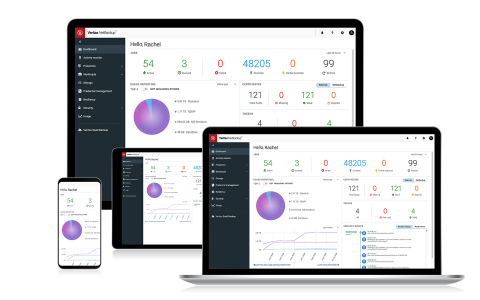
    Version 8.3 of NetBackup now includes Veritas Resiliency Platform (VRP), a disaster recovery tool, and CloudPoint, a tool for backing data up on a public cloud. All of these tools are part of what Veritas calls its Enterprise Data Services Platform (EDSP).

    In addition, Veritas has integrated hardened NetBackup appliances and vendor-agnostic immutability for storage via its NetBackup OpenStorage Technology (OST) to help organizations recover from a ransomware attack more easily.

    Veritas is also adding support for 2048-bit encryption and integration with third-party key management systems (EKMS) along with more flexible enhancements to the role-based access control (RBAC) it provides.

    Other capabilities in this release of NetBackup include more granular recovery of virtual machines, the ability to orchestrated rehearsals to verify effectiveness of recovery procedures, and the ability to move data between cloud platforms.

    Veritas has also extended discovery, backup, restore and automation at scale for Microsoft SQL, Oracle and Oracle Real Application Clusters (RAC) to simplify data protection processes spanning multiple classes of databases.

    Finally, Veritas claims with this release, data protection via auto-discovery of resources and load balancing is now 25% faster and the discovery of VMware vCenter and vCloud platforms is 50% faster.

    Doug Matthews, vice president of data protection and compliance for Veritas, said with the expansion of EDSP it’s now much more cost-effective to protect data residing on multiple platforms. In the wake of the economic downturn brought on by the COVID-19 pandemic, there’s much greater sensitivity to IT costs, he said.

    At the same time, Matthews said Veritas is seeing DevOps teams become much more involved in automating data protection processes. Veritas has defined more than 600 application programming interfaces to enable DevOps teams to programmatically invoke its data protection software, he said.

    Cybersecurity teams are also becoming more involved as backup and recovery becomes a core element of ransomware defense strategies, Matthews added. In an ideal world, anytime a ransomware attack occurs, a pristine copy of any impacted data would be readily available on another unaffected platform.

    The convergence of data protection and cybersecurity has been a long time coming. Symantec once owned Veritas in the hopes of achieving that goal. Now Veritas is working with a much broader array of third-party partners to achieve that same goal, Matthews said. It may wind up being the rise of DevOps that finally forces that issue as data protection becomes one more IT task to be automated.

    In the meantime, IT organizations may want to revisit their entire approach to data protection. Chances are good that most of them have multiple redundant data protection tools and services in place that have been acquired over time. Consolidating those functions ultimately not only reduces licensing costs, but it also creates an opportunity to automate a set of mundane tasks that all too often IT staff forget to perform consistently at a time that will prove crucial.

  • Balancing UX and Privacy With IoT

    Balancing UX and Privacy With IoT

    As more IoT devices track data to improve customer UX, privacy concerns are becoming more prevalent. How can developers strike a balance?

    The internet of things, or IoT, is a system that has changed the way we perceive technology. While it has made the usage of technology easier than ever, it does come with its own set of problems. Being such an interconnected network, IoT’s main threat is its ability to pose myriad security and privacy problems.

    In this article, we seek to discuss how and why privacy is becoming a rising challenge in the world of IoT. By understanding how our privacy and security will be affected, we can take the right measures to reduce our vulnerability to these threats and secure our lives.

    How Interconnected Are Devices?

    IoT devices come with several technical capabilities, most of which have been researched and optimized only to the extent of their functionality. Today, IoT connectivity is available in a growing number of devices and equipment. Smartphones can connect to the internet and several household appliances, which also allows people to control these items remotely. Transportation departments have begun to hash out more advanced vehicle-to-vehicle communication, focusing on improving driver and passenger safety on the road. SmartGrid interconnected technologies allow electricity providers, managers and users to monitor and control electricity use in homes, offices and places of business. Today, several people are also making rampant use of SmartHome technologies to control appliances and home security systems and use fitness trackers to control their movement as monitor their eating and sleeping habits. These trackers are connected to their smartphones for better data aggregation.

    All of these connected devices pose a question: With so much data collection and data tracking being carried out by these devices, aren’t we compromising on our privacy and security?

    How IoT Affects Privacy

    When we consider the compromised privacy of individuals, we are talking about each individual’s loss of control over personal information. When people invest in these interconnected devices, they are not entirely aware of how much of their personal information is tracked and saved by the manufacturer in a bid to improve user experience.

    An individual can lose control if someone hacks into their smartphone or computer and remotely operates other devices. There’s no doubt that our smartphones carry a majority of our information. They are linked to our bank accounts, email accounts and even systems that need authorization. In fact, experts predict that there would be about 31 billion connected IoT devices by the year 2021. Usually, hackers employ methods that are undetected, so more connections would mean an increase in hacking activities as well.

    The data collected from an individual’s smartphone or laptop can give hackers a detailed look into their activities, including internet searches and purchasing power. The information is typically used to work on user experience, but also can be used to target particular products to the individual. Sometimes, this data is even sold to other organizations that are looking for a target audience to sell their products.

    Rising Challenge of Protecting Data

    Data is constantly being stored, transmitted and processed by different companies with the help of IoT devices. With more entry points to access data in the form of smart TVs, speakers, lighting systems, printers and more, your data is more vulnerable than ever.

    IoT vendors, therefore, should have dedicated compliance and privacy rules that alter and anonymize personal data before it is stored. The aim is to prevent the data from being able to identify an individual. Cached data and data that is no longer needed should be disposed of in a secure and organized manner.

    Stored data also must meet compliance with legal and regulatory mandates. This must extend to mobile devices, web presence, cloud applications and any other means by which the data from IoT devices are accessed and managed.

    Affordability of Protecting Data

    Yet another concern among IoT developers is the ability to provide enough security for their services. Limited budgets and manpower constraints can prove difficult for establishments to heed to privacy and security concerns. The reason so many loopholes exist is due to the fact that so many manufacturers focus solely on getting the app out into the market to attract funding without considering the damage that could follow.

    With more and more people concerned with their data privacy, organizations must implement more security checks to avoid ruining their brand authority and trustworthiness due to a data breach.

    Conclusion

    Users today are more connected than ever, which means privacy and security concerns must be top of mind for developers. Manufacturers may argue that data collection is essential to the development of their products and the IoT market in the long run, but there must be more focus on the security of the data and personal privacy concerns. Data collection should be done in a monitored manner, with compliance to regulations from the onset. A recent survey noted that 92% of global consumers want more control over how their information is collected. The same number of people also want to enforce punishments for corporates that violate their privacy. IoT developers, therefore, must strive to find a happy medium that balances security and privacy with user experience.

  • Commvault Extends Data Protection Alliance with Microsoft

    Commvault Extends Data Protection Alliance with Microsoft

    Commvault and Microsoft are extending their existing relationship to integrate Commvault’s data protection software with Azure Blob Storage.

    Azure Blob Storage is a service based on object-based storage optimized for unstructured data. Commvault last year launched the Metallic software-as-a-service (SaaS) platform, which provides a cloud-based approach to managing data protection, that runs on Azure.

    The two companies have pledged to extend that relationship to not only align engineering efforts but also enable their partners to more easily resell both Metallic and Azure cloud services under the same user contract.

    Manoj Nair, general manager for the Metallic service, said the Commvault offering presents IT administrators with a simple graphical user interface (GUI) and exposes application programming interfaces (API). That latter capability enables DevOps teams to automate the backup and recovery process via a cloud service, said Nair.

    Rather than having to rely on an IT administrator, the API enables DevOps teams to remove friction from the data protection process, he noted.

    The bulk of data protection processes are still managed by IT administrators. However, as DevOps processes continue to mature, data protection processes are becoming more automated. Developers not only want to be able to instantly recover data in the event of system failure but they also often use data protection tools to move data into and out of cloud computing environments.

    Nair said Commvault opted to extend its relationship with Microsoft in part because the amount of data being stored in the Azure cloud continues to expand exponentially as more organizations adopt Microsoft Office 365, Microsoft Teams and low-code applications built using Microsoft PowerBuilder tools. Collectively, those applications increase the amount of data gravity the Microsoft Azure cloud exerts. As the amount of data increases in the Azure cloud, the number of applications looking to access that pool of data increases steadily. As that data continues to grow, Nair said there will be a greater need for tools to protect that data.

    In general, Nair said many organizations underappreciate the need to back up and recover data stored by cloud service providers. The assumption is the cloud service provider will make it possible to recover data in the event of failure. In reality, cloud computing is based on a shared responsibility model between the end customer and the cloud service provider, under which responsibility for data protection—along with all other data management functions—belongs to the end customer.

    Of course, there is no shortage of data protection tools available. Many of those relied on today reside in an on-premises IT environment. In the wake of the COVID-19 pandemic, interest has grown regarding shifting data management tools to SaaS platforms that are more accessible. The issue many IT organizations will need to decide next is whether they want to rely on dedicated IT administrators to manage those processes versus reducing costs by employing APIs to automate a set of routine tasks that no one in IT especially enjoys managing.

  • Sacrificing Security for Speed: 5 Mistakes Businesses Make in Application Development

    Sacrificing Security for Speed: 5 Mistakes Businesses Make in Application Development

    Earlier this year, the Democratic party in Iowa announced its plans to use a smartphone app to calculate and transmit their caucus results. Using technology to improve the speed of governance, one would think, “What could possibly go wrong? A lot, apparently. The app’s failure on results day was attributed to reporting and coding issues.

    While security was the matter of concern from the day of its announcement, the inevitable happened. Data and security breaches happen almost every minute. University of Maryland researchers find cyberattacks every 39 seconds. The last decade has seen many data breaches, putting personal information of billions of users in the hands of dubious entities. Every enterprise, from Yahoo to Facebook and Target to Home Depot, has been under attack—and this is likely to continue. Research has found that cybersecurity breaches will result in over 146 billion records stolen by 2023.

    Poor security is putting enterprises, governments and citizens at risk every day. Yet, in a hurry to leverage technology, companies bring unsecured applications to market all the time. In essence, they sacrifice security for speed. Adding to this, today’s modern web and mobile applications are built with latest and greatest technology stacks and frameworks, heavily reliant on client side functionality, and integration to multiclouds and third party systems using a myriad of APIs. Also teams are more diverse and work collaboratively using remote workforces. 

    These trends increase the security challenges the application development teams need to be aware of, and leverage platforms that provide built-in controls and protection against these to avoid security breaches and attacks. 

    While prioritizing speed over security in application development take into consideration the following mistakes that you need to avoid and address.

    Not Looking at Data Security Holistically 

    Data tends to be the most important and valuable aspect of modern web applications. Poor application design and architecture leads to data and security breaches. Application development teams generally assume that by providing the right authentication and authorization measures to the application, data will be protected. This is a misconception. Right measures to provide data security involve focussing on data integrity, fine grained data access and encrypting data while in rest as well as in motion. In addition, data security needs to be looked at holistically from the time the request is made to the time response is sent back across all layers of the application runtime.

    Not Considering Security Across the Application Development Lifecycle 

    Today’s modern web applications are highly sophisticated and built with a big focus on simplistic user experience combined with high scalability. This combination can be challenging for application development teams from a security perspective. Most development teams focus only on silos when securing the application (only client, server or integration layer). Teams should focus on end-to-end full stack security when developing applications. Also application teams should enforce security best practices incorporated by default as part of the collaborative development process.

    Not Focusing on API Security

    Most of the modern web applications use APIs from systems and services which include internal enterprise systems, cloud SaaS APIs, partner APIs and third party product APIs. Today, almost all web applications tend to expose their own functionality to the external environment as a core set of APIs. What’s more, nearly 100% of web applications today tend to expose its own functionality as a core set of APIs to the external world. Teams need to make sure they are using external APIs with proper security guidelines and protocols as well as exposing their own APIs with multiple choices of protecting them. API access needs to be protected with both coarse grained as well as fine grained measures.

    Not Providing Strong Authorization and Authentication Methods

    Authenticating your application and authorizing what users can access is an important part of application security. Without this, you are leaving your attack surface wide open. Your application needs to incorporate stringent and strong measures for authentication to prevent unauthorized access. This includes multi-factor authentication, passwordless authentication, single sign on and if using passwords very strong password policies. It must also offer fine grained role-based access control preventing access of sensitive and confidential data to non-privileged users. Moving to a market with ambiguous weak authentication, lack of fine grained control, improper session control and insufficient logging might not seem like a probable risk until you’re attacked.

    Not Incorporating Vulnerability Testing Throughout the Development Lifecycle

    Security threats are evolving faster than anyone can keep track of. The Open Web Application Security Project (OWASP), a community of application developers and security professionals, identifies the top 10 security risks each application team must mitigate. This includes risks across injection, data exposure, misconfiguration, security deserialization and so on. Development teams should incorporate vulnerability assessment as a continuous process and not leave it at the end of the deployment cycle.

    Automating Security with Development Platforms

    Integrating security into your application development process does not have to slow you down. By utilizing key technologies such as a low-code platform, you can accelerate development and enable security procedures at the same time.

    While promising accelerated development, what an ideal low-code application development platform offers is a visual development environment and code-customization with two-way workplace sync with IDEs. It also enables autogeneration of code, ensures extensibility and reuse with prefabs, and allows for full integration with CI/CD pipelines. 

    One of the important features of a low-code platform is built-in security, one that ensures automation of the development of application-level security features. A perfect platform provides a configuration for prevention of security vulnerabilities such as XSS and CSRF and ensures in-built encryption, robust authentication and authorization systems, along with enterprise-grade auditability and traceability.

    While speed may be the name of the game, rolling out your applications without considering security would have little positive impact if they fail to function and are not secure. One of the best ways to integrate security across your application development lifecycle is to leverage the benefits of low-code platforms that are designed for professional development, those that have built-in, application-level security features. While your application development plans may be time-critical, security cannot be an afterthought, because sacrificing security for speed may make it longer for you to mitigate the risks than achieve your application development goals.