
— ROELBOB
Tag: conferences
-

DOES18 Las Vegas: Video Interviews, Day 1
Despite what you may have heard to the contrary, not everything that happens in Vegas should stay there. Take the DevOps Enterprise Summit 2018 (DOES18), for example: The three-day event attracted the best and brightest in the DevOps world—and me—to discuss all things DevOps. Some of those great conversations were captured in a series of video interviews, which are now available on DevOps TV.
During the two days of interviews in our glass-walled video booth, a variety of folks stopped by to chat about topics ranging from audits and compliance to NextGen Ops and the future of DevOps. Below is a recap of the Day 1 video interviews from DOES18 (Day 2’s recap will post next week):
The Future of DevOps
Wesley Pullen of Electric Cloud, Torsten Volk of EMA and Chris Nowak of FlowStates stopped by to discuss the latest DevOps trends, where DevOps is headed, and understand key emerging practices and technologies that are driving success.
Venture Capital and DevOps
Sid Sijbrandij of GitLab, CJ Napolitano of Electric Cloud and Ubaid Dhiyan of Union Square Advisors chatted about the current state of VC investment into DevOps, how this could evolve in the future and the impact this investment ecosystem has on the global economy.
ITSM/DevOps Crossover
IT Skeptic Rob England and his partner Dr. Cherry Vu discussed what holds ITIL back from more successful transformation of IT work, and how we can help it succeed, as DevOps and ITSM finally converge on each other in the common ground of service operations.
‘Dear Auditor’ — Compliance and DevOps
Sam Guckenheimer of Microsoft, James Wickett of Signal Sciences and Topo Pal of Capital One talked about the current state of DevOps and audit/compliance. They are part of a team that wrote a love letter to auditors from DevOps, in which a promise was made to make life better. They also compiled a list of audit concerns and documented them in a DevOps Risk Control Matrix with lot of details around the controls, practices and evidences that are collected to support the control.
NextGen Ops
Damon Edwards of Rundeck, Cornelia Davis of Pivotal Software and Tom Limoncelli of Stack Overflow chatted about the next generation of IT Ops and what emerging patterns and practices teams should consider for the future of IT.
Workplace Burnout
John Willis (Botchagalupe) is passionate about so many topics around DevOps, cloud and technology. One of the areas he is really passionate about, though, is the topic of burnout and fatigue in the IT field. He and Dr. Christina Maslach discussed the concept of burnout and examined the causes and effects of this problem, and the most promising strategies for dealing effectively with it.
Project to Product
Dr. Mik Kersten, CEO of Tasktop, reviewed the transition from project-based work to product-based workflows—the most optimized and scalable DevOps environment will be a highly prized gem for any business only if the product management team is prioritizing the right capabilities into the DevOps process.
Tech for Tech Leaders
Anders Wallgren of Electric Cloud and Erica Morrison of CSG discussed the technology landscape and what things tech leaders need to not only understand from a tech and architecture perspective, but also what they need to know to help build technology and tech platforms for the future of software delivery.
Banking on DevOps
Mark Howell of Lloyds Banking Group, Shaun Norris of Standard Chartered Bank and John Rzeszotarski of KeyBank reviewed a few of the top DevOps journeys in banking and what other financial institutions should consider along their DevOps journeys.
Well, there ya have it: An entire day’s worth of videos compiled for your viewing pleasure. Be sure to check back next week for a recap of our Day 2 video interviews from DOES18 Las Vegas.
-

A Certifiable Reason to Attend Training at DevOps World | Jenkins World 2018
There are many factors that make DevOps World | Jenkins World the essential DevOps event to attend each year. Whether it is the keynotes and speaker sessions from industry-leading DevOps experts, the expo where you can check out the latest and greatest from our friends in the software industry or the themed after-party, there are many reasons why year over year the conference grows. An added benefit that contributes to DevOps World | Jenkins World being the DevOps event of the year is the wealth of informative preconference training and certification. Think of them as the workout before the big game, providing you the tools and knowledge to make the most of the conference and beyond.
The growth of attendance and variety of attendees of the DevOps World | Jenkins World conference is one of the indicators that the industry is constantly innovating and evolving. Last year, Forrester declared 2018 as the “Year of DevOps,” with 50 percent of survey respondents reporting they had already implemented DevOps with plans to expand. For DevOps practitioners to keep up with the continuous pace of modern software development, there also has to be continuous learning. Training and certification at DevOps World | Jenkins World will cover relevant topics in software development, such as authorization and security, build management, instance administration and interfacing with cloud services, in addition to Jenkins and CloudBees Core fundamentals.
Not only are all training sessions available to add on to your full conference sessions pass, but you also can receive a free Jenkins certification exam voucher—a $150 value—for the Certified Jenkins Engineer (CJE) and Certified CloudBees Jenkins Platform Engineer (CCJPE) exams. You can choose to sign up for an onsite exam at DevOps World | Jenkins World (first-come, first-serve) or use it at a later date. There are also several half-, one- and two-day courses that can be added during the event registration process.
In addition to our recommendations below, check out the Training and Certification page to see what courses can help strengthen your software delivery pipeline skills.
DevOps Leader Certification Training
Successful implementation of DevOps requires leadership. Whether you are in a tactical or strategic role, if you help design, influence, implement or motivate the cultural transformation in DevOps adoption, this course will take your DevOps leadership to the next level.
Value Stream Mapping for DevOps
If you’re looking to better understand DevOps, you are in the right place! Join Mike Orzen, a recognized and prominent Lean thought leader and author, to learn the ins and outs of DevOps value stream mapping, helping you identify inefficiencies in your current process, and optimize it to deliver more value to your customers.
Jenkins Fundamentals
It wouldn’t be Jenkins World without Jenkins! To prepare yourself for both the Certified Jenkins Engineer (CJE) or Certified CloudBees Jenkins Platform Engineer (CCJPE) certifications, Jenkins Fundamentals introduces you to the best practices for leveraging Jenkins to drive your continuous development life cycle with Jenkins.
CloudBees Core Fundamentals
As the foundation of CloudBees, once you’ve mastered Jenkins Fundamentals, CloudBees Core Fundamentals is the obvious next step. In this training, attendees will gain the skills needed to leverage the CloudBees Core product suite to successfully scale CD and DevOps in their organizations. The training includes an overview of the key proprietary features provided with CloudBees Core to enhance the capabilities of Jenkins.
CloudBees Core on Kubernetes
Kubernetes is seeing widespread adoption as the operating system for cloud native applications and the industry’s go-to container orchestration system. This course will provide attendees with the tools needs to run CloudBees Core on Kubernetes, and leverage public and private clouds to establish an elastic, scalable CD and DevOps platform. The course includes hands-on installation of CloudBees Core on Kubernetes.
Go to https://www.cloudbees.com/devops-world to learn more and to register. Additionally, use this special code just for devopsy.kinsta.cloud readers—JWDEVOPSCUST—at registration, and you’ll get a 20 percent discount.
-

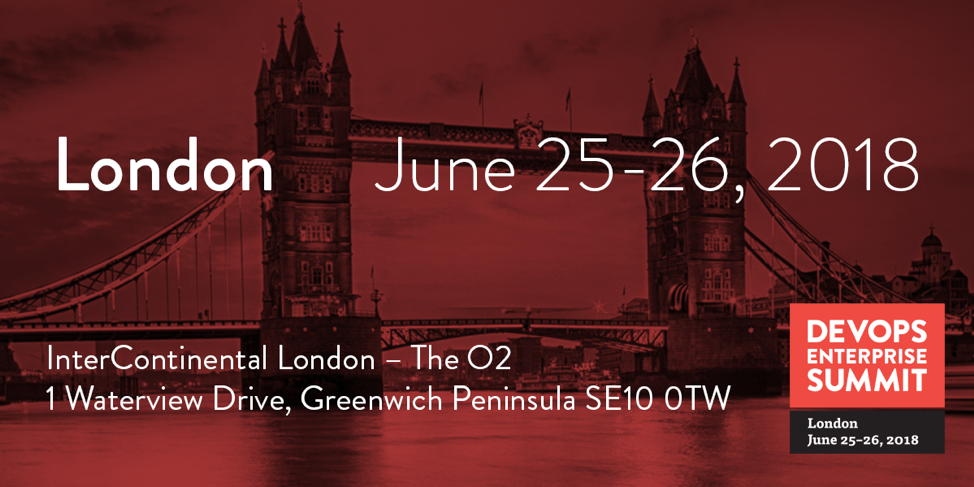
DOES London 2018: The Excitement is Building
DOES London 2018 is on the horizon. Are you ready?
Holy Cow! We’re only a few weeks away from DevOps Enterprise Summit London 2018 and I can’t begin to describe just how excited I am for our third event in Europe. I never learn as much in short period of time as I do during my days spent at DevOps Enterprise. It’s the place where some of the most courageous and exciting transformation stories I have ever seen take place, and this year’s conference is going to be no different!
So many of the presenters and organizations involved are pioneering the practices that will be commonplace in business in 10 years. In addition to the two days of showcasing amazing experience reports from the leaders of large and complex organizations—sharing what they did, what they learned and their outcomes—we continue to document transformation journeys from several enterprises and leaders year over year. I hope you’ll join us in London for the next chapter! And, if you haven’t registered yet, use the “Friends of Gene” code below!
20% OFF DOES18 LONDON REGISTRATION WITH CODE “FOG20”
To nurture high-learning, exciting networking opportunities, and to create a forum for exchanging insights with some of the best practitioners and subject matter experts on the planet, we developed a list of objectives that I think promise to make this year’s DevOps Enterprise Summit London the best conference yet.
Programming Objectives:
- Get great experience reports, and repeat experience reports.
- Elevate focus on Next Generation Ops and Infrastructure.
- Help conference attendees achieve their goals.
- Elevate focus on Spanning Business/Technology Divide.
- Get best subject matter experts from the domains we need.
Next Generation Operations and Infrastructure
Jason Cox, Director of Systems Engineering at The Walt Disney Company, is a member of the DevOps Enterprise Summit Programming Committee, and someone whose advice I’ve relied on ever since I met him in 2013. I’ve also quoted him extensively in “The DevOps Handbook.”
In the four years since the first DevOps Enterprise Summit, Jason has consistently told me, “That was a great conference, but it was a better conference for Dev than it was for Ops.” I had promised him each year that we’d do a better job choosing better Ops talks, and I finally asked him to join the conference Programming Committee.
This year, we’ve dedicated nearly a quarter of the agenda to speak to “Next Generation Ops and Infrastructure Practices,” targeted specifically at Ops leadership, and created a separate subcommittee to focus on a multiyear road map to properly define the problem space, and seek out the talks to help define the direction of the solution.
As we were reviewing the amazing talks that we have ahead for DevOps Enterprise Summit London this year, both Jason and I were amazed and very satisfied at the Ops perspectives being presented—it is genuinely different than previous years. The reason for this focus is best verbalized from Jason, as he says:
“This year’s conference programming will help Ops leaders work towards the same goal that our Development partners are also working towards. These talks should resonate strongly with nearly everyone in Ops leadership, and help them not just participate in the DevOps journey, but be active leaders in it, as well.”
In a lot of cases these problems are the hindrances for a DevOps transformation going the “entire way” and ultimately can be the difference between the high performers and the so-so performers or low performing organizations. These sessions include experience reports and expert talks from:
Jason Cox, Director, Systems Engineering, The Walt Disney Company
Jeffrey Snover, Technical Fellow, Microsoft
Cornelia Davis, Senior Director of Technology, Pivotal
Damon Edwards, Co-Founder, Rundeck
Rob England and Cherry Vu, Teal Unicorn
Jayne Groll, CEO, DevOps Institute
Nick Funnel, GTIS CTO Development Practice Lead, Barclays
Tom Clark, Head of Common Platform, iTV
John Rzeszotarski, SVP, Director of Continuous Delivery and Feedback, KeyBank
Shaun Norris, Global Head, Cloud Infrastructure Services, Standard Chartered Bank
Spanning the Divide Between Tech and the Business
Increasingly, the obstacles that technology leaders face in large, complex organizations are outside the technology value stream. This year, I am super excited about how we are going to be able to point out how these barriers. It’s not just Dev versus Ops. It’s also about exploring how the technology value stream pertains to project management, the funding model, information security, product owners and product managers, etc. In short, we have some amazing talks and experts presenting in London in regards to “spanning the business and technology divide.”
We’re doing this by having a technology leader co-present with their business co-collaborators. And, we’re going to get the full-hearted endorsement dialogue to unfold on stage for everyone to see.
My friend and fellow programming committee member Damon Edwards points out that nothing lives in isolation. When you look at the bigger picture as a business, things such as automation help, but moving the bits around have very little to do with the organization being successful. What matters more is how the organization is structured, how people are incentivized, how they view their work and how they interact with the systems around them that really dictate the successes and failures. You’ll notice these are all business functions, not technology functions.
So, we have multiple talks to showcase these patterns and involve the business-side stakeholders to tell how the business side is fundamentally understanding and driving the transformation journey. These are three presentations that I am really excited about and you can hear more about them over here >>>.
Verizon Enterprise
John Scott, IT Manager; Oliver Cantor, Associate Director of Product Strategy; Sanjeev Jain, CIO of EMEANike EMEA
Randy Lyons, Sr. Director, Nike Digital Engineering EMEA; Michele Power, CFO Nike Direct EMEACapital One
Aimee Bechtle, Senior Manager, Advanced Engineering; John Schmidt, Director, Product ManagementCreating a Community of Connections
It is so important for the organizers of the DevOps Enterprise Summit to help attendees achieve better outcomes, and we’re trying to meet this objective by addressing three common phenomena to conference-goers:
- The “velvet rope” problem where there is a person or a group of people that you really want to talk to, but you can’t get to them for one reason or another. Or worse, you have to decide between waiting in a line of people to talk to someone or miss out entirely and head to the next session on your agenda.
- Other situations where you’re surrounded by people, but don’t know who you actually should be talking to. If you’re like me, in the past I decided the best use of my time was to go do something else, such as check my email instead of interacting with my peers. In retrospect, this might’ve been the dumbest thing I could’ve done.
- Everyone is going to lunch, and they’re organizing by restaurant names, but what you really want to know what the subject matter of the discussion will be.
Together with Jeff Gallimore, we are working on establishing different ways to create opportunities for people to ask and answer as many questions as possible. After all, the quality of the audience is one aspect that we think separates the DevOps Enterprise Summit from other events! Therefore, the more spontaneous conversations and interactions we can nurture onsite, the better for everyone. So, how are we striving to do this? Read below and you can also listen to Jeff talk about it here>>>.
- Slack Workspace! We will have our very own Slack workspace for the DevOps Enterprise Summit! For the first time ever, every attendee has an opportunity to join the shared workspace to interact with speakers, attendees and sponsors. There will even be a “Who’s Hiring” channel for new job opportunities. What’s more, this channel will be open even after the conference ends, so that we can continue the dialogue and interactions with people after June 26.
- Ask the Speakers! We’re creating opportunities for attendees to have a dedicated time and location to ask the plenary speakers questions that go deeper on the information they presented earlier that morning. We’re going to open up a Slack channel for every attendee to use and submit questions directly to speakers and to other attendees. During the “Ask the Speaker” sessions, we’ll use this repository to highlight the most popular questions, and give attendees different ways to engage with speakers directly.
- Lean Coffee Sessions! We want to help attendees connect with and learn from their peers at the conference in another semi-structured format as well. We’re going to produce Lean Coffee sessions, led by Dominica DeGrandis, both days of the conference. This will be comprised of 10 tables big enough for 10 people to talk about similar interests that are relevant to the theme at the table. Hopefully, this provides another opportunity to learn a lot and make some valuable new connections.
- Lunch time! There will be a few different lunch options that attendees can take advantage of as well:
- Eat lunch with a speaker will be a first-come, first-served basis. This will give you an opportunity to sit down face to face with a speaker and, again, dive deeper into the subject matter of their presentation and experiences in a more personal setting.
- Have lunch with fellow attendees at high-top tables around the buffet stations, where there are note cards with seed questions to start discussions.
- Industry party! Book signings, sponsor giveaways, food and drinks and a great opportunity to continue conversations with fellow attendees and speakers. This is where some of the most interesting conversations take place and I heard some amazing stories there last year.
Leaders Talking About the Continuation of their Journeys
Another thing that I am always so delighted by is the constant scouting and searching that the programming does to look for the amazing case studies we get to hear at the DevOps Enterprise Summit. Chris Hill of Jaguar Land Rover is a testament to this fact, and we’re really looking forward to having him as part of the program this year. We caught up with Chris during a recent YouTube Live hangout, and he previewed some of his presentation for us here >>>.
“The DevOps Enterprise Summit for me is something I hold close to my heart, considering I attended my first event in 2016 in San Francisco where I walked away from that conference with the books and motivation I needed to transform my organization. In terms of how we’ve started with our DevOps transformation, this actually came organically from the conference.” — Chris Hill, Jaguar Land Rover
We have some excellent repeat speakers this year talking about the continuation of their journeys, including Topo Pal, technical fellow at Capital One; Jonathan Fletcher, CTO at Hiscox; Scott Prugh, CTO at CSG; alongside Erica Morrison, executive director at CSG; and Jonathan Smart, head of Ways of Working at Barclays.
We also have multiple PhDs to present subject matter expert talks on the domain expertise that we need to help us achieve our goals. Here is a glimpse into the expertise we are drawing in at the DevOps Enterprise Summit this year:
- Richard Cook, research scientist at The Ohio State University, is presenting this year and he’s the person who has probably influenced John Allspaw’s thinking the most over the last decade. I can’t wait for his talk highlighting a new way to think of operations.
- Nicole Forsgren, CEO at DevOps Research and Assessment, is someone whom I’ve had the pleasure of working with for years on the “State of DevOps” report with Puppet, now in collaboration with Google Cloud. She’ll be sharing the latest knowledge and learnings from that research.
- Mik Kersten, CEO of Tasktop, will be talking about his work from project funding models to product funding models.
As you can see, there’s a lot that is getting me excited for the conference this year! To watch the full preview discussion of DevOps Enterprise Summit London 2018 and learn more about the conference, please watch our YouTube Live event with Alan Shimel, editor in chief of devopsy.kinsta.cloud; Damon Edwards, co-founder of Rundeck; Jeff Gallimore, partner at Excella; and Chris Hill, head of Systems Engineering, Infotainment at Jaguar Land Rover.
Thanks for reading and look forward to seeing you all in London!
Attend the DevOps Enterprise Summit
— Gene Kim
-

IBM Think 2018: DevOps Integrated Everywhere
With the onset of conference season I have been running a bit ragged. But something I noticed at the recent IBM Think 2018 Conference really needs to be called to attention: DevOps was still a prominent theme at IBM Think. But instead of having a dedicated DevOps theater or DevOps section of the show floor, DevOps was integrated into everything—all the various flavors of cloud (hybrid, Cloud Private, public), development, apps, even cognitive and AI … all were integrated with DevOps. I, for one, think this is as it should be.
It is a sign of DevOps maturity, I think, that instead of DevOps being called out as some special beast—a unicorn, even—it is more just the way things get done. I had a chance to talk to many different people on the show floor, attend several track sessions (which were also done on the show floor—much better than having to go into separate rooms) and, as usual, interviewed more than a few people for our DevOpsTV YouTube channel. While all of them were excited by various announcements and exhibits, it seemed as though DevOps was part of all of them.
DevOps integrated everywhere
Two great examples of this are my interview with DevOps Playbook author Sanjeev Sharma:
and my interview with Mark Howell and James McLeod of Lloyds
Another really interesting discussion was how DevOps plays into IBM’s Cloud Private offering. Cloud Private is a Kubernetes-based architecture. We spoke with Andy Gower, product marketing manager for Cloud Private. As you would expect with a Kubernetes-based offering, DevOps is right in the middle of things.
This was the theme time and time again at IBM Think 2018. DevOps was not concentrated in any one area; it was everywhere. Even in the quantum computing area, which I will admit was cool as can be.
Mainframes also were all about DevOps. This is not new for the IBM Enterprise Systems team. They have really led the way with DevOps and mainframes.
This was the first year for IBM Think 2018. It represents the merging of several different IBM conferences into one large one. I enjoyed the format and look forward to future IBM Think events.
Also a note on keynotes: The tone for IBM Think was set by IBM CEO Ginny Rometty. It was plain that IBM as a whole is focused on some key technologies and initiatives. Among these were cognitive and AI, cloud and disruptive technologies on the near horizon such as quantum computing.
There was a lot going on at IBM Think 2018, check out the YouTube channel to get more of our coverage.
-

Join devopsy.kinsta.cloud at Pink17!
Join us for “Pink17” – the industry’s #1 event!
Now in its 21st hugely successful year, the Pink Elephant Annual Conference is widely recognized as “the world’s premier IT Service Management conference – the must attend industry event of the year!”
The program is content rich and comprehensive – 12 tracks, 140+ sessions – covering a vast array of subjects from all across the ITSM spectrum. There is something for everyone – strategic, tactical and operational. In fact, this is one main reason why so many organizations bring entire teams!
As an official Media Partner of “Pink17,” devopsy.kinsta.cloud will be covering the highlights of the conference.
There is still time to Register – Don’t miss out!
Click HERE to visit the Pink17 official conference website.
-
Debating the Future of DevOps
Change happens at an astronomical pace in the DevOps world, and I constantly see organizations shifting in their needs as the weeks and months go by. One week, the most essential need will be a specific configuration management tool and the next, it will be an urgent requirement to work on containerization.
Many companies forget that simplicity often is the key and the focus should be on transferring to engineers the requirements of the business and product owners. It’s not always about implementing every new tool just because another awesome engineering team is using it—they might have different business needs and end goals than yours.
Whether you are consulting for another client or working on your own internal applications, is your focus on how exciting the new container management system is or how to build the best possible end product that the business requires? Your DevOps organization should be focused on understanding these needs as well as the needs of every team across the technology function and more. So how, then, do we find the line between leading, following or resisting trends to create the most competitive advantage for our organizations?
The DevOps movement will continue to break down silos and increase collaboration. I see DevOps and big data coming closer together; for example, our DataOps teams will have the usual deep understanding of infrastructure, the ability to automate processes, write scripts, build CI pipelines and continuously deploy new code. However, there also will be increasing demand to work with the likes of Splunk and Hadoop to process large sets of data as well as monitoring and logging.
The cultural idea of bringing our teams closer together, to understand each other and to increase productivity will drive such shifts in skill sets. Other technology touchpoints such as containerization and serverless architecture will continue to spread deeper into organizations, while security and privacy may creep further up our list of priorities as we continue adopting more technologies into our organizations. However, it may take some tough learning curves before we really understand the implications caused by not taking SecOps seriously.
Every organization has different needs based on the stakeholders, the tech stack, the infrastructure architecture and more. DevOps will continue to shift, take on other aliases and functions, but the truth is that the future of DevOps is simply the future of your organization.
Understanding what that future holds, however, is up for debate. That’s why we’re hosting an event designed to push DevOps thinking beyond current boundaries among practitioners of varying backgrounds. The Future of DevOps Debate, an invitation-only event, is happening Nov. 10. Salt, host of the event, plans to share footage of the event as well as posting further blogs and articles, providing everyone a glimpse into the day’s conversations and, well, debates.
The day includes a dedicated session discusses the pain points, experiences and successes leaders have had in their past and current positions. The day’s conversations will be in debate-style format so that everyone gets their opportunity to share thoughts and contribute. The core focus is to work toward the future of DevOps.
This is the first Future of DevOps Debate, and Salt plans to run a series of events on a quarterly basis. It also contributes to the local New York DevOps community, sponsoring events such as DockerNYC and hosting ServerlessNYC, to name a few.
It’s clear we are at an inflection point in DevOps, as new technologies and processes strive for attention. Together, we can help shape the future of DevOps and push the industry well beyond its current boundaries.
About the Author / Conor Delanbanque
 Conor Delanbanque is managing consultant and head of DevOps USA at Salt. Previously, he was supporting and consulting clients across Europe with their DevOps transformation efforts. Connect with him on Twitter at @ConorDevOps.
 -
8 Reasons to Go ‘All In’ and Attend Jenkins World
Jenkins World 2016, the world’s largest gathering of Jenkins users, is coming to the Santa Clara (California) Convention Center, Sept. 13-15. The lead organizing sponsor is CloudBees, along with a number of premier Jenkins ecosystem vendors including BlazeMeter, Undo and Black Duck. Jenkins World will offer attendees opportunities to learn, explore and network. This year’s theme is “All IN” as Jenkins users, experts and thought leaders prepare to go all in on DevOps.
Need more convincing? Below are eight reasons to go all in at Jenkins World 2016:
Hear keynotes from industry leaders — Kohsuke Kawaguchi, founder of the Jenkins project, kicks off the conference with the opening keynote this year. Other keynotes include Sacha Labourey, CEO of CloudBees, and Gary Gruver, former DevOps exec at Macys.com and HP and industry author. Rumor has it that Gene Kim may make a guest appearance, too!
Attend training/workshop add-on options — Come to Jenkins World as an attendee, leave as a Jenkins master. Join us a day early to attend Jenkins certification training and/or learn the fundamentals of Docker and Jenkins. Additional workshops, covering topics such as plugin development, Jenkins certification and automating pipelines with the Pipeline plugin, are available.
FREE certification! Your Jenkins World registration also provides you with the option to take a certification exam completely free! Did we mention it was FREE? All you have to do is sign up and study up!
Brush shoulders with the Jenkins stars — Get access to some of the best Jenkins experts in the world; attend their sessions and network with them. The sessions cover a range of topics including infrastructure as code, security, containers, pipeline automation, best practices, scaling Jenkins and community development projects.
Visit a variety of vendors — At the expanded Sponsor Expo you can check out a range of technologies and services that help you optimize software delivery with Jenkins.
Pick up your next read — CloudBees Senior Consultant Viktor Farcic has recently published his book, “The DevOps 2.0 Toolkit: Automating the Continuous Deployment Pipeline with Containerized Microservices.” Be one of 200 lucky attendees to get a free copy and be sure to catch his session Sept. 13. We will even be hosting a book-signing with Viktor.
Do you follow CommitStrip? They will be onsite and you can help them paint a custom Jenkins-themed mural!
Meet the Butler and snap a selfie – You may have seen the Butler on @CloudBees engaged in some Xtreme social media adventures to get himself to Jenkins World, but at Jenkins World you’ll have the chance to meet him in person. Don’t forget to snap a pic with him at the social media station and share with your friends.
All of this and so much more awaits you at Jenkins World. Go “All In” and register now! Use this code JWDEVOPSCUST and get 20 percent off your conference registration.
See you in Santa Clara!
-
DevOpsDays Silicon Valley is Coming!
DevOpsDays Silicon Valley is coming, so mark your calendar! DevOpsDays events are a global phenomenon, bringing together practitioners across roles for two days of scheduled presentations and networking in a community-organized event. You won’t want to miss this year’s conference!
The 7th annual DevOpsDays Silicon Valley is scheduled for June 24-25 at the world-famous Computer History Museum. Silicon Valley is the oldest of the U.S. events and was originally the third DevOps Days ever. The conference, which started in 2010 as a low-key event hosted on the campus of LinkedIn, has grown into a major event.
This year’s lineup includes talks from a variety of perspectives including security! Jennifer Davis, co-author of “Effective DevOps,” will open the conference up with “Devops is for Everyone.”
DevOpsDays Lineup
Here is the 2016 speaker lineup:
Keynotes:
- Troubleshooting Troubleshooters: Debug Your Colleagues for Fun and Profit, by Bethanye McKinney Blount, CEO/Co-Founder
- From Divided to United – Aligning Technology & Business Teams, by Dominica DeGrandis, Director, Learning & Development
- Cost versus Performance: Analytics for Walking the Tightrope, by Elizabeth (Betsy) Nichols, Chief Data Scientist
- The Future of Automation, by Adam Jacob, CTO and Founder of Chef
Presentations:
- Behind Closed Doors: Managing Passwords in a Dangerous World, by Noah Kantrowitz
- At the Intersection of Happy and Healthy: DevOps Meets IoT, by Gail Ferreira
- Heresy in the Church of Docker, by Corey Quinn
- DevOps Army of N – Recovering From Being a Human SPOF, by Jonathan Disher
- (Parental) Leave Actually, by Dave Dash, Nicole Grinstead, Melissa Sandgren
- How to Onboard Entry-Level Talent to a DevOps Culture, by Angel Tian and Sophia Castellarin
- Autoscaling Containers … with Math, by Allan Espinosa
- How I Learned to Change My Mind and Became a Better Engineer, by Ramin Khatibi
- Removing the Stigma of P0w3rship, by Ed Anderson
Ignites Include:
- How Do You Measure Availability? Performance and Availability and SLMs, oh my! by Warren Turkal
- Feature Feature, by Linda Goldstein
- The Elements of Developer Experience (DX) Design, by Stephen Boak
- Reflections of an Operations Burnout, by Jamie Dahl
- Breaking Brooks’ Law with DevOps, by Jason Yee
- A DevOps Team is a Daft Idea and You Should Feel Bad! by Caedman Oakley
- How Can You Scale It If You Don’t Trust It? by David Blank-Edelman
- From WWW to GGG, by Anne Ahola Ward
- How I Learned to Stop Worrying and Love the Protocol, by Pete Sclafani
Following the inspiring talks, each afternoon is dedicated to Open Space, where the agenda is dedicated to small-group, participant-led discussions chosen on the fly. This is the chance to dive into specific topics, ask for help, discuss what you’ve done, find like-minds or just be a fly on the wall and take it all in.
If you are in the San Francisco Bay/Silicon Valley area, get your tickets for the June 24th and 25th DevOpsDays Silicon Valley ($199) before they sell out. We also have a limited number of education tickets for faculty, staff and students ($100). If you live elsewhere, be sure to keep an eye on the main DevOpsDays site for upcoming events. Also, check out DevOpsDays Silicon Valley recorded talks from 2015.
About the Author / Damon Edwards
 Damon Edwards is the co-founder and managing partner of the DTO Solutions, a DevOps and automation engineering consultancy whose clients include leading SaaS, e-commerce, gaming, and financial services companies. Damon Edwards is also the co-founder and vice president of SimplifyOps, a provider of support and services for the users of the Rundeck open source project. Damon has spent over 14 years working on both the technology and business ends of IT operations. Damon is also a frequent conference speaker and writer who focuses on DevOps and operations improvement topics. Damon is active in the international DevOps community, including co-organizing the DevOps Days conference series, co-hosting the DevOps Cafe podcast, and a co-author of the DevOps Cookbook from IT Revolution Press.
 -
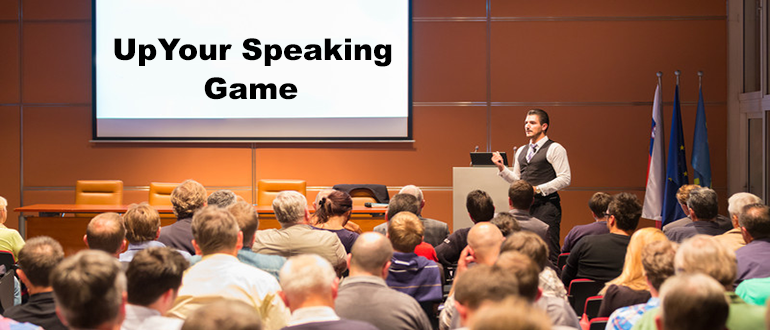
‘Tis the season to up your speaking game
Well it’s football season in the US, that means Fall is here. It also means that we are coming up to conference season. No matter what segment of the IT market you live in, there are probably a slew of conferences both local and national/international vying for your attention and attendance. For the overwhelming majority of attendees, going to a conference means watching and listening to others speak on topics of interest. Maybe this is the year you should really up your game by speaking!
This was driven home for me last week when I was speaking with the IBM DevOps team. We were discussing how plans for IBM’s InterConnect 2016 conference were coming along. The call for speakers for this major event is open until September 25th. The IBM team was very pleased that the DevOps stream is tracking among the leading topics for submissions for InterConnect 2016.
That is really quite a feat when you consider the scope and scale of the event. InterConnect 2016 is IBM’s Premier Cloud and Mobile event, February 21-25 in Las Vegas, and is expected to draw over 20,000 attendees, delivering 2,500 sessions, workshops and labs in 10 major topic areas – including DevOps – and infinite networking opportunities. But it also speaks to both the popularity of DevOps in general and IBM’s focus on it in particular. In fact, the DevOps stream covers key DevOps adoption paths: Plan, Develop, Test, Release and Deploy, and Operate. There is a track specifically focused on transforming application delivery with DevOps, and another track called DevOps for Enterprise Systems that will focus on topics related to continuous delivery for two-speed IT including z Systems and Power Systems. There are other streams such as App Platform, Hybrid Cloud, Mobile and Security where DevOps topics will appear. Each track is packed with quality client success stories, technical deep dives, labs, meet-the-expert panels, interactive workshops and more. What’s nice is the sessions are tagged for interest for management and techies and for skill-level. There is a ton of content.
To find out more join me and 14 great DevOps leaders on the crowd chat DevOps: Code, Culture & Community on September 22, 2015 @ 1pm eastern time (60 minutes). You can visit https://www.crowdchat.net/ibminterconnect2016 to add to your calendar or follow along on Twitter #ibminterconnect2016.
So what does this mean to you? It means that there are still some great slots available to share your DevOps skills, lessons and experience with the world. Having spoken at numerous events over the years, I can tell you that participating as a speaker in an event brings a completely new level of learning and understanding. It is also a great way to meet your peers, other speakers and attendees and expand your own network.
What should you talk about? That is probably the biggest obstacle for many people submitting to speak. Randy Newell, Director, DevOps Marketing at IBM, commented to me,”highly-rated sessions are typically DevOps journeys told by peers – shared candidly, complete with the successes and the challenges around technology and culture. Transparency and passion, told from the front lines, go a long way.” I feel that you should speak about what you find interesting. If you find it interesting, chances are others will find it interesting as well. Also, when you are speaking about something interesting to you, your passion for the topic will shine through and others will feed from and join in your passion.
In a large show like this, the good news is that with all of the session slots available they have the ability to afford people to explore specific aspects of a subject that might not be available at a smaller event.
If IBM’s InterConnect is not the event that you choose to share your thoughts and ideas with the world, that is OK too. Pick another event and submit to speak there.
Of course speaking at conferences like InterConnect is a great career move, raising your stature and visibility among your peers. But beyond your own personal benefit, it really benefits the whole community. The best way for us to learn is to share our experiences and stimulate the discussion.
I realize that some of you reading this may still be hesitant to take the plunge and submit to speak. If that is your final decision, of course that is OK, too. You can still be an active participant in sessions by asking questions, joining the conversation. Don’t be a passive conference attendee. You get out of these conferences what you put into them.
As for me, I have two or three different speaking topics that I am submitting this week. Some are panels where I will be with key DevOps thought leaders and influencers who are also my colleagues to discuss key trends defining the future of DevOps. Panels are a great way to get your feet wet with speaking at events, btw.
So what are you going to do? Share your lessons learned, explore new frontiers, advance the state-of-the-art. Call for papers for IBM InterConnect 2016 is ending on September 25th. Don’t miss the opportunity to up your game by speaking at the biggest DevOps event of the year! Submit to speak at IBM InterConnect 2016 today. http://www.ibm.com/cloud-computing/us/en/interconnect/
