Tag: CollabNet

  • Digital.ai: The Companies Formerly Known As XebiaLabs and CollabNet Plus

    Digital.ai: The Companies Formerly Known As XebiaLabs and CollabNet Plus

    Another shoe has dropped in the continuing story of TPG Capital‘s foray into DevOps. The company formed by the merger of XebiaLabs and CollabNet VersionOne is now Digital.ai. Additionally, the company has acquired Arxan, a leader in application protection.

    Digital.ai logo

    I had a chance to catch up with Digital.ai’s CEO Ashok Reddy and Arxan COO Mark Lorion, who will be Digital.ai’s COO of Platform going forward. The video of our discussion which is also available on TechStrong.TV, appears below.

    What They Said

    Reddy made it very clear that Digital.ai is not content with simply adding this AppSec company to the mix. It is actively involved in due diligence operations on several other acquisitions. Reddy and the TPG team feel that the current COVID-19 situation affords those with cash to pick up some bargains. That may have been the case with Arxan, which was owned by private equity firm TA Associates, which acquired Arxan in 2013 for $132 million. TA may have decided it was time to get off the merry-go-round, given the unsettled state of things right now.

    In any event, TA’s loss is Digital.ai’s gain. Arxan adds some much-needed security muscle and a blue-chip bank customer list. But, of course, the real play here is building out the end-to-end DevOps company that will compete with GitLab, GitHub, CloudBees, JFrog and others. We detailed this market in an article when the original merger was announced.

    My take is that indeed Digital.ai is not a complete company just yet. It may not even be done in the DevSecOps space, as Arxan is not your typical DevSecOps technology. It may have been more of an opportunistic acquisition.

    Also, in terms of executive team, Reddy has been quietly assembling a team made up of some of the best people he worked with at previous stints at IBM, CA/Broadcom and the executives from the acquired companies.

    Stay tuned for more on Digital.ai’s continued evolution in the months to come.

    — Alan Shimel

  • CollabNet VersionOne Advances End-to-End DevOps Strategy

    CollabNet VersionOne Advances End-to-End DevOps Strategy

    At its Agile 2019 conference, CollabNet VersionOne announced it plans to extend the capabilities of its software delivery and management platforms later this month as part of an effort to provide organizations with more visibility into how changing software development project schedules impact the business.

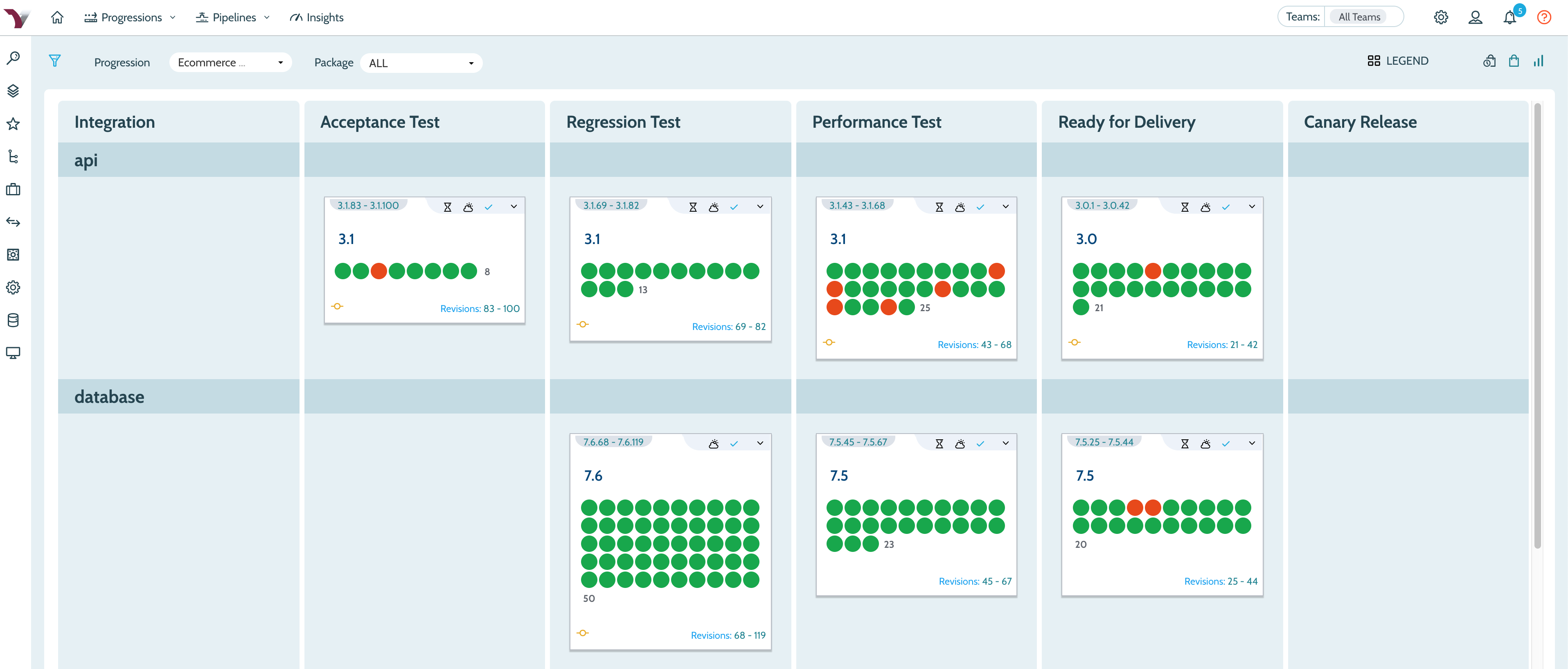
    Company CEO Flint Brenton said updates to the VersionOne value stream enterprise management platform will include a revamped user interface that provides more visibility into events occurring within the Continuum continuous integration (CI) platform.

    Brenton also said those updates will further advance adoption of agile frameworks such as the Scaled Agile Framework (SAFe), a prescriptive approach to combining best agile development and DevOps practices.

    While organizations may opt to employ VersionOne in combination with other CI/CD platforms, Brenton said CollabNet VersionOne provides a more comprehensive understanding of the impact changes to software development schedules will have on the business.

    As part of that effort, CollabNet VersionOne also announced VS Exchange, a marketplace for custom and preconfigured Continuum and VersionOne extensions and workflows, and enhancement to the Continuum TestDrive component within the company’s implementation of Continuum that streamline provisioning.

    With more organizations than ever starting to appreciate how dependent they are on software, Brenton said business leaders are now looking to exercise more control over software development projects. It’s no longer enough to generate more code, he noted; rather, DevOps teams are now being asked to generate more reliable code that has the greatest impact on the business faster. CollabNet VersionOne enables organizations to achieve that goal by providing a management platform in the form of VersionOne that is layered on top of Continuum.

    CollabNet VersionOne is now taking part in a race to infuse more business analytics into a software development lifecycle (SDLC) platform. While SDLC platforms have typically been employed to gather technical metrics, organizations now want to correlate that data against business metrics.

    Less clear right now is whether having access to business metrics will influence the selection of one CI/CD platform over another. Over time, the expectation is that various forms of business intelligence capabilities will be a standard capability of the platform, especially as IT leaders continue to assume larger business responsibilities in the age of digital business processes.

    It may be a while yet before business and IT roles start to converge. In the meantime, CollabNet VersionOne is clearly betting there will be a lot more collaboration between these two camps going forward. In many ways, the DevOps best practices that organizations have adopted to become more agile are about to be extended to the business processes enabled by software. Savvy business leaders will realize their ability to meet financial goals for any given quarter is tied to the timely manner in which new digital customer experiences are enabled. In fact, there may come a day when IT organizations are able to deliver software updates faster than most businesses will be able to consume it.

    — Mike Vizard

  • Compuware and CollabNet VersionOne Announce Integration of ISPW and Continuum

    Partnership Enables Value Stream Management with Unified View of Cross-Platform Development and Deployment

    • Application Development and Delivery Professionals are under pressure to track the progress of code deliverables across the DevOps lifecycle based on their value to the business.
    • Large enterprises are additionally seeking increased visibility and control over agile development work across all platforms—from inception to delivery.
    • The integration of ISPW, Compuware’s DevOps-enabled source code management solution for the mainframe, and CollabNet VersionOne’s Continuum release delivery platform, will serve this customer need.

    LAS VEGAS, Oct. 23, 2018 (GLOBE NEWSWIRE) — Compuware and CollabNet VersionOne today announced the completed integration of their respective products, ISPW and Continuum. The companies previously announced they were partnering to help large enterprises unify their Value Stream Management (VSM) by incorporating their critical mainframe software development activities into their digital value chain. Both companies are at DevOps Enterprise Summit (DOES18), featuring the integration in Compuware booth 827 and CollabNet VersionOne booth 219.

    ISPW provides DevOps-enabled source code management (SCM) capabilities for mainframe code while CollabNet VersionOne’s Continuum tracks, automates and orchestrates software value streams across the DevOps lifecycle. Continuum’s visual interface helps users see and understand the progression of what is happening in the process of development.

    The initial integration will enable Application Development and Delivery managers to view and control the status of user stories moving through the mainframe software development pipeline from the same Continuum dashboard as they use to manage those pipelines across other platforms. This dashboard enables managers to quickly identify which stories are progressing on schedule, which have been delayed by defects, and which contain trailing commits.

    Large enterprises are relying increasingly on their core mainframe systems of record as essential back-end support for critical mobile and web front-end customer engagement. They must therefore orchestrate the delivery of new software across all platforms at the same speed and frequency to deliver value to customers.

    “As planned, our partnership with Compuware is already delivering capabilities that make it easier for mainframe users to scale Agile and DevOps. We are helping them connect their mainframe-based development activities into broader cross-platform efforts that can be incorporated into unified value streams,” said Flint Brenton, CEO of CollabNet VersionOne. “Value Stream Management keeps software aligned with business objectives, which is essential for today’s dynamic and continuous application development processes.”

    “Enterprises need greater automation, better visibility and a mainframe-inclusive DevOps tool-chain to increase the quality, velocity and efficiency with which they create new digital experiences for customers,” said Chris O’Malley, CEO of Compuware. “Our partnership with CollabNet VersionOne will provide such capabilities, empowering development and delivery teams to accelerate their DevOps journeys to better meet their customers’ digital demands.”

    About CollabNet VersionOne
    CollabNet VersionOne is the Enterprise Value Stream Management leader that accelerates high value software development and delivery, while improving quality and reducing risk. Our offerings provide global enterprise and government market leaders a cohesive solution, spanning idea through delivery, that enable them to capture, create, deliver and measure the flow of business value throughout their application development lifecycles. For more information, visit www.collabnet.com.

    Follow us on:

    Compuware Corporation
    Compuware empowers the world’s largest companies to excel in the digital economy by fully leveraging their high-value mainframe investments. We do this by delivering highly innovative solutions that uniquely enable IT professionals with mainstream skills to manage mainframe applications, data, and platform operations. Learn more at compuware.com.

  • CollabNet VersionOne and Parasoft Partnership Brings Automated Testing to Enterprise DevOps

    Atlanta and Monrovia, Calif. – October 10, 2018 – CollabNet VersionOne, a global leader in Enterprise Value Stream Management, Agile management, Git version control, and DevOps, and Parasoft the global leader in automated software testing and continuous quality, announce a new partnership. CollabNet VersionOne will integrate Parasoft’s automated testing suite within its Value Stream Management (VSM) offering.

    Developers can spend several hours a day on testing software manually. That siloed manual approach conflicts with the organizational goals of scaling Agile and DevOps, and orchestrating and automating workflows to establish value streams. This new alliance addresses that problem by integrating automated testing practices within their value streams to enable continuous integration and delivery.

    The initial integration will bring together CollabNet VersionOne Continuum, a DevOps release management and performance optimization product with Parasoft’s automated software testing tools, including its sophisticated analytics. Continuum will give users a single-pane view and control of their automated testing stages and results data, and it will connect the testing phases with the rest of the development workflow.

    “Automated software testing is critical for our customers to succeed with their most strategic development initiatives, and we are focused on helping organizations efficiently scale their testing practices to deliver quality software quickly, especially with recent innovations in machine learning and AI,” said Elizabeth Kolawa, CEO of Parasoft. “By integrating the deep code analysis and broad testing practices of the Parasoft tool suite with the CollabNet VersionOne DevOps solutions, we are able to provide the software development community with complete visibility into the quality of its value streams in order to release with confidence.”

    “This alliance reflects our commitment to the Agile community and DevOps innovation,” said Flint Brenton, CEO and President of CollabNet VersionOne. “With this integration, teams will have a single interface to execute automated tests, view test processes and results data that quickly reveal quality gaps, security issues, and other bugs and risks, while allowing them to see the relationship of their testing phases to other upstream and downstream development processes.”

    Continuum’s visual interface makes it easy for users to understand the progression of what is happening in the process of development. With the integration of Parasoft’s testing tools, Continuum users will be able to execute tests against the application being tested (including unit testing, code quality and coverage analysis, API and functional testing, and performance and load testing), and then access the analytics and results of these tools right in the Continuum interface, so the impact of testing practices on the workflow is visible to the entire team.

    “We help customers make software development and delivery a transparent well-orchestrated practice that remains consistently aligned with business objectives. Adding testing automation capabilities supports our vision to remove barriers to adopting Agile at scale, extending DevOps and establishing enterprise value streams. We are pleased to have a partnership with Parasoft because they share our goal to improve software development practices,” said Brenton.

    Share This: Learn about this exciting partnership bringing automated testing to Enterprise DevOps with @Parasoft and @CollabNetV1

    About CollabNet VersionOne

    CollabNet VersionOne is the Enterprise Value Stream Management leader that accelerates high value software development and delivery, while improving quality and reducing risk. Our offerings provide global enterprise and government market leaders a cohesive solution, spanning idea through delivery, that enable them to capture, create, deliver and measure the flow of business value throughout their application development lifecycles.

    www.collab.net

    CollabNet VersionOne is a Vector Capital company.
    Company trademark and logo details available here: https://www.collab.net/legal

    Follow us on:

    About Parasoft

    Parasoft provides innovative tools that automate time-consuming testing tasks and provide management with intelligent analytics necessary to focus on what matters. Parasoft’s technologies reduce the time, effort, and cost of delivering secure, reliable, and compliant software, by integrating static and runtime analysis; unit, functional, and API testing; and service virtualization. Parasoft supports software organizations as they develop and deploy applications in the embedded, enterprise, and IoT markets. With developer testing tools, manager reporting/analytics, and executive dashboarding, Parasoft enables organizations to succeed in today’s most strategic development initiatives — agile, continuous testing, DevOps, and security.

    www.parasoft.com

  • CollabNet Merges with VersionOne for ALM Supremacy

    CollabNet Merges with VersionOne for ALM Supremacy

    Thanks to the rise of DevOps, there has been a lot of focus on various forms of application lifecycle management (ALM) spanning multiple application development methodologies. But as IT organizations become more comfortable with multiple methodologies, it turns out they are not replacing one with another as much as simply trying to figure out where to employ one over another. That, in turn, is driving some consolidation across the ALM category.

    CollabNet this week announced it is merging with VersionOne, a provider of an ALM framework optimized for agile application development. While CollabNet has made some forays into the space, historically its primary focus has been on waterfall methodologies commonly used across larger enterprise IT organizations. CollabNet CEO Flint Brenton says the goal now is to combine the best of the ALM tools provided by both companies to enable IT organizations to leverage agile and waterfall methodologies as they best see fit. In fact, he says the biggest ALM issue facing organizations today is the need to balance developing applications faster and the inherent risks associated with potentially moving too quickly.

    Robert Holler, formerly the CEO of VersionOne, will assume the post of chief strategy officer for the combined company. He says there’s very little overlap between the two company’s product portfolios, and the one thing that will distinguish CollabNet going forward is an open approach to ALM that enables organizations to employ whatever tools they prefer. Instead of forcing organizations to rip and replace those tools, Holler says ALM frameworks need to foster collaboration rather than trying to impose a closed ALM environment. That environment also needs to be deployable on-premises or in the cloud, depending on the requirements of the customer.

    Holler notes that once any segment of the IT industry reaches a certain level of maturity, consolidation is all but inevitable. The opportunity CollabNet has is providing an ALM environment that makes it possible to automatically package and deploy applications that includes strong version-control mechanisms. Those capabilities will become even more critically important as IT organizations expand usage of microservices based on, for example Kubernetes, alongside traditional virtual machine deployments across the enterprise. Accomplishing that goal will require a common management layer capable of spanning both environments, he says.

    The combined companies have more than 20,000 customers. That number may not collectively represent the lion’s share of the ALM market, but it does make CollabNet a serious contender against a host of rivals that are both a lot older and larger. CollabNet’s challenge now is convincing customers of competitive organizations to switch to an ALM platform that CollabNet contends is a whole lot more flexible.

    In the meantime, it’ll be interesting to wait and see if the combination of CollabNet and VersionOne will drive any additional acquisitions at a time when IT organizations are becoming a lot less religious about what type of application development methodology gets employed by who and when.

    — Mike Vizard

  • DevOps Chat: Waterfall Will Not Disappear, with Flint Brenton, CEO Collabnet

    DevOps Chat: Waterfall Will Not Disappear, with Flint Brenton, CEO Collabnet

    One of the perks of being editor in chief of devopsy.kinsta.cloud is I get a chance to meet with so many leaders of the DevOps and IT industry. You can really learn a lot by listening to what these folks say. This DevOps Chat is a perfect example. I sat down with Flint Brenton, CEO of Collabnet. Collabnet is not some johnny-come-lately. The company has been helping developers and IT professionals for a long time. Flint talks about the fact that while DevOps is a great path for many organizations, it may not be the right way for every situation. Waterfall is not going away entirely.

    Have a listen to my discussion with Flint and hear for yourself what he has to say on the subject. As usual, the streaming audio player is immediately below with the transcript below that. Enjoy!

    Streaming Audio

    Transcript of Audio

    Alan Shimel: Hey, everyone. This is Alan Shimel, devopsy.kinsta.cloud, here for another DevOps Chat. Happy to be joined in this DevOps Chat by Flint Brenton, CEO of CollabNet. Flint, welcome.

    Flint Brenton: Hey, Alan. It’s great to see you again.

    Shimel: Great to see and hear you again. Flint, the last time I think you and I talked was back at the DevOps Enterprise Summit in San Francisco. I guess that had to be October or November.

    Brenton: November. Actually, it was the same week that our new president was elected, if you remember.

    Shimel: Yes. Yeah, a red letter day.

    Brenton: Right.

    Shimel: So, Flint, without getting any further into that, let’s turn the conversation to CollabNet. What—well, first of all, maybe some of our audience is not familiar with CollabNet in general, so why don’t we start with that? Can you give us a little CollabNet background?

    Brenton: Yes, absolutely. So CollabNet is a SAS-based, cloud-enabled development platform focused exclusively on enterprise that delivers application lifecycle management capability for both Agile and waterfall development processes.

    Shimel: Mm-hmm.

    Brenton: The version technology to structure those builds and to maintain high quality and high quality control throughout the process. And then we also provide the DevOps infrastructure to build and deploy automatically whatever gets created in Azure or waterfall, with high quality, on time, and, to the extent we can help, under budget. So that’s really our focus.

    Shimel: Sure. And you know what, Flint? I remember this about CollabNet. You guys have been in business now for a number of years, certainly before DevOps was what it is today, let’s call it, whatever it is today. How long have you been—

    Brenton: Yeah, we’ve been in business—this is our 18th year.

    Shimel: Absolutely. So, you know, DevOps is another technology innovation, if you will, that’s come down the road, but I think what—not unique, but what is one of the special qualities of CollabNet is is that you’re not out here saying that the whole world needs to go DevOps today, right, that everything—we should be all DevOps all the time. But you have customers who are still on waterfall and may very well remain on waterfall for the foreseeable future.

    Brenton: Right. And we really invest very heavily in both waterfall and Agile development platforms and—although the growth rate for Agile’s higher than waterfall in enterprise, we still see roughly 70 [percent] to 75 percent of enterprises using a waterfall methodology. But the fastest growing segment in that area is clearly Agile.

    Shimel: Sure. And I—obviously. But I think what’s important for our audience to recognize is even the biggest DevOps and Agile advocates or biggest—whatever you wanna call ’em, should recognize that there are still projects and places where waterfall might be the best way to skin the cat, to complete a project correctly. And it doesn’t have to be an all-or-nothing type of environment, if you will.

    Brenton: That’s exactly right. You know, the industries that tend to be highly regulated, with a high need for security, compliance, and scalability, tend to lean more towards waterfall development. And, of course, once you started a process where you’ve got an established team that’s been using waterfall for a long period of time, they tend to prefer to continue with that. But it’s new projects, new projects where maybe time to market outweighs the need for compliance and security and scale—those tend to go Agile in an enterprise. But, either way, regardless of development methodology, the things you need beyond the tool chain or the process of building software is fairly similar, right? The way you use version control is fairly similar. The way you use DevOps technologies is also very similar.

    And what we found is customers who are well grounded in Agile and waterfall—typically, in enterprise, they have both—getting your act together in DevOps and making sure you have a strategy, you created a culture to embrace and execute that strategy, then having the processes and tools in place to bring it to reality is critical because you don’t really get the return on investment for anything you develop, regardless of the methodology, until you put the build into production. And that’s what DevOps, at the end of the day, is all about.

    Shimel: Sure is. Excellent. Excellent point, Flint. Flint, let me turn things a little bit ’cause, as I mentioned to you off camera, off mic, 15 minutes here goes pretty quick. Want to talk about some recent news around CollabNet in the industry. I understand you guys were just included in a Gartner Magic Quadrant, correct?

    Brenton: Yes. Yes, thank you for bringing that up. Yeah, we’re very excited about it. It’s always a reflection of the investment our team has made in Agile planning and execution. So we’ve always been considered a leader when it comes to waterfall development, but, as we just mentioned, for enterprise, our enterprise customers are really demanding that we provide both, both equal value in waterfall and Agile. So we invested heavily in the last few years in Agile, and, as a result, we were just included in their Magic Quadrant as a visionary for Agile planning and execution, and we’re very excited about it.

    Shimel: That’s nice. That is great. And I know everyone always wants to be in the upper right, but, really, having my background, being entrepreneurial and having started businesses, I’d almost rather be in that visionary quadrant than the upper-right leader quadrant and certainly in the visionary quadrant over, let’s say, the challenger quadrant, which is the upper left, because I think, with visionary, I mean, the recognition is that you’re setting a—you’re pushing the envelope, right? You’re pushing the vision—hence, “visionary.”

    Brenton: Right.

    Shimel: So congratulations to you guys. I know, in speaking with your team, you have rights for download of the quadrant, so what we’ll try to do is put into the show notes here a link to that where people can download the quadrant report and see if—check it out for themselves.

    Brenton: Yeah, that’d be perfect and I’m sure that your listeners would very much appreciate that.

    Shimel: Sure will. So, Flint, beyond the quadrant inclusion, though, what else do you see that’s happening with CollabNet or in the market in general?

    Brenton: We’re starting now to get a number of customer wins that are embracing our motto of providing a cloud-based service where you can consume our integrated ALM, version control, and DevOps solution either in Amazon or on our own private cloud and, in many cases, a combination of on-prem and off-prem.

    Shimel: Right.

    Brenton: So we now have a number of customers who have completely moved their development process into one of our cloud-enabled environments, and it’s very exciting.

    Shimel: That is exciting.

    Brenton: It’s very exciting. And the great (thing) about that is, if it’s in the cloud, it’s actually easier for us to include, Alan, both open-source and compare it to components that we don’t own or control because then the need to test to get everything in your data center  is lessened and our ability to innovate to your advantage is much greater, so we’re very excited about that.

    Shimel: Absolutely. So, Flint, interestingly enough, I was reading an article this morning—I forgot where I saw it but it was a recent survey where 65 percent of enterprises still keeping the majority of their infrastructure on their own data center, not on a public cloud, not a hybrid situation. Is that about what you guys are seeing but is the arrow pointing up to the cloud? What’s your take on that?

    Brenton: Now that’s a great question, Alan, and it’s absolutely what we’re seeing. So a thing to keep in mind, though, is “What is the variable that’s changing and what is the velocity of that change?” Right? So I would say, two years ago, that 65 percent number was probably 90-plus, right? So, as enterprises get more and more comfortable with the security and compliance options in the cloud, whether it’s in a public cloud or private cloud, they can see the tremendous advantages of driving down the cost of development and actually increasing the speed of innovation by going to the cloud.

    I’ll give you an example. U.S. government, we do a tremendous amount in federal, and so both the Obama administration and now it’s transitioned to the Trump administration has really been pushing the department of defense to do a couple things. One, innovate faster, and so, if you just think about the U.S. government is barraged by cyberattacks from all over the world. Right?

    Shimel: Mm-hmm.

    Brenton: And so your ability as a professional, in NSA or CIA or the FBI, to deal with that is you want a complete toolkit of things you can use, and you want to choose the tools you need to deal with those cyberattacks, but you also need to do it quickly. So if you can use open source, it helps. If you can deploy it in a cloud, it dramatically increase—or decreases the time to deployment. And, three, it also tremendously helps you on the economics side. So even something as highly regulated and structured as the US federal government, there are advantages sometimes in doing things in a public cloud to help, and so we’re starting to see variations of that theme also in industry, primarily around enterprise, where there’s flexibility, increased ability to innovate, and improved economics by moving workflow to the cloud.

    Shimel: Yep. You know, Flint, living in the tech world and you lived the world—you live that life; I live that life—I think sometimes we get  jaded in that we’re in this bubble of, “What’s the hot new thing?” and it’s DevOps and it’s whatever’s next after DevOps, and then sometimes you get a reminder—65 percent still not in the cloud. And you say, “But I thought everyone’s in the cloud.” And I think it does good for us to remember that there’s a big world out there that moves at their own pace and their own—

    Brenton: Right.

    Shimel: Same thing with waterfall. Right? I think people would be—people in our audience from devopsy.kinsta.cloud would probably be surprised to find out how many organizations still either haven’t adopted DevOps or are primarily waterfall shops.

    Brenton: You know, the key, when you’re a solution provider like CollabNet, is you need to meet people where they are. Right? So, if they wanna be on-prem, you need to be able to deliver them superior value on-prem. If they want to move part of their workload to the cloud, you need to be able to help lead them and sponsor that transition at that pace by which they’re comfortable. Right? So I learned a long time ago the key to success in this business is to give people what they want, right? He who can do that best with a quality solution at a great price is gonna win. Right? So that’s just the way it works, right?

    Shimel: Absolutely—and that hasn’t changed, by the way, through all of these innovations, and I think it was true 100 years ago and it’s true today. Or maybe even more than 100.

    Brenton: You bet.

    Shimel: Anyway, Flint, listen, I think we’re about out of time here. I wanna be respectful of your time, so what we will do is let’s have you on again soon when we have some more time and we can delve into this. Are you gonna be at DevOps Enterprise Summit maybe in London?

    Brenton: You bet. Yeah.

    Shimel: Or San Francisco?

    Brenton: Well, I always enjoy speaking with you, Alan. You’re a great guy and you’re—

    Shimel: Thanks.

    Brenton: —you’re a fun guy off camera too, I will add.

    Shimel: [Laughs]

    Brenton: So I look forward to our next adventure together. Thank you for the—

    Shimel: Absolutely. Hey, Flint—

    Brenton: All right.

    Shimel: Flint Brenton, CEO of CollabNet, this week’s guest on DevOps Chat, thanks for joining us. This is Alan—

    Brenton: My pleasure, Alan. Thank you.

    Shimel: Thank you.

    Brenton: All right. Buh-bye.

    Shimel: This is Alan Shimel for DevOps Chat.

    — Alan Shimel

  • DevOps Chat: Value Stream Mapping with CollabNet’s Eric Robertson

    DevOps Chat: Value Stream Mapping with CollabNet’s Eric Robertson

    This DevOps Chat features Eric Robertson, VP of product and engineering at CollabNet. We discuss value stream mapping, which comes from Lean methodology and has been around for a while. But do you actually know what value stream mapping is? How can it help your DevOps transformation? Eric does a good job of explaining.

    As usual, the streaming audio of our conversation is immediately below, followed by a transcript of our chat. Enjoy!

     Streaming Audio

    Transcript of our Chat

    Alan Shimel: Hey, everyone. This is Alan Shimel of devopsy.kinsta.cloud here for another DevOps Chat and our guest on this chat is Eric Robertson, VP of product management and engineering at CollabNet. Eric, welcome to DevOps Chat.

    Eric Robertson: Thank you. Thank you, Alan. Glad to be here.

    Shimel: Yeah. We’re glad to have you here, Eric. I don’t think we’ve had anyone from CollabNet, actually, on DevOps Chat before, though I think we’ve done some video interviews over at DevOps Enterprise Summit—maybe it was San Francisco in October and November—but we’re—so we’re glad to have you here. We’re eager to find out about what’s going on with CollabNet and about some of the stuff you’ve been doing. Eric, if you don’t mind, though, there might be some people out in our audience who are not familiar with CollabNet, so, if you can, just—doesn’t have to be long, but maybe a quick elevator pitch on who CollabNet is, what you guys do.

    Robertson: Sure. Sure. So CollabNet’s been around since, I think, 1999, and it was one of the foundational on the open source, with our Subversion version control software. We since then moved into the ALM, application lifecycle management, platform. It’s our product offering called “TeamForge,” where we started linking in that planning, development, and testing life cycle, with integration to tools. And now, with me, we actually extended that life cycle all the way down into the operations—thus, the concept DevOps. And now we are launching—have launched, actually, a series of products and partnerships around DevOps for our customers.

    Shimel: Fantastic. Fantastic. So, Eric, one of the things that, when we spoke off mic earlier, we spoke about value stream mapping, and I know that’s something kinda, if not near and dear to your heart, something that you’ve been involved in with CollabNet. Why don’t you give our audience—let’s start off with this. There may be people out here who, just as they didn’t know CollabNet, maybe they’re not familiar with the term “value stream mapping.”

    Robertson: Yeah. It’s very interesting. Value stream mapping is actually an older concept. It’s part of the Lean management framework. For example, many may have heard about Toyota. It was started there, as far as best practices around mapping material and information flow and how could we apply to, for example, the value chain, and pretty predominant in the manufacturing domain. And it’s kinda of interesting because I have a background in software engineering and I have degrees in computer science and engineering, but my first job was actually in architecture—not in software architecture, but actually designing building. CAD design.

    And it was interesting that, during that time, they started talking about design patterns and best practices, as far as architecting and putting together systems and designing. And I said, “Wow, this is very similar concept to what I learned back in college, when I was doing software engineering, software design.” And, very soon, that started translating into object-oriented and design patterns and things of that nature. So it’s interesting how patterns and techniques that were very popular and used in other domains, like manufacturing and architecture, now being applied to software. In other words, software is maturing, right? The software development process is maturing. It’s starting to utilize these type of practices.

    And the value stream map is just an example of that, right? It’s Lean management method for really analyzing that current state and designing a future state, based upon a series of events that take a product, a service, from its beginning through to its customer. Right? And, again, like I mentioned, Toyota—this is known as that material and information flow mapping, and it can be applied to any value chain, for example, right? And what is a value chain? It’s just a set of activities that take, for example—that delivers a valuable product or service to the market, right? So you got, in the manufacturing world, this was machines that did it; in the software world, it’s now tools that we use to deliver a product from a planning all the way to its operations stage.

    Shimel: Yep. Got it. So, Eric, this is something, obviously, that you have written and you’re talking a lot about it. Can you tell our audience, if they want—maybe if they wanted to find out a little more, where can they go? Before we dive in more than that, maybe where can they get more information on this?

    Robertson: Yes. Actually, they could come out to our website, collab.net, but, also, I recently published an article around how value stream mapping delivers a better DevOps tool chain, and we can post those links—I believe it was also on devopsy.kinsta.cloud and we have one that was delivered through TEDxBeacon, so there’s a series of outlets, and we’ll post those links there on where they can get more information about this.

    Shimel: Excellent. You know what? We’ll, for sure, do that. And then, Eric, you had also mentioned that you guys were doing some sort of roadshow or a little city tour, where you’ll be talking about this, as well as other areas of interest around DevOps and what CollabNet’s doing. What’s going on with that?

    Robertson: Yeah, so we’re actually having a series—we’re also doing it through webinars, but we’re also doing it through seminars, and we’re gonna be having these seminars throughout the different series. And, basically, what we’re doing there, what’s really critical there, is that we’re going to be not only talking about the value stream as far as more of the how this applies into the DevOps—in DevOps world, but also we’ll have customers there talking about how they are leveraging value stream mapping and how they’re mapping that to their tool chains and how they’re able to, from bare, start applying measurement, which, to them, is what they’re calling “the last mile” of DevOps, right? And it’s really—they’re gonna talk about how that provides a window to allow them to monitor, measure, improve their workflow processes, all around a series of KPIs, both velocity KPIs and also quality KPIs.

    Shimel: Mm-hmm. Excellent. So, again, I think, Eric, what we wanna do is post a—maybe if you have a schedule of cities that we can post with the notes from today’s show.

    Robertson: Yes.

    Shimel: I think that’s the way to do that. So—

    Robertson: Yeah.

    Shimel: —let’s return, though, for a moment, to value stream mapping and kinda dig in here a bit. One of the things—and, again, as we spoke about off mic, I’ve had some experience with value stream mapping—one of the things, though, in speaking to potential customers of value stream mapping, is it’s easy to say, “Oh, yeah, that sounds good.” Right? “Oh, that’s something we wanna do.” Okay, well, let’s schedule some time and I’m gonna need the right people at the table because, if you don’t have the right people there, it’s very hard, number one, to truly map out the value stream and, number two—

    Robertson: Exactly.

    Shimel: Right? And harder than that is let’s get some consensus on what we’re gonna do to make it happen.

    Robertson: Exactly.

    Shimel: You know, unfortunately, it can’t be some developer who raises his hand and says, “I really wanna make a digital transformation here and I need to convince my CIO. Can you come in and give me a value stream mapping kind of session or workshop or can we discuss it?” It’s not a one-man show.

    Robertson: Exactly. Exactly. And it is very interesting you said that because, because value stream looks at the lifecycle from planning to operations, there’re different stakeholders, right? And what’s happening in, especially in enterprise, is these stakeholders now—they have implemented the tools or they have guys that work for them or folks that work for them that implemented these tools, and they’re starting to ask questions or they already started asking questions around value. What I mean by that—you have the executive and he’ll say, “You know, my folks are telling me we did four deployments today.” Great. What does that really mean for the business?

    Shimel: Yeah.

    Robertson: Did we get little features out to the business, where they get utilized? Are they utilizing that? Did I actually place the right emphasis on those features? Right? The last release that I deployed on time, at least from a developer perspective, said I deployed this, I deployed it on time, but I’m having this increase of service desk tickets. What’s going on here? Why am I being called? Right?

    Shimel: Yeah.

    Robertson: And I _____ –

    Shimel: Oh, yeah. Exactly.

    Robertson: Right? [Chuckles] And it means that the IT office guys, right? They have their own set of—type of metrics that they’re looking at, right, and they wanna understand, right, “Is there anything impacting this release?” and without having to chase down and talk to every other person or look into every tool, to try to gather this information, right? And then you’ve got the engineers, like the QA engineers, and now compliance, security’s coming into play as well, right?

    Shimel: Absolutely.

    Robertson: So now folks wanna know, “Before I deploy, did all this pass through the quality gates? Was this sufficient?” Right? “What about security and compliance checks? Can I automate that feedback? Can I get that feedback to the appropriate stakeholders?” Right? So they’re already involved in asking these questions, but they really don’t have any direction there on how to get that information. And this is where—this is the impetus to say, “Well, you know what? Now’s the time to start looking at these tools, where you’re gathering this information, what’s generating this information flow, and how we bring this together.” Right? So it kinda starts to endow that value stream mapping conversation pretty well.

    Shimel: Yep. Excellent. Excellent point. Because, like DevOps itself, value stream mapping is a team sport, right? And—

    Robertson: Yep.

    Shimel: And it’s cultural and you need that group kind of involvement to make it happen. So, Eric, I’m sure you probably have a few war stories around this, though. Can you share with us sort of—you know what I always say? You learn more from your failures than you do from your successes.

    Robertson: Oh, my God.

    Shimel: Can you share with us maybe some value stream mapping engagements that didn’t work out and, of course, only if you’ve learned something from it, and what was the valuable lesson you learned?

    Robertson: Exactly. I mean, that’s—it’s very interesting that you said that because we had one customer—and I can even use it from my experience. I mean, I worked at a company and I used to dread Wednesday mornings because Wednesday mornings was—wasn’t really a scrum meeting, but it was more of a meeting as far as, “What is the latest status of this release that went out the previous day?” because we did weekly deployments,  weekly deployments. And everybody would dread that because it was really no place to go to get a full understanding that, “Well, if this release actually was deployed, what was in that release? If it wasn’t deployed, what was the bottleneck in there?” Right? “Was it that it failed a certain testing that it didn’t get through or did we discover that, in this environment, we did some monitoring and it didn’t pass this stage?” We had no idea. I mean, did the builds fail? Why? There was no insight to anywhere in that chain, right, from the planning, ’cause it’s all kinds of activities that are happening in the coding, the building, the testing, the deploying a release.

    And so, if you don’t really have an idea, as far as that information flow in a place where you can go and view that information and quickly understand “What are my exceptions, right, that I need to quickly identify and quickly address?” everybody’s chasing their tails there. And I’ve been on so many projects where that transpired and happened. And so this was really impetus of why we wanted to start having—start putting—leveraging this best practice, leveraging these practices, and then the tooling becomes more secondary type of aspect, rather than primary goal for driving processes.

    Shimel: Yeah, I agree with you. The tooling then winds up taking sort of a backseat to it. So let’s—well, we’re almost out of time, unfortunately, Eric. As I mentioned to you, the 15 minutes goes quick. We do the best we can.

    Robertson: No worries.

    Shimel: Let’s put—

    Robertson: I’m enjoying it.

    Shimel: —value stream mapping to the side a little bit. What else is—

    Robertson: Sure.

    Shimel: What else is going on with CollabNet?

    Robertson: So CollabNet is also partnered with a company called “Clarive”—it’s release automation software—and what we’re doing is is that we’re linking the release automation capabilities into our value stream management platform. Now what’s nice about this is that this allows us, very quickly, to start getting metrics across different type of applications and projects. And what I mean by that is, if you go into a larger enterprise, for example, they – of course, they’re experimenting with container type technology and Web-scale IT technologies, but they’ve also got some legacy applications, right? There may be Java, right? There’s—or on WebSphere or a traditional type of applications or architecture. They may even have mainframes or they may even have package apps, right?

    So one of the things that we’re doing is that we’re getting—we’re creating this abstract _____ layer around all those tools, so customers can have, enterprises can have a common user experience around release automation, whether or not—so, again, we’re abstracting the tools, so you’re focused on the process, and it doesn’t matter what tooling is utilized underneath. If it’s Webscale IT technologies, container-based technology, it does not matter. You can basically have a common release process across your different type of applications—package, legacy, and traditional—so we’re very excited about that.

    Shimel: Excellent. Sounds very cool. Eric, we’d love to talk more to you about this, but we kind of are over time. What I’d like to do, though, is maybe invite you back and we can talk. You know, we’ll leave value stream mapping for a moment and we’ll talk about other stuff next time, but I think we’d like to hear what’s going on in the world of DevOps, obviously, and with the players in it, and CollabNet has certainly been on the scene here and lots to tell. Until then, though, it looks like we’ll call it a wrap on this version of DevOps Chat and we’ll speak to you soon, and I—Eric, we’ve gotta get those links over. There’ll be in the notes for people who are listening in. But until then—

    Robertson: Great _____.

    Shimel: Eric Robertson, VP of product management and engineering at CollabNet, thanks for being our guest on this episode of DevOps Chats.

    Robertson: Thank you, Alan. Glad to be part of this.

    Shimel: My pleasure. This is Alan Shimel for devopsy.kinsta.cloud and DevOps Chat. Thanks for listening in today and we hope to see you soon on another DevOps Chat. Buh-bye.

    — Alan Shimel

  • CollabNet Announces Innovative New Platform that Provides Continuous Visibility and Feedback across DevOps-Driven Application Delivery


    CollabNet Announces Innovative New Platform that Provides Continuous Visibility and Feedback across DevOps-Driven Application Delivery

    CollabNet DevOps Lifecycle Manager represents an evolution in software development lifecycle management – connecting tools and processes, providing workflow automation and KPI data that can reveal risk and improve quality

    SOUTH SAN FRANCISCO, Calif. (DevOps Enterprise Summit Table #19) – November 7, 2016 – CollabNet® (www.collabnet.com), a global leader in enterprise software development and delivery solutions that help customers create high-quality applications at speed, today announced CollabNet DevOps Lifecycle Manager (DLM). This platform advances DevOps with innovation that connects software development with operations and the business in several new ways.

    CollabNet DLM improves processes by providing traceability and visibility to the entire software development lifecycle including across DevOps tool chains. At the operational level, it enables strong business decisions by providing insightful KPI reports across the entire lifecycle from planning to operations. CollabNet DLM also increases efficiency by automating and orchestrating processes.

    The innovations in CollabNet DLM overcome tool and process silos and the limited visibility and weak operational support that affect quality for DevOps-driven application delivery. Ultimately, CollabNet DLM delivers a level of transparency that enables everyone to make informed decisions based on business priorities.

    The product uses operational data to provide an intelligent correlation and traceability capability to enable new levels of decision making; KPI data, for example, that can reveal whether hidden issues in a software release would cause the number of service desk tickets to increase. Because CollabNet DLM collects metrics from the tools and activities from the chained associations, it can surface powerful reports. A single pane of glass allows viewers to review metrics such as: features vs. incidents vs. releases vs. time-to-fix. The real-time visibility makes it possible to course-correct in near real-time, expedite quality-issue resolution, and shorten cycle times via automation. This is just one example of what makes this a next generation DevOps solution.

    “DevOps Lifecycle Manager from CollabNet is a significant step forward for companies seeking to automate the software lifecycle from start to finish,” says Julie Craig, analyst at EMA Research. “It integrates data from the wide variety of tool sets underlying the lifecycle, giving customers end-to-end traceability and monitoring, spanning the tasks and roles of both Dev and Ops. These functionalities make DLM a compelling asset for enterprises managing a large number of tools, projects and people.”

    “This is a watershed moment for CollabNet. We have worked with customers, industry analysts, and partners to build a DevOps platform that bridges Agile concepts into IT operations; the work is based on our years of helping the world’s largest organizations manage the increasingly complex software delivery lifecycle,” says Flint Brenton, CEO at CollabNet. “When I look at CollabNet DLM I see a flexible orchestrator for enterprise DevOps teams that provides insights for better decision making by collecting, tracking, managing and, most importantly, providing comprehensive contextual data on processes and tools—all done in a way never before seen in the industry. It is not unreasonable for me to say that CollabNet DLM elevates DevOps to a new level, bringing software development into the enterprise fold unlike any other product on the market today can do,” Brenton says.

    CollabNet DLM is unique its ability to give enterprises the visibility, end-to-end integration of tools, context for relationships between tools and processes, and automation of workflows across all stages of the DevOps lifecycle. The innovations in this new product are in three areas. Coverage – this solution makes it easier to view and understand software development efforts because it covers the whole software development lifecycle and integrates and orchestrates processes, people, and popular DevOps tools they use. Reporting of KPIs – CollabNet DLM is unique in serving the Ops or operational needs by collecting metrics from the tools and processes and delivering KPI reports that reveal risk areas and opportunities for immediate course-correction at key points in the process. Automation and Collaboration– CollabNet DLM includes workflow automation, and cross-functional collaboration.

    Key features of CollabNet DLM include:

    • Tool Integrations across Planning, Coding, Build, Test, Deploy, Collaboration, Monitoring and Ticketing.
    • Visibility and Traceability of work items across DevOps tools chain.
    • Business & Technical Management Console where the most relevant business and technical KPI’s are displayed .
    • Event-driven Automation workflows throughout the DevOps lifecycle.
    • Bi-directional Feedback Loop to provide actionable intelligence both upstream and downstream.

    Aimed at Global 5000 enterprises and government agencies with heterogeneous tool chains, CollabNet DLM customers are given a holistic view of the entire software development lifecycle through a single pane of glass, no matter how distributed an organization’s environment may be. It is delivered as a highly-scalable, always-on cloud service, easily plugging into any existing IT Infrastructure. CollabNet DLM is priced from $25,000 and is available now.

    About CollabNet

    CollabNet helps enterprises and government organizations develop and deliver high-quality software at speed. CollabNet is winner of the 2016 Best of Interop Award and the “Best in Show” winner in the ALM and Development Tools category of the SD Times 100 for 13 consecutive years, recognizing TeamForge for its innovation. Also a gold winner of the 2016 Golden Bridge Awards, CollabNet offers innovative solutions, provides consulting and Agile training services, and proudly supports more than 10,000 customers with 6 million users in 100 countries. For more information, please visit www.collabnet.com.


    — Jules Louis