Tag: cloud costs

  • Controlling Cloud Costs With Efficient Ramp Plans

    Controlling Cloud Costs With Efficient Ramp Plans

    A mix of rapid migrations to the cloud and complexity over usage and costs has companies desperately trying to reduce waste and gain control over their spending. Making matters worse is a volatile economy that has decision-makers on edge, considering cost-cutting measures and placing a priority on locking down revenue.

    Without a formal FinOps or cost optimization strategy in place, it’s easy for companies to see cloud expenses snowball out of control. In fact, analysts from Gartner report that organizations that do not employ cloud cost optimization can overspend by up to 70%. That said, ramp plans are becoming a vital tool for containing cloud resources.

    Still, while this strategy can show how to effectively grow your environment and increase workloads, the way a ramp plan is carried out is key to its success. The following looks at what companies should do to succeed with ramp planning accompanied by some strategic advice for handling unique needs that may arise.

    Ramping Up

    A ramp plan, at its most rudimentary level, is data tracking toward how your organization consumes cloud resources versus what it commits to with a cloud service provider (CSP) or reseller. By committing to spend a set dollar amount, you can get healthy discounts or other incentives. As an example, a 50% increase in consumption by the end of the year might earn a 10% discount from a CSP on compute workloads. But there is risk: A company is still obligated to pay that figure, even if it uses far fewer resources than it committed to.

    Still, just as you don’t want to spend money needlessly, CSPs—even high-volume hyperscalers like Amazon AWS and Google GCP—would rather see customers get what they need and grow their footprint. For some organizations, the answer is bringing in a partner to help forecast spend. Questions regarding what is needed, past usage, anticipated growth, potential for acquisitions and more need to be answered. You also have to examine such things as product and service offerings. For instance, a subscription app you offer could catch fire and bring in customers—but you’ll need to plan accordingly so the resources will be in place to meet this demand.

    Compiling and projecting this all isn’t easy, but this type of data is needed so you can develop a ramp plan and budget effectively. In the past, this process required time-consuming manual research, a host of spreadsheets and sophisticated algorithms. However, technology has been developed to automate, drive and scale this process. For some businesses, the ideal is to find a partner with this capability in-house and a depth of expertise to use it correctly.

    Processes and Partners

    Ideally, a ramp plan should be developed before a commitment is made. It should be reviewed on at least a quarterly basis with the C-suite and appropriate technical executives and then revised as necessary. On the whole, CSPs like to sign customers to contracts extending more than a year, with three-year terms being typical.

    Working with a third-party partner, reseller or directly with a hyperscaler comes down to personal preference. Big companies, much like hyperscalers, tend to have a lot of bureaucratic processes and requirements. So, if you want a tactical agreement with AWS, you may have to buy tactical support. You may get a good financial incentive in exchange, but the cost of enterprise-level support could offset that.

    Partners and resellers of cloud services, on the other hand, help hyperscalers scale their businesses, so they often have special arrangements that lower support costs. The development of ramp plans is usually less when going through a third party versus registering with a CSP. These services are often designed for smaller companies that larger CSPs don’t have time to handle. Third parties tend to provide tailored services more in tune with customer needs, including more flexible usage, optimization and security. These partners tend to negotiate more effectively than customers themselves because they better understand the ecosystem and which levers to pull.

    Measuring Success

    It’s not easy to measure and track the success of a ramp plan. Beyond understanding and meeting your commitment—and getting the most from cloud spend—the best measure is profitability. Are you just eating costs or acquiring new customers? Is your efficiency boosting or lowering your margins? It’s even possible to apply unit economics to assess if you’re making money on the resources being used.

    Making a commitment and ramp planning should involve more than financial incentives. Maybe there’s some other strategic aspect you want to achieve? From service-level agreements to support, a lot of things can be woven into a commercial contract. Benefits can come in various forms, but when they’re added together, you can take success in the cloud to a whole new level.

  • AWS Cost Management in 2024

    AWS Cost Management in 2024

    AWS cost management involves strategies and practices aimed at controlling and optimizing the expenses associated with using Amazon Web Services (AWS). As businesses scale and diversify their use of AWS services, it becomes crucial to manage costs to ensure cloud expenditures remain aligned with business objectives and budgets. Effective cost management in AWS encompasses understanding billing and account structures, monitoring usage and costs in real-time and making informed decisions about resource allocation and deployment.

    At the core of AWS cost management is the ability to visualize and analyze cloud spending. AWS provides detailed billing reports and cost management tools that enable users to track their usage patterns, identify trends and pinpoint areas of inefficiency. Many organizations use third-party tools to get more detailed insights and savings recommendations. This data-driven approach allows organizations to adjust their cloud usage to avoid unnecessary costs, such as by shutting down idle resources or choosing more cost-effective service options.

    Furthermore, cost optimization techniques, such as selecting the appropriate pricing models (e.g., Reserved Instances, Savings Plans), optimizing resource utilization (e.g., scaling resources to match demand) and applying cost allocation tags for granular tracking, are critical components of AWS cost management. These practices help businesses allocate cloud costs accurately across departments or projects, enabling better planning, budgeting and accountability.

    The Importance of Cloud Cost Optimization for DevOps Teams

    Cloud cost optimization is crucial for DevOps teams to ensure efficient resource utilization and cost-effectiveness in cloud environments. As cloud infrastructure becomes more complex and dynamic, DevOps teams face the challenge of balancing performance, scalability and cost. By adopting cost optimization strategies, teams can identify wasteful spending, optimize resource allocation and ensure that cloud investments align with business goals and operational requirements.

    For DevOps teams, cloud cost optimization involves continuous monitoring, analysis and adjustment of cloud resources. This iterative process allows for the fine-tuning of systems to achieve optimal performance without overspending. Techniques such as auto-scaling, choosing the right instance types and employing cost-effective cloud services are part of this optimization. 

    Additionally, implementing budgeting controls and cost alerts helps prevent unexpected expenses, enabling teams to allocate resources more efficiently and respond quickly to changes in demand. Through effective cost optimization, DevOps teams can contribute to the overall financial health of an organization by maximizing the value of cloud investments while supporting rapid development and deployment cycles.

    AWS Cost Management Best Practices in 2024

    Cloud cost management is evolving. Here are some of the best practices that will become more important in 2024 and beyond.

    Adopt Serverless Architectures Where Appropriate

    Serverless architectures, also known as function-as-a-service (FaaS), allow developers to build and run applications without having to manage any servers. This means you only pay for what you use, which can significantly decrease costs when compared to traditional server-based architectures.

    In addition, serverless architectures can scale automatically to meet demand, eliminating the need for manual intervention. This can free up valuable time for your IT team to focus on other important tasks. Furthermore, serverless architectures are highly flexible, allowing for rapid development and deployment of new features and applications. This can significantly reduce time-to-market, which can provide a competitive advantage in today’s fast-paced digital economy.

    Utilize Spot Instances for Flexible Workloads

    Another effective strategy for AWS cost management is to utilize Spot Instances for flexible workloads. Spot Instances are spare AWS EC2 instances that are available at up to 90% off the On-Demand price. This means you can significantly reduce your AWS costs by strategically bidding on and using Spot Instances when demand is low.

    However, it’s important to note that Spot Instances are not suitable for all workloads. They are best suited for flexible, interruptible workloads that can withstand occasional downtime. This includes tasks such as batch processing, data analysis and non-critical background tasks.

    In addition, it’s crucial to have a robust strategy in place to handle Spot Instance interruptions. This can include setting up Auto Scaling Groups, using Spot Fleet or leveraging third-party tools. By effectively managing Spot Instances, you can significantly reduce your AWS costs while maintaining operational efficiency.

    Implement FinOps Principles

    FinOps, or cloud financial management, is a set of principles and best practices designed to help organizations manage and optimize their cloud costs. Implementing FinOps principles is a critical component of AWS cost management in 2024.

    FinOps involves three key principles: Visibility, optimization and governance. Visibility means having a clear understanding of your cloud usage and costs. This can be achieved through comprehensive tagging, detailed cost reporting and regular cost reviews.

    Optimization involves ensuring that you’re using your cloud resources efficiently. This can involve right-sizing your instances, leveraging savings plans and reserved instances and automating your resource management.

    Governance involves setting up policies and procedures to manage your cloud costs. This can include setting up budget alerts, implementing cost approval workflows and regularly auditing your cloud usage and costs.

    Leverage AI for Cost Optimization

    Leveraging artificial intelligence (AI) for cost optimization is a growing trend in AWS cost management. AI can analyze vast amounts of data quickly and accurately, providing valuable insights into your cloud usage and costs.

    For example, AI can identify inefficiencies in your cloud infrastructure, such as underutilized instances, unnecessary data storage, or expensive data transfer. By addressing these inefficiencies, you can significantly reduce your AWS costs.

    In addition, AI can provide predictive analytics, allowing you to forecast future cloud usage and costs. This can help you plan your budget more accurately and make informed decisions about resource allocation.

    Use Sustainable Computing to Reduce Costs

    Sustainable computing, or green computing, is the practice of using computing resources efficiently while minimizing environmental impact. By adopting sustainable computing practices, you can not only reduce your environmental footprint, but also reduce your AWS costs.

    One strategy is to use energy-efficient instances, such as those powered by the AWS Graviton2 processor. These instances deliver superior performance while consuming less power, resulting in lower costs.

    Another strategy is to utilize AWS’s carbon footprint tool, which can help you measure the carbon emissions associated with your AWS usage. By reducing your carbon emissions, you can reduce your environmental impact and potentially qualify for carbon credits, which can offset your AWS costs.

    In conclusion, AWS cost management in 2024 requires a comprehensive approach that includes adopting serverless architectures, utilizing Spot Instances, implementing FinOps principles, leveraging AI and using sustainable computing. By following these best practices, you can effectively manage your AWS costs, optimize your cloud infrastructure and ensure the maximum return on your cloud investments.

  • Massdriver Adds Cloud Cost Controls to Internal Developer Platform

    Massdriver Adds Cloud Cost Controls to Internal Developer Platform

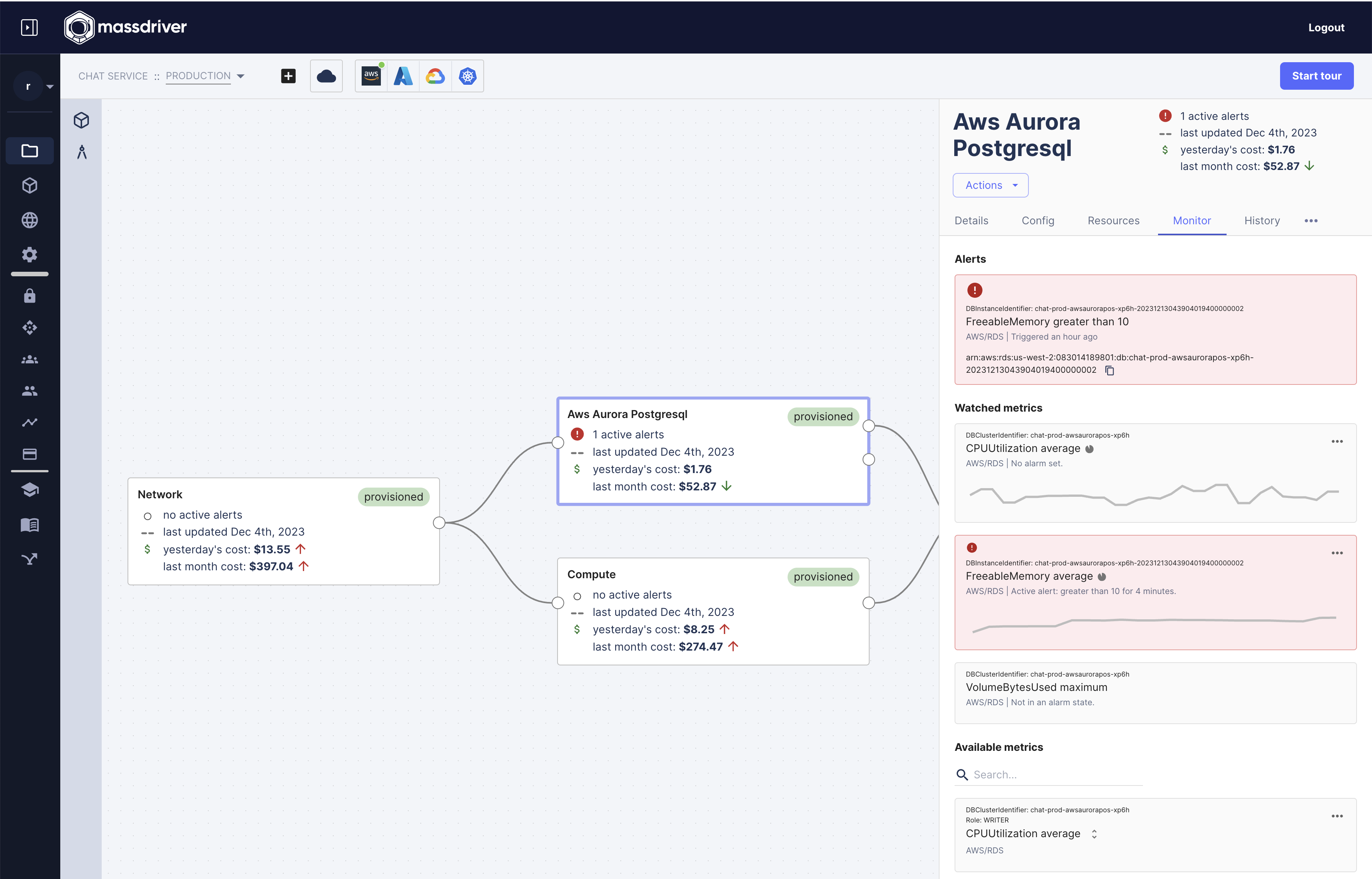
    Massdriver has made available tools for tracking cloud costs and generating a cloud infrastructure bill of materials (Cloud IBOM) to internal developer platforms (IDPs) as part of an ongoing effort to streamline platform engineering workflows.

    The Cloud IBOM makes it possible, with a few clicks, to map hybrid cloud resources such as databases, machine learning pipelines and serverless computing frameworks.

    Massdriver CEO Cory O’Daniel said collectively, these tools reduce expenses by preventing misconfigurations that result in unexpected costs. Rather than solely providing a summary of costs incurred, the tools provided by Massdriver surface how much cloud services are going to cost at the time the developer is invoking them, he noted.

    In the absence of that context, developers will nearly always overprovision cloud resources to ensure maximum availability regardless of cost, says O’Daniel. The overall goal is to help organizations reduce the total cost of IT by providing developers with insights into costs in real-time, he added.

    Earlier this year, the company launched an IDP that comes with platform engineering tools that, for example, make it possible for DevOps teams to build a catalog of infrastructure components that developers can access within the context of guardrails they define. The platform also includes observability and visualization tools that make it simpler to track metrics and monitor the usage of cloud resources.

    Massdriver is making a case for an IDP that provides built-in tools and workflows that enable organizations to embrace platform engineering as a methodology for managing DevOps workflows at scale. The goal is to reduce the level of expertise required to build and deploy applications in cloud computing environments, said O’Daniel. One of the primary reasons there are not more applications running in the cloud today is that these environments are still too complex to successfully manage, he added. An IDP abstracts away that complexity within a set of workflows that have been vetted by a DevOps team, he added.

    There are, of course, multiple approaches to building an IDP, but rival approaches require too much effort to set up and maintain, said O’Daniel. A proprietary platform provides a more turnkey approach that doesn’t require DevOps teams to either build their own or customize an open source platform, he added.

    It’s not clear at what pace organizations are embracing platform engineering, but there is a clear need to strike a balance between delivering IT services managed by a centralized team and the desire a developer might have to embrace new tooling whenever they see fit. Today, too much responsibility for provisioning IT environments has been pushed left toward developers who now have less time than ever to write code.

    There is, naturally, no guarantee that reducing the cognitive load for developers will increase productivity. Building applications requires streaks of inspiration, but, in theory, an IDP should provide more time for inspiration to strike. DevOps teams, as part of that effort, should be continuously working toward eliminating any bottlenecks that have emerged in their DevOps workflows.

  • Key Cost Optimization Strategies for Multi-Cloud Environments

    Key Cost Optimization Strategies for Multi-Cloud Environments

    In today’s ever-changing technology landscape, businesses are realizing the advantages of multi-cloud environments. These environments allow organizations to tap into various cloud platforms and use their services as required. This change signifies a shift away from relying on just one cloud provider. Businesses now embrace the flexibility and adaptability that come with using multiple clouds simultaneously.

    In complex multi-cloud environments, it is crucial to manage costs effectively. It is important to strategically optimize costs while considering your organization’s specific needs. By utilizing tools, implementing processes and continuously monitoring costs, you can save money while still reaping the benefits offered by different cloud providers.

    What is Multi-Cloud?

    A multi-cloud environment describes a setup in which companies or individuals utilize cloud computing platforms or providers to fulfill their computing requirements. In a multi-cloud setup, organizations have the ability to integrate both public clouds (such as Amazon Web Services, Microsoft Azure or Google Cloud Platform) and private clouds (on-premises or hosted private clouds) to establish a diverse and adaptable computing infrastructure. Rather than relying on one cloud provider, multi-cloud strategies distribute workloads across several cloud environments. Rather than depending on a single cloud provider, a multi-cloud strategy involves distributing workloads across various cloud environments.

    Benefits and Challenges

    Multi-cloud environments offer organizations numerous benefits, including flexibility, reliability, scalability and cost optimization. When organizations distribute their workloads across various cloud platforms, they reduce the chances of downtime or service disruptions due to a single provider failure. This guarantees uninterrupted availability and minimizes any potential impact on business operations.

    It is quite challenging to manage a multi-cloud environment for several reasons. Organizations must tackle challenges related to governance, cost management, integration and compatibility. To overcome these obstacles effectively, it is important to implement a well-defined strategy with efficient management tools.

    Since each cloud provider comes with its own set of tools, APIs and policies, ensuring consistent governance across different cloud platforms is challenging. Since different cloud providers have differing pricing structures, it is quite difficult to monitor and optimize costs in a multi-cloud environment.

    Analyzing and understanding each provider’s cost model is necessary when tracking usage patterns across different platforms. Integrating services from different cloud providers into a cohesive system architecture can be challenging due to compatibility issues. Careful planning and expertise are needed to achieve seamless integration without conflicts or performance problems.

    The Importance of Cost Optimization in Multi-Cloud Environments

    In today’s evolving technology landscape, businesses need to make the most of various cloud environments to fully utilize their cloud capabilities. However, great power entails great responsibility and cost optimization is a critical aspect that should not be overlooked.

    As businesses expand their cloud presence across multiple providers, optimizing costs becomes necessary to maximize ROI and stay competitive in today’s fast-paced market. In a multi-cloud environment, organizations typically use several cloud platforms simultaneously, including Amazon Web Services (AWS), Microsoft Azure, and Google Cloud Platform (GCP), to reduce expenses and maximize efficiency by comparing the services, features, and pricing models offered by each of the providers.

    Multi-cloud environments offer opportunities for cost optimization by allowing organizations to choose the cost solutions tailored to their specific needs. With access to pricing models and options offered by providers businesses can optimize their expenditure based on workload requirements.

    Optimizing Costs in Multi-Cloud Environments

    To optimize costs in multi-cloud setups, one must carefully analyze and manage expense factors across providers and services. It involves understanding cost structures, pricing models and usage patterns while considering workload requirements to choose cost-effective options for different tasks. Achieving these financial benefits requires efficient resource allocation and minimizing unnecessary expenses.

    This section discusses the key strategies for optimizing costs in a multi-cloud environment.

    Automating Resource Management

    You can optimize costs in a multi-cloud environment by automating the management of resources. Efficiently optimizing costs in cloud environments relies heavily on automating resource management. This enables organizations to monitor usage levels and resources dynamically as required, effectively implement cost-saving policies and ensure optimal utilization of cloud services without the need for human intervention.

    ​Organizations can automate their processes and tasks to streamline their operations, thereby saving time and reducing the risk of overspending on unnecessary resources. To effectively handle resources, it is crucial to have monitoring tools that offer real-time observations on usage patterns and performance metrics. These tools enable businesses to identify underutilized resources, which can then be automatically shut down or adjusted in size as required.

    Automation also involves implementing automatic resource allocation capabilities based on demand fluctuations. By scaling up or down depending on workload requirements, organizations can optimize costs by ensuring they only pay for the resources they truly need at any given time.  By implementing these automated policies, organizations are able to enforce cost optimization practices. For example, by establishing guidelines for assigning metadata tags to resources, organizations gain visibility and control over expenditure across various cloud platforms.

    Additionally, scheduling non-production environments to automatically shut down during off-business hours can significantly reduce costs. By turning off development and testing environments when they’re not in use, companies can avoid paying for resources during periods of low activity.

    Analyzing Costs in Multi-Cloud Environments

    While analyzing costs in a multi-cloud environment is challenging, it is a crucial strategy for your organization to make the most of its resources and avoid unnecessary expenses. It’s important to understand usage patterns and expenditures to optimize costs effectively. Start by gaining visibility into spending across all clouds. Use cost management tools provided by the cloud platforms or consider third-party solutions that consolidate data. This helps track costs at a detailed level and identify areas of high expenses. Analyze usage patterns to find instances that can be resized or turned off when not needed. By adjusting resources based on demand, overprovisioning can be avoided and unnecessary costs reduced.

    Here are the key steps to analyze costs in a multi-cloud environment:

    • Identify and categorize workloads
    • Track usage patterns and cost
    • Analyze the usage patterns of your workloads
    • Automate cost optimization
    • Incorporate cost analysis into your decision-making process
    • Review cost optimization strategy regularly

    Use Spot Instances

    In multi-cloud environments, using spot instances is crucial for cost optimization. These instances are available from cloud providers at a much lower price than on-demand or reserved instances, leading to substantial cost savings for organizations. With spot instances, you can take advantage of unused or idle capacity on cloud providers’ infrastructure, resulting in substantial cost savings. Being strategic with spot instances provides economical access to compute resources. Cloud providers offer discounted spare resources in the absence of regular customer demand, making it favorable compared to on-demand or reserved instances. Use on-demand or reserved instances for critical tasks while employing spot instances for less critical workloads. To optimize costs, you should leverage on-demand, spot and reserved instances, i.e., a mix of all of them.

    Right-Sizing and Efficient Resource Allocation

    Rightsizing is a key strategy for cost optimization that reduces costs and enhances performance in multi-cloud environments, leading to substantial savings. One of the most important steps in this regard is capturing comprehensive data on resource utilization (CPU, memory, storage and network utilization). By identifying over-provisioned or underutilized instances, organizations can optimize resource allocation. Automated tools simplify this process by monitoring and recommending adjustments. Consolidating workloads into fewer instances and leveraging virtualization technologies or containerization platforms further improves performance and scalability.  Right-sizing and resource allocation are two key techniques that can help optimize costs in a multi-cloud setup.

    Here are the key strategies at a glance:

    • Analyzing workload requirements
    • Selecting the appropriate instance types
    • Regularly review and adjust resource allocations based on actual usage patterns
    • Implementing auto-scaling and load-balancing mechanisms
    • Utilizing resource tagging and monitoring tools for cost visibility
    • Right-sizing resources on demand
    • Automated scaling strategies

    Conclusion

    By implementing key strategies such as using reserved instances or savings plans, automating resource management, implementing rightsizing techniques, leveraging spot instances, optimizing data transfer and storage, applying automation and orchestration principles, practicing financial governance and budget management and keeping an eye on future optimizations, businesses can effectively control their cloud spending and ensure they are making the most of their multi-cloud investments while minimizing costs.

    However, it’s important to acknowledge that cost optimization in cloud environments comes with its own set of challenges. Managing costs can be quite challenging for cloud environments despite their flexibility and scalability. From dealing with pricing models to facing a lack of visibility across clouds, there are obstacles that need to be overcome.

    With careful planning and implementation combined with ongoing monitoring and review processes, organizations can mitigate the challenges and truly harness the power of multi-cloud. Your organization should adhere to the key strategies outlined in this article to take advantage of the benefits of multi-cloud while ensuring optimal costs in their cloud spending.