Tag: Broadcom

  • Broadcom’s Software Strategy: Milk the Cash Cow, Exploit ‘Synergies’

    Broadcom’s Software Strategy: Milk the Cash Cow, Exploit ‘Synergies’

    The week began with rumors that Broadcom would acquire VMware and ended with the news that the deal is all but done. The VMware board, along with Michael Dell (who still owns about 41% of VMware’s stock), have a 40-day “go-shop” option; however, I don’t believe there will be other suitors.

    On Tuesday, I published an article about Broadcom’s desperation to gain cloud relevance and transform itself into a software company. I detailed the fact that VMware’s profitable business model and its nearly $4 billion of free cash flow makes it an attractive acquisition target. Finally, I said that Broadcom needed to find innovative DNA to make this acquisition work. 

    After thinking further about this proposed acquisition and talking to a number of VMware customers, as well as customers of CA Technology, which was acquired by Broadcom in July 2018, my outlook on the acquisition has become decidedly more cynical and likely more realistic.

    Milk Profits, Minimize Expenses

    We have seen this scenario play out before. Several former CA Technology customers and employees I spoke to was quick to say, “CA—where software goes to die.” That phrase has become so synonymous with CA that even the Wikipedia page for the company has a section on the phrase! Joking aside, most CA customers I spoke with over the last week agreed that since their acquisition, the company has “gone dark.” CA Technologies was a profitable company with important software that enterprise clients relied on and couldn’t easily transition away from. Sound familiar? VMware is in the exact same spot.

    Soon after the CA acquisition, Broadcom slashed about 40% of the CA workforce. On an analyst call to discuss the acquisition, Tom Krause, president, Broadcom Software Group (the Software Group will be renamed VMware) said that the company will increase VMware earnings from $4.7 billion to $8.5 billion within the next three years. How will the company nearly double earnings? “Synergies,” of course. The drivers of growth will be savings generated by eliminating duplicate functions in the combined company along with projections of more workloads running on the VMware platform.

    Do I expect Broadcom to change its corporate DNA to become an innovator? Will VMware innovators change Broadcom? Based on Broadcom’s past behavior, sadly, I think the answer is clear—No.

    I expect VMware to quickly cut costs across the board. Everything from headcount to R&D will see an immediate slash.

    This is Not Dell 2.0 For VMware

    You might argue that VMware has gone through this before when they were acquired by Dell and later set free by Dell Technologies in a 2021 spinoff. Why is this acquisition different? The Dell deal was, at its core, financial maneuvering to finance a deal and enrich investors with the goal of selling or taking the businesses public at a much higher market valuation. There was little cross-pollination between the Dell Technologies companies, and in this deal, Dell acted more like a private equity firm than an acquiring company.

    Broadcom is different. VMware is going to be milked as a cash cow as Broadcom tries to leverage VMware’s importance in the data center. VMware has huge cloud computing customers (AWS, for one) that are reliant on the company’s technology. If you are a VMware customer, get ready for higher prices as the company shifts to more of a subscription model. I also suspect that we will see large layoffs and the diminution of VMware as an entity. This is the end—VMware is not going to have another opportunity to go public on its own or go private in the future.

    I also don’t expect huge technology advancements from VMware over the next decade; but the company won’t die. The company will continue to exist because of the mere fact that enterprise software never dies.

    What Should Partners and Customers Do?

    This isn’t the end of technology acquisitions; nor is it a one-off event. Within the current market conditions, software vendor valuations have come crashing down to a more realistic level. I suspect that many large businesses with cash on hand will be looking to buy profitable software businesses that are viewed as essential. So, what should technology and business leaders do?

    • Understand vendor roadmaps and business. If you choose to go with an independent vendor, especially a smaller company, you need to understand their product roadmap along with their overall business strategy. 
    • Don’t become overly reliant on a single vendor. This isn’t the first time VMware has forced customers to rethink their relationship with the company. Years ago, VMware attempted to drastically increase licensing costs. Customers revolted and the company reversed course; however, it was a wake-up call and many businesses began to look at alternatives like OpenStack. You also need to ask technology leaders within your business what happens if a vendor changes their pricing, becomes a competitor or goes out of business. These “what if” scenarios are critical to reducing your risk.
    • Explore open source options. Open source isn’t a cure-all, but many businesses have adopted open source in part to reduce the risk of vendors changing strategies, increasing prices or no longer supporting your software. With open source technology, even if a project’s community is no longer active, a business that uses the technology can continue to contribute code and maintain the project.


  • Broadcom Acquires VMware to Expand Software Portfolio

    Broadcom Acquires VMware to Expand Software Portfolio

    Broadcom today pulled the trigger on an acquisition of VMware for $61 billion in cash and stock that could dramatically expand its software portfolio.

    Tom Krause, president of the Broadcom Software Group, told investors that the Broadcom infrastructure software group will become part of VMware once the deal closes. The deal, however, includes a 40-day “go shop” option for VMware to court another suitor who might be willing to acquire VMware at a higher price.

    Should the deal close, Broadcom is committed to melding its portfolio of DevOps, AIOps and security offerings with the VMware portfolio, said Krause. Broadcom acquired CA Technologies in 2018 and the enterprise division of Symantec in 2019.

    Krause said Broadcom plans to invest in the core VMware vSphere, vSAN and vRealize management software platforms that drive the most revenue for VMware today. Broadcom is also committed to increasing VMware earnings from $4.7 billion to $8.5 billion within the next three years. The primary driver of that growth will be savings generated by eliminating duplicate functions in the combined company and a forecasted increase in the volume of workload running on VMware platforms, said Krause. There are currently 300,000 vSphere customers that are increasing the number of workloads they are deploying both in the cloud and in on-premises IT environments, he noted.

    Broadcom is also committed to shifting as many customers as possible away from perpetual software licenses to subscriptions that generate more consistent recurring revenues, added Krause. VMware today reported revenue for the first quarter of fiscal 2023 was $3.09 billion, an increase of 3% from the first quarter of fiscal 2022. Subscription and software-as-a-service applications accounted for 29% of total revenue for the quarter. Subscription and SaaS revenue for the first quarter was $899 million, an increase of 21% year-over-year.

    Dan Kirsch, principal analyst and managing director for Techstrong Research, an arm of the parent company of devopsy.kinsta.cloud, said given the size of the deal, many existing VMware customers are naturally going to be nervous. The primary concern will be the degree to which Broadcom might attempt to increase licensing fees to meet its financial goals, he noted.

    The acquisition of VMware comes at a time when the number of workloads being deployed in the cloud is far outpacing the rate at which workloads are being deployed in on-premises IT environments. The bulk of those workloads run on non-VMware-based hypervisors. However, many of the workloads that run on VMware today in a data center are being shifted to the cloud. VMware has also invested in building a Tanzu platform for building and deploying cloud-native applications on Kubernetes clusters.

    Broadcom is committed to investing in research and development across the combined software portfolio, said Krause.

    It remains to be seen how much of the VMware employee base will remain with the combined company. It’s not uncommon for there to be a ‘brain drain’ in the wake of a major merger, noted Kirsch.

    Whether or not the deal closes, a lot of IT teams will, at the very least, be reviewing their VMware software portfolio in the weeks ahead as the new Broadcom-VMware entity evolves. In fact, it’s likely that the acquisition of VMware will set off a wave of mergers and acquisitions during what appears to be an economic downturn. That means regular reviews of vendor relationships will soon be the order of the day for a wide range of IT organizations.

  • Go Language is Popular? | VMware Sells to Broadcom? | Unlimited PTO?

    Go Language is Popular? | VMware Sells to Broadcom? | Unlimited PTO?

    Welcome to The Long View—where we peruse the news of the week and strip it to the essentials. Let’s work out what really matters.

    This week: Golang goes from zero to hero, will Broadcom buy VMware? And limitless vacation is still a Thing. (more…)

  • Could Buying VMware Bring Broadcom Hybrid Cloud Bona Fides?

    Could Buying VMware Bring Broadcom Hybrid Cloud Bona Fides?

    Rumors are swirling that Broadcom wants to buy its way into the growing hybrid cloud market by acquiring VMware. The deal won’t come cheap—after news of the potential deal surfaced, VMware’s market cap soared to around $50 billion. Yes, billion with a ‘B’.

    As interest rates increase and investors reevaluate many of the lofty software company valuations, I expect to hear many more acquisition rumors. During this time of uncertainty, cash-flush vendors are going to be on the hunt for software vendors that can provide a technology platform, have large partner ecosystems and that also produce reliable revenue.

    Why the Acquisition Makes Sense for Broadcom

    Broadcom has a nice, solid business producing semiconductors for smartphone makers as well as storage and networking devices used in large data centers. However, like many hardware companies, the business has been desperately trying to break into the software industry. Why? There’s a semiconductor shortage and the company is in the right market at the right time. However, the company’s leadership knows that market conditions change. Software margins are significantly higher than hardware deals, and R&D and manufacturing costs for semiconductors are notoriously high.

    VMware has grown to become a large cloud technology platform, not just a virtualization offering. If Broadcom is able to successfully close on this deal, it will instantly own one of the largest cloud software platforms in the industry. In addition to acquiring large enterprise customers, the VMware partner ecosystem is important. For example, I believe that the NVIDIA partnership will be a profitable one for VMware. The two companies have been working together to create a platform to support AI-based applications for the data center, cloud and at the edge.

    In a time when some cloud businesses are experiencing wild fluctuations because of their lack of profitability, the VMware business model is solid. However, these fundamentals are also why the company is ripe for acquisition. In its fiscal year 2022, the company reported $12.85 billion in revenue and $6.33 billion in subscription and SaaS licensing revenue. Free cash flow for fiscal year 2022 was nearly $4 billion.

    Let’s quickly contrast VMware to the cloud data warehouse Snowflake (NYSE: SNOW). Snowflake’s market capitalization is around $40 billion and within the last year was well over $120 billion. Meanwhile, the company’s revenue is around $1.2 billion and it is struggling to find a path to profitability. If you were hunting to acquire a software business during a time when financial indicators are flashing red, which business model would you prefer?

    Broadcom’s Strategy: Become a Software Company

    I mentioned that Broadcom is desperate to gain relevance in the software industry. Why do I say this? The company’s recent acquisitions showed a clear pattern emerging—Broadcom has been trying to acquire its way into software.

    In 2018 the company acquired CA Technologies for nearly $19 billion. The following year, Broadcom acquired Symantec’s enterprise cybersecurity business for $10.7 billion. In addition, there were rumors that Broadcom was planning to acquire SAS Institute, the privately held analytics vendor, for somewhere around $15 billion to $20 billion. Those talks fell through when the SAS Institute’s aging co-founders and majority stakeholders announced a plan to go public in 2024.

    This M&A strategy might seem strange to many, but Broadcom originally tried growing through the acquisition of companies similar to itself. In 2018, the company made an offer of $117 billion to acquire chip producer Qualcomm. Broadcom later withdrew the bid when it became clear that the Trump administration pushed hard to prevent the deal, citing national security concerns.

    Although this latest deal would face governmental review and the Biden administration previously voiced concerns over tech mega-mergers and monopolies, we have not seen the administration prevent similar deals.

    The Path Won’t be Easy: Three Strategies for Success

    The market is full of cautionary tales of software vendors that were acquired only to be slowly destroyed. A successful acquisition would require Broadcom to tread lightly and maintain the elements that have made VMware the company that it is today. Below are three priorities that Broadcom should focus on if the deal is completed.

    Keep VMware independent: It is critical that VMware does not show favoritism toward one chip maker. VMware’s largest customers use chips from Intel as well as other manufacturers. If Broadcom tries to steer VMware toward its own chips exclusively, the backlash could quickly undercut the value of the acquisition. In addition, it’s my belief that the hybrid and multi-cloud models are here to stay (rather than a single cloud approach). Customers expect vendors to work with each other and are reluctant to accept single stack proprietary approaches. 

    Find innovative DNA and facilitate business unit collaboration opportunities: Hock Tan, Broadcom’s CEO, is very well respected in the industry; however, the company is not known for software innovation. Although I expect VMware to remain a standalone business unit (similar to CA’s current position within Broadcom’s ecosystem), it will be important to foster innovation. Broadcom should accelerate VMware investments, like Project Monterey and the NVIDIA partnership, while looking for new investment opportunities. Perhaps Broadcom could provide VMware with custom chips to help accelerate Project Monterey, but this sort of line-of-business collaborative innovation hasn’t been the model for Broadcom’s other software acquisitions. It should be.

    Nurture the partnership network: The next phase for the VMware partner ecosystem will require partners to understand the company’s vision for the future. What will the acquisition mean for partners? Will they have access to more solution selling that combines VMware and Broadcom technologies? How can existing Broadcom partners join the VMware partnership ecosystem? That will be another big question.

    It will be extremely interesting to see how this plays out. We’ll definitely be keeping an eye on this potential merger of two heavyweights!

  • Wi-Fi 7 Chips Ahoy | Google ‘Gone Downhill Fast’ | Real-World ‘Severance’

    Wi-Fi 7 Chips Ahoy | Google ‘Gone Downhill Fast’ | Real-World ‘Severance’

    Welcome to The Long View—where we peruse the news of the week and strip it to the essentials. Let’s work out what really matters.

    This week: The first silicon for Wi-Fi 7, Google’s search quality “is” failing, and what Severance tells us about The Great Resignation. (more…)

  • Digital Transformation Driving VSM Adoption

    Digital Transformation Driving VSM Adoption

    The number of organizations using value stream management (VSM) to bridge the divide between DevOps and the rest of the business is expected to dramatically increase over the next two years. The shift is due, in part, to investments in digital business transformation initiatives.

    A survey of more than 500 executives, IT and business leaders conducted by Dimensional Research on behalf of Broadcom, a VSM platform provider, finds the percentage of organizations employing VSM will rise from 42% today to 70% in the next two years. Nearly three-quarters of organizations (72%) that are not currently using VSM plan to do so in the next 18 months or more.

    The survey also finds that 85% of organizations are collecting some subset of value stream metrics today as part of an effort to deliver solutions faster (56%), improve decision making (55%) and increase transparency (54%).

    Laureen Knudsen, chief transformation officer at Broadcom, said that as organizations embrace DevOps best practices more broadly to drive digital business transformation initiatives, they need more visibility into the application development process. VSM surfaces the insights required to not only identify bottlenecks but also track how changes in application delivery timetables will impact key performance indicators (KPIs).

    VSM traces its lineage back to lean manufacturing methods, which called for each step of a manufacturing process to be continuously measured. As software development has evolved from being a craft to an automated process using DevOps best practices—and as organizations realize just how dependent they are on software—an appreciation for the value of monitoring the impact of missed software development deadlines on the business is growing steadily. VSM platforms automatically collect technical metrics from DevOps tools that are then correlated against the KPIs the organization decides to track.

    The Broadcom survey found more than 96% of respondents’ companies are already in the process of adopting digital transformation. Strategic objectives include increasing efficiencies (70%), improving product quality (67%) and improving customer value (63%).

    Most respondents (92%), however, are anticipating product development challenges for 2022. The biggest product development challenge cited is a lack of visibility throughout the product life cycle (45%) followed by inefficient processes (44%), lack of resources (42%) and enterprise-wide lack of understanding of how products deliver customer value (42%). A full 89% of the business leaders surveyed also noted they continue to struggle with organizational silos between strategic development and operations; 93% noted that better alignment between teams would improve their organization’s overall return on investment (ROI) in software development. A total of 95% said they believed VSM would optimize their product life cycle processes.

    Knudsen said that, in time, artificial intelligence (AI) technologies will increasingly be infused into VSM platforms to enable automated feedback loops between the business and DevOps teams. In the meantime, DevOps teams should be prepared to adjust project priorities based on the needs of the business and to endure a higher level of scrutiny as business stakeholders become more involved in setting the software development agenda.

  • Broadcom Adds VSM Platform to DevOps Portfolio

    Broadcom Adds VSM Platform to DevOps Portfolio

    Broadcom Inc. today added a dedicated value stream management (VSM) application to its portfolio of DevOps offerings as part of an effort to make it simpler to prioritize software development initiatives.

    Serge Lucio, vice president and general manager for the enterprise software division of Broadcom, said that while the company has previously provided VSM capabilities within its tools this addition to its ValueOps portfolio marks the first time Broadcom is making available a complete VSM application.

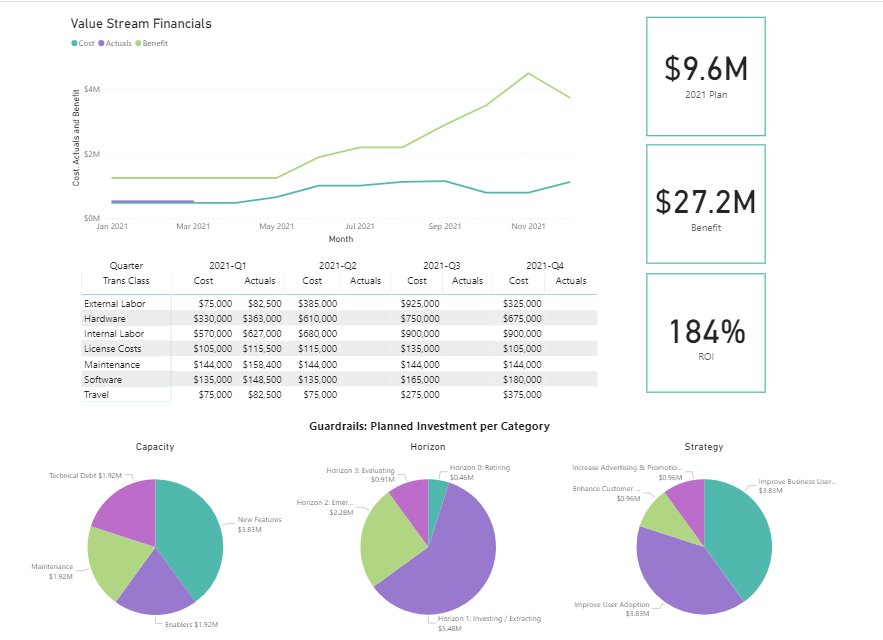
    The offering is unique because it combines the IT investment capabilities found in the Clarity project management software provided by Broadcom with the Rally platform for managing agile software development processes, added Lucio.

    In comparison, other VSM offerings don’t provide the same level of depth in terms of connecting software development projects to actual financial costs, noted Lucio. The Broadcom platform, for example, in addition to surfacing dependencies between software projects and potential developer capacity issues, also enables IT organizations to forecast the impact changes to funding will have on software development projects, said Lucio.

    In fact, Lucio noted that tracking code as it is developed is relatively easy. Surfacing the financial implications of software development projects requires an additional level of analytics not found in rival VSM offerings, he said.

    VSM, as a concept, traces its roots to lean manufacturing methods, which called for each step of a manufacturing process to be continuously measured. As software development has evolved from being a craft to a process that is automated as much as possible using DevOps best practices, an appreciation for the value of monitoring the impact of missed software development deadlines on the business is growing as organizations realize how dependent they now are on software to achieve business goals. A VSM platform aggregates technical metrics gathered from DevOps workflows and then maps them to key performance indicators (KPIs) defined by business leaders. Once those KPIs are defined it then become possible to apply advanced analytics to assess the financial impact changes to software development schedule will have on the business.

    In general, Lucio said organizations are evolving their approach to software development as they embrace digital business transformation. Rather than managing individual software development projects in isolation, organizations are now managing software development in much the same way they manage product development. As a result, a collection of related software development projects are now being managed in a way that better aligns to the strategic business initiatives, he said.

    It’s not clear at what rate organizations are adopting VSM platforms, but as the number of stakeholders in an organization that have a vested interest in software development increase there is a need for tools that enables those individuals to more easily track processes in a way that doesn’t depend on them mastering the project management application employed by the software development team.

    Regardless of approach, the appreciation of software development in organizations has never been greater. That same increased appreciation, naturally, is creating a level of anxiety among business leaders that need to make decisions that impact the entire organization based on processes that today they often have limited visibility into much less actual understanding.

  • Broadcom and Google Cloud Collaborate to Accelerate Digital Transformation for the Enterprise

    SAN JOSE and SUNNYVALE, Calif., April 13, 2021 – Broadcom Inc. (NASDAQ: AVGO) and Google Cloud today announced a strategic collaboration to accelerate innovation and strengthen cloud services integration within the core software franchises of Broadcom. Under this partnership, Broadcom will deliver its suite of security and enterprise operations software on Google Cloud, enabling businesses to deploy Broadcom solutions in security, DevOps and more on Google Cloud’s trusted, global infrastructure.

    Google Cloud has been a key partner in accelerating Broadcom’s growth strategy. Broadcom has successfully migrated Symantec Web Security Service (WSS) and Cloud Access Security Broker (CASB) onto Google Cloud, and will soon complete the migration of its other cloud cyber security solutions. Broadcom has also modernized the security stack and standardized service delivery processes and offerings on Google Cloud infrastructure, which enables Broadcom to scale and operate more efficiently to better serve enterprise customers.

    Other benefits of migrating Broadcom software onto Google Cloud include:

    • ●  Accelerated development of new, transformational cloud-native services
    • ●  Reduced latency for service-to-service communications
    • ●  Increased scale and improved resiliency
    • ●  Strengthened infrastructure compliance certifications
    • ●  Reduced reliance on congested public internet routes

    Additionally, Google’s data cloud will support Broadcom’s business-wide data and analytics strategy, helping transform the way the company uses data to make better business decisions and support its customers. Broadcom will deploy multiple services internally onto Google’s data cloud, including Dataproc, Cloud SQL, and Bigtable, helping modernize its infrastructure and analytics capabilities to deliver a more secure, reliable and scalable data platform in support of its customers.

    “Leveraging Google Cloud enables Broadcom Software to scale and innovate faster to meet the growing needs of digital businesses globally,” said Tom Krause, President, Broadcom Software Group. “This collaboration is fundamental to delivering secure access to cloud applications and providing enterprises with increased performance, continuous compliance, and enhanced security that empowers an organization’s cloud adoption journey.”

    “Companies around the world turn to software and services from Broadcom to run their businesses securely and to power their digital transformations,” said Rob Enslin, President at Google Cloud. “We are proud to be Broadcom’s cloud partner as it expands the global availability of these critical security and operations services and to support Broadcom’s own digital transformation.”

    About Broadcom

    Broadcom Inc. (NASDAQ: AVGO) is a global technology leader that designs, develops and supplies a broad range of semiconductor and infrastructure software solutions. Broadcom’s category-leading product portfolio serves critical markets including data center, networking, enterprise software, broadband, wireless, storage and industrial. Our solutions include data center networking and storage, enterprise, mainframe and cyber security software focused on automation, monitoring and security, smartphone components, telecoms and factory automation. For more information, go to www.broadcom.com.

    About Google Cloud

    Google Cloud provides organizations with leading infrastructure, platform capabilities and industry solutions. We deliver enterprise-grade cloud solutions that leverage Google’s cutting-edge technology to help companies operate more efficiently and adapt to changing needs, giving customers a foundation for the future. Customers in more than 150 countries turn to Google Cloud as their trusted partner to solve their most critical business problems.

    Broadcom, the pulse logo, and Connecting everything are among the trademarks of Broadcom. The term “Broadcom” refers to Broadcom Inc., and/or its subsidiaries. Other trademarks are the property of their respective owners.

  • Broadcom Unveils the Industry’s First Open AIOps Platform Delivering a New Level of Full-Stack Observability for Hybrid Clouds

    Empowering Organizations to Achieve Digital Agility through Actionable Insights that Enhance Customer and Employee Engagement

    SAN JOSE, Calif., Dec. 1, 2020 — Broadcom Inc. (NASDAQ:AVGO) today announced the availability of the latest generation of AIOps from Broadcom, an open platform with artificial intelligence, machine learning and end-to-end observability that helps organizations achieve operational excellence. AIOps allows business and IT leaders to manage critical KPIs that align IT outputs to business outcomes, driving digital agility, while proactively ensuring enhanced customer and positive employee experiences.

    “Imagine a lens that provides a clear and fully integrated view of your business with IT providing valuable intelligence that drives informed decision-making. This is no longer a wish list, this is a reality for our customers through the new Broadcom AIOps solution,” said Serge Lucio, vice president and general manager, Enterprise Software Division, Broadcom. “AIOps from Broadcom provides enterprises with comprehensive observability across user experience, applications, infrastructure and networks delivering digital agility, actionable insights and intelligent automation— all enhancing business outcomes and customer experience.”

    As enterprises progress in their ongoing digital transformations, they face complex modern and hybrid IT environments, while adopting Site Reliability Engineering and automation approaches to achieve operational effectiveness. Customers and employees now demand instant access to services delivered by IT teams. However, many struggle to gain vital insights across heterogeneous digital landscapes due to disparate tooling, increased volume of data, increase in remote traffic, frequency in redundant tasks, and lack of actionable insights.

    New Leading-Edge Capabilities

    AIOps from Broadcom is an open platform that correlates and analyzes a broad range of IT observability data sources and acts as a trusted proof point for the IT Operations analytics offered in Broadcom’s BizOps solution. AIOps from Broadcom now includes new AI/ML techniques and customizable views for enhanced actionable insights. New capabilities include:


    • Full-Stack Observability—for hybrid clouds, cloud-native applications, distributed tracing, mobile-to-mainframe insights and network telemetry while providing users openness to ingest other data sources quickly with 15 new third-party data integrations.
    • DX Dashboards— provide rich visualizations for task-based persona-driven insights along with unfettered access to all data to easily customize and create company-specific dashboards.
    • Service and Alarm Analytics—include additional machine learning topology and correlation, casual graphs and intelligent situational analysis for automatic root cause analysis, noise mitigation, alarm clustering, and anomaly detection.
    • Intelligent Automation— based on a recommendation engine connects root cause analysis with extensive out-of-the-box actions and automation strategy based on problem scenarios.
    • Capacity Analytics—provide service-aware configuration for capacity planning and drill-downs for service context and group context to identify the potential over-utilized or under-utilized resources and optimize the capacity allocation.
    • Continuous Feedback Loops—connect data across development, IT and the business for views and insights across disparate data sets and siloed teams.
    • Machine Learning—based on an extensive library of algorithms, natural language processing and an ontological graphical topology for rich situational correlation for continuous learning and improved automated root cause analysis.
    • Software to Silicon Insights— apply AI and ML to rich, granular data capture at the chip level to enable a unique, AI-driven solution for real-time proactive network congestion and packet loss triage.


    “It was vital that our teams moved from a focus on managing IT resources to managing business implementations, so we started by eliminating the lines that traditionally separated IT and business,” said Mike Sydor, chief architect, ADP. “A big part of that effort required us to establish views, dashboards, and reports that reflected both perspectives. By leveraging the comprehensive insights garnered through AIOps from Broadcom, we were able to accelerate the move away from having staff concentrate on individual metrics and instead have them focused on the metrics that are significant for good business outcomes.” 1[read the full story here]

    Forrester recommends organizations invest in AIOps saying, “AI for IT operations (AIOps) is unifying traditional infrastructure, public cloud, application performance management (APM), and even network monitoring.” 2 – Rich Lane, senior analyst, Forrester Research.

    Broadcom AIOps Virtual Forum

    In conjunction with this announcement, Broadcom unveiled the results of a Broadcom sponsored report “Using AIOps to Gain Observability and Insight: A Global Survey of Executives and IT Professionals” conducted by Dimensional Research. For a full copy of the report and to learn more about how the world’s leading companies are driving business outcomes, join Broadcom for the AIOps Virtual Forum, “Maximizing Value and Success with AIOps in 2021,” December 3, 2020 at 11AM (ET). Visit AIOps from Broadcom to learn more about how AIOps is augmenting human intelligence to help manage increasingly complex app infrastructures, automate remediation and align business and IT.

    About Broadcom
    Broadcom Inc. (NASDAQ: AVGO) is a global technology leader that designs, develops and supplies a broad range of semiconductor and infrastructure software solutions. Broadcom’s category-leading product portfolio serves critical markets including data center, networking, enterprise software, broadband, wireless, storage and industrial. Our solutions include data center networking and storage, enterprise, mainframe and cyber security software focused on automation, monitoring and security, smartphone components, telecoms and factory automation. For more information, go to www.broadcom.com.


    Broadcom, the pulse logo, and Connecting everything are among the trademarks of Broadcom. The term “Broadcom” refers to Broadcom Inc., and/or its subsidiaries. Other trademarks are the property of their respective owners.

    1 How IT Transformation at ADP is Fueling Operational Excellence

    2 The Forrester Tech Tide™: Modern Technology Operations, Q3 2020

    —

  • DevOps Chats: Automic + CA + Broadcom, a Release Automation Journey

    DevOps Chats: Automic + CA + Broadcom, a Release Automation Journey

    The life of an acquired company can be an exciting one full of unexpected twists and turns, and that’s been true of Automic software. Scott Willson, a repeat podcast guest and longstanding member of the DevOps community, joins us again on DevOps Chats. He describes his acquisition journey as being akin to a “barracuda, eaten by a great white shark, eaten by a whale.” Scott is product marketing director, Release Automation at CA Technologies, a Broadcom company (the new proper name for Automic + CA + Broadcom).

    Scott shares what it’s like being a software DevOps company inside Broadcom, whose strong roots come from the chip manufacturing business. While software has its many differences from chips, of course, Scott shares how many of the DevOps principles and heritage from lean manufacturing have made the transition easier. There are valuable lessons here for all of us.

    Amid all the change, Automic shifted its products to the freemium model. Automic Continuous Delivery Director is now free to use for up to 10 active releases. We talk about the upcoming releases, which includes machine learning. Join us as we bob and weave through the acquisition story into the world of continuous automated delivery.

    Transcript

    Mitch Ashley: Hi, everyone. This is Mitch Ashley with devopsy.kinsta.cloud and you’re listening to another DevOps Chats podcast. Today, I’m joined by Scott Willson, he’s product marketing manager, Release Automation at CA Technologies at Broadcom—that’s a mouthful. I think we’re gonna explore a little bit of that.

    So, our topic today is really catching up with what’s been happening with the Automic product and CA’s, this part of the acquisition back into Broadcom and just kinda catch up with Scott. So, he’s been on the podcast before. Scott, welcome to DevOps Chats.

    Scott Willson: Thank you, Mitch. Glad to be here.

    Ashley: Appreciate you being here. Would you start just by introducing yourself for any of our audience that doesn’t know you, a little bit about what you do, and tell us a little bit about CA Technologies at Broadcom.

    Willson: Yes, yes, so my name is Scott Willson—two Ls in Willson. I think many listeners may know me. I have been, in the past, an author with some of Gene Kim’s DevOps Forum papers, and I’ve been at the DevOps Enterprise Summit several times. I’ve been fairly active on blogs and all that stuff.

    And where my kinda claim to fame was, I came from a company called Automic. That’s spelled Auto-mic for the phonetic spelling of it. My background is, just to throw this in here, too, my journey, as I always tell people, is I started from a development standpoint writing the code, migrated my career kinda doing the DevOps thing before anyone called it DevOps, like many others.

    Ashley: Mm-hmm.

    Willson: And yadda yadda yadda, here I am now with a software company speaking all things DevOps and trying to help people get better at releasing their software.

    Ashley: You’ve certainly been a part of the community for some time now, so we appreciate all your contributions. Well, you’ve been through quite a journey. I know being acquired by CA and then CA being acquired by Broadcom—why don’t you kinda catch us up? Maybe tell us a little bit about that journey. I think you described it as an 18 month history going through that.

    Willson: [Laughter]

    Ashley: You know, we don’t have too long on the podcast, [Laughter] but if you can kinda give us a little bit of that path that you’ve been on.

    Willson: Yeah, yeah. You know, I kinda looked at it like a, it was almost like a barracuda eating a great white who was eaten by a whale, right?

    Ashley: [Laughter]

    Willson: It was a really interesting, very quick journey. It was a couple years ago when I was with Automic Software. We were acquired by CA Technologies, and about a year or 18 months after that acquisition or so, Broadcom bought CA Technologies to the—not just our surprise, but of course, to the surprise of the entire market.

    Ashley: Mm-hmm, yeah, it was.

    Willson: There was a lot of press about it.

    Ashley: It was a surprise.

    Willson: And so, yeah, it was a very, very quick and interesting turnaround. We are now known as CA Technologies, a Broadcom company. As far as Automic goes, we are retaining the Automic brand, so you’ll see a lot of our old software and all that will have the Automic brand. And not just Automic, but our current leadership has really felt to really keep and embrace the brands that we’ve had. So, you know, Blaze—CT is still gonna be Blaze, and Rally is gonna be Rally, those type of things.

    Ashley: Mm-hmm.

    Willson: So, the brands are remaining, which I think is useful, because even though CA had remained Rally—I know I, anyways, always refer to it as Rally, because—

    Ashley: I do, too, yep. [Laughter]

    Willson: – right, because that’s what I always knew it as. [Laughter]

    Ashley: Especially knowing them from the beginning, it’s hard not to call them Rally, but yes.

    Willson: Right, exactly. So, Automic is still going to be Automic from a product brand positioning. And then from a company standpoint—yeah, we’re still CA, just a Broadcom company. Within Broadcom, our group is known as the Enterprise Software Division, so we are a distinct division within Broadcom.

    Ashley: Mm-hmm.

    Willson: And then, to add to that, to the little journey, what has been interesting to me is—I remember it was a year ago, the last Forum meeting I was going to or what many of us in the inside called those meetings, the Gene Kim’s Great Slumber Party.

    Ashley: [Laughter]

    Willson: Right? We kinda talked about being lean, and some of the people, I remember having discussions with and running papers, we just really got to talking about what it means to run lean and the lean manufacturing and the whole thing, right, that DevOps is based on and that The DevOps Handbook espouses and all these kinda things.

    And after that, right, three months after that meeting it was announced Broadcom was gonna buy us and then they actually did, and here I am all this time later. And I bring that up because what was interesting to me, Mitch, is that Broadcom embodies this. They run lean.

    Ashley: Mm-hmm.

    Willson: And it’s been an interesting journey to go from the short time at CA, which ran big, to now being with Broadcom, which runs lean. And they run even leaner than what Automic did, which was in ISV, right? You know, Independent Software Venture.

    Ashley: I was curious about that, because I know Broadcom, you know, I had worked with them as a chip supplier with companies like Broadcom ad Qualcomm and, you know, manufacturers of chips in telecommunications think about the world, they’re much more, you know, operational efficient. It’s all about fractions of pennies and the cost of their goods to maintain profitability, but that’s super high volume. So, it’s a different mentality than a software company.

    Willson: It is, and there are some significant differences, I suppose, from the business or sales aspects. But from a production aspect, there really wasn’t a whole lot of difference. When you think about taking a product to market, right? Now, we were doing this with software, they’ve done it with chips, but Broadcom is an engineering excellence company. They really pride themselves on having the best of fill in the blank of engineering, whether it’s engineering processes, engineering whatever. In fact, what has been interesting post acquisition is that our engineering staff for the bulk of our products have actually increased. Broadcom is very keen on ensuring that the products we deliver are best in class.

    Ashley: Mm-hmm.

    Willson: And so, they realized a way to do that in the market is to make sure they’ve got the top minds developing and producing and shipping these products, right?

    Ashley: That has to be refreshing to you—you and the team.

    Willson: Oh, yeah. It was very interesting to see that that was the case. It’s been a unique acquisition as far as that goes, and to see that—no, they wanted to increase the head count of R&D. [Laughter] It’s important for them.

    Ashley: Mm-hmm. What? [Laughter]

    Willson: Exactly. Like—wait, what? They want the products to improve, to get better, and to continue to be viable and market leading. And so, they embody the lean processes to do all of this stuff. And so, it’s been—there’s a little bit of a learning curve, I think, on both sides to adapt to this new way, but here we are. You name the things that are automated—I mean, Broadcom automates just about anything and everything. The very stuff you read about, Gene Kim talks about in his book, saying—and even in Nicole Forsgren’s book, Accelerate, you know, automation is at the key of a lot of these things, and Broadcom embodies that.

    Ashley: It is. It’s a much different kind of company. If you’re not a hardware person or haven’t worked at a chip company, what I said, it’s—fractions of a penny make a difference in cost, and that cost can be in materials, but it also can be in process. And when you multiply that by millions upon millions of chips that they may ship a particular line, that’s a lot of money. So, it makes a huge difference in the profitability of the company—

    Willson: That’s right.

    Ashley: – to be able to reinvest and give you more engineers to be part of your team.

    Willson: That’s right. And so, software is a little different, right? It’s not the pennies like that. Obviously, with software, the margins are different, because you’re not dealing with a physical thing, a commodity, right? But the principles to be efficient like that are absolutely espoused by DevOps. And one of the things that this transformation internally has occurred—because we’re transforming ourselves from a software company, right? I think we’ve made some press releases talking about our BizOps platform, a holistic platform—

    Ashley: Right.

    Willson: – that we’re offering the market. No longer should you be thinking of us like the CA of old where you had a bunch of different siloed tools. Now, they’re all coming together in a holistic way to provide real business value and create a true, interesting platform for everybody.

    Ashley: Mm-hmm.

    Willson: But just this way of doing things lean like that and embracing the agile way of turning things around has been a cool thing to behold.

    Ashley: That has to be really good, because I haven’t talked with somebody that’s had that experience—not that others haven’t, but to have that common lexicon frame of reference of thinking about producing software like a software factory just like a hardware based factory. You have a lot of synergies and commonalities there. Yeah, there’s differences, too, but instead of software being this mystery to hardware guys or vice versa, right, you can talk and work together and understand the efficiencies, improvements, speed, impact, quality—all the things that drives the manufacturing company also drives software.

    Willson: That’s right. And what’s been exciting, too, with this opportunity to change—really, the Broadcom offer has provided us an opportunity to change things and to really force these integrations and synergies between what used to be separate divisions of CA but are now different teams and the interoperability that’s happening between them to deliver this BizOps platform is really exciting. It’s cool to see that now it’s like—look, we have all these things, but what’s the point, unless we’re focusing on business outcomes, right?

    Ashley: Right.

    Willson: We can actually drive a business outcome if there’s harmony and cohesiveness between all these things, and that’s very exciting. In fact, one of the other things along these same lines that was announced is the free tier program—I don’t know if you see the PR a couple weeks ago, Mitch—

    Ashley: I did.

    Willson: – but now, a lot of our products are offered for free.

    Ashley: Yeah.

    Willson: So, for example, a continuous delivery director, or Automic Continuous Delivery Director, if you go to CDDirector.io, you can just use it for free, up to 10 active releases. And Rally has some free tier as well. So, basically, we’re now offering the freemium versions of what we had, and—

    Ashley: Have the products changed substantially to be able to do that? Are they less functional or are they time based or just volume, kinda getting folks to up to date?

    Willson: It’s really just volume, right? Yeah. They haven’t really—well, a lot of them didn’t really need the change. A lot of the products that are offering this are the ones that are already SaaS based already. There will be more that are coming, of course, as things are being migrated to be SaaS based, and that effort is under way.

    But an example of Automic Continuous Delivery Director, there’s not really a time limit. It’s 10—10 active releases. That’s a lot of releases.

    Ashley: Mm-hmm.

    Willson: And you can just use it, and use it at will for that. You wanna get more than that or grow it across the enterprise or make it the standard or something, same with the Rally and Blaze CT. Oh, well, yeah, then you can buy the licenses that let you use it more broadly, right?

    Ashley: Mm-hmm. That’s a great model. I mean, I think we’ve sort of disproven the crippleware approach. Nobody likes that.

    Willson: [Cross talk], yeah.

    Ashley: Exactly, and being able to use it on enough of software production; you talked about 10. You’ve gotta be able to get a pretty good feel for what the product does that’s gonna do what you want it to do and start to integrate it into your tool chain workflow platform.

    Willson: Right, and these are 10 active releases. In other words, 10 releases in parallel, right?

    Ashley: Mm-hmm.

    Willson: Well, that’s—like you said, you should really be able to get a feel for it.

    Ashley: Yeah.

    Willson: Being able to run that many releases in parallel to each other.

    Ashley: Well, that’s awesome. That’s great to hear. I’m excited to hear about more of that coming from you, too.

    Do you have a new release coming up, here?

    Willson: Yeah. So, speaking along those lines, we have a new release for Automic Continuous Delivery Director. We’re pretty excited about this release. It is our first release that includes some ML capabilities and heuristics that are involved. Basically, what we were looking to do with this is, amongst other improvements and advances we made in the product, right, to help with continuous delivery, one of the things we looked at is that there’s significant bottleneck in continuous delivery, the methodology, which is QA or testing.

    Ashley: Mm-hmm.

    Willson: Now, as you probably know, Mitch, continuous testing is technically a subset or a component of continuous delivery.

    Ashley: Right.

    Willson: And I might argue that unless you’re doing continuous delivery, you are not doing continuous delivery.

    Ashley: Right.

    Willson: You need to be doing—

    Ashley: You need to think of continuous delivery is plan, dev, test, deploy, operate, right?

    Willson: That’s right, and you’re testing continuously, right? But the problem is, QA wasn’t really built to be agile themselves. So, they kinda became the bottleneck, not just from the way that they run, but you, as a QA person, right, testers, you build out all these tests. And so, you release this small change per DevOps per agile per continuous delivery, right? And it goes into QA and you run, you know, 1,000, 10,000 tests—and I’m not making these numbers up. Literally, a lot of our large enterprises have thousands and 10,000 tests.

    Ashley: Oh, yeah. Totally.

    Willson: Alright, so then, we’re in the waiting game, right? And maybe it takes however long for the test results to come back and then you get feedback to development. So, we found with our, a lot of our large customers, you know, the Global 2000, that this was a significant bottleneck. So, now what we do, what occurs, is that when you do that release and you’re a pipeline, right, you’re a release pipeline and it gets pushed to QA, one of the things that we do is, we look at several heuristics.

    So, we come around and say, “Alright, well, what are all the tests? What is the historical responses or outputs of the tests?” Right? How many of them failed? Which tests are flaky? How many tests are new tests? We want to actually run these tests first. So, a flaky test, for example, it ought to run at the front, and if it fails—pfft, we’ll send that feedback immediately to development or to QA so that we’re identifying these things earlier, quicker, faster, rather than having to wait on the back end for this, right?

    Ashley: Try to get to that 80/20, right? Get the things—

    Willson: That’s right.

    Ashley: – upfront that are gonna cause the most issues, find the most bugs.

    Willson: Right. So, we’re looking at all the data and intelligently figuring out the tests for you. The other thing that we’ll do is that we’ll look at the code changes you’ve made and we will map those code changes. At least in the case of Java apps, we’ll be able to map the code change to specific test suites.

    Ashley: Mm-hmm.

    Willson: So, now, when you submit that one component change, you are actually getting identified just the test runs that affect or exercise that component. So, altogether, when you put it all together, Mitch, what occurs then—now, when a change gets pushed into your continuous delivery pipeline, when it hits QA, you’re in a position to not have to run all 10,000 tests. You’re in a position now to run the high risk tests, the tests that you have marked are critical and important, right? So, those are included, that’s taken into account, too. And the test that we know actually exercised the change that you put in.

    So, you’re able to run what you have to run to ensure you have a high quality and also order them in such a way where there’s high likelihood of failure that Development is fed back that feedback earlier and faster. And so, we’re very excited about this release.

    Ashley: That’s awesome.

    Willson: Yeah.

    Ashley: Boy, gone are the days, I can remember when I would judge the quality of the release by how severe the bugs are and if we haven’t found really big problems yet, we’re not through. There’s more to come. [Laughter] You know, that was the heuristic. [Laughter]

    Willson: That’s right. Exactly. That was the heuristic.

    Ashley: That’s right. We’re far from those days, aren’t we? [Laughter]

    Willson: Well, you know, because one of the other constraints, if you think about agile and continuous delivery, right—small change and you make more frequent small changes and the “State of DevOps” report just came out, right, a week ago or this week, and it again is showing how this way, this approach is actually reducing the bugs and reducing ________ quality.

    All those things are great. But that now means one of your biggest resource constraints is time. And what we’ve found with our customers, it was time in QA. So, by intelligently assigning the tests on a run with a particular change, we’re able to shorten that down. You’re not having to wait for all 10,000 tests, you’re just waiting for the five that matter to run against that little small change and—pfft, get it shipped out the door.

    Ashley: Exactly, right. Be smart about testing, yeah.

    Willson: That’s right—be smart about testing. Exactly right.

    Ashley: Now, do you have a date when this is going public? Are you in beta now? Where are you at?

    Willson: Yep. So, if you were an on prem user of the product, it is actually GA now. It actually was up on the download site yesterday and—

    Ashley: Oh, nice.

    Willson: – it can be downloaded and you can go through the upgrade process. If you’re on our SaaS platform, you know, October 2nd, it’ll just be online working and available for you in the beauty of SaaS, right?

    Ashley: Nice. Well, great. That’s fantastic. Awesome. Well, congrats on the great release. I hope it works out very well and also the free tier brings some new customers, new people onto your platform and expand that as well.

    We have a few minutes left. I know you’re gonna be at the DevOps Enterprise Summit, correct, in Las Vegas?

    Willson: Yeah, exactly. So, we’ll have a big booth there at the DevOps Enterprise Summit, so certainly looking forward to seeing everybody wearing our Broadcom wear. We’re gonna—not to give away too much, but I think we’re gonna have some pretty cool giveaways at our booth at various times, so, you know, definitely come check us out.

    Ashley: Come early, come often for the swag.

    Willson: What—get the swag? [Laughter] That’s half of what you go for. Especially if you have kids, you know? I see some of these people, they’ve got bags full of this stuff, right?

    Ashley: Mm-hmm.

    Willson: And I’m like—yeah, you’ve got kids at home. [Laughter]

    Ashley: You don’t wear a Small—you don’t wear a Small. What are you—what are you doing, there?

    Willson: [Laughter] Exactly right. Exactly right. But we’ll have some things, a couple of the giveaways we’ll have I don’t think you wanna give to the kids, let’s just say that.

    Ashley: Okay.

    Willson: And if you’re going to the Gartner Symposium, we’re gonna be at the three upcoming Gartner Symposiums in Orlando, São Paulo, and Barcelona as well.

    Ashley: Fantastic.

    Willson: So, yeah.

    Ashley: Well, good. We’re gonna have to check in every six months or so just so we know what swag wear, logo wear to look for you in.

    Willson: [Laughter]

    Ashley: This time it’s in Broadcom—I’m kidding you, of course. But almost—it’s almost true.

    Willson: It’s almost true. Feels true. [Laughter]

    Ashley: Scott, it’s been great having you on the podcast. Appreciate you being here.

    Willson: Thank you so much, Mitch. Appreciate it and look forward to seeing you and Alan at the DevOps Enterprise Summit.

    Ashley: Absolutely. Look forward to it as well, and great to catch up with you about everything happening. Well, I’d like to thank you. I’d like to thank Scott Willson, Product Marketing Manager—or sorry, Product Marketing Director of Release Automation at CA Technologies, a Broadcom company—I think I got that right—

    Willson: You got it right.

    Ashley: – for joining us on the podcast. [Laughter] And thank you—you, our listeners, for being here as well. This is Mitch Ashley with devopsy.kinsta.cloud. You’ve listened to another DevOps Chats podcast. Be careful out there.

    — Mitchell Ashley