Tag: artificial intelligence

  • Research Firms Agree, Cloud Growth Continues to Soar

    Research Firms Agree, Cloud Growth Continues to Soar

    Investment in all the various types of cloud computing has gone gangbusters in recent years, and for good reason: Cloud computing helps to cut cost, shorting time to market, provides unrivaled scale and reliability.

    This will only continue as enterprises continue to divest from on-premises infrastructure over the long term while seeking to scale the tremendous data generated by AI, IoT, machine learning and digital transformation. It looks as though for the few years ahead, it’s nothing but tailwinds for cloud investment and growth.

    According to research firm Gartner Inc., the software-as-a-service (SaaS) market reached $48.2 billion in 2016, growing more rapidly than the firm previously projected—although Gartner didn’t say in the release what its previous revenue prediction had been.

    Currently, Gartner expects the total worldwide public cloud services market to grow 18.5 percent in 2017 to reach $260.2 billion. That’s up considerably from $219.6 billion in 2016.

    According to Gartner, SaaS revenue is expected to grow 21 percent this year to reach $58.6 billion. “The acceleration in SaaS adoption can be explained by providers delivering nearly all application functional extensions and add-ons as a service. This appeals to users because SaaS solutions are engineered to be more purpose-built and are delivering better business outcomes than traditional software is,” Gartner writes.

    The highest-revenue growth will come from cloud system infrastructure-as-a-service, which Gartner says is projected to grow 36.6 percent in 2017 and hit $34.7 billion.

    Cloud Mojo Keeps on Rising

    Cloud is only going to continue to take a greater share of overall spend in the years ahead. According to Sid Nag, research director at Gartner, last year about 17 percent of the total market for infrastructure, middleware, application and business process services shifted to cloud, and by 2021, that will rise to 28 percent.

    Those looking at trends outside of cloud won’t be surprised to see cloud growing so much greater than that of the overall global economy. According to research firm IDC, worldwide information and communications technology (ICT) is set to rise over the next five years, fueled by IoT, robotics, augmented and virtual reality, cognitive computing and artificial intelligence.

    Total ICT spending on traditional IT, telecom services and new technologies will grow to $5.6 trillion by 2021 from $4.3 trillion in 2016, representing a compound annual growth rate of 6 percent in constant currency terms. Annual growth will accelerate through the forecast period, to 6.5 percent in 2021 from 5.5 percent in 2017, as new technologies account for a growing proportion of the overall market, IDC writes.

    Of course, all of this will increase investment in security and, according to a recent report from Markets and Markets, the cloud security marketing, including identity, data leak prevention, intrusion detection/prevention systems, encryption and security information and event management systems. According to Markets and Markets, the cloud security market will grow to $12.73 billion by 2022, up from only $4.09 billion in 2017.
    — George V. Hulme

  • BMC to Infuse AI Across Software Portfolio

    BMC to Infuse AI Across Software Portfolio

    At its recent BMC Exchange event, BMC Software announced it will be infusing machine learning algorithms and other artificial intelligence (AI) technologies across its entire portfolio of IT operations software.

    The first instance of BMC software to make use of machine learning algorithms is the latest version of TrueSight AIOps platform, which ingests data from multiple data sources to automate processes across BMC service desk, IT operations and tools for managing DevOps processes. BMC also is working with IBM to employ the cognitive computing services known as the IBM Watson cloud service across its portfolio.

    In addition, the company launched TrueSight Cloud Cost Control, a tool for managing and tracking usage of cloud services across multiple providers, and BMC SecOps Policy Service, which easier to embed compliance and testing via an external service that gets included in their software development processes.

    Finally, BMC announced it has signed an alliance with Amazon Web Services (AWS) under which the two companies will work to accelerate the migration of application workloads to the AWS public cloud.

    Dan Streetman, a senior vice president for worldwide sales and marketing at BMC, says his company is developing a product strategy around three major themes:

    • IT organizations will require management tools that will work across multiple clouds;
    • As part of general “shift left” developers now expect to be able to programmatically invoke IT operations and security services; and
    • IT professionals now expect the tools they use to manage IT to have the same types of advanced capabilities that consumer applications provide via speech interfaces such as Apple Siri or Microsoft Cortana. Various IT and customer service desks also soon will use speech interfaces to provide a highly automated self-service experience to end users.

    In fact, given the complexity of the IT tasks that now need to be managed, Streetman says a race is now on between IT vendors to live up to those expectations. Much less of a concern, he says, is any notion that AI technologies might one day replace IT professionals that by and large are already overtaxed; rather, it is apparent that IT vendors are now being evaluated on their ability to maximize existing investments in IT professionals that are already in short supply. The real opportunity is to free IT professionals to enable them to concentrate on higher-value tasks.

    Naturally, it remains to be seen how various AI technologies will impact the management of IT. It certainly will take a while for IT administrators to put their faith in AI. But as those technologies continue to mature, there may soon come a day when IT professionals look back with wonder at all the things they used to have to accomplish one manual task at a time.

    — Mike Vizard

  • Using AI to Automate Incident Management Sparks Debate

    Using AI to Automate Incident Management Sparks Debate

    When it comes to incident response with an integrated DevOps environment so much depends on the ability of an IT team to respond quickly and consistently to a specific set of events. Because of that requirement, many IT organizations have invested in incident management systems that everyone in IT can consult whenever an issue arises. Now PagerDuty, a provider of incident management software, is taking that concept a step further by applying artificial intelligence (AI) to automate as many incident response tasks as an organization deems appropriate.

    As promising as that may sound, however, Resilient Systems, a unit of IBM that is an arch-rival to PagerDuty, contends most organizations today do not have anywhere near the level of incident management maturity to make investing in AI worth their time and effort yet.

    Eric Sigler, head of DevOps for PagerDuty, says the the latest edition of the company’s namesake incident management platform is designed to augment the capabilities of the local IT administrator by providing:

    Alert Grouping: Rules-based automation and machine learning algorithms automatically group related issues together to make it simpler to identify related issues.

    Similar Incidents: IT administrators and support specialist can see previous related issues and surface information around incident severity, impact and remediation steps.

    Response Automation: A Response Plays capability allows teams to design and execute an automated response pattern to recruiting responders and stakeholders by a single click.

    Dynamic Notifications and Event Routing: IT teams can select notification and assignment behavior and automatically route events to different teams based on event payloads.

    Sigler says PagerDuty has also redesigned the company’s user interface, creating an enhanced live incident details page that makes discovering events simpler.

    Those capabilities, says Sigler, will collectively prove to be critical in an emergency because most of the time the specialist associated with a specific IT discipline is usually not immediately available when needed. First responders to any given event need as much information as possible as their fingertips to resolve issues as quickly as possible.

    But Ted Julien, vice president of product management for Resilient Systems, says most organizations simply don’t have incident response processes in place that would benefit from that level of AI. Machine learning algorithms require access to massive amounts of incident response data to learn what to do, but most organizations don’t collect that data, much less learn from it, he says. That doesn’t mean AI doesn’t have potential. But he believes AI is not nearly as far along when it comes to incident response as anyone would like. In fact, he notes, machine learning algorithms and other forms of IT automation could just as easily wind up doing more harm than good.

    There may come a day when incident response in an IT environment is fully automated. But the distance between where most IT organizations are today and the achievement of that goal is still nothing less than considerable.

    — Mike Vizard

  • New Relic Delivers on AI Promise to Automate IT Operations

    New Relic Delivers on AI Promise to Automate IT Operations

    New Relic at a FutureStack 2017 conference unveiled an instance of its monitoring tools that employs machine learning technologies and other forms of artificial intelligence (AI) to provide advice on how to optimize an IT environment.

    Nadya Duke Boone, director of product management for New Relic, says New Relic Applied Intelligence (NRAI) will be made available as part of the company’s Digital Intelligence Platform. In addition, New Relic is making available three dedicated NRAI capabilities in the form of Radar, NRQL Baseline Alerting and New Relic APM Error Profiles services. These services are designed to help IT operations teams spot abnormal behavior across billions of pieces of data and predict where problems may arise. The services ultimately will surface prescriptive recommendations for problems before they occur.

    The goal, says Duke Boone, is to leverage New Relic’s software-as-a-service (SaaS) approach to IT monitoring tools democratize access to AI technologies. That’s possible, she says, because of the massive amount of data New Relic collects. That data is then fed into machine learning algorithms to detect patterns indicative of a variety of potential issues.

    Duke Boone says that intelligence is then delivered as a personalized Radar news feed that is similar to a social media news feed. That news alert might, for example, might inform an IT administrator that, based on characteristics of their IT environment, an issue is likely to arise. IT operations teams also have the option to integrate that Radar news feed with a collaboration platform such as Slack to alert the rest of the IT operations team to a potential issue.

    NRQL Baseline Alerting allows IT operations team to set thresholds for specific applications that when exceeded will generate an alert. New Relic APM Error Profiles allows IT administrators to launch queries against NRAI to detect potential issues that might arise from outlier applications in the IT environment, adds Duke Boone.

    New Relic doesn’t see AI replacing IT operations teams as much as augmenting them, Duke Boone notes. Most organizations can’t hire enough IT staff to manage their IT environment. As those IT environments become more complex, it’s becoming clear that IT professionals will need to leverage AI technologies to keep all the applications they deployed running optimally, she says.

    New Relic has been investing extensively in AI ever since it previewed these capabilities in the form of a Project Seymour initiative it revealed last year. Now the company and its rivals are locked in an arms race to develop and implement machine learning algorithms that should enable IT operations teams to manage applications at unprecedented levels of scale.

    In some quarters AI is viewed as an existential threat to the IT operations teams. In reality, AI will be used to automatically resolve low-level issues that collectively conspire to rob IT organizations of the time they need to focus on new innovative ideas that add value to the business. In fact, assuming many of those issues will be soon disappear it’s conceivable that all the drudgery associated with managing IT today made soon just fade away.

    — Mike Vizard

  • DevOps, Security, AI Convergence on Horizon

    DevOps, Security, AI Convergence on Horizon

    DevOps is regarded as practice that can drive performance advantages. Artificial intelligence is showing very real promise across the security market. Most public and private-sector organizations know that they must explore new and different ways of defending their networks against modern threats. These three factors make it clear that DevOps, AI and security are ripe for convergence.

    Defining AI

    Anyone reading this post doesn’t need me to explain to them what DevOps and security are; both of these categories are well-defined. However, AI is really in an emergent stage, with different types in use and many definitions floating around. Because of this, I think it is important to let readers know that in this post, AI refers to a class of technology that can:

    • Consume data, learn and get smarter on its own
    • Automatically identify and solve problems
    • Operate independently, without human supervision
    • Scale massively
    • Move at near real-time speed
    • Achieve levels of accuracy that are beyond human capabilities

    DevOps and Security are United

    DevOps and security have merged. For several years now, organizations have been leveraging automation technologies and DevOps practices to continuously deliver security and compliance policies across data centers and clouds.

    Further legitimizing the union is the fact that leading DevOps and automation players such as Puppet, Chef and Ansible have formed numerous partnerships that deliver effective security capabilities to their customers.

    There are, of course, other signs that show how successful the DevOps and security marriage has been. One of which is the emergence of the term “rugged DevOps.” It is now so widely recognized that it commands its own section on this site and is often the subject of discussion at several notable security conferences.  

    DevOps and AI are Dating

    The relationship between DevOps and AI is in the early stages, with the courtship between the two well underway. Examples of its progress are found in numerous blogs and articles, several of which include:

    DevOps and AI have certainly not yet intertwined as deeply as DevOps and security have. These examples (and others out there) do show they the two will continue to integrate beyond what we are currently witnessing.

    DevOps, Security and AI

    DevOps and security are wed. DevOps and AI are moving closer toward each other. It’s only a matter of time until all three get together.

    Because several DevOps leaders are already in the business of security, it’s logical to assume that a partnership between one of them and an AI-driven security provider will be what ultimately leads to a marketable solution.

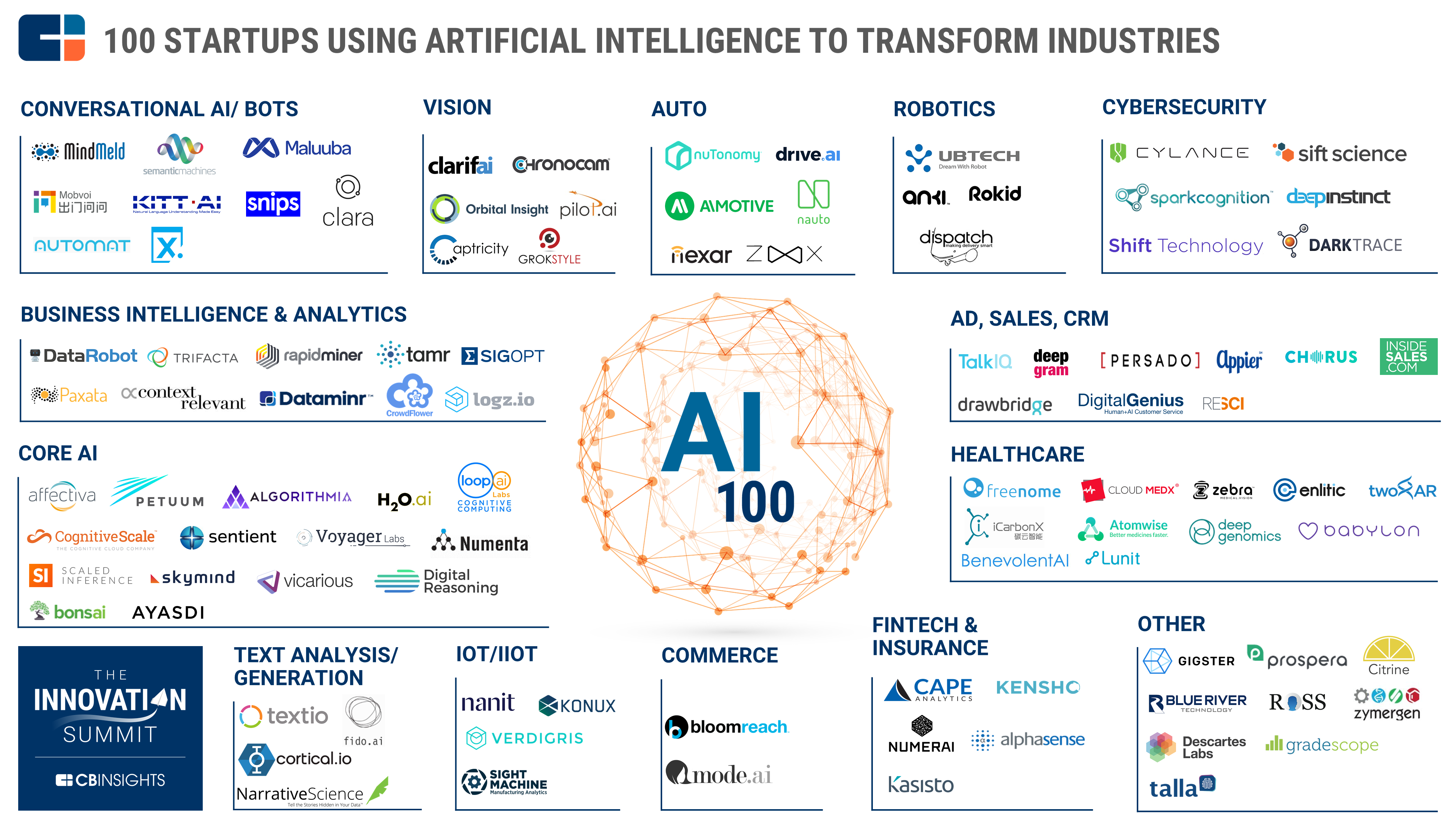
    DevOps provider candidates with the potential to move on a partnership that can combine DevOps, security and AI have a raft of new and established security providers available to work with. Several of the startups in this class are recognized in the CB Insights AI 100 2017 infographic. Companies such as Cloudera (NYSE: CLDR), which is using AI and machine learning to solve security problems, are among the more established providers that may make for a perfect partner. 

    How quickly will the market see such a partnership? That remains to be seen. However, with DevOps now fully accepted as a methodology that can positively impact bottom lines, AI coming into its own, and the need for new and different ways of defending organizations against attacks at a critical stage, it seems almost certain that the convergence will be upon us sooner rather than later.

    — Joe Franscella

  • Loom Systems Extends Reach of AI into DevOps Realm

    Loom Systems Extends Reach of AI into DevOps Realm

    One of the things that tends to hold back adoption of DevOps are all the low-level events that need to be correlated by an engineer to generate anything that approaches actionable intelligence (AI). To eliminate that requirement, Loom Systems created a Loom AIops platform to automate many of the tasks that normally would need to be performed by a DevOps engineer.

    Loom Systems has upgraded the Loom AIops platform by adding Distributed Entity Tracing, which makes it easier to analyze events across a range of interdependent applications and associated middleware. In addition, Loom has created Correlations View, which simplifies identifying how alerts being generated are related to one another.

    Finally, the latest version of AIops adds support for the OpenStack cloud management framework, in addition to sporting a revamped set of dashboards that are easier to navigate.

    Dror Mann, vice president of product for Loom Systems, says one of the reasons that DevOps is not widely implemented is that today it requires IT staffs to accumulate and correlate massive amounts of low-level event data to create anything approaching actionable intelligence. Loom AIops is designed to automate the low-level tasks relating to DevOps to enable the IT staff to focus more of their time and effort on fixing issues and reducing the time required to release and update applications.

    Loom AIops, says Mann, accomplishes that goal by first streaming all the application log data into its platform, followed by all the log data generated by any dependencies that application might have. Loom AIops then applies machine learning algorithms in real time to identify the root cause of an issue. Armed with that information, it becomes a lot easier to reduce the mean time to resolution (MTR), which then provides the IT organization with the time needed to address more complex management challenges, he says.

    Mann notes the single biggest challenge IT organizations encounter with DevOps is that it requires them to change their modus operandi. By automating many of the lower-level DevOps tasks, there’s more time available for IT organizations to think through the cultural changes required to successfully implemented integrated DevOps processes.

    Most IT professionals will view the application of AI to IT operations with a combination of skepticism and trepidation. It will be difficult initially for many IT professionals to trust the analysis being generated by AI software. Once they do begin to trust that analysis, there naturally will be some concerns over to what degree an AI program can eliminate the need for a DevOps engineer altogether. But, Mann notes, there are many complex tasks that never get addressed because most DevOps engineers spend an inordinate amount of time and effort trying to correlate the right data.

    At this juncture, usage of AI within the context of DevOps is now all but inevitable. The challenge now is not figuring out the line between where humans add higher orders of value compared to machines that are generally going to be limited to identifying patterns. The advantage a machine has it that once it learns something, it doesn’t forget it, take days off or switch jobs. However, being able to identify a pattern is not nearly the same as being able to apply reasoning to what the sum total of those patterns really means for the business.

    — Mike Vizard

  • How AI Impacts DevOps Pipelines

    How AI Impacts DevOps Pipelines

    The rise of machine- and deep-learning algorithms is about to create some interesting data-gravity challenges for IT operations teams. Over most of the last decade IT operations teams have been caught up in a public- versus private-cloud computing debate that has mostly been species. The truth is that most organizations wind up employing both. But as IT organizations are just now getting used to that multi-cloud reality, the rise of machine- and deep-learning algorithms to create a new generation of advanced artificial intelligence (AI) applications are about to add some significant nuances to managing the DevOps pipeline.

    New applications tend to be built and deployed where they can access the most relevant data. Most of the data employed by the average enterprise resides on-premises today. But it’s clear that the data being created in various types of cloud services is growing at a faster rate, thereby altering data gravity forces across the enterprise.

    To get the most value out of that, developers are now building a new generation of advanced applications that employ machine- and deep-learning algorithms. In most cases those algorithms are being deployed wherever data happens to reside. For example, Salesforce just announced at its Salesforce TRAILHEADX 2017 conference that it is making available additional APIs to the Salesforce Einstein Platform Services for building custom applications that can now be infused with sentiment analysis, the ability to detect objects and understand customer intent.

    Michael Machado, director of product management for Salesforce Einstein, says that the success of any AI initiative will come down to both the amount and quality of the data being accessed. As a CRM application consisting of a mix of structured and unstructured data concerning customers, Salesforce represents an attractive platform for building AI applications. In fact, to facilitate the building of applications, Salesforce also is making it simpler for developers to collaborate across multiple alliances in addition to providing access to DevOps tools from Atlassian and Github.

    But CRM applications are only one element of the typical application portfolio. The more data that any set of algorithms can be applied against, the faster the application learns and the more accurate it becomes. As developers build the next generation of applications, they are going to want to be able to access as much data as possible. For many IT organizations, that will mean the applications will be hybrid almost by definition—attempting to centralize all their data will prove to be impractical as well as prohibitively expensive. Constructing application pipelines spanning multiple data sources, however, requires a very mature set of DevOps processes.

    Arguably, the rise of these next-generation applications might finally force the DevOps issue inside most organizations. Most have been able to manage application development on various cloud platforms in isolation. Going forward, that may no longer be practical, as developers seek to incorporate more data sources within their application environment. The challenge IT operations teams will need to wrestle with is providing timely access to that data in way that doesn’t ultimately compromise their performance.

    — Mike Vizard

  • IBM: DevOps, AI to Drive Digital Business Transformation

    IBM: DevOps, AI to Drive Digital Business Transformation

    Conventional wisdom holds that one of the biggest challenges organizations face today is a chronic shortage of application developers. But as artificial intelligence (AI) advances, the process of writing code will become more automated. But rather than there being not enough developers to write all the code necessary, the shortage will be in software engineers who can develop innovative systems.

    Bob Lord, chief digital officer for the Digital Business Group at IBM, says a glimpse of the future of application development is already being provided today. Instead of writing low-level code, most developers today simply combine modules to create new applications. Anytime new functionality is required, another module gets dropped into the application. The number of developers writing the low-level code needed to create those reusable modules is relatively few, says Lord.

    Over time, however, AI models will learn how to write that code. People will add value by providing the engineering expertise needed to combine modules to create an innovative application, Lord says. Naturally, most of the processes employed to deploy that software also will be automated. But IT operations teams will be needed to continuously train the AI systems being used to deploy that software. This is in much the same way that we need human pilots to fly a plane whenever something new or different occurs, despite the existence of autopilot technology.

    In general, Lord says, IT organizations would be well-advised to focus on three things:

    • They need to decide what architecture strategy is going to be employed to accelerate DevOps integration.
    • They need to develop a data strategy that drives digital business transformation.
    • They need to layer a cognitive computing strategy that employs advanced algorithms to maximize the business value of the data they’ve accumulated.

    While some organizations approach these issues in isolation, Lord says the reality is they’re all closely connected. Organizations are investing in DevOps not just to reduce costs—DevOps is about attaining a level of IT agility capable of driving digital business transformations. In fact, Lord believes the way IT organizations are measured will change: Rather than being rated on traditional IT metrics, they will be measured on how effective they were in attaining business goals—especially when to comes to velocity at which applications are rolled out and updated.

    In the meantime, Lord says, developers are starting to exercise more influence over the technologies organizations are employing to achieve those goals. Because of that issue, IBM is making an effort to get closer to the developer community. But as application development advances, many of those developers will be software engineers rather than people who write code, while IT operations teams will become teachers who train intelligent systems how to respond to the needs of deployed code.

    — Mike Vizard

  • The Time Is Now for an IT Operations Revolution

    The Time Is Now for an IT Operations Revolution

    There’s a level of frustration starting to build inside IT operations teams that’s about to boil over. Lucas Carlson, vice president of strategy for Automic, a unit of CA Technologies that provides an IT automation platform, says developers are bullying IT operations teams by programmatically invoking application programming interfaces (APIs) exposed by public cloud service providers. As the number of application workloads running in those clouds increases, IT operations professionals are losing control.

    To ensure their continued relevance, IT operations teams need to leverage automation to inject levels of agility into local data center environments, he says. That would make it much less likely developers would feel the need to programmatically invoke IT infrastructure resources.

    Carlson says achieving that level of agility will require IT operations teams to rely more on machine- and deep-learning algorithms to automate low-level tasks. Instead of thinking in terms of managing silos of compute, storage and networking resources, Carlson contends IT operations professionals need to reinvent themselves.

    The artificial intelligence (AI) models based on advanced algorithms must be trained continuously. IT operation professionals could become the trainers of those AI models. In fact, Carlson says IT operations teams are approaching a critical moment in history: They can either wait for AI models to eventually replace them or they can leverage them to take back control of IT infrastructure.

    However, developers tend to make decisions based on what they prefer versus what’s best for the organization. Before too long, multiple duplicate operations management frameworks are in place. Rather than incur all those management headaches and associated technical debt, Carlson says organizations need a single framework that can more adroitly accommodate the multiple roles within the DevOps team. It’s already long past the time when IT teams should have modernized their operations, he says.

    The relationship between developers and IT operations teams has always been contentious. The more belligerent members of the developer community are even making a case for “NoOps.” In that context, all the IT dollars spent on operations are moved into developing applications because the management of IT infrastructure is completely automated. Given the amount of legacy infrastructure that isn’t likely changing anytime soon, achieving that level of automation inside the enterprise won’t happen for a while. But there’s no doubt that IT operations needs to get more agile. Because of that issue, investment in software-defined data center (SDDC) technologies is growing rapidly.

    Instead of resisting that trend, Carlson says teams need to demand that internal IT operations be brought into the 21st century. It’s true that SDDCs infused with AI models will automate most of the lower-level tasks associated with DevOps. But those members of that IT operations teams who become the masters of building and training those AI models will be among the most highly sought-after individuals in IT.

    — Mike Vizard

  • 8 TED talks on Superintelligence Business Leaders Must See

    8 TED talks on Superintelligence Business Leaders Must See

    [nextpage title=”Introduction” ]

    There’s a lot of discussion today about not so much if artificial intelligence will dramatically change the way humans work and provide economic value, but when, how quickly and to what degree AI will change our relation to work. In this post we’ve collected eight of the best TED talks we could find when it comes to increasingly intelligent machines and how they will impact business and the nature of work.

    [/nextpage]

    [nextpage title=”The Wonderful and Terrifying Implications of Computers That Can Learn” ]


    The Wonderful and Terrifying Implications of Computers That Can Learn

    We increasingly hear about it: Some machine has beaten a human at something that was previously unheard of—chess, Jeopardy and, most recently, Go. In this talk, technologist Jeremy Howard shares new developments in the fascinating field of deep learning. This is happening quickly, and business leaders need to prepare for the day when computers are on par with humans in certain cognitive domains.

    [/nextpage]

    [nextpage title=”What Happens When Our Computers Get Smarter Than We Are?” ]


    What Happens When Our Computers Get Smarter Than We Are?

    In this talk, Swedish philosopher Nick Bostrom explains how artificial intelligence is getting smarter rapidly and soon may be as smart as people. Bostrom believes thinking machines will be man’s final invention. I’m hoping they end up on our side.

    [/nextpage]

    [nextpage title=”Are Droids Taking Our Jobs?” ]


    Are Droids Taking Our Jobs?

    Andrew McAfee is one of my favorite reads on this topic, and if you haven’t read “Race Against the Machine: How the Digital Revolution is Accelerating Innovation, Driving Productivity, and Irreversibly Transforming Employment and the Economy,” you need to close your web browser and go do that right now. Well, maybe watch this TED talk, first. It details how robots and algorithms are getting good at building cars, writing articles, translating—jobs that once required a human. Did he say article writing? What will I do for work? In this talk, McAfee, citing labor data, takes a look at what could be in store for us.

    [/nextpage]

    [nextpage title=”The World’s First AI Legal Assistant” ]


    The World’s First AI Legal Assistant

    Anyone who doesn’t like lawyers never faced a prosecutor or lawsuit. Those that have know legal advocacy can be quite the hit on the bank. What happens when the scales of justice are digital? In this talk, lawyer Andrew Arruda partnered with a computer scientist to create the world’s first artificially intelligent legal assistant, Ross. Arruda hopes Ross will make legal help more affordable for us.

    [/nextpage]

    [nextpage title=”The Jobs We’ll Lose to Machines — and the Ones We Won’t” ]


    The Jobs We’ll Lose to Machines — and the Ones We Won’t

    In this talk, entrepreneur Goldbloom tries to tackle the age-old question: What jobs will the machines take from the labor pool and what jobs will be left for us humans to fight over?

    [/nextpage]

    [nextpage title=”Get Ready for Hybrid Thinking” ]


    Get Ready for Hybrid Thinking

    Futurist Ray Kurzweil says we need to get ready for the next big exponential in brain power—the computer. In other words, don’t hate the machine, become the machine.
    [/nextpage]

    [nextpage title=”How AI Can Bring On a Second Industrial Revolution” ]


    How AI Can Bring On a Second Industrial Revolution

    Digital sherpa Kevin Kelly says technology is driven by patterns that are surprising but also predictable. That is, while the exact path taken isn’t predictable, where we eventually end up is. And in the decades ahead our machines are going to get smarter and smarter, and this will change the world in very big ways.
    [/nextpage]

    [nextpage title=”Can We Build AI Without Losing Control Over It?” ]


    Can We Build AI Without Losing Control Over It?

    We should all be scared, very scared, of superintelligent AI. In this talk, neuroscientist and philosopher Sam Harris explains why. And one of the reasons could be that we end up making superintellient machines that decide we will make very nice pets (at best) or treat us like an insect infestation (at worst).
    [/nextpage]

    — George V. Hulme